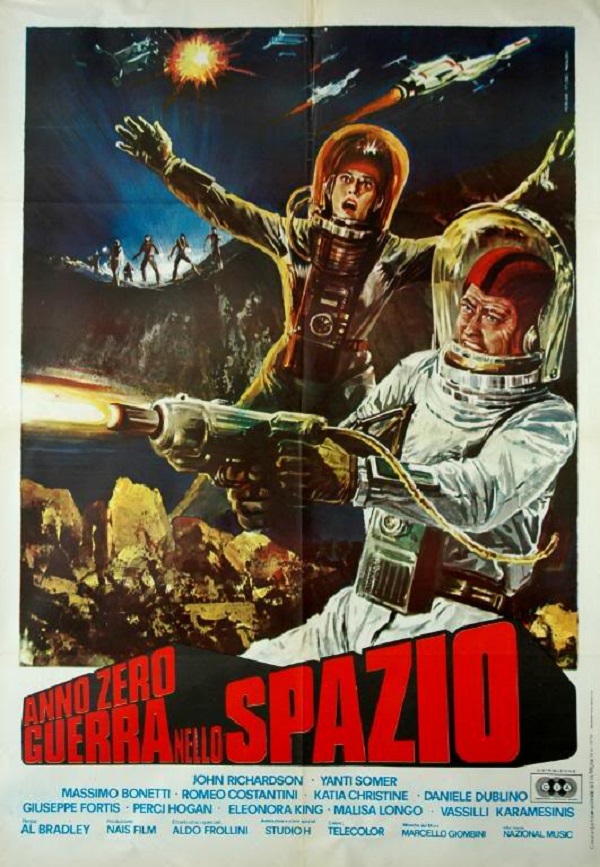
In Italy, this movie was called I Diafanoidi Vengono da Marte (The Diaphanoids Come From Mars) and is part of the Gamma-One series. It follows Wild, Wild Planet (I Criminali della Galassia or Criminals of the Galaxy) and is followed by War Between the Planets (Il Pianeta Errante or Planet on the Prowl) and Snow Devils (La Morte Viene dal Pianeta Aytin or Death Comes From The Planet Aytin).
They still have New Year’s Eve in the future. That’s when space station Alpha-Two reports an issue and loses contact with headquarters. When a rescue squad arrives, they find green glowing energy monsters attacking and the entire Alpha-Two disappears.
Gamma-One Commander Halstead (Tony Russel) sends spaceships to investigate while on Earth, those same green aliens have possessed Captain Dubois. These aliens are Diaphanoids from the Andromeda Galaxy and need humans to exist.
Do you know how we deal with aliens like that? We blow them up real good and then reward Halstead with a private suite to have some zero gravity lovemaking with Lieutenant Connie Gomez (Lisa Gastoni, who was Maddalena).
Antonio Margheriti directed all of these movies and he’s doing what he can with the budget he’s given. Franco Nero shows up as one of the astronauts, Lieutenant Jake Jacowitz. The characters played by him, Russel, Gastoni and Carlo Guistini play the same characters from Wild, Wild Planet while Fiermonte replaces Umberto Raho as General Halstead.
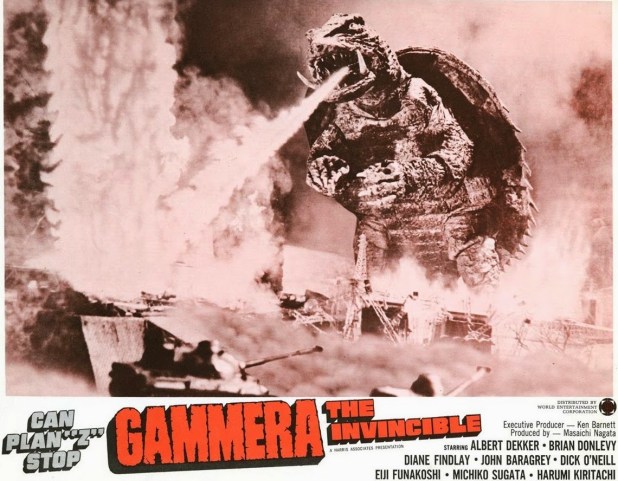
Directed by Sandy Howard and Noriaki Yuasa, this is the American version of Gamera. The footage was provided to Howard by Daiei and he was free to move it around however he wanted for Western eyes.
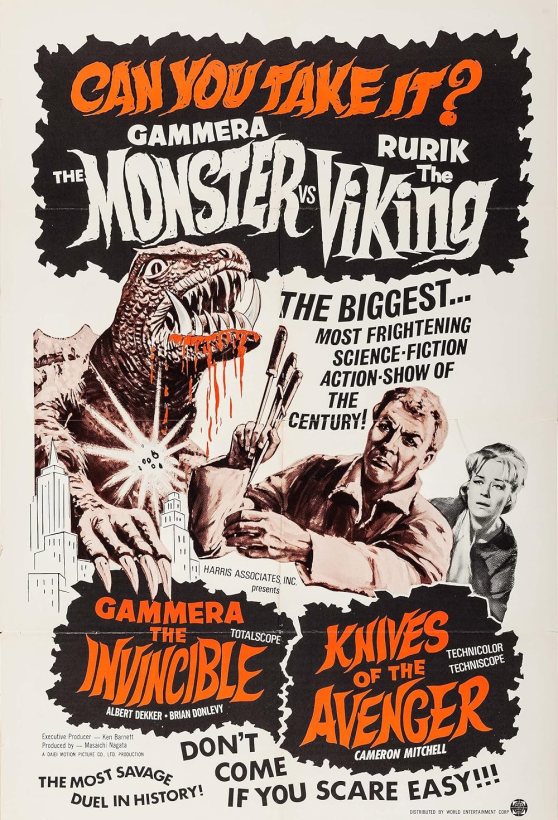
Gammera the Invincible was the only film in the original Gamera series to receive a theatrical release in the United States. It was sent to theaters and drive-ins by World Entertainment Corp. and Harris Associates, Inc. Amazingly, it played double features with Knives of the Avenger. The rest of the movies went directly to TV and were distributed by American International Television.
All of the romantic plots are forgotten, Gamera being from Atlantis is ignored and new footage of Gen. Terry Arnold (Brian Donlev) and the Secretary of Defense (Albert Dekker) has been added, so that it seems like Americans are in Japan. There’s also footage that wasn’t used in the original movie to add a little more to the movie.
I was just looking at the poster for this movie and had a sense memory. I was eight-years-old and it was a Saturday afternoon. Even on the weekends, I was nervous, anxious, worried for school to come Monday. I regularly got attacked on the playground and my teacher told me it was my fault. I talked too much. I studied too hard. And I never slept, which is where it all began, this lifelong insomnia. But Gamera was my escape. The idea of Gamera, a giant turtle throwing up fire, turning into a shell and spinning around, sure that might seem silly to you today. But I sat in class and knew I’d be beaten into unconsciousness in two hours and I’d just draw Gamera setting a city on fire. He and Godzilla and the rest of the monsters were so fantastic, so wonderful, so perfect, not like the kind of world where a little frightened fat kid threw up all night and tried to round off infinity and had OCD and could barely leave a room without trying to do even steps or flip light switches over and over again. I was a prisoner of my mind and all that helped me forget it, even if just for a few moments was movies like this. So here’s to you, Gamera. Thank you, Johnny Sokko. God bless you, well, Godzilla. I still never sleep, I have never stopped worrying, but you have always been here for me, smashing cities so that I can escape.
EDITOR’S NOTE: Jesse James Meets Frankenstein;’s Daughter was on Chiller Theater on Saturday, November 23, 1968 at 1:00 a.m. It also appeared on December 20, 1969 and November 4, 1972.
I’ll admit it. I cheated. Instead of watching this movie in its original form, I found a version that had Joe Bob Briggs do commentary. Unlike modern commentary tracks where bloggers and magazine writers try in vain to impress you with how cool and smart they are, Joe Bob just hangs back and blows your mind with his limitless info. It made this movie way better than it deserves.
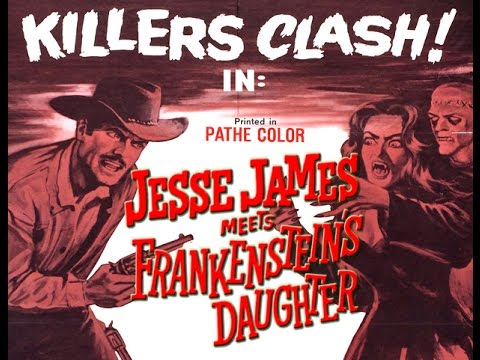
Paired with director William Beaudine’s other cowboys against the supernatural film Billy the Kid Versus Dracula, this film supposes what would happen if Dr. Frankenstein’s daughter Maria would come to the American wild west along with her brother Rudolph to use prairie lightning to turn immigrant children into slaves that will help continue their father’s experiments.
Meanwhile, Mañuel and Nina Lopez are leaving town before their daughter Juanita (Estelita Rodriguez, Rio Bravo) is killed. And here comes Jesse James (John Lupton, Airport 1975), Hank Tracy and Butch Curry, the leader of the Wild Bunch (no, not the Peckinpah film), who are here to steal $100,000 from a stagecoach. Yep, Jesse James did not die on April 3, 1882.
The crime gets foiled when Butch’s brother Lonny tips off Marshall MacPhee (Jim Davis, Jock Ewing the patriarch of the Ewings of TV’s Dallas) in exchange for becoming his deputy and getting reward money for Jesse James. Everyone but Jesse is shot, with Hank barely surviving. They hide in the Lopez family’s camp and Juanita takes them to the Frankensteins in the hope that Hank’s mortal wound can be healed.
Maria, of course, is in love with Jesse instantly, even faking suicide to get in his heart. She’s goth before goth was goth, basically. Jesse manages to escape another trap and kills Lonny, who has tried to bring him back in. Maria Frankenstein has transformed Hank into Igor, her new servant, and killed off her brother. She then orders him to kill Juanita, but he turns on his mistress. In a final scuffle with Jesse, Juanita kills the monster with Jesse’s revolver. She begs the famous outlaw to stay with her, but he goes off into the sunset, arrested by the sheriff.
I fear that I’ve made this movie sound way more interesting than it really is. The one good thing I can say is that the lab equipment was provided by Ken Strickfaden, who loaned out his gadgets for all of the Universal films, as well as Mel Brooks’ Young Frankenstein, Al Adamson’s Dracula vs. Frankenstein and Blackenstein.
That said, William Beaudine started his career as an assistant to D.W. Griffith on The Birth of a Nation and Intolerance. His directing career stretched from 1922 to 1966, with this being his final film. Harry Medved’s book, The Fifty Worst Films of All Time, gave Beaudine the nickname “One-Shot” because everything ended up being in his films, like actors screwing up their lines or special effects not working properly.
The truth is that he actually had some talent and worked with plenty of talented films, including Mary Pickford, Mack Sennett and W.C. Fields. However, bad judgment and worse luck ruined his career.
Beaudine was brought to England in the 1930’s to work with their top stars. He directed there and expected to come back to the United States with his A-list status intact. Sadly, studios no longer wanted to pay his salary. And even worse, he lost his personal fortune when a bank he bought an interest failed. It got worse. Most of his UK income was then seized by the British government in taxes.
Then, publicist-turned-producer Jed Buell and Dixie National Pictures offered Beaudine $500 to direct a one week job: an all black picture. The director realized that if he took this job, he’d never return to the limelight. But at that point, he was near destitute and needed the work.
William Beaudine reinvented himself as the master of low budget films, forgoing art for survival. He recouped his finances through the amount of work he turned in, working in all genres and with stars like Bela Lugosi in the absolutely bonkers film Bela Lugosi Meets a Brooklyn Gorilla, the East Side Kids and nearly half of Monogram Pictures’ series of Bowery Boys comedies. In fact, he became the master of sequel series films, also working on films with characters like Torchy Blane, Jiggs and Maggie, The Shadow and Charlie Chan.
He also directed Mom and Dad, the film that pretty much set up the exploitation movie pipeline until the death of grindhouses. Produced by Kroger Babb, this film was distributed by a loose knit organization that called themselves the Forty Thieves. You had guys like S.S. “Steamship” Millard, who produced Is Your Daughter Safe?, Samuel Cummins whose Public Welfare Pictures and Jewel Productions brought the public 10 Days in a Nudist Camp, J.D. Kendis who produced Gambling with Souls, Dwain Esper who brought one of the original serial killer movies Maniac to the public (as well as buying Freaks from MGM for just $50,000 and re-distributing films like Reefer Madness), Willis Kent who had The Wages of Sin, Louis Sonney who owned the West Coast with films like Hell-a-Vision and Howard “Pappy” Golden, who was known for stealing prints from the other thieves. They weren’t a studio as much as an informal trade association, kind of like the old National Wrestling Association, that used something they called the “states rights” system. Truly, Mon and Dad is an exploitation landmark and we wouldn’t have so many of the films we love without it.
Beaudine became so well known for his efficient directing that Walt Disney himself used him for several films (he directed the special Disneyland After Dark, whose title was appropriated by the Danish rock band D-A-D). TV was tailor-made for the director, as he worked on shows like Lassie. He was even the director of Plan 9 from Outer Space alum Criswell’s TV series, Criswell Predicts!
This Western horror mix would be his last film, although after Bruce Lee became famous, several episodes of The Green Hornet that he directed would be packaged as feature films — 1974’s The Green Hornet and 1976’s Fury of the Dragon.
Look, this isn’t a great movie. But it’s fun. And it’ll lead you to learning a lot about exploitation films and Old Hollywood, if you want to learn more.
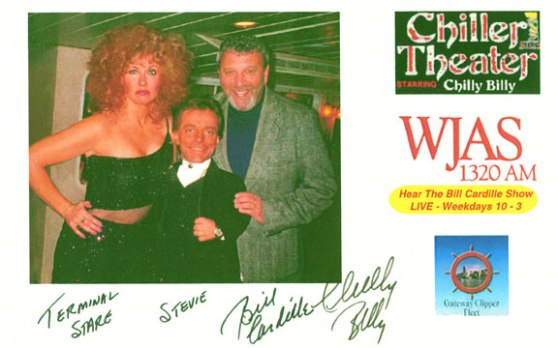
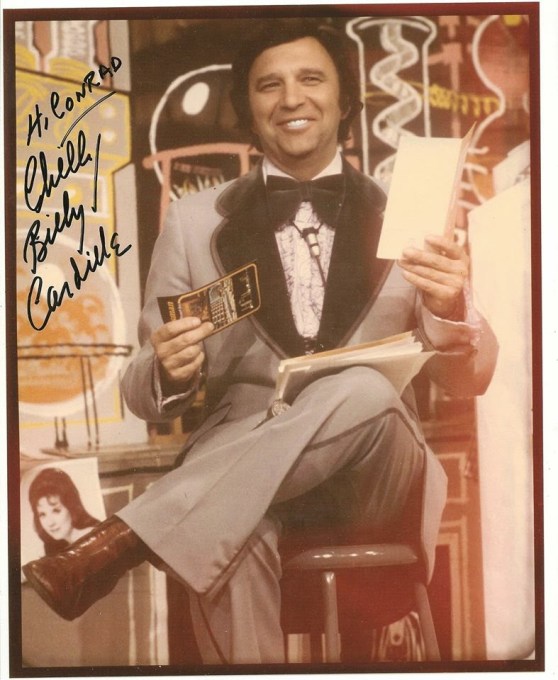
EDITOR’S NOTE: Casanova ’70 was on Chiller Theater on Saturday, September 13, 1969. Well, kind of. Chiller Theater temporarily became known as The Saturday Late Show and Bill Cardille hosted the first movie from a living room set. For the second feature, Chilly Billy returned to the Laboratory set. The second movie was Voyage to the Planet of Prehistoric Woman. This didn’t last long but the movies shown were Crazy Desire, No Love for Johnnie, The Reluctant Spy, The 10th Victim and Dingaka before taking a week off for Halloween. The Saturday Late Show continued by showing Yesterday, Today, and Tomorrow; The Easy Life; Sins of Casanova; The Success; Red Culottes; Marriage, Italian-Style; Boccaccio ’70; The Naked Kiss and The Bigamist. On January 3, 1970, Chiller Theater stopped showing non-horror films and was back to normal. I’ve always thought that Count Floyd showing non-horror movies like Ingmar Burgman’s Whispers of the Wolf and trying to sell them as scary came from this time. Joe Flaherty was from Pittsburgh and was so complete with his Chiller Theater impression that Count Floyd was often joined by a sidekick known as The Pittsburgh Midget, played by Flaherty’s brother Paul Flaherty. He’s a nod to Stefan, the Castle Prankster, who was played by Stephen Michael Luncinski on Chiller Theater.
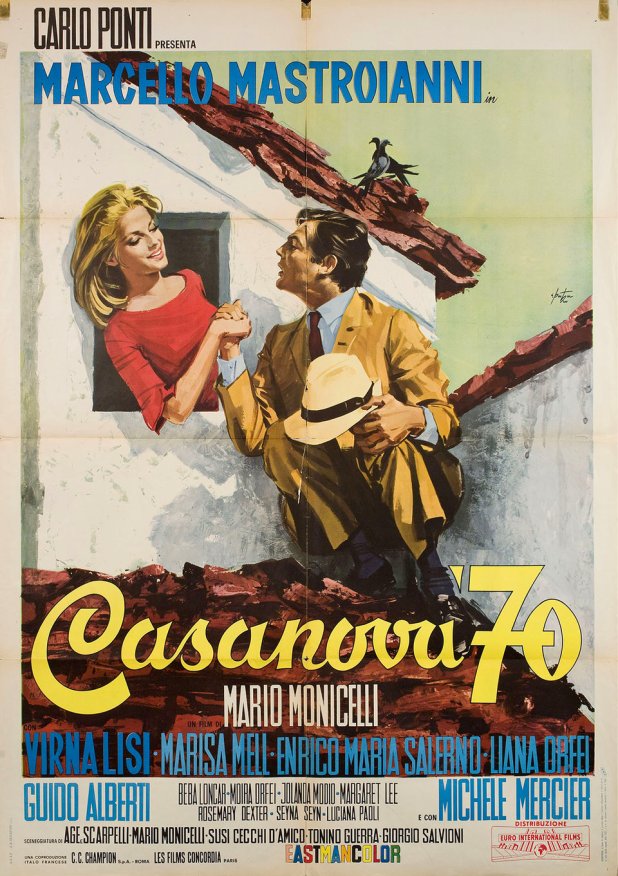
Directed by Mario Monicelli, this may be one of the few movies nominated for an Oscar that played Pittsburgh’s Chiller Theater. It’s all about NATO officer Andrea Rossi-Colombotti (Marcello Mastroianni), a lover who can only perform with women when he might get killed. His psychiatrist recommends that instead of sex, he seeks out the spiritual and emotional qualities in women. Of course, he’s in an Italian comedy, so that’s not happening.
He almost marries the religious Gigliola (Virna Lisi) but days before he says “I do,” a liontamer (Liana Orfei, who really did that in the circus before being in movies like Mill of the Stone Women) dares any man to kiss her while she’s surrounded by the deadly beasts. He can’t resist this and is alone again. She tries to stay with him because she’s his true love, but he can’t ruin her life with his sickness. By the end, she even marries him, even if he can’t be cured.
Then again, this movie has so many gorgeous actresses for him to nearly be killed over, including Rosemary Dexter (Marquis de Sade: Justine), Seyna Seyn (Flashman), Jolanda Modio (Face to Face), Margaret Lee (Kiss the Girls and Make Them Die), Moira Orfei (the queen of the Italian circus who was known as Moira of the Elephants), Beba Lončar (Some Girls Do), Michèle Mercier (Web of the Spider) and Marisa Mell (Marta) in her first Italian film.
EDITOR’S NOTE: The Bamboo Saucer was on Chiller Theater on Saturday, October 24, 1970 at 11:30 p.m. It also aired on November 25, 1972 and March 16, 1974.
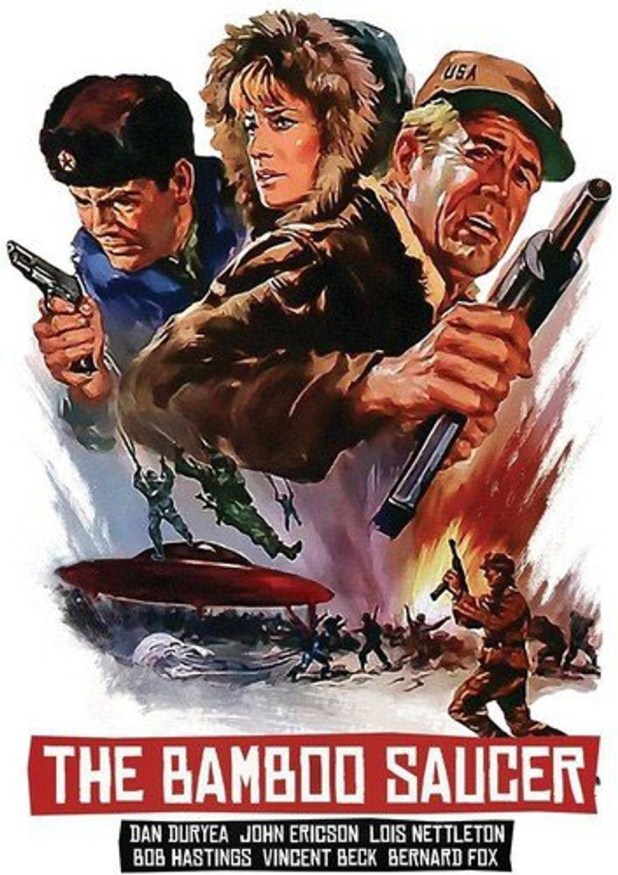
Directed and written by Frank Telford, this starts when test pilot Fred Norwood (John Ericson) is chased by a UAP. The pilot following him says whatever he’s told to say by the air force. No one wants to admit that an alien craft could be following our armed forces.
He decides to use an old Mustang to track the UFO along with his friend Joe Vetry (William Mims). Vetry is soon abducted or disintegrated by some alien vehicle, which only makes Norwood more invested in finding out the truth.
He’s contacted by a deep cover government type named Hank Peters (Dan Duryea) who tells him that something that looks just like what he saw has crashed in China. The bodies of the aliens have been burned, but the UAP still exists. When he parachutes down to find it, he comes across a group of Russians with the same plan. They decide to work together and end up in a battle against the Chinese Army that they escape by flying the craft past Saturn.
Producer Jerry Fairbanks sent the script to the U.S. Department of Defense and made sure that the CIA was never mentioned and that the Air Force was never near China.
EDITOR’S NOTE: The Magic Serpent was on Chiller Theater on Saturday, November 28, 1970 at 11:30 p.m.
The Oumi Kingdom is in shambles after General Daijo Yuki (Bin Amatsu) and his ninja Orochimaru (Ryūtarō Ōtomo) kill Lord Ogata (Shinichiro Hayashi) and his wife. Soldiers loyal to Ogata have succeeded in helping his son Ikazuchi-Maru to escape but Orochimaru transforms into a serpent and tries to kill him. Luckily, a giant eagle flies in and saves Ikazuchi-Maru.
Trained by Dojin Hiki (Nobuo Kaneko), Ikazuchi-Maru grows to become a ninja who specializes in toad magic. One evening, Hiki is attacked by Orochimaru and it’s revealed that the old man once taught the evil ninja and was also the eagle that saved our hero, who arrives too late — along with Tsunade (Tomoko Ogawa) — to save him. Now out for revenge, he goes after the ninja while Tsunade follows, given a spider pin by the spider woman who saved her.
Ikazuchi-Maru renames himself Jiraiya and becomes friends with Saki (Yumi Suzumura) and her little brother Shirota (Takao Iwamura), saving them from Daijo Yuki’s men. But oh, the twists and turns, as it turns out that while she loves our hero, Tsunade is also the daughter of Orochimaru! And there’s still a battle between the ninjas in their toad and serpent forms to follow.
Man, I absolutely loved this movie. It combines the martial arts movie with kaiju and has so many strange things about it. People hopefully loved it too, but I bet so many people who watched the American-International TV versions just thought it was dumb. Not me!
AIP also redubbed the monsters, so the Orochi-Maru Dragon sounds like Godzilla and Gaira from War of the Gargantuas, the Ikazuchi-Maru/Jiraiya Toad roars like Rodan, the giant eagle is Mothra and Sunate’s giant spider now sounds like a metallic monster and also has the voice of Kiyla from Ultraman. They also removed the opening and closing songs and replaced them with basic instrumentals. The toad also was used on the Toei series Kamen no ninja Aka-Kage.
You could almost see a lot of Star Wars in this movie. An evil magic fighter orphans a young boy who is destined to have great power who is saved by an old man and raised in the ways of the very same magic. He becomes friends with the daughter of that enemy — Leia is, after all, Darth Vader’s daughter — and he finally becomes strong enough in magic that he can fight back and the evil magic fighter becomes briefly good before his heroic sacrifice. Sure, we can all get behind that Joseph Campbell Hero’s Journey, but sometimes, things get a little ripped off.
Speaking of that Hero’s Journey, this is based on a Japanese folktale, The Tale of the Gallant Jiraiya, and was directed by Tetsuya Yamanouchi (Akakage, The Ninja Hunt) and written by Masaru Igami (Prince of Space, the main writer of Kamen Rider, Johnny Sokko and His Flying Robot) and Mokuami Kawatake.
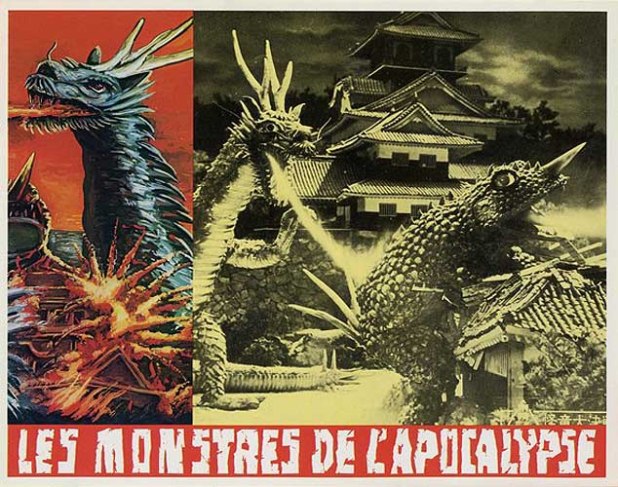
The title in Japan was Great Mystic Dragon Battle, which is super metal, and it has even better ones over the entire world, like Grand Duel in Magic, Ninja Apocalypse and Monsters of the Apocalypse. If you’ve ever seen the Taiwanese movie Young FlyingHero, that feels like a remake of this movie.
EDITOR’S NOTE: Attack of the Robotswas on Chiller Theater on Saturday, June 15, 1968 at 1 a.m. It was also on the show on December 18, 1971 and August 19, 1972.
You know, there are times when you get the Jess Franco who is obsessed with sex and times when you get the jazz-loving, Old Hollywood fan Jess Franco and this would be the latter.
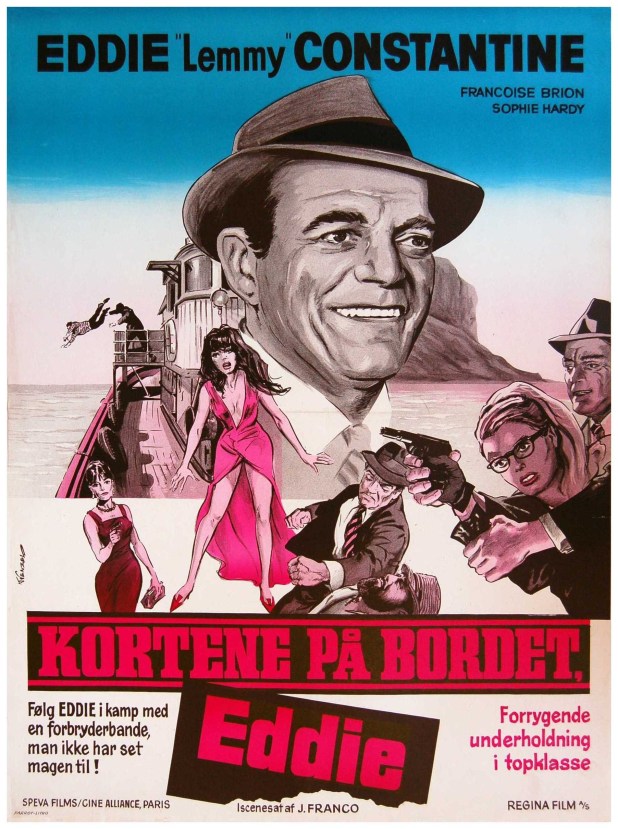
This Eurospy affair stars Eddie Constantine as Al Pereira*, who is hunting down a series of bronze-skinned and horned-rim glasses-wearing killer robots commanded by Lady Cecilia Addington Courtney (Françoise Brion, probably the only person to be in movies like Le Divorce and Otto Preminger’s Rosebud, as well as a Franco film) who is using computers to destroy Europe.
So yeah, Jess shows up playing jazz piano, but don’t worry. Plenty of BDSM and mind control lurk right around the corner, instead of appearing full frontal and center. Perhaps the strangest thing about this movie is that it was shot in color and released in black and white. And that it’s nothing like the Franco movies that people dislike his movies harp on.
19. ACCOMPANIED MINERS: Danger! Stay out of mineshafts, ore else!
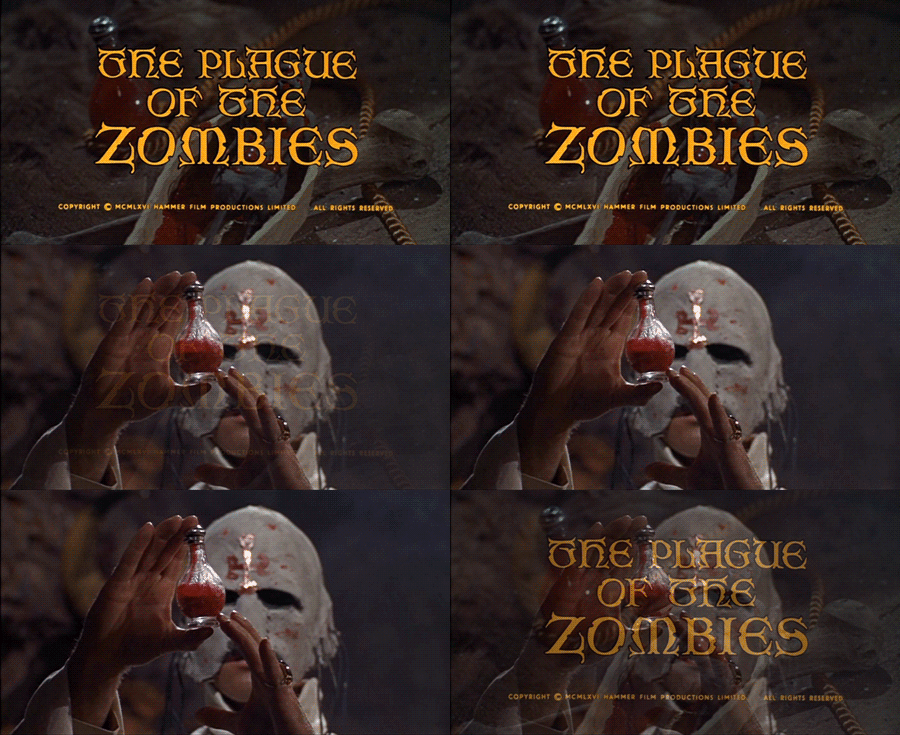
A plague is killing a village’s citizens, so Dr. Peter Tompson (Brook Williams) asks for help from his mentor Sir James Forbes (André Morell), who brings his daughter Sylvia (Diane Clare), who happens to be a childhood friend of Peter’s wife Alice (Jacqueline Pearce).
Sylvia gets in a ton of trouble while her husband is trying to solve this illness, mostly from some fox hunters. They nearly assault her before she’s saved by Squire Clive Hamilton (John Carson) just in time for her to see a zombie murder Alice.
Alice’s corpse has animal blood on her face and has no sign or rigor mortis. Whoever did this also wants to do the same thing to Sylvia. Yes, voodoo is being used to reanimate the dead to work in a tin mine, which is a pretty wild plot even for Hammer. That said, seeing how this is a Hammer production, everything has to end with a gigantic fire. Those dudes loved them some infernos.
According to Ruth Heholt, Cornwall represents “the non-English within England; the foreign at home.” Hammer also made The Reptile, another film where a disease threatens the region. That movie was also made by this film’s director, John Gilling. In fact, both of those movies as well as Dracula: Prince of Darkness and Rasputin the Mad Monk were all shot on the same stages around the same time.
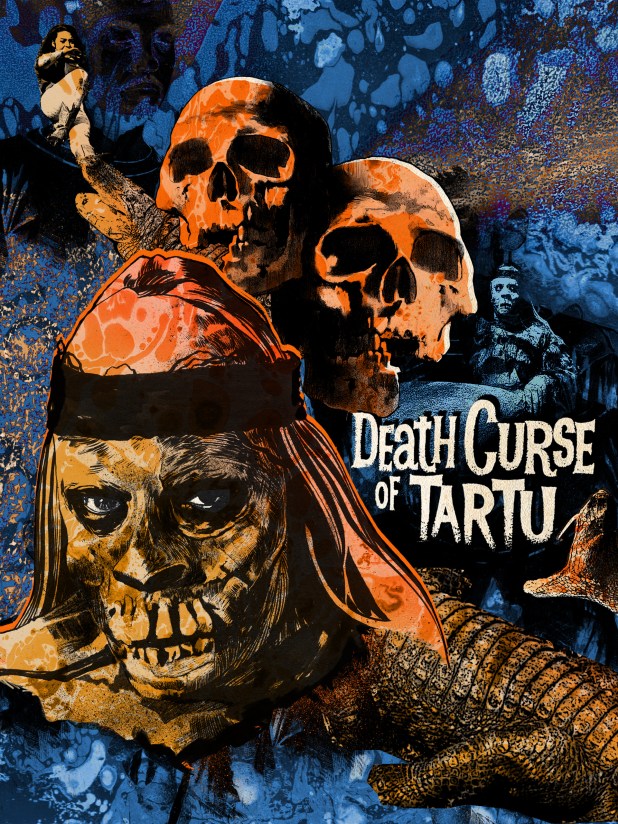
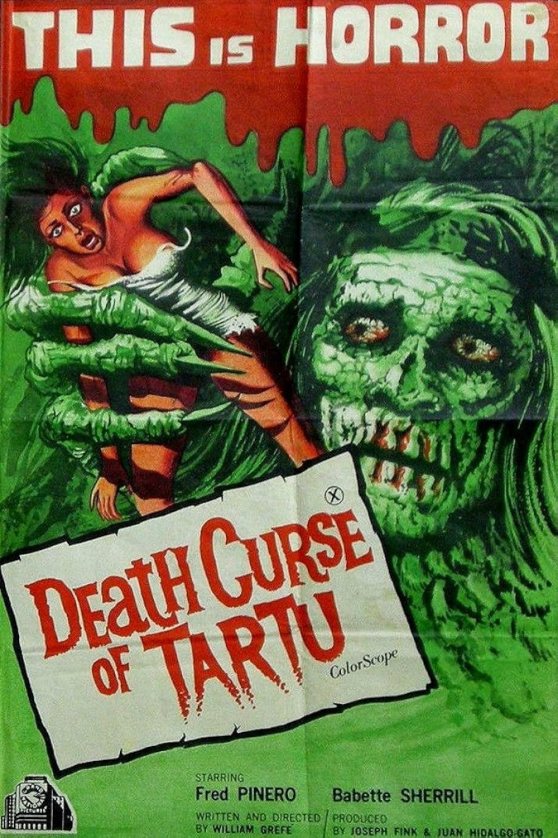
EDITOR’S NOTE: Death Curse of Tartu was first on Chiller Theater on Saturday, July 2, 1977 at 11:30 p.m. It also aired on March 11, 1978.
If you didn’t have enough of teenagers in the Everglades screwing with forces they didn’t quite comprehend in Grefe’s Sting of Death — which was the other part of a double bill with this film — then good news! Four students on an archaeology assignment decide that it would be a great idea to have a shindig on the grave of Tartu, an ancient Native American medicine man.
Frank Weed, who played Sam in this, owned all of the animals that Tartu comes back from beyond within. He did not own the stock footage that was also used for some of these animals, nor his own voice, as he was dubbed for this movie.
Somehow, Tartu has the power set of your average mummy villain, except you know, he turns into animals. One of those animals is a “lake shark,” which I had to look up, and learned that true freshwater sharks can be found in fresh water in Asia and Australia, as well as bull sharks, which can swim in both salt and fresh water and are mostly found in tropical rivers. Actually, bull sharks have been found as far north as Illinois. Yet another reason why the Everglades are totally terrifying.
Why Tartu’s weakness is mud — when he makes his home in the Florida swamps — is beyond me. Man, who knows? This is kind of a nature film, you know, except for all the killing of teens after they dance. It’s got a great name, an awesome poster and really, isn’t that all it needs?
October 12: A Horror Film in which William Shatner appears.
Created by ophthalmologist L. L. Zamenhof in 1887, Esperanto is supposed to be a universal second language for international communication. In English, the name means one who hopes and it’s the largest constructed international auxiliary language with a few thousand speakers.
Zamenhof had some big dreams that go past making an easy and flexible language. He thought that this new way of speaking would lead to world peace.
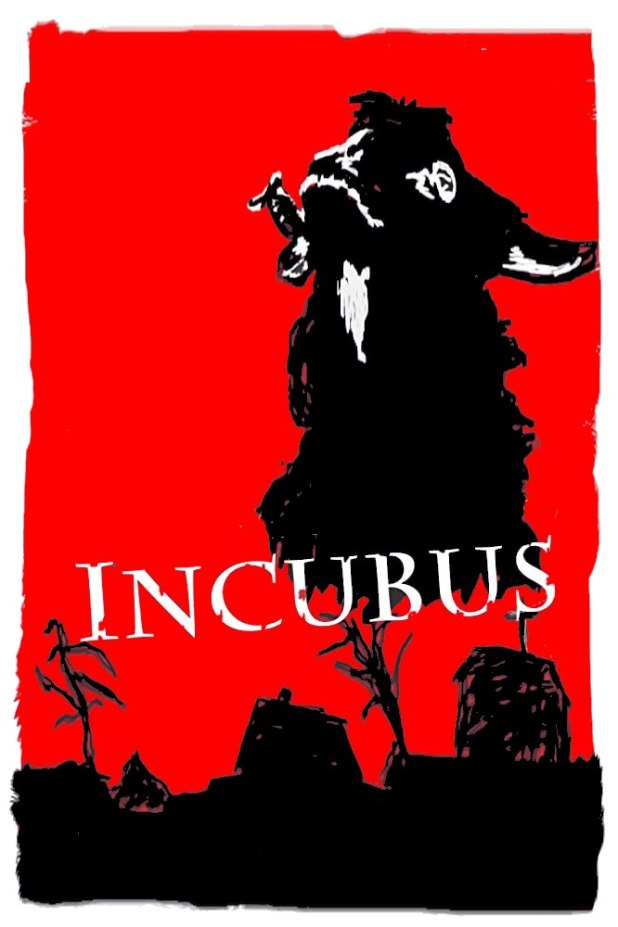
Incubus is the second film to be made in the language, following Angoroj. This was directed and written by The Outer Limits creator Leslie Stevens, who used the cancellation of that show to make an art house movie with that show’s cinematographer Conrad L. Hall and composer Dominic Frontiere.
This is the story of a spring in Nomen Tuum that heals the sick and makes ugly people ravishing and oh yes, there are many succubus and incubus there to lure humans to Hell.
Kia (Allyson Ames) wants a pure man to be her perfect target, but her sister Amael (Eloise Hardt) tries to tell her that if she falls in love, she will lose so much. Then she goes after Marc (Shatner), a soldier here to heal his wounds of battle. He’s with his sister Arndis (Ann Atmar) who is so dumb that she loses her sight by staring at the sun.
This gets wild, as Marc’s purity defiles the demons, who call upon an incubus (Milos Milos, whose life is insane; he was the bodyguard for Alain Delon and a friend of Stevan Marković, who died owning sexually explicit photos of Claude Pompidou, wife of French President Georges Pompidou, causing a big scandal and an unsolved crime; Milos went to America where he married Cynthia Bouron, who had a paternity case against Cary Grant, and was beaten to death and found in the trunk of her car outside a grocery store. As for Milos Milos, he was dating Barbara Ann Thomason, the wife of Mickey Rooney, at the same time he was married to Cynthia Bouron, and they died in a murder suicide that many believed that Rooney engineered) to kill Marc and defile and murder his sister.
This was thought to be a lost film, shown only at the San Francisco Film Festival — where Esperanto speakers laughed at how bad the actors spoke — and in France. Between the language and the scandal over Milo killing his girlfriend and himself, the movie was kind of dead. It was found in 2001 when it was reassembled from existing materials.


 B&S About Movies
You must be logged in to post a comment.