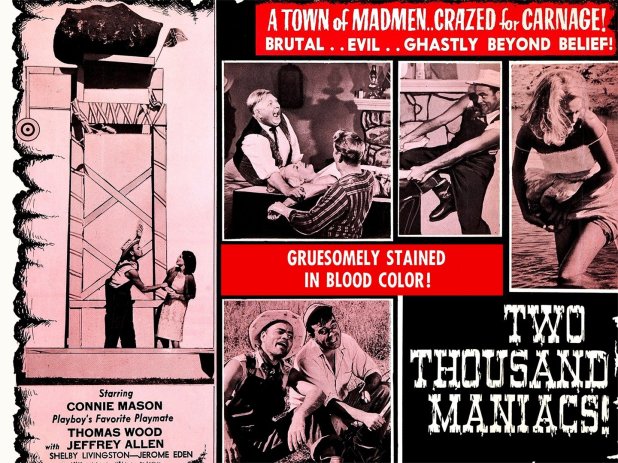
DRIVE-IN SUPER MONSTER RAMA PRIMER: Two Thousand Manaics! (1964)

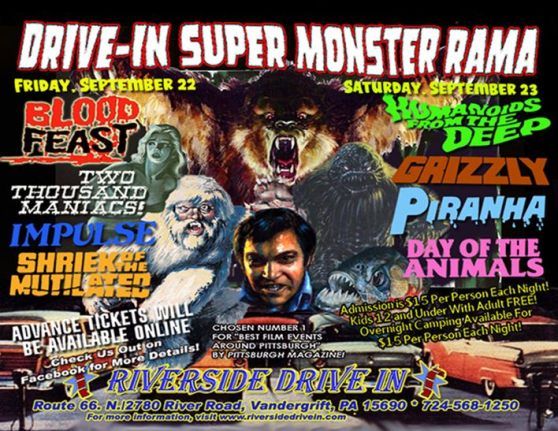
EDITOR’S NOTE: This weekend is the Drive-In Super Monster-Rama! Get more info at the official Drive-In Super Monster-Rama Facebook page and get your tickets at the Riverside Drive-In’s webpage.
It takes a certain kind of genius — or maniac — to make a gore drenched version of Brigadoon. I was explaining this movie to someone and said that the main reason why I like it so much is the completely joyful way in which the townsfolk of Pleasant Valley go about their murderous rampage. This is the time of their lives — well, post-death lives — and it’s worth hollering and singing and shouting about.

Shot over two weeks in the small Florida town of St. Cloud — not yet a cog in the omnipotent wheel of the Disney vacation empire yet — and featuring the gleeful participation of nearly every citizen in that sleepy community, this movie established the danger of the South to North audiences, a theme that would reach its creative apex in Tobe Hooper’s The Texas Chainsaw Massacre.

Yankee tourists, made up of the Millers, the Wells and unmarried folks Tom White and Terry Adams (Lewis’ muse, if he ever had one and only because he never sliced off one of her limbs or cut out her tongue, Connie Mason) have followed the detours to Pleasant Valley where they’re the guests of honor for the centennial celebration.

Yes, a hundred years ago, the Union troops marched through the town and killed every man, woman and child. What a thing to celebrate!

The town’s mayor, Joseph Buckman (Taalkeus Blank, who used the name Jeffery Allen, could do such a Southern accent that Lewis would also use him in Moonshine Mountain, This Stuff’ll Kill Ya! and Year of the Yahoo!), and the townspeople show everyone great hospitality at first, but before you can say Mason-Dixon Line they’re slicing off their guests body parts, drawing and quartering them, getting rolled down the hill in a nail-filled barrel, having rocks dropped on them and all other manner of grisly crowd pleasing hijinks.

After kidnapping little Billy, Terry and Tom make it out of town and come back with the police, only to discover that the town never existed. When they leave, the townspeople return and wonder what the world will be like when they come back in 2065 before disappearing into the fog.

This was Lewis’ favorites of his films and he even published a tie-in paperback version of the story.

Yes, that’s Herschell Gordon Lewis singing the theme song, too. You have to admire his dedication to filmmaking. This was produced by David F. Friedman, who met up with Kroger Babb before a career that has everything from nudie cuties and roughies to gore and Naziploitation, which he produced under the name Herman Traeger.

More movies should be like Two Thousand Maniacs!, but so few have the gumption to even try.

Here’s the drink I’m bringing to the drive-in for this movie.

Pleasant Valley Dew

  • 4 oz. Mountain Dew
  • 2 oz. moonshine
  • ,5 oz. triple sec
  • 2 oz. pineapple juice
  • 2 oz. orange juice
  • 2 oz. pomegranate juice
  1. Pour it all in a shaker with ice and shake it like it’s a Yankee in a barrel.
  2. Pour and savor all that booze.

Can’t make it to the drive-in? You can watch Two Thousand Maniacs! on Tubi.
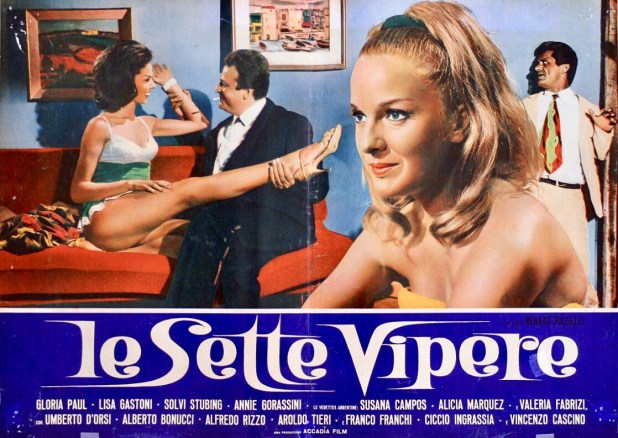
THE FILMS OF RENATO POLSELLI: Le sette vipere (Il marito latino) (1964)

It’s so strange to see a restrained Renato Polselli. But soon enough, he’d have literal insanity on the screen and we’d all be there for every moment. Until then, there’s this dramatic film in which a woman has her husband’s estate taken, him thrown out of their house and gets custody of their two children. The man flees to Italy with the children and fights for his rights, which is ahead of its time for 1964.

It was written by its star, Vincenzo Cascino, who also made 7 Golden Women Against Two 07, Le sette cinesi d’oro and produced Polselli’s The Sheriff Won’t Shoot. Polselli would often find himself working with actors who either wrote or produced their own films.

Cascino plays Lorenzo, an Argentinian industrialist married — and not happily — to Erika (Lisa Gastoni). Working with her lawyer Emilio Bernasconi (Umberto D’Orsi), she gets him in a sleazy takedown with another woman, seizes the estate and takes their children. For some reason, Lorenzo starts hearing voices in his head and, this being a Polselli movie, much of the film is given to jazz music parties with women dancing, including Solvi Stubing (Strip Nude for Your Killer), Annie Gorassini (Danger: Diabolik) and Gloria Paul (3 Supermen a Tokyo).

You can watch this on YouTube.

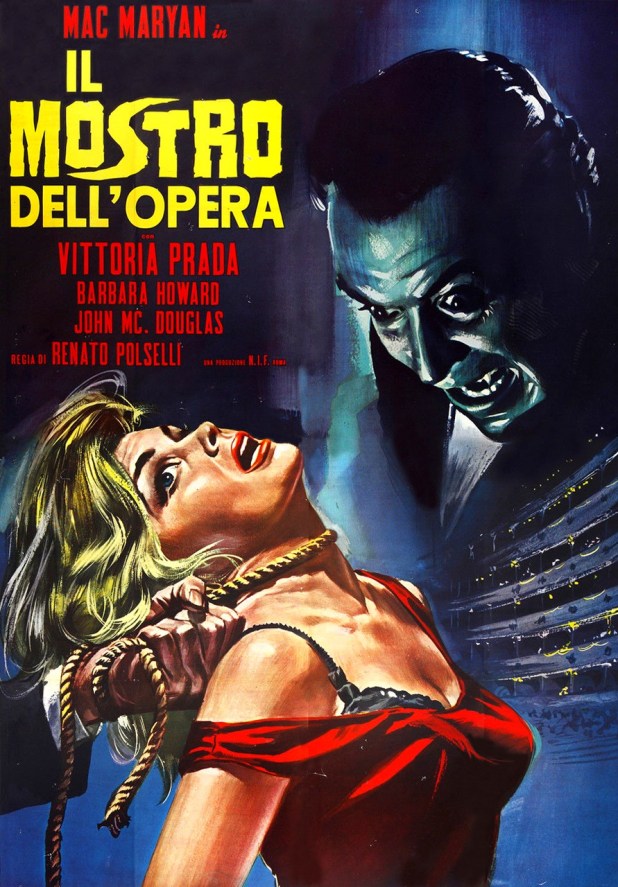
THE FILMS OF RENATO POLSELLI: The Monster of the Opera (1964)

The suggested eroticism of The Vampire and the Ballerina was amped up in Polselli’s quasi-sequel, which was a troubled production started in 1961 and was not released until three years later, it was started as Il vampiro dell’opera (The Vampire of the Opera) and once box office fortunes changed against vampires, the name was slightly altered. Along with Piero Regnoli’s L’ultima preda del vampire (The Playgirls and the Vampire), even more eroticism was added to the bloodsucking. Of course, Gastaldi also wrote all three of these movies, even if he demurred that they were movies similar to others he wrote, only with vampires.

The difference in the few years in between movies is that now the dancers may embrace and even have a timid kiss between one another. Those that devour Polselli’s later films will giggle a bit at this; no corncob penetration here. For 1964, it had to be pretty titillating. So is the opening, in which the monstrous fiend in the opera chases a woman in a nightgown who is carrying the much-needed candelabra until he stabs her with a pitchfork.

Sandro (Marco Mariani) is the leader of an experimental dance group with Giulia (Barbara Hawards) as the star. Soon they are attacked by the titular bad guy, Stefano (Giuseppe Addobatti), and his five vampire wives. The human victims must keep dancing to battle Stefano’s psychic attacks and the suggestions he’s put inside their minds to stay within his crumbling theater.

Polselli’s later films aren’t just insane. They look that way as he never stops moving the camera. That starts happening here as well and I can’t get enough of this movie. Let that fog flow in, chain those vampire women to the wall and let’s dance.

You can watch this on Tubi or buy it on the Severin Danza Macabra: The Italian Gothic Collection Volume 1 set.

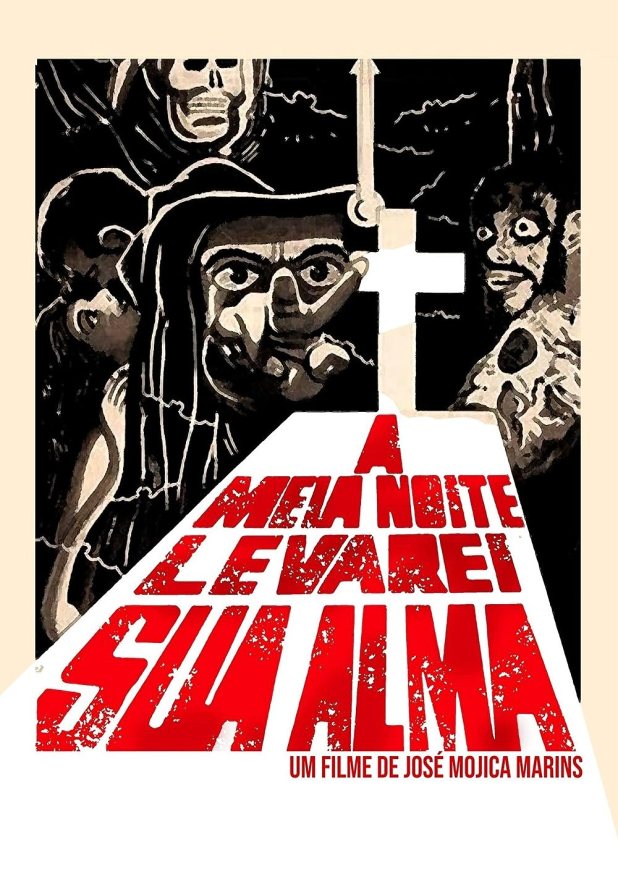
THE FILMS OF COFFIN JOE: At Midnight I’ll Take Your Soul (1964)

How badass is Zé do Caixão or as we know him, Coffin Joe?

Can you imagine the audacity to not just create this character but to become him in the midst of a country where more than 60% of the population is Catholic?

Can you even comprehend how upset people were when José Mojica Marins become the long-fingernail-wearing amoral undertaker driven to continue his bloodline by having a son with the perfect woman while murdering and ruining everyone in his wake? How did they deal with a boogeyman who filled their head with doubletalk and Nietzschian statements?

As Coffin Joe would yell, “I challenge your power! I deny your existence! Nothing exists, but life.”

The first appearance of Coffin Joe is in this movie, a film in which the evil undertaker searches for his perfect woman who will bear him the child that will make him immoral. After all, his wife is infertile, so he decides to murder her with a spider. And not just on any day. On a Catholic Holy Day. And then he decides to break another Commandment, coveting Terezinha, the fiancée of his friend Antonio.

Joe and Antonio visit a gypsy who foretells that a tragedy will keep Antonio and Terezinha from being married. This causes Joe to scream at the woman about how the supernatural is a lie, then he makes her warning come true by strangling his friend before drowning him. The very next day, he starts to court Terezinha by giving her a canary. When she resists his advances, he beats her and then assaults her. She curses him and reveals that she will kill herself — one of the gravest sins in the Catholic Church — and come back to pull him into Hell. He laughs, but the next day, she has hung herself.

The police just can’t seem to figure out why all this death is happening in this small village, but Dr. Rodolfo does. Coffin Joe responds by tearing out his eyes with his long fingernails and lighting him on fire. Problem solved. He remains unpunished and even starts to fall for another woman, Marta. On their date, he sees the gypsy who warns him that he will be punished. That night, as he walks home, the cemetery calls him, the place where all of his victims are burning. He opens the grave of Antonio and Terezinha and they begin to open their eyes as their mouths are filled with worms and insects. Coffin Joe begins to scream, as he is trapped between life and death, finally paying for his crimes as the church bells ring at midnight.

This is just the start of how strange these movies would become. If you liked the last ten minutes of this, just get ready. It gets really good from here.

CBS LATE MOVIE MONTH: 7 Faces of Dr. Lao (1964)

EDITOR’S NOTE: 7 Faces of Dr. Lao was on the CBS Late Movie on June 22 and December 14, 1973; June 30, 1975 and May 27, 1976.

The last film directed by George Pal was written by Charles Beaumont, who wrote many Twilight Zone episodes, Queen of Outer Space, Burn, Witch, Burn! and The Masque of the Red Death. Pal said that the writer had “a kooky mind like mine.” It was based on The Circus of Dr. Lao by Charles G. Finney.

Abalone, Arizona, is, well, falling to pieces. Clinton Stark (Arthur O’Connell) knows that the railroad is coming to town, so he’s trying to buy it out from under the townspeople. He’s opposed by only librarian Angela Benedict (Barbara Eden) and newspaper editor Ed Cunningham (John Ericson).

Then, the enigmatic Dr. Lao (Tony Randall) and his mesmerizing circus, brimming with magical wonders, grace the town for a fleeting two days, casting a spell of fascination over the townspeople.

Dr. Lao, a 7,321-year-old sage, arrives with his circus, assuming the roles of Merlin, Pan, a giant serpent, Medusa, Apollonius of Tyana, and the Abominable Snowman. He imparts his profound wisdom, ‘This is the circus of Dr. Lao. We show you things that you don’t know. Oh, we spare no pains, and we spare no dough; oh, we want to give you one hell of a show. And youth may come, and age may go, but no more circuses like this show.‘ His teachings are a revelation, a beacon of enlightenment for the town.

He also takes a moment to explain life to Ed’s son Mike (Kevin Tate):

Dr. Lao: Mike, let me tell you something. The whole world is a circus if you know how to look at it. The way the sun goes down when you’re tired comes up when you want to be on the move. That’s real magic. The way a leaf grows. The song of the birds. The way the desert looks at night, with the moon embracing it. Oh, my boy, that’s…that’s circus enough for anyone. Every time you watch a rainbow and feel wonder in your heart. Every time you pick up a handful of dust, and see not the dust, but a mystery, a marvel, there in your hand. Every time you stop and think, “I’m alive, and being alive is fantastic!” Every time such a thing happens, you’re part of the Circus of Dr. Lao.

Mike: I don’t understand.

Dr. Lao: Neither do I.

Despite the henchmen of Stark destroying the newspaper office — look for Royal Dano as one of them — the entire building is unharmed in the morning.

That night, during the second show, Lao shows the town a magic lantern show that relates their town to Woldercan, a kingdom destroyed by greed (and using special effects from past Pal effects movies like Atlantis, the Lost Continent and The Time Machine). The town is saved by this lesson while the henchmen decide to destroy the circus. As they break a fishbowl, it unleashes the Loch Ness Monster, who chases them away.

As the circus departs, it leaves behind a town transformed, its inhabitants filled with newfound hope and understanding, ready to embrace the magic of life.

Sources

7 Faces of Dr. Lao – Wikiquote. https://en.wikiquote.org/wiki/7_Faces_of_Dr._Lao

CBS LATE MOVIE MONTH: Children of the Damned (1964)

EDITOR’S NOTE: Children of the Damned was on the CBS Late Movie on March 6 and October 4, 1972 and September 3, 1973.

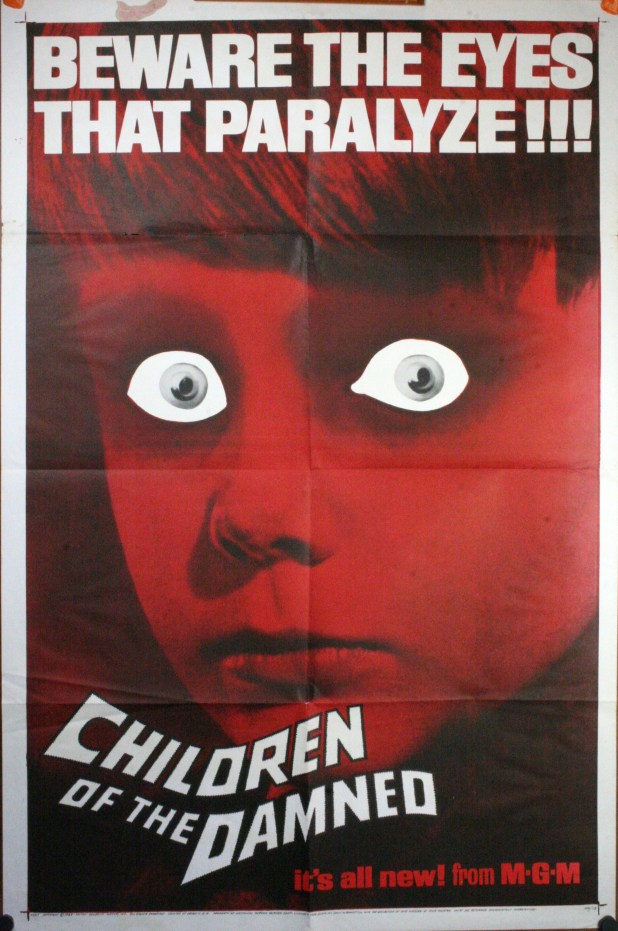
Directed by Anton Leader and written by John Briley (GhandhiPope Joan), Children of the Damned features six children from six countries, all born under miraculous circumstances. These children, with their extraordinary abilities, come to be seen as the next stage in human evolution, a theme that the film explores in depth.

British psychologist Tom Lewellin (Ian Hendry) and geneticist David Neville (Alan Badel) start by studying Paul (Clive Powell), a London-born young boy whose mother hates him. He joins the others who quickly escape and hide in an abandoned church.

Paul, Nina, Rashid, Mi Ling, Aga Nagolo, and Mark, the six children, are not just a threat to the governments of the world, but also symbols of resilience. Despite the world’s rejection, they continue to fight back when attacked, showing a strength that is both inspiring and unsettling.

The idea that these are all the children of aliens is abandoned, however, as this movie is just about the kids and not where they came from. I personally prefer the much darker first film, which delves more into the children’s origins and the implications of their abilities. However, this sequel still maintains a bleak tone as the group realizes that they have arrived at a time when humans are not yet ready to deal with evolution or have their better future selves walk among them.

Cinematic Void January Giallo 2023: Blood and Black Lace (1964)

EDITOR’S NOTE: Cinematic Void will be playing the most classic of all giallo on Friday, Jan. 20, at midnight at The Belcourt Theatre in Nashville, TN (tickets here). For more information, visit Cinematic Void.

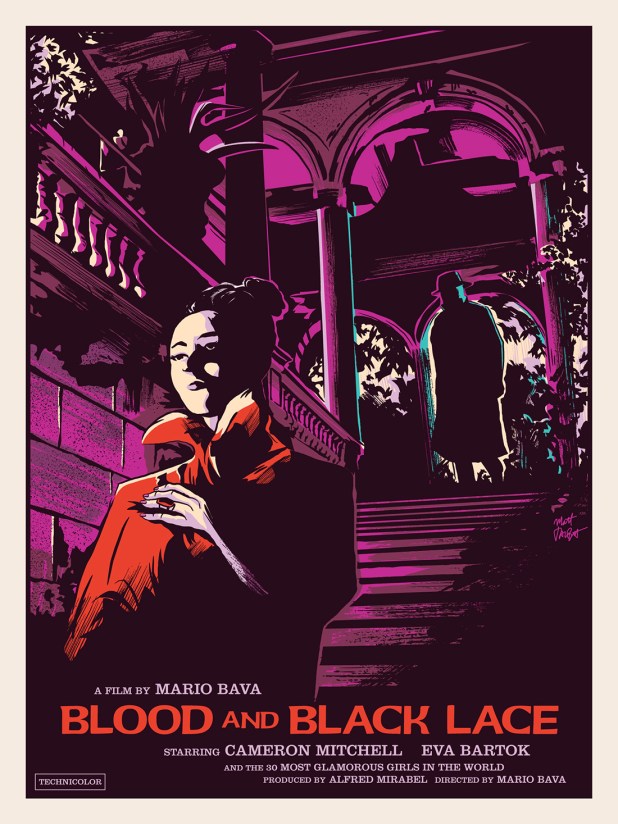
There’s no way to calculate the influence of Blood and Black Lace. It takes the giallo from where Bava started with The Girl Who Knew Too Much and adds what was missing: high fashion, shocking gore and plenty of sex. The results are dizzying; it’s as if Bava’s move from black and white to color has pushed his camera lens to the brink of insanity.

Isabella is an untouchably gorgeous model, pure perfection on human legs. But that doesn’t save her as she walks through the grounds of the fashion house and is brutally murdered by a killer in a white mask.

Police Inspector Sylvester takes the case and interviews Max Morlan (Cameron Mitchell!), who co-manages the salon with his recently widowed lover, the Countess Christina Como. Soon, our police hero discovers that the fashion house is a den of sin, what with all the corruption, sex, blackmail, drugs and abortions going on under its roof. Isabella was murdered because she had kept a diary of all the infractions against God that happened inside these four walls.

Nicole finds the diary and tells the police she will deliver it, but it’s stolen by Peggy. As she arrives at the antique store her boyfriend Frank owns, the killer appears and kills her with a spiked glove to the face. The killing is shocking. Brutal. And definitely the forerunner to the slasher genre.

Even after the cops arrest everyone in the fashion house, the murders keep on piling up. Peggy claims that she burned the diary, so the killer burns her face until she dies. Greta is smothered to death. And Tilde is killed in the bathtub, then her wrists are slit open, spraying red into the water and marking her as a suicide.

So who is it? Come on. You’re going to have to watch it for yourself.

The success of Black Sunday and Black Sabbath had given Bava the opportunity to do anything he wanted. His producers thought that this movie would be a krimi film along the lines of an Edgar Wallace adaption. Instead, Bava gave more importance to the killings than the detective work, emphasizing sex, violence and horror more than any film in this form had quite before.

Blood and Black Lace was a failure in Italy and only a minor success in West Germany, the home of Edgar Wallace. And in America, AIP passed on the film due to its combination of sex and brutality. Instead, it was released by the Woolner Brothers with a new animated opening.

Today, Blood and Black Lace is seen as a forerunner of body count murder movies and the excesses of later giallo films. To me, it’s a classic film, filled with Bava’s camera wizardry and love of color. It is everything perfect about movies.

AMANDO DE OSSORIO WEEK: Tomb of the Pistolero (1964)

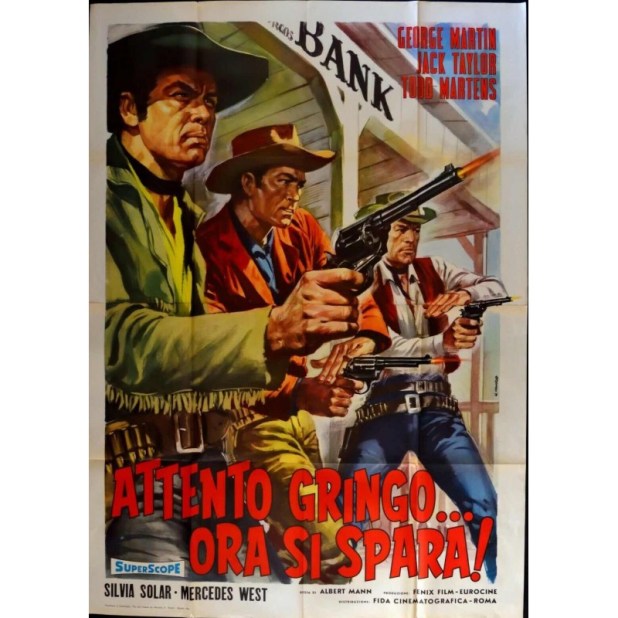
Not the first film Amando de Ossorio would make — that would be Lan Bandera Negra, a short political movie — Tomb of the Pistolero AKA Grave of the Gunfighter is about Tom Bogard (Jorge Martín) looking for the killer of his brother in the mining town of Carson City.

This feels like it has one boot in the old American westerns — indeed, one character is named Hopalong Tennessee — and the other in the new world of the Italian cowboy film. In fact, it was filmed in the same Spanish Western town as A Fistful of Dollars, a movie that would change Westerns around the world that came out the same year as this movie.

Salloon singer Taffy is played by Silvia Solar, who starred with Paul Naschy in Night of the Howling Beast and also shows up in Eyeball. Of course, Jack Taylor is in this. What actor has crossed over into so many genre subfilms? He’s in Mexican horror (The Curse of Nostradamus), lucha movies (Neutron, the Man in the Black Mask), the films of Jess Franco (so many), giallo (The Killer is One of ThirteenAutopsy), slashers (Edge of the Axe) and so much more.

DISMEMBERCEMBER: A Carol for Another Christmas (1964)

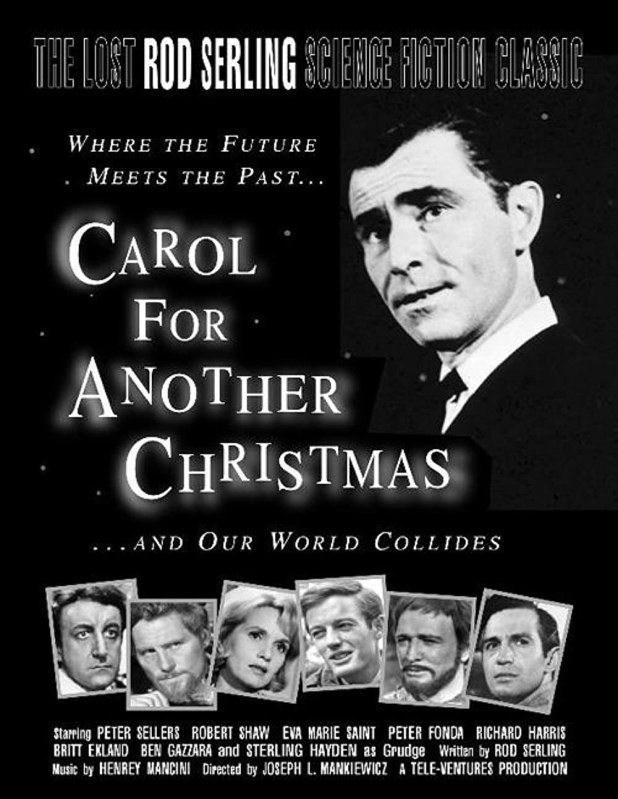
Originally televised on ABC on December 28, 1964 and was the first in a planned series of television specials developed to promote the United Nations and educate viewers about its mission — Who Has Seen the Wind?, Once Upon a Tractor and The Poppy Is Also a Flower are the others.

It sure has a great pedigree, as it was written by Rod Serling and is the only TV work by director Joseph L. Mankiewicz. It also marked the return to acting after Peter Sellers’ heart attack and has his wife at the time, Britt Eklund, in the cast.

On Christmas Eve, rich industrialist Daniel Grudge (Sterling Hayden) is alone in a dark room listening to “Don’t Sit Under the Apple Tree (with Anyone Else but Me)” by The Andrews Sisters. His nephew Fred (Ben Gazzara) comes to ask for help with a United Nations program at his college, but Daniel remarks that he’s tired of the U.S. being the world’s policeman. After all, his son Marley died twenty years ago to the day and he’s never gotten past it.

As you can imagine, three ghosts — Past (Steve Lawrence), Present (Pat Hingle) and Future (Robert Shaw) — take him through the world of isolationism and also introduces the despotic Imperial Me (Sellers) who demands that everyone left on the planet after a nuclear war kill one another until no one is left.

Serling biographer Gordon F. Sander wrote that this movie is unlike a lot of the author’s social change stories, as it ends on a down note. That may be because of the assassination of John F. Kennedy and the war in Vietnam taking more American lives. This film is very heavy handed — it also led to a right wing boycott, which yes was already happening in 1964 — and didn’t play again until nealry fifty years after it first aired.

DISMEMBERCEMBER: Santa Claus Conquers the Martians (1964)

EDITOR’S NOTE: This was originally on the site on December 25, 2017.

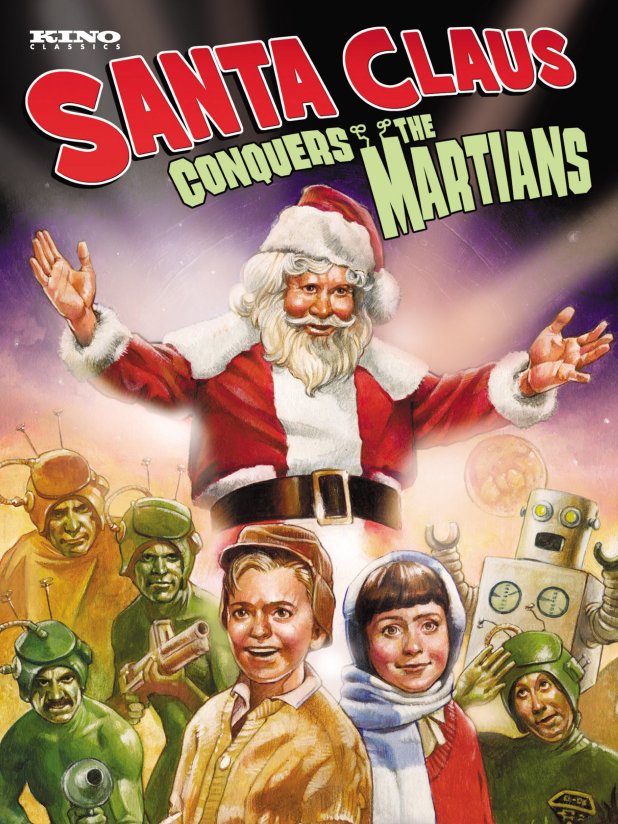
This is the absolute bottom of the holiday barrel, a trip through hell that one can never prepare themselves for. You think you’ve known pain? You’ve known nothing, to quote Samhain.

On Mars, Momar and Kimar are worried that their children, Girmar (Pia Zadora, who also sang the horrifying song “Hooray for Santa Claus,” but let’s forgive her because she was in The Lonely Lady) and Bomar are watching too much Earth TV. The big thing they’re all excited about is a live interview with Santa. But the kids have some pretty big issues — their education is fed directly into their brains with no individual thought.

The wise ancient Chochem has seen this coming for centuries and says that Mars also needs a Santa Claus. The Martians are all pretty much assholes, so they decide to steal Earth’s Santa instead of creating their own.

Along the way, the Martians kidnap two Earth children along with Santa. Voldar, a Martian hardliner, disagrees with this idea and keeps trying to kill Santa and the kids. Yes, in a holiday movie meant for children, Santa faces death. Sadly, this film is so painful, children very well may cheer for Santa’s doom in the hopes that this movie ends sooner.

Then there’s the wacky Martian named Dropo, who will challenge your will to live. There are all sorts of badly made toys, wacky hijinks and murder plots. The fact that parents would subject their kids to this travesty upsets me to this day.

Dell even had a comic tie-in, so kids could relive the ennui and forced humor of this film again and again.

It gets worse. There was an album version, so kids could listen to the shrill theme song until they puked! I’ll do you a horrible favor and share the song with you right now!

If you can make it through this movie, you get whatever you want for Christmas!

You can watch this on Tubi.