MILL CREEK SCI-FI CLASSICS: Santa Claus Conquers the Martians (1964)

ABOUT THE AUTHOR: Nate B. is the man who loved Cat Dancing and the boy with green hair. He has seen too many bad movies and not nearly enough good ones. He is the last active member of the Butch Cassidy and The Sundance Kids Fanclub, and he is currently working on writing a better bio.

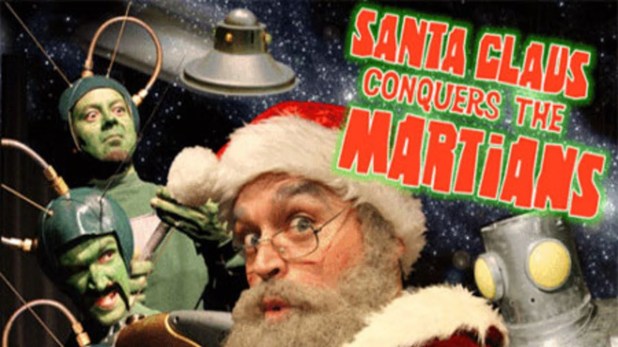
Here we go…a jewel in the crown that is postwar Americana kitsch – Santa Claus Conquers the Martians. Released in 1964 at the height of the space race, this film captures that time period in all the right ways. Not only were we gonna beat the Russians to Mars, not only would we come into contact with alien life, but we would win them over to our side! Not with guns or diplomacy, but with a jolly fat man in a red suit who epitomizes consumerism and capitalism!  It’s the kind of naive innocence from a bygone era that’s charming in its sincerity, especially because it’s a children’s movie. Unlike countless other children’s movies, this one is watchable for the older crowd, too. For a different reason, of course.
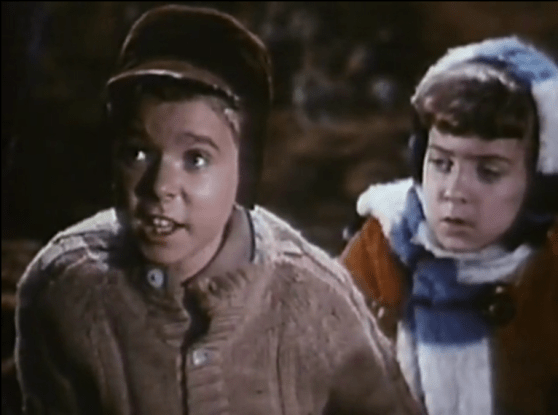
The children of Mars are sad. So a daring group of Martians take it upon themselves to abduct Old Saint Nick and have him start up his toy building and distribution enterprise for them. They pick up two Earth children in the process, and after everyone gets back to Mars they have to contend with a disgruntled jerk Martian who wants to destroy Santa because he believes he’ll make the Martian children soft (of course).

Now, Santa Claus Conquers the Martians may not be quite as technically woeful as Ed Wood films, as the filmmakers had a budget that was higher than $20 (dig that retro-futuristic Martian home!). But it shares the same genuine earnestness to thrill and entertain, which I think is what helped keep it “in circulation” in cult film circles all these years, so to speak. It has a dismally low rating on both IMDB and Rotten Tomatoes, but what do they know? I can’t find it in me to dislike a movie with a line about how the UN plans to save Santa as “the lights burn until dawn.” Not to mention Torg the robot. Or the amazing Polar Bear. Or the stock footage sourced from some Air Force training film. Or the stupidly infectious theme song that opens and closes the movie. Hooray for Santy Claus!
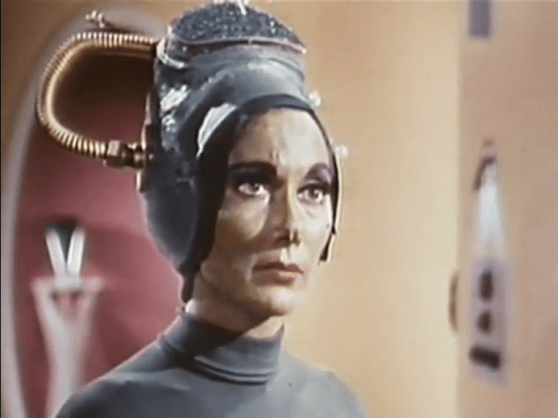
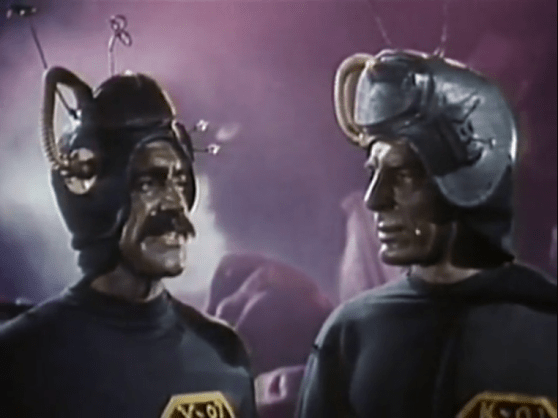
The acting in this movie is surprisingly decent. John Call is as good as you can expect a Santa to be, smoking a pipe (!) and ho-ho-hoing all the way. The guy who plays Kimar is stoic and wooden, which ends up working for an alien character devoid of emotions. Voldar, the anti-Santa Martian mentioned earlier, is great too when he drips with contempt for human concepts like ‘fun’ and’ happiness’, plus he has a terrific mustache. And Droppo, is well, Droppo. Of course, one of the reasons this movie is known is that Pia Zadora is in it.  It was her debut, and for a long while, her swan song until she resurfaced in Butterfly, a movie not as infamous as this one but still reviled in its own right. Oh well, at least she has her cameo in Naked Gun 3 to fall back on. Actually, looking up Pia Zadora on IMDB, apparently she did a movie with Telly Savalas called Fakeout. Now there’s a film that’s going straight to the top of my watch list.

Some people have made it a tradition to watch Die Hard as part of their holiday season. If you’re one of those, why not go old school this year? Santa Claus Conquers the Martians is as low on budget as it is on logic but it’s a great example of why sometimes, despite all reasons not to, a movie just strikes a chord with you through sheer audacity. Plus, it’s in the public domain! There’s a lovely Blu Ray available, but I personally prefer the lower quality prints in this case. Maybe it’s because that’s how I first saw it, and maybe because it adds to the overall vintage vibe and fits the movie’s low budget roots.
MILL CREEK SCI-FI CLASSICS: Hercules and the Tyrants of Babylon (1964)

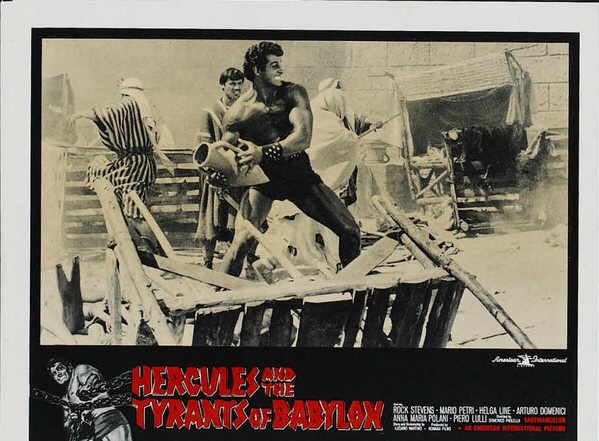
Asparia (Anna-Maria Polani) is the Queen of the Hellenes, and has been captured by the Babylonians. Somehow, she has hidden her royalty and is living as a common slave in Babylon. Hercules (Rock Stevens, who is really Peter Lupus, who played Flex Martian in Muscle Beach Party, Goliath in Goliath at the Conquest of Damascus and Superman in a series of Air Force commercials, a job he lost when he posed fully nude in Playgirl) is on his way to save her.

King Phaleg of Assyria (Mario Petri) comes to Babylon hoping to marry Asparia and unite their kingdoms. That’s stopped by the rulers of the country, Taneal (Helga Line), Salmanassar (Livio Lorenzon) and Azzur (Tullio Altamura). Hercules saves him and continues to Babylon.

When he gets there, the brothers are fighting over who gets to marry Asparia while Taneal destroys her own nation to get its riches. Brother kills brother, King Phaleg shows his true colors and Hercules does what he does best.

This was directed by Domenico Paolella, who directed his first movie,  Gli ultimi della strada, in 1940 and wrote his last, Power and Lovers, in 1994. He also wrote the story with Luciano Martino.

The problem I have with this is that Helga Line, as a murderous maniac, is so much more attractive than Polani. If I had the power of Hercules, I know that my decisions would not be as godly.

Don’t have the box set? You can watch this on Tubi.

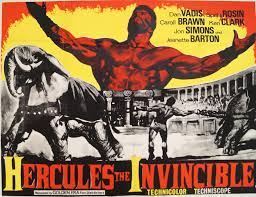
MILL CREEK SCI-FI CLASSICS: Hercules the Invincible (1964)

Ercole l’invincibile came to American audiences as Son of Hercules in the Land of Darkness. Of these thirteen movies in the Embassy Pictures package offered to TV channels, two had Hercules, none had his children Alexiares, Anicetus, Telephus, Hyllus and Tlepolemus, and four were Maciste movies.

Ercole, or Hercules, is played by Dan Vadis, a former U.S. Navy sailor and bodybuilder who was a member of the Mae West “Muscleman Revue.” He had already played Hercules in The Triumphs of Hercules and after these movies, moved into Westerns, the films of Clint Eastwood and finished his career in Seven Magnificent Gladiators.

After saving Telca (Spela Rozin, Strange Girls) from a lion, her father Kabol (Ken Clark) offers her hand in marriage if he gets a dragon’s tooth for him. That tooth is impossible to pull out unless the dragon is dead, but a witch (Olga Solbelli) claims she can help make a spear. But that tooth has magic that only works once and the witch also wants the tooth. There is also a tribe of cannibals who eat hearts called the Demulus, led by Ella (Carla Calo).

Director Alvaro Mancori was also the cinematographer of the peplum horror crossover Goliath and the Vampires. He used the name Al World here and in the only other movie he made, the anthology The Double Bed, he was Al Wood.

Don’t have the box set? You can watch this on Tubi.

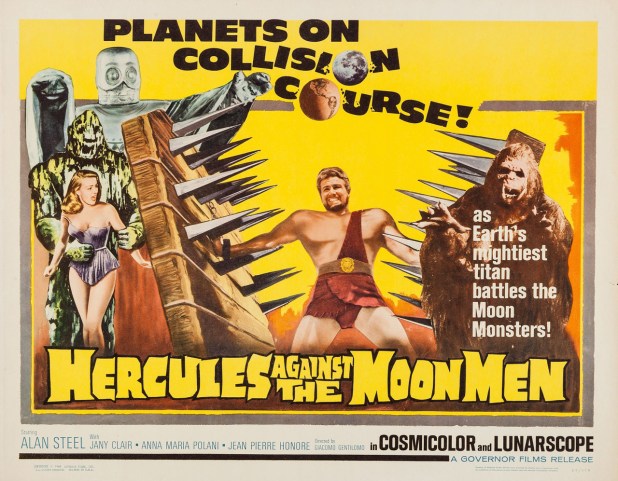
MILL CREEK SCI-FI CLASSICS: Hercules Against the Moon Men (1964)

I love when a film series sticks around long enough to battle aliens. Hercules is no different, as now he must battle the evil Queen Samara (Jany Clair, Planets Against Us)  and her army of Moon Men, who demand that children be sacrificed to bring back their dead leader.

Hercules is played by Sergio Ciani, who used the stage name Alan Steel. He got his start doubling for Steve Reeves in Hercules Unchained and The Giant of Marathon. His run of seven Hercules films is filled with crazy situations to keep the peblu genre alive, such as Hercules and the Masked Rider, which had a Zorro theme, and Hercules and the Treasure of the Incas, which started as a sword and sandal movie and became a western after A Fistful of Dollars became a major hit during filming.

If you’re expecting this movie to be true to its mythological origins, you should know that it borrows from Roman, Greek, Ancient Egyptian and Cretan stories, as well as even soem Edgar Rice Burroughs. In Italy, Steel really playing Maciste, who was a star of silent Italian cinema, but American distributors changed him to Hercules.

Look, it’s Hercules against moon men with giant heads. You should be so lucky.

Don’t have the box set? You can watch this on Tubi to download this from the Internet Archive.

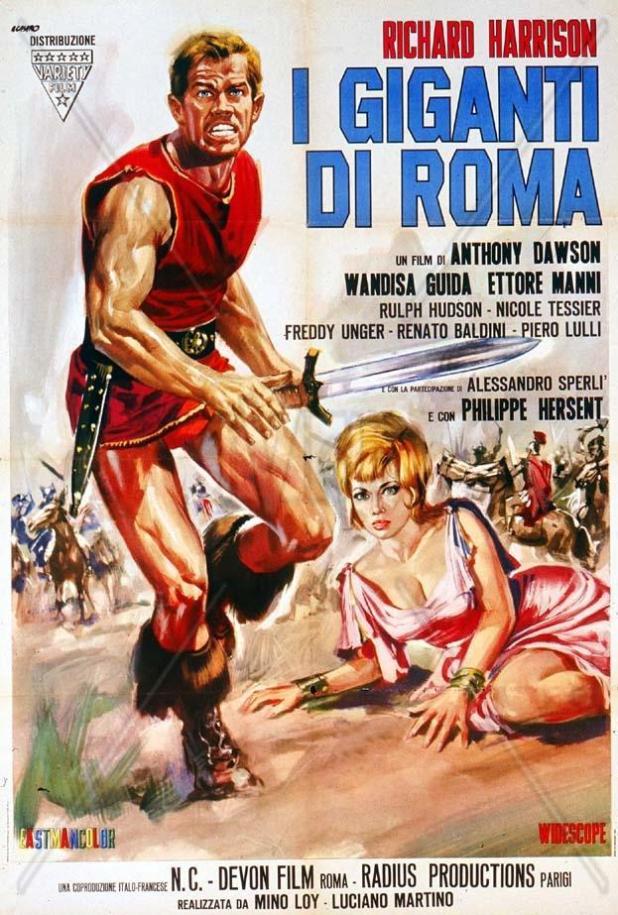
MILL CREEK SCI-FI CLASSICS: Giants of Rome (1964)

A handpicked group of soldiers — by Julius Caesar, no less! — must break into the druid stronghold to locate and destroy the secret weapon that could help them win the Battle of Alesia. They are centurion Claudius Marcellus (Richard Harrison, not yet in the world of Godfrey Ho), Germanicus (Ralph Hudson, who was only in one other movie, Ape Man of the Jungle), knife thrower Varus (Goffredo Unger) and Castor (Ettore Manni, who hits all the various genre of Italian exploitation cinema from this peplum to westerns like For a Few Extra Dollars, poliziotteschi like Calling All Police Cars, giallo such as A.A.A. Massaggiatrice bella presenza offresi… and even is in Fellini’s City of Women and Bava’s Rabid Dogs). They are joined by the young Valerius (Alberto Dell’Acqua, who is in a ton of westerns as well as Zombi), who wants to be a soldier like all of them.

They are captured and placed in a cell next to noblewoman Livilla (Wandisa Guida, Miss Cinema of 1954, who is also in I Vampiri) and her bodyguard Drusus (Philippe Hersent, So Sweet, So Dead) whose spirit has been destroyed by the tortures of the terrifying druid Vercingetorix (Renato Baldini, Who Killed the Prosecutor and Why?). He tries to do the same thing to Claudius Mercellus, threatening him with heated metal, and the centurion just picks it up and burns his own chest with it. Man, these guys are tough. Anything to find that catapult, right? Even if the kid has to die.

This movie was directed by Anthony Dawson, whose name I love to say because he’s really Antonio Margheriti. This was written by the always busy Ernesto Gastaldi along with Arlette Combret and producer Luciano Martino.

As the genres go in fashion in Italy from sword and sandal to westerns, the final films of the glory days of peplum begin to give way to other films and be inspired by them. This could be a war movie other than the costumes.

You can watch this on Tubi.

CHILLER THEATER MONTH: Terror In the Crypt (1964)

EDITOR’S NOTE: Terror In the Crypt was on Chiller Theater on Saturday, October 7, 1967 at 1:00 a.m. It also appeared on November 21, 1970.

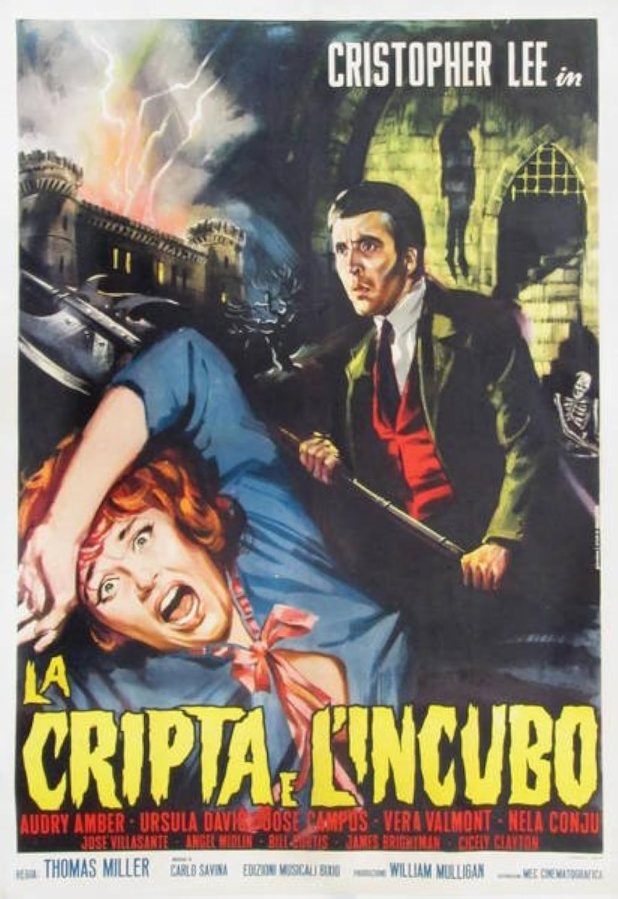
La cripta e l’incubo was released in the U.S. on TV by American-International Pictures and retitled Terror In the Crypt. The script was called La maledizione dei Karnstein and Ernesto Gastaldi said that he wrote it in a day. It’s based on Carmilla and is the third adaption of that book after Vampyr and Blood and Roses.

Antonio Margheriti was the intended director but was busy, so Camillo Mastrocinque, who usually made comedies, directed. He also directed An Angel for Satan. He was helped by co-writer and assistant director Tonino Valerii, who would direct some great Westerns like The Price of PowerDay of Anger and My Name Is Nobody as well as the giallo My Dear Killer.

Count Von Karnstein (Christopher Lee) claims that his family is cursed and the next victim is his daughter Laura (Adriana Ambesi).  She keeps dreaming of horrific scenes where she finds people with all of the blood drained out of their bodies.

That’s because Sira Von Karnstein, one of their ancestors, was killed for being a witch which has led to the family suffering for centuries. The maid conducts a ritual — with a hand of glory created from the body of a lynched and decapitated dwarf — that brings back Sira just in time for another girl to show up named Lyuba (Ursula Davis) and the murders — and an obsession between Laura and the young lady — to really begin.

This may start to feel like a cover version of some of your Italian gothic horror favorites — fog, skeletons, a woman being put to death and cursing everyone, white gowns barely covering gorgeous Italian women — but those are some pretty awesome things to bring back. I’m for all of it, including Christopher Lee as the hero.

You can watch this on Tubi.

2023 Scarecrow Psychotronic Challenge Day 26: The Long Hair of Death (1964)

26. ANY WITCH WAY YOU CAN: Cast your eyes upon a spellbinder.

Adele Karnstein (Halina Zalewska, An Angel for Satan) is accused of witchcraft and burned, but really it’s because she wouldn’t sleep with Count Humboldt (Giuliano Raffaelli). When her daughter Helen (Barbara Steele) confronts him, she even offers her body to him to save her mother. The Count still watches as her mother is burned alive and tosses Helen off a cliff. To add even more pain to the Karnestein family, her sister Lisabeth (also Halina Zalewska) is taken in by Humboldt and eventually married to his nephew Kurt (George Ardisson).

As a plague destroys the country, a storm blows in on the night of the Count’s death, bringing Mary (also Barbara Steele) who inspires Kurt to kill his wife and be with her. Bad idea Kurt. This is an Italian Gothic and all men are morons who must be destroyed by the female ghosts of past tragedy and the curses of mothers whose daughters could not save them.

I mean, Barbara Steele is a ghost whose skeleton is reanimated by lightning. Can movies get any more magical? Do you know how much it makes me fall into a dream of movie drugs to have Steele walking through a cobwebbed castle in a white nightgown holding blazing candles?

While written by Ernesto Gastaldi and Tonino Valerii, neither had enough experience to direct — or so said producer Felice Testa Gay — which brought in Antonio Margheriti to make the film. For as much as Margheriti is known for his miniature-rich war movies, he had a talent for making movies like this. Just check out Castle of BloodThe Virgin of NurembergThe Unnaturals and Web of the Spider (which is the first film on this list but in color and without Steele).

You can watch this on YouTube.

UNSUNG HORRORS HORROR GIVES BACK 2023: Castle of Blood (1964)

Each October, the Unsung Horrors podcast does a month of themed movies. This year they will once again be setting up a fundraiser to benefit Best Friends, which is working to save the lives of cats and dogs all across America, giving pets second chances and happy homes.

Today’s theme: Hail Satan

Co-directed by Antonio Margheriti and Sergio Corbucci (yes, the same man who made Super Fuzz), this was originally going to be directed by Sergio’s brother Bruno. Due to a scheduling conflict, Margheriti came in and Sergio did one scene to keep things moving.

Producer Giovanni Addessi had commissioned Sergio to create a film that would reuse the medieval sets from The Monk of Monza. Meanwhile, even though she had done Fellini’s 8 1/2 and wanted to not be seen as strictly a horror actress, assistant director Ruggero Deodato talked Barbara Steele into being in this film.

After he meets Edgar Allan Poe, reporter Alan Foster (Georges Rivière) says that all of the author’s books came not from reality but instead his imagination. ord Thomas Blackwood (Umberto Raho) asks if he’d like to see the supernatural and invites him to spend the night in his castle. Moments after he arrives, he learns that Elisabeth (Steele) gets one night a year to spend with someone. Tonight is that night. They make love and as he lies his head on her chest, she says, “My heart doesn’t beat – it hasn’t for ten years. I’m dead.”

They aren’t alone. Her sister Julia (Margarete Robsahm) is also there and seems angry that Alan and Elisabeth have fallen in love. The past is revealed to Foster that Elisabeth was once married and fell in love with a stable boy before being killed. And Julia’s jealousy is not for Alan, but the fact that she’s been in love with Elisabeth all this time. Oh yes — if Alan doesn’t escape, his blood will be used in a dark occult ritual to bring every ghost back from the dead and into our world.

This was released in Italy as Danse Macabre and even has a French version where Steele’s character appears nude. It’s not her, but instead actress Sylvia Sorrente.

Margheriti decided to remake this seven years later as Web of the Spider with Klaus Kinski as Poe, Michèle Mercier as Elisabeth and Anthony Franciosa as Alan. He would later say that he was “stupid to remake it” and that “the color cinematography destroyed everything: the atmosphere, the tension.”

UNSUNG HORRORS HORROR GIVES BACK 2023: Rome Against Rome (1964)

Each October, the Unsung Horrors podcast does a month of themed movies. This year they will once again be setting up a fundraiser to benefit Best Friends, which is working to save the lives of cats and dogs all across America, giving pets second chances and happy homes.

Today’s theme: The undead

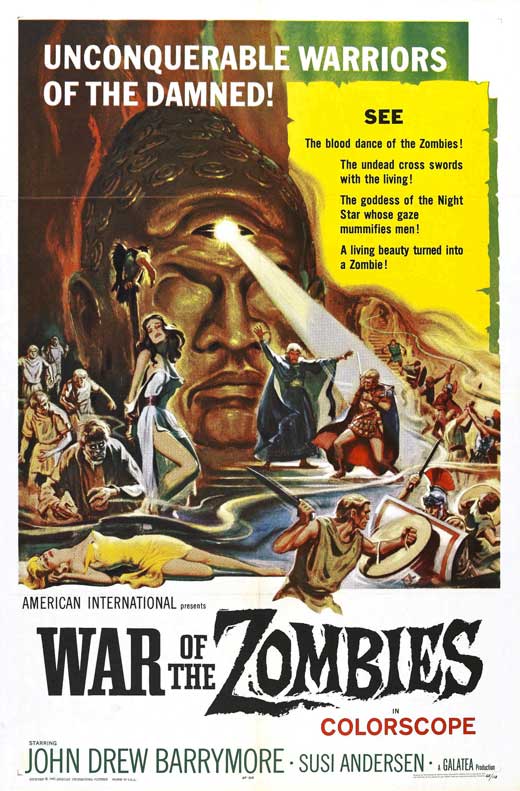
Also known as War of the Zombies, Rome Against Rome was the second to last film from the Galatea production company (some of their other films include Black SundayBlack SabbathMill of the Stone Women and Ghosts of Rome). It was directed by Giuseppe Vari, who used the name Joseph Warren, and also made The Last KillerShoot the Living and Pray for the DeadWho Killed the Prosecutor and Why?, Sister Emanuelle and Urban Warriors. Its story came from Ferruccio De Martino (who usually was a production manager) and Massimo De Rita (Violent City, The Valachi PapersStreet Law) with a script from Piero Pierotti (who directed Hercules Against Rome and Marco Polo) and Marcello Sartarelli.

In a remote part of the Roman Empire, cult leader Aderbad (John Drew Barrymore, Drew’s father) is working with the governor to create their own land using the corpses of Roman soldiers brought back from the dead. Centurion Gaius (Ettore Manni) is sent to protect the interests of the senate.

Most of the production money probably went toward making Aderbad’s secret rooms look like something out of Bava, because the actual fight scenes are taken from Hannibal. Susy Anderson (Black SabbathThor and the Amazon Women) and Ida Galli (The PsychicArabella: Black AngelThe Sweet Body of DeborahThe Whip and the Body) are also on hand.

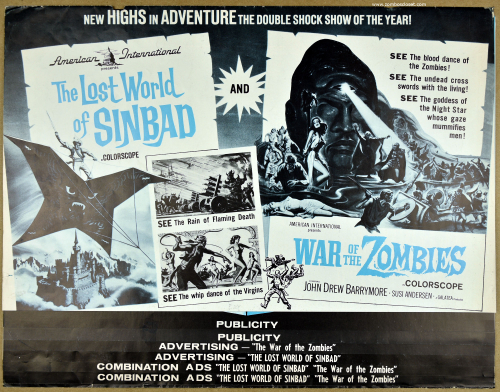
American-International Pictures played this movie as a double feature with Senkichi Taniguchi’s Samurai Pirate, which they named The Lost World of Sinbad. When it was time for Rome Against Rome to air on TV, it was renamed the completely incredible title Night Star: Goddess of Electra.

I wish that there was more to recommend this movie than just as a curiosity. Peplum was giving way to the western, so anything was being tried at this point. According to Mondo Esoterica, two other horror and sandal hybrids are Goliath and the Vampires and, of course, Hercules in the Haunted World.

UNSUNG HORRORS HORROR GIVES BACK 2023: The Hyena of London (1964)

Each October, the Unsung Horrors podcast does a month of themed movies. This year they will once again be setting up a fundraiser to benefit Best Friends, which is working to save the lives of cats and dogs all across America, giving pets second chances and happy homes.

Today’s theme: 1960s

Director and writer Gino Mangini claimed that he wrote hundreds of movies, but IMDB lists 21. There’s a lot of peplum on that list, as well as a very late in the day mondo, Mondo cane 2000 – L’incredibile, which was made in 1988 and directed by Gabriele Crisanti, the producer of Giallo In VeniceBurial Ground and Patrick Still Lives, three of the grimiest movies ever allowed to escape the camera. Oh yeah, he also produced Gesichter des Todes V. That’s right. The bootleg German Faces of Death 5.

1883 London: Martin “The Hyena” Bauer has been strangling people for three years before Scotland Yard finally brings him to the gallows. Except that his body disappears from the morgue and the killings start all over again.

Dr. Edward Dalton (Giotto Tempestini) believes that the killer is back from the grave, but he’s also dealing with his daughter Muriel (Patrizia Del Frae) dating a man not right for her named Henry Quinn (Luciano Stella who you know better as Tony Kendall). No problem, because Dalton’s assistant Dr. Anthony Finney (Angelo Dessy) frames Henry for the killings. But ahh…what if Dalton had been putting pieces of Bauer’s brain into his own and transferred the need to kill to himself?

I thought this was going to be an early giallo and it’s quite nearly a soap opera. But hey — the ending! What kind of bullshit science is that? Oh, Italian exploitation bullshit science.

The Francesco De Masi score for this movie was taken from Riccardo Freda’s The Ghost and would return again for Joe D’Amato’s Beyond the Darkness. And hey! There’s Luciano Pigozzi in the cast!