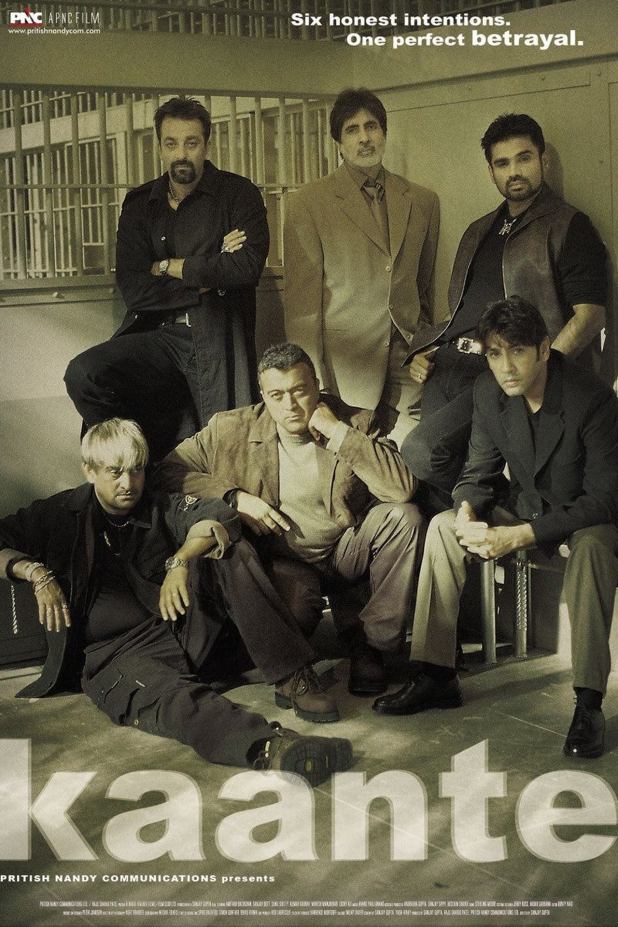
APRIL MOVIE THON 3: Kaante (2002)

April 3: Remake, Remix, Ripoff — A shameless remake, remix or ripoff of a much better known movie. Allow your writing to travel the world (we recommend Italy or Turkey).

The first Bollywood film to be completely shot in Los Angeles, Kaante combines The Usual Suspects with Reservoir Dogs and the inspiration of Tarantino’s movie, City On Fire, and becomes its own movie. Director and co-writer Sanjay Gupta said of the movie, “The whole world thinks Kaante is Reservoir Dogs. No, it isn’t. There are a few similarities in the second half of the film, but the genesis of Kaante was the Tribhovandas Bhimji Zaveri & Sons Jewellers robbery case, which was later made into the film Special 26. Till today, that’s unsolved. My idea was: ‘What if they were six boys from Dagdi Chawl, who conducted the most successful heist in the history of India, go back to Dagdi Chawl, which is suddenly surrounded by cops?”

Six Indian men living in America — all with a criminal record — are arrested by the police and interrogated about stealing laptops. Enraged at being profiled, they work to rob a bank where the LAPD paychecks come from.

They are Jay “Ajju” Trehan (Sanjay Dutt), Yashvardhan “Major” Rampal (Amitabh Bachchan), Marc Issak (Suniel Shetty), Andy (Kumar Gaurav), Bali (Mahesh Manjrekar) and Mak (Lucky Ali). After the bank robbery — during which they have an extended gunfight with a SWAT team — they go back to their secret hideaway. There, Bali goes all Mr. Blonde on a police officer and gets killed by Mak, who ends up being Mr. Orange.

So, yes, imagine Tarantino but add in a near 3 hour running time because, of course, Indian Hindi-language movies need music numbers.

Quentin himself said that this movie was his favorite of all the movies influenced by his work. “I think it was fabulous. Of the many rip-offs, I loved Hong Kong’s Too Many Ways To Be No.1 and this one, Kaante. The best part is, you have Indian guys coming to the U.S. and looting a U.S. bank. How cool is that! I was truly honoured. And these guys are played by the legends of Bollywood. Here I am, watching a film that I’ve directed and then it goes into each character’s background. And I’m like, “Whoa.” For, I always write backgrounds and stuff, and it always gets chopped off during the edit. And so I was amazed on seeing this. I felt, this isn’t Reservoir Dogs. But then it goes into the warehouse scene, and I am like, “Wow, it’s back to Reservoir Dogs.” Isn’t it amazing!”

Tarantino later screened Kaante at his New Beverly Cinema with Reservoir Dogs and City on Fire.

It is amazing as it shows so much more than its inspiration. There’s a lot that explains why the characters are getting involved in the robbery, such as Marc wanting to save his dancer girlfriend from a club owner, Major is trying to save the life of his terminally ill wife and Andy is trying to get custody of his son.

It also has so much influence from other American movies, as Gupta tried watching Reservoir Dogs but found it boring as he loved the movies of  Bruce Willis, Arnold Schwarzenegger and Sylvester Stallone. He didn’t want too much talking and instead, you get explosive battles. The arrest and interrogation scenes are very close to The Usual Suspects and the tip of the cap to that movie is that the main officer is named Detective MacQuarrie, a reference to screenwriter Christopher McQuarrie.

How realistic is the idea of this movie? Suniel Shetty, after going back to his hotel after working out, was taken by the police as they suspected he was a terrorist as this movie was filmed right after 9/11.

You can watch this on YouTube.
About Joe Flaherty

When I was a kid, maybe around 1979, WPGH in Pittsburgh had an ad for a new show called SCTV. Now, the name means Second City Television from the Second City theater in Chicago, which always took pride as a second-rate city. Pittsburgh was way lower on the list of important cities, but the commercial pointed out that one of the cast members, Joe Flahery, was from here. And if anything, Yinzers are beyond proud of the people who come out of our city.

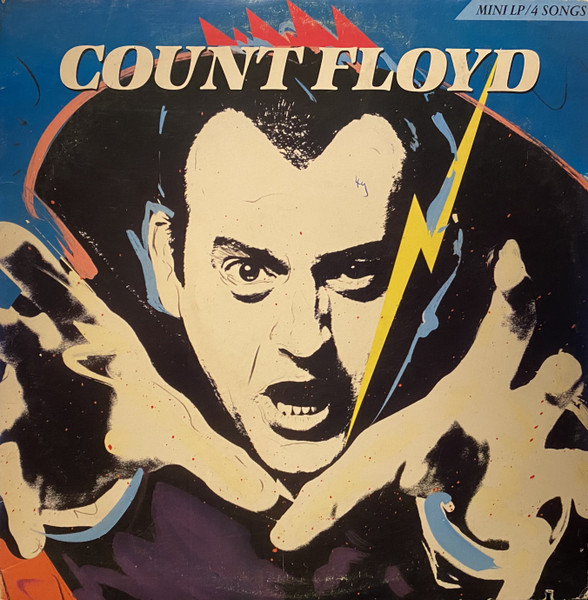
Starting at Second City in 1969. he eventually moved to Canada to start the second school. While there, he was part of the TV show SCTV and played numerous roles, such as TV newsman Floyd Robertson, who was also horror movie presenter Count Floyd. He based this role on “Chilly” Billy Cardille from his hometown, to the point that episodes where Count Floyd showed art movies and had to act like they were scary. This comes directly from Chiller Theater spending a few weeks under the title The Saturday Late Show, showing Italian films like Crazy DesireNo Love for JohnnieThe Reluctant Spy, The 10th Victim, Dingaka, Sins of Casanova, The Success, Casanova 70, Red Culottes, Yesterday, Today, and Tomorrow, The Easy LifeMarriage, Italian-Style; Boccaccio ’70; The Naked Kiss and The Bigamist.So when Count Floyd showed Ingmar Burgman’s Whispers of the Wolf and asking when the werewolf would show up, it was based on movies he had seen growing up. Count Floyd was so complete with his Chiller Theater impression that he was often joined by a sidekick known as The Pittsburgh Midget, played by Flaherty’s brother Paul Flaherty. He’s a nod to Stefan, the Castle Prankster, who was played by Stephen Michael Luncinski on Chiller Theater.

If you read enough of my writing, you’ll notice I say “blow ’em up real good.” That comes directly from Big Jim McBob, another Flaherty character. I also love Guy Caballero, the owner of SCTV, who uses a wheelchair for respect.

For as much as everyone worships the early years of Saturday Night LiveSCTV was always better.

Flaherty played a lot of cameos in his career. He’s probably best known for playing the Western Union worker who gives Marty the note at the end of Back to the Future 2 as well as the stalker who keeps bothering Happy Gilmore. He was also on Maniac Mansion.

But these are just roles. His family has lost a father, one who his daughter said he loved old movies and they got to share that together.

For me, he proved that you could be creative and come from Pittsburgh without losing who you were. So many episodes of Count Floyd had references to West Mifflin and the Golden Triangle, things no one in the rest of the country would know about.

Imagine my joy in learning that other people loved Flaherty and his roles as much as I did and they weren’t just from here.

If you’ve never watched any of his work, please do. It felt like such a secret language when I was young to know SCTV. Now, I want to share it and spread it. So much of what this great man did that made me laugh made me who I am and what I write.

APRIL MOVIE THON 3: This Is America (1977)

April 2: Mondo Madness — Write about a mondo movie.

There was no internet in 1977 and the world was much larger, so the idea of what was in America could be seen as mysterious as countries like Africa that mondo filmmakers had already explored.

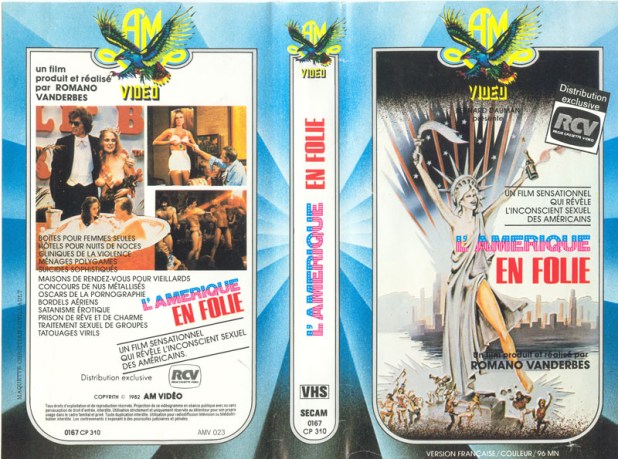
Directed and written by Romano Vanderbes (who also made This Is America Part 2The Sex O’Clock NewsAmerica Exposed and the compilation Sex Maniac’s Guide to the U.S.A.), this is also known as Jabberwalk and starts with “America the Beautiful” being played by The Dictators.

The America in this movie is the one that the right warns you about. It’s a place where demolition derbies, pro wrestling — there’s Ivan Putski! — and mud wrestling are our three biggest sports. Polygamy, nude beaches are packed, love boutiques are shopped by teenage girls, quick divorce and fast marriage is the order of the day, plus there are rentable BDSM dungeons, group sex encounter groups, dildo factories and legal brothels are everywhere. Even when people decide to actually get married, they go to the Poconos and have to undertake mandatory gun shooting classes to prepare them for the cities and suburbs of the United States where violence is a celebrated fact of life. Even church is just done inside your car now so you can keep moving to whatever is next, which is usually sex or death or being hooked up to electrodes that shock you when you eat too many french fries. Sorry. Freedom fries.

Also known as Crazy Ridiculous American People, this has everything from Don Imus hosting the 1975 Miss All Bare American pageant to a worship ceremony at the Church of Satan (incorrectly saying that people get so excited that they start hurting one another during rituals), a dildo salesman, the Eros Awards for pornography — look for Fanne Fox, Bree Anthony, female rock band Isis, Ron Jeremy, C.J. Laing, Marc Stevens, Helen Madigan, Darby Lloyd Rains and naked people painted silver — as well as Arnold casually walking out of a Gold’s Gym, the AccuJack masturbation machine, a man getting his penis tattooed, hot dogs being made, a clown church, suicide’s being fished out of the water around the Golden Gate Bridge (by the way, when my wife and I were first dating, she made me watch The Bridge doc about this while drunk and I was worried why I was allowing her in my house and now we’ve been married for nine years), cryogenics, drive-in funerals, brothels for senior men where older women are paid five and even ten dollars to sleep with them, a bank robbery, the many deaths in an Indianapolis 500 race, co-ed prisons, Mormon men with twelve wives and so much more.

At one point, before that internet I discussed at the open and the one you’re reading this on now, these movies were shocking. Then again, Vanderbes is Dutch and should know all about Amsterdam and that America is pretty puritanical, but maybe in 1977 we were all about sex before Reagan and the Religious Right and AIDS.

It’s all voiced over by Norman Rose, who narrated Harold and the Purple CrayonTennessee TuxedoMessage from Space, Pinocchio in Outer SpaceWar Between the Planets and Destroy All Monsters. He’s also Mr. Smith, the perverted dirty caller who gets Alice so excited in The Telephone Book.

What really gets me is that no matter how much sex is in this movie, there’s also the specter of Americanized violence leading everything. Our country was won by the gun and as movies like this and The Killing of America remind me, this kind of bloodshed that we gives hopes and prayers for every time and say that we can’t stop it and then it happens every single day. But it was like that in 1977 too as this movie continually reminds us. Worse, if it can get that way, kids today are upset about anything sexual while also fascinated, but not enough to make anything artistic or awesome. What I;m saying is that the 1970s of this movie are so far away that they only exist in this amber-grasp of VHS scuzz.

You can watch this on YouTube.

APRIL MOVIE THON 3: Justine (1969)

April 1: Drop A Bomb — Please share your favorite critical and financial flop with us!

No, not Jess Franco’s Justine which came out the same year.

This is a bigger movie.

Maybe not better.

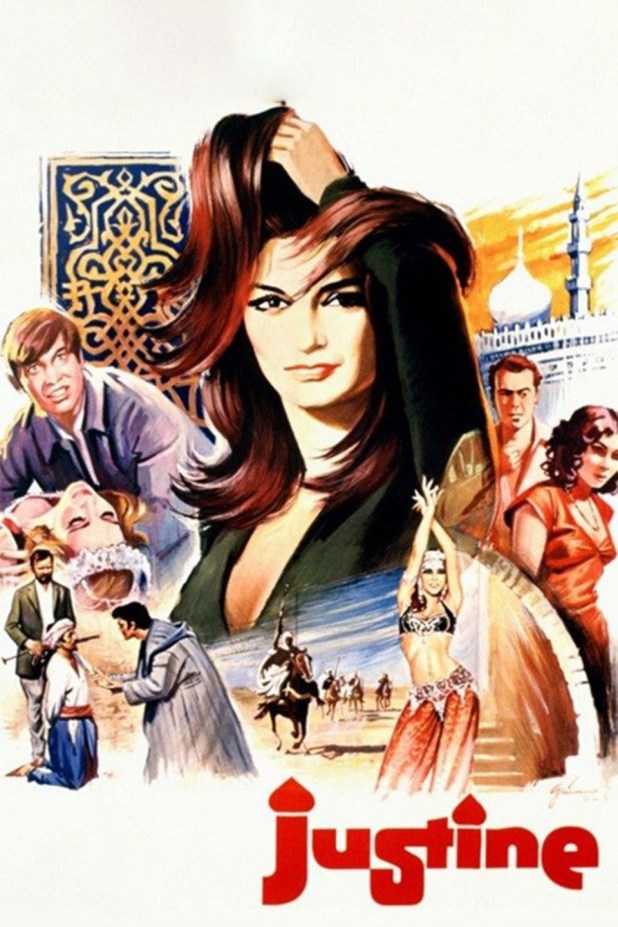
Directed by George Cukor and Joseph Strick and written by Lawrence B. Marcus from the novel by Lawrence Durrell, Justine takes what is seemingly an impenetrable source and turns out, well, something.

Why two directors? The pre-production was done by Strick, who intended to shoot the movie in Morocco. He did some location filming there, but battled Fox execs and star Anouk Aimée. When he did not hire along with the studio’s wishes — and fell asleep on the set while working — Cukor was brought in. Instead of shooting on location, the rest was shot in Hollywood.

It ended up losing $6,602,000, which in today’s money is $55,824,857.00.

Let’s go back a bit. The book that this was based on is part of The Alexandria Quartet, a tetralogy of novels by British writer Lawrence Durrell. The first three books are a Rashomon-like telling of three perspectives on a single set of events and characters in Egypt, before and during the Second World War. The fourth book is set six years later. Justine is the best-known of these books. The author saw the four novels as an exploration of relativity and the notions of continuum and subject–object relation all within the theme of modern love.

Seems like a blockbuster, right?

In the book, the narrator — unnamed but revealed as a man named Darley in later novels — tells of his time in Alexandria and his tragic romance with Justine, a mysterious Jewish woman who was once poor and now married to the rich Egyptian Nessim. Darley is quite similar in background and life to the actual writer of this book.

I love the way that Justine herself is described: “alluring, seductive, mournful and prone to dark, cryptic pronouncements.” Feels like my dating history. There’s also another book within the book written by another lover of Justine, as well as her diary, all of which tell of her many lovers and teh dark hurricane that she brings into the lives of men.

There are also bits about the study of the Kabbalah and secret political games.

As for Durrell, he was born in India to British colonial parents and spent much of his life traveling the world. He worked as a senior press officer to the British embassies in Athens and Cairo, press attaché in Alexandria and Belgrade and director of the British Institutes in Kalamata, Greece and Córdoba, Argentina. He was also director of Public Relations for the Dodecanese Islands and Cyprus. Yet he resisted only being listed as British and didn’t even have citizenship, needing to apply for a visa every time he came to the country, which was embarrassing to diplomats. Also, he may have had a relationship with his daughter Sappho Jane, who was named for the Greek poet whose name is associated with lesbianism.

It’s hard to sum up an artist’s complex life in one paragraph but there you go.

Anyways, this movie feels cursed. Even people who left it worked on bombs. For example, Joseph L. Mankiewicz was working on the screenplay when he was approached to take over Cleopatra. Speaking of that movie, it’s failure led to original producer Walter Wanger being fired and original star — and the person often blamed for Cleopatra — Elizabeth Taylor being replaced.

The actress who was picked to play Justine, Anouk Aimée, was so upset at being separated from her lover Albert Finney that she wanted to leave. The actor had to visit her and tell her to complete the movie. In the book Conversations with My Elders, Cukor was asked who the worst actor he had ever worked with. He answered Aimée, saying “That picture could have been much more than it was allowed to be.” He said that the problem was “Attitude. Intractible. Like Marilyn Monroe, but without the results. Let me tell you, that girl knew she’d probably never work in Hollywood again, or she’d never have defied me like that.”

I love this review from Roger Ebert: “What Cukor has salvaged from this morass is rather remarkable. “Justine” is a movie that doesn’t work and is usually confusing, but all the same it’s a movie with a texture, an atmosphere, that’s almost hypnotic. People who go to movies to enjoy the story will be enraged, and people who go to Justine with any familiarity with Lawrence Durrell’s Alexandria Quartet will be appalled. But people who go to movies to watch the way scenes work, and to relish the rhythm of an actor’s performance, will like Justine more than they expected to.”

There’s a great cast at least. Nessim is played by John Vernon, Darley by Michael York, Narouz is Robert Forster, Pursewarden is Dirk Bogarde, plus there are roles from Jack Albertson, Michael Constantine, Michael Dunn, Barry Morse and Severn Darden. They’re great actors seeking a script to work with and sometimes it works, but there’s so much to get through and the first hour seemingly is formless. I don’t know if this film came out today if anyone would even feel like wading through it; attention spans have changed greatly in its lifetime.

In the 60s, 20th Century Fox seemed like they were unable to get anything going. Cleopatra was such a failure that they had to release all of their contract actors just to save money and sold their studios to Alcoa. They were saved by the box office of The Longest Day, The Sound of MusicFantastic Voyage and Planet of the Apes but would make other flops from 1969 to 1971, including Hello, Dolly! and Myra Breckinridge.

You can watch this on YouTube.

RE/SEARCH Incredibly Strange Films: Eaten Alive (1977)

Tobe Hooper followed up The Texas Chainsaw Massacre with another film that examined the horror and depravity that existed with South Texas.

The Texas Chainsaw Massacre co-writer Kim Henkel was inspired by Joe Ball, the Alligator Man, who owned a live alligator attraction in the 1930s. Despite being suspected of several murders, legend had it that Ball would feed the dead women to his alligators. Ball started as a bootlegger before opening his Sociable Inn in Elmendorf, Texas, which was surrounded by a pond where he’d charge people to watch him feed them live cats and dogs. After former girlfriends, barmaids and even his wife went missing, two policemen tried to question him. He pulled a gun and shot himself — either in the head or the heart. That said — there are many that believe the stories about Joe Ball to be simply Texas folklore. He did exist, though.

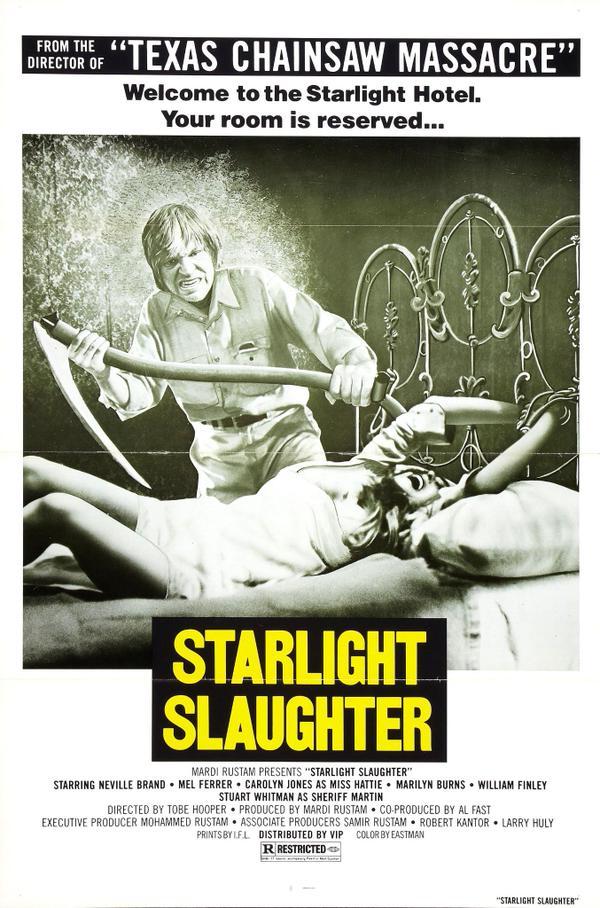
Working under the title Death Trap (the film is also known as Horror Hotel and Starlight Slaughter), this entire film was made on a soundstage, using the Raleigh Studios pool as a swamp. This enabled Hooper to create what he called a “surrealistic, twilight world.” True to form, issues with the producers took him away from the film before the shooting ended, but he had a decent relationship with the actors. Cinematographer Robert Caramico finished the direction of the film once Hooper left.

This movie starts grimy and stays that way. Buck (Robert Englund in an early role) demands kinky sex from Clara Wood (Robert Collins, Matilda the Hun from Death Race 2000!), who refuses. This scene contains the line, “I’m Buck and I’m here to fuck,” line that Quentin Tarantino used in Kill Bill.

No one says no in Miss Hattie’s (Carolyn Jones, who is better known as Morticia Addams!) house of women, so Clara is kicked out. One of the girls takes pity and gives her money to stay at the Starlight Hotel, a rundown motel in the swamp. There, she meets the owner, Judd (Neville Brand, famous for playing Al Capone in The Untouchables TV series and The George Raft Story), who we soon learn is a demented sex maniac. He attacks her, chasing her into the swamp where a Nile crocodile eats her. Yep — don’t get too attached to anyone here. This is very Psycho territory, where bad people meet even worse ends.

A couple soon arrives — Faye (Marilyn Burns, The Texas Chainsaw Massacre) and Roy (William Finley, Winslow Leach from Phantom of the Paradise), along with their daughter Angie (Kyle Richards, Lindsey Wallace from Halloween!) and dog Snoopy. Don’t get attached to Snoopy, who isn’t long for this world. As Angie finds a dead monkey and screams, the dog runs into the swamp where he is eaten. Roy goes to kill the gator, but is stabbed by Judd’s scythe. Then, the insane motel owner ties Faye to the bed and tries to grab Angie, who hides under the porch of the building.

Harvey Wood (Mel Ferrer, The Visitor, The Antichrist and first husband of Audrey Hepburn) arrives with his daughter Libby looking for Clara. Sherrif Martin (Stuart Whitman, Guyana: Crime of the Century, The Monster Club, Ruby) helps them as they search for Harvey’s runaway daughter. Libby goes out with the sheriff while Harvey stays back at the hotel. As he finds Faye tied to the bed, he’s also killed by Judd and his scythe.

The sheriff kicks Buck out of the bar — remember him? — and he goes to the Starlight with his underage girlfriend. While they’re having sex, they hear a scream. Buck discovers Faye, but is pushed into the swamp where he is devoured.

Finally, Libby comes back and saves her sister and Angie. Judd goes insane and chases them into the swamp where he’s eaten by his own gator. Or crocodile — the movie is never sure.

I’ve always joked that Rob Zombie is continually trying to remake The Texas Chainsaw Massacre 2. After watching this, I get the feeling that this is the movie he wants to make. It’s covered in a layer of filth from beginning to end, with characters coming and going, people getting killed horrifically and style triumphing over coherent plot. Even better, there’s a mix of actors that you instantly recognize playing some great roles, particularly Neville Brand, whose muttering insanity is total perfection. There’s also a great electronic score that really sets the mood — even ending in a crash after the final credits.

True to his promise, Hooper delivers a film that feels like a nightmare throughout. Its dream logic makes for an occasionally funny, often grotesque movie that is never boring.

Here’s the episode of the podcast about this movie.

RE/SEARCH Incredibly Strange Films: Mantis In Lace (1968)

Oh Harry Novak just seeing your name makes me realize that I am about to see something incredibly scum-sodden. You have such a fancy signature and make movies filled with such pulchritude. Let’s all have a moment to think of all Mr. Novak has done for us.

Like this movie, which is exactly what I was looking for when I started this week of drug movies.

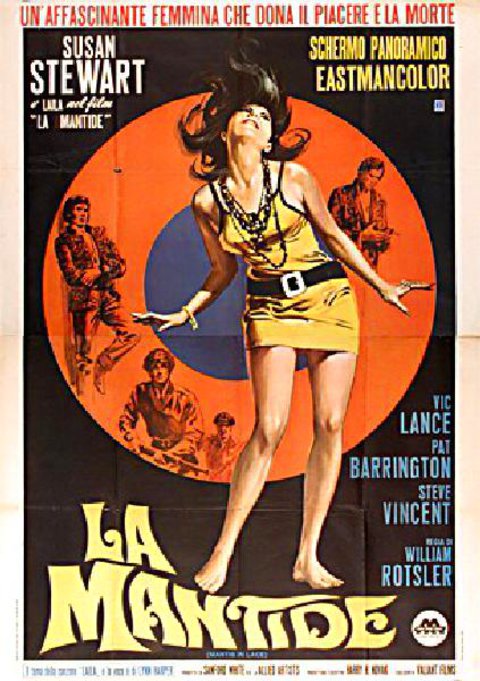
Lila (Susan Stewart, The First Nudie Musical and credits for additional voices on Scooby-Doo, which really could be the best IMDB credits listing ever) is a go-go dancer who gets turned into a literal mankiller thanks to C20H25N3O. All she wants to do is make it with the men she picks up on the Sunset Strip, but once they get back to her pad, she hears her theme song and sees an old man with a huge stack of money and a handful of bananas. That’s when she must kill them with garden tools and then she imagines that she is chopping up fruit while she’s really dismembering their bodies to dump off into cardboard boxes. I kid you not!

Then, we get lots of drug use, topless dancing and strobing and zooming camerawork. I’m in. I’m all the way in. And hey look — it’s Pat Barrington from Orgy of the Dead! Yay!

Speaking of Pat, she dated Melvin Rees at the time that he was arrested for mass murder. She was working as Vivian Storm in mob-owned go go clubs and he was a jazz musician. Pat’s life really could have been made into a movie, as she kept on dancing until the mid 1990’s when she was in her fifties. Rees? Well, he was arrested for at least five murders and numerous other crimes.

As for Mantis In Lace, it’s a film awash in sin and debauchery. They don’t, can’t, won’t and maybe even shouldn’t make them like this anymore.

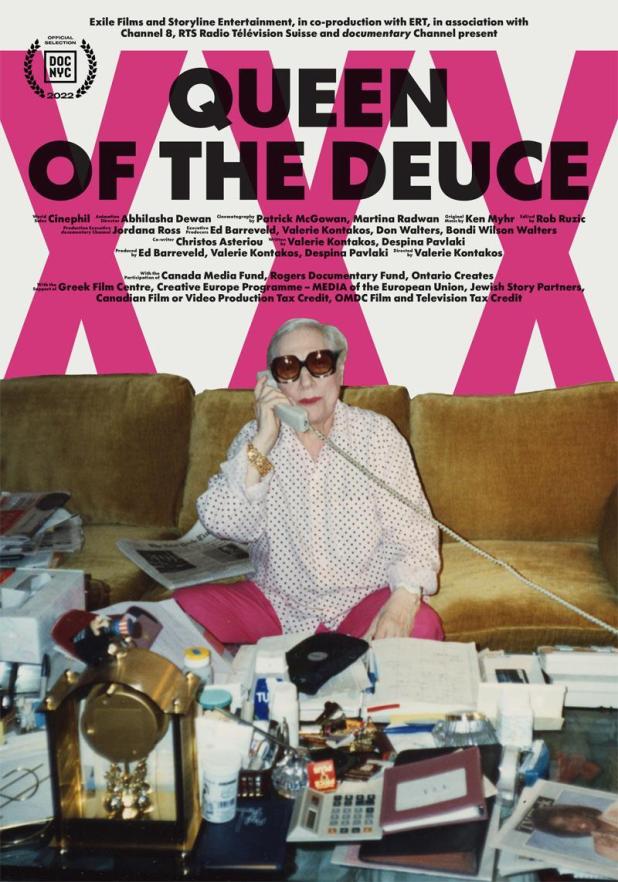
MAKE BELIEVE 2024: Queen of the Deuce (2024)

ABOUT THE AUTHOR: Joseph Perry writes for the film websites Gruesome Magazine, The Scariest Things, Horror Fuel and Diabolique Magazine; for the film magazines Phantom of the Movies’ VideoScope and Drive-In Asylum; and for the pop culture websites When It Was Cool and Uphill Both Ways. He is also one of the hosts of When It Was Cool’s exclusive Uphill Both Ways podcast and can occasionally be heard as a cohost on Gruesome Magazine’s Decades of Horror: The Classic Era podcast.

An engaging documentary focused on the remarkable life of maverick theater owner Chelly Wilson in the heyday of cinematic porn as well as a valentine to the era of grindhouses on New York City’s 42nd Street, director Valerie Kontakos’s Queen of the Deuce is a fascinating watch.

There’s no question that Wilson lived a life, and Kontakos explores it wonderfully, from Wilson’s childhood in Greece to her move to America with only $5 to her name, to becoming the the owner of several highly profitable gay porno theaters in the 1970s and a highly respected center of attention to those who knew her. Believe me, there are so many details in this documentary, from heartbreaking to hilarious, about Wilson — an openly gay woman who married men, a Jewish woman who enjoyed celebrating Christmas, a wealthy woman who chose to live above one of her theaters rather than in a more expensive abode — that there aren’t room for in this review.  

Archival audio and video footage of Wilson shares screen time with interviews with some of her relatives and colleagues, all of whom have remarkable stories about her. Speaking of archival footage, scenes of 42nd Street from the seventies should bring lumps to the throats of many a grindhouse theater fan.

Queen of the Deuce is a superb documentary about Chelly Wilson’s jaw-dropping life story, not only in breaking the glass ceiling in the adult film industry but as a younger, free-spirited woman in Greece, and the many fully lived years in between and after. Kontakos’s terrific film comes highly recommended to anyone who enjoys an unusual life story of someone battling the odds and coming out on top.

Queen of the Deuce screened as part of the 2024 edition of Make Believe Seattle, which runs March 21–26. For more information, visit https://www.makebelieveseattle.com/.

RE/SEARCH Incredibly Strange Films: Body Fever (1969)

What if Ray Dennis Steckler made a gumshoe movie?

What if he starred in it — using his real name and not Cash Flagg — as private eye Charlie Smith?

And what if he were hired by Big Mack, who is played by Bernard Fein who created Hogan’s Heroes, to find a heroin-stealing cat burglar named Carrie Erskine who is, of course, played by Carolyn Brandt, Steckler’s wife?

Also known as Deadlocked and Super Cool, this has all of the Steckler players in it, like Gary Kent, Joseph Brado, Herb Robins and Ron Haydock. But I loved seeing Steckler acting like a tough guy and getting all sorts of women when he’s not fighting various bad guys. It was almost called The Last Original “B” Movie which is a funny name but Body Fever seemed to stick.

Oh yes, that is Coleman Francis, the director of The Beast of Yucca Flats, The Skydivers and Red Zone Cuba. Steckler had just completed filming the last scene and when walking to his car, he saw Francis drunk and lying in the gutter. Steckler felt so bad about Francis’s condition that, even though he had finished work on the movie, he offered Francis a role. Steckler added some scenes just to give Francis some work and money, which he gave to him in advance. Steckler and his crew were astonished when Francis showed up for work the next day sober, clean-shaven and nicely attired. Steckler had wanted him to play the part of a disheveled bum, but Francis had used the advance pay to buy a decent second-hand suit, a shave and a haircut.

Kevin Murphy of Mystery Science Theater 3000 said of his movie, “Coleman Francis uses edits like blunt instruments. He uses blunt instruments like blunt instruments. His major themes are death, hatefulness, death, pain, and death. He looks like Curly Howard possessed by demons from Hell. He tried to pass off Lake Mead as the Caribbean Sea. His films have the moral compass of David Berkowitz.”

He plays the only person Charlie trusts, a laundromat owner who went out of business when his customers kept using wooden change to get free washes. If you think that’s weird, well, Steckler wears a Gilligan hat through most of this movie.

A sequel called Bloody Jack was filmed in 1972 starring Steckler, Brandt and Robbins with Charlie discovering that all of the girls he’s dated are being killed, It was shot but never edited or scored.

You can watch this on YouTube.
RE/SEARCH Incredibly Strange Films: Beyond the Reef (1979)

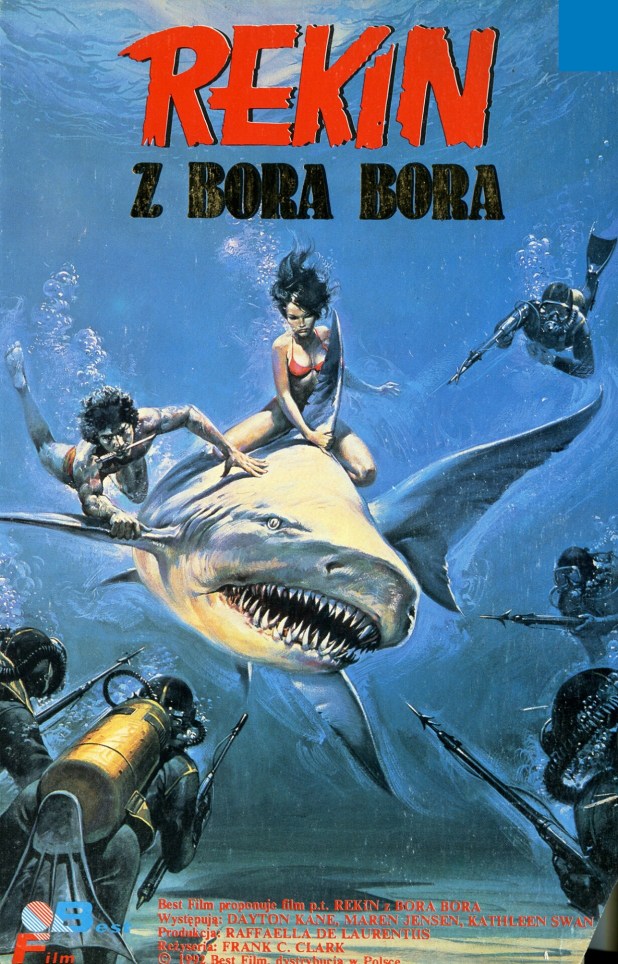
Also known as Sea Killer — the name it was originally released in the U.S. — Mein Freund, der Hai (My Friend, the Shark); Peripeteies ston okeano (Adventures In the Ocean); Manidù – Uno squalo ribelle, un indigeno selvaggio, un fiore di ragazza (Oh Italy; this means Manidu – A Rebellious Shark, a Wild Native, A Flower of a Girl); Shark Boy of Bora Bora and The Hero KingBeyond the Reef often has posters that make it seem like it’s going to be sharksploitation.

Shot at the same time as the remake of The Hurricane with the same cast and crew minus Mia Farrow, this was produced Raffaella De Laurentiis, whose father Dino thought Dayton Ka’ne was going to be a star.

Beyond the Reef is a movie about a 16-foot tiger shark named Manidu, which has been named for the old man (Oliverio Maciel Diaz) who introduced him to Tikoyo (Ka’ne) when the shark was only a foot long and the boy was young. He also had a friend, Diana (Maren Jensen), who goes off to America and forgets all about him. Meanwhile, the boy grows into a man and can mentally speak to his shark, like a friendlier version of Mako: The Jaws of Death except when the shark has to protect Tokoyo or Diana, which strangely has her brother Jeff (Keahi Farden) being evil and seeking a cave of black pearls.

All of the underwater footage has been shot by Ramon Bravo, who was a real renaissance man. He was a swimmer who competed in the 1948 Summer Olympics, then learned how to shoot cameras underwater and discovered the phenomena of sharks sleeping on the ocean floor. He also wrote the novel that Tintorera is based on and is also the zombie that fights the shark in Zombi. When he died, a collection of luminaries, including Jean-Michael Costeau, placed a memorial to him in the ocean that said “Ramón Bravo, protector of the sea and the ocean, sleeps forever next to his sharks in this cave. Isla Mujeres 02–28–98.”

Based on the novel Tikoyo and His Shark by Clement Richer, this was directed by Fred C. Clarke (his only movie) and written by Louis LaRusso II (The Closer) and James Carabatsos (Hamburger Hill). The novel was also made in 1962 as the Italian/French film Ti-Koyo e il suo pescecane.

If you thought it was strange that sharks can roar, this one purrs. Also, this movie has toplessness, which is kind of shocking with how charming it is. It kind of comes out of nowhere.

You can watch this on YouTube.
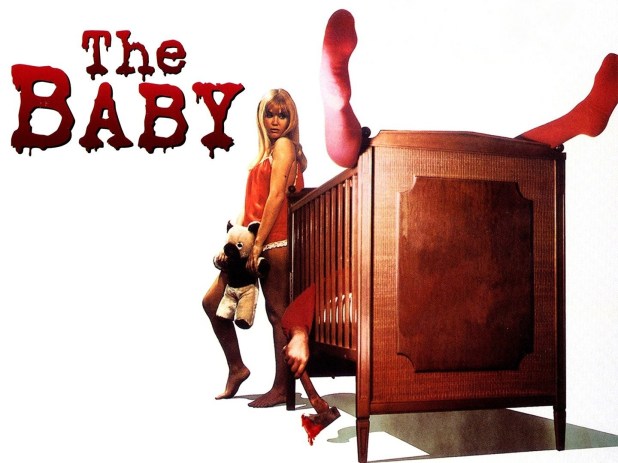
RE/SEARCH Incredibly Strange Films: The Baby (1973)

I love having people over to our house to watch movies. However, some folks don’t get to watch the really strange films in our collection. They have to make it through a test to see if they can hang. I’ve had the misfortune of trying to explain Beyond the Valley of the Dolls to people and get angry, then sad, then angry again when they just don’t get it. If you make it through my cinematic ring of fire, the journey through excess and madness and horror, then and only then are you greeted by the final challenge: 1973’s epic freakout The Baby.

This isn’t a movie that I’ve known about forever. Quite to the contrary — I discovered it two years ago when the trailer played during one of the all-night drive-in events at the Riverside Drive-In. The blast of strangeness in that trailer was enough to get Becca and I repeating the dialogue for weeks: “What have you done with my Baby?”

Luckily, Bill from Groovy Doom/Drive-In Asylum had a copy that he was only too happy to bring to our house. Too often these days, we’re greeted with too much hype for movies, with statements like, “If you don’t love this movie, you don’t understand cinema!” and “This movie shook me to my very core!” Well, I can honestly say that The Baby has destroyed my mind in a way that no film made before or since ever has.

Ann Gentry (Anjanette Comer, The Loved One) is a social worker who has just been assigned to the incredibly strange Wadsworth family. There’s Mrs. Wadsworth (Ruth Roman, who not only starred in Strangers on a Train, but survived the sinking of the Andrea Doria), the strong-willed mother. Her daughters Alba (Susanne Zenor, who was the original Samantha in the pilot of TV’s Three’s Company before Suzanne Somers took over the role), who teaches tennis, and Germaine (the transcendent Marianna Hill, Messiah of EvilSchizoidBlood Beach), who occasionally acts in TV commercials when she’s not looking like a maniac. And finally, there’s Baby (David Manzy), a twentysomething man who doesn’t walk or talk and who has been raised as an infantilized adult.

You just read that right. This is a movie about a grown-up baby that sits in a crib and cries, but not just as cries. The original track containing baby sounds that  Manzy worked so hard to craft during the filming was lost, so the voice of an actual baby was used. It’s disconcerting to say the very least. Add in that the actor completely shaved his body for the role and you have the foundations for a movie that’s more than a little left of center.

Ann is driven to improve the lives of her cases, but Baby is a special case. Perhaps too special to Ann, as she’s recently recovering from a severe auto accident that had a serious effect on her husband. The Wadsworth family totally depends on Baby for most of their income and as a result, won’t allow him to grow into an adult. And it seems like Ann could change all that, as she discovers that Baby’s current state is the result of neglect.

“Baby doesn’t talk. Baby doesn’t walk.” Baby also isn’t allowed to do things by himself, either being beaten, cattle prodded or restrained when he does anything against the rules. Even when Ann shows the family that Baby has the capacity for growth, she’s instantly rebuffed.

If all of the above was all that this movie would be about, it would still rank amongst the oddest ever made. But it gets much stranger. You see, nearly every woman who meets Baby wants to possess him. And some often want to have sex with him, like the sitter who gets into his crib and allows him to nurse from her. The Wadsworths come back home to this scene and proceed to annihilate the young girl and beat Baby into further submission. And even Baby’s sisters may love him a little more than siblings should.

Finally, the simmering discord between Ann and Baby’s family comes to a head on the night of Baby’s birthday party — which is the strangest one committed to film since perhaps Jessabelle the cat’s celebration in The Sentinel. That said, any party that has Michael Pataki as a guest is one that I want to be at!

After escaping the murderous intent of the Wadsworths, Ann finally succeeds in taking Baby away. Rather than turning him over to an institution, she keeps him at her house and then sends his family photos of their manchild doing adult things like standing up straight.

This sends the Wadsworth clan into a murderous tailspin, as they head for Ann’s house with killing in mind. However, she and her mother-in-law aren’t willing to give up their new guest without a fight.

Even though this film was made over forty years ago, I’m not giving you the ending here. I want you to see it for yourself with no preparation whatsoever.

Now, after reading all of the above, you have to be thinking — surely The Baby is an unrated affair or at worst it got an R, right? Nope. This is a PG movie. The 1970’s did not care at all about children, blasting them with both barrels of bonkers with movies like this, The Little Girl Who Lives Down the Lane and It’s Alive all getting just a simple Parental Guidance suggested label.

Here’s the next surprise: The Baby wasn’t an underground film. Nope, it was a mainstream release directed by Ted Post, who directed numerous TV series like Gunsmoke, The Twilight Zone and 178 episodes of Peyton Place, as well as Hang ‘Em HighMagnum ForceBeneath the Planet of the Apes and the TV movies Do Not Fold, Spindle, or Mutilate and Cagney and Lacey, which led to the series. The dark nature of this film kept Post away for a year before writer Abe Polsky was able to talk him into getting behind the lens.

The Severin blu ray of this film was a great package, complete with informative interviews with Post and Manzy. Arrow Video is releasing a new version this week with even more extras, including newly commissioned artwork by The Twins of Evil, deep commentary by Travis Crawford, interviews with Marianna Hill and one of the set painters and a discussion with film professor Rebekah McKendry on the influence of the film. It’s a great package that truly does this movie justice.

Back to the hype engine that sours so many on so many movies. Often, you’ll read things about how movies have permanently changed lives and scoff. I’m telling you that the way that I view movies and live has been forever altered by this movie. It’s hard for me to find another film that can match it for sheer audacity and bizarre subject matter. However, no words that I write can do it justice. You must watch it for yourself and be changed by the act of viewing it.

You can watch this movie on Tubi.

BONUS! Here’s the podcast where we discuss The Baby in detail with Bill!