When he was still using the name Jack Ford, the famous Western director made this Cheyenne Harry film with Harry Carey. Carey would play this same character for over two decades, starting with 1916’s A Knight of the Range up to 1936’s Aces Wild. This period also includes the film Straight Shooting, Ford’s first feature film.
Cheyenne Harry has ended up in the town of Rawhide after running from the law after a poker game turns into a gun battle. While there, dance hall girl Bess is kidnapped by a gang leader named Beau Ross and taken to his desert camp. Why would the dastardly Beau steal away a woman caring for her sick mother? Well, he is a Western movie bad guy, right?
Ford was able to capture some incredible scenery for this film which looks stunning now that this film has been restored.
Much like the aforementioned Straight Shooting that Kino Lorber has also released, this is a film worth having for your historical collection. You can get the blu ray directly from Kino Lorber. It features an audio interview. with John Ford by Joseph McBride (who also provides audio commentary), a new 4K restoration from Universal Pictures with music by Zachary Marsh and a video essay by film critic Tag Gallagher.
DISCLAIMER: We were sent this film by Kino Lorber and appreciate it. However, that has no bearing on our review.
Next to the Leone films and Ringo, Django is perhaps the most influential of all Italian Westerns. Thanks to the Quentin Tarantino release of Django Unchained, today it is probably even more well-known in the U.S.
While making Ringo and his Golden Pistol, Sergio Corbucci was approached by Manolo Bolognini to make this film. Bolognini wanted to make back the money he had lost on his first film as a producer, The Possessed, and since Westerns were hot, it seemed to be a good genre to get into.
Much as how Yojimbo had influenced A Fistful of Dollars, Corbucci wanted to make a movie that would echo the work of Kurosawa. As for the idea of the coffin-dragging protagonist, assistant director Ruggero Deodato — hmm, wonder what that guy did after this? — claimed that the director took the idea from a comic book that he had read.
Strangely enough, in Japan, this film was Continuation: Wilderness Bodyguard, marketed not only as a remake of Yojimbo but a sequel to A Fistful of Dollars, which was distributed in Japan by Kurosawa as the result of the lawsuit between he and Leone. As a result, the Japanese auteur won 15% of the worldwide receipts and over $100,000.
The Japanese/Italian Western connection continued with Yojimbo star Toshiro Mifune appearing in Terence Young’s Red Sun, which also featured another Leone player, Charles Bronson.
The idea for — spoiler warning — Django’s hands to be ruined before the end of the movie came from the notion that guitarist Django Reinhardt became legendary despite not being able to move the third and fourth fingers of his left hand.
Walking into a war between Major Jackson’s Red Shirts and General Hugo Rodríguez’s revolutionaries, Django starts the film by dragging a coffin behind himself and then dispatches several of Jackson’s soldiers who are attempting to crucify a prostitute named Maria (Loredana Nusciak, Tiffany Memorandum, Superargo versus Diabolikus).
Our hero then eggs Jackson on, making him bring most of his forces to town, where he opens the coffin to reveal a machine gun that he uses to kill nearly everyone. This has all been for revenge, as Jackson had murdered Django’s lover Mercedes Zaro.
What follows is a meditation on the needs of love versus material wealth, which ends up costing Django nearly everything. The gold that everyone is dying over almost costs even our once-thought invincible hero his life. This is an incredibly bloody installment of the Western genre, with a body count of 180 people, including 79 personally dispatched by Django.
To get an indication of the success of this film, you only need to realize that more than thirty unofficial sequels were made to it, often only using the name to sell tickets. We’ll be covering some of the better installments this week, such as Django the Bastard and Django Kill… If You Live, Shoot!
There was also a planned sequel in 1968 called Django, Prepare a Coffin that ended up featuring Terrence Hill before Nero returned to the role one more time in Django Strikes Again, which was filmed at the same time as Corbucci’s Tex and the Lord of the Deep.
The end of this movie, as Django’s ingenuity prevails against physical pain and the realization that his need for money over love caused this, is poetic and bloody in a way that very few films — much less Westerns — can ever hope to capture. Amongst the blood, mud and dust, there is art.
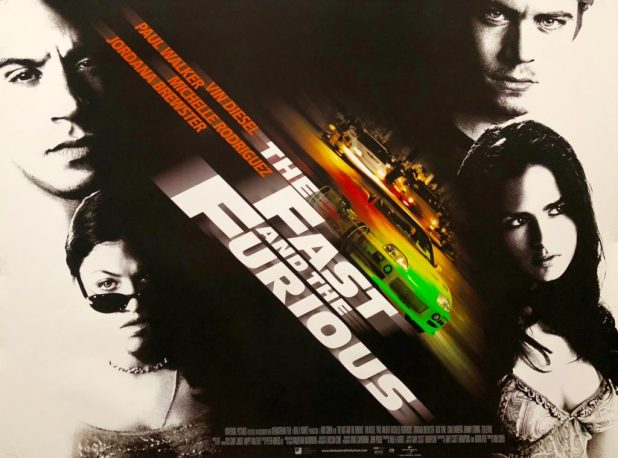
Twenty years ago — has it been that long? — Paul Walker and director Rob Cohen made The Skulls together. Cohen got a deal with producer Neal H. Moritz and Universal Pictures. Looking for ideas, he asked Walker what his dream action movie would be. The answer? A mix of Days of Thunder and Donnie Brasco. After a May 1998 issue of Vibe detailed New York City’s street racing scene, they had their film. All they needed was a co-star.
After Gone In 60 Seconds, Universal wanted Timothy Olyphant but they got Moritz’s pick instead: Vin Diesel, hot off the success of Pitch Black. And then, seventy-eight wrecked cars later, we had a movie. Any similarity to the D.B. Sweeney and Charlie Sheen film No Man’s Land — which came out thirteen years before — is surely coincidental.
LAPD officer Brian O’Conner (Walker) has gone undercover to infiltrate the gang that has been stealing from trucks and disappearing. He soon makes it into the gang led by Dominic Toretto (Vin Diesel), who has been banned from pro racing after attacking the man who accidentally killed his father, but complicating matters is that he soon falls for Dominic’s sister Letty (Jordanna Brewster).
This movie was originally entitled RacerX (the name of the Vibe article), Race Wars and Redline, but then someone had the brilliant idea to ask Roger Corman if they could use the title of his 1955 film The Fast and the Furious. Getting paid again for a movie he already made? I can only imagine how delighted Corman had to be at the prospect.
This movie made stars of both Walker and Diesel. Waker would work with Ted Levine again — he plays one of his bosses here — in Joyride, while Diesel would refuse to be in the next few sequels to this movie.
This was a movie decimated by the critics. Actually it wasn’t until the last few movies that anyone would even admit they liked these. How times have changed.
Written and directed by Miles Doleac (The Dinner Party), this is a story all about a young history professor who heads off to a new university where he finds that no one cares — not the students, not his department chair and, well, hopefully his new love interest cares. And hey — William Sadler is in it!
Beyond writing and directing this, Doleac also produced and stars in the film. He did well casting Sadler, who has been great in everything I’ve ever seen him in. This is a good opportunity for him to do more than he usually does, which is very nice to see.
You can watch this on Amazon Prime and Tubi. Thanks to its PR company for letting us know it was coming out.
In October 1958, at an American-International Pictures luncheon for the Theaters Owners Association of America, producer Jerry Wald said that movies like High School Hellcats were “not the type of picture on which we can build the market of the future. While they may make a few dollars today, they will destroy us tomorrow.” Producer James H. Nicholson responded by stating “I’d rather take my children to see these pictures than God’s Little Acre.”
I mean, what movie would I be watching now if he was right?
Maybe he can explain how the star of this movie, Yvonne Lime, went on to co-found Childhelp and be nominated five times for the Nobel Peace Prize.
This whole thing is a proto-Mean Girls, except Bret Halsey — yes, the same dude from several Fulci films — is the male lead.
Everything is going well until a game of Sardines leads to a young girl dead. Ah, these High School Hellcats!
For a movie that was banned by PTA groups, it all seems rather safe today. This was released along with Hot Rod Gang, which I’m sure upset them further. It was directed by Edward Bernds, who brought us The New Three Stooges show in the 60’s, as well as Queen of Outer Space, Reform School Girl and The Bowery Boys Meet the Monsters.
I’ve always been obsessed with desert rock (Desolation Center), which I first discovered thanks to Kyuss and all the bands that spun off from that influential time. You’d probably know Queens of the Stone Age if you don’t know this scene, but I’d also recommend any of their Desert Session group albums if you want to hear some fuzzy, lo-fi magic. This film unites the leaders of the desert bands and shows why this style of music could only emerge from the Coachella Valley.
Where grunge blew up fast and destroyed the Sunset Strip hair metal era, whatever was getting played under the wide open skies miles away was completely different. Rougher. Sexier. Groovier Druggier? Well, more mellow drugs maybe.
Joerg Steineck also put together a doc about Truckfighters, which if you know this kinda music, you’re already hunting down. And if you don’t, you’re like, huh?
This is the kind of music that most hits my soul, as it combines punk, metal and even doom into its own thing, noodling out and getting weird. This movie features tons of people discussing this genre, but it never comes off as braggy as some other music interview docs get. It feels inclusive and welcoming of differences, which, if you think about it, is the main strength of the desert.
Penelope Spheeris went back one more time to Los Angeles’ music scene and it changed her life. But for years, she didn’t want to ever revisit the three films that make up The Decline of Western Civilization.
According to The Verge, she wanted her daughter Anna Fox to take over the family business of making movies and managing their rental properties around the city. Fox agreed, on one condition: that her mom finally release a collection of the Decline trilogy. What followed was a year of pure hell, as she’d call it, and the last film proved problematic, as it is so depressing that it serves as a rough close to the otherwise joyous film series.
Using the money from Senseless, a movie that she hated making for the Weinsteins, she funded this movie all on her own. “When I did Decline III, it was totally life changing for me. I had no idea that shit was going on out there. At that point in my career I was really rich from being paid millions of dollars for doing studio movies, and I did not have a sense at all what real life was like. That’s when I went out and got my foster parent license. I had five foster kids to try to help a little bit — we all should, because it’s a fucking mess out there.”
Instead of focusing on bands as much — although Final Conflict, Litmus Green, Naked Aggression, and The Resistance perform and Keith Morris and Flea appear — this installment focuses more on the gutter punks who are roaming the streets of Los Angeles, lost and nearly all alone, save for one another.
This one isn’t as life affirming as the other films and while there are moments of humor, it is few and far between. That said, I still feel that this is an important watch and shows that across three different generations, problems may not have changed all that much, but hopelessness has only grown.
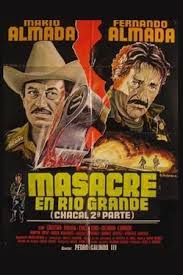
Mario and Fernando Almada are back at war with one another in the sequel to 1984’s La Muerte del Chacal. Yet while that movie was a giallo ala Mexico, this one is content to be a slasher, placing victim after victim in the path of its killer.
Drills to the head, three women stabbed in the same room while one of the victims tries to hide behind a coat hanger, a sobbing mother who wonders where she went wrong and more strippers than you can handle — actually, I have faith that you can handle it — and this movie takes the somewhat restrained — well, as restrained as 1980’s Mexican murder movies get — first installment and goes completely wild, even setting up a third movie that sadly never came.
I mean, it’s not enough for the killer to murder every dancer backstage. No, he has to start riddling the audience with bullets. This is a man who loves his work. Sadly, his brother has to start cleaning up the mess or more people are goign to pay.
I feel as if I completed a quest, both finding this film — thanks to BobyBoy on Letterboxd — and it being the last film of my several week odyssey of hunting down and watching some of the roughest films Mexico had to offer. I feel that I am a much better and more well-rounded person for the journey. And I have an even greater suspicion that I will be down this road again soon.
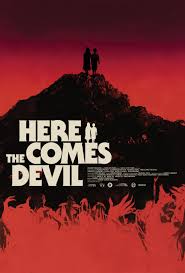
You need to get to know Adrian Garcia Bogliano. Beyond this movie and Late Phases, he has a movie called Black Circle that’s trying to get picked up in the U.S. I have no idea why it hasn’t, because it has a story about possessed vinyl records and one of the first roles for They Call Her One Eye star Christina Lindberg in decades.
The thing is, just from watching this movie, I could see the films that this Spanish born director loves. I mean, he used to use the name Massaccesi, Margueritti & Pandersolli for the films he directed. If you just got happy, you’re a maniac like me. After all, Aristide Massaccesi is Joe D’Amato. His company Paura Flicks takes its title from the Italian word for fright. And within the credits of his films, Bogliano credits what he refers to as the ayuda espiritual (spiritual guidance) of Nicolas Roeg, Henry James, The Exorcism of Hugh, Sergio Martino, Eloy de la Iglesia, The Centerfold Girls), David Cronenberg, Donald Cammell, Picnic at Hanging Rock, The Entity, Los Iniciados, T.E.D. Klein, Sebastián De Caro, Dust Devil, William Finley, Marilyn Burns and classic rock station KGB San Diego. He’s also referenced Sorcerer, Lucio Fulci, Takeshi Miike, so he could fit in around here.
The movie starts as pure exploitation. A lesbian couple makes love and then discusses how one of them isn’t sure how to tell others that she is gay. That’s when a serial killer attacks, taking the hand of one of them before being beaten. He runs into the night, bleeding everywhere, into a cave where he is never seen again.
The very same cave claims brother and sister Adolfo and Sara, who enter it and never really come back. Their parents are too lost in passion to realize how long they are gone. Something is wrong from here on in their lives and nothing, not even murder, can stop what happens next.
I want you to be as surprised as me at this movie, a film that caught me within the first minutes and never let go. This is a film that understands the power of 70’s horror without being a carbon copy of what has come before. And those quick zooms throughout — Fulci would be proud.
I’ve been reading reviews of this film that disliked the hypersexualization of the story, as well as the “out of nowhere” levitation scene. Seeing as how The Entityis referenced at the close, that’s exactly where that comes from. It all felt natural and new and vital to me.
This film is a remake of Jorge Michel Grau’s 2010 movie of the same name (Somos Lo QueHay), but made with an entirely Westernized crew. It’s all about the Parkers, a family who is engaged in a myriad of rituals that help them survive in the modern world. However, all, as always, is not what it seems.
The film begins with the matriarch of the family bleeding from the mouth and drowning. Her daughters Rose and Iris argue over which will take over her duties in the family’s religious ceremonies when we learn that they are all killers, taking turns murdering a girl that their father had abducted.
Director Jim Mickle didn’t want to make an outright remake of the original, instead finding inspiration in the pacing of Japanese horror.
There are plenty of gruesome sights here, as we learn just how deeply the family’s roots of cannibalism stretch.
There’s a great cast here, with the mother played by Kassie Wesley DePaiva (Bobby Joe from Evil Dead 2), Julie Garner (Sin City), Ambyr Childers (The Master), Bill Sage (who was just in The Dinner Party), Kelly McGillis, Wyatt Russell (the son of Goldie Hawn and Kurt Russell) and Michael Parks (if I have to tell you who he is…).
 B&S About Movies