Brad Sykes has since written and directed over twenty feature films, including the first digital 3D horror movie, Camp Blood. You may know him from the sequels to that film or his movies Plaguers, Hi-Death and so many more. He also made Hi-8: Horror Independent Eight, a horror anthology called “The Expendables of SOV Horror” by HorrorHound.
His latest release is his first movie, as Visual Vengeance is releasing Scream Queen, a movie he shot on video as his first feature. Lost for some time, it’s exciting to get to see it finally — check out the review — and now, I got the great opportunity to chat with Brad about his career.
B&S About Movies: How did your career get started?
Brad Sykes: My professional writing and directing career got started with Scream Queen, which I wrote and directed in early 1998. Before that, I made dozens of shorts and eight features on Hi-8 video during high school before going to film school at Boston University, where I kept making features during summer breaks. After graduation, I moved to L.A. and worked in production on various movies. It was on one of these films that I met the producer who offered to finance Scream Queen.
B&S: What are your memories of the original Camp Blood films?
Brad: Camp Blood was the third movie I directed, but the first to get released. The biggest challenge on that film was the 3D technology we had to use. There was a big learning curve involved and it posed restrictions on how we could shoot things. I wanted to make a slasher film like the ones from the ‘80s that I had always enjoyed, with a few twists. It was a short shoot, with some challenges for sure with shooting outdoors with inclement weather, but we had fun, too.
I never thought we would make a sequel, but we did the following year based on the first film’s success in foreign territories (it was especially popular in the UK for some reason). For Camp Blood 2, I went in a more comedic/satirical direction, like I had for Scream Queen. Both films are essentially satires of the movie business using my experiences I had up till that point. I didn’t have as good a time making the movie, but the FX came out great and we had a professional stuntman playing the Clown, which made things easier.
Camp Blood 3, which was later retitled Within the Woods by the distributor, was made a few years later and was the first film produced by my wife Josephina and I’s production company, Nightfall Pictures. So, there was a lot of pressure to deliver a good movie for our first time out. Again, I used the slasher genre to satirize the entertainment world, in this case reality TV which was getting big at the time (and has gotten bigger since). Very ambitious film for its budget but I loved the cast and the DP did a wonderful job. I like all three Camp Bloods for different reasons, and the fans seem to feel the same way, everybody has their favorite.
B&S: Why has Scream Queen gone unseen for so long?
Brad: Good question! It’s been completed since 2001 or 2002, but no one ever stepped up to the plate to really release it. There have been a few false starts over the years. In 2012, I was asked to produce extras for a DVD release that ended up falling through when the distributor went bankrupt. It wasn’t until 2020, when Visual Vengeance obtained the rights and contacted me, that things started moving forward again. It still took 3 years for it to finally come out, but Scream Queen is now on blu ray, 25 years after we filmed it.
B&S: What does it feel like to have a new audience having the opportunity to see it?
Brad: I’m thrilled that Scream Queen is finally out there for people to enjoy. It’s my first ‘Hollywood’ movie, and I had a great time working with Linnea, so it was always be special to me, and it was disappointing that it was buried for all these years.
The horror genre and physical media have definitely undergone a lot of changes since we made the movie, but in ways that I think benefit the film. Recently, I think fans are starting to appreciate ‘SOV’ movies way more than they did in the 90s and 2000s, so there’s a new audience for it, in a way. And of course, there are fans of Linnea who have been wanting to see this movie for a long time. I think the movie is unique and was ahead of its time so doesn’t feel particularly dated. And this Blu-ray has a lot of extras, which help really tell the story of how Scream Queen came to be, and why it’s taken so long for it to reach audiences.
B&S: What film do you think you’re best known for?
Brad: Probably Camp Blood. I’ve heard from more people about that one than any of the other 20+ movies I’ve directed. I will say, though, that there are a lot of Death Factory fans out there, and Goth has a very loyal fan base. A superfan of the movie put on a 20th anniversary screening this year in Beverly Hills and a theater in NYC played it multiple times, as well.
My sci-fi/horror movie Plaguers is my biggest movie and a lot of people have seen and enjoyed that one, too.
B&S: If you had to choose one to represent you, which is it and why?
Brad: My most personal film is none of those I just mentioned. It’s a desert/road thriller called Mad Jack, which is very obscure and in need of rediscovery and maybe, a re-release in the future? Nowadays, anything is possible.
B&S: What movies have influenced you?
Brad: Starting out as a teenager with a Hi-8 camera, I would point to Sam Raimi, Peter Jackson and George Romero. I’m still a huge Romero fan and Italian horror of the 70s/80s has always been a major influence on my work. Outside of the horror genre, I’m a fan of William Friedkin, Paul Schrader, Michael Mann, Roman Polanski, Walter Hill, many more.
When I sit down to write a script or create shot lists, I try not to be influenced too much by anyone’s themes or visual style, though. My goal is to be as original as possible and create a new style for each project.
B&S: What’s next?
Brad: 2023 has been a big year with a lot of projects I’ve worked on for years, some dating to before the pandemic, finally getting released. Currently I am promoting my new book Neon Nightmares: L.A. Thrillers of the 1980s (available from BearManor Media, Amazon, B&N, etc.) and my new anthology movie Hi-Fear, which is on DVD and can be streamed on Itunes, Amazon Video, etc. These both just came out a few months ago. Josephina and I are also producing special features for other upcoming Visual Vengeance releases of my films. And I have a new movie I plan on shooting next year. So, plenty going on around here right now!
Justin Burning’s debut book, Hand-Held Hell, is a 376-page, full-color look at 44 outrageous works of underground cinematic horror created during and inspired by the technological, cultural and historical circumstances of the home-spun horror era, including in-depth interviews with 22 audacious filmmakers like Mark Polonia, Nathan Schiff, Tim Ritter, Donald Farmer, Fred Vogel, Brian Paulin and Scott Schirmer.
B&S About Movies: How did you get into the world of SOV?
Justin Burning: I was aware of a lot of them (both SOV and 8mm stuff), like Splatter Farm, Video Violence, Sledgehammer and The Abomination, because some of them were on the shelves of indie video stores when I was growing up. I was fortunate to live through the entire video store boom at a pretty cognizant age (from grade school through early high school), and equally fortunate to have parents and grandparents that let me rent whatever, as often as I liked. We had a great indie video store within biking distance of my house, too, and in the age of Gen X latchkey childhoods, my parents let me go there by myself as long as I was back by dinner. Back then, I mostly just noticed the VHS covers of these flicks, rather than actually renting them, because I was a huge fan of Empire/Full Moon as a kid, so tended to rent a lot of those titles over and over instead. But in high school, I started seeking out the extreme fringes of my interests, as high schoolers often do. So, I got really into tape trading for the more transgressive films of the genre, like Nekromantik, Cannibal Holocaust, The Beyond, Faces of Death, Men Behind the Sun, Salo, etc. And through that, I stumbled across stuff like The Burning Moon, Darkness, Zombie Bloodbath, the Guinea Pig series, etc. And then I had a resurgence of interest in SOV a few years back, and really dove into that shallow pool head first.
B&S: Did the way you feel about these films change the more you explored them and met the people involved?
Justin: Yeah, somewhat. When you see these things for the first time, after being introduced to film through Hollywood and more polished productions, it’s a shock to the senses seeing what’s made when there are extremely limited creative and financial resources. Once you adjust beyond the initial, “What the fuck is this??” you start to wonder “Who the fuck made this??” and you assume it’s maybe some kind of mad genius. Occasionally it is. But usually it’s a person who really wanted to make a horror movie but didn’t know how to, or didn’t have the stuff they needed to make what was in their head. So, they improvised and they compromised. Alas, that’s not as romantic a story as someone concocting a piece of truly outsider, transgressive art that ended up exactly as weird and unique as they intended. But, one thing I’ve learned (and it’s actually a lesson I learned much earlier in life, being in an extreme metal band): Very few of them are as extreme as their movies. So many of these filmmakers are very kind and just very appreciative for the opportunity to talk about their films, and they were so helpful in providing materials for the book and participating in interviews.
B&S: Who surprised you the most when you got to speak to them?
Justin: Fred Vogel was one of them. For as harsh as the August Underground movies are, you don’t expect him to be such a warm, friendly dude. But my conversation with him was very pleasant. Also, Dean Alioto has had a pretty successful career, and he’s one of the more “Hollywood” guys in the book, but he was very accommodating and we talked for nearly three hours over Zoom. He had a lot of great stories about the making of The McPherson Tape. Meeting Nathan Schiff has been amazing. He was the filmmaker that most inspired me to write the book. I saw The Long Island Cannibal Massacre and knew it was something really special that more people really needed to know about. He’s not the most in-the-media horror filmmaker ever, and he’s not very present on social media, so I had a notion in my head he’d be hard to get in touch with and wouldn’t be interested in an interview. But he responded to my cold email, and has been very generous with his time since then. I’m hoping to write a book focused on his life and films, and we’ve been collaborating on making that a reality.
B&S: Rough question: what are the top movies you cover in the book?
I like them all for various reasons. However, I’m very partial to Nathan Schiff’s unique body of work and, as I mentioned, The Long Island Cannibal Massacre sort of inspired the whole endeavor, so that’s definitely a standout. I love Things, as well. It’s one of the most unique movies I’ve ever seen. Flesh of the Void, Video Diary of a Lost Girl and Elliot are three I had never seen prior to researching for the book, and they really made an impression on me. Headless is one of my favorite recent horror flicks. A fantastic example of how horror can be both extremely repulsive and extremely artful.
B&S: What didn’t make the cut?
Justin: It was really hard to decide on the final lineup. I knew from the start that I wasn’t going to attempt anything super comprehensive, so I roughly was going to do 50 movies, split evenly between the 80s/90s stuff and the modern day stuff. It’s hard to omit more obvious entries from a filmmaker’s oeuvre, like J.R. Bookwalter’s The Dead Next Door, Todd Sheets’ Zombie Bloodbath movies, the Polonias’ Splatter Farm, Donald Farmer’s Cannibal Hookersor Guinea Pig: Flower of Flesh and Blood. But I wanted to balance discussing historically significant films with more underground cuts that have been less talked about. Dave Skowronski’s 1989 flick Halloween Party was one I really wanted to include, but I couldn’t get in touch with Dave, and part of why I wanted to include it was to uncover the bizarre story behind its production, with the stolen music and everything, so without an interview to talk about those sorts of things, it wasn’t quite as enticing. There are some flicks I really, really love and wanted to hype up — like The Soultangler— but I had decided early on that including 16mm stuff was going to open a can of worms and really start blurring the line between amateur and professional productions. Some movies got cut so I could maintain the balance between the two eras.
B&S: Outside of SOV, what movies do you love?
Justin: Well, I’m an avid horror fan in general. My horror Mount Rushmore probably includes John Carpenter, Stuart Gordon, Lucio Fulci and David Cronenberg. I love Italian horror, and have particular soft spots for Bruno Mattei, Claudio Fragasso and Michele Soavi. I watch some sci-fi and fantasy stuff, as well. And then to balance out the dark shit, feel-good stuff like rom-coms and Christmas movies are always welcome, too.
Thanks to Justin for the interview. You can learn more about him on his site Confluence of Cult.
All purchases include a free code to download a companion EP featuring six tracks composed by the author. Grab your copy via graveface.com or terror-vision.com
Nearly two years ago, I got the amazing opportunity to speak with Bret McCormick, the director of several of my favorite movies, including The Abomination. Now that Visual Vengeance is releasing his films in some incredible Blu-ray editions, he was nice enough to answer more of my questions about his films and everything else that came up in a two-hour interview.
B&S About Movies: The last time we spoke, The Abominationand Repligatorwere just getting ready to come out on Blu-ray. What does it feel like to have such incredible versions released now?
Bret McCormick: I’ve got to tell you, my experience with distributors during most of my career was not real pleasant. And to have someone like Rob get on board and be so enthusiastic about putting out some of my old films is incredible. There were a lot of hoops that he had to jump through.
Most distributors would have thrown up their hands a couple of years ago. I am just very grateful and honored that first of all, people still want to see these movies, but secondly, that there is a distributor who really is a fan of this stuff. He enjoys this stuff and doesn’t mind putting his money where his mouth is and really doing a great release on these things.
B&S: I’m excited because so many of these movies only existed in rough quality or bootlegs. To actually be able to own these movies in the best quality possible is a big deal to me. It means more to me than so many movies that are going to be released and re-released this year because some of these movies have been out so many times. These are fresh and new because they haven’t been out in decades.
Bret: I’m thrilled that a new generation of people are going to have a chance to own a copy of these things or to see them on streaming. I’m really grateful that Rob has put together these great packages, including comic books and all of this kind of stuff for the for the Blu-ray releases.
B&S: I’ve become such a big fan of Repligator. For a movie made in under six days, it’s got so many ideas, it moves quick and it’s funny. It gets funnier every time I watch it. I don’t care that it doesn’t have the best quality camera shooting it or the finest special effects. It has ideas!
Bret: Some of the movies that I love most from my childhood are these really obscure, weird little things that just got stuck in my mind for some reason.
B&S: I’m interested in knowing what they are!
Bret: One of them is a film that people only know from having watched The Blob, the scene in the theater where the Blob comes out of the projection booth. They’re playing a horror movie on the screen that was known under different titles, but one of them was Daughter of Horror. A lot of people have said terrible things about that film, but I think it’s sort of avant-garde and brilliant. I don’t know why but I just think it’s a really great piece of bizarre cult cinema.
B&S: I feel the same about Robot Monster. Sure, people make fun of it. Yet it’s a post-apocalyptic movie when no one quite understood what the end of the world was probably going to be like. They’re trying to work it out on film. Or you could ignore that and laugh at the bad costume.
Bret: Well, it’s a memorable costume. (laughs)
B&S: My entry into genre cinema was the Medved Brothers’ Golden Turkey books and going back now, the movies they hated — Robot Monster, Bring Me the Head of Alfredo Garcia, Zabriskie Point — I love those movies!
Bret: The first time I saw Zabriskie Point on the big screen. Our college film instructor suggested we all go see it together. Man, I loved it because of the fact that it breaks the fourth wall in a very real sense. I mean, that guy that played the lead (Mark Frechette) was an actual sort of revolutionary later. He got arrested for robbing a bank. It blurs the line between movies and reality in a way that was really mind-blowing to me.
Movies leave an imprint that stays with us, even if it’s not particularly high quality.
B&S: A big percentage of the audience that may buy your movies weren’t around for the shot on video or Super 8 eras. How do you think they’re going to react to your films?
Bret: I think a lot of people who are going to be drawn to it are going to be people who have heard about it on the internet. Back in the day when I was a huge horror film fan, a teenager and looking for new stuff to see, I wanted to find out about everything. I read, you know, Castle of Frankenstein, and any kind of publication like that I could get my hands on. Very often, the things that got the worst reviews were things that I insisted that I needed to see. Oh God, if it’s not good I gotta see this. I can’t believe it’s that bad. That’s how I discovered Andy Milligan. (laughs)
B&S: I was going to ask if that’s who you found when you said, “I can’t believe it’s that bad.”
Bret: I went to a fan convention when I was 12 years old in Dallas. It was called D-Con 71. And it was really just a different world for me, you know, and I spent the whole weekend there at the Sheraton Hotel in downtown Dallas. I bought tons of stuff in the vendor room. One of the things I bought was a poster for Milligan’s Bloodthirsty Butchers.
I put it up on the wall. And the house we lived in at that time, the driveway came in off the street and curled around the house. Everybody entered the house by walking through the back door which opened into my bedroom. My grandmother came over and saw that poster and flipped out!
“No 13-year-old boy should have a poster like that on his wall!”
It was sick and disgusting and depraved and it was going to warp my mind in some way. So my mom made me take it down. I kept it in a drawer for a long time and then when I got a little older, I put it back up again.
B&S: I don’t know if we can appreciate the work it took to find genre cinema back then.
Bret: I would talk with other fans, I was pen pals with other fans all over the country because of the pen pals section in the back of the Famous Monsters of Filmland. I had friends who lived on the East Coast, that would tell me about movies that never made it to Texas. And I was always looking for books about these things. There really weren’t even a lot of books back then.
But one thing that I had going for me when I was like 12-years-old was my best friend Roy.
I spent a lot of time over at his house and he had a stepfather who loved horror films. His stepdad would take us to the drive-in to see movies that no other adult that we knew anywhere would have allowed us to see. So I was able at an early age to see some things that I couldn’t possibly have seen otherwise. And you know, some people would consider that poor parenting but I am grateful that I had that exposure at an early age.
B&S: I don’t know if I shared it the last time we spoke, but before we met I was super intimidated. Not just because I love your films so much, but because The Abominationis so on the wavelength of so many obsessions. I thought that you were going to be somewhat deranged to make a movie like that! I don’t mean that as an insult. It’s just such a relentlessly strange film that keeps me coming back to it. Who could make a movie like that?
You were making it in the midst of televangelists ruling late night TV. Like Robert Tilton.
Bret: I had a grandmother who was very into faith healing. She took me to lots of revivals and stuff. I was exposed to a whole lot of that.
B&S: Much like the root of the word occult, these movies have been hidden. People may not have been able to see them.
Bret: There is a certain mystique about it. I am sure a certain percentage of the new viewers will be disappointed. Some will get on board with it and think it’s a fun and crazy thing. A small percentage will say, “God this is creepy and weird.”
You know, like you were saying, before you spoke with me you wondered what kind of a person put a film like that out into the world. And it reminds me of a funny story.
I sell my paintings of a lot of different pop-up venues, you know, and I did this one event. At the end of the day, this guy came up and he was looking at my stuff. He was asking me questions about how many events I did. And then he goes, “How many artists do you represent?” And I said, “Well, I don’t represent any artists. This is all just my work.”
Then he said, “You did that and you did that?” And he’s pointing at all these very different things. And I said “Yeah,” and he said, “Man, it must be creepy to live inside your head.”
I never imagined it would have that effect on anyone but I guess you know… (laughs)
B&S: Well, I’ve got to know you a bit since then (laughs). With all the extras on the Visual Vengeance releases, I feel like I’m getting to learn even more.
Bret: I cannot believe they did five hours of special features! Like I never imagined that would be the case. It will certainly satisfy the appetite of even the most curious fan, I would think.
B&S:I wonder how people will react to some of the gender swapping in Repligator. It feels like at the same time society is both more and less liberal than when you made it.
Bret: I think sexually we’re more liberal than we were at that time. So I think a lot of people are just going to take that aspect of it in stride. Yeah. I think maybe with the military, unfortunately, we’ve kind of gone back to a more conservative position at least all of our mass media has.
I don’t know how many people actually believe the sort of narrative that we receive through our mass media, but right now there’s like a more supportive mindset of the military-industrial complex. Definitely more than when we were coming out of the Vietnam era. Maybe some people will see it as a slap in the face to the military but we didn’t intend it that way.
B&S: I didn’t get that feeling. I got more of a Dr. Strangelove feel.
Bret: That was definitely in the back of our minds when we made it.
B&S: Is it weird that young people today feel more puritanical?
Bret: That’s a predictable process I think. My mom and my dad were extremely materialistic. Because of the influence of the 60s, I kind of went off in a different direction from that. And then my sons both went back toward a more materialistic paradigm. So I think from generation to generation, we kind of track back and forth, looking for the best possible sort of balance between the two extremes.
We all push back against whatever milieu we were raised in. I mean, it’s just a very predictable pattern.
That said, I think one of the ways young people have gone in a different direction is just to be more accepting of everyone’s sexuality.
B&S: As the author of Texas Schlock and a fan of regional horror, I was wondering, if I was someone just starting to get into genre films, what Texas filmmakers should I hunt down?
Bret: I have a soft spot in my heart for Larry Buchanan because he was the first one I knew of and met, but his work runs the gamut. Pretty much like my own does, from incredibly crude to semi-polished and maybe even acceptable as an actual movie.
I think S.F. Brownrigg is definitely in a category by himself and he made some really weird, wonderful drive-in movies. Don’t Look In the Basement was an incredible drive-in phenomenon. For ten years, hardly a week went by when it wasn’t playing somewhere in the Dallas Fort Worth metroplex. It was a very popular movie when it first came out. And then I guess AIP or whoever had it at that time used it as a second feature with just dozens of horror films that came later.
B&S: What about Pat Boyette? He did movies and even created comics for Charlton.
Bret: Yeah, Charlton was always kind of an enigma to me. I really liked The Many Ghosts of Dr. Graves. I would buy Charlton because I think they were a couple of cents cheaper than the other comics. I had a huge stack of Carlton comics and I always wondered what the deal was with them because they had such a different flavor to them. When I found out that Pat Boyette wrote for them and drew some of the comics, I was blown away.
B&S: What made you go from watching movies to making them?
Bret: If I hadn’t seen that article in Famous Monsters of Filmland about these 12-year-old boys making a Frankenstein movie with a home movie camera, I might never have gotten the idea that ‘hey, I could make a movie!’
You never know what little incident is going to spin you off in a totally new direction.
You can also get Repligator from Visual Vengeance.
Bret’s book TexasSchlock examines b-movie, science fiction and horror movies produced in Texas from the late 1950s up to the present day. The films and careers of such cinematic trailblazers as Larry Buchanan, S.F. Brownrigg, Tom Moore, Edgar G. Ulmer, Robert A. Burns, Glen Coburn and McCormick himself are explored from a fun and appreciative perspective.
You can get a signed copy right hereand to see all of Bret’s books, check out his Amazonpage.
Deaf Crocodile was founded by two experienced arthouse veterans, Craig Rogers and Dennis Bartok, with nearly 30 years’ experience in specialized exhibition, programming, distribution and restoration services. Together, they bring an eclectic and passionate sensibility to their slate of films, collaborating with a network of like-minded curators and filmmakers from around the world.
They’re also one of my favorite physical media labels.
I didn’t want to keep all their amazing work to myself and hope that with this interview, I can get you excited about what they’re doing and buying — and most importantly, watching — the movies that they release.
B&S About Movies: How did you guys decide to start Deaf Crocodile? Did you work on past films?
Dennis Bartok: Craig and I worked together at two previous boutique distribution and restoration companies, Cinelicious Pics and Arbelos, where we licensed and he restored a number of films including Eiichi Yamamoto’s psychedelic animated witchcraft movie Belladonna of Sadness, Toshio Matsumoto’s transgender drama Funeral Parade of Roses, Leslie Stevens’ long-lost California noir Private Property, Bela Tarr’s Satantango, Dennis Hopper’s The Last Movie and others.
We launched Deaf Crocodile together three years ago to explore a wider range of films we love including animated movies like The Pied Piper, Delta Space Mission, The Son of the Stars and Heroic Times, amazing lost DIY crime films like Sal Watts’ Solomon King and epic fantasies such as the three Aleksandr Ptushko films we’ve released (Ilya Muromets, Sampo and The Tale of Tsar Saltan). We’re also great fans of new World Cinema and particularly independent filmmaking from South Asia and Iran…although not exclusively from those areas!
Craig Rogers: As Dennis said, we both worked together previously at Cinelicious Pics and were co-founders of Arbelos. I was working as the lead restoration artist for Cinelicious when Dennis came aboard to launch the distribution arm of the company. Prior to that I worked for over a decade at IMAX. We both have long histories of working in “the industry.”
An example of one of the films Deaf Crocodile has released, The Tale of Tsar Saltan.
B&S: What is the perfect release for your label?
Dennis: I don’t think there’s a “perfect” release because Craig and I love so many different kinds of movies, and there’s honestly tens of thousands of films out there waiting to be rediscovered. Most of our releases have a kind of arthouse / genre crossover vibe, and we really like movies that mix up different genres and styles of filmmaking like Jean-Louis Roy’s superspy / Cold War / sci-fi satire The Unknown Man of Shandigorand Karen Shakhnazarov’s surreal, Kafkaesque Zerograd. The Ptushko films seem to have really struck a chord with people — he’s been one of my favorite fantasy filmmakers for many years, and I organized a retrospective of his films in the early 2000s when I was programming for the American Cinematheque in L.A. So it’s great to be able to release beautiful blu ray editions of his films through Deaf Crocodile.
Craig: We do have a reputation of releasing films that no one has ever heard of before, but once folks see them, they love them. We’re very proud of the trust we’ve gained in the blu ray community and how many people “blind buy” our titles. That said, as much as we love bringing these lost and forgotten films to people, we don’t want to limit ourselves really in any way. A good film is a good film and if we find something we both love and it’s in need of a proper restoration and/or release that’s really the only bar for us.
B&S: Is it difficult to release non-genre or difficult material to boutique physical media buyers?
Dennis: I’d say most of our films are genre movies but in strange and surprising ways, like The Assassin of the Tsar starring Malcolm McDowell which is a sort of time-traveling psychodrama mystery about a mental patient convinced he killed two Russian czars. We’ve been really fortunate that pretty much all of our blu ray releases so far have done well.
Craig: Genre stuff certainly has a built-in audience. The budgets and margins are so tight for small labels that risk reduction becomes somewhat imperative. That’s why you see so much genre product coming out of the boutique labels on disc. As I said before, we don’t want to limit the types of films we release, but there is definitely a reason you see so much genre material being released from all the boutique labels.
The Assassin of the Tsar, a recent Deaf Crocodile release.
B&S: What’s a dream project for you guys?
Dennis: The ones that we’re still working on! Honestly, many of our releases take years and years to happen — probably two to five years on average.
Craig: A dream? I know there is a lot of film material in Prince’s vault in Minnesota. Restoring any of that material would most certainly qualify as a dream project.
B&S: What’s the hardest part of what you do?
Dennis: Being patient and persistent. There are deals that seem to evaporate after many months of negotiations — then we’ll wait a while, and approach the rights holders again, and sometimes we get lucky and things fall into place. But it takes a hell of a lot of patience!
Craig: No lie…lack of time. As a two-man operation we have to wear ALL the hats. Restoration is only a fraction of my day. With each new title we add to our catalog, that’s just more items added to the “to do” list. Long after the restoration work is done on a title there’s still so much more to do. Digital outlets all require different files, formats and artwork. Producing the trailers, blu ray extras, managing the Kickstarter projects, bookkeeping. It’s a lot. Also, being as small as we are, we need to keep active on social media. Podcasts, YouTube, Twitter, Facebook, Instagram — interviews like this. There’s sooo much great content being announced daily at this point – it’s a struggle to make our little brand heard. It’s a good thing we love it as much as we do. This is the definition of a passion project.
One of my favorite Deaf Crocodile releases, Prague Nights.
B&S: Other than your work, what’s one of your favorite physical media releases?
Dennis: That’s a tough question because Craig and I are both huge physical media fans and really admire the work of a lot of smaller and mainstream labels. A few that come to mind: Scream Factory’s Paul Naschy Collections I and II and Scorpion Releasing’s Assignment Terror. Vinegar Syndrome’s Santo vs. Dr. Death. Kino Lorber’s The Golem, Arrow’s Mill of the Stone Women. Universal’s Alfred Hitchcock – The Masterpiece Collection. Criterion Collection’s release of Franju’s Judex. Indicator’s set of Night of the Demon. The recent Kino Lorber Blu-rays of the Technicolor 1940s Maria Montez films like Cobra Woman, Ali Baba & the 40 Thieves and others are wonderful additions.
Craig: For me it’s really all about the movie. A terrific restoration and authored disc of any of my favorite films always makes me very happy. Bonus features and nice packaging are welcome gravy, but it’s all about the film itself for me. Off the top of my head…the recent Scorsese 4K discs (Raging Bull, After Hours and The Irishman), Arrow’s The Thing and Ronin, Second Sight’s The Changeling…I could go on all night.
B&S: Of all your releases which one best sums up the label?
Dennis: For me I’d say Sal Watts’ Solomon King because the film was lost for so many years, and it’s such an entertaining movie and a great time capsule of Black culture, music and fashion in Oakland in the early 1970s. It was something of a miracle that we were able to connect with Sal’s amazing wife and partner Belinda Burton Watts, and an equal miracle that we located the only known complete print of the film at UCLA Film & TV Archive who loaned it for the restoration. The restoration itself was even more of a miracle, restoring color and vibrancy to a badly faded and scratched print. The interview with Belinda on the disc where she talks for over two hours about her and Sal’s childhoods and lives and careers is just as important, maybe more important, than the film itself. So that’s one I’m incredibly proud of.
Craig: Hmmm…maybe our first? The Unknown Man of Shandigor. Completely unknown in the US before our release. GORGEOUS photography, high quality restoration and encoding. Insightful commentary, essay and interview. The film itself is a parody that’s played so straight it also works as a terrific spy/thriller of its own. I like that you don’t quite know what to make of it. I think that can be said of a number of our releases. It’s important to go into a film -hell life, without expectations. Accept and enjoy things for what they are. Putting your expectations on things too often leads to disappointment.
The amazing Solomon King.
B&S: What’s a country underserved and unseen for their films?
Dennis: There are too many to mention, but I’d dearly love to restore some rare and classic Bollywood films from the 1950s, 1960s and 1970s. Croatian cinema from that same period is also astonishing: filmmakers like Vatroslav Mimica and Krsto Papic really deserve to be rediscovered.
Craig: Too many to name. We’re doing our best to try and help with that problem though. If I’ve learned anything over the past decade it’s that there are far more amazing films than I ever could have imagined. Countless stories from countless voices. It’s really easy to go into the hobby of watching films and have blinders on. “Oh, I don’t watch black and white movies” or “I hate subtitles,” you’re only hurting yourself, closing yourself off from some absolutely astonishing films. Be a sponge…soak it ALL in. The more diversity of films you see, the more your overall enjoyment of cinema will grow. I guarantee it.
To find all of these amazing movies…
Learn more about Deaf Crocodile at their official site.
NPRmageddon is a ten-part post-apocalyptic sci-fi arthouse radio show audio drama adjective-rich podcast in the style of public radio, broadcast from the United States of Lost Angeles. Featuring human interest stories, non-human violence stories, regime-approved propaganda and traffic reports. It’s a tough, brain-sickening, uncompromising work of art.
I had the opportunity to chat with its creators and am excited to share the interview with you.
B&S About Movies: How did you guys come up with the idea of the podcast?
Peter Podgursky: My comic book writer friend, Jackson Lanzing, told me about an audio series called Welcome to Night Vale. The show is very H.P. Lovecraft and it’s very good, but I wondered, “How could I create the Cannon Films version of this?” Something a lot more action-packed but with the conceit of it taking place at a public radio station. I called Bryan to pitch the idea of a post-apocalyptic, public radio-style audio series. And then Bryan said…
Bryan Keithley: You mean like anNPRmageddon?
Peter: I had been trying to come up with a title for a day and he did it in three seconds. He’s like, “Oh, NPRmageddon.” So that became the title! (laughs)
B&S: You loosened the jar of pickles for him.
Peter: Then we took a few months writing it. We got serious and with something like this, you get far enough along and it’s like, “Okay, this is a real thing.”
Bryan: We wrote the whole thing, and then we rewrote the whole thing. We rearranged it because we wanted the story to be super solid. It was the writing that attracted a lot of the voice talent that we got.
B&S: There’s a ton of talent on the show! Who was the best person for you to work with?
Peter: The most fun we ever had recording was Harlan Ellison.
Bryan: We recorded at his house.
Peter: He had had a stroke, so we were worried. But he did great. He was one of the very first people we recorded, and he is in almost all the episodes.
Bryan: Yeah, eight out of ten.
Peter: We went into that house like, “Okay, this guy had a stroke the year prior. Is this session going to be usable?” And you know, gosh darn it, he gave us the goods! We hired him and he did not mess around. He told us, “You’ve hired me for a job. I’m gonna do that job to the best of my ability.” So it was all very professional.
Bryan: And he critiqued our writing over and over. “You shouldn’t have written it like this.” (laughs)
Peter: It was such a wild, great time that almost all the other sessions paled in comparison. Nothing was going to be quite as magical as going to Harlan Ellison’s house. He was just tearing our script up and down as he recorded it. He’s insulting us and taking a certain amount of glee in our panic. (laughs)
Bryan: I think he knew that we were nervous. We were in the presence of genius here. And I’ll always remember because he was correcting our grammar along the way. He’d say, “Why would you say “rise up”? It’s redundant. You don’t have to rise up. You wouldn’t have to rise down. You just rise!”
Peter: The easiest person we recorded was Fred Willard. The recording session went by really quickly because we just had to record his parts twice, for safety. Man, the guy had done his homework.
Bryan: He was prepared, and it was such an honor for me to act opposite him. And I think another secret to working with a person like that is that we had him in mind for the role – as the spokesman for NPRmageddon’s evil corporation. He was such a great “used car salesman” type in all of his movies and TV roles, and he always played such a great liar. A snake oil salesman. And he just took to the role like a duck to water.
Peter: We have pretty good luck with actors. I think we got 75% of the people we went after. We were intent on gathering a very eclectic cast.
Bryan: A lot of the roles were written with a person in mind and then with some of the roles we said, “No, this is just a character we’ve invented and we have to find an actor that fits.”
Peter: Like Andrew Bowser. Bryan had written this great pop culture history segment and I said, “Oh, I know the exact guy we should get for this.” And I brought up Andrew Bowser, who I knew from his viral videos. He could nail this. We then spent the next month trying to get him and eventually did.
Bryan: He has a Micro Machines style of delivery. He can get a rapid-fire amount of words in, which the part needed.
B&S: What influences went into making the podcast?
Peter: RoboCop was a big influence because it has such brilliant media commentary in it.
Bryan:RoboCop is in the top five of our favorite films. That’s a movie I had on VHS and I watched like 100 times and as far as the black comedy and satirical aspects of it, you can trace back to certain sketches of NPRmageddon. That, andStarship Troopers.
B&S: A lot of Paul Verhoeven…
Peter: I do like his comedy and his biting satire. And another influence was the work of Walter Lippmann. His book Public Opinion is about the media and about how the sausage is made. And Edward Bernays, who wrote a book called Propaganda, which is about the joys and uses of propaganda. He was the nephew of Sigmund Freud and his big media accomplishment was convincing women they could smoke cigarettes, too. “You can do it, too, baby!”
Bryan: I’m a lifelong gamer and I love the Fallout video games. In several of them, there are even radio stations. You can tune into radio stations as you walk through the game world. And my day job is in game design. I’ve always cherished that type of post-apocalyptic humor – you know, finding the humor and the hubris and the humanity in a shattered post-apocalyptic landscape. The setting fascinates me and I think we found a lot of material that way as we wrote the episodes.
B&S: Did you write it pre-pandemic?
Peter: Yes.
Bryan: We recorded it bit by bit depending on the actors’ availability. Then COVID hit and we didn’t want to release this post-apocalyptic show when it was feeling like the real thing! So we sat on it for close to two years.
B&S: Was it strange for you to spend so much time in your fictional end of the world and then have to live it?
Peter: It was hilarious. Something would happen on the news that would be similar to something that we wrote. We have this bit where this revolutionary named Guitarro is tearing down statues, right? And our reference to that was stuff that happened in Communist countries where they were tearing down statues of Lenin. And then we saw statues of Confederate soldiers being torn down during COVID. And it just like the sketch we wrote… it wasn’t all that safe. There was one guy who got paralyzed when a statue fell on him and now he can’t walk. It’s really dangerous to pull down giant statues!
Bryan: We were never going to write about Trump versus Biden or something like that. We never dipped into actual politics and actual people because this is a fantasyland, right? Like, who knows how long in the future it will be heard? So we made a conscious effort to not do something like dunk on Sarah Palin because that’s not going to be relevant in three years.
Peter: I’ll listen to an episode of The Shadow – some of them are nearly a hundred years old. And it still smokes, right? When you’re creating an audio piece, you can think to yourself, “Would it be possible for someone to listen to this in a hundred years and still get something out of it?” And I hope we accomplished that.
Bryan: We connect ourselves DNA-wise to those old radio plays. Like Peter said, you can still listen to those on YouTube and they’re still cool. The stories are timeless and then they’ll be an ad for cigarettes or something, which is interesting. They’re artifacts.
B&S: I like the show a lot because you’ve created your own world and the real world doesn’t have to intrude all that much.
Bryan: We always wanted it to feel big. Part of that is we assembled a cast of over 80 actors so it was definitely something bigger than just a podcast. As the show visits these different parts of Lost Angeles, we wanted it to feel very big. It was important to us that we didn’t cut any corners.
Peter: Beyond the cast, we had an extremely talented mixer named Amy Reed. Most podcasts don’t have professional mixes, but we wanted NPRmageddon to sound extraordinary. I would stack our show against anyone else’s. I don’t care how much money you’re pouring into it, you’re not going to sound better.
Bryan: We were very ambitious with many of the science fiction sketches, with people transforming into monsters or getting their heads ripped off or gigantic beasts in the ocean battling each other. We did not limit ourselves. And that’s the fun of being purely audio. You do not have to limit yourself like you would if we were trying to do this as a live-action movie.
B&S: It has the feel of NPR without being a complete parody of just NPR, so you don’t need to be a fan of their programming to understand the humor.
Bryan: Yes! Early on, we refused to confine ourselves to just being a parody of NPR.
Peter: And actually, it’s the people who watch your show and read your blog and watch your streams who I think will truly enjoy NPRmageddon. We’re making efforts to find our crowd and connect with them in places like your site. One of the people who have helped us find that audience isHart D. Fisher, who was one of our actors. He has a channel namedAmerican Horrors on Roku. Some of our most ardent fans discovered us by watching our ads on Hart’s movie channel.
I had a blast talking with Peter and Bryan. The show is a ton of fun and you should definitely listen, particularly if you love post-apocalyptic movies. Check out the show now at NPRmageddon!
Jason Trost is the director, writer and star of movies like The FP and All Superheroes Must Die, as well as their sequels FP 2: Beats of Rage, All Superheroes Must Die 2: The Last Superhero, FP 3: Escape from Bako and the new FP 4VZ. From dance dance revolutioning post-apocalyptic battles to scarred and embattered superheroes, Jason has brought some amazing films to the screen. I had a blast speaking with him and was thrilled to learn that he’s a filmmaker that really understands his audience and craft.
B&S About Movies: What does it feel like to make a fourth FP movie? You’ve created your own cinematic universe.
Jason Trost: Yeah, somehow for better or worse. It just keeps going. And now I think I’m just too far deep to quit. (laughs)
B&S: I read that the original idea was that The FP sounded like The OC. And now, a decade later, you’ve outlived that reference and have moved on to even bigger and better Armageddons.
Jason: Oh, absolutely. I feel like with each movie, well, they’re all parodies, so to speak. They’re all satirical, parodying new genres and new movies every single time. So the joke just continues to evolve. At this point, the same characters are almost in completely different worlds every time.
B&S: What movie is it this time?
Jason: Obviously, a lot of Indiana Jones and Star Wars. Then there was definitely the Brendan Fraser Mummy movies, Romancing the Stone, things like that. I definitely want this to be a high adventure, going after an artifact movie. I mean, the two main characters are a man and a woman who bicker with each other about their relationship.
B&S: The first film felt like almost all guys and now it’s a relationship movie.
Jason: I’m growing as a person like the characters are growing. I think that’s just kind of inevitable.
B&S: I’ve always liked spiritual sequels more than sequels.
Jason: I just don’t ever want to make the same one twice. I think a lot of franchises really get into that problem, where they’ve just started making the same movie over and over again, but slightly different. Yeah, I know there’s a lot of people that weren’t upset that each one wasn’t just like Rocky where it’s like just another guy to beat up. But I’m like, “That’s gonna get really boring after like two or three of these. You can’t do that forever, guys.”
B&S: You’ve grown up with the series, as it’s been twenty years since you really got started, right?
Jason: It’s fully been 20 years now because I was writing the shorts and coming up with the original things way back when I was 16. And now I’m 36. So yeah, 20 years.
B&S: Are you excited to come back to The FP?
Jason: Definitely. Because every time there’s no rules. I can really just kind of do what I want with it. The only rule per se of this franchise is that each one has to be more ridiculous and the stakes have to be higher every time. If I can do that I can pretty much do whatever I want. I think that’s kind of what I’ve built and set up with this franchise. If you’re still here at this point, you kind of know that’s the deal. Every time it gets to be fresh because they get to go on an entirely new adventure. So I’m excited for that. I’m trying to force myself to make something in between The FB four and five. Something that’s completely different just because I’ve been doing these stories for almost 10 years now. I’d like to just take a second, because I also know that if I go in and make the next one, one day I’ll wake up and I’ll be 45 and will have made 20 of these movies. (laughs) But seriously, I just need some space for a second.
B&S: What’s it like to make a post-apocalyptic movie after pretty much living in post-apocalyptic times?
Jason: I was doing the post on three and four during the pandemic and lockdowns and man, it’s just like the apocalypse in slow motion. You sit there and watch it outside and it’s like the laziest zombie apocalypse ever. (laughs) None of these movies really prepare you for it, because it was very tame in comparison to what we’ve watched. I think we’ve all been built up towards something and what we got wasn’t Mad Max. (laughs)
B&S: I loved All Superheroes Must Die but it felt like you were about ten years ahead with that movie.
Jason: I was way ahead on that. But it’s funny, I still get death threats about that movie. A week goes by and it’s like, “Wow, I didn’t get something horrific.” (laughs) And then you get an email that says, “You’re the worst person ever!” It’s pretty comical at this point. That movie was like ten years ago. Let it go.
B&S: I felt like it was fresh and referenced comics like Brat Pack but it’s original.
Jason: I just wanted to make something different. It’s hard to make superhero movies. There are so many rules with the fan base. It’s like you can’t do this. You can’t do that. Like there’s all these like invisible things and I just wanted to do my own thing.
B&S: The violence in the film is way harsher than what superhero movie watchers had seen.
Jason: Yeah, which you know, I always wanted to see because even at that point, I had superhero fatigue. I had it even before the MCU really took off and it was just like, I want to do something different. All my favorite superhero stories were the dark ones that made sense and they mattered and they were small in scale. And once you start getting into saving the universe, I just start tapping out. Some of my favorite superhero stories always were very small in scale, like Batman saves a family or something. They took out one villain. Not like, the whole league of villains and they control the universe and they control the multiverse. Which is great for FP movies because I have so much content to make fun of. But if I’m talking about serious movies, I’m getting exhausted.
B&S: The superhero fatigue is funny to me because if you read comics through the multiple crises and crossovers, you already experienced that fatigue. Like how many times could a character get killed and come back or there are multiple versions of them? Then again, I grew up in the 70s and we had a TV movie Spider-Man and I realize how lucky we are to have these films. But fatigue always sets in on franchises.
Jason: It’s inevitable. When you release the same movie six times a year, inevitably it’s going to get old to people. It’s interesting because it’s kind of like the most expensive TV series ever made with the Marvel movies, but each episode is in the theater and you only get three or four episodes a year. You can’t just drop in any more. It’s all the same TV series. And I don’t necessarily mean that as an insult. It’s just what they’ve kind of done, it’s like all one movie or TV series. I get that TV shows have good seasons and bad seasons.
B&S: Pop culture has ever had a series like this, because yes, we had James Bond, but the series changed and other actors took over the role.
Jason: I think where they really shot themselves in the foot is branching into TV. I think they needed to keep it special and just keep it in the movies. Because once they’re like, “Oh, to understand this movie you have to watch ten episodes of a TV series.” And I’m like, holy crap, guys. Like, I can carve out time for like a movie every couple of months. But now I gotta watch 15 hours of a TV show? Come on now.
B&S: I feel like that with Star Wars. The period between Star Wars and The Empire Strikes Back was three years with no new content, but that time gave rise to all these ripoffs and I loved that waiting. And I might love those ripoffs like Starcrash as much as the original.
Jason: It makes it special too, because I feel like when you’re waiting for something, you know you’re getting that fever pitch. You can get into fan theories. But I find when you’re constantly barraging people with new content, it takes away the specialness of it.
It also becomes the kind of entertainment where each movie was once just a single serving. And that was fine, right? And then you already forget it like the next week because just like alright. But now, if I’m watching this movie or this show to understand the next movie or TV show, they’re not single forms of entertainment. They’re pieces of a giant jigsaw puzzle. So when you get a quality episode, you’re not paying as much attention or caring. It’s just another episode to get through. You’re not really giving it as much of your time.
B&S: It feels like a responsibility that I have to watch this instead of me wanting to watch it.
Jason: Absolutely. When I see a runtime that’s three hours long…(laughs)
I don’t have time for that. I’ve got like 30 other shows and I’m watching movies. And I just sit there and scroll endlessly and don’t watch anything because everything’s too long. One thing is going to take up three hours of my night?
B&S: Someone asked me if they should watch Terrifier 2 and I asked if they had two plus hours. I grew up when slashers or genre films were 80 or 90 minutes.
Jason: I love it because with those sort of movies, you don’t get all this filler. It’s rare that I see these movies that are over 80 or 90 minutes. And my main note is like the last half an hour and you could see that they were padding out the running time. If you’re familiar with The Simpsons, there’s a lot of times I’m like, “When are we going to get to the fireworks factory?” (laughs)
Back in the 80s, every scene matters. That’s also because back then, people would spend years and years writing these scripts. And now like movies will have a release date before they’ve even started writing the script. So you just have your AI focus group, automatically writing the script, like a writers room programmed on computers that just goes in there and assembles an algorithm of user-friendly marketing-basec content. Two weeks later, you have your script, we start shooting and you’re like…(laughs)
B&S: The big deal of James Gunn’s reboot of the DCU is him saying, “We aren’t shooting until a script is actually finished.”
Jason: That should be a general rule across the board. You’d be shocked because I’ve worked on all these kinds of things. And a lot of my friends have worked on really big $200-300 million dollar movies. They’re never done writing the script! They’re writing the script up until the last day of shooting. It’s constantly just happening and being focus grouped all the way along.
B&S: That’s why I enjoy your films because you’re making something you want to see, not a focus group.
Jason: Thanks, I appreciate that. That’s kind of the motto. We’re like the anti-focus group. (laughs)
I’m making a movie that me and the close people around me want to make. A lot of people aren’t going to like them, but I don’t really care. Instead of trying to appeal to everyone, we’re appealing to the people who like FP movies. They’re going to love these and I’m making these movies for them.
I’m not trying to make FP for everyone. I feel like there are so many movies now where they try to expand their audience and they lose the magic of what they were when they start targeting everyone. Is everyone going to like RoboCop? Probably not. But do some people love it?
B&S: What are the movies that inspire you?
Jason: They’ll come from like the 80s and 90s. Are you asking recently? Because that’s hard. (laughs)
I like all the Verhoeven stuff, James Cameron, some old Arnold movies, 70s sci fi movies, Star Wars and all of the knock offs. Like I’m the sort of person who loved David Lynch doing Dunea lot more than the new one because I thought at least his film had a personality. And a Toto soundtrack! (laughs)
I miss when people made big swings and stuff was crazy. I like being transported to a world where there’s so much creativity and people are really trying to be creative and artistic. As opposed to today, everyone is getting upset with AI generators and basically that’s what the film industry has been doing for the past 10 years. We’re in that now. I like you guys are upset about it now, but that’s kind of just been what we’ve been doing for decades.
B&S: People are just catching on because finally consumers have access.
Jason: It’s just like studios are basically punching an algorithm into a computer. I have my own conspiracy theories, because I know that there are the algorithms out there where your phone can obviously hear you and all that. See whatever your phone sees, you’re going to be targeted with ads.
But we’re getting weird now because there’s something I’ll just be thinking about and it’ll pop up! I’m being tageted with searches for things I haven’t told anyone about and it just pops up and I’m like, “OK, this is getting weird.” (laughs)
Here’s the best part: I have friends who actually grew up in the place I based the FP on and now they’re getting ads for the new movie. They’re actually like targeting people from my past that actually grew up in the town!
B&S: What was it like to work on the Slayer videos for “Repentless,” “You Against You” and “Pride in Prejudice?”
Jason: Those were a blast. It’s surreal. It’s awesome. Like my best buddy BJ McDonnell was directing those. And he was like, “Hey, come on in. Let’s do this. You want to do some Slayer videos?”
I mean, I love Slayer! I grew up on them and it was surreal to hang out with the band and kill people for them. It’s weird because I was in Studio 666 that BJ also directed and he brought me into that. During the shooting of that — I kill one of the Slayer band members, Kerry King — and he was like, “Can I get a picture with you?” And I was like, “This is ridiculous and absurd. Shouldn’t it be the other way around, man?”
B&S: That has to be crazy.
Jason: My greatest performance is not losing my shit in those situations. (laughs)
B&S: You’re in Kazaam. Are you in the Shaquille O’Neal or Sinbad one?
Jason: I was definitely in the Shaquille O’Neal one. (laughs)
Here’s how I know: I was seven or eight and I got in the movie because my dad did the special effects.
EDITOR’S NOTE: This is no Mandela Effect. Jason’s dad Ron Trost did the special effects for Starman, Ghoulies IV, Mortal Kombat and a ton of other movies.
It was over the summer so I was making a living and hanging out with my dad, brother and my sister. And so inevitably, in the background, they need kids, Well, we’re here. And even on big movies, that happens, so I have a lot of weird credits when I was young. The case was my dad was working and I was on the set. (laughs)
But like, Shaq, I have stories! One of the craziest stories — and when I tell people they think it’s fake because it’s so silly — is that Shaq was doing one of his first movies so he ended up being friends with everyone on set. And I remember one time where Shaq and I played basketball against like the crew members at lunch. And he actually put me up on his shoulders to slam dunk the ball. I was like seven years old!
B&S: So you’re the proof that Sinbad wasn’t in Kazaam.
Jason: He was not. I am. And I was there with Shaq. (laughs)
I have my own Mandela Effect! For years, whenever that scene in Independence Day happens when Will Smith punches the alien in the face, I swear he said, “Welcome to Earf!”
I swear that when he got famous, they went back in and ADR’d his voice so he says, “Welcome to Earth” because now he’s a successful actor.
It was an inside joke between me and my friends growing up as kids during high school. We went back and rewatched it again, 15 years later, and we’re like, “Wait a second.” (laughs)
I mean, that’s why in the FP movies, Earth is always Earf. Because of that moment!
B&S: I have a weakness for rappers in movies.
Jason: So how are you on Ghosts of Mars? I went back and rewatched it a couple of weeks ago for the first time in like 15 years. I had a whole new respect for it. I was like, this is exactly what I want. I want more Ice Cube. As time goes on, you kind of respect things from the past.
Lately, I feel like we didn’t really know what true suck was. We didn’t know like the corporate soul of suck! Something objectively might have sucked, but at least it has an identity.
All these movies feel like Mad Libs now. Am I really getting older and just yelling at my lawn? (laughs)
You can check Jason Trost’s FP-4EVZ, a film about a legendary family of rhythm game warriors that must battle their way deep into the future to save what remains of a booze fueled humanity. The film is available on VOD and digital platforms now from XYZ Films.
With just two movies and one short, Scooter McCrae has made a major contribution to my love of film. Shatter Dead destroys all conventions of the zombie film and presents a world unlike any ever shown while Sixteen Tonguesand Saint Frankenstein transform simple motel rooms into fantastic environments that challenge and inspire.
I can’t even put into words how excited I am to share this interview and want to thank Scooter for his time, energy and amazing answers. I’m going to watch his films again just to see them through new eyes after we spoke. I recommend you get the blu ray releases of Shatter Dead and Sixteen Tongues by clicking on each title above and ordering from Saturn’s Core.
B&S About Movies: Was it a question of economics or function that had you choose the video format?
Scooter McCrae: Everything about Shatter Dead was about economics, as I had no money at all to spend on it! I knew from my experience at film school just how expensive it was to purchase and process film stock, and then the added cost of editing, etc. There was simply no way I could afford to do any shot-on-film project at that point, even though working with professional video gear was no cheap matter at the time either. Keep in mind that this was before people were able to edit on their home computers, so editing had to be done with professional gear in a studio space, so there was no way to make something cheap that was legitimately cheap. There was always some kind of cost involved no matter what the chosen format.
At the time, shooting on video was seen as a compromise and I don’t think it was taken seriously by people who did have enough of a budget to shoot on film, so that was no fun. It’s amazing how time and technology have changed since then, and now everybody is shooting digital video instead of film. I’d like to say I was part of an innovative aesthetic movement, but really it was just the only way to get anything done affordably. Given the opportunity to shoot on film nowadays, I would probably choose digital video instead as it’s far easier to deal with and the image quality is excellent.
B&S: Shatter Deadfeels ahead of zombie films even being made today. When you made it, there hadn’t been a new film in that genre for some time. What drew you to it?
Scooter: At the time that I was considering making a movie at all, one of the first points of conception was doing an ‘exquisite corpse’, so to speak – putting together something that a few friends would each handle writing and directing 10 or 15-minute segments of that could eventually be joined together into a larger, feature-length project. And a zombie movie seemed like an ideal way to formulate such a concoction. What happened was that when push came to shove, I ended up being the only one who took it seriously enough to produce some written pages, finally writing enough stuff to fill approximately 80 minutes of screen time. And so from there, the group of friends agreed to go forward with the project if I could find the money to pay for it.
“Paying for it” meant getting the gear together for a shoot – which I was thankfully able to do because at the time, I was working at a professional-video rental facility called CTL Electronics in New York City, and I was able to get discounted pricing. One of the reasons Shatter Dead looks as good as it does is that not only did Matt Howe do a great job of shooting it efficiently, but we were also shooting in Betacam SP, which was high-end production gear; the kind of stuff local TV news networks were shooting with. It made a big difference in the look of the footage, as many other moviemakers were shooting in the S-VHS and Hi-8mm formats, and neither of those was nearly as good as broadcast quality Betacam.
B&S: I’ve seen in past articles that you hadn’t seen Messiah of Evil before making Shatter Dead. I think it’s interesting that your film feels like it could be in the same world. What else influenced it?
Scooter: Thanks for saying that, as I love Messiah of Evil. I’m not sure if they inhabit the same world, but I never gave it much thought before and now I can see why you have suggested that. I wish I could give you a list of movies that influenced Shatter Dead, but really it was mostly the zombie genre itself that was the big influence more than any specific titles. Certainly, the Romero and Fulci films were at the top of my list, although neither of them had any real effect on my decision-making on the written page or in the visuals – especially as we were far too impoverished to have anything resembling the fantastic special effects make-up that was an integral part of what makes movies by either of them so enjoyable. Perhaps it was the social commentary of Dawn of the Dead and the audaciously stylized storytelling of The Beyondand The Gates of Hell that had some influence on how I approached certain aspects of the project, but only peripherally in the end.
B&S: When you started Sixteen Tongues, did you have a different process or did you approach the film the same way?
Sixteen Tongues was an unusual event for me as a director. This was the first time that someone else (producer Alex Kuciw) invested their own money into one of my projects, so that was immediately a very big difference between this one and Shatter Dead. Alex had seen and liked my first feature a lot and wanted to work together, but I didn’t have a screenplay ready to go for us to work on. So with his enthusiasm as an instigator, I started writing Tongues and Alex was thoroughly involved in that process as I was constantly showing him new pages as I was writing them and worked off of his feedback (which was never intrusive and always supportive). So technically it was my first-time reporting to someone else while deeply involved in the creative process, and it was a very satisfying experience.
Since I didn’t have a producer on Shatter Dead, it meant that I was in charge of every single aspect of the production; scheduling the shoot, finding the locations, making sure everybody got fed, traveling to and from locations, and so much more. All of this in addition to having to direct the movie! I did the best I could, and it went pretty smoothly overall, but there were a number of speedbumps along the way. Alex producing Tongues took care of all of that and so much more, including finding our wonderful make-up EFX people, casting, etc. He removed so many of the obstacles that prevented me from being able to concentrate more on ‘directing’ my first movie and not worrying about anything else.
All that being said, the one way I did hobble myself a little bit on Tongues was being the videographer, because I was lighting the sets (as minimally as possible) and was also my own cameraperson. While it was wonderful to have that kind of total control over the image, it would have been better working with Matt Howe again as we have an almost telepathic link when it comes to choosing and setting up shots and it would have been one less thing for me to be concerned with when I could have concentrated more on working with the performers (even though they did a great job). But Matt wasn’t available at the time and I didn’t want to work with anyone else, so I brought it on myself.
Otherwise, the on-set process was the same. The actors read their lines, we figured out the best and quickest way to block a scene (as we had a lot to shoot in a very short amount of time), and then we shot it as quickly as possible – which was never easy as we were always dealing with some kind of make-up or costume effect with our tiny crew.
B&S: Even though Sixteen Tongues is from 1999, it doesn’t feel like it. In fact, the hypersexualized world feels more real than ever. Do you think you were presaging the internet of today or was it just a reaction to the world as a whole?
Scooter: From its inception, the internet was a repository of pornographic images, so I wasn’t presaging anything but commenting on what always happens whenever a new technology becomes available. Basically, every corporation with investors gets nervous about it and dips a toe into the water, but the adult industry dives in head-first and clears the way for capitalism to jump in afterward, take over and then marginalize the real pioneers. It continues today with OnlyFans and other sites that are friendly to pornography until they feel the need to go ‘legit’, and then condemn and ostracize the people who helped build their brand in the first place. And it’s always under the umbrella of ‘standards’ of whatever term is in fashion to demonize sexuality and punish its practitioners and supporters.
So in that respect, nothing changes and you can count on the fact that whatever the next big leap in entertainment technology will be, pornography will be there to lead the way forward until they are kicked to the curb by the gatekeepers.
B&S: Both films can be said to be in the exploitation genre, I guess. But they both have female heroines and characters that don’t feel exploited, even if some of them have been operated on to feel that way. How do you approach your heroines or female protagonists?
Scooter: I’ve never really given it that much thought. I’ve always been around women as friends and co-workers and have never had a problem being around them, so I guess it’s always felt natural to make them lead characters. When I’m writing, I don’t consciously think to myself, “how would a woman react or handle this situation?,” which could be a good thing or a bad thing depending on what the accepted sexual politics are at any given time. Overall, in the kind of extreme situations I tend to write, I don’t think of male or female reactions; just human ones.
I certainly have never written a wilting-flower or stupid woman; I know lazy writers need to resort to those kinds of cliches to keep their poor stories moving along at a crisp pace, but I like to think that whatever deficiencies I have a dramatist that I haven’t hit anywhere near that kind of rock-bottom yet. And certainly it’s nice to hand a performer a script that offers them some challenges, and I very much enjoy collaborating so we can figure out what the best way is to tell the story and make the character interesting and worth spending time with.
I’ve been very lucky so far in that I’ve gotten my first-choice actresses for roles and they’ve been very cool about reading the screenplays and understanding them; not being put off by the amount of nudity or sexual situations or character arc, etc. I’ve had discussions with many of them and most are more comfortable with an explicit (but simulated) sex scene than doing a meaninglessly shoehorned-in shower scene that has no purpose other than to provide some quick-and-easy nudity. They’ve told me how they have turned down projects like those in the past as they seemed much creepier than anything I’ve asked them to do.
B&S: How much collaboration occurred between the actors and you?
Scooter: As much as possible! A screenplay is an inexact blueprint to me, not a bible. I want to hear the voice of a performer as they inhabit the words, and I’m always happy to make additions, subtractions and whatever other changes are necessary to match the words to the music of their speaking voices. I’m not always 100% successful with making the things they say sound ‘realistic’ in the traditional sense, but I’m usually pretty happy with it by the time we’re shooting what they’re saying.
I’ve had one or two actresses ask me not to shoot them from a certain angle or we’ve had discussions about how much nakedness is needed for certain scenes, etc. In the original Sixteen Tongues script the lead actor was supposed to ejaculate blood on the face of one of the lead actresses during their simulated sex scene, but the actress wasn’t comfortable with it on-set. We reached a compromise, in which she suggested that the fake penis ejaculates on her bare breasts instead, and we even joked about how this compromise actually gave us even more nudity in the end, which we both found amusing. But she was more comfortable this way, and to me it’s very important to make performers comfortable on-camera so they can do their best work. Making people uncomfortable does not make the work better or more “real” or whatever stupid nonsense some asshole director might say to make themselves seem more important in the collaborative process. A director is a mediator, and the performers are trusting you to capture their best possible work if you’re doing your job correctly.
B&S: How did you decide you wanted to make movies?
Scooter: I was too short to be a drug dealer.
I really wish I had a specific answer to that question because it is just so much damned work to make a movie that I have no idea why anybody wants to go through all the hard work it takes to get a movie written, produced, edited, scored and finally released. It’s absolutely draining, and you can feel years of your life being sapped out of you during the process, yet somehow it’s an addictive and compelling experience that you want to do as often as possible. Kind of like sex that involves punching yourself in the face periodically.
I guess I decided to do it because there was a certain type of movie that I wanted to see that wasn’t available for me to see any other way, so in the end I had to make it for myself. I like my movies. I know a lot of moviemakers say they don’t like their own movies for whatever reason, and I feel sorry for them because, after all the work you put into a project, I would hate to think that it would be a lousy revisit for any of the artists involved. Maybe it’s because I’m not an artist at all, but just some deluded schmuck who’s making expensive home movies, and I like to revisit them to see the “family” of people I’ve worked with over the years. Visible flaws and all, it’s still a fun revisit even when I wince at some of the shortcuts that had to be taken because we just did not have the budget to pull something off in a conventionally proper manner.
B&S: How did working with Frank Henenlotter prep you for making films?
Working together was a fantastic and grueling experience, as Frank insists on getting everything about the project completely worked out at the script stage; if it doesn’t work on the page, it simply does not work. I don’t think his passionate fanbase realizes just how much blood, sweat and tears he puts into the scripting stage of all of his movies, but it is there. He introduced me to Billy Wilder’s body of work, and that was the high level of accomplishment we were trying to live up to. We wrote three screenplays together that never got produced, but it was a fertile creative period, and I had a total blast working together over the course of a couple of years and it was a great learning experience.
I’m paraphrasing, but one of Wilder’s best screenwriting comments was that if the story isn’t working in the third act, the problem is in the first act – and he was correct! If we ran into a problem late in the screenplay writing process, we’d take a look back at the beginning to try and find what the problem was that was tripping us up in the final third. The people who love Frank’s movies probably don’t realize just how much work he puts into the script, which is probably a good thing as he’s great at bringing a breezy excellence to the story construction that most other genre writers never come close to touching. So every time I sit down to write my own projects, I like to imagine Frank and Billy looking over my shoulder and slapping me across the back of my head whenever I make a storytelling mistake that needs to be fixed before going forward.
B&S: I know that you’ve gone into how difficult making a movie is, but do you plan on making another?
Scooter: Interesting question. As of the time I’m responding to this, I am – in fact – actively working to try and get a new feature-length project off the ground, but I’m loathe to go into any details until things are so concrete that we’re actually done shooting and the footage is in the can (or at least archived on a hard drive).
To your point, I will say that it is difficult and a total pain in the ass to make a movie, and it hasn’t gotten any easier with age or the current cultural climate (or is it a swamp?) that we’re being dragged through. My stuff has never exactly been ‘commercial’ or user-friendly to begin with and trying to get something off the ground now is more difficult than it has ever been. But if all goes well, hopefully we’ll be doing another interview together all about it in early 2023 and I’ll be happy to go into all the details.
B&S: How does it feel having boutique blu ray releases of your movies?
Scooter: It’s absolutely amazing. Restoring Shatter Dead for Blu-Ray took months of hard work, and thankfully Sixteen Tongues was a lot easier to deal with. It was also invigorating to revisit, reconstitute and fully restore a number of my student films (no really – they were shot on film!) in order to have them finally digitally archived so I could completely walk away from them for good. That was an important part of the whole process for me, and one of the main things that attracted me to want to get everything preserved on Blu-Ray. I’m not getting any younger and it’s nice to put a period at the end of the sentence when it comes to all the work I’ve done so far, as I’d like to move forward with some new stuff without worrying about what came before.
I treated these two Blu-Rays as restorations of old home movies and made sure that the content on both was first and foremost pleasing to me. Does anyone want to listen to the ridiculous number of commentaries or watch all the behind-the-scenes shenanigans that are presented on these discs? Probably not (to say the least!). But I created them with me in mind, and figured that when I’m finally retired I might like to revisit these home movies with as many bells and whistles as would fit on the discs, as it would be like spending time with old friends. It’s one of the main reasons that the screenplay books for both movies also came out around the same time. It’s nice to reach a certain age and look back on old achievements with a certain sense of satisfaction before moving on.
I guess the worst-case scenario is that I drop dead tomorrow and never make anything ever again, but at least now if that is the situation, I don’t have to worry about making sure the stuff I’ve done is around for those select few who enjoy it and want to see it for at least a few more years. It’s a good feeling, and I’m really thankful and appreciative to Vinegar Syndrome and Saturn’s Core for giving me enough rope to hang myself.
I can’t thank Scooter enough for the time and energy he put into answering all of my questions. The best I way I know to repay his kindness is to suggest that you follow these links to buy your own blu ray copies of Shatter Dead and Sixteen Tongues from Saturn’s Core, a Vinegar Syndrome partner label.
You may have discovered by now that I’m obsessed with shot on video films and finding some of the films in that genre that aren’t as celebrated as the slashers that make up much of the form. One of those movies, Way Bad Stone, fascinates me, as it creates a fantasy world filled with great stunts, captured in camera practical magical effects and a nihilistic bloody ending that has to be seen.
Imagine my surprise that when I was doing research on the movie I learned that the director, Archie Waugh, was born literally one town over from where I call home in Monongahela, PA in the town of Eighty Four. It seemed like fate that I had to reach out and learn more. I was delighted to connect with Archie, who is quite the raconteur and had plenty of amazing insights about a movie that obsesses me.
Images in this interview come from the official Way Bad StoneFacebook page.
B&S About Movies: First off, I’m super excited to meet you. This is a real honor.
Archie Waugh: Thanks, it’s just been very amazing that after 31-32 years, there’s suddenly interest in this thing again. It really came out of nowhere. I started finding links to reviews a few years ago and I sent them to Janne (co-writer Janne Kafka) and she was amused. People got it, you know, which is fun. The movie is either one of those films where you either get it or you don’t.
B&S: There’s also a big demand for Shot On Video movies to be released in better formats now.
Archie: I’ve had several people for the last year or so nagging me: “Do you have any VHS copies left?” Outside of my personal master copy, I really don’t. We unloaded them all at Dragon Con, that’s where that picture of Janne in costume is from. That was my first Dragon Con and we made a lot of friends there that I’m still in touch with, thanks to Facebook.
Janne Kafka at Dragon Con ’91.
B&S: How did you come on board to direct?
Archie: I worked for about 15 years for Manatee County in Florida, which is where we filmed the movie. I ran their government access television channel. I had a degree in theater and communications, plus I was pretty much a self-taught graphic artist. I just happened to get hired for that job at the right time and moved up from a cameraman to running the channel. Most of what I did there was documentary stuff and live broadcasts of county commission meetings, school board meetings, stuff like that. I made my own videos for my own entertainment on my own time.
I had these friends who were medieval fair performers and I got to see them perform and do swordplay, which is fun to watch live, but wouldn’t it be a lot more fun with blood? You can’t do that with the family audience that comes to the Medieval Fair, so I thought, “What if we make a little movie where you can let loose and they could do all their fight choreography and we can also do special effects?”
Working with a friend of mine, we made a “proof-of-concept” swordfight video that was about nine minutes long. We shot it with a static camera on a tripod, just the two of us.When we showed it to the fair folks, everyone decided to go for it.
Janne Kafka who plays the female lead and I started writing it.Her husband, the late Jan Skipper, who played the Wizard Aladar, produced.And then the medieval fair people started dragging all of their friends in. And then I started dragging in friends from the local theater because I realized a lot of these people could not do dialogue, so I needed a few people that could help fill it out. And I think we ended up with 65 people in the movie. (laughs)
B&S: That’s a huge cast for a shot on video movie.
Archie: The $3,000 budget, I would say two-thirds of that was catering. We would do it all day shoot and we’d have to feed everybody and sometimes the shoots would go into the evening. They spent a lot of money on food.
B&S: The costumes had to add up.
Archie: Well, most everybody had or made their own costumes. I see occasional references to blue jeans and tennis shoes in the movie when I read reviews. They’re pretty hard to spot! That never really bothered me if someone was wearing modern clothing. This wasn’t meant to be a for profit project. It was just something we were all doing for fun. And it got out of hand to the point when it was obvious that it was going to run over an hour. It’s like well, we might as well try and do something with this to try and get some of the money back. That’s why we went to Dragon Con to sell it.
B&S: You were selling it pre-internet, too.
Archie: Oh, this was way pre-internet. So it was all you know, word of mouth, friends of friends, that sort of thing.
Beyond making Way Bad Stone, I’d been acting at our local theater for a few years and continued to until the early 2000s. I kind of wore out on doing live theater. I have a terrible, terrible attitude. (laughs) I only wanted to see plays that star me. (laughs)
I’ve done a little bit of almost everything from A Funny Thing Happened on the Way to the Forum to Charley’s Aunt. Believe it or not, I was Billy Flynn in Chicago and I was fucking great! But my signature play is Dracula, which I first did in high school and I’ve directed or acted in six different productions. Van Helsing is my role, I played him when I was 16 and I can still play him when I’m 75.I think I would have been a great Renfield but I always ended up getting stuck with Van Helsing because nobody else could handle the line load. It’s a very talky role. You’re on stage two-thirds of the play and you never shut up. He’s the driving force in the show, like the emcee in Cabaret, which I’ve played too.But I got kind of burnt out on live theater and gave it up.
Are you old enough to remember Chiller Theater?
B&S: Yes!
Archie:“Chilly” Billy Cardille was like my teacher. When I was a kid, I had a little black and white TV that I would hide under the covers when I wasn’t supposed to be up late and watch Chiller Theater late at night. It was actually originally on Saturday afternoons and then they moved into late night in the late 60s. And that’s where I first saw Dracula, Frankenstein, all the Universal Classics. I grew up on him and got to meet him at Monster Bash many years later and tell him what a great influence he was on me. He was a great guy.
B&S: My introduction was the Crestwood House monster books and Chiller Theater. I miss that time when you didn’t know what was going to be on and when you’d see it again.
Archie:I had tape recordings! I made cassette tape recordings of both Frankenstein and Dracula that I just listened to endlessly until I had them memorized. I would put them on at night when I would go to sleep and just listen to them. You know, that’s why I like the versions of the original version of Dracula that haven’t had music added to it because when you really listen to just the soundtrack, you appreciate how carefully silence and the very few sound effects are used.
You have to understand that when that movie was made, there had never been an American film that had taken the supernatural seriously. All the spooky stories in the 20s and early 30s prior to Dracula end with a criminal or maniac being the person behind it. A supernatural movie was a heavy load to lay on a largely religious audience in 1931. People did scream and were shocked by the movie. There’s no way we can recapture that innocence and naivete that the original audience brought to it, but you have to kind of take that into account when you’re watching it. This was The Exorcist of 1931!
B&S: Back to Way Bad Stone. Is it ever going to be released again?
Archie: We recently sold it to American Genre Film Archive. They’re working on it now and it’ll be coming out in about a year on disc. Twenty years ago, this wouldn’t have happened. Now, there’s a way for any niche genre thing to find an audience.
B&S: My theory is that we’re so used to Hollywood scripts that are frequently a set formula that shot on video films are nearly alien to us now, movies that have no rules at all. That’s why I love your film because everyone was making slashers and you made a sword and sorcery movie.
Archie: So many people were trying to make their first movie then. For some reason, I guess they made horror movies because we all grew up on this stuff. Hell, my first 8mm home movies as a teenager were little ten minute versions of Frankenstein and Dracula! Or they all want to make science fiction films, but it’s like, you’re on a budget for that. You don’t have the technology to make it look like anything other than crap. This was the genre where I felt we could do something that would look okay. We can develop a look for it.
AGFA has the best master tapes, so I imagine that they will go through it shot by shot to clean it up. I have a feeling what they’ll turn out will look better than I’ve ever seen it before. Which is satisfying, but of course, the better you make it look, the more flaws show up. (laughs)I don’t want it to be like the Sony reissued Godzilla movies where you can suddenly see all the wires you never could before! (laughs)
B&S: What were your influences on Way Bad Stone?
Archie: I liked stuff like Sword and the Sorcerer, Deathstalker and Beastmastera lot. But I also grew up on peplum films. When I was a kid, that was my Saturday afternoon, watching Hercules or Machiste or whatever they renamed them in the U.S. I appreciated the frank amount of gore that had in them for the time. That’s probably why they disappeared in the early 70s when there was afuss about too much violence on television. Those movies kind of disappeared and now they’re surfacing again. You go back and look at them and think, “You know, that’s really really cool.”
The Universal stuff was big for me and so were the Friday the 13th movies, all that sort of thing. You know, we were the first era, from the late 70s through the early 80s, where slasher movies really emerged as a genre. With the exception of Night of the Living Dead, not that many movies were that graphic.They started getting away with a lot more. I was living in Hollywood in the 70s right out of college and I got to see a lot of them in their rough release cuts. I saw Friday the 13th before Paramount got ahold of it and cleaned it up a little bit. It was definitely a little nastier.
There were fifteen theaters on Hollywood Boulevard then so I saw everything that came out then.
B&S: When you were making Way Bad Stone, was there a moment where you realized that this could be something more than just a movie for fun?
Archie: I’ve always described it as a home movie that got out of hand. Because we really had no more intention to do anything with it other than make it for ourselves. And then once it was shot, I don’t want to go into personalities, but there were let us say some interpersonal conflicts, so to speak. And at one point, I was left to my own devices and left to finish things. There were a lot of voices in my ear, though, that had an idea of what I should do, but I stuck very close to the shooting script as I edited it, which was done with two VCRs.
If I was off by two frames, I’d have to do it again. It was analog and linear with no room for mistakes. That’s why it took so many months to finish the picture. And then at night, I was working on the musical score with Catt Kafka (Janne’s sister) and her husband Don Oliver, both very talented musicians. You can hear my voice singing backup on the end title song, I’m the lead tenor!
We worked on the soundtrack segment by segment and it was all done using a sequencer, a little guitar and somebody laid in a couple of drum tracks. And as I recall the final night, when we did the transfer, it was pretty complicated.
If you recall, VHS had two ways to do audio. You had the linear audio tracks, which were two tracks on either side of the tape. And then you had the hifi track, which is the track that’s actually interpolated with the video and the picture. Well, you can’t edit that but you can edit the linear tracks. And what we ended up doing was re-recording the soundtrack that had all the vocals and the sound effects. That’s me doing the Foley work and doing the best I could with crunchy celery and stabbing heads of lettuce. (laughs)
There was one version that on one track had all the sound effects and on the other track had all the dialogue and live ambiance. So that got mixed down to one track on one side and then we had to dupe it back onto the master tape while live transferring and mixing the music score in one continuous 72-minute take with no mistakes! I think it took us five or six tries in one night. We worked on it until four in the morning until we got it balanced and as right as we possibly could. So then all of the duplicates were made from that master tape. The playback was from the linear audio tracks, not the hifi track. But of course, the audio fidelity is not as good, so you have more hiss and crackle and noise, but that also covers a lot of sins. The wall-too-wall music helped too.
B&S: What makes me love the movie is the last ten minutes. It’s non-stop bloodshed.
Archie: We went through six gallons of stage blood! That was kind of the whole point, the plot was just to get us to there. Everyone wanted to show off their fight choreography. I had to fight a lot with them on how to shoot it and I didn’t always get my way.
The long shots look very stagy to me and I would have liked to have done more intercutting of close-up action. I didn’t get my way on everything because I wasn’t the power player on set, but when I was editing, I was in control. I did the best I could with what I had, which was a total of 22 videotapes of shot footage, as I recall.
If somebody was insane enough, in theory, they could go back to those master tapes — which were in fact shot on Super VHS — and create a better looking copy. But I can’t imagine why anybody would do all that work. I certainly wouldn’t! After almost eight months of doing it the first time I just can’t see me going through that again!
So many of the effects were done in very non-conventional ways. People asked, “How did you do those CGI credits?” There’s no fucking CGI in this! Those were all hand-cut. I designed the lettering myself and hand-drew it! The entire alphabet — capitals and smalls and it all done on a photocopy machine, copying and pasting white text on black and then I lit it with some amber light and shot it with a soft focus filter so that the text looks like it was glowing. I pulled focus to get the kind of zoom-up effect and then a couple of dissolves. Because that was the one thing I could do on that, by freeze framing at a certain point and then fading over the next shot. It was a very primitive technique, but I think it came out looking pretty cool.
The castle shots at the beginning were a toy castle shot against black cardboard with pinholes in it lit from behind to make the stars.I filmed that on my bedroom dresser!
B&S: Was there a conscious decision of shooting on video over film?
Archie: We never thought about doing it on film. That never even crossed our minds. You know, that would have been $20,000 to do on 16 millimeter!
It was always going to be on video and it was never meant to be 82 minutes long. I had maybe 20-25 minutes in mind. The script kept growing because we decided to put so much backstory in to introduce all the individual characters.
The very first night we filmed the sex scene between the zoftig woman and the really good looking blonde guy that’s humping her. I was figuring the camera angles and I said, “Well, you know, to get this right, we’re just gonna have we got to see your bum a little bit.” And he just ripped his shorts off! (laughs) He didn’t care. I was like, “Oh seriously, this is where we’re going?”
We shot that first scene and it really came out looking kind of amazing. I used to have fog filter on it to give it a soft glow and lots of candlelight. Everybody was so enthused by how that one scene came out that it just kind of took off from there. Then everyone wanted their own scene like that.
The bar scene where the guys were playing that strip game is fun, too. My mom and my late sister are the two barmaids. My mom’s the toothless barmaid. We blacked out a couple of her teeth!My sister’s the very buxom barmaid that kept leaning over to show off her bosoms. That scene is special to me because she passed away 22 years ago after having leukemia for twenty-some years. She was diagnosed in 1980, she was given two years to live and she lived twenty, so that was a blessing. Oddly, I have a lot of pictures of her, but the only video that I have of her is Way Bad Stone.
B&S: You never had the urge to make another film?
Archie: Not a feature, no. I was so burned out. I realized that I would never want to go through having to do as much work again. There were too many layers of responsibility laid on me, you know, directing, editing and I did all the photography except for the shots that I’m in and those shots I set up ahead of time on a tripod. I even designed the box art.It was such an ordeal that I couldn’t get the energy together to get another project. If I did something again it would have been three people sitting around the kitchen table talking. It would have been something more like a straight drama than something that involved a lot of production values.
Filmmaking is harder than stage work because of the boredom factor. There’s so much downtime, where you’re waiting around on stuff. And that’s discouraging and you don’t get any reaction. It’s weeks or months later before you see what you did. Whereas if you’re out on stage, you’re hanging by your ass and you’re doing the best you can and you feed off of the audience and you fine tune your performance after a few nights just based on that audience response.
Especially in comedy! You know what they say: Dying is easy. Comedy is hard. (laughs)
I discovered Joseph Zaso through two movies he did when he was still a teenager, Screambookand Screambook 2. Watching them, I felt like he was a kindred spirit and wanted to learn how he made the film, about his career and how movies like those two and It’s Only a Movie! got made. I’m happy to report that Joesph lived up to my expectations and then some. To learn more about Joesph, visit his official site.
Note: Main image courtesy of Jay Jorgensen.
A moment from Screambook.
B&S About Movies: I found your movies on YouTube and just fell in love with them. They have such an energy to them for being made by a teenager.
Joseph Zaso: You picked the right time, because they’re going to be available not just on YouTube soon enough! I’m sworn to secrecy but you’ll find out soon enough!
Joseph: I had just turned 13. It was the beginning of 1984 and my birthday is in November…it was like a zillion years ago! I just keep thinking how everything in it is green! But yes, that’s my first movie even though I made little ones before. It’s the first time I did a feature. I was just having fun, really, and I had this camera that was the size of your computer. Maybe bigger! (laughs)
I had to use two VCRs to edit it. It stars my little classmates and it’s like Bugsy Malonedoes Creepshow with a 99 cent store budget!
B&S: There’s some maniac energy in both films, but the birthday party scene in Screambook 2 is incredible.
Joseph: It was whatever was going on in my teenage head!
B&S: That kind of scene is why I love shot on video movies. You don’t expect it at all. And I love that these things get out into the world and we get a chance to see them maybe decades after they were intended.
Joseph: 40 years basically. That blows my mind. It’s like it took 40 years for people to like them. So you’re in Pittsburgh, right? I always thought it was bigger than it is, because when I visited there once, it seemed tiny.
Joe gets surprised.
B&S: You’re just seeing how amazing it looks in Striking Distance. (laughs)
Joseph: When I first started acting in the early 90s, I remember there was this phone number you would call to see what movies had work. One had a recording that said: “Now filming…Three Rivers with Bruce Willis. Please contact the William Penn Hotel to be an extra.”
You have Tom Atkins from there! How is he 87? He looks like he’s twenty years younger!
And that other actor — Bingo O’Malley!
B&S: He was the most important stage actor we had here.
Joseph: He was the consummate character actor and was in a lot of big movies. You need to write about him because he was the best character actor that no one knows!
If you see Bingo in a movie, you knew it was shot in Pittsburgh and not Toronto. (laughs)
B&S: Shot on video is sometimes a hard sell to younger audiences, as they’re used to seeing things in pristine quality now.
Joesph: You’re talking to somebody who didn’t know the difference between SLP and SP.
Does Joe live in the home of The Sentinel?
B&S: How did you make the jump from being really into movies to wanting to make them?
Joseph: I always had a fascination with movies. Even when I was a little kid I used to pretend the refrigerator was like a movie marquee and put the magnets on there. Titles like Shampoo. My brother, who’s a doctor, made some Super 8mm movies. He was just clowning around, but I acted in them and I started getting the bug.
I did direct those movies you mentioned, as well as It’s Only a Movie!, Maligno and Guilty Pleasures, but I’m really more about the acting these days. Not so much the producing anymore. That takes a special person to handle that.
B&S: What was it like working with Andreas Schnaas?
Joseph:I very much enjoyed working with him on Demonium in Rome with mainly Italian and German production people. It’s probably the closest I will ever come to appearing in a spaghetti co-production. As for Nikos the Impaler – no comment…
Credit Jay Jorgensen
B&S: It’s funny, coming from advertising, I was just talking to a creative director who was saying that the bidding and everything leading up to the shooting is so much work and then after all that, the shooting is even worse!
Joseph: I think Brian DePalma said he enjoyed the preparation of a movie, but not the actual shooting. That’s when you lose control.
B&S: Argento always worried about losing control over his movies. Have you read his book Fear? It’s kind of crazy because he’s like, “I’ve never been to therapy. My therapy is making my films.”
Joseph: Mothers are always monsters in his movies!
B&S: When he made Four Flies On Grey Velvet, he said, “I never realized that I made a movie about a woman who looks like my first wife who is trying to kill her husband who looks like me.” You didn’t? Then again, this is the man who was upset people thought he was too rough on women, so his pro-women movie is Tenebre.
Joseph:A movie in which beautiful women die horribly. Perhaps another bit of therapy that needs to be worked out?
B&S: Argento and DePalma are two sides of the same coin.
Joseph: They were both born in 1940. And both had meltdowns in their early 40s. They both treated their wives badly. You know, maybe they got too successful too quickly and dealt with an early midlife crisis? Now they’re just mellow. DePalma doesn’t live far from where I live and I’ve seen him in the street, walking back from a bakery and he looks almost childlike. (laughs)
B&S: To his credit, he got me into puberty fast after I saw Dressed to Kill. People still hate that movie!
Joseph: Growing up, my parents said “you can see as much blood and gore as you want, but you can’t see nudity and sex.”
B&S: I used to go through our Catholic newspaper and circle all the movies that received the O rating for morally objectionable. The movies they rated O in 1981 are the basis of what I love in movies. Like Amityville II: The Possession.
Joseph: I’m editing a book on that movie! My friend Bryan Norton is the author and I have been transcribing interviews for it. The book is hopefully coming out this October and it’s going to be a beautiful coffee table book. I know more about Dino De Laurentiis and Damiano Damiani than you can imagine.
It’s Damiani’s only horror film. He mostly made dramas and films that referenced the political and civil unrest of Italy at the time. And you know, that’s why he was a good choice to make it. Because it’s, you know, it’s a freaky movie.
B&S: It’s the most anti-Catholic movie of all time.
Joseph: Not to give anything away, but he made that differently than a genre director would have been and that’s why so much of the Catholic guilt is in it.
When this book comes out, there are so many little details you’ll love. Like why is it called Amityville II: The Possession instead of just Amityville Horror II? It’s just amazing. I mean, the poor town of Amityville really didn’t like all the business they were getting. It was like their town was made into a mockery.
B&S: Italians in America is my favorite genre. They’re maniacs making movies in America with American crews that have no idea what they’re saying or are trying to get across.
Joseph: And they’re always making movies in Florida and the south, like Nightmare Beach and The Visitor. That movie is like fifty different movies in one and none of it makes sense but somehow we can’t take our eyes off of it either.
B&S: I’m fascinated by the Americanized names of Italian directors.
Joseph: Actor Bobby Rhodes (from Demons) – I was sure that was a fake name. He was on my cooking show and he has such a thick accent because he’s Italian. I asked, “Is that your stage name?” No. His father was a GI from Baltimore and his mother was an Italian girl from Sicily. It just sounds like a deliberately made up name.
Joe cooking with Bobby Rhodes
B&S: Are you still acting?
Joseph: I still enjoy it, but I have a day job. So instead of doing twenty crappy things, I’m just looking for one slightly better role here and there. I have more perspective now.
I have a different perspective. I know how to act better or differently. There are more subtle ways to approach a role or maybe not so heavy handed way
B&S: What’s the Horror Himbo all about?
Joseph: A few journalists referred to me as a “Horror Himbo” (a male bimbo of horror movies). About 12 years back, I decided to start a cooking blog and then later a Youtube show and then multiple cookbooks. I chose the alias of Café Himbo. That name has become something of a brand and synonymous with campy, sexy, silly fun in the kitchen.
B&S: When you made It’s Only a Movie you really went for it. I mean, there’s a whole gospel choir.
Joseph: I happened to have a crew member/friend from Harlem and he had access to a choir and church that was used for the movie. I had fun with that movie because we just went big with it. No one was supervising us.
I was interested in things like Phantom of the Paradise and Little Shop of Horrors. I can’t sing and dance to save my life. But I was into musicals, musical theater, and that was always inside my head at the time. No one was watching us to say, “Don’t do that!”
Also, I’m not sure if it comes through, but I was really into Demons at the time. (laughs)
There was a time when movies weren’t just made in Pittsburgh but actually came from Pittsburgh. Dusty Nelson is one of the people that made one of the best ones, Effects. The rest of the world may have taken forty years or so to figure that out, but now it’s recognized as the work of art that it is.
Starting his filmmaking career at Carnegie Mellon University, Dusty has worked as a director, writer and cinematographer on numerous commercials, documentaries, TV series and feature films like Tales from the Darkside, Sakura Killers, White Phantom, Necromancer and Inferno.
His company The Image Works, along with Pat Buba and John Harrison, is a major part of the history of not just Pittsburgh film, but also its marketing and advertising.
He’s also someone kind enough to sit down for several conversations with me. I’m elated to share the results here.
Thanks to Tony Buba for his help in setting up this opportunity.
B&S About Movies: When you were first starting out, what were some of the filmmakers or films that influenced you?
Dusty Nelson: I had started watching a lot of the French New Wave, like Godard and Truffaut. They were making black and white movies in France that weren’t Hollywood movies at all but instead they were doing these kinds of artsy existential movies starring actors who became big names but back then, you didn’t know who they were.
B&S: They were the first generation that experienced film before making it, often even being critics before directing.
Nelson: They were analyzing what does and doesn’t work in film. These films were not what filmmaking was. Filmmaking was Hollywood.
B&S: It’s why I gravitate so often to Eurohorror and shot on video. I want to be surprised and not see the formula coming.
Nelson: Did you know that’s exactly where I was coming from with Effects? And I kept thinking, “How do I tell a story in a different way and have it still be a story?”
Well, that was fine. Except the people that are selling movies to drive-ins really didn’t want a story. They just wanted to know if every five or six minutes, “Could you kill someone, please?” (laughs)
It was an interesting realization that we were literally trying to tell a story here. You have this twisted character Lacey who was making not just one movie, but two movies, except nobody else knew that he was hiding cameras and making his own film.
B&S: Even though you made Effects back in the late 70s, there are a lot of themes that are relevant today. After #Me Too, people know a bit more, but sets weren’t always safe places for people, especially women. A lot of that comes out in the film. Actors make themselves vulnerable and Lacey is taking advantage of that. Was that intentional?
Nelson: I was thinking that that’s just the way the world is. And, of course, there were these men taking advantage of females. That’s the way the world still is. And that’s certainly the way it was then and that’s certainly the way it was in Hollywood.
B&S: You spent all this time and energy creating a film that was different and then you meet people who make it into commerce. Like you said, they only care how many murders are in the movie.
Nelson: I used to be sad about that. But as time went on, I thought, “I might be making a movie, but these people are just selling shoes or whatever.” It’s just a product, you know, and they put out a certain amount of money and want to make their money back. If that’s all you know, it’s that simple. You have to pay the rent.
B&S: Still, it doesn’t feel like any other horror movie made in 1979. You were right in the middle of the slasher boom. Who were you looking at when you made it?
Nelson: The directors that I was paying attention to were Truffaut, Antonioni and Fellini. I don’t know how they actually affect it. I never said to myself, “Oh here’s a shot that I want to use.”
Those were the people who had influenced me, but mostly what I was trying to do is just tell the story and to make sure that we did it in a way where everything is just seamless. I wanted to make something simple that told a story.
B&S: At the time, the person in the U.S. making thrillers instead of slashers was De Palma, but he was indulging in split screens and so many camera moves that get away from simplicity. By comparison, Effects has an almost documentary feel.
Nelson: The whole last scene, when they drive out to the woods in the truck, from that point on until the end of the film, everything is shot handheld. Not every shot, but almost every shot in the woods is. That’s because that’s the only way we could afford to do it was literally just running through the woods and grabbing shots. But, again, it wasn’t like I was trying to say anything by doing that. I was just trying to create something visually interesting and continue to tell the story.
B&S: I don’t mean this as an insult, but it’s a movie that’s too arty to be a slasher and too much of a slasher to be an art film.
Nelson: The kill in the middle, in black and white, that was certainly slasher-esque and that was deliberate. Then they have a discussion afterward, where they discuss the merits of it and ask, “How could you kill someone on camera?” Then the other guy says, “Would you know if it was special effects?”
You actually don’t know! And like I said to you, I’ve had people tell me that they don’t believe that the black and white movie within the movie isn’t a real murder!
B&S: As someone who has watched hundreds of slashers, Effects was the first movie that made me consider, “Am I actually enjoying watching people die?” and “What if these deaths were real? They look real enough.”
Nelson: At the end, Lacey could have been caught and arrested.
But he wasn’t. He got away with it.
My whole thing was that special effects are so sophisticated. And we’re so used to seeing people being killed and abused that we just accept it.
What would happen if it was real? How wouldn’t we know the difference?
B&S: To raise that point to the audience, you had the best special effects person in the world working on the film in Tom Savini.
Nelson: We had a great time creating stuff with Tom. We grew up in films together so there was a kinship there. That was just great.
B&S: Snuff films have always been this legend and you have movies with real death in them like Twilight Zone: The Movie and I have no interest in watching that scene.
Nelson: I have no desire to. You know, a lot of the stuff I’ve done, a lot of the TV commercials we did a lot of car stuff that was extraordinarily dangerous. I never wanted to be shooting footage when someone was hurt or killed, much less using it afterward to sell something.
B&S: Today, we see death in a different way. In the 80s, to see it, you needed to know someone to see the Bud Dwyer tape or caught it live. The internet lets us see death whenever we want but in 15-second clips with no context.
Nelson: You have to realize that Effects was forty years ago. When we made it, we were dealing with ideas that nobody was dealing with at the time. The whole notion of hidden cameras is something that people take for granted now. But that wasn’t true then. People born today are used to being under constant surveillance.
B&S: Everyone put in so much effort and time into the film, which played a few theaters and the pre-Sundance USA Film Festival. And then the movie disappeared. Was it an emotional time?
Nelson: (laughs) Well, let’s see. Within three months, I was divorced. It was very emotional because I knew that we had something that was well done.
But I also knew that it was not marketable and that was just really hard.
That was hard to take from a personal point of view. And also, certainly, from all the people who had worked on it. I wanted everybody to be part of something that was successful.
And there was just no way that it was going to be successful.
That was a really rude awakening. I didn’t know until we started dealing with distributors and heard what they had to say about it. It was kind of obvious.
But you know, when I was doing it, all I was trying to do was craft. I was just thinking about the craft.
I couldn’t have done Effects without Pat Buba and John Harrison.
Like I said, it was just a rude awakening. People were saying, “This is really well done, but we can’t sell it.” That was really hard to take. I thought to myself, “Okay, well, now what? You obviously kind of know what you’re doing, but it’s not commercial.” (laughs)
B&S: What happened next?
Nelson: Not long after that, I moved to LA thinking, “Okay, I’ll just go sell out. Because I know the craft. I know how to do it.”
And you know, that was kind of difficult but I fell into doing advertising and commercials. I would go on the road for three weeks and work like crazy and make a ton of money. Then, I’d come home and realize that all I cared about was the conversation that I just had about investing my money.
Finally, one day I just looked in the mirror and said, “My God, I got married, had a child and this is not the place I want to raise my son. What the hell am I doing? This isn’t why I got into this.”
So we moved to Santa Cruz, up into the mountains, up into the redwoods. And it was incredible. It was absolutely beautiful and it was a great place for my son to grow up, but my so-called career kind of went south. (laughs)
The next thing I knew it was kind of like all I could do to make a little industrial here and there to try to pay the rent.
B&S: It’s hard to give up on the advertising life and the rush of it.
Nelson: Every job, here’s a first class airplane ticket. You’re gonna go here and stay in this great hotel and we’re gonna pay you a ton of money and you’re gonna go do this. And then you’ve done and you’ve got all this money in the bank. To get by, I lost myself in the craft, shooting in particular. I had a lot of fun with that. I loved the crews I got to work with and I loved the equipment I got to use. So that’s what I used to do. Just concentrate on my craft.
B&S: You did some films in that period, right?
Nelson: I did a movie in Taiwan called White Phantom. It was really terrific. This was before I was doing the advertising stuff. I didn’t get paid much money but it was really amazing to go to Taiwan and work with these karate people on this thing. It was just fabulous.
Then I got this chance to do some stuff with cars for Honda. I made more money on one spot than I did making White Phantom and the movie that came before it, Sakura Warriors. (laughs)
B&S: You did another movie around the same time that I really like called Necromancer.
Nelson: (laughs) I totally forgot about that. It was really fun. It may have been completely formulaic but the crew was fabulous. That was really fun to work on because you have all of these incredibly talented people that are not working at Warner Brothers or whatever, but they’re good. There are just too many people who are really good out there but not everybody can work on the really big stuff.
It was an interesting job because I was already editing it and it didn’t work. They fired the director and came to me and said, “Here’s the deal. We’ll pay you the same amount of money to write these scenes and direct them as we’re paying you to edit it. Do you want to do it?”
And I said, “Sure, man, my rent is due. I’ll do whatever.”
These guys were basically distributors who were trying to get into production. And they were grabbing what they could and they had very little money. But they had this little studio space, this little sort of office studio space in Hollywood. And it was you know, again, you’re out there just finding trying to find a gig. I was lucky enough to walk in there and I showed him Effects and they really liked it.
We literally would look at it and then the producers and the executive producers would say, “We need something. Tie in this and this. Go write it.” I would go write and two days later, we would shoot it. You know, it was crazy. It was completely crazy.


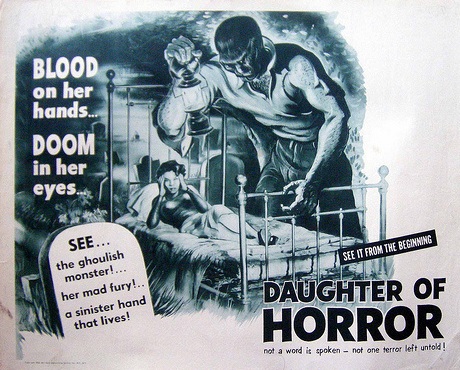




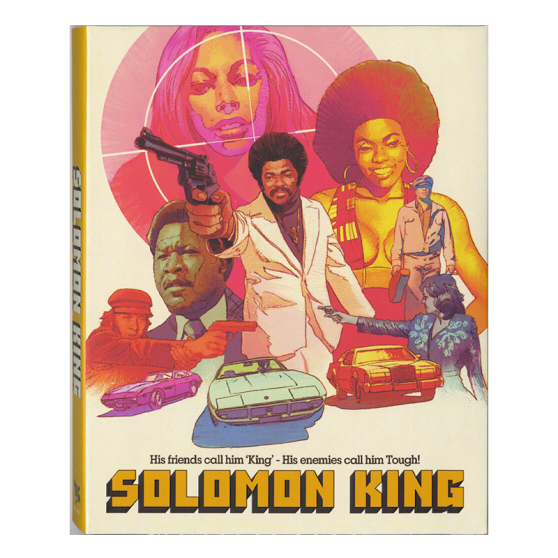


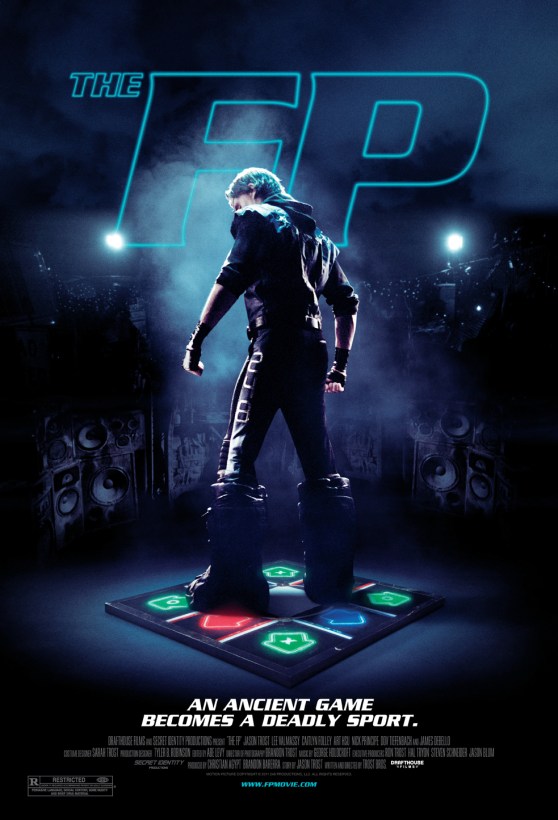


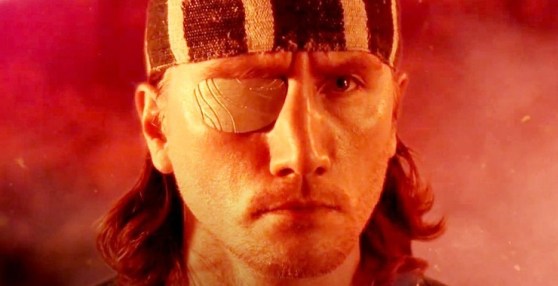

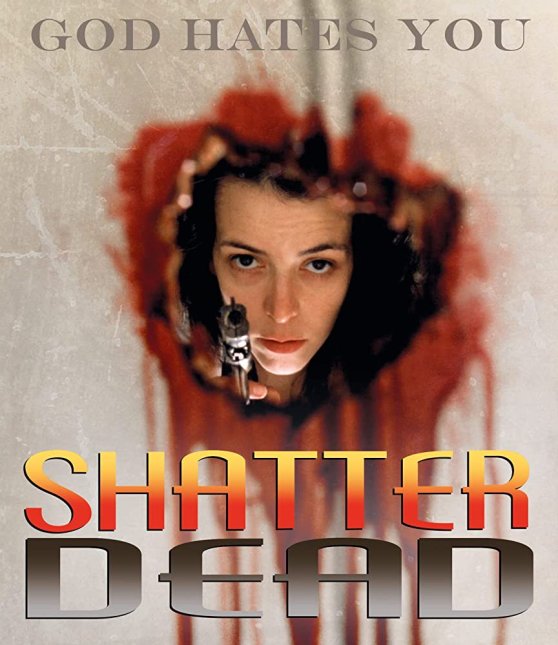

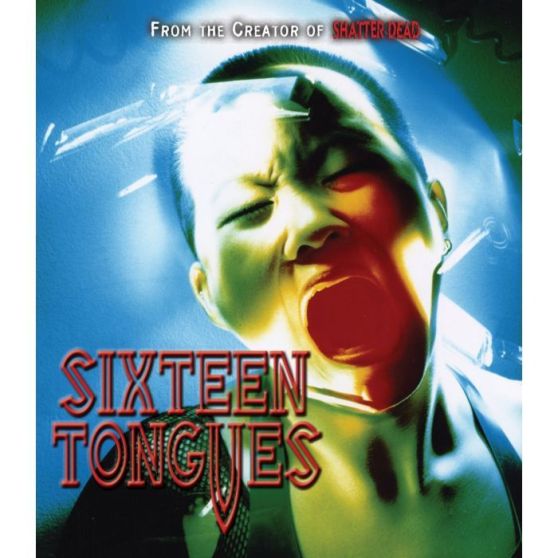


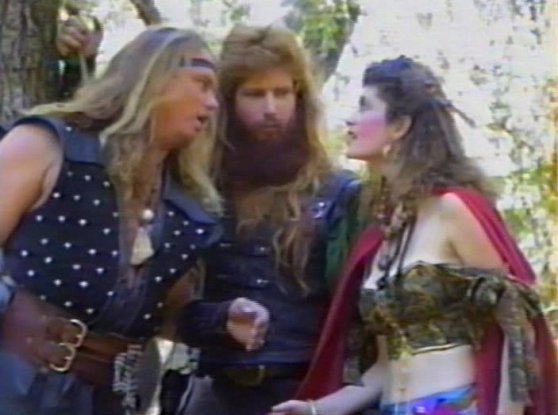
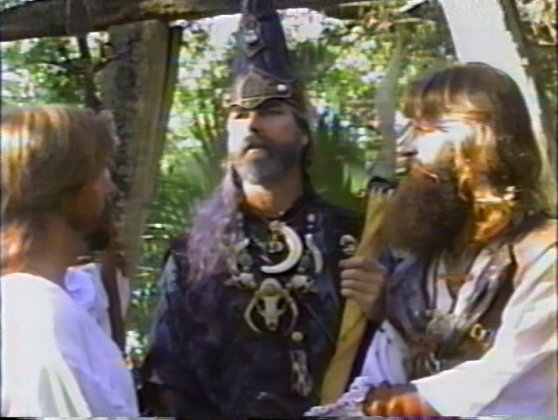



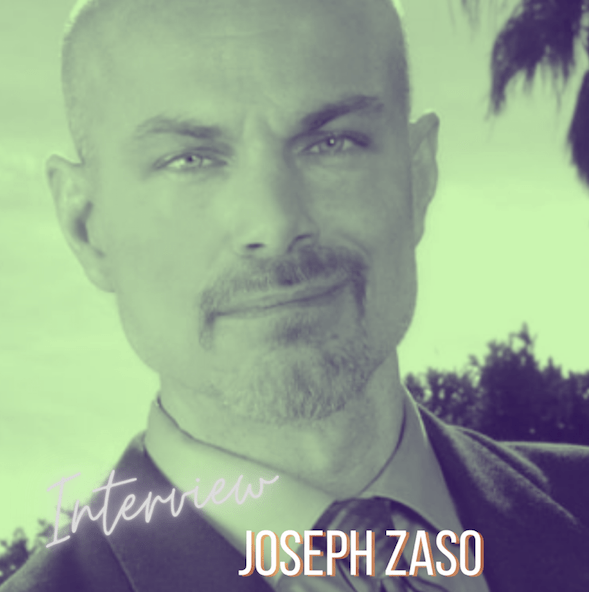


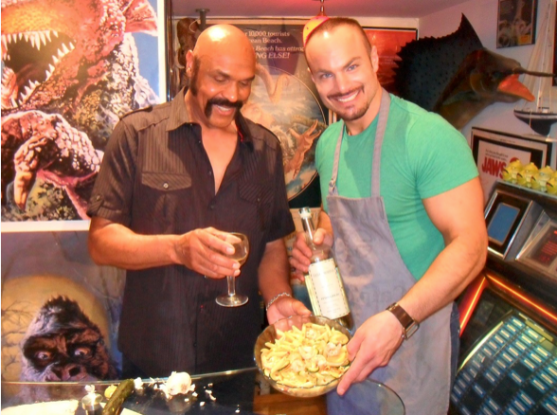
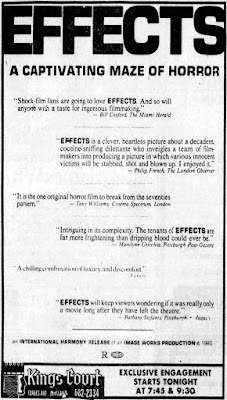


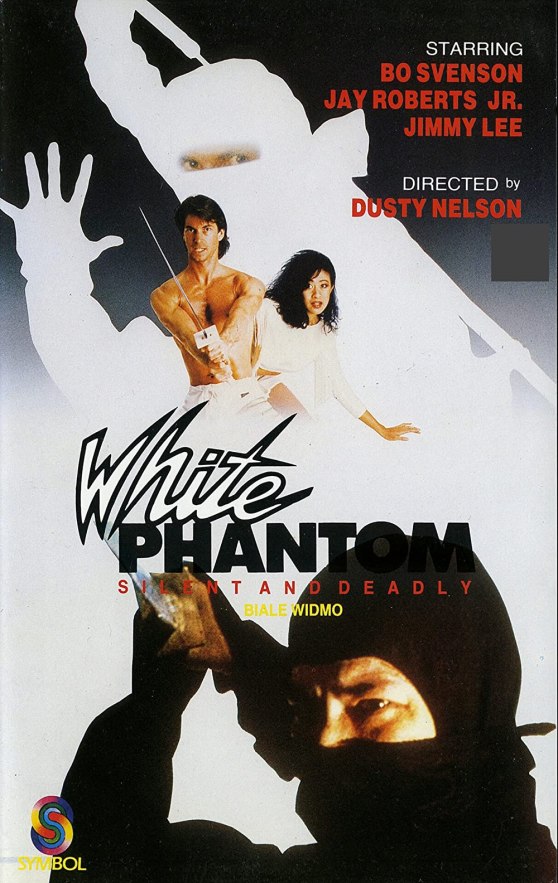
 B&S About Movies
You must be logged in to post a comment.