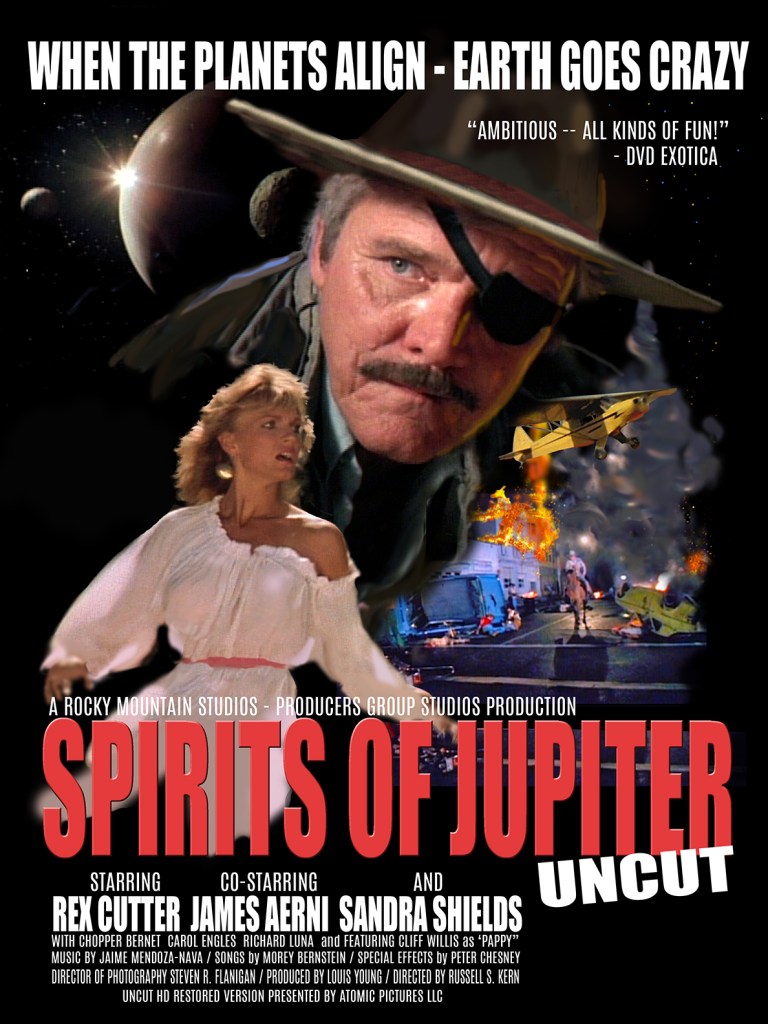
Never doubt the powers of the discriminating VHS tastes of us Allegheny pugwackers splashin’ about the Three Rivers confluence . . . as it all began with an “Apoc Week” review in November 2021 of the lost Denver, Colorado-made sci-fi action-western, The Spirits of Jupiter. Now, the reissue has arrived!
Now . . .
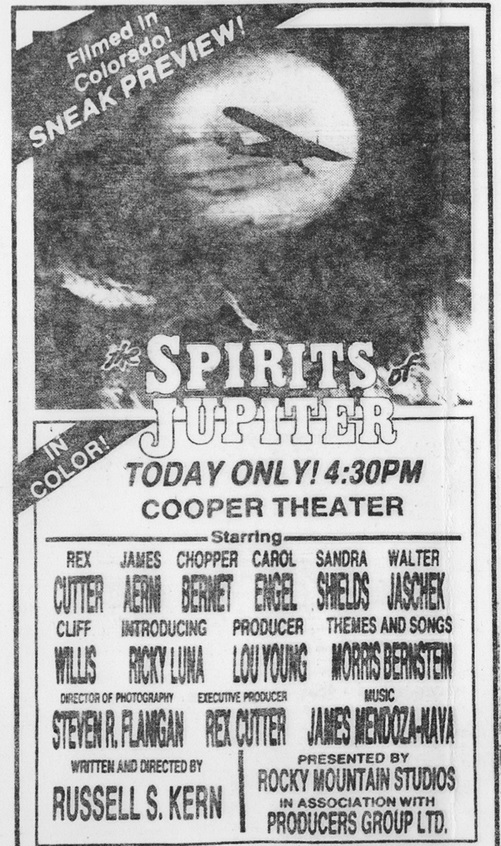
Initially released locally in Denver in 1984, the film never received an official U.S. release — only to finally arrive on U.S. shores by way of overseas VHS bootlegs. Yeah, there’s nothing like a 40-year cult following pulling a lost VHS’er out of the analog snows of VCR dreams and into our digital streaming clouds.
and then . . .
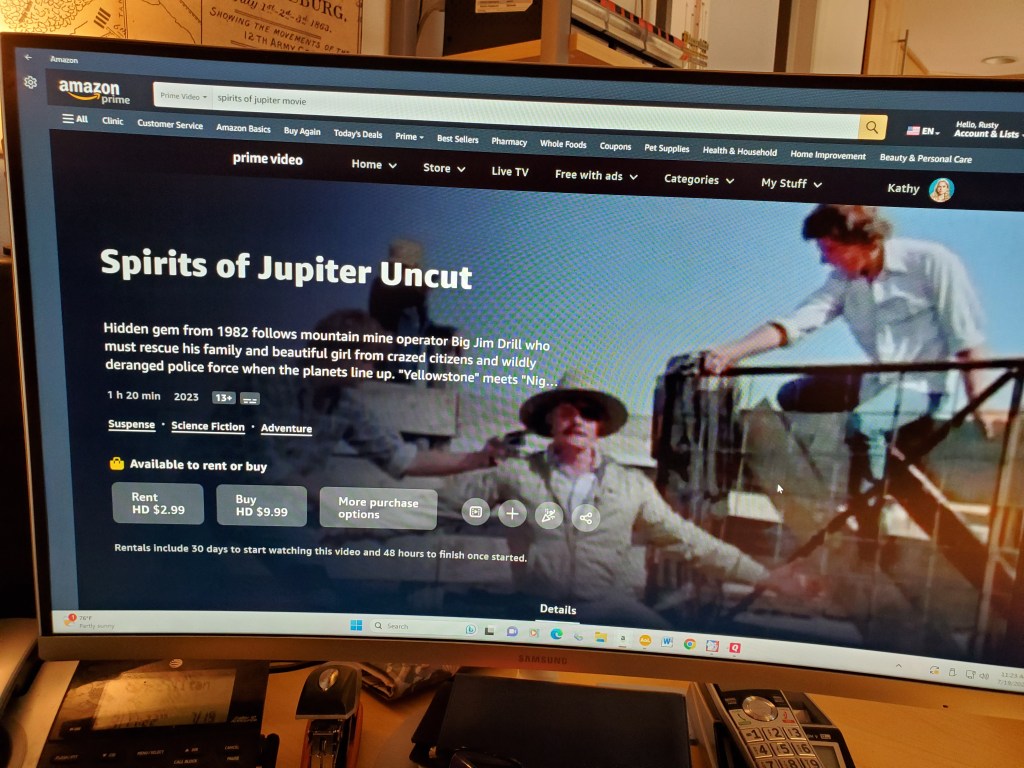
Russell Kern, the writer and director of this lost, home video classic, has released a test-print of his completed restoration of the film to celebrate its 40th anniversary. Unlike the ’80s bootlegged-version print we know and adore, which clocked in at a never-intended-for-release one hour fifty minutes (110 minutes), the new “Uncut” version offers the opportunity to watch the intended one hour twenty minute version (80 minutes) — with a full image restore. Cross those fingers and toes for a wider platform release, including a hard-media version for our home libraries.
You can watch the world of Russell Kern — one where “Yellowstone meets The Night of the Living Dead” — on Amazon Prime. And be sure to visit with our original review from November 2021 to enjoy Russell Kern’s July 2022 insights behind the film’s production.
Our thanks to Mr. Kern for the B&S About Movies exclusive on this exciting news!
“Uncle Nick, it’s gonna be okay, ya’ know? Love is complicated.” — Trevor drops wisdom on Nick
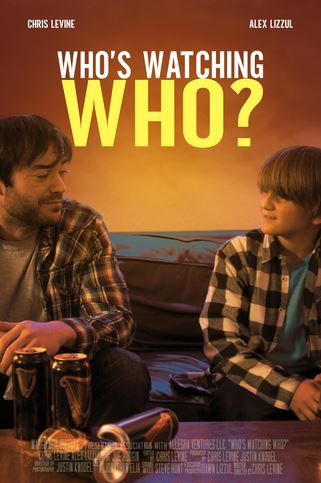
As this review goes to press, we’ve learned that Who’s Watching Who? was named “Best Short Film” at The Percy Awards in Austin, Texas, as presented by The Academy of Independent Motion Pictures. In addition, the film has received screening invitations to the 15th Annual Burbank International Film and 26th Annual Dances with Films festivals.
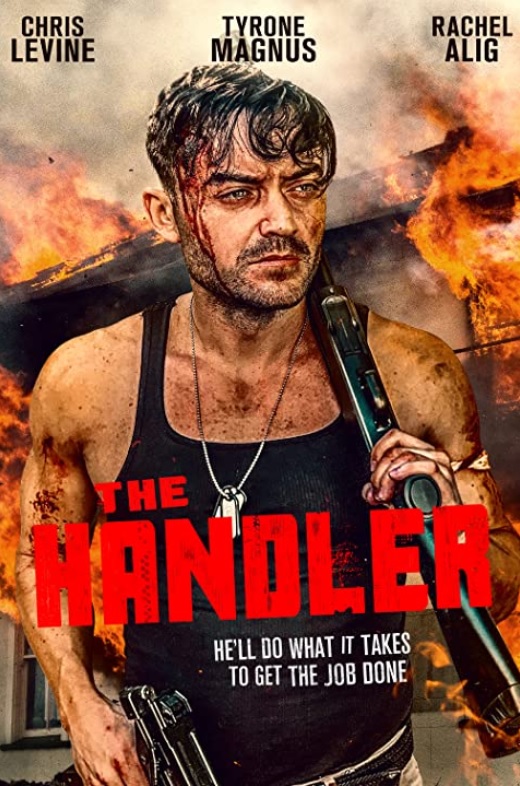
A long-gestating passion project produced, written and directed by Chris Levine (most recently seen in Micheal Matteo Rossi’s 2023 actioner Murder Syndicate; he also starred Rossi’s 2021 offering, The Handler), he stars as Nick: the divorced, means-no-harm ne’er-do-well brother (sort of a grungy, more troubled Uncle Buck, if you will) reluctantly drafted to take care of Trevor, his 12-year-old nephew, for his working, single-mother sister. Will Nick rise to the challenge and be the adult for the weekend . . . or will Trevor (a really fine Alex Lizzul, in his debut) be in charge?
Produced and distribute by Margo Neil Pictures and Allegra Ventures, be sure to look for this delightful, family friendly comedy at a film festival near you. Also be sure to look for Chris Levine in the upcoming comedy, Cup of Roommate, as well as enjoy a few of his films now streaming on Tubi. We examined Chris’s career at length with the first effort of his that we reviewed, No Way Out.
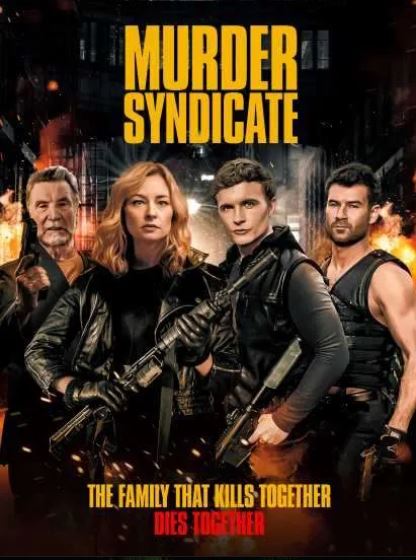
Indie action writer-director-producer Michael Matteo Rossi, with a Woody Allenesque tenacity of a once-a-year turnover in films, returns with his sixth feature film — his others are Misogynist (2013), Sable (2017), Chase (2019), The Handler (2021), and Shadows (2022); his seventh, The Charisma Killers (2024), is currently in post-production — another twisted tale of morally corrupt characters: ones who see their Hong Kong-cinema influenced violence as the only path to success.
The John Woo twist on that corruption: Our Tarantionoseque ne’er-do-wells are a family of assassins: two brothers and a sister: Cain (our hothead), Jonah (the naive one), and Becca (the paranoid), guided by Isa (the big bad mama) and her behind-the-scenes boyfriend, Zane. Their latest sanction almost falls apart when Isa’s health issues come to a head; Zane saves the day as the siblings turn on each other: each thinks they should take over the family business. And none of them trust Zane. And Roddy (Vernon Wells) isn’t helping matters.
While the main cast of Diane Robin (our bad ass mom), Timothy Haug, Mark Justice, Jessica Morris (our deadly, bickering brats) is unfamiliar — sans the always-on-point Vernon Wells and welcomed Rossi stockplayer Chris Levine (who fronted The Handler, as well as his own feature, No Way Out; appears in Bad Bones and The Ice Cream Stop) in support roles — all come to the set with extensive resumes that collectively date back ’80s network television series, feature film support roles, and a wealth of direct-to-stream and indie features. So while unknown to most, and is the case with Matteo Rossi’s previous films: the acting is of an A-List quality, but on a tight, indie budget.
What elevates this latest Michael Matteo Rossi joint — and not that his previous efforts are lacking in character development — is the action and the thrills, while still prevalent, take a backseat to offer a deeper examination of a family . . . where killing is their business.
You’ll be able to enjoy Murder Syndicate as a VOD and digital stream on your platforms of choice on June 13, 2023, courtesy of VMI International. We previous reviewed the shingles’ release of Glenn Danzig’s Death Rider in the House of Vampires.
In 1966, Dennis Feltham Jones published one of the first tales of A.I run amok with the novel Colossus (adapted as 1970’s Colossus: The Forbin Project), concerned with a self-aware military defense system. In 1973, Dean Koontz personalized the tale as Demon Seed (itself adapted into a 1977 film): a Frankenstein-meets-Rosemary’s Baby tech-horror about a computer scientist’s home-grown security system imprisoning his wife for a nefarious purpose.
In 2023, writer John Oak Dalton — who gave us Mark Polonia’s bonkers Noah’s Shark (2021) and Shark Encounters of the Third Kind (2020) — revisits the genre and updates the tech via today’s smart speakers and the net-based ASMR phenomenon (that’s “autonomous sensory meridian response” for the uninitiated) that’s given rise to a new breed of interactive, social media influencers. According to an April 2022 article published by Richard Craig at ASMR University: approximately 25 million ASMR You Tube-based videos have been published, while Amazon’s Twitch subsidiary now offers real-time ASMR live streams.
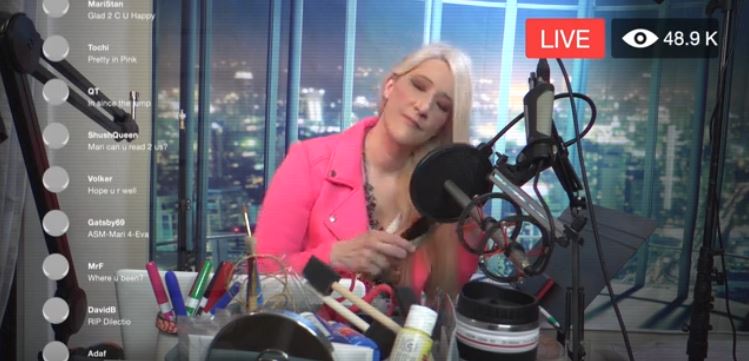
In the always-effective, micro-budgeted world of John Oak Dalton: Smart House shot for a reported $130,000 as a “contained thriller” (see 1954’s Alfred Hitchcock’s Rear Window to 2002’s Colin Farrell’s Phone Booth for examples). In this, his third writing-director effort — after The Girl in the Crawlspace (2018) and Scarecrow Country (2019) — Mari (Iabou Windimere of Crawlspace) is one of those whispering, book reading and hair brushing, ASMR influencers smart speaker-connected to her “smart house” via Cassandra. An Alexa-cum-Siri-styled A.I (voiced to smoky-perfection by indie goddess Brinke Stevens) that controls everything: from coffee pots to floor cleaners, was developed by Cordell (always effective, Oak Dalton stockplayer Tom Cherry), Mari’s infamous hacker father: his infamy comes by way of his hacking The Pentagon’s computers.
As with the many A.I terrors before — which B&S delves into with an “Exploring: The ‘Ancient Future’ of A.I” and “Drive-In Friday: Computers Take Over the World” features — Cassandra becomes self-aware . . . or demon-possessed . . . or hacked during Mari’s latest live-stream . . . that traps the social media star — already dealing with a violent boyfriend and restraining orders — in the house to do its (her) evil, digital bidding. Meanwhile, under a perpetual, bathrobed house arrest and banned from the utilizing the web (that leaves him “connected” via an old landline telephone and tethered by an ankle-monitor), Cordell hacks-a-way into the tangles of the Dark Web to discover who or what has taken over his creation and imprisoned his daughter.
When Muncie, Indiana-born John Oak Dalton spoke with B&S About Movies in 2021, he expressed his passion in wanting to make movies that he wanted to watch himself. Alongside his fellow, Dayton, Ohio, based celluloid co-conspirator Henrique Couto (2019’s Ouija Room), that horror-erudition once again unspools across the frames of his third writer-directing effort: another well-written, multi-layered mystery. Dalton’s developed characters — who, in a reflection of our current, social media-addicted world, interact only via smartphones, the internet, or anomalously on the Dark Web; meanwhile Mari’s life, as is the case with most social media celebrities: her online persona is happy-happy joy-joy, but a hot mess offline — rise above the usual, direct-to-streaming norms we lazy-Sunday rabbit-hole on Tubi. As with Dalton’s previous dual-efforts, Smart House offers effective, against-the-budget set design and crisp cinematography that’ll play nicely on your handheld-devices, PCs, laptops, or cast to your larger smart TVs.
You can follow John Oak Dalton at his official blog as well as Facebook, and keep track of the eventual online release of Smart House at ITN Studios.
I grow weary of critics who accept screeners from ultra-low-to-low-budget filmmakers, then, when that filmmaker name drops better-known directors and films, the review proceeds to judge that self-produced passion project against those Bayos n’ Bayhem’ed, A-List summer tent pole inspirations: it’s a losing proposition to a negative review.
A critic simply can not measure today’s 2020s’ indie streamers — no more than you could rationalize regional filmmakers of the ’70s, such as Don Dohler or Andy Milligan (Fiend, The Ghastly Ones), or SOV home video purveyors of the ’80s, such as Jon McBride (check out our “Exploring” feature), or Doug Ulrich and Al Darago (Scary Tales) and Donald Farmer (Scream Dream) — to the films that inspired said filmmakers, which would be everything from Hitchcock to Carpenter, between the usual soup-to-nuts sprockets.
Today’s young bucks, such as this film’s writer and director, Michael Matteo Rossi, are analogous to those up-against-the-budget indie filmmakers of ’70s and ’80s yore — as they deliver a fascinating entertainment experience (at least to this snobby, know-it-all critic) in observing how the modern, digitally-based filmmaker tackles the hard-to-tackle-on-nickles-and-dimes action and science fiction genres (Anton Doiron’s Space Trucker Bruce as the best-example).
Courtesy of today’s here-to-stay digital technologies, gone are the days of indie filmmakers heading out to a patch of woods, sans permits, with a camera loaded with short ends and a gaggle of their friends and amateur actors to leave their mark with a horror film (and don’t forget that de rigueur pair of overalls or coveralls). Today’s smart phone’d filmmakers, such as Anthony Z. James (Ghost) and James Cullen Bressack (For Jennifer) and other Canon Reds purveyors, aspire to rise above those regional and home video filmmakers of old to create films in other genres besides the aforementioned horror and the low-budget auteurs’ second favorite genre: the cheap-to-make rom-com, such as Edward Burns and his industry breakthrough with 1995’s The Brothers McMullen, from those Fine Line Features, Fox Searchlight and Miramax glory days (that he shot for $30,000 and cleared $10 million in box office).
So, yes. Michael Matteo Rossi is ambitious. To a fault? Eh, maybe those James Dalton-opinions down at the roadhouse vary in the eyes of the Brad Wesleys of critical divide. Moi? I see no reason to compose discouraging reviews. (Ugh, again with the length complaints: the one hour thirty-six minutes of Shadows is short compared to most indie-streamers where directors are their own worst editors.) So, yes, I cut a wide berth (see Nigel the Psychopath, as an example) — that I would never give to a major studio film: those major leaguers know better than the shaggin’ flies guys down in Triple A (I hated Last Man Standing and John McClane seeks not my pity).
As I spoke with Rossi and actor Chris Levine when their previous film, the John McTiernan-aspiring The Handler, was released, they enthusiastically spoke of their next film, Shadows — and mentioned their joint admiration of Martin Scorsese’s Goodfellas and Michael Mann’s Thief.
Does that mean I should critically compare Rossi’s works to either of the those stellar films? No. Absolutely not. What Rossi’s mention of his cinematic inspirations provides this critic is a critical embellishment to the film’s IMDb-posted logline: I simply now know what to expect as the 1s and 0s formulate images on my lap top. As with Michael Matteo Rossi’s The Handler serving as his homage-throwback to ’80s and ’90s action films, Shadows is his cinematic tip-o’-the-hat to the crazed flux of ’90s gangster films — films rife with the expected Shakespearian-to-Dashiell Hammett noirish twists and betrayals.
So, with that being said: My critical barometer, here, is not Scorsese or Mann, but, when thinking back to Quentin Tarantino serving as a secondary inspiration to those Miramax-gangster ’90s: his film, Reservoir Dogs. Well, more accurately: Rob Weiss’s low-budgeted, Tarantino-cobbled Amongst Friends, Matty Rich’s Straight Out of Brooklyn, and Troy Duffy’s Boondock Saints. But make no mistake about it: Rossi is not a filmmaker who cuts off one’s nose to spite one’s face — as did that “Tarantinoesque” ego-destroying triumvirate. However, unlike those three films, okay, well, maybe not Boondock Saints, Shadows is not your typical indie streamer: it is not only a well-shot film: the sharp cinematography is supported by solid, fluid editing giving it, well, the Scorsese-Mann quality on-a-budget to which it strives.
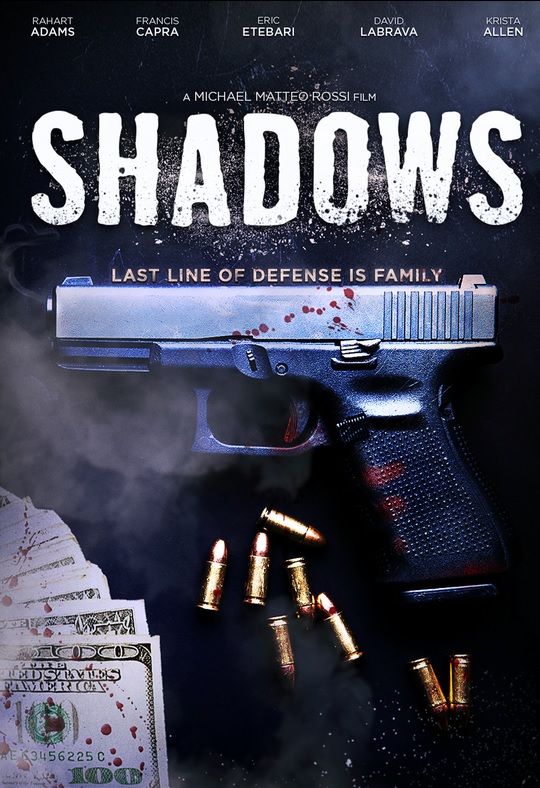
I immediately — and pleasantly — noticed Rossi smartly brought back the fine Rachel Alig, Tyrone Magnus and Chris Levine (The Ice Cream Stop, No Way Out) from The Handler for his cast. He then ups the game with the casting of long-suffering indie actress Krista Allen, who parlayed her indie film roles (speaking of the shot-on-phone genre: the pretty fine Case 347) and under-five and guest starring television roles (Diagnosis Murder to CSI: Crime Scene Investigations to Hawaii Five-O) to a featured, 77-episode role in CBS-TV’s long-running daytime drama, The Bold and the Beautiful. Another welcomed actor to the cast is Rahart Adams from Nicklelodon’s Every Witch Way, (as well as Pacific Rim: Uprising) in an adult film role, given a chance to shine as our well-meaning but flawed Othello. Fans of FX’s Sons of Anarchy and Mayans M.C. will also notice David Labarva, fine here as the crazed, drug-manufacturing Nicolas. Then there’s Jazsmin Lewis of the Ice Cube-starring Barbershop franchise, in support, as Shonda, who cares for Jewel and a stable of hookers.
The streaming incentive, here, of course, is, well . . . we wish Australian icon Vernon “The Wez” Wells was here in more than just-a-name-on-the-box starring role, à la the aforementioned Bruce Willis, or Eric Roberts and Nic Cage (we are forever his bitch), but we do get a little bit more of Francis Capra — yes little Calogero in the Scorsesesque A Bronx Tale.
As with the aforementioned Amongst Friends, Rahart Adams is Cody: another troubled soul from a broken family hoping to break free of Jewel (Krista Allen), his crack-addicted prostitute mom, by working at the only good-paying job a foster care-dumped kid can get: as a low-level drug dealer. The modernized, Shakespearean proceedings — as they usually do in these films — goes to shite when Cody unknowingly buys a batch of a new designer drug for a quick mark-up resell — only to discover the drugs are part of a cache stolen from our in-residence Iago, Nicolas. And — as things usually do in these films — gets worse when our femme fatale Desdemona, aka Michelle (Rachel Alig), from Cody’s mom’s stable of call girls, unwittingly drags him into a multiple homicide.
Now Cody and Michelle are on the run from Nicolas’s right-hand psycho, Axel (a very adult-fine Francis Capra), who takes a scored earth approach to his profession: no survivors — including Vernon Wells’s prostitute-addicted lowlife, Cliff. Cody and Michelle’s savior comes in the form of Eric Etebari (The Lincoln Lawyer and TV’s NCIS: Los Angeles) packing the Robert Forster-cool as the salvation-seeking cartel hitman, Dean.
In the end, Rossi, as he did with The Handler, handles the drama-to-action ratio with a Scorsese-Mann aplomb. So much so that those pesky digital blood n’ bullets sticklers will overlook those digital effects. We will just have to wait and see if Dwayne “The Rock” Johnson sticks to his publicity-driven bluster to never use “real guns” on sets, again, and he ups digital gun effects and squibs to the point where we can no longer tell the difference. Hello money: here’s the mouth.
So, until The Rock delivers: Michael Matteo Rossi delivers as he keeps getting better at the craft.
After watching and reviewing The Handler, Rossi provided me with a link-copy of his previous, third film, 2019’s The Chase (his freshman and sophomore features — amid his twelve shorts — are 2013’s Misogynist and 2017’s Sable). While The Chase is a commendable effort, The Handler is certainly the more ambitious, superior effort. And Shadows — thanks to great casting with actors bringing their A-games — trumps both of those films. I believe, once his next film, the also-starring Vernon Wells The Sweepers drops come September 2022, Michael Matteo Rossi will begin to receive mainstream, major studio notice as did his digital cousins Prince Bagdasarian (Abducted) and Steven C. Miller (First Kill). In fact, like Ryan Coogler before him: I see Michael Matteo Rossi creating that film — one that will win “Top Audience” and “Grand Jury” awards at the Sundance Film Festival where he will find himself called out of the dark, indie shadows to the sun-kissed majors.
It’s all about, not naysaying, but seeing the potential in the indie filmmaker. And Michael Matteo Rossi’s day in the sun is on the horizon and ready to break the dawn.
Shadows will be released to VOD and digital streaming on May 6th by Acort International Pictures (the team behind Clinton Road). The studio’s page for the film will lead you the film’s Facebook and Twitter pages to follow, as well as an Action-Flix interview with Michael Matteo Rossi and Deadline interview with actor Rahart Adams.
About the Author: You can read the music and film reviews of R.D Francis on Medium and learn more about his work on Facebook. He also writes for B&S About Movies (links to a truncated teaser-listing of his reviews).
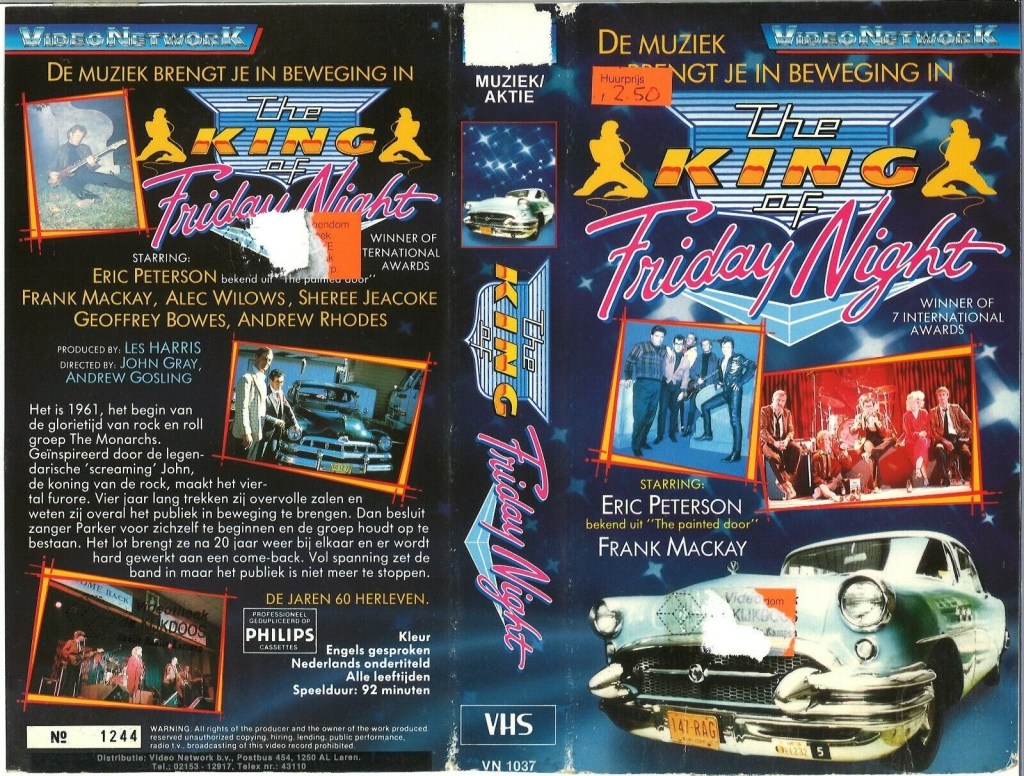
The Monarchs — like Eddie and the Cruisers and the Wonders before them — went from Nova Scotia obscurity to a Canadian chart-topping hit, until, as it usually does, it all fell apart. Unlike the Wonders, who never regrouped, and like Eddie and the Cruisers, who eventually did (sort of via the ‘ol Part Duex), the Monarchs reunite for a performance — as the story flashes back to their bygone days of troubled fame.
Hey, what did I know back then: Cannon has their logo on this video-taped spooler and that studio’s rock anthems for the retarded home video rental population: The Apple and Playing for Keeps (okay, the latter is Miramax, but you get the point) worked out okay. Well, not really. But really: this is worse. Way worse. And yes, Incident at Channel Q — which is padded with rock videos spun by a controversial VJ whose TV stations is under seige by the Christian Right — is better. For what’s it’s worth: let that be your critical barometer.
This Canadian television production made its way to U.S. home video shelves for unsuspecting rockers like this writer to rent. So, yeah. There goes another three bucks, wasted, that would have been better spent on a Ron Marchini flick (if only Arctic Warriors had been released to U.S. shores back then) or any Philippines war romp (Hey, did you enjoy our two-part “Philippine War Week” blow out)?
So, yeah. This won seven international awards — including The Banff TV Festival “Best Picture” award?
Well, maybe The King of Friday Night is better than my opinion dictates. “Critics’ opinions are divorced from those of the public,” so it has been said. Look, back in my youthful days of yore, “rock flicks,” for me, were analog horror slabs like Rocktober Blood and Blood Tracks and other “No False Metal” ditties that assured me that I was one Iron Maiden-spin away from eternal damnation (that any member of the public with a lick of common sense or quality, wouldn’t like).
Anyway, this “award winning” production is based on writer John Gray’s hit, Canuck stage play, Rock ‘n’ Roll, which tells the story of the real life, Truro, Nova Scotia, band, the Lincolns. Yes. They are a real band. Sadly, this filmed-stage play doesn’t do their career justice. Perhaps the stage play did. Maybe that theatre piece was a grand production like Broadway’s Jersey Boys*, you know, the one concerned with the career of Frankie Valli and the Four Seasons. While the Seasons made their Billboard chart bones with “Sherry” and “Big Girls Don’t Cry,” the Lincolns — well, the Monarchs, had theirs: “The King of Friday Night” topped the Canadian charts. (*Remember that Clint Eastwood brought us the artistically successful, but box office bombing, 2014 film adaptation of that 2005 Tony Award-winning Broadway musical. Maybe if the story of the Lincolns was under the eye of Clint or the group was given the dramatic-treatment of Telstar: The Joe Meek Story, we’d have a more engaging narrative.)
However, like Eddie and the Cruisers, there’s no memorable rockin’ rave-up like “On the Dark Side” (or the Wonders’ “That Thing You Do!”) to hold our interest: just lots of doo-wopin’ and finger snapping and synced dance steps that could be entertaining — but then there’s that pesky, odd special effects-film tinting to the ambitious shot-on-video proceedings that capture cardboard stage-production set dressing back drops. Yes. This wasn’t shot on location, but on television blue-screened sets mixed with theatrical backdrops.
It’s all very odd in a dreamy, French ’60s surrealist kind of way — only not as good as a French ’60s surrealist film, even though Canada’s roots are back in France.
The whole reason for this review — besides it having “Friday” in the title, is to expose you to a well-made, out-the-way You Tube rabbit hole discovery (back in November 2021) of award-winning author A. J. B. Johnston’s micro-documentary companion piece to his book, The Kings of Friday Night: The Lincolns.
You can learn more about the Lincolns with their entry at Nova Scotia Classic Rock. There’s more with these 2018 articles at Saltwire and CVT News. Sadly, according to this CBC News obituary, we lost the Lincolns’ founder, Frank Mackay, in 2019.
No. This is a true story from the days of incessant HBO replay: After riding the ’80s Slasher wave surfed by John Carpenter and Sean S. Cunningham with his own, twisted in version of Hitchcock’s Psycho, Manhattan writer-director Joseph Ellison, for his second — and what would be his final — effort, decided to reminisce his rock ‘n’ roll roots with Joey (1986): a tale about an ’80s rockin’ teen (per the soundtrack, he’s into Scandal, E.L.O, the Polecats, and the Ramones; there’s an Elvis Costello poster on the wall) at odds with his washed-up, ’50s rocker dad (per the soundtrack, “real music” is the Ad Libs, the Cleftones, the Coasters, the Devotions, the Duprees, the Elegants, the Limelights, and the Skyliners). They finally discover common ground when Joey, Jr. helps Joey, Sr. regroup his old band, Yesterday’s Today, for a retread of their big hit, “Moonlight Love,” which isn’t that bad of a faux-hit — but it’s still no “On the Dark Side” or “That Thing You Do” to wow you to doo-wop your sweet bippy into a 23 Skidoo.
So, if you have a doo-wop hankerin’, there’s your double feature: The King of Friday Night and Joey. Yes, Joey is the better movie, courtesy of solid performances by Neill Barry (from the awesome O.C and Stiggs) and James Quinn (who reminds of James Remar — and should have done more films) in the Jr. and Sr. roles. Hey, make it a triple: Martin Davidson, who directed Eddie and the Cruisers, returned the genre with Armand Assante as a washed-up doo-wop’er wallowing in the past in Looking for an Echo (2000).
There’s no rips of The King of Friday Night, but there’s a ten-part rip of Joey on You Tube.
As you can see from the banner, above, there’s more rock flicks to be had with our three-part “Rock ‘n’ Roll Week” series. And there’s more shot-on-video films to be discovered under our SOV tag.
About the Author: You can read the music and film reviews of R.D Francis on Medium and learn more about his work on Facebook. He also writes for B&S About Movies(links to a truncated teaser-listing of his reviews).
April 25: Fads — Lambada. Disco. Garbage Pail Kids. What’s your favorite fad-related movie? Click the image for our full list of reviews for the month!
So, the day of April 25 on the B&S About Movies’ announcement for the April Movie Thon so proclaimed today as “Fads” day: Lambada. Disco. Garbage Pail Kids. You could toss superhero movies on the VHS stack. Elvis movies*. Buddy Cop flicks. Gangster movies. Movies starring Melissa McCarthy and Tim Allen.
Oh, but how could we forget including “The Fab Four” — who, through no fault of their own — became “The Fad Four” — across 30-plus films since the late ’60s**. Yes, we are name-dropping the “fad films” Breakin’, Can’t Stop the Music, The Garbage Pail Kids, and Roller Boogie in the same breath as one of the most — if not the most — influential bands of all time.
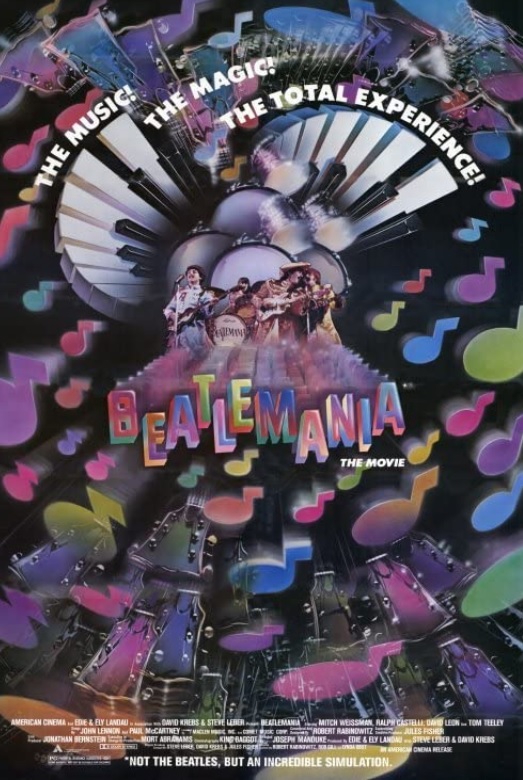
This “film” — a concept that Ringo went on record as saying he “hated” — is one of those fad flicks of our dismay. And deservingly so, since it is the most blatant marketing cash-in of all Beatles flicks.
A smash Broadway musical-rockumentary advertised as “Not the Beatles, but an incredible simulation” that ran for 1,006 performances from May 1977 to October 1979 is a sure bet for a theatrical film adaptation.
No, it’s not.
The show — a multimedia production consisting of backdrops and projected images of art and video footage from the Beatles-era, as well as numerous clips of the Beatles — consisted of 29, chronologically-played songs, complete with costume changes.
So — with a Broadway hit on their hands — the managerial impresarios behind the production, Steve Lever and David Krebs (known for their handling of the Rolling Stones, Joan Jett, to a lesser extent, Canadian metalers Anvil; chornicled in their document, Anvil! The Story of Anvil, and Aerosmith; remember “Boston’s Bad Boys” appeared in Sgt. Pepper’s Lonely Hearts Club Band), decided that — Apple Corps. lawsuits, be damned — it was time to take on the album charts and the silver screen.
The original cast of Joe Pecorino (rhythm guitar, John), Mitch Weissman (bass guitar, Paul), Les Fradkin (lead guitar, George), and Justin McNeill (drums, Ringo), and the second cast of Randy Clark as John, Reed Kailing as Paul, P.M. Howard as George, and Bobby Taylor as Ringo, headed into the studio for a 1978 Arista Beatlemania: The Album release — which bombed with record buyers as it scrapped into the lowest regions of the Billboard 200.
Seriously? Who wants to buy a Pickwick (Discogs) budget sound-alike of Beatles tunes?
Okay . . . well, maybe a movie would work, better.
Production began in late 1980 — shortly before John Lennon’s December 8 murder — under the tutelage of TV director Joseph Manduke (Harry O, Hawaii Five-O, Barnaby Jones). The cast featured a mix of musicians from the Broadway production and Arista album, with Mitch Weissman back a third time as Paul, David Leon as John, Tom Teeley as George, and Ralph Castelli as Ringo.
Released in the summer of 1981, Beatlemania: The Movie quickly became a critical and box office bomb. Apple Corps, who launched their first legal volleys regarding publicity rights and trademarks in 1979, finally won in damages in 1986.
You can learn more on the making of Beatlemania (the Broadway show) with this Chicago news station-produced TV documentary on You Tube.
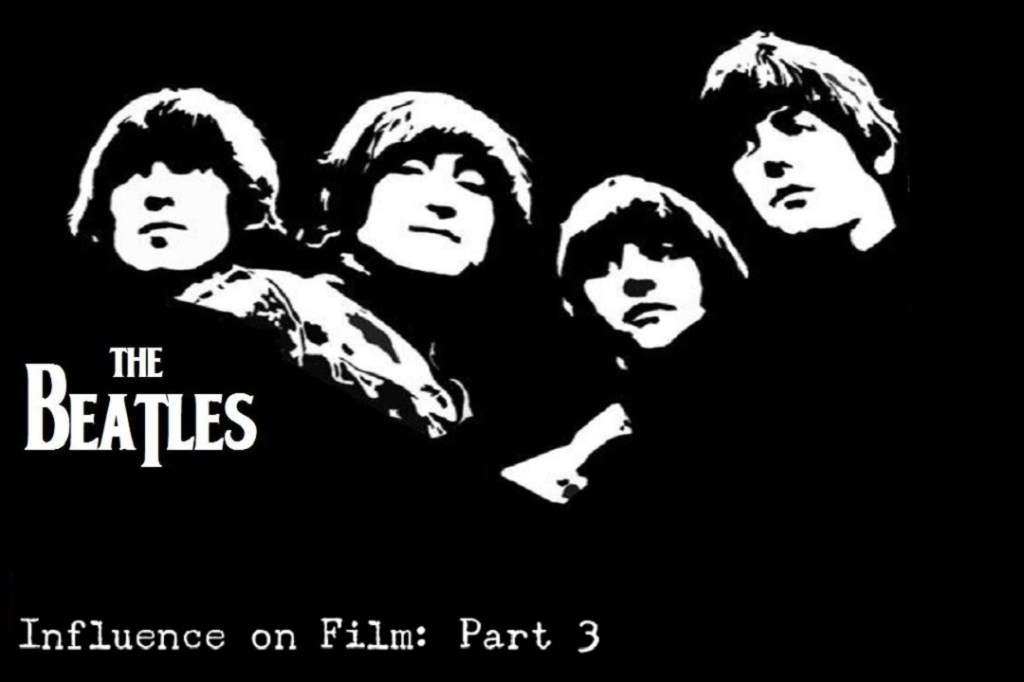
** Editor’s Note: This review previous appeared in August 2021, as part of a three-part “The Beatles: Influence on Film” series.
About the Author: You can read the music and film reviews of R.D Francis on Medium and learn more about his work on Facebook. He also writes for B&S About Movies(links to a truncated teaser-listing of his reviews).
April 22: Earth Day Ends Here — Instead of celebrating a holiday created by a murderer, share an end of the world disaster movie with us. But seriously, treat the planet right! Click the image for our full list of reviews for the month!
Oh, ye producing gods Richard D. Zanuck and Jerry Bruckheimer: for when one studio or producer puts a film into production, another will put their own version-of-a-theme into production. And the Byrdian “turn, turn, turn” of those film sprockets were burnin’ the same ol’ sunny bulb down upon the same ol’ celluloid long before the dual gunfights at the O.K Corral with 1993’s Tombstone and 1994’s Wyatt Earp . . . and when Dreamsworks/Paramount and Touchstone/Buena Vista went to battle with their respective, 1998 God-brings-destruction-on-the-world romps Deep Impact (released in May) and Armageddon (July) — which continues to rain upon the Earth with the recent Greenland and its cheapjack Asylum-clones in Asteroid-a-Geddon, Collision Earth, and Meteor Moon, as well as the far superior, The Wandering Earth out of mainland China (and the earlier, 1980 Japan-produced, Earth-disaster epic, Virus). And when 2013 was the year of our battle with the terrorist-attack-on-the-White House epics Olympus Has Fallen vs. White House Down. And, since we are in a sci-fi mood: the Lucasian vs. Glen Larceny slugfest of 1978, with the Battlestar Galactica set adrift in the Akkadese Maelstrom — that’s what you get for trying to make the Kessel Run, Glen, baby.
For this disaster-in-space, “Earth Day Ends Here” epic on the 22nd day in the year of our April Movie Thon, this tale begins with producer George Pal.
The book . . . the film!
Pal purchased the rights to Robert Heinlein’s 1947 short story Rocket Ship Galileo (remembering Heinlein’s work was also behind 1953’s Bechdel test failure, Project Moonbase). With Heinlein serving as one of the film’s three screenwriters: his book was adapted as Destination Moon (1950).
Well, that worked out alright, so Pal decided to head off into space, again, by using Edwin Balmer and Philip Wylie’s 1933 novel, When Worlds Collide, as his source material. For his screenwriter and director, Pal chose a couple of film noir stalwarts: Sydney Boehm, who made his mark in the genre with The Big Heat (1953), and Rudolph Maté, who wowed us with the genre-maker, D.O.A (1950) (beautifully remade — to a degree — as the recent, 2022 Australian sci-fi import, Expired).
So, when George Pal announced his end of the world epic, natch, the obvious knock offs went into production: The War of the Worlds (1953), and the more scientifically accurate, but less remembered, Conquest of Space (1955).
Then, there’s the ’50s Asylum Studios-version done by Robert Lippert, whose Lippert Pictures gave us the previously mentioned, failed, chauvinistic “matriarchy in space” romp that would be Project Moonbase. Hey, no way Lippert was letting Pal one-up him. So Lippert rushed — and beat Pal to the theaters — with Rocketship X-M (1950). While not as dry-to-boring as the previous Destination Moon, Lippert’s copy is still talky, rife with scientific boondoggles in its tale of Lloyd Bridges (Oy! It’s Commander Cain from Mission Galactica: The Cylon Attack) in command of Earth’s first mission to the moon — that’s driven off course to Mars by an asteroid storm.
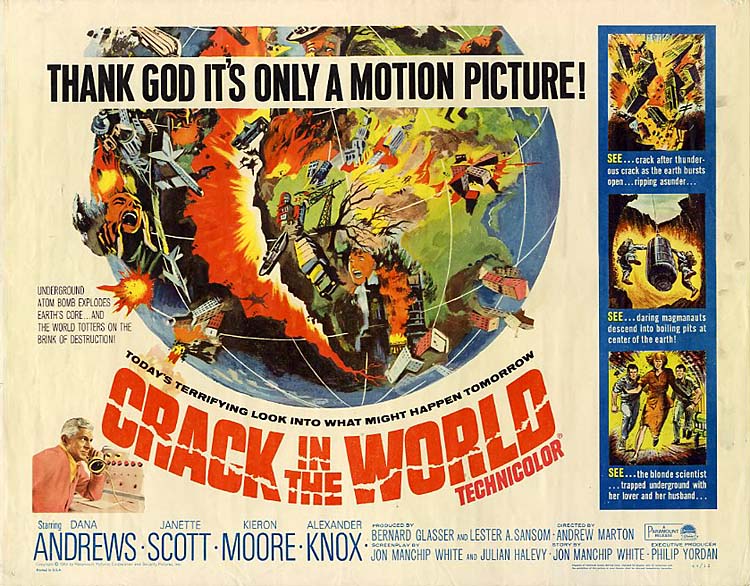
First, they collide. Then, they crack: Paramount’s 1965’s Crack in the World.
Okay, enough with the backstory: let’s unpack this space influencer that its studio, Paramount Pictures, has been trying to remake for years and years, with Tom Cruise and Will Smith, alternately on the marquee.
Needless to say, the ’50s celluloid proceedings — as all films do — detract from its source materials, but still concerns the coming destruction of the Earth by way of a rogue star, Bellus. So — as with Roland Emmerich’s later inversion known as 2012 (2009) — the rush is on to build a space arc, so as to repopulate man on Bellus’ single, Earth-like planet, Zyra.
The clock is ticking: man has only eight months to get their shit together because, as the Bible’s Book of Genesis quoted at the beginning of the film: God is keeping his promise: humanity is toast.
Our heroes, Astronaut David Randall (Richard Deer; Star Trek: TOS, years later: SST: Death Flight) and Dr. Cole Hendon (Larry Keating; of TV’s Mr. Ed!), receive the usual scoffs from the United Nations. Only the vain, fat cat magnate, Sidney Stanton (John Hoyt; Attack of the Puppet People and our April Movie Thon: Day 5 entry: X: The Man with the X-ray Eyes), heeds their warnings.
The usual earthquakes, tsunamis, and volcanoes, along with martial law, illegal weapons stockpiling — romantic interludes, because humans need the nookie, even as the end nears — and fixed lotteries to get on the rocket, ensues. Oh, the infamy of the strained acting frolicking amid those cardboard sets and flat-as-a-pancake matte paintings. No, ye Lucasian lads and lassies who bow to the blue screen: you won’t like this one. Well, maybe you will . . . if it brings on those Chilly Billy Cardille WIIC Channel 11 memories.
Now, imagine this all made, not by George Pal — but by Cecil B. DeMille, who wanted to adapt both When Worlds Collide and its novel-sequel, After Worlds Collide, as a pair of films. The guy who made the bible epic The Ten Commandments going up in space? I can see Charlton Heston in the Richard Deer role. . . . But a swashbuckling Douglas Fairbanks, Jr. was first considered by Pal?
Alas, Pal got his hooks into the material, first, and got Paramount on board — which closed the purse, so Pal didn’t make the “epic” he wanted to make. As for that second novel: why didn’t Pal make the sequel that was planned by DeMille? Uh, Pal deemed the brief “science fiction genre” as dead, as his next space epic, Conquest of Space (1955), failed.
Uh, but Stanley Kubrick did alright clipping that film to make something called 2001: A Space Odyssey. And that one worked out okay. Don’t believe us? Check out this You Tube comparison of the films.
About the Author: You can read the music and film reviews of R.D Francis on Medium and learn more about his work on Facebook. He also writes for B&S About Movies(links to a truncated teaser-listing of his reviews).
April 18: Drop A Bomb — Please share your favorite critical and financial flop with us! Click the image for our full list of reviews for the month!
Sure, it made great fodder for Kevin Smith’s books and podcasts, but I never cared about Bruce Willis’s “rep” on sets: Willis always delivered the goods — and that’s all that matters to my wallet. Plus, Bruce gave us his version of Pittsburgh with Striking Distance, so bonus points! And I should be writing a shitty review on their shatty joint effort, Cop Out — itself deserving of an “April Movie Thon: Day 18” bomb prefix: a film that’s more Smith’s fault than Bruce’s, no matter how much Smith says to contrary.
As with my beloved Eric Roberts and Nicolas Cage (Did you read our “Nic Cage Bitch” feature, yet?), Bruce hit hard times and his later movies (Precious Cargo) weren’t as good as his Die Hard heydays. Sure, those films really didn’t “star” Bruce, but I made the point to hard-copy rent or stream most of them. Why? Because I like Bruce.
It moved my heart to hear of Bruce’s affliction with aphasia diagnosis: a language disorder caused by damage to the areas of the brain responsible for expression and comprehension. It also hurts to see a man with a passion for a craft not able to share his gift with the world. It has to be soul crushing.
However, Bruce’s current life-patch doesn’t mean I am going critical backpedal my Bruce Willis reviews and wipe away bad reviews. Backpedaling would piss off Bruce more than a bad review for one of his films. John McClane doesn’t want your pity.
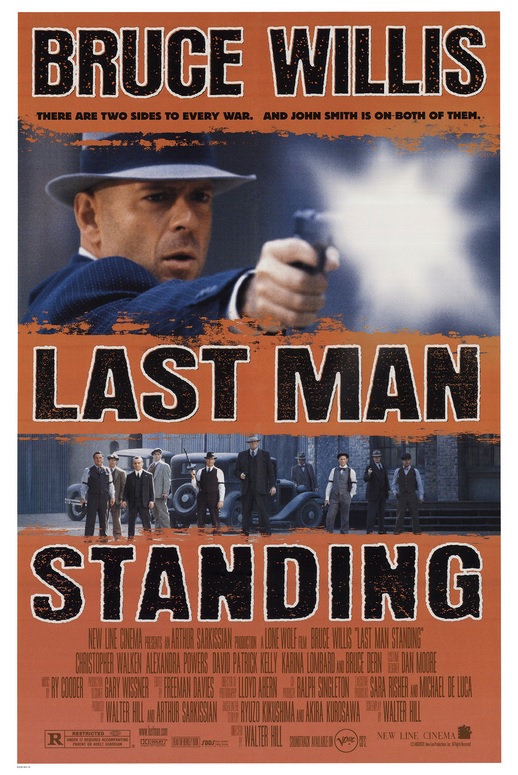
So, with that being said: despite the best of intentions, this movie bombed. And it also sucks.
Sure, we have Walter Hill of The Driver, The Warriors, Streets of Fire, and 48 Hours in the writer’s and director’s chairs, but a remake of a remake is still a remake of a remake as the “man with no name” from Akira Kurosawa’s samurai adventure Yojimbo (1961) — remembering it was rebooted by Sergio Leone as A Fistful of Dollars (1964) — returns. Ah, but Leone’s was an unauthorized, European-litigated remake and Kurosawa supported this American remake. Warning: Akira’s backing means nothing.
So, does Hill’s 1940s-styled film noir updating of Kurosawa’s revenge proceedings to a 1930’s gangster flick set in a dusty, western-styled Texas border town with liquor bootleggin’ afoot — with Bruce Willis in the “Robert Mitchum/Humphrey Bogart” anti-hero role — work?
Nope.
The film’s worldwide gross ($18 million in the U.S.) was less than $50 million against a $40 million budget that ballooned to near $70 million. Sure, the cast is all here, with Bruce Dern as the second lead and (wimpy) town sheriff, along with William Sanderson (Blade Runner, and “April Movie Thon: Day 9” entry), Christopher Walken, R.D. Call (Waterworld), and David Patrick Kelly (Luther in The Warriors, Sully in Stallone’s Commando). So what went wrong?
Eh, it looks good . . . but it’s all boring formula from the Syd Field Aristotle, three-act screenplay book: eight sequences of stock characters doing gangstery-things threaded together by too much sex, splashy violence, and the dreaded sign that nothing is working: droning voice-over narration. Unlike its predecessors: Hill’s version is totally forgettable — and Hill made my beloved The Driver. Go figure.
Oh, ah . . . since this is B&S About Movies: We need to mention our beloved Enzo G. Castellari clipped this all before Hill did, with his post-apoc, Mad Maxian-updating as Warriors of the Wasteland. Are we suggesting an Enzo-epic over a Hill romp? This time, yeah, for Enzo entertains us, makes us yell at the screen, and jump up and down in glee at the absurdity of it all.
Hey, it could be worse: We could be bashing Frank Stallone* in my beloved Mark L. Lester’s Public Enemies, itself released during that mid-90s fascination with all things Goodfellas. Well, wait, er, according to that link, I did bash it. Well, at least Lester’s film didn’t cost as much and it turned a profit via home video.
About the Author: You can read the music and film reviews of R.D Francis on Medium and learn more about his work on Facebook. He also writes for B&S About Movies(links to a truncated teaser-listing of his reviews).
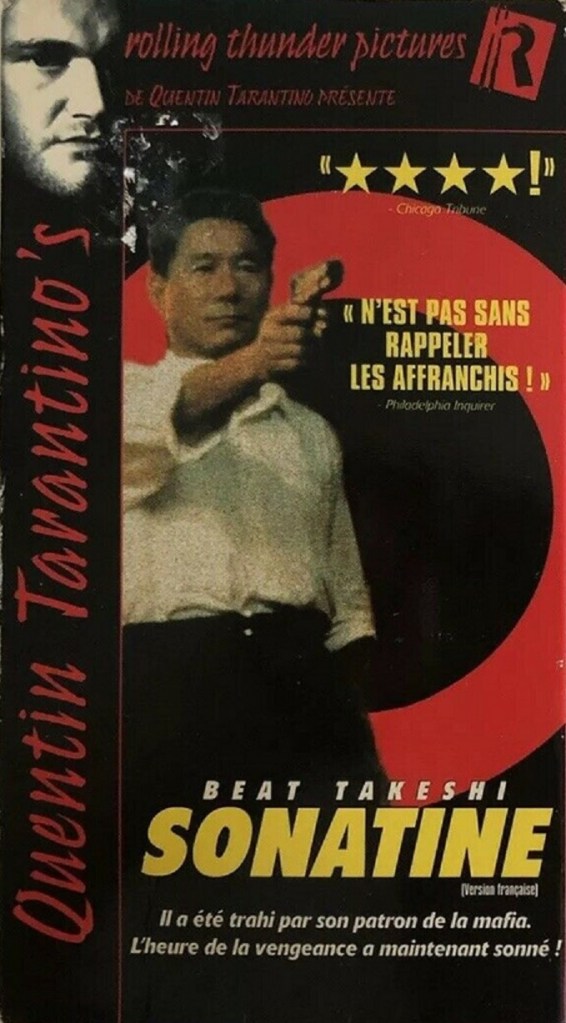
This Japanese yakuza gangster-noir written, directed and edited by Takeshi Kitano was his response to Martin Scorsese’s Goodfellas. Courtesy of Quentin Tarantino’s fandom, the film found its way to U.S. theater — art house — screens in 1998 via his Rollling Thunder-imprint, which subsequently released it to home video in 2000.
Of Kitano’s 18-film writing-directing career, it remains his best-known international film, although his action-revenge thrillers Violent Crime (1989), which served as his feature film debut, and the follow up, Boiling Point (1990), were sought out by Tarantino fans and came to find an audience on post-’90s home video imprints.
Kitano got his start as an actor in the late ’60s, making his debut in Go, Go, Second Time Virgin (1969), but he’s best known to U.S. audiences in that discipline, courtesy of Senjō no Merī Kurisumasu, aka Merry Christmas, Mr. Lawrence (1983), co-starring David Bowie — Kitano starred as “Sgt. Gengo Hara.” You may also know Kitano for his work as a ruthless yakuza in William Gibson’s Johnny Mnemonic (1995), as well as the imported Battle Royale (2000) and Battle Royale II: Requiem (2003).
As for Sonatine — a play on the musical term sonatina — was a critically appreciated but a commercial failure in its homeland. Its commercial acceptance in the west was courtesy of Tarantino touting the film; it didn’t hurt that America’s leading critic at the time, Roger Ebert, gave it a “thumbs up” and three and a half out of four stars. The film’s failure in Kitano’s homeland is attributed to the fact he was, at the time, primarily known as a television comedic actor.
Kitano stars as Murakawa, a burnt-out yakuza enforcer who discovers his newfound, lackadaisical attitude towards his profession has led to his bosses wanting to get rid of him. As with Scorsese’s gangster opus, Sonatine is a film of not of dumb-down, trite action-driven dialog of no substance, but an introspective intelligence — that revels in its silent moments — that pulls back the reigns on the ultra-violence to use the violence as — to carry through with the musical imagery of the title — punctuating crescendos across its celluloid measures.
This is a film that is disserviced by the usual rat-a-tat-tat reviews scoring every “beat” of the film for you to decide to watch it. It’s a film where you simply need to stream it, sit back, and enjoy Takeshi Kitano’s sonata.
You can watch the trailer and this seven-minute vignette of Quentin Tarantino speaking of the film and the works of Takeshi Kitano on You Tube.
About the Author: You can read the music and film reviews of R.D Francis on Medium and learn more about his work on Facebook. He also writes for B&S About Movies (links to a truncated teaser-listing of his reviews).







 B&S About Movies
You must be logged in to post a comment.