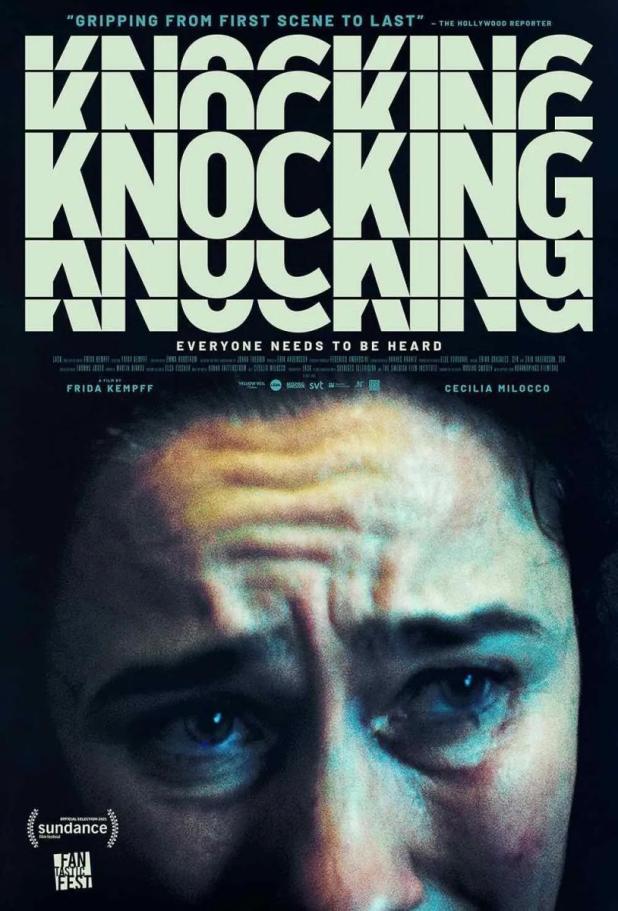
After leaving a tragic accident — the film begins with our heroine embracing her girlfriend who runs into the water and is never seen again — and a stay at the mental hospital, Molly moves into a new apartment where a strange knocking keeps on getting louder and louder. No one else can hear it. And it’s not going away.
Adapted from a novel by Johan Theorin, this movie lives and dies by the intense performance of lead Cecilia Milocco and the so tight you’re face-to-face cinematography of Hannes Krantz. The tension keeps increasing and much like so many “is it supernatural or mental illness” movies, the questions keep increasing as Molly begins taking increasing risks to determine where the knocking and sobbing is coming from.
At just 78 minutes, this is a short film that nearly begs for even more time and it’s rare that I feel that way. The end just arrives after the slowest of builds, but I’ve been obsessed with the moments that exist between waiting for something to happen and the actual second that everything changes.
Knocking is playing Fantastic Fest this week and will soon be available on a wider basis. We’ll update this post when it’s streaming.
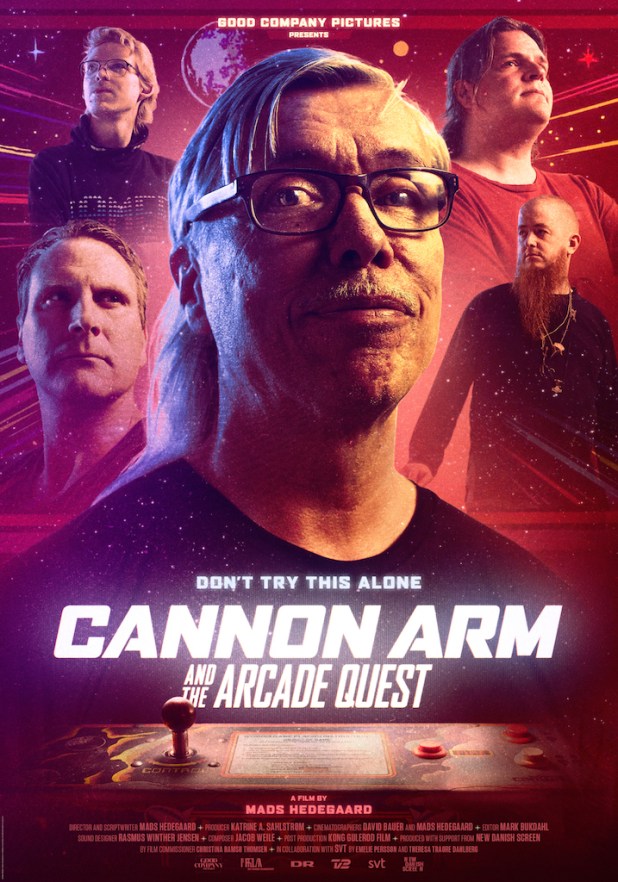
Kim Cannon Arm is a lover and collector of arcade cabinets. He’s also a legend in the world of competitive video games, as he and his friends at Copenhagen’s Bip Bip Bar are all masters at their own games — and unique life skills — while Kim excels at playing Konami’s Gyruss. He’s made it to 49 hours or more on a single quarter, but now, at 55 years old, he has set the goal of playing for a hundred straight hours with only quick breaks on a mattress in the corner. This is more than some kind of quest — it’s a meticulously planned mission aided and abetted by a cadre of true friends.
Director Mads Hedegaard says of the film, “Probably not everyone in the audience has an interest in video games or arcade games, but that’s okay, because you don’t need to – I don’t either. Ultimately, I feel that it has ended up as a film filled with warmth and subtle wit as well as the natural excitement that comes from all record attempts. Will our hero Kim Cannon Arm succeed in the challenge before him? The characters will hopefully over the course of the film emerge as actual people, who the audience will end up caring about, and perhaps also remind the audience that there is more to all of us than is apparent at first glance.”
The players, beyond Kim — who is a laboratory technician, a grandfather and has a beyond world-class mullet, include epistemological rationalist, Bach student and Donkey Kong player Carsten, poetry slam and Puzzle Bobble champ Dyst, data analyst and Donkey Kong champ Svavar, tech and musical wizard Emil, The Shed arcade owner Trier and Bip Bip Bar owner Chrisstoffer.
Yet this film is about more than just video games. It’s about who we are in the world, what we leave behind, quantum physics and pattern recognition and what friendship can do. I totally expected nothing from this film and was astounded by the energy and emotion that it imbued within me. What a treat!
As the director said, “The film is my little tribute to these people, who in their own quiet ways are larger than life. I hope that the audience will go and see the film with their friends, their significant other, or perhaps even with their mother, if they are in need of a life-affirming and touching experience. And I hope that people will leave the film feeling uplifted, with a bit of food for thought to talk more about, and a warm feeling in their stomach.”
Seriously — some of the most mind-opening and happiness-inducing cinema I’ve seen this year.
Cannon Arm and the Arcade Quest is playing Fantastic Fest this week. When it’s available to a larger audience, we’ll update this post.
Zombies get frozen and unfrozen — in a fever dream of bizarre ADR-dubbing, hypodermic needles to eyeballs, and laughable gore effects — before they kill people in this not-so-well known zom-effort. And what notoriety this zom-romp received came courtesy of the puritanical purveyors of England placing Frozen Scream on the U.K.’s “Video Nasties” Section 2 list.
Nothing like a stuffy Brit inspiring you to watch a movie. You know how it is: tell me it’s taboo — I only want it more. Heck, shoot it on film in a start-stop-start production, screw it all up, have no one see in the the drive-ins, then make it “look” like we’re getting a piece of the SOV ’80s (click through to our SOV category for more films) by sticking it on hungry-for-product home video store shelves alongside “real” camcordered SOVs — I only want it more.
Two scientists, Lil Stanhope (producer Renee Harmon) and Sven Johnson (Lee James, a makeup artist who worked on Al Adamson’s late ’60s ditties Blood of Ghastly Horror and Brain of Blood; let that serve as a quality caveat, here) are, as all scientists of the VHS variety, on a maniacal quest to unlock the secrets of immorality. To that end, the “secret” is that the subjects are kidnap and murder victims (medical students who get too nosy for their own good) revived by the way of electronic neurosurgery. (Uh-oh, Ulli Lommel’s BrainWaves!)
Only the neck-installed device (looks like a radio audio connector, and probably is; the wonders of spirit gum and a vial of rigid collodion) has a side effect: it turns subjects into homicidal zombies that must be stored in freezers. When Tom Girard, one of the project’s scientists (Wolf Muser in his debut; still in the business with a resume rife with U.S. TV credits, he recently portrayed Adolf Hitler in the stellar streaming series The Man in the High Castle), refuses to be part of the experiments any longer, he’s murdered by a gang of zombie-hooded monks (all sporting bushy, ’70s porn-style staches). Now his wife Ann (Lynne Kocol, later of the production-connected Nomad Riders), who witnessed the murder, is under Stanhope’s care — and brainwashing Ann into believing it was all a hallucination.
As with George Romero’s Night of the Living Dead (1968) and Ken Wiederhorn’s superior Shock Waves (1977): Ann, along with Stanhope and her ex-hubby detective (Thomas McGowan; 20-some films, none notable; he serves as the voice-over thread for the film) are on the case — and face a zombie siege at a house during a (cliché) Halloween Party — complete with screaming kids, natch — and a final mad scientist showdown in Stanhope’s lab of terror.
Since this film is an across-the-years start-stop production on a shoestring budget, the zero-production values hamper the somewhat decent plot (that sort of reminds of Stuart Gordon’s later-amazing Re-Animator), and the hampering goes deeper with the strained voice-overs to thread the film’s vignettes into a coherent plot. The non-cinematography, the audio (the voice-overs are placed over the actor’s dialogs; in fact, the entire film was ADR’d in post) is beyond muddy, and the painful thespin’ throughout — especially from star Renee Harmon in a bad German accent, probably to give us a Nazi subtext (but it’s never explored beyond the accents from her and Lee James) — and makes Don Dohler’s efforts look like award winners. Only Frozen Scream has none of that rooting-for-the-underdog-filmmaker charm of a Dohler effort. Perhaps if Dohler made this, I’d dig it as much as I do Fiend (1980), which is an admittedly weak cup of tea, but . . . I don’t know why, I just love that Dohler film.
All in all, Frozen Scream is a great idea, but one woefully in need of a) a budget, b) a consistent, fluent shooting schedule that doesn’t leave it looking like an Al Adamson chop-shop joint, c) a guy like Ken Wiederhorn to pull it off, and d) a pacing and logic that doesn’t leave a renter (well, today, a streamer) needing to take five attempts to make it through the entire film with their sanity intact (yes, it took me a week to even start to write this review, as result).
Overall, it’s a hard watch of poorly-framed shots where you want to jump through the screen to operate the camera: the static wide shots that offer no mediums or close-ups, the over-the-shoulder shots with no reverse angles, and lighting so dark and muddy, that you want to break out a couple of flashlights are frustrating as hell. But when you’re shooting on 35 mm short ends, that’s par for the course. And it still looks like a shot-on-video delight via post-U-Matic camera. And I care way too much about this film than it deserves.
Frozen Scream is a film that traveled a long, strange road . . . a (production) trip that began in 1975 and took five years to complete. By the time the film was finished, the drive-ins for which it was intended, were defunct — and no distributor wanted the film, anyway. Luckily, the VHS home video boom was in full effect, and Frozen Scream finally made its debut on VHS in 1983, and then was reissued on the format in 1985 — amid the flurry of shot-on-video and direct-to-video films inspired by the success of Blood Cult and Spine (thus my SOV-critical lumping). As is the case with low-budget productions always looking to maximize their dollar, Renee Harmon did the Roger Corman-sensible thing and recycled footage from Frozen Scream into the films Night of Terror (1986) and Run Coyote Run (1987), both produced, written by, and starring Renee Harmon. (The former concerns a sadistic doctor and his family kidnapping subjects for brain experiments; the latter is a crime thriller about a psychic searching for her dead sister’s killers.)
Harmon’s director, Frank Roach, made his second and final film — both as a writer and director — with Nomad Riders (1987), a Stallone-esque cop-out-for-revenge thriller regarding a rogue who, after the brutal murder of his wife and daughter by a gang of vicious bikers, exacts revenge on the bikers and the mobsters behind the bikers. (No, that’s Nomads (1985) you’re thinking of that stars Pierce Brosnan and Lesley Ann Warren under the eye of John “Die Hard” McTiernan.)
Of Frozen Scream‘s co-writing team, Doug Ferrin, never wrote another film.
The same can’t be said for writer Michael Sonye. He later wrote Star Slammer (1986) and Commando Squad (1987) for Fred Olen Ray, the Brad David and Sharon Stone thriller Cold Steel (1987), and the always-welcomed Robert Ginty-starrer Out on Bail (1989). But Sonye’s best known film to video fringe horror fans is the hugely popular horror-comedy VHS-renter, Blood Diner (1987). Across his 28 acting credits, you’ve seen Sonye appear in Star Slammer (as Krago), and the U.S. by way of Japan SOV’er Cards of Death (1986), as well as the ’80s USA Network’ers Surf Nazis Must Die, Sorority Babes in the Slimeball Bowl-O-Rama, and Hollywood Chainsaw Hookers.
If the soundtrack — to you fellow junk video hounds — sounds a wee-bit familiar to the ears, that’s because composer H. Kingsley Thurber recycled his work on Frozen Scream on another inept backyard’er, Don’t Go Into the Woods (1981) (and that film is really bad. Really bad).
You’ve also seen actress Rene Harmon in the vansploitation romp Van Nuys Blvd. (1979), the women-in-jepaordy-seeks-revenge thriller in a ghost town, Hell Riders (1984), and the aforementioned horror flick, Night of Terror (1986), across her scant 11 acting credits — eight of which she wrote. Her final film before her 2008 death was Revenge of Lady Street Fighter (1990), while her final film overall, Jungle Trap (2016) was completed posthumously. In between her acting and writer gigs, she taught screenwriting at the College of the Sequoias Community College in Visalia, California. (Heads up, Adam West fans, for he stars in Hell Riders alongside Tina “Ginger of Gilligan’s Island” Louise; hell, yeah, that’s on our watch list.)
You can purchase the DVD of the original 1986 VHS two-fer with The Executioner 2 from Vinegar Syndrome, both of which starred Rene Harmon. There are also grey-market looking DVDs that pair Frozen Scream with Tobe Hooper’s mad alligator romp, Eaten Alive. Then there’s a double-sided, uncut Region 2 DVD that features the German version (Blautrausch Der Zombies) of Leon Klimovsky and Paul Naschy’s Vengeance of the Zombies (1973) on the other side. Yet another version is a single-disc grey impress. So, outside of the Vin Syn version, shop smart.
Renee Harmon, amid a flurry of a dozen or so self-published educational books on acting, filmmaking and screenwriting (see ThriftBooks and Good Reads), adapted Frozen Scream into a novel — issued under the title Evil Covenant (2001) — and used copies can be found on Amazon and eBay. Her other educational work, Hollywood Mysteries (2001), complies two of her studies, “The Hunting Party” and “Let the Dice Roll,” subtitled as “Book One,” as an insight on creating suspense-genre films. The book is of particular interest as it features the complete script from Frozen Scream, including production notes that she later used to complete the whole of Hollywood Mysteries. Sadly, Harmon passed away in 2008 before writing additional volumes to the series.
Say what you will about her films, but Renee Harmon was, as Doris Wishman, a true renaissance woman who should have her name spoken more often in the realms of indie film, alongside the fandom of Al Adamson, Larry Buchanan, Don Dohler, and countless other up-against-the-budget underbelly dreamers and schemers of the celluloid side streets and back alleys of Tinseltown. Most of her books — based on reviews — seem to be rife with typographical and layout errors. However, I read her non-self published book How to Audition for Movies and TV (1992) via a public library copy (issued by a larger publisher, natch, with a quality assurance queue to minimize errors) and found it to be a well-written, insightful book that I utilized in my own adventures “in the room” as an actor. Renee knew her stuff and then some, so she did me a solid.
About the Author: You can read the music and film reviews of R.D Francis on Medium and learn more about his work on Facebook.
David Weisman lived the kind of life that they make movies about. Directly after seeing La Dolce Vita, he quit Syracuse University’s School of Fine Arts, headed off to Rome and managed to not only meet Fellini, but design the poster for 8 1/2 and work for Pasolini. He followed that by working as Otto Preminger’s assistant and designing the opening of Hurry Sundown.
He also found himself part of Andy Warhol’s Factory and made the experimental film, Ciao! Manhattan before producing The Killing of Americaand convincing Manuel Puig to allow him to adapt his novel Kiss of the Spider Woman for film*.
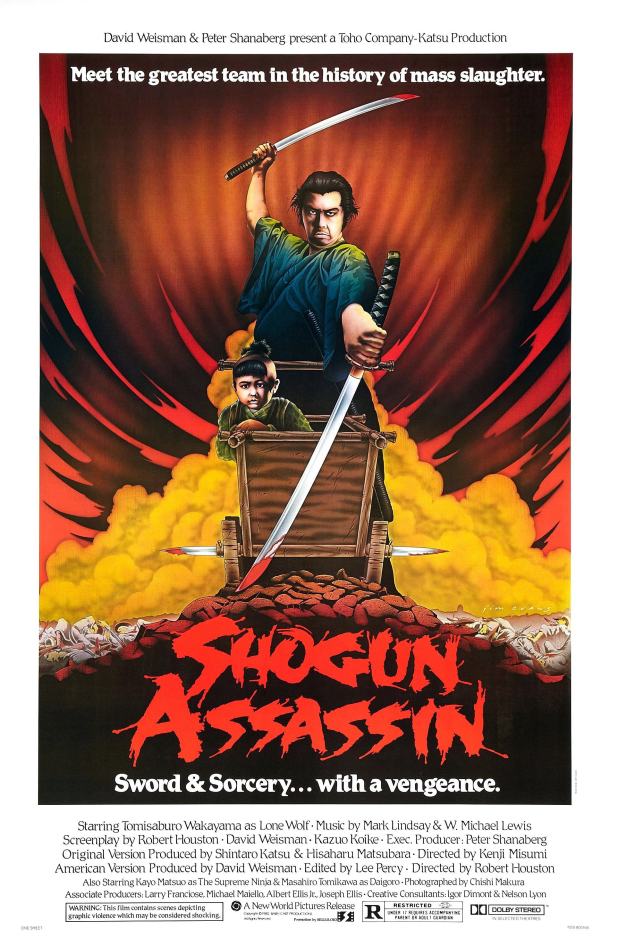
Working with Robert Houston (Bobby from The Hills Have Eyes), he created a piece of pop culture remixing that we know as Shogun Assassin. But really it’s twelve minutes of Lone Wolf and Cub: Sword of Vengeance and the majority of the second film in the six-film series, Lone Wolf and Cub: Baby Cart at the River Styx.
These Kozure Ōkami films were based on the Japanese manga Lone Wolf and Cub, which was created by the writer Kazuo Koike and the artist Goseki Kojima. If the story of a killer redeeming himself while walking alongside a weapon-laden baby cart seems familiar, someone with a much greater budget in a galaxy far, far away would be very, very inspired by it.
Weisman had obtained the rights for $50,000 from the American office of Toho Studios and got a deal with Roger Corman’s New World Pictures to get it out to the grindhouses and drive-ins, while MCA/Universal Home Video released the videotape that got into rental stores.
This piece of pop culture has become culture in and out of itself, informing not only the aforementioned science fiction series, as well as being the movie that the Bride watched with her daughter at the end of Kill Bill Volume 2 and the dialogue that’s sampled throughout Wu-Tang member GZA’s album Liquid Swords, including the narration that begins this film’s bloodshed,
“When I was little, my father was famous. He was the greatest Samurai in the empire, and he was the Shogun’s decapitator. He cut off the heads of 131 lords for the Shogun. It was a bad time for the empire. The Shogun just stayed inside his castle and he never came out. People said his brain was infected by devils, and that he was rotting with evil. The Shogun said the people were not loyal. He said he had a lot of enemies, but he killed more people than that. It was a bad time. Everybody living in fear, but still we were happy. My father would come home to mother, and when he had seen her, he would forget about the killings. He wasn’t scared of the Shogun, but the Shogun was scared of him. Maybe that was the problem. At night, mother would sing for us, while father would go into his temple and pray for peace. He’d pray for things to get better. Then, one night the Shogun sent his ninja spies to our house. They were supposed to kill my father, but they didn’t. That was the night everything changed, forever. That was when my father left his samurai life and became a demon. He became an assassin who walks the road of vengeance. And he took me with him. I don’t remember most of this myself. I only remember the Shogun’s ninja hunting us wherever we go. And the bodies falling. And the blood.”
So yes, the original films were directed by Kenji Misumi, who also gave us several movies in the sagas of Zaitochi and Sleepy Eyes of Death. But by translating them into an incredibly bloody Americanized version that played scummy venues that had no pretensions of art, the world of Lone Wolf and Cub was introduced to audiences that otherwise would have never had their minds taken back to feudal Japan.
Ogami Itto was the shogun’s decapitator whose wife was killed by that very same shogun and has now gone on the ending path into vengeance. When his son Daigoro was just an infant, he gave him the choice between vengeance and death: either crawl toward the sword and join him on the road to Hell or the ball, so that he would be killed by his father’s hand and join his mother in heaven.
Daigoro chose the sword.
So while this film concentrates more on the bloody battles and less on the why that gets us there, it’s still pretty powerful with some blackly humorous dialogue from Daigoro, who says at the end, as he looks back on the bloody path of rage his father has cut, “I guess I wish it was different…but a wish is only a wish.
When Shogun Assassin was released by Vipco in the UK, it became a section 3 video nasty due to its heavy levels of violence.
*His brother Sam’s career has not been as highbrow, as his resume includes D2: The Mighty Ducks, George of the Jungle, What’s the Worst That Could Happen? and Dickie Roberts: Former Child Star.
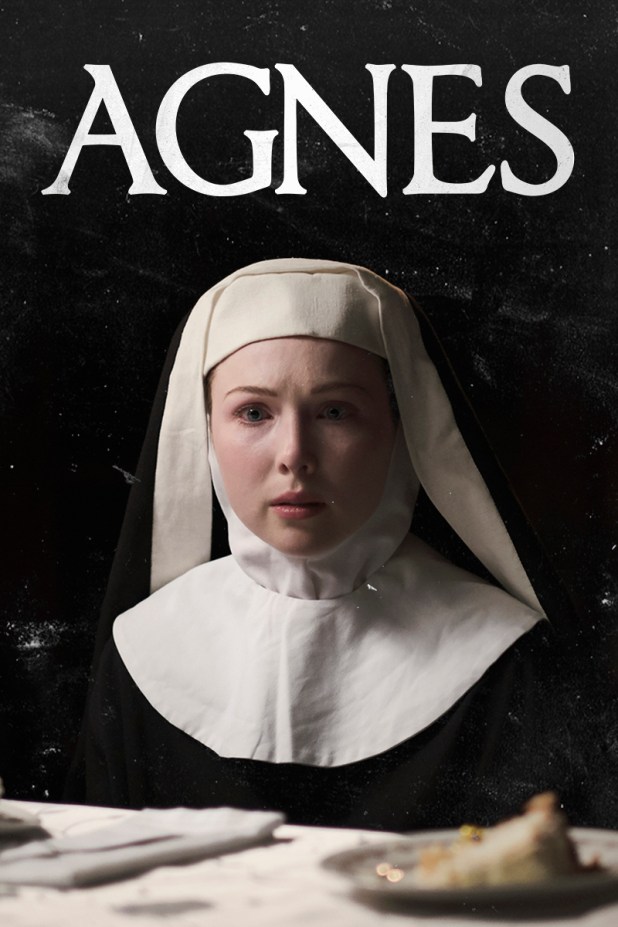
In the time that you’ll read this, Mickey Reece may have already made a new movie. For four years in a row, he’s had a debut at Fantastic Fest. You may have seen his Climate of the Hunter a year or so ago — time no longer makes sense, so it could have been months — and the first moments of this movie seem to rail against the slow boil of that movie by starting with a profane cake throwing rant by its titular character, Sister Agnes (Hayley McFarland, The Conjuring).
For the first half of this film, I was fairly riveted by a tale that combined the Byzantine — or Roman, right? — politics of the Catholic Church as it struggles in the dawn of a new century, even as the possessions that defined the old church and the exorcisms that became pop culture decades ago rear their head again.
As she serves at St. Theresa’s convent — which remains rooted in the old ways of the church, with nuns not allowed to leave the grounds and men being limited — she finds herself in the grip of something demonic. But what has she done other than upset the natural order and asked her fellow sisters to confront who they are? Well, yeah, and foam at the mouth. One could arhue that Mother Superior (Mary Buss) is the real power destroying the lives of these women.
Father Donahue (Ben Hall) has been selected by the powers that be — he was sure they’d caught on to his secrets and crimes — to exorcise the demon that he doesn’t believe in, bringing along an acolyte named Benjamin (Jake Horowitz) who is the one person in the film that seems actually close to the divine. Donahue continually harangues the young not-yet-a-priest, demanding that he look into his heart to determine whether or not God offers him the life he really wants to live. This is an interesting take — the priest at the end of his road and the young man just starting his first steps.
But like much of this film, it’s a fleeting notion. Donahue’s half-hearted exorcism ends with his nose being bitten off and blood covering everyone, leaving him no choice but to call in Father Black (Chris Browning), an excommunicated priest who has created his own cult of personality, complete with him being bound to the demon Bune — who in the Lesser Key of Solomon we learn is a duke of Hell with the ability to move the dead, make people rich and answer a variety of questions — and a beehive-hairdo-having, chain-smoking henchwoman who really deserves her own movie. If this entire moment of the film feels like it came straight out of El Dia de la Bestia that’s a compliment.
Just like every man in this movie, his exorcism is pretty ineffectual and feels cobbled together from every Italian ripoff of The Exorcist, such as Enter the Devil and The Return of the Exorcist. And then, when all seems lost, the film dissolves and becomes an entirely different film after Agnes and Mary (Molly C. Quinn, We’re the Millers) have a moment that’s more arthouse than Alucardaand suddenly the film becomes her story, cast down from a world of faith into the magicless world that we live in today, a place where hack comedians (Sean Gunn) let you down, where bosses demand sexual favors in the stockroom of grocery stores, where rent goes up, where even a demonic voice and being possessed yourself can barely change things. However, the return of Benjamin, now a full brother in Christ, may give her the faith — or at least a momentary respite — that she needs.
There’s a theme of losing love — a lover, a child — and having to turn to God even to discover that that may not be enough that runs through this movie. But the narrative shift and the lack of focus near the end of the film — it gives up on a been there, done that exorcism story with some new wrinkles to, well, tell another story that feels like we’ve been told before — damn the efforts.
It looks great. It sounds amazing. But I get the feeling that by the end, Reece was already bored and thinking about what he was going to make next instead of finishing this one off. It’s so disappointingly close to a movie that I’d tell people to watch but you can’t make a recommendation like “watch the first forty minutes” or “fast forward a bunch” because that’s not a recommendation, it’s a litany of excuses.
This is really the whole gooey enchilada, ain’t it: for this is where all of those cannibal hybrids of the George Romero-rebooted zombie genre originated.
What makes this film a film that I have never gone back to: three-plus minutes of this Umberto Lenzi puke fest has moments of real animal murder (not cool). Of course, this being our “Video Nasties Week,” the puritanical purveyors of the all-things-holy U.K. cut those scenes from the British release ever since it was first kept out of British theaters in 1975.
Yes. Sometimes you’ll find it out there as Sacrifice!
The plot, such as it is, is a blatant ripoff of the Richard Harris-starring A Man Called Horse (1970). That film’s positive critical reviews and box office success spawned two sequels in The Return of a Man Called Horse (1976) and Triumphs of a Man Called Horse (1983), each also equally acclaimed critical and box office hits.
Then there’s this U.K. Section 2 “Video Nasty” that made the rounds on the U.S. “Midnight Movie” circuit and earned a re-renting when it hit home video stores. Some of the titles you know the film under are l Paese del Sesso Selvaggio, aka The Country of Savage Sex, as well as Deep River Savages. The best known and distributed title is Sacrifice!, and that cut can be purchased from Raro Video.
Both films deal with a civilized man incorporated into a tribe that originally held him captive. Here, British photographer John Bradley (Ivan Rassimov) heads off to the rain forests of Thailand for a wildlife photograph wildlife assignment. After a bar fight with a local, Bradley, in self-defense, kills the man; Bradley flees the scene and heads down river to not only complete his assignment, but to escape arrest.
He’s soon captured by natives and put through a series of the tortures — as you’d expect from a cannibal film — only the tongue removals, along with everything else — was done here, first.
The highlights of the film — which is still not enough to get us past the animal cruelty — are the always welcomed Ivan Rassimov; he does the cannibal thing again in Jungle Holocaust and Eaten Alive!. Also starring here — and in both of those films, again, with Rassimov, is the Queen of Cannibal Cinema: Me Me Lai.
Then Ruggero Deodato released Jungle Holocaust in 1977. That film, alongside George Romero’s Dawn of the Dead (1979), was the one-two punch that ignited the cannibal sub-genre of zombie films. Then Deodato gave us Cannibal Holocaust (1980). Lenzi was presented the opportunity to direct Jungle Holocaust, but the job ultimately went to Deodato. Lenzi would follow up his own Eaten Alive! (1980), with his third cannibal romp, Cannibal Ferox (1981). In between, Sergio Martino chimed in with The Mountain of the Cannibal God(1978).
You can learn more about Lai’s career — the star of TheMan from Deep River (Deep River Savages), Jungle Holocaust, and Eaten Alive! — and the cannibal sub-genre of zombie films, in whole, in a documentary we recently reviewed, Me Me Lai Bites Back (2021). You can purchase restored DVDs and Blu-rays of The Man from Deep River from 88 Films, which also includes Lai’s documentary as a supplement.
We run down most of these cannibal films with our February 2018 “Mangiati Vivi Week” tribute, which serves as a great catch-all reference list. And what’s not on that list is being reviewed during our “Video Nasties Week” tribute, this week.
As always, we appreciated you surfing to B&S About Movies and using us as your one-stop source for discovering and rediscovering classic films from the Drive-In, UHF-TV, and home video eras.
About the Author: You can read the music and film reviews of R.D Francis on Medium and learn more about his work on Facebook.
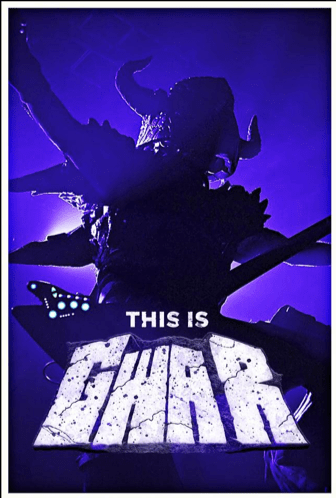
17 year old me discovered Gwar and life finally made sense. What other band outright claimed that they were going to murder you when you saw them in concert? Coming from space, destroying the ozone layer, that had game shows on stage that gave the people what they want — “the senseless slaughter of the gutter-slime that litters this nation for cash and prizes” — and could somehow turn lyrics like “you know I snuffed a million planets, but I still find time to cry” into a tender ballad?
Gwar went on Joan Rivers and made fun of everything thrown at them. And in a world that didn’t make much sense, they made sense. It was a badge of honor to see them in concert. Sure, the band has changed — I haven’t kept up honestly since Oderus went on to the next world because it just doesn’t feel the same — but I’m glad they’re still out there.
Director Scott Barber has put together the interviews and stories that form the real story of Gwar and by and large, it’s intriguing stuff, punctuated by stories by celebrity fans like Weird Al, Thomas Lennon, Bam Margera, Alex Winter and Ethan Embry.
As an art collective with a 35-year history, there’s plenty to learn here about how some art school punks went from playing small shows to becoming an industry. Of course, personalities clashed, egos grew and the band may not have lived up to what some members wanted it to be. By the end of the first sixty minutes, the doc starts to grind a bit, as various members feel the urge to tell you exactly how much they contributed even if they weren’t onstage. I understand, as this may be their one opportunity to do so.
A major oversight — in my eyes — is that no mention at all was given to new singer Vulvatron, played by Kim Dylla, who was in the band from 2014 to 2016, leaving under not the best of terms. Perhaps by the end of the film, everyone was tired of the constant drama that was getting dredged up. But for a band with previously only two female members, this felt like a glaring omission.
Even if Gwar’s music isn’t for you, you can hopefully appreciate their sense of humor and the fact that they took their art beyond expectations. They still do.
This is Gwar debuted at Fantastic Fest this week. When it becomes available for streaming, we’ll update this post.
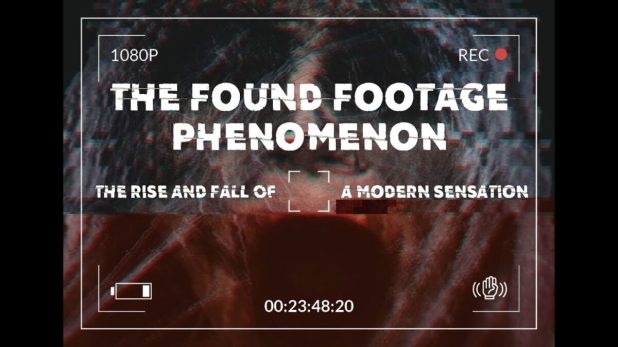
Written and directed by Sarah Appleton (who has worked on many documentary shorts and DVD extras, as well as being the cinematographer of Woodlands Dark and Days Bewitched: A History of Folk Horror) and Phillip Escott (who wrote and directed Cruel Summer), The Found Footage Phenomenon has done the impossible: take a genre that I saw no value in whatsoever and prove to me that not only its merit, but also showing me moments of films that I love that relate to the found footage genre.
The film looks the whole way back to Bram Stroker’s Dracula as an early use of found footage, as the letters and documents in the story were a way of making the unreal real. Other points in the genre’s creation were within Orson Welles’ War of the Worlds broadcast, the film within Peeping Tom and perhaps the first movie that claimed to have real footage as its central narrative, Cannibal Holocaust. There’s an astounding moment here that asks us to check our morality at the door and realize that if we recontextualize the animal violence within that film, we see that by placing it next to special effects, we started to wonder what was real and what was a movie. And that’s really at the heart of what all found footage is.
If there’s a creator that has made these films, chances are they show up here. Everyone from Mr. Cannibal himself, Ruggero Deodato to Troll Hunter director André Øvredal, Blair Witch creator Eduardo Sánchez, Jaume Balagueró of (REC) fame, Kōji Shiraishi, Aislinn Clarke, Patrick Brice (who made Creep and also has There’s Someone Inside Your House premiering at Fantastic Fest), Rob Savage, Ghostwatch‘s Leslie Manning and Stephen Volk Michael Goi, The McPherson Tape‘s Dean Alioto and The Last Broadcast‘s Stefan Avalos and Lance Weiler — along with several writers and critics — gets the opportunity to share their found footage love and knowledge.
Whether you love these films or — like me — you greatly dislike them, this documentary is engaging, entertaining and even mind-altering. Well done.
The Found Footage Phenomenon is playing Fantastic Fest this week. When it is released, we’ll update this post with information on how you can watch it.
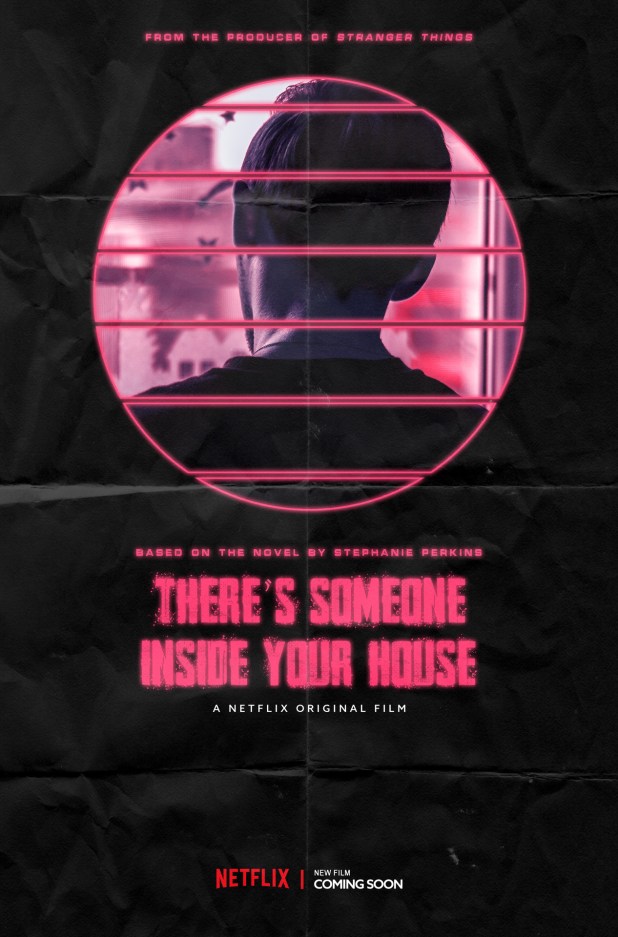
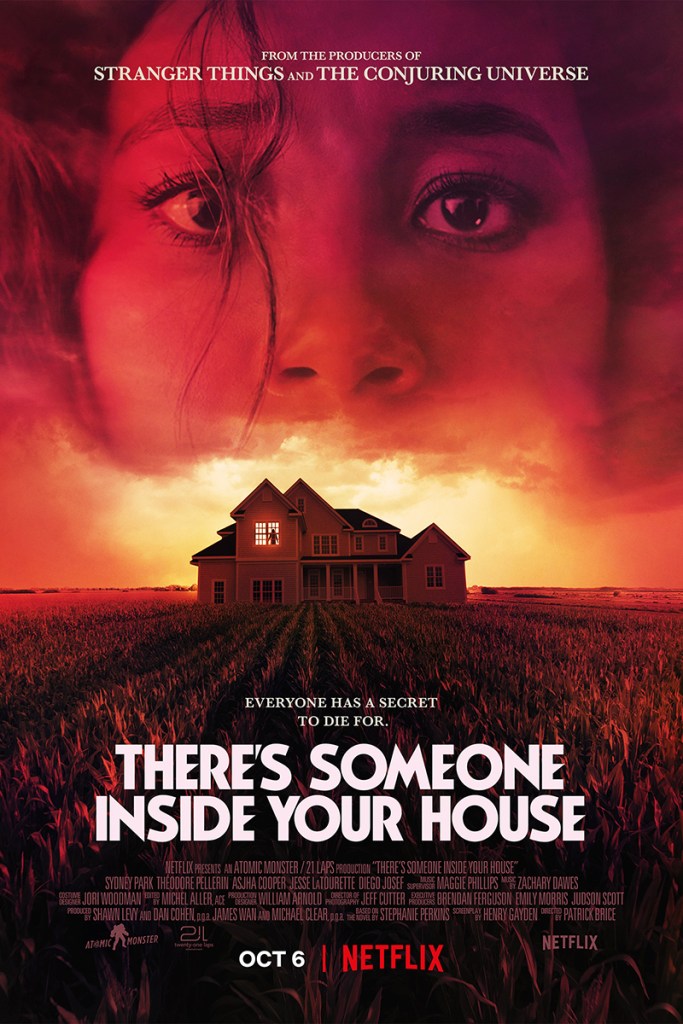
Based on the book by Stephanie Perkins, this Patrick Brice-directed (Creep) film is exactly the kind of movie for people who wish that the 90s and early 00s slasher boom never ended. Seriously, this film has major vibes of I Know What You Did Last Summer and if that’s a good thing for you, then this is exactly the kind of comfort food that you’re going to absolutely devour.
Makani Young has moved from Hawaii to Osborne, Nebraska — there’s a secret as to why — to live with her grandmother and finish high school. Yet as the school year grows closer to graduation, the secrets of her classmates become fair game to a killer who exposes them and then murders them while wearing a 3D printed mask of his victim’s face.
Starting with an ankle slashing worthy of Pet Sematary, the film has some nice setpieces like a party where everyone reveals their shameful skeletons in an attempt to take away the power of the killer. Complicating things is that Makani’s love interest just might be the killer.
The intriguing thing is that the victims aren’t the put-upon outcasts, but the popular kids, the ones who bullied everyone in their path. And the gimmick of each person worrying that their own face will soon come their way with murder in their eyes, well, that’s a pretty great idea that’s well-used by this film, which is not shy about showing off some violent kills.
The writeup for Fantastic Fest said that this film is “Smart, woke, but utterly cynical, these kids know the tropes they’re operating within, aware of their particular chances of survival based on their race, sexuality, and socioeconomic status.” And I guess there are some audiences that will cheer that sentence. There are others that enjoyed Scream and will be excited to watch a film that has the same energy. And there are still others who will yawn and just put on The Prowler again.
There’s Someone Inside Your House premiered at Fantastic Fest and will debut on Netflix on October 6,
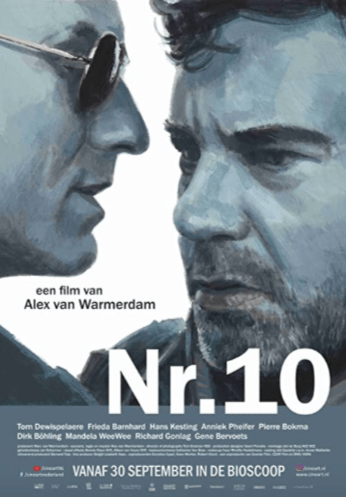
Alex van Warmerdam, who also made Borgman and Schneider vs. Bax, has really made one of the strangest films I’ve seen at Fantastic Fest, which is a real testament. That’s because it starts like some sort of highbrow art film, as a director worries about the opening night of his new play. One of the actors has a dying wife and can’t keep his mind on his lines. And speaking of wives, the director’s wife is currently having an affair with Günter, the lead actor, whose daughter Lizzy has just discovered that she has a rare disease. And oh yeah — he thinks that the world is against him.
And then everything changes on a level that doesn’t just change the story of the film, it fundamentally changes the way that everyone on Earth views the entire universe.
If you want to be as surprised as I was stop reading right now.
When Günter was four years old, he was found alone in a German forest. Raised by a foster couple, he’s never wondered about his past until a man walks up to him in the street and utters the phrase “kamaihí.” Now, he wants to know exactly who his mother is. And he wants to know what that word means. And he wants to know why so many Catholic priests are following him.
Seriously, this movie does beyond a rug pull. It changes not only the story but the viewer. I know that sounds like pure hyperbole, but that’s what this movie deserves. I watched the last scene several times and blown away by just how audacious it is.
While Nr. 10 has just debuted at Fantastic Fest, this is a movie that you need to mark down on your watch list and get ready for when it’s released. I really don’t want to say much more, because I feel like you owe it to yourself to be surprised.


 B&S About Movies
You must be logged in to post a comment.