We’ve all seen our share of female-centric survival thrillers, but this feature film debut by TV and film location managers Philip S. Plowden and Devon Colwell (Chicago P.D. and Jupiter Ascending), working as co-writers and directors, don’t allow their story to degrade into (the usual) supernatural subplots; they instead chose to focus on drama and character development over the usual ultra-violence we are normally subjected to in the female-survival genre.
Actress Celeste M. Cooper—who met the writing-directing duo as a recurring background actor on the set of Chicago P.D.—is Mel, a tough-as-nails long-distance runner taught by her father to endure pain and exist outside of her body’s physical limits. While setting a goal for herself to conquer an infamous 2,000-mile hiking trail, she puts the lessons of her father (coaching her via flashbacks) to the test when two desperate men (Sean Patrick Leonard and Michael B. Woods; both Chicago P.D. and Chicago Med acting alum) descend her into a life of terror.
The day and night outdoor photography on this by Darryl Miller (Chicago P.D., natch) is crisp and sharp; in conjunction with its tight script and pacing from Plowden and Colwell, Range Runners rises above the usual VOD streaming and Lifetime damsel-of-the-weekend product. The acting in this is superb and assures we will see more from Cooper, Leonard, and Woods on the small and big screen.
You can learn more about Range Runners through the website of Fatal Funnel Films and look for it on DVD and VOD beginning September 8.
Disclaimer: We were provided a screener by the film’s P.R firm. That has no bearing on our review.
About the Author: You can learn more about the writings of R.D Francis on Facebook.He also writes for B&S About Moviesand publishes on Medium.
“Well, that sucks for you, because you’ve only got half a soul left.” “I only had half a soul to begin with.” — Melvin and Richard, finally finding common ground
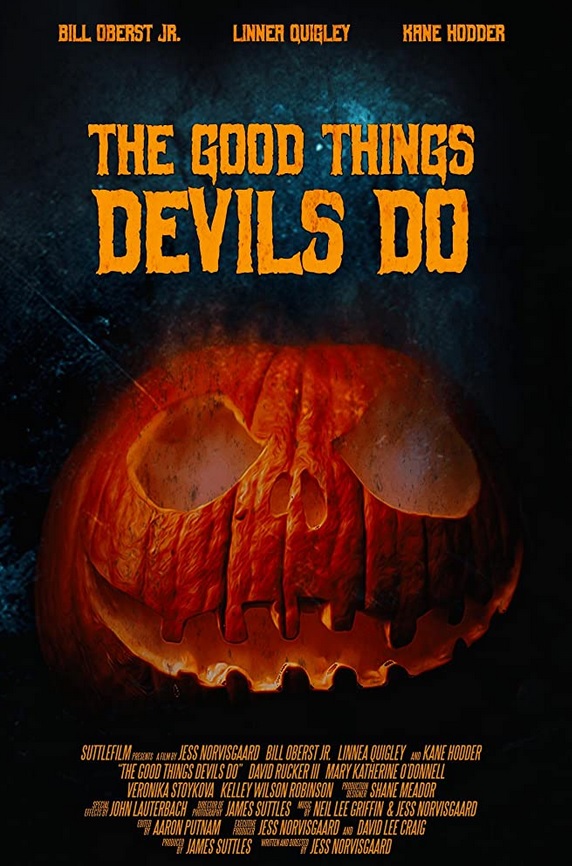
Richard (Bill Oberst, Jr., the “Eric Roberts” of horror, with 40-plus films in various states of pre-and-post-production; his most recently reviewed films are 3 From Hell and Devil’s Junction: Handy Dandy’s Revenge) is a low-level gangster in the midst of retiring from his life of crime. But before his bosses will let him out, he has to pull one final job: steal money from a rival gangster’s house. While Richard usually pulls jobs exclusively with his daughter Mouse (Mary Katherine O’Donnell; of the most recent Puppet Master romp The Littlest Reich), he’s forced to include the psycho-incestuous murder Percy (horror icon Kane Holder) on the crew.
Yeah, this isn’t going to end well. And we haven’t got to the demons.
The other victims of the “Devils” are Melvin (new-to-the-screen David Rucker III), his wife Louise (horror icon Linnea Quigley), and his 40-year-old stepdaughter Caroline (up-and-coming indie actress Kelley Wilson Robinson; who produces). Together, they curate the Museum of the Macabre—and the makeshift basement gallery’s newest acquisition is the alleged, infamous remains of the vampire Masquerade (the up-and-coming Veronika Stoykova; doing a great job under the make-up). And when those remains reanimate, Richard and Melvin join forces to protect their families in a Rodriquez-Tarantino showdown of the From Dust Till Dawn variety—only with a 1/2 cup of Raimiesque cabin humor spinning on the reel-to-reel.
What makes this all work is that—at first—you’re not quite sure which road of bad intentions this ol’ ’73 Oldsmobile Delta 88 is traveling. When we first meet the Cliff Huxtable-nerdom of Melvin (complete with a festive, pullover jack-o-lantern sweater-vest; yet, unlike Hux: he’s verbally abusive to his mousy wife and her kindly-ditzy daugthter), he’s holding high court with a group of Halloween-salivating neighborhood kids—who affectionately nicknamed him “Mr. G.”—weaving a tale about Masquerade as the kiddies anticipate his yearly Halloween display. Okay, so were heading down the orange-and-yellow candy corn road with Roy Ward Baker’s The Monster Club (1981) and Fred Dekker’s The Monster Squad (1987), which is fine with us VHS-lovin’ movie folk freaks out in the wilds of Allegheny: we love our Ward Baker and Dekker flicks ’round ‘ere.
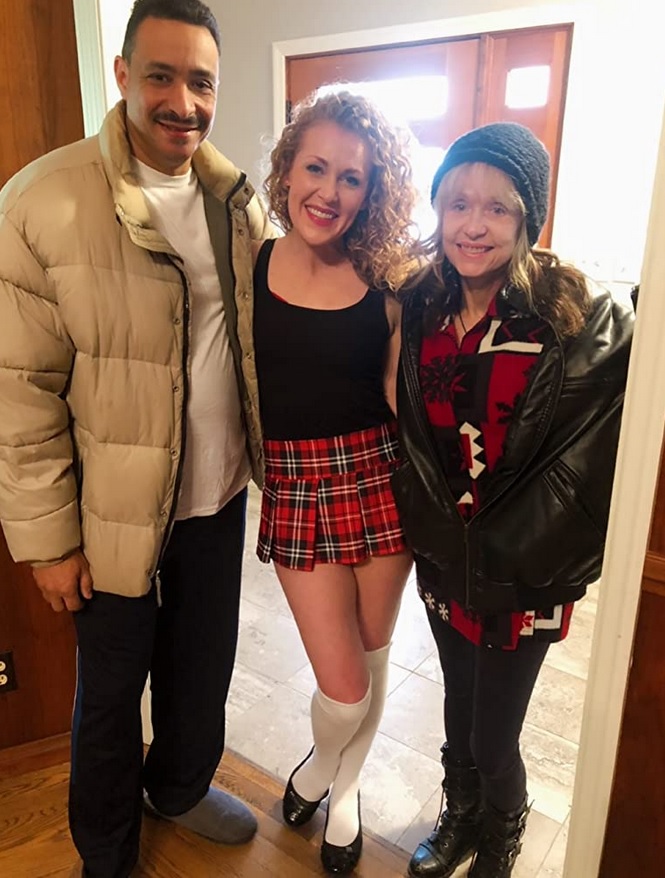
David Rucker III, Kelley Wilson Robinson, and the divine Ms. Linnea Quigley
Then Kane Holder (who’s excellently unnerving) blows away a bound-and-gagged mother and daughter with a shotgun. For reals. From Jason Voorhees to Billy Cosby on the drop of a dime. Then things go a bit “Kevin S. Tenney” as we think we’re getting a comedy-horror mix ala Night of the Demons (1988). But the vampire-demon possession follies have a graphic, Raimiesque vibe, even a Lamberto Bava Demons (1985) swagger.
What balances this trapped-in-the-house/cabin/movie theatre-and-we-can’t-out demon soiree is the light-on-his-thespin’ feet David Rucker III as Melvin. As the “Bruce Campbell” of this party, he expertly foils Bill Oberst, Jr.’s serious, leather-jacketed “George Clooney” (aka Seth Gecko) to add a much needed “you’ve got to be f’ing kidding me” vibe to slaughter. When you have a Raimiesque demon-witch ripping out a little trick or treater’s throat and possessing another—and you’re not a fan of kids-in-distress or dying on-camera (me)—you need a David Rucker III on the call sheets.
There’s been some great indie-horrors coming out of the Carolinas of late—South Carolina screenwriter and director Tommy Faircloth’s recently reviewed A Nun’s Curse comes to immediate mind—and The Good Things Devils Do (a catchy title that encourages rental) is a nice addition to those states’ burgeoning film resumes. You’ve got a familiar cast of horror greats hitting all of their marks (even though we lose them—graphically—half way though), buoyed by solid cinematography capturing a steady stream of action n’ violence as the bodies pile up. This is way above grade of the usual horror streamers.
The Good Things Devils Do, the feature film debut by North Carolina writer-director Jess Norvisgaard (a commercial camera operator who’s worked on the popular reality TV series The Biggest Loser and L.A. Ink, as well as FoxSports) is out now as a DVD/Blu and streaming on You Tube courtesy of Gravitas Ventures (we’ve recently reviewed their Eric Roberts-starrer, The Arrangement). You can learn more about the film on its official Facebook page.
Disclaimer: We were provided a screener by the film’s P.R firm. That has no bearing on our review.
About the Author: You can learn more about the writings of R.D Francis on Facebook.He also writes for B&S About Moviesand publishes on Medium.
“Then can we stop. Because I don’t want to argue.” “I don’t want to argue either, honey. As long as you can admit I’m right.” — Lisa and Jack discovering common ground
I’ve been diggin’ Dan Fogler ever since he first came to widespread notice as the plastic surgeon-foil (specializing in breasts, as only Dan Fogler can) to Dane Cook’s romance-cursed dentist in Good Luck Chuck. Then there’s his memorable work in Balls of Fury with Christopher Walken (!) and the Star Wars-homage Fanboys. And, of course, his most recent work in the Fantastic Beasts franchise.
His latest film . . . well, from my perspective, is a Miramax and Fox Searchlight homage to those 90s-halcyon days of driving to an outside-of-the-big-city six-plex with a screen or two dedicated to those indie comedies starring the likes of Steve Buscemi and Catherine Keener in Walking and Talking, Johnny Suede, and Living in Oblivion, or seeing John Turturro with Griffin Dunne in Search and Destroy—and always walking out of the theatre satisfied. (One of those indie-delights was 2005’s The Chumscrubber, written by The Argument‘s screenwriter, Zach Stanford.)
Of course, with the dual onslaughts of bat-viruses and digital streaming, a great, laugh out loud film such as The Argument, sadly, doesn’t have a ‘90s chance in hell of becoming an indie cult classic in theatres. And the streaming universe of today is a tough marketplace for a movie to shine through for discovery.
Hopefully, this review on this little puff of the cloud will alter the clogged, digital tributaries of fate for this, the third directing effort from musician Robert Schwartzman (you’ve heard his songs on TV’s The O.C., One Tree Hill, and Pretty Little Liars), whose initial forays into directing produced the under-the-streaming radar indie-award winners Dreamland (2016) and The Unicorn (2018).
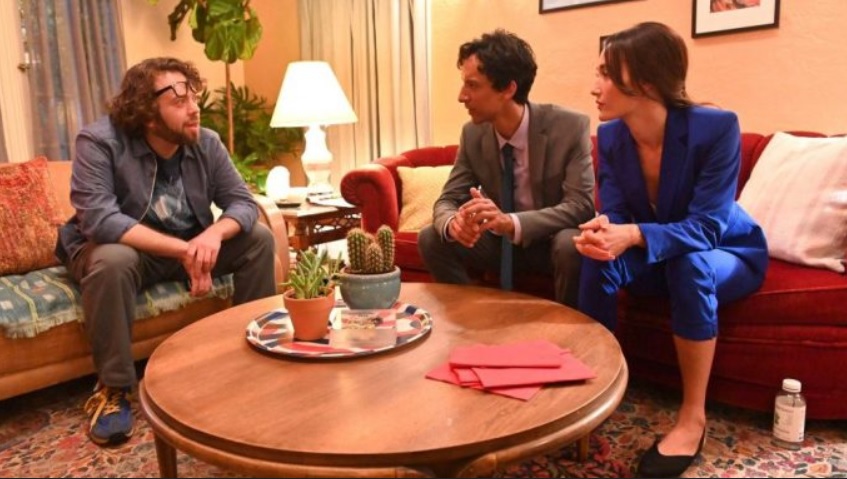
The cast of The Argument: Dan Fogler, Danny Pudi and Maggie Q; courtesy of Gravitas Ventures.
It’s almost a disservice to Schwartzman’s skills as a director to mention his Hollywood pedigree, for a filmmaker’s work should always stand tall on its own merits—of which The Argument has many. But with so many streaming choices vying for our coin—and taking into an account the purpose of a film review is to inspire you to see the film—we’ll have to cheat a little bit and tell you that Schwartzman’s name is familiar because his brother Jason is an actor you know well. And his mother is Talia Shire. And his Uncle is Francis Ford Coppola. His cousin is Nicolas Cage (Arsenal)* and his ex-cousin-in-law is Spike Jonze (Adaptation).
The Argument—the one where Jack is always right—is a pseudo-meta narrative commenting on the romantic repetition of relationships that turns the concept of there’s always three sides to a story: “your side, their side . . . and the truth” on its head.
Jack is a “genius” playwright and screenwriter with a middling successful, “repetitive” zombie tale on his resume (it did okay overseas), scratching n’ begging for his next gig. Lisa (Emma Bell of AMC-TV’s The Walking Dead), his three-years live-in, actress-girlfriend, has finally broken out of the endless cycle of background work, student films, and infomericals with a well-reviewed role in a local stage production of Amadeus. And, to the immature chagrin of Jack: she’s a little bit too chummy with her “Mozart.” Why? Because, well, he’s a genius writer, after all: he’s her “Mozart” (but, in reality, he’s a “Salieri”).
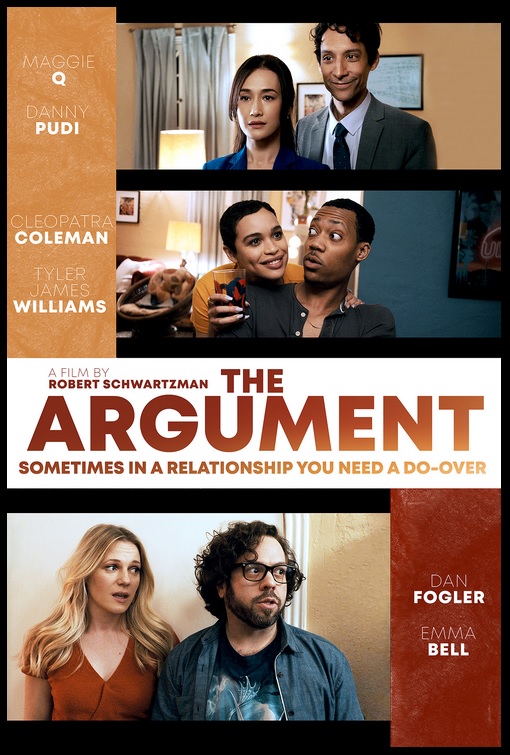
Jack’s insecurities and Lisa’s ego (after one successful community theatre role, she pirouetting-grand entrancing across rooms) bursts across the living room of their L.A. bungalow as they hold a cocktail party with their friends (Maggie Q of the Divergent franchise, Live Free Die Hard, ABC-TV Designated Survivor, along with Danny Pudi of Star Trek Beyond, and a mature Tyler James Williams from Everybody Hates Chris) to celebrate the play’s success. And the party ends. And their friends leave. But the argument doesn’t end.
So, in a non-mystical “Groundhog Day” of their own making—a day where Jack is never wrong—they invite their friends over for another dinner party, under the guise of Jack apologizing for his behavior. But in reality: Jack and Lisa want to recreate the night to see where it went wrong—and who was wrong: Jack or Lisa. And Jack’s obsession for resolution bleeds over into his writing (the best part of the movie; the supporting cast of “actors” own their duality) where he holds a mock-casting (via Craigslist) and auditions actors in a cold read of a never-to-be-produced play based on “The Argument”—the one where Jack was “right.”
The Argument became available for VOD streaming and PPV on-demand from Gravitas Ventures (The Arrangement with Eric Roberts; the upcoming Jess Norvisgaard’s The Good Things Devils Do, and Chris Levine’s Anabolic Life and No Way Out; review coming for the latter on September 12th) in the U.S. on September 4.
* Be sure to visit our homage to the films and the acting majesty of Nicolas Cage with our “Nic Cage Bitch” featurette. We just love the guy!
Disclaimer: We were provided a screener by the film’s P.R firm. That has no bearing on our review.
About the Author: You can learn more about the writings of R.D Francis on Facebook.He also writes for B&S About Moviesand publishes on Medium.
Emily is a recovering cancer survivor of three years. To celebrate completing her treatments, her best friend Nina plans a weekend getaway at a remote country house with four of their closest friends.
Yep. It is party time—complete with drugs and booze, and . . .
. . . And it goes from bad to worse pretty quickly for the sextet—as it normally does for (unsympathetic) spoiled, life-is-a-perpetual-party city kids who “vacation” out in those parts where they don’t belong in the first place—especially when a biker gang shows up. And you act like shites at the local roadside diner. And smart mouth the local law enforcement. And the owners of your cabin rental don’t like you. And your friend stole a briefcase of blow for the occasion—and the gangster-owner wants it back. Oh, and there’s a serial killer, aka The Faceless Man, on the loose. And the cabin is haunted (maybe) and ties into the murderous nom de plume (who may be bogus). Oh, (there’s a lot of “ohs” in this movie) and Emily’s having treatment withdrawals and puking bile—accompanied by hallucinations of a spindly-fingered creature leaving blood-scrawled messages on mirrors. And the hallucinations and who-done-it murders-and-kidnappings of the others follow in quick succession.
Do the devil-may-care city kids deserve to have the collective Devil after them: the townsfolk, the bikers, the gangsters, their own drug-induced mind-fucks, and the serial killer? Yeah, even Emily the cancer survivor. This is a film where (because of great writing and acting) you end up identifying with the villain-antagonists (but the “good” city kids are their own worst antagonists).
Thanks for plugging B&S About Movies in your digital marketing campaign.
You wouldn’t expect a film that markets itself as a horror film—with a protagonist that’s a cancer survivor—to run the gauntlet from slasher to comedy, fork off into a crime drama, and veer into the new-giallo supernatural. But, thick Down Under accents aside: it all works in a Tarantino-pulpy meets a (lighter touch) Shawn of the Dead-kind of way where the detailed set design reminds of Kubrick’s The Shining meets the color palate of a Dario Argento giallo. And keep your eyes open for the Tarantino “diner scene” and “interrogation scene” from Reservoir Dogs, along with the “basement bondage scene” from Pulp Fiction, and your ears open for the Carpenteresque scoring.
In the acting department (the entire cast is good) the two standout performances (among the affable, oddball-arced characters) (for me) come from actor Daniel Reader as the local redneck thug Barry the C*** (he’s so cool-feared, he has his own logo-coffee mug) and Roger Ward (yes, Fifi from Mad Max) as the gangster King Dougie. (Reader is relatively new the screen; he’s amassed twenty-plus credits in ten year across shorts and support roles in Aussie features; but I’d like to see him cross the pond and find work in larger, better-distributed American films.) All in all, The Faceless Man is an effectively-directed and expertly-shot feature film writing and directing debut by James Di Martino. We look forward to seeing more of his work in the streamingverse. And you’ll read those reviews first, on B&S About Movies.
This is the third, great film from Down Under we’ve watched since these COVID times; the others are the U.S. reboot of the neo-giallo Sororal, under its domestic title of Dark Sister, and the quality, fun horror romp Two Heads Creek. Both, along with The Faceless Man, are worth-the-coin-and-time streamers.
The Faceless Man was released as a DVD, PPV and VOD from Chapter 5 Studios and Freedom Cinema on August 28. Look for it on all digital platforms.
Disclaimer: We were provided a screener by the film’s P.R firm. That has no bearing on our review.
About the Author: You can learn more about the writings of R.D Francis on Facebook.He also writes for B&S About Moviesand publishes on Medium.
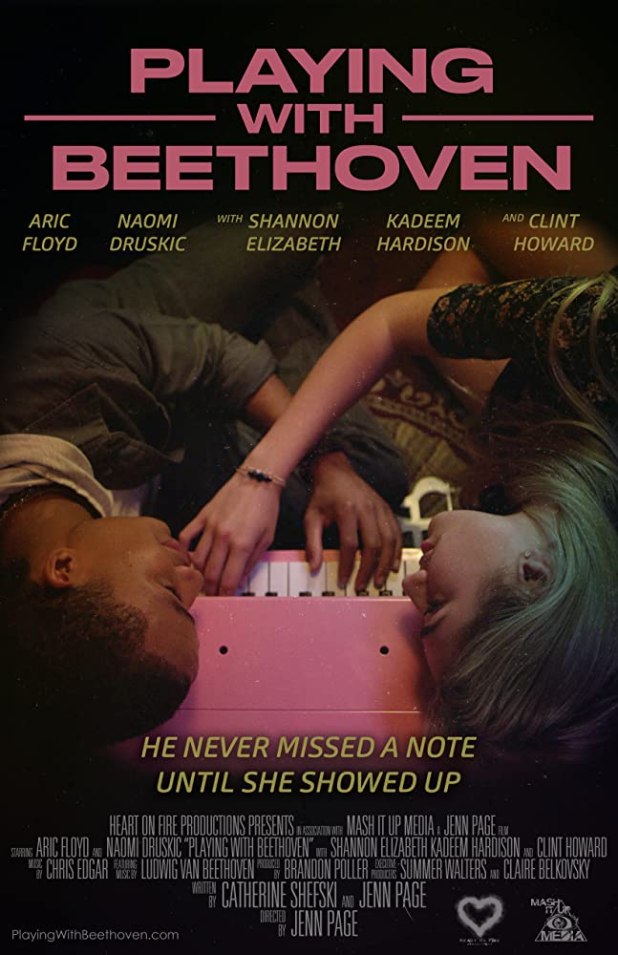
Josh (Aric Floyd) is focused on one thing: winning a piano competition. He wants nothing to do with the father who keeps trying to get back into his life (he’s played by Kadeem Hardison from A Different World) or anyone else until Charlotte (Naomi Druskic in her first role) comes into his life. She’s a jazz pianist who keeps trying to distracts him to improve her chances of winning the contest.
However, the more time they spend together, the closer they become. Could the real winning be finding one another?
I was pretty surprised by the big names in this cast. Besides Hardison, Shannon Elizabeth (American Pie), Lyn Alicia Henderson (ER) and Clint Howard (do I even have to list roles for him?) are in this. Director Jenn Page comes from music videos and does a good job with this film.
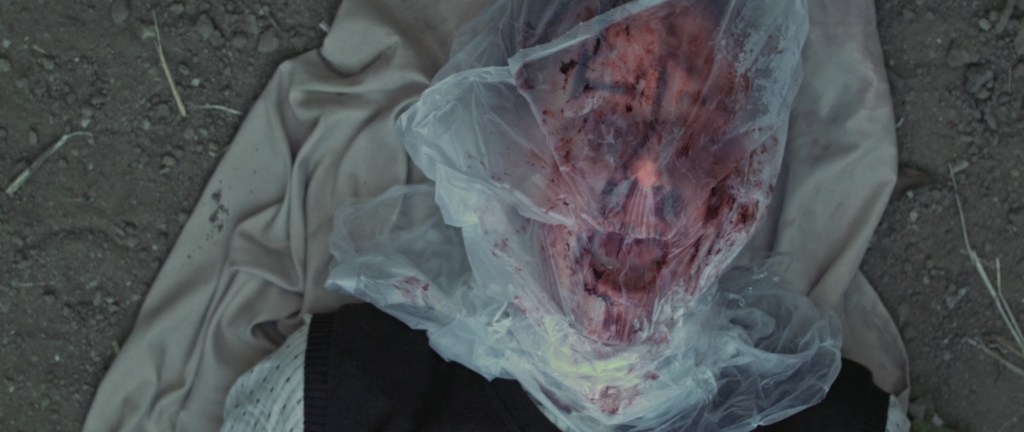
A series of gruesome (neo-Giallo-styled) murders occur in a serene Southern town (modern, yet “gothic”; a community where people roam the streets in a Carpenteresque-Spielbergian innocence as folks gather at the community center—and put the ol’ Shakespearian finger to the lips regarding the village’s “past”) committed by a cape and cowled figure accompanied by a young girl (Alice Lewis): the “shape” serves as her “murder weapon.” Thrust into the horror is Jonathan Wyndham (Joe Sykes), an injured war veteran returning to college. Sexual tensions ensue with Margaret Merrill, a county social worker whose mother is a State Supreme Court Judge (Lynn Lowry). Margaret’s life faces grave danger as she discovers Jonathan’s connection to the murders and that the bloodshed is somehow seeded in her own mother’s political corruption.
The familiar, welcomed horror mainstays of John Sykes (V/H/S) and Lynn Lowry (George Romero’s The Crazies, David Cronenberg’s Shivers*, and Paul Schrader’s Cat People**) star in this revenge thriller that also serves as the screen debut of Atlanta-based teen-cosplay model Alice Lewis; you may know her digital oeuvre through the social media-based “Malice of Alice” portfolio where, in conjunction with her mother-photographer Kelly Lewis, they recreate famous pop culture icons (e.g., Mathilda Lando from Leon: The Professional, David Bowie’s Ziggy Stardust persona, Hit-Girl from Kick Ass, Taylor Swift).
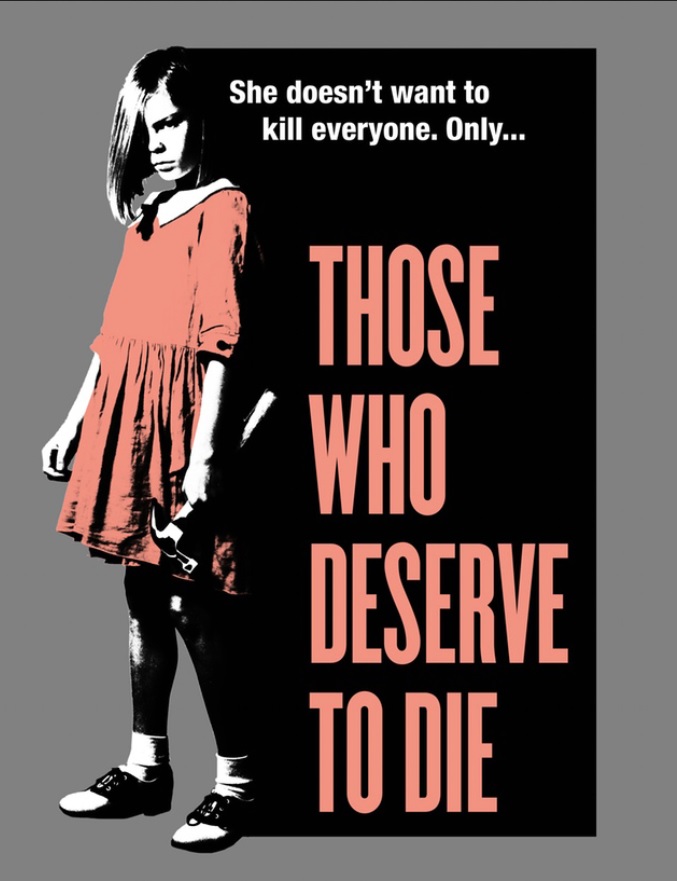
J. Sheridan Le Fanu’s iconic and influential lesbian vampire tale, “Carmilla,”*˟ from his short story collection In a Glass Darkly, returned to the streamingverse in 2014 with Bret Wood’s adaptation, The Unwanted. Wood now returns to the streamingverse with another novella adaptation: this time it is Thomas De Quincey’s The Avenger (spoiler alert: read the public domain Wikisource version here). And if you know your Giallo trivia: Dario Argento used De Quincey’s Suspiria, the short story “Levana and Our Ladies of Sorrow” in particular, as an inspiration for his “Three Mothers” trilogy of films: Suspiria, Inferno and The Mother of Tears. And, to that end: Wood splatters a ’70s Giallo stain on Those Who Deserve to Die.
Everything de rigueur in our Gialli of old and attendu in our yellow-syndromed Gialli of new spatters across Wood’s fantastique palate: style over ambiguous substance, eccentric characters of the ulterior and outright evil variety; each slopping their own baskets of red herrings, oozing colors, oddball lighting, enraptured set design—all of the symptoms cataloged by our cherished medical maestros Argento and Bava.
Yeah, you know all about us horror-loving lads frocking about the wilds of Allegheny County: we love our Giallo around here. In fact, we recently did a week-long tribute the genre, which we recapped and reviewed with our “Exploring: Giallo” round-up. And to that end: Bret Wood is the latest of the new crop of Young Turks (most recently; Matthew Diebler and Jacob Gillman’s The Invisible Mother and Marc Cartwright’s We Die Alone)—overflowing with skill, class and style—keeping the Giallo genre alive for a new generation—and birthing a new genre: Neo-Giallo, or what I like to call “Giallo Impressionism.”
And Bret Wood’s neoism is impressive. So strap on the popcorn bucket, hit the big red streaming button (Amazon Prime/Google Play) and let the rivers ooze yellow. As of August 18 you can also pick up Blus and DVDs: both contain Bonus Features of deleted scenes, along with the promotional vignette “Malice of Alice: a Mother/Daughter Portrait” and Security, a 2007 short film by Bret Wood. You can learn more at Kino Lorber and on their Facebook page, along with the film’s official Facebook page. You can also read these Atlanta Journal-Constitution interviews with Bret Wood and Alice Lewis to learn more about their respective careers.
Disclaimer: We were provided a screener by the film’s P.R firm. That has no bearing on our review.
About the Author: You can learn more about the works of R.D Francis on Facebook.He also writes for B&S About Moviesand publishes on Medium.
** We’re reviewing Cat People as part of our “Werewolf Week” running Sunday, September 23 to Saturday, September 29.
*˟ We’re reviewing And Die of Pleasure, Roger Vadim’s 1960 adaptation of “Carmilla,” as part of our upcoming “Vampire Week” running Sunday, September 6 to Saturday, September 12.
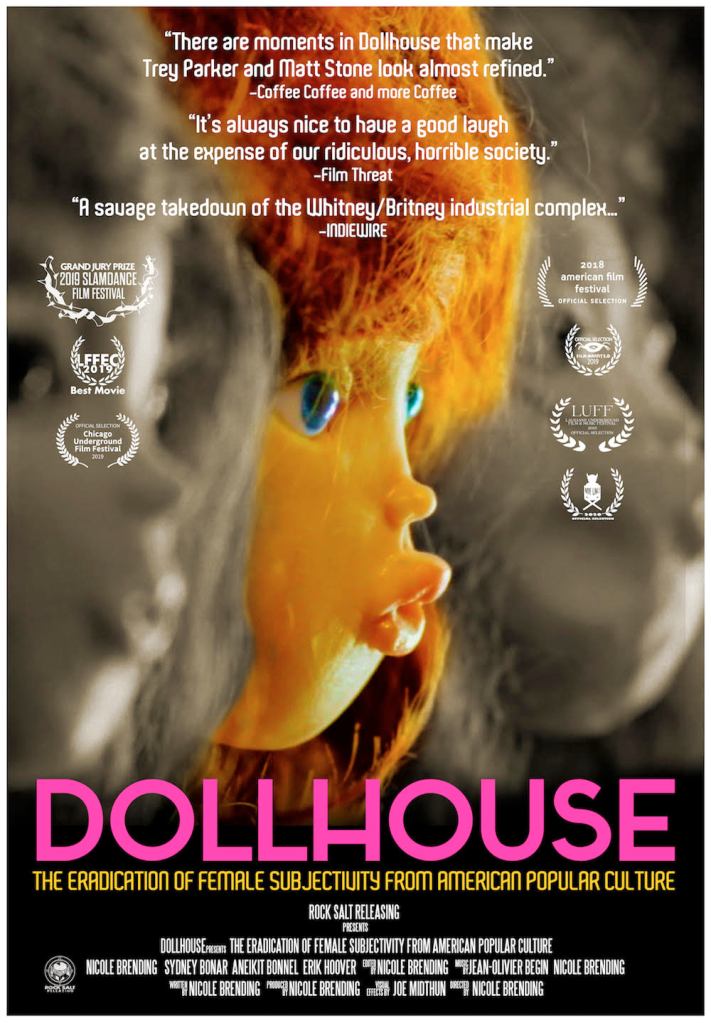
Based on the title, you might be expecting a scathing documentary about child actors and singers. And, in a way, you do. But just not in the way you expected. And that’s what makes this film so amazing.
What we get is a very welcomed reminder of Superstar: The Karen Carpenter Story, a 1987, 45-minute documentary-short by Todd Hayes chronicling the last years of ’70s pop singer Karen Carpenter’s life — via Barbie dolls-as-actors, along with artistic footage. (Hayes also made the 1998 Iggy Pop-David Bowie “what if” rocker, Velvet Goldmine.)
Reviewers and thread comments accurately drop the word “disturbing” and “entertaining” when describing this feature film debut by Nicole Brending that chronicles the rise and fall — with dolls and puppets (that affectionately reminds of Gerry and Sylvia Anderson’s Supermarionation ’60s TV series) — of fictional child pop star Junie Spoons (i.e., Britney Spears and Lindsay Lohan) in a ’90s VH-1 Behind the Music-styled format.
There’s no way a studio would greenlight a live-action comedy film with this much feminist power — without mucking it up into a groan-inducing rise-and-fall-and-back-again comedy ala Bucky Larson: Born to be a Star or Dickie Roberts: Former Child Star. This one has it all: faux-Britney Spears bubble gum pop, loss of virginity, sex tapes, 24-hour over-and-done-marriages, drugs, booze, a Patty Hearst-styled kidnapping, bank robbery, bankruptcy, and murder.
But there’s more to Dollhouse than just being an animated comedy.
This isn’t a film of chuckles, groans, or guffaws. This is a comedy of intelligence told from the perspective of — not the invasive paparazzi and the media meat grinder to which we are accustomed — but by Junie Spoons herself (voice to perfection by Nicole Brending), as she reveals the hypocrisies of an opportunistic society that preys on the talents and contributions of women.
Powerful stuff that’s worth the streaming price.
Now, we have a rare treat with this review . . .
Between the theme weeks and the new releases coming into B&S About Movies, there’s that occasional review/scheduling snafu when one of the new releases is reviewed twice (ugh, we did it again with Immortal). So, in the spirit of a little ’80s Siskel & Ebert tomfoolery in the B&S About Movies’ offices out in the back wilds of Allegheny County, it seems Sam and I are fighting for aisle seat (and the drink blender).
Who’s the “Siskel” and who’s the “Ebert” in this collaborative review with Sam? Only the movies gods in the analog ethers shall know. . . . (I’m the “Siskel,” dadgummit it!)
Sam’s Take:
Dollhouse is the feature debut of director Nicole Brending. Subtitled The Eradicationof Female Subjectivity from American Popular Culture, she also created all of the dolls, props, and sets, wrote and performed much of the music, and did many of the voices herself.
Fictional child pop star Junie Spoons lost her virginity in a sex tape, had a 24-hour marriage, was kidnapped like Patty Hearst and was even involved in the murder of her mother. While this starts as a Britney-esque tale, it spirals out of control.
Quite honestly, I can see the talent behind this and the ability that it took to create it, but it just went on a bit too long for me. I hate saying that knowing the work that it took to make it. But often, so many of the satirical elements feel too sledgehammer. There’s Superstar: The Karen Carpenter Story as a high watermark for films like this. And while moments of it caused fleeting enjoyment, others made me cringe.
Perhaps I’m not the audience for this, so let me say that you may enjoy it much more than me, as R.D did.
Rock Salt Releasing via TriCoast Releasing will begin streaming Dollhouse: The Eradication of Female Subjectivity from American Popular Culture onto various digital platforms (Amazon, inDemand, Fandango, FlixFling, and Vimeo on Demand) on August 11.
Disclaimer: We were sent a screener by the film’s PR company. That has no bearing on our review.
About the Authors: You can learn more about the writings of R.D Francis on Facebook. He also writes for B&S About Movies. Sam Panico is the curator of B&S About Movies.
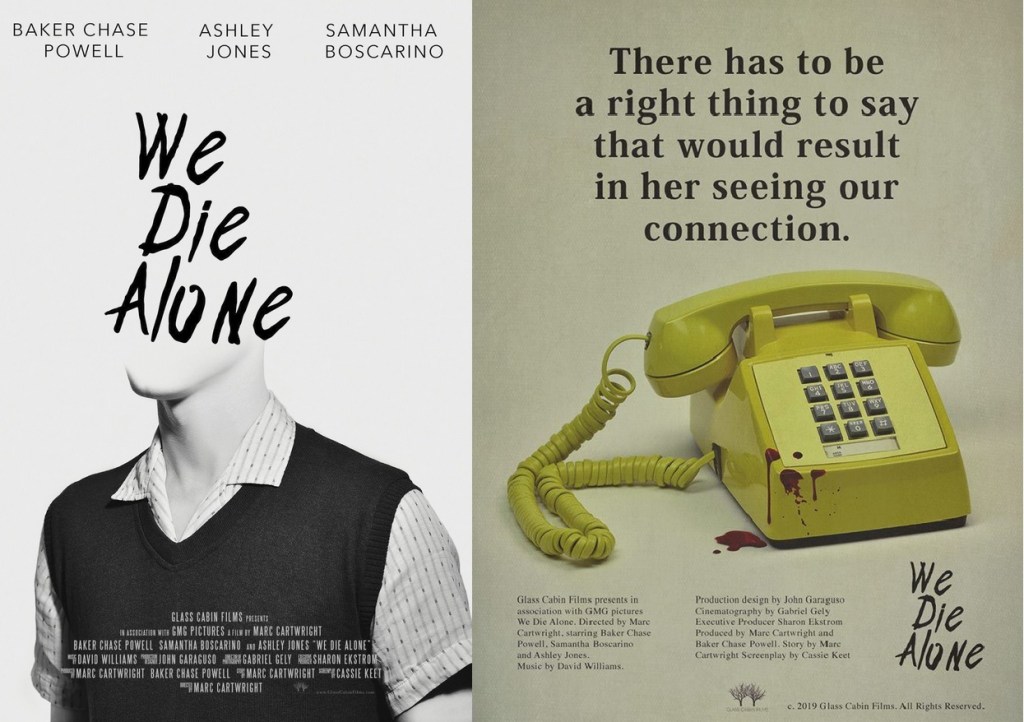
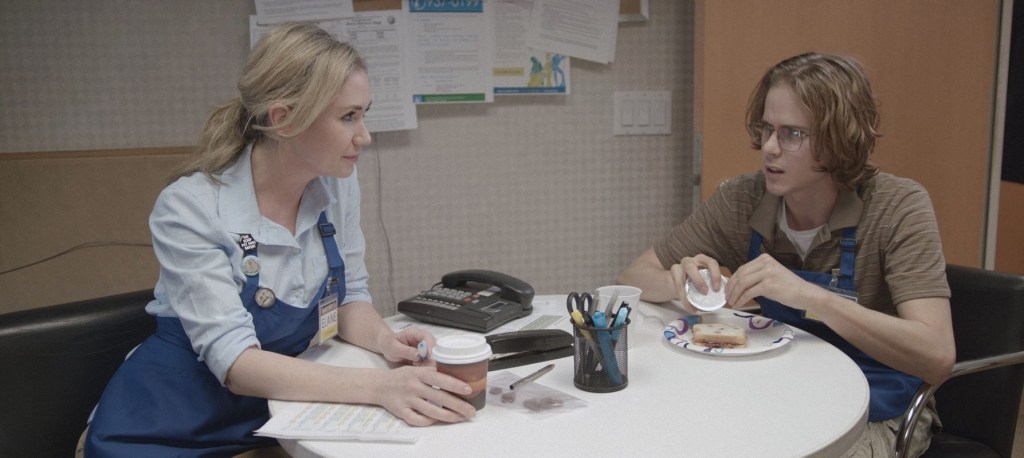
Aiden (Baker Chase Powell), a socially-inept thrift store clerk, wants to find true love (“true love” is a girl who likes jigsaw puzzles), but his courage-defying insecurities lead to social media ghosting of any connections he makes on dating apps (and his “agoraphobic-dating” a dumpster-dived mannequin). Also looking for — and fearful of love — is his co-worker, Elaine (Ashley Jones), whose own generosity with advice and to-a-fault kindness crossed with shyness perpetuates her own loneliness. And Aiden’s inability to pick up on another’s social cues makes him oblivious to Elaine’s feelings for him.
Aiden comes to find the courage through Chelsea (Samantha Boscarino), his new, beautiful — an ulterior-motive driven — apartment-across-the-hall neighbor (who digs the puzzle on his coffee table and his “vintage” ’70s-era phone). And she, like Aiden, has a failure adapting to and connecting with others through social (media) norms. And that common — real life and social media — awkwardness sends Aiden and Chelsea into a noirish decline of dangerous infatuation and obsession.
Sigmund Freud just called. Mommy’s womb wants you back; you’re not ready to be around people.
This creepy thriller effectively updates the twisty, black & white tales of Dashiell Hammett and James M. Cain for a digital world. And when the “harmless” Aiden locks his stare on his mannequin and he starts stealing dainties . . . and the friendly Elaine comments, “. . . you think you know people. . . .” Chills (courtesy of the-just-nails-it Powell). You know this isn’t going to end well. And Cassie Keet’s script (written with director Marc Cartwright) of well-crafted herrings and Cartwright’s taste for the (Dario) Argento hits all the noir-giallo cues: when that dainty, red slip hits the Laundromat floor — well, poor Aiden just found Ms. Dietrichson’s “honey of an anklet” (Double Indemnity) and triggered a femme fatale chain-of-events.
Courtesy of Glass Cabin Films
If you’ve hung out with B&S About Movies for a time, then you know how we feel (but we’re nice) about indie films by unknown filmmakers meandering with an unfocused narrative structure towards a patience-trying two-hour mark that’s crying for a 30-minute celluloid sushi in Final Cut Pro. Then there are those films that run extensive end credits to pad their too-short running time to a home-distribution acceptable 80-minutes.
What’s makes this 22-minute fifth short by writer-director Marc Cartwright so refreshing is that you’re left wanting more. And that doesn’t happen often (the recent The Invisible Mother is an example of that “wanting”). You feel denied by not getting that other hour of film with We Die Alone. If there’s ever a short film that deserves expanding into a feature film (Fruit Chan’s cringey masterpiece Dumplings comes to mind), then it’s We Die Alone.
Ashley Jones and Baker Chase Powell/courtesy of Glass Cabin Films
If Baker Chase Powell is familiar, that’s because he co-starred as Steve Dodd in Dolemite Is My Name, Eddie Murphy’s multiple-award winning biopic on ’70s exploitation filmmaker Rudy Ray Moore. Daytime TV fans have watched the Emmy-nominated Ashley Jones on The Young and the Restless and The Bold and the Beautiful; HBO surfers know her from her recurring role as Daphne on True Blood. You’ve recently watch Samantha Boscarino on FOX-TV’s The Resident, but our younger readers will remember her recurring role on Disney Channel’s Good Luck Charlie; Lifetime fans enjoyed her as the lead in 2016’s The Cheerleader Murders (and she’s very good there, and here).
We Die Alone made its premiere at the Oscar-qualifying festivals LA Shorts and The Newport Beach Film Festival. It also picked up award wreaths at the Indie Memphis Film Festival (“Best After Dark Short”), iHorror Film Festival (“Best Director”), Shriekfest (“Best Thriller Short” and “Best Actor” for Baker Chase Powell), Filmquest (“Best Horror Short” and “Best Supporting Actress” for Ashley Jones), Crimson Screen Film Festival (“Best Actor” for Powell), Nightmares Film Fest (Powell, “Best Actor,” natch), and finally, GenreBlast (“Best Short Film”). Most recently, the Deep in the Heart Film Festival in Waco, Texas, granted three award nods to the film: Best Horror/Thriller Short, Best United States Short, and Best Performance for Baker Chase Powell. That festival streams from Waco on September 25 through 27 and October 2 through 4. Tickets are now on sale now at www.deepintheheartff.com.
You’ll be able to stream this multi-award festival winner beginning August 21 through Amazon Prime, with other services to follow. You can stay abreast of those developments with We Die Alone — as well as the other projects of Glass Cabin Films — on You Tube and Facebook and their official website.
Disclaimer: We were provided a screener by the film’s P.R firm. That has no bearing on our review.
About the Author: You can learn more about the writings of R.D Francis on Facebook. He also writes for B&S About Movies and publishes on Medium.
Hollywood and religion don’t often mix. However, many of the most successful movies of all time have been faith-based. Writer and director Tyler Smith explores that holy — and at times unholy — union of the sacred and the secular in the film industry.
I was surprised at how even-handed this film was, even taking time to defend the slasher genre from Siskel and Ebert of all things. It also shows a deft understanding that faith films made just for money totally miss much of the point of faith-based films. Seeing this much open-mindedness in a movie like this is enlightening.
After testing his sobriety at a bachelor party on the Vegas strip, a recovered drug addict and former TV star learns that dealing with his childhood friends and girlfriend may be what causes him to relapse. He’s not leaving the room and neither are they, so something has to happen.
This movie was directed by Ryan Brookhart, and written and produced by James Liddell, who also plays Gavin. If you don’t recognize Ryan’s name, you may know his artwork, as he’s created plenty of the cover art and posters for Full Moon.
Levy Tran, who was inThe First Purge, The Haunting of Hill House and the new version of MacGyver is also in this movie. She plays Addy, the dancer that they are waiting for in their hotel room as all hell breaks loose inside it.
You can get this movie on demand from Global Digital Releasing, who was kind enough to send us a copy. There’s also an official Facebook page to learn more.



 B&S About Movies
You must be logged in to post a comment.