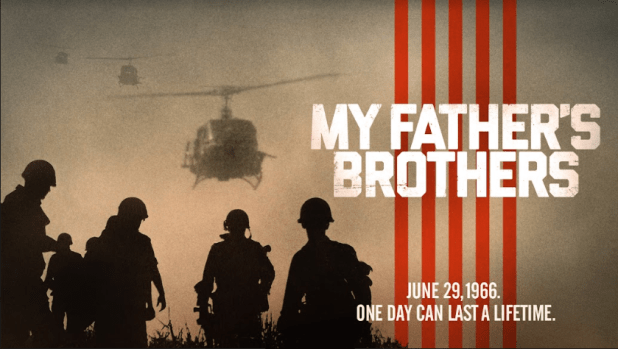
June 29, 1966: A platoon of American soldiers is outnumbered ten to one in the jungles of Vietnam. This will be the darkest moment of their lives, if they survive.
Now: Those that walked away explain how life would never be the same again.
My Father’s Brothers is a journey to understand what filmmaker Shawn Kelley’s father and seven survivors went through then and keep going through now.
Whether they volunteered or were drafted, each of them has had to deal with the cards life dealt in their own way. Some of them have even returned to Vietnam in the hopes of somehow coming to terms with their past.
Shawn’s father was one of the ones that volunteered. As he made it to the rank of captain, he routinely led his company of 140 men on patrols through the jungles of Vietnam. On that fateful June 29th, he recieved orders to spread out too far and stumbled upon a better supplied and manned outpost of Vietcong forces.
While this battle usn’t well known, it is an integral part of these men’s lives. As they went their separate ways after the war, they discovered that they would come together to find ways to make the past make more sense, if that is ever possible.
Kelly explained how the origin of the movie was very simple. In fact, it started on a long car ride. “My 83-year-old dad rarely talked about his time in Vietnam. Since I had a few hours with him alone in the car, I decided to ask a lot of questions. And I found out there was a lot about my dad’s past I didn’t know.”
The film also highlights Medal of Honor recipient, Sgt. Charles B. Morris, a paratrooper that went above and beyond the call of duty to protect his platoon on that day.
I really enjoyed this film because it presents a moment in history that would be lost if not for that car ride and the drive for Kelley to make this film, one that highlights not only his father, but the men who found themselves in the midst of a situation that would define every moment of the rest of their lives.
My Father’s Brothers is available on demand and on DVD from Passion River.
“A magic realist documentary about invisible elves, financial collapse and the surprising power of belief, told through the story of an Icelandic woman.”
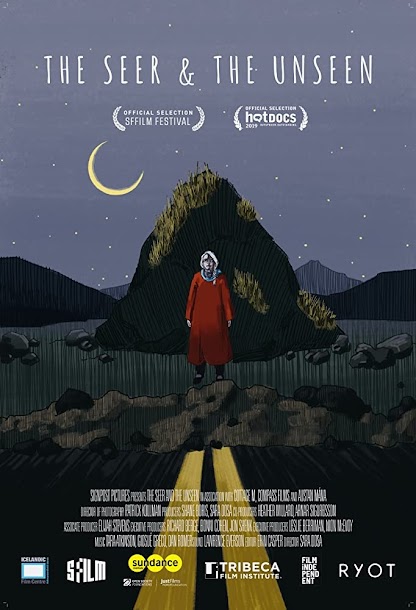
Ragnhildur Jónsdóttir is a person who speaks on behalf of nature under the threat of great change. And she speaks to the past as well, a place that — well, we’ll leave that up to you, dear viewer — may be still filled with elves and invisible forces that are able to still influence our modern world.
It doesn’t matter if you believe it or not. You just need to watch this.
Ragga, as she is called, is a seer who communicates directly with a parallel realm of elves called the huldufólk that at least half of her native Iceland believes in. That means that businesses, individuals and even the government ask her to see where they should build and develop property. However, not everyone believes or listens to Ragga, so when a new highway begins construction across an untouched lava field near Reykjavik — and threatens an elven church within the rocks — Ragga fights to protect the homes of those who only she can see.
Director/producer Sara Dosa said, “When I first learned about Ragga, I not only thought that she was a delightful, strong and wise person who’d make for an inspiring protagonist for a film, but also that her story provided an unexpected conduit to exploring the belief in invisible forces: be they invisible elves or the ‘invisible hand of the free market,’ to call upon Adam Smith’s original phrase. By juxtaposing these systems of belief, I wanted to make a film about what humans choose to see: the spirits of the land who beckon protection for the environment or the valuations of an economic logic capable of producing gross inequality, environmental destruction and that bankrupted Iceland (among many others). My hope is that the film can show the power of these unseen forces and reveal not just what is worth seeing but what is worth saving.”
In her director’s statement, Dosa really sets the tone for this film: “We can’t see God, for instance, but somany of us believe God exists, and that beliefhas profound consequences on how many live their lives.The same is true of the forces animating markets, which are regularly taken as fact and the products of ‘natural laws,’ rather than understood as comprising a system of beliefs. Rather than state this insentiment in academic language, our protagonist, Ragga Jónsdóttir, instead is the spirited conduit for thisexploration. And, by juxtaposing these systems of belief, my desire ultimately was to make a film about what humans choose to see: the spirits of the land who beckon protection for the environment or determinations of economic value capable of bankrupting a nation. My hope is that the film shows theseinvisible forces that shape our world and transform our natural landscapes, revealing not only what isworth seeing but what is worth saving.”
To Ragga, the invisible hand that guides the world of money seems just as foreign as you or I may see the world of magic. Sosa is uniquely able to tell the story of this juxtaposition, as she graduated from the London School of Economics’ joint Master’s program in Cultural Anthropology and International Development Economics.
We often see foreign countries as a strange place that we’re afraid of exploring. Or we make fun of their unique customs. But perhaps by looking to these places, we can learn something new that can help the parts of the world that we inhabit. That’s one of the many reasons why this film is worth more than just a look.
The Seer and the Unseen is being handled by Utopia in North America and they will release the film on AppleTV and Altavod.
Utopia is headed by Robert Schwartzman — of the band, Rooney, and a writer and director in his own right — who made his feature film directing debut with the really fine comedy, The Argument, released last September. You can learn more about the launch of Utopia Media with this February 19, 2019, article at Deadline.com.
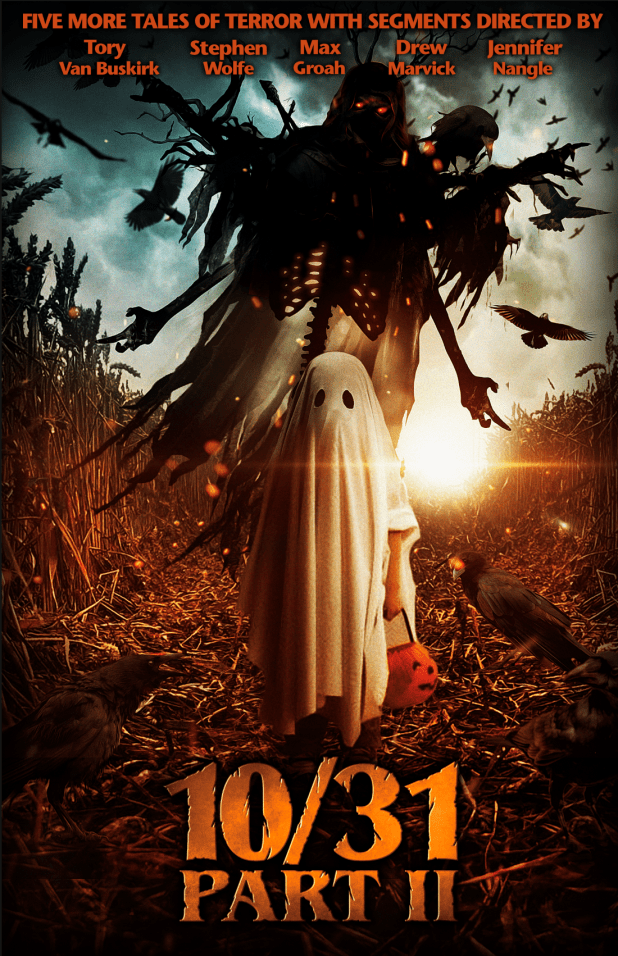
The last film that we review after watching around thirty or more horror anthologies in a week, 10/31 Part 2 starts with a series of fun trailers, including “Treaters” by Zane Hershberger, the cinematographer of The Barn; “Truck Squatch” by John Hale; “The Candy Taker” by Robert Lanphere, Cryptids and the hilarious “The October Kids” by Brett DeJager of BoneJangles.
Malvolia the Queen of Screams presents several stories from different directors in this film, such as “A Samhain Liturgy,” a babysitter tale with a twist that grows progressively darker — and better — as the story continues. It’s directed by Tory van Buskirk, who also contributed the “Sister Mary” story.
Stephen Wolfe’s “Dead Lift” is up next, the tale of why you don’t pick up strange passengers, even if you’re a rideshare driver. Wolfe also directed Doll Factory, which we covered a few years back.
I kind of wish Max Groah’s (Bong of the Living Dead) segment “Apache Hatchet Massacre 2” and Drew Maverick’s (Pool Party Massacre) “Overkill” had been cut down to trailers, as there are fun moments, but they would work better just getting the good parts out there. They’re also both slasher pastiches right in a row and would probably work better if another story was between them.
They’re already planning a third film in this series and I’ll definitely watch it. None of the segments are as good as the first or the trailers, but it’s still a very competent film and producer/composer Rocky Gray put together a great project and soundtrack.
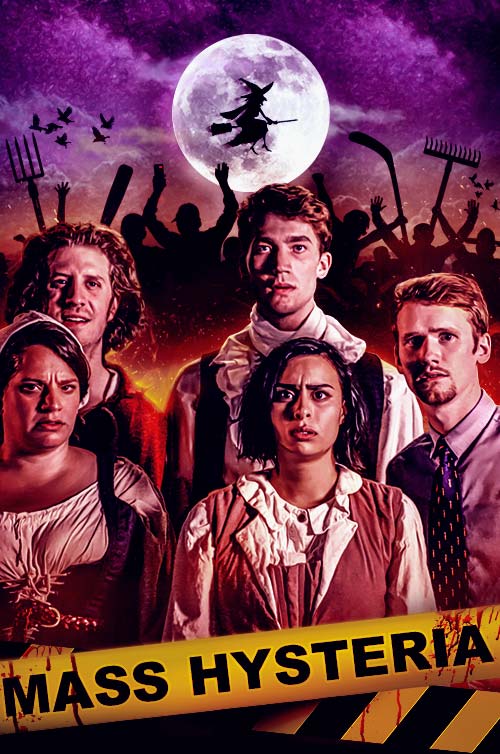
Directors Arielle Cimino and Jeff Ryan, working from a script by Jonathan T. Coleman and Christopher O’Connell, have put together an interesting story: Paige [Geena Santiago, who was in the movie YouthMin from the same creative team) is an actress playing one last role in her hometown of Salem. It’s in a local historical play about the Salem Witch Trials and the only audience is made up of drunk tourists.
During one of the re-enactments, a man dies and the crowd believes that Paige has cursed them. Holy man Samuel Hall (Matt Perusse) gets the crowd enraged and ready to enact their own modern witch trial as our heroine goes on the run.
I loved how this movie takes the, well, mass hysteria that we’ve been living under the past several years and puts it into the context of a horror movie. Everything here — well, maybe not the curse — feels like it could happen. One example is when Paige tries to stop the growing unrest with a Facebook post that makes things get exponentially worse.
Best of all, it’s a quick and quirky sixty-six minutes. It doesn’t have a big budget yet the cast tries hard and the story — which is the important part when you think about it — is well-told.
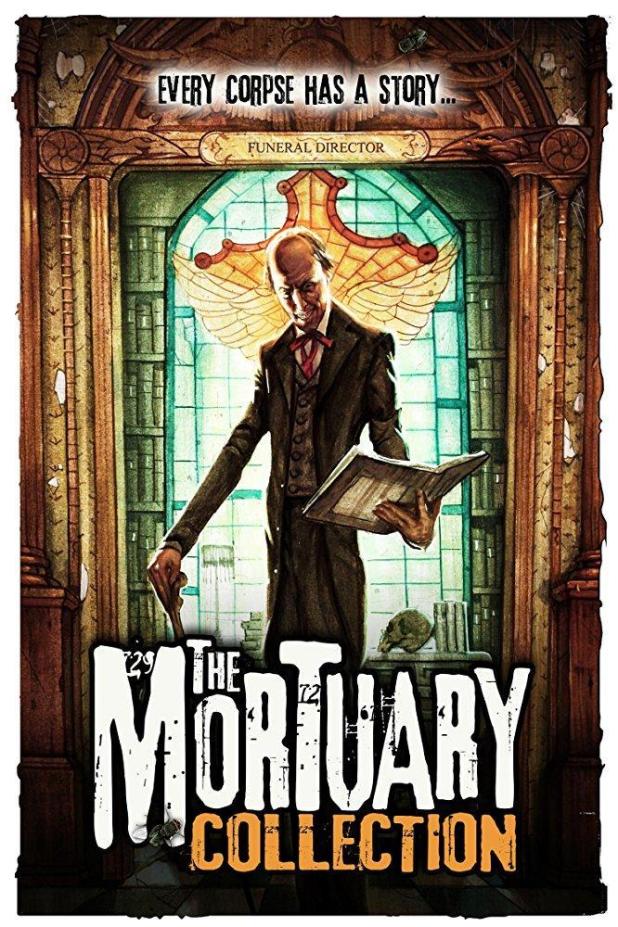
As bad as most modern horror anthologies are, The Mortuary Collection makes a real case for the future of these movies, even if it borrows some of its narrative device from Tales from the Hood.
Ryan Spindell made The Babysitter Murders — I mean, if you’re going to take a title, take it from one that makes horror fans recognize that you get it — which is part of this story. The framing is all about Sam (Caitlin Custer) who has come to Raven’s End Mortuary to ask for a job from its owner, Montgomery Dark (Clancy Brown).
He takes her through the coffins inside, telling her how each of the bodies got there. The first story is simple — a thief discovers a monster — and nearly made me stop watching this, as I worried that this would follow the example of other modern portmanteau films with stories that abruptly end and have no real narrative steam.
I’m happy that I stayed with this movie.
In “Unprotected,” a college man tries to take advantage of the woke nature of his classmates. When he finally scores his next conquest, Sandra, and takes off his condom, which leads to her making him pregnant. This is a quick and simple story, yet well-structured and filled with some disquieting imagery.
“Till Death” has a husband trying to get rid of his catatonic wife with increasingly gory and unsuccessful efforts. Ironically, the movie then has Sam demand that the stories become less about simple comeuppance. Montgomery takes Sam to the mortuary subbasement and prepares to cremate a child-size coffin. Sam then tells him she’s not here for a job. She’s here for the dead child and has a story to tell.
This is where “The Babysitter Murders” fits into the story, revealing that Sam is a killer of children. She attempts to use the bones of the kids to kill the mortician, but her victims tear her apart. He sews her together and uses embalming fluid as her blood, making her the new owner of the funeral home as he steps into the sun and turns into dust.
With films like this and Ghost Stories, the future of this subgenre of horror feels like it has a chance.
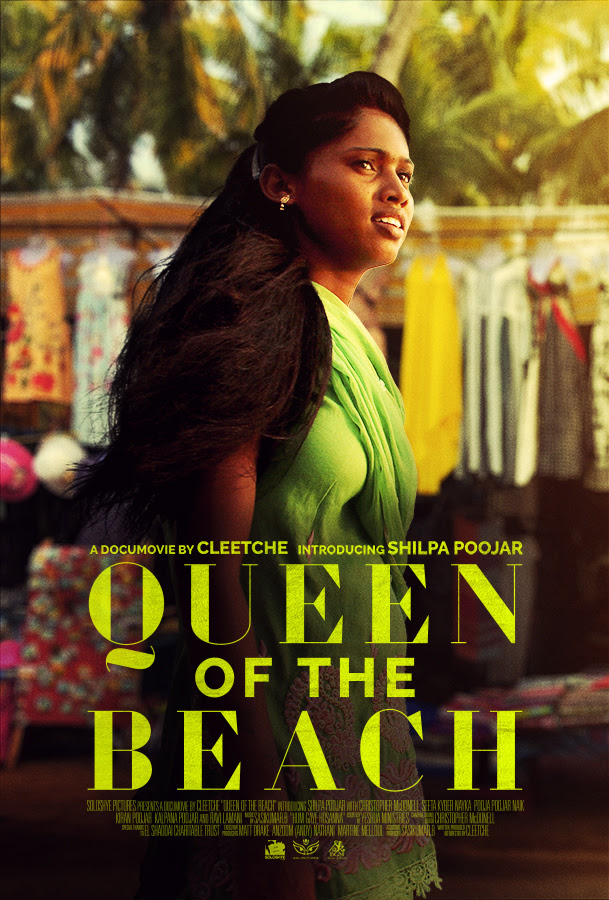
While on vacation in Goa, India, Canadian filmmaker Chris McDonell turns his camera on Shilpa Poojar, a 9-year-old girl hustling tourists to buy clothes and jewelry from her seaside shop.
The girl is a migrant worker from the unique Banjara tribe and the primary breadwinner for her family. Somehow, Chris feels a connection to her and comes back three times over the next seven years to tell her story. He feels like if he can help her get to school, he can change her life. But can it happen that way? Will her family allow her to discover her dreams? Once you become addicted to the hustle, can you give it up?
I’m not sure how I feel about this movie, to be perfectly honest. I want to believe that the director was truly altruistic, but then I wonder why he decided to turn this story into a movie instead of it just being a private analog moment.
That said, your mileage may vary and you may have less cynicism in your heart than I do. From the looks of the official Facebook page, Shilpa is leading a happy life and directly attributes that to McDonell, so perhaps things can be positive in this world.
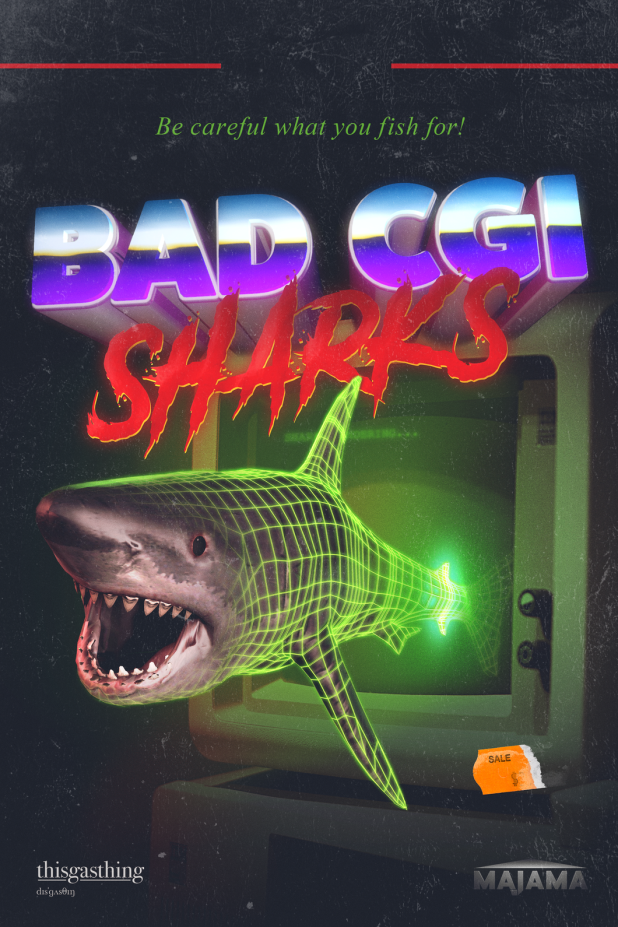
When Bruce the Shark is chasing swimmers, he does not stop to download pornography. CGI Sharks will do this and really take down the speed of your internet. This is a fact that this movie has taught me and now I must pass on to you.
Jason and Matthew are brothers who have been apart for years before reuniting to discuss the shark movie they wrote as children. However, one of the sharks that they created for the film has escaped the computer world and is killing everyone in its path.
This was directed by MaJaMa, who I assume is the combination of three of the film’s actors and writers, Matthew Ellsworth, Jason Ellsworth and Matteo Molinari. Maybe I’ve seen too many direct to streaming shark movies lately, but this hits every cliche of the form — is a shark movie with a CGI apex predator a genre unto itself? — that I just accepted the fact that sharks float through the air because I’ve seen more than one movie where that’s exactly what happens.
If you’ve seen just as many bad shark movies as me, good news. This one is actually pretty fun.
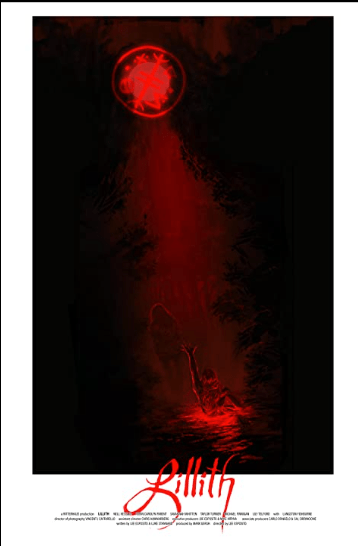
Lilith — called Lillith in this movie — may have gotten a friendly makeover of sorts in the 90s, but there’s such a dividing line in the thought as to who she is. Is she Adam’s first wife, created at the same time and from the same clay? Did she leave Adam after she refused to become subservient to him and wouldn’t return to the Garden of Eden after she’d made love to the archangel Samael? Or is Lilith a primordial she-demon, a vampire, a night bird and to quote the Dead Sea Scrolls, part of “the destroying angels, spirits of the bastards, demons, Lilith, howlers and desert dwellers and those which fall upon men without warning to lead them astray from a spirit of understanding?” Still — it’s spelled Lillith, so it can really be anything it wants!
In Lee Esposito’s Lililth, she’s a succubus conjured by Jenna (Nell Kessler), who has discovered that she’s been done wrong. Lillith (Savannah Whitten) is a redhead that the boys — and girls — of Rising Wood Community College are just, well, dying to sleep with. Well, they get their wish.
While this film has a low budget, it has a high fun quotient. It totally fits into the Linnea Quigley direct to VHS demon films of the past and that’s high praise.
Lililth is available on demand and on Tubi from Terror Films. Want to learn more? Check out the official Facebook page.
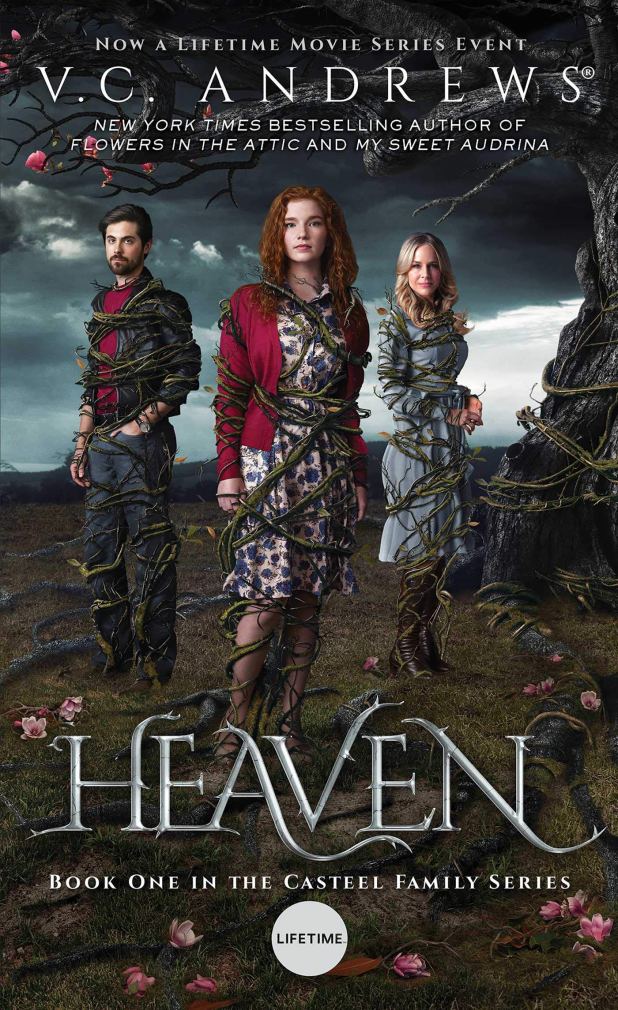
The Casteel series started after VC Andrews wrote the Dollanganger books — which includes Flowers in the Attic — and My Sweet Audrina. Only the first two books appeared before her death and the series tells the story of a troubled West Virginia family, starting with Heaven, a gir whose mother died in childbirth, which leads to a hate-filled relationship with her father.
Lifetime made all five books in this series into films following their success with the Dollangager movies. Directed by Paul Shapiro (whose career is all over the place in the best of ways, working on plenty of TV movies and episodic TV) and written by Scarlett Lacey (who also was the scribe for the My Sweet Audrina TV movie and Wendy Williams: The Movie), this film places Annalise Basso into the role of Heaven Leigh Van Voreen Casteel.
Heaven is the oldest child in her family, driven to escape Winnerow, West Virginia with her academic abilities. It takes until late in her teens before she learns that she’s the daughter of the rich Leigh Cateel, who died in childbirth, causing her father to never love her. Yet when he father’s drinking grows out of control, she and her siblings are sold off to other family members, sending her to live with his ex-wife Kitty and her new husband, a writer named Cal who starts an affair with her.
Man, I’m behind in my VC Andrews TV movie watching. What is wrong with me? I have no priorities!
This is the kind of movie I love, one where a woman on her deathbed tells a teenager that it’s good with her if she keeps arrdvarking with her husband, a man who should be her father figure yet asks to be called daddy.
Now I have to stop writing this and get to watching like twenty more of these. My work is never done.
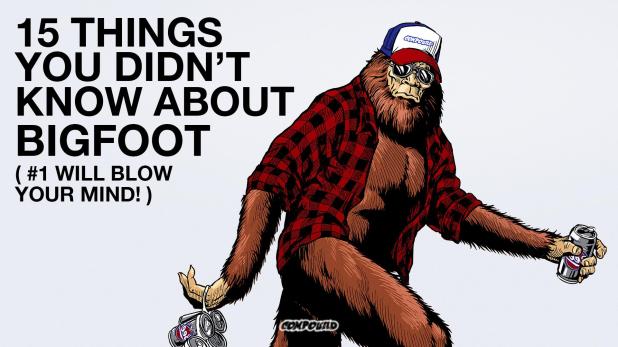
Originally known as The VICE Guide to Bigfoot, this tells the tale of a clickbait journalist — in case you missed it in the title — who goes to the Appalachian mountains to report on a Bigfoot convention.
While the movie starts out making fun of sites like, well, VICE, it soon becomes yet another film where people wander the woods and yell each others’ names really loud. Or maybe I’m just old and the joke of making a movie all about a type of journalism that is already a joke doesn’t ring true with me (it hits different or has a weird flex or whatever currently way of saying that, feel free to fill in the blanks).
Seeing as how this movie wasn’t affiliated with VICE, I wonder how it was connected to it at any point. Maybe the filmmakers pushed ahead, sure they could get the name approved. Who can say? Well, maybe the filmmakers. If you’re one of them, let us know.
There is some humor in this, if only that once city folk find their way into the woods, they don’t do so well. Then again, YMMV. See, I can use the language of the times. Sometimes.



 B&S About Movies
You must be logged in to post a comment.