Kanichi Iwata is a wrestler who is suffering from a disease that turns him into a giant squid. Interestingly enough, he’s played by Osamu Nishimura, a wrestler who had already survived cancer. I’m a big fan of Nishimura, who is a proponent of the MUGA style of pro wrestling. This term translates into Selflessness and is the catch style that was used by Tatsumi Fujinami for a good portion of his career. That said, I never saw any wrestlers become mollusks in New Japan Pro Wrestling.
Eventually, the Calamari wrestler must battle Koji Taguchi, who is The Octopus Wrestler. He’s played by AKIRA, who is also known as Akira Nogami. He’s wrestled on and off when he’s not acting. Finally, one of the heroes of the past, Godozan, is revealed as The Squilla Boxer. What’s a squilla? It’s a form of mantis shrimp.
One of my favorite wrestlers ever, Yoshihiro Takayama, also appears as himself.
There’s only one downside to being a Calamari wrestler. If you have sex, you lose your sea-based power. This reminds me of the old days of pro wrestling when guys claimed they wouldn’t have sex before big matches. Then, you know, I got into wrestling for real and learned the fallacy of these legends.
And the theme weeks at B&S About Movies collide once again—with our review of the currently in pre-production of Karn Evil 9 for our “Radio Week,” and Sam’s insatiable appetite for all strange beasts from beyond the lands of the rising sun.
Welcome to “Kaiju Week.”
Keith Emerson’s full soundtrack to Godzilla: Final Wars!
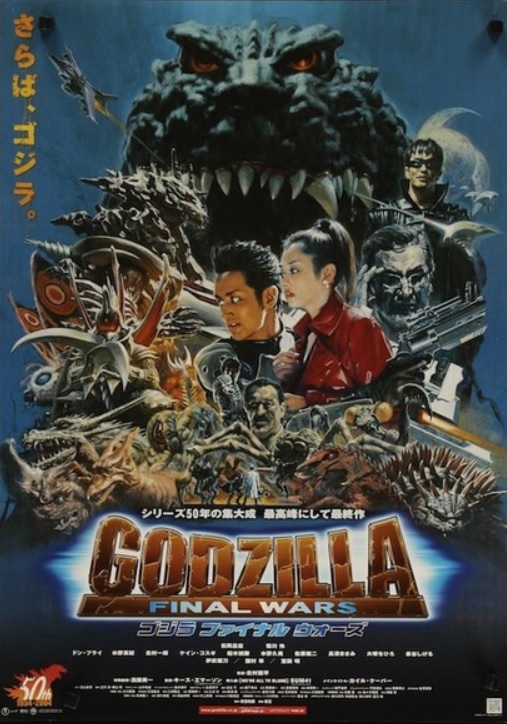
Huh? What, pray tell, does the 29th film in the Godzilla franchise and the sixth and final film in the franchise’s Millennium period, as well as the 28th Godzilla film produced by Toho Studios overall, have to do with Emerson, Lake and Palmer’s fifth album, 1973’s Brain Salad Surgery?
Please, don’t say “who” when I say, “Keith Emerson,” ye youthful movie and music fan.
As result of today’s classic rock FM radio eliminating the ELP catalog from their playlists (come on, even “Lucky Man”?), all you horror hounds most likely know Emerson through his Italian giallo soundtrack work for Dario Argento’s Inferno (1980), Lucio Fulci’s Murder Rock (1984), and Michele Soavi’s The Church (1989). In addition to Sylvester Stallone’s Nighthawks (1981), Emerson also composed the soundtrack for Toho Studios’ Godzilla: Final Wars (2004)—which serves as his final work as a film composer.
And that musician analogy continues as director Ryuhei Kitamura (Clive Barker’s 2008 TheMidnight Meat Train starring Bradley Cooper; 2012’s No One Lives) compares his contribution to the Godzilla cycle to that of a musician’s “best of” album; Kitamura picked what he felt were the best elements from the past Godzilla movies that he loved. He chose that approach as result of his being unsatisfied with the Godzilla films of the ’80s, ’90s and 2000s and he wanted to bring back the messages and themes of the times those films reflected in their plots.
And “greatest hits” he gave us . . . and then some!
In addition to the big guy, Kitamura brought back Angurius, Ebriah, Gigan, Hedorah, Kamacuras, King Ceasar, Kumonga, Manda, Minilla, Monster X/Keizer Ghidorah, and Mothra—along with a slew of others monsters via stock footage and toy placements throughout the film. And the alien Shobijin twins—from 1961’s Mothra—and the Xiliens—from 1965’s Invasion of the Astro-Monster—are back. Then there are the ships! Yeeeessss! The Gotengo from 1963’s Atragon (and 1977’s War in Space) is back—along with the all-new kaiju-battling weapons: the Earth Defense Force’s Éclair, the Karya, and the Rumbling. Then there are the new, reversed winged Dogfighter jets, and the good ‘ol Heisei and Millennium-era Type 90 Tanks and Type 90 Maser Cannons are back.
Mada watashi no kokorodearu: I am in Kaiju Tengoku.
So film kazu 29 picks up where the initial attack on Tokyo in 1964’s Godzilla left off: the green guy trapped under the Antarctic ice after losing the fight against the original Gotengo battle ship. As the years pass, the Earth’s environmental changes (yes, the “message” is back) results in the mutations of more giant monsters and superhumans, aka “the mutants,” the genetic off-spring of humans and the Xiliens.
One of those returning classic monsters, the Manda, from 1963’s Atragon (aka, Destroy All Monsters in the U.S.), goes up against the Gotengo once again, and the drilling battleship, piloted by Captain Doug Gordon (MMA and UFC, and New Japan Pro-Wresting champion Donald Frye!?)—loses the battle and Gordon is stripped of his command.
Helping in the battle are the mutant solider Shinichi Ozaki (Japanese musician Masahiro Matsuoka of top-selling pop-rockers Tokio), who protects U.N biologist Dr. Miyuki Otonashi (Rei Kikukawa, the lead in the awesome action flick, Crazy Gun: 2 Beyond the Law; You Tube clip), as she studies a mummified monster.
And a deus ex machina teleportation device zaps them to Mothra’s planet and the Shobijin twins warn of a coming battle of good and evil. Then the Haisetsu-mono wa fan ni atarimasu and all manner of monsters and aliens attack.
I’m on Kitamura’s side: I’m an Old Milwaukee or Miller Beer guy; get away from me with that fancy imported swill. I want the Godzilla monsters of my youth and not so much the ones from the ‘80s or ‘90s.
So, Keith Emerson brought me here . . . but Ryuhei Kitamura made me stay to see the show. It’s a sushi-splashing kitchen sink of craziness that rivals the hard to beat insanity that was the pseudo Planet of the Apes romps Godzilla vs. Mechagodzilla (1974) and Terror of Mechagodzilla (1975)—my favorites of the franchise (Kitamara cites the first as his favorite of the franchise as well)—that I watched in the darkened duplex all those years ago. The kaiju special effects—all shot in-camera with no CGI assists—combined with the present-day Mission: Impossible and The Matrix-inspired live action sequences, only enhances the film’s awesome retro-throw back qualities . . . and you get a ripping Sum 41 tune, “We’re All to Blame,” too?
Wow! What a way to celebrate the 50th anniversary of the Godzilla franchise!
Looks like a Kitamura marathon night! Life does not suck.
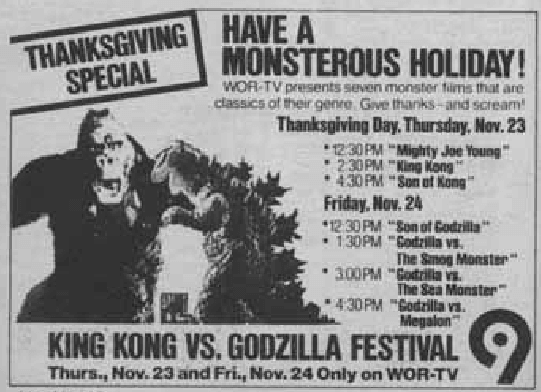
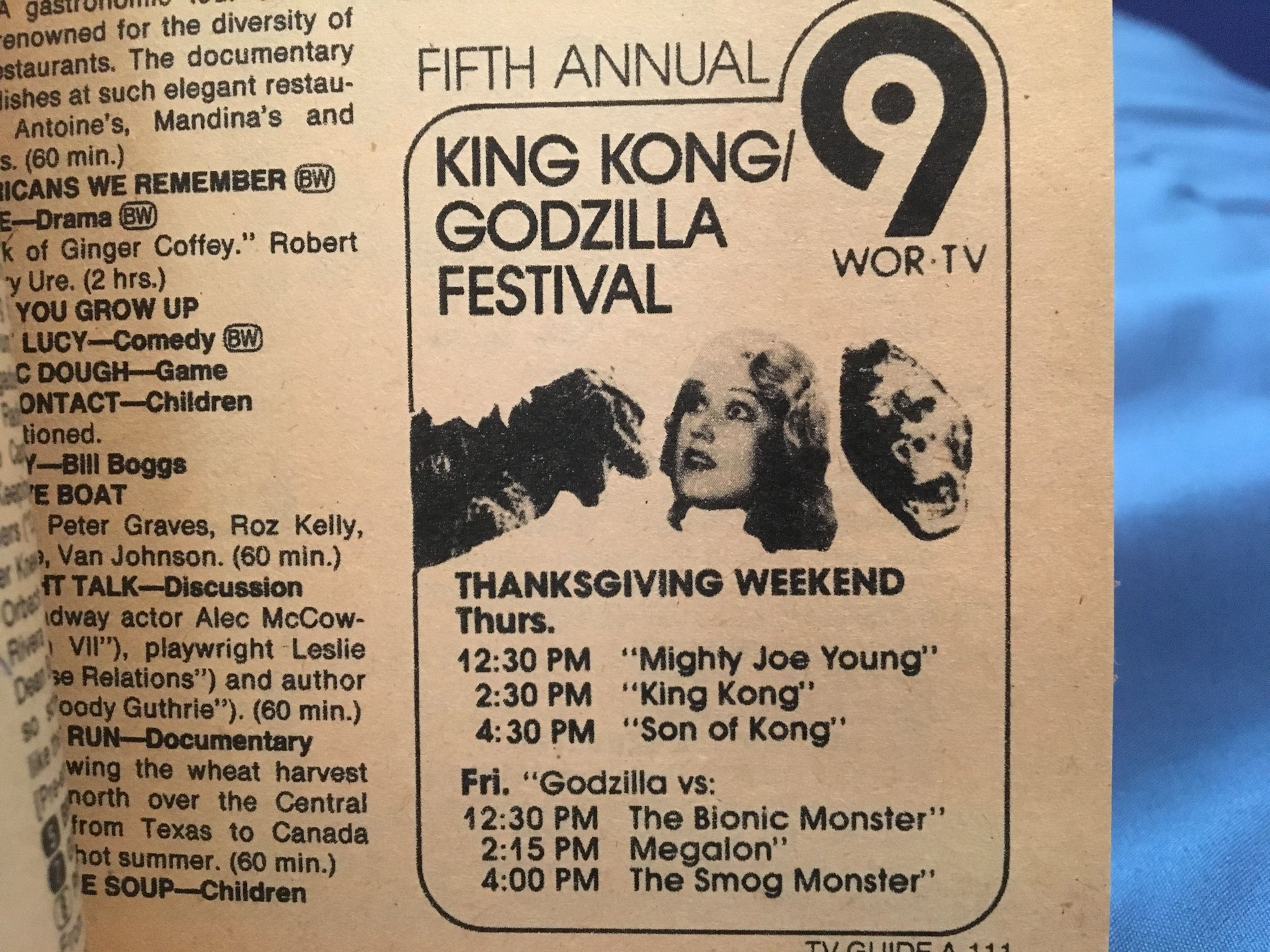
Those were the UHF-TV days. . . .
Hey! Don’t stomp off yet, green guy! There’s more ‘Zilla!
If you jump on Netflix, you can check out the Reiwa-era trio of the latest animated Godzilla flicks: 2017’s Godzilla: Planet of the Monsters, and 2018’s Godzilla: The Planet Eater and Godzilla: City on the Edgeof Battle. The first Reiwa-era film, 2016’s live action Shin Godzilla, is available on Amazon Prime and Vudu.
Of course, the whole reason for this “Kaiju Week” blowout is Warner Bros. Studio’s Godzilla vs. Kong coming in 2020 that, if you’re nuts for the green guy and keeping track, is the fourth film in Legendary Studio’s (made their debut with 2005’s Batman Begins and 2006’s Superman Returns) “MonsterVerse” and serves as a sequel to Hollywood’s Godzilla: King of the Monsters (2019) and Kong: Skull Island (2017).
About the Author: You can read the music and film reviews of R.D Francis on Medium and learn more about his work on Facebook.
Here’s some of the other Kaijus (and sorta-kinda Kaiju) that we’ve reviewed. For the rest that we’ve recently reviewed to commemorate the March 2021 release of Godzilla vs. Kong, enter “Kaiju Day Marathon” in our search box to the left to populate that list of films (you may see a few reposted Godzilla reviews, but many new film reviews concerning Godzilla, Kong, and other creatures from the Lands of the Rising Sun).
Covering this movie feels like shooting fish in a barrel, so let me say something mean about myself before I go full-on this film: whenever I let go of a particular powerful burst of flatulence, I like to yell out, “Benjamin Bratt!”
I feel better for telling you.
I love when Oscar winners follow up their critical darlings with absolute dreck. Like Jamie Fox doing Stealth after Ray. Or Cuba Gooding Jr. making movies like Snow Dogs after Jerry Maguire. Or, you know, Halle Berry’s entire post-Monster’s Ball career.
After Michelle Pfeiffer wowed audiences as Catwoman in Batman Returns, a spin-off was announced. It sat in development hell before Warner Brothers canceled Batman vs. Superman and needed a film to take its place.
Audiences today are spoiled by superhero movies. This is what we got in 2004 — even though if you told me this movie was made in 1996, I’d say, “Well, yeah.” Instead of comic referenced and audience-pleasing movies, we got loosely based upon slabs of pure ennui like this caper, which had a costume that didn’t even look like the comics, but instead showed the “sensual awakening of a sexy warrior goddess.”
Pitof, who directed this mess, said, “I checked out some to see how Catwoman is treated in the comics, to make sure that our Catwoman was in the same vein. But I didn’t want to be too influenced by the comic book.”
I’d say that the comic was never cracked open.
Instead of Selina Kyle, Catwoman is Patience Phillips, who works at Laurel Hedare’s (Sharon Stone) cosmetics company. She learns that the company is covering up the dangers of a new cosmetics line, so she’s killed but saved by a bunch of cats. This leads to a game of basketball with Benjamin Bratt, who plays a cop.
This movie cleaned up at the 2005 Golden Raspberry Awards, winning worst picture, worst screenplay, worst director and worst actress, which Berry picked up herself, showing that she has a sense of humor. In her acceptance speech, she said, “I’d like to thank Warner Brothers, for making me do this godawful, piece of shit movie!”
Sadly, someone out there has to develop and maintain the web page for the movie at Warner Brothers. If you think your career is rough, you never had to redesign and keep the web page current for Catwoman.
Is that job any worse than the food artist who had to mold fruit into fake sushi for the date scene between Berry and Bratt? Why did it have to be sushi? Why couldn’t they just use sushi? Why did they even need to see the food? Instead, someone had to spend hours painstakingly making fruit look like sushimi.
It took fourteen writers to make this movie, a story that is supposedly about Catwoman but just rips off The Crow without the emotion. Pure junk on celluloid, this movie is a reminder that at one point, studios paid big money to make comic book movies and never once thought that the source material was worthwhile.
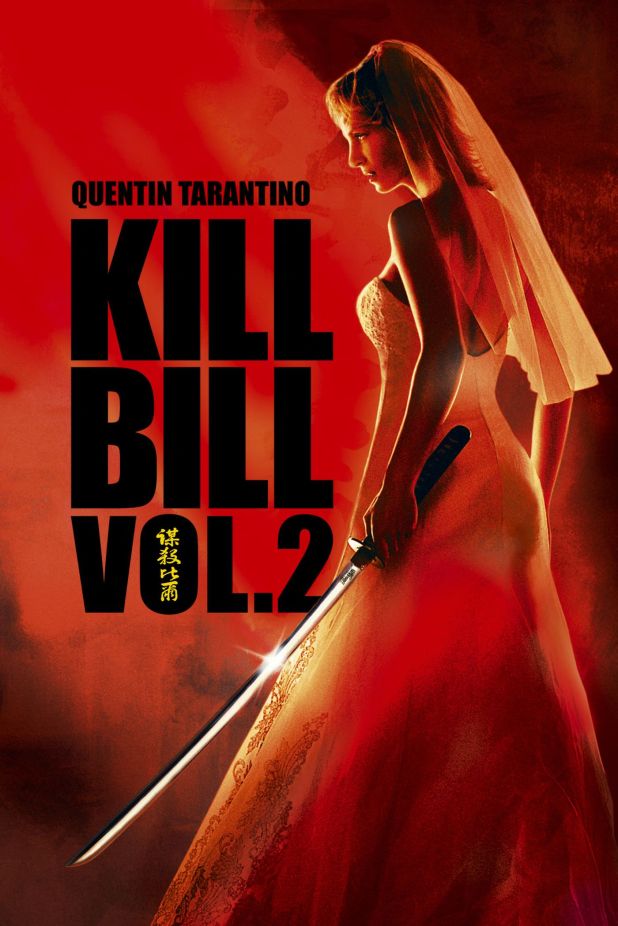
When we last saw the Bride, she’d crossed two names off of her kill list: O-Ren Ishii and Vernita Green. And oh yeah — we also learned that her daughter is still alive. Now, she’s finally going to do what she’s been promising. She’s going to kill Bill…right after she gets through Elle, Budd and everyone else.
The Bride sets off for the trailer of Sidewinder/Budd, who is also Bill’s brother. Speaking of Bill, he’s warned him that the Bride is on her way, so as she gets close, Budd blasts her with a shotgun packed with rock salt, then buries her alive. To top it all off, he calls in Elle Driver and offers to sell the Bride’s sword for a million dollars.
We go back in time to see Bill leaving the Bride behind at the temple of Pai Mei (Gordon Liu!), who in time will teach her his most deadly secret: the Five Point Palm Exploding Heart Technique. He’s never shown it to anyone before because it kills any opponent before they take five steps. The training is beyond horrible — if you’ve seen any Hong Kong martial arts film, you’ll understand — but the Bride emerges with Pai Mei’s respect. She uses his lessons to break her way free from the coffin.
Elle Drive kills Budd with an actual black mamba, the snake that the Bride took her codename from. She calls Bill to let him know that his brother has been killed by the Bride, but that she’s already killed her. As she does so, she reveals her enemy’s true name: Beatrix Kiddo. Both of these women were trained by Mei, so the battle is beyond destructive (we have an entire article about the references in this film right here that will explain so much more), ending with Elle revealing that she poisoned and killed Mei after he took her eye. The Bride tears out her other eye and leaves her in the abandoned trailer, along with the deadly snake.
The Bride goes to Mexico, where retired pimp Esteban Vihaio (Michael Parks!) helps her find Bill, who is in a hotel with their daughter B.B. After a family-friendly evening, Bill shoots the Bride with a dart filled with truth serum. He learns that she left the Vipers to give her daughter a better life, but Bill only found out that she was missing and assumed that the man she was to marry was B.B.’s father.
The Bride then hits the dreaded Five Point Palm Exploding Heart Technique. Bill makes peace with her, takes five steps and dies. Beatrix Kiddo and B.B. leave to start a new life.
There were plans to make numerous sequels to this film, including two anime films that would be the origin of Bill and the Bride. There was also talk of Kill Bill: Volumes 3 and 4, which would have two killers whose arms and eye were taken by the Bride and then a cycle of stories about daughters who avenge the death of their mothers. But these days, everyone is non-committal about a sequel.
I love the dichotomy between these two films. The first is pure spectacle and brawls with hundreds of people. Just like the tagline to Jaws: The Revenge, this time it’s personal.
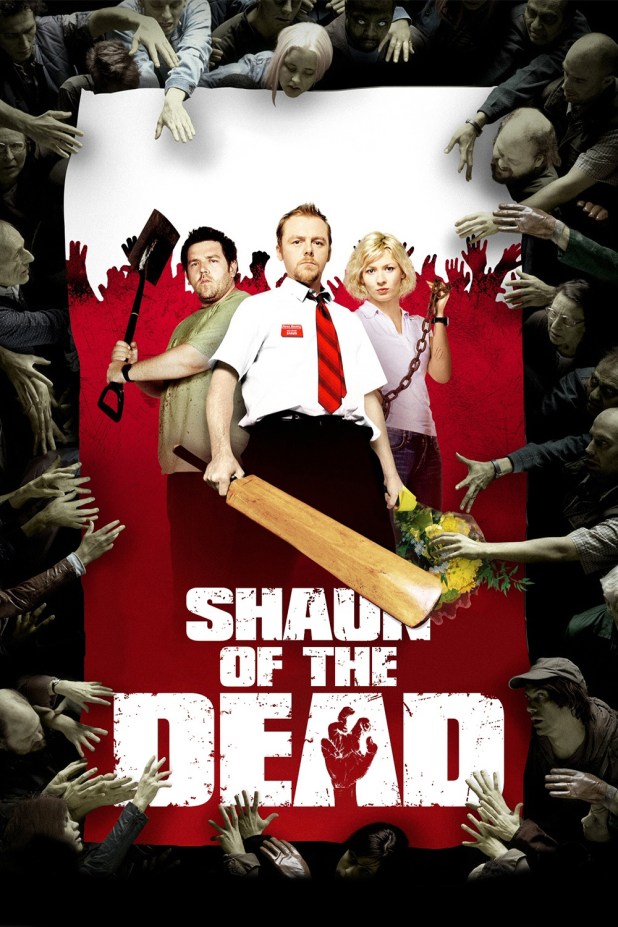
The first time I watched this movie — the first of hundreds of viewings, mind you — I realized: this was made by people who love zombie movies as much as I do. Now, the intervening years may have diminished my zombie adoration, but I still love this film. It takes what most of the cast had been doing on the BBC show Spaced (particularly the “Art” episode) and truly takes it to the next level.
Shaun works in an electronics store (named for Dawn of the Dead star Ken Foree) with a really bad life, to be honest. He has family issues, girlfriend issues, roommate issues, work issues — man, he has issues. When he wakes up to a zombie apocalypse, however, he finally finds purpose in life.
The storyline is simple, but the film is anything but. I’ve always been struck by how much emotion this wrings out — Shaun finally connecting with his stepfather Phillip (the always great Bill Nighy) moments before he dies and comes back from the dead, the final talk between our hero and his mother, and how the ending keeps status quo while allowing Shaun to claim a new life alongside the woman he loves.
No less of a zombie luminary than George Romero loved this movie. In fact, he invited Pegg and Wright to appear in 2005’s Land of the Dead. However, the duo insisted on being zombies rather than the human roles they were offered.
My favorite scene in the film is when Shaun and his friend (potentially ex-girlfriend) Yvonne and her friends as they’re both on the run. Beyond their friends being mirror images of one another, they’re also famous British couples: Simon Pegg and Jessica Hynes were Tim and Daisy from Spaced; Lucy Davis and Martin Freeman were Dawn and Tim from the British version of The Office; Dylan Moran and Tamsin Greig were Bernard and Fran from Black Books; Julia Deakin and Nick Frost were also in Spaced.
There are a ton of zombie movie references here, like an Italian place named Fulci’s; the Winchester bar having a Winchester model 66, the same gun from Night of the Living Dead; a restaurant named Bub’s Pizza after Bub from Day of the Dead; an employee named Ash is mentioned in Shaun’s speech in the beginning, referencing Evil Dead; the song on the bus is “Kernkraft 400” by Zombie Nation; plus there’s debate as to what to call the zombies, as many modern films refer to them as infected instead of the actual word. And of course, Ed shouting “We’re coming to get you, Barbara!” comes directly from the movie that this all comes from, Night of the Living Dead.
Even though this film is nearly 15 years old, it hasn’t aged in my eyes. But I’m biased — I loved Spaced, as well as the two films that follow this, Hot Fuzz and The World’s End. Even if you don’t love gore and zombies, there is still plenty of heart that you’ll enjoy in this film.


 B&S About Movies
You must be logged in to post a comment.