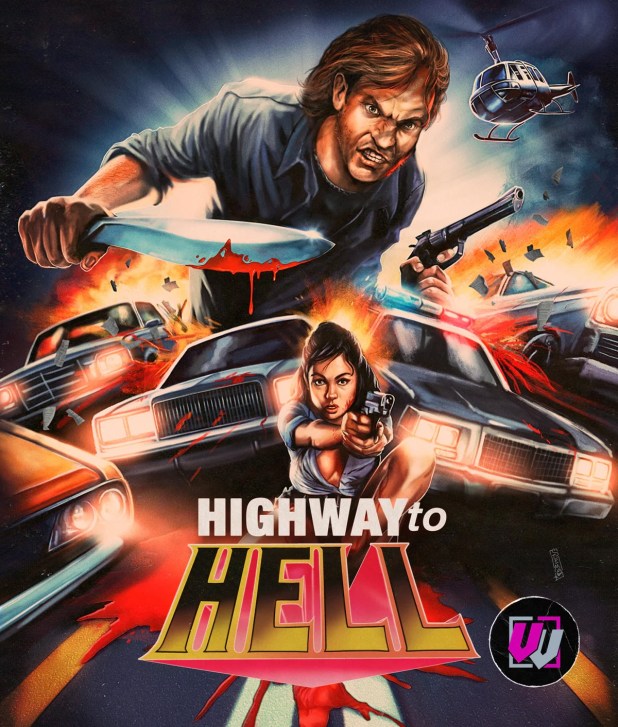
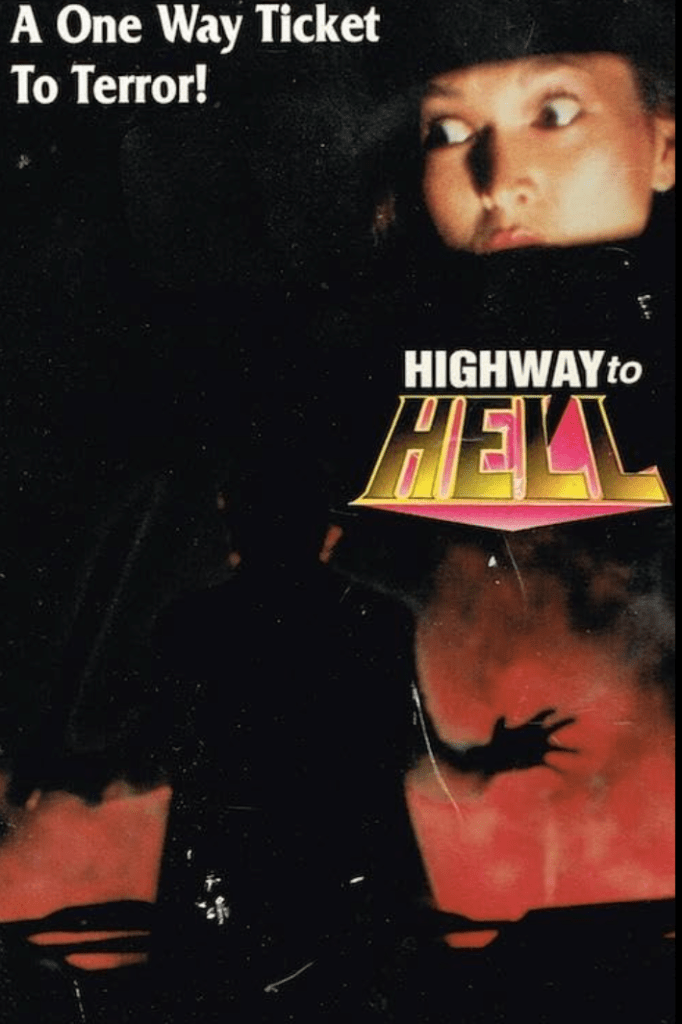
VISUAL VENGEANCE BLU-RAY RELEASE: Highway to Hell (1990) and Redneck County Fever (1992)

Highway to Hell (1990): Mass-murderer Toby Gilmore (Benton Jennings, who also wrote Reanimator Academy) has broken out of prison and is hiding in the desert, where he’s been picking people off. Officer Earl Dent (Richard Harrison) has wanted to kill Gilmore ever since the scumbag assaulted his daughter. As for Fran Thomson (Blue Thompson), she’s in the wrong place at the wrong time, constantly chased and taken by the maniac, a pawn in his plans of, well, killing everyone around him.

Directed by Bret McCormick, written by Gary Kennamer (who directed the second movie on this Visual Vengeance release, Redneck County Fever) and shot on 16mm, this and Recneck were made after a conversation with David DeCoteau about making lean movies that could be turned out quickly. Despite the budget, shooting this in rural Texas gives the film a character it wouldn’t have otherwise. 

The film doesn’t just take place in the desert; it feels born from it. The choice of 16mm film is crucial here. Unlike the clean, sterile look of modern digital indies, the grain in this production acts like a layer of silt over the lens. It heightens the isolation of the rural Texas landscape, turning every rusted gas pump and sun-bleached cactus into a potential tombstone. It captures a “weat-and-exhaust aesthetic that makes the viewer feel dehydrated.

Greg Synodis, who also composed the music for Reanimator Academy, is responsible for the score, which ramps up the tension as Fran’s life gets worse by the minute. 

Sure, this feels like a much, much lower budget The Hitcher, but we don’t hold that against Hitcher In the Dark either. It’s a great example of what McCormick learned from his early films and how he took the knowledge of keeping everything lean while never letting up on the intensity. Plus, while some say he was phoning it in, I saw Harrison as having a weary, end-of-the-rope gravity in his role as Officer Dent. This isn’t just a professional manhunt for him. It’s a personal exorcism and provides the moral stakes that anchor the chaotic violence.
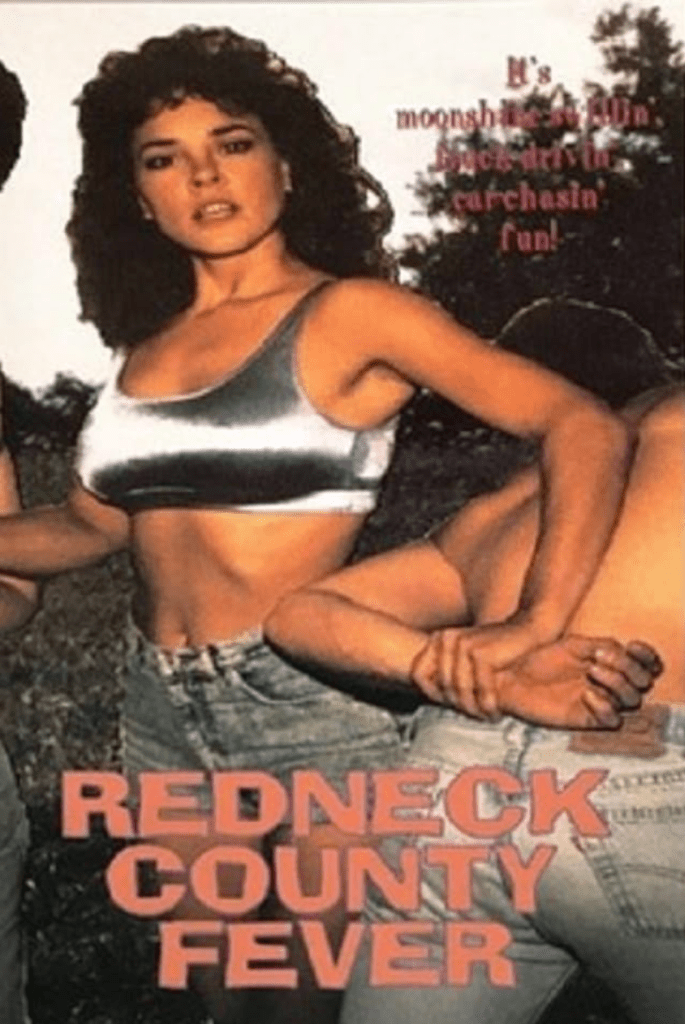
Redneck County Fever (1992): Directed and written by Gary Kennamer, this has two stoners whose car dies in the middle of the same rural Texas we just drove through in Highway to Hell. While McCormick’s film treats the Texas landscape like a graveyard, Kennamer treats it like a playground of the absurd. The choice to feature two stoners as our heroes immediately deconstructs the tension established in McCormick’s film.

Imagine Bill and Ted in Texas, having adventures that last sixty minutes but may feel much longer. Such is this film. It’s nice to have it as part of the Visual Vengeance Blu-ray release as a companion piece, and to wonder how many of the same crew worked on this. You can see the same dust, the same grainy 16mm textures, and likely the same craft services table (if there even was one). 

Putting scream queen Michelle Bauer on the cover when she doesn’t appear in a single frame is a hall-of-fame don’t believe it by its VHS cover marketing idea. It captures the desperate, hilarious hustle of independent distribution, one in which selling a goofy SOV stoner comedy means making it seem like something it isn’t.

Shot in rural Texas, Highway to Hell stands as a prime example of the regional, low-budget filmmaking that fueled America’s video boom of the 1980s and ’90s. Originally released on VHS via Rae Don Home Video, the film showcases director Bret McCormick (The Abomination, Repligator), a key figure in the Texas exploitation underground, whose raw energy and ingenuity turn poverty row resources into a fast-paced, sun-baked thriller that captures the true spirit and grit of independent genre cinema. This is released for the first time ever on Blu-ray, just like the bonus SOV feature film, Redneck County Fever. Made from an SD master from original tape elements, this has a commentary and interview with director Bret McCormick; interviews with Blue Thompson, Richard Harrison, Gary Kennamer and Tom Fegan; an image gallery; a commentary track and interviews on Redneck County Fever with Bret McCormick and Gary Kennamer; Visual Vengeance trailers; a “Stick Your Own” VHS sticker set; a reversible sleeve featuring original VHS art; a folded Redneck County Fever mini-poster and a limited edition O-CARD featuring original poster art. You can get this from MVD.
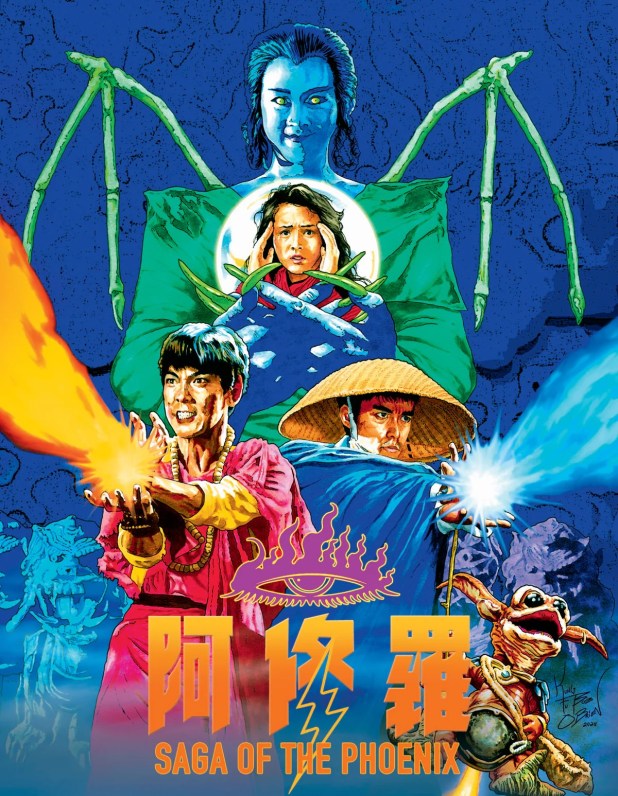
88 FILMS BLU RAY RELEASE: Saga of the Phoenix (1990)

Ashura (Gloria Yip), the Holy Maiden of Hell, could destroy the Earth as easily as I’ll crush my next mixed drink. To keep that from going down. Some Buddhist monks trap her in a cave. She’s placed under the watchful (and often overwhelmed) eyes of Peacock (the legendary Yuen Biao), Lucky Fruit (Hiroshi Abe) and a trio of female abbesses. What follows is a surreal blend of fish-out-of-water comedy and high-octane supernatural warfare. Ashura attempts to navigate girlhood alongside her bizarre companion, Genie, while being hunted by the Hell Concubine, villains whose name and design scream 1980s dark fantasy manga (fitting, as this is the sequel to The Peacock King, based on the Kujako O series).

Directed by Ngai Choi Lam and Sze-Yu Lau, this feels like a movie kids would love, what with the cute monster, but the monster is threatened so many times in this film that I started to worry about it. Sure, this is kind of all over the place and has way too many comedic asides that derail the film, but it looks gorgeous, like Dario Argento was the substitute director for one day of Big Trouble In Little China, as neon colors and fog swirl around steel-clawed evil and giant monsters. 

The 88 Films Blu-ray release of Saga of the Phoenix has a new 2K scan, commentary by Frank Djang and F.J. DeSanto, alternate Japanese footage, a reversible sleeve with two sets of art, a 40-page book, a poster, and it all comes inside a gorgeous rigid clipcase. You can get this from MVD.
The First Family of Satanism (1990)


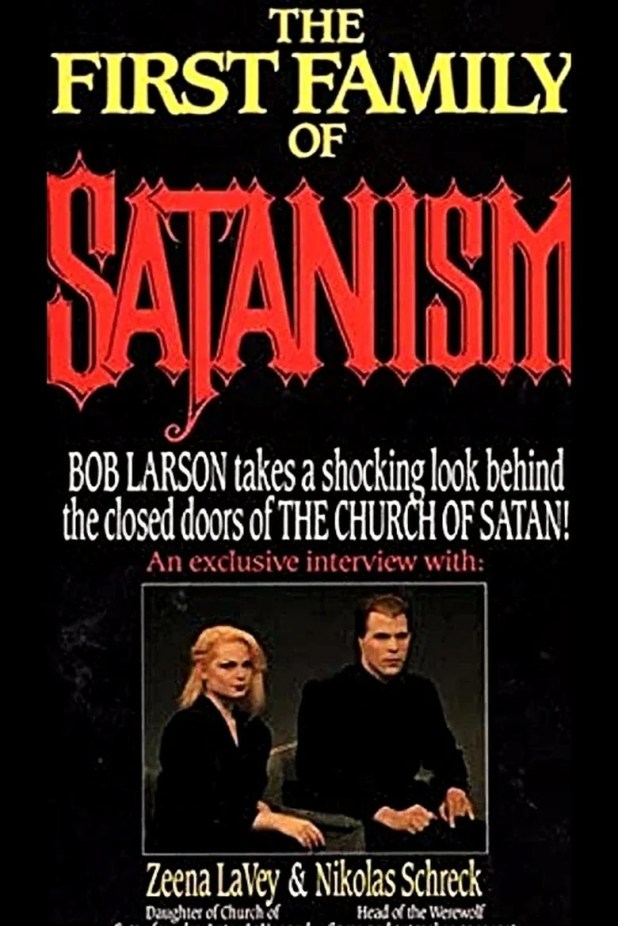
This historical sit-down, originally titled The First Family of Satanism, serves as a fascinating time capsule of the Satanic Panic era, capturing the sharp ideological divide between Bob Larson’s evangelical world and the Schrecks’ elitist Social Darwinist philosophy.

Recorded in 1990 and later released in 2002, the program features Bob Larson, a well-known Christian evangelist, engaging in a direct conversation with two prominent figures in the Satanic and occult communities: Zeena Schreck, the daughter of Anton LaVey, founder of the Church of Satan, and Nikolas Schreck, leader of the Werewolf Coven, a modern pagan and occult group with ties to the Church of Satan. 

The conversation begins with Larson questioning the Church of Satan’s sincerity in its founding in 1966. Zeena defends her father, Anton LaVey, stating that the showmanship and gimmicks (like using nude women as altars) were necessary to pave the way for Satanism to be a recognized religion. She also confirms several Satanic legends, including her father’s alleged affairs with Marilyn Monroe and Jayne Mansfield, as well as Mansfield’s devout membership in the Church.

Nikolas Schreck presents a bold, apocalyptic view of the 1990s, predicting it would be the Satanic Century and describing Christianity as being in its last extravagant death throes. He argues that religious media’s growth is actually a sign of its end, as it has turned to entertainment, something he claims Jesus would never have condoned.

Zeena was raised within the Church of Satan and during the 80s was the organization’s first spokesperson, as her father was in exile. How did she end up speaking for the Church? She told Obsküre Magazine, “In 1985, a U.S. news show called 20/20 accused The Satanic Bible of being responsible for child daycare Satanic ritual abuse, new allegations then. … I called my father and asked him what his media strategy would be to deal with this catastrophe. Nothing. He didn’t care. As far as he was concerned, it didn’t concern him. It wasn’t anything he needed to worry about. He certainly wasn’t going to do anything about it in public. He admitted that many media outlets had already contacted him and that he was just going to ignore it until it went away. I tried to convince him that this would only get worse if he didn’t respond and that he really needed to get someone to answer calls quickly, or it would be taken as an admission of guilt or suspicion. Finally, he admitted he had no one to deal with interviews or media. I offered to help temporarily until he found someone. This was not what I’d intended to do with my life; I had other plans.”

She was also a major part of working with police departments to defuse the Satanic Panic. In 1990, she resigned her position, severed ties with her father and renounced LaVeyan-based Satanism before embracing Tibetan Tantric Buddhism and forming the Sethian Liberation Movement in 2002. She said, “In the process of defending the Church of Satan from these unfounded claims in the U.S. mass media, Zeena’s media appearances attracted a new upsurge of membership to the formerly moribund organization even as she began to question and ultimately reject the self-centered philosophy she promoted. As she toured the United States on behalf of the Church of Satan, Zeena’s crisis of faith reached its highpoint when she learned that most of her father’s self-created legend was based on lies and that many of his works were plagiarized. When jealousy and spite motivated Anton LaVey and his administrator, Densley-Barton, to endanger Zeena’s life, she could no longer continue to cover up her progenitor’s true character in good conscience. This behind-the-scenes tension should be kept in mind when viewing or hearing Zeena’s interviews from that time.”

As for Schreck, he founded the music and performance collective Radio Werewolf and was affiliated with the Church of Satan and the Temple of Set, but later disavowed both and became a Buddhist. Schreck was part of the Abraxas Foundation, an occult-fascist think tank that included Boyd Rice, Adam Parfrey and Michael J. Moynihan. At one point, as he padded out pro-AIDS brochures, his ear was cut off. 

Bob Larson? I listened to him every day as a child. The pastor of Spiritual Freedom Church in Phoenix, Arizona, hosted Talk Back and went after, well, everything I loved from heavy metal to role-playing games. He went from doing exorcisms on the radio to charging people nearly $300 to do them over Skype.

This is a sit-down among all three, and it’s no different from a bunch of people high at a party talking psychology. Yet it’s a wonderful relic of a time I lived through, one that never went away.

You can watch this on YouTube.

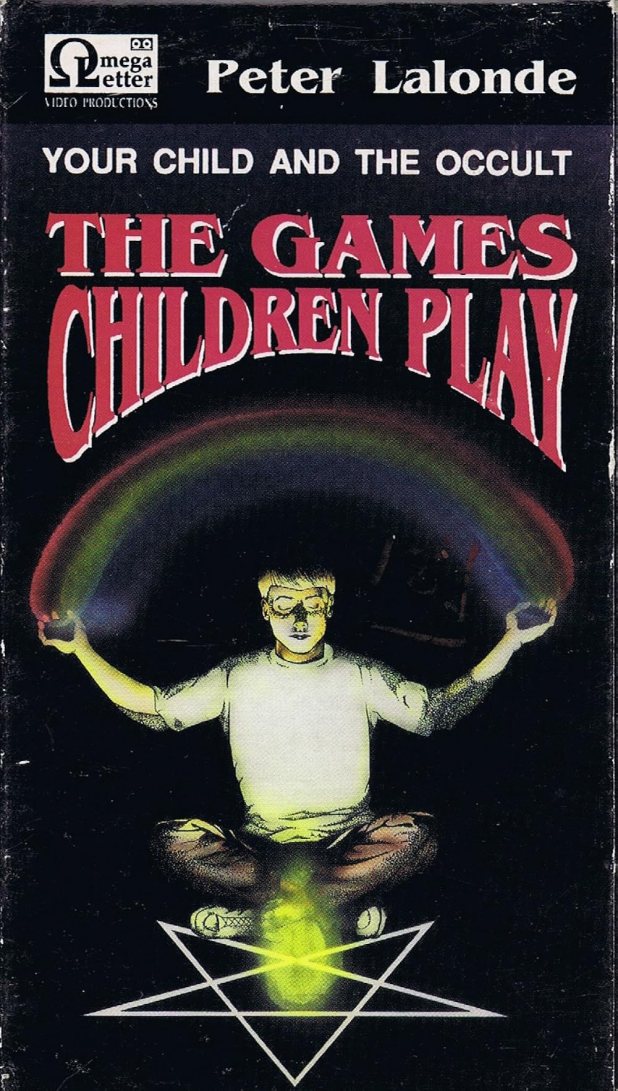
The Games Children Play (1990)

Written by Ralph Griffin and Peter Lalonde, this is the kind of Satanic Panic that I love. Lalonde would go on to produce and write the Left Behind and Apocalypse: Caught in the Eye of the Storm movies. 

This gets the most basic thing about He-Man incorrect. He-Man said. “I have the power,” not “I am the power.” That said, Thundercats was super Satanic. 

Eastern mysticism was the boogeyman of this, as teachers used visualization in school, and that’s how they were taking over your child’s soul. All of the lessons — caring for yourself, we are all one people, meditation — are just Satan laughing as he spreads his wings. If this keeps up, we’ll have a cashless society, and kids will be killing each other as they play Dungeons and Dragons. Or Nintendo.

While I find these artifacts of the past amusing, I also know that the Satanic Panic never ended. Now it’s Muslims, and you can be super religious and also incredibly happy that brown people are being pushed out of your country. Didn’t Jesus — a long-haired black man who spent time with sex workers and lepers — throw the changemakers out of the temple?

You can watch this on YouTube.

20 Minutes to Go (1990)

Aurora Productions, which made this, is really The Family International, an American new religious movement founded in 1968 by David Brandt Berg. They also went under the names The Children of God, Teens for Christ, The Family of Love and The Family. It’s the cult that Rose McGowan, River, and Joaquin Phoenix were born into. Berg mainly communicated by letter until he died in 1984. That’s when his wife, Karen Zerby, became the Queen and Prophetess.

According to Wikipedia, she “… married Steve Kelly (also known as Peter Amsterdam), an assistant of Berg’s whom Berg had handpicked as her “consort”. Kelly took the title of “King Peter” and became the face of TFI, speaking in public more often than either Berg or Zerby. There have been multiple allegations of child sexual abuse made by past members, including against Zerby.”

The music, however…

Take it from the copy on the box: “A startling new music video! It will send you racing one footstep ahead of danger and death! One heartbeat away from your wildest dream of love! A music video that will take your imagination by storm! It will plunge you into the dwelling place of the damned, then thrust you into a dimension beautiful beyond description!”

There’s a song about a green door in this that goes from fun to fear so quickly, as well as “Watch Out for 666.” This is the kind of insanity that the Catholic Church could never provide me as a child, and if they did make stuff like this, I would have never lapsed. a

You can download this from the Internet Archive.

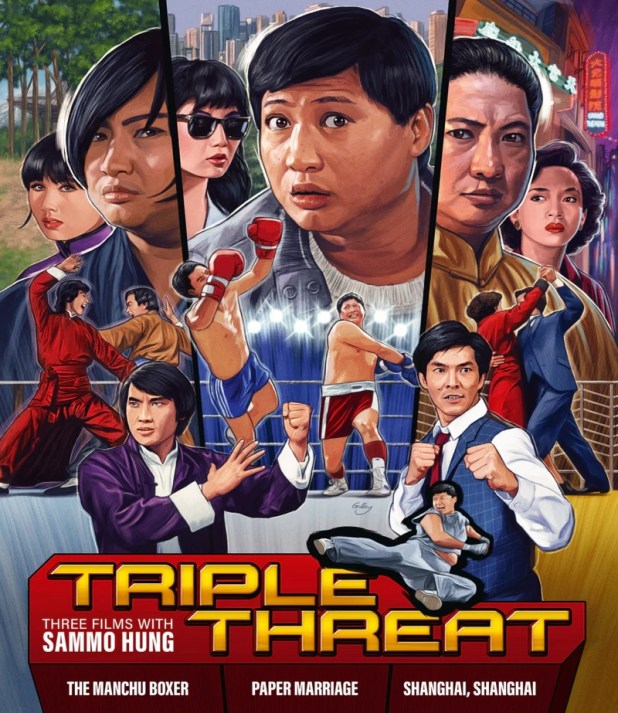
EUREKA BOX SET RELEASE: Triple Threat: Three Films with Sammo Hung (1974, 1988, 1990)

At the end of the 1970s, a new generation of martial arts stars — three adopted brothers — rose to the top of Hong Kong cinema: Yuen Biao, Jackie Chan and Sammo Hung, who found fame as the director and star of The Iron Fisted Monk, The Magnificent Butcher and Encounter of the Spooky Kind.

Eureak’s latest set has three films spanning Hung’s career, from a supporting role in The Manchu Boxer to stardom in Paper Marriage and Shanghai, Shanghai.

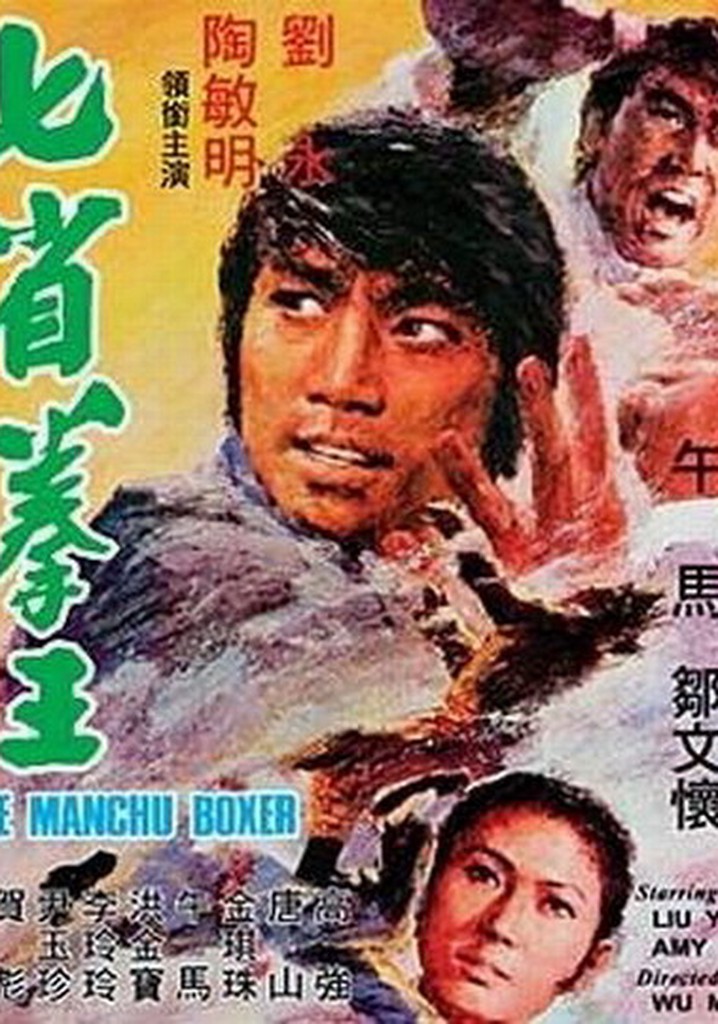
The Manchu Boxer (1974): Ku Ru-Zhang (Tony Liu) has left his hometown in shame. He’s killing a rich man’s son (director Wu Ma) in self-defense, and even his father wants him gone. He promises never to fight again and quickly becomes a husband and father to a widower and his child. But then, when a martial arts master (Kim Ki-Joo) and his two henchmen (Sammo Hung, who was also the fight coordinator and Wilson Tong) decide to win a tournament at any cost, our hero must enter and fight again.

Ku Ru-Zhang is a good enough fighter that he can win a battle against multiple fighters without taking his hands out of his pockets, like some kind of martial world Orange Cassidy. Ah, but how will he fare against a femme fatale who can throw knives?

This Golden Harvest film came to the U.S. thanks to Independent-International Pictures as Masters of Martial Arts.

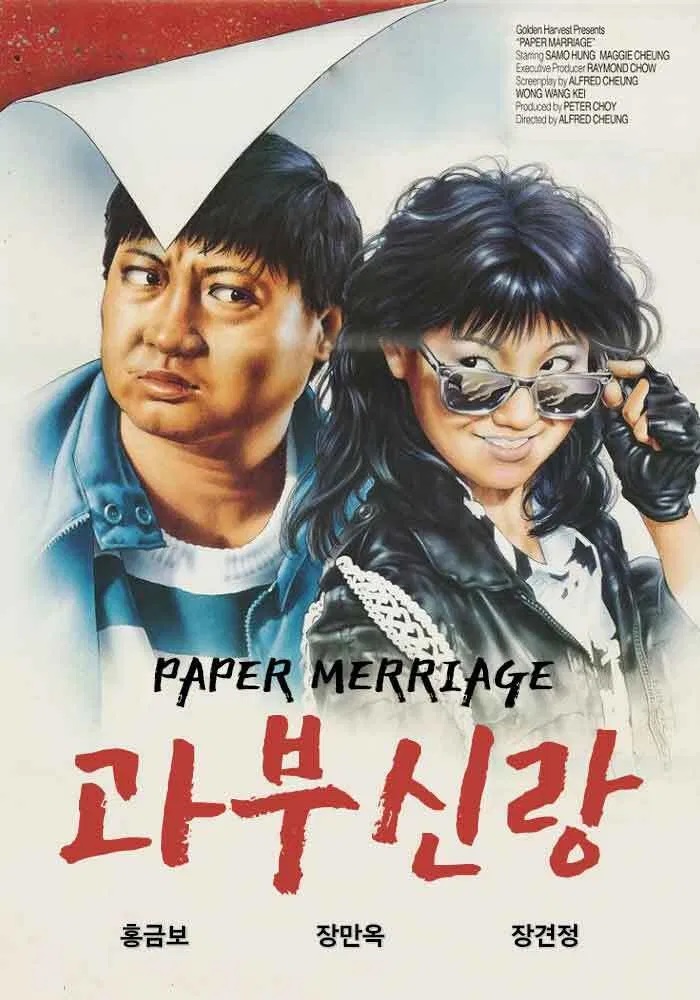
Paper Marriage (1988): Directed and co-written by Alfred Cheung, this finds boxer Bo Chin (Sammo Hung) in America. He agrees to marry Jade Lee (Maggie Cheung) so that he can stay in the country. After he goes the distance in a kickboxing fight, criminals steal his money. Man, Bo was poor to start with, thanks to his ex-wife (Joyce Godenzi, Sammo’s real partner)!

Also: That isn’t Los Angeles in this movie. It’s Edmonton, Alberta.

If you ever wondered where Shinya Hashimoto got his look from (or maybe Sammo is taking after him) or want to see Maggie Cheung mud wrestle, this is the movie for you! It’s a cute film and one that takes full advantage of its stars.

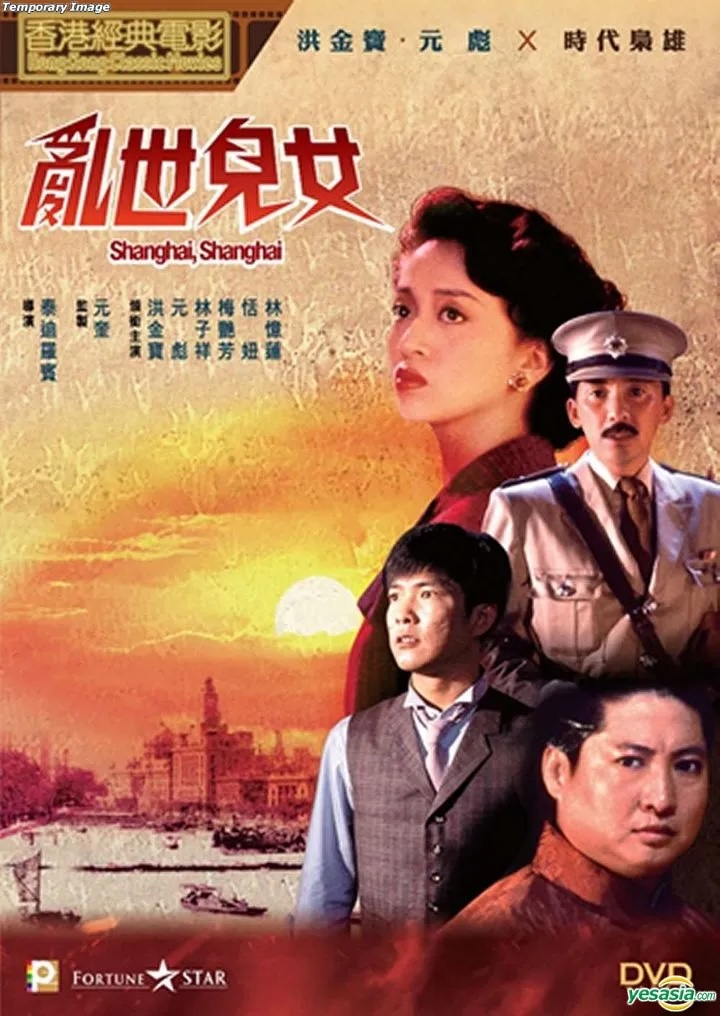
Shanghai, Shanghai (1990): This time around, Sammo Hung is the villain, Chin Hung-yun, facing off with Yuen Biao as Little Tiger and George Lam as police officer Big Tiger. Well, at first, Little Tiger is friends with Chin Hung-yun, but he must quickly choose between family and friendship.

This has a unique 1930s Singapore setting and Anita Mui as the love interest, but the whole reason to stick around is the movie’s ending battle between Sammo and Yuen Biao. You know how great it is when brothers fight, right?

I kind of love Hong Kong period films set at the start of the last century. This looks great, and while it takes a bit to get going, it all ends well enough.

This set has 1080p HD presentations from brand new 2K restorations of the original Hong Kong theatrical cuts of all three films; new audio commentary on The Manchu Boxer with East Asian cinema expert Frank Djeng (NY Asian Film Festival) and martial artist and filmmaker Michael Worth; new audio commentary on Paper Marriage with genre cinema experts Stefan Hammond and Arne Venema; new audio commentary on Shanghai, Shanghai with Frank Djeng and producer/writer F.J. DeSanto; a new interview with Paper Marriage director Alfred Cheung; trailers; a limited edition exclusive bonus disc; a limited edition O-card slipcase featuring new artwork by Sam Gilbey and a limited edition collector’s booklet featuring new writing on Sammo Hung. You can get this from MVD.
UNSUNG HORRORS HORROR GIVES BACK 2025: Spontaneous Combustion (1990)

Each October, the Unsung Horrors podcast does a month of themed movies. This year, they will once again be setting up a fundraiser to benefit Best Friends, which works to save the lives of cats and dogs across America, giving pets second chances and providing them with happy homes.

Today’s theme: Tobe Hooper!

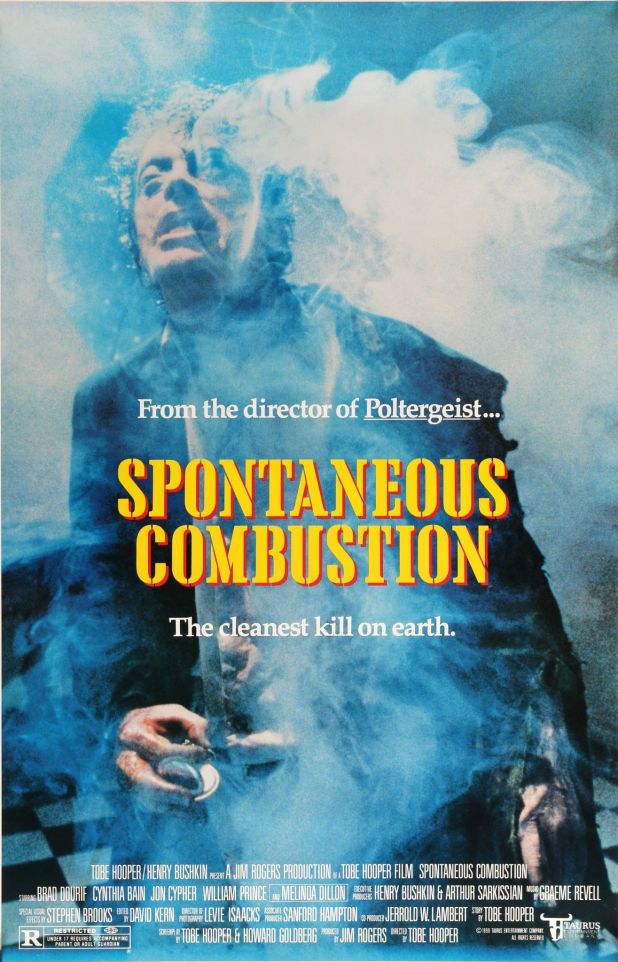
Back in 1955, Operation Samson had Brian (Brian Bremer) and Peggy Bell (Stacy Edwards) be exposed to a massive nuclear explosion to see how their immune system would work. Well, it works great, because they survive, become national heroes and have a child, David (who grows up to be Brad Dourif) while his parents go up in flames. Yes, spontaneous human combustion, which always showed up in those Ripley’s Believe It or Not books you bought at the book fair and got grossed out over.

David grows up to be a teacher named Sam Kramer and somehow meets Lisa Wilcox (Cynthia Bain), a woman whose parents went through the same death as his. Is it fate? No, it’s another government experiment, and for now, our hero can shoot fire and electricity out of his body.

Made four years after The Texas Chainsaw Massacre 2 and the same year as I’m Dangerous Tonight, this has me rooting for Tobe, even if I know that this isn’t good. But maybe it could have been. Dourif told Fangoria, “You see me playing my heart out in scenes that are not working, and the reason they’re not working is that the movie doesn’t make sense. It’s almost funny. As a matter of fact, the better my acting was in some of the later scenes, the funnier the film was. I found myself at the mercy of people who didn’t know what they were doing. I probably shouldn’t be saying this, but my feeling is that the producers destroyed it. Tobe could have made three different movies with the material he had, and each one would have worked. But by the time he got it, it had changed from a love story to a suspense thriller about my character’s paranoid fantasy, to a guy goes crazy film about this insane killer who becomes a destructive force that’s going to wipe out mankind. We went back and kind of restructured it as a love story, but it didn’t really help. The beginning of the film was great, and a certain portion of my stuff was fine, but then it became stupid when all the flame stuff started happening.”

At least John Landis gets his head set on fire.

You can watch this on Tubi.

UNSUNG HORRORS HORROR GIVES BACK 2025: Night Angel (1990)

Each October, the Unsung Horrors podcast does a month of themed movies. This year, they will once again be setting up a fundraiser to benefit Best Friends, which works to save the lives of cats and dogs across America, giving pets second chances and providing them with happy homes.

Today’s theme: KNB

ABOUT THE AUTHOR: Adam Hursey is a pharmacist specializing in health informatics by day, but his true passion is cinema. His current favorite films are Back to the Future, Stop Making Sense, and In the Mood for Love. He has written articles for Film East and The Physical Media Advocate, primarily examining older films through the lens of contemporary perspectives. He is usually found on Letterboxd, where he mainly writes about horror and exploitation films. You can follow him on Letterboxd or Instagram at ashursey.

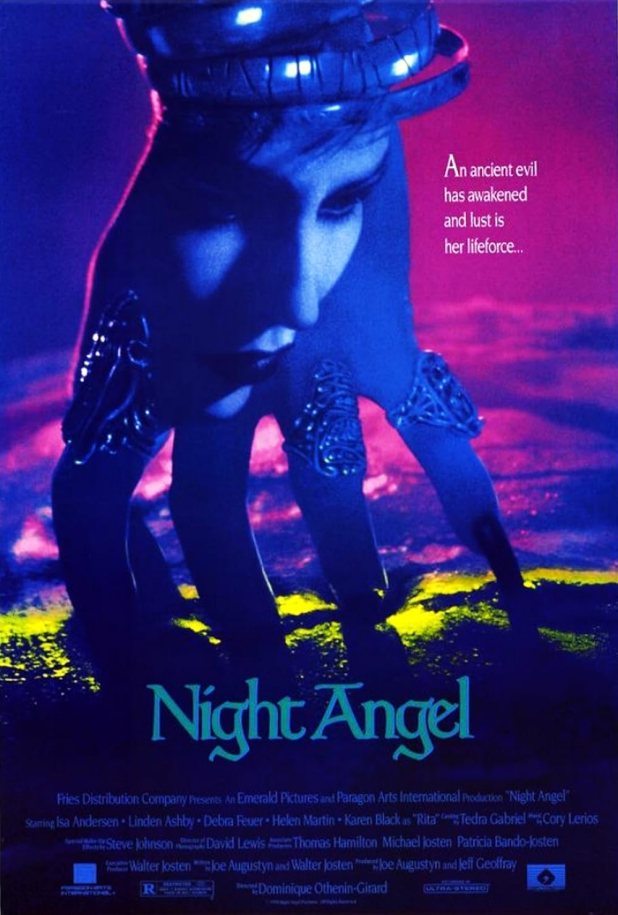
Screenwriter Joe Augustyn (Night of the Demons) uses the legendary character of Lilith for Night Angel, the story of a centuries old succubus who is planning on infiltrating the minds of men via the cover of a magazine (yes, we are back in the 1990s folks).

As the story goes (in the Talmud), Lilith was Adam’s first wife before the creation of Eve. She was banished from the Garden of Eden for not being subservient to Adam. This disobedience allegedly included refusing to lie in the missionary position. Depending on the source, once Lilith leaves the Garden, she gives birth to hundreds of demons, many of whom die daily. In retaliation, she kills the infants of the Jewish people.

In Night Angel, Lilith is a demon herself, a succubus posing as a high fashion model, hoping to bring death and destruction to anyone who comes across her. It appears that humanity’s only hope for Pearl is 227 (Helen Martin), a woman who lost the love of her life to Lilith years ago, and may be the only person who has a way to destroy her forever.

In one of their earliest efforts, the special effects team of KNB provides the effects for Lilith’s transformation into her true demonic form at the end of the film. As always, great work by them.

Personally, I’m always fascinated by the incorporation of Jewish folklore into horror movies. We just do not see it enough in my opinion, although the source material is ripe for exploration. I will have another film that bases its plot on an aspect of this folklore for my 1980s pick. Stay tuned.

UNSUNG HORRORS HORROR GIVES BACK 2025: Arbor Day (1990)

Each October, the Unsung Horrors podcast does a month of themed movies. This year, they will once again be setting up a fundraiser to benefit Best Friends, which works to save the lives of cats and dogs across America, giving pets second chances and providing them with happy homes.

Today’s theme: 1990s

ABOUT THE AUTHOR: Adam Hursey is a pharmacist specializing in health informatics by day, but his true passion is cinema. His current favorite films are Back to the FutureStop Making Sense, and In the Mood for Love. He has written articles for Film East and The Physical Media Advocate, primarily examining older films through the lens of contemporary perspectives. He is usually found on Letterboxd, where he mainly writes about horror and exploitation films. You can follow him on Letterboxd or Instagram at ashursey.

I typically shy away from horror comedies. Or really comedies in general. I find that films as a medium generally have a hard time maintaining enough momentum for a theatrical run time. I much prefer the length of a sitcom. Sometimes, even 22 minutes is a stretch, though. I love a good skit. Best of all, a good Vine (RIP). You got six seconds to make me laugh.

But when I do find a comedy I enjoy, it is usually in the form of a spoof. Not even a satire. Just a good old-fashioned silly spoof. Airplane is probably my favorite straight-up cinematic comedy of all time. Amazon Women on the Moon would be up there. These films just make me laugh, no matter how many times I watch them.

Mixing horror and comedy is a combination that I do not seek out. I appreciate it more if the film is funny without necessarily being a comedy. Something like Return of the Living Dead comes to mind. Again, I do like a parody. I found Alfred Sole’s Pandemonium to be a pleasant surprise. And now Arbor Day, Joseph Sikorski’s take on a slasher set on a holiday.

Honestly, I’m not totally sure I knew this film was a comedy going into it. I had absolutely no expectations. But this disc was part of my Terror Vision subscription, so I figured I should give it a try. I’m glad that I did. Starting with a send-up of Citizen Kane, the film hooked me right away. There was no hiding the purpose of the film was to try to provide a goofy good time. 

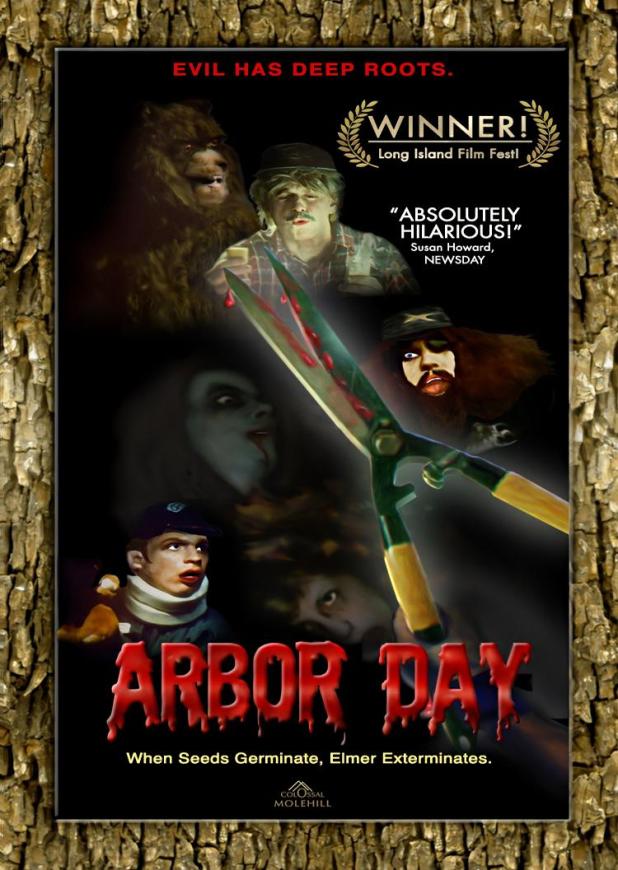
It’s Arbor Day, apparently the most celebrated and highest of holy days in this film’s universe, and Elmer (Elm for short) and his parents are looking for that perfect spot to plant a sapling. However, disaster strikes when a grizzly bear decapitates Elmer’s father and…violates his mother (also killing her). Twenty years later, Elmer remains catatonic in a facility, only showing brief bursts of activity each Arbor Day. This year, Elmer escapes, returning home (as one does in a horror movie) for…revenge maybe. His motivation is not exactly clear. As fate would have it, a bunch of teenagers are using Elmer’s childhood home for their Arbor Day party. There will be blood this Arbor Day. And viscera. Lots of viscera.

Even at a relatively short running time of 80 minutes, the film almost overstays its welcome. It was a little touch-and-go. But, for me, it was able to hold it together just enough to get it over the finish line. I did laugh out loud a few times. Particularly at one scene where Elmer thinks about what could be if he and a potential victim got together, settled down, had a little sprout of their own. Nah, he says. LOL by me. 

I’d watch this one again. And that might be the biggest compliment I could give a horror comedy. I ain’t watching Repossessed again, that’s for sure. Usually once is more than enough. But I could easily make this one an Arbor Day tradition.

2025 Scarecrow Psychotronic Challenge Day 10: Fuga dal paradiso (1990)

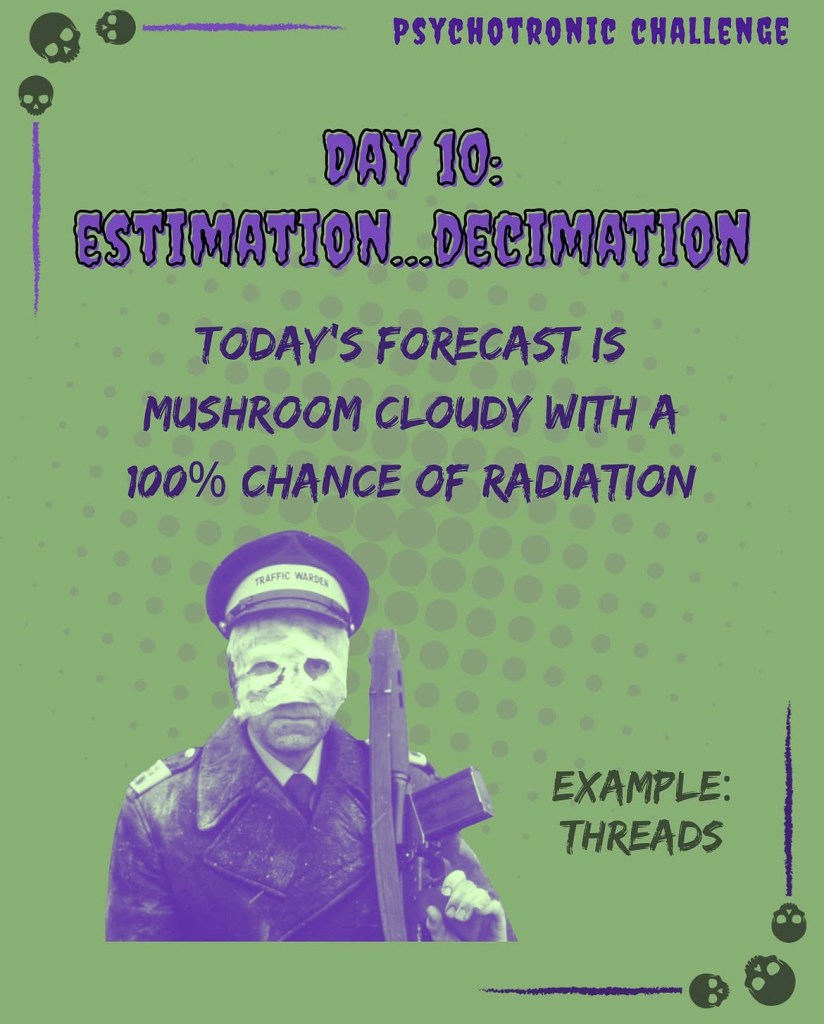
10. ESTIMATION…DECIMATION: Today’s forecast is mushroom cloudy with a 100% chance of radiation.

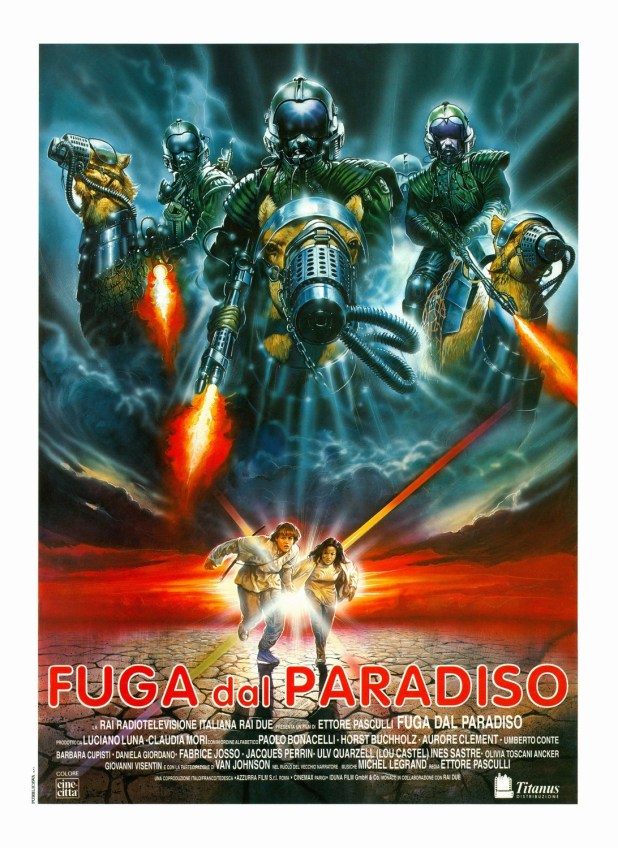
Fuga dal Paradiso has an awesome poster going for it.

Teo (Fabrice Josso) and Beatrice (Inés Sastre) have a mini-disc that they view as a religious talisman and use it as a totem as they leave behind their artificial paradise and attempt to escape Earth. So far, they’ve never met one another, and in an Italian post-apocalyptic film showing us the future, they mostly date via FaceTime. Or whatever it’s called in the world of this movie.

The first thing they do when they leave home? Find a dog named Bear, who, for some reason, has on a shirt and pants. They also find a mall that still has clothes and, of course, punk rockers ready to kill them. Teo’s dad sends Thor (Horst Buchholz), his head of security, to rescue them. Here’s where this gets better: Thor and his crew ride camels and like to roast mutants with flamethrowers. However, he fails at everything he does, and as a result, loses his title.

Van Johnson appears as the old narrator that we see at the beginning and end. You have to feel for the guy, being in this movie.

I do love an Italian end-of-the-world movie, but this one seems nearly tame. Director Ettore Pasculli worked at Cinecittà in the role of advanced cinematographic technologies and was a programmer director for RAI. His film The Steam Factory was one of the first all-digital movies made in Italy.

Barbara Cupisti (The New York RipperCemetery Man), Greta Valiant (The Daughter of Emanuelle) and Daniela Giordano (Four Times That Night) are all in it, at least.