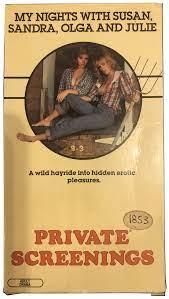
VIDEO ARCHIVES WEEK: My Nights With Susan, Sandra, Olga and Julie (1975)

VIDEO ARCHIVES NOTES: This movie was discussed on the January 31, 2023 episode of the Video Archives podcast and can be found on their site here.

Wim Verstappen and Pim de la Parra were the Wim and Pim of Scorpio Films. They made Blue Movie, which led to the end of the Dutch film rating system for adults. They also made Sylvia Kristel’s first movie, Frank en Eva.

Written by Pim along with Carel Donck, Charles Gormley (who directed the TV movie adaption of the comic book The Bogey Man), David Kaufman and Harry Kümel (the director of Daughters of Darkness), this is the story of the four women in the title. But the driving force — at first — is Susan (Willeke Van Ammelrooy), a model who has grown tired of the fast life and moved to the country. As the title tells you, she lives with Sandra (Marja de Heer), Olga (Franulka Heyermans) and Julie (Marieke van Leeuwen), who always seems to be asleep.

Then Anton (Hans van der Gragt) comes to lure Susan back and things get weird.

I mean, they were weird before. After all, Sandra and Olga just killed an American tourist and buried his body in a lake where it was found by the somehow even stranger Piet (Nelly Frijda) who has taken the body to her shack and started treating it as if it were alive.

Susan and Anton start to fall for one another while Sandra and Olga conspire to get between them and get with Anton.

Oh yeah. Albert (Serge-Henri Valcke) is living inside the walls watching everything.

Pim de la Parra made Obsessions, which was written by Martin Scorcese and scored by Bernard Hermann, so he knows how to do suspense. This is, well, Eurosleaze and I say that in the kindest of ways. It’s a movie about getting the actresses nude and then also having them conspire to commit all sorts of murder.

What I didn’t expect was the use of Stevie Wonder’s “Don’t You Worry ‘Bout a Thing.” Where did that come from?

This was also the final movie that Elisabeth Lutyens would score. She also worked on The SkullThe PsychopathDr. Terror’s House of Horror and Never Take Candy from a Stranger.

None of this makes sense and I wouldn’t have it any other way. How many movies are there were a bunch of worked up women live inside the twists and turns of a maze-like farmhouse and continually taunt the weird lady that lives in the woods while a guy watches them, Bad Ronald style? It is a genre of one.
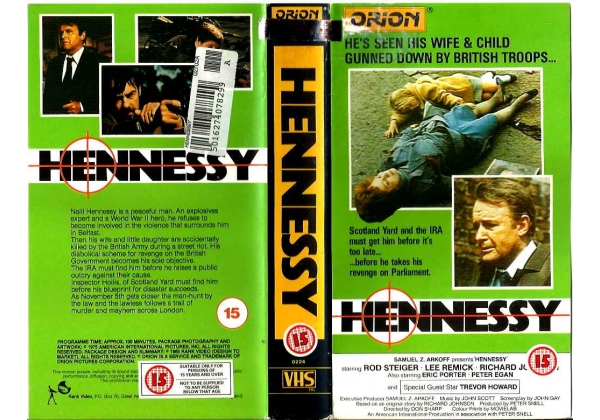
VIDEO ARCHIVES WEEK: Hennessy (1975)

VIDEO ARCHIVES NOTES: This movie was discussed on the February 28, 2023 episode of the Video Archives podcast and can be found on their site here.

Niall Hennessy (Rod Steiger) watched his family die in a Belfast riot. There’s only one thing he can do now. Kill the Royal Family and all of Parliament. As he coldly enacts his plot, both the police and the IRA want to stop him. Steiger is great, as he plays a man who just wants to avoid “the Troubles” — even though his brother is in the IRA — but when he loses those that he loves, he loses his humanity.

John Guillermin was the original director, but he left to make The Towering Inferno. Don Sharp (Psychomania) came on and worked from a script by John Gay. Lee Remick agreed to play her supporting role as it reunited her with Steiger and Gay, as they had just worked on No Way to Treat a Lady.

This was based on a story by Richard Johnson — who played Inspector Hollis — and the movie was accused of making entertainment from terrorism. Samuel Z. Arkoff for American-International Pictures said, “We do not consider this a pro-IRA movie but we are very anxious to avoid public opinion in Britain. I think the film is brilliant. I realize the bombing campaign in Britain must have made people very bitter about the IRA. I ask people to see the film before they make up their minds.”

The British Board of Film Classification refused to classify the film as there was newsreel footage of the Queen altered to appear as if she was reacting to a bomb explosion. Arkoff added a disclaimer stating that the British Royal Family had not participated, but Odeon Cinemas refused to show it and EMI would not distribute it.

It’s wild that this movie came out during such a politically charged time and was either very brave or very exploitative.

VIDEO ARCHIVES WEEK: Innocents with Dirty Hands (1975)

VIDEO ARCHIVES NOTES: This movie was discussed on the August 30, 2022 episode of the Video Archives podcast and can be found on their site here.

Based on the novel The Damned Innocents by Richard Neely, this film was directed and written by Claude Chabrol, a member of the French New Wave (nouvelle vague) group of filmmakers. Chabrol claimed that he was “seized by the demon of cinema,” which led to him writing about film and championing directors like Alfred Hitchcock, who this film owes a debt to.

Chabrol was a massive fan of Hitchcock, even writing a book on the director with Eric Rohmer. On the set of To Catch a Thief, Chabrol and François Truffaut were so starstruck that they walked right into a water tank. Hitchcock would laugh at that for years, even saying years later that the dup were “ice cubes in a glass of whiskey.”

Chabrol’s first movie was the Hitchcock-influenced Le Beau Serge and throughout his career, he would return to the styles of the director and stories of the rich and powerful dealing with murder and scandal.

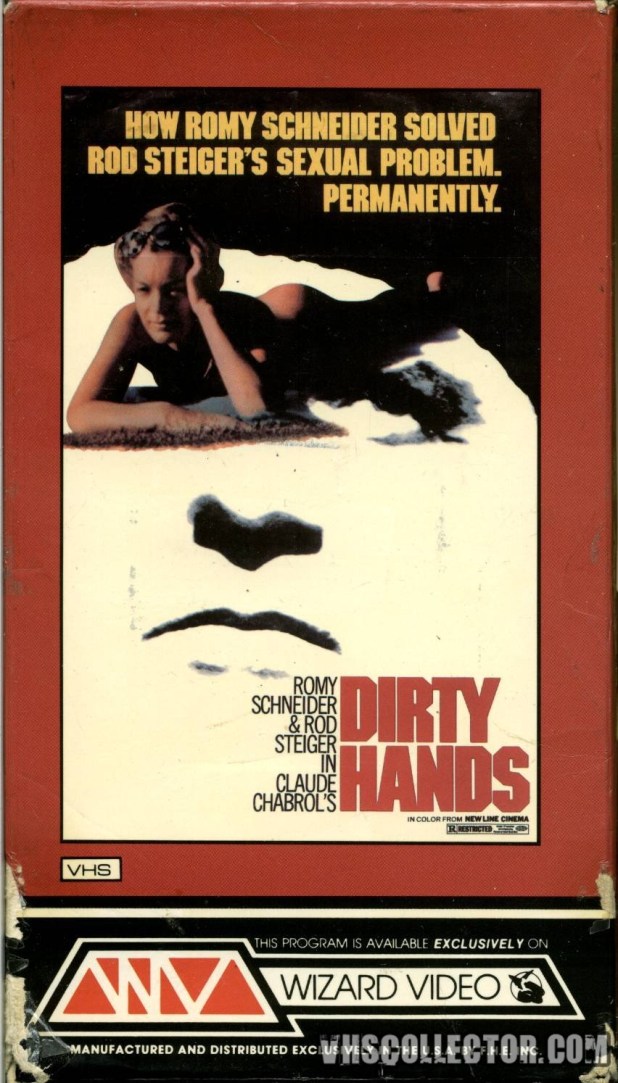
Louis Wormser (Rod Steiger) has a young wife — Julie (Romy Schneider) — a drinking problem, a bad heart and a case of impotence. He doesn’t even sleep in bed with his wife anymore, so it’s no wonder that she’s started having sex with a writer named Jeff Marle (Paolo Giusti). And even less of a narrative jump that they decide to kill Louis. She hits him with a heavy object, Jeff rolls him into the water and she decides to lay low. But then Jeff disappears with all the money, leaving Julie without a man, without cash and under the watchful gaze of the police.

So just imagine how she feels when Louis reappears, claiming to be cleaned up and in great health. Even stranger, he says that he got a confession out of Jeff and killed him. Now, he wants to be a good husband and they make love just in time for Jeff to come back for her.

Man, can one woman find worse men? Yes, when it’s in a Hitchcockian film like this. I almost claimed it’s a giallo, but the line between Hitchcock, krimi and giallo is so thin, right? Maybe neo noir is the right category? Do we need labels?

This was released in the U.S by New Line, which caused Vincent Canby of The New York Times to say, “I have no idea how much the English dubbing and editing have damaged the original, but the Dirty Hands that opened yesterday at the Forum and other theaters is a junk movie.”

RADIANCE FILMS BLU RAY RELEASE: The Sunday Woman (1975)

EDITOR’S NOTE: This was originally on the site on September 12, 2021 and has been reposted as Radiance Films has released it on blu ray. The limited special edition of 2,000 copies has a 2K restoration of the film from the original negative, presented in the original 1.33:1 and an alternate 1.85:1 widescreen presentation, as well as newly filmed interviews with academic and Italian cinema expert Richard Dyer and academic and screenwriter Giacomo Scarpelli;  archival interviews with cinematographer Luciano Tovoli and Jean-Louis Trintignant; a trailer; a reversible sleeve featuring designs based on original posters and a limited edition 24-page booklet featuring new writing on the film by Mariangela Sansone and a reprint of an archival piece on the film. You can get it from MVD.

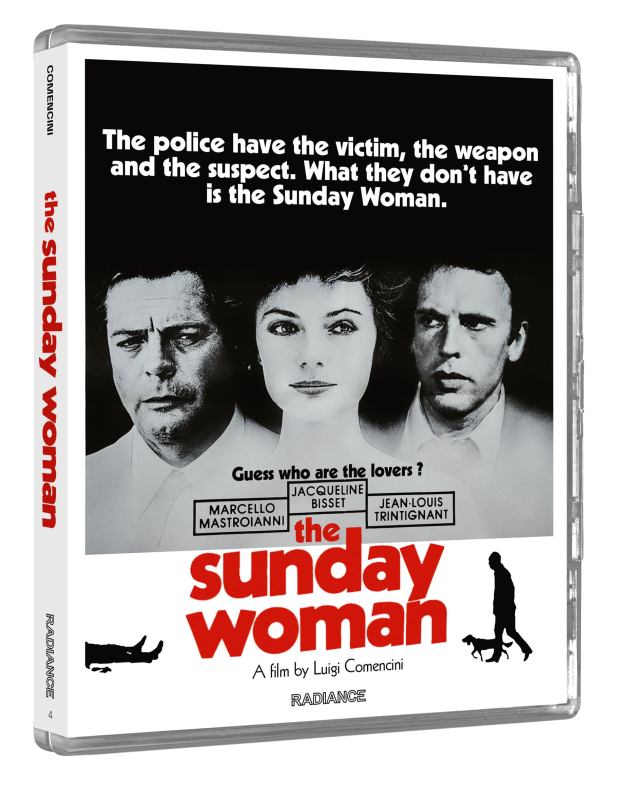
Commissioner Santamaria (Garrone, an architect who was playing an intellectual game of murder within a series of letters to his friend Massimo Campi (Jean-Louis Trintignant). While investigating, Satanamaria falls for one of the suspects, Anna Carla Dosio. Can we blame him when she’s played by Jacqueline Bisset?

It seems that Garrone has been killed for his blackmailing, but now that Campi’s boyfriend Lello has also been killed — amongst others — the plot is thickening.

Luigi Comencini is usually the director of more high brow things than we cover here. But hey — there’s a Morricone soundtrack to tether us to the tenuous connections to the giallo genre that we hold so dear. I guess I shouldn’t say too high brow, as after all the main victim is murdered with a stone penis, so there’s that.

10TH ANNUAL OLD SCHOOL KUNG FU FEST: The Valiant Ones (1975)

Corrupt officials have taken bribes and allowed a band of Japanese pirates — which includes Han Yingjie (Han Ying-chieh), Hakatatsu (Sammo Hung) and Simon Yuen as a bald pirate with a bo staff — to terrorize the South China coast. A small band of fighters, led by husband and wife Wu Ji-Yuan (Pai Ying) and Wu Ruo-Shi (Hsu Feng), have come together to stop them.

Made at the same time as The Fate of Lee Khan, director and writer King Hu has made a world where one big fight still solves things, but to get there our heroes must endure corruption at nearly every turn.

Yet what an ending, as Sammo makes for a wonderfully brutal final boss after a film filled with not just amazing action, but plenty of gorgeous coastal scenes. Hu also realizes that the music is not just wallpaper, but instead makes the fights more dramatic and impactful.

I’m all for more pirates battling against heroic martial artists; what else is out there?

Want to see it for yourself?

You can watch The Valiant Ones on Sunday, April 23 at 5 PM in Theater 1 at Metrograph and Subway Cinema in New York City. It’s part of the 10th Old School Kung Fu Fest: Sword Fighting Heroes Edition from April 21-30, 2023!

Tickets are on sale right here!

APRIL MOVIE THON 2: Hustler Squad (1975)

April 15: King Yourself! — Pick a movie released by Crown International Pictures. Here’s a list!

Their orders: LOVE your enemy…then KILL HIM!

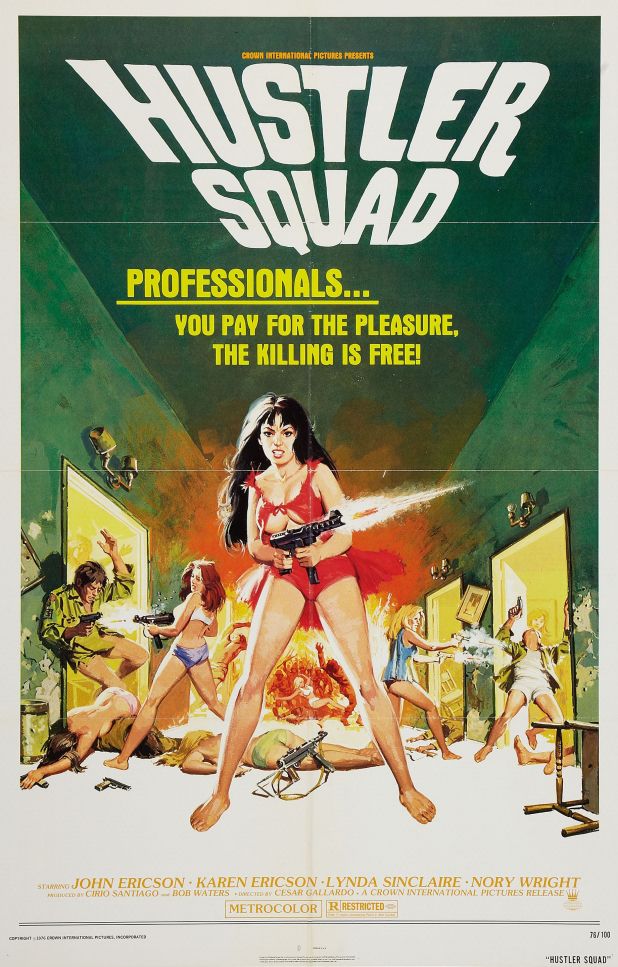
Major Stony Stonewall (John Ericson) has been given a mission: kill off a group of Japanese officers while they’re in a brothel in the Philippines. That means it’s time for a dirty one-third dozen: a sex worker on the run from organized crime by the name of Cindy Lee Dawson (Crystin Sinclaire, Crazy Alice from Caged Heat and Libby from Eaten Alive), the sexually overcharged killing machine known as Rose Carson (Nory Wright, Cover Girl Models), a Scandinavian nurse named Anna Oleson (Johanna Raunio) with a death sentence thanks to a terminal illness and Sonya (Liza Lorena), who was assaulted by Japanese troops after they murdered her entire extended family. 

They’re aided by Lieutenant West (Karen Ericson, wife of the hero in actual life) and a rebel leader named Paco (Ramon Ravilla). Seeing as how this as made in the Philippines, this has Vic Diaz in it, of course, but my favorite character is the Japanese admiral who is nothing like the animals that the propaganda has led the girls to believe that he may be.

Set in the 40s but feeling like it’s the 70s — outside of the big band music that plays during the training — this movie promises sleaze and only has women talking about how much they want sex and not getting it. Director Cesar Gallardo also made Bamboo Gods and Iron Men and somehow in this film, he figured out a way to make attractive women turned into killers boring.

NEW WORLD PICTURES MONTH: Small Change (1975)

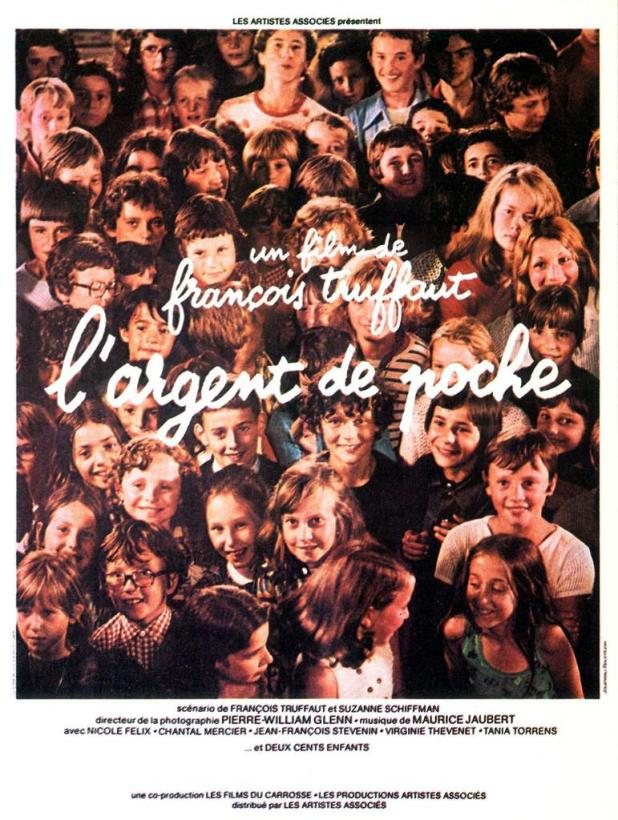
François Truffaut started collecting tales from and about children since he made The 400 Blows and used them in this film, including the story of his first kiss. The main kid is the motherless Patrick Desmouceaux (Geory Desmouceaux) and his friend Julien Leclou (Philippe Goldmann), who is dealing with abuse at home. Yet most of the movie is episodic, with kids getting in trouble, learning about love, going on dates, watching a cat in peril, bad haircuts and yes, that first kiss.

It ends with Julien’s abuse becoming known to all and a teacher telling the students, “Of all mankind’s injustices, injustice to children is the most despicable! Live isn’t always fair, but we can fight for justice. It’s the only way. It’s a slow process, but we do move forward. All people with power like to claim they are impervious to threats. But they do give in to pressure. A show of strength is the only way to get results. Adults understand that and they obtain what they ask for by demonstrating. I want to show that when adults are determined they can improve their lot. But children’s rights are totally ignored. Political parties are not concerned. With kids like Julien or you. Do you know why? Because children don’t vote! If kids had the right to vote, they would have better schools and sports facilities. You would get them because the politicians need your vote. You could come to school an hour later in winter instead of rushing out before daylight. I also want to say, because of my own childhood, I feel kids deserve a better deal. That is why I became a school teacher. Life isn’t easy. You must steel yourselves to face it. I don’t mean ‘hard-boiled’. I am talking about endurance and resilience. Some of us, who had a difficult childhood are better equipped for adult life than those who were overprotected by love. It’s the law of compensation. Life may be hard, but it’s also wonderful. When we are confined to the sickbed, we cannot wait to get out and enjoy life. We sometimes forget how much we really love it. Time flies. Before long, you will have children of your own. If you love them, they will love you. If they don’t feel you love them, they will transfer their love and tenderness to other people. Or to things. That’s life! Each of us needs to be loved!”

The translation of this movie’s French title L’Argent de poche is Pocket Money, but it was Steven Spielberg who came up with this title. He also directed Truffant in Close Encounters of the Third Kind.

This movie feels like childhood does, small moments that begin to add up, many faces and friends finally giving way to one set group of friends and eventually, when you grow old and look back, memories. As I read back on that speech above, I see so much honesty in it.

How amazing that again, Roger Corman was the one to release this in America. There was even a paperback of the script, which Truffaut wrote with Suzanne Schiffman.

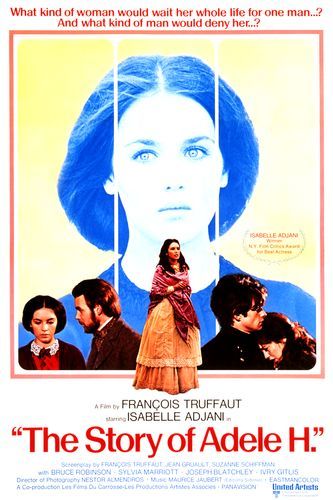
NEW WORLD PICTURES MONTH: The Story of Adele H. (1975)

Distributed by United Artists in director and co-writer François Truffaut’s native France, this was put out by New World in the U.S. It’s a love story about Adèle Hugo (Isabelle Adjani), the second daughter of Victor Hugo, and also was a love story for Truffaut, who fell for his twenty-year-old leading lady. She turned him down; dude, I saw Possession and yeah, I get it. I totally get it.

Also, by love story, I mean that Adèle spends the entire movie pining for Lieutenant Albert Pinson (Bruce Robinson), first in innocuous ways and then in ways that ruin his life and then in ways that grasp at straws, such as trying to have him hypnotized into loving her and attempting to connect with her dead by drowning sister from beyond the grave to aid her in winning over the military man.

She says at one point that she will walk across the ocean to be with her lover. She has built him up into near mythic levels of nobility and romantic power. Surely, were their relationship to ever be consummated, he could never live up to the man that he is inside her head. Again, I totally get it. While never consumed with the mania that she displays — the film ends with her wandering the streets of a foreign country, unable to even recognize Pinson but still in love with the man she conjured years before — I am guilty of falling in love with the people I have believed people to be, want them to be, need them to be and unfairly wondering why they can never live up to my near-impossible romantic notions. It’s a horrible thing to be in love with someone who does not exist as the person you know them as.orrible thing to be in love with someone who does not exist as the person you know them as.

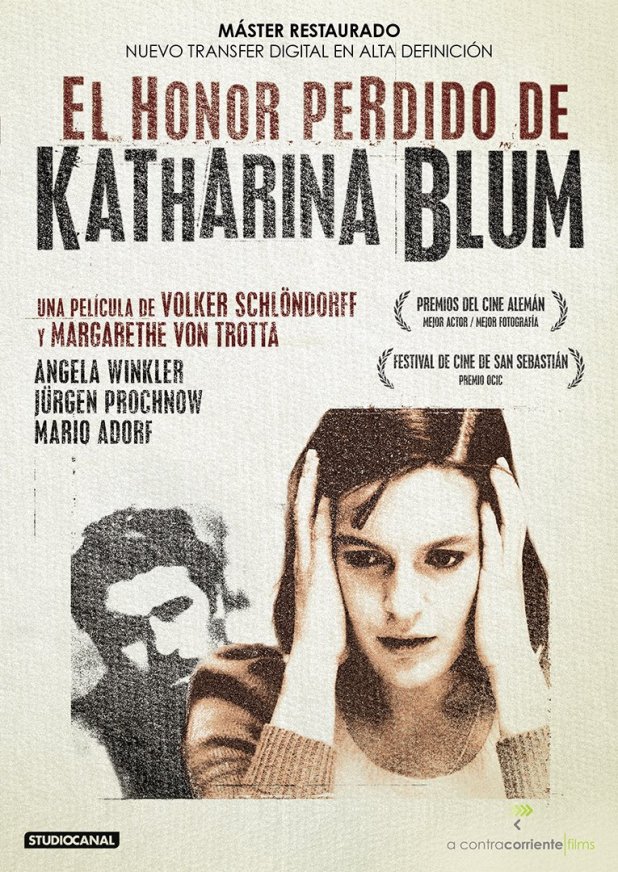
NEW WORLD PICTURES MONTH: The Lost Honour of Katharina Blum (1975)

It’s pretty amazing seeing how many movies from New World or distributed by Roger Corman are in the Criterion Collection: The Harder They ComeCries and WhispersFantastic PlanetAmarcord and this movie. While Corman’s produced films may be about car crashes and half-nude nurses (in jail), he could certainly pick movies to champion.

The Lost Honour of Katharina Blum, or: How violence develops and where it can lead is based on the novel of the same name by Heinrich Böll and is an indictment of how society and the media can demonize women, which is a heady subject for a movie, again, distributed by Corman.

Katharina Blum (Angelina Winkler) is a housekeeper whose lawyer boss refers to as “The Nun” because of what a prude she is. Yet when she gets involved with Ludwig Götten (Jürgen Prochnow), an anarchist and bank robber, she gets her name hung out to dry in the tabloids and accused of aiding and abetting the would-be terrorist. That newspaper goes so far that it ruins all of Katharina’s relationships and even causes her mother to die in the hospital, misinterpreting her last words to make it appear like she hated her daughter.

Unable to get her own story out, she finally kills a reporter and his photographer. That reporter is buried as a hero, seen as someone using his ability to tell the real story. His coffin gives the film an opportunity to call out the yellow journalism of German tabloid Bild-Zeitung.

When this was made, West German tabloid newspapers worked hand in hand with the police to publish pretty much anything they wanted about anyone they wanted. The reporter makes up stories about Katharina for the entire film and then expects her to sleep with him because he gave her what so many people want. He made her famous.

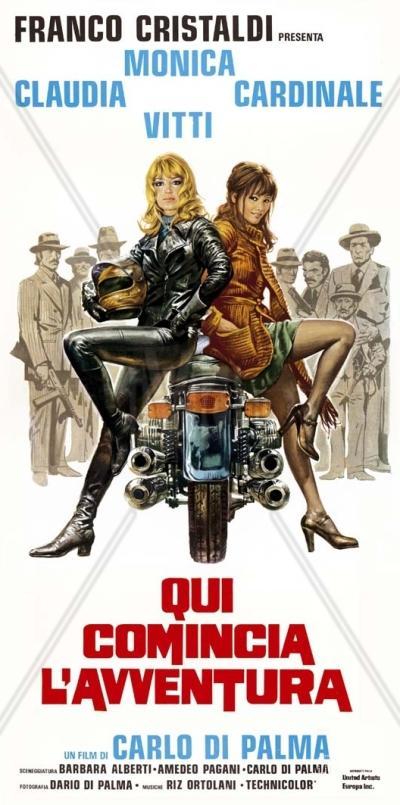
NEW WORLD PICTURES MONTH: Lucky Girls (1975)

Lucky Girls is the name New World Pictures gave to Qui comincia l’avventura or the even better title Blonde In Black Leather. It was directed by Carlo Di Palma, who is probably better known for his cinematography on movies like Mighty AphroditeShadows and FogHannah and Her Sisters, and, under the name Charles Brown, Terror-Creatures from the Grave. He also directed Teresa the Thief and was a focus puller all the way back in 1948 on Bicycle Thieves.

He co-wrote this film with Barbara Alberti, who also worked on one of my favorite films, Hotel Fear, and Amedeo Pagani, who had collaborated with Alberti on that film and The Night Porter.

What emerges is a charming romp in which the leather-clad Miele (Monica Vitti, dubbed by Carolyn De Fonseca) takes her friend Claudia (Claudia Cardinale, The Butterfly Affair) on an episodic adventure driven by the sheer force of the personality of its leads. Miele spends one moment having her leather suit hand polished while she’s wearing it; if you were Claudia, slaving in a laundrette for a horrible husband, wouldn’t you leave behind your mediocre life and jump on the back of Miele’s motorcycle?

There’s also an incredible moment where Miele and Claudia outfight every man in a casino and the scene almost takes on a filmstrip feeling where with each click, we’re seeing her knock out another man. As if that isn’t enough, the score by Riz Ortolani makes it all work even better.

By the end, maybe Miele is more of a tall tale teller than we originally believe, but she’s given agency and escape to Claudia. Consider this Thelma and Louise but with a happier close.

New World released this on a double feature with Candy Stripe Nurses, which is what I call a dream night at the drive-in.

The fabulous Temple of Schlock shared this image of it playing under the Blonde In Black Leather title.