CBS LATE MOVIE: All the Kind Strangers (1974)

EDITOR’S NOTE: All the Kind Strangers was on the CBS Late Movie on October 9, 1979 and November 25, 1980.

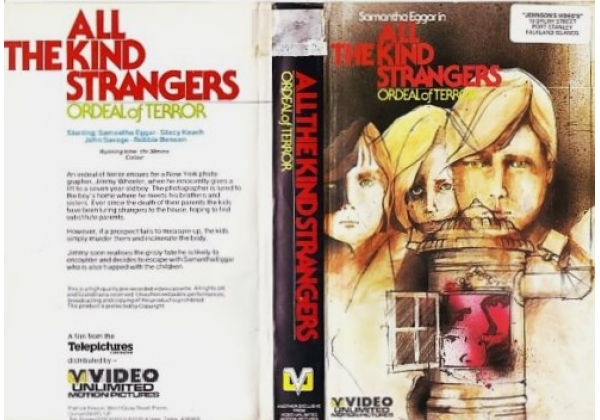
Let’s not judge Burt Kennedy for directing the Hulk Hogan vehicle Suburban Commando. Let’s remember him for something much better — All the Kind Strangers.

Written by Clyde Ware — a writer/director/producer who worked on shows like Airwolf and Gunsmoke, as well as TV movies like The Hatfields and the McCoys and The Story of Pretty Boy Floyd — this film reeks of backwoods menace. No wonder — Ware was born in West Virginia and his second novel, The Eden Tree, was a semi-biographical read which scandalized his hometown.

Jimmy Wheeler (Stacy Keach, ButterflyMountain of the Cannibal God) is a photojournalist traveling by car to Los Angeles. He runs through a small Southern town where he sees Gilbert, an adorable child, walking on the side of the road. Seeing that the kid is hefting some heavy groceries, Jimmy offers him a ride. As the road goes deeper into the woods, the rain increases. Soon, he realizes he’s trapped in a house of seven children.

The oldest, Peter (John Savage, HairThe Deer Hunter), has hidden the fate of his mother and father from the town, using various resources to keep their power on and training vicious dogs to protect the children. Their father was a bootlegger and their mother a schoolteacher (what a match!); when she died, he drank until he fell from the roof.

The rest of the children — John (Robby Benson, who sings two songs on the soundtrack), Martha, Rita, James and Baby (named because their mother died before they could name him) — need guidance, so Peter sends the younger ones out to lure people to their home. Then, they evaluate whether or not they’ll be good parents. If they’re fit, they stay. If not, they’re free to go. Or that’s what the kids think. Evidence points to another, more grisly fate.

There’s a new mother already in the house. Carol Ann (Samantha Eggar, The BroodDemonoidCurtains) has been taking care of the children for some time. She has seen plenty of other father figures, and while she asks for help, she also knows that everything seems pointless.

Jimmy has to convince the kids that he’d make a good dad while trying to find a way to escape. But between the multitude of kids and dogs, as well as his car being sunk in the swamp, he starts losing hope as well.

I have two issues with this film. Things get wrapped up with way too neat of a bow. Jimmy gives a speech to the kids, which saves his life, and Peter asks him to walk him into town so that they can get some help. Jimmy doesn’t even talk about the police, and when you know that these kids have murdered numerous “kind strangers,” you have to wonder if he traded his freedom in for some complicity in the crimes. Second, as a photojournalist, Jimmy’s only camera is a Polaroid, which would not be good enough to be printed in the 1970s. I know that it makes good theater to have him show Gilbert the photo as it develops, but it’s a stretch.

All the Kind Strangers is a small-screen Deliverance, yet it has some fine acting from Keach and Eggar. It’s restrained, but there is more not seen than seen that makes this movie slightly scary.

You can watch this on Tubi.

WEIRD WEDNESDAY: Bring Me the Head of Alfredo Garcia (1974)

Sam Peckinpah said, “For me, Hollywood no longer exists. It’s past history. I’ve decided to stay in Mexico because I believe I can make my pictures with greater freedom from here.”

With the exception of a few key individuals, Peckinpah made this movie with a Mexican crew, including cameraman Alex Phillips, Jr., who had a preference for wide-angle lenses and loved zooms. This setup allowed Peckinpah to essentially edit the film in his head as he shot.

It also allowed him a lot of creative freedom and to capture the bleak world he wanted. Shooting at a bar called the Tlaquepaque, he said out loud that this place was real. It was — the owner had once killed a woman on the premises and bribed the right people to make it go away.

And the results, sure, they ended up in the Medved co-authored The Fifty Worst Movies of All Time, but Roger Ebert said, “Bring Me the Head of Alfredo Garcia is Sam Peckinpah making movies flat out, giving us a desperate character he clearly loves, and asking us to somehow see past the horror and the blood to the sad poem he’s trying to write about the human condition.”

Who is Garcia? He was once the man selected to be the successor of El Jefe (Emilio Fernández), but he messed up when he knocked up the boss’s daughter Teresa, putting a million-dollar bounty on his head. Two months pass before two hit men, Sappensly (Robert Webber) and Quill (Gig Young), walk into the saloon where Bennie (Warren Oates) plays piano.

He claims he doesn’t know who Garcia is, yet he surely does. He’s the man whose lover, Elita (Isela Vega), cheated on him with. He confronts her as to the man’s whereabouts and learns that he died in an accident. Easy money — he gets $10,000 for Garcia’s head, plus a $200 advance for expenses, and takes Elita along with him to dig the grave. On the way, he proposes to her, telling her that she can retire and they can live in peace. Still, we know that can never happen as the moment they get there, they’re attacked by bikers (Kris Kristofferson and Donnie Fritts) who nearly assault her before Bernie comes to and dispatches them both. As he starts digging the grave despite Elita’s protests, he’s knocked out. He wakes up buried alive with his girl dead by his side, the body of Garcia already missing its head. Oates took mushrooms before this scene, so he’s really living this experience.

Arguing with the head, which has been packed in a sack with dry ice, Bennie leads a death march across Mexico, with everyone in his way dying, death always at his side, waiting for him, as he begins to realize that the head means nothing at all to him or anyone else. The money was meaningless. The revenge doesn’t matter. Yet he must follow through.

Warren Oates copied Peckinpah to play his part, right down to borrowing a pair of sunglasses from the director. This was the only time that the maverick creator ever got the final cut on one of his movies. The twosome also bonded over cocaine, which only added to the air of paranoia and doom that fills every single second of this movie.

I can see why some would dislike and even hate this movie, but for me, it just plain sings. The song may be abrasive, filled with anger, but it’s a song nonetheless.

RADIANCE FILMS BLU RAY RELEASE: The Rapacious Jailbreaker (1974)

Black marketeer Ueda (Hiroki Matsukata) gets revenge on those who stole a pound of his morphine, but gets arrested and charged with murder. Looking at twenty years in prison, he keeps escaping, over and over again, just like the true story this was based on, as that man ran seven times.

I’m struck by the fact that we know the protagonist of director Sadao Nakajima is a bad person, yet prison and confinement are horrible for everyone and should build empathy within us — or at least, that’s the intention. The first of a jailhouse trilogy of films, along with Shimane Prison Riot and The Man Who Shot the Don, this is a tough movie about rough men, including one who wants to be free, no matter what it takes.

The Radiance Films Blu-ray — the first Western release of this movie — has extras including commentary by yakuza film expert Nathan Stuart, a visual essay on Sadao Nakajima by Tom Mes, a reversible sleeve featuring original and newly commissioned artwork by Filippo Di Battista and a limited edition booklet featuring new writing by Earl Jackson and an archival review of the film. It’s a limited edition of 3,000 copies, presented in full-height Scanavo packaging with a removable OBI strip, leaving the packaging free of certificates and markings. You can get it from MVD.

Sizzlin’ Summer of Side-Splitters 2025: The Groove Tube (1974)

June 16-22 SNL Week: Saturday Night Live is celebrating 50 years on the air, can NBC last for another 50 years??

The Groove Tube comes from SOV sketches that were shown at the Channel One Theater on East 60th St. in New York. They took the best sketches on tour and whatever ones got the greatest reaction on college campuses were reshot on film and then put into this movie.

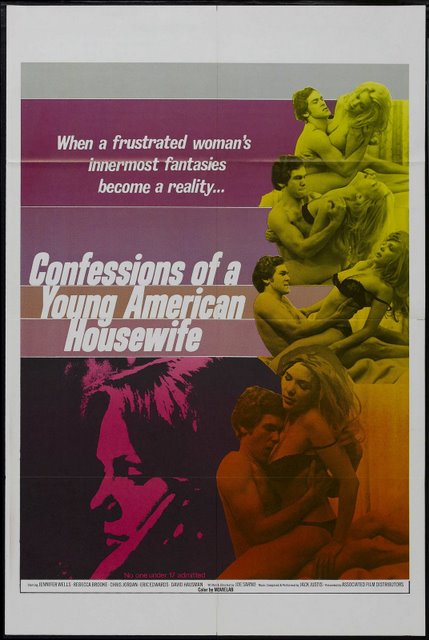
It starts with a 2001 recreation of the apes meeting a TV set. Then, music supervisor Buzzy Linhart plays a hitchhiker; director and writer Ken Shapiro plays Koko the Clown, who reads Fanny Hill as part of Make Believe Time; Chevy Chase and adult star Jennifer Welles (Abigail Leslie Is Back In Town, Inside Jennifer Welles) in a Geritol parody; a news program that has Shapiro playing Indira Ghandi in brownface; the International Sex Games, which has adult stars Paul Norman (who directed the Bi and Beyond series) and Rebecca Brooke, who was in Chuck Vincent’s Grace’s Place as well as several Joe Sarno films like Confessions of a Young American Housewife and Little Girl, Big Tease and Chase and Shapiro singing “I’m Looking Over a Four-Leaf Clover.” Oh yeah — Richard Belzer is here and in blackface.

“Good night, and have a pleasant tomorrow” was later used by Chevy Chase on Weekend Update on Saturday Night Live, although he doesn’t say the line in this. Shapiro would go on to work with Chase again, as he directed and wrote Modern Problems. Co-writer Lane Sarasohn would go on to work on Not Necessarily the News and Chevy Chase’s first post-SNL special and the other co-writer, Rich Allan, also worked with Shapiro and Sarasohn on a series of films that would be collected in 2024’s Poems Without Words.

Like most comedy anthologies other than Kentucky Fried Movie and Amazon Women On the Moon, this is an uneven mix of sketches. However, I laughed a bunch anyway.

Oh, and an aside: Shapiro started his entertainment career as Kenny Sharpe on live television and appeared often on Milton Berle’s Texaco Star Theater as “The Kid” and on George Scheck’s Star Time Kids Show with Connie Francis. His assistant in Hollywood, back in the 1970s, was Gus Van Sant. I almost spelled his name Gus Van Zandt because I like thinking about the director of the bootleg Psycho being in Lynyrd Skynyrd.

You can download The Groove Tube from the Internet Archive.

WEIRD WEDNESDAY: Big Bad Mama (1974)

Steve Carver originally intended to get involved in the worlds of cartooning, commercial art and animation before becoming a cameraman for ABC’s Wide World of Sports, shooting St. Louis Cardinals baseball games before he made thirty documentaries while teaching college at the same time.

One of those documentaries got him into the American Film Institute, where he studied under George Stevens, Alfred Hitchcock, Charlton Heston and Gregory Peck. He also had the opportunity to be the assistant director on Dalton Trumbo’s Johnny Got His Gun.

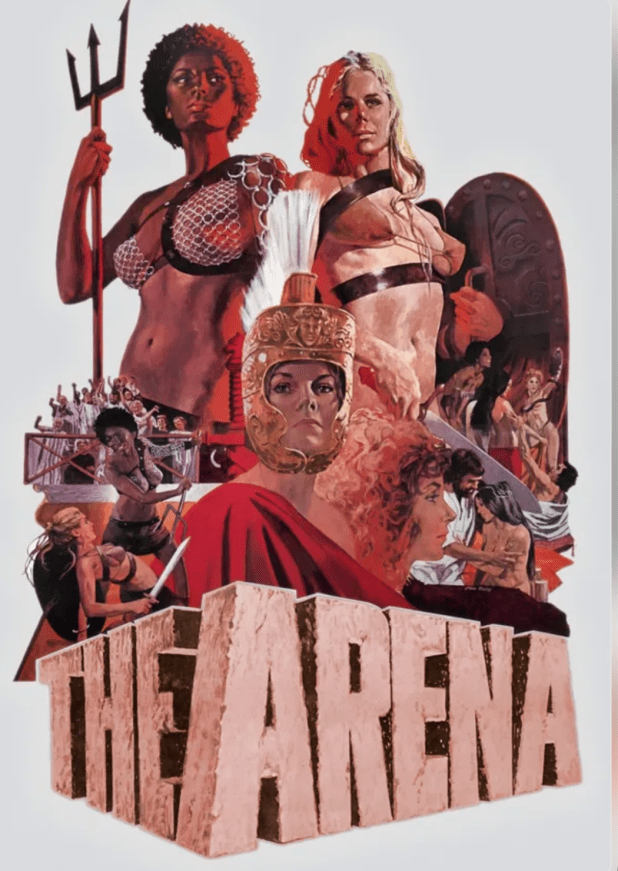
Carver’s final AFI project was a short based on Poe’s The Tell-Tale Heart, which brought him to the attention of Roger Corman. He edited 150 trailers for the producer and directed The Arena — which has Joe D’Amato as director of cinematography — before this film. He’d go on to make two Chuck Norris films, Lone Wolf McQuade and An Eye for an Eye, before leaving film for the world of photography, pining for the more fun days of working with Corman.

Texas, 1932. Wilma McClatchie (Angie Dickinson) has taken over her dead man’s bootlegging still but gets caught by the law. Forced to hand over all her money and even her wedding ring to the sheriff, she decides that she and her daughters Polly (Robbie Lee, Lace from Switchblade Sisters and eventually the voice of Twink on Rainbow Brite; she’s also the goddaughter of Roy Rogers and Dale Evans) and Billy Jean (Susan Sennett, The Candy Snatchers and wife of Graham Nash) are going to live a life of crime.

While Wilma is at a bank trying to pass a fake check, the girls end up helping Fred Diller (Tom Skerritt) as he knocks over the joint. He and Wilma soon become lovers, but that doesn’t last long before she’s bedding gambler William J. Baxter (William Shatner), and he starts sleeping with both of her daughters, sometimes at the same time, because Roger Corman produced this.

After kidnapping and ransoming the daughter of a millionaire, federal agents and the police finally track down the gang. Baxter gets cuffed, and the girls escape while Diller defends them with a hail of Thompson submachine gun fire. But as they drive away, Wilma dies, her bloody arm dragging against the left side of the car as it speeds away.

Well, or so you’d think, as there was a sequel.

I learned so much about so-called bad movies from the Medved brothers. In their 1986 tome Son of the Golden Turkey Awards, they nominated Dickinson’s role in this film as “The Most Embarrassing Nude Scene in Hollywood History.” Now that I’m older and wiser, I can say that these guys must have been embarrassed themselves as they actually enjoyed this trash. I hate the idea of guilty pleasures; just like what you like.

Oddly enough, Jerry Garcia performed most of the guitar and banjo music in the movie. And if you’re looking for fun actors, Sally Kirkland, Dick Miller and Royal Dano all show up. It’s not the best movie you’ve ever seen, but it’s filled with sin, skin and bullets. What else were you hoping for?

You can watch this on Tubi.

JUNESPLOITATION: Sugar Hill (1974)

June 4: Junesploitation’s topic of the day — as suggested by F This Movie— is Blaxploitation!

After Blacula and Scream, AIP had already combined Blaxploitation and horror. Now, Diana “Sugar” Hill (Marki Bey) is using zombies to get revenge on mob boss Morgan (Robert Quarry in his last film for the studio) for the death of her man, nightclub owner Langston (Larry D. Johnson). She goes to Mama Maitresse (Zara Cully) and together, they call on the Lord of the Dead, Baron Samedi (Don Pedro Colley), for his assistance.

Unlike the post-Romero zombies, this is calling back to the zombies of movies made in the 1930s. The preserved bodies of slaves brought to the United States from Guinea, they only cost Sugar her soul to get the vengeance she needs. By that, I mean feeding bad guys to pigs and saying, “I hope they like white trash.”

This is the only film directed by Paul Maslansky, who also produced Castle of the Living Dead, Death Line, The She Beast, Damnation AlleyRace With the Devil and, perhaps most importantly, the Police Academy movies. Writer Tim Kelly also scripted Black Fist and Cry of the Banshee.

There weren’t enough mixes like this, but there’s also BlackensteinAbbyGanja and HessJD’s RevengeDr. Black, Mr. HydePetey WheatstrawBones, Def by Temptation, Hood of HorrorBlack Devil Doll from Hell, Tales from the QuadeaD Zone, Killjoy and the Tales from the Hood series.

JUNESPLOITATION: Almost Human (1974)

June 1: Junesploitation’s topic of the day — as suggested by F This Movie— is Italian crime!

Milano odia: la polizia non può sparare (Milan Hates, The Police Can’t Shoot) is another reminder that Umberto Lenzi is the greatest, regardless of genre. He mastered gialli (Spasmo, So Sweet… So Perverse, OrgasmoSeven Bloodstained OrchidsEyeball) as well as war movies (Bridge to Hell, From Hell to Victory), poliziotteschi (Rome Armed to the Teeth, Violent NaplesThe Cynic, the Rat and the Fist), peplum (IronmasterSamson and the Slave Queen), Eurospy (SuperSeven Calling Cairo008: Operation Exterminate), cannibal films (Eaten Alive!Cannibal FeroxMan from Deep River) and enjoyable junk (Nightmare CityGhosthouseNightmare BeachHitcher In the DarkBlack Demons).

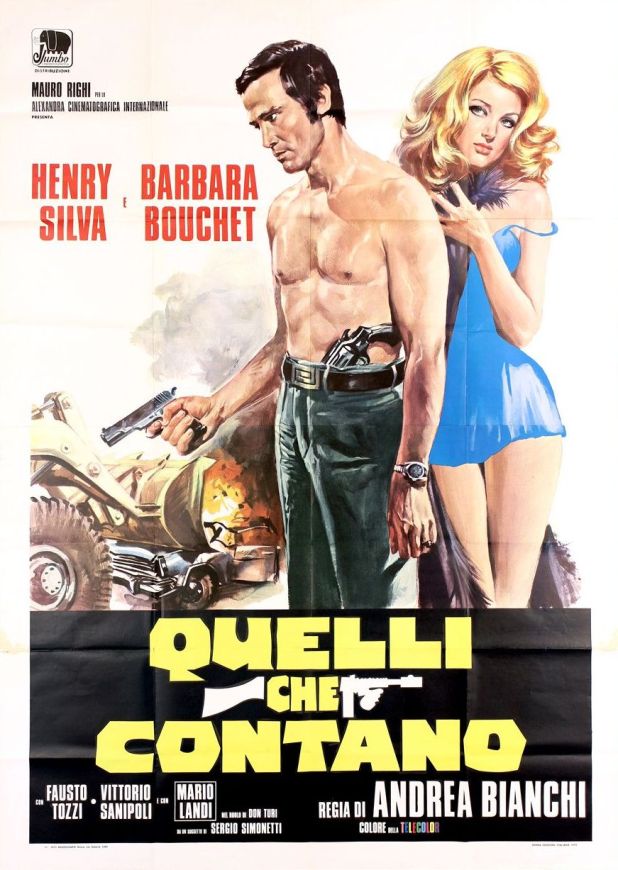
Throw in a script by Ernesto Gastaldi, and you have a war between Giulio Sacchi (Tomas Milian) and Inspector Walter Grandi (Henry Silva). Not everyone in their world will survive. Hell, the two of them might not even make it.

After screwing up a bank robbery and being threatened with castration, Saachi goes absolutely wild and pretty much kills everyone in his path. Tomas Milian must have heard that David Hess was coming to Italy and said, “Let me show you something.” He’s an equal opportunity maniac in this movie, as everyone is in the crosshairs. He might have a gorgeous woman like Iona (Anita Strindberg) in love with him, supporting him, and yet he comes home just to assault her at will. Then, he uses her to take her boss’ daughter, Mary Lou (Laura Belli), and ransom her life, as if life means anything to him.

His partners Carmine (Ray Lovelock) and Vittorio (Gino Santercole) aren’t ready for the drugged-up menace that Saachi is about to bring. Tying people to a chandelier and letting it spin as he plays roulette with his victims? That’s just the start. No one is safe, whether that’s old people, people begging for their lives, cops, children…even a man who Saachi forces to go down on his little Giulio while he keeps a gun at his head. They have second thoughts about being in a gang with him, but who will tell him he’s going off the deep end?

Morricone soundtrack, Silva as a cop, you’re just waiting to go insane, lawyers getting scummy crooks off with no charges, justice in the streets—this has it all. And so much more. And wow, it was so close to being a totally different movie, with Richard Conte playing the cop and Marc Porel playing the criminal, but Lenzi found the actor  “unreliable from both a human and professional point of view.”

As it was, Lenzi’s first meeting with Milian didn’t go well. Milian heard that Lenzi was an impulsive director who could go off on his actors, but by the film’s end, they realized they could work together in a love/hate way for seven films. As for how Millian got this performance, in true Method style, he drugged and drank it up before Lenzi said, “Action!”

That’s how you do it.

Over here,  Joseph Brenner released several times, first as The Kidnap of Mary Lou, then a year later as The Death Dealer and finally in 1980 as Almost Human. All hail Temple of Schlock.

You can watch this on Tubi.

WEIRD WEDNESDAY: Bad Ronald (1974)

The beauty of made-for-TV movies is that they can be way, way weirder than anything you’ll ever see on the big screen. For a blast of pure insanity — as long as you can get your brain to agree with the major reality-bending events you’ll witness — you can’t go wrong with spending a little over an hour with Bad Ronald.

Originally airing on October 24, 1974, on the ABC Network, this film tells the sad tale of Ronald Wilby (Scott Jacoby, The Little Girl Who Lives Down the Lane), a kid who is a great artist and lives in a fantasy world. So far, he’s me at 15, all socially awkward and afraid of girls. Where he is not like me is that his dad left town and never came back, leaving him with an insanely overprotective mother (Kim Hunter, Zira from Planet of the Apes) who has some mystery disease and wants Ronald to go to med school and heal her. That seems like a lot of pressure. Maybe so much pressure that after getting the Heisman and being shut down by Laurie Matthews, the object of his affection, he shoves Laurie’s younger sister Carol. The little girl just keeps verbally abusing Ronald — trust me, I’ve had things twelve-year-old girls say hurt me to this day and gotten over every punch to my face — until he shoves her again, so hard that her head bounces off a concrete block. Boom. She’s dead.

Yep. In the 70s — and perhaps nowhere more so than in a 70s made-for-TV movie — life is cheap.  So Ronald and his mom do what any normal person and normal mother would do — they bury the body, hide the evidence and even hide Ronald inside a concealed room. They hope everything will just blow over — even when the police come by with questions. Nosy neighbors be damned, her boy will be just fine, provided he stops drawing, does his studies, eats right and remembers his exercises.

It should work. Except she dies, leaving Ronald alone in the house with all his cans of food. Before you get to the next commercial, Ronald has totally escaped into a fantasy world of princes, princesses and demons. His house is sold to the Wood family — mom, dad (Dabney Coleman of Cloak and Dagger9 to 5Tootsie and so much more) and three sisters — Babs, Althea and Ellen.

Ronald is running out of food and really needs human interaction. Babs becomes the princess of his dreams while her boyfriend, Duane Matthews, becomes his demon. Well, he’s already killed one of Duane’s sisters, and now he’s descended so far into pure mania that who can say what will happen next?

From Ronald murdering the old lady who keeps peeking into the house to his peepholes all over the place, this is a really disturbing slice of TV cinema. There’s a truly great scare when the girls finally see an eyeball inside of those holes. And it’s a nail-biter wondering if they can escape Ronald, who finally makes his play for his princess when the parents leave town.

This is quite the effective little chiller, directed by Buzz Kulik, who was also in the chair for the incredibly famous Brian’s Song. It was remade in 1992 as Méchant Garçon, starring a young Catherine Hiegel. But man — we’re huge Scott Jacoby fans and will stick with the original!

BONUS: You can listen to the podcast we did on Bad Ronald!

Bonus drink!

Closet Case

  • 1 oz. amaretto
  • 1 oz. Jägermeister
  1. Pour together into a shot glass.
  2. Get inside your walls and get very wasted.

APRIL MOVIE THON 4: The Sister-In-Law (1974)

April 20: King Yourself! — Pick a movie released by Crown International Pictures. Here’s a list!

Robert Strong (John Savage) goes to visit his brother Edward (Will McMillan) and his wife Joan (Anne Saxon), only for him to fall for his sister-in-law — yes, there’s the title — and meet his brother’s mistress Deborah Holt (Meridith Baer, who invented home staging and has a show on HGTV) and also — run-on sentence much? — get invovled in the drug trade.

Directed and written by Joseph Ruben (The Pom Pom GirlsDreamscapeThe StepfatherSleeping With the EnemyThe Good Son), this also has three songs by Savage on the soundtrack.

Oh, Crown International Pictures. Despite being called The Sister-In-Law, she disappears halfway through this movie and we never see her again. Instead, this becomes a heroin movie. Yes, there’s a cat fight, but this is really the story of two brothers — one who wants to be rich, another who is hitchhiking across the country — and the women are just in the way. And banjo music. So much banjo music.

The ending? A gut punch. Wow.

This is the only movie Anne Saxon ever made and she may have made it under an assumed name.

Playing the Field (1974)

During the dizzy spells of COVID-19, I sought something to zone out to. All I needed to know was that this is a sexy all-Italiana Commedia with Joan Collins—already 41 and too old for Hollywood and yet not at her full sex symbol status yet—as a woman tempting a married soccer referee. Could a movie be more ready for me to watch?

Carmelo Lo Cascio (Lando Buzzanca) is based on famous soccer — football, right? — ref Concetto Lo Bello, but here he’s a ref in small town games who has the fantastic opportunity to be in charge of one of the biggest games in the sport. Along the way — and set to a score by Guido and Maurizio De Angelis, who we know as Oliver Onions, as well as the song “(I’m) Football Crazy” sung by soccer player Giorgio Chinaglia, we see how driven this man is, even putting his marriage to Laura (Gabriella Pallotta) off to the side, giving everything to the game, ruining his heart by taking amphetamines.

But you know, it’s a comedy.

That means that sportswriter Elena Sperani (Collins) is all over him, yet the man tries to remain chaste. A short-haired, super-stylish 1970s Joan Collins? A man is only as pure as his options, you know? What could keep him even carrying about anything other than this creature of carnal perfection?

Also appearing: Elisabeth Turner (Beyond the DoorCannibals In the Streets), Marisa Solinas and, you knew it, Carla Mancini. Director Luigi Filippo D’Amico also wrote the script.

Thanks to White Slaves of Chinatown for posting this.