VIDEO ARCHIVES SEASON 2: Birds of Prey (1973)

VIDEO ARCHIVES NOTES: This movie was discussed on the November 12, 2024 episode of the Video Archives podcast. 

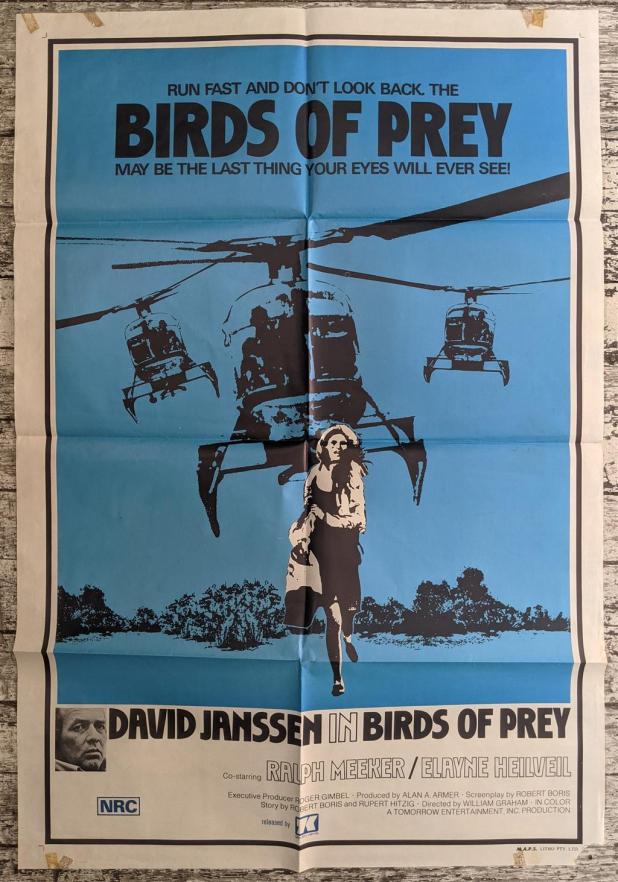
Directed by William Graham (Change of HabitCalendar Girl Murders) and written by Robert Boris (Steele JusticeSome Kind of HeroElectra Glide in BlueDoctor Detroit), Birds of Prey debuted on January 30, 1973 on CBS.

Harry Walker (David Janssen) is a war vet who is now flying a helicopter for the news, checking in on traffic. He finally gets the action he missed when he sees a bank robbery and learns from his former commander, McAndrew (Ralph Meeker), that the criminals — former Vietnam vets — have kidnapped teller Teresa Janice “T.J.” Shaw (Elayne Heilveil), who is due to be married in a few days.

Pilot Jim Gavin told Flying Magazine,  “Birds was a ground-breaking project. We took the helicopter out of its normal environment, put it in the city streets and did all the work with Janssen in flight for real. In fact, since he was a pilot Janssen did a lot of the flying, and I’d sit opposite him.”

If you watch this and wonder why Janssen is singing along to songs and his lyrics don’t match the songs, that’s because copyright issues caused the removal of the jazz standards that were originally in this movie.

As you can imagine, the IMDB trivia section for this movie is filled with deep cut helicopter facts.

MOVIES THAT PLAYED SCALA: Cleopatra Jones (1973)

Thanks to the British Film Institute, there’s a list of films that played Scala. To celebrate the release of Severin’s new documentary, I’ll share a few of these movies every day. You can see the whole list on Letterboxd.

Jack Starrett knew how to make dependable and entertaining movies. Nam’s Angels, Slaughter, Race With the Devil, Hollywood ManKiss My Grits, The Strange Vengeance of Rosalie and Run, Angel, Run! He’s also a fine actor, enlivening Blazing SaddlesThe Girls from Thunder Strip and First Blood.

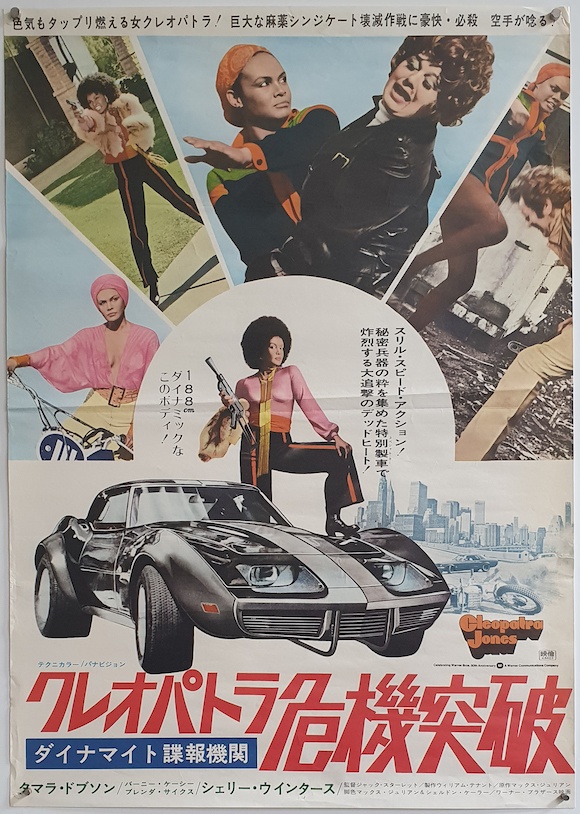
Cleopatra “Cleo” Jones (Tamara Dobson) is the coolest. She’s an international supermodel who drives a ’73 Corvette Stingray, volunteers for the B&S House — love that name — which is a street help group run by her lover Reuben Masters (Bernie Casey) and, oh yeah, she’s also a secret agent.

Her goal is to stop drugs from destroying her community and she starts by burning the poppy fields owned by drug lord Mommy (Shelley Winters). Mommy might run the cops and have drug dealers like “Doodlebug” Simpkins (Antonio Fargas) on her side, but she can’t even match up to Cleopatra.

Unlike so many blacksploitation films, Cleopatra never gets naked. There’s a lot of equality in her relationship with Reuben, but there is an evil lesbian obsessed with sex role for Mommy, so it’s not all forward thinking.

The cops in this are at war with the black community, while Cleopatra, working as a Special Agent to the President, seeks to lift people up and help them to improve their station in life. She’s the authority figure we wish we had. Plus, she wears ten different Giorgio di Sant’Angelo outfits, so she’s always at the front of fashion.

MOVIES THAT PLAYED SCALA: Enter the Dragon (1973)

Thanks to the British Film Institute, there’s a list of films that played Scala. To celebrate the release of Severin’s new documentary, I’ll share a few of these movies every day. You can see the whole list on Letterboxd.

There are other martial arts movies, but for those that have never seen one before, they’re probably thinking of this movie when they imagine a kung fu movie.

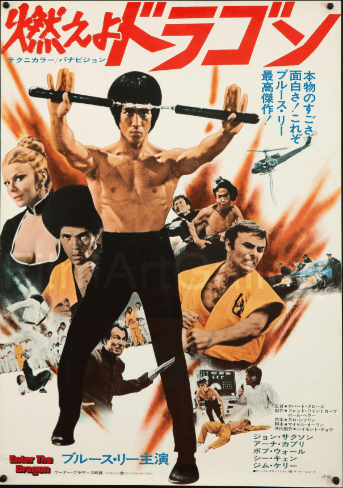
To reach the biggest audience, Bruce Lee, who plays the hero Lee, would be teamed with a white man, Roper (John Saxon) and a black one, Williams (Jim Kelly). They’re on the way to the island of Han (Shih Kien, voiced by Keye Luke) to participate in a fighting tournament to discover the world’s greatest fighter, a theme that so many movies would take. Roper owes the mob money, Williams killed two bad cops and is on the run. They’re friends from Vietnam and ready to scam everyone to make money off the tournament.

British intelligence man Braithwaite (Geoffrey Weeks) informs Lee that Han, a former Shaolin Temple student, is running a fighting school that also sells drugs and trades in people. Oh yeah — Lee’s sister (Angela Mao Ying, Lady Whirlwind) was one of Braithwaite’s agents who was killed by O’Hara (Bob Wall), one of Han’s bodyguards.

When they win their fights, everyone gets the woman of their choice. Williams takes several, Roper takes Tania (Ahna Capri), Han’s secretary, while Lee chooses Mei-Ling (Betty Chung), who is an undercover agent there to help him.

This is filled with so many amazing things, such as Bolo Yeung as the main bodyguard, Mr. Han’s fake hands, a gigantic ending filled with so many battles and Lee and Han facing off inside a room full of mirrors, which finds director Robert Clouse taking the end of The Lady from Shanghai.

Kien Shih, who played Han, was a close friend of Bruce Lee’s father, an actor in the Cantonese Opera where Shih had worked as a makeup artist. Their relationship was so close that Bruce addressed Kien as uncle and Kien called Bruce nephew. At one point during filming, Bruce told Kien Shih, “I feel that you will live longer than me.” Kien replied, “Nephew, don’t force yourself too hard. You are overworking yourself.” Lee died weeks before Enter the Dragon was released in Hong Kong.

This movie changed martial arts films, while two other actors who would do the same a few years after, Jackie Chan and Sammo Hung, appear in small roles.

I’ve watched this hundreds of times and it still makes me happy every single time I put it on. It’s just the perfect episodic fighting movie.

MOVIES THAT PLAYED SCALA: Immoral Tales (1973)

Thanks to the British Film Institute, there’s a list of films that played Scala. To celebrate the release of Severin’s new documentary, I’ll share a few of these movies every day. You can see the whole list on Letterboxd.

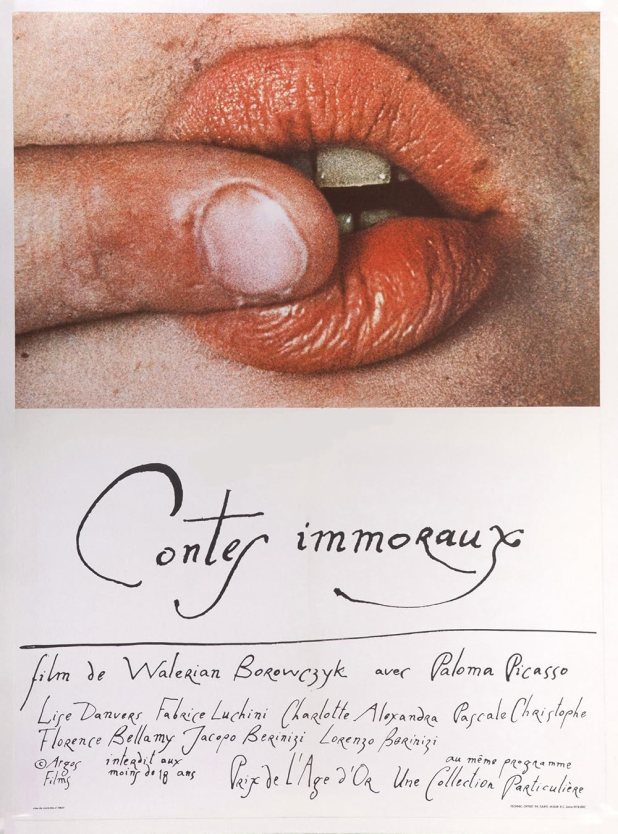
Directed and written by Walerian Borowczyk, Immoral Tales is four stories that each have a different tale of lovemaking, starting with “The Tide,” the story of André (Fabrice Luchini) getting head from his 16-year-old cousin (Lise Danvers) in concert with the waves of the ocean. This is taken from a story by surrealist writer André Pieyre de Mandiargues.

It’s followed by “Thérése the Philosopher,” an adaptation of the 1748 novel of the same name that was written by either Jean-Baptiste de Boyer or Marquis d’Argens. Thérése (Charlotte Alexandra) becomes locked out of her room, freeing her to mix her love of Christ with need for sex. There’s an incredibly sacrilegious moment filmed in actual church, which had the director exclaim “Thérèse was played by an English actress. She was only seventeen years old, I remember, and very shy. We had to film her nude scenes in complete seclusion, only my assistant and I were allowed to be there, and he was only twelve! We got permission to film in a real church, a very beautiful and quite famous one, an historical monument. There were no difficulties with the priest; I was very surprised. The man was very tolerant indeed, in spite of all this pipe organ business ! The film was even shown in the church cinema of the village, if you can imagine that!”

The third tale is probably the most famous, as it concerns Elizabeth Báthory (Paloma Picasso) bathing herself in the blood of the young virgins of her kingdom. Picasso is really bathing in 30 gallons of pig blood in this part of the movie. Borowczyk was inspired by surrealist poet Valentine Penrose and the way she related the legend of Bathory.

Finally, Pope Alexander VI’s daughter  Lucrezia Borgia (Florence Bellamy) indulges her passions with her male relatives. There was a fifth story, which ended up being the film La Bête. When Arrow released this on blu ray, they added that film into this one as the third chapter.

Despite being a movie all about sex, this is a gorgeous act of cinema, filled with lush imagery and gorgeous camerawork. There was a time when non-hardcore movies could be made as art and this is a prime example, a film that was second place in the French box office behind another example of softcore, Emmanuelle.

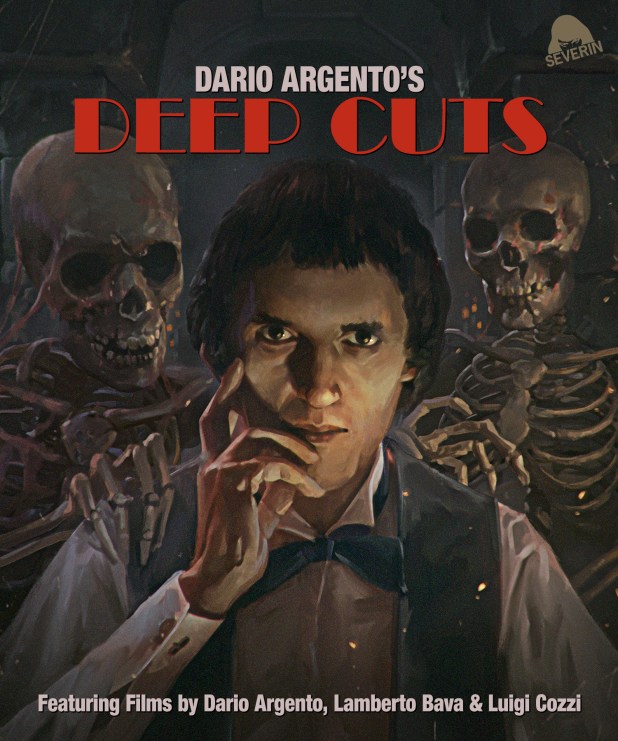
SEVERIN BLU RAY RELEASE: Dario Argento’s Deep Cuts (1973, 1987)

Severin is releasing this to retail on November 26, 2024. Until now, it has only been available on their site.

At the peak of his cinematic triumphs, horror legend Dario Argento created projects for RAI TV that broadcast his singular vision of terror into millions of Italian homes: Door Into Darkness was the top-rated 1973 anthology series produced and hosted by Argento. This set has three of the four episodes sourced for the first time from the original 16mm negatives. Argento’s popular 1987 variety/talk show Giallo has stories directed by Argento, Luigi Cozzi and Lamberto Bava, as well as behind-the-scenes tours from Tenebrae, Phenomena and Opera, and guests that include Anthony Perkins, David Gilmour, Nick Mason, and Fiore Argento newly digitized from broadcast masters.

This Severin set also has over 8 hours of new and archival special features, including commentary by Nathaniel Thompson and Troy Howarth, Dario Argento: My CinemaDario Argento: Master of Horror and interviews with Argento, Cozzi, Bava, Dardano Sacchetti and Antonella Vitale. 

You can order this from Severin.

Here’s an overview of what you’ll find:

In 1973, Dario Argento was invited to RAI television and delivered Door Into Darkness, a show that he would host and even guide some of the episodes. Argento says, at the start of one of the episodes (translated into English) “As for Door Into Darkness, which is the title of the series, you will wonder what it means. Well, it means many things: opening a door to the unknown, to what we don’t know and which therefore disturbs us, scares us. But for me it also means other things. It can happen, and it has happened once, even just once in a person’s life, to close a door behind them and find themselves in a dark room… looking for the light switch and not finding it… trying to open the door and not being able to Do. And having to stay there, in the dark… alone… forever. Well, some of the protagonists of our stories have closed this fatal door behind them.”

The first episode, Il vicino de casa (The Neighbor) was the second directing job for Luigi Cozzi, who had debuted with Il tunnel sotto il mondo (The Tunnel Under the World). It’s the tale of a young couple by the names of Luca (Aldo Reggiani) and Stefania (Laura Belli). They arrive at their new home late at night with their infant child and barely meet anyone, other than knowing they have a neighbor (Mimmo Palmara) but otherwise, they live in a very isolated neighborhood.

On one of the first evenings they are there, as they watch Abbott and Costello Meet Frankenstein, they start to see a stain in the corner of the ceiling that starts to leak from upstairs. What is it? And should they tell the neighbor they have never met? When they go up there, no one is home. However, they soon find the dead body of their neighbor’s wife just in time for him to come back and tie them up.

This story was also written by Cozzi and it has plenty of tension, such as the couple hiding in the dark and then realizing that the husband has dropped his lighter in the killer’s room. It also has a dark non-ending that doesn’t give you much hope, as well as an Argento cameo as a hitchhiker.
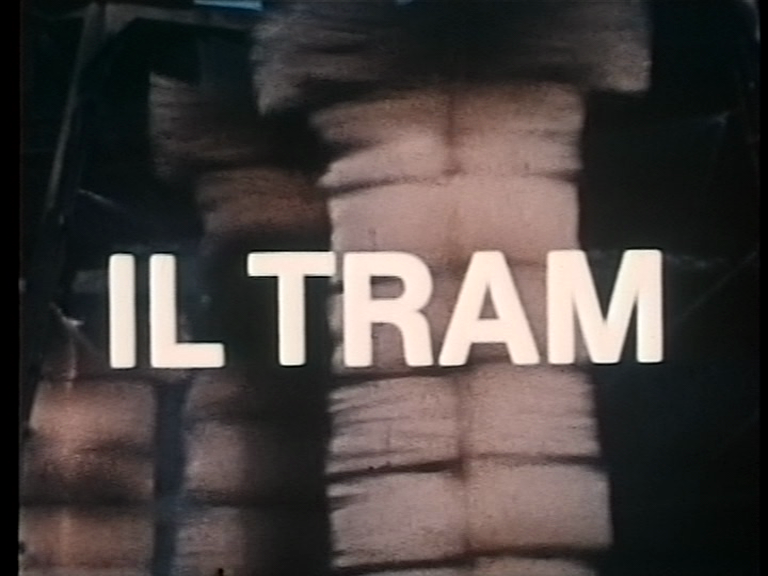
For the second episode of Doorway to Darkness, Dario Argento himself would direct and write. Il Tram (The Train) under the name Sirio Bernadotte (thanks to the incredible Italo Cinema).

A young woman is murdered on a train in the seconds that the lights go out and before they return. The murder baffles everyone except for Commisario Giordani (Enzo Cerusico) who seeks to solve it. He thinks that it has to be ticket taker Roberto Magli (Pierluigi Aprà), except that he’s never satisfied. It seems too simple. That’s when he brings his girlfriend Giulia (Paola Tedesco) to ride the train and try to lure out the true murderer.

A very Hitchcock-influenced story, this moment was originally going to be part of The Bird With the Crystal Plumage but it took away from the story. Argento would return to the dark mystery of a train and how frightening it can be in probably the best sequence of his post-Opera films in Sleepless. This may not have the insane energy and madness of his usual style, but the story is well-told and I loved how the hero must overcome his own shortcomings — he’s too cocky, which may be because of his youth — if he wants to save his lover and solve the mystery.

There’s also a striking scene where the killer chases Giulia through the train and into a station and down an immense hallway, all POV, all with her staring back at us. It’s incredible.
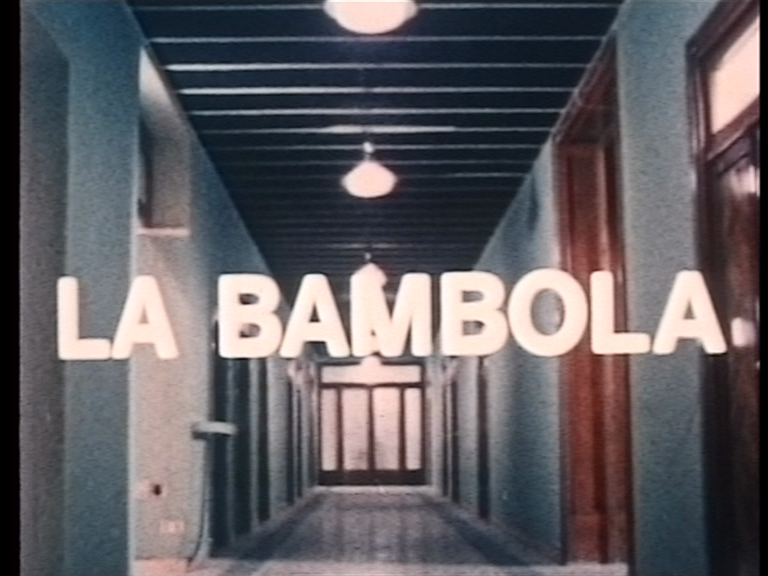
The third episode of Doorway to Darkness was directed by Mario Foglietti (who wrote the original story for Four Flies On Grey Velvet) and Luigi Cozzi and was written by Foglietti and Marcella Elsberger.

Argento informs us, in his introduction, that someone has escaped from a sanitarium, saying “…a sick mind wandering a small town, apparently normal, in matter of fact incandescent… Its aim: to kill.” That sick mind may be Robert Hoffman, who has checked into a hotel with an attache case before wandering the streets. One redhead is already killed when he meets Daniela Moreschi (Mara Venier) and follows her back home.

This feels like ten minutes of story shoved into an hour and sadly doesn’t work. But hey — Erika Blanc is in it and if the worst thing you do is watch a giallo with her in it, your day isn’t all that bad. Foglietti gets the look of Argento but doesn’t have the same ability to make art out of a flawed script.

Directed by Roberto Pariante (who was the assistant director for Argento on The Bird With the Crystal PlumageThe Cat o’Nine Tails and Four Flies On Grey Velvet) and Dario Argento, who wrote the script with Luigi Cozzi, Testimone oculare is my favor episode of Doorway to Darkness. It’s so simple and yet succeeds as an example of giallo.

Roberta Leoni (Marilù Tolo, Las trompetas del apocalipsis) is driving on a dark and rainy night when she sees a woman dive in front of her. She doesn’t hit her, but does find her dead body. She’s been shot in the back. That’s when she sees the glint of a gun and runs through the storm to a diner where she breaks down. The police, led by Inspector Rocchi (Glauco Onorato), take her back to the crime scene but there’s no body and no blood.

Everyone treats Roberta like a hysterical woman, including her husband Guido (Riccardo Salvino), even after someone breaks into their house while they’re out for their anniversary and the next day when someone tries to shove his wife into traffic. Then the phone calls start and never seem to stop.

One night, while all alone, the killer calls and says that they will finally kill Roberta. Guido comes home just in time and says that instead of leaving — the killer cut the phone line — they are going to wait for them and he will shoot whoever is after her. As you can imagine, this isn’t the way things end up happening.

Sometimes, a simply told mystery is exactly what you need. That’s what this episode gave me. Supposedly Argento disliked the work that Pariante did and went back and filmed a lot of this himself — the tracking of the killer by footsteps is definitely him — and then not putting his name on it.

Gli incubi di Dario Argento (Dario Argento’s Nightmares) was a TV series created and directed by Dario Argento that was part of the RAI TV show Giallo by Enzo Tortora. He’s probably most famous for the show Portabello that had viewers call in to buy or sell things, present ideas or try and look for love. And if they could get the parrot who was the show’s namesake to say his name, they would win a prize. He was also arrested in 1983 and jailed for 7 months as it was thought he was a member of an organized crime family, the Nuova Camorra Organizzata. It was a case of mistaken identity and he got out of ten years in jail thanks to the Radical Party. They offered him a candidacy to the European Parliament, which he won in a landslide. He was cleared of all charges the year this show ran and brought this show — on which he discussed unsolved murder cases — and Portabella to RAI.

The main draw of these episodes are nine new mini-movies made by Argento. They’re three-minute shorts shot on 35mm that show off some wild effects but one of them, Nostalgia Punk, so upset viewers that it has rarely been shown since. The stories are:

La finestra sul cortile (The Window on the Court): This is Argento’s tribute to Alfred Hitchcock and Rear Window. After watching the film, a man named Massimo watches his neighbors fight. He runs down with a knife to stop them, but falls on his own weapon and is blamed by the police for killing the woman. If you recognize the music, it’s part of the Simon Boswell score from Phenomena.

Riti notturni (Night Rituals): This is also missing from some online versions of the film, but has a maid conspire with a voodoo coven to murder and devour the couple that she works for.

Il Verme (The Worm): A woman who goes by the name of Bettina is reading Dylan Dog (the comic book that Cemetery Man comes from) when she overhears a story about parasites that go from cats to humans. As she explores her nearly nude body in a mirror, she notices a worm has grown out of her eye, which she stabs out.

Amare e morire (Loving and Dying): Set to Michael Jackson’s “Bad,” this story has Gloria assaulted and left for dead. As she recovers, she believes that the man who raped her is one of three neighbors. She sleeps with each in an attempt to learn who it is and get her bloody revenge.

Nostalgia punk: The most controversial segment, this has a woman’s water become poisoned. She begins to vomit multicolored liquids and then parts of her body before she finally tears her own body to pieces and her organs rain out of her destroyed carcass. It got so many complaints that Argento was told to settle down in future segments.

La Strega (The witch): Using Morricone’s score from The Bird With the Crystal Plumage, this has Cinzia’s party guests playing a game called “The Witch” that ends with children screaming and holding a bloody head.

Addormentarsi (Falling asleep): A man is possessed by a demon just before he falls asleep and then devours his dog. This uses “Anarchy in the UK” by the Sex Pistols.

Sammy: Sammy is a young girl who is frightened when Santa enters her room. Then Santa removes his face and reveals a monster. It’s simple but it really works.

L’incubo di chi voleva interpretare l’incubo di Dario Argento (The Nightmare of the One Who Wished to Explain Dario Argento’s Nightmare): A young man comes to REI to be part of this series and when he stays at a hotel, he soon learns he’s in a room with foreigners who steal everything he has and then threaten to kill him. It turns out that it’s all a set-up by Argento.

At the beginning of every episode, Argento appears, often with Coralina Cataldi-Tassoni (Demons 2Il Bosco 1Opera) all gothed out and acting as his starry-eyed assistant.

Argento also created another segment for GialloTurno di notte (Night Shift), which was about what happens to cab drivers at night. Episodes were also directed by Lamberto Bava and Luigi Cozzi. He also shared how he filmed several big moments in his most famous movies, such as the Loma camera sequence in Tenebrae; the bird attack in Opera, the transformation scenes in Demons 2 and how he directed Goblin to create the score for Suspiria. These scenes are worth watching and also appear in the Luigi Cozzi-directed Dario Argento: Master of Horror.

While this is by no means necessary watching for those with a passing interest in Italian horror, for devotees of the form and Argento, it is required viewing. It’s the chance to basically get nine new stories even if they are very short.
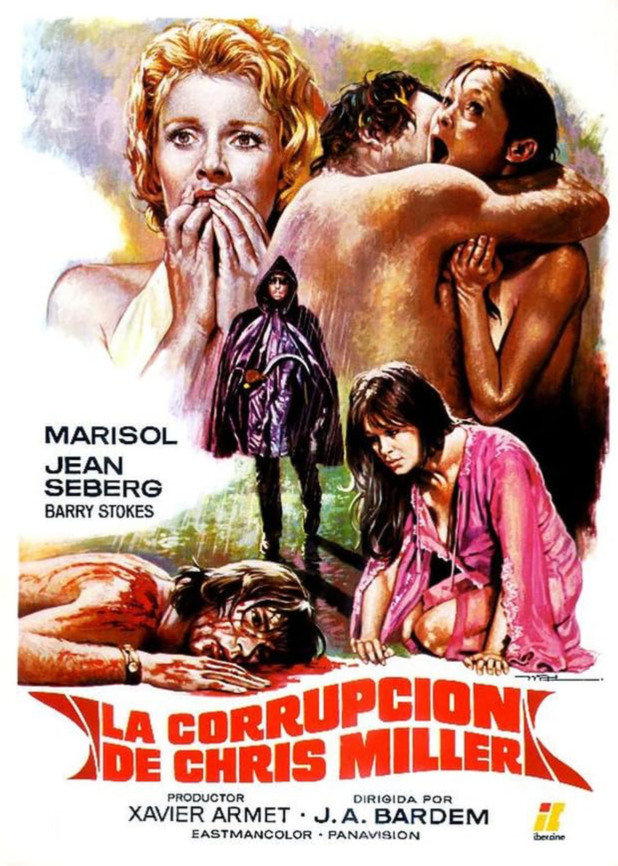
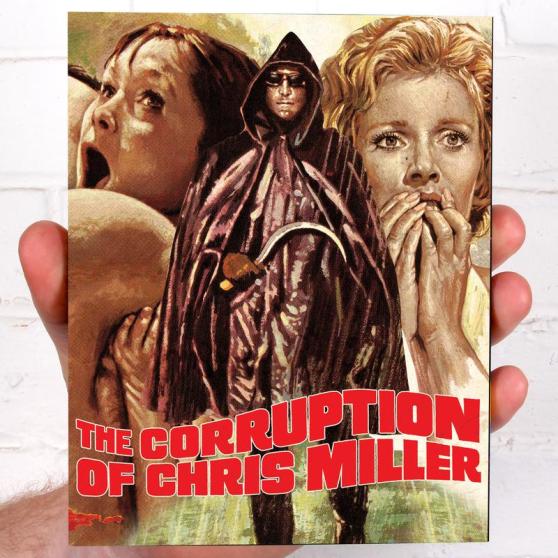
88 FILMS BLU RAY RELEASE: Facets of Love (1973)

Directed and written by Han Hsiang Li, this is the steamier side of Shaw Brothers. Yes, it’s not all punches, kicks and blood. This is an anthology about a brothel, telling the story of Da-Qin (Yu Feng) and her battles against owner Miss Ho (Lily Ho, playing the opposite of her role in Intimate Confessions of a Chinese Courtesan). Despite being sold into sexual submission, she remains defiant. Then, the story moves on to a young emperor having his first time in the brothel before meeting a soldier who wants the house of ill repute’s most gorgeous woman and finds himself possessed by the emperor, while the object of his desire was saving herself for the very same leader. It’s a musical, it has ghosts and yes, none of these anthology chapters really add up.

In the middle of all the whippings and nudity, Jackie Chan shows up in the last story as a waiter.

I kind of like the audacity of this movie in that it wants to be a history lesson and then fills the screen with wall to wall depravity. Well done, Shaw Brothers. You aren’t that far away from your Italian exploitation filmmaking cousins after all.

The 88 Films blu ray of this movie has art by Yu-Ming Huang, as well as the option of displaying the original Hong Kong poster art. You can buy it from MVD.

SEVERIN BOX SET RELEASE: All the Haunts Be Ours: A Compendium Of Folk Horror Vol. 2: Swimmer (1973)

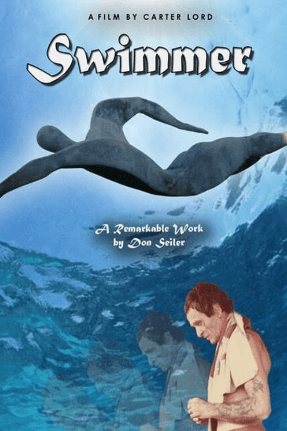
In this short, director Carter Lord sets his camera on artist Don Seiler, as he creates a 10-ton concrete sculptural commission in honor of Olympic swimmer Mark Spitz that would be placed outside the International Swimming Hall of Fame in Ft. Lauderdale, Florida. Lord would go on to direct The Enchanted, while Seiler would paint the animals that appear on the walls throughout that movie.

What’s incredible is that for all his work and the size of this sculpture, Seiler was only being paid $3,000. The most his art had sold for was $6,000 and he had given that away.

Some may find this somewhat slow, just watching a man sculpt, but to me, seeing this part of the creation process is amazing. Lord only made one other movie, other than this and The EnchantedLithium Springs.

You can learn more about Seiler’s life on his official web site, which even goes into the dates in which he was married, including one marriage to the heir of Molson beer.

The Swimmer is part of the new Severin box set, All the Haunts Be Ours Volume 2.

You can order this set from Severin.

SEVERIN BOX SET RELEASE: All the Haunts Be Ours: A Compendium Of Folk Horror Vol. 2: Who Fears the Devil (1973)

Manly Wade Wellman worked in so many genres — historical fiction, detective tales, Western stories, juvenile fiction, comic books, non-fiction, science fiction and fantasy — and had his stories become episodes of The Twilight Zone and Monsters but he’s best known for the fantasy and horror stories set in the Appalachian Mountains near the North Carolina he loved so much.

Perhaps his most beloved character is Silver John or John the Balladeer. He may be a simple country man who has just returned from Korean, where he was a sharpshooter, but he has a high degree of knowledge, mostly of the occult. He carries John George Hohman’s Long Lost Friend, a book of Pennsylvania Dutch spells, talismans and remedies. Most importantly, he has a guitar with strings of pure silver. There’s also some spiritual link between him and John the Baptist.

Beyond these stories being filled with the legends of the Carolinas, the songs that John sings throughout are all true. I love this quote about these tales: “Whereas Tolkien integrated Northern mythology into his mythos, and C.S. Lewis the European Fairy Tales of yore, Wellman’s stories are drenched in the folktales and songs of old Americana; the haunting stories of the slaves and the tall tales of the Revolution, strange beasts, witch-women and dark apparitions.”

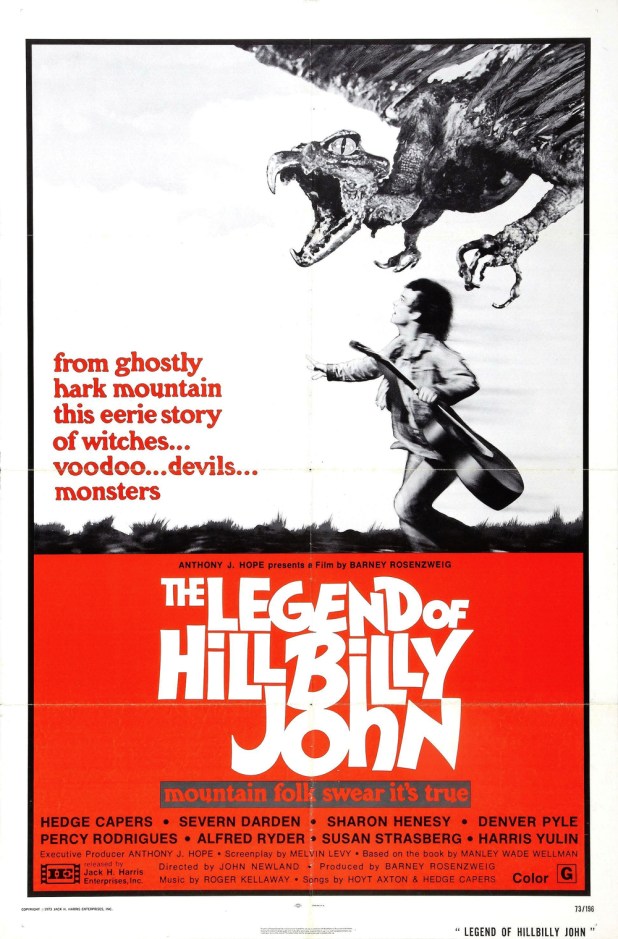
Based on two of the Silver John adventures, “The Desrick on Yandro” and “O Ugly Bird,” this is nearly a portmanteau of many tales of John (Hedges Capers), as well as information on all manner of legends, including dowser Mr. Marduke (Severn Darden) explaining how important the devil is to Appalachian culture. Oh yes — a dowser is someone who uses a diving rod to find water, minerals or gold underground.

We also learn how John gets his silver stringed guitar from his grandfather (Denver Pyle) who decides to sing against the Defy, who is the devil around these parts. Their battle is so brutal that is literally breaks the film and ends with the devil triumphant, as American silver is not as pure as the money of the past.

Before John can outsing the dark one, he goes to a mountain where he meets Zebulon Yandro (Harris Yulin), whose grandfather once turned against a witch that he had been given gold by. He told her he’d be her lover for a year but took the treasure and ran to become an undertaker. Now that she still lives on the mountain and looks like a young, gorgeous girl (Susan Strasberg) but Yandro doesn’t get the good end of this deal. John does, as he’s pointed to the next stage in his quest, Hark Mountain, which is being mined by warlock O. J. Onselm (Alfred Ryder), followed by a sharecropper named Captain Lajoie H. Desplaines IV (Percy Rodrigues). Luckily, John has the help of Uncle Anansi (Chester Jones), who is related to the West African spider god.

Why does John help people who would sooner be afraid of him? Well, that’s just what he does. He’d probably be happier living with his woman, Lily (Sharon Henesy), sleeping in the warmth of the fire instead of outside in the mountains, getting to spend time with her and his dog Honor Hound. But heroes don’t get to make choices for themselves.

Directed by John Newland (who directed 96 episodes of One Step Beyond and the TV movies Don’t Be Afraid of the Dark and Crawlspace) and written by Melvin Levy, this takes a departure from the books by having John younger and way less sure of himself. It does have the benefit of “The Devil,” sung by Hoyt Axton, and that Hedges Capers was such a good singer himself. More for hippies than perhaps the audience for the books, this is still such a unique film, one I’d wanted to see for so long and quite pleased that it’s as magnificent as it is.

Who Fears the Devil is part of the new Severin box set, All the Haunts Be Ours Volume 2. It has extras including the alternate opening for The Legend of Hillbilly JOhn introduced by Severn Darden; audio commentary by Amanda Reyes; interviews with producer Barney Rosenzweig and actor and musician Hedges Capers; author David Drake remembers Manly Wade Wellman; occult historian Mitch Horowitz on the arcane texts of Wellman’s John The Balladeer stories and a trailer.

You can order this set from Severin.

SEVERIN BOX SET RELEASE: All the Haunts Be Ours: A Compendium Of Folk Horror Vol. 2: Psychomania (1973)

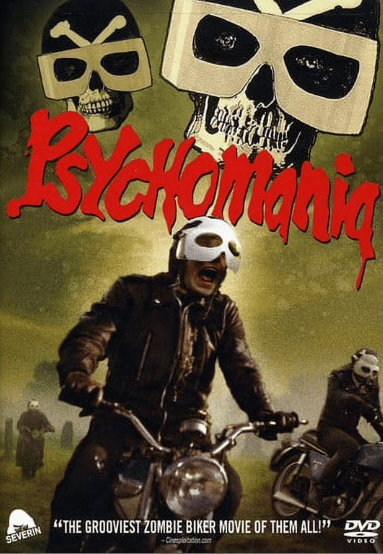
Is there such a thing as a perfect movie? Maybe. Maybe not. But if you ask me, this combination of the occult and biker culture ranks really close.

Tom Latham (Nicky Henson, Witchfinder General) leads The Living Dead, a motorcycle gang that causes trouble and occasionally dabbles in black magic. The worm filled apple didn’t fall far from the tree — Tom’s mother, deceased father and butler Shadwell (George Sanders, All About Eve and Rebecca) follow the Left Hand Path. With their help, he learns how to die and come back from the dead — roaring from his freshly buried earth on his motorcycle (later Lemmy would do this in Motörhead’s “Killed by Death” video).

Soon, one after another of the gang commit suicide and return from the dead. Soon, the gang is killing cops and menacing babies. And their names! Gash, Hatchet, Chopped Meat, Hinkey and Bertram! This movie is about pure mayhem! I wonder, was all of England in the grip of Satan in the early 1980’s?

Director Don Sharp keeps things stylish and moving. This isn’t his first go-round with frogs in cemeteries, pacts with the devil, mysterious suicides and zombies. Check out his other film, Witchcraft. He was also behind Dark Places, Hammer’s Rasputin: The Mad Monk and the final movie in The Fly series, Curse of the Fly. This is his best work, though.

You should pretty much quit whatever it is you’re doing right now and go watch this.

Psychomania is part of the new Severin box set, All the Haunts Be Ours Volume 2. It has extras including an introduction by film historian Chris Alexander; a commentary by Maria J. Pérez Cuervo, founding editor Of Hellebore Magazine; interviews with Nicky Henson, Mary Larkin, Denis Gilmore, Roy Holder, Rocky Taylor, “Riding Free” Singer Harvey Andrews and soundtrack composer John Cameron; the featurette Stone Warnings, in which Dr. Diane A. Rodgers discusses stone circles and standing stones in film and television and a trailer.

You can order this set from Severin.

Terror Circus (1973)

Also known as Barn of the Naked Dead and Nightmare Circus, this is one of those movies where no one is even sure who made it. Sure, Alan Rudolph is listed as the director, but stuntman Gerald Cormier — also the leader of the film’s distributor CMC Pictures — is credited. Some say that he’s Rudolph. Star Andrew Prine says that two other directors made this before Rudolph and Cormier was one of them. Writer Ralph Harolde could also be Rudolph.

Andre (Prine) has built a circus in the desert, located right on top of a former atomic test site, and keeps kidnapping showgirls like Simone (Manuela Thiess), Sheri (Sherry Alberoni) and Corinne (Gyl Roland) and even female scientists, training all of them to perform for him. He also has a cougar that he lets loose on them and there’s something inside the barn that loves to kill women.

Simone is worshipped as the lost mother Andre can’t have, as he tells her of his past. That’s better than Sheri, who has been picked to be the new Reptile Girl as Andre flings snakes at her. Then, the girls free Andre’s father (Gerald Cormier) from the barn. Nuclear fallout has made him into a crazed psychopath and he kills everyone in his path with only two girls escaping. That’s the scene that the agent of the Vegas girls, Derek Moore (Chuck Niles), and the cops discover when they get there.

Andrew Prine said, “This is the only movie I ever regretted making.”

He should embrace it. I love the circus tent in the middle of the desert and the sheer lunacy of this movie. It’s just so out there and it shouldn’t work yet it does just long enough to rush to its bloody end.

Here’s a drink.

Barn Door of the Naked Dead

  • 1.5 oz. vodka
  • 5 oz. pineapple juice
  • .5 oz. cranberry juice
  1. Pour the vodka into a glass filled with crushed ice.
  2. Top with pineapple juice and float cranberry juice to complete.