Live and Let Die (1973)

ABOUT THE AUTHOR: An American living in London, Jennifer Upton is a freelance writer for International publishers Story Terrace and others. In addition, she has a blog where she frequently writes about horror and sci-fi called Womanycom.

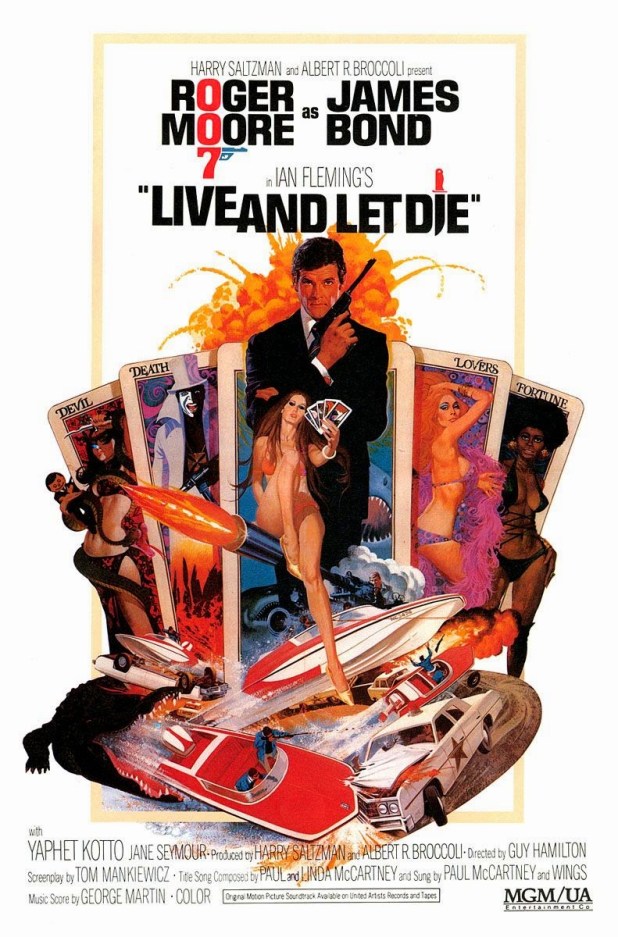
Fans of James Bond all have their favorite era. Live and Let Die (1973) is the eighth Bond film in the franchise and the first to star Roger Moore. Having cut his teeth on the British TV shows The Saint and The Persuaders, Moore proved himself to be a perfect Bond and went on to play the character six more times.

Released at the apex of the blaxploitation era, the film features many African-American stars from films in that genre, some used to great affect and others not so much. Yaphet Kotto is great as Kananga/Mr. Big. The clever gangster who -through the use of an alter-ego- both produces and distributes heroin throughout the United States. Julius Harris plays the Henchman Tee Hee with snarling delight, using his sharp metallic hand to great effect. 

 As with most Bond films, Live and Let Die is filled with beautiful locations and beautiful people but has a terrible script. When several MI6 agents are killed while monitoring his activities, they send Bond in to investigate. It’s odd that crimes having nothing to do with the UK would interest them but it’s so entertaining that it suspends disbelief. 

The female characters during this era were treated pretty badly as well. 

Gloria Hendry plays Rosie Carter, a CIA double agent working for Kananga. Although the film’s Wiki proudly boasts her as being the first Africa-American to sleep with Bond in the series, the film wastes her talent. She’s given nothing to do other than look scared displays an astonishing level of ineptitude despite being a highly trained CIA operative. Frankly, it’s insulting. Not only to Miss Hendry, but to the audience. To see Gloria flexing her acting chops and her fists, watch Hell Up in Harlem (also 1973) or Black Belt Jones (1974). Films on which her salaries were likely smaller, but the material she had to work with was far better than what they gave her here. 
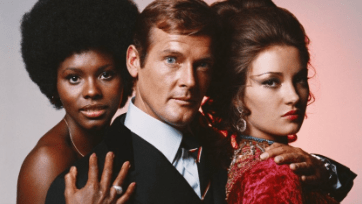
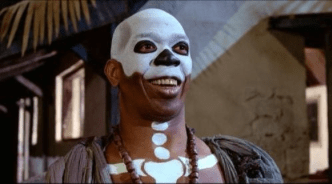
Young Jane Seymour is perfect as the naive Solitaire, Kananga’s tarot-reading mystic ward whom Bond rescues from captivity (and virginity.) The film includes a lot of mixed references to occultism and Voodoo in a confused mash-up that services the study of neither. In the film’s big reveal, Bond discovers Kananga has been producing heroin and is protecting the poppy fields by exploiting the San Monique locals’ fear of Baron Samedi, but played here memorably by Geoffrey Holder but given greater depth of exposition in 1974’s Sugar Hill.
In the finale, Kananga strings Bond and Solitaire up over a pool filled with sharks (without frickin’ laser beams) and then expands into a comical balloon that floats up and explodes after a fight where James shoves a gas pellet into his throat. All accompanied by the best soundtrack of the entire series. Did I mention there’s a redneck sheriff? Yeah, it’s got that going for it, too. An over-the-top stereotype meant to amuse African-American and British audiences alike. 
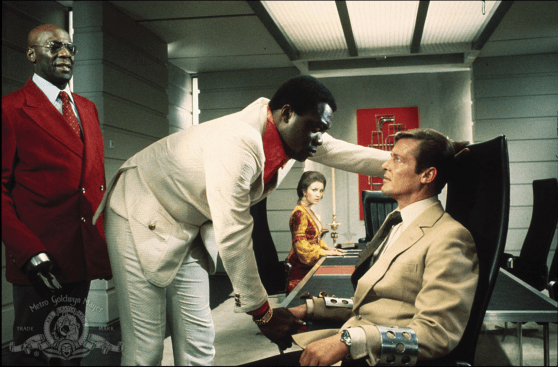
To sum up, the movie looks great and sounds great. The boat chase is still one of the best of the series and although Q does not make an appearance, his gadgets are still prominently featured. Pardon the pun, but the plot is literally a pale comparison of the actual Blaxploitation crime films it tries to imitate. An enjoyable way to kill time? Definitely. It’s ‘70s cinema junk food at its best.
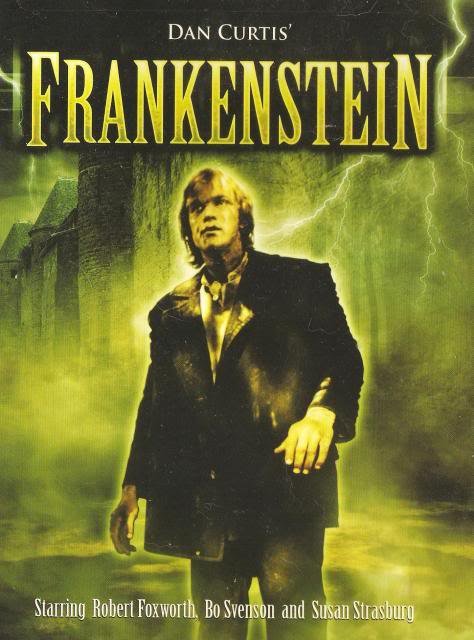
Frankenstein (1973)

Written by Sam Hall and producer Dan Curtis, this made-for-TV Frankenstein adaption was directed by Glenn Jordan, who would also be in charge of Curtis’ The Picture of Dorian Gray.

Originally airing on January 16, 1973 on ABC, this show was forgotten due to another more expensive TV film, Frankenstein: The True Story.

Robert Foxworth, who was Questor in The Questor Tapes, stars here as Dr. Frankenstein, determined to give life to dead tissue. He’s also in the TV movie The Devil’s Daughter with Johnathan Frid and Shelley Winters.

Bo Svensen makes for a great monster that you both feel for and are afraid of at the appropriate times in the script. He’s joined by Susan Strasberg (Sweet Sixteen), Robert Gentry (Dear Dead Delilah) and Curtis favorite John Karlen (who is in just about every TV movie that Curtis woud produce).

You may or may not like the shot on video look of so many of Curtis’ productions. I personally love them and make me wistful for an era of TV that is long gone.

You can watch this on Amazon Prime and Tubi.

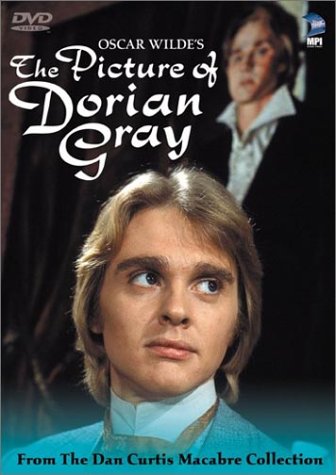
The Picture of Dorian Gray (1973)

Originally airing on April 22, 1973 on ABC, this Dan Curtis-produced adaption of the Oscar Wilde book was like going back to the Dark Shadows well. After all, Quentin Collins also had a portrait that had kept him immortal. He was born Grant Douglas in 1870 and if you reverse those initials, you get the same ones as Dorian Gray.

It was written by John Tomerlin who was the scribe for the Twilight Zone episode “Number 12 Looks Just Like You” as well as episodes of Thriller. Glenn Jordan directed and you may remember him from the Kim Milford-starring TV movie Song of the Succubus.

Shane Briant (Demons of the MindCaptain Kronos: Vampire HunterFrankenstein and the Monster from HellHawk the Slayer) is the perfect Dorian Gray, at once sure of his actions and the other yearning to escape from his life of sin.

Charles Aidman, who worked for Curtis in The Invasion of Carol Enders and as the narrator of When Every Day Was the Fourth of July, appears, as does William Beckley (Gerard the butler from Dynasty), Nigel Davenport (No Blade of Grass), Vanessa Howard (Some Girls Do), Linda Kelsey (TV’s Lou Grant), a very young Kim Richards (when she wasn’t escaping Witch Mountain or getting shot outside Precinct 13 as a child, she was falling in love with Mr. Gray) and Curtis favorite John Karlen, who played Willie Loomis on Dark Shadows.

This is a mannered take on the story, so don’t expect much excitement. But there are a few really great scenes between Davenport and Briant. It’s worth a watch.

You can see it on Amazon Prime and Tubi.

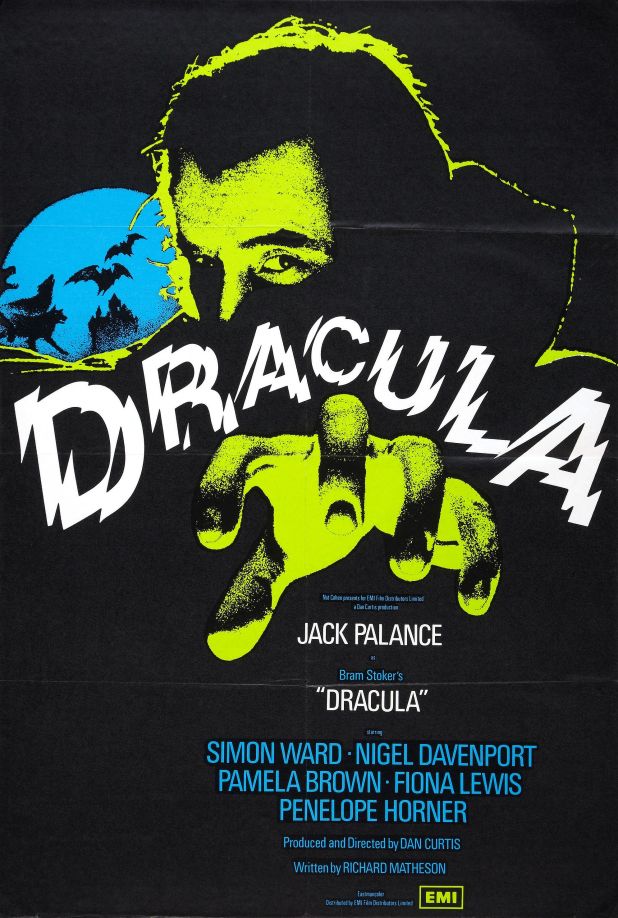
Dracula (1973)

Written by Richard Matheson and directed by Dan Curtis, this would be the second collaboration between Curtis and Jack Palance after 1968’s The Strange Case of Dr. Jekyll and Mr. Hyde.

This movie has a big impact on Dracula lore: Francis Ford Coppola’s version seems to take two cues from this film, which had never appeared in any other version of Stoker’s story: Dracula is Vlad the Impaler and that he is convinced that Mina is the reincarnation of his dead wife.

Also — Gene Colan based his Dracula in the comic book Tomb of Dracula on Palance years before this movie was made.

Palance is an incredibly convincing Dracula. He battles a Van Helsing played by Nigel Davenport, who is also in the oddball 70’s insect film Phase IV.

Playing Lucy — and Dracula’s dead wife Maria — is Fiona Lewis, whose genre credits are plentiful, from The Fearless Vampire KillersDr. Phibes Rises Again and Tintorera to The FuryStrange Behavior/Dead KidsStrange Invaders and Innerspace.

Mina is played by Penelope Horner and one of the vampire brides is played by Sarah Douglas, Ursa from the Superman movies, Queen Taramis in Conan the Destroyer, Lyranna in the second Beastmaster movie and Elsa Toulon in the third Puppet Master movie. Man — this is full of people with full-on horror pedigrees!

Don’t believe me? Dracula’s other brides are played by Hammer actress Virginia Wetherell (Dr. Jekyll and Sister Hyde, Demons of the Mind) and Barbara Lindley, who appeared in Benny Hill and Monty Python sketches.

As for inventing that Dracula looking for his reincarnated wife plot, Curtis merely laughed and said that he was stealing from himself. Indeed, Dark Shadows and its vampire folklore informs this movie quite a bit.

You can watch this on Tubi.

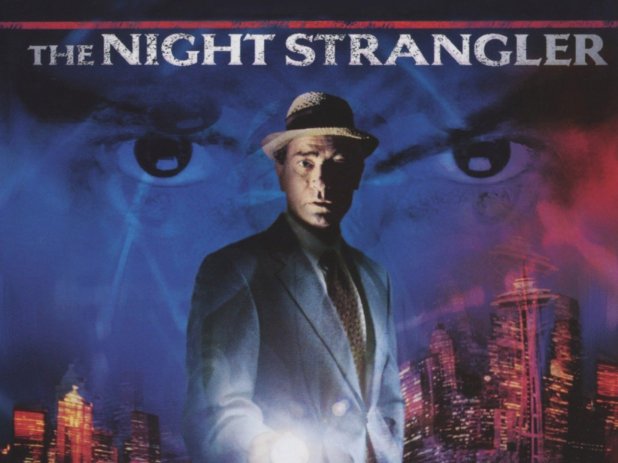
The Night Strangler (1973)

Originally airing on ABC on January 16, 1973, this sequel to The Night Stalker was just as popular as the original film. Richard Matheson would come back to write, Dan Curtis would produce and direct, and Darren McGavin would be Carl Kolchak again.

While the TV version is only 74 minutes, there was an international version that played theaters at 90 minutes with extra footage added.

This time, Kolchak has been run out of Las Vegas and found his way to Seattle, where fate has put his former editor Vincenzo (Simon Oakland, PsychoChanto’s Land) has also ended up. He’s arrived just in time, as a series of exotic dancers have all been strangled and drained of blood. And oh yeah — there are traces of rotting flesh on their necks.

A researcher (Wally Cox, the voice of Underdog) discovers that this isn’t the first time the Emerald City has dealt with murders just like this. It happened in 1952. And in 1931. And every 21 years since 1889, with a series of murders occurring over an 18-day span.

Our hero figures out the truth, but the story gets suppressed again. He deals with it about as well as you’d imagine. He teams up with an exotic dancer (Jo Ann Pflug, one-time wife of Chuck Woolery who also is in Scream of the Wolf) and tracks down the night stalker (Richard Anderson, The Six Million Dollar Man) to his lair, where the truth is revealed: he’s actually a man named Dr. Richard Malcolm who has discovered the elixir of life, but must kill six people to make it. To make things even creepier, his family died long ago and are mummified nearby.

Carl smashes the mixture and is attacked, but soon, the night stalker ages into dust before he kills himself. Out of a job, Carl and Vincenzo are forced to drive to New York City together.

A third film, written by Mattheson and William F. Nolan (Burnt Offerings) called The Night Killers was to be set in Hawaii, with Kolchak again walking into a cover-up, as UFO’s, nuclear power and androids replacing humans would have all figured into the plot. There was also the rumor of another script where Kolchak was going to discover that Janos Skorzeny was alive and making others not so well in New York City.

ABC passed on the third movie and gave Kolchak a series without Matheson or Curtis involved.

But that’s a story for another day.

The Night Stalker is everything great about made-for-TV movies, with plenty of quality actors showing up, like The Wizard of Oz star Margaret Hamilton, John Carradine (like you can keep him away from a horror movie made in 1973), “Grandpa” Al Lewis in a funny role where you assume that he’s a bloodsucker but just ends up being a homeless person, Nina Wayne as a dancer named Charisma Beauty, Kate Murtagh (The Car), Ivor Francis (the mortician from House of the Dead) and Anne Randall (Playboy Playmate of the Month May 1967, who also appears in the Al Adamson movie  Hell’s Bloody Devils).

If you love The Six Million Dollar Man, you have to appreciate the irony that both McGavin — as Oliver Spencer — and Anderson — as Oscar Goldman — would play the handler of Steve Austin.

You can watch this for yourself on New Castle After Dark. Or grab the blu ray from Kino Lorber.

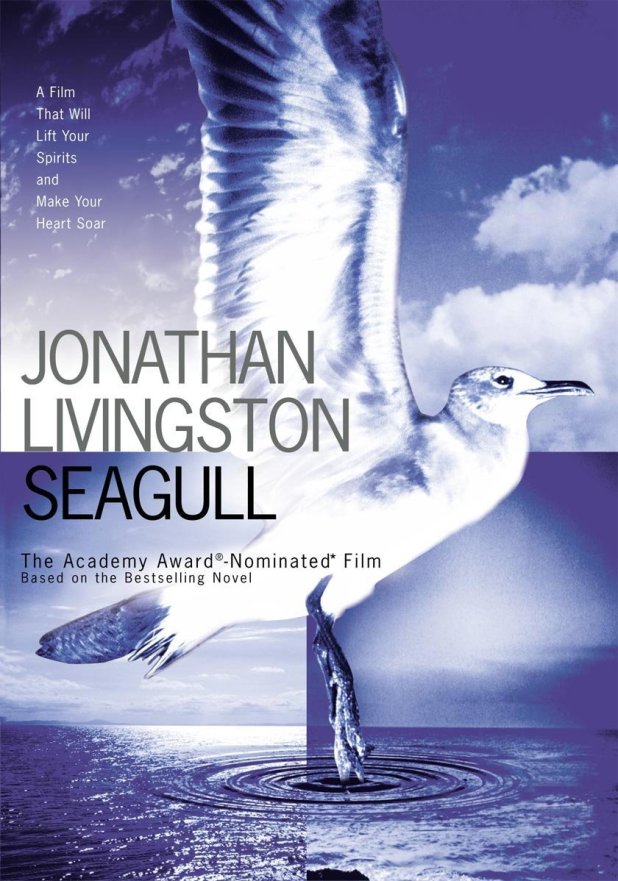
Box Office Failures Week: Jonathan Livingston Seagull (1973)

For years, I’ve wanted to see this movie and it’s eluded me. I shop at The Exchange stores often and the one in Monroeville had one of the Warner Archive burn on demand disks. I watched it like, well, a seagull for about a year. It was $12. Surely I wasn’t going to spend so much money on Johnathan Livingston Seagull, long deried as one of the worst movies ever, one of only four movies that Roger Ebert would ever walk out on (the others are Caligula, The Statue and Tru Loved) and a movie I learned about from The Fifty Worst Films of All Time.

Yeah, I like pain. Bring it on, seagull.

Jonathan Livingston Seagull (James Franciscus) is trying to up his speed and break the 60 mile per hour barrier, but the Elders of his flock — hey there, Hal Holbrook’s voice — shame him for even trying while Neil Diamond sings over his efforts.

He is now an outcast, flying alone, when he meets a series of mysterious seagulls who let him know that he is unique and should be proud. Johnathan becomes a mentor to the other birds who have no one to share their gifts with.

Juliet Mills plays Johnathan’s love interest, who is known as The Girl. And Richard Crenna is in here too as our hero’s father.

Director Hall Bartlett discovered the book when he was getting his haircut. Delaring, “I was born to make this movie,” he won the property from author Richard Bach for $100,000 and half the profits, which makes me assume that the Bach’s estate just got $6 from my DVD purchase and yet he still hasn’t made all that much.

Yes, this was directed by the same man who made Zero Hour!

And yet, it barely made back its budget.

Maybe all the lawsuits helped.

Bach sued Paramount Pictures before the film’s release because the movie was different than the book and the judge ordered Bartlett to revise the movie before it could be released. The major issue was a scene where a hawk (voiced by the director) attacks Johnathan.

Then, Neil Diamond sured because five minutes of his songs were cut. He also demanded the credit “Music and songs by Neil Diamond.”  Diamond “vowed never to get involved in a movie again unless I had complete control,” then made The Jazz Singer seven years later.

Then director Ovady Julber sued, claiming that the movie stole from his 1936 film La Mer. There was no trial, as cultural use of the film had taken away any common-law copyright the movie had, which seems like a totally BS legal decision, but hey — I write about Spanish horror movies with lots of breasts and blood so the law is way out of my sphere of influence.

The opening credit of this film reads, “To the real Jonathan Livingston Seagull who lives within us all.” I advise that this is the exact moment that you begin whatever substances you plan to get you through this.

As for Richard Bach, he met his second wife Leslie Parrish while making this movie, leaving his first wife — who typed all of his aviation books — and six children, not seeing them for many years. Beyond her production job, Parrish was responsible for the seagulls and had to keep them in her room at the Holiday Inn. When Bach and Bartlett started to fight, she was the mediator between them. Sadly, her credit for the movie was just a researcher, which seems like complete malarky.

Parish would play a major role in Bach’s next two books, The Bridge Across Forever and One, which pwas all about Bach’s concept of soulmates. They divorced in 1997, so maybe his theory wasn’t so perfect. Who can say?

In 2014, there would be another chapter added to the book. Nobody thought to film that.

This is totally going to be the movie that I will use to chase people out of my house from now on. Except that, like all bad movies, I love it. I adore every second of this schmaltzy up with people movie that just had birds staring at the screen while actors try to make magic of the script. I look forward to many, many viewings of this movie along with many, many hangovers to follow.

Join me, won’t you?

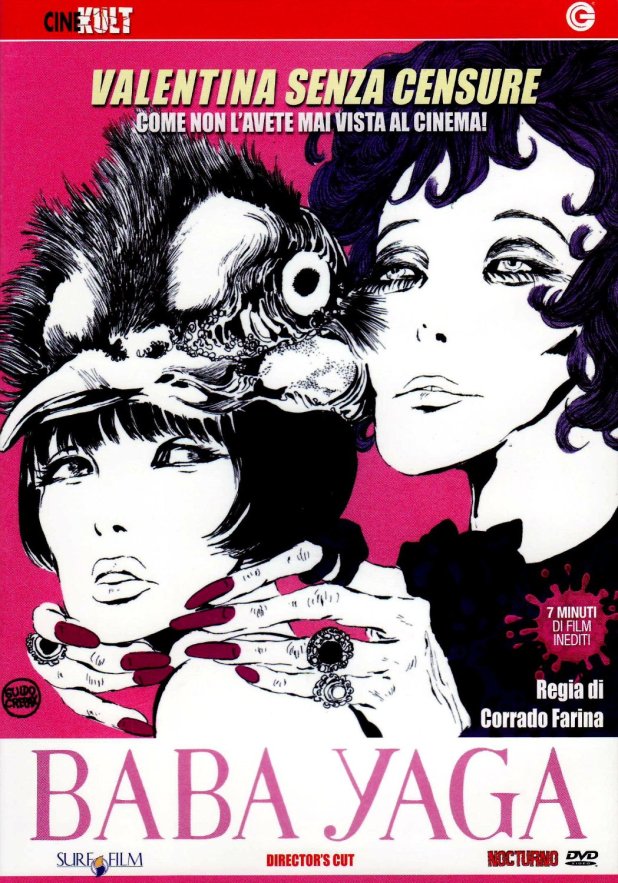
Baba Yaga (1973)

Originally simply the girlfriend for the superhero Neutron, Italian comic book character Valentina took over her series in 1967 and never looked back. Creator Guido Crepax moved her stories away from science fiction and into a world of the erotic tinged with hallucinations, dreams and BDSM.

Director Corrado Farina had previously made a documentary on Crepax before this movie, Freud a Fumetti. That artist had drawn the storyboards for Tinto Brass’ Deadly Sweet, a filmmaker who felt that Crepax’s visual style was near impossible to put on the screen.

Of recent comic adaptions — one would assume Barbarella and Danger: Diabolik amongst them, Farina would disparagingly say, “None of the filmmakers who embarked on that task had been able to deepen the relationship between the language of comics and that of film.”

In this film, Farina was committed to showing the fantastic side of Crepax and not just the erotic.

Valentina Rosselli (Isabelle De Funes) is no stranger to controversy. Her photos are guaranteed to shock and she’s unafraid to get into trouble. One night, her car gets into an accident with a mysterious blonde (Carroll Baker!) who announces herself as Baba Yaga and says that their meeting was destiny.

After taking a garter belt from Valentina’s home, Baba Yaga worms her way inside our protagonist’s head, controlling her via a teddy bear in bondage gear. Yes, you read that correctly. Baba Yaga also has a bottomless pit in her home, which is probably a common thing amongst Italian witches.

Valentina’s lover — the director Arno — is played by George Eastman. That was enough to get me to watch this movie.

Sadly, we may never see the complete vision that Farina had for this movie. After completing shooting and post-production, he left for a vacation. When he came back, the producers had hacked away half an hour directly on the negative of the film. Although he and assistant director Giuilio Berruti tried to save the movie, Farina felt that he could never get back what was lost.

You can get this on DVD from Blue Underground.

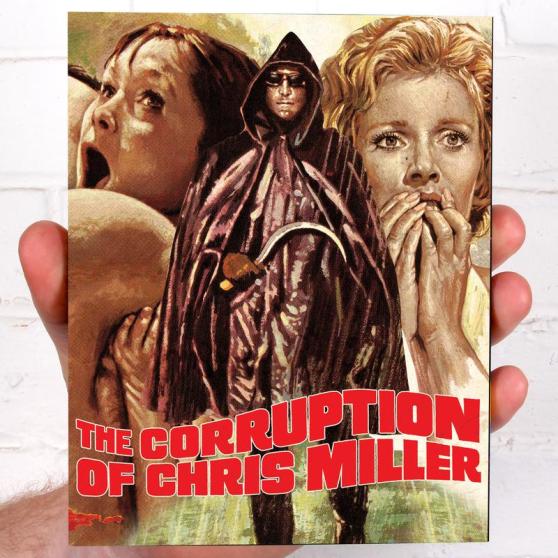
The Corruption of Chris Miller (1973)

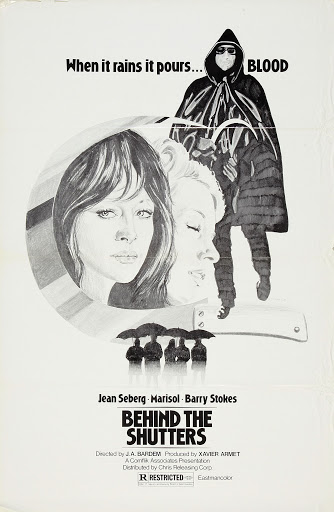
Chris Miller (former Spanish child star Marisol; when she married dancer Antonio Gades, Fidel Castro acted as their godfather) lives with her stepmother Ruth (Jean Seberg, the haunted and doomed beauty who was also in Breathless and Saint Joan). The loss of Chris’ father has damaged both of them, so when a drifter named Barney (Barry Stokes, Prey) shows up, it changes their lives. Maybe not for the better, what with a killer slicing his way through the village…

This Spanish giallo was directed by Juan Antonio Bardem (yes, the uncle of Javier) who also made Death of a Cyclist and wrote A Bell From Hell. It was written by Santiago Moncada, who was also the pen behind Hatchet for the HoneymoonRicco and The Fourth Victim.

Ruth blames Chris for her husband leaving, so she uses Barney to seduce her stepdaughter, who is recovering from the dual loss of her father and being assaulted at school. Her plan? When daddy comes home, he won’t love his daughter much any longer because she’s no longer a virgin. Meanwhile, the killer keeps on killing, including a scene where he dresses like Charlie Chaplin.

Also released as Behind the Shutters, this movie is also a proto-slasher, rife with bloody murders, including a moment when the rain slicker covered villain kills an entire family in slow motion.

Vinegar Syndrome recently released this on blu ray, complete with a newly scanned 4K capture from the original 35mm negative.

Sex of the Witch (1973)

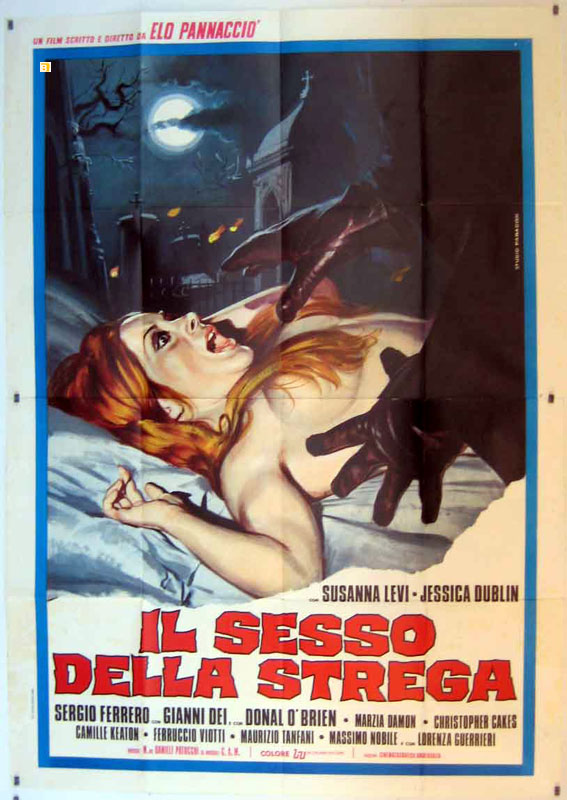
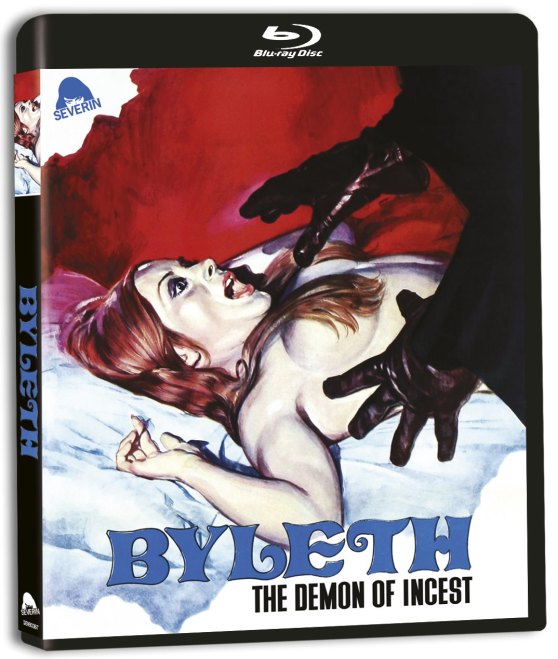
So wait — did this movie rip off the poster for Byleth Demon of Incest or what? Yes, while the rest of the world is asleep at 6:46 AM on a Saturday morning, I’m trying to figure out Italian horror film posters. Such is my life.

Seriously, take a look at this poster and realize — it’s the exact same art.

Well, in this movie, the Hilton family gathers at their mansion as their patriarch dies. As he passes, he curses the family, who are soon beset by a witch and her killing machine who starts to wipe them out one by one, as she knows their secret.

Meanwhile, as they’re giving the old man his last rites, his servants are doing the horizontal lambada on his coffin.

There’s a lot of murder but plenty more nudity, including a scene where two girls make out while a goldfish is, well, played with. Then the color drops out while some hippy rock plays. And oh yeah, Camille Keaton from I Spit On Your Grave shows up and she confessed that she had no idea what the movie was about the entire time she was acting in it.

Donald O’Brien (Dr. Butcher, M.D.Mannaja2020 Texas Gladiators) claimed that the budget was so low that he had to wear his own clothes. That said, not many people in this keep their clothes on.

Look for Gianni Dei, who would later play Patrick in the Italian sexual reimagining of the Australian movie Patrick that would be known as Patrick Still Lives. I still have no idea how that happened.

Vinegar Syndrome included this movie in the box set Camille Keaton In Italy along with Tragic Ceremony and Madelaine.

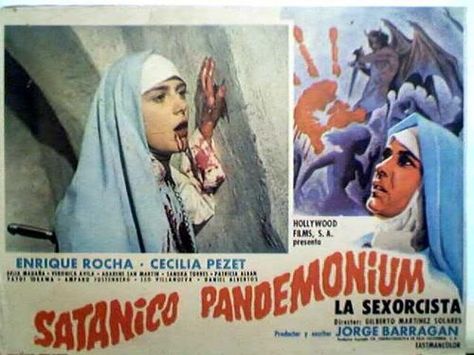
Satanico Pandemonium (1973)

Sister Maria should be living the quiet and chaste convent life, but she has a fantasy world in which she runs free and wild, the servant of Satan. In our world, her acts of violent blasphemy are on the increase as she begins to realize that her job is to lead her sisters in Christ down the left hand path to Hell. The Devil has his hooves into Sister Maria and he isn’t going to let go.

Gilberto Martinez Solares also directed Santo and Blue Demon Against the Monsters, but there’s no way that will prepare you for this movie. I’d compare it — obviously — to Alucarda, a movie that it has similar themes to but less eye popping visuals. That’s not to say that this movie plays it safe, but man, it had a high bar to reach.

Sure, Maria is good with medicine and animals, but once she sees Lucifer — who tells her “Call me Lucifer. If you want me, just think of me, I’m everywhere.” — and eats the apple he offers, all Hell breaks loose. Where she once self-flagellated herself, now our heroine — I guess? — is making love to the other nuns when she’s not watching them hang themselves.

There’s also an interesting subplot about a black nun who is treated badly by everyone, including her Mother Superior, which seems a deep subject to tackle in a Mexican nunsploitation film. Also — lots of stabbing. And obviously, this is where Salma Hayek’s character in From Dusk Till Dawn got her name.

This is on Tubi, but you can preorder the blu ray now from Mondo Macabro.