FVI WEEK: Father Jack-Leg (1972)

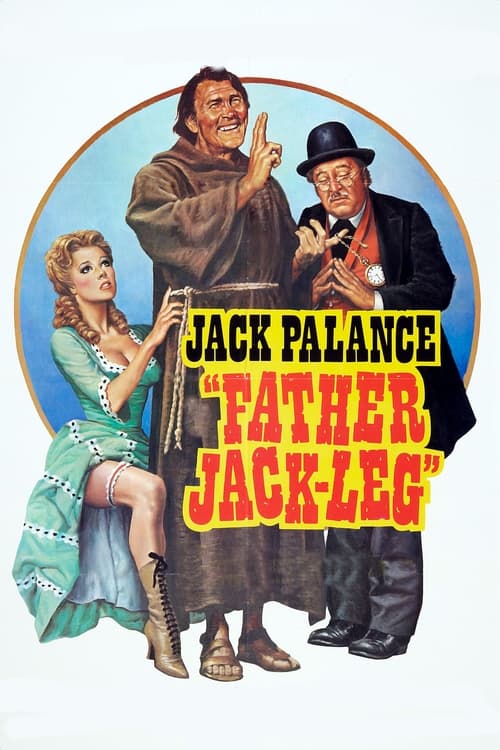
Also known as Tedeum, Sting of the West and Con Men, this was directed by Enzo G. Castellari, who also wrote the script along with  Tito Carpi, Giovanni Simonelli and José Gutiérrez Maesso.

Stinky Manure (Lionel Stander) and his family of criminals have inherited a gold mine but they don’t trust anyone, so they send their son Tedeum (Giancarlo Prete) to sell the mine to someone else. Being a moron, he sells it to a lawman before getting help from a holy man named Santini (Jack Palance) and Betty and Wendy Brown (Francesca Romana Coluzzi and Mabel Karin) who also have a mine to sell.

The truth is that the Manure family mine is actually pretty valuable. That’s why an actual criminal with some brains and guile, Grant (Eduardo Fajardo), wants it. is after. I say that he’s a pretty good bad guy except he keeps losing his pants.

At the end of the Italian Western cycle, most movies were comedies like this. As to whether or not you find them amusing, well, that’s up to you.

If you don’t like it, well, you can at least keep an eye open for Jack’s brother Ivan as a man on a train. He also used the stage name John Gramack and is in A Bullet for the GeneralKill a Dragon and A Bullet for Rommel. Castellari’s daughter Stefania is also on hand as is the mysterious Carla Mancini, who often is in credits just so a movie could receive Centro Sperimentale di Cinematografia tax credits.

Oh yeah — it has music by Oliver Onions!

Do you think when Lionel Stander stood up and was blacklisted he knew he’d be playing someone named Stinky Manure?

FVI WEEK: When Women Lost Their Tails (1972)

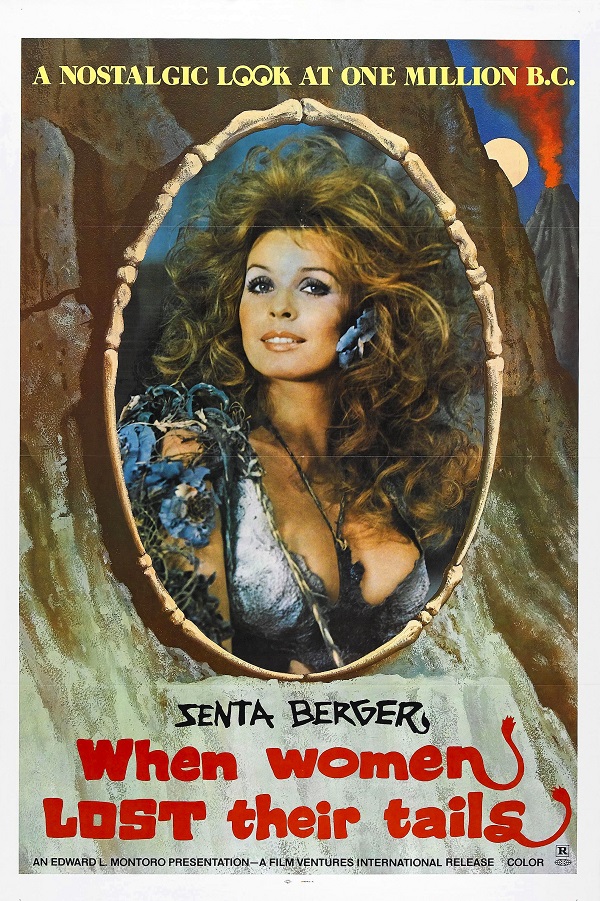
Director Pasquale Festa Campanile is back, along with writers Marcello Coscia and Ottavio Jemma with a story by Lina Wertmüller, to tell the story of the cavemen from When Women Had Tails and the cavegirl, Filli (Santa Berger) who has joined them.

Ulli (Giuliano Gemma) and Kao (Lando Buzzanca) don’t return, but there’s a new cave person named Ham (Lando Buzzanca) to pal around with Grr (Frank Wolff), Maluc (Renzo Montagnani), Put (Lino Toffolo), Uto (Francesco Mulé) and Zog (Aldo Giuffrè) along with other new people like Pap (Mario Adorf) and Katorcia (Fiammetta Baralla).

All of the cave people live inside the skeleton of a dinosaur and life is good until someone figures out what money is and then, as you would figure, things get rough.

Filli has obviously watched The Flintstones as she uses a bird as a kitchen tool. And in the middle of what should be a funny Italian sex comedy, there’s a gay caveman who is so upset that he doesn’t have a mate that he tries to pay someone to kill him.

At least they used the Ennio Morricone from the first movie, right?

I due gattoni a nove code… e mezza ad Amsterdam (1972)

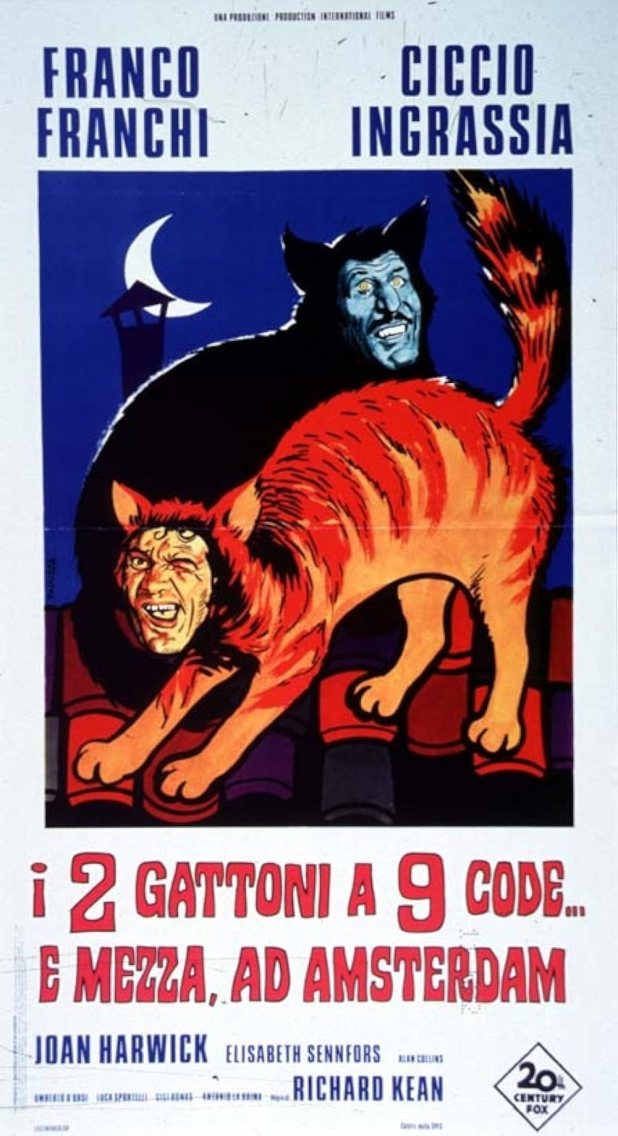
The title of this movie translates as The two cats o’ nine tails… and a half in Amsterdam. As you can see, this references the names of two Argento movies, Four Flies On Grey Velvet and The Cat O’Nine Tails.

Investigative reporter Ciccio (Ciccio Ingrassia) and photographer Franco (Franco Franchi) are working in advertising when they get sent to Amsterdam to look into the murder of a diamond seller. They meet an organized crime player named Big Bon (Luigi Bonos) who is arrested as soon as their plane lands. However, he told them to find Thea (Elisabeth Sennfors), a model that he knows, who can help.

None of this has anything to do with Argento or giallo once you get past the murder mystery that sets up all of the unconnected comedy scenes and the title. Well, Luciano Pigozzi is in it as a killer, but otherwise unless you have a Letterboxd list of giallo films to add to, you can probably skip this.

Director and writer Osvaldo Civirani also made The Devil Has Seven Faces among many other films throughout his long career. The comedy duo of Franco and Ciccio also show up in another of his works, Two Sons of Trinity. Speaking of those guys, they were in several films directed by Lucio Fulci (including 002 Operazione Luna, Oh! Those Most Secret Agents!The Two ParachutistsThe Long, The Short, The Cat, How We Got into Trouble with the Army, How We Robbed the Bank of Italy and How We Stole the Atomic Bomb) and Mario Bava’s Dr. Goldfoot and the Girl Bombs.

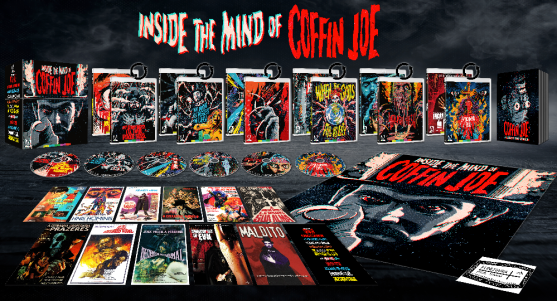
ARROW VIDEO BOX SET RELEASE: Inside The Mind Of Coffin Joe: When the Gods Fall Asleep (1972)

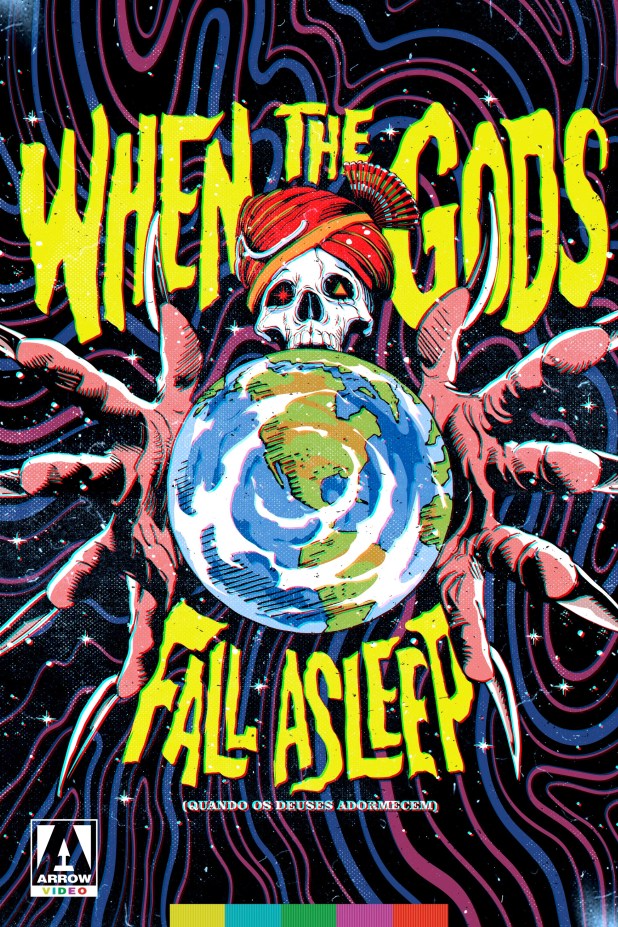
The sequel to Finis Hominis (The End of Man) finds the good side of José Mojica Marins, Finis Hominis, leaving the mental ward yet again to set the world right. The last time he got out, he almost became a world leader. This time, he wants to do something easier: fix all of the social, religious and political unrest in the world.

How would he do this? Well, start small. He walks throughout the streets of Brazil and stops the war between two criminals, Skull and Chico, by stealing Skull’s son and making them work together. The people in another community go wild and decide to bring Satan back in a cemetery, even eating live chickens — yes, do not doubt the animal deaths in the movies of Italy or Brazil — and drinking their blood right out of their necks until Finnis Hommis stops it all, as well as a wedding, then the doctors realize that he’s loose. The footage also goes from black and white to color seemingly at will and probably based on what film stock and cameras Marin could get that day.

It’s sad that Coffin Joe and Finnis Hommis didn’t ever battle — maybe inside Marins’ brain? — because they would have just yelled at one another about morality and the ways of mankind.

Directed and written by Marins, the man who is also Zé do Caixão,

Arrow Video’s limited edition collection of Coffin Joe may never escape my blu ray player. When the Gods Fall Asleep has new interviews with Virginie Sélavy on surrealism in Marins’ work and Jack Sargeant. You can get this set from MVD.

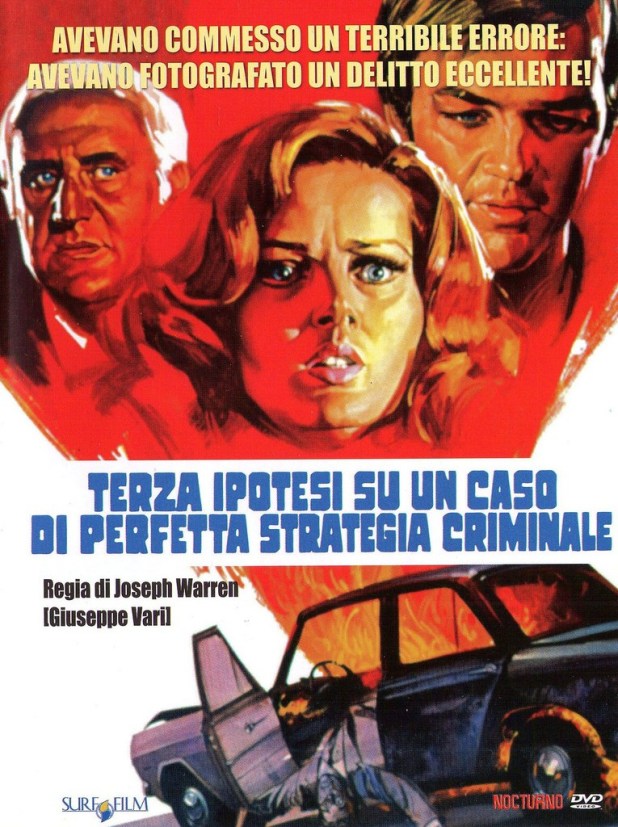
Terza ipotesi su un caso di perfetta strategia criminale (1972)

Third Hypothesis on a Case of Perfect Criminal Strategy is better known by the name Who Killed the Prosecutor and Why? It was directed by Giuseppe Vari (Rome Against Rome) and written by Thomas Lang. Carlo (Lou Castel) and girlfriend Olga (Beba Lončar) started with a fashion shoot on a remote beach but have already dropped the camera — and most of their clothes — when two cars show up. Men throw the body of a dead man — who turns out to be a prosecutor — into the other car, cover it with gasoline and light it up. state prosecutor. Instead of going to the police, Carlo decides to find out who did this and blackmail them with the photos he’s taken.

After talking to his pornographer Uncle Fifi (Massimo Serato), Carlo speaks to Don Salvatore (Fortunato Arena) about buying the photos. When he refuses, the photographer goes to the media, but his buyer Roversi (Carlo Landa) is soon killed, which means that both Carlo and the newspaper’s editor Mauri (Antonio La Raina) decide to figure out who is killing people who want these photos. Maybe they should have just gone to the police and Inspector Vezzi (Adolfo Celi). If they did, we wouldn’t have a movie, so that’s how it goes, I guess.

So how is this a giallo? Whoever wants the photos has gained some of the negatives and is killing anyone else who has seen them, as mentioned before, but they have black gloves, we never see them and their murders are in the style of the genre.

If that isn’t enough for you, some cuts of this movie have hardcore inserts, which is the definition of gratuitous.

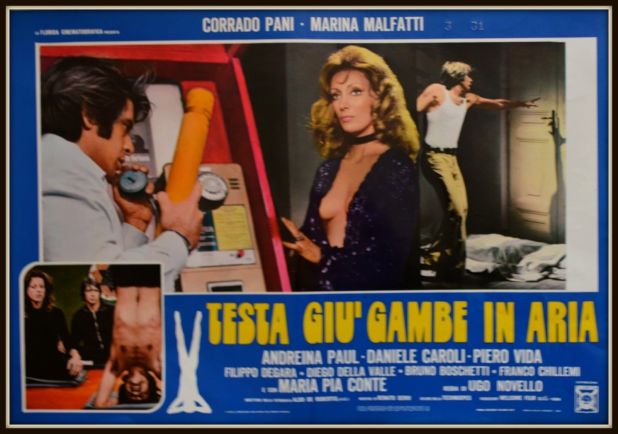
Testa in giù, gambe in aria (1972)

Head Down, Feet Up is about a killer who has picked teachers as his target. An artist named Andrea (Corrado Pani) gets involved when he tries to save one of them and catches a look at the killer’s face. Like the typical giallo hero, he decides to become the investigator of the case. And seeing as how the police won’t listen to him and he’s become the primary suspect, he has even more reason to solve the crimes.

Director and writer Ugo Novello only directed this one film, but was a second unit director on La muerte incierta and a production manager on several movies. This is a rare comedy giallo — the title refers to the protagonist’s affinity for yoga — that also has a subplot where Andrea gets his girlfriend (Marina Malfatti, All the Colors of the Dark) pregnant and she has an abortion without telling him. It also has a scene has a dream where the professors are all being murdered. When he tries to warn one, the gay teacher believes that Andre wants a date.

This also has an ending where nothing is solved other than Andrea finally being able to nail one of the yoga poses that has been too difficult for him. What an odd movie.

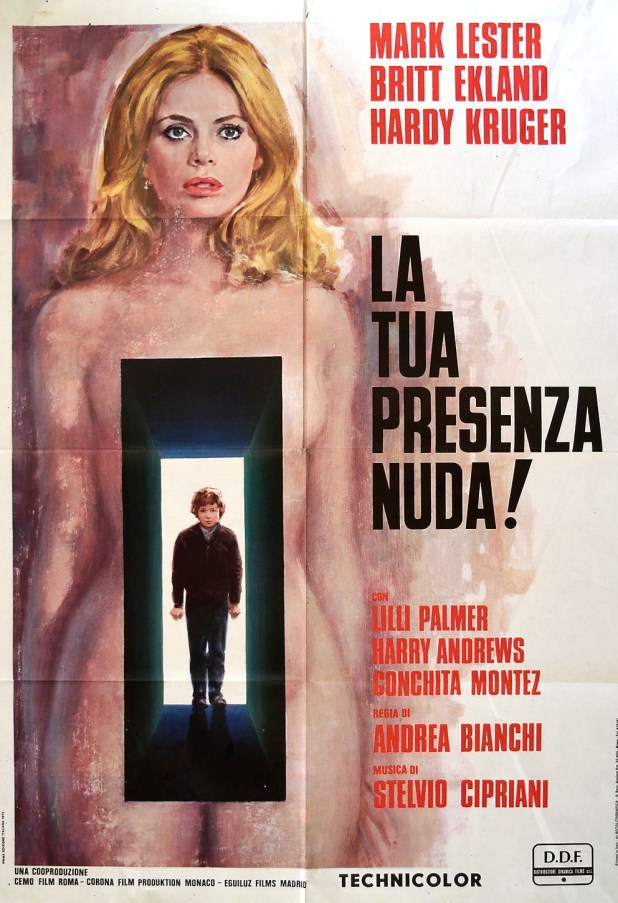
What the Peeper Saw (1972)

Elise (Britt Ekland) is the much younger second wife of Paul (Hardy Krüger), who married her soon after the loss of Sarah from drowning in a tub. Three months into their honeymoon of a marriage, she’s surprised by his 12-year-old son Marcus (Mark Lester, the star of Oliver), who claims that he’s left school early due to a chickenpox epidemic. The film wastes no time letting us know that not only is Marcus weird, he may also be a criminal sociopath.

After their first meeting, in which Marcus confesses to stealing money from his father, Elise looks through the child’s room and soon learns from the headmaster (Harry Andrews) that he was kicked out of school for stalking, creating sexual drawings and killing numerous small animals. She’s obviously worried and Paul just says that his son needs to get over the death of his mother.

That’s when this movie gets weird, as you wonder if Paul just doesn’t care that his son is a lunatic or if he’s just as much of a mentally ill person. Why wouldn’t he tell his new wife that the house they’re attending a party at used to be his and the place where Sarah died? Elise isn’t all that mentally set either, as she’s convinced to strip nude for Marcus if he’ll reveal the truth about killing his mother after she finds a hole above her bed and figures out that he’s been watching her.

That’s when Dr. Viorne (Lilli Palmer), who owns that house where Sarah died, listens to Elise’s concerns. She turns it around on her and accuses her of trying to seduce Marcus, as well as killing the family dog, a crime that was definitely committed by the young man. Elise loses her mind and tries to kill the boy before she’s put in a mental hospital where she dreams of being torn to pieces by the dog, as well as her killing Marcus and making love to him — not the same dream, this isn’t a Joe D’Amato movie — while Paul watches.

Marcus has, of course, been planning this all along. He asks Elise, when they are finally alone, if she wants to have an affair as his father is now too old to satisfy her. She kisses him passionately before…well, that would give up the ending, right? You really need to see this for yourself. The last ten minutes go for it and just unleash everything that could upset people about this movie.

This was directed by James Kelley, who also directed and wrote The Beast In the Cellar, and Andrea Bianchi, the maniac who made Cry of a ProstituteStrip Nude for Your KillerMalabimba and Burial Ground. It was written by Bautista Lacasa Nebot, Erich Kröhnke, Trevor Preston and Bianchi, so was supposedly brought in by another lunatic, producer Harry Alan Towers,  to add more exploitative scenes to the film.

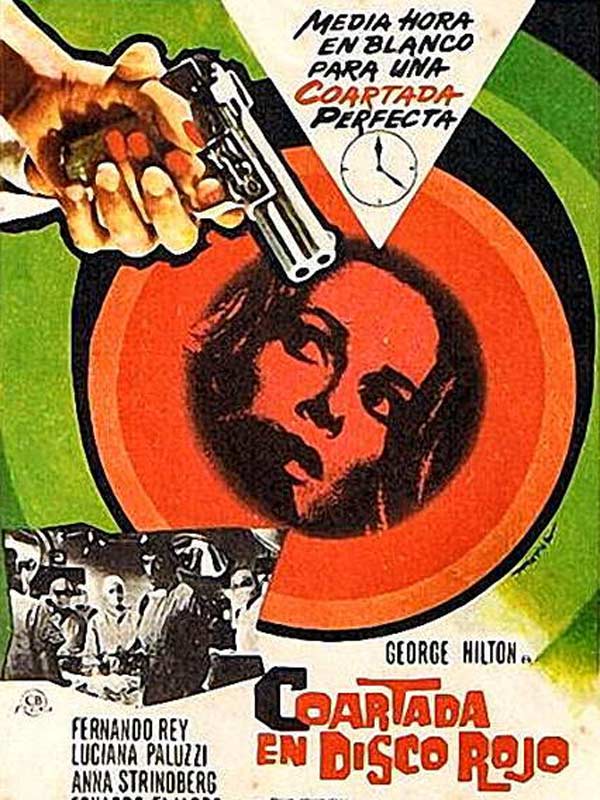
Coartada en disco rojo (1972)

Dr. Michele Azzini (Luis Dávila) is living the life of Riley. He’s engaged to a gorgeous co-worker, Dr. Paola Lombardi (Anita Strindberg, Your Vice Is a Locked Room and Only I Have the Key), and has just been offered an even better job in a cardiology clinic in Madrid. This angers his boss, Elena Carli (Luciana Paluzzi, Thunderball, The Green Slime, The Klansman), who owns his current place of work along with her husband Dr. Roberto Carli (George Hilton, Sartana as well as several giallo films).Despite her offering him a stake in the business, Azzini still plans to leave until he’s murdered.

Inspector Nardi (Fernando Rey) is on the case, trying to learn just who killed the doctor. And at the same time, Elena’s heart is giving out and she has to get a surgery that takes up the closing moments of the movie. And because this is an Italian movie, that’s a real open heart surgery that we get to watch, conducted by Dr. Martinez Bordiu who is thanked in the credits.

Directed by Tulio Demicheli (Ricco) and written by Pedro Mario Herrero and Mario di Nardo, The Two Faces of Fear is a movie that really never gets going, but at least it has Strindberg, Paluzzi and Hilton in the cast, as well as that realistic surgery scene.

Cinematic Void January Giallo 2024: Amuck! (1972)

EDITOR’S NOTE: Cinematic Void will be playing this film on January 22 at the Los Feliz 3 in Los Angeles. For more information, visit Cinematic Void.

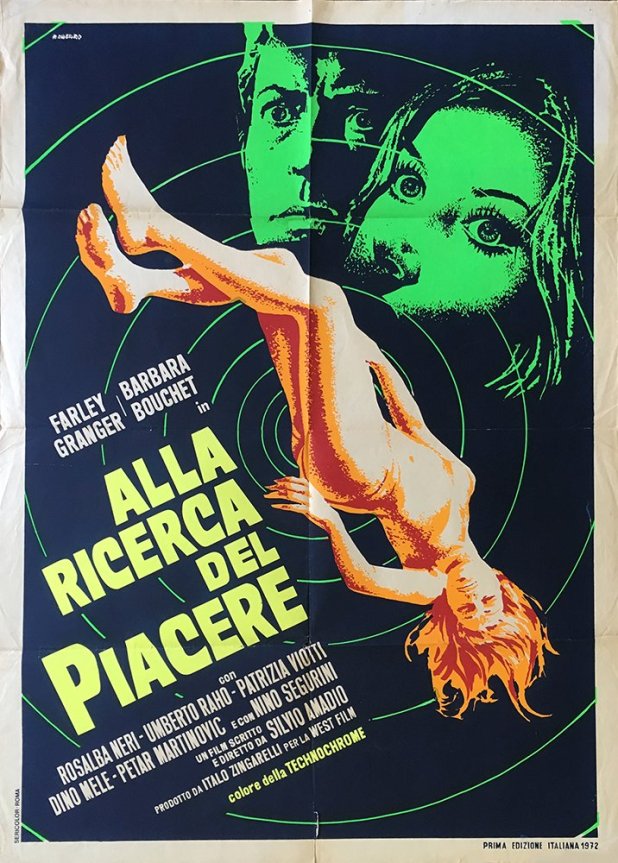
Amuck! is a great title, but this is a movie that has a ton of great other titles –Alla ricerca del piacere (In Pursuit of Pleasure), Maniac MansionLeather and Whips and Hot Bed of Sex were also used and the working titles were Replica de un delitto (Repetition of a Crime) and Il passo dell’assassino (Footsteps of the Killer). No matter what name you give it, this is one dark little film.

Greta (Barbara Bouchet, who next to Edwige Fenech could be considered the queen of the giallo thanks to turns in Don’t Torture a Duckling and The Red Queen Kills Seven Times) is an American abroad, working as the secretary to Richard Stuart (Farley Granger, So Sweet, So Dead and What Have They Done to Your Daughters?).

Along with his wife Eleanora (Rosalba Neri, Lady Frankenstein), the writer lives in comfort on his own island. Their past secretary, Sally, disappeared without a trace. However, Richard and Eleanora don’t know Greta’s reason for joining them — the missing girl was her lover, a fact we find out via a flashback lovemaking scene that is artful, if stilted, awkward and the way that men would assume women would couple (staring at one another and attempting to kiss, then going to sleep). Indeed, it feels like the fever addled wet dream of a maniac, which pretty much sums up what giallo can be at times.

The more Greta gets close, the more sex, drugs and violence is unearthed. The Stuarts often hold sex parties in their palatial home. Oh yeah — Eleanora has ESP, seeing Greta’s death, screaming about it while in a fit of prophecy.

Indeed, death begins to follow our heroine. The next day, a hunting trip turns into a brush with quicksand, that most evil of all movie doom.

Richard reveals that Eleanora fascinates him because of her duplicitous nature and he is falling in love with Greta because of how honest she is. He then reveals the accident that claimed Sally’s life in a flashback: Eleanora watches Rocco through her hunting scope before inviting him to a rendezvous with her and Sally. They both dance for him in a series of druggy jump cuts — perhaps the film’s most assured scene. After making love to Eleanora, the fisherman kisses Sally tenderly before losing control, which is shown by how the film speeds up, like the Keystone Kops. He ends up choking Sally to death while Eleanora watches, powerless to stop him.

Richard and Greta end up making love later that night during a storm. Eleanora watches through the doorway before looking directly at the camera, as if she is sad yet not surprised.

The very next evening, after Richard leaves town, Eleanora sets up the same threeway with Rocco (who she calls the perfect male, yet he seems like a leering idiot). Greta tries to leave, only to find the dead body of the butler in the hallway. Richard shows up, telling her that this has all been a game. They’ve found Sally’s body and now, they need to get rid of her. He tells her that it’s all over now and she must die, describing how Rocco will murder her in calm tones.

However, Rocco remembers an act of kindness that Greta had performed for him. Eleanora attacks him, slapping the shit out of him before he tosses her into a wall, killing her, and stabbing Richard.

Greta leaves, learning that Rocco is getting the help he needs. Yet the film ends on a weird note, as a policeman tells Greta that the woman in the lagoon wasn’t even Sally. FIN.

Director Silvio Amadio crafts a film that takes some time to get going and has flashes of mood, but may not rank amongst the best in giallo. That said, he has an attractive cast to work with, an interesting story and there’s a well shot sequence of a boatman taking a dead body down a river that aspires to art.

Cinematic Void January Giallo 2024: The Red Queen Kills Seven Times (1972)

EDITOR’S NOTE: Cinematic Void will be playing this movie on January 12 at 7:30 PM ET at The Little Theatre in Rochester, NY. You can get tickets here. For more information, visit Cinematic Void.

Emilio P. Miraglia followed up The Night Evelyn Came Out of Her Grave with this giallo freakout — starring the magnificent Barbara Bouchet (Don’t Torture a Duckling) — that combines gothic horror with the high fashion we’ve come to expect from early 70’s Italian horror.

A curse haunts the Wildenbrück family once every 100 years — two sisters have always become the Red and Black Queen, feuding until one of them dies. Then, the survivor is haunted by sixth deaths, with the final death — the seventh death, referenced in the title, being the surviving sister. Kitty (Bouchet) and Evelyn are the next two sisters to be so cursed, battling even in childhood, stabbing each other’s dolls with daggers.

These catfights have continued for years, ending when Kitty, now a fashion designer, accidentally takes it too far when she battles Evelyn. Third sister Franziska (Marina Malfatti, The Night Evelyn Came Out of Her GraveAll the Colors of the Dark) and her husband hide Evelyn’s body while Kitty pretends that her sister has gone to America.

All is well and good until the Red Queen rises, wearing a red cape and white mask, killing all of Kitty’s co-workers at Springes Fashions with the same dagger that was once used to slice up baby dolls. But is it really Evelyn, back from the dead (Emilio P. Miraglia sure liked Evelyn’s that rose from the dead)? Or something much more down to earth?

Miraglia only directed six films, with this being his last one. There are some moments in here that aspire toward art, like the Red Queen chasing Kitty through her dreams, ending in a long hallway run and her superimposed form attacking like a ghost. And the film flirts between the gothic castle era of Italian horror and the fashionista giallo look — all while containing plenty of deep red gore and plenty of skin, courtesy of a 20-year-old Sybil Danning (Howling II, Battle Beyond the Stars, Young Lady Chatterley 2). It’s not always art, but sometimes, it totally is. There are the requisite twists and turns of the genre, along with some really regrettable moments — like when a character goes from rapist to rescuer across two scenes and an ending where the hero and heroine both need saving.