CBS LATE MOVIE MONTH: Baron Blood (1972)

EDITOR’S NOTE: Baron Blood was on the CBS Late Movie on June 23, 1976.

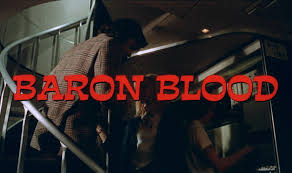
There’s an urban legend called The Well to Hell, which claims that you can hear Hell through a hole in the earth, and there have even been audio recordings posted as proof. Those recordings have been revealed to be the soundtrack to this film. That should tell you what you’re getting into.

Peter Kleist arrives from America to take a break and study his family’s history. His uncle Karl allows him to stay at his large mansion and refuses to discuss their ancestor, Baron Otto Bon Kleist, better known as Baron Blood for the torture and murder he inflicted on the village. His foremost crime was burning a witch named Elizabeth Holly at the stake as she cursed him to rise from the dead again and again, knowing no rest, so that she could take her revenge on him over and over again. The Baron’s castle is being remodeled for tourists, so Peter asks his uncle to take him there.

At the castle, Peter meets Eva (Elke Sommer, Lisa and the Devil), who works with Dortmund, a businessman who is fixing the castle. She is there to ensure that Blood’s castle retains its original beauty. Eva comes to Karl’s house for a meal, where we learn that Baron Blood has been seen in the woods near the castle. And Peter has found an ancient spell that will awaken the spirit of the Baron. Karl warns him of dabbling in the occult, and seeing as we’re only a few minutes into the movie, we know he won’t listen.

Of course Peter and Eva go to the bell tower and read the spell at midnight. The bell tolls two, not twelve, symbolic of the time of day that Blood’s victims rose and killed him. Eva begs Peter to reverse the spell, but a gust of wind blows the spell into a fireplace as the Baron emerges from his grave.

The Baron is born with the same wounds he died from, wounds even a doctor cannot heal. He then goes on a killing spree, starting with the doctor and a gravedigger, then hanging Dortmund and smooshing the castle’s caretaker inside a spiked coffin.

The next day, Alfred Becker (Joseph Cotton, The Abominable Dr. Phibes), a disabled millionaire in a wheelchair, purchases the castle. He seems decent, so Eva stays on long enough to have the Baron attack her again. She quits her job and moves to the city, only for the black-clad Baron to follow her, chasing her through the foggy streets in a pure Bava scene. She escapes to Karl’s home and luckily, he finally believes that the Baron is still alive.

A local medium helps them to bring back Elizabeth Holly, who gives them a magic amulet and the knowledge that because Peter and Eva brought the Baron back, only they can destroy him. The moment they leave, the Baron kills the psychic.

The Baron also chases Karl’s young daughter. She then realizes that the Baron and Becker are the same man, as their eyes burn like fire. When they confront the man who uses a wheelchair with this revelation, he denies it and shows them his castle, which now has dummies impaled on stakes as decorations. As they debate what to do next, he rises from his wheelchair and knocks all of them out, taking them to his torture chamber.

Eva learns that when her Blood and the amulet unite, the Baron’s victims all return from the dead. They rise and tear him apart limb by limb as Peter, Eva and Karl escape. As the film ends, we hear Elizabeth Holly’s laughter.

Critically, this is not considered one of Bava’s best. However, I found plenty to like, including the Baron’s quite frightening design. And how can any movie that features Elke Sommer running through the fog be bad?

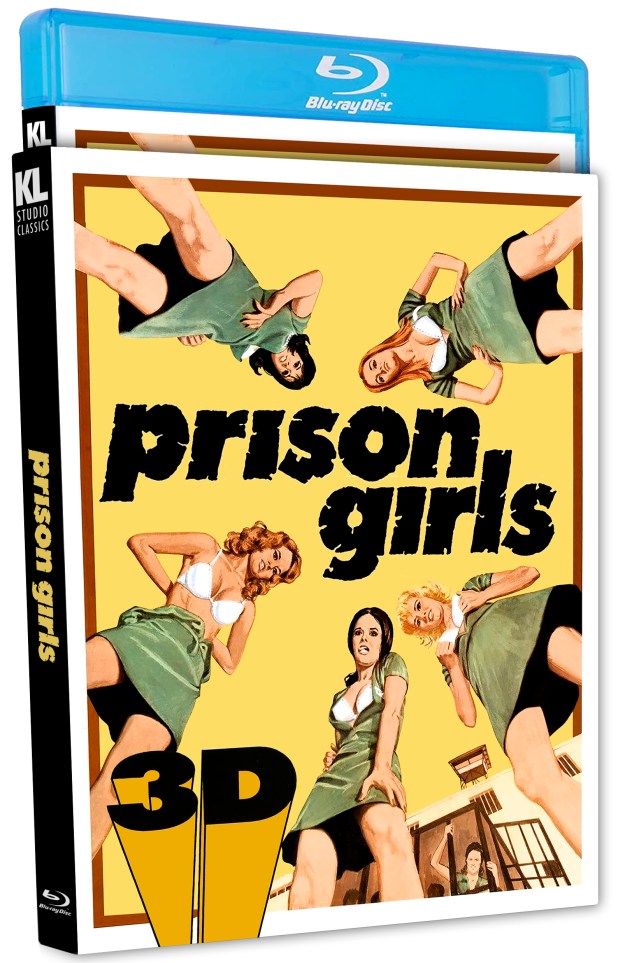
KINO LORBER BLU RAY RELEASE: Prison Girls 3D (1972)

Before Tom DeSimone made Hell Night, Reform School Girls and Savage Streets, he made “The First Real Adult Film in 3D!”

It’s definitely in 3D but softcore, so you could share it with your dad while you can’t show it to your mom. I don’t know. What I do know is that it goes straight for women in prison movie convention by starting in the shower where Gertie (Annik Borel, the Werewolf Woman) attempts to get with Cindy (Uschi Digard!) but gets foiled when the other girls show up and say that Dr. Reinhardt is letting them go into the general population of the real world for two days as part of their rehabilitation.

None of it goes well because the world outside is just as challenging as a prison. But you do get to see Candy Samples get her body painted, and it’s in 3D. The other ladies are Kay Rivers (Jacqueline Giroux, Linda from Trick or Treats as well as appearances in Drive-In Massacre and Cinderella 2000), Toni (Tracy Handfuss, A Clock Work Blue, Psyched by the 4D Witch), Joyce (Maria Arnold, FantasmMeatcleaver Massacre and Wam Bam Thank You Space Man) and Melba (Liz Wolfe, Fantasm Comes Again). Plus Linda York (AuditionsA Scream In the Streets), Marsha Jordan (Teen-Age Jail Bait), Neola Graef (Cries of Ecstasy, Blows of Death),  Peggy Church (The Pig Keeper’s Daughter) and Susan Landis (Blood Sabbath).

It’s less a movie than a series of lovemaking scenes. One could argue that The Stewardesses was a 3D adult movie three years before, but look, the fact that Kino Lorber made this look so good is a tribute to the fact that some amazing stuff is coming out on physical media that we had no idea that we’d ever get, much less have it in 3D.

The Kino Lorber Blu-ray of Prison Girls 3D has been meticulously remastered in three sensational dimensions by 3-D Film Archive. It also features commentary by James G. Chandler and Ash Hamilton, a deleted scene, a trailer and versions of the movie in 2D, BD3D polarized and anaglyphic (Red/Cyan) 3-D. You also get a pair of anaglyphic 3D glasses with the movie. You can order it from Kino Lorber.

CBS LATE MOVIE MONTH: Night of the Lepus (1972)

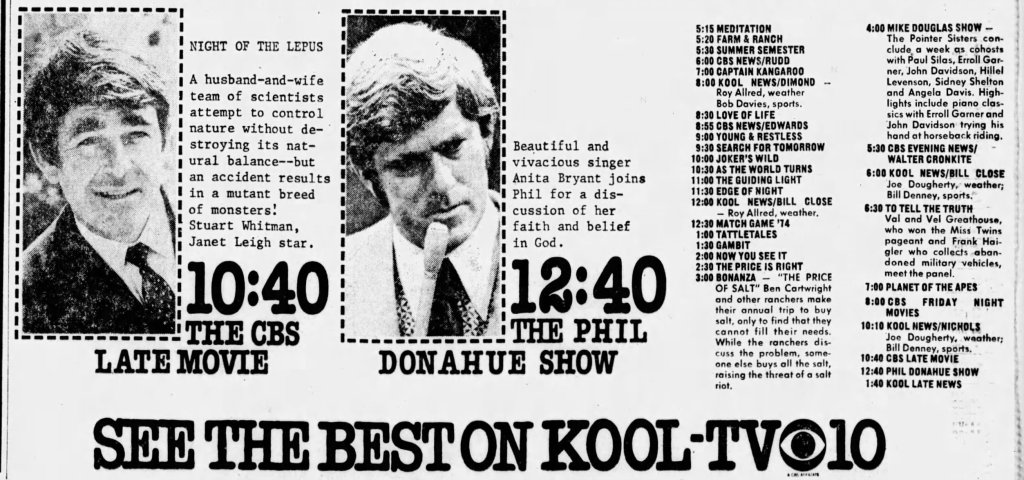
EDITOR’S NOTE: Night of the Lepus was on the CBS Late Movie on September 13, 1974; October 17, 1975 and June 13 and August 24, 1976.

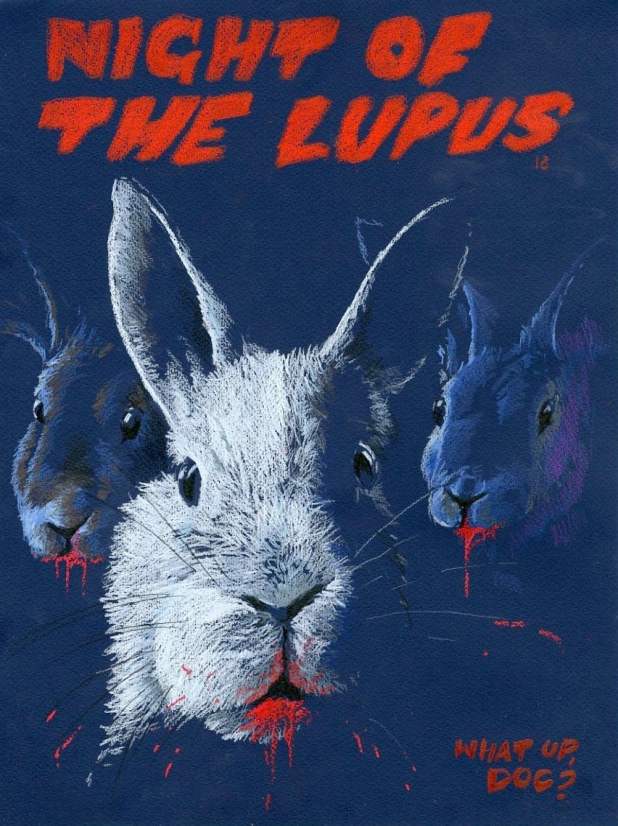
Based upon Russell Braddon’s 1964 science fiction novel The Year of the Angry Rabbit, this movie pits mankind against mutant rabbits and, well, if you can get past that idea, you’re probably going to love this movie.

Director William F. Claxton and producer A. C. Lyles came from Westerns, which explains the cast of this movie, which includes Stuart Whitman, Rory Calhoun and DeForest Kelley being in the cast as well as the shooting location, the Old Tucson Studios. It does not explain the effects, which are a combination of regular-size rabbits on miniature sets and people dressed in rabbit costumes.

Janet Leigh, who is also in this, told Starlog, “No one put a gun to my head and said I had to do it. What no one realized was that, no matter what you do, a bunny rabbit is a bunny rabbit. A rat, that can be menacing — so can a frog. Spiders or scorpions or alligators, they could all work in that situation, and they have. But a bunny rabbit?! How can you make a bunny rabbit menacing?”

Rancher Cole Hillman (Calhoun) seeks the help of college president Elgin Clark (Kelley) when thousands of rabbits invade his farm after their natural predators, coyotes, are killed off. Roy and Gerry Bennett (Whitman and Leigh) are brought in and they work on using hormones to disrupt the rabbits’ reproduction cycles but their daughter falls in love with the bunny and switches it out; the mutant bunny runs away and pretty much declares war on humanity.

The towns of Galanos and Ajo are eaten by the giant rabbits before the strange team of a drive-in audience and the National Guard trap the gigantic hares in an electrified field that kills all of them. And good news, because regular rabbits — and the coyotes — are back at the end of the movie.

They tried to hide the rabbits on the poster — even changing the title from Rabbits — and then changed their mind at the last minute and gave away rabbit’s feet with the film’s logo on it.

Check out this ad for the CBS Late Movie show from Bill Van Ryn of Groovy Doom and Drive-In Asylum!

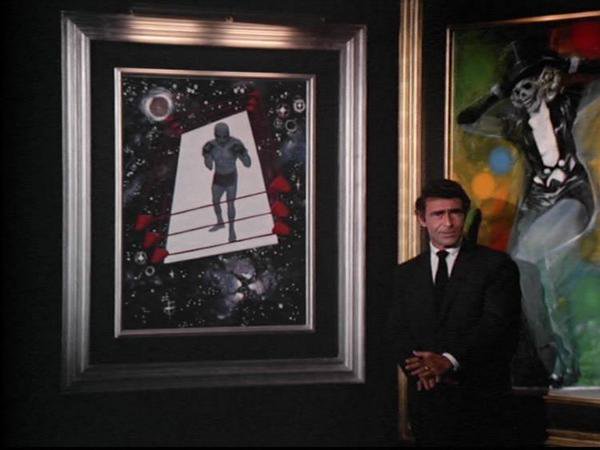
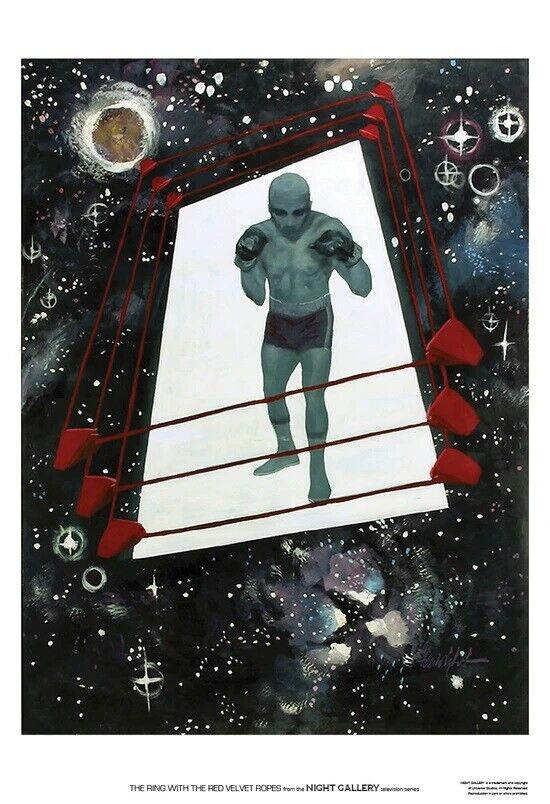
Night Gallery Season 3 Episode 6: The Ring with the Red Velvet Ropes (1972)

In the Quentin Tarantino universe of films, Gary Lockwood did not play the role of Jim Fugg. Instead, this was another role for Rick Dalton in the wake of his career resurgence after he violently dispersed a home invasion from several hippies. But in our world, this is the episode of Night Gallery that we got.

“The Ring With the Red Velvet Ropes” is the story of Figg (Lockwood), who has finally won the championship from “Big” Dan Anger (Ji-Tu Cumbuka) even if that victory seems not altogether a shoot, in the parlance of pro wrestling. That is to say, it looks like the fix was in.

But when Figg’s manager returns from answering the press, he tells him that that would be impossible because Anger is in the hospital.

After a shower, Figg wakes up in a classy hotel, confused by how time passes. He soon meets the gorgeous Sandra Blanco (Joan Van Ark), who informs him that he’s due to box her husband, Roderick (Chuck Conners), a fighter who has never been defeated and who will fight him in a ring of fire—or at least red ropes.

Before the fight, Sandra begs Figg to lose to her husband. She thinks he’s the first man who can defeat him and claims that it would be much better if he just did the job here. Figg responds that he’s never thrown a fight.

After a war in the ring, Figg wins. As he looks down on his defeated foe, the man disintegrates into dust and bones. The referee says, “The champion is dead. Long live the champion.” That’s when we learn that Roderick had been the champ since 1861, and now Figg must take on the role. Does he get Joan Van Ark? That would make this all worth it.

Directed by season three workhorse Jeannot Szwarc and written by Robert Malcolm Young, who also wrote “The Girl With the Hungry Eyes” and “Fright Night,” this was based on the story by Edward D. Hoch. It’s almost identical to the Twilight Zone story “A Game of Pool.” But it never really explains how we’ve entered the world of the fantastic or the stakes. It’s yet another just there episode in the lame duck feeling season three.

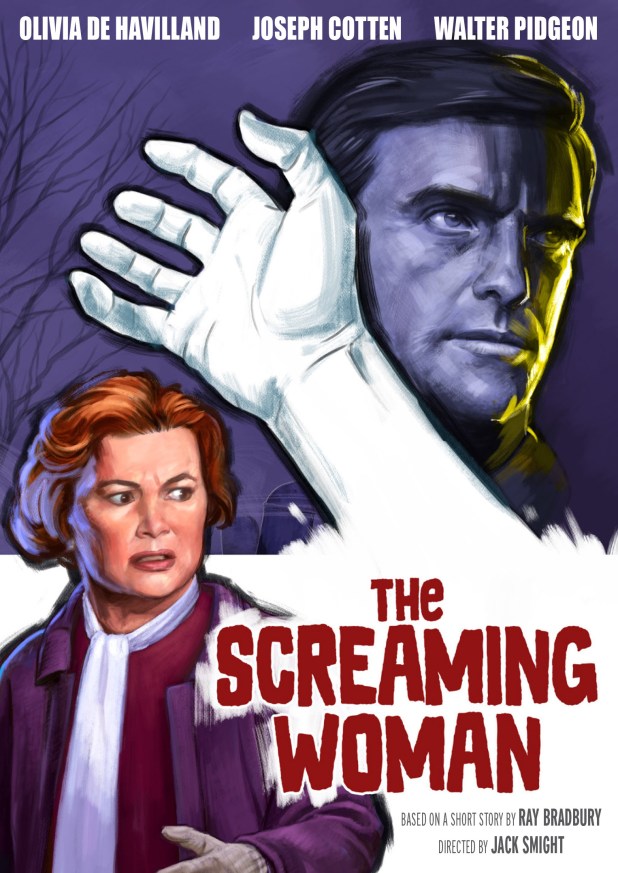
CBS LATE MOVIE MONTH: The Screaming Woman (1972)

EDITOR’S NOTE: The Screaming Woman was on the CBS Late Movie on November 20, 1974.

Jack Smight, known for his exceptional directing in films like No Way to Treat a LadyAirport 1975 and Damnation Alley — well, maybe not movie — brings his talent to this TV movie. Working from a short story by Ray Bradbury, he delivers a quick and suspenseful reminder of the unique cinematic style of 1970s TV movies, a style that could truly get under your skin.

Olivia De Havilland plays Laura Wynant, a wealthy former mental patient who has gone to the country to continue healing. That’d be easier if she didn’t keep hearing the pleas of a woman who has been buried alive on her property. Arthritis has robbed her hands of the ability to save the woman and as she brings others in to help her, her family starts to think that she is losing her control over her sanity again.

De Havilland, Cotten, and Pidgeon deliver stellar performances that elevate the movie to another level. Their talent and dedication to their roles are evident, making this TV movie a must-see for any classic TV movie enthusiast.

This is a movie that masterfully builds its suspense, keeping you on the edge of your seat from start to finish. It’s a rare gem that doesn’t let up, a testament to the captivating storytelling of TV movies from this era.

*Merwin Gerard wrote the screenplay. I’m a big fan of another TV movie he wrote, The Invasion of Carol Enders.

CBS LATE MOVIE MONTH: The Victim (1972)

EDITOR’S NOTE: The Victim was on the CBS Late Movie on September 9, 1974; October 6, 1975 and September 8, 1977.

If you ever wonder why I love my wife so much, I watched this movie, and she walked into the room, sat on the couch and excitedly remarked, “That’s Eileen Heckart!” Yes, Becca loves The Bad Seed, a classic psychological thriller where Heckart’s performance as the mother of a sociopathic child is unforgettable. And she isn’t shy about it.

Director Herschel Daugherty’s directorial efforts run the gamut of TV classics, from Star Trek to Alfred Hitchcock PresentsThriller and The Six Million Dollar Man. He was even the dialogue director for Mildred Pierce!

Kate Wainwright (Elizabeth Montogomery, who you may know from Bewitched, but around here we celebrate her for her role in The Legend of Lizzie Borden) is coming to visit her sister, but unbeknownst to her, her sister is already dead. She has to deal with the increasingly crazy attention of her sister’s maid, Mrs. Hawkes (Heckart), power outages, and an increasingly frightening storm. We soon learn that her sister already fired the maid and plans to divorce her husband, Ben.

While the film opens with the murder of the sister, the identity of the killer remains a mystery. As we witness Kate’s growing fear, Montgomery’s performance is nothing short of superb, keeping us on the edge of our seats.

The McKnight Malmar story this was based on was first filmed for a 1962 episode of Boris Karloff’s Thriller, ‘The Storm,’ also directed by Herschel Daugherty. The Victim was rewritten by Merwin Gerard and doesn’t stick as close to the original story, but it retains the core elements of the original, including the intense psychological suspense and the theme of a woman in peril.

The ending of this movie is bound to stir up some strong emotions. It might leave you feeling frustrated, or you might find it enjoyable, as it maintains a consistent level of suspense and creepiness throughout.

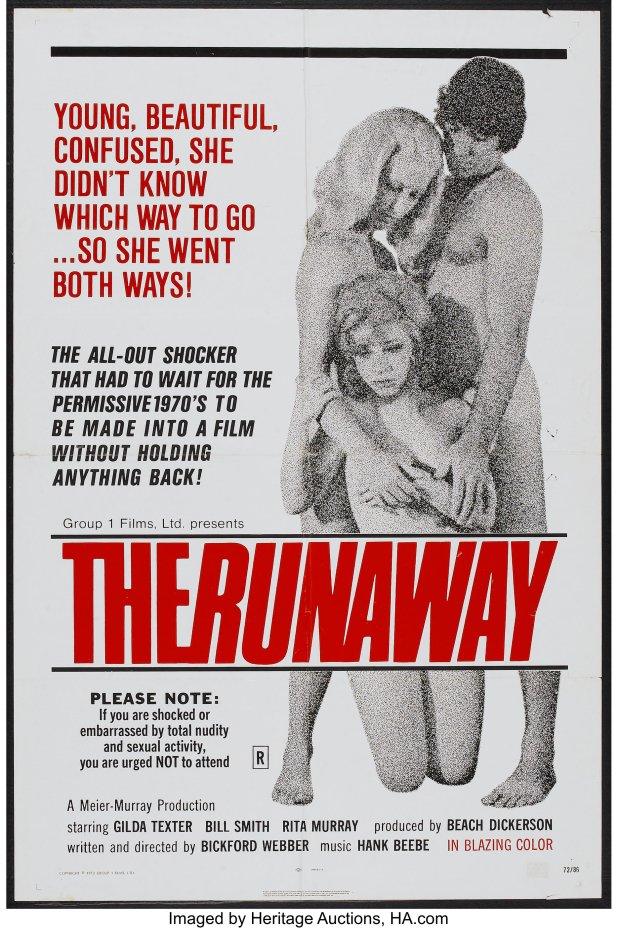
The Runway (1972)

ABOUT THE AUTHOR: Jennifer Upton is an American (non-werewolf) writer/editor in London. She currently works as a freelance ghostwriter of personal memoirs and writes for several blogs on topics as diverse as film history, punk rock, women’s issues, and international politics. For links to her work, please visit https://www.jennuptonwriter.com or send her a Tweet @Jennxldn

It’s rare for me to expel an audible groan at the end of a movie. 

Especially if it’s a movie starring William Smith released in 1972. 

With The Runaway, I did just that. Not because it’s a terrible movie. Far from it.  

The film is a mixed bag of loathsome events, and ‘70s anti-gay sentiment portrayed by competent filmmakers and skilled actors. 

Ricki (Gilda Texter) is a 17-year-old virgin runaway who leaves her unhappy rural desert home in search of a friend named Roger Jordan in California. A man she barely knows, but whom she trusts because he never tried to hit on her. 

During her first 24 hours of hitchhiking, the precarious reality of her new situation is explained via a folksy ballad played over a montage of Ricki fighting back against a string of guys with sexual assault on the brain. Each time, she fights back, proving herself to be a likable, capable protagonist. 

Enter Frank (William Smith), a lonely, drunk private eye hired to find the runaway heiress to a wealthy family. Frank and Ricki strike up a friendship forged in the shared experience of life’s miseries and adorned with creepy sexual tension despite their age difference of at least 25 years. 
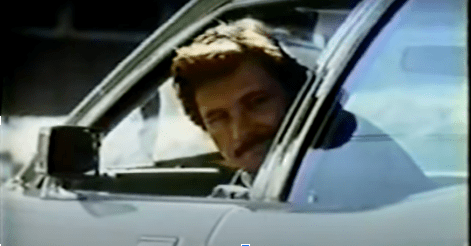
In Venice Beach, California, Ricki meets only one nice person. A traveling musician who helps her score money for phone calls and food. Everyone else wants something from her. After sleeping in an alley, she takes up with up with some hippies who take her to their swinging upstairs pad and dose her with acid, so she moves downstairs into the resident hooker’s pad. 

Prostitute Lorri (played wonderfully by Rita Murray) is a lesbian who falls for Ricki hard. She’s supposed to be predatory (as evidenced by the longing stares), but from the vantage point of 2023, she comes off more lonely than anything else. Perhaps it’s Ricki who leads Lorri on and takes advantage of her hospitality. 
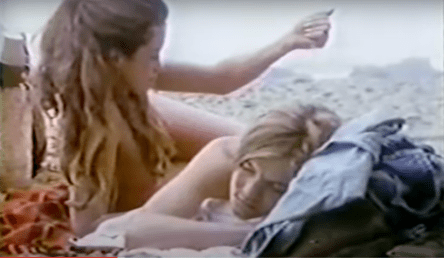
Lorri not only takes Ricki to the beach where the two share a fun day frolicking naked in the seaweed, but she also lets Ricki live with her rent free, buys all the food and cooks all the meals, only to be spurned after they successfully hook up because Ricki is still struggling with the idea that coming out means living a life of always being different. A daunting prospect in 1972. Ricki wants a “nice” life. Whatever the hell that means. 

From here, the movie really ramps up the animosity towards its leading lady. 

In the worst scene of the whole affair, Ricki attempts to hook up with a random guy recommended by one hippy. Even for 1972 this scene is just wrong. There’s no discussion of whether Ricki even finds the guy attractive. It’s just “Hi, come on in, have some coke,” and the dude hops on like a bunny in spring. Of course, it doesn’t work (because that’s not how female arousal works regardless of sexual orientation) and Ricki flees the scene. 

She re-connects with Frank who takes her to the last known address of her friend Roger Jordan. The vaunted man we never get to see but whom Ricki believes will solve all her problems. It turns out Roger never hit on her because he’s gay, too, having stolen the Vicuna sweater of his last lover before peacing out to San Francisco. 

Meanwhile, Lorri is revealed to be the missing heiress, cast in the mold of Warhol superstar Edie Sedgwick whose rebellion stems from an abusive upbringing. We’re told that her father has died and left her a great deal of money, but otherwise her story ends there. Did she ever find love? I’d love to see a sequel focused on this character. 

The next WTF moment occurs when Ricki asks Frank to deflower her. You know… to see if maybe she’ll like sex with a man she trusts. Again, there’s no discussion of whether she fancies him. It’s just assumed that she’ll like it no matter what man she’s with if she can just get past her personal hang-ups. Because of course, it’s all in her head. Sigh. 

Never mind that he’s drunk and old enough to be her father. Frank’s love-making skills are apparently so good that Ricki overcomes her fear of men and is now free to explore a relationship with the nice hippie boy who helped her score food money earlier in the film. Holy shit. 

The final song plays over a long shot of the new couple walking along the beach. “Ohhhh, Ricki…Please let me open your eyes to the magic inside you. You don’t need a disguise. For you’re a woman, Ricki! A full out woman, Ricki!” Holy shit. Again. 

I’m normally not a journalist who scrutinizes old movies through a lens of modern sensibility. I believe every film is of its time and place. That’s the best way to watch The Runaway. The acting and directing are solid. Texter, Murray, and Smith are all given adequate screen time to portray complex characters trying to navigate their way through a cruel, unforgiving world. But, be warned. The overall message is so incredibly outdated that you too might groan during the end credits. 

If you really want to find out, you can watch it in its entirety here: https://youtu.be/yR_D9ss9y5k
CBS LATE MOVIE MONTH: Asylum (1972)

EDITOR’S NOTE: Asylum was on the CBS Late Movie on May 29, 1974 and August 20, 1976.

My real job is to write copy for marketing. I’ve been at it for over twenty years, and no matter how many great taglines I see in commercials, nothing moves me more than the copy that has sold my favorite movies. The words that sell Asylum are very special to me:

“Come to the Asylum…to get killed!”

The best lines make you say, “And then?” Or even better, “Why?” Why would I come to the Asylum? Why would I want to get killed? I need to know more. I need to watch this movie.

Asylum is a movie of pedigree. It comes from Amicus, the studio that made portmanteau horror their toast and baked beans. It’s written by Psycho author Robert Bloch, who based the script on several short stories. And it’s directed by Roy Ward Baker, whose films Quatermass and the Pit, The Vampire Lovers and The Vault of Horror belong in every media collection.

You know the narrative structure if you’ve seen an Amicus anthology film. Generally, unrelated people come together, tell their stories and realize that they’re either dead, in hell, or dead and in hell. Then, the narrator points to the camera and says something to the effect of “You’re next!”

Asylum breaks the mold by presenting its tales within a secluded home for the incurably insane. Dr. Martin arrives to interview for a position when he’s met by Dr. Lionel Rutherford, who is in a wheelchair thanks to an attack by inmate Dr. Starr, who was once the head of the place! If Dr. Martin can deduce exactly who Starr is from a series of patients, the job is his.

The first tale, “Frozen Fear,” is a very by-the-numbers EC Comics affair, with butcher paper-wrapped body parts suddenly finding a life of their own.

Yet, “The Weird Tailor” is when Asylum picks up speed and runs toward brilliance. A tailor, on the cusp of losing his shop, accepts a strange job from an even stranger man, played by Peter Cushing. There’s a feeling I get when Peter Wilton Cushing, OBE, appears on screen. It’s a return to childhood, remembering afternoons and late evenings watching endless Hammer movies with no adult cares and that moment of excitement when I recognized him in Star Wars. Here, as a man who has lost his son — Cushing was no stranger to loss, never getting over the death of his wife — he implores the tailor to create a suit for him, one with instructions that must be followed without question. The denouement of this episode still gets me every single time. This is pre-CGI practical magic creating sorcery on celluloid, an utter moment of strange beauty mixed with otherworldly dread.

The ending of “Lucy Comes to Stay” can be defined in the first few moments, but when you have Britt Ekland and Charlotte Rampling on screen together, something so trivial as an easy-to-divine twist is simple to get over.

“Mannikins of Horror” is a masterclass in unexpected twists. Soul transference and eerie toys converge to create a nightmare within the asylum’s four walls. And just when you think you’ve seen it all, the reveal of Dr. Starr will leave even the most seasoned fright fans stunned. Remember – nobody gets out of the Asylum unscathed. The unexpected twists in this tale will keep you guessing and gasping until the very end.

Despite owning thousands of DVDs and Blu-rays, Asylum always finds its way into our home’s player at least once a month. Why? Because it never loses its unique edge. How many films do you know that feature small robots filled with noodle-like guts stabbing doctors with scalpels, while glowing suit-wearing mannequins stalk the screen? And how many manage to combine these frightening moments with an ongoing theme of mankind’s tenuous grasp on sanity and identity? Asylum is a rare gem that accomplishes both, and it’s a film you won’t want to miss.

NOTE: This article originally ran on Horror and Sons.

BONUS: You can listen to the podcast we made about this film!

Night Gallery Season 3 Episode 5: Specter In Tap Shoes (1972)

After her twin sister Marian hangs herself, Millicent (Sandra Dee) returns home, only to hear Marian – a dancer – tapping across the floor upstairs, footsteps rapping in the room where she left this world.

“Specter In Tap Shoes” was directed by Jeannot Szwarc and written by Gene R. Kearney from a story by Jack Laird. After the death of her twin, Millicent is sure that Marian is still here, as she doesn’t just hear her; she smells the smoke from her cigarettes.

Maybe she should just leave. That’s what William Jason (Dane Clark), a property developer who is a mutual friend of Millicent’s pal Sam (Christopher Connelly, soon to depart for Italy), thinks would be best. She’d get closure and away from all the memories.

Millicent keeps hearing her sister’s voice, urging her to hang herself as well. She stops at the last minute and finds William in her sister’s studio. He demands letters that Marion wrote to him, letters that she somehow can discover immediately. She also finds a revolver that she uses to shoot him.

The logical explanation is that the entire house was wired so William could gaslight Millicent just like he did Marion. But then, how did she know where the letters were?

This is a decent enough episode, but as always, Serling writes the better Night Gallery stories. Szwarc does a good job of making the story mean more than it does.

CBS LATE MOVIE MONTH: Gargoyles (1972)

EDITOR’S NOTE: Gargoyles was first on the CBS Late Movie on May 1, 1973; May 16, 1975 and September 3, 1975.

EDITOR’S NOTE: Gargoyles was first on the CBS Late Movie on May 1, 1973; May 16, 1975 and September 3, 1975.

When I was a kid, I remember asking my dad what movies he thought were scary. He answered Night of the Living Dead and Gargoyles, so I was always nervous to watch this movie. It just looked strange, and in the late 1970s, it wasn’t like I could find it on demand. But the unique storytelling of Gargoyles always intrigued me.

Originally airing on CBS on November 21st, 1972, it was directed by Bill L. Norton (Baby: Secret of the Lost Legend, More American Graffiti) and written by Steven and Elinor Karpf (Devil Dog: The Hound from Hell, The Jayne Mansfield Story), Gargoyles may be uneven, but has moments of pure joy.

It’s one of the first films Stan Winston (Terminator, Aliens) worked on, providing a variety of gargoyle makeup. The look of the creatures is not just terrific, it’s downright amazing, as they don’t all look the same. The leader (Bernie Casey (Felix Leiter in Never Say Never Again, UN Washington in Revenge of the Nerds) has a perfect look that balances a regal bearing with an otherworldly aura. You can see why this won an Emmy. It’s big budget-worthy work on a shoestring budget.

Speaking of budget, the film was shot with just one camera over 18 days, which chased away the original director. Temperatures at the Carlsbad, NM location, baked the cast and crew, reaching 100 degrees or more the entire shoot. So it’s incredible that what emerged is so interesting.

The opening dialogue informs us that Satan lost the war in Heaven, with his children being the gargoyles who rise against man every six hundred years (there’s even an image from Haxan to symbolize the devil). This dialogue is by Vic Perrin (Tharg from the “Mirror, Mirror” episode of Star Trek, and the voice of Metron and Nomad), who also provides the crazy VO for the head, Gargoyle.

We join Dr. Mercer Boley (Cornell Wilde, No Blade of Grass), author of the occult, and his daughter, Diana (Jennifer Salt of Sisters and Son of Sam TV movie Out of the Darkness) as they head off to the desert — and Uncle Willie’s Museum — where they find a skeleton of a creature that Willie (Woody Chambliss of Zero Hour! and The Devil’s Rain!) claims he saw in the hills. The doctor doesn’t believe a word, but his daughter listens to his tales, only to be cut off by the sound of wings and something trying to get into the museum. Whatever it is, it sets off a fire that kills Uncle Willie.

They head to a local motel run by Mrs. Parks (Grayson Hall, who played Dr. Julia Hoffman in Dark Shadows and Carlotta Drake in Night of Dark Shadows), who is never without a drink in her hand (an acting choice by Hall that we can endorse). Two of the gargoyles try to take back the skeleton they’ve rescued from the inferno, but one is hit by a truck. It seems like the doctor sees money in the bodies of these gargoyles, alerting the group’s leader to his plan. He kidnaps Diana, showing her the eggs his people care for and explaining that they just want to live in peace with humans.

Throw in a bunch of motorcycle riders (including Scott Glenn of The Right Stuff and Silence of the Lambs), cops who can’t understand what is going on, the finest hound dogs in the area, an all-out war between humans and Gargoyles with way too much talking and you have this movie. But I can’t dislike it — it’s filled with great moments like the leader making Diana read to him about the historical account of an incubus seducing a woman and the speech he gives to the humans at the end. The closing image of a Gargoyle flying away, clutching a wounded female of his species? Amazing.

It’s worth seeking out, if only to see how horror used to be all over 1970s TV. If you grew up in that era, you have less of a chance of dismissing this movie as dumb.