Permissive (1970)

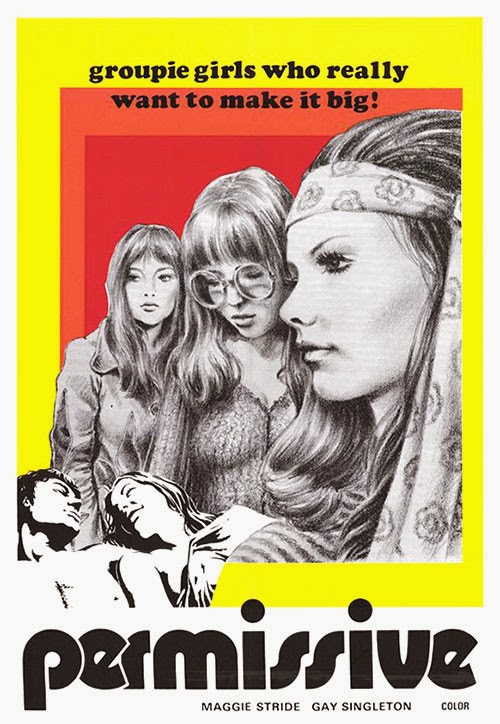
Lindsay Shonteff may be better known for his James Bond homages than the rest of the films he’s made, but this 1970 groupie saga shouldn’t be passed by. Made in the year after his kinda sorta British giallo Night After Night After Night, this film tells the story of Suzy and Fiona, groupies for the band Forever More*.

With a director like Shonteff at the helm and a title like Permissive, you’d expect this to be a fun sex comedy about just how awesome it is to sleep wth bands. But no, it’s nothing of the sort, just a long dark crawl through boredom and addiction to anything, like moving up the ladder of sleeping with a band.

If anything, I learned in this movie that being a groupie pretty much means driving your best friend to suicide.

As for the director, he pretty much remade this movie as his next film, The Yes Girls, without the music angle.

*Forever More was a real band. Their members appear in the film in other roles and not as themselves, which is strange enough. One of their members, Alan Gorrie, was also in Average White Band. You can also hear other bands of this era like Titus Groan and Comus.

Cool It Carol (1970)

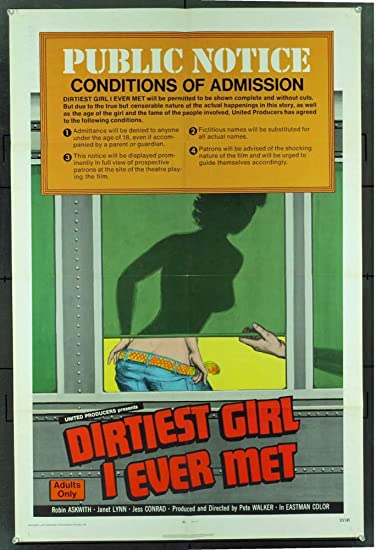
According to the opening credits, “this story is true but actual names and places are fictitious.” That’s because Pete Walker read a story in the tabloid News of the World and got inspired. And unlike movies of this era like Permissive and More, the degenerate lifestyle he envisioned wasn’t tragic.

Joe (Robin Askwith, the Confessions of… series) and Carol (Janet Lynn*, Twins of Evil) have left behind their small town for swinging London, where Joe fails to even find the simplest of jobs and she quickly becomes a model.

Before you can open the newspaper to Page 3, Carol’s involved in the scummier side of entertainment — the photoshoot for a dirty magazine was shot in Mayfair photographer Philip O. Stearn’s studio and the stills were in the July 1970 issue — with dirty old men all wanting a piece of our heroine.

There’s some great casting here, with Stubby Kaye (the owner of Acme in Who Framed Roger Rabbit?), Harry Baird (The Four of the Apocalypse), Chris Sandford (who was also in Walker’s Die Screaming, Marianne), radio DJ Pete Murray, Carry On star Eric Barker, Pearl Hackney (who was in four Walker films, including Four Dimensions of Greta, Tiffany Jones and Schizo) and Martin Wyldeck (Walker really liked using the same actors, as he also was in several of his movies).

This never gets as dirty as the American title — The Dirtiest Girl I Ever Met — promises. It exists in a different time of sexuality, where Robin Askwith’s butt and innuendo is enough. But man, all those scenes of old men licking their lips in slow motion makes me realize that Walker really was made to be a horror director.

*Susan George was originally considered for this movie.

REPOST: Jack and the Beanstalk (1970)

EDITOR’S NOTE: We watched this Barry Mahon movie on December 2, 2020 and this week of the auteur’s films — is he one? — gives us an excuse to bring it back.

Barry Mahon was shot down over Germany and escaped — and was recaptured — at Stalag Luft III before being freed by Patton’s 3rd Army. Once he got back to the U.S., he became the personal pilot and later the manager for Errol Flynn. Then, he learned how to use computers to predict the future box office for films, which does not explain how he made movies like Cuban Rebel GirlsFanny Hill Meets Dr. Erotico, The Wonderful Land of Oz and Santa’s Christmas Elf (Named Calvin).

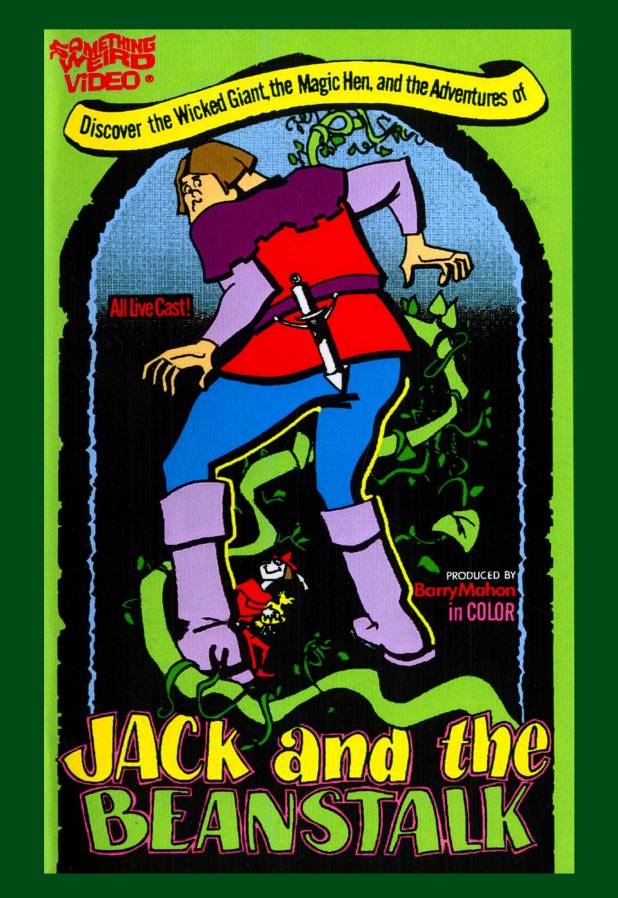
Have you ever gone to an amusement park and they put on plays for the kids that are too worn out or too young for the rides? Yeah, this is like watching one of those for over an hour, with special effects that live up to neither of those two words. This is what I do with my free time. I sit and watch these movies and laugh like a maniac, then tell an uncaring and oh so cold world why they should be as passionate about total junk as I am.

Depending on how lucky — or unlucky — you were, you would have seen either Thumbelina or this movie within perhaps the most maniacal film ever made, 1972’s Santa Claus and the Ice Cream Bunny. Why? What does Jack or Thumbelina have to do with the holidays? More to the point, what does a bunny? Perhaps even more pressing is this question: What is an ice cream bunny?

This was a movie for kids, which leads to so many more questions. Why does it have hip 1970’s slang? Why is it set in the present instead of the past, like every other version of this story? Why is Jack’s family more like Cinderella’s? Why does the giant sing the same song at least three — or a billion, it seems — times?

They used to let kids go to all day matinees of movies exactly like this, which some parents must have thought was some kind of reward. Imagine working hard all week at school and being gifted the magical wonder of this movie, which probably made no sense fifty years ago and even less today.

That said, I’ve thought about this movie way more than I will any film that will be released in 2020. Barry Mahon is kind of that way, equally fraught with wonder and madness, pain and pleasure. I’m brave enough to attempt to watch everything he ever made, so if you’re stupid as well, I hope you’ll join me.

REPOST: Musical Mutiny (1970)

EDITOR’S NOTE: Obviously, our love for Barry Mahon did not start this week. Here’s one of his non-nude films that we covered back on July 19, 2020.

Barry Mahon is magic. And madness, too.

After volunteering for the Canadian Royal Air Force before America entered World War II, then getting shot down, imprisoned and escaping Stalag Luft III before getting captured again, then being saved by Patton’s 3rd Army and then becoming Errol Flynn’s personal pilot and manager, Mahon’s life was already crazy. Then he started making movies like Rocket Attack U.S.A.Cuban Rebel Girls and Fanny Hill Meets Dr. Erotico

That’s all before Barry set up shop at Dania, Florida’s Pirates World theme park and started throwing concerts when he wasn’t making some of the most ludicrous movies — and I mean that as a compliment — ever made, like The Wonderful Land of Oz and perhaps his finest world, Santa and the Ice Cream Bunny.

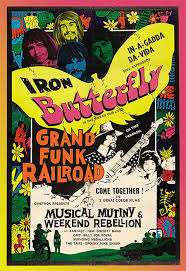
I’ve been hunting for this movie, where a pirate’s ghost convinces the staff of the park to put on a free concert, for literally years and years. I found it. And it pleases me to no end. In fact, it is my happening and it freaks me out.

Local bands Grit, New Society and the Fantasy are happy to play for free, but Iron Butterfly is mad that this is a free show and because they aren’t getting paid, they storm off. Luckily, a rich hippy pays them to play “In-a-Gadda-Da-Vida.” I have no idea what we’re supposed to learn from this.

Facts: There are more dune buggies in this than a Filipino post-apocalyptic film. There’s a garbage truck that says, “You are what you eat.” “In-A-Gadda-Da-Vida” is sixteen minutes long and was probably better with a fistful of narcotics. The pirate also disappears when this show is over.

I have no idea why this was made or who it was made for. I can only dream that I could have gone to Pirates World because everyone —  Bowie, Sabbath, Alice Cooper, The Doors, Led Zep and Frank Zappa to name a few — played there. I hate theme parks but I love this place. Other than dying at Action Park in a blaze of blood, guts and thunder, it’s the only place of its ilk that I will ever be able to stomach.

You can watch this on YouTube.

Janie (1970)

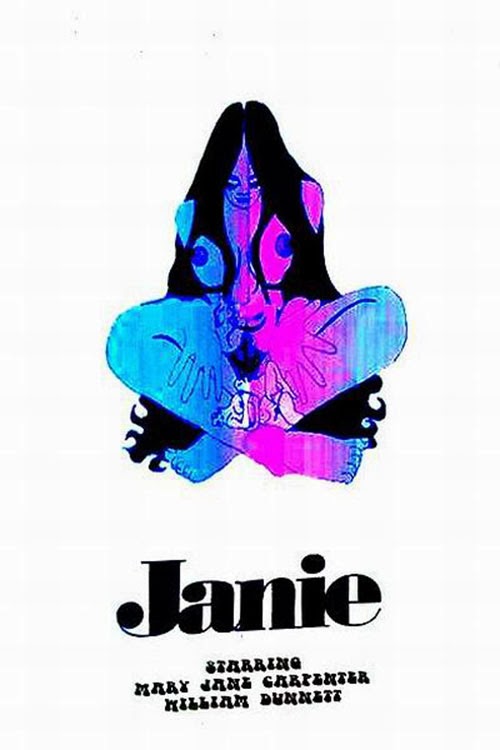
Man, Roberta Findlay made some incredibly scummy movies. This is just another example of his style, a movie in which Janie (Mary Jane Carpenter, Sex Family RobinsonHow to Succeed with SexDouble Initiation) tells her daddy — who yes, she’s sleeping with — about all the people that she’s killed. After each murder, she makes love to herself as shes covered with blood.

This movie is fuzzy and scuzzy and the audio is all over the place and the music is way too loud and everything looks like a mess and yet, it’s exactly right. Roberta directed most of this, although some credit Jack Bravman (Zombie NightmareNight of the Dribbler and the producer of the Findlay’s Snuff).

Everyone has on outfits that Robert Crumb would be crazy for and Roberta does the borderline maniac narration for the nudie cutie gone slasher footage that we watch, where sound rarely matches up with voices. This is a dirty movie with no sex, a film that promises titilation and only delivers strangeness.

I would compare this movie to something else, but there really isn’t anything else like it. Man, Roberta Findlay inspires me more and more with each of her films I see, because she was out there in the 60’s and 70’s making mindbending pieces of trashy art even if she had to use a man’s name to make it happen.

The other night, I had a tooth infection and the only way I could sleep was to lie my face on a heating pad until it felt like it was scalding my flesh and I fell asleep finally, fitfully, and when I awoke I was totally covered in sweat and afraid from the dreams that I had. That’s exactly what watching this movie is like, so beware.

Chariots of the Gods (1970)

Chariots of the Gods

In the alternate universe that was 1970, the German film Erinnerungen an die Zukunft (based on Erich von Däniken’s book Chariots of the Gods?) made $26 million at the box office and was nominated for an Academy Award for Best Documentary Feature.

The film starts by discussing how native tribes found cargo from planes and began worshipping the flying machines as gods, which is probably how our ancestors saw ancient occupants of interplanetary craft.

Director Harald Reinl did movies in just about every popular German genre, from Edgar Wallace krimini, Karl May Westerns (both of these genres infuenced Italian giallo and westerns),mountain films, Heimatfilms (“hometown” rural movies), German war films and sequels to the Dr. Mabuse, Jerry Cotton and Kommissar X films.

In fact, his life ended like a krimini, as his wife, the former actress Daniela Maria Delis, stabbed him in their retirement home.

But let’s get back to the aliens that came down from the sky and turned cavemen into human beings.

As mondos stopped shocking people in the 70’s, the final place they could get audiences was to declare the Nazca Lines and crystal skulls and pyramids as not examples of our ancestors’ genius, but instead proof that aliens came down to earth like the fallen angels from the Lost Books of the Bible — look for it on Glenn Danzig’s bookshelves — and made us. There were so many versions of this movie, but this would be the one where it all gets going.

You can watch this on YouTube.

Performance (1970)

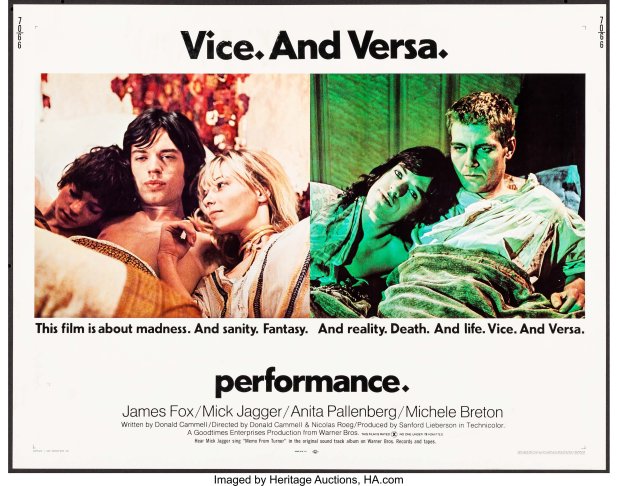
Donald Cammell was raised in a home “filled with magicians, metaphysicians, spiritualists and demons” and spent his childhood bouncing on the knee of “the wickedest man in the world” Aleister Crowley. Originally a painter, he became a screenwriter before meeting the Rolling Stones through Anita Pallenberg.

Performance was supposed to be a light-hearted swinging ’60s romp, but it ended up being what John Simon of New York Magazine called “the most vile film ever made.” It’s the story of two men*, Chas (James Fox), a brutal street thug, and Turner (Mick Jagger), a rock star who has gone into hiding.

Chas was a member of an East London gang, a man of violence who is prized for his ability to get money for his employer Harry Flowers. However, his complicated past with another gangster and that man’s murder has ostracized him from the gang and put him on the run and into the orbit of Turner and his two women, Pherber (Pallenberg) and Lucy (Michèle Breton).

By the end of the film, fuelled by drugs, cross-cutting techniques, a disjointed narrative and no small amount of magic, the two men have switched identities, with Chas displaying Turner’s face and Turner, well, not having a face any longer.

Warner Brothers thought that with Jagger in the movie they getting a Rolling Stones movie that young people could go see. Instead, they got a movie filled with drugs, sex, violence and ideas about cross-dressing and sex transforming identity that would still be dangerous half a century later.

The behind the scenes events — the house in Lowndes Square used in the film was investigated for drugs, Keith Richards was outside in a car fuming because Jagger and Anita were really having sex, Fox stopped acting for fifteen years to become an evangelical Christian — are just as interesting as the film, but the movie itself is astounding.

It was almost unreleased, as a Warner exec would complain, “Even the bathwater was dirty” and the wife of one of them would throw up at the premiere. Ken Hyman, the leader of Warner Brothers, decided that “no amount of editing, re-looping or re-scheduling would cover up the fact that the picture ultimately made no sense.” The film was shelved for two years until Hyman left and even then, the movie was re-edited and the Cockney accents were redubbed.

Time has been kind to Performance, a movie that points out the juxtaposition between the violent lives of East End with the rock and roll world of London. “A Memo to Turner” predates music videos. Bands from Coil to Big Audio Dynamite and Happy Mondays all referenced or sampled the movie while it’s been an influence on so many directors.

As for Cammell, he struggled against the mainstream after this movie — and with Marlon Brando, who kept asking him to write films and then deciding not to make them — before making Demon Seed, a film that deals with transformative sexuality, just like Performance. He’d make White of the Eye and Wild Side before killing himself with a shotgun. Kevin Macdonald (co-director of the story of his life, Donald Cammell: The Ultimate Performance), said “He didn’t kill himself because of years of failure. He killed himself because he had always wanted to kill himself.”

I held back watching this for years, because I wanted to make sure that I was ready for it. I needed to be prepared for this film, to not use it as wallpaper or background noise. It deserved more than that. And I’m glad I waited. It was worth it.

*It’s directed by two men as well, Cammell and Nicolas Roeg, who would go on to make Don’t Look NowThe Man Who Fell to Earth and The Witches.
Microscopic Liquid Subway to Oblivion (1970)

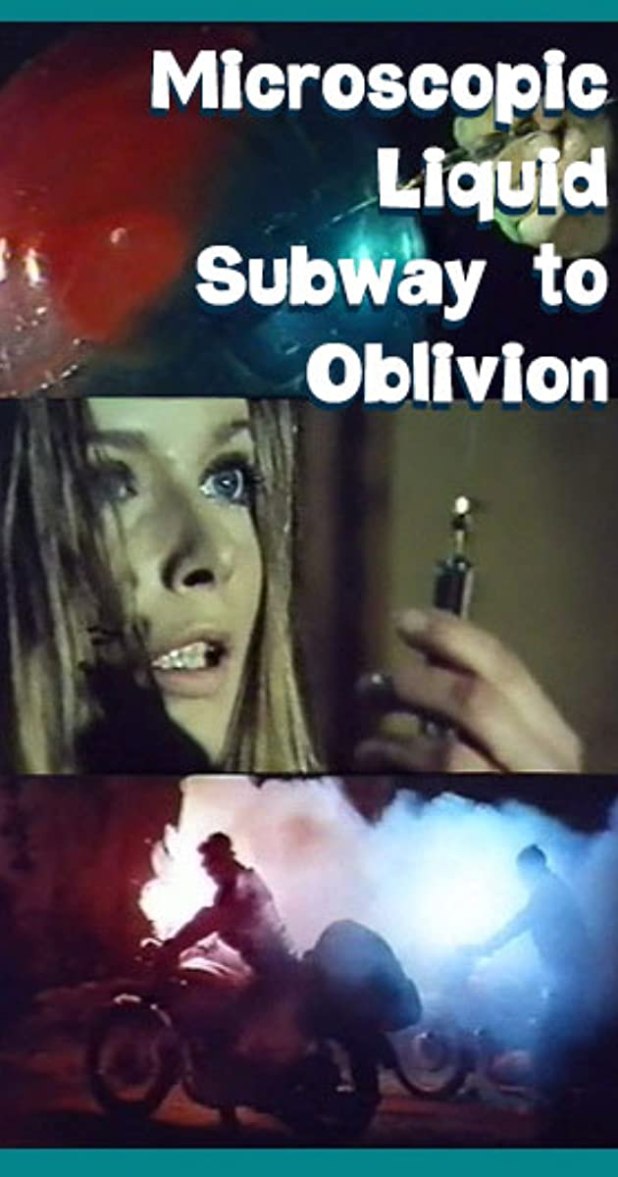
As drug use gets out of control at a small college, one of the professors (Alex Rebar, The Incredible Melting Man himself and the writer of Demented and To All a Goodnight, as well as a contributing writer to Beyond the Door.

This starts off just right — a crazy theme, trippy visuals and Ewa Aulin (CandyDeath Laid an Egg) getting her groove on — before Dr. John, worried that the college’s reputation is being tarnished by all the drug use, particularly when one of his fellow professors takes one of those Dragnet acid trips and thinks he can fly.

The scheming professor decides to work with one of the nerdier kids to take a heroin addict named Billy (Carlo De Mejo, The House by the CemeteryThe Other Hell) and appoints himself the troubled youth’s personal savior. But then his wife — there’s Ewa Aulin — decides to try some of the horse for herself and things get out of hand.

Billy decides that this would the perfect time to test the masculinity of his captor and try to cuck him, which seems to be a bad idea when white knighting teacher takes you against your will. I mean, this is a movie with the line, “Elizabeth, have you ever seen your husband’s penis? John, have you ever seen your own penis?”

With a title like this one and Aulin appearing, along with De Mejo, it’s easy to think that this is a giallo. To be honest, even this movie has no idea what it is.

To be fair, this movie is a total mess, but a fascinating one. It was directed by a man named John Shadow, who some thought was Joe D’Amato — if only! — but it turns out that he was married to Aulin for four years and had a son together named Shawn. He used his own money to produce this movie and it ended up playing nowhere in the world.

Seriously, Shadow is a conspiracy figure. According to IMDB, in spite of numerous newspaper and magazine articles, photos, discographies, interviews with Aulin, the existence of their Swiss-born son, people think that Shadow was really Italian producer Roberto Loyola (I mean, on IMDB, he’s listed as using the name John Shadow to write Pieces and to direct Tales of Canterbury, a movie that D’Amato was also thought to have made). I mean, Shadow even wrote the songs for this movie and people still think he’s Loyola.

These are the strange mysteries that this somewhat lost movie has swirling around it. As they say, the story of the movie is better than the movie itself. To add to the occult nature of this one, the copy I found is a beat up Greek VHS* that was uploaded to YouTube and is well-nigh unwatchable. And yet, I watched it just the same.

*According to Oblivion DVD, there are only two copies of this movie left in existence.

Walk the Walk (1970)

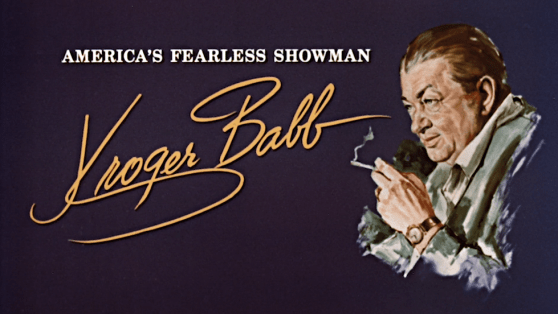
This film starts with a title card that says, “America’s Fearless Showman Kroger Babb.”

No matter what happens after that, I love this movie.

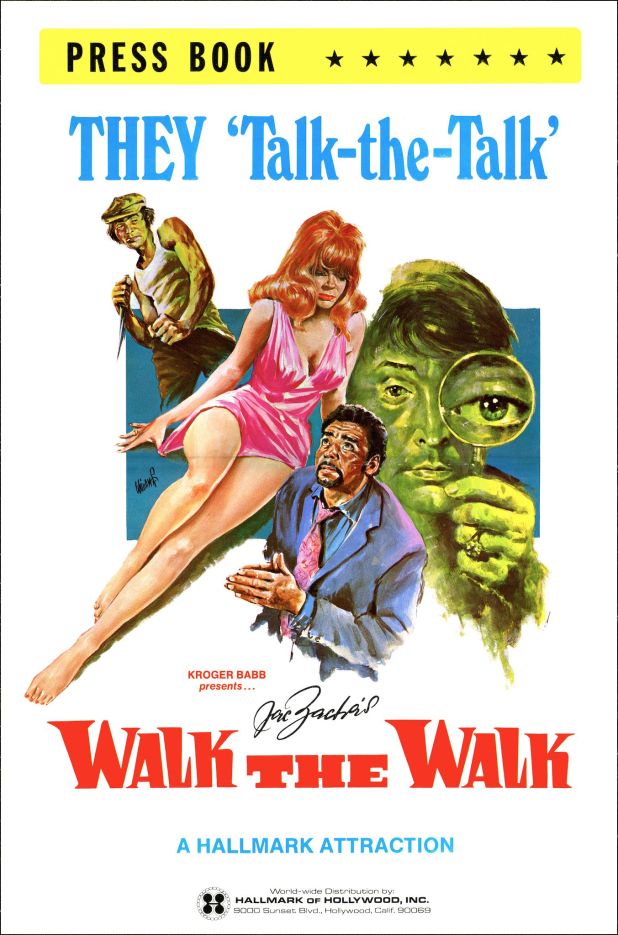
Bernie Hamilton, who was Capt. Harold Dobey on Starsky and Hutch, as well as appearing in Scream Blacula ScreamThe Swimmer and Luis Buñuel’s The Young One, is Mike, a black theology student dealing with addiction.

Writer, actor and producer Jac Zacha had aspirations here, but the film falters. Supposedly, there was a cut opening where he explained how this was the true story of his life. Maybe he wanted to take that out after, you know, there’s that scene when a woman goes off a cliff. Beyond being as convincing as a falling in a Fulci movie, this movie would implicate him in a death.

One of the actors in here, Eric Weston, would go on to write and direct Evilspeak.

You can watch this on the amazing ByNWR site.

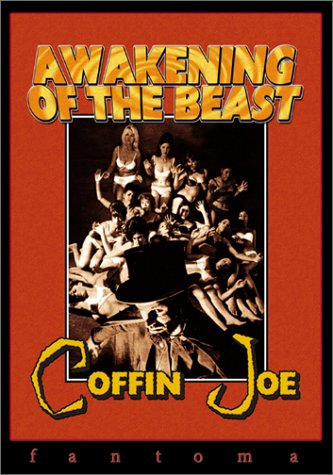
O Despertar da Besta (1970)

José Mojica Marins directed movies for six years before making At Midnight I’ll Take Your Soul, the first appearance of Brazil’s national boogeyman, Zé do Caixão, or Coffin Joe.

Joe is a man with no morals but a devotion to Nietzschian philosophies and absolute hatred for religion with the goal of achieving immortality through the birth of a perfect son. And while he does not believe in the supernatural, he often finds himself walking through visions of the otherworld.

Coffin Joe came to Marins — the man who would often be referred to as the character interchangeably — in a very magic way. “In a dream saw a figure dragging me to a cemetery. Soon he left me in front of a headstone, there were two dates of my birth and my death. People at home were very frightened, called a priest because they thought I was possessed. I woke up screaming, and at that time decided to do a movie unlike anything I had done. He was born at that moment the character would become a legend: Coffin Joe. The character began to take shape in my mind and in my life. The cemetery gave me the name, completed the costume of Joe the cover of voodoo and black hat, which was the symbol of a classic brand of cigarettes. He would be a mortician.”

Awakening of the Beast begins in black and white, as a series of vignettes of the ways that drug users debase themselves are shown in lurid, sweaty detail. A TV panel debates the idea that sexual perversion is caused by the use of illegal drugs, with more stories that illustrate this point. The TV show needs an expert on depravity, so they ask Marins to appear on the show.

Afterward, the doctor who conducted the experiment doses four volunteers and asks for them to stare at a poster of The Strange World of Coffin Joe. Supposedly Marins didn’t know much about using drugs, but he intended this movie to speak against the fact that the uses of drugs are treated worse than the suppliers and that the Brazilian film industry saw him as no better than a long-nailed drug dealer.

The acid trip that follows is highlighted by Coffin Joe, ranting against anyone and everyone. Of course, this film was banned by the very establishment it rails against. So basically, Coffin Joe is a self-fulfilling prophecy; the maniac attacking belief structures created by an artist who only believes in the power of film.

“My world is strange, but it’s worthy to all those who want to accept it, and never corrupt as some want to portray it. Because it’s made up, my friend, of strange people, though none are stranger than you!”