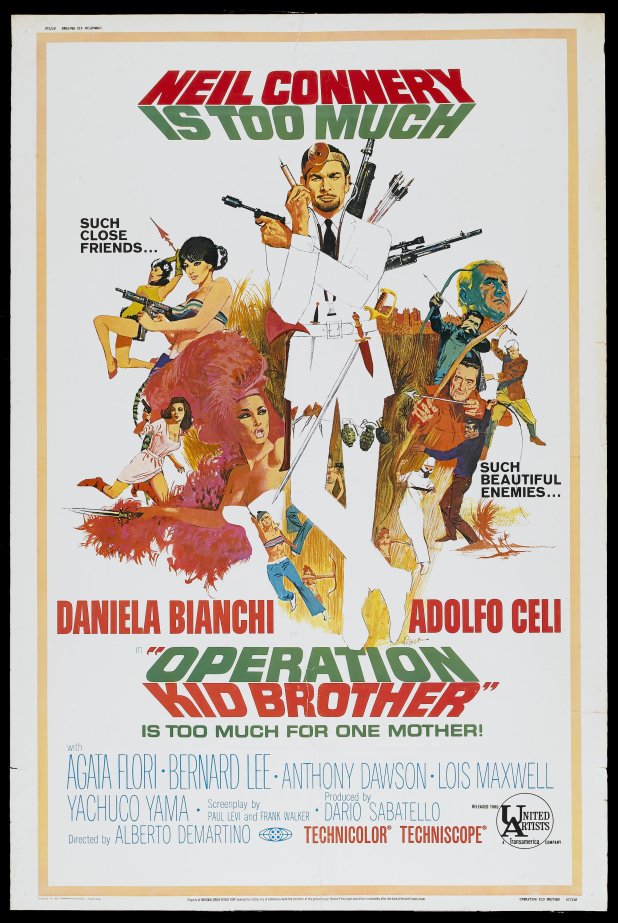
Operation Kid Brother (1967)

Neil Connery was a plasterer in Scotland who lost his tools and got fired. This story made the international news and reached the ear of Bond director Terence Young (Dr. NoFrom Russia With LoveThunderball), who told Italian producer Dario Sabatello that Neil sounded just like his older brother.

The producer met Neil in his native Scotland and got him to screentest for a Eurospy film. The younger brother of Sean just kept saying, “OK, Connery, OK,” which ended up being one of the many titles for this movie.

To make it happen, they recruited Alberto De Martino, who already had experience in this genre thanks to his films Special Mission Lady ChaplinUpperseven and The Man to Kill.

Then, Sabatello went all out to make the most Bond non-Bond movie ever, hiring Adolfo Celi (Emilio Largo from Thunderball), Daniela Bianchi (who was Tatiana Romanova in From Russia With Love), Anthony Dawson (Dr. No himself) and Bernard Lee as Commander Cunningham (he’s the same character as M, who he played in many of the Bond movies) and Lois Maxwell, playing Miss Maxwell, who is exactly the same as her more famous Miss Moneypenny character. Somehow, Lee and Maxwell kept showing up in Bond movies after this.

Sadly, Maxwell claimed that she earned more money for OK Connery than her combined salary from all the times that she played Moneypenny put together. She also claimed that Sean Connery yelled, “You betrayed me!” when she told him she was going to be in this film.

You have to give it up to Sabatello’s balls. He had huge ones. He even asked Sean to join his brother in this movie. That didn’t go well.

He even went so far as to hire Yee-Wah Young, one of the Japanese bath girls from You Only Live Twice. Then again, she’d been in the papers thanks to her relationship with James Mason, so it was like killing two birds with one Q-designed stone.

The movie starts with James Bond — not named — murdered and Miss Maxwell (Lois Maxwell) looking for the spy’s girlfriend Miss Yashuko (Yee-Wah Young). She has information that puts her life in danger, but she’s getting plastic surgery with hypnotism from Dr. Neil Connery (yeah, that guy).

However, Mr. Thayer (Celi) and Maya Rafis (Bianchi) — agents of THANATOS — kidnap her and Connery ends up roped in on a mission with no training whatsoever. Then again, he can hypnotize women, which dudes used to do in 1967 as a pick up trick, one assumes.

He finds out where his brother’s girlfriend is from a gorgeous woman (Agata Flori, who was in the Hallelujah films and was married to Sabatello) and then rescues Miss Yashuko from a Spanish castle, where he discovers that THANATOS is building a supermagnet that will shut down the world’s power supply. Indeed — magnets. How do they work?

That giant weapon is being built in a Moroccan rug factory filled with blind employees, which feels like a story beat out of an Alejandro Jodorowsky film, not an Italian spy ripoff.

There’s some inter-THANATOS fighting, Scottish archers killing evil agents, Anthony Dawson making an appearance and the final line, “O.K. Connery! You were almost better than your brother.”

Call it Operation Double 007, Secret Agent 00 or Operation Kid Brother. No matter what, it’s a strange footnote in Bond history. I love how brazen it is, lifting characters whole cloth for a movie that we’re never sure that we should be taking seriously.

Hey — they even got Ennio Morricone and Bruno Nicolai to compose the score together! And it has its own theme song, “Se Chiami Amore” (“If You Call Love”) by Christie that the two titans of Italian movie music co-wrote, sung by Maria Cristina Brancucci, who would sing “Deep Deep Down” for Danger: Diabolik the next year!

You can watch this on Amazon Prime and Tubi with commentary from Mystery Science Theater 3000. There’s also a version with no commentary on Amazon Prime.
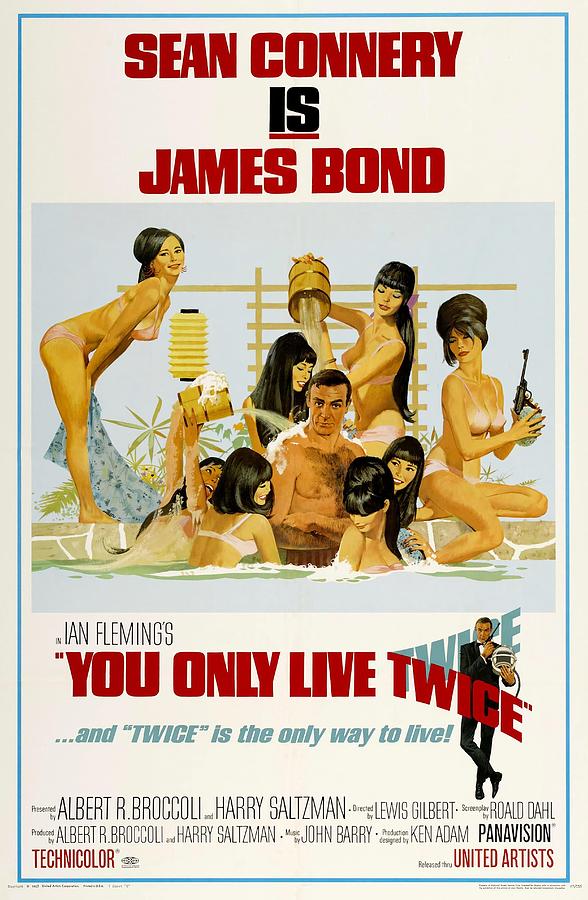
You Only Live Twice (1967)

The fifth James Bond film, You Only Live Twice is the first Bond directed by Lewis Gilbert, who would go on to make The Spy Who Loved Me and Moonraker. And, perhaps most importantly, it seemed like it would be the last Bond film for Sean Connery.

On Her Majesty’s Secret Service was to be the next movie, but that would have meany searching for snowy locations. Instead, the Bond team decided to make this story first.

Roald Dahl would write the story using the book as a very loose inspiration, which he felt was just a travelogue with no story.

American NASA spacecraft Jupiter 16 has been hijacked from orbit by SPECTRE, who are being paid by China to start a nuclear war between the U.S. and Russia. Meanwhile, James Bond has been killed and buried at sea.

What?

It’s all ruse, as Bond is in Japan to find out where SPECTRE is hiding and what their next move is. This involves him working with Aki (Akiko Wakabayashi, King Kong vs. Godzilla), a Japanese female ninja, who is in the employ of the Japanese Secret Service. Tiger Tanaka, of course, is back as the leader of the Japanese agents. After Aki is killed, Bond teams with Kissy Suzuki (Mie Hamada, King Kong Escapes), an agent who he is “married” to after receiving plastic surgery to appear Japanese.

Wait — Bond gets surgery on his eyes to look Japanese? Yeah. It was 1967.

Teru Shimada plays Mr. Osato and Karin Dor plays SPECTRE agent Helga Brandt, two of Bond’s enemies. But the real big bad finally shows up, five movies in, as Blofeld is revealed as Donald Pleasence. Ironically, Charles Gray is in this as Dikko Henderson, but he’d end up playing Blofeld in Diamonds Are Forever.

By the way — Osato’s bodyguard that fights Bond is pro wrestler “High Chief” Peter Fanene Maivia, grandfather of Dwayne “The Rock” Johnson.

I had a really emotional reaction to the end of this movie. Obviously, we’re living through some trying times, but the final of this, as Blofeld is finally revealed and he runs through his base, shooting his own men to escape just as it explodes, leaving Bond and Kissy to try to escape their duties for just a few minutes alone…I found my face wet with tears. The meta realization that Connery wanted to run from Bond in the same way that Bond wanted to escape his MI6 hit me.

Could things ever be this perfect again? This month of Bond films has been a catharsis as I deal with multiple life-changing events — the loss of my company, my wife’s worsening back, my father’s mental condition and hell, the potential end of all there is. I try not to let my real life come into here all that much, but I wanted to share a gorgeous moment with you, when James Bond did what he did best, if only for a few seconds. He saved my world.

Deadlier Than the Male (1967)

Bulldog Drummond predates James Bond by four decades or so. Yet in the late 1960’s, his adventures somehow suggested to producers that he’d be the perfect Bondian analogue. This would be the 23rd movie with Bulldog in it, but his name was featured nowhere in the title. Instead, it refers to Rudyard Kipling’s poem “The Female of the Species,” as well as an earlier Drummond adventure, The Female of the Species.

You may recognize the song, “Deadlier Than the Male,” which was recorded by the Walker Brothers. It’s essentially a Scott Walker solo song and was sampled by the band Space for their song “Female of the Species.” Their song was used in the closing credits of the first Austin Powers film, which sort of brings its history full circle.

This movie was directed by Ralph Thomas, who was behind the Doctor series of films. He’d also come back to make a sequel, Some Girls Do. Betty Box, who was married to Carry On producer Peter Rogers, was this movie’s producer.

Jimmy Sangster, who would direct Lust for a Vampire and write nearly every major Hammer film, along with The LegacyScream, Pretty Peggy and Whoever Slew Auntie Roo? among many others.

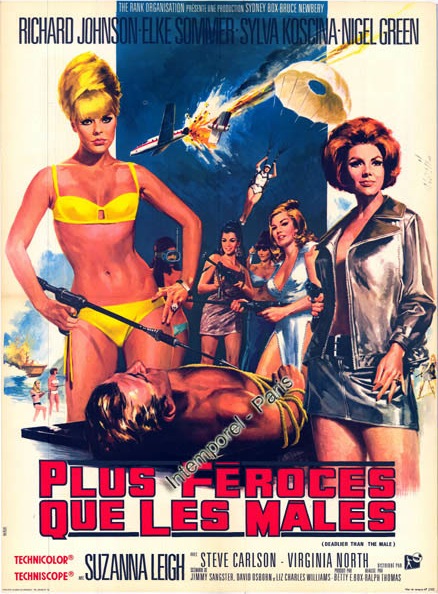
This starts off with a bang — quite literally. Irma Eckman (Elke Sommer, Lisa and the Devil), disguised as a an air hostess, murders an oil baron with a cigar, then parachutes to safety. After being picked up by Penelope (Sylva Koscina, So Sweet, So Dead; the wife to Steve Reeve’s Hercules), they go off and kill another man, making it look like a spearfishing accident.

The goal? To take over Phoenician OIl. Any executive that gets in the way is going to pay. And the girls also try to kill Bulldog (Richard Johnson, the original choice to play Bond in Dr. No) when he gets pulled into their caper.

Virginia North shows up here. She’d come back to appear in the next Bulldog movie as Robot Number Nine and in the same year, would become a Bond girl thanks to a short scene in On Her Majesty’s Secret Service. Perhaps you’ll know her better as the deadly Vulnavia, the assistant to The Abominable Dr. Phibes.

Nigel Green — the same man who was the Electric Messiah in The Ruling Class — plays the villain here. He has a gigantic robotic chess set that’s a marvel of practical filmmaking.

Check out this article to see what eventually happened to the pieces — it’s amazing how long they survived!

As the villain plays Bulldog in a deadly game — with the life of one of his girls named Grace (Susanna Leigh, who was the love interest of Nilsson in Son of Dracula) in the balance — one of the bodyguards attempts to murder our hero. Bulldog gets the best of both of them and emerges intact.

The bodyguard is played by Milton Reid, who once wrestled professionally as The Mighty Chang. You’ll recognize him from three Bond roles — a guard in Dr. No, a temple guard in Casino Royale and as Sandor, who Roger Moore fights on a rooftop in The Spy Who Loved Me. Legend has it that he wanted to play Oddjob so badly that he challenged fellow pro wrestler Harold “Tosh Togo” Sakata to a shoot match for the role. The producers wisely stepped in and just gave Sakata the hat tossing role that made his career. He also shows up in Terror and Dr. Phibes Rises Again.

The ending explosion of this movie basically comes down to who is wearing a hairclip. Yes, sometimes hairstyle choices can determine who lives and dies.

Deadlier Than the Male was given an X rating for the brutality — and promiscuity — of its two female villains. Today, it could play on regular television.

You can watch this for free on Tubi.

LSD Flesh of the Devil (1967)

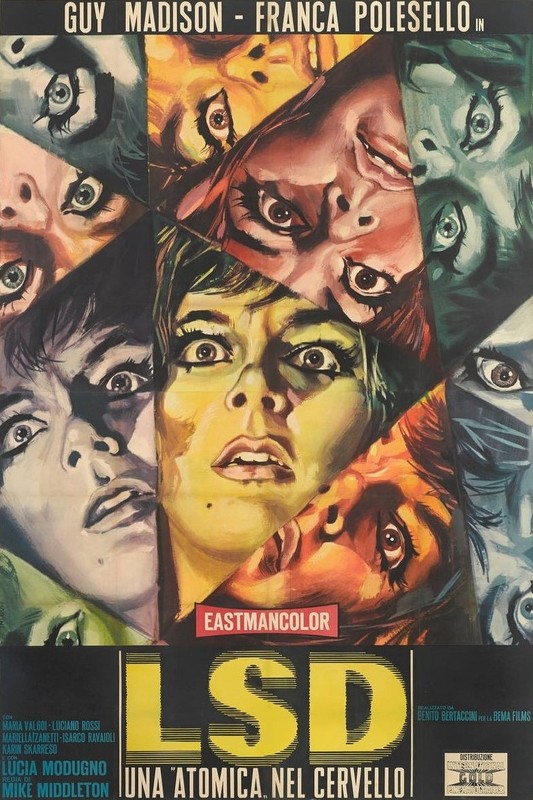
ECHO and Mr. X want to take over the world with LSD. LSD is back, people. It’s bad!

To get to that part of the story, we have to go back to when our hero, Rex Miller (Guy Madison, TV’s Adventures of Wild Bill Hickok) used a toy car and a blow gun to kill two adult men in front of a little girl. Normally, that would send you to some kind of juvenille faciity but Rex ended up becoming a spy.

Before you can say Merry Pranksters, army regiments are getting dosed, which means they start praying, hugging one another and throwing down their weapons. Something has to be done about this if we want to fight the Red Menace!

Mr. X’s goal is to stop  dividing people and to create a Utopia. So, you know, he’s the bad guy.

This is the first Massimo Mida movie I watched. It wasn’t all that great, except for the insane moments that just burst out of nowhere, like a man being burned alive in front of your eyes. Then, after thinking the movie will be good, fight scenes happen without seeing any of the punches and numerous people just stand around. Honestly, the fight scene at an hour and three minutes in is one of the most ineptly shot things I’ve ever seen, which makes me want to watch this movie all over again.

You can see it for free on YouTube. I even found it for you.

Danger!! Death Ray (1967)

Also known as Il Raggio Infernale (The Infernal Ray), Nest of Spies and Death Ray, this Italian espionage film was directed by Gianfranco Baldanello, who bounced around grenres, creating Spaghetti Westerns like Long Days of Hare and Colt in the Hand of the Devil, as well as the Bond-sounding Zorro movie Man with the Golden Winchester and the sex comedy Very Close Encounters of the Fourth Kind. He also wrote the giallo The Girl In Room 2A.

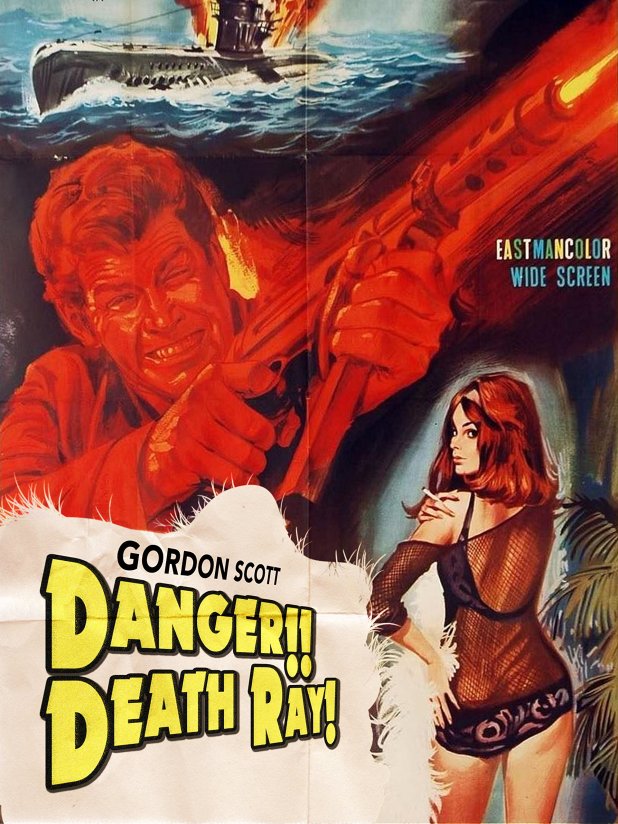
Professor Carmichael has invented a death ray for, you know, peaceful purposes. Tell that to the henchmen dressed as NATO soldiers who have kidnapped him and taken the weapon for their own use. Luckily, Agent Bart Fargo (Gordon Scott, who played Tarzan in six movies) skips out on his vacation and heads to Barcelona, where he wins hearts and minds for the cause.

If you see this in Spanish, Bart’s name is Jim Benson. In German, he’s Mike Morris. And in real life, Gordon Scott went broke and lived in one of his fan’s houses until he died in 2007.

You can watch this on Amazon Prime and Tubi, complete with riffing from Mystery Science Theater 3000. Trust me. You’re going to need it. This movie has vehicle effects that make Gamera movies look like 2020’s finest CGI.


In Like Flint (1967)

This film, along with Caprice, marks the end of an era. They were the final movies to be CinemaScope, as Fox would move on to Panavision.

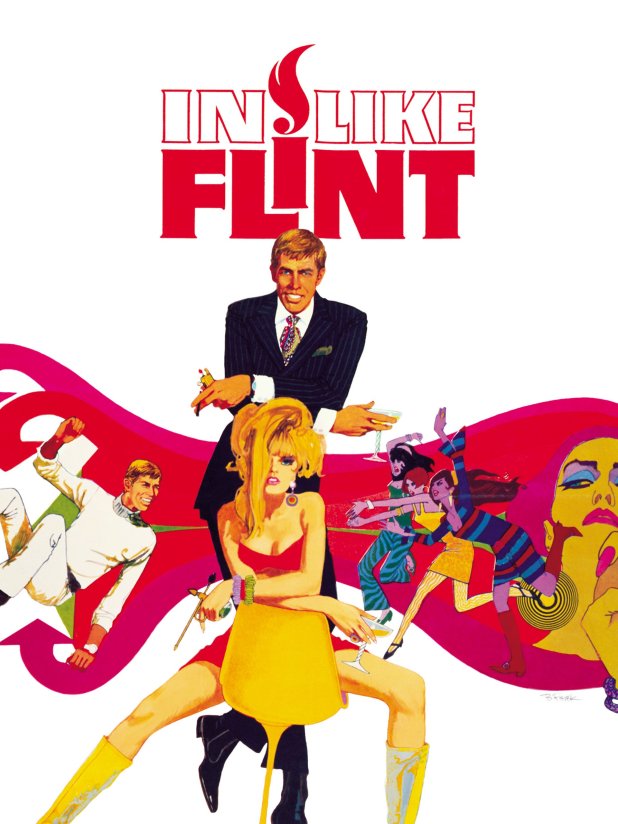
1967 was the end of many eras. And this film reflects it, as instead of men continuing to run the world, In Like Flint features an international feminist matriarchy that conspires to destroy the American ruling class.

Ah, the Flint films. James Coburn and Lee J. Cobb are back and this time, any semblance of reality has been thrown out the window. What a magical time to be alive and spying.

Z.O.W.I.E. (Zonal Organization for World Intelligence and Espionage) Chief Lloyd C. Cramden (Cobb) and President Trent (Andrew Duggan, who is in many of Larry Cohen’s movies like BoneIt’s Alive and The Private Files of J. Edgar Hoover, where he’d play LBJ) are outsmarted by the Fabulous Face organization. The President is replaced with a surgically altered actor, the nuclear space platform is taken over and Cramden is soon discredited.

That means that Derek Flint (Coburn) is back on the job. And thanks to Fabulous Face taking his three girlfriends — he’s downsized somewhat — hostage, he has a personal stake in the game.

While not as amazing as the original film, that one didn’t have Flint swimming and talking with dolphins, nor did it have a cigarette lighter with 82 different gadgets inside it. Or a Flint ballet dancing with Yvonne Craig. Or him showing up in Cuba, where just about everyone looks like Castro.

Jean Hale (who was in Roger Corman’s The St. Valentine Day’s Massacre) plays Lisa, a Fabulous Face operative. Also on hand is Anna “The British Bombshell” Lee, who was the goddaughter of Sir Arthur Conan Doyle. She was Mrs. Bates in Whatever Happened to Baby Jane? and appeared on General Hospital from 1977 to 2003.

The villainous Carter is played by Steve Ihnat, who would go on to direct Coburn in the movie The Honkers. Sadly, he would die before that film was released into theaters at the young age of 37. He’s probably best known for playing Fleet Captain Garth of Izar in the original Star Trek episode “Whom Gods Destroy.”

Who else is in this? Helena is played by Hanna Landry, who was Grace Cardiff in Rosemary’s Baby. Jan is Diane Bond, who was Liza in the Vincent Price-starring House of 1000 Dolls. She’d become a feminist artist years after making this. And  the Russian Premier is played by Herb Edelman, who would go on to be Bea Arthur’s ex-husband Stanley on The Golden Girls.

In Like Flint was rushed into production after the success of the original film. By the time it was made, the studio — and director Gordon Douglas (Them!Viva Knievel!) — had no interest in the movie. Coburn and stunt arranger Buzz Henry ended up directing most of the movie. After this, the star would turn down the opportunity to make a third Flint film.

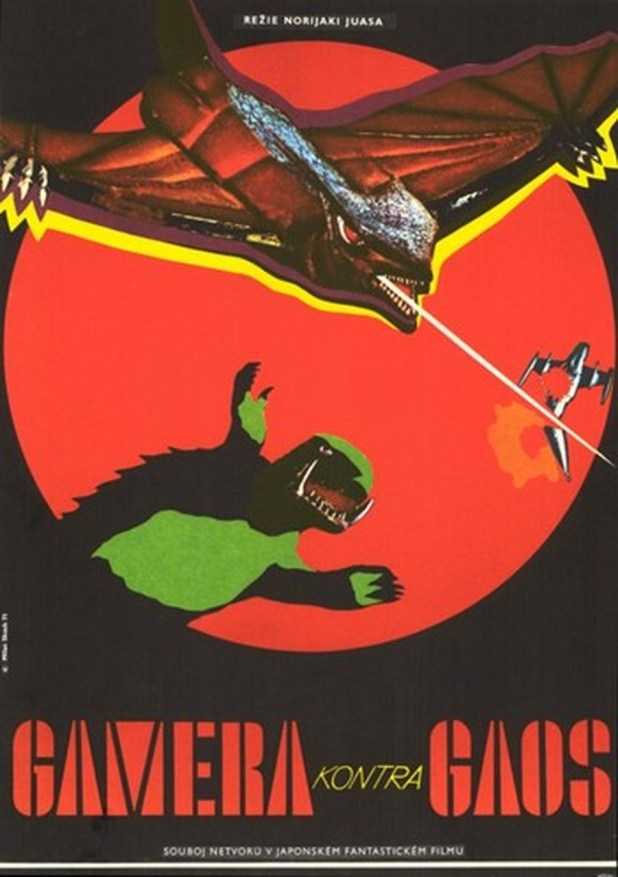
Gamera vs. Gyaos (1967)

This movie was released in the U.S. by American International Television, who renamed it Return of the Giant Monsters.

It all starts when a series of volcanos go off, attracting Gamera, who enters one of them. This reveals a new monster, Gyaos, named for the sounds he makes. It looks like a giant bat and has wind powers, which he uses to decimate the Japanese Self-Defense Force.

Gyaos is a formidable opponent, as he has beams that cancel out Gamera’s fire breath. He’s also willing to bite off his own toes to save himself from Gamera’s fierce fangs. It takes Gamera dragging Gyaos into one of those volcanos to kill him.

This film presents a world where money is more important than the lives and needs of the poor, even in the face of a monster ready to kill all of them with no prejudice. Yes, Gamera vs. Gyaos remains a lesson for our time, even as it features men in rubber suits beating each other up.

You can watch this for free on Tubi and Vudu, or on YouTube below:

The Hostage (1967)

Lots of Henry Farrell’s stories got turned into movies. Hush…Hush, Sweet Charlotte, Such A Gorgeous Kid Like MeHow Awful About Allan, The House That Would Not DieWhat’s the Matter with Helen?, The Eyes of Charles Sand and, most famously, What Ever Happened to Baby Jane?

His first book, The Hostage, was turned in to this low budget Crown International film, which was directed by Russell S. Doughten Jr., who would go on to executive produced the entire A Thief In the Night series of Christian pre-millenial madness. God bless you, Mr. Doughten, for all you have given to me.

A kid named Davey Cleaves sneaks on to a moving truck driven by the bonkers man named  Bull (Don Kelly, a TV star who died young as this is his final movie) and his partner Eddie (a very young Harry Dean Stanton).

John Carradine shows up, as he does at least seventeen times a week in movies that I watch, as does Ann Doran, whose career started in the silent era.

This was the first movie ever shot in Iowa. What a joy for the state when a drunken John Carradine was arrested in Des Moines, as he was disturbing the peace by loudly acting out various Shakespeare plays.

You can watch this on Tubi. Or You Tube. Or turn to the Mill Creek Explosive Cinema set that we’ve been covering all week.

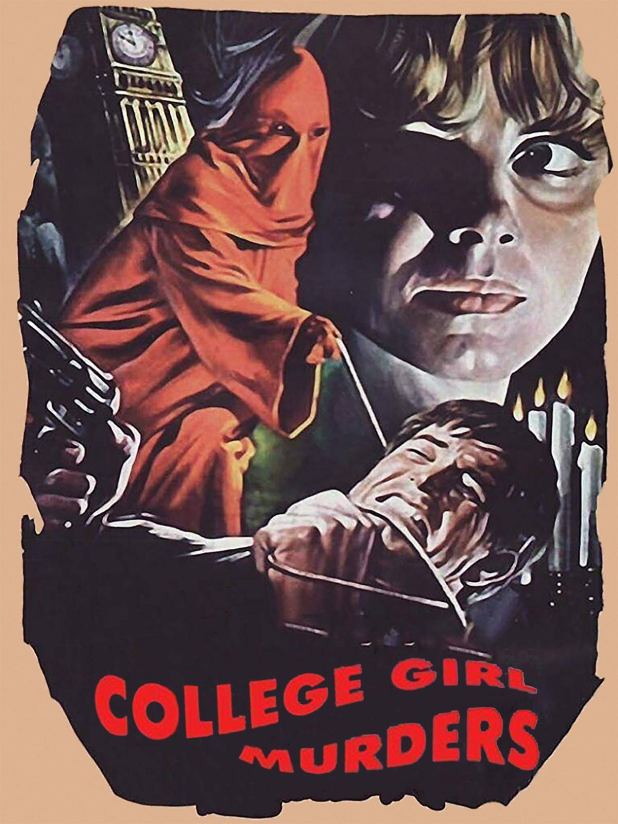
The College Girl Murders (1967)

Beyond Dario Argento and Mario Bava, perhaps the true father of the giallo is Edgar Wallace. And yes, it’s somewhat strange that a British-born writer — in fact, the same man who wrote the original script for King Kong — would beget a uniquely Italian film genre, but sometimes that’s how it works.

Wallace toiled in the army press corps and at London’s Daily Mail, constantly skirting bankruptcy and scandal before he finally became known as the King of the Thrillers. His output was staggering — 170 novels, 18 stage plays, and 957 short stories — with him often dictating his novels just by speaking them aloud as secretaries typed them out. He often worked on three books at once, which was just as well. At one point, he wrote one in four books read in the UK.

Basically, Wallace was constantly on the run from loan sharks and bookies, so he churned out novels to keep them away. It wasn’t until long after his death that his name became even more famous overseas.

Of course, Wallace’s movies had been adapted for the screen for decades, starting with 1916’s The Man Who Bought London and continuing throughout the 60’s with the forty-seven films in the Edgar Wallace Mysteries series.

In 1959, the Danish company Rialto Film made Der Frosch mit der Maske, which started the krimi genre. These films are marked by quick zooms and hidden, yet flamboyant, supervillains. Often, these killers wear a mask and as you watch these films, you can see their influence on the giallo that would come in their wake. Indeed, the very name giallo comes from the garish yellow covers that detective novels by Wallace sported on Italian newsstands.

At the point where The College Girl Murders was made, it’s obvious that the films were not adaptions word for word from Wallace, but used his titles or themes to inform new ways of telling his stories.

There are mad scientists making gases who are soon killed by a  monk wearing a red robe and wielding a whip and another lethal gas weapon that’s hidden inside a Bible. Yes, that’s just in the first few minutes of the film.

Jazzy 60’s music? Creeps staring at women from hidden windows in a swimming pool? Frustrated cops trying to put it all together, yet with a red hooded killer always one step ahead? Pits of alligators ready to menace comely young women? Uschi Glas from Seven Blood-Stained Orchids? Ewa Strömberg from Vampyros Lesbos? Yes, this film has all of that and more.

You can watch this on Tubi.

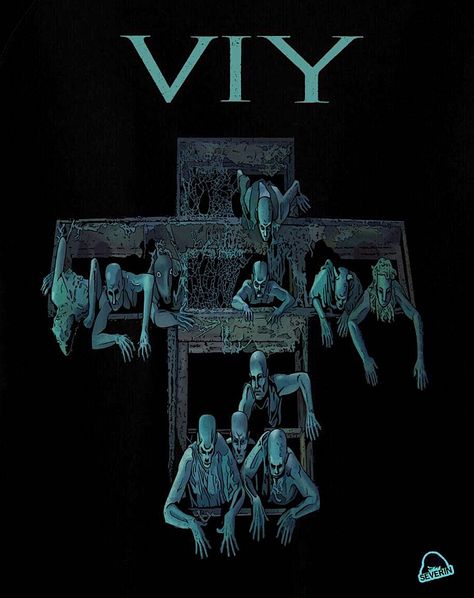
Viy (1967)

The first horror movie produced in the Soviet Union, Viy is based on a novella by Nikolai Gogol. You may recognize the story, as Mario Bava previously adapted it as one of the yarns in Black Sunday. Some of the witch scenes and end appearance of Viy were toned down due to worries of censorship, but the film was able to avoid most restrictions as it was seen as a folk tale.

Seminary student Khoma stays in a farmhouse on his way home for vacation and is nearly seduced by an old woman who puts him under a spell and rides him like a horse. She then gets him to fly and he demands that they land, at which point he beats her into oblivion. In fact, he does the exact opposite of hitting her with the ugly stick. When his attack is finished, she’s now a young woman, but on the broke of death.

After she expires, her rich father demands that Khorma — he has no idea that the young priest killed her — pray for her soul for the next three nights. Soon, he learns that he’s not the only man that she’s bewitched.

That night, when Khorma enters the church, the girl rises from her coffin and tries to find him. He protects himself with a circle of chalk, but must spend the entire night vigilant that she doesn’t attack him.

The second night, the girl’s coffin flies all over the church as birds appear all over the room. Khorma attempts to leave but the father tells him that he will get 1,000 lashes if he fails and 1,000 pieces of gold if he succeeds. He runs, as the witch has already tried to rob him of his sight and has turned his hair white.

The final night a drunk Khorma contends with the girl one more time, but her demons cannot get past the chalk. They can’t, that is, until the monstrous spirit of Viy is conjured. The demons attack him, leaving him motionless in the middle of the chapel as the woman’s corpse crashes through her coffin, revealing her as an old woman once more.

While this movie is more than fifty years old, it still looks and feels amazing, as if it came from an alien world and somehow found ours.

You can watch Viy on Tubi. For the best possible version, turn to Severin. Their blu ray comes with an interview with Richard Stanley on the film, a documentary on the history of Russian fantasy films and three short films, Satan Exultant, The Queen of Spades, and The Portrait.

Viy is also streaming on Shudder.