UNSUNG HORRORS HORROR GIVES BACK 2025: Son of Dracula (1943)

Each October, the Unsung Horrors podcast does a month of themed movies. This year, they will once again be setting up a fundraiser to benefit Best Friends, which works to save the lives of cats and dogs across America, giving pets second chances and happy homes.

Today’s theme: Sequel

The film is the third in Universal’s Dracula film series and the first in seven years since Dracula’s Daughter. In this installment, Lon Chaney Jr. takes over the role of Dracula, or as he’s called in this installment, Count Alucard. It was initially written by Curt Siodmak, who was asked to leave by his brother, Robert, when he was chosen as the director. Curt said that the two had “…a sibling rivalry. When we were in Germany, Robert had a magazine, and when I wrote for it, I had to change my name. He only wanted one Siodmak around. This lasted 71 years, until he died.” Eric Taylor took over as writer.

Count Alucard is invited to New Orleans just in time for wealthy Colonel Caldwell to die and leave his money to his daughter Claire (Evelyn Ankers) and his estate, Dark Oaks, to his daughter Katherine (Louise Allbritton), who soon marries Alucard. This upsets her fiancé, Frank Stanley (Robert Paige), who shoots Alucard, and the bullets pass through him, killing Katherine. Or maybe not, because she only shows up at night, claiming that she and her husband conduct experiments throughout the day. When the cops investigate — Frank has turned himself in — they find her dead body. As you can guess, she’s one of the brides of Dracula now.

Professor Lazlo (J. Edward Bromberg) arrives and does the common-sense thing of telling everyone that Alucard means Dracula, something no one ever gets. But Katherine still loves Frank and turns him into a vampire while also telling him how to kill Alucard. Man, it’s like Dracula noir!

Frank, however, doesn’t want to be a vampire, so he does what any of us would. He sets her on fire.

But who is the son of Dracula? I guess Alucard is supposed to be.

While filming, Allbritton and co-star Paige were constantly playing jokes on the cast. One day, Pat Moriarity, who played the sheriff, and Paige were filming a scene in which they opened Katherine’s coffin. Imagine their shock to find Allbritton inside, completely naked.
CHILLER THEATER MONTH: The Brainiac (1962)

EDITOR’S NOTE: The Brainiac was on Chiller Theater on Saturday, October 15, 1966, at 1:00 a.m.; Saturday, May 3, 1969, at 1:00 a.m.; Saturday, June 19, at 1:00 a.m.; and Saturday, March 4, 1972, at 1:00 a.m.

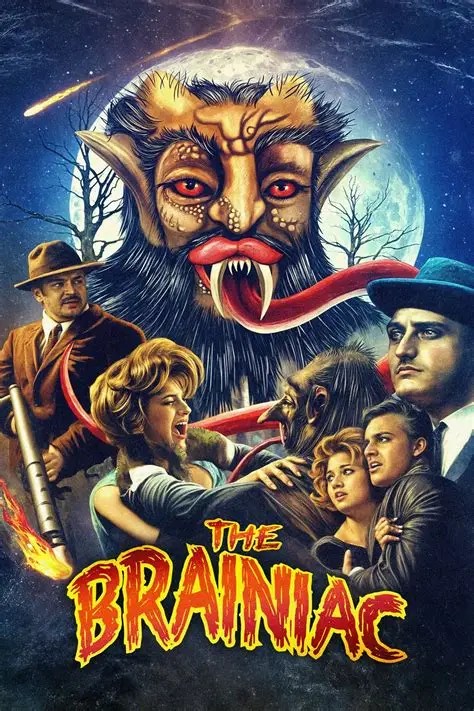
Known as El Baron del Terror in Mexico, this was directed by Chano Urueta, who helped Blue Demon get on the silver screen and was written by Federico Curiel, who would make The Champions of Justice, several Santo movies and Neutron.

All the way back in 1661, Baron Vitelius was burned at the stake during the Inquisition and claimed that the next time a particular comet passed by the Earth, all of the children of those who did him wrong would pay. I mean, you would think a bunch of religious folks would treat a necromantic sorcerer better, but such is life in ancient Mexico.

Three hundred years later, Baron Vitelius rides back in on that comet and is now able to change at will into a monster able to suck out the brains of his victims via a giant forked tongue, which is incredibly easy to do thanks to his ability to hypnotize his victims.

How bonkers is this movie? No less than Frank Zappa and Captain Beefheart paid tribute to it in their song “Debra Kadabra,” saying “Turn it to Channel 13 / And make me watch the rubber tongue / When it comes out! From the puffed and flabulent Mexican rubber-goods mask / Next time they show the Binaca / Make me buy The Flosser / Make me grow Brainiac Fingers / But with more hair!”

In America, we’d be satisfied with an evil alien. In Mexico, it was added that he was a wizard who brought people back from the dead before he was burned alive and ascended to a heavenly body for three hundred years. ¡Viva las películas de terror!

UNSUNG HORRORS HORROR GIVES BACK 2025: Mirror, Mirror II: Raven Dance (1994)

Each October, the Unsung Horrors podcast does a month of themed movies. This year, they will once again be setting up a fundraiser to benefit Best Friends, which works to save the lives of cats and dogs across America, giving pets second chances and providing them with happy homes.

Today’s theme: Sequel

ABOUT THE AUTHOR: Adam Hursey is a pharmacist specializing in health informatics by day, but his true passion is cinema. His current favorite films are Back to the Future, Stop Making Sense, and In the Mood for Love. He has written articles for Film East and The Physical Media Advocate, primarily examining older films through the lens of contemporary perspectives. He is usually found on Letterboxd, where he mainly writes about horror and exploitation films. You can follow him on Letterboxd or Instagram at ashursey.

I waited an entire year with great anticipation for this movie.

I watched the original Mirror, Mirror for my Karen Black pick in last year’s Horror Gives Back challenge. It was unexpectedly one of my favorite films from that month. Karen Black’s presence definitely helped, but it was more than just her. I was invested in the characters. I really enjoyed the performance from Rainbow Harvest (just the best name ever) as she channeled Winona Ryder’s goth stylings of Lydia Deetz from Beetlejuice. Perhaps what intrigued me the most was to find out how many women were involved in the production. Directed by a woman (Marina Sargenti) and mainly written by women (including sisters Annette and Gina Cascone), the film feels different and refreshing compared to most horror movies released in the early 1990s. 

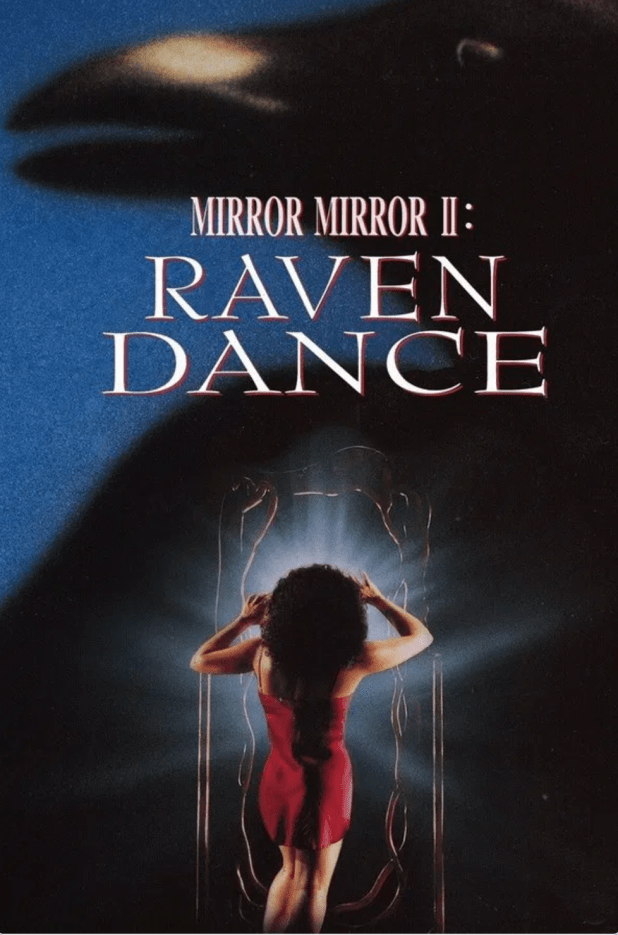
I was excited to watch the sequel, Mirror Mirror 2: Raven Dance. So much so that I saved it for this challenge, expecting to be able to plug it into the sequels category, which is typically an option. I wouldn’t say that I made a terrible mistake, but boy howdy was I let down. I guess I only have myself to blame. How could I possibly have had such high expectations for this film? I blame the poster.

If you watched Mirror, Mirror, you may as well forget everything you saw. Raven Dance is basically a sequel in name only. You could easily go straight to this film without having seen the original (don’t do it, though). The only returning element is the mirror itself, although is it the same mirror? How would it have gotten to a church orphanage? And there is a 17-year time jump in this film as well. Maybe someone manufactured a bunch of mirrors, and the demonic force can travel among them. Again, no answers and really why am I even questioning it. I cannot put more thought into the lore than the writers, right?

In the cold open of this film, a nun is blinded by the power of the mirror. Seventeen years later, Heather from Mr. Belvedere (Tracy Wells—her actual character name here is Marlee) and her younger brother show up at the orphanage after the death of their parents. For (again) some unknown reason, a rock band is setting up to play at a charity event (I guess?). They make fun of the fiddle-playing little brother, and Marlee makes a random wish that the mirror grants, frying the band members but blinding her in the process.

Things only get weirder from here as Sally Kellerman shows up as Marlee’s stepsister, Roslyn. Having been cut out of the will, Roslyn hatches a plan with Dr. Lasky (Roddy McDowall) to incapacitate Marlee and steal the inheritance. But a mysterious man named Christian (Mark Ruffalo of all people, in his film debut) is there to help Marlee get her groove back. Maybe. Unless he is evil. It doesn’t really matter.

Throw in some extended ballet dance sequences and shots of a raven now and then, and you have all the ingredients for a mid-90s direct-to-video sequel to a film that was pretty obscure in the first place. It’s not great. Although I will say that the twist ending was perhaps the most interesting aspect of the film, it didn’t quite save it, but it did bump the whole experience up by half a star.

Will I be watching Mirror Mirror III: The Voyeur next year? One hundred percent, I will! I’m always committed to a bit. Plus, Mark Ruffalo is in this one, too, but as a totally different character. Sign me up.

I watched this film on Arrow Player, but it is also available on TUBI

CHILLER THEATER MONTH: Konga (1961)

EDITOR’S NOTE: Konga was on Chiller Theater on Saturday, March 20, 1965, at 11:15 p.m., Saturday, May 25, 1968, at 1:00 a.m., Saturday, October 18, 1969, and Saturday, January 30, 1971, at 1:00 a.m.

Dr. Charles Decker (Michael Gough) has been presumed dead, but he’s really been hiding out in Africa, learning how to grow plants and animals to a considerable size. Like the baby chimp Konga, he turns into a monstrous ape and then he goes bonkers. I mean, he was before, too, but even more after. He sends Konga to London to kill all of the scientists who made fun of him, like Professor Tagore (George Pastell) and Dean Foster (Austin Trevor).

No one knows that and he keeps on teaching, getting obsessed with one of his students named Sandra (Claire Gordon), which angers his assistant and lover — and wife? — Margaret (Margo Johns). When she turns him down, Decker assaults her, at which point Margaret injects Konga with so much of the serum that he grows gigantic and kills her before going wild on London, starting with grabbing Decker and tossing him. As for Sandra, she’s attacked by a man-eating plant and the movie never gets back to her!

The cops kill Konga — no comments, I’m trying to be non-political — and he turns back into a chimp.

Directed by John Lemont, this was written and produced by Herman Cohen, who also produced Bela Lugosi Meets a Brooklyn Gorilla. His co-writer was Aben Kandel, who was also Cohen’s co-writer for TrogCraze and I Was a Teenage Werewolf.

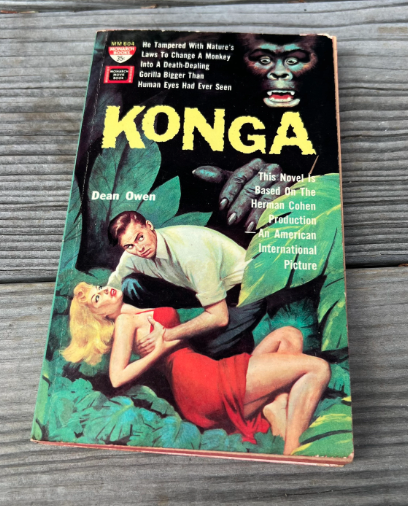
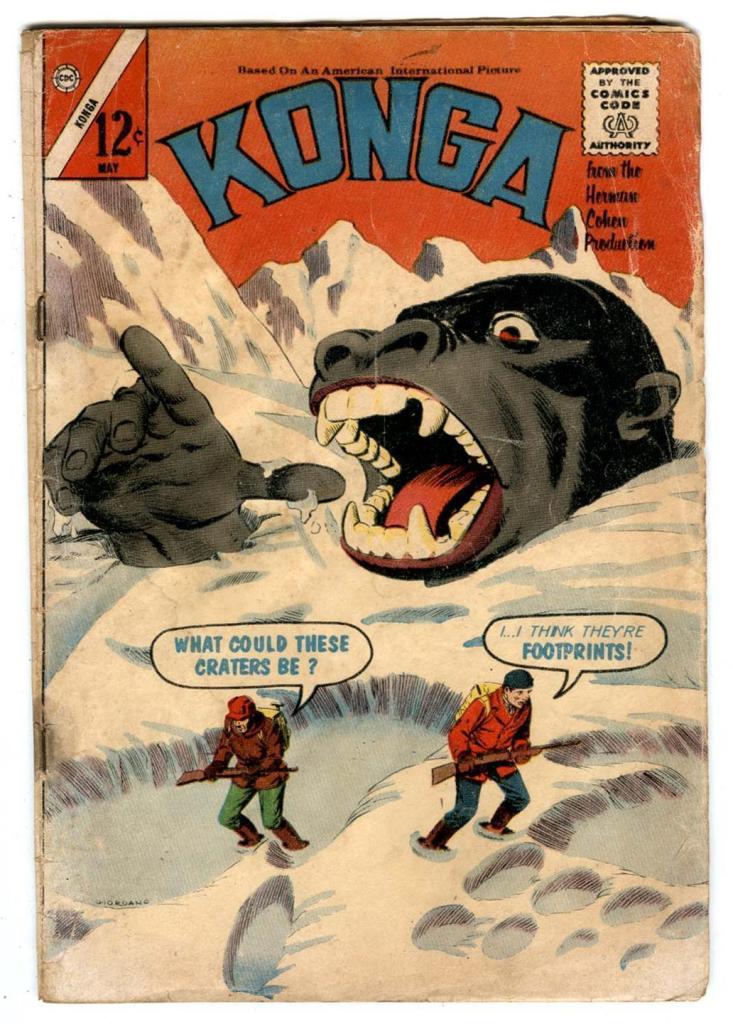
Dudley Dean McGaughy wrote the novelization as Dean Owen. It has a ton more sex — the movie has nothing like it — than the film, as does McGaughy’s Reptilicus paperback. Charlton Comics — who published two issues of a Reptilicus comic book — had also done a Gorgo comic book with Joe Gill and Steve Ditko. Of that work, he said, “I read the screenplay of Gorgo. From the first reading to this day, I marvel at how well Joe adapted the character to comic books.”

Gill and Ditko brought the big ape back from the dead for a few stories in which he fought mole men and undersea monsters. It’s wild that Ditko was drawing this book at about the same time that he was on the Marvel monster books and starting on Spider-Man.

You can watch this on Tubi.

THE IMPORTANT CINEMA CLUB’S SUPER SCARY MOVIE CHALLENGE DAY 1: The Unbreakable Bunch (2024)

October 1: A Scary Sports Film

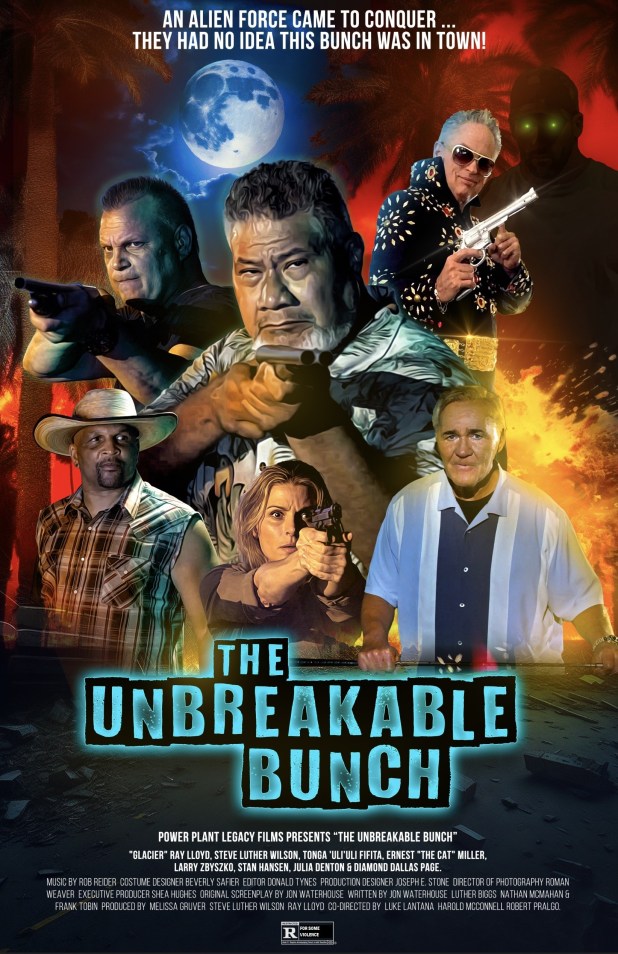
“An Alien Force Came To Conquer – They Had No Idea This Bunch Was In Town.”

I think they made this movie for me.

Directors Luke Lantana, Harold McConnell and Robert Pralgo (who also made the documentary After Wrestling) and writers Nathan McMahan, Frank Tobin and Ray Lloyd (former WCW wrestler Glacier and one of the stars of this movie) have put together an alien invasion movie where only old pro wrestlers can save the day. In fact, Lloyd and Steve Luther Williams, who was also in WCW as Luther Biggs, wrote the story.

The cast includes Lloyd as Jock, the main hero; Luther as the wrestling Elvis Burnin’ Love (Biggs was also Disgraceland in TNA); Tonga “Haku/Meng” Fifita as King Tonga, Ernest “The Cat” Miller as Mack Brown and Larry Zybysko as The Legend. They head out on the Blood and Thunder Tour in an RV, trying to save money for a sober living facility. This brings them to meet old friends like Padge (Diamond Dallas Page), Rusty (David “Gangrel” Heath), Hammer (Stan “The Lariat” Hansen), AEW wrestler Anna Jay, NWA wrestler Kahagas, former member of Raven’s Flock Ron Reil (also The Yeti in WCW) and Alexander the Great (Nicholas Logan), a youngster who keeps bragging that he booked the Tokyo Dome.

We can argue if wrestling is a real sport, but this is the kind of movie where Meng sings a song about the Tokyo Dome, where a pizza-eating contest turns into a fistfight, and Stan Hansen randomly shows up, where green-eyed aliens are unstoppable, and where aging indy wrestlers can shrug off bullets. And not a one of them has a fanny pack filled with painkillers or a rat in each town. But why argue realism when this is a science fiction wrestling movie? I was kind of hoping that DDP would come back like Santo, pulling out a flamethrower out of his car and turning the battle when all is lost.

The end hints that these wrestlers also fought a skunk ape. Make that movie. Now.

Also, Missy Hyatt super randomly shows up in the final battle, and no one goes, “What the hell is Missy Hyatt doing here?”

Like pro wrestling itself, this is dumb yet entertaining. For all my years on the road, I never had to fight aliens, but I would hope Hansen and Missy would always be close by to help.

You can watch this on Tubi.

2025 Scarecrow Psychotronic Challenge Day 1: The Cry Baby Killer (1958)

1. INTRODUCING…: A well-known actor’s first movie. Bonus points if it has an “introducing” credit.

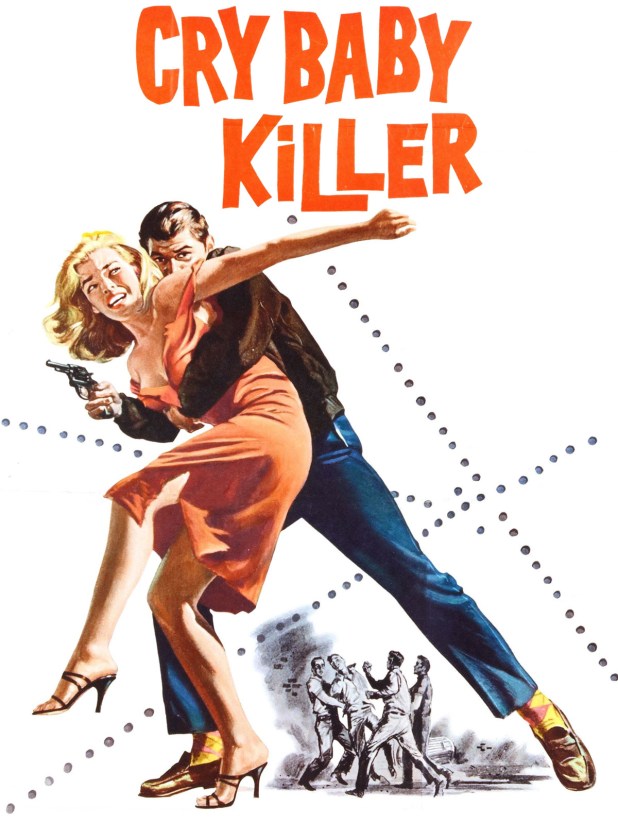
“YESTERDAY a Teenage Rebel… TODAY a mad-dog slayer! ”

Jimmy Wallace (Jack Nicholson in his first movie ever) is in love with Carole (Carolyn Mitchell, soon to be the wife of Mickey Rooney; she was murdered by stuntman and actor Milos Milos (also the bodyguard for Alain Delon), who then shot himself. She and Milos had an affair while Rooney was travelling, and the police thought that Milos stabbed her after she wanted to end it.  While Rooney said, “I died when she did,” he quickly married Mitchell’s best friend, Marge Lane, which angers her new man, Manny (Brett Halsey) and his gang, who try to take him out. Jimmy grabs a gun, shoots one of them and goes on the run, taking a cook (Smoki Whitfield), a mother (Barbara Knudson) and her baby hostage to try and get out of the crime.

Directed by Joe Addis and written by Leo Gordon and Melvin Levy, this is one of the few movies thatRogerr Corman claimed he didn’t make a profit on. The TV rights helped, as did playing it as part of a double feature with Hot Car Girl.

According to an interview with co-star Ed Nelson, Nicholson was so mentally overwhelmed by starring in his film debut that he left the entertainment industry to find himself. I guess he did, right?

You can watch this on Tubi.

UNSUNG HORRORS HORROR GIVES BACK 2025: The Mummy’s Ghost (1944)

Each October, the Unsung Horrors podcast does a month of themed movies. This year, they will once again be setting up a fundraiser to benefit Best Friends, which works to save the lives of cats and dogs across America, giving pets second chances and happy homes.

Today’s theme: Lon Chaney (Jr. or Sr.)

I do love a mummy movie. I really love Lon Chaney Jr. as Kharis, the Mummy. But Chaney went through a lot to play this role, telling Frederick C. Othman that “I sweat” and I can’t wick away. I itch and I can’t scratch.” He took out his anger by choking actor Frank Reicher out, according to director Reginald Le Borg.

Andoheb, a High Priest of Arkam, has summoned Yousef Bey (John Carradine) to the Temple of Arkam to pass on his duties. Meanwhile, Professor Matthew Norman (Frank Reicher) is trying to convince his students that the mummy Kharis is a real thing. One of his students, Tom Hervey (played by Robert Lowery, the second actor to portray Batman), barely listens. After all, he has a hot Egyptian girl, Amina Mansori (Ramsay Ames, actually Spanish; she got the role when “Venezuela Volcano” Acquanetta fell during a dizzy spell and landed head-first on rocks painted white that she assumed were fake). But when anyone even mentions Egypt, Amina starts to feel uneasy.

Yousef Bey starts brewing the nine tea leaves, Kharis returns, the professor gets choked and Amina somehow has a new birthmark after seeing the mummy. Kharis starts leaving mold all over his victims, and the body of Ananka falls into dust, as she’s reincarnated into Amina, as you probably already figured.

The actual problem arises when Bey decides that she’s so gorgeous that he wants him for herself. Kharis reacts by shoving him out a window and narrowly avoiding a mob, only to sink back into the swamp as both he and his bride age. Too bad for Tom, who was about to elope.

When you see Kharis tearing up the museum, know that that’s what it is. They didn’t put the necessary items into the set on time, and Chaney cut himself. That blood is all real! Hardway blood, as they say in wrestling.

Hayes Code be damned, the female heroine doesn’t survive and you can see her, well, nipples in one scene. I guess they snuck this one in!

As I mentioned earlier, I love all mommy movies. At least the Universal ones are somewhat tied together. Too bad Lon hated the wrap so much.

Bill Fleck’s Horror Behind the Scenes writes, “According to Christopher Lock, makeup master Jack P. Pierce’s current biographer, the Mummy’s make-up is by now a rubber mask fashioned by propman Ellis Berman. But before the mask is applied, Chaney is wrapped by John Bonner and Pierce in what studio publicity claims is “400 yards of gauze tape.”

Pierce then takes Chaney out into the California sunshine when possible, and applies dark paint to the wrappings in order to suggest the scorching the creature has lived through in previous films. Pierce then wraps up Chaney’s hand, so as to give the illusion that the Mummy’s fingers have been burned off — and puts that arm in what looks like a sling.

Finally, the rubber mask, blocking out Chaney’s eye is glued to the actor’s face —presumably by Fuller’s Mud — and this is also raked through his hair, and Pierce then applies cotton, spirit gum, liquid latex, and tissue on the mask to form a more realistic look. Lastly, greasepaint and powder are added.

It’s by far Chaney’s least favorite makeup.”

The good news is that his dog, Moose, got to visit the set. Moose was Bela Lugosi in werewolf form in The Wolf Man and became Chaney’s beloved pet.

You can download this from the Internet Archive.

CHILLER THEATER MONTH: Curse of the Aztec Mummy (1957)

EDITOR’S NOTE: Curse of the Aztec Mummy was on Chiller Theater on Saturday, October 8, 1966, at 11:20 p.m.

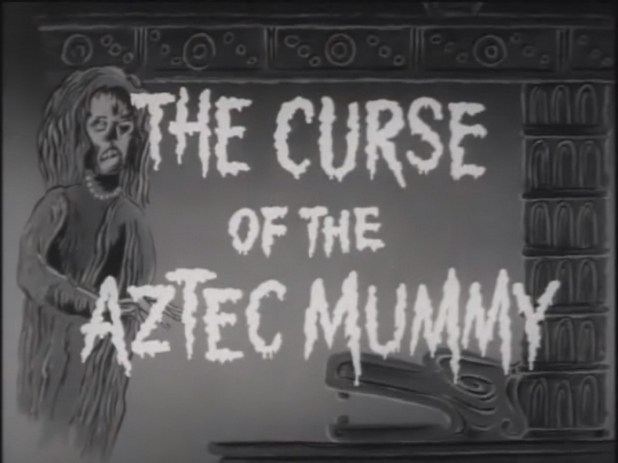
K. Gordon Murray seems like the perfect person — if Jerry Warren wasn’t going to do it — to bring this movie to the U.S. as The Curse of the Aztec Mummy. None of the voices seem like they fit the characters — which if you know the world of Murray’s films — makes perfect sense.

The evil gangster Dr. Krupp escapes from the police and hypnotizes Flor into telling him where the mummy’s tomb is. But didn’t the tomb and the mummy himself get blown up real good in the last movie? Why should we let common sense get in the way of things when there’s a masked wrestler named The Angel showing up to help the forces of good?

You know what Krupp gets for his trouble? Popoca comes back, kills every one of his men and then throws the baddy into a pit of snakes. Watching that, Flor and her leading man say, “Let’s get married.” That seems to make sense after you’ve seen an undead version of your past life lover kill everyone and everything just. to get a gold breastplate back.

You can watch this on Tubi.

UNSUNG HORRORS HORROR GIVES BACK 2025: Spider Baby (1967)

Each October, the Unsung Horrors podcast does a month of themed movies. This year, they will once again be setting up a fundraiser to benefit Best Friends, which works to save the lives of cats and dogs across America, giving pets second chances and happy homes.

ABOUT THE AUTHOR: Adam Hursey is a pharmacist specializing in health informatics by day, but his true passion is cinema. His current favorite films are Back to the Future, Stop Making Sense, and In the Mood for Love. He has written articles for Film East and The Physical Media Advocate, primarily examining older films through the lens of contemporary perspectives. He is usually found on Letterboxd, where he mainly writes about horror and exploitation films. You can follow him on Letterboxd or Instagram at ashursey.

Today’s theme: Lon Chaney (Jr. or Sr.)

The horror landscape in the mid to late 1960s was a bit fractured, in a sort of limbo, almost waiting for a subgenre to emerge. Hammer had a stranglehold on gothic tales of horror. Herschell Gordon Lewis was busy inventing the splatter film. Jose Mojica Marins brought his boogeyman creation of Coffin Joe to life in Brazil. Mario Bava had planted the initial seeds of giallo with Blood and Black Lace, waiting for Dario Argento to come in and reap the benefits a few years later. For mainstream America, everything changed in 1968 with the release of films like Rosemary’s Baby and Night of the Living Dead. But before those landmark films changed everything, most horror films were pulling from the past rather than pushing the genre forward. Spider Baby is an interesting representation of where horror stood in 1967.

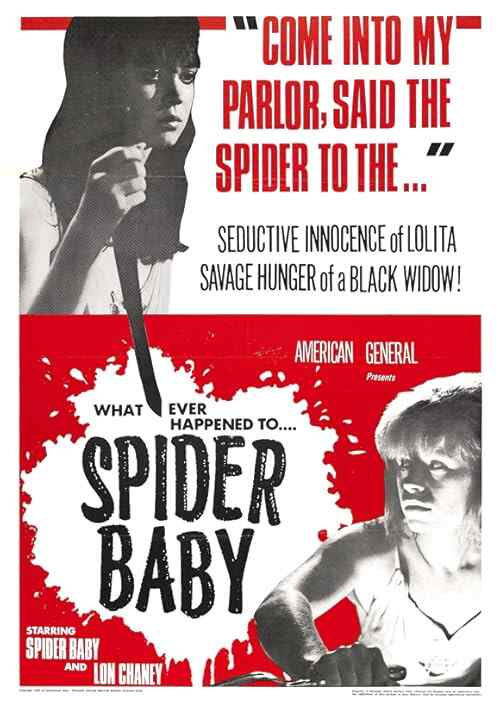
Spider Baby was written, edited, and directed by Jack Hill. Out of the Roger Corman school of filmmakers, Hill would go on to direct some of the most famous exploitation films of the 1970s, including Coffy, Foxy Brown, and The Switchblade Sisters. Prior to Spider Baby, Hill (along with a personal favorite director of mine, Stephanie Rothman) directed the troubled production of Blood Bath (the very first film covered on the Unsung Horrors podcast). For Spider Baby, Hill seemingly pulled from what was popular in horror films at that time—an old, dark gothic house filled with a family who is not quite right, and cast an actor (in this case Lon Cheney Jr.) who might need a sort of comeback vehicle, similar to what Robert Aldrich did in What Ever Happened to Baby Jane? and Hush…Hush, Sweet Charlotte

Inflicting the family with a fictional genetic condition called “Merrye Syndrome”, where the unfortunate inflicted begin to regress mentally after puberty, Spider Baby is infused with colorful characters where anything can happen. The “children” act in feral ways, particularly Virginia, who captures victims in a makeshift spider web before “biting” them with a pair of knives. Bruno (Cheney Jr.) has taken charge of the siblings as his wards, trying his best to protect them from themselves, and perhaps society from them. Everything changes though when some desperate distant relatives show up, hoping to claim a stake to the family’s inheritance.

While the film might mostly resemble a typical gothic nightmare (spiderwebs, skeletons, and subterranean pits in the basement abound), it also offers aspects not seen in a lot of horror movies at that time. There is definitely a comedic tone to the whole story. A character breaks the fourth wall to directly address the audience at the beginning and end of the story. Perhaps most striking to me was a meta moment where a character at the dinner table references The Wolf Man, Lon Cheney Jr.’s most iconic role.

I’m not sure if Spider Baby is going to be the most memorable film I watch this month, but it is a solid start for sure. 

I watched this one on Arrow Player, but it must be in the public domain, because it is streaming just about everywhere.

WEIRD WEDNESDAY: Deliver Us From Evil (1975)

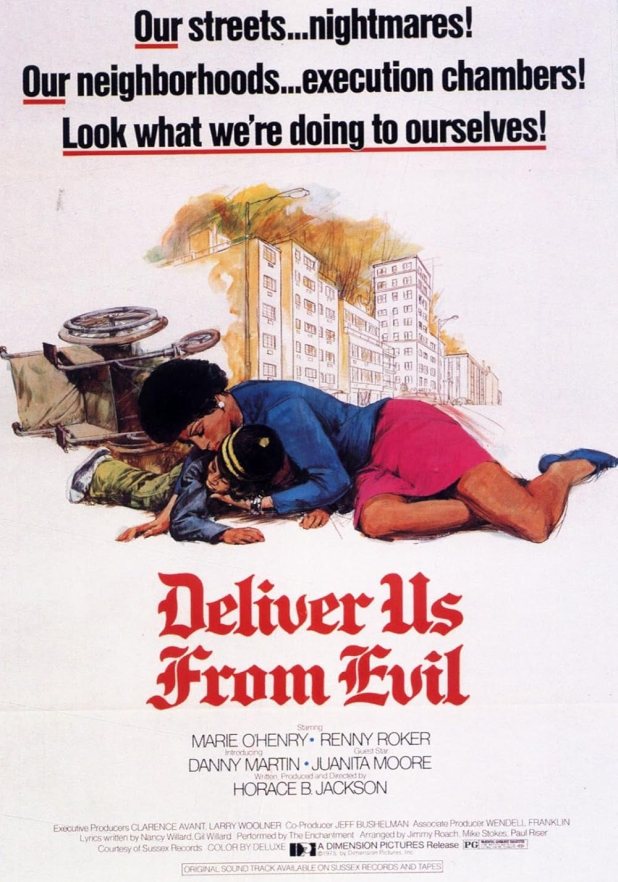
The trailer for this movie claims that it’s “a movie that tells it like it is about blacks. The beautiful blacks. The evil blacks.”

It’s also a movie that’s preaching to its audience about ending the drugs and violence in black communities to the point that it moves from blacksploitation to Godsploitation. It starts with Chris Townes (Renny Roker and yes, he is related to Al) going shithouse in a room full of glass vases and getting sent to a psychiatric ward where he screams at people. When he gets out, he has to deal with the worst white people ever at work and back home with his landlord. Maybe he can get with Mindy (Marie O’Henry), a social worker who he has a crush on. Well, when he drives her home, his maniacal skills behind the wheel show her that yes, Chris is a dangerous human being to be avoided.

Chris needs to get with Mindy, so he decides to start being nice to the wheelchair-bound Little Joe (Danny Martin) to prove how nice a guy he is. But then it is revealed that Mindy is married, and Chris uses Little Joe to meet her friend Kim (Kandi Keath) because this movie flies through character, and at the same time, black on black crime is out of control to the point that it appears in this movie and is moralized over more than a day of Fox News.

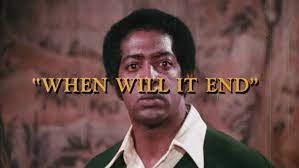
But you know, I kind of love this as it ends with Chris looking directly at us, the audience, and demanding that a million black men march on Washington 18 years before that happened. And then this title comes up:

The tagline for this movie was “

Director and writer Horace Jackson had some talent. Sure, this movie is all over the place, but there’s a scene where criminals beat up Mindy that is really artistic. And sadly, it could still be made today and be completely relevant. You could watch this and laugh at how silly and earnest it is, or you could look at it as a filmmaker using all of the tools that he had to get out a message that he believed in.

You can watch this on Tubi.