B & S About Movies podcast Episode 108: The Maltese Bippy and Go Ask Alice

This week, it’s 60s and 70s pop culture, as The Maltese Bippy has Rowan and Martin from Laugh-In and Go Ask Alice is the scare movie that had kids ask, “Should I do acid?”

You can listen to the show on Spotify.

The show is also available on Apple Podcasts, iHeartRadio, Amazon Podcasts, Podchaser and Google Podcasts.

Important links:

Theme song: Strip Search by Neal Gardner.

Donate to our ⁠⁠⁠⁠⁠⁠⁠⁠⁠⁠⁠⁠⁠⁠⁠⁠⁠⁠⁠⁠⁠⁠⁠⁠ko-fi page⁠⁠⁠⁠⁠⁠⁠⁠⁠⁠⁠⁠⁠⁠⁠⁠⁠⁠⁠⁠⁠⁠⁠.

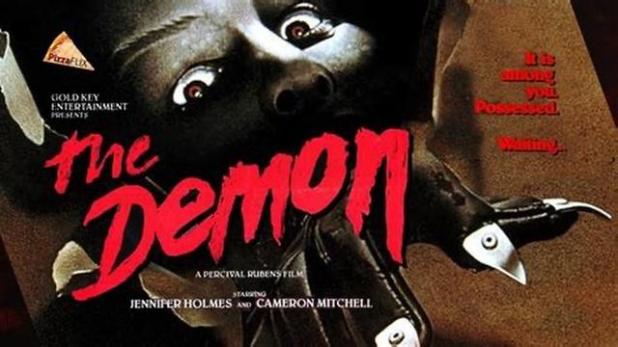
MILL CREEK LEGENDS OF HORROR: The Demon (1979)

Imagine a movie that starts with a fourteen year-old girl being killed by a faceless maniac wearing a black leather glove with razor-tipped fingers. If you’re ready for that before the first credits roll, then you’re ready for The Demon.

That very same killer then kills a trucker, steals all his money and gets a place in a sleazy hotel in Johannesburg. Emily’s parents are frustrated by the police and turn to Bill Carson (Cameron Mitchell, the whole reason why I picked this movie), a psychic detective who was once a U.S. Marine. Of course.

Emily’s mother just wants to know if her daughter is alive or dead. Her father, though, wants revenge. Carson replies that its best for the Parkers if they don’t find the killer, telling them that he’s pure evil. I mean, you should believe a dude who can tear up a bed like this.

The killer has moved on to an American schoolteacher named Mary (Jennifer Holmes, who was on TV’s Newhart before being replaced by Julia Duffy). She first sees him outside her classroom window, as he can seemingly appear and disappear at will. And when she’s not seeing killers, she’s hanging out with her South African cousin who is dating Dean Turner, a rich American playboy that Mary hates.

Jo is out having fun and poor Mary is stuck at home, getting phone calls with heavy breathing and menacing knocks on her front door. Is it the killer? Or is he happy to be at home grunting, groaning, doing push-ups and shredding porno mags?

The Demon also likes to go out and try and pick up ladies. And where does he go? Boobs Disco! Yes, this was a real place. And yes, it was really called that.

We even get to hear some of Lipps Inc.’s “Funkytown” in this scene, as the killer is stopped from raping a girl by two motorists, one of whom is slashed and the other gets his motorcycle blown up real good.

Meanwhile, Cameron Mitchell is getting the most out of his ten minutes of screen time. I guess that’s all the producers could afford. He creates a faceless sketch of the killer and tells the Parkers where the man lives. He warns Mr. Parker one more time, but the guy just can’t listen and gets his neck snapped pretty much immediately, then thrown off a balcony.

Children are playing in the woods when they find Emily’s remains, which brings Carson back to Mrs. Parker, telling her that he’s sorry, but the time of The Demon is drawing close. She accuses him of being behind all of this to keep his career going as a psychic and shoots him in the face. Well, that had really nothing to do with the other half of this film, which is becoming a riff on Halloween.

Mary and Jo go out on dates that night while The Demon gets ready for them. Mary tells Bobby, her man, that she’s been getting stalked late at night. And she’s right — The Demon has, for reasons known only to him, broken in to kill Jo and rich guy Dean, then hide in the house.

You know, if I had a cool razor glove, I wouldn’t suffocate people with a plastic bag like The Demon. But hey — I’m just a writer on a web site.

It’s time for this movie to go full Halloween, with The Demon chasing Mary all over the house — up and down the stairs, through a closet, into the attic and finally through a hole in the roof. She finally makes it to the bathroom, where she builds a trap with scissors, the shower and shampoo. That’s right — The Demon is the first masked killer I’ve seen that is basically killed by slipping in the shower.

If you’re watching this movie based on the description Mill Creek gives, you’re going to be disappointed. Cameron Mitchell never gets to be the Australian Dr. Loomis, instead being felled by a housewife with a handgun. And I know that I give generous berth to the transfers on these, but even I was amazed by how long scratches would appear on the footage.

If you enjoy scenes that having nothing to do with the overall film being given the same importance as major facts, then let me recommend The Demon. Come for Cameron Mitchell, stay for Boobs Disco.

MILL CREEK LEGENDS OF HORROR: The Phantom Creeps (1938)

This Universal movie serial — told in twelve parts — shares some similarities with the earlier serial The Vanishing Shadow, including the inventions of an invisibility belt and a remote-control robot.

That makes sense — at the time, Universal was all about recycling. This movie contains stock footage from The Invisible Ray and The Vanishing Shadow, as well as music from the Flash Gordon serials and Frankenstein movies, plus car chase footage that had been used in several other serials and newsreel footage taken from the Hindenburg disaster.

Eight years after his star turn in Dracula, Bela Lugosi’s career was in decline. He had been typecast as a horror star and was not seen as talented as his co-star — and possible rival — Boris Karloff.

This career downturn had many factors behind it. Universal changed management in 1936, and due to a British ban on horror films, they dropped the once-popular films from their production schedule. Lugosi found himself consigned to Universal’s non-horror B-film unit, the same team that made serials like this. And while the actor was busy with stage work, he had to borrow money from the Actors Fund to pay the hospital bills for the birth of his son, Bela George Lugosi, in 1938.

However, that year brought Bela back. California theater owner Emil Umann revived Dracula and Frankenstein as a special double feature, a bill so successful that it played to sellout crowds and Lugosi himself came to host the movies. The actor would say, “I was dead, and he brought me back to life.” Universal took notice of the tremendous business and launched its own national re-release, as well as hiring Lugosi to star in new films.

The Phantom Creeps — yes, we’ll get back to this movie in a minute — was the last of the five serials that the actor would make, shot right after he returned from making Dead Eyes of London. It was released a week before his comeback vehicle, Son of Frankenstein.

Sadly, by 1948, the parts dwindled again and severe sciatica from Lugosi’s military service was treated with opiates, causing a downward spiral that the actor would never really emerge from. He appeared in movies like Bela Lugosi Meets a Brooklyn Gorilla and Ed Wood’s Bride of the Monster. After making that movie, he checked himself into rehab, one of the first celebrities to publicly do so. According to Kitty Kelley’s His Way: The Unauthorized Biography of Frank Sinatra, “Old Blue Eyes” helped with expenses, despite never meeting Lugosi before and visited him at the hospital.

The actor died of a heart attack in 1956, having just married his fifth wife. And yes, he was buried in his Dracula cape.

In this film, he plays Dr. Zorka, a man who loves to make weapons and refuses to sell them to anyone or any country. This upsets all manner of people, like Dr. Fred Mallory, his former partner, and government man Captain Bob West.

Dorothy Arnold, who plays love interest Jean Drew, was the first wife of baseball star Joe DiMaggio. Look for Edward Van Sloan, who always played the doctor battling the supernatural in Universal films. He’s Van Helsing in Dracula, Dr. Muller in The Mummy and Dr. Waldman in Frankenstein. In fact, that movie begins by him warning the audience that they can leave now if they’re too frightened. And Ed Wolff, the seven-foot-four-inch actor who played the robot, was also in Invaders from Mars and The Return of the Fly.

Speaking of the robot, you may have seen him in Rob Zombie’s work. The song “Meet the Creeper” is based on the movie and the robot often appears in the singer’s music videos and stage shows.

You can download this from The Internet Archive.

MILL CREEK LEGENDS OF HORROR: Easy Virtue (1928)

Based on the 1924 play by Noël Coward, this Alfred Hitchcock-directed movie opens with Larita Filton (Isabel Jeans) testifying at her divorce trial as she leaves her husband, Aubrey (Franklin Dyall). The scandal of it all is that Claude Robson (Eric Bransby Williams), an artist, is in love with Larita and a mistaken moment leads to him being shot. She leaves town, goes to Europe and instantly marries John Whittaker (Robin Irvine) after he hits her in the eye with a tennis ball.

Of course, his mother (Violet Farebrother) hates her, as she wanted him to marry Sarah (Enid Stamp Taylor). She does everything she can to turn the entire family — and her son — against Larita, who finally just gives in and allows her husband to divorce her.

At the end, as photographer take her picture outside of court, she says, “Shoot! There’s nothing left to kill.” Hitchcock said it was the worst thing he ever wrote. Sadly, this was a financial failure.

You can watch this on YouTube.

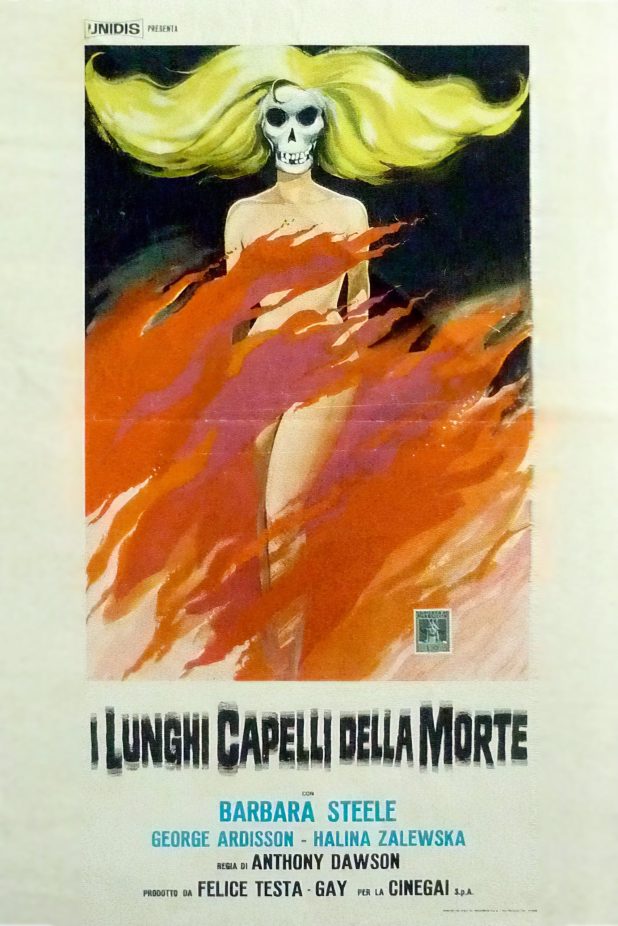
MILL CREEK LEGENDS OF HORROR: The Long Hair of Death (1964)

Adele Karnstein (Halina Zalewska, An Angel for Satan) is accused of witchcraft and burned, but really it’s because she wouldn’t sleep with Count Humboldt (Giuliano Raffaelli). When her daughter Helen (Barbara Steele) confronts him, she even offers her body to him to save her mother. The Count still watches as her mother is burned alive and tosses Helen off a cliff. To add even more pain to the Karnestein family, her sister Lisabeth (also Halina Zalewska) is taken in by Humboldt and eventually marries his nephew, Kurt (George Ardisson).

As a plague destroys the country, a storm blows in on the night of the Count’s death, bringing Mary (also Barbara Steele) who inspires Kurt to kill his wife and be with her. Bad idea Kurt. This is an Italian Gothic and all men are morons who must be destroyed by the female ghosts of past tragedy and the curses of mothers whose daughters could not save them.

I mean, Barbara Steele is a ghost whose skeleton is reanimated by lightning. Can movies get any more magical? Do you know how much it makes me fall into a dream of movie drugs to have Steele walking through a cobwebbed castle in a white nightgown holding blazing candles?

While written by Ernesto Gastaldi and Tonino Valerii, neither had enough experience to direct — or so said producer Felice Testa Gay — which brought in Antonio Margheriti to make the film. For as much as Margheriti is known for his miniature-rich war movies, he had a talent for making movies like this. Just check out Castle of BloodThe Virgin of NurembergThe Unnaturals and Web of the Spider.

You can watch this on YouTube.

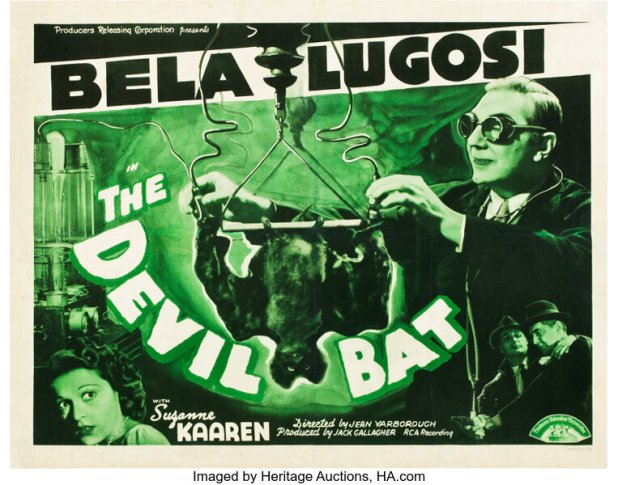
MILL CREEK LEGENDS OF HORROR: The Devil Bat (1940)

The work of Dr. Paul Carruthers (Bela Lugosi) has earned his company millions, and all they give him is $5,000. But didn’t he take a buyout early rather than become a partner? Isn’t that the way corporations work?

So why wouldn’t he grow giant bats and have them kill anyone who wears a new aftershave he’s created? He’s destroying the CEO class —the elite —well, really everyone. He’s got Devil Bats — big, bad rubber bats that scream right at the camera — and he leads the first horror film from the poverty-row Producers Releasing Corporation studio, a movie that played alongside Man Made Monster.

Carrruthers destroys everyone that owned the company other than Mary Heath (Suzanne Kaaren), the daughter, who is saved by Chicago Register reporter Johnny Layton (Dave O’Brien) and the aftershave lotion gets dumped all over Carruthers, his bats attacking their master, following the way that he killed those who held him in chains.

Or maybe not, as he speaks from the shadows in the non-horror sequel, Devil Bat’s Daughter. There was also a 2015 movie, Revenge of the Devil Bat, starring Lynn Lowrey. Another PRC movie, The Flying Serpent, is almost the same movie.

Director Jean Yarbrough’s career spanned the days of television. He also directed one of my favorite movies, Hillbillys In a Haunted House, as well as Footsteps In the NightShe-Wolf of London and The Creeper. Based on a story by John T. Neville, the script was written by George Bricker, who also wrote an early wrestling movie, Bodyhold.

More movies should feature fake bats. I recommend A Lizard In a Woman’s Skin, as man, that bat attack was so good it ended up on the U.S. poster.

You can watch this on Tubi.

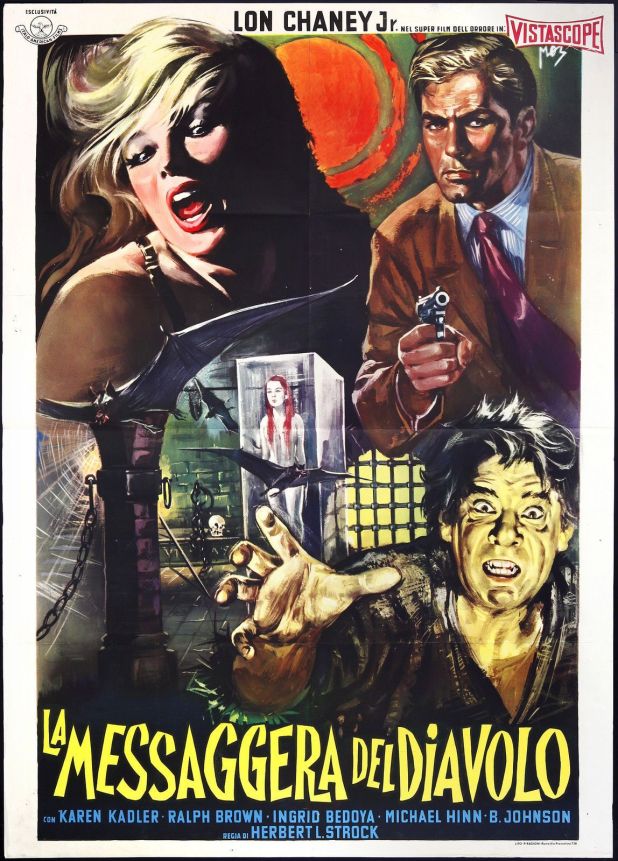
MILL CREEK LEGENDS OF HORROR: The Devil’s Messenger (1961)

I know that Lon Chaney Jr.’s career highlight was being in the Universal monster movies. I realize that the end of his life seems sad — he suffered from throat cancer and heart disease after decades of hard drinking and smoking. In fact, Robert Stack claimed in his autobiography that Chaney and Broderick Crawford were known around the Universal lot as “the monsters” due to how much they drank and raised hell.

Despite living in his father’s shadow, Chaney could be one hell of an actor. After all, he played Lennie Small in the original Of Mice and Men. You get reminded of that when you watch late period Chaney and he has to use his voice and body instead of makeup in films like Spider Baby.

That brings us to The Devil’s Messenger, a 1961 anthology that takes three episodes of the Swedish TV series 13 Demon Street. From the tale of a 50,000-year-old woman trapped in ice bewitching scientists to a man who learns of his death in a dream to a photographer who attacks a woman in teh snow and can’t escape her, these are some pretty decent stories. And oh yeah — there’s a framing device starring Chaney, Karen Kadler and John Crawford that was directed by Herbert L. Strock (I Was a Teenage Frankenstein).

Guess what? Those three Swedish episodes — The Photograph,” “The Girl in the Glacier,” and “Condemned in Crystal” — were directed by Curt Siodmak. Who is that? Oh, only the guy who wrote the original The Wolf ManI Walked with a ZombieSon of Dracula and House of Frankenstein as well as directing Curucu, Beast of the Amazon and The Magnetic Monster.

Look, any movie where Lon Chaney Jr. makes good on Satan’s plot to nuke the world is one I’m going to love.

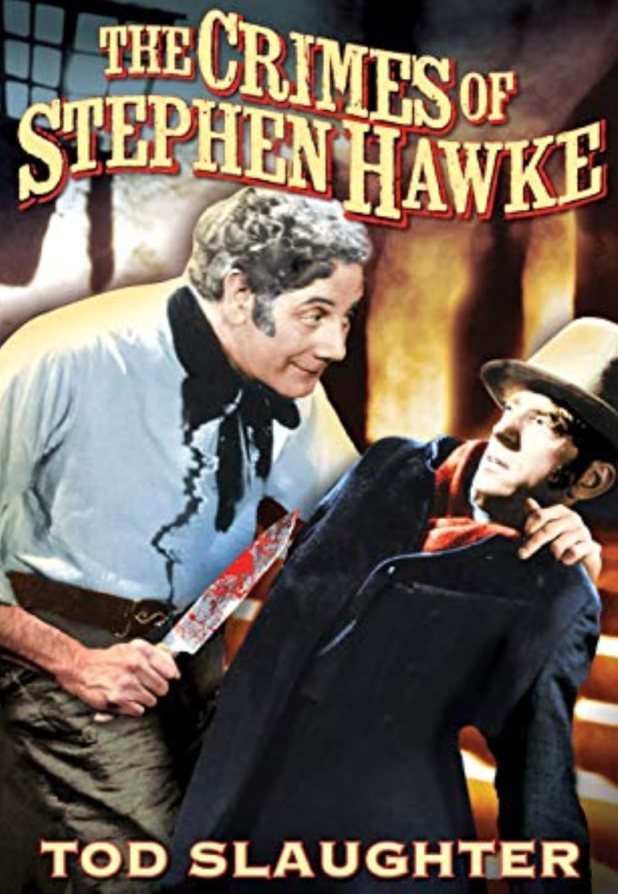
MILL CREEK LEGENDS OF HORROR: The Crimes of Stephen Hawk (1936)

Starting with Todd Slaughter at the BBC, talking about his first two movies (Maria Marten or Murder in the Red Barn and Sweeney Todd: The Demon Barber of Fleet Street), this has him playing Stephen Hawke, a money lender who loves his daughter Julia (Marjorie Taylor). He’s also the Spine-Breaker, a serial killer who is the opposite of his friendly self.

He ends up murdering Joshua Trimble (D J Williams), the father of his daughter’s fiancee Matthew (Eric Portman). Miles Archer (Gerald Barry), another suitor, finds out and tries to blackmail Julia into marrying him instead, so Hawke kills him, but falls off a roof to his death.

It’s a stage play, like Slaughter’s other films, but he’s so strong in this that he can snap a man with his bare hands. Director George King and Slaughter teamed for several of these films, which were encouraged by the British government so that not every movie was made in Hollywood that screened in the UK.

You can watch this on Tubi.

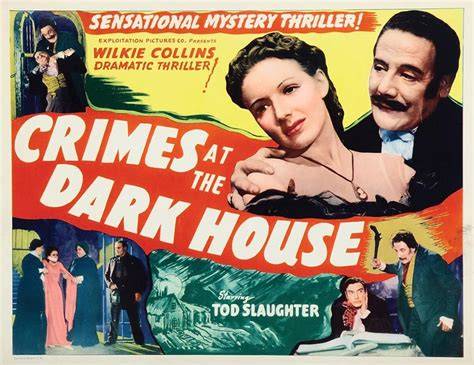
MILL CREEK LEGENDS OF HORROR: Crimes at the Dark House (1940)

Based on The Woman in White by Wilkie Collins, this was directed by George King and written by Edward Dryhurst, Frederick Hayward and H. F. Maltby. It stars Tod Slaughter as a man taking the place of Sir Percival Glyde, trying to take his estate, Blackwater Park. It starts with him hammering a tent stake into the man’s ear and continues to have him murder many people who think that he’s an imposter. Who knew that slashers started in 1940?

Maybe the estate is bankrupt, so despite all the killing that the fake Sir Percival has already done, he has to romance and marry heiress Laurie Fairlie (Sylvia Marriott), then he plans to murder her and replace her with a mental patient who looks just like her.

Slaughter was known as the villain in Victorian stage plays, which were all about him being over the top. He does that here, strangling people, shouting about “beastly germs” when someone sneezes and being haunted by the woman in white. He’s the best.

You can download this from the Internet Archive.

The Heatwave Lasted Four Days (1975)

ABOUT THE AUTHOR: Exploitation-film historian A.C. Nicholas, who has a sketchy background and hails from parts unknown in Western Pennsylvania, was once a drive-in theater projectionist and disk jockey. In addition to being a writer, editor, podcaster, voice-over artist, and sometime actor and stand-up comedian, he’s a regular guest co-host on the streaming Drive-In Asylum Double Feature and panelist on the Deep Images podcast and has made multiple appearances on Making Tarantino: The Podcast. He also contributes to the Drive-In Asylum fanzine, the B & S About Movies Podcast, and the Horror and Sons website. He currently programs a monthly film series, A.C. Nicholas’s Hidden Gems, at the Babylon Kino in Columbia, South Carolina.

“You got peanut butter on my chocolate! You got chocolate in my peanut butter!” Those of us of a certain age remember those famous lines from the TV commercials for Reese’s candy back in the 1970s. Chocolate and peanut butter, a mash-up made in heaven. There’ve been many movie mash-ups over the years, everything from horror comedies like Shaun of the Dead, westerns with horror elements, like Bone Tomahawk, and romance noirs, like the seriously underrated Thief of Hearts. But the craziest mash-up I’ve ever seen is the Canadian film The Heatwave Lasted Four Days.

Let’s get the plot out of the way before discussing this bizarre melding of two disparate genres. Cliff Reynolds, played by Canadian legend Gordon Pinsent (The Rowdyman, The Shipping News, and Away from Her), is a news cameraman working for CFCF-TV in Montreal. He’s a sleazy lothario given to wearing garish shirts with too many buttons unbuttoned and medallions. I guess I shouldn’t be too hard on his wardrobe choices. We all looked like that back in the 70s. Anyway, one day he’s at the beach getting some footage for a story about the heatwave. But more importantly, he uses the assignment to chat up some cute girls in bikinis. Jerry Cuozzo, a local drug dealer with ties to organized crime, played by yet another Canadian legend, Lawrence Dane (Rituals, Scanners, and Happy Birthday to Me), has just escaped from prison. (He apparently climbed over the wall while awaiting trial. Don’t ask.) He’s spending some time at the beach with his main gal, Barbara, the delectable Alexandra Stewart (The Bride Wore Black, The Uncanny, Emanuelle 3, Phobia, and Bolero). And while we’re playing spot-the-Canuck, beloved Al Waxman (King of Kensington, Cagney and Lacey, Death Weekend, The Class of 1984, and Spasms) shows up as Cliff’s boss. Of course he does.

Here we have the fugitive lounging at the beach while his face is plastered all over TV. Why? Don’t ask. Jerry realizes that Cliff has filmed him in the background, so he and Barbara tell Cliff that they’re having an affair and implore him not to use the footage. Cliff says that he won’t. He goes home to his wife and daughter. There we learn, in short order, that it’s his little girl’s birthday, his wife is fed up with his carousing, and they’re in financial trouble. (The film’s short running time means we get some speedy exposition at the expense of giving the wife a name.) As you can probably guess, Cliff figures out that the guy on the beach was Jerry. Now you can ask: Will he try to use this information to solve his money problems and get in over his head? Will the mob try to rub out Jerry? Will there be a deal to move heroin across the border to the Lower 48, eh? Will there be a few twists? And will Cliff try to bed one of the beach babes? Of course you know the answers to those questions.

OK, that’s the basis of a tidy little film with some vintage footage of Montreal and a nice economy of direction from Douglas Jackson, a stalwart of Canadian TV and a 1970 Oscar nominee for Best Live-Action Short. But you’re thinking that my plot synopsis gives no hint of the mash-up. Well, wait no longer. Here’s the solution to the mystery: The Heatwave Lasted Four Days is a neo-noir and educational film. As Scooby-Doo would say, “Huh???”

This film was a weird experiment of the National Film Board of Canada to teach English as a second language to Francophones in Quebec and to do so in an entertaining, commercial way. There were several films in this “Filmglish” series. So if you think about it, it’s a mash-up within a mash-up. Apparently, no one in the film was to speak with a French accent. Indeed, the only French spoken is in a short scene in a Montreal restaurant. The end credits even list a script language adviser. Incroyable! 

The film had a distribution history that was equally weird. In addition to being shown in Canadian classrooms, it was reportedly the first Canadian TV film purchased by a U.S. network, where it was shown twice on ABC’s Wide World of Entertainment. That was the network’s short-lived late-night offering designed to compete with NBC’s The Tonight Show and The CBS Late Movie. Afterward, the film disappeared for decades. But surprisingly, it popped up this past summer in a special edition Blu-ray from Vinegar Syndrome in conjunction with Canadian International Pictures, a company dedicated to preserving everything from “arthouse to Canuxploitation.” And what an edition it is, with three versions of the film: the 66-minute broadcast version, an extended 72-minute cut, and the classroom Filmglish version in four parts with added recaps and interstitials that run a total of 80 minutes. You also get audio commentary from the great TV-movie historian Amanda Reyes, along with a short comparing the three versions, two shorts and another TV film from director Douglas Jackson, a press gallery, and a poster. That’s a luxurious presentation for a film that until yesterday, I didn’t know existed. Tres incroyable!

If you want to be the geekiest film geek in your circle of film-geek friends, you could dress like they did in Montreal circa 1975, or you could just check out The Heatwave Lasted Four Days. While not a masterpiece, it’s an amazing curio. Here’s hoping for the release of more Canuck telefilms from our friends at Vinegar Syndrome.