No way are you going to click on this review. No way. So I’ll have to force your hand: this movie is connected to the cheesy ’80s heavy metal horror flick Rock ‘n’ Roll Nightmare. Now if that doesn’t make you want to read this film review . . . well, I’ll just have to hang up my laptop and open a Esty store and sell handcrafted bracelets and flower baskets, for I have failed as a writer.
Nick Pearson (Tom Everett Scott, That Thing You Do!, An American Werewolf in Paris, Boiler Room) is a snarky author of the New York Times best seller I Hate Kids—a book that denounces parenthood. Before he finalizes his marriage to Sydney (Rachel Boston, TV’s American Dreams, In Plain Sight), a dream girl who shares his “no kids” philosophy, guess who shows up? It’s boy, Nick! Meet Mason: the now teenaged son you never knew you had.
And how did Mason find him?
Well, a flamboyant radio psychic, The Amazing Fabular (yep, it’s Tituss Burgess, the Unstoppables Laundry Freshener pitchman who was in Dolemite Is My Name with Eddie Murphy), tipped off Mason. And, with that, the lothario, the geek, and the shrill psychic hit the road for a weekend road trip to visit all of Nick’s ex-girlfriends and discover which one is Mason’s mother. Helping along in this effective, Judd Aptow-ish bawdy comedy are the familiar TV faces of Rhea Seehorn from AMC’s hit series Better Call Saul and Julie Ann Emery, also of Better Call Saul, as well as Preacher.
And this is where the heavy metal horror cheese oozes in.
Frank Dietz, the star of the ’80s heavy metal horror flick trifecta of Rock ‘n’ Roll Nightmare, Zombie Nightmare, and Black Roses wrote this. Yep, after his well-liked but all too brief acting career, Dietz forged a career behind the camera as an animator (Jack Black’s Kung Fu Panda is one his many credits) and as a screenwriter.
This, his second feature film writing credit, Dietz made his screenwriting debut with 1996’s Naked Souls—starring Pamela Anderson and David Warner. Now wrap your head around that for a second: esteemed British actor David Warner—Chancellor Gorkon from Star Trek: The Undiscovered Country—in a film with Motley Crue’s Tommy Lee’s ex-wife. But Warner’s been in everything, From Beyond the Grave to Ice Cream Man to Planet of the Apes 2001, so anything is possible in the B&S About Movies universe of stars.
Director John Asher is an actor and director who’s also done everything as well, from directing a post-stoke Kirk Douglas (Saturn 3) in Diamonds (1999), comedy specials for comedians Margaret Cho and Frankie May, videos for the Canadian pop-punk band Sum 41, and acting in episodes of TV’s Blue Bloods, CSI: Crime Scene Investigations, NCIS, and The Rookie.
So what do you have to lose? Come on, now! Frank Dietz from Zombie Nightmare wrote this! That rocks me to my celluloid core. I’m all in.
I Hate Kids recently made its free 2020 streaming bow—with limited commercials—on TubiTv.
About the Author: You can read the music and film reviews of R.D Francis on Medium and learn more about his work on Facebook. He also writes for B&S About Movies.
Disclaimer: This movie wasn’t sent to us by its production company or PR department. We discovered it all on our own—courtesy of its Frank Dietz connection—and we genuinely enjoyed the film.
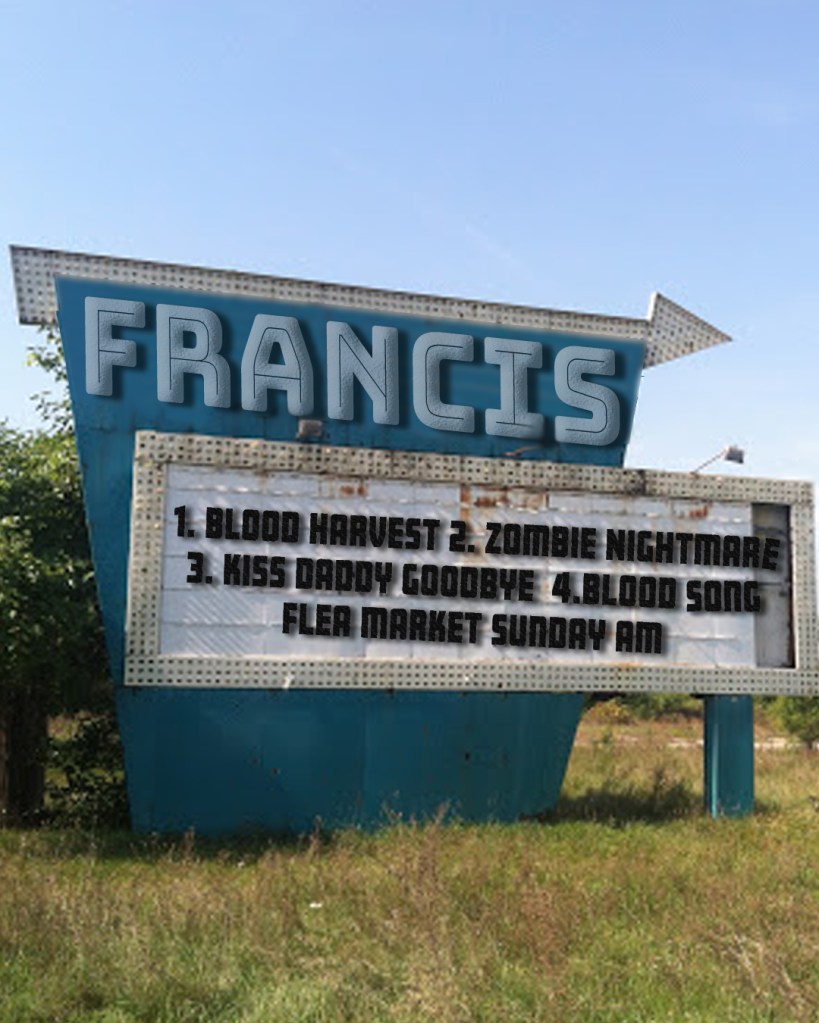
We, the celluloid thoughtful folks at B&S About Movies, with our vast end-of-the-world apoc-movie knowledge (as seen in our Atomic Dustbin roundup) know this recent Coronavirus lockdown is a trying time for all of us movie lovers. So we’ve decided to open up the B&S About Movies Drive-In where, each Friday afternoon at 11 AM (the Grand Opening was on March 13 . . . Friday the 13th!) we’ll feature four movies to get you through the viral outbreak—but rot your brain cells on bad films in the process.
See you under tent, Sunday. I’m selling comics, old movie posters, and VHS tapes at the Flea Market. Okay, let me go bush-hog the lot.
This week, we’ll enjoy the acting horrors of ‘60s teen idols Fabian Forte and Frankie Avalon, ‘60s traditional music archivist Tiny Tim, and ‘80s Canadian god of thunder, Jon Mikl Thor—as they each eek out a living in the slasher ‘80s.
And as always: Make sure to drive with your parking lights on and clean up after yourself. And don’t forget to try our snack bar, which will remain open until the last feature starts.
What’s it all about? A girl arrives home from college and runs afoul of a clown-suited Tiny Tim as the mentally-distributed clown “The Magnificent Mervo” killing by hook or by crook. You can watch Blood Harvest for free on TubiTV.
We reviewed Jon Mikl Thor in his big screen debut with Rock ‘n’ Roll Nightmare as part of our “No False Metal” movies week (well, actually, he made his debut with an in-joke support role in the Canadian Police Academy knockoff, 1986’s Recruits). And we also reviewed the thespin’ of Batman’s Adam West in One Dark Night and Omega Cop, so it’s inevitable, in the B&S About Movies universe, that they’d do a movie together.
So while you may have come for the Thor as the voodoo witch-revived zombie of these proceedings, you’ll end up staying for the metal of the film’s far superior soundtrack featuring Girlschool (“Future Flash” and “C’mon Let Go”), Motörhead (“Ace of Spades”), and Virgin Steele (“We Rule the Night”). Thor, of course, with his Thorkestra, composed the movie’s score. Someone recreated the soundtrack track-by-track on You Tube.
Oh, almost forgot! And who’s the dickhead punk who set this zombie revenge mess in motion? Friggin’ Shawn Levy, the producer behind 2016’s Arrival, which earned him an Academy Award nomination for Best Picture. He most recently produced the hit Netflix original series Stranger Things.
Shawn’s bitchy girlfriend: Tia Carrere—yes, Cassandra Wong, the smokin’ hot bassist-frontwoman of Crucial Taunt from Wayne’s World—in her film debut. And what’s Adam West do? He chops on a cigar from behind a desk and barks orders at Detective Frank Sorrell, aka Frank Dietz, from Rock ‘n’ Roll Nightmare, Black Roses, and The Jitters (those three films, along with Zombie Nightmare, were written by John Fasano). Oh, and did you know that Frank Dietz is a screenwriter these days? We just reviewed his latest film, the rom-com (rom-com?) I Hate Kids.
How is it that we have not given Zombie Nightmare a full review proper, Sam? Honestly, what we’ve said here is more than enough. Sorry, only the MST3K riffed-version is available. You can watch it for free on TubiTV.
But wait . . . there is more to be said about Zombie Nightmare! The Master Cylinder blog not only reviewed Zombie Nightmare proper, but also offers production insights from director-writer John Fasano and star Jon Mikl Thor.
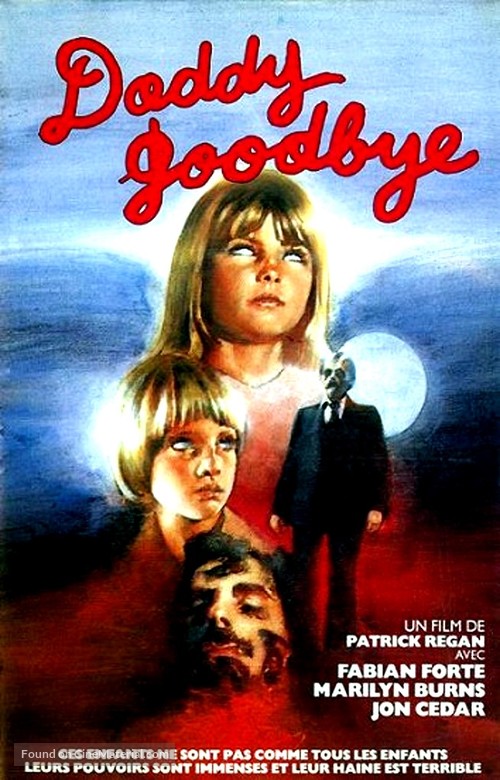
Did you ever wonder what the ‘80s comedy Weekend At Bernie’s would be like if it was made as a horror film? Well, wonder no more. Two kids—check that, psychic kids—keep their murdered dad “alive” so that the authorities (Marilyn Chambers) don’t put them in an orphanage. Is Fabian the killer dad? Nope, he’s the sheriff on the case. You can watch a free VHS rip on You Tube.
So you’re a noted television director and producer—responsible for everything from the ‘60s skit comedy show Rowan & Martin’s Laugh-In, the ‘70s series Columbo and The Six Million Dollar Man, and bought us Jan Michael Vincent in Airwolf—and now you’re facing the onslaught of the slasher ‘80s. What do you do?
Well, if you’re Alan J. Levi, you work those television contacts and hire the uber-hot Diane Alder from NBC-TV’s Hello, Larry, aka Donna Wilkes (1978’s Jaws 2, 1980’s Schizoid, 1988’s Grotesque) to play a crippled young woman stalked by a hatchet-wielding psychopath from whom she once received a blood transfusion. And, get this: Niels Rasmussen who, if we believe the IMDb, was not only the editor on Blood Song, but he also directed the American-recycled Asian slopfest, The Serpent Warriors (aka Calamity of Snakes).
And who’s the Peter Pan whistling his “Blood Song” on his flute and wants his blood back? Frankie Avalon! You can watch the full movie for free on You Tube. What? Frankie made a Euro-spy romp, too? Yep, he did: Dr. Goldfoot and the Bikini Machine*.
Anybody out there know a good Bush-hog repair man? Looks like I burnt another flux-capacitor and the warp-inversion coils need a good back flush. That grass is gettin’ pretty high.
* April was “James Bond Month,” were we reviewed all manner of ’60s and ’70s spy flicks—including Eurospy films.
About the Author: You can read the music and film reviews of R.D Francis on Medium and learn more about his work on Facebook.
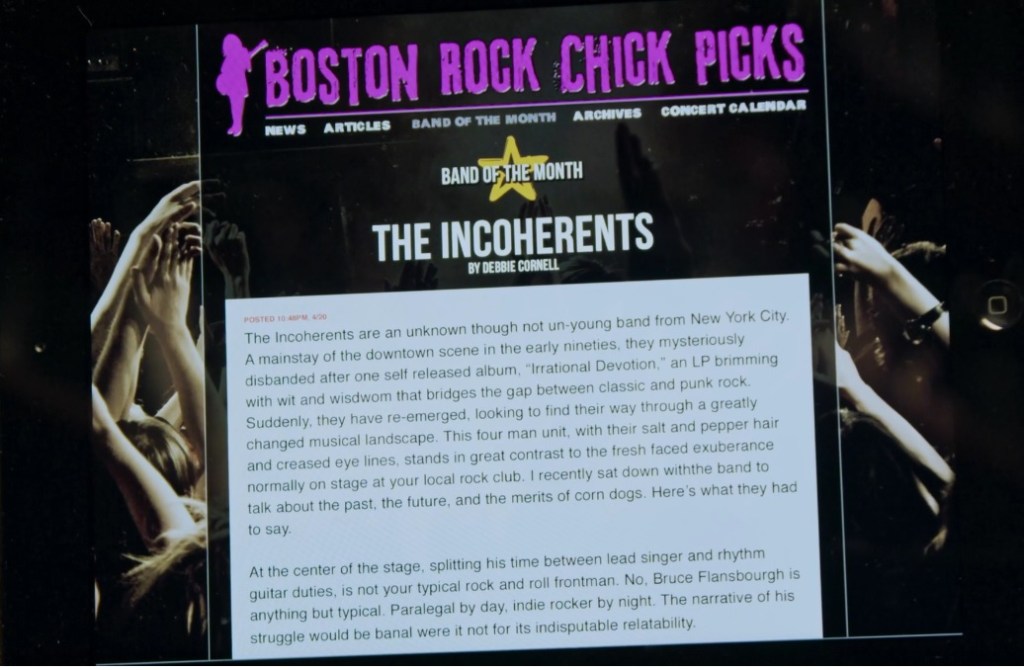
“The alternative/independent rock scene that exploded in the late ’80s/early ’90s was a period we hold dear to our hearts. The music created during that stretch still has great influence today, as the descendants of Nirvana, The Pixies, Sonic Youth, The Replacements, Radiohead and their compatriots are everywhere on rock radio.”
I’ve couldn’t have said it better myself, ye press bard for Loaded Barrel Studios.
April 5th marked the 26th anniversary of the death of Kurt Cobain and he’s still as much alive in our hearts today as he was in the MTV 120 Minutes days of our lives on The Cutting Edge. I am forever grateful for the opportunity afforded me to be on the air as a DJ during the ‘90s alt-rock explosion. If you’ve read my “Exploring: 50 Gen-X Grunge Films of the Alt-Rock ‘90s” and “Exploring: Radio Stations on Film” featurettes, along with my nostalgic waxing over the era-films A Matter of Degrees, duBeat-e-o, S.F.W., and Trees Lounge, you know of my melancholy and infinite sadness at the grunge-era’s passing. It is a time—like the Beatlemania-British Invasion, the late ‘60s San Francisco-seeded progressive rock era, and the ‘80s hair metal nation teased in Los Angeles (chronicled in the frames of Incident at Channel Q)—that can never be duplicated; only remembered, as the refrains of “Freak Scene,” “The Second I Wake,” and “Teenage Riot” from Dinosaur Jr., the Screaming Trees, and Sonic Youth poke digital reminders on our vinyl-reminiscing eardrums via our iPods.
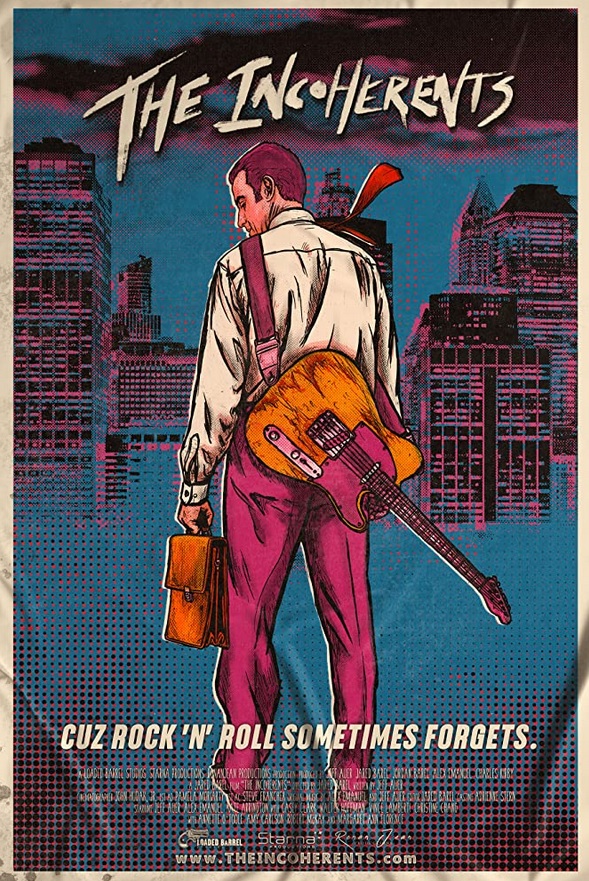
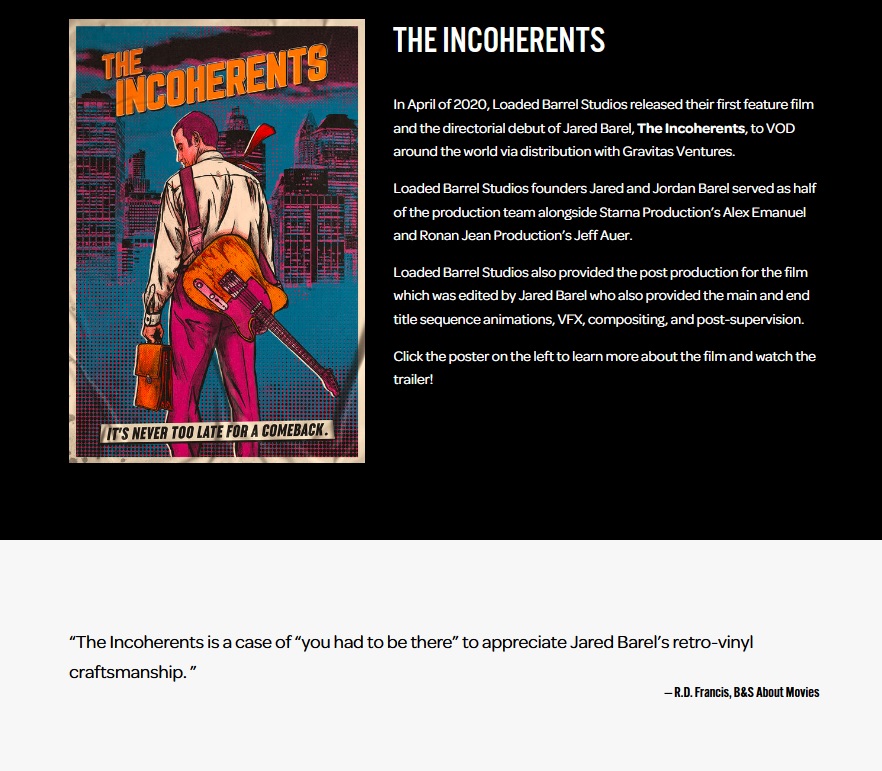
The vinyl-pumping heart within the kindred spirits of writer-star Jeff Auer and director Jared Barel has created a film for us: we the drowning survivors of Seattle’s grungy backwaters. They know these musicians as well as I know these flannel troubadours: the once local, college-campus band rescued from indie label-dom, catapulted to mainstream acceptance on a national label (e.g., the Offspring, Rust, Shudder to Think, the Toadies, etc.), only to land with a marketing thud as a one hit wonder (Collective Soul, Marcy’s Playground, Possum Dixon, Semisonic, 7 Mary 3, Tonic, Tripping Daisy, and Vertical Horizon) as rap music became, as Gene Simmons pointed out, the new de rigueur “heavy metal” of 21st century. As if J. Mascis, Mark Lanegan, and Thurston Moore would receive an Elvis-embrace by more than 1% of America’s 300 million-plus consumers. . . .
Almost Famous, Cameron Crowe’s rock ‘n’ roll love letter to his days as a ‘70s rock journalist, is reflected upon in the press kit for The Incoherents. And while Auer-Barel’s mellifluous billet-doux to ‘90s alt-rock certainly lives up to Martin Scorcese’s critique as a “needle drop” film, the analog VHS centers of my brain loaded in a copy of the lesser-known 1998 British rock flick, Still Crazy. While Almost Famous was the tale of the on-the-top-of-the-world Stillwater (aka Humble Pie) falling apart, the Brian Gibson directed (of the punk-rock version of Almost Famous: 1980’s Breaking Glass) Still Crazy chronicled the reformation of the once-great Strange Fruit (aka The Animals) for a second shag n’ bite of Eve and that damned apple.
“Welcome to the music business,” cackles Clotho, Lachesis, Atropos, the three weaving witches of the looms of fate.
And the threadbare soul of Bruce Flansburgh (Jeff Auer), a 40-something New York paralegal, is desperate enough to give the Moirai one more spool of thread. If the Pixies and Soundgarden can tempt those Greek bitches, then why not The Incoherents?
Tracking down his fellow stagnated grunge stallions, Bruce quickly opens old wounds with Jimmy (Alex Emanuel), the band’s guitarist and co-songwriter, who served as the Keith Richards to Bruce’s Mick Jagger, aka the Joe Perry to his Steven Tyler. But the glimmer’s long since gone and the toxic resentments of the “Simmer Twins” still simmers bitter. And the reunion deepens the already festering wounds of his stalemated-homemaker wife Liz (Kate Arrington) who wants more than Bruce’s paralegal job can give. Will The Incoherents rule the charts once again in the young man’s game of rock ‘n’ roll?
What sells the film—like the soundtracks of Still Crazy and the Gina Gershon-starring Prey for Rock & Roll (2003)—is the ’90s college-rock retro original music that breathes life into the faux-proceedings. Actors Alex Emanuel and Jeff Auer—both accomplished musicians in their own right—wrote and perform the band’s songs; their backing band features ‘90s alt-rockers Sean Eden from Luna and drummer Kevin March of Guided by Voices. A great song—or songs—can sell a film: the ’60s retro-romp That Thing You Do! and 1999’s likeminded The Suburbans (a low-budget tale about a Knack-cum-The Romantics-esque reformed one hit wonder) come to mind. And The Incoherents brings the tunes to the turntable.
The marquee names on this indie-gem are the instantly recognizable Annette O’Toole (stealing the show as the salty-mouth rehearsal studio owner Mrs. Graham) from her too many-to-mention films and TV series. Fans of Showtime’s Billions and CBS-TV’s The Good Wife will recognize Kate Arrington, while others will remember Amy Carlson (as a dream-stealing industry mover n’ shaker) as Mark Wahlberg’s wife on CBS-TV’s Blue Bloods. And you’ve seen leading man Jeff Auer in his guest-starring roles on TV’s The Blacklist, Blue Bloods, and Luke Cage. Adding a realistic-retro vibe to the plight of The Incoherents are the acting cameos by (an insult hurling) guitarist Richard Barone of The Bongos and Lou Reed, along with Chris Barron—who’s all too familiar with cruel realties of the alt-rock ‘90s rollercoaster ride with his band, The Spin Doctors (aka the ’90s alt-rock inversion of the ’80s Men at Work).
Director Jared Barel has six shorts under his belt—one was the 2013 short-film version of The Incoherents. Coming off a successful festival run, the feature-length version won “Best Feature” and “Best Home Grown Feature” at the 2019 New York Coney Island Film Festival and New Jersey’s Garden State Film Festival, while Barel walked away with double awards for “Best Director” and “Best Feature Film” at the Studio City Film Festival. It also garnered nominations for “Best Feature Comedy” and “Feature Film” at the Queens World Film Festival, along with multiple nods at the SoHo International Film Festival. So that tells you The Incoherents is worth hitting the big red streaming button.
That tells you I really dig this film. Deeply.
The Incoherents is high on my rock ‘n’ roll VHS charts alongside American Satan, Bandwagon, Breaking Glass, Prey for Rock & Roll, Rock Star, and Still Crazy as a gold record-standard for accuracy in the lives of the men and women who suffer for their art. And the ones who lugged their equipment: like me.
The caveat is that one must consider this reviewer’s radio and roadie background: you may want to take my raves as an incoherent grain of salt—as I can’t not rave about a film that namedrops the Archers of Loaf, Generation X, Guided by Voices, Pavement, and Sebodah (especially Archers of Loaf?! Sebodah?! What the hell, Auer?). The Incoherents is a case of “you had to be there” to appreciate Jared Barel’s retro-vinyl craftsmanship. This isn’t a pretty n’ pat, major studio Jamie Foxx or Joaquin Phoenix music-bio crafted to entertain the mainstream masses via an actor’s Oscar-hopeful mimicry. This film is, first and foremost, about the music. It’s a film for guys like me: the ones who perpetually swim against the aqua firma and mount the musical and film driftwoods of salvation in those drowning, mainstream waters.
And, with that, I’m pulling out the forgotten cardboard tchotchke that is the Screaming Trees’ Invisible Lantern, and following with vinyl chasers from the Buck Pets, the Divine Horsemen, the Doughboys, and Mary My Hope . . . and remembering when my life was a bit more incoherent. And freakin’ beautiful.
Thanks for plugging B&S About Movies!
The Incoherents is available on iTunes and all VOD platforms on April 28. You can learn more at the film’s official website and Facebook.
Disclaimer: This movie was sent to us by its PR company and, as you know, that has no bearing on our review. But, as you can tell by this review, we would have bought it anyway.
About the Author: You can read the music and film reviews of R.D Francis on Medium and learn more about his work on Facebook.He also writes forB&S About Movies.
If you loved the music of the Clash and the Sex Pistols, you loved the movies of Alex Cox. Alex Cox was punk. Alex Cox’s movies were college de rigueur in the ‘80s. No self-respecting lover of punk music and underground film would have a music or movie collection without copies of the VHS and LP soundtracks to Repo Man, Sid and Nancy, and Straight to Hell.
Then Cox went mainstream—as “mainstream” as Cox could be—with Walker, a film about an 1800s American mercenary becoming the president of Nicaragua. But it didn’t have the kitsch-value starring of Joe Strummer of the Clash or Courtney Love, like his punk rock western, Straight to Hell, and we ignored it. And while Alex Cox kept making movies, we, the college-rock crowd grew up, went through marriages and mortgages, births and divorce—and forgot about the films of Alex Cox. (And our Clash and Sex Pistols albums became dust-collecting cardboard tchotchkes).
Cox is the Nicolas Cage and Eric Roberts of directors: he’s either a master of his craft or he’s past-his-prime awful in the eyes of the viewer. Either way, you’re leaving entertained—certainly in the case of Cox’s most recent, previous film: Repo Chick (2009) (yes, it’s a loose sequel-remake of his classic debut). So Cox’s still got it, it’s just that no one sees it. (I wish Cox could have afforded Cage and Roberts to star as Wyatt Earp and Doc Holliday; not that unknown actors Adam Newberry as Earp and Eric Schumacher as Holliday aren’t good in their roles, because both are great in their roles—it’s just my cinematic wanderlust wanting to see a film with Cage and Roberts on the marquee.)
If you know anything at all about the famed gunfight at the O.K. Corral (at least through the back-to-back Kurt Russell and Kevin Costner films Tombstone and Wyatt Earp), and have a passing knowledge of Akira Kurosawa’s oft-pinched Rashomon, then you’re up to speed with Cox’s vision: a reimaging of the Gunfight at the O.K Corral within the multiple-accounts narrative of Kurosawa’s classic.
Oh, right. This is an Alex Cox film. This is Kurosawa: time warped.
Yep, this is a time-traveling sci-fi western mockumentary that, if you know your six degrees of Alex Cox: In addition to producing Cox’s Repo Man, former Monkee Michael Nesmith produced Timerider: The Adventure of Lyle Swann, which concerned a futuristic motocross racer who races through a time-travel device and ends up in the mid-1800s old west. And if you know your time travel comedies: Another ‘70s musical teen idol, David Cassidy, starred as a time traveler intending to speak with America’s founding fathers of 1776—and ended up in the era of disco in Sprit of ’76.
So what we have here is This is Tombstone—sans Nigel Tuffnel and David St. Hubbins—filmed by a group of time-traveling filmmakers who arrive in Tombstone, Arizona, on October 28, 1881, to film the actual gunfight (the Tombstone part). But—damn space-time continuum glitches—they show up a day late. So, to save the project, they decide to stick around and interview the survivors and witnesses (the Rashomon part) to create the definitive document as to what happened. Why didn’t the filmmakers just jump back into their flux capacitor contraption and trip back one more day?
Did I mention this is an Alex Cox film? If they did that, the movie would just be called “Tombstone.” And do we really need another Tombstone movie? No. Do we need an Alex Cox Tombstone movie? Yes.
But why?
What other filmmaker do you know with chutzpah to finish a film with Doc Holliday jumping into an SUV as casually as mounting a horse? Is he a time traveler?
Dude. How many times do I have to say “Did I mention this is an Alex Cox film?” Did you forget he’s the guy who places glowing bright green McGuffins in car trunks and transforms ‘60s Chevy Malibus into flying saucers?
In recent roadhouse showings, Cox appropriately double-billed Tombstone Rashomon with Repo Man. In another showing, he paired his sci-fi western with Dennis Hopper’s surrealist, metafictional western, 1971’s The Last Movie.
Cox’s Walker and Hopper’s The Last Movie are rife with anachronisms. And both filmmakers were criticized as cut-rate Sam Peckinpah imitators. (In Peckinpah’s 1969 western The Wild Bunch, a band of aging outlaws deal with the traditions of the American West disappearing by way of the advancements brought on by the First Industrial Revolution). Hollywood ostracized Hopper after the failure of The Last Movie. Cox was blacklisted by Hollywood after the failure of Walker; so disliked, Cox’s subsequent films struggled to receive distribution in the United States (which is why he we ended up forgetting him).
In Walker, although an 1800s period piece, the characters of the Nicaraguan-set western use automatic rifles, reusable Zippo lighters, and drink from coke bottles; there’s modern cars on the streets and helicopters overhead. (I always felt Cox crafted a homage to the The Firesign Theatre and George Englund’s “electric western,” 1971’s Zachariah—which everyone seems to hate, except me. And that takes us back to Cox’s Straight to Hell.)
In The Last Movie, Hopper plays a stunt coordinator and horse wrangler on a western filmed in a Peruvian village. After the production wraps, he discovers the villagers are “filming” their own movie with “cameras” made of sticks and killing each other by “acting out” the western violence, as they don’t understand the fantasy of moviemaking.
If Kurosawa has access to Doc Brown’s DeLorean, is Tombstone Rashomon a celluloid anachronism he would have made: an amalgamation of 8th century Japan in an American western puzzle, wrapped in a sci-fi enigma?
Toshiro Mifune, Burt Lancaster, Kirk Douglas, Nicolas Cage, and Eric Roberts—and what the hell, Mickey Roarke—starring in a sci-fi version of the Gunfight at the O.K Corral—where fiction and reality are flux capacitor’d? Maybe Akira Kurosawa could double bill that film with his documentary on Alex Cox: Alex Cox: The Last Filmmaker? Why not? Cox made a biographical documentary on the Japanese filmmaker: 1999’s Kurosawa: The Last Emperor.
Cry cinematic ‘havoc!’, and let flux the capacitors of time!
TriCoast Entertainment will release Tombstone Rashomon onto DVD in-store and online April 21 via Best Buy, CC Video, Deep Discount DVD, DVD Planet, Walmart, and Target. You can also pre-order on Amazon. TriCoast will also release the film onto VOD platforms in July 2020. You can learn more about the film on its official Facebook page.
I first heard of this indie-budgeted homage to ‘70s drive-in horror films—written and directed by Lane Toran—courtesy of the horror-centric webzine Blood Disgusting back in 2016.
The original theatrical one-sheet.
As a teen, Toran found success as an actor on the WB Network (7th Heaven) and as an animated voice artist for the Disney and Nickelodeon Networks (Hey, Arnold!). As a composer, he wrote “Sweet 16” and “Inner Strength” on Hilary Duff’s triple-platinum first album, Metamorphosis. (For you horror dogs: Duff portrayed Sharon Tate in 2019’s The Haunting of Sharon Tate.) Although I never watched any of Toran’s TV series, I was intrigued to hear a child actor beat the so called “child actor curse” and continued to flourish in the business as an adult—and as a horror film director, no less.
Upon a further Internet-investigation of Getaway, I discovered Toran (born Toran Caudell) is the son of actor-musician Lane Caudell,* the star of two of the coolest rock ‘n’ roll films of my ‘80s UHF-TV and video store youth: Goodbye, Franklin High and Hanging on a Star. Courtesy of his son, Getaway marks the first time Lane Caudell has acted in front of the camera since eschewing the acting world—for a behind-the-scenes success in the country music world—after the 1982-1983 season of the NBC-TV U.S. daytime serial, Days of Our Lives.
The new theatrical one-sheet.
Toran’s wife Jaclyn Bethan (TV’s NCIS: New Orleans, Grand Hotel), who co-wrote the screenplay, stars as Tamara, a roadside damsel-in-distress on the way to meet her two friends at a lakeside cabin getaway. And along comes the usual, questionable down-home fellas to her rescue: Merv (Toran) and Kib (Noah Lowdermilk; excellent in his acting debut). Once the scuzzy duo gases up her late ‘60s classic Mustang (the girls in these flicks always have a set of classic wheels), Tamara meets up with Maddy (Scout Taylor-Compton; Rob Zombie’s Halloween reboots, Abducted, Eternal Code) and Brooke (Landry Allbright; acting debut as “Casey Poe” in Con Air).
So we’ve got booze and bikinis, partying at a backwoods watering hole, chicks kissing, and two rough-looking knights in dirty armor. Yeah, these girls have just entered the hicksploitation** hills; however, while a familiar road, Toran cleverly screws with the compass and sets up forks and potholes in the road.
And one of those twists comes in the form of Lane Caudell (who’s excellent in his acting return). He isn’t the kindly town sheriff or southern gent I was expecting: he’s a backwoods lothario who masturbates to women’s scalps while he prays to the Lord and he’s concocted a Satan’s Cheerleaders-styled religious kidnap cult (Lane made his debut in that 1977 Greydon Clark T&A exploiter).
So once the mickey is slipped at the local bar, Tamara’s waking up under a tarp in the back of a pickup truck: she’s become the latest victim in Pa Caudell’s master plan to kidnap and impregnate women, then kill them, so the girls can birth “angel babies” in heaven. And regardless of the bible thumpin’, the denizens of the hicksploitation woods always enjoy a barn rape ‘n’ torture session before they restock the angel corps.
That is until Tamara cooks up a little supernatural surprise.
Toran’s feature film debut is nicely shot, edited with suspense and displays his confidence and competency as a director who gets the most from is budget. The acting from everyone is solid (again, Lowdermilk and Caudell Sr. shine) in a story that, courtesy of its tight 70-minute runtime, will slide nicely into a SyFy Channel programming block.
Toran was obvious battling the same obstacles all indie filmmakers face—regardless of genre—without the backing of a film studio. Considering the long, four-year road to get his debut film to its inevitable DVD and streaming debut, it was well worth the trip. Toran’s created an outstanding calling card to show the industry he’s arrived as a director. I see more work behind the camera in his future . . . and hope Caudell Sr. does more in front of it. Yes, other reviewers and streamers haven’t been kind, but I enjoyed the film.
You’ll be able to enjoy Getaway courtesy of Uncork’d Entertainment on April 14. And we are digging “Slow Rise Lady,” the grungy-country tune from the Deacons on the film’s closing credits. As of September 2020, Getaway is now available as a free-with-ads stream on TubiTV.
Disclaimer: This movie was sent to us by its PR department. As always: you know that has nothing to do with our feelings on the movie.
About the Author: You can read the music and film reviews of R.D Francis on Medium and learn more about his work on Facebook.He also writes forB&S About Movies.
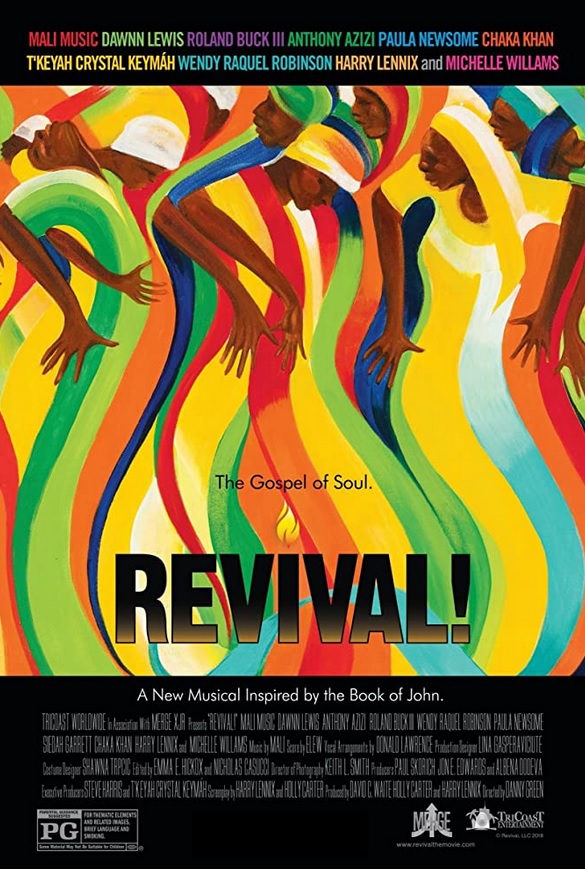
If Lin-Manuel Miranda can update the story of American Founding Father Alexander Hamilton as a hip hop and R&B, pop and soul-infused musical, then why not the amazing journey of Jesus?
That’s the question asked and passionately answered by director Daniel Green, who made his theatrical debut with the Dylan McDermott (you know me: if Dylan’s in it, I see it) and Snoop Dogg (he’s very good) drama The Tenants (2005). Since then . . . you’ve watched a lot of Daniel Green’s work as a Second Unit or Assistant Director; nothing too earth-shattering, just little films like Daredevil, Hollywood Homicide, Jeepers Creepers 2, The Scorpion King, and J.J Abrams’s Star Trek.
To compare Green’s gospel interpretation to the The Wiz (1978), the stage-to-film productions of Godspell (1973) and Jesus Christ Superstar (1973), or Patrick McGoohan’s adaptation of Shakespeare’s Othello as Catch My Soul (1974), is a disservice. Revival isn’t just a Broadway stage/Hollywood musical amalgamate. It’s a meta-theatrical, multi-media fever dream with a soupcon of cinèma vèritè as it goes behind the stage and back in time as an actor portraying Jesus (GMA Dove winner and Grammy nominated Mali Music) in a stage production of “Revival,” discovers his own spiritual growth—with a soundtrack scored by gospel great Donald Lawrence—as he performs the Book of John’s Resurrection story.
The center of attention of this masterwork is the casting of Harry Lennix as Pontius Pilate, the governor of the Roman province of Judaea, and as the host-narrator of “Revival,” the stage production. You’ve seen Lennix light up the screen with his work on network television with his starring roles as a cast member on The Blacklist, Billions, 24, and you’ve seen him on Hallmark’s reruns of Diagnosis Murder. Oh, and he was Commander Lock in the Matrix trilogy. Yeah, I knew that’d get your attention.
So when a film brings you the pedigree of Daniel Green and Harry Lennix, you watch. And have your soul uplifted at the same time.
Revival makes its debut Easter Sunday through TriCoast Entertainment on all the usual PPV and VOD platforms via Amazon, Google Play, iTunes, Vudu, and Vimeo on Demand. You can also purchase DVDs at Best Buy, Target, and Walmart.
The musician, both known or unknown, before they get into that studio: it begins at 3 AM at the kitchen table with a notepad and a guitar; it begins with that song written by a lone soul who, if they recorded their own music, they’d be bigger than Elvis or Steven Tyler of Aerosmith.
And this movie is about the unsung kitchen musicians who wrote the hits for those two artists—and so many, many more.
They’re the melodies we hum, the songs we sing in the shower and to our car radio by heart. They’re forever lodged in our psyches. They are the songs that make us laugh about a memory of good times. And make us cry as we remember the bad. Those days of love and of heartbreak live in the songs of others. And while we sing their songs, that songwriter who we associate with those moments of our lives, is unsung.
So, in this music document, the stars of pop, rock, and country take a backseat to give voice to the songwriter—the Nashville songwriter—a town that’s responsible for more hit songs than any other town in world.
You’ll be amazed at the hit after hit song rattled off in the trailer. And you’ll be amazed by this film directed by the Venezuelan born and raised, Chusy, an ex-advertising executive who successfully transitioned into the world of short film and feature documentaries. He expertly culled over 100 hours of interview with the Nashville-based songwriting-artists you know, including Garth Brooks, Luke Bryan, Kacey Musgraves, and Brad Paisley, and the songwriters you don’t know, including Jessi Alexander (“The Climb” by Miley Cyrus), Desmond Child (“Angel” by Aerosmith and “You Give Love a Bad Name” by Bon Jovi), Mac Davis (“A Little Less Conversation” and “In the Ghetto” by Elvis Presley), and Mikky Ekko and Claude Kelly (“Grenade” for Bruno Mars and “Circus” for Britney Spears).
It All Begins With a Song does for Nashville what Paul Justman’s Standing in the Shadow of Motown (2002) did for Detroit’s The Funk Brothers. It’s a film that needed to be done. It’s a film that’s a must watch for any musician or for any serious music lover who wants to know who’s responsible for half of those 3,000 songs in their iPod.
It All Begins With a Song made its streaming debut on March 3 courtesy of TriCoast Pictures on Amazon, Google Play, iTunes, Vimeo on Demand, Vudu, and You Tube Movies.
For Kurt Cobain: February 20, 1967 – April 5, 1994
Before Nirvana, the Spin Doctors, the Red Hot Chilli Peppers and Pearl Jam, no one knew the meaning of grunge, or even cared where Seattle was: flannel was a fashion no-no. Do you remember the days of post-modern and cutting-edge rock, when everyone wore black and they were always depressed? Remember the days when Gen-X’ers were confused, unable to decide if they were “alternative” or “progressive,” so they stumbled through the X-decade, trying to be both?
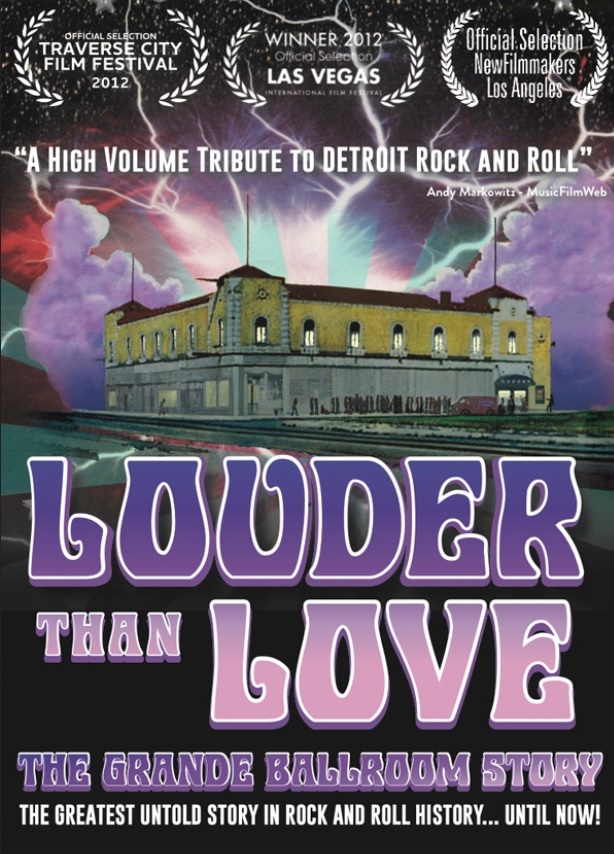
Well before those incoherent flannel days of Seattle, when a muddy, grunge wave swept across America—and while the West Coast was frolicking in the Fillmore to the sounds of the Summer of Love in 1967—Detroit was rippin’ out a hard-driving, gritty and raw sound from the four walls of the scene’s epicenter: The Grande Ballroom.
The Grande is where the likes of the MC5, Iggy & the Stooges, and Ted Nugent & the Amboy Dukes got their start. The Grande also served as the main-Midwest concert stop for legendary acts such as B.B King, Cream, Janis Joplin, Led Zeppelin, Pink Floyd, and the Who. Then there’s the local Detroit bands that made it to the biggest stage in town—some signing record deals, that you may have never heard of—such Dick Wagner’s the Frost, Frigid Pink, Dave Gilbert’s of the Rockets precursor Shakey Jake, SRC, and Arthur Pendragon’s Walpurgis (aka Phantom’s Divine Comedy).
The Grande is the dance hall that started it all. Some of the world’s best bands came from Detroit from 1967 to 1980 and Louder Than Love is the story of those times—of The Grande—as told through the artists who graced her stage.
Filmmaker and music historian Tony D’Annunzio is currently offering a free stream of the U.S. PBS-TV broadcast version of the film (60-minute running time) on his You Tube page. While there’s no online streams of the feature-length version (80-minutes/1 hour and twenty minutes), you can purchase DVDs of that theatrical/direct-to-video version—released in 2016—at various brick-and-mortar and online retailers such as Walmart, Target, and Amazon.
And since this is Kurt’s special day . . . take a moment to remember him with the Seattle documents 1991: The Year Punk Broke on Daily Motion and Hype! on TubiTv. And, while you may not know him, could you take a moment to remember the unsung career of Detroit’s Arthur Pendragon with his lone album.
About the Author: You can read the music and film reviews of R.D Francis on Medium and learn more about his work on Facebook.
In tribute to Kurt Cobain: February 20, 1967 – April 5, 1994
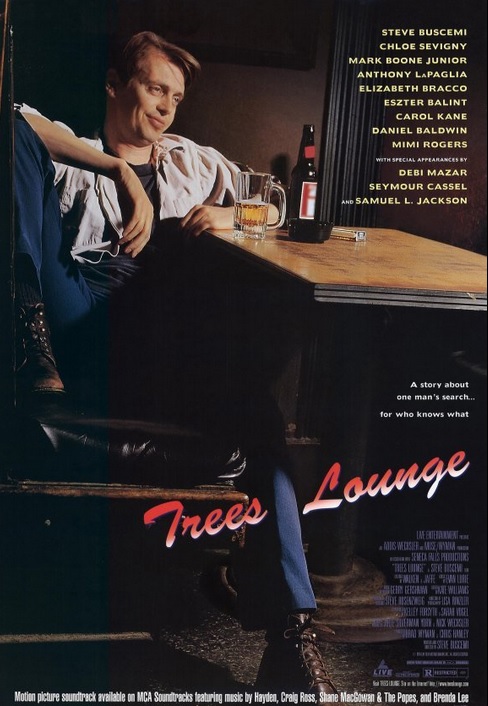
There are two reasons (of many) why I love Trees Lounge: First: It serves as the screenwriting and directing debut by one of my favorite actors: Steve Buscemi. He’s the type of actor who appears in huge, major studio tent poles—like Armageddon and Con Air—and he leaves you clamoring for another film that centers on his character’s backstories. Second: Trees Lounge has an incredible (nostalgic for me), ‘90s college rock radio gem with a theme song from Hayden. If you love Chris Whitley (who? here, listen to this), if you love the alt-country of Uncle Tupelo (who? listen here), or the indie-sounds of California’s Pavement (listen here), Britain’s Placebo (listen here), or the crowded-kings of college rock, Dinosaur, Jr. (listen here), you’ll love Hayden.
Yep. I love Hayden and the college rock era . . .
And Steve Buscemi also loves his rock ‘n’ roll.
“The Stealer” from Paul Rogers and Free (you know, the “All Right Now” guys) receiving a well-deserved soundtrack position? And we’re not hatin’ on Argent’s “Hold Your Head Up,” John Mayall’s “Light the Fuse,” Bachman Turner Overdrive’s “You Ain’t Seen Nuthin’ Yet” and “Roll On Down the Highway,” and Earl Hooker’s blues chops with “Off the Hook,” either. And tunes from The Ink Spots? Just wow.
It’s an incredible soundtrack replicating just what you’d expect in the jukebox at a decrepit, little bar in small-town America. And we have Evan Lurie, who, with his brother John Lurie (John consulted-scored John Travolta’s Get Shorty), founded the ‘80s jazz collective, the Lounge Lizards, to thank. You know Evan though his music consulting and scoring on a wide array of films, such as the Oscar winners Silver Linings Playbook and American Hustle, along with the rest of Steve Buscemi’s writing and directing credits: Animal Factory (2000), Lonesome Jim (2005), and Interview (2007).
Check out the rock video single of “Trees Lounge” . . . featuring Seymour Cassel on drums and Rockets Redglare on guitar?
As for Trees Lounge, the movie . . .
It’s of a time and place. It’s of the ‘90s when indie record labels, such as Homestead, Dutch East, SST, and Caroline, cultivated the college rock scene. Meanwhile, on the big screen, studio imprints, such as Miramax (shameless plug: check out our “8 Films of Quentin Tarantino’s Rolling Thunder Pictures”) and Orion Classics (which distributed Trees Lounge), filled the rising alt-nation’s screens with all manner of indie art-house and foreign films. It was the era that entertained us non-mainstream swimmers with the likes of Greg Araki’s The Doom Generation, Eric Bogosians’s SurbUria, Larry Clark’s Kids, Tom DiCillo’s Living in Oblivion, Richard Linklater’s Slacker and Dazed and Confused, Kevin Smith’s Clerks and Mallrats, Gus Van Sant’s Drugstore Cowboy, Hal Hartley’s Simple Men and Amateur, and Wayne Wang’s Smoke, along with the films Bandwagon, Floundering, Gas Food Lodging, The Low Life, Roadside Prophets, and S.F.W.
Yeah, the ‘90s were my music and film heaven.
I know, I know. “Geeze, Marie, enough with the trip down memory lane. When are you going to review the movie?”
Well, that’s just the point: Trees Lounge is Steve Buscemi’s trip down memory lane.
Long before he became an actor, Buscemi served as a New York firefighter in the early ‘80s at Engine Company 55 in Manhattan’s Little Italy. So, if you’re from the five Burroughs, keep your eyes open: you’ll see your old streets of The Bronx, Brooklyn, Queens, and Long Island.
Rob’s Body Shop doubled as “Nick’s Service Center” (where Steve’s character is fired from). Scenes were shot at Stobierksi’s Lucas Gardenview Funeral Home and Firemen’s Memorial Field (where Steve’s character is attacked-by-baseball bat). The Assembly Bar on Cooper Avenue, in Glendale, Queens, doubles as “Trees Lounge” (where Steve’s character drinks away his troubles). And Trees Lounge was a real place: after the original bar shut down, Steve purchased the sign and restored it for the movie, but he was ultimately not allowed to use it. (So he gifted it to his friend: a waitress-bartender who worked at Trees Lounge for over forty years.) Another autobiographical element of the film: before becoming a fireman, Steve, as his character, drove an ice cream truck on the movie’s same streets.
Influenced by the buck-the-studio system indie flicks of John Cassavetes (1958’s Shadows, 1968’s Faces, 1970’s Husbands, and 1974’s A Woman Under the Influence), by the writings of poet-author Charles Bukowski (whose work was translated as the 1987 Mickey Rourke-starring Barfly), and Jack Kerouac’s novels On the Road (1957) and The Dharma Bums, Buscemi brings his tales of the lonely, lost denizens of Trees Lounge.
It’s the story of Tommy Basilio, an unemployed car mechanic who, even when he was employed, spent most of his time drinking his life away at a blue collar watering hole where he lives alone in an apartment above. And, as with the tragic-heroes of Cassavetes and Bukowksi: Tommy is a self-destructive, Type D personality who blames everyone but himself for his troubles. (In fact, if you salt Tommy with more violent tendencies, you’d get Buscemi’s Carl Showalter in Fargo.)
In quick succession: Tommy loses his job after borrowing money (i.e. he stole it and got caught) from the auto repair shop where he worked; in turn, he loses Theresa (Lorraine “Goodfellas” Bracco’s sister, Elizabeth), his girlfriend of eight years to his boss, Rob (Anthony LaPaglia)—and now she’s pregnant. And Tommy believes he’s the father. To make ends meet, Tommy reluctantly takes over his late Uncle Al’s (Seymour Cassel) ice cream truck route.
Tommy’s logical response to his ever mounting problems: making them worse. And he accomplishes that goal by having an affair with Theresa’s flirtatious seventeen-year-old niece, Debbie (Chloe Sevigny). Then Jerry (Daniel Baldwin), the husband of Patty (Mimi Rogers), Theresa’s sister, takes him to task with a baseball bat and trashes the ice cream truck.
Yeah, it’s only a matter of time before Tommy takes over the stool of longtime barfly, Bill (Bronson Dudley; the “bass player” in the Hayden video) . . . and stares down into the errs of his ways . . . in the bottom of a glass on the bar at Trees Lounge.
The bottom line: Steve Buscemi’s debut as a screenwriter and director is pure magic in a bottle. Not a bad for a film shot for just over a million dollars in 24 days.
And the rest of the supporting cast of Trees Lounge’s outcasts: wow. Rockets Redglare (an actor in over 30 films, he roadied for Billy Joel’s The Hassels and was the Sex Pistol’s Sid Vicious’s drug dealer), Carol Kane (Fred Walton’s When a Stranger Calls), Mark Boone Junior (American Satan), Kevin Corrigan (Ray Liotta’s little brother in Goodfellas; also of the aforementioned Bandwagon), and Michael Imperioli (TV’s Law and Order, The Sopranos; got his start in A Matter of Degrees) are each excellent in their roles. Co-stars Anthony LaPaglia and Debi Mazar (Ray Liotta’s coke-snorting hussy in Goodfellas) also starred in Empire Records. And watch out for Samuel L. Jackson.
So spend a day in Trees Lounge—with movie and the soundtrack. You’ll be drunk-in-amazement on how awesome it all is. You can enjoy this soundtrack re-creation (below) that I cooked up on You Tube. And you can watch the movie for free—with limited commercials—on TubiTv.
In tribute to Kurt Cobain: February 20, 1967 – April 5, 1994
First, there was Rick Van Ryan, the malcontent, social injustice warrior VJ of Incident at Channel Q. Then, when the metal ’80s buckled to the grungy ’90s, the Catcher In the Rye-styled, disenfranchised Generation X’ers of America needed a new hero: they got Cliff Spab.
If Cliff Spab had been a pirate radio DJ, he would have been “Hard Harry” in Pump Up the Volume. If Cliff had gone to college, became enchanted with the campus radio station, and took the course titles “Interdisciplinary Approaches to Ethnicity,” he would have been Maxwell Glass in A Matter of Degrees. A well-read, apathetic convenience store clerk: he’d be Dante Hicks (well, maybe more Randal Graves) in Clerks. If Dustin Hoffman’s Ben Braddock from The Graduate had been a hippie: he’d be Spab. A filmmaker: he’d be Alan Shapiro in duBeat-eo—each expounding the same Holden Caulfield nihilism-cum-Abbie Hoffman anarchism. And, is it just me, but is Ethan Hawke’s Troy Dyer from 1994’s Reality Bitesjust a little too close-for-comfort-Spab coincidental?
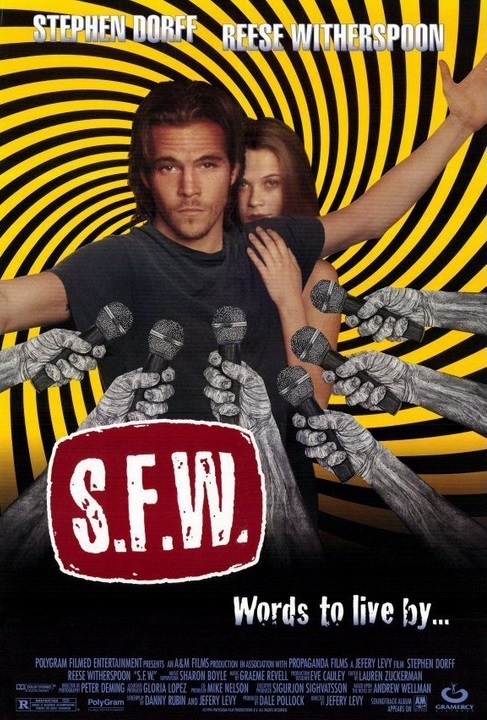
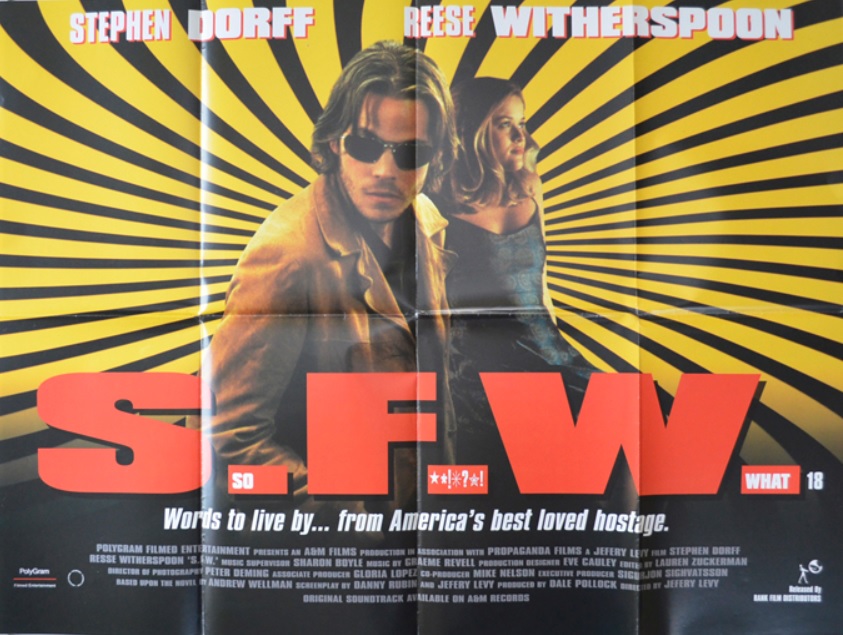
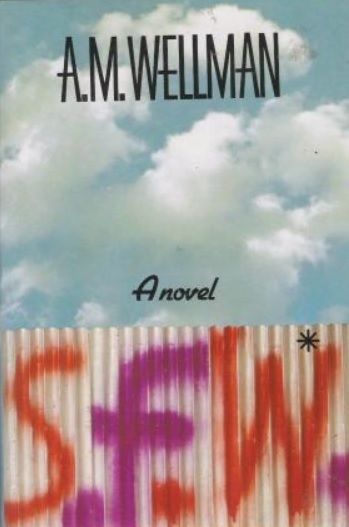
R.E.M’s Michael Stipe produced (Welcome to the Dollhouse, Velvet Goldmine), along with noted rock video producer Sigurjon Sighvatsson (Hard Rock Zombies, American Drive-In), this loose adaptation of Andrew Wellman’s satiric Generation X novel that explores the price of fame colliding with reckless tabloid journalism. Stephen Dorff (while he played the role younger, he made his big screen debut in 1987 at the age of 14 in the “No False Metal” classic The Gate; he recently wrapped the first season of FOX-TV’s Deputy) is the apathetic-reluctant hero, Cliff Spab, whose “catch phases”—his stock answer to everything is “So Fucking What?”—during his captivity of a televised hostage crisis, transforms him into a media sensation—and his unwanted, new found fame serves as a bigger prison than his previous apathetic fast-food worker lifestyle (apparent in the novel; lost in the movie).
In this tale of youth alienation, Oliver Stone’s Natural Born Killers goes grunge as Spab becomes a nation anti-hero after surviving for 36 days as one of five hostages in a non-descript, suburban Detroit convenience store by a gang of armed, camera-wielding terrorists—complete in white janitor-jumpsuits and stocking masks—who force the networks to carry the crisis in its entirety on the air. When Spab and his childhood friend, Joe Dice, kill the terrorists (and Dice dies in the process), Spab becomes a media sensation, alongside fellow hostage Wendy, an upper-class girl (Reese Witherspoon), splashed across the covers of magazines and reported on TV ad nauseam.
The novel’s writer, Andrew Wellman, at the age of 21, won the 1989 Playboy College Fiction Award and was quickly signed by Random House. The publisher then took the “unfinished” award-winning manuscript “The Madison Heights Syndrome,” (at a breezy 147 pages, the book is more novella than as the novel it is marketed), and chose a truncated version of the Spab character’s oft-repeated dismissive as the new title. And, because of the book’s timely correlation to the grunge ethos sweeping America, the book was marketed for a movie deal. If you read the now out-of-print book (my local library still has a copy), you’ll discover Wellman’s social commentary analogous to the voice of Bret Easton Ellis, whose (awesome) novels of disenfranchised malcontents—Less Than Zero (1985), The Rules of Attraction (1987), and, to a lesser extent, American Psycho (1991)—were adapted into films (that were more successful than S.F.W.).
Sadly, as is the case with cinematic adaptations of books-to-screenplays, an author’s flights-of-fancy narratives must be compressed, with events and characters composited and sanitized to the Hollywood screenwriting standard of 90 to 110 pages. As result, the film loses Wellman’s effective analogy regarding the sensationalistic tendencies of film by having Spab hiding out inside an abandoned movie theatre—where the character relates his story in flashbacks (just a like a movie).
Luckily, the film retained the book’s character of Morrow Streeter (an excellent Jake Busey; the jarhead “Ace Levy” in Starship Troopers), Spab’s shady-violent friend who’s prone to gay-bashing and pulling guns on and urinating on girlfriends (toned down for the film, natch). Another film highlight alongside Busey’s is Richard Portnow’s (Howard Stern’s dad in Private Parts) FBI agent who’s utterly convinced the store siege was an elaborate ruse perpetrated by Spab.
Another creative, celluloid choice that stifled the power of Wellman’s book is the film’s awkward “message” on consumerism—by stocking the non-descript convenience store with similarly non-descript, white-packaged generic item (e.g., cans of soup say “soup,” paper towels, say “paper towels” with no brand names). The “artistic” images and its related “message” flat lines on the screen.
And what’s the deal with Gary Coleman from TV’s Diff’rent Strokes being cast (it’s not in the book) alongside the clumsy-uncomfortable Tori Spelling-clone (aka, the sexually-degradingly named “Dori Smelling”) in the “TV movie version” of the hostage crisis? And there’s Levy’s “in-joke” with one of his previous film’s characters from Inside Monkey Zetterland (played by Steve Antin) appearing. What’s the point? What’s the message? The self-deprecation—especially Coleman’s—falls flat. (As a kid actor, Dorff starred in an episode of Diff’rent Strokes; were they still friends and did he bring Coleman onto film?)
Then there’s the . . . well, I can best describe it as the “Eddie Murphy Coming to America gag”—via the casting of John Roarke (lots of network TV series, but I remember him best from the truly awful sci-fi comedy rental, 1989’s Mutant on the Bounty) as the thinly-disguised clones of popular, real-life celebrity journalists Alan Dershowitz, Phil Donahue, Sam Donaldson, Ted Koppel, and Larry King. True, Roarke is a very talented impressionist-mimic, but unlike Eddie Murphy’s work (also in The Nutty Professor), it’s obvious to the viewer it’s the same actor in each of the rolls. We’re not fooled. And telling us that the “distortion” of the celebrity reporters are being filtered through “Spab’s point of view” doesn’t sell it either. Why would he “distort” reporters in his mind to look like Phil Donahue? The gag induces groans and any intentions at contemporary hipness are a total loss; the film would have been better served by playing it straight via casting an array of actors as faux-celebrity news hacks.
In the end the Coleman and Roarke celluloid subterfuges negate the film’s goal: the irony of the media complex transforming tragedies (e.g. 9-11) into television “programming” and then dipping in their hands in the tills a second time with their post-adaptations of those misfortunes with biographical and fictional films (World Trade Center, United 93).
S.F.W. was written by Danny Rubin (Bill Murray’s Groundhog Day) and directed by Jefrey Levy. Levy’s career began with the multiple award-winning, 1991 independent feature Drive (starring David Warner, of From Beyond the Grave and Ice Cream Man, as an acidic, middle-aged Brit reduced to chauffeuring the rich, liberal elite). During your mid-‘90s HBO excursions, you may have come across Levy’s feature film debut proper, Inside Monkey Zetterland (1992), a semi-autobiographical tale about an out-of-work gay screenwriter in Hollywood. That film starred Steve Antin (“Jessie” of Rick Springfield’s video hit single, the teen comedy The Last American Virgin, Don Coscarelli’s post-Phantasm flick Survival Quest, and three seasons on TV’s NYPD Blue; he wrote and directed the 2010 Christina Aguilera and Cher-starring bomb, Burlesque).
After the failure of S.F.W., Levy rebounded with a successful directing career on U.S network television and self-produced a couple of never-heard-of-them, low-budget indie flicks. Rubin, after writing the Marlee Matlin and Martin Sheen-starring Hear No Evil (1993), vanished from the business.
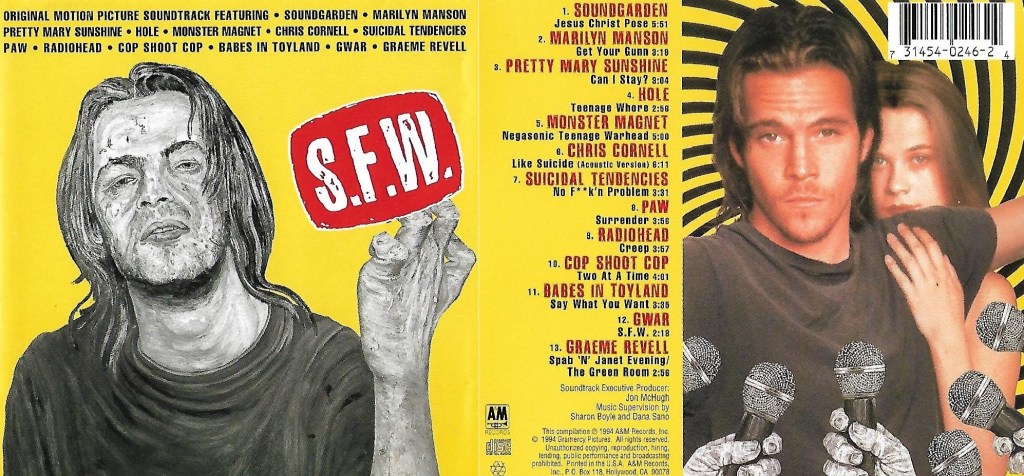
At the time of S.F.W.’s release, grunge was all the rage and the major label record companies and film studios couldn’t sit back and allow the indie label network (Homestead! Dutch East! SST! Caroline!) and college radio stations (staffed with guys like me) that birthed the alt-rock ‘90s in the first place, rake in all the dough. So began a corporate synergy to create a plethora of soundtrack-film hybrids with the likes of the aforementioned A Matter of Degrees, along with Kevin Smith’s Clerks (the soundtrack clearances cost more than the film itself), and Ben Stiller’s Reality Bites. The only problem: the soundtracks for most of these films featuring the then college radio and MTV 120 Minutes and IRS: The Cutting Edge darlings—especially in the case of A Matter of Degrees—were more successful than the box office bomb movies they promoted. And the S.F.W. soundtrack is no exception.
“Jesus Christ Pose” — Soundgarden “Get Your Gunn” — Marilyn Manson “Can I Stay?” — Pretty Mary Sunshine “Teenage Whore” — Hole “Negasonic Teenage Warhead” — Monster Magnet “Like Suicide (Acoustic Version)” — Chris Cornell “No Fuck’n Problem” — Suicidal Tendencies “Surrender” — Paw “Creep” — Radiohead “Two at a Time” — Cop Shoot Cop “Say What You Want” — Babes in Toyland “S.F.W.” — GWAR
Three songs appearing in the film but not on the soundtrack (clearance issues) are the Ronnie James Dio-era of Ritchie Blackmore’s Rainbow with “A Light in the Black” (featured in the trailer), Australia’s Mantissa with “Mary, Mary” (they appear via their rock video on TV), and Ireland’s Therapy? with “Speedball.” And while they make an appearance via a “Spab Tribute Concert” and spew some dialog, Babes in Toyland do not perform their soundtrack contribution. (Personally, we could have done without the Coleman bit and had Babes in Toyland “live” on stage; the Cheap Trick original of “Surrender” (which could have been a nice homage to the similarly themed, juvenile delinquent flick Over the Edge (a Kurt Cobain favorite) on the soundtrack, and had Paw represented by their then popular tunes of “The Bridge” or “Jessie.”)
And there was one more song that was planned to be included in the film. And if this chain-of-events sounds a lot like Cameron Crowe wanting to include “Smells Like Teen Spirit” in his 1992 grunge-flick entry Singles. . . then it probably is.
In the pages of a June 1994 issue of Entertainment Weekly (yes, the studio put their full marketing gauntlet behind the film), director Jefrey Levy spoke of the Cliff Spab-to-Kurt Cobain parallels, as both were just regular kids with extraordinary sensitivity thrust into extraordinary circumstances. So, to that end, Levy wanted to include Nirvana’s then hit single, “All Apologies,” from the band’s third album, In Utero.
Levy stated that while Cobain responded positively to the movie, he failed to acquire formal permission to include the song due to Cobain’s suicide (on April 5, 1994) shortly after. Levy did, however, as a consolation prize, was able to include the song “Teenage Whore” from Kurt’s widow, Courtney Love and her band Hole (for the scuzzy-love scene between Spab and Joey Lauren Adams’s Monica Dice). Cobain’s peripheral attachment to the film took on an eerie quality when Love, during the televised park vigil reading of Cobain’s suicide note, kept chastising Cobain with the term “So fucking what?” over and over.
And did that Cobain connection, in conjunction with the soundtrack that our favorite college radio DJs spun ‘n plugged (as with A Matter of Degrees and Clerks) make us rent the VHS copy, then search out Andrew Wellman’s book? Yep!
What’s that? You need more grunge? Then check out our tribute to ’90s Gen-X films with “Exploring: 50 Gen-X Grunge Films of the Alt-Rock ‘90s,” which we also touch on, in part, with our tribute to radio stations on film: “Exploring: Radio Stations on Film.” And, speaking of box office failures (S.F.W.‘s total box office take was less than $65,000 against an unknown eight-digit budget), we explored a week of those films with our recent “Box Office Failures Week.”
And, with that, we’ll catch you on the “flippity flop,” Kurt.
About the Author: You can read the music and film reviews of R.D Francis on Medium and learn more about his work on Facebook.











 B&S About Movies
You must be logged in to post a comment.