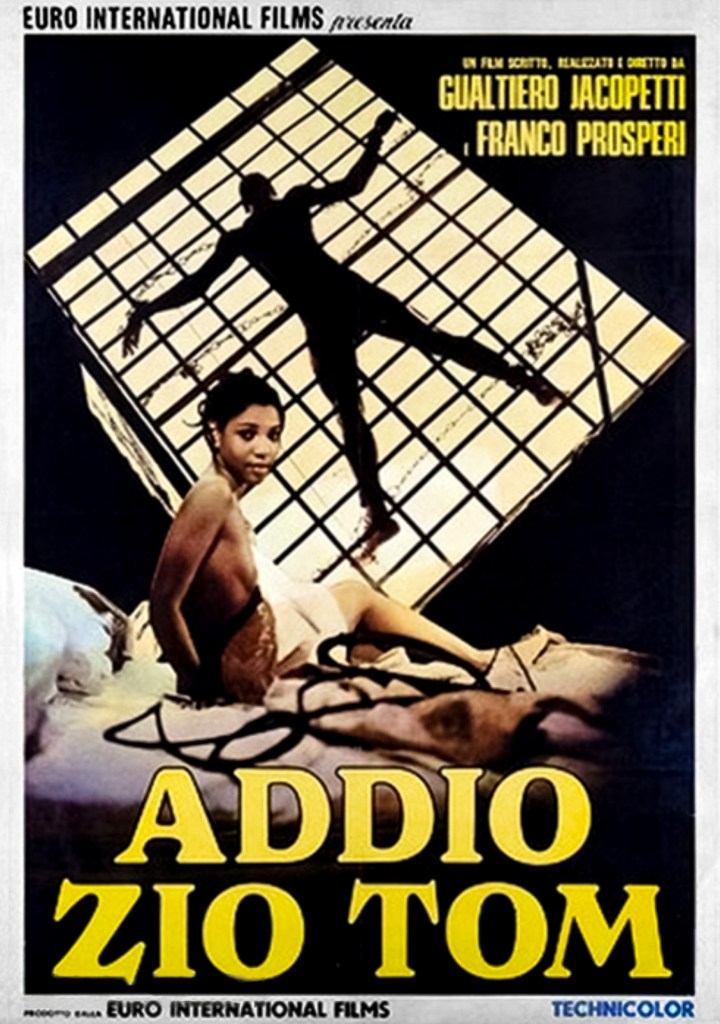
BLUE UNDERGROUND 4K UHD RELEASE: Goodbye Uncle Tom (1971)

Goodbye Uncle Tom (1971): Five years after Africa Blood and Guts, Gualtiero Jacopetti and Franco Prosperi returned with this movie, which is pretty much one of the roughest films I’ve ever made it through.

This was shot primarily in Haiti, where the directors were the guests of Haitian dictator Papa Doc Duvalier, who gave them diplomatic cars, clearance to film anywhere on the island and as many extras as they required to be used as slaves being treated exactly as slaves were. They were also invited to a nightly dinner with Duvalier himself.

If your mind isn’t already blown, stick around.

Goodbye Uncle Tom is based on true events in which the filmmakers explore America in slavery times, using published documents and materials from the public record to make what they consider a documentary, even claiming to go back in time to achieve this level of realism.

This movie was made in opposition to the claims that Africa Blood and Guts was racist. It didn’t work, as Roger Ebert would say, “They have finally done it: Made the most disgusting, contemptuous insult to decency ever to masquerade as a documentary.” He also stated that “This movie itself humiliates its actors in the way the slaves were humiliated 200 years ago.”

The movie was originally released in Italy in a 119-minute version and was immediately withdrawn. I’ve read that the directors were sued for plagiarism by writer Joseph Chamberlain Furnas. It was then re-released with 17 more minutes of footage.

The director’s cut shows a comparison between the horrors of slavery and the rise of the Black Power Movement, ending with an unidentified black man’s fantasy of living out William Styron’s The Confessions of Nat Turner. In that book, Turned is divinely inspired and given a mission from God to lead a slave uprising and destroy the white race.

This ending upset American distributors so much that they forced Jacopetti and Prosperi to cut more than thirteen minutes of racial politics that would upset their audiences. Pauline Kael still said that the movie was “the most specific and rabid incitement to race war,” a view shared with former Ku Klux Klan leader David Duke, who said that Goodbye Uncle Tom was a Jewish conspiracy to incite blacks on white violence.

This movie is not for everyone. But I feel that it needs to be seen. I rarely get political on this site, but in truth, I feel that we as a country have not done enough to understand the roots of the black experience. While an Italian exploitation film isn’t the best way to learn more, it’s a start.

It’s no accident that Cannibal Holocaust would eventually use the music of Riz Ortolani to juxtapose the horrific images on screen with the beauty of his compositions. The composer had been working with the duo since Mondo Cane, where his song “More” nearly won an Oscar.

But make no mistake that this movie, while intending to be educational and anti-racist, still employs the tools of the mondo and exploitation. How else do you describe the conceit that these filmmakers have gone back in time, taking a helicopter with them that they use to fly away from the terrors of the plantation at the end?

In 2010, Dr. David Pilgrim, the curator of the Jim Crow Museum of Racist Memorabilia, said that when he showed this film to a class, it led to some major traumas. “On the day that we watched Goodbye Uncle Tom three students had unexcused absences, several cried while watching, one almost vomited; most sat, sad and disgusted. I taught for another fifteen years but I never showed that movie again.”

He went on to say that the film “is a more truthful portrayal of the brutality and obscenity of slave life than was Roots; however, I have some major problems with the film. I find it ironic that a movie that explored the exploitation and degradation of Black people was filmed in a way that exploited and degraded Black people. In some ways Goodbye Uncle Tom was just a XXX movie set against the backdrop of slavery; the “peculiar institution” served as an excuse to show sexual and violent gore. Jacopetti and Prosperi told a great many painful truths about slavery but they debased hundreds of Blacks to make the film.”

“I said all of that to say this: Jacopetti and Prosperi were not the messengers that I would have selected, and their implied assumptions about Blacks are troubling, but they made a movie that accurately portrayed the horrors of slavery. Of course, it is the case that a realistic depiction of the savagery of slavery would be difficult to watch no matter who made it. This is why when you finish watching Roots you may feel that a family has overcome great oppression and a nation has become more democratic; whereas when you finish watching Goodbye Uncle Tom you just feel sick to your stomach.”

That says a lot about this movie in a better way than I can, but I’m still going to try to sum it up: this is a well-made movie that may have been made with the best of intentions, but was made by two people who only had the experience to make exactly what they made. It is a movie made about slavery that used slave labor. It is a movie that offended both liberals and conservatives, those that believed in tolerance and those that were racist, those that were black and people who were white. This is a message movie that had its message taken away by American producers, leaving two hours of shock with none of the moral it so desperately needed.

If this movie upsets you, perhaps you needed to be upset. You should be less upset about a movie made nearly fifty years ago and more upset about our nation’s history of racism and intolerance. And you should definitely be upset about the lack of civil rights in our country today, which no matter who is President continually must face challenges.

The Importance of Shocking: Gualtiero Jacopetti (2009): Included with the Goodbye Uncle Tom 4K set, this documentary by Andrea Bettinetti attempts to tell the story behind the man who made Mondo Cane.

Beyond the behind the scenes footage of the mondo films being created, this documentary gets into the journalism career of Jacopetti, which includes a scandal as the paper he worked for, Cronache, published photos so scandalous of Sophia Loren that he earned a one-year jail sentence. What I did not know was how influential his work on newsreels were, which went away from just reporting the news and expanded to cynically comment on events.

According to “Jacopetti’s Sexual Celebrity” by Dalila Missero, “Jacopetti was a famous journalist who was involved in a series of sex scandals, including episodes of paedophilia, prostitution and rape, which had made him a much discussed figure in the Italian media and entertainment system for almost a decade. ” The film does not shy away from this, as it explains how he had to marry a gypsy girl for some time before the marriage was annulled to escape from one of these charges.

This also goes deep into the 1961 car crash that claimed the life of his girlfriend, Belinda Lee, who Jacopetti was buried next a half century later. Beyond having compound fractures, his depression was so deep that American doctors were treating him with a cocktail of drugs that would stun several people.

He’s just as complicated as the films that he made. Hard to defend, yet also someone whose work has merit; if it were simple documentary and not exploitation, it would be celebrated. Yet the mondo genre is born in the gutter, even if it inspired today’s media. I walked away from this still unsure how I felt about Jacopetti, just like how I always feel strange watching his films. Beyond normal sleaze, you feel complicit in them as a viewer, as if you are condoning the ways in which they were made and the moments that they capture.

The Godfathers of Mondo (2003): Directed by David Gregory, this documentary attempts to explain not only the appeal of mondo and the films of Gualtiero Jacopetti and Franco Prosperi, but whether or not they were guilty of war crimes as they filmed their mondo films.

Originally part of Blue Underground’s Mondo Cane Collection, this makes a welcome return on their Goodbye Uncle Tom release. This film may reveal that Carlo Rambaldi was hired to create the burning monk in Mondo Cane 2, yet the subjects are more guarded when having to discuss the atrocities they captured on film. These things, they claim, would still happen if they shot them or not. This is not what unguilty people say.

The strongest part of this film is that Jacopetti and Prosperi were still alive to tell their stories. Shot on their own, they each have a point of view of why they did what they did and how they were intending much of their work to be a condemnation of what they were capturing. Often, the humor and commentary was lost, particularly in America, where these things were edited from their movies. Yet the mondo is based on danger and shocking people, so you have to expect them to be controversial. That said, it seemed like these filmmakers went further every time, all the way to Goodbye Uncle Tom, a movie filmed with slaves of modern times to decry slaves of the past, where Jacopetti and Prosperi take a time traveling helicopter to the American South and reenact the horrors of slavery while wallowing in it.

I wish this had gotten more into Mondo Candido and what the duo did afterward, but this is such a rich document that it’s hard to say anything negative. Just hearing Ortolani talk about these films is something I never thought that I would hear.

The Blue Underground 4K UHD release of Goodbye Uncle Tom has both the Italian and English versions of this movie, as well as the two documentaries discussed above. It also has interviews with Jacopetti, Prosperi and Ortolani, behind the scenes photos and footage, interviews with author Mark Goodall and Professor Matthew J. Smith, the soundtrack to this movie and a collectible booklet with new essay by Dan Madigan. You can get this from MVD.
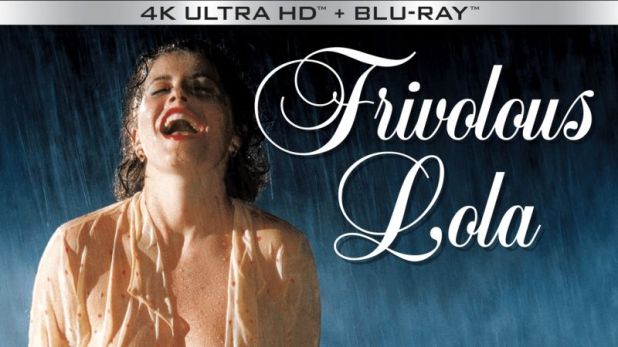

CULT EPICS 4K UHD RELEASE: Frivolous Lola (1998)

In a small town in 1950s Italy, a girl named Lola (Anna Ammirati, who director Tinto Brass met when he crashed his car into her as she was on her bicycle; she told him as a joke that if she wasn’t his next leading lady, she would sue him) rules the libido of every boy and man in town, riding her bike with her rear showing and acting as inappropriate as possible. She may be a virgin, but she doesn’t want to be. Her fiance Masetto (Max Parodi), however, is a traditional Italian man who wants to take a pure woman on his wedding night.

Her mother, Zaïra (Serena Grandi), has married Andre (Patrick Mower), a man who has raised Lola as her stepfather, yet she takes every opportunity to try to seduce him. That’s how Lola is with almost everyone, pushing men to their limits and then shocked when they want to be inside her. As for Masetto, he blows up and screams at her just about any time he’s angry, then goes and makes love to sex workers. He has different rules than his bride but she’s unwilling to embrace the past and looks to the future of how women will be treated in Italy.

There’s a great essay that comes with the Cult Epics 4K, “A Committed Brat: The Career of Anna Ammirati” by Eugenio Ercolani and Domenico Monetti. It explains who Ammirati was at the time and the actress she grew to be. I love that she says that she is the opposite of the “bionic blondes” at the time this movie was made; she looks real, feels real and even the song that she sings on the film’s soundtrack, “Mona Monella,” has an edge that you would not expect from someone who is trying with this film to be a sex symbol.

Along with a strong Pino Donaggio score, this soundtrack features plenty of era-appropriate songs, such as Carla Boni’s “Mambo Italiano,” Glenn Miller’s “In the Mood” and Curtis King Jr.’s “Let’s Twist Again,” a song that plays on a sweaty night with our couple and three American soldiers all interacting in a small bar.

Cult Epics is doing amazing things with these Tinto Brass releases. They’re like my Criterion collection, as they release the movies that I truly care about. The 4K UHD release of this movie has new audio commentary by Eugenio Ercolani and Nathaniel Thompson, trailers, an interview with Tinto Brass, a photo gallery, a double-sided sleeve with the original Italian art, a 20-page illustrated booklet with liner notes by Eugenio Ercolani and Domenico Monetti, a slipcase and lobby cards. You can get this from MVD.
2024 Scarecrow Psychotronic Challenge Day 23: The Legend of Gator Face (1996)

23. FOR PEAT’S SAKE: Log one that takes place in a swamp or a bog.

Danny (John White, who would become the direct to video Stifler in the American Pie sequels), Phil (Dan Warry-Smith) and Angel (Charlotte Sullivan) live in a swamp where every kid talks about Gator Face. After a summer of having to behave, they decide to make a costume, dress up as the monster and prank the entire neighborhood. Then the National Guard gets called in. That’s when the friends learn that Gator Face is real and a part of the swamp.

Directed by Vic Sarin and written by David Covell, Alan Mruvka and Sahara Riley, this aired on Showtime and if I was the right age for it, I would have been obsessed by this movie. At the end, when Gator Face gives his life up to save Danny? I would have cried my eyes out. When the swamp saves Gator Face? I don’t know if I had that many years as a child.

This may be the most innocent swamp horror film that I’ve ever watched. I mean, I’m used to humanoids rising up during salmon festivals and violently assaulted women who later give birth to their clammy children.

You can watch this on Tubi.

UNSUNG HORRORS HORROR GIVES BACK 2024: The Devil’s Exorcist (1975)

Each October, the Unsung Horrors podcast does a month of themed movies. This year they will once again be setting up a fundraiser to benefit Best Friends, which is working to save the lives of cats and dogs all across America, giving pets second chances and happy homes.

Today’s theme: Hail Satan

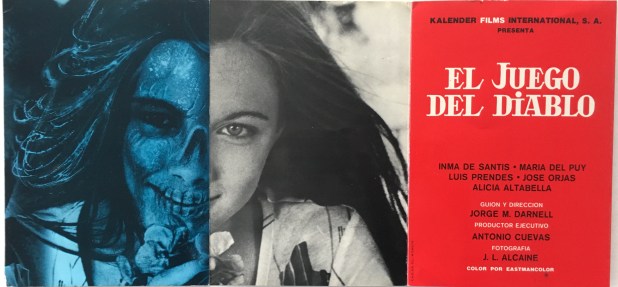
Teresita (Imma de Santis) may be a Catholic schoolgirl, but that doesn’t mean that she can’t be obsessed by a statue of a man in a dark suit, a man (José Lifante) that soon begins to follow her through her dreams. Her father (Luis Prendes) decides that she needs the help of psychologist Dr. Liza Greene (Maria del Puy), who tries to work with her but starts to lose control as Teresita becomes more violent, all while Dr. Greene’s secret lover Dr. Jack Morris (Jack Taylor) begins to abuse her.

That said, nothing will prepare you for how deranged Teresita becomes. She sneaks into a child’s hospital room and turns off his oxygen, kills her mother (Alicia Altabella) by shoving her off a balcony, murders the butler’s dog and then watches as he has a heart attack.

Of course Dr. Greene should adopt her.

There is no exorcism or religion in this. Just possession and people trying to deal with their lives because everyone in this treats one another horribly. And then, hands come out of the walls and grab young girls.

Also: How strange is it that this movie has a Tall Man in it who constantly appears well-dressed and surrounded by fog? You may known the actor who played him as the photographer in Let Sleeping Corpses Lie.

I want to know how Dr. Greene is a psychologist when we see her experimenting with electric eels and how a doctor could suddenly adopt one of their patients. I know it’s a movie, much less a Spanish ripoff, but man, these are the things that I worry about. Another question is why does Teresita have such weird stuffed animals that look like piranha?

By the end, the demon has transferred to the healer, who is frothing at the mouth and holding scissors. We don’t get any resolution, but for a film that is about a young girl and a woman unable to connect to others emotionally (and sexually, if we are to believe the things that Morris says to our doctor protagonist), ending with the idea that they’re about to use scissors on Teresita’s father makes it seem like the demon has helped at least one of them work through their problems. And look, even after being burned, those weird stuffed fish have come back.

You can watch this on YouTube.

I HOPE YOU SUFFER OCTOBER FILM CHALLENGE: Amityville Emanuelle (2023)

EDITOR’S NOTE: The I Hope You Suffer podcast said that “Since everybody is doing these movie challenges now, we made the only one worth doing.” Bring the pain.

I worry about AI a lot, because you know, I work as a writer in my non-constantly watching movies and writing about them time. I’ve been in this field for twenty-five years or more — this gets relevant for this movie as well, I promise — and I feel like I’ve been fighting Skynet since 1984 and now I’m being asked to embrace it.

This is all being confided in you, dear reader, because I feel like Amityville Emanuelle has been concocted by that very same AI that I’ve been asked to use for my work and not director Louis DeStefano (who also plays Detective James and is directing his first movie) and Geno McGahee (producer of Call Me EmanuelleThe Awakening of Emanuelle and the writer and producer of Amityville Cop and the writer, director and producer of Amityville: The Final Chapter, which was originally known as Sickle).

How else can we explain a movie that has Amityville, a spirit board and namechecks the character invented by Emmanuelle Arsan that has become a brand in itself, remixed remade and ripped off into so many different characters, whether black, white or in space?

How long did it take before someone realized that Emanuelle and Amityville are both available to put together and lure me into watching 65 minutes of the results?

That’s why I blame AI.

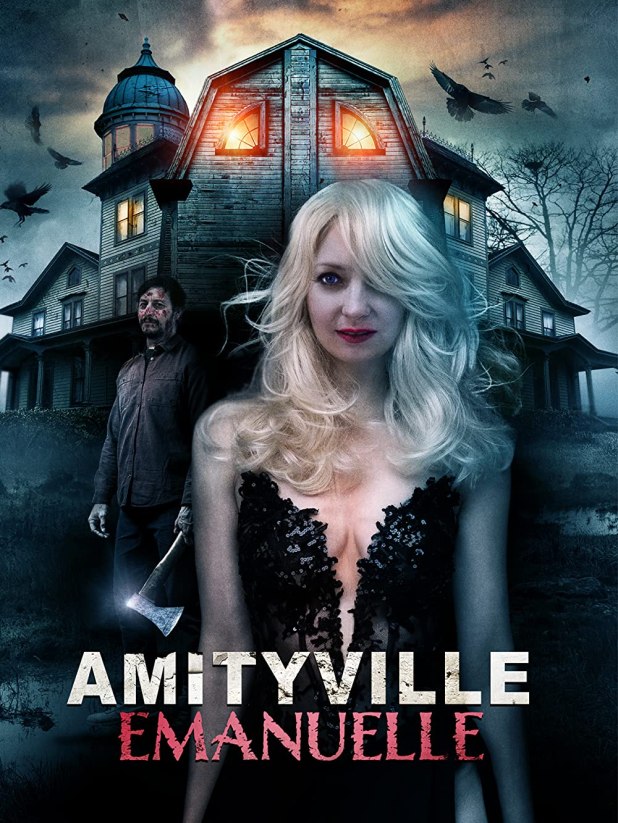
If you have watched any of the post-relevant Amityville movies by now — you can stop after the Canadian ones, if you’re like most people, or after the In the Hood ones if you’re like me — you should never look at the poster and decide to watch these movies. I promise you that hardly anything on this art happens in the movie or even gets close to it and looking at it will only spoil you for visuals that its creators and budget are unable to deliver.

As you know — you must know — on November 13, 1974, Ronald DeFeo Jr. shot and killed six members of his family at 112 Ocean Avenue in the suburban neighborhood in Amityville, located somewhere on the south shore of Long Island, New York.

This movie accepts that and even starts with a quick cut version of it to set up what we see next.

Twenty-some years later, Laura Lutz (Dawn Church) is working in marketing, of which she says, “I market things. I get people to buy things. It’s like advertising” as I screamed at the screen while I actually did marketing inches away from this prompt-created attempt to finally destroy my Amityville obsessed black soul. She’s also trying to date and hasn’t gotten any for a year because of, yes, marketing and good Lord, this movie is trying my soul because it’s hitting so close to home my dog is trembling as the house shakes this way and that.

She ends up going on a double date with her friend Allie (Linda S. Wong) and hooking up with a nebbish teacher named Evan (Chris Spinelli) who seems to be acting for the back rows of a theater that no longer exists. Oh — I nearly forgot. Some lady brought over a box of objects from her father — George Lutz, who was played by James Brolin and Ryan Reynolds once long before Amityville movies were made on a daily basis and I had to search Tubi every morning at 3:15 AM to see which ones had possessed my smart TV, forcing me to watch them eyes sleepily open, simply through just a touch of Lucifer’s burning hand.

One of the objects in the box of occult stuff her dad kept all these years looks like a cocktail shaker but the filmmakers assure us that it’s an urn. Well, that urn has the ashes of Ronald DeFeo Jr. in it, the father of this movie’s other lead, Gordon (Shane Ryan-Reid), who has been seeing visions of his murderous father more and more since he died in jail. And when his girlfriend Gena (Allie Perez) gets a Ouija board as a housewarming gift from Scott (Johnny Avila)and May (Joycelyne Lew)…I mean, who does this kind of thing? What kind of gift is that? Don’t you know what happens?

Well, they’re lucky because Gena’s cousin Janet (Saint Heart) is a medium. They need her pretty bad right now — she’s sure she’s going to die so she makes Gena promise to take care of her cat Roman — because Laura gets possessed by the spirit and it makes her hook up with two dudes at a bar and shows up inside her bed while she’s jilling off. Worse of all, Evan has gone murderous, killing everyone that comes close to her.

I fear that in all these words, I’ve somehow made Amityville Emanuelle more exciting than it is. It’s an Amityville movie with no real Amityville, not even a shot of the house, just connected to real people whose real lives were destroyed by the case. And I can handle exploitation — I wallow in it, let’s be honest — but when you go nowhere deeper than saying, “These are the kids of Amityville” and then just have them sit in a living room, this underwhelms even when I barely expected it to whelm. But adding to that ennui is the fact that they’ve somehow made an Emanuelle movie with no nudity and some of the most boring lovemaking scenes you’ll see outside of an afternoon soap opera. In fact, in one, the guy pulls a blanket over Laura’s shoulders while she’s on top of him. This is an Emanuelle movie, with one m, and that means that Joe D’Amato is practically spinning so fast in his grave now that he’s about to burst forth from the Earth at the utter gaul of making even a softcore sex movie the unsexiest sex you’ve seen since you found your parent’s hardback of Dr. Alex Comfort’s The Joy of Sex. Children of the seventies, remember when the only nudity you could find was the Sears catalog bra pages? That was volcanic compared to this flaccid nonsense.

Nearly everyone that acted in this either produced or also worked behind the camera, no one is blameless. You do it to yourself, you do and that’s what really hurts, as they say. Or sing.

You know, if Joe D’Amato was alive, he’d be making movies with titles a lot like this, but they’d also have half the cast torn to shreds and sitting bloody and congealing in an acid bathtub while a schoolmarmish maid gave her adopted child of a master a furtive handjob, because that’s how you really make a scummy movie. Please learn from the masters.

You can watch this on Tubi.

CHILLER THEATER MONTH: She-Wolf of London (1946)

EDITOR’S NOTE: She-Wolf of London was on Chiller Theater on Saturday, March 19, 1966 at 1:00 a.m., Saturday, December 31, 1966 at 1:00 a.m., Saturday, May 17, 1969 at 1:00 a.m., Saturday, January 20, 1973 at 1:00 a.m., Saturday, July 26, 1975 at 1:00 a.m., Saturday, June 24, 1978 at 11:30 p.m. and Saturday, October 15, 1983 at 2:00 a.m.

As a kid, I’d see a title like She-Wolf of London and prepare myself for lupine madness, only to be angered by the fact that there is not a single werewolf in this movie. Imagine how angry I am as an adult when I watch films like The Wolf of Wall Street!

Years before Lassie and Lost In Space, June Lockhart would play the title character. There’s been a series of murders at a local park and her relatives inform her that because the blood of a werewolf runs in the family and that she is responsible for the deaths. Not Maureen Robinson!

As our heroine begins to worry that she is the next to suffer the Curse of the Allenbys, her aunt both tries to help and worry her at the same time. I smell gaslighting! Can you smell gaslighting? Because I totally can.

Sara Haden, who plays Aunt Martha Winthrop, is perhaps best known for playing another movie aunt, Aunt Milly Forrest in thirteen Andy Hardy films.

This was directed by Jean Yarbrough, who also brought us Hillbillys in a Haunted House and Jack and the Beanstalk, one of only two movies that Abbott and Costello made in color (the other is Abbott and Costello Meet Captain Kidd).

CHILLER THEATER MONTH: She Demons (1958)

EDITOR’S NOTE: She Demons was on Chiller Theater on Saturday, January 10, 1970 at 1:00 a.m.

Jerrie Turner (Irish McCalla, a model for Vargas and Sheena, Queen of the Jungle), Fred Maklin (Tod Griffin), Sammy Ching (Victor Sen Yung, Charlie Chan’s number one son) and Kris Kamana (Charles Opunui) are the only survivors of a shipwreck and wash up on a beach paradise that they soon learn is not just filled with demonic native women with spears, but also Col. Osler (Rudolph Anders), a survivor of the Third Reich who is using this little bit of heaven on Earth to experiment with lava and pain. The women have all become She Demons because Osler’s wife Mona (Leni Tana) had her face burned off by that hot volcanic magma and he hopes that he can fix it. So, you know, Eyes Without a Face, except that was made a year before that film!

Richard Cunha made Giant from the Unknown and Astor Pictures demanded that they would only release that movie if he made a second for a double feature. This is what he created and wow, I am so happy that it was filmed. A Nazi war criminal lives in a mansion tended to by island slaves, protected by an army, all surrounded by lava while he is vainly trying to fix the face of wife.

I don’t know if a better plot exists.

You can watch this on Tubi.

CHILLER THEATER MONTH: The Brain That Wouldn’t Die (1962)

EDITOR’S NOTE: The Brain That Wouldn’t Die was on Chiller Theater on Saturday, February 5, 1966 at 11:20 p.m., Saturday, June 28, 1969 at 1:00 a.m. and Saturday, February 27, 1971 at 1:00 a.m.

I really dislike anyone who makes fun of this movie. It’s been riffed and goofed on for years, but it’s way better made than it has any right to be and is filled with some big ideas that other movies from its genre and time never would dare to include.

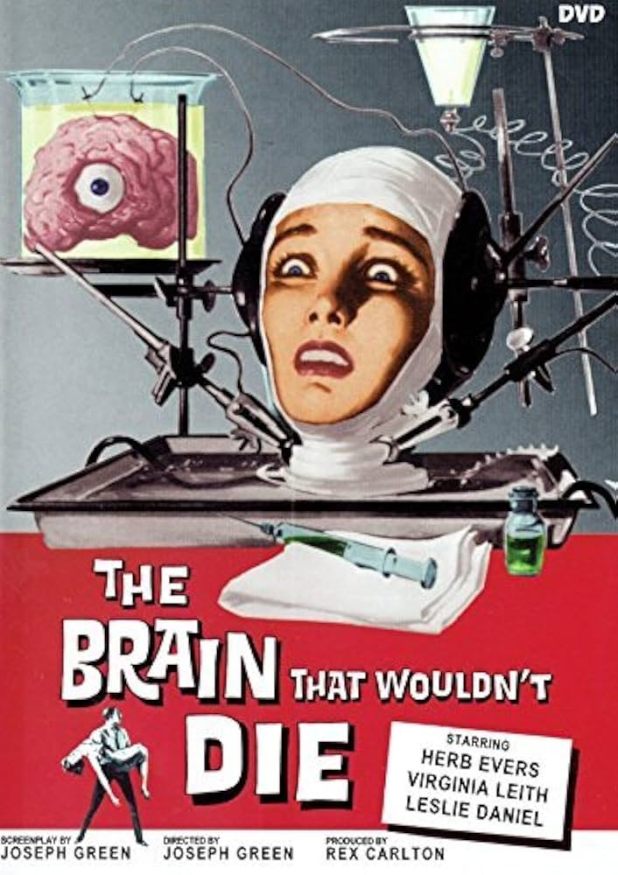
Shot independently around Tarrytown, New York, in 1959 under the working title The Black Door, this film finds Dr. Bill Cortner (Jason Evers) as a surgeon who just won’t accept that death is the end for his patients. And when his fiancee Jan Compton (Virginia Leith) is critically injured in a car accident that he causes, he takes her head and along with his crippled assistant Kurt (Anthony La Penna), he struggles to find her a new body to transplant her still living head on.

While Jan loses her mind due to pain and the sheer oddity of being alive without a body, Dr. Bill hits the go go clubs looking for the perfect body for her. That’s one of the strangest and most delightful moments here, as instead of just any body, Dr. Bill realizes that he needs a body that best answers his sexual needs, which means he cares less about saving Jan than satisfying his repressed desires.

Throughout this story and its slowly going mad rush to tragedy, there’s a past experiment hidden behind the door. It’s played by Eddie Carmel, a 7’3″ circus performer who was known as The Jewish Giant.

This was directed and written by Joseph Green, who owned Joseph Green Pictures. It was such a tiny corporation that it had one employee, Joseph Green, and brought so many wild movies to screens like Jess Franco’s Kiss Me Monster and Two Undercover Angels, Claude Chabrol’s Pleasure Party, Something Creeping in the DarkDeath Knocks Twice and his own film, The Perils of P.K. 

I love the way this movie takes our world and instead creates its own, a place where strippers fight on stage, where camera clubs are a plot point — Sammy Petrillo is one of the dirty men taking pictures! — and old girlfriends can be wooed back just to potentially get to be the body for a new fiancee.

You can watch this on Tubi.

SCREAMFEST 2024: Antropophagus Legacy (2024)

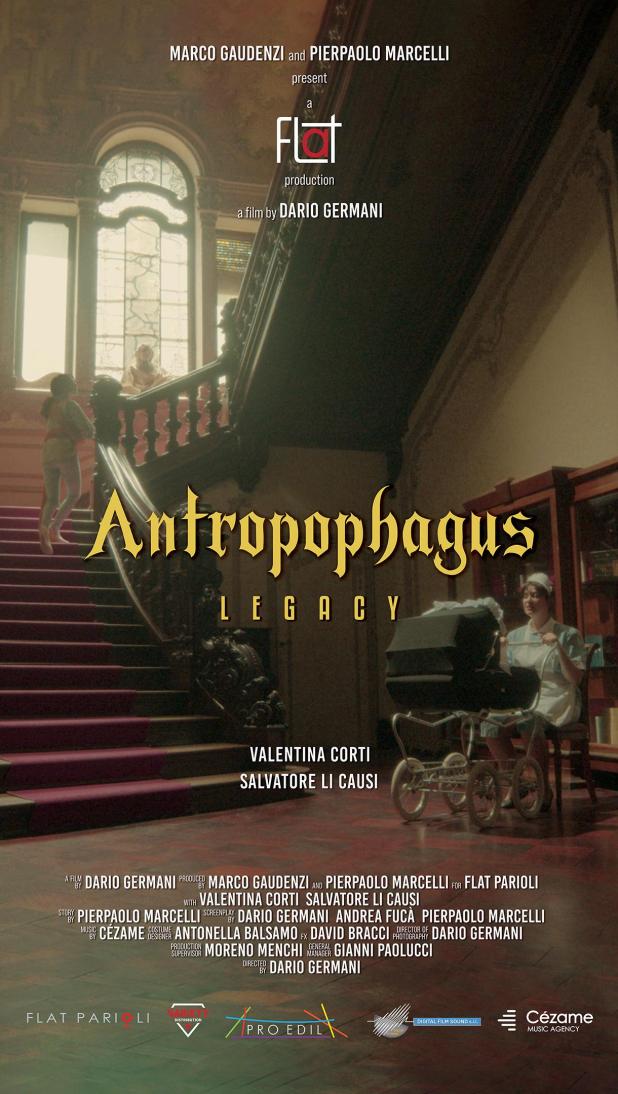
Dario Germani made Anthropophagus II two years ago, a sort-of sequel to the Joe D’Amato-directed and George Eastman-starring baby munching epic. This starts almost like a giallo, as Hanna (Valentina Corti) wakes up to her husband dead. As she’s in the hospital, she learns that she’s a suspect and that she’s also pregnant.

She runs to Budapest, where she meets her cousin Hugo (Salvatore Li Causi), who lets her in on the history of their family tree, one littered with forced cannibalism. At least there’s a flashback to Anthropophagus and we get to see the familiar and beloved face of George Eastman in a boat freaking out over how he’s killed his wife and child before, you know, eating them.

Maybe I romanticize the 1980s Filmirage era, but I’ve watched so many of those movies so many times. Yet there was a time when The Grim Reaper played U.S. theaters and drive-ins and I can’t even imagine how people felt when being confronted by it. This feels like a cannibal movie that has grafted itself onto D’Amato’s film and you know, I can’t be mad. If he was alive today, he’d probably be doing the same thing and would love that digital video would allow him to shoot so quickly.

There is one pretty great scene where Hugo picks up a couple and they go to a park for a a tre vie. As he approaches the guy, he goes for what his victim thinks is a kiss and then tears out his throat. Then, nude, he chases the naked female victim as well.

That said, the original presented Eastman as a terrifying monster — as does Absurd, its spiritual sequel — with frenzied eyes. It’s an image that has stuck in my head for decades and I fear that I’ve forgotten a lot of this film already, which is astounding when its one that has infants being consumed.

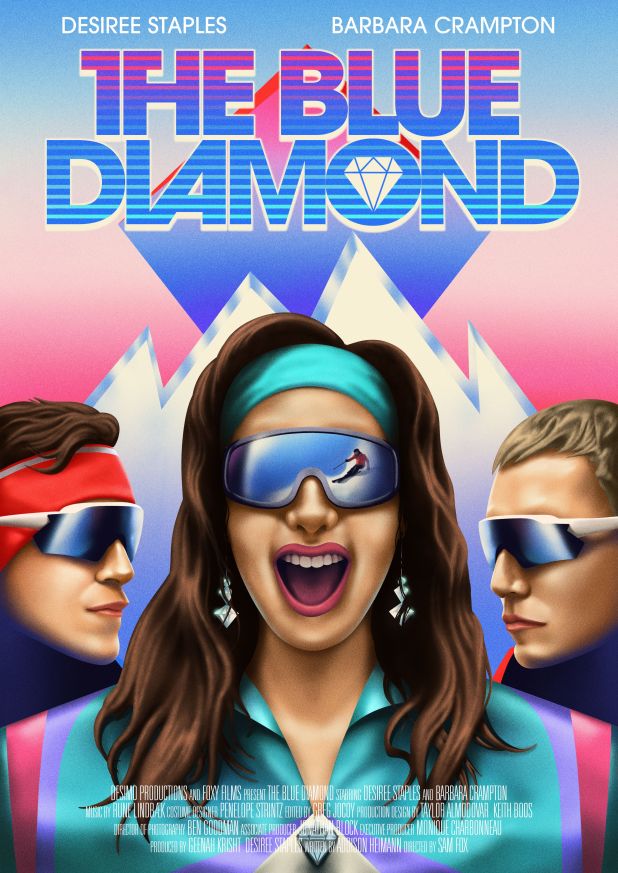
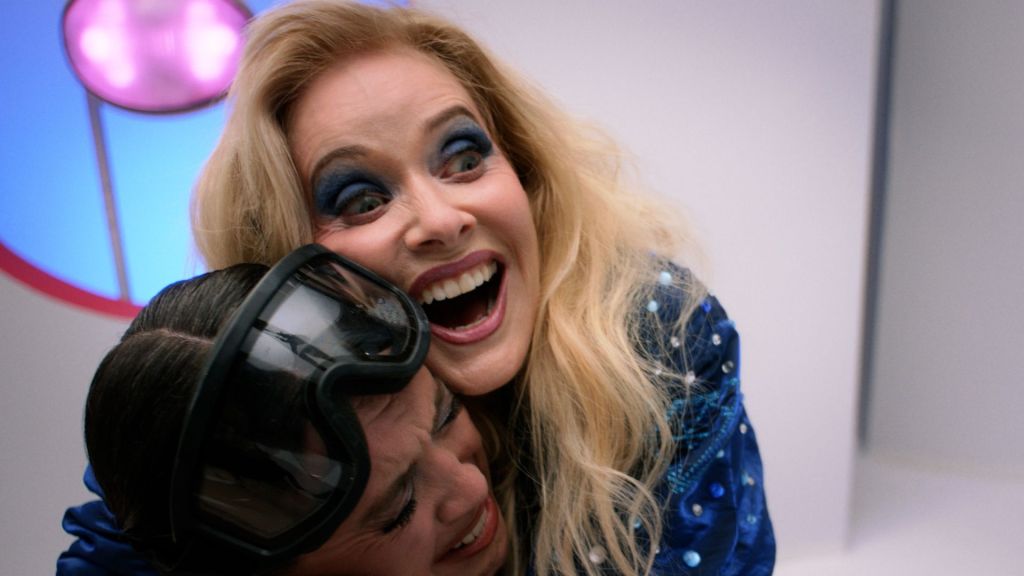
BEYOND FEST 2024: The Blue Diamond (2024)

ABOUT THE AUTHOR: Joseph Perry writes for the film websites Gruesome Magazine, The Scariest Things, Horror FuelThe Good, the Bad and the Verdict and Diabolique Magazine; for the film magazines Phantom of the Movies’ VideoScope and Drive-In Asylum; and for the pop culture websites When It Was Cool and Uphill Both Ways. He is also one of the hosts of When It Was Cool’s exclusive Uphill Both Ways podcast and can occasionally be heard as a cohost on Gruesome Magazine’s Decades of Horror: The Classic Era podcast.

For a fun bit of science fiction horror with a 1980s aesthetic and an offbeat humorous vibe, you need look no further than director Sam Fox’s short-film blast of oddness The Blue Diamond (U.S., 2024). You know you’re in for a good time when Barbara Crampton is part of the cast, and that’s just for starters.

Crampton portrays Jacqueline, the recently deceased leader of a self-help cult based around, of all things, skiing. Her adult daughter Alison (Desiree Staples) travels to the group’s ski lodge for her mother’s funeral, and is understandably uneasy around the cheerful cult members, who behave in, shall we say, unusual manners and who dress in colorful 1980s ski outfits. The mother and daughter had a contentious relationship, and the more Alison learns the secrets behind Jacqueline’s freaky following, the worse things get for her.

Fox invests her unique short with interesting family drama, an engaging air of mystery, and plenty of highly entertaining bizarreness — wait until you get a load of the dance number. Crampton and Staples play off of each other marvelously. The short’s color palette and music scream “Soooo eighties!” and Fox directs with panache. 

The Blue Diamond is currently on the film festival circuit and screened as part of Beyond Fest, which ran September 25–October 9, 2024 in Los Angeles. For more information, visit https://beyondfest.com/