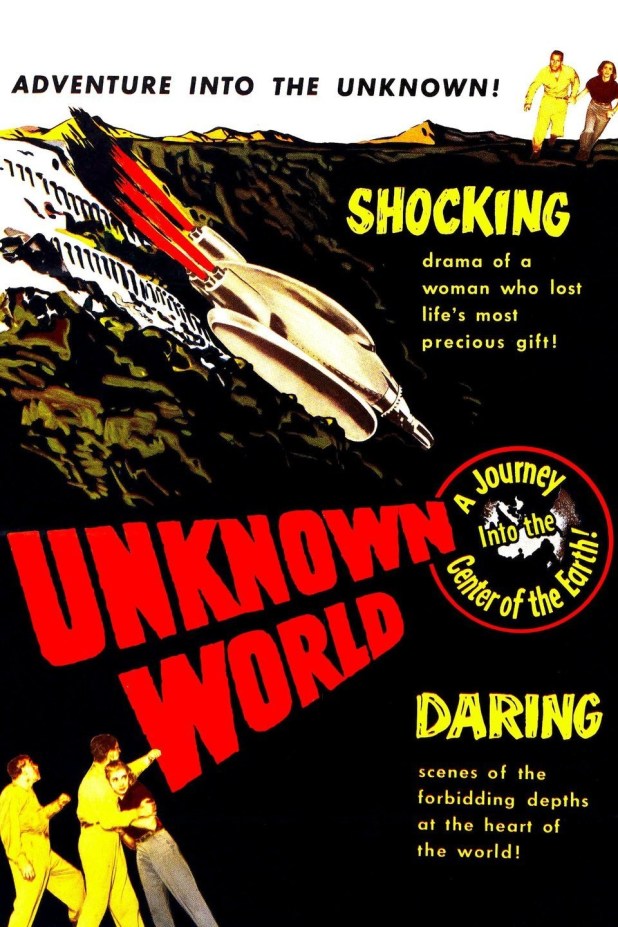
MILL CREEK SCI-FI CLASSICS: Unknown World (1951)

Unknown World was made by two Hollywood special effects men, Jack Rabin and Irving Block, who are two of the film’s three producers. It was directed by Terry O. Morse, who shot the American scene in Godzilla, and written by Millard Kaufman, who also wrote Bad Day at Black Rock and The Klansman.

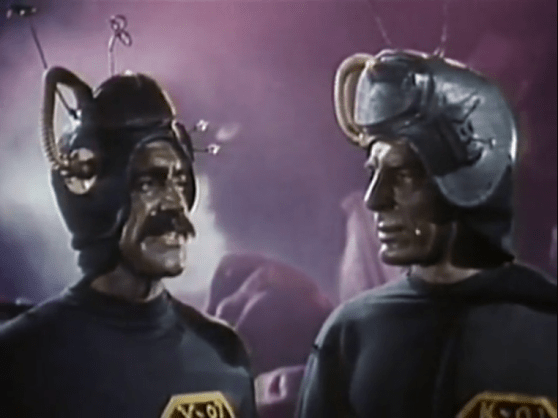
Victor Kilian, who plays Dr. Jeremiah Morley, lost an eye in a fight scene with John Wayne and was blacklisted for decades due to his political views, which is why he is uncredited in this. He’s invented a big tank that can drill into the center of the world, the Cyclotram, and has taken a crew of scientists through Carlsbad Caverns, Bronson Caves, Nichols Canyon and finally Pismo Beach to find a place where the human race can survive a nuclear war. Sadly, that unknown world makes everyone sterile.

Let me tell you, people were obsessed by the center of the Earth in 1951.

Have you ever heard of the Shavers?

Richard Shaver first encountered these creatures from Lemuria when the tools at his factory job started playing other peoples’ thoughts into his brain. He could also hear the Shavers torturing people underground. Now, you may say that he was mentally ill, but he also was writing to the pulp magazine Amazing Stories. He claimed to have discovered an ancient language he called Mantong. Editor Ray Palmer (the namesake of DC Comics’ Silver Age version of The Atom) thought that Shaver was onto something. He helped him write A Warning to Future Man,” where Shaver discussed cities within the Earth, populated by the good Teros and the evil Deros. This was turned into “I Remember Lemuria!” which appeared in the March 1945 issue of Amazing Stories. That issue instantly sold out and then something really odd began: thousands of letters began appearing saying that they’d had the same experiences as Shaver.

Amazing Stories‘ readership either loved or hated the Shaver stories. According to Wikipedia, “Palmer would later claim the magazine was pressured by sinister outside forces to make the change: science fiction fans would credit their boycott and letter-writing campaigns for the change. The magazine’s owners said later that the Shaver Mystery had simply run its course and sales were decreasing.”

That didn’t end the Shaver stories. Palmer credits these tales with the public fascination with UFOs. John Keel’s 1983 Fortean Times piece “The Man Who Invented Flying Saucers” claims that “a considerable number of people — millions — were exposed to the flying saucer concept before the national news media were even aware of it. Anyone who glanced at the magazines on a newsstand and caught a glimpse of the saucer-emblazoned Amazing Stories cover had the image implanted in his subconscious.” Indeed, Palmer was quick to defend the Shaver stories and claim that “flying saucers” were their validation.

Palmer’s newsletter after The Shavers were forced out of Amazing StoriesThe Hidden World.

Don’t have the box set? You can watch this on Tubi.
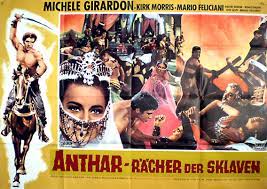
MILL CREEK SCI-FI CLASSICS: The Slave Merchants (1964)

In Italy, this was called Anthar l’invincibile but it was also released as Devil of the Desert Against the Son of Hercules in the U.S. when Embassy Pictures released it to American TV stations as part of their Sons of Hercules package. It also has the AKA titles Anthar the Invincible and Soraya, Queen of the Desert.

It’s directed by Antonio Margheriti and written by Guido Malatesta (Maciste Contro i Cacciatori di Teste), Arturo Rígel and André Tabet. It starts with the evil Ganor, Devil of the Desert (Mario Feliciani) murdering the sultan, nearly doing the same to his son Daikor (Manuel Gallardo) and forcing Princess Soraya (Michèle Girardon) into marriage.

She’s so upset that she jumps out a window, only to be saved by Anthar (Kirk Morris), who just as soon nearly loses her to slavery. Anthar is the level of another shirtless hero in a Margheriti movie, Yor Hunter from the Future, as he gets captured or screws up more often than any other peplum good guy.

The end is amazing, because Margheriti rips off — pays tribute to? — The Lady from Shanghai, which is pretty wild when you think about this movie’s budget and that it was a film that was following the peplum trend and it still has the energy to pull something from Orson Welles.

There’s also a battle between Anthar and a rhino. I mean, where else are you getting that?

Don’t have the box set? You can watch this on Tubi.
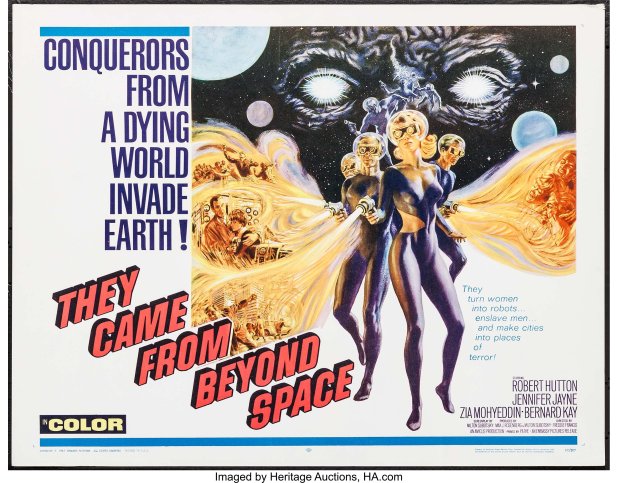
MILL CREEK SCI-FI CLASSICS: They Came from Beyond Space (1967)

This played double bills with — The Terrornauts. And much like that movie, this one has a great poster that advertises a movie I want to see more than the one that I actually watched.

Based on Joseph Millard’s The Gods Hate Kansas, this was directed by Freddie Francis for Amicus. He claimed that the studio spent all of the budget for this on the aforementioned The Terrornauts, leading to an inferior film.

This one is about the Master of the Moon (Michael Gough!) spreading a “Crimson Plague” that wipes out a whole bunch of humanity so that the government will send the bodies of the victims to the moon to hide what really happened to them, at which point he will bring them back to life and use them to fix his spaceship.

It’s a really complicated plan that gets torn apart at the end by hero Dr. Curtis Temple, who basically tells the Master that if he’d just asked for help, humanity would have done it. This causes one of the most powerful beings in the galaxy to just start crying.

Supposedly this was Anwar Sadat’s favorite movie. I only have IMDB as a source for this, but I find that absolutely hilarious and have decided that it must be true.

Don’t have the box set? You can watch this on Tubi.

MILL CREEK SCI-FI CLASSICS: Teenagers from Outer Space (1959)

“We are the angel mutants
The streets for us seduction
Our cause unjust and ancient
In this B film born invasion”

The Misfits “Teenagers from Mars”

Teenagers from Outer Space was written, produced and directed* by its star Tom Graeff, who sold the movie to Warner Brothers and made no money from it. It did play a double bill with Gigantis the Fire Monster, which is really Godzilla Raids Again.

Shortly after making this movie, Graeff decided to change his name to Jesus Christ II, saying that God had shown him truth and love. In his second — His second? — ad in the Los Angeles Times, Graeff even listed sermons at churches. However, when he applied to have his name legally changed, the Christian Defense League fought to keep that from happening. He also took out an ad in Variety in 1968 claiming that he’d sold a screenplay for more than anyone in the history of movies. After the ad appeared, he was publicly attacked by LA Times columnist Joyce Haber. Graeff claimed that Robert Wise and Carl Reiner were part of this movie, so Haber outed him as Jesus Christ II. Graeff’s career was over and a few years later, he would kill himself by carbon monoxide poisoning.

It also turned out that Graeff and David Love, who played Derek the alien in this, were lovers in a time where that could destroy careers.

This is somehow a movie about Thor — producer Bryan Grant, who had to sue to get his money for this film — searching for Gargons, a lobster creature that’s a delicacy across the galaxy. He also likes to shoot lasers at dogs. Meanwhile, the alien teen Derek, a member of the underground, escapes and runs wild on Earth.

This is the very definition of a movie made on a budget. Masking tape is used as costume decorations on surplus military uniforms for the aliens, while stock footage takes the place of special effects. The same skeleton is used for every dead body, a toy laser gun and a sound mixer — clearly labeled as a multichannel mixer — shows up as alien equipment and all of the music used comes from library cues. You’ll recognize it from other low budget films like Red Zone CubaThe Killer Shrews and Night of the Living Dead.

Yet Graeff was kind of a genius, as he invented a process called Cinemagraph that allowed him to pre-record some of the film’s dialog for several scenes and synch it with the actors reading their lines later.

Sadly, the stress of making this film, its failure and the dissolution of his friendship with the producer caused his decline.

*He also did the cinematography, special effects, and music coordination.

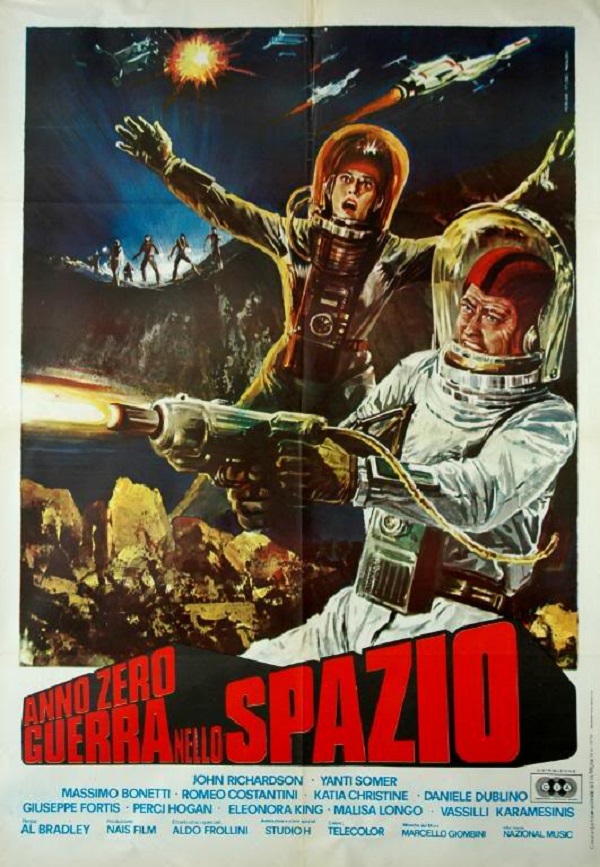
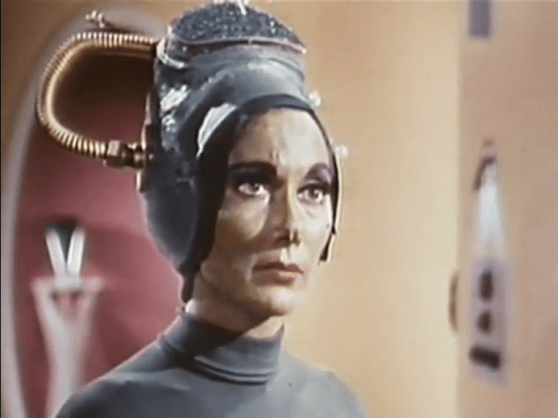
MILL CREEK SCI-FI CLASSICS: War of the Planets (1966)

In Italy, this movie was called I Diafanoidi Vengono da Marte (The Diaphanoids Come From Mars) and is part of the Gamma-One series. It follows Wild, Wild Planet (I Criminali della Galassia or Criminals of the Galaxy) and is followed by War Between the Planets (Il Pianeta Errante or Planet on the Prowl) and Snow Devils (La Morte Viene dal Pianeta Aytin or Death Comes From The Planet Aytin).

They still have New Year’s Eve in the future. That’s when space station Alpha-Two reports an issue and loses contact with headquarters. When a rescue squad arrives, they find green glowing energy monsters attacking and the entire Alpha-Two disappears.

Gamma-One Commander Halstead (Tony Russel) sends spaceships to investigate while on Earth, those same green aliens have possessed Captain Dubois. These aliens are Diaphanoids from the Andromeda Galaxy and need humans to exist.

Do you know how we deal with aliens like that? We blow them up real good and then reward Halstead with a private suite to have some zero gravity lovemaking with Lieutenant Connie Gomez (Lisa Gastoni, who was Maddalena).

Antonio Margheriti directed all of these movies and he’s doing what he can with the budget he’s given. Franco Nero shows up as one of the astronauts, Lieutenant Jake Jacowitz. The characters played by him, Russel, Gastoni and Carlo Guistini play the same characters from Wild, Wild Planet while Fiermonte replaces Umberto Raho as General Halstead.

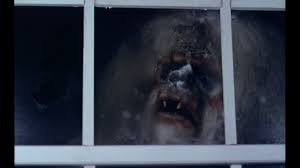
MILL CREEK SCI-FI CLASSICS: Snowbeast (1977)

ABOUT THE AUTHOR: Bill Van Ryn is the master of all things Groovy Doom and Drive-In Asylum. This is a movie that he loves and it’s so awesome to read what he has to say about why he feels the way that he does.

A popular vacation spot, desperate for tourist dollars, is suddenly beset by a beast that kills people. This coincides with the big breadwinning season of the vacation spot, leading the people in charge to hush up the deaths and avoid spooking the tourists into bolting. In the post-Jaws 1970s, there was no limit to the number of movies that came along with this exact same plot. One of the most successful imitators was William Girdler’s 1976 flick Grizzly, which placed the action in a park and substituted a bear for a shark. 1977 TV movie Snowbeast distills this formula even further, making the park a Colorado ski resort and changing the grizzly to a bigfoot monster.

Robert Logan and Sylvia Sidney play a grandson and grandmother who find their winter carnival interrupted by a monster that starts attacking and eating isolated people on the slopes — at one point, Logan says he can identify a victim’s body by looking at her face, and another character says “She doesn’t have it anymore.”  Sidney, of course, doesn’t want to admit that there is a problem at all, and advises Logan to keep it a secret. Bo Svenson is a former Olympic ski champion who has fallen on hard times and picks the wrong time to come to his old friend Logan for a job; I’m pretty sure entering into combat with a murderous bigfoot was not what he signed on for. Svenson’s wife, played by Yvette Mimieux, happens to be a former flame of Logan’s adding a love triangle to the story. Anyone who read the novel Jaws knows there was a love triangle in that story too, although it was not retained for the film version, so maybe nobody realized at the time just how deeply the screenwriter Joseph Stefano plunder the depths of Peter Benchley’s story.

Although the violence is subdued enough for a TV movie, there are some moments of dread to be found here, like when one character is trapped in a wrecked RV and can’t escape the oncoming monster, which just comes right for him and slaughters him immediately. There’s also a very silly moment when the creature shows up to interrupt a rehearsal for a pageant. It smashes a window, causes a little hysterical panic (including a hilarious reaction shot from Sylvia Sidney), and then proceeds back to where it came, stopping along the way to kill a helpless parent who was just waiting to pick up her daughter from the rehearsal.

Ultimately, camp is king in Snowbeast, and there is enough of that on hand to entertain this jaded viewer. Also, I enjoyed the outdoor photography, including some impressive tracking shots of characters skiing.

BONUS: Here’s the drink to go with it!

Snowballbeast

  • .25 oz. blue curaçao
  • 2 oz. vodka
  • 2 oz. vanilla rum
  • 2 oz. cream of coconut
  1. Shake with ice in your shaker, then pour into a chilled glass. Enjoy!

MILL CREEK SCI-FI CLASSICS: Santa Claus Conquers the Martians (1964)

ABOUT THE AUTHOR: Nate B. is the man who loved Cat Dancing and the boy with green hair. He has seen too many bad movies and not nearly enough good ones. He is the last active member of the Butch Cassidy and The Sundance Kids Fanclub, and he is currently working on writing a better bio.

Here we go…a jewel in the crown that is postwar Americana kitsch – Santa Claus Conquers the Martians. Released in 1964 at the height of the space race, this film captures that time period in all the right ways. Not only were we gonna beat the Russians to Mars, not only would we come into contact with alien life, but we would win them over to our side! Not with guns or diplomacy, but with a jolly fat man in a red suit who epitomizes consumerism and capitalism!  It’s the kind of naive innocence from a bygone era that’s charming in its sincerity, especially because it’s a children’s movie. Unlike countless other children’s movies, this one is watchable for the older crowd, too. For a different reason, of course.

The children of Mars are sad. So a daring group of Martians take it upon themselves to abduct Old Saint Nick and have him start up his toy building and distribution enterprise for them. They pick up two Earth children in the process, and after everyone gets back to Mars they have to contend with a disgruntled jerk Martian who wants to destroy Santa because he believes he’ll make the Martian children soft (of course).

Now, Santa Claus Conquers the Martians may not be quite as technically woeful as Ed Wood films, as the filmmakers had a budget that was higher than $20 (dig that retro-futuristic Martian home!). But it shares the same genuine earnestness to thrill and entertain, which I think is what helped keep it “in circulation” in cult film circles all these years, so to speak. It has a dismally low rating on both IMDB and Rotten Tomatoes, but what do they know? I can’t find it in me to dislike a movie with a line about how the UN plans to save Santa as “the lights burn until dawn.” Not to mention Torg the robot. Or the amazing Polar Bear. Or the stock footage sourced from some Air Force training film. Or the stupidly infectious theme song that opens and closes the movie. Hooray for Santy Claus!

The acting in this movie is surprisingly decent. John Call is as good as you can expect a Santa to be, smoking a pipe (!) and ho-ho-hoing all the way. The guy who plays Kimar is stoic and wooden, which ends up working for an alien character devoid of emotions. Voldar, the anti-Santa Martian mentioned earlier, is great too when he drips with contempt for human concepts like ‘fun’ and’ happiness’, plus he has a terrific mustache. And Droppo, is well, Droppo. Of course, one of the reasons this movie is known is that Pia Zadora is in it.  It was her debut, and for a long while, her swan song until she resurfaced in Butterfly, a movie not as infamous as this one but still reviled in its own right. Oh well, at least she has her cameo in Naked Gun 3 to fall back on. Actually, looking up Pia Zadora on IMDB, apparently she did a movie with Telly Savalas called Fakeout. Now there’s a film that’s going straight to the top of my watch list.

Some people have made it a tradition to watch Die Hard as part of their holiday season. If you’re one of those, why not go old school this year? Santa Claus Conquers the Martians is as low on budget as it is on logic but it’s a great example of why sometimes, despite all reasons not to, a movie just strikes a chord with you through sheer audacity. Plus, it’s in the public domain! There’s a lovely Blu Ray available, but I personally prefer the lower quality prints in this case. Maybe it’s because that’s how I first saw it, and maybe because it adds to the overall vintage vibe and fits the movie’s low budget roots.

MILL CREEK SCI-FI CLASSICS: Gammera the Invincible (1966)

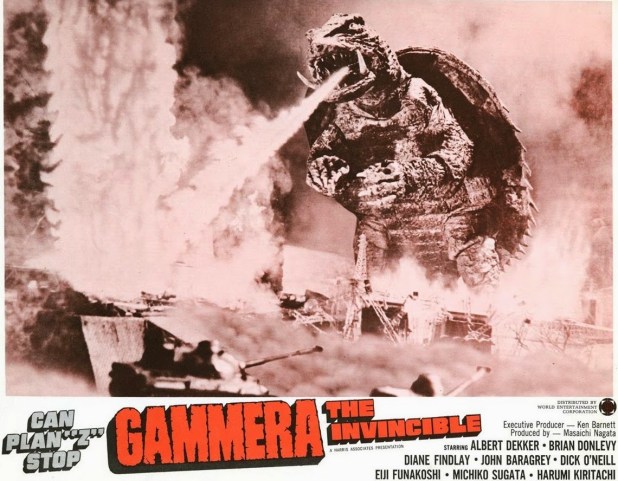
Directed by Sandy Howard and Noriaki Yuasa, this is the American version of Gamera. The footage was provided to Howard by Daiei and he was free to move it around however he wanted for Western eyes.

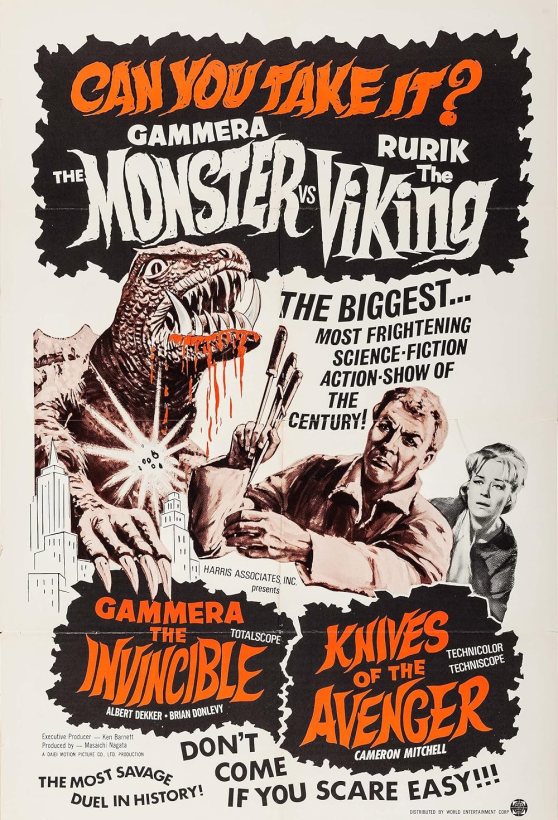
Gammera the Invincible was the only film in the original Gamera series to receive a theatrical release in the United States. It was sent to theaters and drive-ins by World Entertainment Corp. and Harris Associates, Inc. Amazingly, it played double features with Knives of the Avenger. The rest of the movies went directly to TV and were distributed by American International Television.

All of the romantic plots are forgotten, Gamera being from Atlantis is ignored and new footage of Gen. Terry Arnold (Brian Donlev) and the Secretary of Defense (Albert Dekker) has been added, so that it seems like Americans are in Japan. There’s also footage that wasn’t used in the original movie to add a little more to the movie.

I was just looking at the poster for this movie and had a sense memory. I was eight-years-old and it was a Saturday afternoon. Even on the weekends, I was nervous, anxious, worried for school to come Monday. I regularly got attacked on the playground and my teacher told me it was my fault. I talked too much. I studied too hard. And I never slept, which is where it all began, this lifelong insomnia. But Gamera was my escape. The idea of Gamera, a giant turtle throwing up fire, turning into a shell and spinning around, sure that might seem silly to you today. But I sat in class and knew I’d be beaten into unconsciousness in two hours and I’d just draw Gamera setting a city on fire. He and Godzilla and the rest of the monsters were so fantastic, so wonderful, so perfect, not like the kind of world where a little frightened fat kid threw up all night and tried to round off infinity and had OCD and could barely leave a room without trying to do even steps or flip light switches over and over again. I was a prisoner of my mind and all that helped me forget it, even if just for a few moments was movies like this. So here’s to you, Gamera. Thank you, Johnny Sokko. God bless you, well, Godzilla. I still never sleep, I have never stopped worrying, but you have always been here for me, smashing cities so that I can escape.

You can watch this on Tubi.

MILL CREEK SCI-FI CLASSICS: Queen of the Amazons (1946)

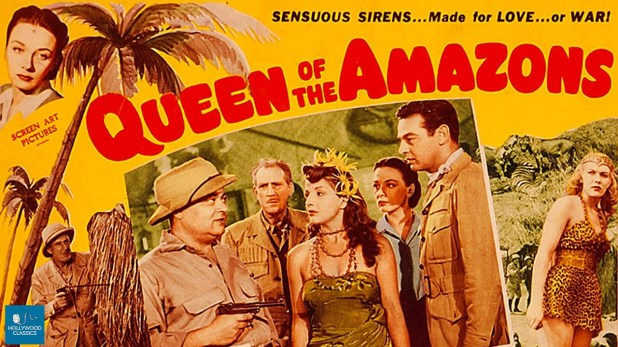
Directed by Edward Finnery and written by Roger Merton, this movie begins when Jean Preston (Patricia Morison) heads into the jungle to find her fiancee Greg Jones (Bruce Edwards). She goes to Akbar, India with Colonel Jones (John Miljan) who is Greg’s dad, along with Wayne Monroe (Keith Richards) and the Professor (Wilson Benge).

While Jean unpacks, Tondra (Vida Aldana) knocks on her door. She tells Jean that a safari was just attacked by a tiger and her husband Moya (Hassam Kayyam) lets slip that Jones was with ivory hunters. Then, he’s shot.

Everyone goes into the jungle on a boat along with Gary Lambert (Robert Lowery), who believes that women are bad luck. That is, until Jean shows him her gun skills. They also have a safari cook named Gabby (J. Edward Bromberg) who has a pet monkey. They’re out to stop the ivory poachers and hopefully find Jones.

It turns out that Jones is now with Zita, the queen of the Amazons (Amira Moustafa) but that’s fine. Everyone is swapping in the vines so to speak and Jean and Gary have obviously become a couple. For 1946, everyone is surprisingly cool with this switchery of couples. Way to be progressive.

Don’t have the box set? You can download this from the Internet Archive.

MILL CREEK SCI-FI CLASSICS: Prehistoric Women (1950)

Gregg G. Tallas started his career working with Fritz Lang, which does not explain how his career took him to some crazy places, such as Espionage in TangiersAssignment Skybolt and the movie he’d make 12 years later, Cataclysm, which is, of course, “The Case of Claire Hansen” in Night Train to Terror.

So yeah. He made this bit of insanity too, which stars 1950’s tabloid star Laurette Luez, who was also in D.O.A. She’s Tigri in this film, one of the Amazons who hate all men. That said, they still need to kidnap them and use them to get pregnant, but otherwise, they hate the gender.

You know who wins them over? Engor.

He’s played by Allan Nixon, speaking of tabloid stars. He became an informant for Confidential magazine after years of being out of control, getting arrested for drunk driving and getting in fights. And, well, pure crazy stuff. That’s because in 1958, he got in a heck of a battle with his third wife Velda May Paulsen after she visited her ex-boyfriend Burt Lancaster in the hospital. He hit her, she stabbed him with the kitchen knives he gave her for Christmas. He didn’t press charges, they got back together and she died before the year was over because of burns she suffered in an explosion. Nixon — a Ron Ormond star — would eventually become a writer under his own name and using the pen names Nick Allen and Don Romano for the Shaft paperbacks.

Engor is such a man here that not only does he figure out fire — screw you Prometheus — he also kills a big lizard. After that, all the ladies — who include Joan Shawlee from The Apartment and the vamp in Singin’ In the Rain‘s Judy Landon — decide that it’s time to get married.

There’s also a commentator who says inane things like, “And Engor called it Firee, which was his word for Fire.” He’s really the best thing in this whole movie.

Don’t have the box set? You can watch this on Tubi.
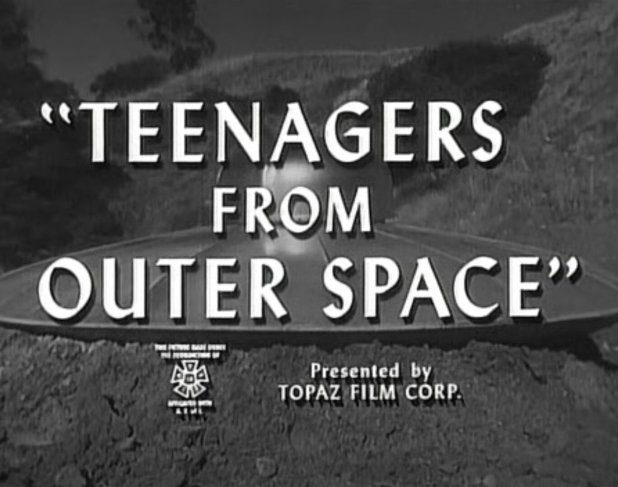
EDITOR’S NOTE: Thanks to angryoldguy for letting me know I was using the poster from the 1968 movie, not the 1950 movie.