B & S About Movies podcast Episode 104: Sergio Martino

Yes, everyone can talk about All the Colors of the Dark and Torso, but let’s get deep into Sergio Martino with four of my favorite weird picks from him.

Uppercut Man finds Sergio in Miami, making a boxing movie that isn’t like any other. Ernest Borgnine, Daniel Greene, Mary Stavin, Giuliano Gemma…Crud Buddies have this posted on YouTube.

American Rickshaw is the most perfect of all late Martino movies: shower sex with the jeans on, rickshaws in Miami, Donald Pleasence as a faith healing warthog…get it from Cauldron Video.

Graffiante desiderio has Sergio going back to the Giallo but also incest and a dummy drop ending. Craving Desire is hard to find but if you’re ready to infest your computer with viruses, go here.

Un orso chiamato Arturo has George Segal and Carol Alt. Yes, in a Sergio Martino movie. It’s on YouTube in Italian, so learn a new language.

Is there a secret prize for finishing this episode? Did I compose a song for it? What are you waiting for? Go listen!

You can listen to the show on Spotify.

The show is also available on Apple Podcasts, iHeartRadio, Amazon Podcasts, Podchaser and Google Podcasts

Important links:

Theme song: Strip Search by Neal Gardner.

Donate to our ⁠⁠⁠⁠⁠⁠⁠⁠⁠⁠⁠⁠⁠⁠⁠⁠⁠⁠⁠⁠⁠⁠⁠⁠ko-fi page⁠⁠⁠⁠⁠⁠⁠⁠⁠⁠⁠⁠⁠⁠⁠⁠⁠⁠⁠⁠⁠⁠⁠.

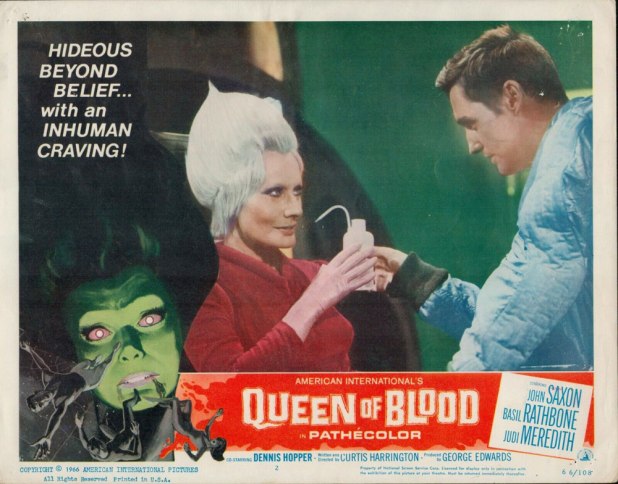
CHILLER THEATER MONTH: Queen of Blood (1966)

EDITOR’S NOTE: Queen of Blood was on Chiller Theater on Saturday, December 17, 1966 at 11:20 p.m. and Saturday, May 17, 1969 at 11:30 p.m.

Based on the screenplay for the Russian movie Mechte Navstrechu (A Dream Come True) and utilizing the special effects footage from that film and Nebo Zovyot (Battle Beyond the Sun), this American-International Pictures release, directed by Curtis Harrington, likely had some influence on Alien.

Harrington agreed, saying that Ridley Scott’s movie was a “greatly enhanced, expensive and elaborate” take on Queen of Blood.

This movie believed, and it made sense at the time, that by 1990, humans would be traveling in space and have united to form the International Institute of Space Technology. Astronaut Laura James (Judi Meredith) hears strange signals from space, messages that Dr. Farraday (Basil Rathbone) believes are from an alien race sending an ambassador to Earth, yet the ship has crashed on Mars.

The ship Oceano is sent to rescue the ambassador, but only one dead alien is aboard. They decide that a rescue ship must have picked up the crew, but when they follow what they think is the rescue ship, they find only one being on board, a green-skinned alien (Florence Marly, who made a short sequel to this movie called Space Boy! and is also in The Astrologer) and several eggs.

She refuses to eat food, won’t let them take a blood sample and when left alone with an astronaut named Paul (Dennis Hopper), she hypnotizes him and drains his blood. Soon, she takes over most of the male crew members and plans on making her way to our planet, with only Laura and Allan Brenner (John Saxon) left to oppose her.

This would be the first movie that Harrington would work with George Edwards (as a line producer for this movie). They met when Edwards produced a stage production of Tennessee Williams’ The Glass Menagerie, and this movie impressed Universal enough that they hired Harrington and Edwards to make Games.

UNSUNG HORRORS HORROR GIVES BACK 2025: Cute Devil (1982)

Each October, the Unsung Horrors podcast does a month of themed movies. This year, they will once again be setting up a fundraiser to benefit Best Friends, which works to save the lives of cats and dogs across America, giving pets second chances and providing them with happy homes.

ABOUT THE AUTHOR: Adam Hursey is a pharmacist specializing in health informatics by day, but his true passion is cinema. His current favorite films are Back to the FutureStop Making Sense, and In the Mood for Love. He has written articles for Film East and The Physical Media Advocate, primarily examining older films through the lens of contemporary perspectives. He is usually found on Letterboxd, where he mainly writes about horror and exploitation films. You can follow him on Letterboxd or Instagram at ashursey.

Today’s theme: The Sweetest Taboo!

Hold onto your penmanship medals! Nobuhiko Obayashi (Hausu) brings us a version of The Bad Seed, with a child perhaps even more devious than Rhoda Penmark.

I would say that The Bad Seed was a gateway horror film for me, but I was born in the 1970s. The idea of gateway horror had not been invented. Or even considered. One of my earliest memories is watching Carrie on our little television in the trailer we were living in. The pig’s blood dropped and I ran out of the room. Carrie was aired on CBS in 1978. Sure, they made a few edits, but a 3-year-old me would not have been able to notice. The real question is why would my parents let me watch it in the first place?

Sort of the blessing and the curse of being Generation X. I wouldn’t trade it for anything. My mom loved Alfred Hitchcock and she would often tape his films or television show any chance she got, and we would watch it on the weekends (along with a week’s worth of All My Children). But the film I most fondly remember is The Bad Seed. Taped off of WGN, complete with commercials for K-Tel records and Empire carpet (588-23 hundred Empiiiiire), we would watch it all of the time. Oh, how I wish I still had that old VHS tape! The Bad Seed had so many aspects that fascinated me. I was too young to understand the concept of translating a stage play to film. We do not see the evil Rhoda commits. We just hear about it. It might have made the idea of such an evil child more effective. Also, I’m still not sure what excelsior is exactly. But apparently, it is highly flammable.

As much as I love The Bad Seed, it is possible that Obayashi’s version is superior in many ways. He totally cuts out the psychological mumbo jumbo that drags down a significant portion of the original film. Our child killer here, Alice, is just a sociopath from the beginning. Is it possible that the suicide of her father is the root cause? Who cares? It doesn’t matter. We are just here to watch Alice bludgeon her teacher to death in order to get a prized doll. 

Obayashi also deviates from the original story by bringing in an aunt as the main protagonist. Ryoko ends up in a mental institution after believing she has caused her boyfriend’s death. I mean, she did wish death upon him as he was walking out the door, only to be struck down by a car. On that same day, Ryoko’s sister Fuyoko is getting married (why Ryoko isn’t there is not explained, other than she is studying music in Vienna). After Alice asks Fuyoko if she can have her veil when she dies, Fuyoko says yes, not expecting to be violently tossed out of a window minutes later. Years pass, and eventually Ryoko is convinced she was not responsible for the death of her boyfriend. Her brother-in-law (I guess—he was only legally married to her sister for mere minutes—talk about early release) asks Ryoko if she would come and be governess to Alice, sweet Alice. She does, but quickly begins to believe that Alice is responsible for the mysterious deaths happening around the family.

We do not approach the insanity that is Hausu of course, but Obayashi does have plenty of tricks up his sleeve. He foreshadows this glass vase so hard that you know something is going to happen with it. But I could have never expected what actually does happen. I thought “there it is”, immediately thinking that it is something that would have easily happened to one of the girls in Hausu.

The Leroy character, the guy who knows the truth but would have difficulty proving it, is even scummier than the guy in The Bad Seed. And Alice does not need to rely on him sleeping on a bed of excelsior to ignite those flames. 

All around, a great companion piece to both Hausu and The Bad Seed. I could watch both of those films back-to-back right now. Similar to other remakes of The Bad Seed in the United States, Cute Devil was made for television. I seem to be stacking up MFTV movies this month. A seemingly endless fount of goodness that unfortunately does not seem to exist anymore. 

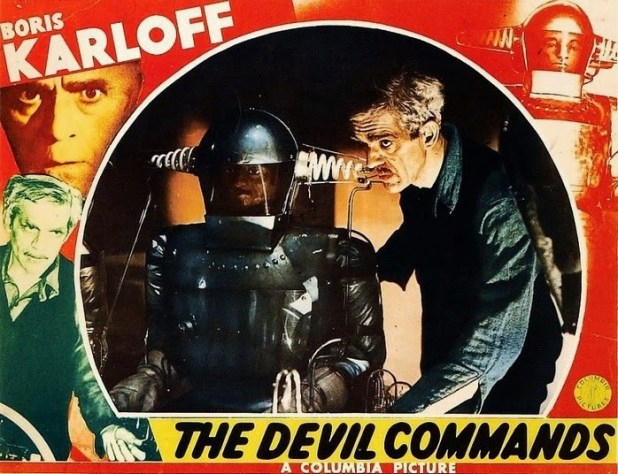
CHILLER THEATER MONTH: The Devil Commands (1941)

EDITOR’S NOTE: The Devil Commands was on Chiller Theater on Saturday, September 2, 1967 at 11:20 p.m.

Director Edward Dmytryk is best known for his film noir movies, winning Oscars for directing Crossfire and The Caine Mutiny and being named as one of the Hollywood Ten. This group of blacklisted film industry professionals refused to testify to the McCarthy-led House Un-American Activities Committee and, as a result, served time in prison for contempt of Congress. In 1951, however, Dmytryk testified to the HUAC and named Arnold Manoff, Frank Tuttle, Herbert Biberman, Jack Berry, Bernard Verhous, Jules Dassin, Michael Gordon and 15 others. He claimed that the Alger Hiss case, which found Communist spies in the U.S. and Canada, and the invasion of South Korea changed his mind. That said, he probably also wanted to improve his own career.

The screenplay was written by Robert Hardy Andrews and Milton Gunzburg, the inventor of the Natural Vision stereoscopic 3-D system, based on a story by William Sloane, who also wrote To Walk the Night.

Boris Karloff plays Dr. Julian Blair, a brain wave researcher, who loses his wife Helen (Shirley Warde) when she dies in a car crash. He becomes obsessed with communicating with her in the world beyond death. He is assisted by his butler, Karl (Ralph Penney), and a Spiritualist medium named Mrs. Walters (Anne Revere), whose influence over the once logical man worries his research assistant, Richard (Richard Fiske), and his daughter, Anne (Amanda Duff).

I enjoy how, in these Columbia films, Karloff is the villain, yet there are reasons why he has gone wrong. It’s an intriguing way of approaching an antagonist, and Karloff makes each of them their own unique version of an archetype.

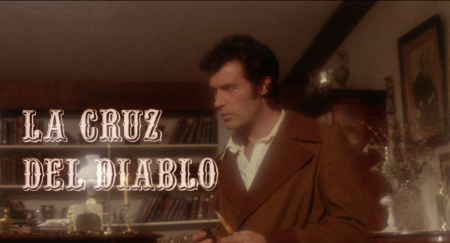
THE IMPORTANT CINEMA CLUB’S SUPER SCARY MOVIE CHALLENGE DAY 9: Cross of the Devil (1975)

October 9. A Horror Film Directed by John Gilling

John Gilling’s first film since leaving Hammer Films in 1967, La Cruz del Diablo was written by Paul Naschy and based on three short stories by Gustavo Adolfo Bécquer. He gave the project to writer Juan Jose Porto, who cut him out, as did Gilling, who didn’t like his acting. He won a lawsuit and his name is on the movie, but he felt that what he wanted to make had been ruined.

Alfred Dawson (Ramiro Oliveros) has been dreaming of the Knights Templar attacking a woman. Is it all the drugs he smokes or is this a vision of his sister Justine being in danger? Well, by the time he arrives in Spain, she’s dead, and now he has to go to the ruins of the Templar castle, which does not seem like a good idea. There, he meets the woman from his dreams, Beatriz (Emma Cohen) and a magic sword.

This doesn’t have the lunacy of a Blind Dead movie, but it does have some drone doom going for it. I wanted to love it, but just liked it. That said, I don’t hate the time I spent watching it.

You can watch this on Tubi.

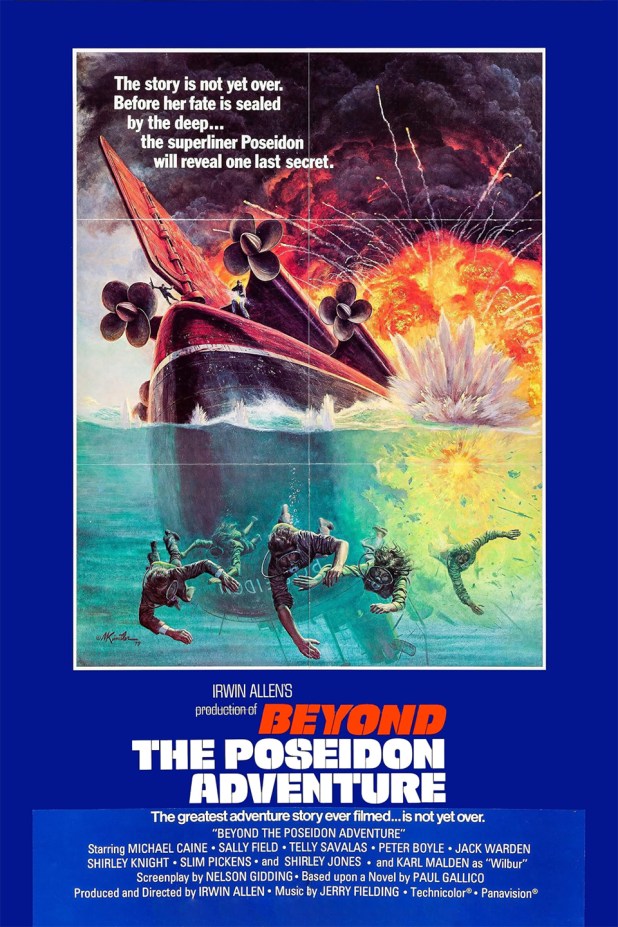
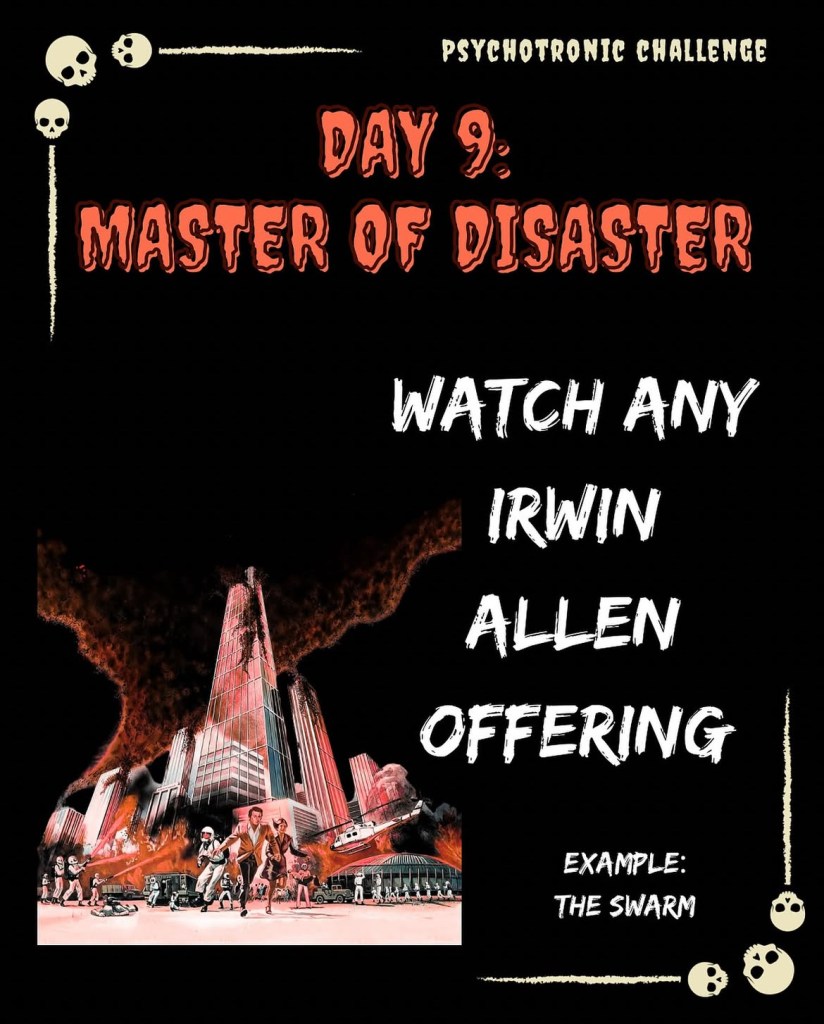
2025 Scarecrow Psychotronic Challenge Day 9: Beyond the Poseidon Adventure (1979)

9. MASTER OF DISASTER: Watch any Irwin Allen offering.

The crew of the tugboat Jenny — Captain Mike Turner (Michael Caine), First Mate Wilbur Hubbard (Walter Matthau) and passenger Celeste Whitman (Sally Field) — spot the rescue helicopter saving the Poseidon passengers from the first movie, just in time to claim salvage rights.

They’re soon joined by Dr. Stefan Svevo (Tally Savalas), a Greek Orthodox missionary here to save anyone on board. Poor Stella Stevens, we see her dead body from the first movie as the teams cut through the hull. Somehow, more people have survived than the first movie, as we have ship nurse Gina Rowe (Shirley Jones), wine steward Dewey “Tex” Hopkins (Slim Pickens), elevator operator Larry Simpson (Mark Harmon), Frank and Theresa Mazzetti (Peter Boyle and Angela Cartwright), Harold and Hannah Meredith (Jack Warden and Shirley Knight), and Suzanne Constantine (Veronica Hamel).

The truth is that Stevo is on board to take plutonium and he soon kills one of his own employees, Suzanne, when she tries to reveal the plan. As you can imagine, hardly anyone survives, seeing how this is an Irwin Allen movie.

Soon after the first film came out, Allen said there would be a sequel in which the survivors would take part in a hearing on the disaster in Austria. While on a train to the hearing, a miles-long mountain tunnel would collapse, leaving the survivors of the train trapped inside. Could people have worse luck?

Roger Ebert said, “But what did we really, sincerely, expect anyway, from a movie in which Karl Malden plays a character named Wilbur, and Slim Pickens plays a character named Tex? If you can think of a single line of dialogue that Slim Pickens, as Tex, wouldn’t say in Beyond the Poseidon Adventure, please do not miss this movie, which will be filled with amazements and startling revelations.”

It’s mostly Michael Caine shouting at Sally Field, who loves him anyway.

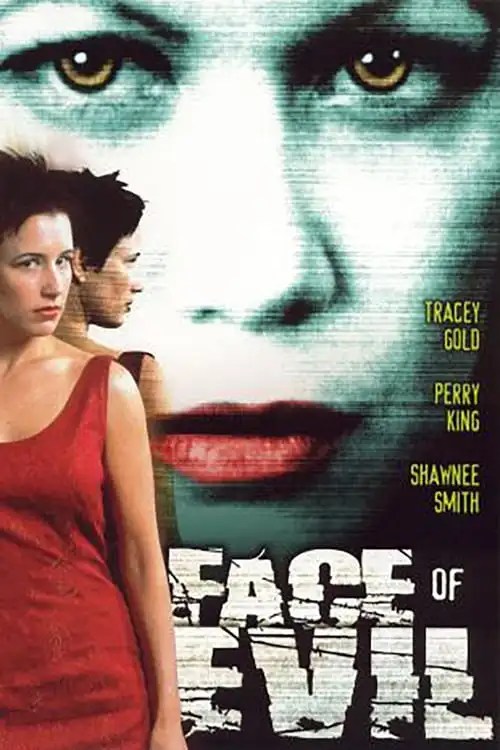
UNSUNG HORRORS HORROR GIVES BACK 2025: Face of Evil (1996)

Each October, the Unsung Horrors podcast does a month of themed movies. This year, they will once again be setting up a fundraiser to benefit Best Friends, which works to save the lives of cats and dogs across America, giving pets second chances and providing them with happy homes.

Today’s theme: Made for TV Movie

Ah man, Tracy Gold was always a good girl until this movie. She plays Darcy Palmer, an artist who loses her mind, leaves her man at the altar, takes all his money, heads to New York City and kills a college student named Brianne Dwyer (Mireille Enos). Then, she starts life all over again as a college student in New Hampshire.

She soon becomes friends with Jeanelle Polk (Shawnee Smith) and goes home to meet her father, Russell (Perry King). Before you know it, she has him fooled, and she’s cutting his ponytail off in the shower.

Directed by Mary Lambert and written by Gregory Goodell (lots of TV movies, but also the director and writer of the video nasty Human Experiments), this has the lovely daughter of TV’s Growing Pains stuffing dead bodies into her suitcase, ruining eyes with acid eyedrops and even trying to stab our good girl with scissors. She’s killed ten people in six cities and keeps changing who she is, somehow staying ahead of cops. If this were a Giallo, they’d be amongst the dumbest of all movie police, as a festering suitcase filled with a dead body can stay in a dorm for days and then at a construction site for months and no one notices.

Perry King also wears a jaunty scarf for the scene where Gold bites him and screams, “I’m an artist!”

Also: Total square up reel of all her crimes while Perry King is like, “I guess we were lucky.” And yet, he slept with her. I’m sure it was amazing.

You can watch this on Tubi.

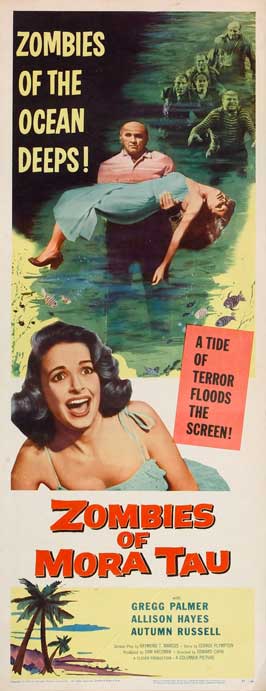
CHILLER THEATER MONTH: The Zombies of Mora Tau (1957)

EDITOR’S NOTE: The Zombies of Mora Tau was on Chiller Theater on Saturday, August 26, 1967 at 11:20 p.m. and Saturday, August 8, 1970 at 11:30 p.m.

You have to feel for the deep-sea divers in this movie. Sure, they have to deal with their boss, wealthy businessman George Harrison, but now to get the diamonds out of the wreck of a ship that sank sixty years ago, they have to deal with not only a curse, but the ship’s undead zombie crew, who must remain there until the curse is removed or the diamonds are destroyed. This is getting into some Return of the Curse of the Creature’s Ghost-like shenanigans, right?

Somehow, fate has decreed that I have watched multiple Alison Hayes films lately. Between Gunslinger, The UnearthlyThe Crawling Hand, and this movie, I have really come to enjoy seeing her show up. Marjorie Eaton — who was the physical actress who played Emperor Palpatine in the non-special editions — is also on hand.

The prologue to this movie says, ‘In the darkness of an ancient world — on a shore that time has forgotten – there is a twilight zone between life and death. Here dwell those nameless creatures who are condemned to prowl the land eternally — the Walking Dead.” That’s right, this movie used Twilight Zone two years before Rod Serling and 46 years before the comic book. And wow, zombies sure got different a decade or so later.

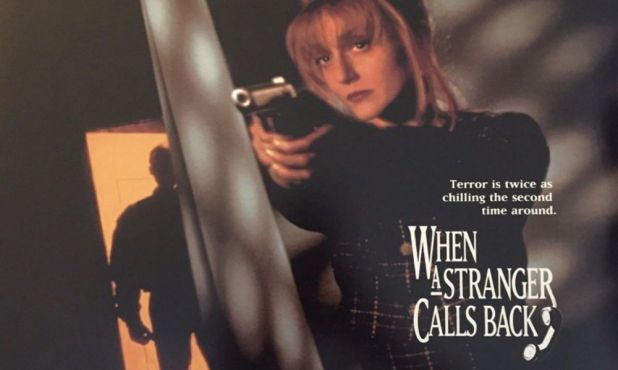
UNSUNG HORRORS HORROR GIVES BACK 2025: When a Stranger Calls Back (1993)

Each October, the Unsung Horrors podcast does a month of themed movies. This year, they will once again be setting up a fundraiser to benefit Best Friends, which works to save the lives of cats and dogs across America, giving pets second chances and providing them with happy homes.

ABOUT THE AUTHOR: Adam Hursey is a pharmacist specializing in health informatics by day, but his true passion is cinema. His current favorite films are Back to the FutureStop Making Sense, and In the Mood for Love. He has written articles for Film East and The Physical Media Advocate, primarily examining older films through the lens of contemporary perspectives. He is usually found on Letterboxd, where he mainly writes about horror and exploitation films. You can follow him on Letterboxd or Instagram at ashursey.

Today’s theme: Made for TV Movie!

“And maybe for the college boys, the truest mirror is the toilet bowl staring back at them in the morning after a toga party.”

This insightful line of dialogue is “uttered” by a faceless ventriloquist’s dummy during a set at a strip club in When a Stranger Calls Back, a copy/paste sequel produced by Showtime in 1993.

Starting with a revival of Cat on a Hot Tin Roof in 1984, Showtime produced many original films during a run that lasted until around 2007. Never reaching the acclaim of HBO Films, and never reaching the depths of Cinemax Friday After Dark programming, Showtime was able to carve out an interesting middle ground, particularly in the horror genre. The first film that comes to my mind when I think about Showtime is John Carpenter’s Body Bags. But Showtime was also the home of films such as Psycho IV: The Beginning, The Birds II: Land’s End, as well as Jim Wynorski’s remake of The Wasp Woman. Pursuing the list of films now, I feel the need to find some of these potential hidden gems. Once this month is over, I might have to seek out The Tiger Woods Story, a 1998 film directed by LeVar Burton, starring Keith David as Tiger Woods’ dad. 

When a Stranger Calls Back gets the gang from the first film back together. Carol Kane as Jill, the babysitter who was tormented in the original movie, but she has since turned her trauma into a career as a counselor, while finding time to take self-defense classes on the side. Charles Durning as Detective John Clifford, using his skills to track down men who harass babysitters (a very niche skill set). And director Fred Walton. Not much to say about Walton other than he also directed April Fool’s Day, followed by a string of made-for-TV films, including a remake of William Castle’s I Saw What You Did.

Not only did the director and main stars come back, but the basic template from the first film returns. The most often heard complaint about When a Stranger Calls is that the film loses steam after that iconic opening sequence. But what film could possibly match the energy and suspense crafted in that first 20 minutes? People rarely talk about how great the last 15 minutes are as well. Truly scary.

While the bookends of When a Stranger Calls Back does not match the intensity of the original, it makes a decent effort. We get a legendary scream queen as the tormented babysitter (Jill Schoeien), and a killer who is creepier than the one in the first film. Kind of a Francis Dolarhyde meets Peeta from The Hunger Games. And I think that the second act here is more interesting than the one in the first film. Of course having more Carol Kane is always a good idea in my book. Watching Carol Kane’s stunt double do a jumping scissors kick against her attacker? Peak cinema. 

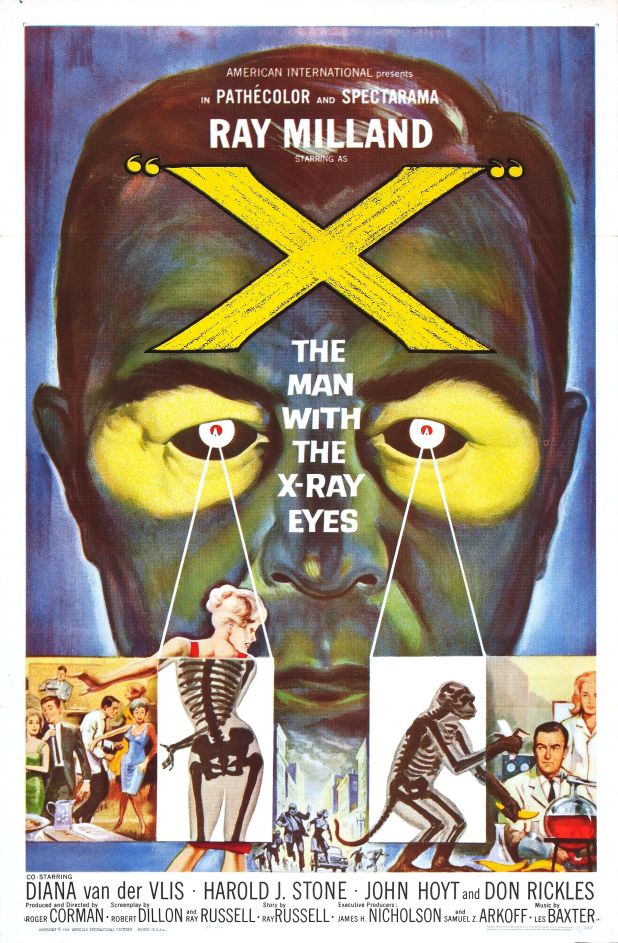
CHILLER THEATER MONTH: X: The Man with the X-ray Eyes (1963)

EDITOR’S NOTE: X: The Man With the X-Ray Eyes was on Chiller Theater on Saturday, February 28 at 1:00 a.m. and  October 31, 1970 at 11:30 p.m.

Roger Corman originally made this movie about a scientist, but that was “too obvious” so he changed the lead to be “a jazz musician who had taken too much drugs, and I get into about four or five pages, and I thought, “You know, I don’t like this idea”, and so I threw the whole thing out, and started back and went back with the scientist, which was the original idea.”

Shot in three weeks on a budget of approximately $300,000 — that seems luxurious for Corman — and played a double feature with Dementia 13.

It stars Ray Milland as Dr. James Xavier, who is trying to expand the range of vision, allowing humans to see ultraviolet and X-ray wavelengths, and even beyond. Being a somewhat mad scientist, he tests the eyedrops on himself and soon can see more than just through clothes; he can discern shapes, colors, and forms even when his eyes are closed, as his eyelids cannot block the visions.

After a friend is killed by accident, he heads for Vegas, where he wins money at casinos and becomes part of a sideshow. The problem is that by this point, his eyes are entirely black, and he can’t shut off the visions that allow him to see into the heart of the universe.

Finally, a revival church tells him that if his eyes offend him, he should pluck them out. So he does! What an ending!

I’m not going to spoil it for you by telling you how awesome Roger Corman is.

In Danse Macabre, Stephen King claimed that there was an unshot ending with Milland screaming “I can still see” after gouging out his eyes. Corman replied by saying, “Now it’s interesting. Stephen King saw the picture and wrote a different ending, and I thought, “His ending is better than mine.”

With significantly minor roles for Don Rickles and Dick Miller, this movie moves so fast and packs in so much that it’s nearly perfect. The effects may be dated, but who cares? They work. The whole movie just works.

You can watch this on Tubi.