EDITOR’S NOTE: Cinematic Void will be playing this on Thursday, Jan. 9 at 7:30 PM at the Little Theater in Rochester, NY (tickets here). For more information, visit Cinematic Void.
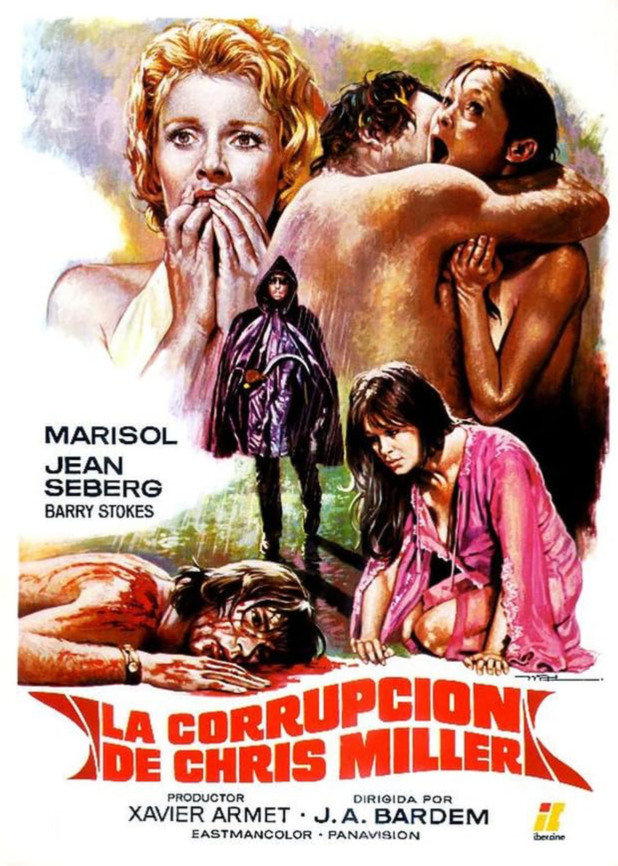
Chris Miller (former Spanish child star Marisol; when she married dancer Antonio Gades, Fidel Castro acted as their godfather) lives with her stepmother Ruth (Jean Seberg, the haunted and doomed beauty who was also in Breathless and Saint Joan). The loss of Chris’ father has damaged both of them, so when a drifter named Barney (Barry Stokes, Prey) shows up, it changes their lives. Maybe not for the better, what with a killer slicing his way through the village…
This Spanish giallo was directed by Juan Antonio Bardem (yes, the uncle of Javier) who also made Death of a Cyclist and wrote A Bell From Hell. It was written by Santiago Moncada, who was also the pen behind Hatchet for the Honeymoon, Ricco and The Fourth Victim.
Ruth blames Chris for her husband leaving, so she uses Barney to seduce her stepdaughter, who is recovering from the dual loss of her father and being assaulted at school. Her plan? When daddy comes home, he won’t love his daughter much any longer because she’s no longer a virgin. Meanwhile, the killer keeps on killing, including a scene where he dresses like Charlie Chaplin.
Also released as Behind the Shutters Sisters of Corruption and , this movie is also a proto-slasher, rife with bloody murders, including a moment when the rain slicker-covered villain kills an entire family in slow motion.
This is a film that deals as much with trauma as murder, that has the sound of running water causing horrifying flashbacks and has no easy ending for anyone in the film, as the guilt of the killings won’t disappear with the death of any suspect.
Vinegar Syndrome recently released this on blu ray, complete with a newly scanned 4K capture from the original 35mm negative. That version will be playing at The Little.
Jade brings together the Dracula and Frankenstein of sleaze, as Robert Evans produces and Joe Eszterhas writes with William Friedkin there to direct — and change the script so many times that Eszterhas needed a $4 million payoff from Paramount to keep his name on the movie. Friedkin later claimed he let everyone down on this movie, including his wife, producer Sherry Lansing. As for what the actors thought, Michael Biehn noted, “I didn’t realize until the read-through that I was the bad guy in it.”
It’s also one of the last roles that Linda Fiorentino would take on, finally ending her on-screen career in 2009, a star with such promise after The Last Seduction. Was it that she was hard to work with? Did Kevin Smith sabotage her career after Dogma was challenging to make? And did people think she was Bridget, her The Last Seduction character?
When asked by Roger Ebert why she always played terrible girls, she replied, “I have this terminal condition called bitchiness, right?” She continued, “Maybe others see what I don’t necessarily see in myself. And a lot of it in Hollywood concerns what you look like. I’m dark, my eyes are dark, and my voice is deep, and how the hell could I play a Meg Ryan role, the way I look.” But then again, she also dated Hollywood fixer and private investigator Anthony Pellicano and FBI agent Mark Rossini, which was rumored to be her using favors to aid in the defense of her actual boyfriend, Pellicano. Was life imitating art imitating life? Rossini used government computers to get case info for Pellicano’s lawyers, which meant he eventually pleaded guilty to illegally accessing FBI computers and was quit/fired from the Bureau. But hey, Linda Fiorentino.
Back to that Ebert interview. It’s intriguing how she pushed for more from this movie: When we were doing Jade, the way Joe Eszterhas wrote the sex scenes was so dated and boring, and I just thought, I can’t do this. And there was a lot of nudity, and I thought, we’ve gotta come up with something a little more interesting to keep me going here. So I did a little random research, you know, and I asked a couple of women I had known who had affairs with men who were very powerful – and invariably those men in powerful positions wanted to be dominated by the woman at the end of the day. They wanted to be the submissive party in the sex act, and it correlated with the level of power. Maybe men with no power want to dominate their women. I just thought, well, this is interesting. And it’s the same for women: Women want to be the dominant party because that’s their fantasy, and the male fantasy is to be the submissive party. And so we got into that in Jade.”
As for her male counterpart in this movie, David Caruso left NYPD Blue after the show’s second season because he wanted a film career. Critics and the media were ready to attack him for that hubris, especially after his first post-TV film, Kiss of Death, also bombed.
And when it comes to Eszterhas, after making $3 million for Basic Instinct, he was due for a fall, which was either going to be this movie, Sliver, Showgirls or all three. He got $1.5 million for this (and $4 million for his next film One Night Stand).
Friedkin was also struggling, as his last two movies were the three demoness movies The Guardianand Blue Chips. In his book The Friedkin Connection, he said that this movie had “a terrific cast—a wonderful script. Great locations. How could it miss?”
Caruso is Assistant District Attorney David Corelli, who visits the murder scene of Kyle Medford, a wealthy businessman who set up several rich and powerful men like Governor Lew Edwards (Richard Crenna) with gorgeous women, including Patrice Jacinto (Angie Everhart). Corelli is told by Edwards and his henchman Bill Barret (Holt McCallany, who most people know from being on Mindhunter, but come on, he got laid and paid as Sam Whitemoon in Creepshow 2) never to let this info out, seeing as how his brakes are soon cut, that’s to be considered a warning.
The seductress who gets the most requests goes by the name of Jade. Seeing as how Anna Katrina Maxwell-Gavin’s (Fiorentino) prints show up on the ancient hatchet — yes, that kind of murder weapon points to this being a Giallo — that killed Medford, it seems like perhaps she could be Jade. She once dated Corelli before marrying his fellow DA, Matt Gavin (Chazz Palminteri). Medford’s safe is filled with sex toys, drugs, videotapes and, oh yeah, bags filled with pubes. But back to those videotapes. Anna Katrina is one of them.
It also seems like she may have killed Patrice, but her husband cuts the interrogation short. Why would she be on those tapes? Well, didn’t he have his affairs? Of course, the governor sends his men, which also includes bad cops Bob Hargrove (Michael Biehn) and Pat Callendar (David Hunt), to kill Allison, who gets saved by Corelli — who was nearly seduced by her — and Gavin — who wanted to kill Corelli for perhaps sleeping with his wife. But all along, it had been Gavin who killed Medford to keep the secrets he and his wife keep, telling her to introduce him to Jade the next time they make love.
Biehn would say of the film. “It was like a jumbled mess. And the movie came out a mess, too. It had great people on it, though. So a great cast, great director… everything but a script.”
Then again, how many giallo makes no sense at all?
But this has an incredible car chase, murder set pieces straight out of Italy, lush production values, a gorgeous heroine/antagonist/who knows in Fiorentino, and they threw a lot of money at this movie to make something that Sergio Martino did for about a tenth of the cost. Plus, there is a moment where Angie Everhardt gets run over by a car not once but twice. Plus, a scene of a naked Palminteri crawling around and begging for Jade to re-enact the movie poster on their bed.
In his book Hollywood Animal, Eszterhas said, “In the week after he was found not guilty and got out of jail, O.J. Simpson went to see two movies. Showgirls and Jade.”
That says something, right?
Several other cuts of this movie exist, including a European cut with more explicit sex scenes—yes, it’s possible—and a director’s cut with a different ending, 12 minutes more story and, yes, lots more carnal moments.
I will never forget this movie for another, as Cal tells Andy when he talks to women to be like David Caruso in Jade. Always keep asking questions. Be calm and kind of be a dick.
EDITOR’S NOTE: Cinematic Void will be playing this film on January 6 at 7:00 PM PT at Los Feliz 3 in Los Angeles, CA. For more information, visit Cinematic Void. For tickets, visit this site. Can’t make it to the movie? Watch it on Tubi.
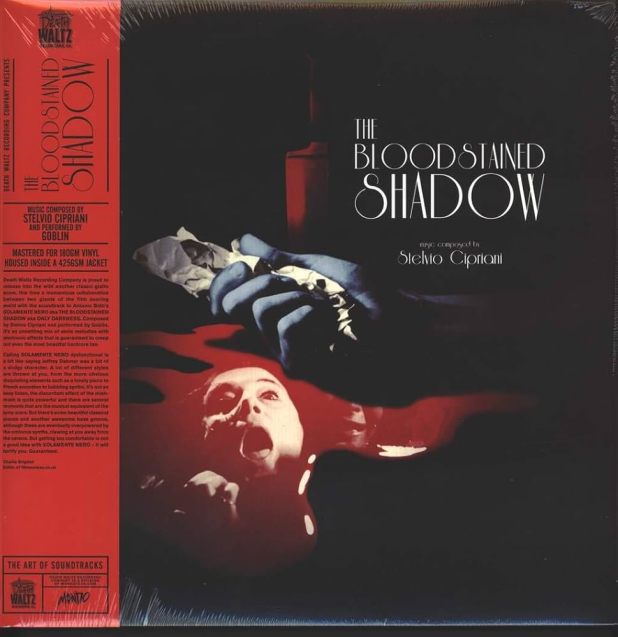
One of my favorite things about giallo are the alternate titles. As if The Bloodstained Shadow isn’t a great name, this movie also goes by Solamente Nero (Only Blackness), which is a way better title. The other thing I love about this genre is that just when I think I’ve seen every good one, I find another to enjoy.
This is the kind of movie that tells you exactly where it stands in the first minutes, as a killer strangles a girl in a field before the credits even start. That murder has never been solved. Years later, a college professor named Stefano has a nervous breakdown. To recover, he comes home to visit his brother Don Paolo, who has become a priest that hates all of the immorality in their small town.
Oh what immorality — there’s a gambler, a psychic, a combination atheist/pedophile and an illegal abortionist with a mentally challenged son who lives in a shack top the list, along with your typical sex and drinking that happens in any town.
Meanwhile, murders have been piling up and whoever is behind it, they’re leaving notes to the priest, warning him that if he reveals who the killer is, he’ll be next. That’s because on Stefano’s first night back home, Don Paolo saw the killer murder the town psychic in the courtyard.
Stefania Casini (Suspiria) also appears as the love interest, Sandra, who helps Stefano come back to normalcy. Well, as normal as a town filled with murder can be. I’m kind of amazed that she wears a belly chain all day. When you get to the love scene, you’ll know what I mean.
There’s also some amazing religious imagery in this one, like a skinned and bloody animal that has been placed in the sacristy to warn the priest that he’s getting too close, or the communion scene that reveals who the real killer is.
Finally, Goblin plays some great music in here, created by composer Stelvio Cipriani. It’s really a great package, thanks to director Antonio Bido, who directed one other giallo, Watch Me When I Kill. I love how the past childhood trauma that the brothers endured continues to permeate their lives as they try to grow up. This is a very adult giallo and by that, I mean that it doesn’t need nudity and gore to tell its tale.
The final segment of the three-part animated series “Justice League: Crisis on Infinite Earths” covers a lot of ground. The heroes manage to survive the anti-matter wave after the death of the Monitor triggers “The Bleed,” a realm where all realities coexist simultaneously, leading to a very crowded situation.
This context sheds light on the state of the multiverse, particularly after John Constantine’s (voiced by Nolan North) Earth was plunged into war with Darkseid. In “Justice League Dark: Apokolips War,” Constantine sends the Flash back in time to kill that New Gods despot when he was still a defenseless child. This act disrupts the time-space continuum and results in the creation of anti-matter waves.
Meanwhile, Lex Luthor of Earth-10 (voiced by Corey Stoll) is leveraging Psycho Pirate (voiced by Geoffrey Arend) to negotiate with the Anti-Monitor in exchange for sparing their reality from villains. However, Luthor also aims to halt the Crisis and is willing to sacrifice multiple worlds to study how the waves function. These worlds include the realm of the Super Friends (Earth-508), “Batman: The Animated Series” (Earth-12), Earth-10, and the Teen Titans’ universe (Earth-2003).
Supergirl seeks redemption for killing the Monitor by remaining inside the sun, enhancing her powers. She confronts the Anti-Monitor and ultimately sacrifices her life. In the meantime, the heroes transform Warworld into a weapon capable of defeating their formidable foe.
Using magic, Constantine employs Superman’s Miracle Machine and Wonder Woman’s sacrifice to create a single universe, where all heroes enter except for The Question (voiced by David Kaye), who refuses on principle. Surprisingly, even Constantine is granted a chance to live, thanks to the Spectre (voiced by Lou Diamond Phillips). However, he follows the Ghost of Vengeance into an unknown world.
This new universe introduces a host of new heroes, including Adam Strange (voiced by Brian Bloom), Bat Lash (voiced by Brett Dalton), Nightshade (voiced by Ashly Burch), Lobo (voiced by John DiMaggio), Captain William Storm (voiced by Dean Winters) and The Losers.
The most poignant aspect of this installment is that it marks the final battle between Batman, voiced by the late Kevin Conroy, and the Joker, voiced by Mark Hamill. This episode is dedicated to Conroy, who sadly passed away last year.
As I mentioned in a previous review, the Crisis impacts all DC universes at various points, which is undeniably tragic. However, it feels akin to Ragnarok—a necessary reset that clears the way for future developments. It would have been interesting if some of the other New Gods had made an appearance. Maybe the death of Darkseid caused them to never be.
In the latest Crisis movie, we learn that the Monitor’s assistant, Harbinger (voiced by Meg Donnelly), is Kara Zor-El, the last survivor of Krypton, also known as Supergirl. This twist combines several Marv Wolfman and George Perez concepts into one narrative, marking a significant change as the story transitions from a comic book to the conclusion of the DC Animated Universe.
The film also introduces Psycho Pirate (voiced by Geoffrey Arend), a minor villain who takes on a significant role in the Crisis. One of the highlights for me in this segment was witnessing a Batman family composed of heroes from different Earths as they all work together to save Earth-2 and Wonder Woman on Earth-43, a world where Amazons are the dominant race.
The true villain, the Anti-Monitor, is revealed at the end. The character is often seen as a homeless man; Pariah turns out not to be the scientist who discovered the Anti-Monitor; instead, he is revealed to be a cursed John Constantine (played by Matt Ryan).
Along with a glimpse of Batman Beyond, this episode also introduces Kamandi (voiced by Will Friedle), Dr. Fate (voiced by Keith Ferguson), the Joker (voiced by Troy Baker), and Solovar (voiced by Darin De Paul). One of my favorite moments from the comics was the friendship between the intelligent ape Solovar and Kamandi, and I’m pleased to see it portrayed in the movie as well.
The Crisis event always makes me nostalgic. I miss the old DC, its quirky world of the ’50s and the concept of multiple Earths. This series intended to simplify things for new readers, but it became even more complicated within a few years. At least the movies have only twenty-five parts, making it a bit more manageable!
Director Jeff Wamester and writer Jim Krieg have done an impressive job with the three-part series, “Justice League: Crisis on Infinite Earths,” which encompasses the twenty-third through twenty-fifth — and final — stories in the DC Animated Movie Universe. As James Gunn prepares to take over DC movies, this series provides a spectacular conclusion.
The hero known as the Flash, voiced by Matt Bomer, takes center stage throughout much of the first part of the series. We learn about his origins, how he first met his wife, Iris (Ashleigh Lathrop), and how the Justice League — featuring Superman (Darren Criss), Batman (Jensen Ackles), Green Arrow (Jimmi Simpson), Vixen (Keesha Sharp), and Martian Manhunter (Ike Amadi) — comes together in response to the threat posed by Professor Ivo (Ike Amadi) and his android, Amazo (Nolan North). The twist is that Lex Luthor (Zachary Quinto) is responsible for giving Ivo a disease, leading to Amazo being unleashed.
After their initial mission, a man named Pariah (Nolan North) sends Flash to Earth-3, which is also featured in the Justice League: Crisis On Two Earthsmovie. However, instead of the Crime Syndicate moving to another world, an antimatter wave erases their reality, and the Flash’s counterpart, Johnny Quick, assists him in returning to his world.
The Flash faces another crisis on the day of his wedding when Harbinger brings him, Green Arrow, Vixen, and Green Lantern John Stewart (Aldis Hodge) to the Monitor’s satellite. The Monitor claims he can prevent the impending death that approaches.
The heroes gather on the satellite, including Earth-2’s Wonder Woman (Stana Katic), her aged husband Superman (Darren Criss), Hawkman (Geoffrey Arend), Robin (Zach Callison), Batman’s daughter Huntress (Erika Ishii), Dawnstar (Cynthia Hamidi) from the 30th century, Doctor Light (Erika Ishii), Mister Terrific (Ato Essandoh), and Aquaman (Liam McIntyre) from Earth-146. In the original DC Comics, this was a world where Superman existed thousands of years earlier than on Earth-1. This world resembles “Waterworld” and substitutes for Lady Quark of Earth-6.
My favorite heroes from Earth-4, the Charlton Universe, also appear. The Blue Beetle, Ted Kord (Matt Lanter), and The Question (David Kaye) are particularly well depicted.
The heroes are tasked with building towers to halt the dimensional wave threatening their world. Barry uses this opportunity to slow down time, allowing him to spend more time with Iris than usual and bond with Amazo. As Amazo passes away, the Spectre (Lou Diamond Phillips) appears to Barry, informing him that he must repay the time and warn the heroes that the Crisis has not yet ended. Before dying, the Flash appears to Batman when he is trapped on Warworld — which appeared in another DCU movie, Justice League: Warworld.
The wave of destruction continues, becoming evident as different realities fade away. This marks the end of the first part!
The joy of the original Crisis lay in the artwork and spotting many beloved heroes. In this installment, fans can identify characters such as Earth-1’s Atom, Atomic Knight, Batwing, Black Lightning, Blackhawk, Blue Devil, the Challengers of the Unknown, Creeper, Elongated Man, Firestorm, Guy Gardner, Hawk and Dove, Katana, Mento, the Metal Men, Metamorpho, Negative Woman, Nighthawk, Red Star, Red Tornado, Speedy, Star Sapphire, Swamp Thing, Tempest, Tomahawk, and Zatanna; Earth-2’s Doctor Mid-Nite, Hourman, Jade, Obsidian, Starman, and Wildcat; Earth-4’s Peacemaker; Earth-S’s Marvel Family; Earth-7’s Thunderer; the Freedom Fighters of Earth-X — a reality where the Nazis triumphed, including Uncle Sam, Doll Man, Ray and Black Condor — and many more.
The DC Universe owes a great deal to Marv Wolfman and George Pérez, whose “Teen Titans” and “Crisis” stories have influenced nearly every medium in which DC tells its tales. This project brought me back to 1985, when I was waiting for each new issue while feeling a bittersweet sadness, knowing that many of my favorite heroes would die and that the multiverse would cease to exist. Well, I was mistaken about that last part.
Directed by Vinton Heuck and Brandon Vietti and written by the renowned comic book writer J. Michael Straczynski, Watchmen Chapter II picks up decisively where Watchmen Chapter I left off, advancing the story with intensity and purpose.
After Nite Owl II (Matthew Rhys) and Silk Spectre II (Katee Sackhoff) rescue residents from a burning apartment building, Nite Owl II finds the vitality and desire he believed he had lost. He tells Silk Spectre II that they will break Rorschach (Titus Welliver) out of prison, where the masked vigilante is currently using a prison riot to take out criminals one by one.
Nite Owl II realizes that, despite the chaos in the world, Rorschach—much like The Comedian— is the only person who can understand the reality of their situation. Sometimes, amidst all the conspiracy theories, one turns out to be true. As the world edges closer to nuclear war, all signs point to one individual: Ozymandias (Troy Baker), the best of them all.
When they confront Ozymandias, he easily defeats them using the only language superheroes know—physical combat—while quoting a speech that Kennedy never had the chance to deliver. He reveals that since 1966, he has known that nuclear war is inevitable, thanks to The Comedian. He must take decisive actions to change the course of history, much like Alexander cutting the Gordian Knot.
Using the language of comic book — and James Bond — villains, Ozymandias connects the dots of his plan. When Nite Owl II asserts they will stop him, Ozymandias replies, “Dan, I’m not a Republic serial villain. Do you seriously think I’d explain my masterstroke if there remained the slightest chance of you affecting its outcome? I did it thirty-five minutes ago.”
This adaptation concludes similarly to the original comic book rather than the film’s ending, which is one of the few points I agree with regarding the movie.
We didn’t need Doomsday Clock, the comic sequel that merged Alan Moore’s universe with the DC Universe. Seven years after the destruction of New York City, Rorschach’s journal has been published in the *New Frontiersmen*, exposing Ozymandias as a supervillain. He is now trying to track down Dr. Manhattan, who is coming to our world to seek Lex Luthor’s help. Additionally, a new Rorschach—the therapist’s son from the first story—wants Batman’s assistance, and somehow, The Comedian is still alive. Meanwhile, Dr. Manhattan has altered the post-Flashpoint universe, making it darker. I attempted to read it, but it was so convoluted. However, some enjoyed it; it felt like another DC attempt to provoke Alan Moore, following the prequels that added little to the story except for the work of Darwyn Cooke. Moore called it shameless, while Gibbons gave his usual endorsement.
As narrative fiction—especially superhero fiction—evolves, I appreciate stories that have a clear beginning and end rather than an endless pursuit of new highs and plotlines. While some stories can go on indefinitely, *Watchmen* feels perfect—a story with a definite conclusion. The characters may continue their journeys, but I do not need to know whether they find happiness or sadness.
Then again, as Dr. Manhattan says, “Nothing ever ends.”
When the original comic book was released, there was debate about whether Rorschach was teleported away or died. In this adaptation, he dies. However, it is intriguing to see the resolution and the human moments, particularly how the Silk Spectres realize that life takes you to unexpected places and understanding is essential.
This adaptation achieved its primary goal: it inspired me to revisit the original graphic novel and reread it. But speaking of ending, this is the last DC Original Animated Movie. I’m sure there will be other things to watch — like Creature Commandos — but I’ll miss these films.
I can’t tell you how excited I was when my mailbox contained three 4K blu rays from Severin, filled with Vixen, Supervixens and Beneath the Valley of the Ultravixens. Actually, I can tell you. Here’s an entire podcast all about it.
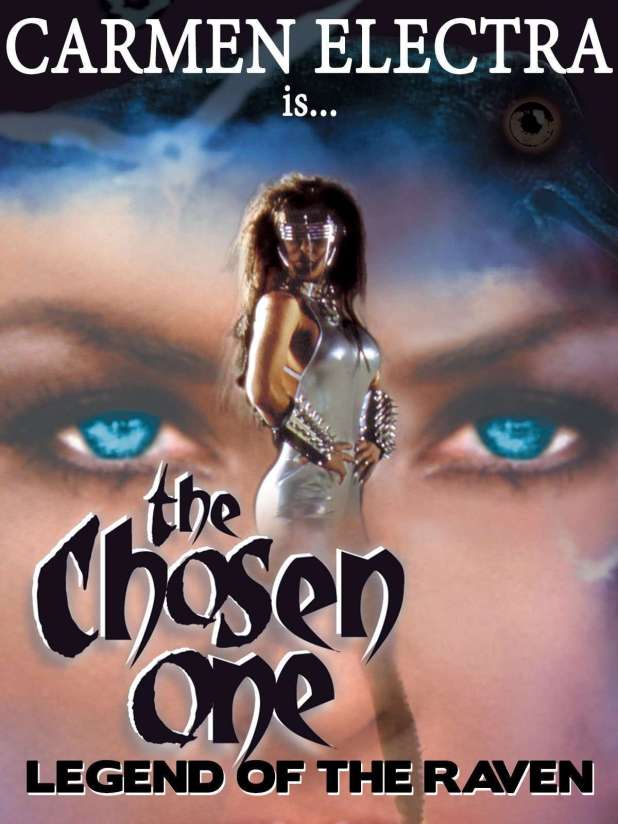
Directed by Lawrence Lanoff — also Lawrence Unger, the name he used to make Playboy home videos like Playboy’s No Boys Allowed 3: Sweet Sensations, Playboy: Best of College Girls, Playboy: Lusty Latin Ladies, Playboy: Girls of Hedonism, Runaway Bay Jamaica, Playboy: Gen-X Girls, Playboy’s Girls of Mardi Gras, Playboy: Best Kept Sex Secrets and Playboy: WildWebGirls.Com in addition to the name K.T. Summer that he used for Club Wild Side — and written by Sam Rappaport and Khara Bromiley, this seems like a comic book movie is about what happens when McKenna Bravenight (Carmen Electra) — in a Troma movie! — must replace her sister Emma (Shauna Sand, Playboy Playmate of the Month May 1996 and ex-wife of Snake Eater Lorenzo Lamas) as the keeper of a mystic amulet and become The Chosen One.
I just have to quote this line from its Wikipedia: “McKenna’s powers include a thirst for milk and tremendous sexual energy, which she unleashes on her former boyfriend, Henry (Dave Oliver), a cop.”
Like, I get the second one, this is a softcore superhero movie, but a thirst for milk in no way seems like a superpower. I guess when you have the raven as your totem, you like milk? You need strong bones? This also leads to a From Dusk Till Dawn like scene — more like Ninja 3: The Domination — where Electra pours milk down her body for Henry to lick, then she laps up what’s on the floor like a cat, except she’s supposed to be a raven and yet I think someone told her that this is kind of like Catwoman in that it’s bad. I mean, worse.
It’s also bad news for Henry’s latest girlfriend, Nora (Debra Xavier), who gets so upset that she gets into meth. That’s how the evil spirits — I See Good Spirits and I See Bad Spirits — find her and these Native American spirit animals are wolves. Did you know I can’t say the word wolf and just say woof?
Neither of these women are Native American, so this culturally appropriates all over the place. There’s also the Route 33 Serial Killer to catch and he’s played by the director, who was kind enough to make rated and unrated versions of this movie. And I love that the heroine’s name is McKenna Bravenight, which is very comic book, even if her costume is kind of lame. And lamé.
This also has one of the most astounding origins ever. Of course, our heroine has been hearing voices from the crescent medal she inherited from her sister but doesn’t put on her costume for some time. Henry’s ex, on the drugs, hooks up with Cole (Michael Stadvee), a drug dealer who attacks Henry, pisses all over him, tosses him in the back of his truck and makes sweet love to his ex-crackhead lover while he’s forced to watch and in pain. When McKenna Bravenight — I feel like from now on, I should use her full name — comes to save him, both she and Nora get shot by Cole. Left to die, the crescent necklace brings them both back to life. This is how Carmen Electra gets a skintight suit and a metallic half football helmet to fight crime as the avatar of the ravens, not unlike The Crow except instead of all that pesky goth stuff, we get a softcore erotic thriller sometimes, a superhero movie the others.
The same director made a possession movie, Temptress, which stars Kim Delaney. You know that as soon as I read that, I got so excited. That’s because this tickles that weird part of my lizard brain that demands that movies aren’t just dumb, but so dumb they cross over into genius before tripping back into abject insanity. Also: For those hoping to see Electra nude, that’s totally a body double. But you probably knew that.
As for my stupidity, I didn’t realize this was on Tubi and watched it on YouTube, where it was edited to only be part of the screen, squeezed into a too skinny shape and the audio chipmunked all to get past copyright and play online. That meant that the dialogue was completely inaudible, the action moved even more stitled and things were so dark I thought that I had developed glaucoma sooner than planner. Imagine my surprise when I went back and watched this on Tubi. It still wasn’t good, but it was at least a movie you could watch. Then again, I recommend the experience.
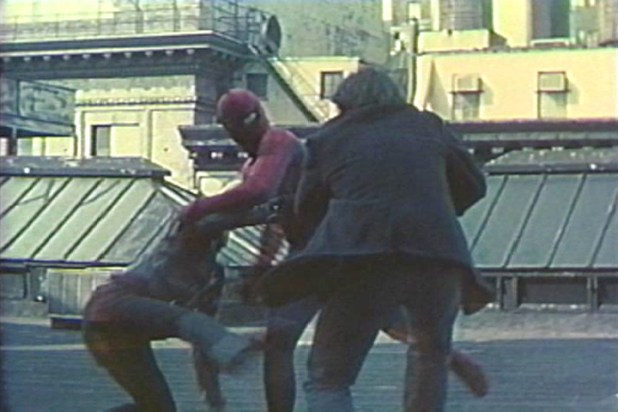
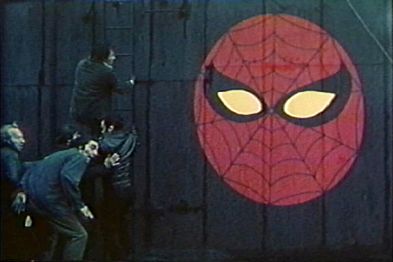
After this year’s Kraven the Hunter and Sony giving up on its Spider-Man-less Spider-Man Cinematic Universe, you may be surprised to learn that there was a fan film directed and written by Bruce Cardozo that was approved by Stan Lee.
Based on The Amazing Spider-Man #15, this all started with Cardozo writing to Lee and explaining the project. He received a very enthusiastic letter of approval — this would never happen today, least of all because Stan Lee is dead and it would be strange to get a letter back from him — saying that as long as the movie only played non-cmmercially, Cardozo could make it.
His experimental film class listened to his idea for a 16mm shot half-hour semi-professional Spider-Man and they thought it was impossible. Then, Cardozo created the scenario, production direction and special effects while classmates Daphne Stevens and Marilyn Hecht sewed the costumes, Richard Eberhardt created the visual look — and played Spider-Man — and Art Schweitzer created the lighting effects which were to make this short stand out.
Sadly, we never see this. Cardozo, who eventually worked on The Avengers, Captain America and Thor, as well as Empire Strikes Back, Return of the Jedi, Robot Jox and Superman IVdied in 2015 and the computer that had the movie on it was destroyed. According to the Lost Media Wiki, this played in public just a few times, with “the final showings being at the Comic Book and Science Fiction Convention in Los Angeles in 2002 and 2005 at the Shrine Expo Hall.”
In that same article, it comes to light that the film was nearly stolen at one point by burglars who knew the value of the only print. Supposedly, “Cardozo had relocated to New Jersey and at that time, he entrusted the prints to his mother for safekeeping.”
I’d love to see this, particularly to see how the team handled the traveling matte effects of Spider-Man swinging across a neon New York. Keep in mind this was being made years before you could “believe a man could fly” when Superman was released in 1978.




 B&S About Movies
You must be logged in to post a comment.