The GenreBlast Film Festival is entering its sixth year of genre film goodness. A one-of-a-kind film experience created for both filmmakers and film lovers to celebrate genre filmmaking in an approachable environment, it has been described by Movie Maker Magazine as a “summer camp for filmmakers.”
Over the next few days, I’ll be reviewing several movies from this fest, based in the Alamo Drafthouse Cinema in Winchester, Virginia. This year, there are 14 feature films and 87 short films from all over the world. Weekend passes are only $65 and you can get them right here.
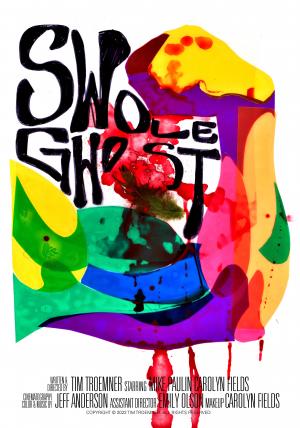
Swole Ghost (2022): This movie answers a very important question, one that’s been plaguing us all for years: how come the ghost in my house doesn’t give me any message, any inkling of how I can escape this mortal level of reality? Maybe your ghost is weak. Maybe your ghost needs trained. Maybe your ghost needs a montage.
Swole Ghost is seven minutes of your life that could be incredibly valuable if only to know that ghosts can also be the scorpions in the scorpion and the frog scenario. Be careful when you mix the fitness industry and the spirit world.
Directed, written and produced by Tim Troemner, this plays like a quick sketch but that’s fine — just the image of someone spotting a ghost on the weight bench is enough, all this has to live up to, and it goes much further.
The GenreBlast Film Festival is entering its sixth year of genre film goodness. A one-of-a-kind film experience created for both filmmakers and film lovers to celebrate genre filmmaking in an approachable environment, it has been described by Movie Maker Magazine as a “summer camp for filmmakers.”
Over the next few days, I’ll be reviewing several movies from this fest, based in the Alamo Drafthouse Cinema in Winchester, Virginia. This year, there are 14 feature films and 87 short films from all over the world. Weekend passes are only $65 and you can get them right here.
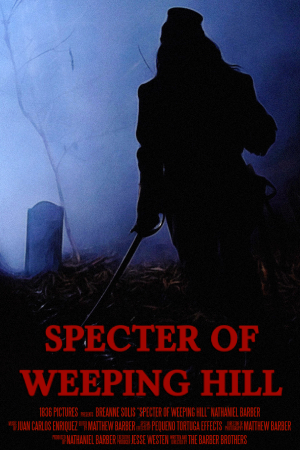
Specter of Weeping Hill (2021): Lillian (Brianne Solis) comes back to an abandoned and fog-filled cemetery that has haunted her since childhood in an attempt to come to terms with the recent loss of her sister in this quick but gorgeous short film.
The directors The Barber Brothers (Matthew and Nathan, who also made Go Back and No One Is Coming with Solis) said that they saw this film being about “dealing with grief and the lengths at which it can take someone. The story of the titular Specter is inspired by a traditional theme in paranormal hauntings in which a ghost searches for a loved one that has long passed.”
Naming Glory — which had horror master Freddie Francis as its cinematographer — as well as The Changeling, Frankenstein Meets the Wolf Man and the visual style/ editing of 70s horror films as inspirations let me know that I need to be on the lookout for anything they make. The fact that this looked amazing and was imbued with true emotion made it all that much the better.
The GenreBlast Film Festival is entering its sixth year of genre film goodness. A one-of-a-kind film experience created for both filmmakers and film lovers to celebrate genre filmmaking in an approachable environment, it has been described by Movie Maker Magazine as a “summer camp for filmmakers.”
Over the next few days, I’ll be reviewing several movies from this fest, based in the Alamo Drafthouse Cinema in Winchester, Virginia. This year, there are 14 feature films and 87 short films from all over the world. Weekend passes are only $65 and you can get them right here.
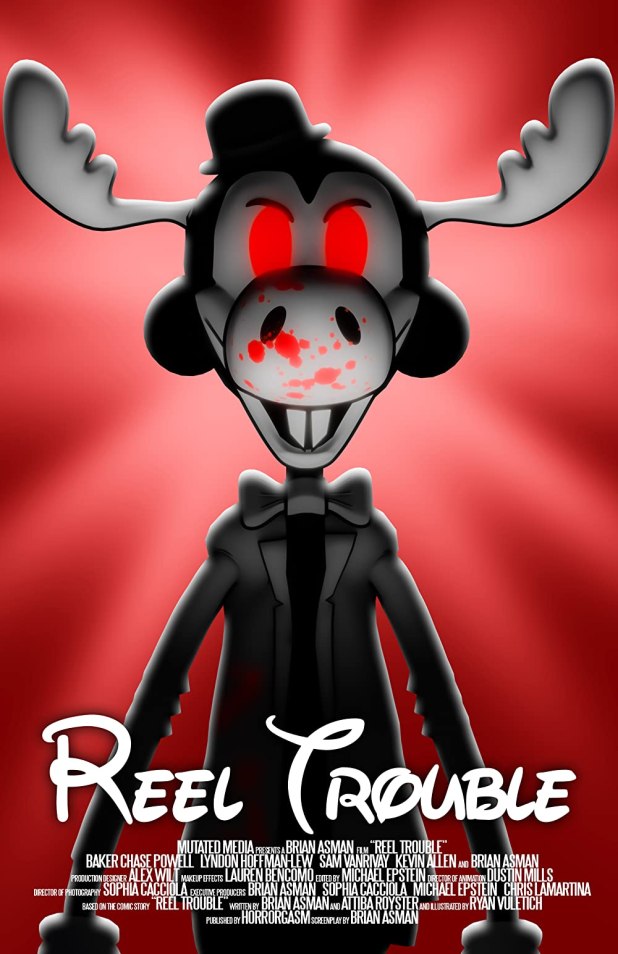
Reel Trouble (2022): Arnaut Subotica (Sam Vanivray with director and co-writer — with Attiba Royster — Brian Asman as the voice) tried to make cartoons for Whitt Dabney (Kevin Allen) and the theft of his ideas and the way Dabney treated him caused him to make a cartoon that took a decade of his life. Then he committed suicide and the cursed film was kept from the public until the Internet released every bit of lost media from their prisons. Jason (Lyndon Hoffman-Lew) and Kyle (Baker Chase Powell) are trading videos — I see the snuck in WNUF Halloween Specialblu ray — and this might just be one that they should have never watched.
This was an absolute joy to watch and felt like it could have been part of the true dark lore of Disney. It’s got just the right mix of humor and horror and knows when to switch into moments of sheer terror, even if they feature giant cartoon hands.
You can learn more about Brian Asman at his official site.
The GenreBlast Film Festival is entering its sixth year of genre film goodness. A one-of-a-kind film experience created for both filmmakers and film lovers to celebrate genre filmmaking in an approachable environment, it has been described by Movie Maker Magazine as a “summer camp for filmmakers.”
Over the next few days, I’ll be reviewing several movies from this fest, based in the Alamo Drafthouse Cinema in Winchester, Virginia. This year, there are 14 feature films and 87 short films from all over the world. Weekend passes are only $65 and you can get them right here.
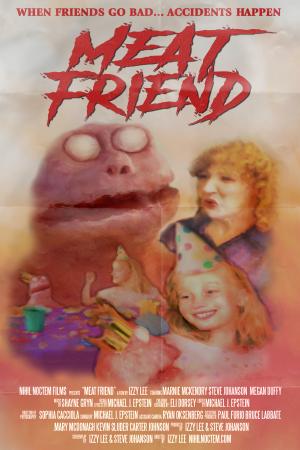
Meat Friend (2022): When Billie (Marnie McKendry) — sorry, I mean children — microwaves raw hamburger meat, it needs no old top hat to come to life. Instead, Meat Friend (Steve Johanson, who co-wrote this with director Izzy Lee) is alive and real and wants to teach her some valuable life lessons rooted in hatred and violence, no matter what her mother (Megan Duffy) does.
“More beef! Less cheese!” goes the refrain and the faithful demand the reanimation of the meat homunculus.
This was an absolute blast of strange and exactly what I needed during the fest, something that started odd and didn’t let up.
Izzy Lee has also directed the Lovecraft film Innsmouth, the “For a Good Time, Call…” segment in Shevenge and several shorts like Consider the Titantic, Disco Graveyard and Memento Mori. You can learn more about this movie — the kind of magic that has a pile of sentient 80% lean ground beef do rails of coke — right here.
The GenreBlast Film Festival is entering its sixth year of genre film goodness. A one-of-a-kind film experience created for both filmmakers and film lovers to celebrate genre filmmaking in an approachable environment, it has been described by Movie Maker Magazine as a “summer camp for filmmakers.”
Over the next few days, I’ll be reviewing several movies from this fest, based in the Alamo Drafthouse Cinema in Winchester, Virginia. This year, there are 14 feature films and 87 short films from all over the world. Weekend passes are only $65 and you can get them right here.
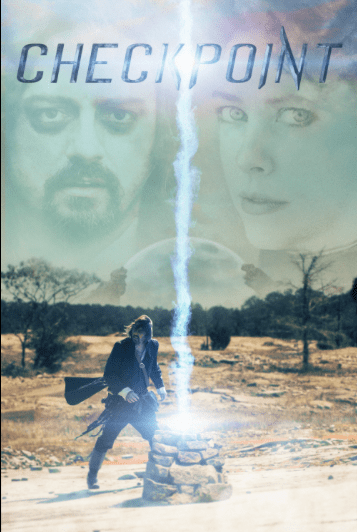
Checkpoint (2022): Man, what a ride! I loved this and it made me consider all of the many, many video game characters that I’ve led to grisly deaths over the years.
A man — that’s his name and he’s played by Brett Brooks — must navigate a hostile alien world, learning with each death — which moves him back to the beginning and later to the titular checkpoint — what he needs to do to get to the next level. And then the next. At the end, he realizes that it’s all for Victoria (Erin Ownbey), who he pushed away with his greed. Yet perhaps he’s not the only person — or sin — that has done so.
Directed by Jason Sheedy, who also did the sound, editing, effects and wrote and produced the film with director of photography Matthew Noonan, Checkpoint is filled with tons of gory deaths, as well as a message and heart within. I had an absolute blast watching it — the production design is also incredible — and you should check it out too!
The GenreBlast Film Festival is entering its sixth year of genre film goodness. A one-of-a-kind film experience created for both filmmakers and film lovers to celebrate genre filmmaking in an approachable environment, it has been described by Movie Maker Magazine as a “summer camp for filmmakers.”
Over the next few days, I’ll be reviewing several movies from this fest, based in the Alamo Drafthouse Cinema in Winchester, Virginia. This year, there are 14 feature films and 87 short films from all over the world. Weekend passes are only $65 and you can get them right here.
Mairzy Doats (2022): Directed by Seth Chatfield and written by Derek Curley and Mary Widow, who also play the leads Nick and Erica Finn, this film attempts to answer the question of “What happens when we die?” to the two leads, as they go from hearing voices in the woods to worrying about the end of the world before a very ordinary event ends up pushing them toward that answer instead of the horrific fate that we expect from this movie.
The song this is based on goes like this:
“I know a ditty nutty as a fruitcake goofy as a goon and silly as a loon
Some call it pretty, others call it crazy
But they all sing this tune: Mairzy doats and dozy doats and liddle lamzy divey
A kiddley divey too, wouldn’t you? Yes!
Mairzy doats and dozy doats and liddle lamzy divey
A kiddley divey too, wouldn’t you?
If the words sound queer and funny to your ear, a little bit jumbled and jivey
Sing “Mares eat oats and does eat oats and little lambs eat ivy””
It was such a big song — it was Decca Records biggest single of 1944 — that two dozen covers came out in two weeks. It was written by Milton Drake, Al Hoffman and Jerry Livingston and originally was in the Laurel and Hardy movie The Big Noise. Perhaps it’s best and most famous use was in the first episode of season two of Twin Peaks.
Back to this short. Credit should be paid to cinematographer Caleb Heller and editor Adrian Hedgecock, who make this look beyond a low budget short and make me want to see more of what everyone in the film can do with more, particularly Chatfield, Curley and Widow.
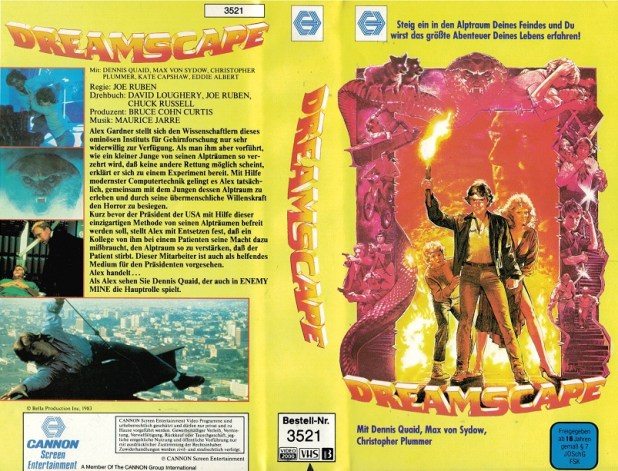
EDITOR’S NOTE: This article was first on the site on April 10, 2022. Dreamscape was obviously not produced by Cannon, but they did release it in Germany on the Cannon Screen Entertainment label.
Based on an outline that Roger Zelazny wrote, his novella “He Who Shapes” and the novel The Dream Master, this wasn’t made with any other input from the author. At least he got paid!
The story is credited to David Loughery, who wrote the fifth Star Trek and I still wonder why God needs a starship. The script is from Chuck Russell, who would go on to make A Nightmare on Elm Street 3: Dream Warriors and The Blob. Director Joseph Ruben made The Pom Pom Girls, The Stepfather, The Good Son and Sleeping With theEnemy. He knows how to make entertaining trash and I say that in the kindest of ways.
Alex Gardner (Dennis Quaid) might be a psychic, but he doesn’t want tested any more. Not after all the poking and prodding in his youth by Dr. Paul Novotny (Max von Sydow). But when Novotny saves him from some low level goons who want to use Gardner’s psychic powers, he starts listening to how he’s now involved in government-funded psychic research. What really gets Alex on board is one look at Dr. Jane DeVries (Kate Capshaw).
The goal is to send people into the dreamscape. There’s some exposition about the Senoi natives of Malaysia thinking that the dream world is as real as our own and you know me, I’m always here for movie BS.
Tommy Ray Glatman (David Patrick Kelly) is the only person who has entered the dreamscape, but he’s a daddy and old lady murdering maniac, so luckily Alex can get in and help little kids get over their bad dreams. Horror novelist Charlie Prince (George Wendt) — who wrote a book called Stab, so is this Scream universe canon? — tells Alex that he’s just a weapon to be used by Bob Blair (Christopher Plummer) to kill the President (Eddie Albert) and preserve the military industrial complex.
Yeah, a lot happens.
The end of this movie is wild. Alex is inside the President’s post-nuclear terror dream, as mutants hunt the President and Tommy Ray has nunchucks and can also be a snake man before Alex takes the form of Tommy’s dad, tells the final boss that he loves him and then the leader of the free world stabs the bad guy from behind, killing him, because even the most hopeful of Presidents still ordered drone strikes. Then our hero goes into Blair’s dream and straight up kills him so he can be with Kate Capshaw.
The second PG-13 movie ever released — after Red Dawn — this is also the second movie that Kate Capshaw would be in in 1984 where a man’s heart is ripped out of his chest.
You know, I love this goofy movie. The effects are dated, there’s fog everywhere and the poster is totally trying to make you think Raiders of the Lost Ark. It’s one of the first movies I ever rented and watching it again, it made me so happy knowing that I can just put it on at any time.
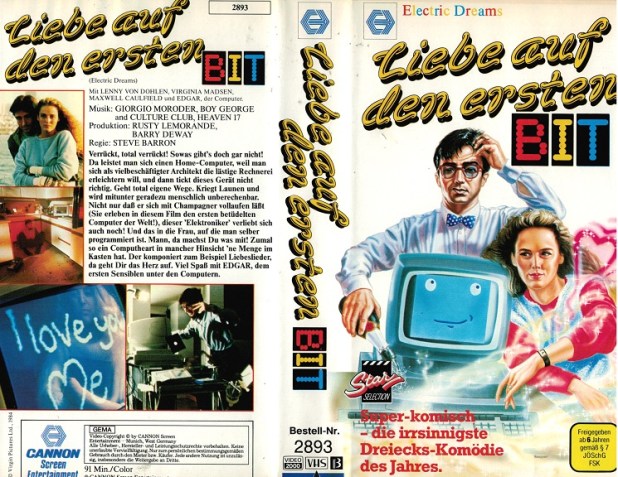
EDITOR’S NOTE: This article was first on the site on September 15, 2019. Electric Dreams was obviously not produced by Cannon, but they did release it in Germany on the Cannon Screen Entertainment label.
Steve Barron directed some of the most famous videos like “Billie Jean” by Michael Jackson, “Money for Nothing” by Dire Straits, “Electric Avenue” by Eddy Grant, “Don’t You Want Me” by The Human League, “Africa” by Toto and “Take On Me” by A-ha. This was his first film, which was written by Rusty Lemorande, who also was behind Captain EO, Cannon’s Journey to the Center of the Earth and the Patsy Kensit and and Julian Sands-starring The Turn of the Screw.
Barron often shared his music videos with his mother Zelda. Now, that isn’t him being a mama’s boy. She was at the time doing continuity on Yentl with Lemorande — she also directed the movie Shag and Culture Club’s* videos for “I’ll Tumble 4 Ya,” “Miss Me Blind,” “The Medal Song” and “It’s a Miracle” — and showed him a video that Barron made for Haysi Fantayzee, which led to this movie.
The film is very much an extended music video and has lots of artists of the era, such as YB40, Jeff Lynne, Phil Collins, Heaven 17 and, most importantly, Giorgio Moroder, who was hired as the composer.
Barron would later say, “(Moroder) played me a demo track he thought would be good for the movie. It was the tune of “Together in Electric Dreams” but with some temporary lyrics sung by someone who sounded like a cheesy version of Neil Diamond. Giorgio was insisting the song could be a hit so I thought I’d suggest someone to sing who would be as far from a cheesy Neil Diamond as one could possibly go. Phil Oakey**. We then got Phil in who wrote some new lyrics on the back of a (cigarette) packet on the way to the recording studio and did two takes which Giorgio was well pleased with and everybody went home happy.”
Miles Harding (Lenny Von Dohlen, Harold Smith on Twin Peaks) is an architect who wants to build earthquake-proof building, which is why he buys a computer to help him and goes overboard, buying everything he can to allow it to run his house. However, he screws up his own name and it calls him Moles. As the computer downloads more information and it starts to overheat. Miles pours champagne on it, which is not how to fix a computer and it becomes self-aware, gains the voice of Bud Cort (Barron didn’t want Cort to be seen by the other actors so he did his lines in a padded box on a sound stage) and the name Edgar.
Miles and Edgar are both in love with neighbor Madeline Robistat (Virginia Madsen), with Edgar even playing cello along with her in a duet, a performance that Miles takes credit for. He even asks the computer to write a song for Madeline, but that takes things too far and soon man fights machine.
Yet don’t take this to be a horror movie. It ends up being quite sweet at the end and is a cute romance. You can even see Moroder show up as a record producer. This movie has one of my favorite movie things in it: computers that at once look dated and yet do more than they can today.
*Harold and Maude fan Boy George visited the set of this movie just to meet Bud Cort. George also helped compose the song “Electric Dreams” and contributed his band’s songs “Karma Chameleon,” “Do You Really Want to Hurt Me,” “Love Is Love” and “The Dream” to the soundtrack.
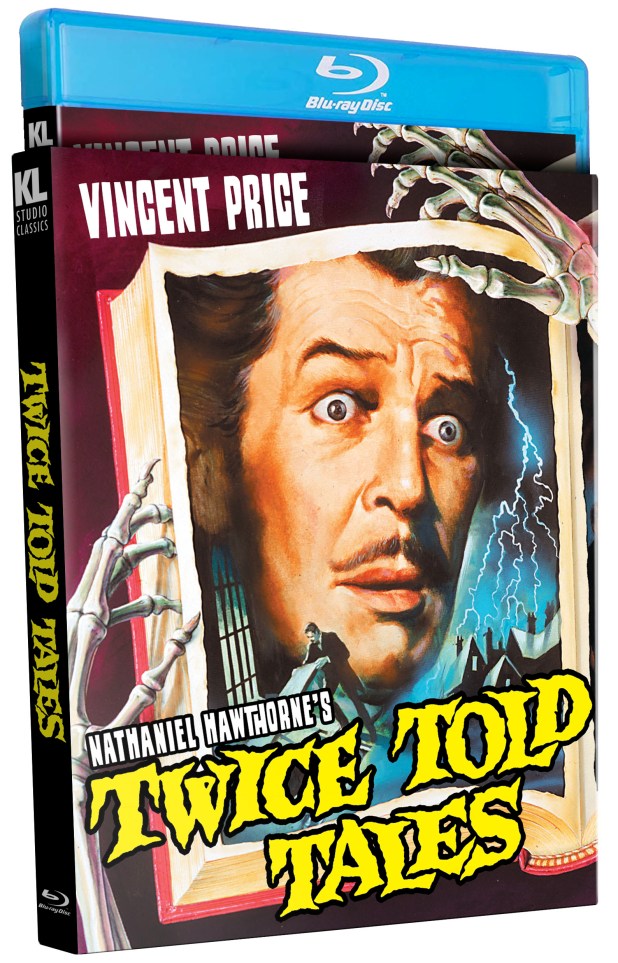
EDITOR’S NOTE: This originally appeared on the site on July 6, 2021. Kino Lorber has re-released this on blu ray, including audio commentary by film historians Richard Harland Smith and Perry Martin, a “Trailers From Hell” with Mick Garris and the theatrical trailer.
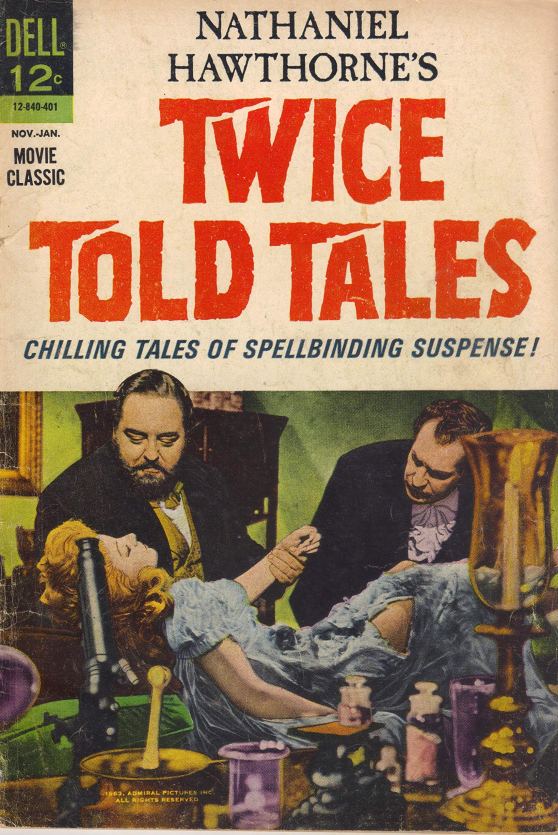
Of the three stories featured in Twice-Told Tales, only one of them — “Dr. Heidegger’s Experiment” — is actually from the Nathaniel Hawthorne book. The other two — “Rappaccini’s Daughter” and The House of the Seven Gables — are from another story and a book the author wrote.
Much like Tales of Terror, all three of these stories feature Vincent Price as narrator and star. It was written and produced by Robert E. Kent, the man who brought Roy Orbison to the screen in The Fastest Guitar Alive. This was directed by Sidney Salkow, who also worked with Price on The Last Man On Earth.
In “Dr. Heidegger’s Experiment,” Carl Heidegger (Sebastian Cabot, The Time Machine) and Alex (Price) meet to celebrate Heidegger’s 79th birthday. As they look back on their lives, they learn that Carl has never gotten over the death of his fiancee Sylvia. In a drunken depression, he wanders down to her grave, only to find her perfectly preserved. As he drinks the water that rains down on her coffin, the old man — and then his friend — become young again.
Both of them decide to inject the dead woman with the water and she returns, only to inform Carl that Alex was her lover. The two men clash, only for Alex to die and Sylvia to wither to a skeleton. Alex wanders the crypt, unable to find any more of the water.
While dramatic, this story doesn’t match Hawthorne’s, during which four older people use water that they’ve found from the legendary Fountain of Youth, near Lake Macaco in Florida. It doesn’t end on such a down note either.
“Rappaccini’s Daughter” is the story of a man (Price) who has kept his daughter like a plant in a garden, treating her with the extract of an exotic plant that makes her very touch deadly. Yet what happens when she falls in love with a young man (Brett Halsey!)?
This story inspired the DC Comics character Poison Ivy, while the story itself was based on Indian fairy tales of poisoned maidens. The pop culture life of this story also extends to the Fleetwood Mac song “Running through the Garden.”
The last story is “House of the Seven Gables,” which finds a cursed family, reincarnation, an inheritance and skeletal hands emerging to attack Price. The same story had been previously filmed in 1940 and also featured Price (he plays Gerald Pyncheon here; he played Clifford in the original).
The Hawthorne novel was a major inspiration for H. P. Lovecraft, who claimed that it was “New England’s greatest contribution to weird literature.” You can detect the novel’s shadow cast over his stories “The Picture in the House”, “The Shunned House” and The Case of Charles Dexter Ward.
They even made this into a Dell comic book!
If you enjoy anthology horror and Vincent Price, this one is for you. If you don’t, never speak to me again.
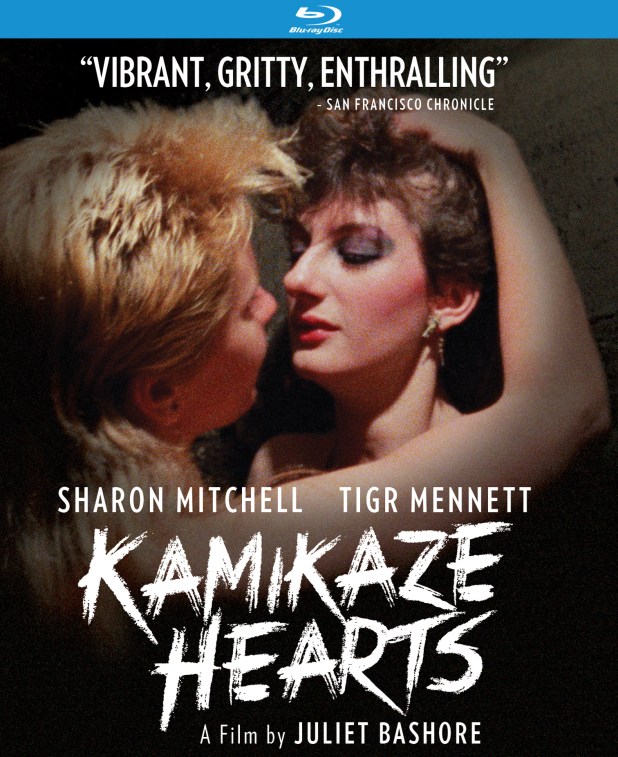
EDITOR’S NOTE: Kamikaze Hearts was first on the site on June 18, 2022. Kino Lorber has now released it on blu ray with extras like a documentary on the making of the film and its enduring legacy, featuring actors Sharon Mitchell and Howie Gordon, author and critic Susie Bright, sexologist Annie Sprinkle, artist Beth Stephens and director Juliet Bashore; audio commentary by Bashore, Mitchell, Gordon, Jon Martin and Shelly Mars; Crash, a short film by Bashore as well as the original and 2022 trailers. Get it now — this is a huge recommendation — from Kino Lorber.
Kamikaze Hearts is a film that has fascinated me since I first read about it in the venerable Cinema Sewer. Now that Kino Lorber has released a new 2K restoration of the film, this is the perfect time to dig in, watch it and learn as much as I can about it.
I’ve been just as intrigued by Ms. Sharon Mitchell and perhaps for a much longer time. During the late 90s and early 00s– yes, when you still had VHS tapes and not streaming — when bleach blondes and pneumatic implants were all the shelves had to offer, Mitchell would occasionally show up in films for brief moments and I’d want to know more about her. With short cropped hair and a non-silicone implanted body, she looked closer to normalcy while also having the kind of real punk look and attitude that doesn’t buy its shirts years later online.
There was no internet — only Adam Film World and Hustler rated movies on an erection scale — so i didn’t learn her full life until later, such as how she began her career as an off-Broadway actress and dancer before starring in some of the 70s roughest films, like Waterpower and The Violation of Claudia.
In 1996, a male stalker assaulted and nearly killed her, which led to her finally kicking heroin, becoming a certified addiction counselor and getting both an MA and a Ph.D. from the Institute for Advanced Study of Human Sexuality all while working a series of odd jobs like catering, dogwalking, being a florist and as a maid.
Mitchell founded the Adult Industry Medical Health Care Foundation (AIM), an organization that provided information and innovated STD testing for all workers in adult entertainment. While a data breach ended that company, Mitchell did so much to make it a safer space.
A decade before that, she was one of the stars of this film. For years, I saw it regarded as a documentary on the relationship that Mitchell had with her co-star Tigr Mennett. The truth is a lot more complicated.
In the incredible oral history of this film conducted by the always astounding The Rialto Report— that will be referred to and used as reference throughout this article — George Csicsery (a documentarian and actor in the film) says, “Some people don’t believe it’s a fictional film and have categorized it as a documentary, while other people see it for what it is; a pure narrative film. But that begs a deeper question: Is anything a documentary? In many ways, I think that is either the genius or the downfall of Kamikaze Hearts.”
Director Juliet Bashore had come from Orange County to San Francisco with no small degree of culture shock. Here was art, punk rock and even adult film — which she was paid well for to work as production assistant. She said, “I’ve got to find a way to make art out of this. I worked a few more of those gigs, telling myself I was “doing research” but frankly equally thrilled to be paid (and very well) in hard, cold (probably Mafia) cash.”
After meeting Tigr on a set, the two began to talk about the strangeness of the world of adult and decided to make a movie about it. And Tigr was in love — or had been in love or never fell out of love — with the woman she saw as its star: Mitchell.
Bashore was influenced by Spalding Grey — ironically, the Swimming to Cambodia author and raconteur performed in adult himself in the Zebedy Colt movie Farmer’s Daughters — and decided to make real life into art with some guardrails, saying “The whole film was completely storyboarded, leaving space within those boarded shots for improvisation. The final edit matches the original storyboard pretty much shot by shot — with the exception of a few additional scenes that were added later. But even these pick-ups were planned for.”
Keep in mind, this was years before movies were completely ad-libbed or even partially made with improvised moments. This Is Spinal Tap was made around the same time as this movie but that’s nearly all trained comedians. This was…more real.
The film starts with Tigr breathlessly telling us about Mitchell: “When I first met her I thought she was sleazy. She needed to make a living, she was fucking on camera – I thought she was just another dumb porno slut. But I was wrong.” And then we see Mitchell, movie star glamorous even on a porn budget — in the back of a cab on the way to the set, discussing Old Hollywood actors and how she feels like she could go mainstream (she was in Tootsie and The Deer Hunter).
Tigr goes on to explain how being in the orbit of a being like Mitchell led her down a path she didn’t expect. And this is why this movie feels so real — and not a quasi-documentary — because it obviously has real significance: I became different. I changed. I wanted to be like her. I wanted to be streetwise. I wanted to know how to use a needle… Goddamn irresponsible, gorgeous, sleazy porno slut. And she has it. And I mean, she’s this woman from New York City, who’s Italian, and she’s hot, and she speaks street language, no one can fuck with her, right? And there was some sort of power that she had that a porno person doesn’t have.”
Much like how in pro wrestling life imitates art imitates life, we soon see Mitchell on stage dancing, then kneeling nude and answering audience questions. When asked what her next film will be, she says, “Truth or Fiction. It is a surrealistic look at myself and my girlfriend and the way we look at the X-rated film business and our relationship with each other, and it’s very nice…I don’t know whether I’m more truth or more fiction.”
Again, like wrestling, porn is about using your body for money, but also engaging in whole cloth character reinvention. Don’t like that you’re a geek who got bullied all through school and have a fascination with the dark side of humanity? Wrestling can give you a corpse paint-covered alter ego and make you way tougher as you fake it — literally — until you make it. In the same way, being nude on screen can create a psychic armor of transgressiveness that allows a star to become more than they are — at least for a time — and become an object of desire. And just like the synchronized violence that happens in the squared circle, fake emotions can become real anger, relationships behind the scenes can become storylines and people can become lost and forget who they ever really were.
Bashore claims that the entire movie was a gift from Tigr to Mitchell, an opportunity to allow her muse to show the world just how talented she could be. That said, it’s hard to say that it’s truly mainstream. In the final moments, in the midst of a breakup, Tigr and Mitchell shoot up coke — real coke in a fake scene — and the camera never breaks for a single moment as Mitchell holds up a needle and says, “This was my dick and I fucked her with my dick. And I waited for this relationship to mature. This is a movie within a movie within a movie. This is timeless.”
In the same way no documentary or narrative movie can show you everything behind the scenes, this feels at once totally false and unabashedly sincere. It exists on a dichotomy that runs through the entire movie like a fault line. And there are real adult figures here — director Charles Webb (Charles De Santos), photographer Vincent Fronczek and actor Jon Martin show up — and musicians like Jennifer Blowdryer and Fast Floyd and the Famous Firebirds appear.
After disappearing for two decades, Kamikaze Hearts was released again. But now, thanks to the world of streaming — and Kino Lorber — we can all decipher for ourselves what is true, what is made up and what is probably both. And none of our answers really need to be right.


 B&S About Movies
You must be logged in to post a comment.