The Booth at the End (2010-2012)

ABOUT THE AUTHOR: Exploitation-film historian A.C. Nicholas, who has a sketchy background and hails from parts unknown in Western Pennsylvania, was once a drive-in theater projectionist and disk jockey. In addition to being a writer, editor, podcaster, voice-over artist, and sometime actor and stand-up comedian, he’s a regular guest co-host on the streaming Drive-In Asylum Double Feature and panelist on the Deep Images podcast and has made multiple appearances on Making Tarantino: The Podcast. He also contributes to the Drive-In Asylum fanzine, the B & S About Movies Podcast, and the Horror and Sons website. He currently programs a monthly film series, A.C. Nicholas’s Hidden Gems, at The Babylon Kino in Columbia, South Carolina.

“Show. Don’t tell.” This adage is as old as film itself. Looking at the first quarter of the twenty-first century, perhaps screenwriters have taken that statement too much to heart. Apart from the few films written by folks who can write memorable dialogue, like Quentin Tarantino and David Mamet, the typical film or TV show today is an empty spectacle, or as my father used to say, “parada,” Polish for “show” or “exhibition.” Fathers of my generation would tell kids, “You’d better stop your crying, or I’ll knock you into next Wednesday,” but my dad always used parada when sternly presaging an ass-whipping: “Don’t make a big parada out of it.” And that describes your typical $200 million Hollywood blockbuster—empty, soulless, and cynical, just a series of huge action set pieces strung together by the most perfunctory narrative, a big parada. (Quick, how many films in the past 25 years deal with a fight over “magic junk” or advanced technology, something that if it falls into the hands of the wrong people will cause mass destruction? There’s a Letterboxd list for you, Sam.) Let’s just say the era of dialogue-driven films–“all tell, no show”–such as My Dinner with Andre, Swimming to Cambodia, and Before Sunrise, is but a distant memory 

Which brings us to a weird little item called The Room at the End, which had its genesis as a web series of 62 two-minute episodes. They were later strung together and shown on Canadian and British television before floating around streaming services in this country. How I discovered it years ago, I cannot remember. But it’s something I’ll never forget. It’s one of the best things I’ve ever seen, from anywhere, from any era, in any medium. And, apart from a handful of reviews and posts online, it remains largely unknown. But not for long, I hope.

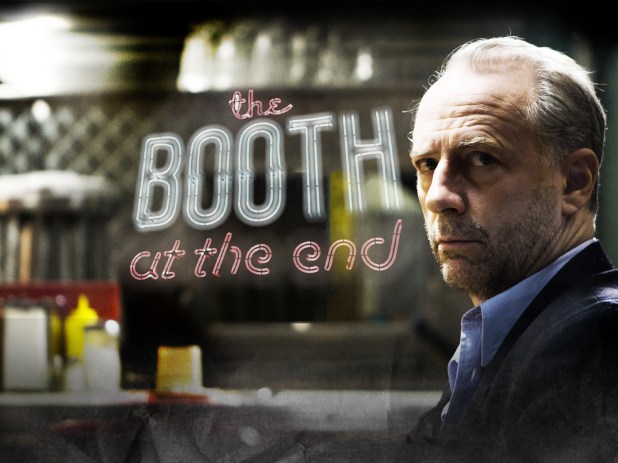
In the end booth of an old-school diner, sits a rumpled guy with a pen and a book. He’s never referred to by name. He’s just “The Man,” and he’s played by long-time character actor Xander Berkeley. As each vignette begins, he’s sitting there, perhaps reading the newspaper or having coffee, when he’s approached by someone who has heard that he can help them with a problem. A man has a terminally ill child. A young woman wants to be prettier. A nun has lost her faith. Each of them tells their story to The Man, who says that what they want can happen, but first, they must complete a task and return to report the details of carrying out that task. He then opens his book, jots a note or two, and tells them what they must do to receive their desire. For the man, his kid will get better if… he kills someone else’s child. For the young woman, she’ll be prettier if… she steals $101,043 from some banks. (The randomness of that number is like the randomness of the universe.) And the nun will hear God again if… she gets pregnant. The Man also tells each of them that they can walk away from his offer. In follow-up vignettes, we hear the decision each made and what happened.

The compiled vignettes form two seasons with a total of 10 approximately 23-minute episodes. (You can, as I did, binge the entire series in an afternoon. And once you get started, I’m betting you will.) Each episode follows the same format: Here is the diner, here is The Man in the booth at the end, and here are the clients entering one after another to either make a deal or give The Man updates. The only other character is a waitress named Doris, who takes on a greater significance in the second season when The Man sets up shop in the booth at the end of a different diner.

Who is The Man? Does he have supernatural powers? What is the significance of the book? How will the clients respond to their assigned tasks? Some of those tasks even intertwine. For example, the guy who must kill a child is unknowingly pitted against a guy whose task is to protect a child. In the end, how do these stories resolve? I think the true nature of the show is subtly found in its title: The Booth at the End. Yes, it’s the “end” booth in the diner, but “end” could also refer to the existential end of a person’s hope.

This is all the brainchild of writer/creator Christopher Kubasik, who got his start working on video games and writing tie-in novels. It’s easy to see that, in writing cut scenes for video games, he had the perfect training to write short-form internet content. Based on The Booth at the End, I wish he’d do more stuff. I was surprised to discover that there was a 2017 Italian movie adaptation of the show called The Place, which was nominated for a whole bunch of Donatello awards, the Italian Oscars. I must seek it out. 

Now before you cry “rip-off of Needful Things by Steve King from the University of Maine,” let me remind you that this plot about getting what you wished for–and then regretting it–has been around for ages and not just in the various adaptions of the short story The Monkey’s Paw. Folklore about wish fulfilment and its consequences goes back to the tales of the Arabian Nights. The Booth at the End is built upon a sturdy and reliable trope. And what makes it so special is how it subverts our expectations of that “genie and three wishes” plot. It does so entirely with dialogue. That’s right. Nothing is shown. Everything is discussed. In each vignette, a client sits in that booth and has a conversation with The Man. And these conversations are riveting, philosophical, and often horrifying. For, you see, life is like that, and Kubasik has stripped everything away, the action, the violence, the special effects, “the showing,” if you will, to concentrate on the thoughtful “telling”–and not a big parada.

On paper, this minimalistic approach would appear either boring or, at best, “twee,” as a cinephile friend likes to say. But watch a two-minute chunk, and you’ll see that it’s breathtakingly brilliant. The stories grab your attention with their complex dilemmas. Forgive me for using that overworked expression that you could do a semester college class in philosophy–or screenwriting–about the show, but it’s spot-on here. (The movie Groundhog Day similarly fits the description.) You, as the viewer, are drawn into this small, bell-jar universe of right and wrong, morality and immorality, and good and evil. It’s impossible not to ponder how you would react if faced with the same decisions The Man’s clients must make. The stories are like modern parables. 

And Kubasik tells these stories like the caveman who told his friends around the campfire how Ook fell into the pile of mammoth dung on their hunting trip, unadorned with CGI or VFX. It’s the oldest, yet most powerful, narrative device: simple storytelling. Too many filmmakers today forget the power of the spoken word. 

But an equally important reason this show succeeds, in addition to the weighty ideas and impressive writing, is the brilliant central performance by Xander Bekeley as The Man. All the actors here are good to great, but this is Berkeley’s day in the sun. While you might not recall his name, you’ll recognize him as a character actor who’s been kicking around for decades, quietly doing solid work in TV shows such as 24, Nikita, and The Walking Dead and the movies Candyman, Air Force One, and Heat, among many others. Lucy Mangan of The Guardian said Berkeley’s performance should be “used as an acting masterclass.” That’s 100% accurate. When the nun, played by Berkeley’s real-life wife, Sarah Clarke, asks him how she can be sure he’s not the devil, Berkeley’s delivery of “you can’t” is chilling. He’s so compelling that he could read a diner menu and be mesmerizing. But he’s equally compelling in his reactions to the details that his clients give him. He may be in a minimalistic show, but his acting is anything but minimal. He’s fantastic, demonstrating that sometimes the greatest acting is not always done by the big star in the big parada.

Over the years, I’ve recommended The Booth at the End to friends with discerning taste—this is not something you recommend to someone like that person who many years ago posted on a CompuServe board I moderated that Grease was the greatest movie ever made–yet no one has ever listened to me and watched it. I guess that description of “all tell, no show” was a buzzkill. Anyway, you’re an exceptional discerning person: Go watch The Booth at the End, which is streaming on Tubi. And then give me the details. I’ll be waiting for you at the booth at the end… of the drive-in snack bar.
Sennentuntschi: Curse of the Alps (2010)

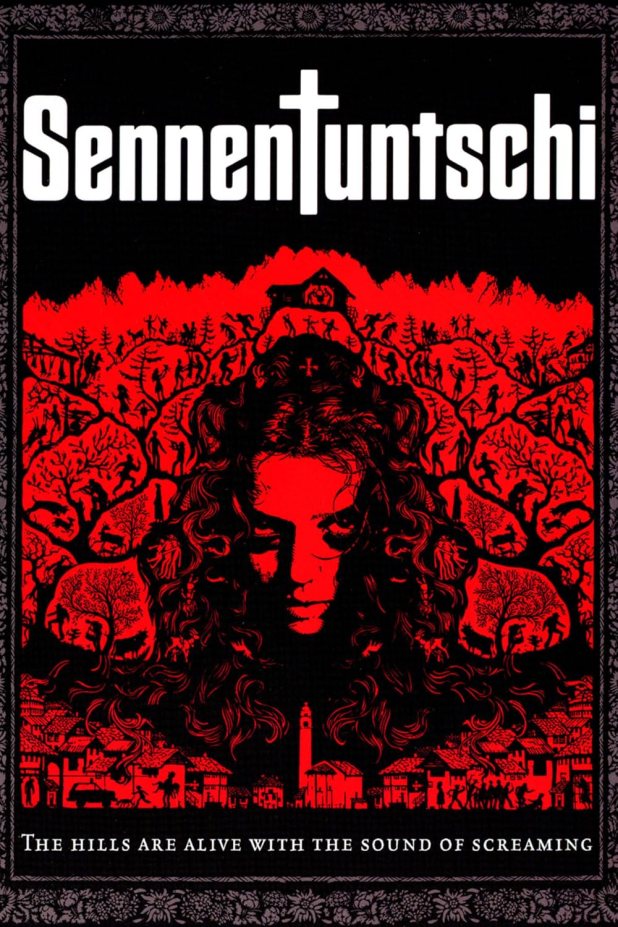
A girl and her mother are mushroom hunting when the young child finds a thirty-year-old skeleton, directed by a glowing boy who has been missing since 1975.

Ah, 1975, a time when a young priest hung himself — maybe — in a church tower. Shortly after his funeral, a mysterious girl appears in the village who everyone thinks killed the priest. After all, she’s afraid of crosses.

Another flashback: Erwin, his nephew Albert and Martin Delacroix get all messed up on absinthe. Albert makes a doll from brooms and rags, telling the others about the Sennentuntschi, a legend of three herdsmen who make a doll that comes to life. The next day, a girl dressed like the doll shows up and despite Erwin telling Martin that the story ends with all the men dead, they assault the girl, leading to Erwin losing his sheep and goats before being stabbed, Albert dies in a fire, and Martin dies of tetanus after being bitten by the girl. Oh, Martin. You didn’t break up with your lover. You killed her and were hiding here.

Meanwhile, a cop named Reusch is the only one who wants to save the mysterious girl. Even the bishop rallies the people around him, as he claims that she’s a demon and once showed up 25 years ago looking the same. That woman was really her mother, who the bishop raped. She went into hiding in the mountain house of the herdsmen, but was thrown from a cliff by the holy man. He then murdered the herdsman and kept their child in an underground chamber. When she escaped, she became the mystery girl in town. 

After she runs into the woods, Reusch finds her alive, having turned the skins of Albert, Erwin and Martin into a doll. This makes the officer angry, so she runs again, falling to her death in a foggy ravine. When he finds her body, he kills himself. Those are the bodies found at the beginning.

Directed by Michael Steiner, this movie is based on “The Guschg Herdsmen’s Doll,” which was already made in 1989 as Sukkubus. This may involve a confusing amount of time travel, but it’s an interesting idea.

You can watch this on Tubi.

ATTACK OF THE KAIJU DAY: 2010 Moby Dick (2010)

Is Moby Dick the original kaiju? Maybe. But anyways, Moby Dick 2010.

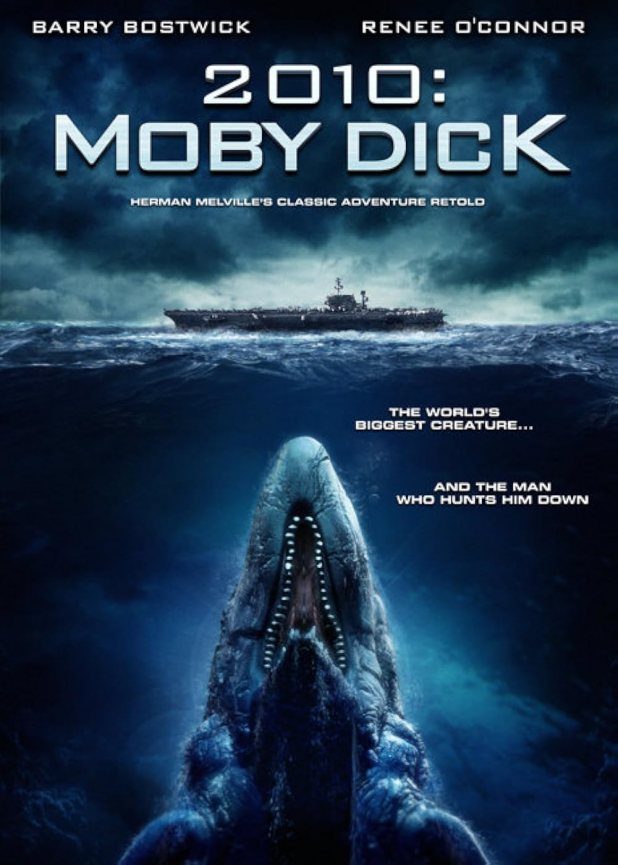
Back in 1969, Captain Jonah Ahab (Barry Bostwick) lost his left leg, his sub and his crew to a giant whale. Now, in 2010, he believes that monstrous thing was Moby Dick, “a legendary sea creature of evil and immortality.” I had to take that line from Wikipedia because I liked it so much. 

Anyway, this whale keeps taking out U.S. Navy ships, and we can’t have that. The USS Essex gets wiped out, but the Pequod is where Ahab and a crew of marine scientists are, searching the seas for Dick, Moby Dick.

When I was a kid, there was a book-on-record ad that played one line from every novel adaptation. The only one I remember is “There she blows! There she blows! A hump like a snowhill! ‘Tis Moby Dick!” For decades, I’ve yelled this for no reason, always thinking it was “a hook like a snowhill,” which makes so much less sense. What’s wrong with me?

At the end of the movie, Moby Dick has killed almost everyone, sunk multiple ships, lost an eye and then dodged nukes. I’m going to write that again. It dodges nukes. These idiots wipe out an entire island, and Moby Dick swims away, and only Dr. Michelle Herman (Renee O’Connor, of course, you know her as Xena’s wife, Gabrielle) survives, but again, if you didn’t get it above, they just nuked the entire area, so she’s going to end up like the cast of The Conqueror

The whale can walk on land, and Bostwick built his own weapon, telling MediaMikes, “I didn’t want to be embarrassed by the fact that they only had a dollar and a quarter, you know, to make that movie. I still have that gun mounted in my workshop. I felt the gun had to be something reflective of the character…much larger than life.”

The IMDB facts for this movie all come from what I can only imagine is a disgruntled Navy veteran, who left notes like “None of the uniforms and insignia (or lack thereof) are appropriate for U.S. Navy personnel in the situations shown in the film.” and “The characters constantly state that this event in the film happened between Naval vessels of the 3rd Fleet off of San Diego, CA. Any and all United States Naval ships in and around San Diego are in the 7th Fleet. The 3rd Fleet is located much farther north, near Washington State.”

You can watch this on Tubi.

ATTACK OF THE KAIJU DAY: Death Kappa (2010)

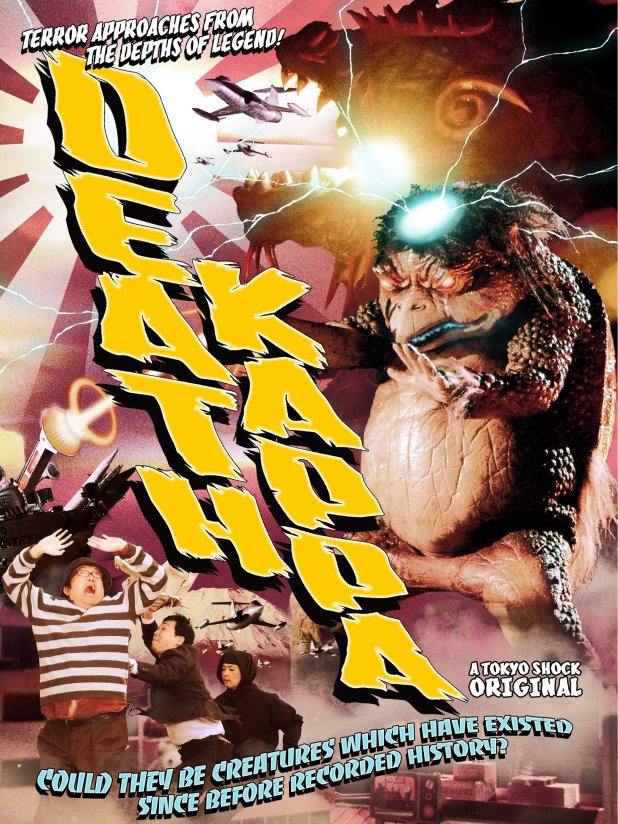
One of the three major yokai of Japan, the kappa is a water monster that looks like a frog wth a turtle shell. While they were once said to be killing machines that loved to drown people and cattle. Sometimes, they would remove a mythical organ called the shirikodama from their victims’ buttholes. But now, we see them as mischievous monsters that perform acts of kindness when captured, like revealing a secret medicine.

Directed by Tomoo Haraguchi and written by Masakazu Migita, this film follows Kanako returning home after failing as an idol singer. Just as she arrives, her grandmother Fujiko is run down by a VW Beetle that also smashes a kappa shrine. Her grandmother tells her to protect the kappa, just as the people in the car are taken by strange creatures. As for the kappa, he likes to dance to Kanako’s songs.

One night, those same creatures come to take the kappa, which is saved by Kanako, who is, in turn, kidnapped and presented to a mad scientist named Yuriko. Her creatures are called Umihiko, fish samurai who were supposed to save Japan during World War II, and she’s guided by her mummified grandfather, whom she loves. She wants to resurrect bushido and Japanese imperialism, starting with the girls who killed Fujiko, turning them into sharp-toothed fishwomen. As the kappa comes to save the day, Yuriko sets off a nuclear bomb that transforms all the fish people into a kaiju known as Hangyolas. The kappa kills the monster, but goes on a rampage that only Kanako can stop by singing to him and refilling the bowl on his head.

While this is silly in parts, as a kappa lover, I was beyond pleased.

You can watch this on Tubi.

UNSUNG HORRORS HORROR GIVES BACK 2025: I Saw the Devil (2010)

Each October, the Unsung Horrors podcast does a month of themed movies. This year, they will once again be setting up a fundraiser to benefit Best Friends, which works to save the lives of cats and dogs across America, giving pets second chances and providing them with happy homes.

Today’s theme: South Korea!

About the Author: Parker Simpson is a writer and podcaster focusing on cult films and their social impacts. They currently cohost Where Is My Mind, a podcast focusing on underappreciated films from a variety of genres and countries. They have also held panels, chartered local organizations, and written articles to their blog. When not writing or studying, they like to spend time with their pets and go outside. Check out the podcast Linktree and blog.

I remember watching a trailer for this a few months ago and thinking the serial killer was the aggressor the entire movie. I was wrong.

Anger is an addiction. When someone gets mad, they want to stay mad, even when they tire of it and destroy the lives of others. This can be as small as a petty friend drama, or as large as a full-scale revenge plot. The rampage is unable to be stopped until the person is, at least before wrath consumes them whole.

If you take anything away from 2010’s I Saw The Devil, that may be the smallest and least sensitive reading you could possibly get. Focusing on an intelligence agent’s quest to hunt down the serial killer that murdered his wife, both parties end up in a cat-and-mouse game that affects everyone around them.

The most talked about aspect of the film is its gratuitous violence. This film never lets up its attack, nearly desensitizing the audience until the very final shot, falling into the same vein as other Korean revenge films like Oldboy and Mother. Clocking in at over 140 minutes, it is an endurance test to get through certain scenes involving torture, mutilation, and murder in between lengthy bits centering around character disposition. Some call it torture porn, graphic and tiring; not to sound like the edgelord in the room, but that could be the point. In one’s conquest to exact revenge, you will eventually find the journey for such satisfaction tedious and uninspiring. You may forget what you were even fighting for. Does that mean it’s worth it to go on? I Saw The Devil doesn’t make a particularly compelling argument, showing both parties devolving into insanity and unsavory sadism in a world where there is no good or evil, just wrath, envy, lust, and all of the other sins. 

This point seems to go over many heads amidst the rampant violence against women and lagging pace, not that I don’t disagree; I have yet to see the rest of Kim Jee-woon’s filmography, but many online are quick to point out very few of his films have a favorable view of women. From this one film, it’s important to note the only female characters are shown as helpless, either mourning the death of Kim Soo-hyeon’s wife, Joo-Yeon, or becoming a victim of sexual assault. It fits the killer’s motif, yes, but it’s tiring and even degrading. It makes you wonder what could have been done differently, given the fascinating take on revenge.

I Saw The Devil’s strongest aspect is its visuals. The opening sequence with Joo-Yeon is one of the best cold openings I’ve seen in a long time; the second you see the glimmer in the “Good Samaritan’s” otherwise black eyes, you know what you’re in for: something creepy and unforgiving. Its immaculate cinematography is complemented by a sickly color palette that is simultaneously pale, harsh, and dark. Pretend all the violence was off-screen; you would still walk away feeling nauseous.

Additionally, the performances by the two leads, Lee Byung-hun and Choi Min-sik are mesmerizing, perfectly capturing two psychopaths in a sick loop, hell bent on destroying each other. I see that the former is involved in Squid Game and KPop Demon Hunters – not the plot twist I expected to see after I watched him make the world’s worst Rube Goldberg contraption. Despite both their sorrows and pains, neither express any regret of continuing their little game. And that may be the biggest tragedy of all.

I strongly recommend this to anyone who has seen Oldboy, Lady Vengeance, and Mother, yet somehow not seen this. And if you have not seen any of those titles, this isn’t a bad place to start – just be warned: it’s an intense, polarizing ride that leaves you sick to your stomach.

THE IMPORTANT CINEMA CLUB’S SUPER SCARY MOVIE CHALLENGE DAY 11: Closed for the Season (2010)

October 11: A Horror Film That Features a Roller Coaster

Kristy (Aimee Brooks, Critters 3) and James (Damian Maffei, Haunt) try to get over their fear of amusement parks through immersion therapy, but end up fighting an evil clown and learning that they must experience all of the urban legends of the park and ride all of the rides before they can leave.

Shot at the abandoned Chippewa Lake Amusement Park in Medina, Ohio before it was demolished, this at least was made somewhere filled with urban legends, like a crocodile that escape in 1800s, a monkey escaping in the 1940s, residual hauntings including big band music playing in the middle of the night and nature growing over the rides, it was quite the set for the movie. Joe Unger, who plays The Carny, claims that his father was a carny and may have actually worked at the park.

I really liked the flashbacks in this and how they reveal the stories of all of the people trapped here; that said, I prefer director and writer Jay Woelfel’s Beyond Dreams Door. This seems to go on way longer than its nearly two-hour length. The acting isn’t bad, and there are some ideas here. I just wish they were a little tighter. Still, it’s rather ambitious.

You can watch this on Tubi.

THE IMPORTANT CINEMA CLUB’S SUPER SCARY MOVIE CHALLENGE DAY 8: Don’t Be Afraid of the Dark (2010)

October 8. A Horror Film That Mostly Takes Place in a Library

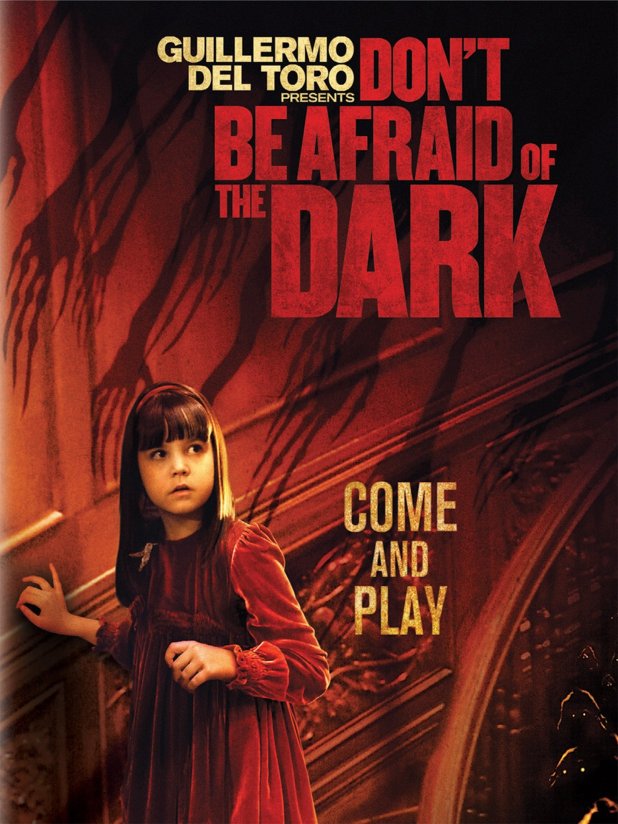
Decades ago, inside Blackwood Manor, wildlife painter Lord Emerson Blackwood took the teeth of his maid and those of the creatures who lived within the fireplace and tried to reason with them. They turn him down and kill him, as they only want the teeth of children. This scene got me — teeth smashing is that one taboo even I can’t get over.

Sally Hurst (Bailee Madison) has come to live with her father (Guy Pierce) and his girlfriend (Katie Holmes), as her mother is too depressed and he’s renovating the manor. She awakens the creatures, and fortunately, Kim, her father’s girlfriend, believes her. They visit a library and discover Lord Blackwood’s unpublished artwork, which depicts these tooth fairies. The librarian is even aware of them, saying they sometimes transform humans. One of them is Blackwood, who wasn’t killed but has become the leader. Sally is trapped in the library but manages to escape, even killing a creature with a bookshelf.

Co-writer and producer Guillermo del Toro chose comic-book artist Troy Nixey to direct and art direct this. Obviously, it comes from the TV movie of the same name. This even has an ending that is so close to the first film. It’s good, but it can’t be compared. That’s fine — the original is such a big deal to me. But this is still a good film.

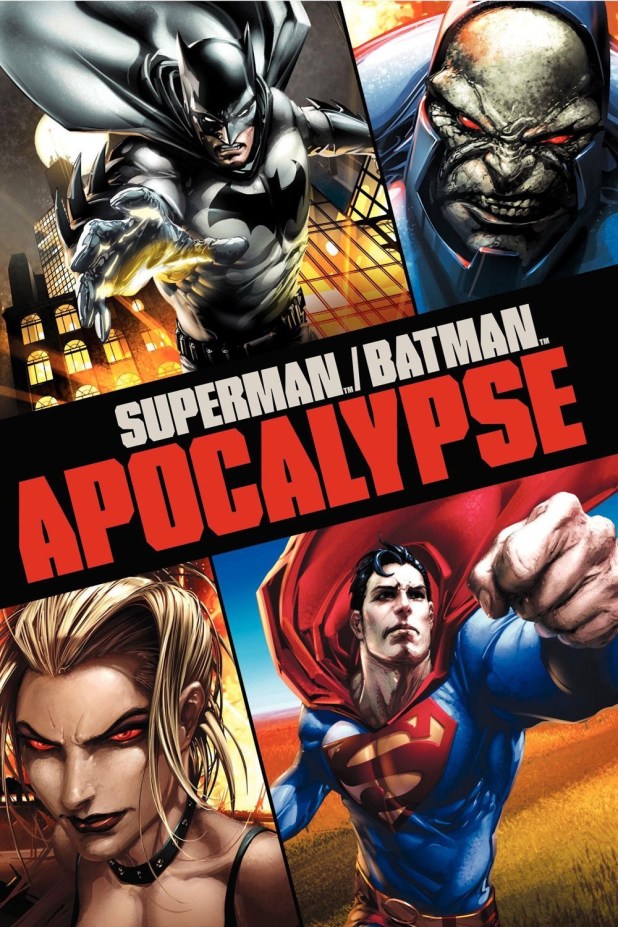
Superman/Batman: Apocalypse (2010)

Based on the “The Supergirl from Krypton” issues of Superman/Batman, this is the sequel to Superman/Batman: Public Enemies and has an art style based on the late Michael Turner. Directed by Lauren Montgomery and written by Tab Murphy, this is the story of Kara Zoe-El (Summer Glau), the heroine who will become Supergirl and how Superman (Tim Daly), Batman (Kevin Conroy), Wonder Woman (Susan Eisenberg) and other heroes like Habringer (Rachel Quaintance) and Artemis (also Rachel Quaintance) help to train her.

Soon, she’s attacked by Granny Goodness’ (Ed Asner) Female Furies — Gilotina (Salli Saffioti), Mad Harriet (also Salli Saffioti), Stompa (Andrea Romano) and Lashina (Tara Strong) — who Darkseid (Andre Braugher) wants to lead them. Superman and Batman turn to the last person who had this title, Big Barda (Julianne Grossman), to go to Apokolips and save the Kryptonian youngster.

This is a fast moving film unafraid to have death and violence in it, so if you have a child who loves superheroes, you should watch it with them and discuss it afterward. It’s very close to the comic, where writer Jeph Loeb has no issues killing off characters, which always surprises me, like Lyla, who was the Harbinger of original Crisis On Infinite Earths.

You can watch this on Tubi.

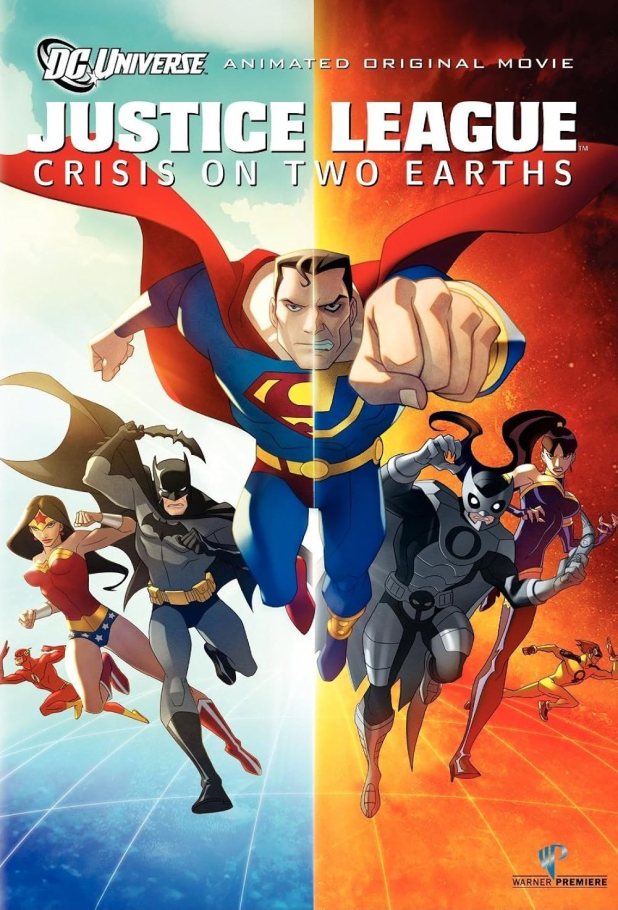
Justice League: Crisis on Two Earths (2010)

Directed by Lauren Montgomery and Sam Liu and written by Dwayne McDuffie, this is based on Grant Morrison’s JLA: Earth 2 and takes place between Superman/Batman: Public Enemies and Batman: Under the Red Hood.

On Earth-3, Lex Luthor (Chris Noth) is a hero, working with the Jester (James Patrick Stuart) to stop the Crime Syndicate. He escapes to our Earth and informs the Justice League of his plan to stop them from being the rulers of his planet.

Nearly every member of the Crime Syndicate has a duplicate on Earth-1.  Superwoman (Gina Torres) is Superman (Mark Harmon). Owlman (James Woods) is Batman (William Baldwin). Wonder Woman (Vanessa Marshall) is Ultraman (Brian Bloom). Power Ring is Green Lantern (both played by Nolan North), while Johnny Quick (James Patrick Stuart) is The Flash (Josh Keaton). The other Earth is so warped that instead of Deathstroke being a killer, he’s President Slade Wilson (Bruce Davison) and his daughter Rose (Freddi Rogers) somehow doesn’t become a mercenary, but instead one of the few good people on her world, falling in love with Martian Manhunter (Jonathan Adams).

Where the movie simplifies things is the revelation by Morrison that Luthor, no matter the world, is fated to lose while the Justice League will always win. When they switch worlds, this ruins the balance of this predestiny. That said, for a cartoon that has to make a quick version of this story, it’s pretty good. I loved how the Made Men show up, people given powers by the Crime Syndicate as almost mob henchmen, as well as getting to see Firestorm, Black Lightning, Black Canary and alternate versions of the Marvels, Vibe and Looker.

You can watch this on Tubi.

25 DAYS OF CHRISTMAS CHALLENGE: The Nutcracker in 3D (2010)

Andrei Konchalovsky made a Christmas movie.

The same Andrei Konchalovsky who made Maria’s LoversShy People, Runaway Train and, oddly, Tango & Cash.

This was his passion project for twenty years.

It is not good.

He was inspired to adapt it into 3D as he thought it “would be useful in conveying the fantastical nature of the material, capturing the emotions of CGI characters, and appealing to a family audience.

He also made The Nutcracker, a ballet, with no ballet sequences because, because he believed “ballet cannot work in cinema very well.”

It was primarily financed by VEB.RF, a Russian state development corporation chaired by Vladimir Putin, and at the time was the most expensive Russian film ever.

In 1920s Vienna, Mary (Elle Fanning) and her brother Max (Aaron Michael Drozin) are being babysat by their Uncle Albert (Nathan Lane) while her parents Joseph (Richard E. Grant) and Louise (Yulia Vysotskaya) go to a Christmas Eve party.

That’s Uncle Albert Einstein.

Einstein gives the kids a dollhouse and a nutcracker by the name of NC (Charlie Rowe, voiced by Shirley Henderson) who soon comes to life and introduces her to his friends Gielgud (Peter Elliott and Daniel Peacock, voiced by Alan Cox), Sticks (Africa Nile) and Tinker (Hugh Sachs). They climb to the top of the Christmas tree and meet the Snow Fairy (also Vysotskaya), who informs the children that NC is really Prince Nicholas Charles, who has been deposed by The Rat King (John Turturro) and his mother, The Rat Queen (Frances de la Tour) and turned from a boy into a nutcracker. He’s a real boy again, but not for long, because when he comes back home, he’s transformed and we learn that the rats are, well, all Nazis.

Look at that line again. A kid movie with Nazi rats — like Art Spiegelman’s Maus — that’s an adaption of the Nutcracker with no dancing and lyrics by Tim Rice that was funded by Vladimir Putin and it’s in 3D.

Roger Ebert said it best: “From what dark night of the soul emerged the wretched idea for The Nutcracker in 3D? Who considered it even remotely a plausible idea for a movie? It begins with an awkward approximation of the story behind the Tchaikovsky ballet, and then turns it into a war by the Nutcracker Prince against the Holocaust.”

Roger Ebert, suffering from cancer, had to spent time in his slowly dwindling life watching this movie.

A Nazi movie, yes, but set in 1920. This movie has destroyed my mind.

Let me just get this all out of my head.

The Rat King says that he will create an empire that will last a thousand years, as well as a scene where he electrocutes his pet shark. In a movie for children. For Christmas. About The Nutcracker. Yet also the rat people are also shown as being persecuted. Why am I wondering so much about the politics of a 3D CGI rat movie? Should I leave the house and finish my Christmas shopping?