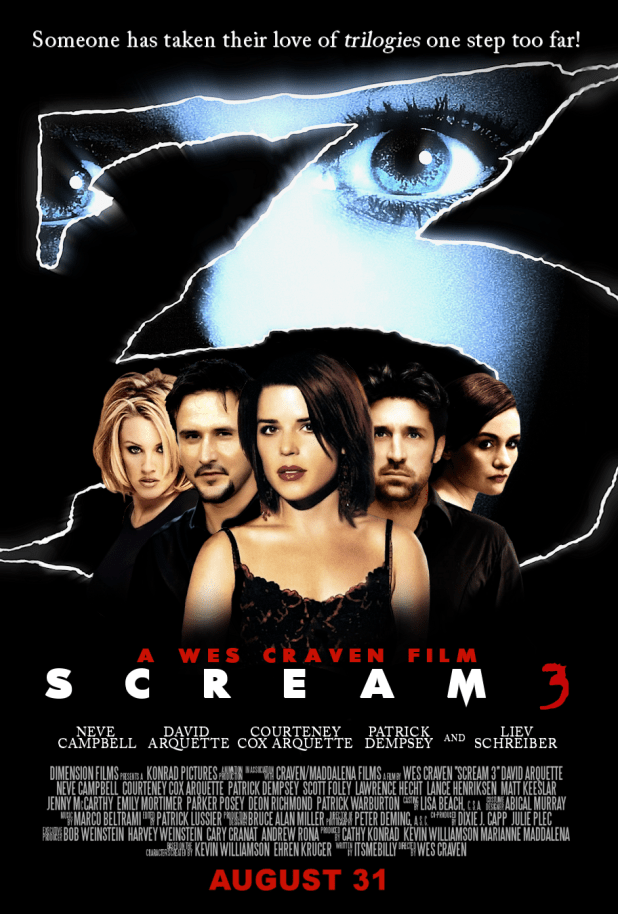
Scream 3 (2000)

Writer Kevin Williamson had created a five-page outline for two sequels to Scream when selling his original script, hoping that one film could become a franchise. Ehren Kruger, who wrote the American versions of The Ring threw out most of those notes. He’d finish script pages the day they were shot, which led to Wes Craven rewriting them so that the characters would at least resemble who they were in the first two films.

This being a Wes Craven movie, it’s at this point of the write-up that I discuss that “production was troubled with script rewrites, occasions when pages were only ready on the day of filming, and scheduling difficulties.” Did Wes ever have a movie go smoothly?

Following the Columbine High School massacre and increase worry about the impact of violent media, the script kept getting toned down. Supposedly, there was even a version where Matthew Lillard would return as Stu Macher, having survived the first film and using high schoolers to attack Sidney from prison. What they ended up with was a movie within a movie about Stab, the film version of the movie we watched in 1996.

Detective Mark Kincaid (Patrick Dempsey) contacts Gale Weathers (Courtney Cox) to discuss the murder of Cotton Weary (Liev Schreiber) and his girlfriend Christine (Kelly Rutherford, who while being known to many from Melrose Place also played a salesgirl in Phantom of the Mall: Eric’s Revenge when she was just starting her career). She decides to go to Hollywood to learn more about the story and visit the set of Stab 3, a film based on the Ghostface killings. It’s also where Dewey (David Arquette) is working as an adviser.

Sidney (Neve Campbell) is trying to hide out as a crisis counselor, but all the calls start again and she’s pulled back to the set where most of the cast of the movie — not Scream 3Stab 3 — get killed, like Tom Prinze (Matt Keeslar, who left acting behind to teach urology), Sarah Darling (Jenny McCarthy), Jennifer Jolie (Parker Posey), Angelina Tyler and Tyson Fox.

I do have to say, having Posey play Cox was a genius idea and one of the few bright spots to this film (she even wore the same green dress Cox wore in the first movie), along with the conceit that someone in Hollywood pushed the original murderers over the edge. The house where this film ends is the same domicile as Halloween H20.

The film never had a test screening, with the cast and crew seeing the movie for the first time at its premiere due to worries that spoilers would ruin the movie. Craven also shot three different endings, so they didn’t know how the movie would wrap up.

Roger Ebert would call out the reason why I disliked this movie so much. For a series that started as a smart send-up of slasher tropes, things really were rote by this point. He’d write, “The characters are so thin, they’re transparent. They function primarily to scream, split up when they should stick together, go alone into basements and dark rooms, and make ironic references to horror cliches and earlier movies in the series.”

That said, Wes Craven and Roger Corman show up, as does Lance Henriksen and Jay and Silent Bob, earning this movie a mention on our list of Ten Movie Crossovers.
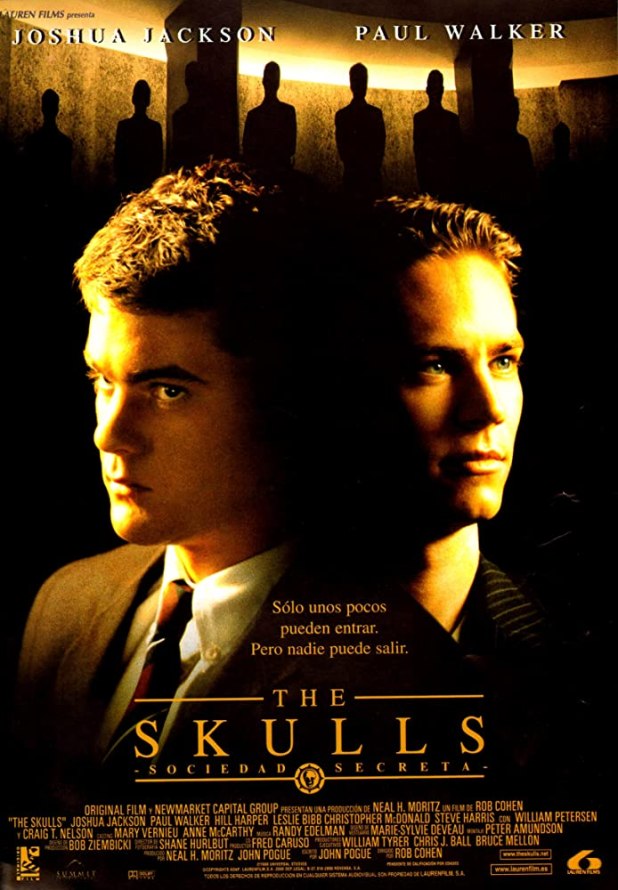
The Skulls (2000)

You know when a conspiracy theory — like Yale University’s Skull and Bones student society — becomes true? When Hollywood makes a movie about it. Here’s the real conspiracy. This movie is pretty much the 1970 made-for-TV movie The Brotherhood of the Bell. That said, this is where Rob Cohen met Paul Walker, so that’s how this movie has ended up in the middle of our The Fast and the Furious theme week.

Walker is Caleb Mandrake, a name that only exists in movies, and Joshua Jackson is Luke McNamara. They’re the two newest members of The Skulls, which prepares its members through war. It barely takes any time for this alignment to cause Luke’s best friend Will (Hill Harper, CSI: NY) to stop talking to him. But hey — he feels like he needs an edge to stay with his rich girlfriend Chloe (Leslie Bibb).

Speaking of CSI, William Petersen plays the leader of the inner circle and Caleb’s dad is played by Craig T. Nelson. They’re powerful because of the group and will crush anyone who gets in their way.

Another conspiracy: this movie was shot in Toronto and not Yale. Imagine being from that city and seeing your landmarks all over this movie and someone saying, “No, that’s really America.”

They made a whole bunch more of these — well, OK, two more — that went direct to video. Rob Cohen went to Harvard, so he was probably in a group just like this that allowed him to keep making films after  xXx and Stealth.

Someone on IMDB noticed this — and I thought it was funny — that every Skull gets a watch for their left hand. Which means they are all right handed. At least they don’t show them masturbating in a coffin while other members watch. Not that I know tons of Skull and Bones stories or anything.

Gone In 60 Seconds (2000)

Much like how The Fast and The Furious would take the familiar title of a past film and make something new, this movie is a loose remake of the 1974 H.B. Halicki movie. Also, much like the Paul Walker/Vin Diesel film, critics absolutely hated this movie, which cried all the way to nearly tripling its production costs at the box office.

It has something that every single The Fast and the Furious movie lacks: Nicolas Cage as Randall “Memphis” Raines.

Memphis has the job of stealing fifty luxury cars for Raymond Calitri (Christopher Eccleston, who played both Dr. Who and Destro). He wanted out of this life, but his moron brother Kip (noted film idiot Giovanni Ribisi) screwed up and will get killed if his big brother doesn’t fix things.

Along with his mentor Otto Halliwell (Robert Duvall), Memphis assembles his crew again, including Donny Astricky (Chi McBride), Sphinx (former football star Vinnie Jones) and Sara “Sway” Wayland (Angelina Jolie, probably the main reason other than Cage to watch this movie).

I love that the cop, Detective Roland Castlebeck, is played by Delroy Lindo. That guy should be in more movies. Plus you get Scott Caan, James Duval from Gregg Araki’s movies, Timothy Olyphant, Grace Zabriskie (Sarah Palmer!), Trevor Goddard (Kano!), Mater P (Hootie hoo!) and John Carroll Lynch, who should also be in more movies.

Remember up top when I said this was a success? The truth is that its high production and marketing cost lost Disney around $90 million, who used Hollywood math to write it off as a $212 million loss. I guess that explains why there was no sequel.

Director Dominick Sena made music videos for everyone from E.G. Daily (“Sat It Say It”), Peter Cetera and Amy Grant (“The Next Time I Fall In Love”) and Richard Marx (“Don’t Mean Nothing”, “Should’ve Known Better”) to Janet Jackson (“Rhythm Nation”, “If”, “Miss You Much”, “Come Back to Me” and “The Pleasure Principle”) and Pia Zadora (“Heartbeat of Love”) before making movies like KaliforniaSwordfish and Season of the Witch, which reunited him with Cage.

cage

And what in the hell is this about? “Nic Cage Bitch” is our Nicolas Cage blowout written by Paul Andolina of Wrestling with Film. It’s a must read for all fans of the Cage, so check it out and learn about some Cage films you may have missed, such as A Score to Settle, Between Worlds, Kill Chain, Outcast, Rage, and Seeking Justice.

Radical Jack (2000)

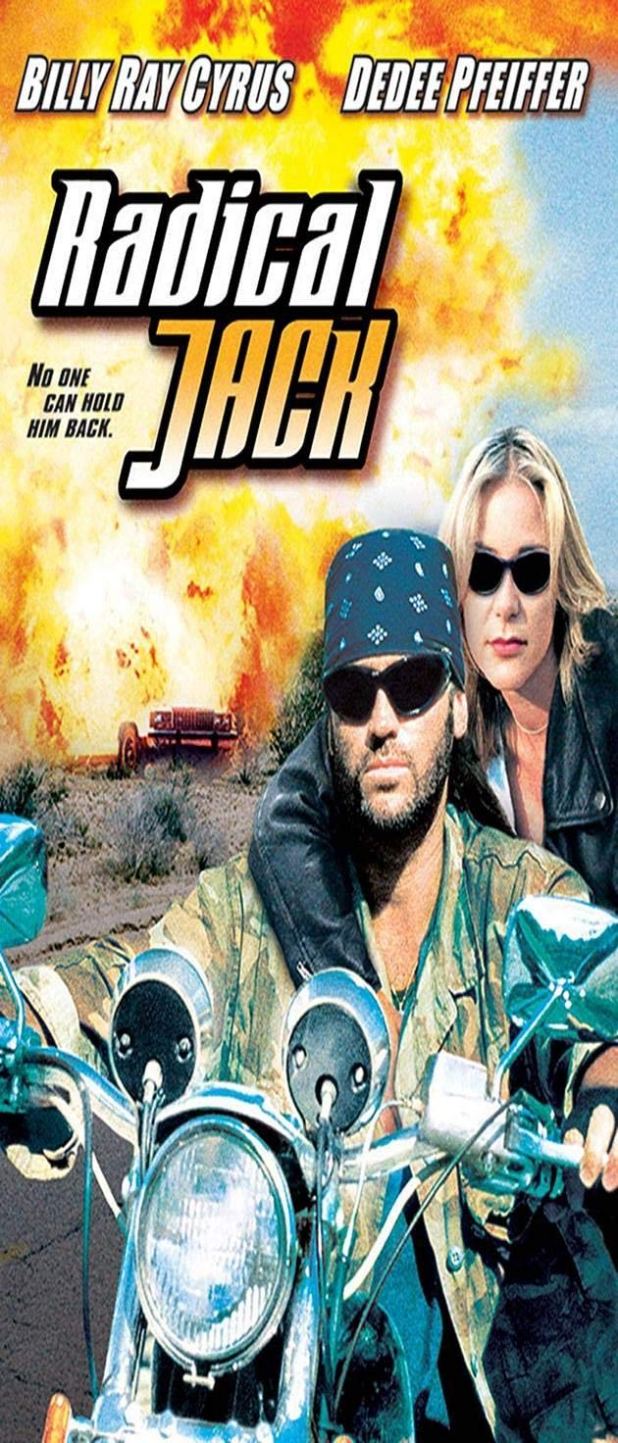
What if Billy Ray Cyrus remade Roadhouse?

What indeed?

Yes, the man once known for “Achy Breaky Heart,” a song that was released a year before as “Don’t Tell My Heart” by The Marcy Brothers, and then known more for his daughter’s music once ruled the pop culture world for a very limited time. This is the outgrowth. Or afterbirth. Or painful reminder.

Ever since his wife died on a mission, CIA agent and former Navy SEAL Jack Reynolds (Cyrus) has lost interest in life. Seriously — do you know how hard it is to do either of those jobs? Jack — Radical Jack to you and me — did both.

Now he’s in Vermont, where he’s gone undercover at a local bar, where he battles George “Buck” Flowers because, well, look I watch way too many movies. There’s a great emptiness in my heart sometimes and I try and fill it with films in the hope that I find some level of inspiration within them. Why I chose a Billy Ray Cyrus vehicle made 17 minutes into his 15 minutes of fame is beyond me. God, if He exists, they say, works in mysterious ways. Perhaps this is where I would find my moment. The dream that I’ve been searching for. The answer.

No.

Dedee Pfeiffer, the younger sister of Michelle, is the love interest. Perhaps you remember her from The Allnighter, a teen comedy that everyone went to see in case Susanna Hoffs would show some skin and then they realized that her mother directed it. I’ll forgive you if you never saw it.

I really don’t have anything else to say at this point.

The Flintstones In Viva Rock Vegas (2000)

Did you like the cast of The Flintsones movie? Bad news. None of them are back.

Mark Addy replaces John Goodman as Fred. Stephen Baldwin is no Rick Moranis as Barney. Kristen Johnston takes over for Elizabeth Perkins as Wilma Slaghoople. Jane Krakowski is here instead of Rosie O’Donnell as Betty.

The 2000’s were a time of prequels. So if you ever wanted to know how the Flintstones got together — and you desired to see the character that ruined the original show, The Great Gazoo (Alan Cumming, who also plays Mick Jagged, the Mick Jagger character ) — it’s all here for you.

This was directed by Brian Levant, who was also behind the first film, as well as Problem Child 2BeethovenJingle All the Way, the direct to video sequel to A Christmas Story and supposedly the reboot of Police Academy.

Look, I’ll watch any movie with Joan Collins in it. That was pretty much what kept me going in this film. Harvey Korman shows up, which is ironic, as he was the voice of Gazoo in the original cartoon. And hey, Taylor Negron roles are always appreciated.

At least they kept Mel Blanc’s voice for Dino.

Charlie’s Angels (2000)

Remember when McG was a thing?

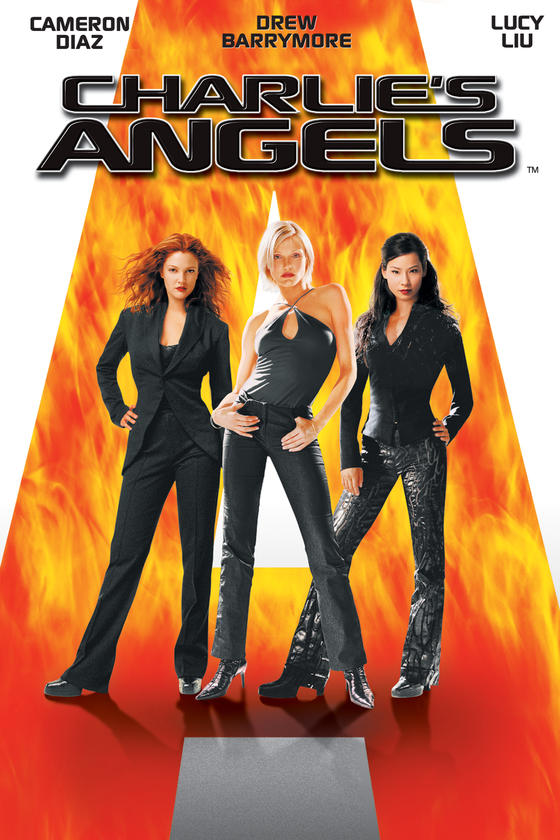
The director of Charlie’s Angels began his show biz career by producing Sugar Ray’s first album, co-writing their earworm song “Fly” on their second and directing videos and documentaries for Smash Mouth, The Offspring and Korn. This led to ads and finally, to this remake of the 1970’s TV series, moving it a more spy-friendly direction.

After Terminator SalvationWe Are Marshall, the Chuck TV series and several abortive attempts to direct bigger studio films, he has seemed to settle into directing Netflix films like Rim of the World and The Sitter.

But man, for a while, he was the toast of the town.

This movie combines everything late 90’s into one tidy little time capsule for you. Cameron Diaz, producer Drew Barrymore and Lucy Liu are the Angels for this generation, not jiggling and definitely more aware of their sex appeal. They work for Bosley — Bill Murray, who famously treated Liu like offal to the point that she physically attacked him — and the always unseen Charlie (voiced by John Forsythe, just like the series).

For that matter, McG has always claimed that Murray beat him up on the set. I’m sure he had his reasons.

The Angels’ mission? Find and rescue a software genius (Sam Rockwell) from an evil communication magnate (Tim Curry). Along the way, they encounter a hair-sniffing lunatic that continually gets the best of them in fights. As played by Crispin Glover, this movie represents the actor’s return to the mainstream while remaining a complete maniac, which is always appreciated. After all, he was supposed to have speaking parts, but Glover refused to voice them, wanting his character to be even more mysterious.

Of course, Rockwell is really evil and tries to kill the Angels and Charlie, who he blames for killing his father in Vietnam. And oh yeah — Tom Green, Matt LeBlanc and Luke Wilson all show up as boyfriends.

The real heroine of the film? Barrymore, who bought the movie rights to the show and pocketed $40 million on this movie and $80 million on the sequel. Seeing as how she had to read through thirty versions of the script, I’d say it was all worth it in the end.

Faust: Love of the Damned (2000)

Brian Yuzna produced Re-Animator and From Beyond before directing his own film, the completely insane Society. Keep in mind that the same guy who created these films also wrote Honey, I Shrunk the Kids.

The character of Faust comes from the comic book created by David Quinn and Tim Vigil. I was shocked that this movie was made, because the series is absolutely besotten with sex, violence and sexual violence. Once, I met Vigil and bought a bunch of art from him. He asked if I wanted to buy a huge pen and ink of an orgy with demons alternatively having sex with, killing and devouring gorgeous women, sometimes at the same time. I demurred and he replied, “Fucking pussy.”

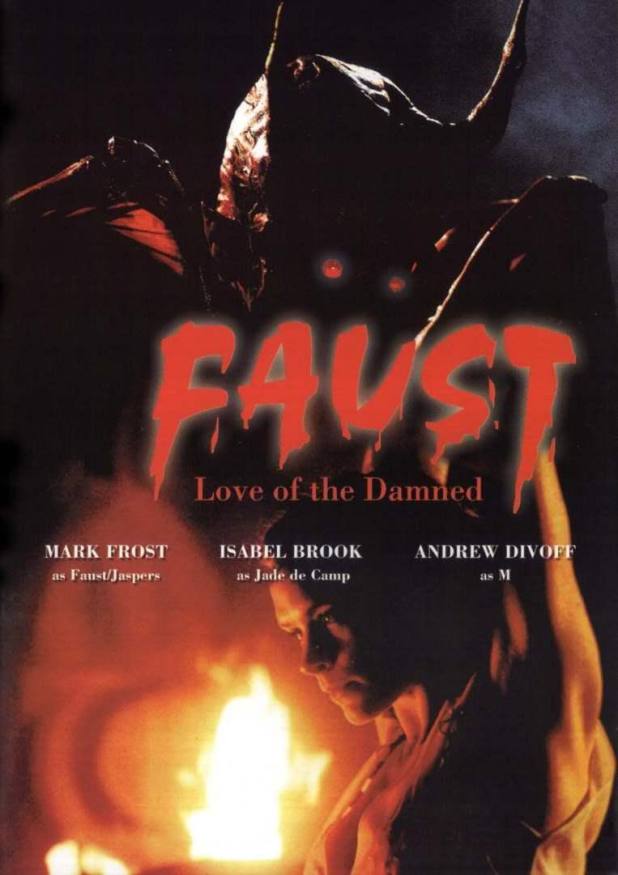
Artist John Jaspers sells his soul to the M (as for Mephistopheles) (Andrew Divoff, Wishmaster) so that he can gain revenge against the gangsters who killed his girlfriend. That deal comes with a price — at night he becomes a demon that loves to kill and often does so for M and his lover, Claire. But when he falls in love with his psychologist Jade, he decides to turn against the devil.

Jeffrey Combs from Re-Animator shows up as a policeman, for those of you who love his work. And if you love the effects of Screaming Mad George, he made the final monster, which is really something.

Faust is a weird movie. It’s probably too strange and graphic for most folks. And for the fans of the book, it doesn’t go far enough. That said, much of the dialogue and set pieces from the comic made it to the screen intact, probably because Quinn was the screenwriter.

Jack Frost 2: Revenge of the Mutant Killer Snowman (2000)

I always wonder what my limits are. Like, when is a movie so bad that even I will say, “This movie is horrible.” I thought that last year, when I watched Jack Frost, that I had hit the absolute nadir of my movie watching. And then, Jack Frost 2 showed up and I realized how wrong I was.

Sam Tiler (Christopher Allport, returning from the last film) has been struggling with returning to normal life after the last film. His wife, played by the returning Eileen Seeley, suggests a tropical vacation to get as far away from the winter and his constant fear of snowmen. Plus, his deputy and secretary (again returning are Chip Heller and Marsha Clark) are getting married, so they can kill two snowbirds with one stone.

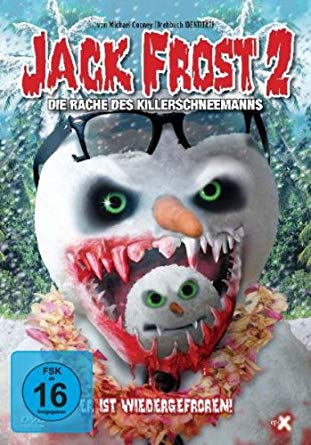
Of course, the FBI screws everything up and brings Jack back from the dead. Now, he shares a psychic link because Sam’s blood is in the antifreeze that killed him back in the first film. Jack’s nose — a carrot — follows them to the tropical island of Colonel Hickering (Ray Cooney, who somehow doesn’t list this film on his Wikipedia page).

What ensues is everyone making fun of Sam for his constant fear of snowmen and a slasher film as Jack begins killing people, even taking their eyeballs out ala Fulci. Meanwhile, Agent Manners (not Stephen Mendel any more, but now played by David Allen Brooks) has survived being maimed by Jack and is here to protect the island.

What follows is pure ridiculousness. The rules of the last film no longer apply, as antifreeze no longer hurts Jack. He also has the power to give birth to baby snowmen that kill even more people. Sam panics and his wife takes over, realizing that Sam and Jack share the same vulnerabilities, including an allergy to bananas, which they use to kill Jack’s new family of baby snowmen.

Sam ends up getting himself together and kills Jack like he’s a giant shark: you guessed it, he blows him up real good. Meanwhile, everyone forgets that two of the main characters were locked in a freezer and they die. Yes, really. And a large carrot killing two sailors in the post-credit sequence hints at the sequel that was never made, where Jack would become Godzilla sized, entitled Jack Frost 3: The Last Coming.

That third movie will never come as Allport was killed by an avalanche. I don’t want to speculate on whether or not Jack Frost was involved.

Trying to decide which Jack Frost movie is better is kind of like trying to decide which family gathering at your ex-wife’s parents was better: the one where a child picked your cat up by the head and threw it down the steps or the one where you hid in the bathroom, alternatively crying and playing an old LCD blackjack game.


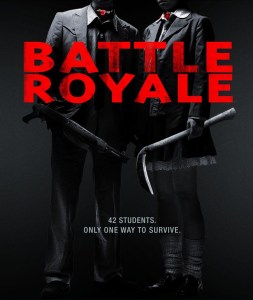
DEADLY GAME SHOWS: Battle Royale (2000)

The director of Battle Royale, Kinji Fukasaku (Tora! Tora! Tora!, Battles Without Honor and Humanity) spent his childhood working in a munitions factory during World War 2. One day, it came under fire and the children were caught in the explosion. Those that survived, like Fukasaku, had to dispose of the bodies of their friends. This is when he realized that adults were lying about the war and he developed a hatred for them that lasted most of his life.

Based on the novel by Koushun Takami, the actual Battle Royale is an annual event where one Japanese class is selected to fight. Only one can survive (see The Hunger Games, which while its own work, had to have been inspired by this story). And the rest of the country watches the event live on TV. It’s also population control as Japan faces an economic recession (see The Purge).

Class 3-B is gassed on a field trip, fitted with collars that can read their vitals (and blow their heads off) and sent to a briefing room where they encounter their former teacher, Kitano (Takeshi “Beat” Kitano, a cultural force in his own right). There’s a crazy scene here where a cheerful girl explains the rules of Battle Royale in the same way you’d explain how to play a video game. But after Kitano kills two students — including the one who wounded him and caused his retirement from teaching — for horseplay, everyone knows that this is no game.

Within six hours, 12 of the 42 students are dead, mostly at the hands of Mitsuko Souma and Kazuo Kiriyama, two girls who take the Mean Girls and Heathers archetype to its logically homicidal endgame.

The two main characters, Shuya Nanahara and Noriko Nakagawa, are determined to survive together. Along the way, there are twists, turns, double crosses and over the top amounts of violence. They’re assisted by Kawada, who has already won a past Battle Royale at the cost of his girlfriend’s life.

By the end, only Kiriyama is trying to win the game. Everyone else is trying to beat the system and escape the island. After a large battle, it seems at the end only Kawada survives, as he kills our heroes. But it’s all a ruse — he knew that Kitano can hear everything on the microphones they wear. Kitano then sends everyone else home, as he wants to kill Kawada himself.

As the three enter Kitano’s base they find an unhinged painting of the entire class, all foretelling how they would die, with only Noriko as the sainted survivor, painted as if she has ascended to godhood.

Beat Takeshi painted this himself for the movie.

He tells them that she was the only one worthwhile and he wants her to kill him. His daughter had rejected him, as we learn when he tries to reconnect with her throughout the film. He threatens her with his gun and Shuya shoots him. It turns out that his gun was just a water pistol and before he dies, his daughter calls one last time to argue with him.

As they leave the island, Kawada dies from his wounds, happy that he has finally found true friendship. Our heroes are now on the fun, branded as murderers, but are determined to never stop running.

The casting for this film was just wild — 6,000 hopefuls tried out with 800 being trained and of those, 42 made it into the movie.

When released, the film was R15, a rating in Japan that keeps those 15 and under away from the film. Fukasaku complained that this audience needed to see the film most of all, but the government condemned the movie. This led Fukasaku to say to teenagers, “you can sneak in, and I encourage you to do so.” And while it’s played in the US at some limited engagements, it’s never been formally released in the wake of Columbine.

A film this visually intense, action-packed and boundary pushing? Of course, it’s influenced Western culture. And you need look no further than Quentin Tarantino’s Kill Bill, where Chiaki Kuriyama, the actress who played Takako Chigusa, was cast as Gogo Yubari. And the Marvel Comic Avengers Arena took young superheroes and pretty much ripped off this film, even using a variation of the logo.

There’s been talk of an American remake and even a TV show on the CW, but luckily, this has never happened. Why remake what is pretty much a perfect film, filled with cultural winks, ultraviolence and an actual message and transform it into a Westernized mess? Check this out on Shudder.