The Apple (1980)

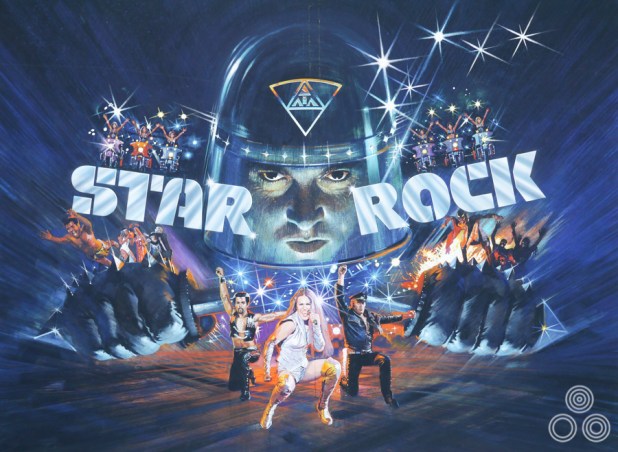
You know how everyone thinks Cannon put out some completely crazy movies? If you haven’t seen The Apple (also known as Star Rock), you haven’t seen their full power. Directed by Menahem Golan, this slice of sheer madness is a movie I use to test the resolve of anyone brave enough to watch movies with me.

The genesis of this film begins in 1975. Israeli rock producer Coby Recht was signed to Barclay Records and began to feel distrustful of show business. He worked it into a story with his wife Iris Yotvat and brought it to the attention of his longtime friend Menahem. After hearing the demos for the songs, the producer/director instructed Recht to go to Los Angeles immediately. They were making the movie.

Yotvat said, “That was marvelous. That was just fantastic to think that it was going to be a movie all of the sudden. It was just amazing.”

It wasn’t going to stay that way.

Recht and Yotvat lived in a villa that Menahem provided, writing six screenplay drafts in three weeks. As those drafts progressed, the story became more comical and less Orwellian. Soon, things were getting corny, out of touch and out of date. If you’ve seen any of the movies that Golan was involved in, you can see how that might be true.

After auditioning thousands of hopefuls, Recht settled on Catherine Marie Stewart for the lead role of Bibi. Who is a singer. Not a dancer, like Stewart. He figured she could learn, but the producers decided to have her voice dubbed.

Tensions only got worse once filming began, as what started as a $4 million dollar movie turned into $10 million and then more. Editor Alain Jakubowicz claimed that Golan shot around a million feet of footage, with six cameras of coverage for every dance number, ending up with a four-hour rough cut.

The movie got way bigger than its scriptwriters intended. Shooting in West Berlin lasted forever, with a five-day shoot for the opening number, the song “Speed” being filmed at the Metropol nightclub (which held the world record for biggest indoor laser show) and some scenes were actually shot inside a gas chamber that had killed people during World War II.

Nigel Lythgoe, who later was a big part of American Idol, choreographed the film, saying that some days were “really, really depressing” and others “very, very stressful.” The cast and crew hated the script, but here they were, making the film.

Menahem and Recht’s battles soon got worse. The writer felt he should be in London mixing the songs (the sessions had more than 200 artists involved), but Menahem demanded that he show up at the shoot. The first day he was there, he witnessed the uncut version “Paradise Day” which featured fifteen dinosaurs and a tiger that broke free and escaped. This scene also contained elephants getting their trunks stuck in the set, actors collapsing while wearing a too hot brontosaurus costume and a set that made it near impossible for people to dance on and cameras to move around. Removing this scene makes the Biblical end of the movie come out of nowhere. That’s right. None of this is in the film.

Catherine Marie Stewart has stated that none of this rattled Menahem. In fact, he was convinced that The Apple was going to be embraced: “Menahem was very passionate about what he was doing. He had very lofty ideas about the project. He thought this was going to break him into the American film industry. It had, you know, all the elements that he thought were necessary at that time. It was the early eighties and there were a lot of musicals. And Menahem thought that was his ticket into the American film industry.”

So what happened?

The plot is basically Adam and Eve meets Faust. Bibi (Stewart) and Alphie (George Gilmour) are contestants in the 1994 Worldvision Song Festival. They’re talented but easily defeated by the machinations of Mr. Boogalow (Vladek Sheybal, Kronsteen in From Russian With Love) and BIM (Boogalow International Music).

The evil leader soon signs the duo but they soon fall victim to the darkness of show business. Bibi is caught up in the drugs and sex and glamour, while Alphie is beaten by cops and nearly dies to save her. He also lives with a woman who is either his mother or lover or landlady and no one ever explains it to us.

Eventually, they escape and live as hippies, having a child. Mr. Boogalow finds them and claims that Bibi owes him $10 million dollars, but soon God, known here as Mr. Topps (Joss Acklund, The House That Dripped BloodBill & Ted’s Bogus Journey) takes them away in his Rolls Royce and the Rapture occurs.

There are numerous scenes where people put stickers, called BIM Marks, all over their faces. Everyone has camel toe. And the movie is nearly 100% disco.

The movie premiered at the 1980 Montreal World Film Festival. To say it did not go well is an understatement.

Attendees hated the film so much that they launched giveaway records of the soundtrack at the screen. Menahem was so devastated that he almost jumped off his hotel balcony before being saved by his business partner, Yoram Globus. A similar scene happened at its second premiere at the Paramount Theater in Hollywood.

The director said, “It’s impossible that I’m so wrong about it. I cannot be that wrong about the movie. They just don’t understand what I was trying to do.”

I get it, Menahem. You were just trying to get people to understand the power of love and music and being hippies a full decade after any of that mattered. You didn’t care if anyone else got it. You had a vision. And we’re not talking about any of those critics today. No, we’re talking about you. We’re talking about The Apple.

This is a movie that wears its heart messily all over its spandex crotch. The songs are ridiculous. The dancing is, at times, poor. The story makes no sense at all. You’re lucky to sit and witness it. I can’t even tell you how many times I’ve watched it!

You can get the Scorpion Releasing blu ray of this film on Diabolik DVD or watch it for free on Tubi.

BONUS! You can hear Becca and me talk all about The Apple on our podcast.
Xanadu (1980)

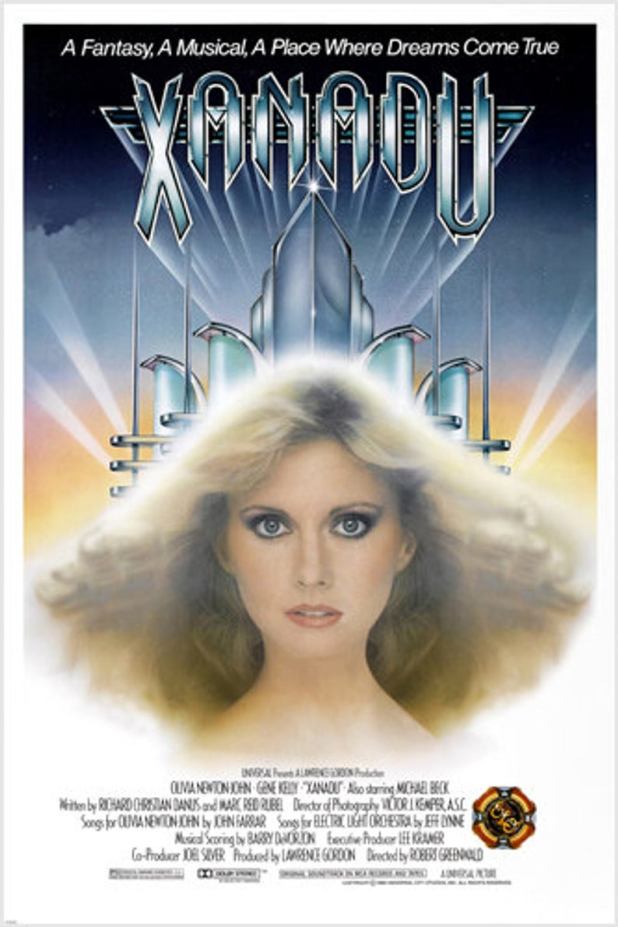
Xanadu was more than a flop. As part of a double bill with Can’t Stop the Music, it was the inspiration for the Golden Raspberry Awards, which recognize the worst films of the year. Yes, somehow a disco rollerskating remake of Down to Earth — itself the sequel to Here Comes Mr. Jordan — ended up being a critically reviled mess. Go figure.

The film was originally going to be a relatively low-budget roller disco picture. But as more prominent performers joined the production, it grew larger and larger in scope. Yet rollerskating improbably remained a recurring theme. Also, the strange mix of Jeff Lynne’s Electric Light Orchestra and Olivia Newton-John — along with Cliff Richard and The Tubes — made for an eclectic soundtrack that became a hit independent of the moribund status of the film that inspired it.

But hey — what do you want from a movie that quotes from Samuel Taylor Coleridge’s “Kubla Khan,” a poem written after a night of opium indulgence?

A large mural of the Nine Muses of Olympus comes to life, with women emerging from it and flying away. In the original script, Sonny Malone (Michael Beck from The WarriorsMegaforce and TV movie giallo lost gem Blackout) painted that mural, which makes sense. In the movie, it’s just the start of things as we follow one of those muses to Earth and meet Sonny as he’s about to give up on his dream of being an artist.

Sonny’s latest job is painting an album cover for a band called The Nine Sisters, which has a beautiful woman in front of an art deco auditorium, who just happens to look like the roller skater who kissed him and ran away. Sonny’s obsessed with her and learns that her name is Kira and well, she’s Olivia Newton-John and also one of the legendary Muses.

Later, Sonny befriends Daniel “Danny” McGuire (Gene Kelly!) who was once a big band leader but is now a construction mogul. Turns out he had a Muse once who looked just like Kira, who gets the two men to build a gigantic nightclub. For some reason, both of these guys got mad when they learned that the woman they love is some Olympian ideal.

Of course, Kira has gone against the Prime Directive and fallen in love, so shes called back to Xanadu, but Sonny can get there by roller skating as hard as he can through the mural. After debating her father Zeus, he and his wife Mnemosyne agree to allow Kira to return to Earth for a moment or maybe forever — you know, that whole time is different between the afterlife and here kind of conundrum.

Kira and the Muses perform at the new nightclub — also called Xanadu — before flying back to the real Xanadu. Yet a waitress who looks just like Kira stays behind, giving no easy answers.

Xanadu is the second movie of this week of musicals that features Adolfo Quinones, also known as the breakdancer Shabba Doo. You may remember him as Ozone in the two Breakin’ movies. And one of the Muses is Sandahl Bergman, who would soon be amazing in movies like Conan the Barbarian and She. This is also strangely the second movie this week that John “Fee” Waybill and Vince Welnick of The Tubes showed up in.

Somehow, director Robert Greenwald emerged to create the celebrated TV movie The Burning Bed before starting a new career in the next century creative left wing documentaries like Outfoxed: Rupert Murdoch’s War on Journalism and Wal-Mart: The High Cost of Low Price.

Amazingly, this became a well-received musical years after it failed as a movie. Me, I remember Marvel Super Special #17, the comic book adaption and wondering why anyone would want to read it.

Xanadu is a movie that could only emerge in 1980. That said, it has some great songs like “Magic” and “Suddenly,” but somehow this is a musical that proves that you can make a bad movie from great songs. It’s all too much — too much skating, too much gloss, too much schmaltz. Yet there’s something to love under all that glitter.

You can watch this for free on Tubi.

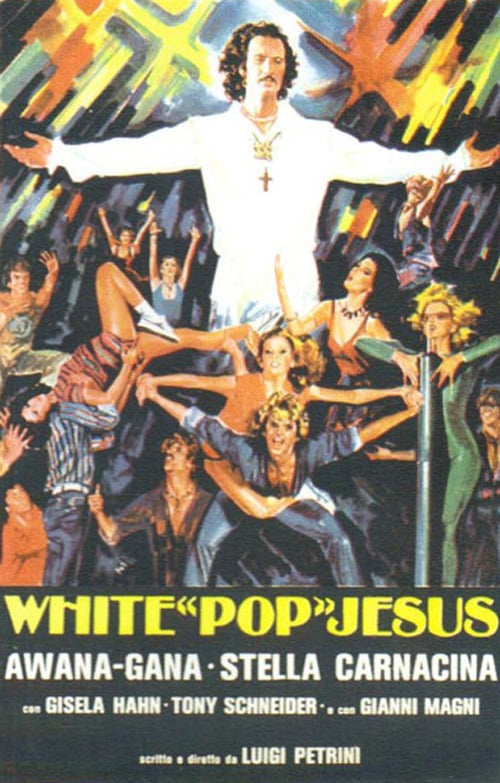
White Pop Jesus (1980)

Six years after starring in Enter the Devil (also known as The Eerie Midnight Horror Show), Stella Carnacina would double down on the blasphemy of a movie where a statue gets down off the cross and makes love to her by starring in this disco story of the Second Coming of the Son of God. Here, she plays Lattuga Pop, the daughter of a police commissioner who falls in love with Jesus.

If you don’t understand why I’ve been absolutely excited to share this movie with you, dear reader, you’re on the wrong website.

Jesus starts the movie in an insane asylum that we’re supposed to believe is Heaven. He emerges from the waves and battles a biker gang before the Word of God is enough to cause them to crash. Soon, he’s met Lattuga, saved her from the mafia (who stand in for the Roman Empire) and run from her love.

Jesus has several adventures with His new followers, converting machine gun-toting nuns into singers for him, making sandwiches grow out of the ground and generally getting the Good News out there as he rides a donkey. He even battles Satan and one of his demons, who transforms from a ballerina into a syringe to symbolize drugs. Or maybe not — I’m watching this in Italian and if I were more fluent, I wonder how much of it would make sense. At the end, Jesus has a huge concert where he’s betrayed and taken back to the mental asylum while his followers stand inside a giant red metal cross begging for God to save them. Or they’re His enemies. I’m not sure, because everything gets Apocalyptic in the last few moments.

Jesus is played by Italian singer Awana Gana, who looks nothing like you would imagine the Messiah to appear. Instead, think a Gibb brother crossed over with Reggie from Phantasm while wearing His best disco white suit.

I really have no idea who this movie is for. It seems so strange that people on drugs would love it, but it takes a major stance against them. One imagines that it’s trying for a Jesus Christ Superstar reinvention of Jesus in the time of disco, but it’s just sacrilegious enough to upset them without being so much that others would fall in love with it.

The music, however, is great. It was written by Franco Bixio and Vince Tempera, who also created the score for Fulci’s The Psychic.

This obviously has never been released in the US — as far as I know — so I have no legal way to tell you to see it for yourself. Ah hell, just watch the whole thing bootlegged on YouTube and tell me what you thought of it.

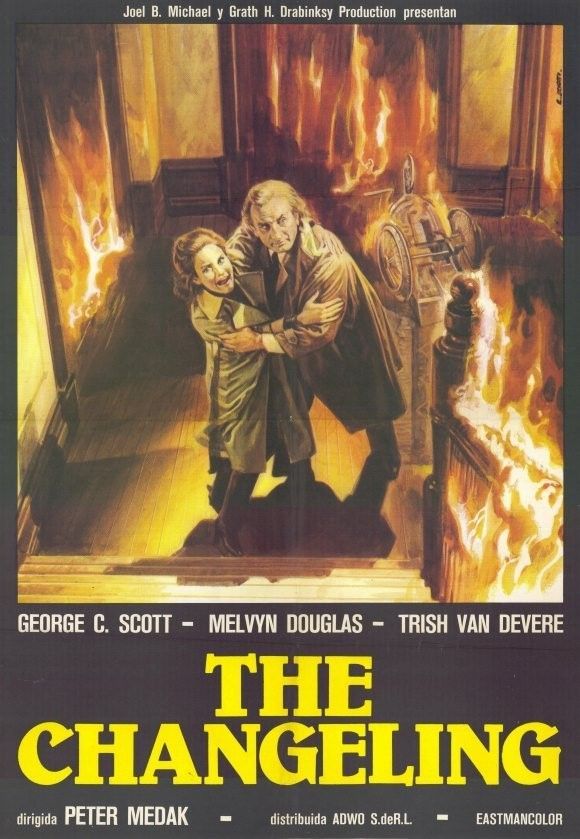
The Changeling (1980)

Peter Medak has one of the most all over the places IMDB credit pages ever. He’s directed everything from the Peter Sellers Satanic farce The Ruling Class to the made-for-TV movie The Babysitter to Zorro, The Gay BladeThe Krays; Romeo Is BleedingSpecies II and episodes of The Wire and Carnivale.  Here, he made a “based on true events” tale inspired by the book by author Russell Hunter, who alleged that these events actually happened to him.

John Russell (George C. Scott, bringing the A list talent) has moved from New York City to Seattle in the wake of the deaths of his wife and daughter. He’s moving into a huge Victorian mansion all by himself, thanks to love interest, real estate agent and local historical society member Claire Norman (Scott’s wife Trish Van Devere, The Hearse).

The strangeness starts right away, with loud sounds every morning at 6 AM, a hidden room complete with an ancient wheelchair, his daughter’s rubber ball bouncing all over the house, an awesome seance scene, rumors of a girl killed by a coal cart and the conspiracy that powerful Senator Joseph Carmichael was really a replacement child adopted to keep his father wealthy.

Just because this movie tries to keep it classy doesn’t mean it isn’t effective. The scene where the mirror explodes and reveals the police detective’s dead face before his accident is really effective. And the scene where the Senator climbs the flaming steps is perfectly shot.

Medak wasn’t the first choice to direct this. Originally, Performance and Demon Seed director Donald Cammell — who claimed to have bounced on Aleister Crowley’s knee as a baby — and Tom Jones director Tony Richardson both started work before leaving due to creative differences.

In 1988, Lamberto Bava directed a made-for-TV film called Until Death that was marketed as The Changeling 2. It was written by Dardano Sacchetti and is one of the reasons why Lucio Fulci stopped working with him. Fulci claimed to have written the story based on The Postman Always Rings Twice. His claim was that Sacchetti used the Fulci name to get the script to seen by producers and once they did, he took his name off it.

Regardless, this is a great movie. It’s a bit slow by today’s standards, but you can see its influence in all manner of haunted house films. According to Mendak, “I was in London at the BAFTA Awards and Guillermo was screaming, ‘You’re my mentor! You’re my mentor! I said, ‘What are you talking about?’ He said, ‘Your movie The Changeling is just a masterpiece.’ It’s just nice to hear that from fellow directors whose work I love and respect.”

I’m always amazed that the entire front of the house is a facade. That’s moviemaking magic at its best, really. I’m also amazed that Mendak came onto the project with only a month’s lead time, yet was able to rely on his experience of watching the making of The Haunting.

You can watch this on Shudder with and without commentary by Joe Bob Briggs. Want to get even more? Then get the new re-release from Severin, complete with plenty of documentaries and commentaries that will totally improve your knowledge and love of this haunted house film.

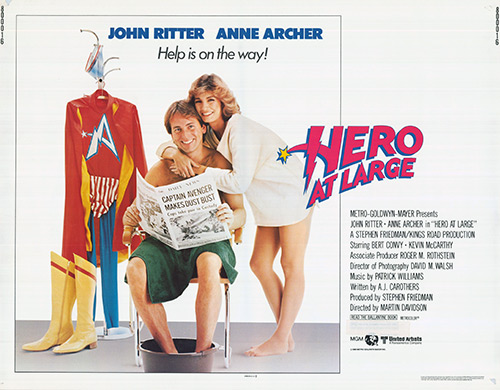
Hero At Large (1980)

Martin Davidson directed the teen classics The Lords of Flatbush and Eddie and the Cruisers, but today we’re talking about his lone superhero movie, an early entry in the form that starred Three’s Company lead John Ritter and Anne Archer. Obviously, the success of Superman had a lot to do with this movie.

Steve Nichols (Ritter) is a struggling New York City actor posing as Captain Avenger to promote a film, but when he stops a robber in costume, he learns that he loves playing hero for real. Soon, he’s working for the mayor’s staff and Bert Convy and Kevin McCarthy, which thrills me to no end.

The mayor’s goons, however, are shady and their plan to fake Captain Avenger’s heroics gets exposed by the media. However, Nichols girlfriend Jolene (Archer) convinces him to leave the mask behind and become a real hero.

Keep an eye out for former Howard Stern Show reporter Penny Crone, a young Kevin Bacon, Dr. Joyce Brothers and Robin Sherwood from Tourist Trap and Death Wish 2.

There are also several references to Taxi Driver in this movie, such as several scenes of cab drivers hanging outside of the Belmore Cafeteria at night and Leonard Harris, who played Senator Charles Palantine in Scorcese’s film, as the mayor.

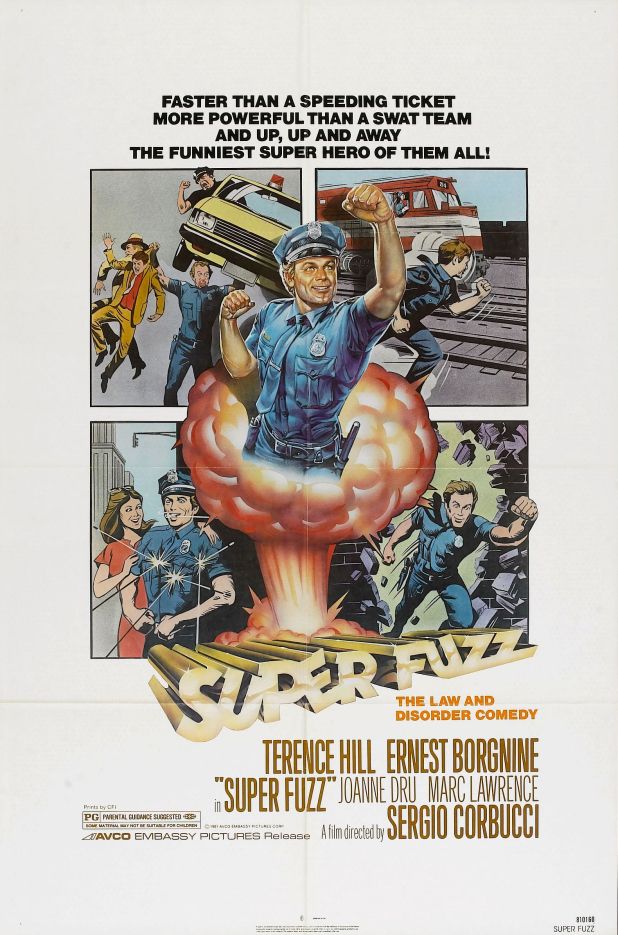
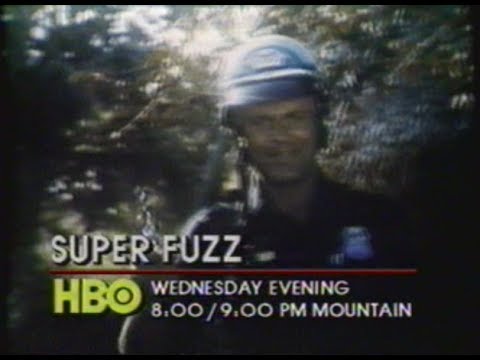
Super Fuzz (1980)

Sergio Corbucci is known for making some of the most violent spaghetti westerns ever committed to the screen, including DjangoThe MercenaryNavajo Joe and The Great Silence. In fact, his contributions to exploitation film are so important, he received a special thanks at the end of Kill Bill Volume 2. He was also known for the exact opposite type of film later in his career — ridiculous comedies.

Police officer Dave Speed (Terence Hill, The Call Me Trinity) going to the electric chair for what will be the fourth time the state has tried to execute him for the murder of his superior officer and friend Sergeant Willy (Ernest Borgnine, The Devil’s Rain!). Yes, this is a comedy. Yes, I saw this when I was eight.

Dave gets blasted by nuclear radiation while trying to serve a parking ticket and ends up with all manner of powers, like super speed, endurance, telekinesis, ESP, hypnotism and invulnerability. The only problem is that the color red shuts his powers off. He and Willy soon battle the mob forces of Torpedo (played by formerly blacklisted actor Marc Lawrence, who was Mr. Weiss in The Nightmare Never Ends segment of Night Train to Terror) and his girlfriend Rosy Labouche (Joanne Dru, older sister of Hollywood Squares host Peter Marshall).

The bad guys set up Dave and leave Willy to drown on their ship the Barracuda, but our hero finally escapes from prison and rescues his friend, despite him being frozen for weeks. He also flies on a giant bubble of gum and then drops into the Earth and emerges on the other side in China.

Hill and his frequent partner Bud Spencer made plenty more movies with Corbucci, as well as two other cop movies — Crime Busters and Miami Supercops.

If you had HBO in the 1980’s, there’s no way you missed this movie. I think that it aired every single night. According to the February 1983 HBO GuideSuper Fuzz aired 8 times in one month. Seriously, people never got sick of this one.

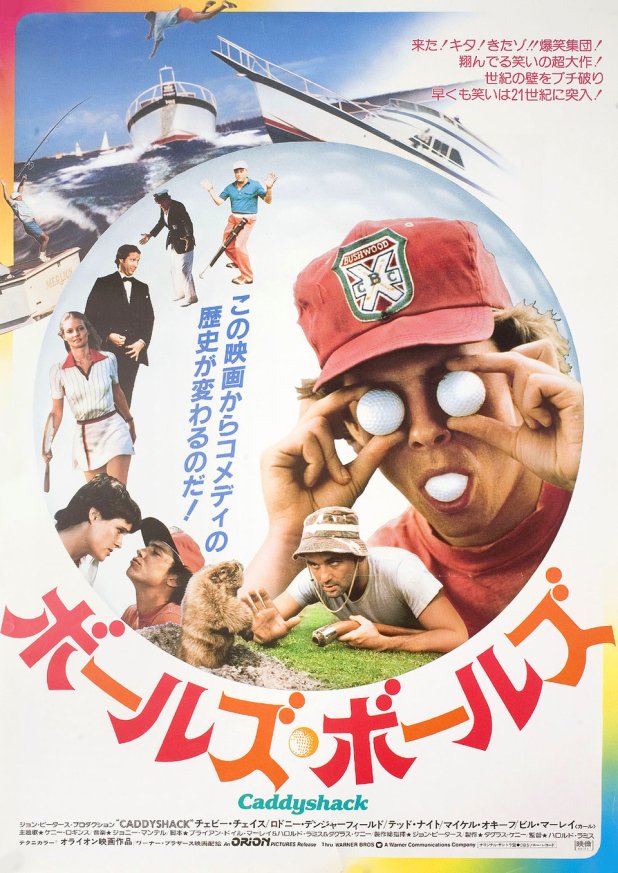
Caddyshack (1980)

I ask you this: why did they keep making movies after Caddyshack? This is as perfect as film gets, quite literally a movie that you can drop into and out of at any time with your damage to the timing or spirit of the film. It has never failed to lift my mood or make me feel better about life. It is all that movies should endeavor to be.

It’s based on the memories of writer and co-star Brian Doyle-Murray as he worked as a caddy at the Indian Hill Club in Winnetka, Illinois, along with his brothers Bill and John. Director Harold Ramis had also worked as a caddy and even been hit in the genitals with a golf ball once, just like the film. Even better — that Baby Ruth candy bar in the pool came directly from Murray’s high school.

Is there a plot? Sure, Danny Noonan is supposedly the hero and its all about how he wants to escape his huge family and go to college. But really, it’s the personalities that this movie is all about, like Ty Webb (Chevy Chase), the son of one of the club’s founders who has turned slack into zen. Then there’s Judge Elihu Smails (Ted Knight), who is perhaps the best bad guy ever in a comedy. Or newly rich construction boss Al Czervik (Rodney Dangerfield) who is a buffoonish man out to annoy every wealthy person in the club. And of course, there’s Carl Spackler, the groundskeeper who is at war with a gopher.

It’s also the only movie where Chase and Murray appear in a scene together. Famously brawling on the set of Saturday Night Live once, where Murray referred to Chase as “medium talent” before punching him — the best insult ever — they got along here and wrote a quick moment where Ty’s golf ball ends up in Spackler’s ramshackle hovel.

Murray dialogue in the film is completely unscripted, including his Cinderella story scene. There, he was told only to act as if he were a child announcing his own imaginary golf moment. He was only on set for six days.

The constant improv really bothered Knight, an actor who prided himself on knowing his lines. Dangerfield never did the same take twice, so their constant battling has its roots in reality. In fact, Rodney would never begin doing anything when Ramis yelled “Action!” Instead, he had to be told, “Rodney, do your bit.”

The original cut of this film was around 4 and a half hours with Bill Murray’s Cinderella speech coming in at around half an hour. No one was happy with the second cut, so the gopher was added at the last minute to give the movie some structure. It was shot on a soundstage, so that’s why the film stock in these scenes looks completely different.

Caddyshack was a failure upon release and was hated by critics. It’s gone on to show them all the error of their ways.

Sadly, writer Doug Kenney would never see this movie be embraced. At the press conference for this film, he drunkenly yelled at reporters, convinced it would be the end of his Hollywood career. A trip soon after to Hawaii with Chase lifted his spirits, but only for a brief time. He either slipped on a rock or jumped while there and was dead at 33, leaving behind work with the National Lampoon and the film Animal House along with this one. You can learn more about Kenney in the movie A Futile and Stupid Gesture.

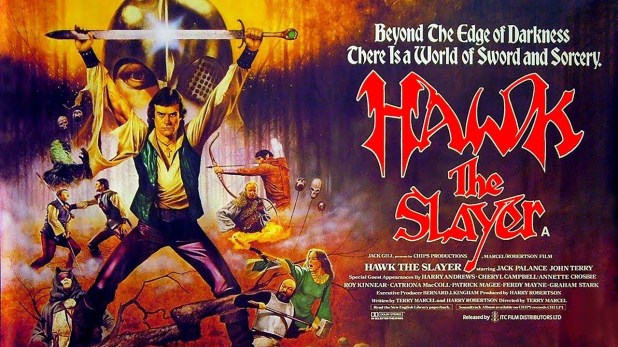
Hawk the Slayer (1980)

Terry Marcel also was behind Prisoners of the Lost Universe, The Last Seduction II and Jane and the Lost City (he was also A.D. on The Pink Panther series of films, as well as Straw Dogs) but today, we’re going to discuss his 1980 sword and sorcery epic Hawk the Slayer, which predates the Conan ripoff film cycle.

The wicked Voltan (Jack Palance, who is amazing in everything he did, no matter how silly the films get) murders his own father (Ferdy Mayne, who we all know and love from Night Train to Terror) over the magic of the last elven mindstone. Before he dies, the old king gives his son Hawk (John Terry, who was on TV’s Lost) a magic sword that responds to his mental commands. Our hero then promises to kill his brother in revenge.

Soon, though, Voltan has taken over the country. An injured soldier named Ranulf (W. Morgan Sheppard, who is also in Elvira: Mistress of the Dark) is taken in by the nuns of a convent who heal him but can’t save his hand. But Voltan soon descends on the convent and takes away their Mother Superior and Ranulf seeks Hawk to stop his brother.

Soon, Hawk learns of his new quest from a sorceress (Patricia Quinn, who was Magenta in The Rocky Horror Picture Show) and gathers his friends: Gort the giant (Bernard Bresslaw, who would go on to play a similar role in Krull), Crow the elf and Baldin the whip-wielding elf. Even though they raise enough gold to pay for the ransom on the nun, Hawk knows that his brother won’t live up to his word. After all, Voltan killed Hawk’s wife Eliane (Catriona MacColl! Holy cow! The star of City of the Living DeadThe Beyond and The House by the Cemetery!).

You can also watch out for Roy Kinnear (Henry Salt from Charlie and the Chocolate Factory) as an innkeeper and Patrick Magee (Tales from the CryptAsylum) as a priest.

The five warriors decide to attack Voltan and Hawk succeeds in killing his nephew Drogo (Shane Briant, who is in Lady Chatterley’s Lover), but Baldin is horribly wounded after one of the nuns turns heel on our heroes. Finally, Hawk gets his revenge, but an evil spirit brings Voltan back, so Hawk and Gort travel to find him. The battle isn’t over…and sequels called Hawk the Hunter and Hawk the Destroyer have been teased for years.

British kids who grew up in the 80’s LOVE this movie. For example, Simon Pegg worked plenty of references to it into the TV show Spaced. And The Darkness song “Nothin’s Gonna Stop Us” has Drogo’s line “I am no messanger. But I will give you a message. The message of DEATH!” in its lyrics.

This film is more influenced by Star Wars than Conan. Will you enjoy it? How do you feel about Krull? Because this movie feels so close to that one — except this one has a magic sword and that one has the Glave. Also, this movie has a great shouted line that makes me laugh every single time: “The hunchback will have something to say about this!” And an elf that talks like a robot, which makes no sense. Oh yeah — and Jack Palance being as over the top as it gets!

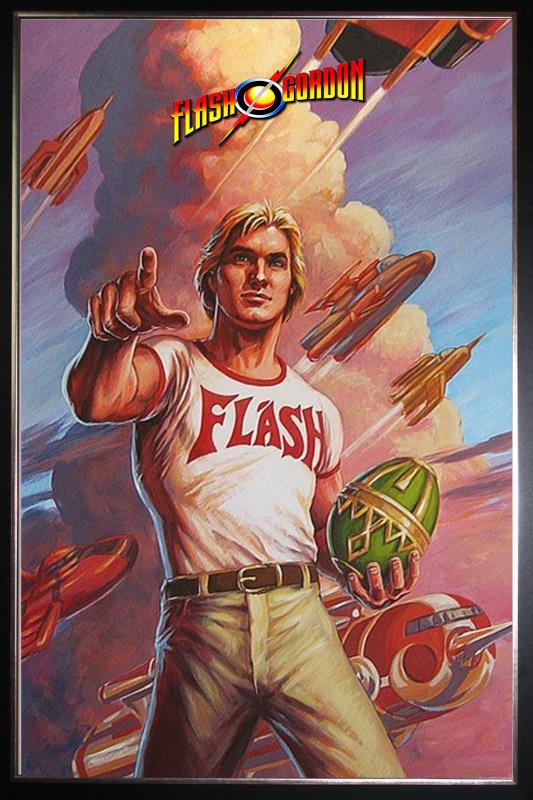
Flash Gordon (1980)

I don’t have a favorite movie to be honest. There are tons of worthwhile movies that I adore, thinking of them as old friends. They’re experiences that transport me away from my day to day concerns. How does one choose just a single solitary individual movie to hold above all others as their top choice?

My tastes are broad, too. So it could be a blockbuster like Raiders of the Lost Ark, which is a perfect distillation of so many influences, a movie serial for eighties kids, packed with flying wings and Nazis and a flawed hero with a bullwhip and a hat that never comes off? Or would it be something arty like Jodorowsky’s El Topo or The Holy Mountain, films about image and religion and violence and transformation? Something gory like Fulci’s The Beyond or Romero’s Dawn of the Dead? A movie that will never fit into the time it was released and is still finding an audience, like Carpenter’s Big Trouble in Little China or The Adventures of Buckaroo Banzai? Or maybe Strange Brew or The Kentucky Fried Movie or Beyond the Valley of the Dolls?

Man, this is hard.

If hard pressed, I’ll have to pick Flash Gordon. It’s not the best movie ever made, but the more I think about it, it’s my favorite film ever made. It’s like a warm bowl of soup on a cold winter’s day. Someone tucking you in and letting you sleep in. A cool fresh squeezed lemonade when you’re parched. It is all of these things and more.

When they were planning this movie — and look, I wasn’t there, I was right when this came out — I imagined that they all stopped doing coke for a second — because in my heart of hearts, I fervently believe that every movie pre-1990 was dreamed up with mountainous piles of cocaine for fuel — and said, “You know, instead of making this movie realistic, let’s make it as fake and garish and ridiculous as we can. Fuck it.”

Whereas Star Wars and Alien – movies influenced by the aforementioned Jodoworsky’s abandoned Dune project — envisioned working class spaceships, everything in Flash Gordon is shiny and new and fresh out of Studio 54.

It’s a film daring enough to find its star, Sam J. Jones, from TV’s The Dating Game. Then, take that untested star and match him with master thespians like Max Von Sydow and Topol.

It’s also a film stupid enough to feature a football fight as one of its main action pieces. But I’ll punch anyone square in the face that makes fun of that scene. The cheerleading, the sound effect when Flash gets knocked out, the lizard aliens cheering, Klytus calling plays — it’s really the craziest thing committed to celluloid. This wasn’t some art film or ragtag B movie — this was a major blockbuster motion picture.

And at the same time, it has the greatest soundtrack ever recorded. Queen was at the top of their game — hey, they had just released The Game — and they went nuts on this epic. Pretty much every drum part I’ve ever tracked for my many metal projects starts here, with the loud pounding tribal beat featured in the song “In the Space Capsule (The Love Theme).” I’m listening to this while I type these words and I can envision exactly what is on screen, Dale, Flash and Dr. Zarkov. Man — dialogue all over these songs on the soundtrack, like it should be.

Flash is such an influence on me that I randomly scream things from it just about every single day. Stuff like, “DIVE!” and “Gordon’s alive?!” and “No, daddy, not the bore worms!” or “Ah, well; who wants to live forever?” and “Klytus, are your men on the right pills?” and “Rocketship Ajax approaching!”

It’s packed with everything a movie needs: crazy scenery that isn’t afraid to throw glitter and day-glo everywhere; Ornella Muti steaming up the screen in every single frame she appears in (I didn’t get a ton of the sexual stuff in here until maybe my mid-teens, then I started watching the film all over again from a totally new perspective); both the funniest and most awesome wedding scene in the history of film; a button marked HOT HAIL that Ming just fires at the Earth because he can. I could, can and will go on — it’s that good.

The first time I saw this movie was at the Westgate Plaza Cinema in New Castle, PA. I forced my parents to watch it twice the same day and I was a completely maniac, standing on my seat and screaming, “KILL MING!” until I had to be told to settle down. Then, HBO saw fit to air it every single minute of every single hour or every single day, except for when they showed Burt Reynolds movies like Hooper and Sharky’s Machine. And I watched it every single time.

I should have just wrote this piece like a disjointed screed from a maniac of things that make me go goo goo in this flick: Klytus’ eyes bugging out when he melts and dies; the jump at the end and the YEAH!; the Hawkmen spelling Flash’s name at the victory celebration; Rocky Horror’s Richard O’Brien showing up on Arboria; even an ending that promised more. Well, 37 years later, I’m still waiting.

They say you should never meet your heroes. And I hate bugging celebrities and being a fanboy, but there’s one picture that I have — and Sam J. Jones is in it. That pretty much says it all.

sam

PS – The end of the movie, when they play Queen’s “The Hero?” Let me quote:

“So you feel that you ain’t nobody/ Always needed to be somebody/ Put your feet on the ground/ Put your hand on your heart/ Lift your head to the stars/ And the world’s for your taking”

I can run through walls after listening to that song or watching this movie.

NOTE: This article originally ran on Super No Bueno.

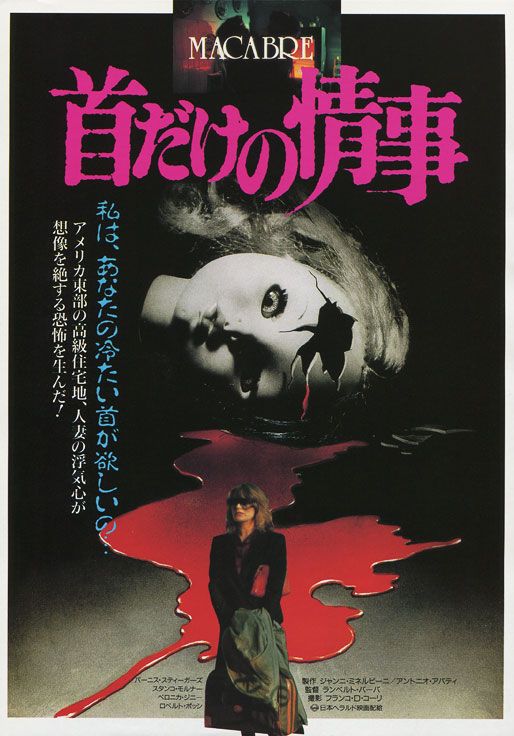
Macabre (1980)

I love Mario Bava. I can’t say enough good things about the movies he’s made. His son Lamberto, however? Between Devilfish, BlastfighterDelirium and Demons, his movies are a mixed bag with only the last one being a film I’d recommend (look, I love Blastfighter, but people usually think most of the movies I recommend are bonkers and I’ve scared enough people). So how does he fare this time?

Jane Baker is a middle-aged woman whose affair suddenly ends with the death of her lover Fred thanks to a car accident. Things get worse — her son is drowned by her daughter Lucy as they play unattended. All that remains is for her to spend a year in a mental hospital.

When she’s released, she can’t go back home and determines to live in the apartment where she once made love to Fred. Sound normal? Well, her blind landlord — named Robert Duval — keeps hearing her make love all night and screaming her dead lover’s name.

Did her daughter drown her brother on purpose? Is Jane still having sex with a dead man — or part of him? Is the New Orleans mansion she leaves behind enough to make my wife jealous and ask when we are moving there?

Mario Bava died two months after seeing this, but felt that he could die happy as his son had made a great film. While slow in parts, I’ll admit that this is one of his better efforts with a truly inspired and demented final act. Between the reveal of Fred, Jane’s insane daughter coming to visit and even the Pieces-esque shock ending, all of the build-up really pays off at the end. I can honestly say I’ve never seen a movie where pieces of a dead lover are served in a stew to a blind man and the woman who has kept making love to parts of him. So, I guess, that’s a kind review for Lamberto!

You can check this out on Shudder.