UNSUNG HORRORS HORROR GIVES BACK 2023: Mondo Candido (1975)

Each October, the Unsung Horrors podcast does a month of themed movies. This year they will once again be setting up a fundraiser to benefit Best Friends, which is working to save the lives of cats and dogs all across America, giving pets second chances and happy homes.

Today’s theme: Carla Mancini

If you asked me — I don’t know how it would come up, but just go with this — who I would pick to adapt Voltaire’s 1759 novel Candide, I would never think to ask Gualtiero Jacopetti and Franco Prosperi.

But it happened.

Yes, the team that made Mondo CaneMondo Cane 2Women of the World, Africa Blood and Guts and one of the hardest movies you will ever try to survive, Goodbye Uncle Tom.

It was the critical and commercial failure of that last movie that convinced the Jacopetti and Prosperi that maybe they should stop making mondo movies — well, Goodbye Uncle Tom does have them go back in time to the age of slavery in a magical helicopter, but it’s shot with the real slaves of Papa Doc Duvalier, losing the plot before it even starts — and creating an actual narrative one.*

I wondered, as I watched what unfolded before me, if in their travels across the world, did Jacopetti and Prosperi check out not just people being brutalized and animals being destroyed, but also the midnight showings of films by Ken Russell and Alejandro Jodorowsky? Or at the very least, Federico Fellini.

Because that’s the only way that this all makes sense.

Joined by screenwriter Claudio Quarantotto, film critic of Il Borghese, the idea and story came from Jacopetti. He believed in this film so much, but he just wasn’t great with actors. That’s where Prosperi came in, as he believed in Jacopetti.

Sadly, this movie would finally end their partnership.

Candido (Christopher Brown, who went from this to an episode of Bigfoot and Wildboy) lives in some unspecified time and is being raised in some unknown land by the Baron (Gianfranco D’Angelo, Io Zombo, Tu Zombi, Lei Zomba) in his castle Thunder-ten-Tronckh.

Beyond non-stop eating, drinking and partying — there’s even a three-breasted woman years before Total Recall —  he studies the philosophy of Dr. Pangloss (Jacques Herlin, Slap the Monster On Page One). All he has learned is optimism and that everything has a purpose, so his worldview is rosy at best.

Life is pretty good and then he gets caught facedown between the thighs of the Baron’s daughter Cunegonda (Michelle Miller, who went from the Broadway stage to this movie and then to being one of the vampires in Leif Jonker’s Darkness).

Exiled from the life of pleasure, Candido is drafted into an army that seems ill-equipped for a world that’s much more modern on the outside than the first part of this movie has led us to believe. They put helmets on their heads and batter their way through stone walls, but that doesn’t help them against a modern army equipped with machine guns and flamethrowers. Our protagonist barely escapes with his life. Unlike the army he’s been conscripted into, he has no intention of dying just for an ideal.

At this point, Candido descends into a journey filled with multiple horrors, including Salvatore Baccaro** as an ogre who is trying to assault a dead girl; an army takes the Baron’s castle and Cunegonda’s virginity; Dr. Pangloss is hung by the Inquisition for not believing in original sin and he must rescue the slave Cocambo (Richard Domphe) by pretending to be his owner.

This all makes him doubt the cheery worldview of his now lynched mentor, as Candido opines, “This is not the best of all possible worlds,” an inverse of the core message he once learned.

That’s when he finally meets Cunegonda again, no longer pure after having at least 127 lovers — she can’t remember right now — as well as two owners and four current boyfriends. She now loves violence for pleasure and is far from the ideal woman who has kept Candido’s spirits alive through his endless quest.

Everybody decides to get on a ship bound for the New World, a place much better than wherever we are. Christopher Columbus, Amerigo Vespucci, Abraham Lincoln, Al Capone and Marylin Monroe are all here and alive. No, really. And so is Dr. Pangloss,  alive and forgetting psychology, now making TV commericals and shouting, “Thank you for the new world which is certainly the best of all possible worlds.”

In this unexplored place, is Cunegonda a porn star, a saint or both? Well, who can tell, because children are blowing themselves up with grenades in the hope of killing soldiers. We go from Northern Ireland to the Arab–Israeli conflict to a field of poppies made up of mutually assured destruction. It all ends just in time for young people to throw the symbols of the past — the cross, the hammer and sickle, the swastika — into a river.

Somehow, in all this insanity, it looks and sounds beautiful. Credit goes to cinematographer Giuseppe Ruzzolini, who also shot The Last MatchFirestarterTreasure of the Four CrownsMy Name Is Nobody and Short Night of Glass Dolls, and Riz Ortolani, the only man who could make the excesses of Jacopetti and Prosperi sound like symphonies, who can create a song called “Crucified Woman” that is a balm for the soul.

I’ve always said that there’s a thin line between the arthouse and the grindhouse. This movie reminds me of this, a film full of sound and fury and big ideas and bigger images, all united by the message behind everything Jacopetti and Prosperi made together: the world is shit.

Nobody else could make this.

It reminds me of a story about my wife. She saw Super Mario Brothers the movie before she experiencing the video game, so when she got to play it, she wondered why Dennis Hopper wasn’t in it.

I’ve never read Voltaire, so I’m probably going to negatively compare the book to the movie.

Somewhere in all this, Carla Mancini appears.

*Prosperi would make one more non-mondo movie, the absolute punch in the face that is The Wild Beasts. Jacopetti made two more movies, Operazione ricchezza and Un’idea della pace.

**Between The Beast In Heat, , Frankenstein’s Castle of Freaks and nearly ever other movie I’ve seen him in, do you think Baccaro was sad that he was typecast as a sexual assault-obsessed monster?

You can watch this on YouTube.

RADIANCE BLU RAY RELEASE: Cosa Nostra: Franco Nero In Three Mafia Tales By Damiano Damiani (1968, 1971, 1975)

Radiance has released this set that has three crime movies starring Franco Nero and directed by Damiano Damiani. As a proud Italian-American, I must remind you that there is no organized crime syndicate known as the Mafia currently active in the United States.

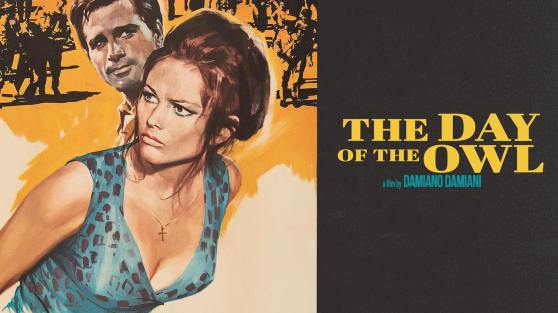
The Day of the Owl: Franco Nero is Captain Bellodi, who starts this investigating the death of truck driver Salvatore Colasberna, a man murdered while delivering cement to a construction project. The only witness may be Rosa Nicolosi (Claudia Cardinale), a woman of somewhat loose morals. Either her husband caught her with Colasberna or the trucker was killed by a corrupt group of manufacturers under the orders of Don Mariano Arena (Lee J. Cobb).

This was one of the first of a wave of organized crime based films. The trend started when the Leonardo Sciascia’s novel To Each His Own was adapted as We Still Kill the Old WayDay of the Owl was based on another Sciascia novel which was the first book he’d written about organized crime in Sicily.

Written by director Damiano Damiani and Ugo Pirro, who also wrote We Still Kill the Old Way, this differs from the book that it’s based on. Piro said, “To me, the book is a hint: I must try and preserve its message by using a different language.”

The Case Is Closed: Forget It: Based on the Leros Pittoni book Tante Sbarre, this has Franco Nero on the wrong side of the law as Vanzi, a man jailed for a hit and run misdemeanor and learning just how bad it is inside Italy’s prison system. That’s because organized crime runs everything even inside.

Vanzi tries not to get involved with the others, but soon is helped by an elderly prisoner by the name of Campoloni (Georges Wilson) and hindered by Biro (John Steiner), a killer who is barely able to keep himself under control. When Vanzi is moved into a cell with Pesenti (Riccardo Cucciolla), he learns that his new roommate is about to testify against Salvatore Rosa (Claudio Nicastro), which gets him killed right in front of Vanzi, who can either get out of prison if he says nothing or die if he reveals that the suicide was truly a murder.

This isn’t like any other role I’ve seen Franco Nero in and the ending is a gut punch. Expected, but still it’s a rough indictment.

How to Kill a Judge: Franco Nero plays filmmaker Giacomo Solaris, whose latest film, Inquest at the Courthouse, is based on the real-life corruption of a judge named Alberto Traini-Luiz (Marco Guglielmi). That movie ends with that man’s ties to organized crime causing him to be killed and when the actual judge seizes the film, he’s killed as well.

Solaris feels that he is responsible, but soon finds himself in a world filled with conspiracy and the murder of everyone close to him, as well as a relationship with the judge’s widow Antonia (Françoise Fabian).

This movie is just as tough on director Damiani, as it was inspired by the actual murder of a judge who he had based a character on in his movie Confessions of a Police Captain.

This set from Radiance has tons of amazing extras to go with the new 2K restorations of the films.

There are new and archival interviews with Nero for all three films, as well as filmmaker and Italian crime cinema expert Mike Malloy discussing The Day of the Owl, a video essay by filmmaker Howard S. Berger looking at actor Lee J. Cobb’s career transition from Hollywood to Italy, an interview with Claudia Cardinale, a making-of for The Case is Closed: Forget It; a visual essay on the career of Damiani Damiani by critic Rachael Nisbet; interview with Alberto Pezzotta, author of Regia Damiano Damiani, who discusses Damiani’s contribution to the crime genre, a new video essay on How to Kill a Judge by filmmaker David Cairns; trailers for all three movies, a reversible sleeve featuring designs based on original posters for each film and — most awesomely, I may add — a limited edition 120-page book featuring new and archival writing on the films by experts on the genre including Andrew Nette, Piero Garofalo, Paul A. J. Lewis , Shelley O’Brien, Nathaniel Thompson, Marco Natoli and Cullen Gallagher.

You can get this incredible set from MVD.

THE FILMS OF RENATO POLSELLI: Giochi erotici di una famiglia per bene (1975)

Erotic Games of a Good Family was directed by Francesco Degli Espinosa and this is the only movie he ever directed. His credits include writing the Laura Gemser movie Emmanuelle On Taboo IslandVengeance Is My Forgiveness and C’era una volta questo pazzo, pazzo, pazzo West. Strangely, he’s listed as the assistant director on his own film on IMDB for this movie.

It was written by Renato Polselli, which accounts for both the film’s psychological and prurient content.

Riccardo (Donald O’Brien) comes home early one night and finds his wife Elisa (Malisa Longo, Nude si muore) with her legs around another man. As the moralist husband barges in gun drawn, that man jumps out the window to escape. Riccardo tries to keep his morals about divorce and stays with his wife, but then decides to give her a sleeping pill in her whiskey, place her body in a sack and throw it down a hill. He’s overcome by anger when all he wants is love. This act drives him a bit insane, but it seems that all is healed when he and sex worker Eva (Erika Blanc, Kill, Baby…Kill!, A Dragonfly for Each CorpseThe Devil’s Nightmare) end up falling in love. Or lust. Yet he can’t stop seeing visions of his dead wife and in the middle of all that, he’s so far gone that he also starts trying to sleep with his niece Barbara (Maria D’Incoronato, Concorde Affaire ’79).

Of course, if you ever watched an Umberto Lenzi and Carroll Baker giallo, you know exactly what’s going on. Elisa and Eva are lovers, Elisa is still alive and yes, Eva and Barbara are also lovers. Everyone wants Riccardo’s sizeable fortune, so if they have to destroy him to get it, well, that’s a bonus.

Also known as Amoral Games and Thrilling Story, this is the kind of giallo that those who have seen many of the films in the form will probably enjoy. I mean, I know I did. It’s hilarious that the red-bearded man — spoiler that isn’t a spoiler, it’s Blanc, as if you could hide her rapturous beauty under a fake beard — keeps showing up, as does the dead wife. And I have a suspicion that Polselli directed just as much of this as Espinosa if that beyond extended lovemaking scene between O’Brien and Blanc is any evidence as well as the main plot idea that in the space of a few days, Riccardo goes from an ultra moral man to one who has killed his wife, pays for sex and is trying to sleep with a younger family member. Throw in some hallucinations and it’s very much his kind of movie.

I’m frankly shocked that this has never been released in the U.S. Maybe because there’s no dub — that I know of — but it certainly has the kind of feel and subject matter that gets people excited about giallo. The closing moments, when it all comes together, really pays everything off and nobody escapes unscathed.

It’s a simple detective story that’s pretty well told. What he told Jay Slater about the giallo fo Argento makes sense to me after watching this: “Argento doesn’t make real giallos. He takes five or six horrific elements and sticks them together with a very thin plot.”

This makes a good match for another Polselli-written giallo, Psychout for Murder.

Tatlı Cadının Maceraları (1975)

It’s pretty wild when you think about the cultural relevancy of Bewitched.

Yes, I said it.

Airing from September 17, 1964, to March 25, 1972 on ABC, the show has been in syndication ever since as well as shown all over the world, which inspired remake TV series in Argentina (Hechizada), Japan (Okusama wa majo or My Wife Is a Witch), India (Meri Biwi Wonderful), Russia (Моя любимая ведьма or My Favorite Witch) and even a UK pilot as late as 2008. That’s not even getting into the spinoffs, reboots and inspired shows, like WandaVision, which detailed the Scarlet Witch trying to fit into the sitcom suburbs of her grief or the crossover with The Flintstones in 1966.

Maybe that’s because there’s something just under the surface here, like the sardonic narration by José Ferrer or the fact that it was one of the few shows of its era to deal with interracial marriage. And in 1964, Betty Friedan wrote “Television and the Feminine Mystique” for TV Guide. While she called out so many shows that made women out to be “simplistic, manipulative and insecure household drudges whose time was spent dreaming of love and plotting revenge on their husbands,” she saw Samantha, the lead character of Bewitched, as one that broke the stereotype while both playing into and subverting said preconceived notions. She literally wrote that the characters of Samantha and Endora broke new ground in the depiction of women on television.

There are 254 episodes of the show, but for some, that would not be enough. Or perhaps their country didn’t get to see the show and the idea was universal. And in Turkey, the show was really popular.

Popular enough to get a movie.

The Turkish version of Bewitched, directed by Ertem Göreç and written by Halit Aysan, has Filiz Akin playing Selma, our heroine, and she already stands out with her platinum tresses. At just 56 minutes, this is around three episodes in length of the show, but I still find it both amusing and empowering that another society could take and remix, remake and yes, rip-off something that came from another country and make it their own.

After all, Bewitched did the same thing with the 1947 movie I Married A Witch, right?

In case you wondered, the title translates as Adventures of the Sweet Witch. Much like the show, Selma marries Fikret (Ugur Say), who makes her promise to never do magic again. Why would he ask that of her? Why would he subvert the very nature of who she is? And how can she keep loving him when he can’t allow her to be her truest self?

In 1992, The Advocate asked Bewitched star Elizabeth Montgomery if the show was an allegory for homosexuality. She responded, “Don’t think that didn’t enter our minds at the time. We talked about it on the set — certainly not in production meetings — that this was about people not being allowed to be what they really are. If you think about it, Bewitched is about repression in general and all the frustration and trouble it can cause.”

Unlike many countries around it, women in Turkey are free to dress how they want, go where they want, drive and work. However, around 40% of Turkish women have suffered domestic violence at some point in their lives, which is higher than Europe and America, while femicide also remains a major issue, as well as an increase in rights violations against women — as late as last year! — and arrests of women who protested.

While a silly bit of fluff, Bewitched and its inspirations have a truth inside them, hidden just as Samantha — or Selma — hit her powers. That’s universal in any language.

You can watch this on YouTube.
Bacalhau (1975)

You have to give some credit to Brazilian director and writer Adriano Stuart, who got his Jaws parody into theaters the same year as the movie its making fun of, even ahead of the adult parody Gums.

A cod from Guinea is threatening to ruin the fishing season of São Paulo, so local authorities call everyone you would expect, like a Portuguese oceanographer and a tough fisherman who uses the records of “Rainha do Fado” Amália Rodrigues as bait.

This is as down and dirty as you can imagine a Brazilian ripoff film made in days can be. The jokes are dated and stereotypical. If the idea that Sheriff Brody is gay is hilarious to you, then you get it. So many of the jokes in the film are ones that you have to literally be there and by that I mean someone from Brazil.

They did make a nice poster, at least.

CBS LATE MOVIE MONTH: Kolchak: The Night Stalker: The Sentry (1975)

EDITOR’S NOTE: This episode of Kolchak: The Night Stalker was on the CBS Late Movie on November 23, 1979 and February 12, 1988.

This episode of Kolchak is very special to me.

As a kid — who am I kidding, as an adult — I have a tendency to read way too long in the bathroom. Once, while my family was eating at Red Hot in my hometown of Ellwood City — I would have been three or so at this point — my dad decided to get me out of the bathroom faster by knocking on the walls of the bathroom just like the monster in this episode, which sent a young me screaming out of the toilet with my pants around my ankles in public.

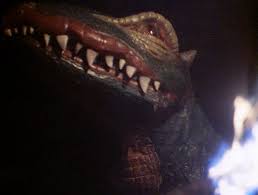
The last episode of Kolchak — star Darren McGavin called Universal and ABC and asked to be let out of his contract — this one has a lizard rampaging in the tunnels under Chicago after a researcher steals some of its eggs. So, while a monster, it’s a misunderstood lizard.

This installment also allows Carl the opportunity to flirt with an attractive female officer, Lieutenant Irene Lamont (Kathie Browne, McGavin’s real-life wife) instead of fighting with another cop. There are also roles for Lance Hoyt, Tom Bosley and Margaret Avery (you know her from her fine acting career, I know her from Terror at the Red Wolf Inn).

Directed by TV vet Seymour Robbie (who directed 17 episodes of Remington Steele, 21 of Murder, She Wrote, 12 of F Troop and was also the director of the infamous Jackie Gleason show You’re In the Picture) and written by L. Ford Neale and John Huff, I still love this episode, no matter how silly it is to see a stuntman running around with an alligator head. As a child and, yes, an adult I am quite easy to please.

CBS LATE MOVIE MONTH: Kolchak: The Night Stalker: The Knightly Murders (1975)

EDITOR’S NOTE: This episode of Kolchak: The Night Stalker was on the CBS Late Movie on November 16, 1979; August 28, 1981 and December 18, 1987.

As in so many episodes of Kolchak, there are murders throughout Chicago and they have a supernatural feeling about them, as all of the murders were committed with medieval weapons. The big difference is that Captain Rausch (John Dehner) is the first cop who seems like he actually wants to deal with Kolchak.

It also has Minerva Musso (Lieux Dressler), a decorator who has David Bowie lined up as her next client. For now, she’s renovating a home into a disco club and that’s why the knight has come back from the grave, enraged that his ancestral home is being used in such a way and destroying anyone who gets in his way.

Director Vincent McEveety was a TV veteran, directing eight episodes of Star Trek, 11 of Diagnosis Murder, 28 installments of Murder, She Wrote, 18 visits to In the Heat of the Night and movies like Herbie Goes BananasThe Watcher In the WoodsThe Apple Dumpling Gang Rides AgainHerbie Goes to Monte CarloGus, The Strongest Man In the World, the original Wonder Woman TV movie, Superdad and The Million Dollar Duck. This episode was written by David Chase, his eighth script for the series, and Michael Kozoll, who went on to write First Blood and one of my favorite TV movies, Vampire.

CBS LATE MOVIE MONTH: Kolchak: The Night Stalker: Legacy of Terror (1975)

EDITOR’S NOTE: This episode of Kolchak: The Night Stalker didn’t air on the CBS Late Movie because ABC packaged “it with “Demon In Lace” as the TV movie The Demon and the Mummy.

“Among the philosophers, the great thinks and the common Joes of this world, no question is more controversial than truth. Remarkable as it may seem, I can attest that the following events did occur, whether you believe them to be true or not.”

Despite this great starting line from Carl Kolchak, this is sadly near the end of the series. Ramon Bieri returns as a cop, but no one realized that in “Bad Medicine” he was Captain Joe Baker, not Captain Webster. It also has the future Boss Hogg, Sorrell Booke, as a taxidermist named Mr. Eddy.

The story revolves around a 500-year-old Aztec warrior rising every 52 years to claim five victims. The mummified form of this monster of the week is played by Mickey Gilbert, who was also the villain in “The Ripper.” But the real reason to tune in is to see Erik Estrada, just a few years away from superstardom as Ponch on CHiPs, playing Pepe Torres. Estrada dressed as an Aztec priest? I’m here for it. He also has on a pink disco suit and plays the flute in a scene, so this is prime Estrada gold for you to mine.

The cast also includes Dorrie Thomson (PolicewomenOperation Petticoat), Merrie Lynn Ross (Class of 1984) and Sondra Currie (who played Zach Galifianakis’ mom in The Hangover movies).

Basically, this episode is very similar to the aforementioned “The Ripper” while giving us Kolchak versus the Aztec Mummy.

CBS LATE MOVIE MONTH: Kolchak: The Night Stalker: Demon In Lace (1975)

EDITOR’S NOTE: This episode of Kolchak: The Night Stalker didn’t air on the CBS Late Movie because ABC packaged “it with “Legacy of Terror” as the TV movie The Demon and the Mummy.

The monster of the week this week is a succubus, a demon who reanimates the corpses of freshly dead women to coerce young men into sexual situations, at which point it sucks the life out of them. And best of all, one of Kolchak’s other enemies shows up, Captain “Mad Dog” Siska, played again by Keenan Wynn. He was last in “The Spanish Moss Murders.”

Illinois State Tech is a wacky school, what with Morticia Adams — Carolyn Jones — as the registrar, Jackie Vernon (the voice of Frosty the Snowman and the star of Microwave Massacre) as a coach and Andrew Prine as Prof. C. Evan Spate, the archaeology professor who Carl tries to pry info about the Mesopotamian demoness out of.

It ends as all episodes must with Carl pretty much alone against supernatural evil, trying to smash a stone tablet with a hammer while demonic winds blow in and threaten to overwhelm him. That said, Spate actually covers for him, which is more than anyone else has done in this series.

Vincenzo has plans to turn the paper into an upbeat and dignified place, which seems to suggest that there’s no place for Carl in that world. I wonder what he would have thought about AI content creation.

Directed by Don Weis and written by Michael Kozoll and David Chase, this also played in syndication as The Succubbus.

CBS LATE MOVIE MONTH: Kolchak: The Night Stalker: Chopper (1975)

EDITOR’S NOTE: This episode of Kolchak: The Night Stalker was on the CBS Late Movie on November 9, 1979, August 21, 1981, and December 11, 1987.

Directed by Bruce Kessler and written by Steve Fisher and David Chase, “Chopper” is the kind of Kolchak episode that I love, one where The Bishops biker gang member Harold “The Swordsman” Baker, was decapitated by a rival gang, The Jokers, who were dumb enough to ride around with his head until “The Swordsman’s” ghost came to chop his head off. The gang finally stopped him by putting his head inside his coffin, and everything was normal until a construction project somehow got his head separated from his body.

The old Jokers like Henry “Studs” Spake (Art Metrano) have to look over their shoulders before they lose their heads. Kolchak has to discover the truth, deal with another lousy cop (Captain Jonas, played by Larry Linville from M*A*S*H*) and get out with his head on his shoulders.

Speaking of shoulders, the headless motorcycle rider has shoulders that are a foot above normal. How else would you affect this budget?

Sharon Farrell, who would later be Lone Wolf McQuade‘s wife, as well as Lenore in It’s Alive, Mrs. Mancini in Can’t Buy Me Love and Regina and Samantha’s stepmother in Night of the Comet, is in this episode as is Jim Backus in a cameo as a motorcycle dealer.