BAVA WEEK: Lisa and the Devil (1973)

By the late 60’s, a series of commercial failures caused Mario Bava to lose his deal with American International Pictures, but the successes of Twitch of the Death Nerve and Baron Blood turned his fortunes around. Now, he was allowed to make movies without studio interference.

Bava was allowed to create Lisa and the Devil as a non-commercial film, but it flopped in Italy and the U.S., where it would be retitled House of Exorcism with twenty minutes of the film cut and a new scene with Elke Sommer and Robert Alda would rip off The Exorcist. Producer Alfredo Leone wanted this new footage to have profanity and strong sexual content, which Bava refused to do. He even tried to get Sommer to not be in these scenes and dropped out of the film. The re-edited (that’s being really fair to what is a hack job) version also flopped. For a much more in-depth telling of this story, please visit Groovy Doom.

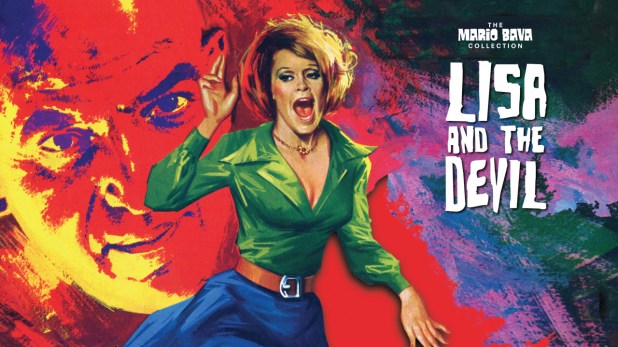
So what is Lisa and the Devil about? Well, Lisa is a tourist who wanders away from a guided group tour to explore an antique store where Leandro (Telly Savalas, who if you ever get the chance to visit Pittsburgh, is featured in an epic photo in the Hollywood Bowl area of the famed Arsenal Lanes bowling alley) is purchasing a dummy. She looks at the man — who looks just like a demon she saw in a fresco — and runs. She then meets a mustache wearing man who recognizes her, but she bumps him into falling down the stairs to his death (or maybe not).

Lisa can’t find her way back to her tour, so she follows a couple and their driver (who is secretly dating the wife), but they break down at a mansion where Leandro coincidentally  (or maybe not) works as a butler for the blind Countess and her son Maximilian, who begs his mother to let them stay.

The mustache man may (or maybe not) still be alive, as he stalks Lisa. There’s also a mystery guest in the mansion who may be a prisoner and Lisa may (or maybe not) be Elena, Maximilian’s long-lost lover. And oh yeah, the mustache guy is really Carlos, the Countesses second husband and Elena or Lisa (or maybe not) was sleeping with him.

This next part needs some careful wordsmithing. Carlos — that’s mustache man’s name — is being prepared for burial by Leandro while still being alive. Lisa freaks out as he tries to take her away from the mansion, but he’s killed by Maximilian, but then he’s not even real, but the dummy Leandro bought at the start of the movie.

If that made you say, “What the fuck?” then get ready. The young driver loverboy is killed while fixing the car, but Leandro offers to cover it all up if he can take care of the body. The husband demands that his wife leave with him, so she runs him over with the car. Then, she is murdered by Maximilian. Whew.

Lisa is knocked out by all of this and Leandro dresses her like Elena. Turns out he is a demon indebted to the Countess and Maximilian and forced to help them play out their lives again and again and again, using dummies to represent each of them. As Lisa arrived and interrupted his shopping for new dummies, her real form must now become Elena. But wait? Isn’t Lisa Elena? That’s what Maximilian thinks, as he takes her to the secret room, where we learn that Elena’s corpse and ghost are the mystery guest. He drugs Lisa and starts to rape her when the ghost laughs at him, causing him to stop and tell his mother what he has done: he killed Carlos for betraying his mother by sleeping with Elena, but imprisoned her rather than letting her get away. When his mother tells him the only next logical step is to kill Lisa, he kills her instead.

He then finds every dead person all gathered at a table for dinner. His mother tries to kill him, so he jumped out a window and is impaled on a fence. Leandro appears behind the dead bodies.

Lisa escapes, but not before she sees Leandro refuse to accept a doll of her. On an amazing 1960’s plane, complete with spiral staircase, she discovers that the entire plane is empty, except for the pilot — Leandro. She collapses and becomes the dummy that he carries back to the house.

Lisa and the Devil was Bava’s dream project turned nightmare. The end result — which didn’t play in wide release in the director’s lifetime — is a waking dream of doom, dread and predestined death. I wouldn’t recommend it if you’re looking for a straight narrative, but it’s a strong film for those seeking to explore and be mesmerized.

UPDATE: You watch this for free on Amazon Prime.

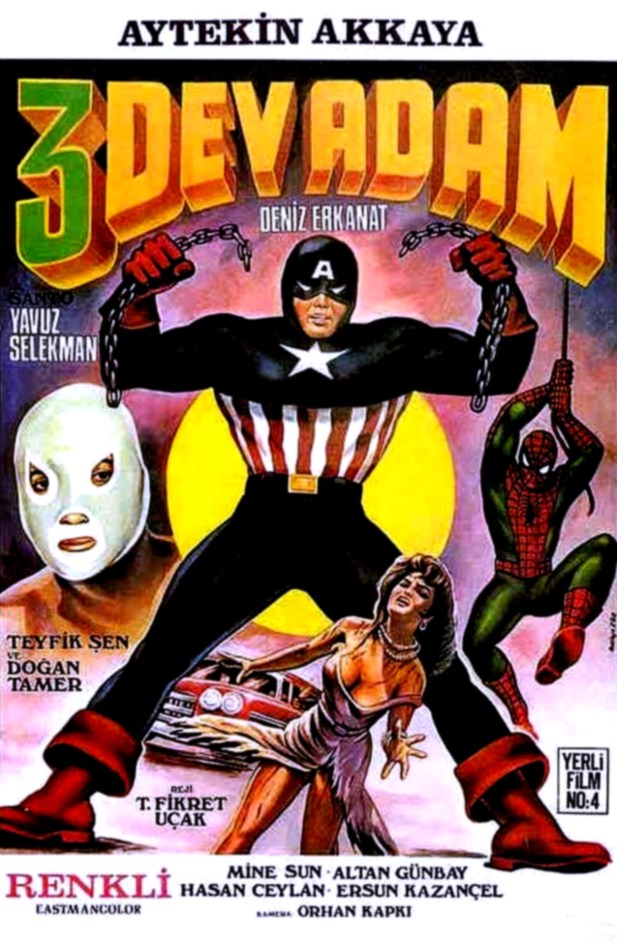
FORGOTTEN HEROES: 3 Giant Men (1973)

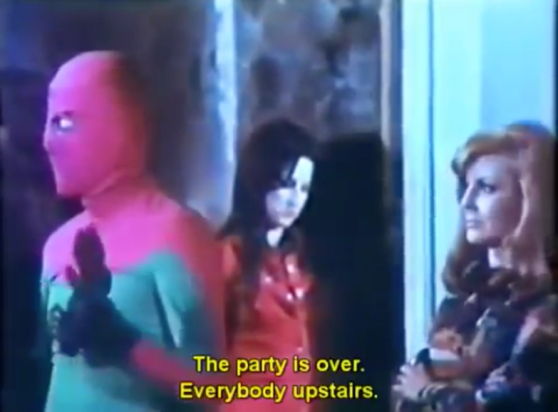
In the world of Turkish cinema, Spider-Man leads a gang of counterfeiter who use murders people with outboar dmotors, axes and man-eating guinea pigs. Santo is a secret agent who rarely wears his mask and puts things directly into his pants, pockets by damned. And Captain America doesn’t have a shield, smokes and brings his girlfriend, Julia, along.

Just strap yourself in — 3 Giant Men is a ride into insanity, the kind of world that  Sergeant Joe Friday worried about when kids in the 60’s started doing LSD and jumping out of windows.

Istanbul! The Spider’s Gang — led by Spider-Man — are taking over. They cut the head off of a woman with a boat propeller to start the movie off right.

The film then kicks into the craziest title sequence ever — they basically filmed a board of photographs, pulling out on image after image, with the type for each credit simply vinyl type on a board.

Julia, Captain America’s girlfriend, is captured but is able to send a distress call to Cap, who rescues her but can’t catch Spider-Man after a battle through a graveyard. Captain America is played by Aytekin Akkaya, who was Ali in Dünyayı Kurtaran Adam (better known as Turkish Star Wars) and Ukan in Yor, the Hunter from the Future.

I’d like to inform all of you right now that Spider-Man has the biggest eyebrows you’ve ever seen. He can also die and come back to life with no lasting damage, for some reason. He also gets his men to drop off what I can only refer to as mini-tents near mafia bases, emerging from them to kill other gangs.

Meanwhile, Santo infiltrates a dojo known for counterfeiting. Santo’s fight style is to basically no sellkicks to the face and do rolls and judo. So, you know, nothing at all like he real Santo. He also likes to look right at the camera whenever he is film. I could watch Santo fight karate men for hours and hours of my life. Santo gets captured, but escapes with the evidence. He and Cap raid a hideout while Spider-Man kills a woman in the shower.

Spidey calls out the dude who let Santo escape, punishing him by putting a tube over his head and letting two guinea pigs EAT HIS FUCKING FACE. Sorry to scream, this movie…this movie is just one shock after the other. Spidey tops it off  by watching couple shower (!), killing them by stabbing them together ala Jason Vorhees to Jeff and Sandra in Friday the 13th Part 2 (!!) and then stealing a statue that has no importance toward the rest of the movie (!!!).

Yes. If you are keeping score, Spider-Man has two different shower based kill scenes in this movie. If you like your Peter Parker murderous, then this flick is for you. But wait…what would make this movie better? If you answered watching Spider-Man have sex while surrounded by frightening puppets, then you are on the same wavelength as the insane people who made this movie. You should really speak to someone or be on one of this lists where you have to announce yourself to all of your neighbors when you move.

Santo and Captain America then battle Spider-Man again, where we find out that there are four Spideys, several of which die horribly. After some undercover work at a club — the same club we keep seeing with a girl in shadow spinning boob tassles — Spider-Man’s goons kidnap our heroes. They fight one another, but it’s all a clever ruse, as they kill almost all of the gang members, including Spider-Man’s girlfriend (who is not Mary Jane Watson, Gwen Stacy, Felicia Hardy, Betty Brant, Carlie Cooper or Liz Allen).

There’s a battle that doesn’t stop until every Spider-Man is dead. Spideys get knocked off ladders, their necks broken and crushed by presses. It’s an orgy of Spider destruction, highlighted by Captain America’s trademark offense: one footed dropkicks , face slaps and punches to the belly.

But just as Cap is about to leave town, he sees one more Spidey. However, it’s just a kid in a mask. 

I don’t know if it’s possible to love a movie as much as I love 3 Giant Men. Today’s superhero movies fail to capture the majesty of this film. It answers the big questions, the ones no one had the guts to ask or gave a shit about. Cap punching Spider in the breadbasket? It’s in there. Santo powerbombing goons and then putting them into submission holds in a nightclub? Yes. Wacky asides with comical music? Yes. A Cap that smokes and wears a leisure suit? Evet.

3 Giant Men comes in at 78 minutes of what I can only imagine being in a coma and pumped full of iowaska would feel like. Everyone knows all about Japanese Spider-Man Takuya Yamashiro (they do, right?), but laughing, killing, giant eyebrow having Turkish Spider-Man? He is the greatest villain ever in the best superhero movie ever made.

Play us out, Turkish Spidey!

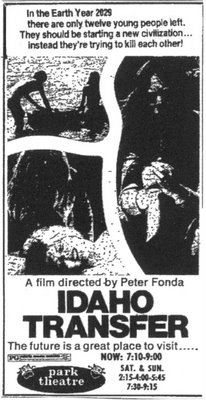
FUCKED UP FUTURES: Idaho Transfer (1973)

Karen Braden just got out of a mental hospital. Now, her father and sister, Isa, have taken her to a secret government facility in Idaho where they’re working on matter transference. However, they’ve learned how to travel through time instead, which has taught them a sad fact: an ecological event will soon wipe out civilization.

idaho_transfer

Only those twenty and younger can handle time travel, due to the damage it does to the kidneys. The scientists start sending teenagers fifty-six years ahead to rebuild the human race. It turns out that the project was secret and once discovered, the government turns off the machines, trapping everyone in the future, where they are killed when one of them, Leslie, goes nuts. Oh yeah — and everyone is now sterile, despite Karen’s assertions that she is pregnant.

No one even cares that they are about to die. One of the teens, Ronald says: “I don’t think you have to leave anything behind. Just have a beautiful time like all the other junk litter in the universe, then say goodbye. I don’t know what else to tell you. Perpetuation and all the crap that goes with it is a big hoax anyway.”

The last survivor, Karen, tries to change the settings on the machine and go back to prevent everything. But she screws up and goes too far forward. A futuristic car pulls up and a man takes her, placing her in the trunk to be used as fuel. A future girl asks her family what will happen when they run out of fuel and will they have to stop driving cars? The film ends with the words “Esto Perpetua,” meaning “It is forever.”

Other than Keith Carradine, the cast is filled with unknowns. Peter Fonda produced and directed it, but eventually, he let the film disappear into the public domain. I discovered it on a Mill Creek Entertainment 50 pack and it’s…weird.

It’s the only movie I’ve ever seen where an 8-track player is a time machine and you need to get into your underwear (or nude) and have someone sit behind you to activate it. That seems like some kind of weird pick-up trick, but somehow it works. Except the future is incredibly shitty and you’ll be turned to gasoline. So there’s that.

This seems like the coming down of 60’s hope, the understanding that the world would soon end. But then, the 80’s would arrive and everyone would start caring about only one thing: themselves. Perhaps the dead world of Idaho Transfer is preferable to selling out and becoming a lie.

Since this is in the public domain, there’s a lot of rips out there — and they most likely won’t be going anywhere anytime soon, but you have a couple of You Tube choices HERE, HERE, and HERE.

And be sure to check out all of our “Fucked Up Future” reviews as well as our two-part “Atomic Dustbin” reviews of ’80s apoc films.

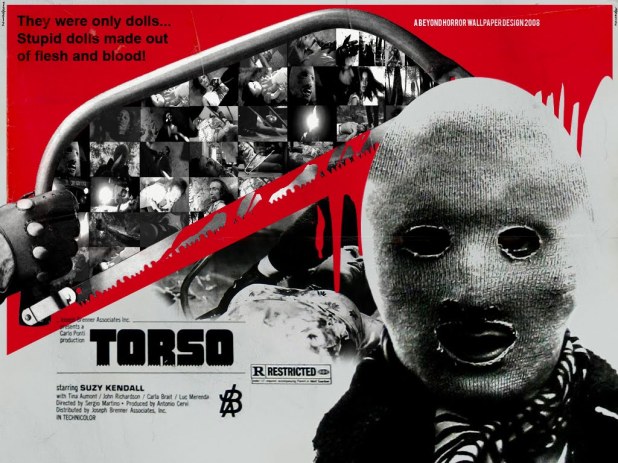
Torso (1973)

Torso is such a simple title. I’d rather call this film by its Italian name: I Corpi Presentano Tracce di Violenza Carnale, or The Bodies Bear Traces of Carnal Violence. Either way, it was directed by Sergio Martino and features none of the cast that he had come to use in his past films like George Hilton, Ivan Rassimov or Edwige Fenech.

It does, however, star Brtish actress Suzy Kendall, who played the lead role of Julia in Dario Argento’s seminal The Bird with the Crystal Plumage. She’s so associated with giallo that she appeared as the main character’s mother in 2012’s ode to the genre, Berberian Sound Studio.

This is a film that wastes no time being strange. Or salacious. A photographer is shooting a soft focus lovemaking session between three women amongst creepy, eyeless baby dolls. By the time we register what is happening, we’re now in a classroom, where swooping pans and zooms refer us to the main cast of the film as we overhear a lecture and later a discussion about Pietro Perugino’s painting of Saint Sebastian. Did he believe in God? Or was he just trying to sell sentimentality? Could an atheist find himself able to translate religion to those with faith?

We cut to a couple making out in a car as a figure stalks them through the eye of the camera, making us complicit in the act of the killer. Quick cuts reveal the white masked face of this maniac. The man runs after him while the girl doesn’t even care that they had a voyeur watching. As she waits for him to return to the car, but grows impatient. The headlights of the car cast her shadow large across the columns of a bridge. And their light is quickly extinguished by black gloved hands. The camerawork here is really striking, keeping us watching for the killer, as we’re no longer behind his eyes. His attack is swift and ruthless, juxtaposed against the images of fingers penetrating the eyes of a doll.

The art professor (John Richardson, Black Sunday, The Church) and Jane (Kendall) meet by chance at a church where she challenges him to change his views on Perugino. As she returns from their somewhat romantic afternoon, she spies her friend Carol arguing in the car with a married man.

Meanwhile, ladies of the evening walk the street, ending up with Stefano, a student who has been stalking Julie. He has trouble performing and the prostitute he’s with tells him that all the hang ups come her way. That said — even if he’s queer, he better pay the money. He flips out and attacks her, but she makes her escape.

We’re then taken to a hippy party that looks like it’s taking place inside Edward Lionheart’s Theater of Blood. There’s weed, there are acoustic guitars, there are bongos, there are dudes with neckerchiefs, there are motorcycles. Truly, there’s something for everyone. But after leading on two men, Carol just walks out into the mud. They try and chase her, but she makes her escape into the foggy night. We hear her footsteps through the swamp as she walks, exhausted and covered in mud. What better time for our white masked killer to return? We see glimpses of him through the fog and then he is gone. Whereas in past films Martino ignored the murder scenes instead of story, here the violence is extended, placing the killer and his actions in full view. After killing the girl, he rubs mud all over her body before stabbing her eyes — again intercut with the baby doll imagery. Her blood leaks into the mud as the score dies down.

A police detective is in front of the art class, showing images not of art, but of the crime scene. A piece of cloth has been found under the fingernails of one of the murdered students, Flo. And that same scarf was found on Carol’s body. It’s their duty to report seeing anyone who wore this scarf to the police, who want to cooperate with the students who normally riot and throw rocks at them.

Two of the men in the class — Peter and George — were the last two people to be seen with Carol, the ones who she turned down at the party. Meanwhile, Stefano continues to stalk Jane. The music in this film is so forward leaning — tones play when the killer shows or during moments of tension.

A man calls Daniela and tells her that if she ever tells where she saw the red and black scarf, she’s dead. Fearing for her life, she tells her uncle, who lends his country home to her and her friends so that they can get away from the city while the killer is at large.

Oh yeah — I forgot the pervy scarf salesman, who the police are leaning on. Right after talking to the police inspector, he calls someone and asks for money to buy his silence. Whoever it is, they bought the scarf from him and wouldn’t want anyone else to know. They’ll also get out of town and head to the country. Coincidence? I think not!

Stefano is all over Dani, telling her that he needs her. She wants nothing to do with him. When she stares at him, she remembers seeing him wear the red scarf. She escapes — slamming the door in his face. She tells Jane that she remembers seeing him wear the scarf — and never again — the day Flo died. The whole time, creepy uncle is watching the two girls. Jane offers to speak to Stefano, then meet the girls at the vacation home.

The street vendor is flush with cash, creeping along in the dark. A car starts to follow him. We see the black gloved hands again as the car hits its victim again and again, bright red gore pouring all over the screen.

Jane goes to speak to Stefano, finding only strange baby dolls and letters to Dani asking her to love him and remember the promise that she made as a little girl. Jane is surprised by Stefano’s grandmother, who tells her that he left town.

The other girls are asleep on the train as someone watches them. A strange man enters their train car and sits down.

The camerawork in this movie feels as predatory as the perverts and killers that exist within it. Speaking of pervs, when the girls arrive in the countryside, the local men pretty much lose their minds, particularly over Ursula (Carla Brait, the man wrestling dancer from The Case of the Bloody Iris). She and Katia make out as a peeping tom watches, only for the killer to show up and off the leering man. There’s an amazing scene of the killer dumping the pervert into a well, shot underwater and staring upward as the body falls toward the lens.

Man, every man in this movie is scum. They’re either frightened boys or perverts wanting one chance to knock up a woman or scarred from past sexual encounters. None of them are positive, as even the uncle who gives Dani the villa seems way too interested in her. Every man is a predator at worst and a leering pervert at best.

Jane hurts her ankle when she gets overly excited about breakfast. A doctor arrives — the mysterious man from the train — and he gives her a pill, which knocks her out.

The girls go sunbathing while Jane recovers. Dani thinks she sees Stefano — complete with the red scarf — watching them. They return home and drink champagne, which Jane uses to wash down her sleeping pills.

A few minutes later, the door rings. It’s Stefano — the girls all scream — but he’s dead — the girls scream again — and the killer is behind him, holding the red scarf — now scream even louder! Instead of showing us the murders, Martino switches form, cutting to a ringing bell and Stefano being buried.

Jane wakes up, asking where her breakfast is. She’s obviously slept late as a result of the pills. She walks around the apartment, looking for Dani, Ursula and Katia, only to find a mess. Tossed chairs, bottles of beer and every single one of her friends murdered. Suzy Kendall is amazing in this scene, caught between fear and nausea. Unlike so many wooden giallo performances, she’s actually believable.

She hides as the killer comes back, forced to stay quiet and watch as he saws her friends into pieces. Even the ordinary world routine of the milkman arriving cannot stop the butchering of her friends, with her trapped just feet away.

This final act is completely unexpected, as up until now, the film had played by the rules of the giallo, the large number of victims versus the large number of red herrings.

In fact, this film is so packed with red herrings, even the cast had no idea who the killer was. Martino wouldn’t tell them who it was, so each of the actresses had her own theory as to who the killer was. And in the original script, the killer survived.

Now, instead of that traditional giallo structure as I mentioned above, it is the last survivor — a near prototype for the final girl — against a killer. Throw in that Julie can’t move well due to her leg and Martino has set up quite the suspenseful coda.

Trapped in the house, Julie tries to signal with a mirror, using Morse code. But it totally misses the heroic doctor’s sight. He places a call, but it doesn’t seem like it’s to Julie. She looks out the window and sees the killer coming back.

It turns out that the killer was the professor, who saw a childhood friend die trying to reach for a doll. He compares the other kills to dolls, with only Julie as a flesh and blood person. Everyone else was a bitch or played games with him or blackmailed him. He hacked Ursula and Katia to pieces like dolls as a result. Dani saw him. Carol may have seen him. And he killed Stefano when he saw him in the village. Death, he says, is the best keeper of secrets and then he sees Julie as a doll and tries to hang her. She’s saved at the last second by the doctor.

They battle into a farmhouse, across the yard and to a similar rock where we saw the younger professor watch his friend die. We hear a screen and have no idea who has been killed — but luckily for Jane, the doctor survives.  He discusses that whether fate or providence had kept him in town, where he could save her. Perhaps it was written in the stars. Julie replies that Franz, the professor, would have been a realist and called it necessity. Franz is dead and the dreamers live on.

Torso is decent, but pales in comparison to the rest of Martino’s giallo films. Suzy Kendall is great, but you can’t help but miss the rest of his established players. It’s way closer to a slasher than a giallo, with the dolls and the killer’s reasons not feeling natural and merely tacked on. The killings are more important than who the killer is, in true inverse to the other films on the site this week.

Also — the American trailer is abysmal. It makes me hate the film and I can see why no one wanted to see it. It focuses on the hacksaw, which is a very incidental piece of this film. You’d do well to totally skip that.

You can watch this on Amazon Prime.
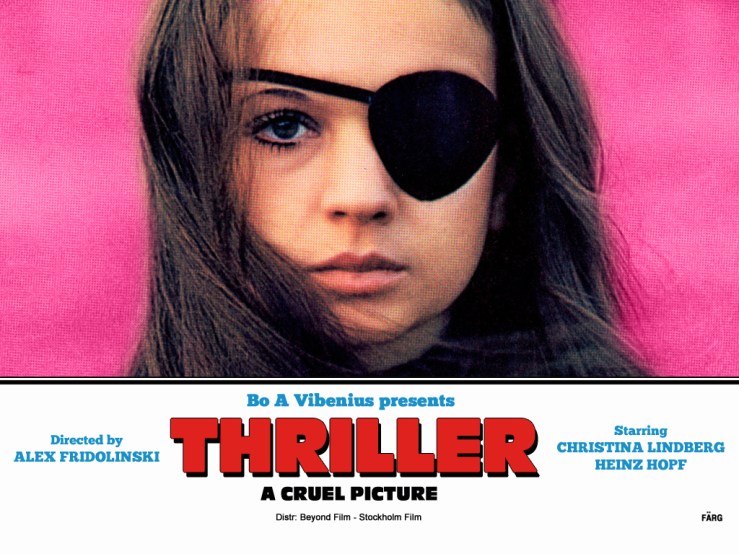
DANGEROUS WOMEN: They Call Her One Eye (1973) AKA Thriller A Cruel Picture

The poster says it all: “The movie that has no limits of evil.” When people talk about grimy, evil pictures, this is the one they’re talking about. Quentin Tarantino called this “the roughest revenge movie ever,” and that’s including I Spit on Your Grave and Last House on the Left, one would suppose. After all, Elle Driver in his Kill Bill directly takes her look from this film, with outfits that match her eyepatch.

Frigga (Christina Lindberg, Teenage Playthings, Exposed) is a simple farm girl who’s been silent since she was a kid, thanks to being raped. Her loving parents spend all of their money to try and get her voice back with speech therapy. One day, she misses the bus and ends up going on a date with Tony, who seems like a real ladykiller. Turns out he is — he gets her hooked on heroin, telling her that she needs it every 48 hours if she wants to live. To pay him back, she has to become a prostitute for him.

Frigga — possibly named for Odin’s wife (and Odin is one eyed, after all) — cannot be tamed. She escapes twice and scars the face of the first john who tries to sleep with her. As punishment, Tony takes her eye — a scene shot with the cadaver of a young girl who had committed suicide. Remember what I said above — this film takes no fucking prisoners.

Tony has sent a letter home to her parents, telling them she hated them and would never be back. In answer, they both commit suicide. Add in the death of Frigga’s only friend, fellow prostitute Sally, and it’s time for revenge. She starts charging more for whatever her clients want to do to her, all so that on every Monday, she can learn the skills she’ll need to kill everyone and everything.

What follows is a leather overcoat clad Lindberg — a gorgeous creature of pure hatred and violence — destroying everything. Even two cops who try and take her out are decimated in slow motion in a tour de force scene that Rob Zombie could only dream of shooting — sound dropped out, violence given to full display. The film flirts with art while keeping both feet mired in exploitation — there’s a lesbian scene and in some versions, a hardcore insert — but gorgeous shots of police sirens with electronic music droning mark this as just as much masterpiece as masturbatory fodder.

Finally, after killing all of her clients, Frigga challenges Tony to a duel. Getting the better of him, she buries him in a hole, ties a rope around his neck and like some cowboy in a spaghetti western, makes a horse run away, killing him. She watches, mute, as the man who ruined her life finally dies. What can be left after this? She has become Shiiva, Death, the destroyer of worlds. Her family destroyed. Her friend dead. Even the police, who could not help her, dead at her hand. She drives the cop car into the distance, sirens blaring as wind and sound fills the soundtrack.

This isn’t a movie for everybody. But it’s why I love movies — it’s an experience. I can’t recommend it to everyone, but if you’re here and reading this, you know that you’ll probably love it. Heck — you’ve probably already seen it.

Lindberg — who claims herself that she was a horrible actress — goes all in here. She injected water and saline into her veins for the heroin shots. She learned how to fight. Hell, she got arrested after practicing shooting her shotgun — in public no less. She owns the screen in this.

Also, without a doubt, this film has one of the best trailers ever.

“When cruelty knows no bounds. When evil knows no limits. Revenge strikes with its most frightening power. They called her One-Eye…then ran for their lives. They defiled her beauty. They robbed her of speech. They brutalized her body and, when they had finished, she used what was left to repay every blow with her own terrible kind of revenge.”


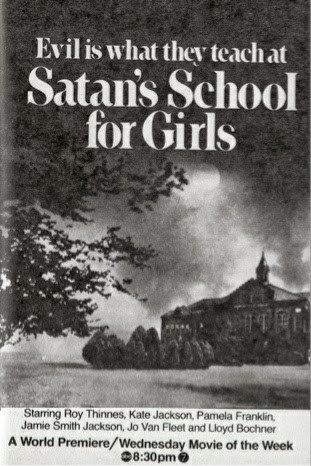
WEEK OF MADE FOR TV MOVIES: Satan’s School for Girl’s (1973)

The early 70s were a time when Satan seemed to reign. I first learned about Anton LaVey and the Church of Satan as a child by reading the TV Guide Book of Lists. They asked him what the most Satanic TV shows were, and he replied with a list that included so many of my favorite shows. It scared me as a twelve-year-old — could I be taken by devil worshippers and be made to celebrate the Black Mass? This cultural phenomenon of the 70s is a nostalgic left-hand trip for many of us.

Made-for-TV movies reflected the Satanic bent of the early 70s. This Aaron Spelling produced, David Lowell Rich (Eye of the Cat, Airport 79 – The Concorde) directed affair brings the devil to the boarding school, along with plenty of attractive girls ready to give their souls to the Son of the Morning Star.

Martha Sayers is running from a mysterious stranger who may or may not be related to Torgo from Manos: The Hands of Fate. She locks herself in her sister Elizabeth’s (Pamela Franklin, Necromancy, The Legend of Hell House, The Food of the Gods) house and hangs herself. Of course, the police just think it’s a suicide. But we know better — The Salem Academy for Women had to have something to do with it. Martha’s roommate warns Elizabeth to stay away, but she is determined to uncover the truth.

She takes the name of Elizabeth Morgan and enrolls at the school where she’s welcomed by Roberta (Kate Jackson!), Jody Keller (Cheryl Ladd!) and Debbie Jones (Jamie Smith-Jackson from Go Ask Alice, who is married to Michael Ontkean, Sheriff Harry S. Truman from Twin Peaks). The fact that Alice and two of Charlie’s Angels (Sabrina Duncan and Kris Munroe, I’ll have you know) playing devils in a movie thrills me to no end. And throw in Alice, and we have a movie!

Debbie keeps having outbursts in class, and another girl commits suicide, prompting Headmistress Williams to start worrying about the influence of the new girl. Then there’s that painting of Martha in a dungeon that Debbie painted but is now terrified of. Just imagine — Elizabeth snoops and finds that room on campus but is chased away by a man with a knife!

Roberta is now on Elizabeth’s side. After all, there are some crazy teachers, like the professor, who make them run a rat through a maze. And when Debbie tries to leave, her body shows up. Finally, Liz can’t take anymore and bursts into Professor Delacroix’s (Lloyd Bochner, who played Walter Thornton in The Lonely Lady) office. He screams that something is stalking him, so he jumps out a window, gun in hand. He runs through a swamp before being beaten to death with sticks by several students. The popular Dr. Joseph Clampett (Roy Thinnes, David Vincent from The Invaders, The Norliss Tapes) is the real killer. The plot takes unexpected turns, keeping the audience on the edge of their seats.

He’s leading a Satanic cult that believes that he’s the devil. Only Elizabeth and the headmistress survive as the rest of the girls sacrifice themselves to the flames. And Clampett? He survives the fire and then promptly walks outside and disappears.

Interesting Wiki story: In the film’s synopsis, whoever wrote it states, “the other girls stay behind to sacrifice themselves to their leader (But are saved by God and Jesus offscreen as they were forced).” How do they know? That certainly didn’t happen in the movie version I saw!

This was remade in 2000, with Kate Jackson playing the school’s dean and Shannen Doherty. That version is unreviewed. Why pick 2000 when you can choose 1973? If only all schools could be as ridiculous as the Salem Academy for Women! If only all rooms had shag carpeting, and there were constant wine mixers and murders and 70s garish fashions! My world is so dull by comparison!

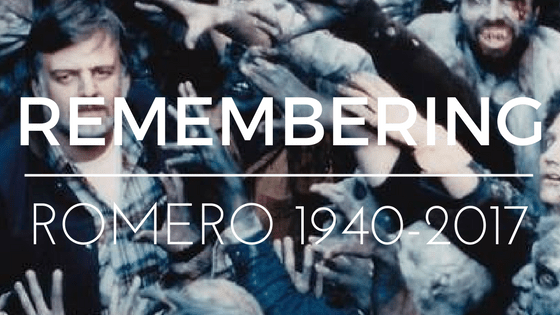
GEORGE ROMERO TRIBUTE: The Crazies (1973)

After the lessons of There’s Always Vanilla and Season of the WitchThe Crazies (also known as Code Name: Trixie) brings George Romero back to familiar territory: the towns surrounding Pittsburgh and how they deal with the collapse of society in the wake of a science fiction-related calamity.

Shot on location in Evans City and Zelienople — 30 miles north of Pittsburgh and within minutes of the hometown of this author — The Crazies feels like a companion to Night, albeit one that has an explanation and less of the dread of having no clue as to why the world is ending.

Where Night of the Living Dead speculates that a Jupiter probe is the cause and Dawn of the Living Dead claims that perhaps Hell has run out of room, The Crazies leaves no question as to why things are falling apart. The government has created a bioweapon called Trixie that causes its victims to either die instantly or become homicidal; this weapons has ended up in the Evans City (home to the opening graveyard of Night) drinking water.

Also, the film tries to see things from the side of the individual and the government that struggles to contain the epidemic that it has accidentally started. The full fear and chaos of Vietnam and Watergate are on display here; the military men and women may be individuals, but en masse they are a frightful and faceless force that are ordered to kill American citizens — on American soil — on sight, simply because they have become infected.

The Crazies begins by subverting one of the central themes of Night of the Living Dead. Instead of children rising up to kill and devour their parents, parents are killing their children. A girl and her brother wander their house. She’s convinced he is messing with her, but it turns out the father is dousing the house in kerosene. The daughter finds him, only for him to set the house ablaze. Cue opening credits as we watch the house burn.

We find David in bed with his girlfriend Judy as fire alarms go off and the phone rings. They’re both called into work to deal with the fire that opens the film, but not before setting up that she’s pregnant. Judy drops him off at the fire station, where we meet Clank, our third main character.

There are troops all over the hospital where Judy works, led by Major Ryder. There’s a press blackout and incredibly secrecy, as a plane has crashed in the hills near the city containing the Trixie bioweapon. Colonel Peckem is ordered to contain the virus while Dr. Watts is brought in an attempt to cure the virus, which doesn’t seem like a certainty, what with nuclear bombers in flight to nuke the town and soldiers that shoot anyone that tries to escape.

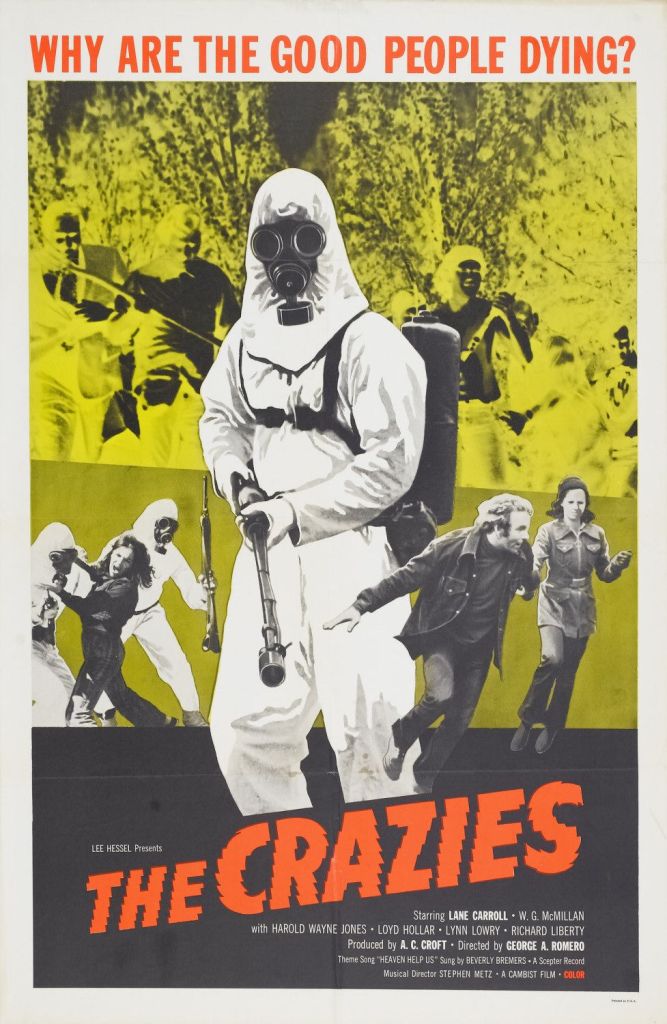
When I used to see photos of The Crazies, I always assumed that the white suited, gas masked soldiers were the bad guys. But the truth is that there are no real good guys or bad guys in this movie — just the infected and the uninfected.

As soldiers move the townspeople into the high school, all hell breaks loose. The parallels between Evans City and Vietnam (and today’s wars with the house to house searches) are incredibly obvious. Western Pennsylvania is packed with farmers who are used to taking care of themselves and used to having tons of weapons. The government doesn’t have the protocol and supplies to handle this, much like how fighting the Viet Cong confounded our troops at times. The mayor complains, demanding to see someone in charge. He meets Col. Pecken face to face — realizing he’s black, he’s taken aback (as is the sheriff).

In short order, violence reigns. The army takes control, shooting the sheriff with his own gun, as his blood flows neon red against the white suits of the soldiers. The well-armed townsfolk and soldiers engage in a gunfight, while the soldiers face the crazies face to face. Some of them are content to simply play piano during the chaos. Others are surprisingly murderous, like the kindly older woman rises from her chair to stab a soldier with her knitting needles before returning to making a sweater. Even a priest douses himself with gasoline and sets himself on fire to protest the military — another over the top reference to Vietnam.

The military and government only communicate via speakerphone. There’s no way to tell who is affected and who isn’t. The soldiers may even revolt when they find out what they have to do. And any bodies have to be burned. It’s much like Night, except the zombies couldn’t communicate. The best case scenario is that Evans City becomes a testing site with 3,000 chances to find someone with an immunity to the virus.

David, Judy, Clank, Kathy (Lynn Lowery from the remake of The Cat People and Shivers), her father Artie (Richard Liberty, Logan from Day of the Dead) and an old man are confined to a van by the soldiers. The crazies attack and in the battle, nearly everyone is killed but our heroes. In vain, they try to escape the town before hiding in their local country club — societal classes have broken down and anywhere for shelter is fair game.

Slowly, we realize that everyone in the town is affected. Trixie has been in the water supply for six days, so it’s only a matter of time before everyone descends into madness. In fact, the action star heroics that have David and Clank shooting down a helicopter and killing soldiers that occupy a farmhouse may as well be them showing the first signs of the Trixie virus (or Clank, as we will learn). David confides in Kathy, telling her that the disease is in all of their systems (a previous revelation that he went from a football hero to a Green Beret who wanted adventure to a broken man is a potent allegory for America from 1950 to 1973).

The virus finally claims Artie, who rapes his daughter, who he believes is his dead wife. Clank finds them and beats Artie, who hangs himself. Kathy wanders away and is shot be soldiers. In response, Clank kills several of the soldiers before being killed himself.

Judy is now infected and is killed by some of the non-infected civilians and David cannot save her. The military captures David, who realizes that he is immune to the virus, a fact that he keeps to himself.

Meanwhile, despite the elementary chemistry lab he has to deal with, Dr. Watts finds what could be a cure…or he could be infected and showing the first signs of the disease. It doesn’t matter — the crazies attack the area and the cure is destroyed. The film closes on Colonel Peckem being relocated, sadly watching the town of Evans City disappear.

Where The Crazies shines — in comparison to the last two Romero films in this review — is in the story. It’s also worth noting that the acting is miles beyond anything since Night of the Living Dead, with much less overacting. And the houses, buildings and high school of Evans City provide realistic looking sets in spite of the small budget.

It’s a rough film — in a good way. Children scream as their parents are killed and burned in front of them. Polite society breaks down. And even science and the military can do nothing to stop the end.

While nowhere near the look and language of Dawn of the Dead’s evocative ad campaign, the posters for The Crazies hint at the overall package that Romero’s films would become. The tagline, “Why are the good people dying?” does what I feel the finest of tags do: it makes you say, “And then?” You crave hearing the next part of the tale. It’s no “Who will survive and what will be left of them?” but it’s rather good.

It would be three years before Romero would complete another movie and five years until it would be released. This time, he would fully embrace horror once again to find artistic, if not commercial, triumph with Martin. But that’s a story for another day.

PS – The Crazies was remade in 2010 by Breck Eisner (son of former Disney chair Michael Eisner and director of The Last Witch Hunter, coincidentally shot in Pittsburgh). It has a cameo by Lynn Lowry and was seen by probably 300% more folks than ever saw the original.

GEORGE ROMERO TRIBUTE: Season of the Witch (1973)

The more you get into exploitation films, the more you get used to the same movie being released under many different names. Like this film, which started as Jack’s Wife, was retitled and recast as a soft core porn movie called Hungry Wives, then became Season of the Witch after the success of Dawn of the Dead, then became a lost film for around thirty years.

This is nearly an auteur film for George Romero, acting as director, editor, cinematographer and screenwriter (with his wife producing). Inspired by the occult and feminism, two major movements of the early 70s that play nicely together, the film was shot with a small crew for $100,000 (originally budgeted for a quarter million).

The film had issues finding distribution, with several of them demanding hardcore scenes. Jack H. Harris (producer of The BlobEquinox, The Eyes of Laura Mars and Dark Star) finally distributed it as Hungry Wives, cutting nearly 41 minutes from the films running time (the version on the Anchor Bay DVD is still missing 26 minutes, which are presumably lost forever as the original film negative and director’s cut are thought to be gone forever).

The film has the feel of pornography with none of the payoff, something noticed by critics. Others consider it a film that’s unsure of its approach — indeed, how do you follow up a film like Night of the Living Dead which totally nails it and reinvents the horror genre without doing more horror? Romero’s efforts in this period feel like avoidance — yet knowing that the grave (slumming it in the horror genre) beckons.

Joan Mitchell is Jack’s wife, introduced to us as walking through the woods that look eerily similar to the Evans City gravesite that opens Night of the Living Dead. Together, they live in the Forest Hills suburb of Pittsburgh (this movie is so yinzer that it thanks Foodland in the opening credits) with Nikki, their 19-year-old daughter. Much like many of the characters of Romero, they’re Catholic and find their faith ill-equipped for the changes that the end of the 20th century brings to them.

Jack is pretty much an asshole — perhaps the man that Chris Bradley of There’s Always Vanilla would grow up to become. He’s always too busy, too demanding and too rough before leaving for weeks at a time. He keeps saying that he needs to kick someone’s ass before he chooses Joan, striking her. Even in therapy, all she can talk about is Jack and how he makes her feel.

Joan and her friends — presented in the opening introduction as “people who will help you think what you should” meet Marion Hamilton, a new neighbor who practices witchcraft and reads the tarot. It’s worth noting that the early 70s were a rebirth of occultism unseen since the period of Madame Blavatsky and spiritualism at the close of the previous century (to be followed by Crowley, Cayce and more — obviously different off-shoots but other ways that the public experienced and knew of the occult). Indeed, while there was plenty of magic and magick in the air pre and post-WW II, it wouldn’t be embraced by the popular culture until Louis Pauwels and Jacques Bergier 1960 book The Morning of the Magicians. This book — translated into English in 1963 — predates the New Age and its associated concepts.

Returning home from a tarot reading, Joan and her friend Shirley meet Gregg (Raymond Laine, the star of the aforementioned Vanilla), a student teacher with whom daughter Nikki sleeps with. They have a rambling discussion of ESP and the supernatural, during which Gregg convinces Shirley that she’s smoked pot. Joan throws him out of her house, but not before he makes a pass at her. If you loved the rambling conversations of Vanilla, well…have I got a scene for you. If you ever wanted to see a total Pittsburgh mom experience weed for the first time, well, this is the movie for you. And if you’re looking for overacting, well…again, this is the movie for you, thanks to this scene.

Joan takes her friend home, returning home to the sounds of Nikki and Gregg having sex. She gets turned on (not in the drug reference sense, as the word choice was used in the previous scene) and masturbates in her room until her daughter walks in on her. This follows the conventions of pornography without any of the payoff — the only reaction is anger here. Nikki runs away and Jack leaves — Joan is all alone. More alone than she’s been in a while.

This leads to her buying a book about witchcraft and creating a spell that makes Gregg fall for her — although we’ve already set up that he was into her. Their affair is juxtaposed with nightmares in which she is attacked by a man in a mask. She keeps learning more about witchcraft and finally breaks things off with Gregg, just in time for her daughter to come home.

The nightmares grow in frequency and fervor until one of them leads Joan to kill a man she believes has broken into her house — which ends up being her husband. She’s cleared of his death, but it’s up to the individual to decide whether or not she intended to murder him. She’s initiated into Marion’s coven — a scene which is more camp than realistic — at which point she announces that she is a witch.

As you may have gathered, the film is pretty much a mess. Supposedly half the shot footage ended up on the cutting room floor. And of all his films, it’s the one that Romero — on the 2002 commentary for The Crazies — said that he’d like to remake. That said — in spite of its budget — the film was able to get the rights to the Donovan song for which it is named. And there’s an idea in here. It’s a step back toward the horror genre without going the whole way back in. Indeed, it’s a half step between a genre film and There’s Always Vanilla, but an unsatisfying step.

Next, Romero goes back to what worked before — a rampaging crowd of creatures terrorizing small Pennsylvanian townspeople — with The Crazies. Will he find the financial and artistic success that has eluded him with his last two efforts?