VIDEO ARCHIVES WEEK: Rage (1972)

VIDEO ARCHIVES NOTES: This movie was discussed on the December 20, 2022 episode of the Video Archives podcast and can be found on their site here.

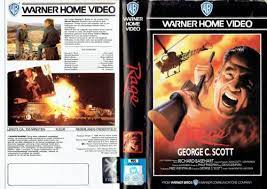
Rage is directed by its star, George C. Scott, and it’s about Wyoming sheep rancher Dan Logan and his son, whose livestock and lives are ruined by an Army helicopter spraying them with nerve gas. Military doctor Major Holliford (Martin Sheen) keeps them separated, lies to them about their condition and uses this accident as a test to see how the human body reacts to this weapon.

Not well. Because Logan’s son dies and he has hours left on this Earth. Even his family physician Dr. Caldwell (Richard Basehart) can no longer help him. The military answers to no one, no higher power, and as Logan wanders the hospital, he finds his son in the morgue. He wasn’t even told his child is dead and here he is, torn to pieces on a table, examined and studied.

All he has left is a need to destroy, to stop the company that made the gas. And when he returns to the military base, his body has given out and all he can do is fall to the ground, all so Holliford can collect one last blood sample as the dead body of a man caught in the machine is flown away.

Man, 1972 was the most downer of all cinematic years.

Scott may not be the best director, but he’s amongst the finest actors of his time. His near impotence in the face of coverups and the smiling faces of doctors who are going to just keep lying to him, keeping him trapped in the hospital and promising that everything is fine is so real that it created actual anger inside me. Because this feels too real, this feels like it could, can and does happen and people like Logan are the ones ground up and disappeared when things out of their control go wrong.

VIDEO ARCHIVES WEEK: Women In Cages (1972)

VIDEO ARCHIVES NOTES: This movie was discussed on the July 6, 2022 episode of the Video Archives podcast and can be found on their site here.

How important is this movie to Quentin Tarantino? Well, it’s the movie his character is watching in Planet Terror and he referred to it as “harsh, harsh, harsh.” He also took the name of Pam Grier’s character Alabama for his first published script, True Romance.

Director Gerry de Leon is a force of exploitation nature, making movies like The Blood Drinkers, Curse of the Vampires and the two efforts he co-directed with Eddie Romero, Brides of Blood and The Mad Doctor of Blood Island. They’re not fancy efforts but they’re sure entertaining.

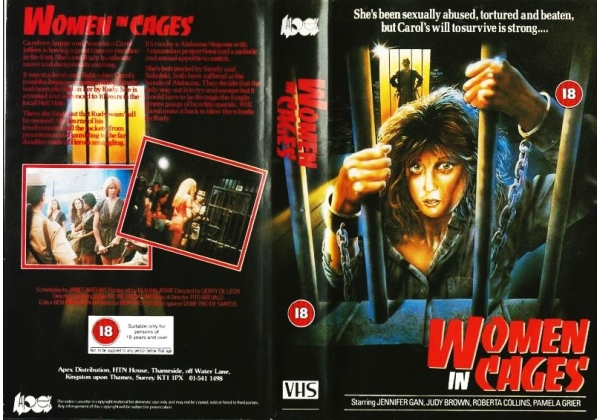
Carol “Jeff” Jeffries (Jennifer Gan) is in love with Rudy (Charlie Davao), but little does she know that her lover is running an empire of sex, drugs and gambling on the seas. Once he realizes the cops are closing in, he uses her to stash his drugs and she takes the heat.

In the horrifying prison where most of this movie takes place, Jeff finds herself at odds with, well, everyone.

There’s Pam Grier moving beyond prisoner victim to guard abuser as Alabama, spouting off incendiary dialogue like this as she tortures Jeff inside a room she calls The Playpen:

Jeff: “What kind of hell did you crawl out of?”

Alabama: “It was called Harlem, baby. I learned to survive, never have pity. This game is called survival. Let’s see how well you can play it. I was strung-out behind smack at ten and worked in the streets when I was twelve. You’ve got a long way to go.”

Even the other prisoners can’t get along with her, like Alabama’s claimed woman Theresa (Sofia Moran), Sandy (Judy Brown, already a veteran of The Big Doll House) and heroin-loving Stoke (Roberta Collins, who also spent time in The Big Doll House and Caged Heat) who thinks she can get more heroin from Jeff’s man Rudy.

After taking abuse the entire movie, Jeff decides to head out into the jungles, which is filled with even more horrible people than inside the prison. Things get, well, horrifying for all concerned with an assault/drowning sequence that had to be really uncomfortable for viewers. Or maybe they whooped it up at the grindhouses during that sequence. Who can say?

As for me, I loved Collins in this. She wants her next fix so badly that she’ll poison a sandwich, unleash a snake on someone and then throw acid in someone’s face. Most girls will just ruin your life. She’ll kill everyone you know. Marriage material.

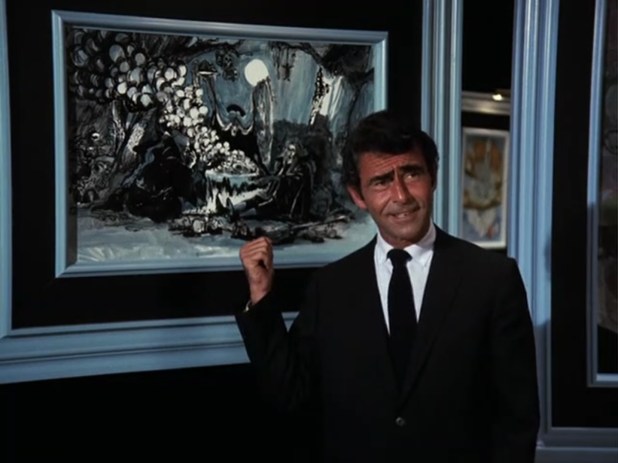
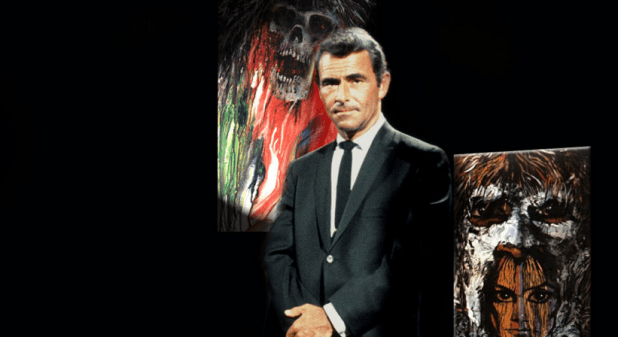
Night Gallery season 2 episode 18: The Waiting Room/Last Rites for a Dead Druid

I’m really enjoying the last two episodes of this show, which take two stories and have one director — in this case, Jeannot Szwarc — tell both of them.

“The Waiting Room” is written by Rod Serling and starts with Sam Dichter (Steve Forrest) riding into the type of Western town that has a man swinging from a tree. As he enters a bar, he’s recognized by one of four card players, Doc Soames (Buddy Ebsen). Dichter soon reveals he’s the kind of man that’s sad that he missed getting to see that hanging. That’s when Charlie McKinley (Lex Barker) stands up from the card game, says it’s time to go and goes outside to be shot in the head, a fact that surprises only Dichter.

The same exact thing happens once an hour, as Joe Bresto (Albert Salmi) and Abe Bennett (Jim Davis)  explain their deaths, then leave the bar to relive — redie? — them. Surely Doc Soames couldn’t have been a killer like them. But he reveals that all the gunfighters he healed that went out and killed others weighed on his conscience until he shot himself.

Only Dichter remains, but as he’s told that it’s his turn, the story comes full circle. A magical 27-minute work of art by Serling and Szwarc that tells one of the best stories of every episode of Night Gallery.

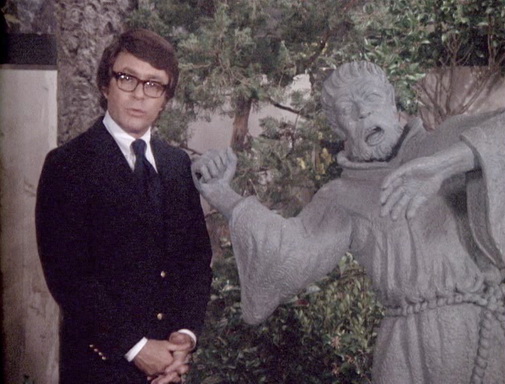
Written by Alvin Sapinsley and based on “Out of the Eons” by Hazel Heald, “Last Rites for a Dead Druid” starts with Jenny Tarraday (Carol Lynley) and Mildred McVane (Donna Douglas) buying a strange sculpture because the screaming man reminds Jenny of her husband Bruce (Bill Bixby). He hates it and banishes it to the backyard.

Yet every night, he dreams of the horrible thing out back and soon learns it’s a statue of Bruce the Black, a magician who sacrificed animals and humans to gain power. And when he’s near the statue, he’s not himself, like how he forces himself on his wife’s best friend, not that she minds. But when he nearly kills a cat on the grill and tries to murder his wife to be with Mildred, Bruce hits the limit.

The end is kind of ridiculous but in a way that I love. Bruce attempts to smash the statue and the unexpected occurs, all while it’s kind of hinted that Mildred — Elle Mae turned evil — is behind all of this possession and madness.

It was so nice to enjoy another episode and not deal with black out sketches or silliness. Ah, Night Gallery. As always when you are good, you are beyond good.

When Michael Calls (1972)

Helen Connelly (Elizabeth Ashley) is going through a change in life, finally leaving her husband Doremus (Ben Gazarra). But maybe she misses him. And maybe she’s losing her mind, as she keeps getting phone calls from her fifteen years dead nephew Michael. And maybe it’s the supernatural because with each call, someone dies.

Before it’s all over, Michael’s brother Craig (Michael Douglas), a psychiatrist at a school for disturbed children, reveals that yes, that’s Michael’s voice; then no small manner of deaths happen, like a police officer’s body falling out of a tree in front of kids and someone murdered by bees.

When the movie moves from its ghost story origins in the latter half, it loses a bit. But it’s a fun TV movie that doesn’t ask much of you and delivers some small screen chills (and kills).

Based on the book by John Farris (who wrote the screenplays for The Fury and Dear Dead Delilah),  this is directed by Philip Leacock (Baffled, Dying Room Onlyten episodes of Gunsmoke) and written by James Bridges (he directed and wrote The Paper Chase and The China Syndrome).

For some reason, in the VHS era, this was re-released as Shattered Silence.

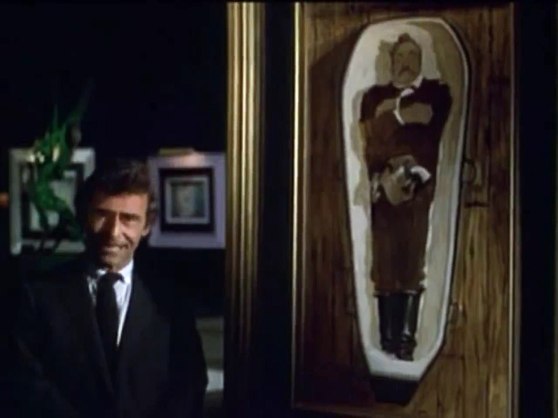
Night Gallery season 2 episode 16: Lindemann’s Catch/A Feast of Blood/The Late Mr. Peddington

There are only seven episodes left in the second season of this show and here’s hoping that there’s some magic in this journey into the Night Gallery.

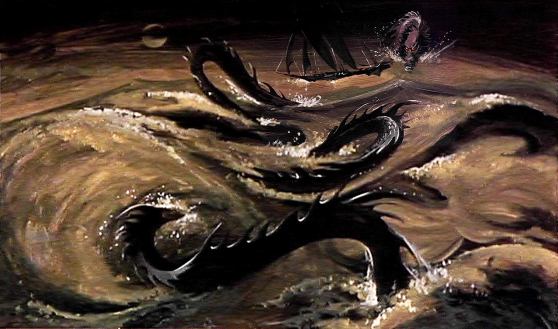
“Lindemann’s Catch” was directed by Jeff Corey and written by Rod Serling. In anyone else’s hands, the end of this story would be like the comedy moments that litter this series. Yet there’s a lot of sadness in this story of Captain Hendrick Lindemann (Stuart Whitman), a fisherman who finds a mermaid (Annabelle Garth). The rest of his crew dreams of the money they’ll make by exploiting her. He dreams of love. He wants her to be able to live on land with him and even magic can’t make that happen.

“A Feast of Blood” is directed by Jeannot Szwarc and written by Stanford Whitmore. The teleplay is based on “The Fur Brooch” by Dulcie Gray and that title refers to the strange gift that Sheila (Sondra Locke) has been given by the much older Henry Mallory (Norman Lloyd). She’d rather be with someone younger and handsome, anyone but Malloy. “I’d sooner die than stay with you,” she yells and she gets her wish.

“The Late Mr. Peddington” has Thaddeus Conway (Harry Morgan) meeting with the widow Cora Peddington (Kim Hunter, Planet of the Apes) to plan the funeral of her husband. She needs the cheapest affair possible, as her husband left her just a $2,000 life insurance policy to live on for two years before she is given his substantial wealth. Randy Quaid makes an appearance as the embalmer in a story that really goes nowhere, but what do you expect from Jack Laird? This was based on “The Flat Male” by Frank Sisk and directed by Jeff Corey.

This episode feels like it’s kind of stalled out. I’m holding out hope that there will be a few great stories. I know “The Sins of the Fathers” is coming and that’s the thing keeping these reviews coming. That said, “Lindemann’s Catch” has a cold and dreary feel and at the end, when the captain dives into the water, ready to choose death over a life without a love that he feels as if he has connected to, Serling shows power even in an episode with some of the silliest special effects. One should be upset or frightened at the end instead of feeling the urge to laugh. Otherwise, that’s the bright spot of this Night Gallery.

SALEM HORROR FEST: Morgiana (1972)

EDITOR’S NOTE: This movie was watched as part of Salem Horror Fest. You can still get a weekend pass for weekend two. Single tickets are also available. Here’s the program of what’s playing.

Juraj Herz is most often associated with the Czechoslovak New Wave and his 1969 film The Cremator. A Holocaust survivor who had sixty of his family die in the camps, he was a self-taught director who gravitated toward horror while also keeping his eye toward fairy tales. He commented once that dark humor was a form of expression and he believed that even serious films should be laughed at.

Based on Alexander Grin’s Jessie and Morgiana, this film explores the hatred between two sisters, Klara and Viktoria, both played by Iva Janžurová. Yes, their father may have given all of his fortune to Klara, but Viktoria is left with a small castle of her own. But the final push toward the overwhelming resentment  Viktoria feels is when her sister falls for the man she loves, Lieutenant Marek.

That’s when she begins to work alongside Otylie, a gypsy sorceress, to create a poison that no one will ever discover has killed her sister. As Klara grows ill, Otylie takes advantage and begins to blackmail Viktoria, who responds by literally casting her into the sea.

And while Klara is always clad in white and seemingly the damsel in distress, her sister is forever in black but worse, unable to escape not only the guilt and shame, but even the ghost of Otylie who will never leave her even in death.

So who is Morgiana? Why, she’s the cat. A cat so essential that she has her own point of view shots throughout the film.

The write-up for this film promises that the poison given to Klara open her mind to “kaleidoscopic hallucinations” and that is, if anything, less hyperbole than it should be. This movie practically explodes and delivers a cosmic freakout filled with ancient Tarot cards, distorted lenses and a deluge of only the fanciest of clothes (the hat budget on this movie had to be excessive), the most extravagant of makeup and filled with sonic fury, delivered by Lubos Fiser, who also composed the music for Valerie and Her Week of Wonders.

This movie is drugs and I want to overdose.

Night Gallery season 2 episode 15: Green Fingers/The Funeral/The Tune in Dan’s Cafe

There are three stories in this episode, which often feels like too much, but I promise to be open minded as we get close to the end of the second season of Night Gallery.

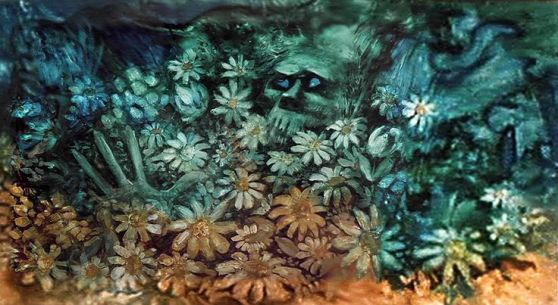
“Green Fingers” was directed by John Badham from a Rod Serling script, which was based on an R.C. Cook short story. Elsa Lanchester (once the Bride of Frankenstein) is Mrs. Bowen, who is great with a garden but in the way of Michael Saunders (Cameron Mitchell), a real estate mogul just going near manic to get his hands on her home and develop the area around it. Yet when he sends a henchman named Crowley (George Keymas) to rough her up, Saunders learns that even in death, Mrs. Bowen can make anything grow. I really disliked how the ending breaks the fourth wall, as this feels more Laird than Serling.

“The Funeral” is about funeral director Morton Silkline (Joe Flynn) planning the final resting moments of Ludwig Asper (Werner Klemperer, Col. Klink). The budget is sky high, the guests include vampires and Jack Laird as Ygor and it’s basically one long blackout gag. Directed by John Meredyth Lucas and written by Richard Matheson, this left a bad taste in my mouth.

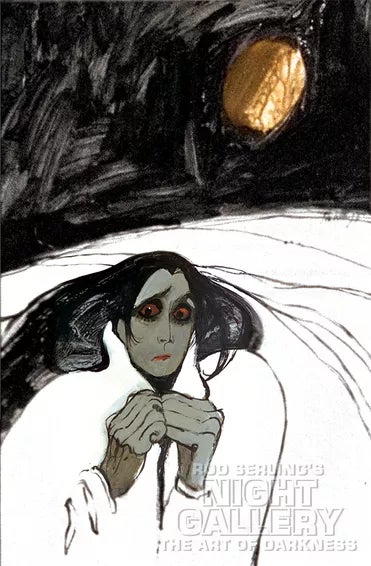
The final segment is “The Tune In Dan’s Cafe” and it has some of my favorite art of the entire series. It’s the only directing work of editor David Rawlins and has a script by Gerald Sanford and Garrie Bateson from a story by Shamus Frazer.

Joe and Kelly Bellman (Pernell Roberts and Susan Oliver) have a marriage that, well, is no longer a marriage. The vacation that was to save it failed and they’re left in this blank bar, the only people there, trapped in the void that is their lack of connection. The jukebox comes to like and only plays one song, the sad favorite tune of long gone couple Roy Gleeson (James Davidson) and his girl Red (Brooke Mills). She ratted him out to the police and took the money and ran. Now, that jukebox — every jukebox they put into Dan’s — keeps playing that same song.

Man, I loved this story and how great it looks, with repetitive images of the jukebox being destroyed. It elevated this entire episode.

It’s nice to be surprised by Night Gallery. Stick around when you watch this episode, as the final story really makes it.

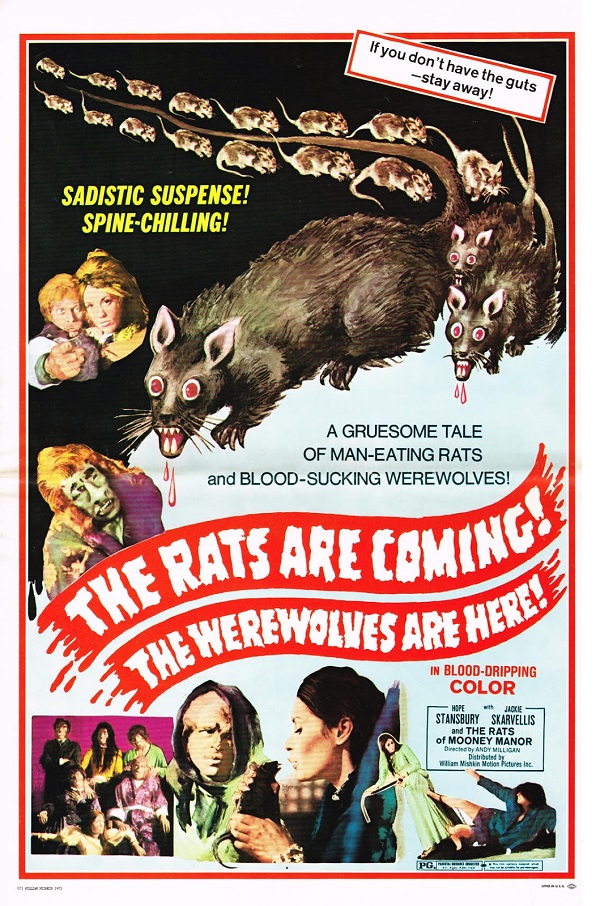
APRIL MOVIE THON 2: The Rats Are Coming! The Werewolves Are Here! (1972)

April 19: Weird Wednesday — Write about a movie that played on a Weird Wednesday, as collected in the book Warped & Faded: Weird Wednesday and the Birth of the American Genre Film Archive. Here’s a list.

Andy Milligan was a maniac who made movies filled with maniacs. By all reports, he was in the same constant bad mood as nearly every one of his characters, just as willing as them to start screaming no matter what, no matter when. This may have been because he inherited the same bipolar disorder or schizophrenia that his mother had. Forget the words of Stephen King, who said that Andy’s films were made by “morons with movie cameras” and instead, just imagine the chaos of each film’s shoestring budget set with a fastidious Andy melting down and then savor the results.

The other thing about the Milligan Cinematic Universe is that often there will be supernatural beings. The Mooneys in this movie are all werewolves who transform once a month on the night of the full moon. Pa (Douglas Phair) has spent nearly all of his near-two hundred years of life trying to cure his family, which includes his caretaker Phoebe (Joan Ogden), the sadistic Monica (Hope Stansbury) who mutilates vermin and Malcolm (Berwick Kaler), who is so far gone that he’s kept locked up.

There’s also Diana (Jackie Skarvellis), who has come back home from medical school along with a new husband named Gerald (Ian Innes). She’s the last hope for the Mooneys, as she is the only one who doesn’t gain fur once a month.

Shot in London — along with The Body Beneath, Bloodthirsty Butchers and The Man with Two Heads — new scenes were added when producer William Mishkin wanted to cash in on the success of Willard. Those scenes — one has Andy in it — were shot in his Staten Island home. Milligan had a hard time getting rid of the rats, even when he tried to give them away to the audience that would come to see this film. He also plays the gunsmith who creates silver bullets and Mr. Micawber, a man who sells flesh-eating rats that have already bitten off one of his arms and a lot of his face.

Despite being set a century before, we can see and hear cars, as well as see electrical outlets, but man, Andy made all the costumes himself by hand and I can just imagine him getting out the patterns and swearing the whole time, shouting about thimbles.

The greatest thing about this movie is the title, which had to lure people in because it’s so good and then people would be confronted by a toxic family just shouting and snipping and screaming and that’s the real movie, not the furry masks or flesh-consuming vermin. That’s what I’m here for.

Here’s a drink recipe to get you through the film.

Red Eyed Black Rat

  • 1/3 cup orange juice
  • 3 oz. dark rum
  • 2 oz. cola
  • 2 maraschino cherries

This one is pretty simple. Pour the juice, rum, then cola over ice and enjoy. For extra fun, drop in the cherries and pretend they’re rat eyes staring at you in the dark of the wasteland.

You can watch this on Tubi.

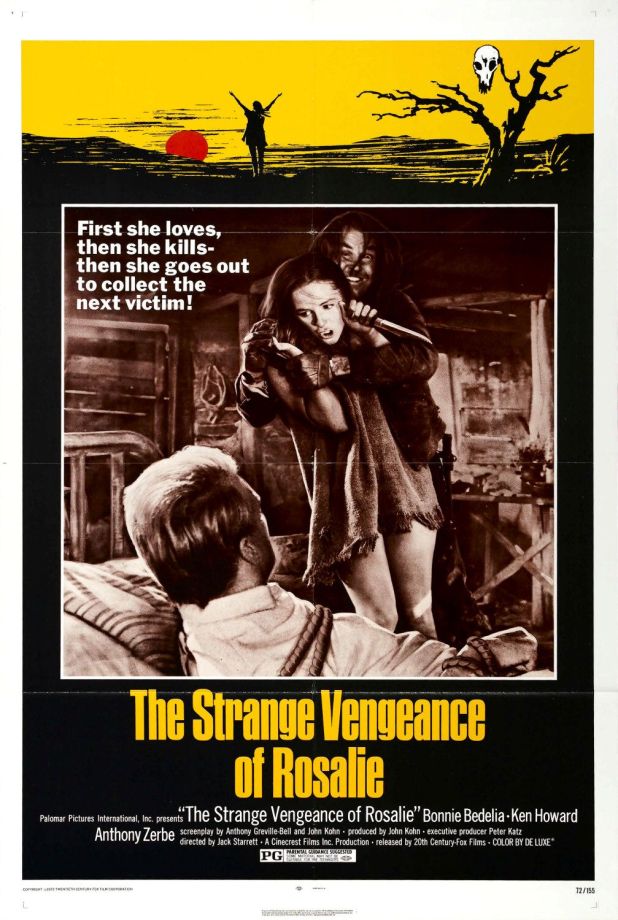
APRIL MOVIE THON 2: The Strange Vengeance of Rosalie (1972)

April 10: Nightmare USA — Celebrate Stephen Thrower’s book by picking a movie from it. Here’s all of them in a list.

Most folks know Jack Starrett from playing his Gabby Hayes-like character in Blazing Saddles. Or maybe they know him from all the biker movies like The Born Losers and Hells Angels on Wheels. Or maybe some of the other movies he directed, like Run, Angel, Run!Nam’s AngelsSlaughterRace with the DevilCleopatra Jones and Hollywood Man.

That said — I’ve never heard of this movie and it kind of blew my mind.

Virgil (Ken Howard, The White Shadow) is a traveling salesman who thinks, at first, that he’s going to have some easy sex with a girl he meets on the road, Rosalie (Bonnie Bedelia). But she’s too young, he’s too nice of a guy and, well, things feel too strange. They’re only going to get stranger.

Based on The Chicken by Miles Tripp, this was written by SAS soldier and sculptor Anthony Greville-Bell, who also wrote the script for Theater of Blood, another movie produced by his co-writer, John Kohn. Rosalie is a character who can only come out of fiction, a feral wild child who is also hopelessly gorgeous, yet starts the film burying someone and spends most of this movie decimating Virgil, leading him to break his leg and live out Misery years before the book was even written.

She claims that she had a dream that her grandfather had this house, a place where she has made Virgil into a near-invalid and where only one other person encounters them, Fry (Anthony Zerbe), a total scumbag who just wants the gold buried somewhere near the house. And by house, I mean falling apart shack somewhere in the dusty and abandoned American Southwest.

Also known as Someone to Watch Over Me, this movie somehow finds you cheering for Rosalie, as Virgil is the white upper class man who is brought low by sex appeal and, well, the ability for her to at once appear helpless and capable. For a movie with only one extended location and two characters taking up most of the running time, it works and Bedelia is incredible. Is it any wonder why she ended up in Needful Things and Salem’s Lot? Maybe King was karmically paying her back for outright stealing so much of her character in this movie.

You can watch this on YouTube.

NEW WORLD PICTURES MONTH: Cries and Whispers (1972)

How did this site come to have an Ingmar Bergman movie about four women dealing with cancer on it?

Roger Corman.

After nearly every film distributor in America rejected this movie — Bergman had only asked for an advance of $75,000 — New World Pictures bought it for $150,000 and spent an additional $80,000 to market it. It made a million dollar profit and was Bergman’s biggest American film ever.

Agnes (Harriet Andersson) is in the final stage of uterine cancer and her maid Anna (Kari Sylwan) and sisters Maria (Liv Ullmann) and Karin (Ingrid Thulin) have gathered. It’s hard for Anna, who has lost a daughter yet she has stronger faith than the sisters. This allows her to be more comfort to Agenes, while Maria is dealing with the fact that the man who broke up her marriage, David (Erland Josephson) is the doctor of her dying sister. So while

Both she and Karin have had their issues with men, as the affair with David led to Anna’s husband stabbing himself, an act close to what Karin did, stabbing herself in the genitals to avoid her husband’s touch. At the end, as the women deal with the death of their friend or sister, the best they can hope to have would be memories of one day.

There are many themes here, depending on what you wish to see. Bergman claimed it was influenced by dreams as a young child and his feelings about his mother. The four women can all be seen as one aspect of her. He also believed that this movie was as far as he could go in cinema, saying “I touched wordless secrets that only the cinema can discover.”

Is it about the Bible? The way women explore the world? Gender roles? Myth existing within the actual world? All of those things?

I’m just still amazed that somehow a Bergman movie ended up on this site next to all the Jess Franco and Dario Argento movies.