MILL CREEK LEGENDS OF HORROR: Deathhouse (1972)

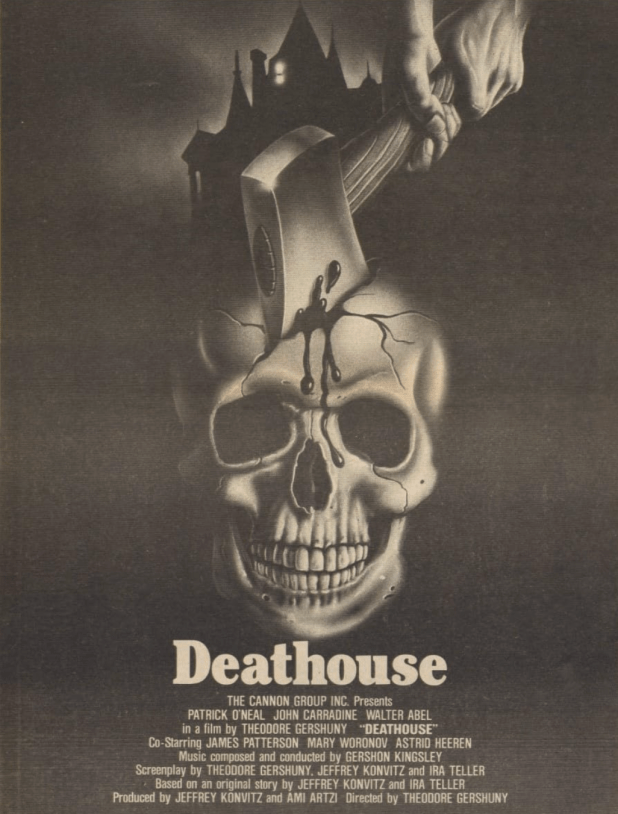
Yes, I realize that Silent Night, Deadly Night originally came out the whole way back in 1972. But nearly nine years after it first played theaters, Cannon released it as Deathhouse on May 8, 1981. If it makes no sense to release a holiday movie in May, well — don’t worry about it. It’s Cannontown.

Christmas Eve, 1950: Wilfred Butler runs from his home, on fire, and supposedly dies in the snow.

Christmas Eve, 1970: John Carter (Patrick O’Neal, The Stepford Wives, The Stuff) and his assistant Ingrid arrive in a small Massachusetts town. He meets with the town’s mayor, sheriff and major citizens like Tess Howard and Charlie Towman (John Carradine!), who may have lost his voice to a tracheotomy but not his need to smoke, about selling the Butler mansion as soon as possible. While staying overnight with Ingrid, who is also his mistress, they are both killed by an axe. The killer calls the police and says that they are Marianne.

Tess, the town’s telephone operator, hears the call and drives to the mansion, where she is greeted by Marianne Butler before she is hit in the head with a candle holder. Meanwhile, Sheriff Mason finds that Wilfred’s grave is empty. He is killed and thrown into the empty hole.

Mayor Adams is asked to go to the Butler mansion but leaves his daughter, Diane (Mary Woronov, Death Race 2000Chelsea Girls) at home. She meets up with a man who claims to be Jeffrey Butler, who has taken the sheriff’s abandoned car. Together, they search for the lawman but can’t find him.

After taking Towman to the mansion, Jeffrey goes back to get Diane. On their way to the mansion, Towman stumbles blindly in front of them and is hit and killed. His eyes had been stabbed out and Diane grows worried about Jeffrey.

Well, fuck me, this movie is also about incest! A diary found at the house reveals that Jeffrey is the son of Wilfred and his daughter, Marianne. Afterward, Wilfred turned the house into an asylum and admitted his own daughter. However, on Christmas Eve 1935, he turned all of the inmates loose. They killed every doctor as well as his daughter. Of note here is that many of the inmates in the flashback are played by former stars of Warhol’s factory, like Ondine, Tally Brown, Kristen Steen and Lewis Love, as well as Flaming Creatures auteur Jack Smith, artist George Trakas and his wife at the time, Susan Rothenberg. Warhol superstar Candy Darling also shows up in the film as a party guest.

Well, it turns out that some of the inmates of the insane asylum ended up being important parts of the town — that’s right, all of the important people John met with in the beginning!

Mayor Adams arrives at the mansion and he and Jeffrey face off, guns drawn, each believing the other is the killer. They kill one another as Marianne shows up, but she is really Wilfred, who is alive. He went after the inmates for their role in the death of his daughter and used his grandson/son/secret shame Jeffrey as a patsy. Diane gets the gun and kills the old man. One year later, the mansion is demolished as she watches.

Director Theodore Gershuny worked on plenty of episodes of Monsters and Tales from the Darkside after this film. He was also married to Woronov. The original title for the film was Night Of The Dark Full Moon and it was also nearly called Zora, which makes little to no sense.

There are some really interesting techniques here, especially in the flashback sequences, which feel like tinted photographs come to life with the saddest version of “Silent Night” ever playing behind the action. I love how experimental and dark these sequences look — they remind me a little of the film Begotten.

This is a dark film for your holiday viewing, so if you want to chase away the family for awhile, this is the one to do it.

MILL CREEK LEGENDS OF HORROR: Horror Express (1972)

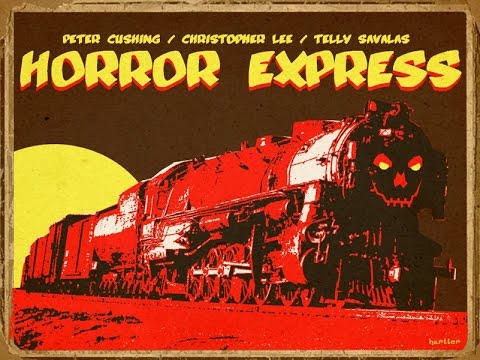
Professor Sir Alexander Saxton — or is that Sir Professor, anyway, he’s played by Christopher Lee — is a British anthropologist taking the Trans-Siberian Express from Shanghai to Moscow. He’s not alone. He has the frozen remains of a caveman he found in Manchuria, which he believes are the missing link. Peter Cushing plays his rival, Dr. Wells, who is also on board, as is Count Marion Petrovski (George Rigaud), his wife, Countess Irina (Silvia Tortosa), their spiritual advisor, Father Pujardov (Alberto de Mendoza), and Inspector Mirov (Julio Peña). 

What no one knows is that the caveman also has an evil alien inside him, one that starts moving from person to person. While it’s been on Earth for millions of years, the monster wants to repair its ship and go back home. Captain Kazan (Telly Savalas) is able to stop it for some time, but Pujardov believes that the alien is Satan and pledges his soul to it, allowing himself to be possessed. Then, it raises all of the past victims as zombies.

Phillip Yordan supposedly made this movie because he had bought the miniature train from the film Nicholas and Alexandra. Director Eugenio Martín said,  “He came up with the idea of writing a script just so he would be able to use this prop. Now, at that time, Phil was in the habit of buying up loads of short stories to adapt into screenplays, and the story for Horror Express was originally based on a tale written by a little-known American scriptwriter and playwright.”

However, producer Bernard Gordon, who also worked with Martin and Savalas on Pancho Villa, claimed that the train was made for that movie.

Lee and Cushing were the big draw for this movie, but Cushing nearly quit, as this was made during the first holiday season since the loss of his wife, Helen. According to an article by Ted Newsome, “Hollywood Exile: Bernard Gordon, Sci Fi’s Secret Screenwriter,” Lee fixed this by placing Cushing at ease, “talking to his old friend about some of their previous work together; Cushing changed his mind and stayed on.” It’s also said that he suffered from night terrors, so Lee would sleep in the same bed as him.

Strangely, when the U.S. rights were sold to Scotia International, the proceeds were $50,000 short of the budget. This led to the original camera negative being impounded. The theatrical prints show in America had to be struck from the workprint, which is why 70s TV and 80s VHS prints looked so dark.

Of all the great things about this movie, the fact that they can look inside a caveman’s mind and see dinosaurs is the most charming.

Also: As we all know, Phillip Yordan also made the best train movie of all time, Night Train to Terror.

You can watch this on YouTube.

UNSUNG HORRORS HORROR GIVES BACK 2025: Fear In the Night (1972)

Each October, the Unsung Horrors podcast does a month of themed movies. This year, they will once again be setting up a fundraiser to benefit Best Friends, which works to save the lives of cats and dogs across America, giving pets second chances and providing them with happy homes.

Today’s theme: Hammer or British

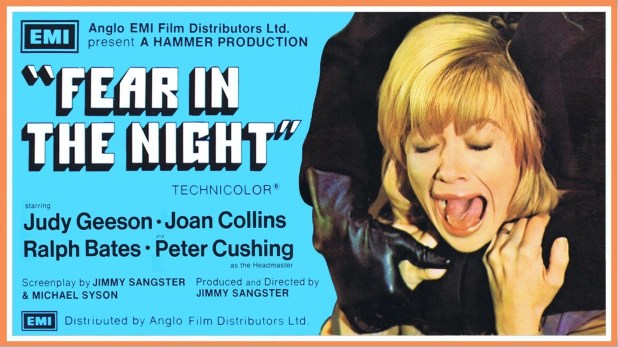
Playing with Straight On Till Morning in the UK and Demons of the Mind in the U.S., this Hammer film finds Peggy (Judy Geeson) moving with her husband Robert (Ralph Bates) to work at a school in the countryside. The night before they leave, she’s attacked by a man with a fake arm, which sends her into hysterics. 

Robert’s new boss is Michael Carmichael (Peter Cushing), who is married to Molly (Joan Collins). After their first meeting, Peggy is again attacked by the one-armed man. The next night, she notices that Robert only has one arm; she shoots at him with a shotgun, but it doesn’t stop him. She faints, only for her husband to reveal that there’s no job at the school. He’s treating Robert, who plays recordings of the old students to try to remember what it was like before a fire destroyed the school.

The twists start here, as Robert and Molly have been having an affair, and he only married Peggy to drive her insane and make her kill Michael. Michael, however, is a step ahead, using the intercom of the school to taunt his enemies, even tying up his wife and coaxing Robert into shooting her, thinking that it’s him. Peggy survives, thanks to the one-armed man she believed was her enemy; her husband’s body hangs from a noose as choir music plays from the empty school.

Directed by Jimmy Sangster, who co-wrote the script with Michael Syson, this is the kind of cold, dreary British murder mystery I love. It’s not as stylish as the Giallo, but it comes from the same fione. 

You can watch this on Tubi.

UNSUNG HORRORS HORROR GIVES BACK 2025: The Incredible Professor Zovek (1972)

Each October, the Unsung Horrors podcast does a month of themed movies. This year, they will once again be setting up a fundraiser to benefit Best Friends, which works to save the lives of cats and dogs across America, giving pets second chances and providing them with happy homes.

Today’s theme: Mexico

Francisco Xavier Chapa del Bosque suffered from polio and, according to this Vulture article, was experimented upon by his uncle. However, he claimed that his own will returned his ability to walk. After years of training, he began performing as Agent X-1 and then as Professor Zovek, pulling cars with his teeth and breaking the world record for sit-ups. He had an army of hooded women and would say, “I need vibrations,” which allowed him to kiss several of them before stunts like exploding from straitjackets, lifting cars with people inside and escaping confinement or being chained.

Being a TV star led to movies, starting with this film, directed by René Cardona. It’s a unique blend of Zovek’s stunts and the lucha films, which makes it a fascinating watch. Zovek’s next—and final—movie was Blue Demon y Zovek en La invasión de los muertos, where he fought alongside the lucha legend, adding a unique cultural twist to the film. 

Yet during filming, Zovek performed for his public, being lowered from a helicopter down to the ground, but an accident caused the pilot to pull his stick upward, and Zovek was thrown two hundred feet into the ground, suffering mortal injuries, dying surrounded by his wife and four children. Vuture — and the movie Roma, in which Zovek is played by luchador Latin Lover — writes that there were rumors that the escape artist “…was in cahoots with the government, training right-wing paramilitary groups. As such, people whispered that the pilot had killed the performer as a political act of assassination. The pilot, for his part, always maintained that he thought Zovek was already off the rope when he levitated and turned.”

The film’s plot revolves around a plane carrying 26 renowned scientists that explodes, leaving only 25 bodies. Professor Zovek, a renowned figure in the film, is called in to investigate. His unique abilities and fearless nature lead him to believe that the missing person is the killer. This belief takes him to the island of Dr. Leonardo Druso, where mind-control and human-animal experiments are taking place, setting the stage for a thrilling and action-packed adventure.

Written by Chano Urueta, this film asks you to stay patient for the first thirty minutes. It crawls. But soon, there’s an island filled with cannibal little people, martial arts battles, Zorek wearing wild outfits and evil masked men with whips. 

Zovek was a man who could swim for eight hours non-stop, skip rope for nine hours, drive motorcycles blindfolded, let cars drive on him and in one insane stunt, he was put in a straitjacket, chained up and put in a burning Egyptian coffin. Here, he shows off his mental powers and pulls off several of his stunts, like a lucha movie without the wrestling. Zorek, however, is ahead of the curve and practices martial arts in this.

This movie really was pulling out all the stops to make Zovek a movie star. His sidekick is Germán “Tin-Tan” Valdés, who played the same role in the Chanoc movies, and we have Tere Velázquez and Nubia Marti, who were both in Santo movies, to be algo para papi, as they say in Mexico.

I love what Zovek could have been and wish he had been able to make more movies. His potential as a movie star, the awesome costumes, weird monsters — a woman with an exposed brain! — and the look and feel I love from Mexican cinema of this time and form. It’s magical!

You can watch this on YouTube.
WEIRD WEDNESDAY: The Doberman Gang (1972)

Dillinger, Bonnie, Clyde, Pretty Boy Floyd, Baby Face Nelson and Ma Barker are the Doberman Gang, six Dobermans who join the gang of Eddie Newton (Byron Mabe), Sammy (Simmy Bow), June (Julie Parrish) and former Air Force dog trainer Barney Greer (Hal Reed). Oh yes — there’s also a bulldog named J. Edgar.

Eddie and June have been a couple, but she soon sees that he could throw her away at any time. She starts getting close to Barney, who soon learns that this is a criminal plan to train these dogs. He’s told that he’ll be killed if he tries to get away, so he works with them in the hopes that he can save the dogs and June. But he soon has second thoughts when he learns that the dogs will be killed.

Good boys. J. Edgar gets them to run off with the money. The bad news is that one of the dogs was hit by a car, and I could have done without that part. Except that in the sequel, The Daring Dobermans, that dog is fine. Whew.

There are also two more movies in the series, The Amazing Dobermans and Alex and the Doberman Gang.

I didn’t have to worry so much, as this was the first movie to have the “No Animals Were Harmed” onscreen credit from the American Humane Association.

This was directed by Byron Ross Chudnow and written by Louis Garfinkle, who also wrote I Bury the Living, Face of FireThe HellbendersLittle Cigars and The Deer Hunter—yeah, I know, wow—and Frank Ray Perilli, who wrote Mansion of the Doomed, the Michael Pataki adult CinderellaEnd of the WorldDracula’s Dog, the adult Fairy TalesLaserblastThe Best of Sex and Violence and co-wrote Alligator with John Sayles.

Dimension Pictures played this as a double feature with The Twilight People. I love that!

Image from Mike’s Take On the Movies.

UNSUNG HORRORS HORROR GIVES BACK 2025: The Adult Version of Jekyll & Hide (1972)

Each October, the Unsung Horrors podcast does a month of themed movies. This year, they will once again be setting up a fundraiser to benefit Best Friends, which works to save the lives of cats and dogs across America, giving pets second chances and providing them with happy homes.

Today’s theme: Birth year (1972)

Dr. Chris Leeder (John Barnum, using the name James Buddliner; he was also in Sex In the ComicsA Touch of SwedenFrankie and Johnny…Were Lovers and Angie Baby) has already killed someone to get his hands on Dr. Jekyll’s ancient notebook. Why? The formula that  “makes people appear as they really are.”

This could be a warning, but Dr. Leeder doesn’t care. He mixes up a potion for himself and turns into Miss Hide.

That’s right, he is now a she, played by Jane Tsentas, star of more than fifty disreputable movies like Blood SabbathLittle CigarsEvil Come Evil Go and The Jekyll and Hyde Portfolio.

Directed by Lee Raymond (Blackie in She Freak) and written by Robert Birch (whose only other IMDB credit is playing trumpet on an A&E Civil War TV movie), this also has Laurie Rose as the doctor’s nurse and wife, Linda York (she’s also in Auditions) as a sex worker who gets beaten by Dr. Hyde in the past, Linda McDowell and most of all, Rene Bond, who is some kind of vision created by a mad doctor in a lab. I refuse to believe she was a real person.

David F. Friedman produced it, so you know that means quality, if what you mean by quality is non-stop sex and violence. I mean, I do.

You can watch this on CultPix.

VINEGAR SYNDROME BOX SET RELEASE: Bloodstained Italy

From Vinegar Syndrome: “Italian horror in the 1960s and 70s went through several popular tonal and thematic phases. From Gothic thrillers in the early to mid-1960s, psychedelia and monster mayhem in the late 1960s and early 1970s, and, of course, all manner of gialli and other assorted murder thrillers. But what of those films that offer a form of narrative bait and switch, luring the viewer in with the pretense of one genre while slowly revealing themselves to be something else entirely? Presented here are a trio of 70s Italian horror features which play with, combine, subvert, and surprise with their genre leanings, all newly and exclusively restored from their 35mm original negatives and all presented on English-friendly home video for the very first time, from Vinegar Syndrome.”

Obscene Desire (L’osceno desiderio) (1978): Obscene Desire is the story of Amanda (Marisa Mell, a goddess if there ever were one and someone who immediately changes any movie from maybe to definitely; my favorite of her films are MartaDanger: Diabolik and Perversion Story, a movie in which she has one of the most fabulous outfits not only in the history of Italian film but perhaps all movies ever), an American woman ready to marry the rich Andrea (Chris Avram, Enter the Devil) and move into his vast mansion.

Within the walls of that gothic expanse lies something evil, something that has possessed Amanda’s soon-to-be husband to indulge in black magic and ritual murder. In fact, the only way that he can keep his soul from being taken by his domicile is to keep killing prostitutes.

This movie should teach you to never trust a gardener (Victor Israel) and that the Italian film industry would keep on making Rosemary’s Baby rip-offs ten years after that movie was unleashed. Or The Exorcist five years later. Or The Omen two years later.

Look, I’m a simple man. Marisa Mell, with short, dark hair, looking not unlike Mariska Hargitay, is possessed by the devil and writhes on a bed, revealing that her tongue is superhumanly long. Do I even care that this movie has no real story and really goes nowhere?

No, not at all.

What were we talking about?

Laura Trotter (Dr. Anna Miller from Nightmare City) and Paola Maiolini (Cuginetta, amore mio!) are also in the cast for this film directed by Giulio Petroni (Death Rides a Horse) and written by Joaquín Domínguez and Piero Regnoli (the director of The Playgirls and the Vampire and writer of 117 movies including DemoniaVoices from BeyondBurial Ground and Patrick Still Lives).

Extras on the Vinegar Syndrome release include a commentary track with film historians Eugenio Ercolani and Troy Howarth, interviews with director/writer Giulio Petroni, daughter of Giulio Petroni and script supervisor Silvia Petroni, grandson of Giulio Petroni and film historian Eugenio Ercolani, censorship expert Alessio Di Rocco and director Pupi Avati, as well as alternate and extended scenes from the Spanish version and the original Italian trailer.

The Bloodstained Lawn (Il prato macchiato di rosso) (1973): The Red-Stained Lawn, also known as The Bloodstained Lawn, was initially titled Vampiro 2000 and combines science fiction, Gothic horror, and giallo genres in a wacky package with a bloodsucking robotic twist.

The film takes place in Emilia-Romagna, Italy. There, a United Nations Educational, Scientific and Cultural Organization agent finds a bottle of wine containing blood. How could this happen to such a well-known vintage from Michelino Croci? What if the winery is a front for a blood smuggling scheme? And how would blood stay good in bottles? So many mysteries!

Dr. Antonio Genovese (Enzo Tarascio), his wife Nina (Marina Malfatti, All the Colors of the DarkThe Red Queen Kills Seven TimesSeven Blood-Stained Orchids) and her brother Alfiero (Claudio Biava) look for people with no ties — hippies, drifters, prostitutes and literally gypsies, tramps and thieves — to lure to an all expenses paid getaway at their castle. Folks like freewheeling musician Max (George Willing, Who Saw Her Die?) and his lover (Daniela Caroli), who have accepted an invitation to spend some time in the Genovese estate, along with the alcoholic tramp (Lucio Dalla, who would become a major singing star in the 80s), a gypsy (Barbara Marzano, The Bloodsucker Leads the Dance) and a sex worker (Dominique Boschero, Argoman the Fantastic Superman).

The bloodsucking machine is literally right out in the open, treated like a piece of pop art. You have to admire that level of out in the open when it comes to an Italian film killer. You also have to love that the killers have a shower that sprays wine, and this doesn’t bother Max or his never-named girlfriend, nor does the hall of mirrors bedroom seem strange to anyone else. There’s also a curtain between rooms that resembles female anatomy, and even more so, a scene taken right out of The Laughing Woman.

Director and writer Riccardo Ghione made only four movies: this one, a documentary called Il Limbo, the hippy drama A cuore freddo, and La rivoluzione sessuale, a film in which seven men and seven women perform an experiment inspired by the sexual orgone energy theories of Wilhelm Reich. If that was crazy enough, it was co-written by Dario Argento. He would go on to write several other films, including the Joe D’Amato film Delizia.

I love that this movie stands on the line between arthouse and grindhouse, with every decision it makes leaning away from the artistic and toward the prurient and bloody. Sure, there’s a message about how the rich subjugate the lower classes, but it’s also a film where Malfatti gives speeches about Wagner and how meaningless her victims are, all. At the same time, a gigantic cartoony machine literally sucks young blood.

Extras on the Vinegar Syndrome release include commentary by Rachael Nisbet and interviews with film historian Enzo Latronico and filmmaker/film historian Luca Rea.

Death Falls Lightly (La morte scende leggera) (1972): Death Falls Lightly begins when Georgio Darica (Stello Candelli) comes home from a crime-related business trip only to find that his wife has been killed. So his lawyer suggests that he grab his girlfriend, Liz (Patrizia Viotti, Amuck) and head off to a hotel. Still, when he gets there, the owner (Antonio Anelli) has also killed his wife, so he asks him to help bury her, but then George remembers that the hotel was abandoned. So is he going insane? Are these people real? Did he actually kill his wife?

The next part of this movie gets absolutely ridiculous in the best of ways, as people appear, get murdered and come back to life. At the same time, someone commits suicide on a Satanic altar, invisible killers attack George, prog rock blasts, and a monkey shows up out of nowhere. It also features the most ridiculous of all giallo police, which is saying something. There’s a very low bar for giallo cops, and these ones may be the worst.

Director Leopoldo Savona also made Byleth: The Demon of Incest the same year I was born, which probably means something.

Extras on the Vinegar Syndrome release include commentary with film historians Eugenio Ercolani and Troy Howarth, interviews with actor Alessandro Perrella and filmmaker/film historian Luca Rea, and a then and now location featurette.

This 3-disc region-free Blu-ray set features all the movies newly scanned and restored in 2K from their 35mm original negatives, along with newly translated English subtitles and reversible sleeve artwork. You can get it from Vinegar Syndrome.

WEIRD WEDNESDAY: The Daredevil (1972)

Daredevil — there’s the title! — Paul Tunney (George Montgomery) gets blamed for another stunt driver’s death and finds himself making a living by running drugs and dealing with some kind of bad mojo put on him by that driver’s sister, Carol (Gay Perkins).  Oh yeah — he’s also making sweet love to his one-armed mechanic Huck’s (Bill Kelly) wife Julie (Terry Moore) because, look, Paul’s a jerk. He deserves everything that happened to him.

Montgomery went from a stuntman at Republic to leading man status at 20th Centiry Fox, taking over roles meant for Tyrone Power and Henry Fonda during the war before he was drafted into working for the U.S. Army Air Forces First Motion Picture Unit, appearing in documentaries and training films. As his leading man status waned, he appeared in movies like Hallucination GenerationSatan’s Harvest (which he directed) and Django the Condemned.

Moore was married five times but has claimed that she was with Howard Hughes from 1949 to 1976. She’s been acting since 1940 — and has two movies coming soon, according to IMDB — and starred in Mighty Joe Young, as well as appearing in HellholeBeverly Hills Brats and many more films. She was even on the cover of Playboy in August 1984 at the age of 55.

By 1972, however, they were both in movies like The Daredevil.

Director Robert W. Stringer was usually a composer for movies, and this is his only directing credit. Writer Robert Walsh also scripted Smokey and the Good Time Outlaws. They made a movie that combines the rednecksploitation that drive-ins were looking for with the downer ending that was of the time. It’s not great, but it’s perfect for a second drive-in feature; a make-out and barely watch the movie movie, if you will.

You can watch this on the Cave of Forgotten Films.

MILL CREEK BLU-RAY BOX SET: Bewitched The Complete Series

Bewitched aired throughout the most tumultuous time in modern history — hyperbole, that could also be today, but true, as rehearsals for this show’s first episode were on the day Kennedy was shot and the episode “I Confess” was interuppted by Martin Luther King Jr.’s death — from September 17, 1964, to March 25, 1972. The #2 show in the country for its first season and remaining in the top ten until its fifth season, it presents a sanitized and fictional world that at the time may have seemed contrary and fake to the simmering 60s, but today feels like the balm I need and an escape.

Within the home on 1164 Morning Glory Circle, Samantha (Elizabeth Montgomery) and Darrin Stephens (Dick York, later Dick Sargent) have just had a whirlwind romance and ended up as husband and wife. At some point, she had to tell him that she was a witch, a fact that he disapproved of, and that she should be a normal housewife instead of using her powers. Yet she often must solve their problems — usually caused by her family, such as her mother Endora (Agnes Moorehead) — with a twitch of her nose.

Creator Sol Saks was inspired by I Married a Witch and Bell, Book and Candle, which luckily were owned by Columbia, the same studio that owned Screen Gems, which produced this show. You could use either of those movies as a prologue for this, which starts in media res — I like that I can use such a highbrow term to talk of sitcoms — with our loving couple already settling into the suburbs.

Author Walter Metz claims in his book Bewitched that the first episode, narrated by José Ferrer, is about “the occult destabilization of the conformist life of an upwardly mobile advertising man.” As someone who has spent most of his life in marketing, maybe I should look deeply into the TV I watched as a child. Bewitched was there all the time in my life, wallpaper that I perhaps never considered.

Head writer Danny Arnold, who led the show for its first season, considered the show about a mixed marriage. Gradually, as director and producer William Asher (also Montgomery’s husband at the time) took more control of the show, the magical elements became more prevalent. What I also find intriguing is that with the length of this show’s run, it had to deal with the deaths of its actors and York’s increasing back issues, which finally forced him to leave the show and another Dick, Dick Sargent, stepping in as Darren, a fact that we were to just accept.

That long run, the end of Montgomery and Asher’s marriage and slipping ratings led to the end of the show, despite ABC saying they would do two more seasons. Instead, Asher produced The Paul Lynde Show, using the sets and much of the supporting cast of this show. He also produced Temperatures Rising, which was the last show on his ABC contract, which ended in 1974.

Feminist Betty Friedan’s two-part essay “Television and the Feminine Mystique” for TV Guide asked why so many sitcoms presented insecure women as the heads of households. None of this has changed much, as the majority of sitcoms typically feature attractive women and funny but large husbands, a theme created by The Honeymooners, and the battles between spouses. I always think of I Dream of Jeannie, a show where a powerful magical being is subservient to, well, a jerk. At least on Bewitched, Samantha is a powerful, in-control woman with a mother who critiques the housewife paradigm.

Plus, unlike so many other couples on TV at the time, they slept in the same bed.

Bewitched‘s influence stretched beyond the movie remake. The show has had local versions in Japan, Russia, India, Argentina and the UK, while daughter Tabitha had a spin-off. There was even a Flintstones crossover episode!

Plus, WandaVision takes its central conceit — a witch hiding in the suburbs — from this show. And Dr. Bombay was on Passions!

This is the kind of show that has always been — and will always be — in our lives. Despite my dislike of Darren’s wedding vows of no magic, there’s still, well, some magic in this show. Just look at how late in its run it went on location to Salem for a multi-episode arc, something unthought of in other sitcoms.

You can watch this just for the show itself, to see the differences between the two Darrens and when Dick York had to film episodes in special chairs because of his back pain, when the show did tricks like have Montgomery (using the name Pandora Spocks) playing Samantha’s cousin Serena to do episodes without York or just imagine that the world was changing outside. Yet, magic and laughter were always there on the show, throughout the lives, divorces and deaths of its principals and supporting cast.

The Mill Creek box set is an excellent, high-quality way to just sit back, twitch your nose and get away from it all. This 22-disc set has everything you’d want on Bewitched, including extras like Bewitched: Behind the Magic, an all-new documentary about the making of Bewitched, featuring special guest appearances by actor David Mandel (Adam Stephens), Steve Olim (who worked in the make-up department at Columbia), Bewitched historian Herbie J Pilato, film and television historian Robert S. Ray, Bewitched guest star Eric Scott (later of The Waltons) and Chris York, son of D. York (the first Darrin). There are also sixteen new episodic audio commentaries, moderated by Herbie J Pilato that include behind-the-scenes conversations with Peter Ackerman (son of Bewitched executive producer Harry Ackerman), David Mandel, Bewitched guest star Janee Michelle (from “Sisters at Heart”), Steve Olim, Robert S. Ray, former child TV actors and Bewitched guest stars Ricky Powell (The Smith Family), Eric Scott (The Waltons), and Johnny Whitaker (Family Affair and Sigmund and the Sea Monsters) and Chris York (son of D. York). There’s also an exclusive 36-page booklet featuring pieces by Bewitched historian Herbie J. Pilato, as well as an episode guide. You can order it from Deep Discount.

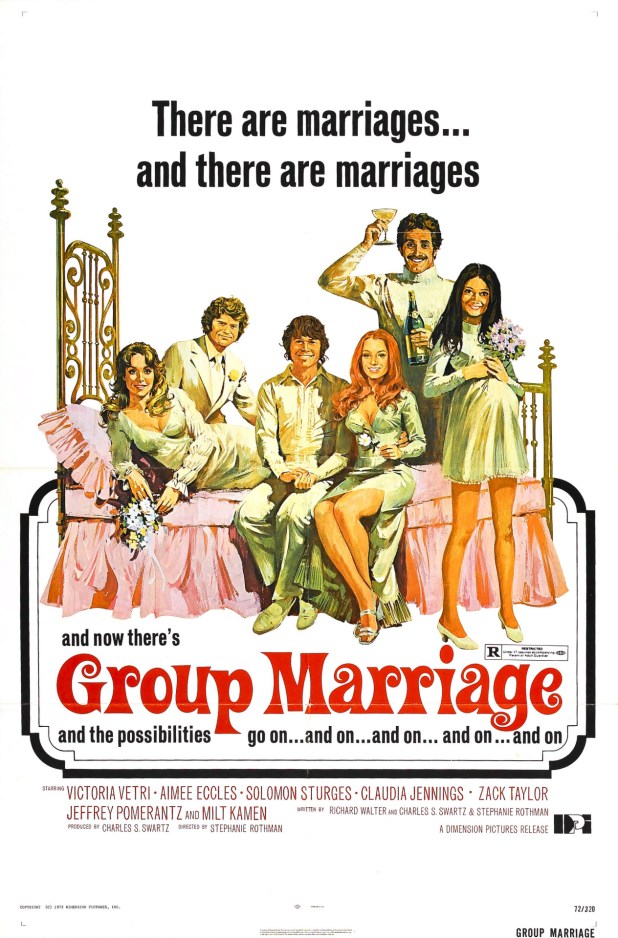
WEIRD WEDNESDAY: The Cheerleaders (1972)

Stephanie Fondue, who stars in this as Jeannie, had an even more incredible real name. Enid Finnbogason. She was in Hollywood from Winnipeg, got hit up at lunch to try out for this movie and got it. She’d never been a cheerleader. She was twenty. Also: A nude model, so disrobing during the audition was no big whoop.

In the film, Amarosa High School is a high-stakes place where lives depend on football games. Along with Jeannie, Bonnie (Jovita Bush), Debbie (Brandy Woods) and head cheerleader Claudia (Denise Dillaway, who eventually did the makeup for 2000s reality specials Exposed! Pro Wrestling’s Greatest Secrets and Breaking the Magician’s Code: Magic’s Biggest Secrets, as well as the VHS release of Party Games for Adults Only, the girls try to help the men win. Except that Claudia is catty and is trying to get Jeannie deflowered by the end of the season. It’s a backward teen sex comedy bet.

But hey, everyone goes to see I Drink Your Blood at one point. So there’s that.

Director and co-writer Paul Glicker also directed Running Scared (starring Ken Wahl) and adult films Parlor Games and Hot Circuit. Other writers included Richard Lerner, Tad Richards, and Ace Baandige, a pseudonym for someone who claimed to have been a Presidential scriptwriter named David. David Gergen seems too clean for this, David Shipley is too young and David Frum was 11 when this came out. I am looking at Presidential writers and comparing them to someone who made a sex film.

Speaking of sex films, Suzie is played by Sandy Evans, but that’s Clair Dia, who was in Lucifer’s Women and 3 A.M. — the only porn with an Orson Welles-edited scene — and directed Screwples and The Health Spa. Patty, played by Kim Stanton, who is also known as Kimberly Hyde, appeared in The Young Nurses and Candy Stripe Nurses. There were a lot of nurse movies. There are even sequels to this one: The Swinging Cheerleaders, Revenge of the Cheerleaders and Cheerleaders’ Wild Weekend.

The coach is Patrick Weight, who was in so many 70s and 80s scumbag movies. Track of the Moon Beast, the handsy truck driver in Gradation Day, Mr. Peterbilt in Beneath the Valley of the Ultravixens, a gardener in Young Lady Chatterley, the stepfather in Wicked Wicked…his career was something.

You can watch this on Tubi.