APRIL MOVIE THON 2: Four Times That Night (1971)

April 25: Bava Forever — Bava died on this day 43 years ago. Let’s watch his movies.

Often, we put Italian genre directors into buckets. Fulci was only the godfather of gore, which ignores his contributions to giallo, westerns and decades of comedy films in favor of the last fifteen years of his life. Similarly, Bava is often thought of for his contributtons to horror film when the truth is he did everything from peplum and Eurospy films to crime and science fiction movies.

By 1971, Bava had been through his successful mid 60s run of having American-International Pictures bring his movies to America, as well as his attempt at making a western, Roy Colt & Winchester Jack, and was a year from pretty much kickstarting so many of the themes of the slasher in A Bay of Blood and then having a small career resurgenace and reaching America again with Baron Blood.

Bava had a lack of confidence and when that was combined with his shyness, he rarely took advantage of opportunities which would have made his name more internationally known, including working in Hollywood. In interviews — which appear in Troy Howarth’s The Haunted World of Mario Bava — he comes across as pretty rough on himself, saying things like “I accept anything they give to me. I am too willing to accomodate any difficulty. This is not the way one creates masterpieces. Also, I’m too cheerful and the producers don’t like that: they want people who take things very seriously, and above all who take them seriously. But how can I?” and “I think of myself as one who manages to get along. I don’t care about being successful, I just want to go on and on.”

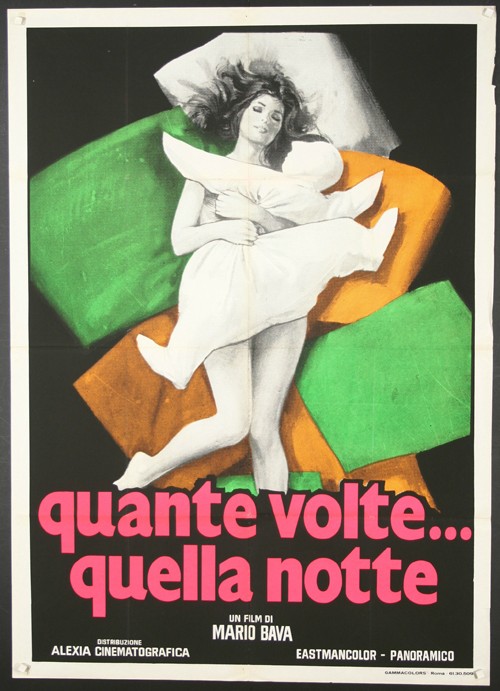
So when Bava needed another movie to make, this commedia sexy all’italiana was what it would be, the first of three collaborations between Bava and American producer Alfredo Leone. Instead of the simple titilation and dated jokes you expect from the form, instead Bava creates a racy Rashomon of a date gone wrong, which we learn has led to Tina Bryant (Daniela Giordano, Your Vice Is a Locked Room and Only I Have the Key) having her dress torn and John Price (Brett Halsey, The Devil’s Honey) with a cut on his forehead.

The first version of the story is Tina telling her mother (Valeria Sabel) that she was like Joan of Arc and John was the devil. After dancing at a disco, she went into his jet set swinger’s flat and when he offered to change into something more comfortable, he came out nearly nude and tried to assault her. She barely escaped and her expensive dress paid the price.

Or maybe John is right. He’s an innocent man who was trapped in the spider’s web, a woman who was more sexually voracious than him, someone who literally lives up to the film’s title, demanding four rounds of sexual congress and still being unsatisfied to the point that she injured him. For an Italian man, this is quite an admission.

But the real story? The perverted doorman (Dick Randall, who may be living up to his role; he made so many exploitation movies that he was involved in are to be worshipped including The Wild, Wild World of Jayne MansfieldThe French Sex MurdersPieces and Slaughter High) thinks that the couple who keeps showing up in these stories — George (Robert H. Oliver) and Esmerelda (Pascale Petit) — are both gay and that John has been dating George and needs to bring a woman home to satisfy Esmerelda, who drugs poor Tina and takes advantage of her and then John does the same. This story is written through binoculars, as if someone was writing their own fan fiction of this movie and is shown to not be true.

What may be is what the scientist sees. John and Tina have fallen in love and decide to wait to sleep together. He tries to take her home but the front gate of his apartment building is stuck. The doorman is drunk and looking at a dirty magazine, so when John tries to lift his date over the gate, her dress is torn and she accidentally scratches him. He tells her to tell her mom that he tried to attack her so that she doesn’t get in trouble for ruining the dress. She tells him to tell his friends that she was insatiable. The scientist says that the truth is in there somewhere, but he does know that before John took her home, they went and watched the sun rise together.

For someone known for horror and murder, the truth is that nobody shoots a gorgeous woman quite like Mario Bava. He is approaching them not as objects or things to be exploited, but instead from his place of shyness. They are perfect creations to be placed upon a pedestal and fawned over, explored and shown to others for their glory. Giordano, Petit and Brigette Skay (Zeta OneIsabella, Duchess of the Devil) have never looked more irrestiable.

He’s also less interested in the sexy parts of this movie — not that they’re skipped, mind you — and more the foibles of modern society and how women and men are supposed to play the games of love and sex. Every man wants a Tina who is a lady in the street and a tigress in the sheets, but every man is also worried that when the fantasy arrives that they have been roleplaying their whole lives in solo acts that they will be able to measure up. And when the woman wants more than them — four times that night — it can hurt them more than any words or physical attack could.

There’s also a different look at the characters and nearly a different film in each segment. Tina’s is chaste and John’s is slightly saucy, while the doorman is pretty much a Dick Randall movie, which makes him playing the character an intriguing bit of meta commentary.

Written by Charles Ross (Caught In the Act!Nympho: A Woman’s Urge) and Mario Moroni, this would be a lesser film in anyone else’s hands. But when you see the way that Bava frames the scenes, how the colors threaten to explode out of the screen and even the minor moment when Esmerelda uses a swing to attempt to seduce Tina — and the camera gets closer and closer to her through the scene itself and a repeating POV shot — that makes you realize that you’re getting what is a master class in how to really make a sex comedy.

Bava probably shrugged, realized he did too much and wasn’t paid enough, and started looking for his next job.

10TH OLD SCHOOL KUNG FU FEST: A Touch of Zen (1971)

Until the three-hour cut played at the Cannes Film Festival three years after thsi movie was released and received the Technical Grand Prize and almost took home the Palme d’Or, this has been considered one of the greatest Chinese movies ever made.

Director and written by King Hu, A Touch of Zen was based on the classic Chinese story “Xianü” and comes from the book Strange Stories from a Chinese Studio by Pu Songling.

Gu Sheng-tsai (Shih Chn) is a painter who has never really done much, nor has he wanted to, in his life. But when he meets Yang (Hsu Feng), a female fugitive scheduled for execution, he discovers that he can do more and joins her in the battle against Eunuch Wei and his army.

This movie is perhaps most famous for its sword fight in the bamboo forest sword fight. It lasts ten minutes on screen, but took twenty-five days to film. It was choreographed by Han Yingjie, a former Beijing opera actor and the action director of A Touch of Zen.

King Hu is the kind of creative that would spend a large part of this movie’s budget to build a village set and then he left it unused for nine months so it would be weathered. There are also no fights until an hour into the movie. This builds on the magic he created with Come Drink With Me and Dragon Gate Inn.

One example of how he was a different director lies in the aftermath of the ghost trap sequence. At first, Gu is overjoyed that he has become a hero and that his plan has led to the destruction of the evil forces. Yet as he walks through their bodies, he realizes that there is a human cost. These aren’t faceless video game characters, but instead actual people that he has killed. He begins to cry and then scream, as every footstep shows him one more person dead because of him.

What a gorgeous movie.

Want to see it for yourself?

You can watch A Touch of Zen on April 30 at 1:00 PM in Theater 1 at Metrograph and Subway Cinema in New York City. It’s part of the 10th Old School Kung Fu Fest: Sword Fighting Heroes Edition from April 21-30, 2023!

Tickets are on sale right here!

APRIL MOVIE THON 2: Duel (1971)

April 18: Vroom — A movie mostly about cars.

Man, no matter who Dennis Weaver is battling — a Manson-like family against his RV-using vacationing clan (Terror on the Beach), the ghost of his dead daughter (Don’t Go to Sleep) or straight-up Peruvian snow (Cocaine: One Man’s Seduction) — I’m always on his side. He has an everyman quality that is so endearing. no matter how rough TV movies make his existence.

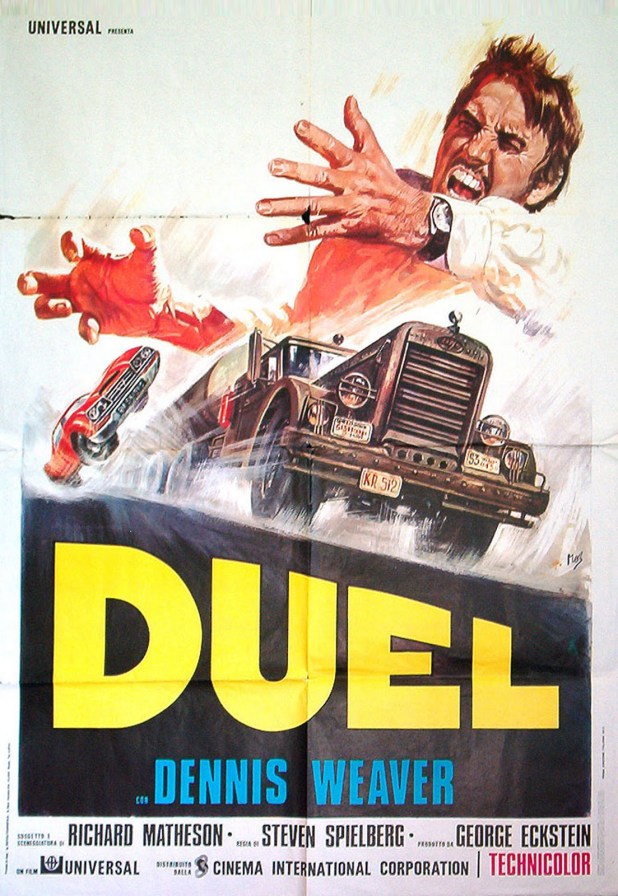
In Duel, the ABC Movie of the Week series for November 13, 1971 — and later an international release in theaters — he’s just a businessman in a Plymouth Valient who upsets the driver — never seen — of a 1955 Peterbilt 281 18-wheeler. It sounds so simple, but that’s what makes it work. There’s little dialogue in the movie with the car and truck pretty much speaking for themselves, as was the intention of its director, a young Steven Spielberg, making his first full-length film after working in series television on shows like Night GalleryThe Name of the Game, Marcus Welby, M.D.Columbo, Owen Marshall, Counselor at Law and The Psychiatrist. Universal signed him to several TV movies, which include Savage and Something Evil before he left TV behind and made The Sugarland Express and the film that would cement his status, Jaws.

Spielberg requested Weaver, as he loved him in Touch of Evil, and even has him use a line from that Orson Welles movie, as he tells the truck driver that he has “another thing coming.”

If you see a version with swearing and more talking, that’s because Universal paid the director to pad it for theatrical release. As for that sound — it seems like a dinosaur — that the truck makes when it dies, it’s the same sound as the shark at the end of the blockbuster Spielberg would later make. He’s said that there is a kinship between the two movies, which are about monsters threatening normal people and the sound effect being used again was “my way of thanking Duel for giving me a career.” It comes from the 1957 movie The Land Unknown.

The other reason this works so well is because of the script by Richard Matheson. He based it on a real story from his life, as a truck tried to run him off the road after a round of golf with Jerry Sohl on the day that JFK was killed. He tried to sell it as a movie for eight years before selling it as a short story to Playboy, where it was published in April 1971. Spielberg said of him, “Richard Matheson’s ironic and iconic imagination created seminal science-fiction stories and gave me my first break when he wrote the short story and screenplay for Duel. For me, he is in the same category as Bradbury and Asimov.”

If you liked this story, so many other Matheson tales have been made into movies: Icy Breasts is his story Someone Is Bleeding, plus there’s The Incredible Shrinking ManA Stir of Echoes, Ride the Nightmare (filmed as Cold Sweat), The Beardless Warriors (filmed as The Young Warriors), The Comedy of Terrors, The Legend of Hell HouseBid Time Return (filmed as Somewhere in Time), What Dreams May Come, “Prey” which is the “Amelia story in Trilogy of Terror, numerous episodes of Night Gallery and The Twilight Zone, “Steel” (filmed as Real Steel), the “No Such Thing as a Vampire” chapter in Dead of Night, plus the scripts for The Beat Generation, House of Usher, Master of the World, The Pit and the Pendulum, Burn Witch Burn, Tales of Terror, The Raven, The Devil Rides Out, Jaws 3-DThe Night StalkerThe Night StranglerDying Room OnlyScream of the WolfThe Box and so many more. His most filmed story is I Am Legend, which was made as The Last Man on EarthThe Omga ManI Am Aomega and I Am Legend. He really made his mark in the world with stories that will last forever.

I would dare say that Duel is in the top three of all made for TV movies of all time.

10TH OLD SCHOOL KUNG FU FEST: The Ghost Hill (1971)

Directed by Ting Shan-hsi, this is the final installment in The Swordsman of All Swordsmen trilogy, but you can go into it without needing to see the other two movies.

Flying Swallow (Polly Shang-kuan) and Tsai ying-jie (Tien Peng) — joined once again with Black Dragon (this time played by David Wei Tang) — have decided to go into Hell itself to get revenge for the death of her father Yen (Chan Bo Leung) by battling Lord Chin (Sit Hon) and his army, which includes the Left & Right Judges, the Ox Head Demon, the Black & White Wuchangs, the Murdering Wonder Child, and Soul Hunter Yaksha.

Woah, right?

It’s going to take an army of beggars and a million fights inside the Dante’s Inferno-like world of this movie to right these wrongs. But when you’re fighting a demonic king who bathes in boiling oil. Yes, you read that right. That’s what he does in his fun time. He also has taken the Purple Light Sword, which was meant to be given to the winner of a battle between Tsai ying-jie and Black Dragon.

This movie is all neon, seriously. It looks like drugs, the best drugs, the ones that never addict you and never have a bad trip. I can’t get enough of these films. And if I’m off on names or the idea, let me know, because wuxia is a genre I’m just trying to learn and get into, the same way I felt like there was a huge world of giallo that would take me years to comprehend and fully enjoy.

Want to see it for yourself?

You can watch The Ghost Hill on April 23 at 3:00 PM in Theater 2 at Metrograph and Subway Cinema in New York City. It’s part of the 10th Old School Kung Fu Fest: Sword Fighting Heroes Edition from April 21-30, 2023!

Tickets are on sale right here!

Night Gallery season 2 episode 14: The Different Ones/Tell David…/Logoda’s Heads

The last episode of Night Gallery for 1971, this episode has a story that harkens back to a Twilight Zone episode yet finds — despite the sheer bleakness of this show — to somehow find happiness where that found dread.

“The Different Ones” has a father by the name of Paul Koch (Dana Andrews) dealing with the Federal Conformity Act of 1993, which means that his son Victor (Jon Korkes) — who has a facial deformity — must be sent away to another planet if surgery can’t help him. Directed by John Meredyth Lucas from a script by Rod Serling, it has the happier ending of Victor finding the happiness that eluded him on Earth. I was waiting for darkness to intrude but instead, this only has light.

“Tell David…” is directed by Jeff Corey and is based on a Penelope Wallace script. On a stormy night, Ann Bolt (Sandra Dee) seeks shelter from the future tech abode of David Blessington (Jared Martin) and Pat (Jenny Sullivan). Yet she soon realizes that David is her son from twenty years from now and he tells her the mistakes she’s made that she must not make again. She must not kill her cheating husband Tony (Martin in a second part) and definitely not kill herself in prison. Yet sometimes, the future is going to happen no matter what we try.

“Logota’s Heads” is about a witch doctor (Brock Peters) charged with the murder of an archaeologist. Directed by Jeannot Szwarc and written by Robert Bloch from an August Derleth story, it also has Patrick Macnee in the cast. Unfortunately, the story has an African witch doctor with shrunken heads, which mainly come from northern Peru and eastern Ecuador. Oh well…

I wish this episode didn’t feel all over the place but at least there wasn’t any comedy moments.

Night Gallery season 2 episode 13: The Messiah on Mott Street/The Painted Mirror

I like the idea of only two stories in an episode of Night Gallery, which gives the tales time to stretch out and, thankfully, avoid the comedy. Well, let’s see what happens.

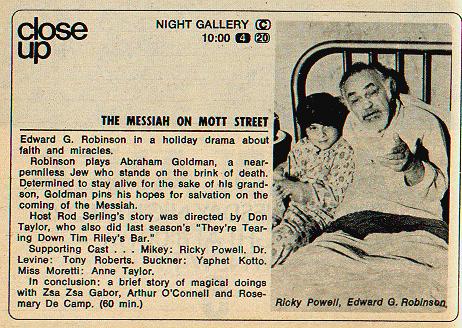
Directed by Don Taylor and written by Rod Serling, “The Messiah On Mott Street” finds Abraham Goldman (Edward G. Robinson) dying on Christmas Eve in the apartment he shares with his nine-year-old grandson Mikey (Ricky Powell). While his doctor Morris Levine (Tony Roberts) wants him to go to the hospital, Abraham is more concerned about the well-being of Mikey, who is an orphan. When the Angel of Death comes to his bed, Mikey runs into the snowy streets looking for the Messiah to save the only person who has been there for him.

He finds Santa Claus and man dressed as Jesus who is preaching the end of all things. As Mikey cowers in fear, he’s saved by a black man named Buckner (Yaphet Kotto) who he feels has to be the Messiah. He begs him to see his grandfather and save him. When they arrive, the Angel of Death has come again and promises that he will come for Abraham at midnight. And while the doctor laughs at the idea of the black man being the Messiah, perhaps happiness can exist even in a Night Gallery episode.

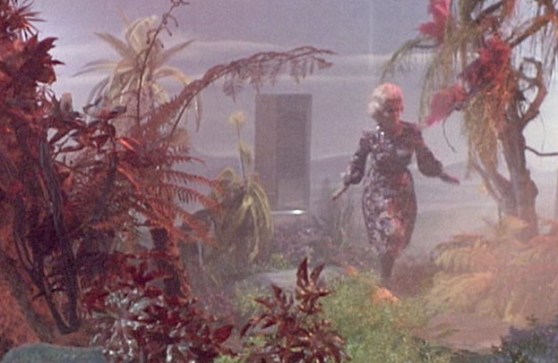
“The Painted Mirror” is directed and written by Gene Kearney. It’s about an antique store owned by Frank Standish (Arthur O’Connell) and Mrs. Moore (Zsa Zsa Gabo) who always seem at odds. When a customer named Ellen Chase (Rosemary DeCamp) brings in an ancient mirror, completely covered in black paint, Mrs. Moore will only carry it on consignment. It obsesses Frank, who removes the paint to reveal a prehistoric scene that viewers can reach into. Of course, this leads to the cruel Mrs. Moore and her dog being trapped there, painted over and inside the past, as a giant dinosaur comes after her.

This episode has one of Serling’s most touching screenplays and some great acting in the first story, so nearly no matter what follows it, it still has to be seen as a well-made episode. Along with Soylent Green, it’s hard to see an obviously ill Robinson play dying men, but he was a working actor who kept appearing in films and television up until his death. As for the second story, the stop-motion animation is really good and it’s a quick and fun installment.

Night Gallery season 2 episode 12: Cool Air/Camera Obscura/Quoth the Raven

This episode brings back more Lovecraft and a Basil Copper story as well in an episode that stays mainly on the side of horror and less of the poor attempts at humor that often ruin this show.

After having Jack Laird bring a Lovecraft story to a previous episode*, host Rod Serling wrote “Cool Air,” which is directed by Jeannot Szwarc. It’s about the strange love story between Agatha Howard (Barbara Rush) and Dr. Juan Munoz (Henry Darrow), a man who must live in a constantly cold apartment. Her father was a professor that wrote often to Munoz and they both refused to believe in the power of death. Szwarc has commented that Lovecraft, as written, was unfilmable. Serling solves that by making this horror actually about romance and loss, even if it leaves Agatha alone in a graveyard, saying “I wonder if I’m mourning something that was or something that might have been.”

I know I go on and on about how this show gets damaged by the attempts at humor, but this story is an example of just how perfect this series can be when it works. It’s not a slavish version of the Lovecraft story, but takes the main ideas and becomes something more suited for the small screen.

“Camera Obscura” is directed by John Badham and written by Serling. It’s about a money lender named Mr. Sharsted (Rene Auberjonois) collecting from a man whose 13% interest has come due, Mr. Gingold (Ross Martin). Gingold has a camera obscura — a darkened room with a small hole through which an image can be projected onto a wall or table — that can see nearly all of London and he uses it to point out the greed that has marked Sharsted’s career. And he has another camera just like it, yet it can send a man back in time to a world of even greedier men whose sins have transformed them into monsters.

“Quoth the Raven” is directed by Jeff Corey and written by Laird. Edgar Allan Poe (Marty Allen) is trying to write and the raven (Mel Blanc) is annoying him. Do I even need to write how this made me feel?

That said, this episode is so strong, one can escape those last few pointless moments.

*”Pickman’s Model” in season 2, episode 11.

Night Gallery season 2 episode 11: Pickman’s Model/The Dear Departed/An Act of Chivalry

Finally, an episode of Night Gallery you can savor, as “Pickman’s Model” is one of the better stories that the show would present. Sure, you have to deal with a middling story in the, well, middle, and the Jack Laird blackout segment is predictable flotsam and jetsam, but when you have an opening this strong, that’s why you stay with this show.

Remarkably, Laird would direct the first segment from a script by Alvin Sapinsley. Based on the H.P. Lovecraft story, this is about Richard Upton Pickman (Bradford Dillman), a painting teacher at a women’s college. Somehow, he keeps his job despite all of his work being so horrific it nearly causes people to pass out. Mavis Goldsmith (Louise Sorel) becomes obsessed with him, despite him trying to remain apart from her. As she tracks him down, she discovers that the creatures in his paintings are horribly real, thanks to special effects by Leonard Engelman and John Chambers, who used the original mold for the Creature from the Black Lagoon to make their monster. Another tie to monster films is that Mavis lives in the same studio backlot house that was once home to the Munsters.

For someone so devoted to humorous vanilla horror, the fact that Laird made more than one Lovecraft story on this show is slightly perplexing. Maybe people really aren’t all good or bad; there are shades of everything.

“The Dear Departed” was directed by Jeff Corey and written by host Rod Serling. Based on a Alice-Mary Schnirring story, it’s about two spiritualist con artists — Mark Bennett (Steve Lawrence) and Joe (Harvey Lembeck) — and the affair Mark is having with his partner’s wife Angela (Maureen Arthur). Once Joe is hit by a bus, their act becomes legitimate, to Mark’s horror.

“An Act of Chivalry” is the absolute nadir of this show, if “Pickman’s” is near the height. Just the dumbest of sight gags and something that denigrates this show to a degree that emotionally bothers me. About the only nice thing you can say is that at least future Electra Woman Deidre Hall is in it.

Ah Night Gallery. Often you are the peak and the valley at the same time.

Night Gallery season 2 episode 10: The Dark Boy/Keep in Touch – We’ll Think of Something

I prefer the episodes of Night Gallery with fewer stories, as it allows each tale time to stretch out and capture you. Sadly, this episode only has host Rod Serling appear as the host; the first segment “The Dark Boy” is directed by John Astin and written by Harland Welles from an August Derleth story and “Keep in Touch — We’ll Think of Something” is directed and written by Gene R. Kearney.

“The Dark Boy” has a widowed schoolteacher named Judith Timm (Elizabeth Hartman) coming to a small town in Montana to take over the one room schoolhouse. She rents a room from sisters Abigail (Gale Sondergaard, the original Wicked Witch of the West from The Wizard of Oz who was replaced because the makeup team could not make her into a suitably ugly witch; she’s also in The Spider Woman Strikes Back) and Lettie Moore (Hope Summers, Mrs. Gilmore from Rosemary’s Baby).

Judith claims she has seventeen students, but one can’t be found in the list of her pupils. It’s the same issue the last teacher dealt with, a dark haired boy of mystery. It turns out that it’s Joel Robb, a child who died two years before who has been haunting the entire neighborhood and everyone in it. She begins to get to know the boy’s father and understand the grief that the man has been living.

“The Dark Boy” is a strong episode and Astin shows some skill as a director.

“Keep In Touch — We’ll Think of Something” is all about a piano player named (Alex Cord) and his obsession with a woman named Claire Foster (Joanna Pettet; she was married to Cord at the time). He dreams of her every night, while her husband dreams of a man with a scarred hand trying to murder him. Strangely, when he finds her — using the police to track her down, claiming that she stole his car — she isn’t nervous about this strange man. She also knows they are destined to be together.

It’s a decent story but struggles following the first story in this episode. Still, two serious stories in one Night Gallery? That’s how it should be.

Night Gallery season 2 episode 9: House With Ghost/A Midnight Visit to the Neighborhood Blood Bank/Dr. Stringfellow’s Rejuvenator/Hell’s Bells

By now, you know the deal. If you see four stories in an episode of Night Gallery, you’re not getting more. You’re getting less.

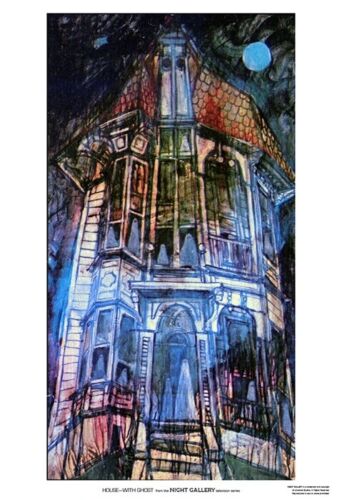
“House With Ghost” is directed and written by Gene R. Kearney from an August Derleth story. Ellis Travers (Bob Crane) just wants to be with Sherry (Trisha Noble), which means he has to murder his wife Iris (Jo Anne Worley) by using her dizzy spells and a haunted house, which seems like a lot of work.

“A Midnight Visit to the Neighborhood Blood Bank” is so Jack Laird that while he got William Hale to direct it, he wrote it and his stepdaughter Journey plays the victim of perhaps the healthiest looking vampire ever, played by Victor Buono. You can imagine how one note this all is. It’s also the same idea as “A Matter of Semantics,” which was in the last episode.

“Dr. Stringfellow’s Rejuvenator” is directed by Jerrold Freedman from a script by Rod Serling. Doctor Ernest Stringfellow (Forrest Tucker) claims that he has the cure for anything and when a father believes that it can save the life of his daughter, not even a doctor (Murray Hamilton) can change his mind. But what happens if that snake oil doesn’t work?

This is the kind of story that Night Gallery was made for and I wish that it had time to breathe in this episode instead of being jammed in with filler.

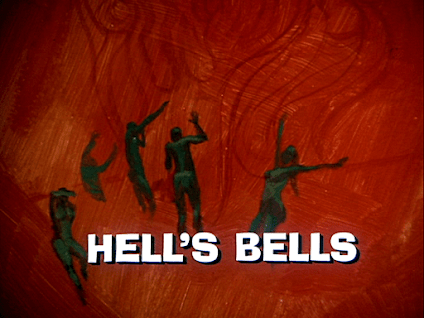
Randy Miller (John Astin) is a hippie that dies and soon finds himself in hell’s waiting room with a larger woman (Jody Gilbert), an old man (Hank Worden) and Satan, plated by Theodore J. Flicker, who directed and wrote this segment — based on a story by Harry Turner — called “Hell’s Bells.”  It’s not long and it’s one joke, as the hippie thinks that hell will be a party and it’s behind his generation forever.

Sometimes, all you get is one great story in these episodes and that’s enough. That said, there are some good moments coming up in the rest of the season.