CBS LATE MOVIE MONTH: The House That Screamed (1969)

EDITOR’S NOTE: The House That Screamed aired on the CBS Late Movie on January 30, 1973 and June 14, 1974.

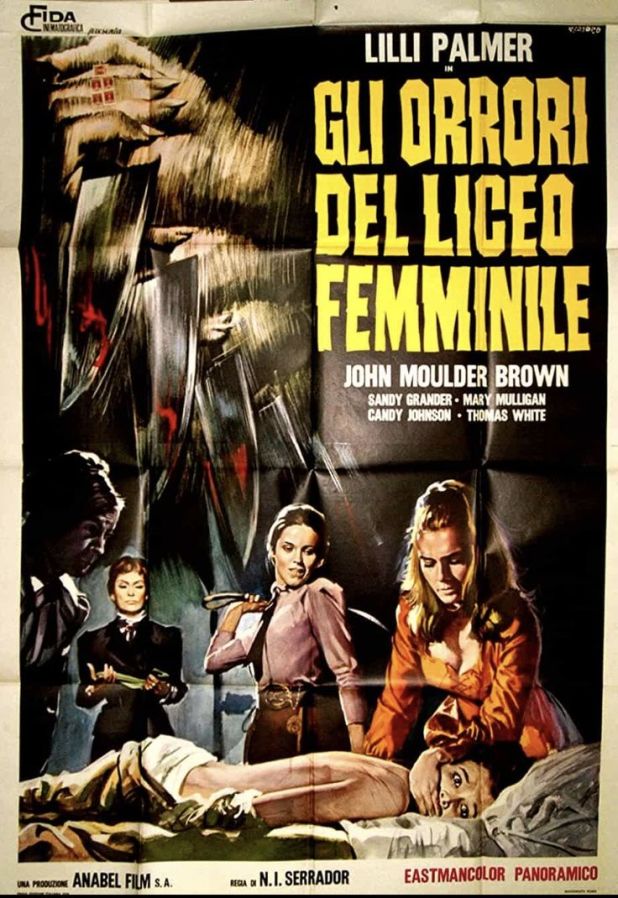
Spain’s first major horror film production, The House that Screamed—AKA La Residencia and The Boarding School—was based on a story by Juan Tébar. Because the cast included both English and Spanish actors, the film was shot in both languages and then dubbed into English in post-production.

Directed and written by Narciso Ibáñez Serrador (Who Can Kill a Child?), it takes place at a school for girls—reforming them and making them acceptable wives for their future husbands—in 19th-century France run by Headmistress Señora Fourneau (Lilli Palmer). Teresa Garan (Cristina Galbó, The Living Dead at Manchester Morgue) is a newcomer to the school and instantly notices just how strange of a place it is. For example, she always feels like she’s being watched.

Fourneau rules the school by the whip—quite literally, she has no problem beating her students into submission—and has Irene Tupan (Mary Maude), an older student, as her near WIP second-in-command.

Yet things are not alright. Students keep going missing, Teresa is bullied when the girls discover that her mother is a prostitute, and Luis (John Moulder-Brown), Fourneau’s son, is in love with Teresa despite the rules of her mother, who believes that none of these girls are good enough for him. He was once interested in Isabelle (Maribel Martín, The Blood Spattered Bride) until his mother roughly helped his face and intoned, “These girls are not good enough for you. What you need is a woman like me!”

That’s when the film literally goes Psycho, wipes out a main character, and the narrative transforms an antagonist into the protagonist. The horror, however, is nowhere near over for anyone. That idea of Luis finding a woman just like his mother haunts the headmistress.

This gorgeous movie predates Argento’s Bird With the Crystal Plumage by a few months and Suspiria by eight years. It’s as much a slasher as a gothic horror movie and works as both, and it has elements of Giallo and Women in Prison films. Yet, above all, it remains classy and has lush colors, incredible cinematography and luscious interiors, making this quite the furniture movie. Even better, you can see the film that was taken from it. Pieces might be a tribute movie, even if it’s not a movie discussed all that often in the U.S.
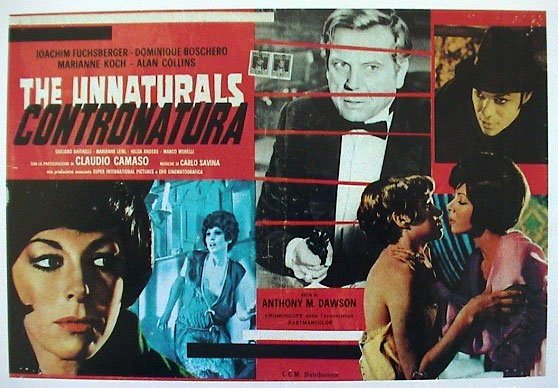
Junesploitation: The Unnaturals (1969)

June 25: Junesploitation’s topic of the day — as suggested by F This Movie— is Italian horror! We’re excited to tackle a different genre every day, so check back and see what’s next.

Dino Buzzati’s I sette messaggeri (The Seven Messengers) is a collection of nineteen short stories in which a variety of protagonists interact with the unknown and death, often with the ending left up to the reader. One of the stories, Sette piani (The Seventh Floor) was made into a movie in 1967, while is based on Eppure bussano alla porta (Yet They Knock On the Door). In all, thirty-three movies and shows were made from the author’s work.

On a stormy night — is there a better evening for Italian horror? — the top of London’s high society of the 1920s gets stuck in the mud and forced to turn to a mansion in the darkness. Uriat (Luciano Pigozzi, a fixture in the films of director and writer Antonio Margheriti) explains to them that while they are in his home, they may use the powers of his mother (Marianne Leibl), a woman who can communicate with the dead. Yet she can do even more. She’s able to tell the dark secrets of every one of them, which includes violence, deception and — shudder, it’s 1969 in an Italian genre movie — a sapphic affair.

But they aren’t the only ones filled with sin, as Uriat and his mother were once charged with two murders, which conveniently may have been committed by one of the elite in their humble abode.

Shot on sets from other films, cinematographer Riccardo Pallottini achieved the look of the seance scene by being suspended upside down from the ceiling. With camera in hand, he was slowly dropped down as he bent over backward to raise the camera and capture each conspirator’s face.

Those characters include Archibald Barrett (Giuliano Raffaelli), a real estate baron who hasn’t exactly made his money ethically, aided by his lawyer Ben Taylor (Joachim Fuchsberger). Ben’s wife Vivian (Marianne Koch) has always come in second to her husband’s career, which is why she secretly shares a mistress — Elizabeth (Helga Anders) — with both Barrett and his business manager Alfred Sinclair (Claudio Camaso).

Set in a decades shuttered hunting lodged stuffed — pardon the pun — with taxidermied wild animals, the noose tightens around each person as this film goes from a dark night haunted house film to one of near-apocalyptic intensity. That’s what happens when a medium tells you, “An invincible monster will devour you all. That monster is your conscience.”

Thanks to Castle of Blood and The Long Hair of Death, Margheriti — known in the U.S. as Anthony Dawson — was a known gothic horror quality. This just works for me, as it has a wild look thanks to all the leftover sets the director found while shooting at Carlo Ponti’s studio. This is also the most that Pigozzi ever got to do in a movie, as he’s as close as this has to a hero instead of a henchman or the hero’s older friend. The score of Carlo Savina (Lisa and the Devil) helps this achieve more, as well.

If you thought that this movie wouldn’t involve Margheriti’s skill with shooting miniatures, have no fear. He’s saving it for the end.

Actors picked for success in the German market playing English people in an Italian horror film based on an English literary genre. Ah, I love movies.

THE FILMS OF BRIAN DE PALMA: To Bridge This Gap (1969)

Early in his directing career, Brian De Palma made this documentary with Ken Burrows. It concerns the discrimination faced by African Americans in the 1960s and the work that it took to establish legal and social precedents that bridged the gap between hard-earned legal victories and the implementation of laws to protect them.

This doesn’t have much of the style that De Palma would come to show in his career, but to be fair, it’s a documentary. This is more about the left wing roots of the director and how he wanted to help document a moment in our country’s history that for some reason, it feels like we’re never going to move past. The fact that people had to fight to be, well, people keeps going.

You can watch this on YouTube.

THE FILMS OF BRIAN DE PALMA: The Wedding Party (1969)

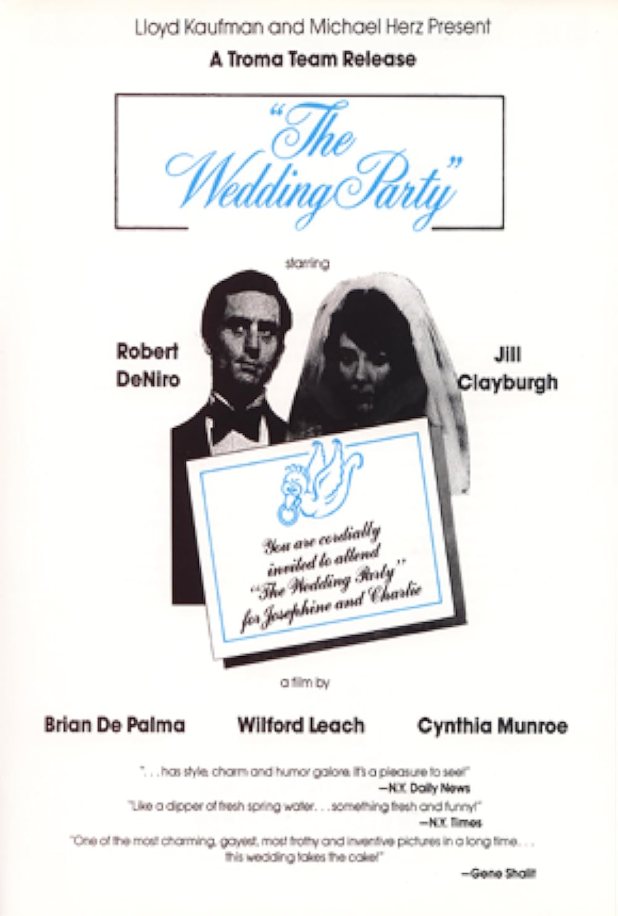
The Wedding Party has an interesting story behind it. It was a joint effort between Sarah Lawrence theater professor Wilford Leach and two of his students, Brian De Palma and Cynthia Monroe. Stanley Borden, owner of American Films, as well as De Palma’s mentor and employer, let the young director make the movie on company time.

It was actually made in 1963, but Borden and De Palma fought over the film, as Borden believed that it was not ready for release. It came out in 1969 after the success of Greetings.

Charlie (Charles Pfluger) and Josephine (Jill Clayburgh) are getting married just in time for Charlie to start to realize that he dislikes her family as much as he loves her. They never think he’s good enough and constantly treat him like trash, like how her cousins Cecil (Robert De Niro) and Alistair (William Finley) invite him to his bachelor party and don’t bring him.

He decides to run and leave her behind on the wedding day — dealing with her cousin (Judy Thomas) trying to seduce him, the stress of her mother (Valda Setterfield) and the weirdness of her dad (Raymond McNally) is all too much. But how far can he go when he’s trapped on an island?

Not a great or even a good movie, but it’s worth seeing as it’s the first credit for both De Palma and De Niro.

VIDEO ARCHIVES WEEK: The Illustrated Man (1969)

VIDEO ARCHIVES NOTES: This movie was discussed on the August 30, 2022 episode of the Video Archives podcast and can be found on their site here.

Beyond Bird with the Crystal Plumage, there’s one movie my mother has already brought up that she hated. And that would be this one.

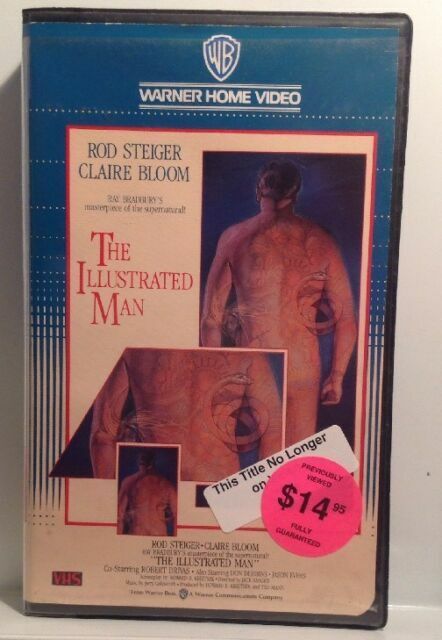
The book that these stories come from has eighteen of them, but Howard B. Kreitsek and Jack Smight picked these three for the film without ever speaking to Ray Bradbury, the author of the book. The tattooed man who appears in the book’s prologue and epilogue would become this film’s main story and be played by Rod Steiger.

The funny thing is that when Steiger takes off his glove to reveal his hand, it’s tattooed and played off as a horrific moment. A half-century after this movie was made, nearly all my friends have this many tattoos.

Carl, the tattooed man, meets Willie and uses his skin illustrations to tell tales throughout time. The ink came from a mysterious woman named Felicia. At the end of the film, Willie sees his death at Carl’s hands in the only bare patch of skin on the Illustrated Man.

The stories that are told include “The Veldt,” which takes place in the future and involves children who study within a virtual version of the African veldt. Soon, the lions will solve this issue of their parents. “The Long Rain” has solar rains* that drive an entire crew to madness in space. And “The Last Night of the World” predates The Mist, with parents who must decide if their children should survive the end of the world.

The final story—and its bleak ending—is exactly why my mom hates this movie. The fact that she may have told me all about it when I was a kid may have given me nightmares.

This movie did poorly critically and financially. Rod Serling, an expert on adapting short stories to film, called it the worst movie ever made.

*Their spaceship is recycled from Planet of the Apes, Beneath the Planet of the Apes and Escape from the Planet of the Apes.

SALEM HORROR FEST: Prague Nights (1969)

EDITOR’S NOTE: This movie was watched as part of Salem Horror Fest.

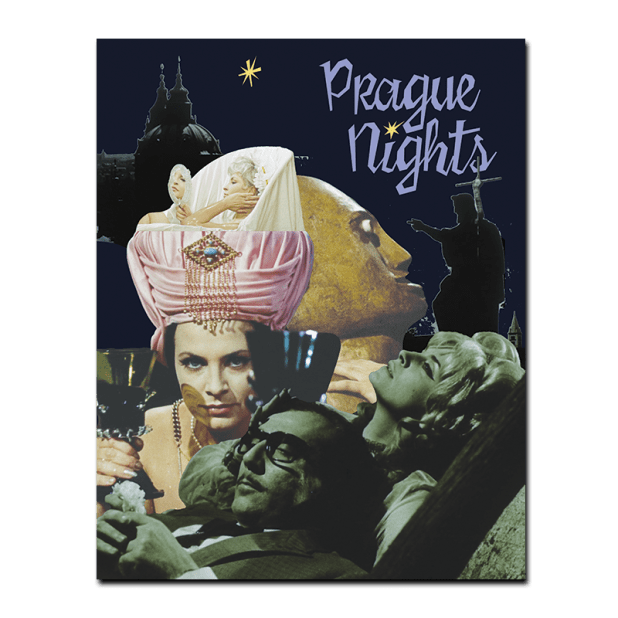
Deaf Crocodile Films, in association with distribution partner Comeback Company, has restored this little seen in the U.S. late 1960s Czech occult/horror anthology. Prazske Noci (Prague Nights) is inspired by Black Sabbath and features episodes directed by Milos Makovec, Jiri Brdecka and Evald Schorm.

I love how they referred to this movie: “a gorgeous and supernatural vision of ancient and modern Prague: caught between Mod Sixties fashions and nightmarish Medieval catacombs, and filled with Qabbalistic magic, occult rituals, clockwork automatons and giant golems.”

I mean, I’m already in love.

Filmed during the 1968 Soviet invasion of Prague, Prague Nights begins with a businessman named Willy Fabricius (Milos Kopecky), lonely and lost in a foreign city, but looking for not love but some form of lust. And then he encounters the much younger, more gorgeous and way more mysterious Zuzana (Milena Dvorská), they travel through the sleeping city in her vintage limousine. As her driver Vaclav (Jiríi Hrzan) pulls into a cemetery, she begins to tell him the three stories that make up this movie:

In Brdecka’s chapter “The Last Golem,” Rabbi Jehudi Löw (Josef Blaha) has already created and used a golem, a gigantic silent homunculus from living clay. Emperor Rudolf II (Martin Ruzek) hears of this and wants to use the supernatural being for his own aims and even when told it can’t be revived, a less moral young rabbi named Neftali Ben Chaim (Jan Klusak) claims he can make it happen. But will his lust for the mute servant (Lucie Novotná) and need to inspire her be his undoing?

“Bread Slippers” — directed by Schorm — introduces us to a countess (Teresa Tuszyńska) who indulges all of her passions, whether for kisses from the maids, the sweetest of cakes or affairs that would scandalize her town. She’s pushed twin brothers into a duel for her heart that killed them both and now she’s led Saint de Clair (Josef Abrham) into death at his own hand. And all because he couldn’t get her the shoes she asked for, shoes made of — you read the title — bread. While the peasants go hungry, the countess literally steps upon what they yearn to eat.

Yet a strange shoemaker (Josef Somr) can and once he delivers them, he steals her away to an abandoned mansion, a place filled with mechanical servants, dust and cobwebs. A place where she will dance forever with her many victims.

Makovec’s “Poisoned Poisoner” shares the adventures of a murderess in the Middle Ages who kills off sex-crazed merchants set to the music of  60s Czech pop star Zdeněk Liška. Yet what happens when a woman who kills men and takes not only their money and jewelry but their hearts falls for one of her victims?

Prague Nights ends with the truth of Zuzana and why she needed the businessman so badly on this — and only this — night. What we have experienced is pure gorgeous cinema, a world that is so unlike so much of what we’ve seen that it very nearly feels animated. Colors change from black and white to monochromatic to more colors than we can nearly stand; cars drive into graves; lovers can be trapped in Hell forever. Yet it all makes your heart and mind and eyes sing. This film is pure magic and yet another film that Deaf Crocodile has put in front of me and won over every fiber of my being with.

There’s also another Czech anthology, Pearls of the Night, that I now need to track down!

You can get this from Deaf Crocodile, whose blu ray release has a new video interview with Czech film critic and screenwriter Tereza Brdečka on her father, Jiří Brdečka (co-director and co-writer of Prague Nights, covering his famed career as a filmmaker, animator and screenwriter; new audio commentary by Tereza Brdečka and Czech film expert Irena Kovarova of Comeback Company; two superb and haunting Jiří Brdečka animated short films: Pomsta (Revenge) and Jsouc na řece mlynář jeden (There Was a Miller On a River); a new essay by Tereza Brdečka on the making of the movie and new art by Beth Morris.

10TH ANNUAL OLD SCHOOL KUNG FU FEST: Iron Mistress (1969)

A group of rebels taking on the Jin invaders during the Southern Song Dynasty are led by the Iron Mistress (Han Hsiang-Chin) and Wei Shing (Pai Ying). Another revolutionary named Hsin Tsuan (Chien Tsao) says that she may be a strong fighter and able to gather an army, but she has no plan. He offers to be the brains, but Wei Shung feels like he could be playing not just his leader, but the object of his unrequited affection.

Yet according to the actual history of China, Hsin Tsuan is supposed to be Xin Qiji, who wrote under the name Jiaxuan. He became a fighter to gain a measure of revenge against the Jin and had a twenty-year career of military service. He then retired and began writig ci, which are porms written to match existing melodies. He constructed more than six hundred of these poems and became widely admired and imitated for his skill with words, not just swords.

Here is one:

Partridge Sky

When I was young

I waved a flag to lead a thousand soldiers

horses too

how my men

fashioned arrows

of silver at night

they brought

down the moon

now the enemy owns it

I come back

I’m nobody

now thinking of the past

how one

sighs to be neglected

Spring won’t bring back the black to my bread

you can’t imagine the tracts I wrote on tactics for this country

In return I’m given this poor field bent mattock

and some weather-worn to me titled “how to grow tree”

Directed by Tsun-Shou Sung and written by Shih-Ching Yang, this has a lot of growth in the film for all of its characters to go along with the swordplay.

Want to see it for yourself?

You can watch Iron Mistress is an online only movie at the 10th Old School Kung Fu Fest: Sword Fighting Heroes Edition from April 21-30, 2023! Tickets are on sale right here!

APRIL MOVIE THON 2: The Love Factor (1969)

April 16: Shaken, Stirred, Whatever — Write about a Eurospy movie that’s kind of like Bond but not Bond.

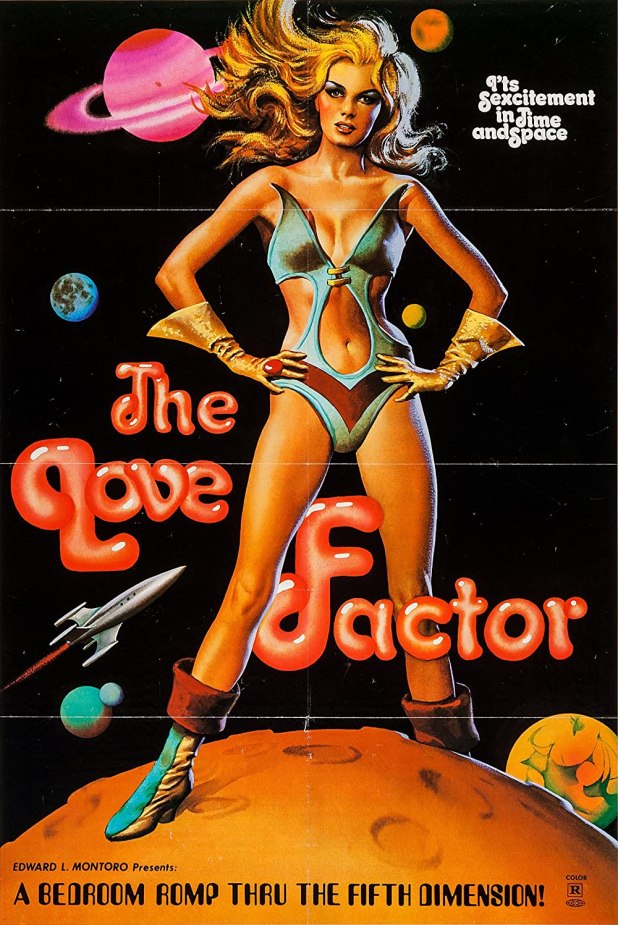
Directed by Michael Cort, who wrote it with Alistair McKenzie and Christopher Neame, The Love Factor is also known as Zeta One. It’s about secret agent James Word (Robin Hawdon) telling his boss W’s Ann (Yutte Stensgaard, Some Girls Do) about his latest adventure just as we also meet Zeta (Dawn Addams, The Vault of Horror) and her cadre of alien women from the planet Angvia — get it, it’s an anagram for vagina — who are trying to find new girls for their planet while also fighting off Major Bourden (James Robertson Justice) and his henchman Swyne (Charles Hawtrey).

Zeta has a formidable force of extraordinary magnitude, including Brigitte Skay (Isabella Duchess of the Devils), Anna Gael (Nana), Wendy Lingham, Valerie Leon (Queen Kong), Kirsten Betts (Twins of Evil) and Carol Hawkins (The Body Stealers).

Released in America by Film Ventures International four years after it played England as Zeta One, it was first shown as The Love Slaves and the next year was renamed The Love Factor. It was produced by Tigon and Vernon Sewell directed some of the scenes.

This is like Bond, Barbarella and pop art mixed with pasties, go go boots and the kind of humor that has the secret agent show up late and just want to make love to the many, many aliens he’s battling. It doesn’t make much sense, but who cares? It starts with a thirty-minute strip poker scene that really goes nowhere as well, but when you’re having fun, who is looking at the run time?

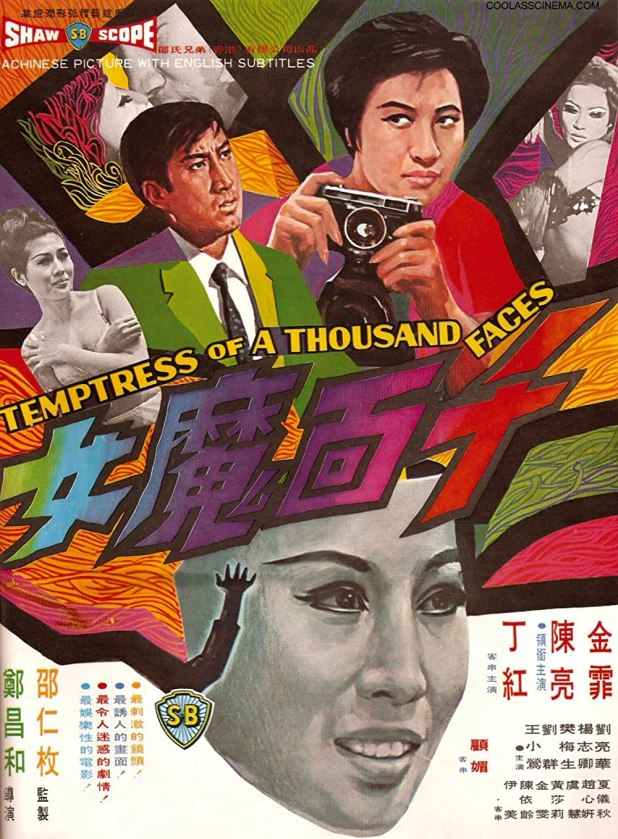
APRIL MOVIE THON 2: Temptress of a Thousand Faces (1969)

April 14: Tiger Style — Grab a Shaw Brothers film and write about how great it is.

At once a Shaw Brothers film, a Eurospy action movie and kind of like the Hong Kong Danger DiabolikTemptress of a Thousand Faces is why I watch movies.

Officer Chi-ying (Tina Chin-Fei) is trying to hunt down the Temptress, who she publically dares to come after her. The Temptress agrees to this by stealing her identity, flirting with an entire club full of men and cleaning out a jewelry store while wearing Chi-ying’s face. Our heroine’s name gets cleared by her photographer boyfriend Inspector Yu (Liang Chen), who ends up being the one in peril when dealing with the titular villainess and her army of henchwomen.

Yes, the Temptress really does have a thousand masks, maybe even more, as well as an unlimited supplies of knockout gas and scantily clad women ready to answer her every command. This is a movie that at once has a strong female heroine and antagonist, but also one that has fan service aplenty, like the Temptress appearing being bathed by her handmaidens and Chi-ying fighting barefoot in a near see-through gown, but the men around them are such morons that they can’t help but shine, no matter how much of the male gaze gets thrown their way.

There’s a bomb that gets deactivated with seven seconds left — just like Goldfinger — as well as a volcano base — just like You Only Live Twice — and even the Bond theme playing just because, well, this movie is a riot and unafraid where it’s taking stuff from. That’s how good it is.

It all ends with Chi-ying battling the Temptress after she wears the face of our heroine and makes love to her man while she’s forced to watch. A twin adversary kung fu spectacle, topped only with our heroine and her reclaimed man shooting near thousands of bullets and wiping out an entire base full of dedicated domina female supertroopers.

I may not have any power over Arrow, but I know another Shawscope box set has to be coming. I dream that this and Infra-Man end up on it, movies that show that the Shaw Brothers made more than just their typically amazing kung fu movies.

You can watch this on YouTube.

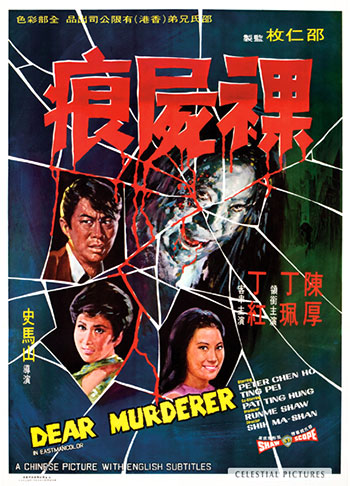
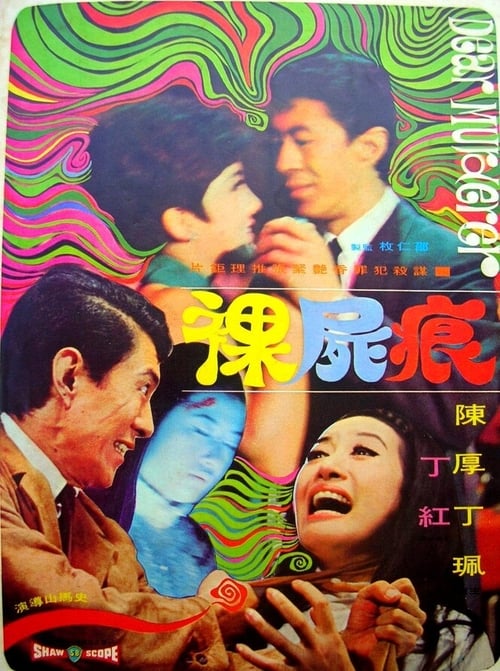
APRIL MOVIE THON 2: Dear Murderer (1969)

April 14: Tiger Style — Grab a Shaw Brothers film and write about how great it is.

Tu Chang (Peter Chen Ho) has a problem.

His boss Yeh Kuang Lung (Liu Kei) thinks so much of him that he’s prepared to give him the ultimate compliment by awarding him his beloved daughter Jenny (Betty Ting Pei, she whose apartment is where Bruce Lee scandalously died within) in marriage.

The problem?

Tu Chang has already made company typist Lan Fen (Pat Ting Hung) pregnant.

Even worse, she promises to tell the boss unless he does the right thing.

That means killing Lan Fen and going all Poe on her, walling her dead body into an abandoned house.

Yet this is a Shaw Brothers movie and the dead never stay quiet in their stories.

Unlike many of their movies, this was directed by a Japanese filmmaker, Shima Koji, and is a remake of his movie Kaidan otoshiana. It’s a bit slow, but it looks gorgeous and man, that poster, right?