MILL CREEK NIGHTMARE WORLDS: Attack from Space (1964)

EDITOR’S NOTE: This was originally on the site on May 14, 2021.

There are nine Super Giant films and all of them were brought to the U.S. by Medallion Films, who turned them into four movies. This story would be The Artificial Satellite and the Destruction of Humanity and The Spaceship and the Clash of the Artificial Satellite combined to make one longer film. So basically, this would be the fifth and sixth parts of the story. If you want to get caught up, you’ll need to check out Atomic Rulers of the World and Invaders from Space. When you finish this one, you can get the rest of the story in Evil Brain from Outer Space.

Starman is a human-like being created from the strongest steel by the Peace Council of the Emerald Planet. He’s been sent to our planet to protect us from the Sapphire Galaxy, who are blowing up the Himalayans. To make their plan move quicker, they kidnap Dr. Yamanaka and his family and force him to use his spaceship — yes, he just so happens to have a spaceship — to decimate the Earth.

Strangely enough, this movie has a death star and a weapon that destroys planets. I mean, Star Wars would never steal anything from a Japanese movie, right?

You can download this from the Internet Archive.

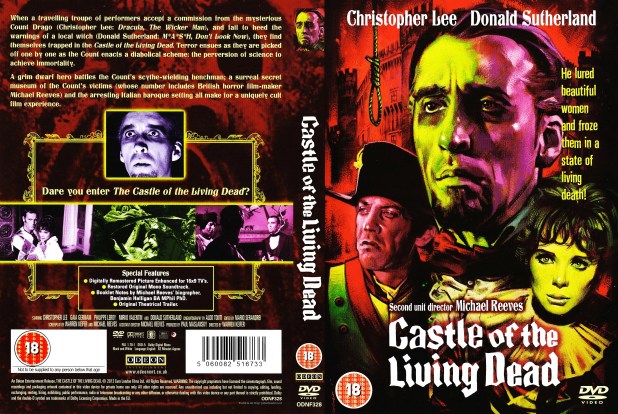
THE CHRISTOPHER LEE CENTENARY CELEBRATION PRIMER: Castle of the Living Dead (1964)

EDITOR’S NOTE: This article originally was on the site on May 21, 2022. Now you can see it this weekend at the Drive-In Super Monster-Rama! Get more info at the official Drive-In Super Monster-Rama Facebook page and get your tickets at the Riverside Drive-In’s webpage.

Castle of the Living Dead is a movie of mystery.

Who directed it?

Warren Kiefer, who couldn’t be directly credited for the film as the film required an Italian director?

Herbert Wise — Luciano Ricci, the film’s first assistant director — whose name was used to fulfill that needed native director credit?

Riccardo Freda, who left I Vampiri for Mario Bava to finish and also made Double Face and Tragic Ceremony?

Michael Reeves, the tragically lost too song director who made Witchfinder General? Depending on who is asked, Reeves either did minor second unit work, a polish on the script’s dwarf character, a complete takeover of the movie or nothing at all.

And did Mario Bava do effects?

So many mysteries!

This gothic horror movie stars Christopher Lee as Count Drago, a man who embalms humans and animals, making them part of his eternal theater thanks to a chemical formula that instantly kills and embalms anything that lives, arresting them at the very moment of death.

Beyond Lee, the cast includes Gaia Germani (Hercules In the Haunted World), Philippe Leroy (The Laughing Woman), Luciano Pigozzi (the Italian Peter Lorre), Luigi Bonos (Frankenstein 80) and Donald Sutherland in his first movie playing a witch, an old man and Sergeant Paul.

Co-writer Paul Maslansky would go on to produce tons of movies like Death LineShe BeastRace with the DevilDamnation Alley and Ski Patrol amongst so many others, as well as creating the original concept — and producing — all of the Police Academy movies.

You can watch this on Tubi.

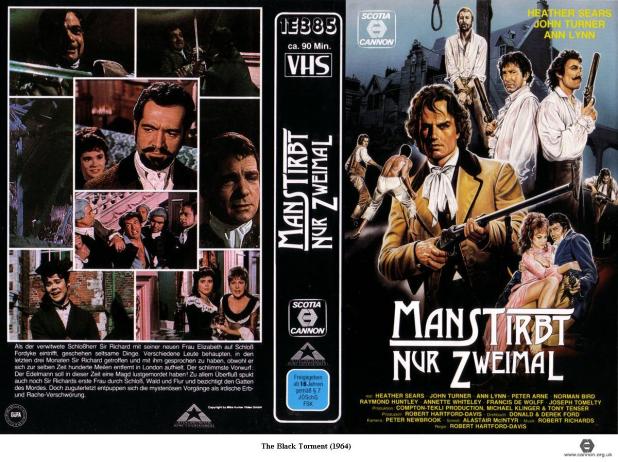
CANNON MONTH 2: The Black Torment (1964)

EDITOR’S NOTE: Cannon didn’t produce this movie but did release it on video in Germany on the Scotia/Cannon label.

Made by Compton Films, directed by Robert Hartford-Davis and written by Derek and Donald Ford. I watched this because those three men also made one of the wildest British horror movies, Corruption, which we all know is not a woman’s picture.

It feels like British filmmakers trying to make an Italian film, as it starts with Lucy Judd (Edina Ronay) being chased through the woods by a black hooded figure and strangled. We then meet Sir Richard Fordyke (John Turner) and his new bride Elizabeth (Heather Sears) who have come to town so that she may meet her father-in-law Sir Giles Fordyke (Joseph Tomelty). She worries about her first impression, but his father has been weakened by a stroke and can only speak sign language, which can only be understood by his first wife’s sister Diane (Ann Lynn). And oh yeah — Anne killed herself a few years ago when she was told she couldn’t get pregnant. Oh these British upper-crust families and their horrific family trees!

When they finally get there, everyone — from villagers to family — treats them with cold eyes and whispers, because the rumor is that Richard killed Lucy, even if he was far away in London at the time. Witchcraft is in town and the Fordykes are said to be the cause. In fact, there are reports of Richard riding his horse about the village while the dead Anne follows him shouting “Murderer!”

Obviously, someone is trying to destroy Richard. But who? And why?

If you enjoy period dramas with a bit of the supernatural thrown in, well, this is certainly for you. I love that Hartford-Davis would go on to direct a toy tie-in movie, Gonks Go Beat, as well as School for Unclaimed GirlsIncense for the Damned and The Fiend.

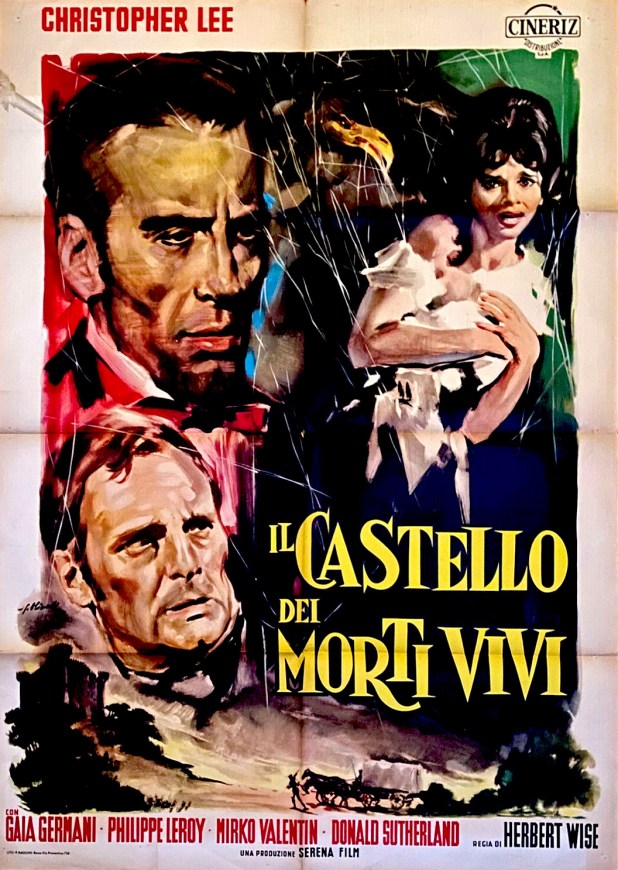
Il Castello dei Morti Vivi (1964)

Castle of the Living Dead is a movie of mystery.

Who directed it?

Warren Kiefer, who couldn’t be directly credited for the film as the film required an Italian director?

Herbert Wise — Luciano Ricci, the film’s first assistant director — whose name was used to fulfill that needed native director credit?

Riccardo Freda, who left I Vampiri for Mario Bava to finish and also made Double Face and Tragic Ceremony?

Michael Reeves, the tragically lost too song director who made Witchfinder General? Depending on who is asked, Reeves either did minor second unit work, a polish on the script’s dwarf character, a complete takeover of the movie or nothing at all.

And did Mario Bava do effects?

So many mysteries!

This gothic horror movie stars Christopher Lee as Count Drago, a man who embalms humans and animals, making them part of his eternal theater thanks to a chemical formula that instantly kills and embalms anything that lives, arresting them at the very moment of death.

Beyond Lee, the cast includes Gaia Germani (Hercules In the Haunted World), Philippe Leroy (The Laughing Woman), Luciano Pigozzi (the Italian Peter Lorre), Luigi Bonos (Frankenstein 80) and Donald Sutherland in his first movie playing a witch, an old man and Sergeant Paul.

Co-writer Paul Maslansky would go on to produce tons of movies like Death LineShe BeastRace with the DevilDamnation Alley and Ski Patrol amongst so many others, as well as creating the original concept — and producing — all of the Police Academy movies.

You can watch this on Tubi.

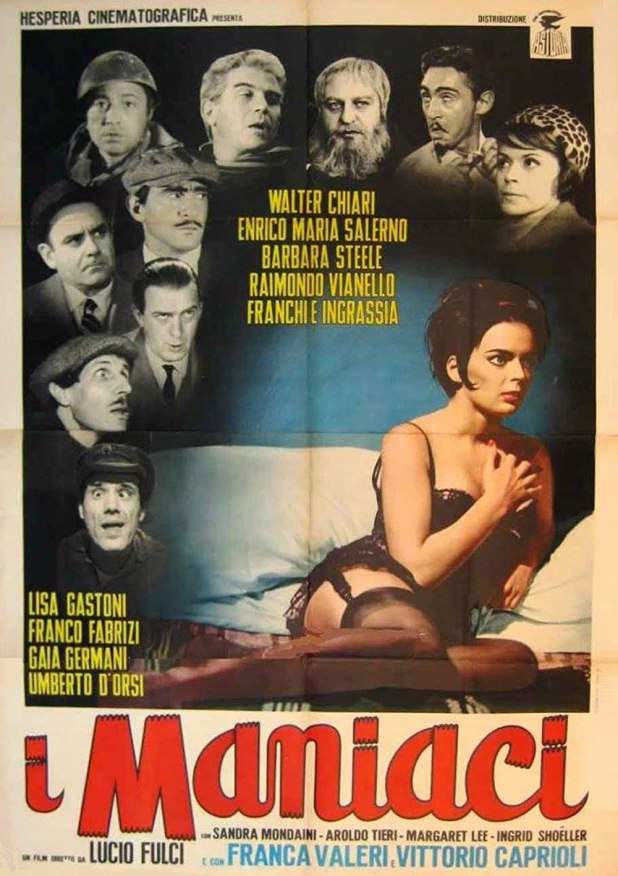
I Maniaci (1964)

Before Lucio Fulci was the Godfather of Gore, he was a director known for comedy. This 1964 film is all about the mania — the title translates as The Maniacs — that men and women exude every day, told in short skits, such as “The Elaboration,” in which a hearse driver fixes up his vehicle so he can get his passengers to the grave in less time and “Sport,” in which a boss loses so many bets that he must sell his wife to his co-workers.

The film finds time to make fun of protesters, housewives convinced their husbands are cheating, writers, strip club patrons, government agents and more. Its comedy doesn’t really translate so many years later, but it’s worth reminding ourselves that Fulci was considered a dependable comedy director.

In addition to the Morricone soundtrack, Fulci cast some of the 60s most gorgeous actresses, foremost amongst them Barbara Steele. Also on hand are Gaia Germani (Hercules In the Haunted World), Ingrid Schoeller (who was also in Fulci’s Oh! Those Most Secret Agents), Lisa Gastoni (The War of the Planets), Dominique Boschero (Who Saw Her Die?), Margaret Lee (Venus In Furs), Mary Arden (Blood and Black Lace) and Rada Rassimov (The Cat o’ Nine Tails).

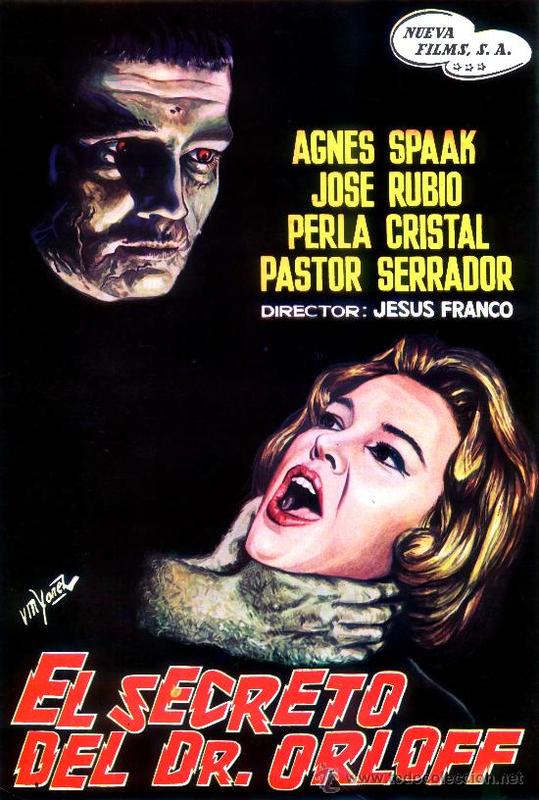
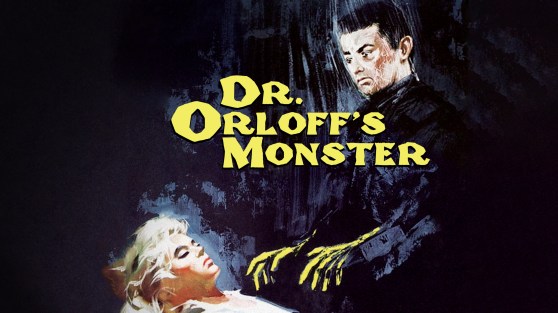
JESS FRANCO MONTH: Dr. Orloff’s Monster (1964)

Jess Franco had enough money for film stock and some of the cast, the rest of this movie was made thanks to the kindness of others. And this time, the shadow of Dr. Orloff has been cast on Doctor Conrad Jekyll, one of his students, who has been sent the secrets of using ultrasound to animate his robotic creation, which is really his brother Andros who he murdered after discovering that he was cucking him with his wife. So what does he do? Uses the robot creature to hunt down his ex-lovers and strangle them.

Yes, it’s dream-logic or more to the point, Franco logic.

An example: the robot knows who to kill based on the necklaces that Dr. Jekyll gives to these nightclub women. Inside is a radio transmitter giving orders to kill, baby, kill.

Also known as The Mistresses of Dr. Jekyll, The Secret of Dr. Orloff and Dr. Orloff’s Monster Brides, this only hints at the nightclub scenes of later Franco, as well as the jazz music moments which threaten to obscure the story and take over the film.

Also, a Christmas movie.

You can watch this on KinoCult.

Dr. Orloff’s Monster is also on the ARROW PLAYER. Head over to ARROW to start your 30-day free trial. Subscriptions are available for $4.99 monthly or $49.99 yearly. ARROW is available in the US, Canada, the UK and Ireland on the following Apps/devices: Roku (all Roku sticks, boxes, devices, etc), Apple TV & iOS devices, Android TV and mobile devices, Fire TV (all Amazon Fire TV Sticks, boxes, etc), and on all web browsers at https://www.arrow-player.com.

Onibaba (1964)

ABOUT THE AUTHOR: Jennifer Upton is an American (non-werewolf) writer/editor in London. She currently works as a freelance ghostwriter of personal memoirs and writes for several blogs on topics as diverse as film history, punk rock, women’s issues, and international politics. For links to her work, please visit https://www.jennuptonwriter.com or send her a Tweet @Jennxld

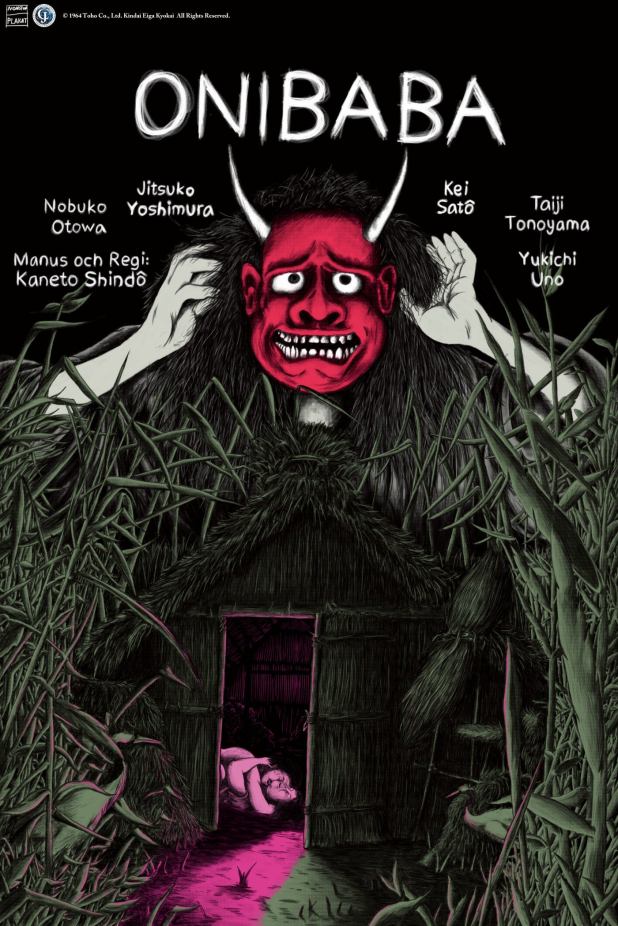
In Japanese, the word oni おにmeans demon andばばmeans old woman or hag. In this case, we are dealing specifically with a sexually repressed meddling mother-in-law. Onibaba is set in feudal Japan during the bloody civil war period that preceded the Tokugawa period. An unnamed old woman (Nobuko Otowa) and her daughter-in-law (Jitsuko Yoshimura) are forced to kill wandering warriors and sell their armor for food in order to survive while they wait for the man of the house to return.  One day, neighbor Hachi (Kei Sato) returns to tell the old woman that her son is dead. The old woman is suspicious of whether or not Hachi killed her son but allows him to stay around because he is useful. Relatively quickly, Hachi and they newly-widowed young woman begin an affair. Needless to say, the old woman is not very happy about this and does everything in her power to keep them apart. She constantly talks of sin and watches her daughter-in-law like a hawk. Despite the old woman’s best efforts, the young woman still manages to sneak out and have hot, sweaty summer sex in the tall grass while the wind blows on the soundtrack.  

One night a Samurai wearing a frightening bull mask visits the old woman and asks her to lead him through the fields to the nearest road. Seeing an opportunity, she kills the Samurai, takes his mask and proceeds to use it to scare her daughter-in-law by pretending to be a demon. For several nights, the young woman’s plans to meet her lover are thwarted, sending her back to her hut in tears. One night, Hachi finds her screaming in the rain and convinces her that demons do not exist. The two make love while voyeuristic mother in-law looks on, her own internal emotions symbolically flashing on the screen and soundtrack via lightning and thunder.  


Nobuko Otowa as the old woman is a stand out.  Her cat-like facial expressions, spying and manipulation might very well ring true to many viewers who have difficult mothers-in-law. Technically, this film is a fine achievement and is today taught in many film schools as a classic example of the post-war Japanese cinema era. The black-and-white cinematography is gorgeous. The grasses of the fields blow ominously in the wind around the characters’ meager huts, conveying a desperation to the characters’ existence rarely seen in modern cinema. The heat of the Japanese summer almost radiates from the screen as the sweat glistens off of the women’s work-stained flesh. Disturbing screams of pain enhance the minimalist soundtrack adding to the uneasy feeling of the whole piece. 

The film concludes in a none-too-happy, supernatural manner for everyone involved, especially the mother in-law. Onibaba was based on a famous Japanese legend/morality tale (which explains the lack of character names) and all humans are punished for their evil deeds. Onibaba is an enjoyable suspense-drama that is definitely worthy of a look. 

Mill Creek Through the Decades: 1960s Collection: Lilith (1964)

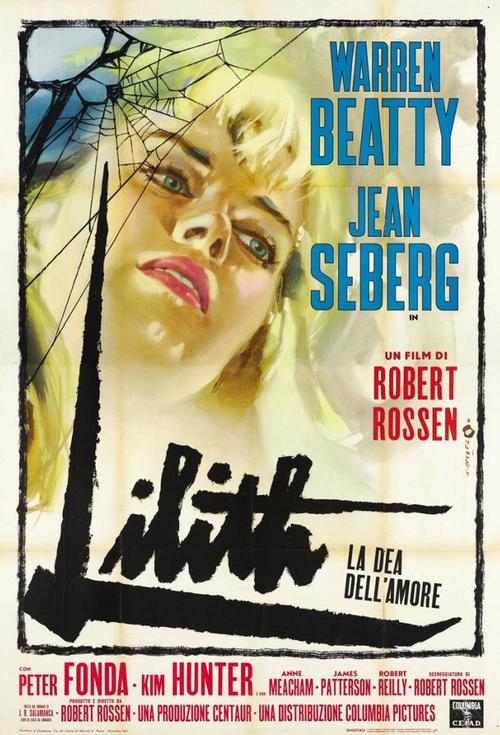
Director and writer Robert Rossen (All the King’s MenThe Hustler) made this his last movie, as he was disillusioned with Hollywood*. What a film to go out on, a bleak and sullen meditation on mental health and lost love.

Vincent Bruce (Warren Beatty) has returned from the war, but perhaps not all of him mentally has, but he finds work at Chestnut Lodge in Rockville, Maryland. There, he seeks to help — and becomes obsessed by — an artistic patient named Lilith (Jean Seberg, an icon of the French New Wave and a woman so hounded by the FBI that she had a miscarriage and continually tried to kill herself on every anniversary of her lost child’s birthday until she succeeded).

Lilith is seduction incarnate, as though she secludes herself inside her room, her mind is at the same level as her outward appearance. Every person she encounters wants her and she also has no compunction over seducing everyone she meets, no matter their age. This begins to upset Bruce as they become lovers and he becomes more jealous of her multiple affections, even causing another patient, Stephen Evshevsky (Peter Fonda) to kill himself after he learns that the man has romantic feelings for Lilith.

That death takes Lilith back into her world of seclusion, reminding her of the moment that her life would never be the same again: her brother killed himself after she made incestuous attempts to make love to him.

With appearances by Gene Hackman, Jessica Walter and Kim Hunter, this is a movie that may haunt me for some time, much like the woman at the center of this story. It doesn’t end happily at all and actually has quite an open close, if that is an actual phrase.

I wondered what “hiara pirlu resh kavawn” written above Lilith’s bed meant. According to the book, it’s her own language and says, “If you can read this, you will know I love you.”

*Kim Hunter said, “The tensions on the set contributed to his (Rossen’s) death. I don’t think I want to talk about it.”

Mill Creek’s new Through the Decades: 1960s Collection has twelve movies: How to Ruin a Marriage and Save Your Life, The Notorious Landlady, Under the Yum Yum Tree, The Chase, Good Neighbor Sam, Baby the Rain Must Fall, Mickey One, Genghis Khan, Luv, Who Was That Lady? and Hook, Line and Sinker. You can get it from Deep Discount.

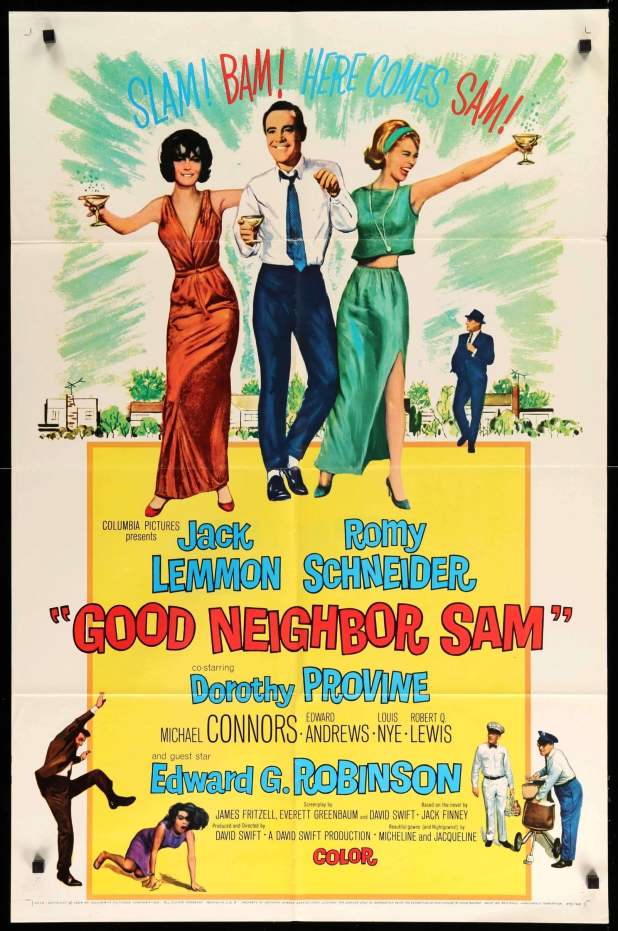
Mill Creek Through the Decades: 1960s Collection: Good Neighbor Sam (1964)

James Fritzell and Everett Greenbaum made a career out of comedy, starting TV and debuting their first movie script here. They also wrote The Ghost and Mr. Chicken, The Shakiest Gun in the West, Angel in My Pocket and The Reluctant Astronaut. Greenbaum’s talent also was used to create the sculptures in this movie.

Sam Bissell (Jack Lemmon) is an ad exec who wants off the hamster wheel so that he can concentrate on his true love — the aforementioned sculpture work that he makes out of found materials. He has a great marriage with Minerva (Dorothy Provine, That Darn Cat!) and two kids, but when his wife’s best friend Janet (French actress Romy Schneider, who was briefly in Hollywood to make this movie and What’s New Pussycat?) arrives, his life goes to pieces.

The good? He’s a family man, unlike the rest of the agency, so he’s the perfect man to keep their toughest client, dairy owner Simon Nurdlinger (Edward G. Robinson) on retainer. But Simon thinks that Janet is Sam’s wife. And because Janet can only get her inheritance if she’s married, she has to convince her relatives that Sam is her ex-husband. But how will his wife handle all of this?

As someone who has spent his life in advertising, I loved seeing the glory days of 50s advertising, even if it’s portrayed as a soulless place. The agency in the film, Burke & Hare, is named after the notorious body snatchers William Burke and William Hare*, while everyone there seems on the verge of a nervous breakdown. So, you know, it’s very realistic.

You just know that the agency that partnered with this movie missed all of the work/life balance lessons in the movie and instead celebrated that they were able to get product placements all over Good Neighbor Sam for their clients Hertz, Delta Air Lines, Northwest Air Lines and Allied Van Lines.

*It’s also a reference to Jack Finney, who wrote the book that this was based on. And oh yeah — he also was the writer of Invasion of the Body Snatchers.

Mill Creek’s new Through the Decades: 1960s Collection has twelve movies: How to Ruin a Marriage and Save Your Life, The Notorious Landlady, Under the Yum Yum Tree, The Chase, Baby the Rain Must Fall, Mickey One, Lilith, Genghis Khan, Luv, Who Was That Lady? and Hook, Line and Sinker. You can get it from Deep Discount.

Day Dream (1964)

Hakujitsumu is based on a 1926 short story by Junichiro Tanizaki that plays with the nature of reality.

An artist and a young woman are in a dentist’s waiting room and the man is too shy to even connect with her. In the same examining room, they’re both giving anesthetic as he imagines that she is being abused and tortured and even chased by a vampire. The uncut Dutch version even has a sexually explicit scene during which the woman is digitally attacked by the dentist.

A big budget example of a pinky violence movie, this film even dared to show female pubic hair, a major cultural crime in Japan. Most instances — even in the most hardcore of films — are digitally fogged or have a mosaic over them.

Director and writer Tetsuji Takechi was nearly 70 when this was made. He’d already filmed Day Dream once before in 1964, after starting his career in kabuki theater and having his own TV show, The Tetsuji Takechi Hour, during which he reinterpreted Japanese stage classics. His next film, 1965’s Black Snow, saw him arrested on indecency charges and fighting a public battle over censorship between the intellectuals of Japan and the country’s government. Takechi won the lawsuit, which opened the way for the pinky films of the 60s and 70s.

Black Snow may be more controversial for its themes than its sex: its protagonist is a young Japanese man whose mother serves the U.S. military at Yokota Air Base as a prostitute. He’s impotent unless making love with a loaded gun in his hand and before long, he’s killed a black soldier before being cut down by several Americans. The film is also fiercely nationalist with Americans — most pointedly the black man who is killed — shown to be nothing but sex-wild animals.

In the journal Eiga Geinjutsu, Takechi said, “The censors are getting tough about Black Snow. I admit there are many nude scenes in the film, but they are psychological nude scenes symbolizing the defencelessness of the Japanese people in the face of the American invasion. Prompted by the CIA and the U.S. Army they say my film is immoral. This is of course an old story that has been going on for centuries. When they suppressed Kabuki plays during the Edo period, forbidding women to act, because of prostitution, and young actors, because of homosexuality, they said it was to preserve public morals. In fact it was a matter of rank political suppression.”

The remake of Day Dream comes a full decade after newspapers would not advertise his movies and the director was only writing. That film is literally Japan’s first hardcore pornographic movie and it was a big budget movie played on big screens.

Yet while Westerners see his influence, in Japan, Takechi was an outsider in the mainstream and pinky world, so he’s forgotten. His right wing politics clash with the protest ethos within other pinky films, so all in all, he’s lost in many ways.

Female star Kyoko Aizome — who plays Chieko– would gain notoriety from this film and become a star in the worlds of feature dancing (being arrested for indecency for her on-stage behavior) and hard and soft AV (adult video) movies. According to an article on The Bloody Pit of Horror, she had her hymen surgically repaired so she could lose her virginity again on camera and also had her own King Kong vs. Godzilla moment when she starred in Traci Takes Tokyo opposite an underage Traci Lords.

As for the vampires, the dentist’s assistants (Saeda Kawaguchi and Yuri Yaio) have fangs and the dentist himself is Kwaidan actor Kei Sato, a mainstream talent appearing in a movie that is anything but. Even after Chieko runs over the dentist and decapitates him, he comes back as a traditional film vampire.

After the original movie was made, South Korean director Yu Hyun-mok remade it as Chunmong (Empty Dream) and was arrested because there was a rumored nude scene. There were also rumors that actress Park Su-jeong had been humiliated by appearing nude on the set. The truth was that she wore a body stocking. Supposedly, the Korean film, which was kept off screens until 2004, is a superior piece of surrealist art.