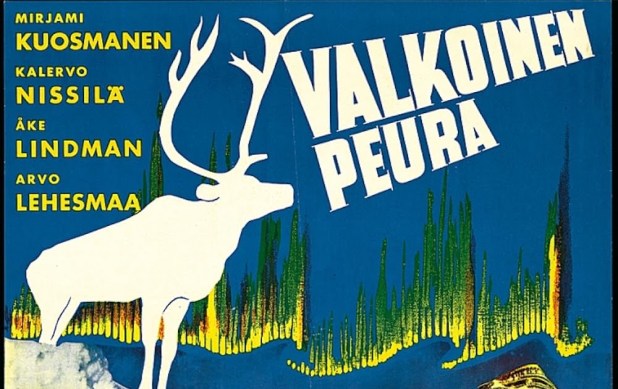
Before this, I don’t think I’ve watched many Finnish movies before, much less one with a werereindeer, which I didn’t even think was something. You learn something new every day and movies help you do it.
At the 1953 Cannes Film Festival, this movie won Best Fairy Tale film from a Jean Cocteau-led jury. I also didn’t even know there was a Best Fairy Tale award.
This is probably the only movie out there based on pre-Christian Finnish mythology and Sami shamanism, so enjoy it. Mirjami Kuosmanen — the wife of director Erik Blomberg; she sadly died young from a brain hemorrhage — plays Pirita, a bride who misses her husband Aslak while he’s away herding reindeer.
She wants to ignite passion in her life and keep her husband home, so she visits a shaman. In turn, he turns Pirita — who was born of a witch — into a shapeshifting vampiric white reindeer. All she had to do was sacrifice the first thing she saw when she returned home, which ends up being the baby deer that her husband has brought her as a gift.
Now, she is irresistible to all men, men who she lures as the reindeer into the woods and then drains them of their blood.
The White Reindeer is the kind of magical movie that slowly finds its way into your mind and then takes a place inside it.
The White Reindeer is part of the new Severin box set, All the Haunts Be Ours Volume 2. It has extras including The Projection Booth episode about this movie, featuring Mike White with Kat Ellinger, author of Daughters Of Darkness, and Talk Without Rhythm‘s El Goro. It also has three short movies, A Witch Drum, The Nightside of the Sky and With the Reindeer.
EDITOR’S NOTE: Stolen Facewas first on Chiller Theater on Saturday, May 13, 1967 at 1:00 a.m. It also aired on March 11, 1972.
Emma Matzo was born in Scranton, PA but became Lizabeth Scott in New York City, becoming a stage actress and the understudy for Tallulah Bankhead — actually, she was given the role just to keep Bankhead in line and she was treated horribly; Broadway legend claims that Bankhead was victimized by Scott, who was the basis for Eve Harrington of All About Eve — and then was championed by Hal Wallis as she made her way to Hollywood.
She became known as a hard-boiled woman, the kind who ruined men in film noir like I Walk Alone and Too Late for Tears. She also wasn’t afraid to get involved with interesting people — nearly joining a cult started by Aldous Huxley, being friends with Ayn Rand, gaining an audience with the Dalai Lama — and not being reserved about it.
In 1954, she decided she’d had enough, saying “Out of the clear blue sky one morning, I woke and decided that I never wanted to make another film again. It was just a spark, I can’t explain it.” She was in three more movies — The Weapon, Loving You and Pulp — but went from being a huge star to being retired.
The Confidential article and lawsuit may have had a lot to do with that. That tabloid’s published Howard Rushmore put together a story on her with no evidence. The article claimed that Scott’s name was in a black book found when a house of prostitution got busted, as well as the fact that she was a lesbian. When she went to Cannes, it said, “In one jaunt to Europe, she headed straight for Paris and the left bank where she took up with Frede, the city’s most notorious lesbian queen and the operator of a night club devoted exclusively to entertaining deviates like herself.”
Frede’s club was Carroll’s, a cabaret that starred Earth Kitt. It was not an exclusively lesbian club. It was co-owned by Marlene Dietrich, which Confidential was using against her, claiming that she was also a lesbian. The lawsuit against the magazine was a mistrial. Another theory is that Scott had horrible stage fright. Either way, even though she did some acting on TV, she mostly took classes at USC from here on out.
Scott almost married an oil tycoon before he died suddenly. His will, which gave everything to her, was contested by the family and she lost the lawsuit in 1971. She also dated a ton of people — Van Johnson James Mason, Peter Lawford and Burt Bacharach are just a few — and devoted a lot of her later life to charity and friendship with stars like Michael Jackson.
As for Wallis, he never forgot their decade-plus affair. His last wife, Martha Hyer, urged him to write about her in his autobiography, as Wallis never fell out of love with Scott, watching her movies every single night.
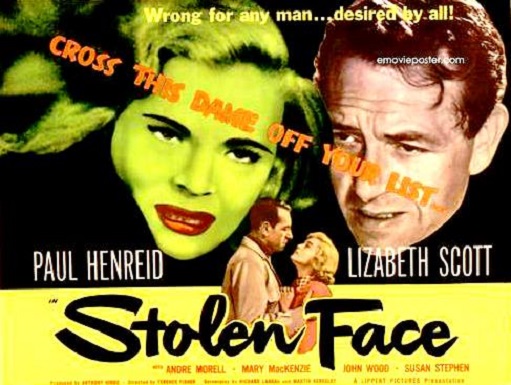
Stolen Face stars Scott in two roles. She’s concert pianist Alice Brent, who falls in love with plastic surgeon Dr. Philip Ritter (Paul Henreid) in spite of being engaged to a man named David (André Morell). When he loses her, Ritter transforms his patient, Lily Conover (Mary Mackenzie before the operation) into a clone of Alice and attempts to change her from living a life of crime. They marry but she is soon bored; he tells her that she has everything a woman could want and she yells, “What, do you want me to be on my knees all the time thanking you?”
Supposedly based on a true story, this was directed by Terence Fisher. It’s a fine thriller and really, if the worst you do all day is watch Lizabeth Scott look gorgeous, is it all that rough?
Each October, the Unsung Horrors podcast does a month of themed movies. This year they will once again be setting up a fundraiser to benefit Best Friends, which is working to save the lives of cats and dogs all across America, giving pets second chances and happy homes.
Today’s theme: Creepy twins
Daisy and Violet Hilton were born joined at the hips and buttocks, sharing the same blood circulation but no major organs. Their mother was a barmaid and when the owner of her bar, Mary Hilton, met them, she bought them outright. She controlled them with physical abuse and ran their careers until she died and their contracts were given to Mary’s daughter Edith Meyers and her husband Meyer, a former balloon salesman. In their San Antonio mansion, they beat the sisters into learning how to play jazz.
In the early 30s, they legally emancipated themselves with the help of Harry Houdini and went into vaudeville and then burlesque, even doing some limited exotic dancing that audiences did not react well about. Violet dated musician Maurice Lambert and despite applying in 21 states for a marriage license, no one would marry them. Around this time, they also appeared in the movie Freaks.
A few years later, Violet married actor James Moore — who was gay — as a publicity stunt. Daisy was also pregnant and gave her child up for adoption. She was also married to a dancer named Buddy Sawyer — also gay — for ten days.
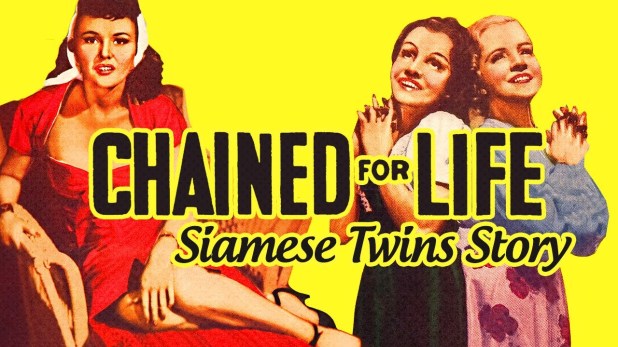
This movie was made in 1952 — directed by Harry L. Fraser — and told the story of their lives. Well, except for the fact that Violet never shot a man that was in love with Daisy. It’s kind of a not true story, because they use the name Dorothy and Vivian Hamilton.
Their manager sets them up with a gun shooting expert named Andre Pariseau (Mario Laval) who is supposed to date Dorothy, who falls in love with him. The problem comes in when Andre still has a lover, Renee (Patricia Wright).
Yet because their marriage would be bigamy, they can’t get married until they meet a blind clergyman. Andre tells her on their wedding night that he can’t live this kind of life, but Vivian knows that he’s going back to the other way, so she shoots him dead. A judge has to decide what to do, because if he condemns Vivian to death, he’ll kill an innocent woman. The movie then asks you, the viewer, what you would decide.
The Hiltons had a hot dog stand — The Hilton Sisters Snack Bar — and their last public appearance was in 1961 at a drive-in double feature of Freaks and Chained for Life in Charlotte, North Carolina. Their tour manager had taken their money and left, stranding them. They applied to work at a Park’n’Shop grocery store and only asked for one salary. The owner, Charles Reid, was a religious man and hired them both and built a special desk for them so that customers couldn’t tell they were conjoined twins. The shop owner’s church also provided them with a small home and they devoted themselves to work and that church for the rest of the decade.
In early 1969, Daisy caught a horrible case of the flu and died. Four days later, Violet died as well. She never called for help, realizing that she couldn’t survive without her sister.
At their funeral, Reverend Jon Sills said, “Daisy and Violet Hilton were in show business for all but the last half dozen years of their life. In the end, though, they were cast aside by the glittery and glamorous world they had been part of for so long. In the end, it was only ordinary people who showed they cared about them.”
EDITOR’S NOTE: Bela Lugosi Meets a Brooklyn Gorilla was first on Chiller Theater on Saturday, July 12, 1980 at 1 a.m.
Sometimes, a movie connects stars on the rise and stars on the fall and other times, it captures stars that continue to burn no matter their trajectory.
So consider this six-day wonder, this public domain piece of nothing, as both the most important movie some people ever made, a forgotten piece of nothing made for money on hard times or as another fast film to get through and on to the next one.
Or, as Mitch Hedberg would say, “People either love me or hate me, or they think I’m just okay.”
“This is the jungle. The vast wilderness of giant lush foliage of tropical birds and fierce animal life, the killer tiger, the cunning hyena, the deadly python that can crush a giant elk, the proud lion, a fierce lioness, stalking a prey to feed her young. and the buzzards, the scavengers of the jungle soaring lower, ever lower eager to devour the dead or the dying. Kill or be killed, this is the law of the jungle — and here — what have we here? Who are these men? What can they possibly be doing in this cruel tropical wilderness?”
Tim Ryan, who wrote the screenplay along with dialogue by Leo “Ukie” Sherin and Edmond G. Seward, must have been shooting for the moon here and trying to get in a little bit of poetry before the eventual fall. Sherman was a radio comic who wrote for Crosby and Hope, who was now dead center in the ten-year break between the famous duo’s Road to movies (Road to Bali in 1952 and The Road to Hong Kong in 1962; Road to the Fountain of Youthwas planned in 1977 with the two playing older versions and new actors coming in when they found Ponce de Leon’s goal, but Crosby’s death that year canceled this movie) and would have been the right guy to write buddy dialogue. Seward made this his last script after a stint that didn’t go well in Australia (Thoroughbred, for example, has an ending taken from the film Broadway Bill) and time writing for the Bowery Boys. As for Ryan, he also wrote plenty of Bowery Boys films — and other ones at Monogram and Colombia — while adding up 157 acting credits. If his last name sounds familiar, well, his ex-wife and one-time comedy partner Irene kept it and ended up being an overnight success (actually, she’d been working in vaudeville, movies, radio and TV since she was 11 years old) as Granny on The Beverly Hillbillies.
So, basically, their stars were not on the rise.
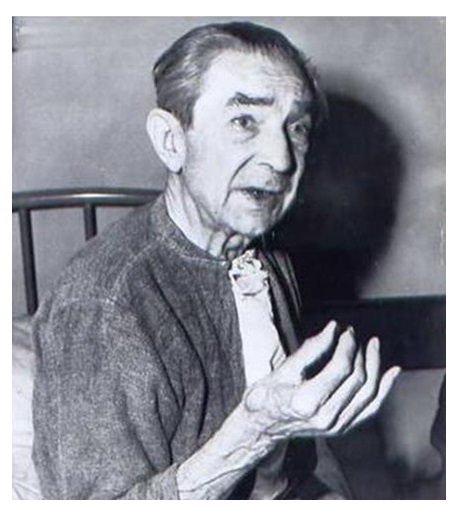
Nor was Bela Lugosi’s. Despite the Universal films becoming famous again as they were reissued in theaters and began playing TV, Lugosi wasn’t seeing much personal success, traveling the U.S. — and even England — playing summer stock, spook shows and live appearances. He was nearing the end of his fourth marriage — to 29 years his junior Lillian Arch, who would leave him for the man Bela was sure she was making time with, her boss and film noir actor Brian Donlevy — and addicted to doctor-prescribed morphine and methadone, as well as alcohol.
One of those traveling shows took to the UK, playing Dracula on stage for six months (ironic, as the British ban on horror movies in the 30s is what started his career decline at Universal), a time in which he made a comedy called Mother Riley Meets the Vampire. Despite sadly remarking in an interview that he was condemned to always be the boogie man, he yearned for more comedy.
Producer Jack Broder was listening. His Realart Pictures Inc. had re-released the Universal horror — gaining a ten-year lease on these movies — and theaters across the country enjoyed making great money on these reissues, which often brought in more crowds than newly released movies.
Broder had a relationship now with theater owners and saw an opportunity. Why not make new movies? He hired Herman Cohen as a new vice-president and formed Jack Broder Productions and made movies like, well, Bela Lugosi Meets a Brooklyn Gorilla (the title comes from Broder’s ten-year-old son and the fact that Cohen thought that it was dumb to not put Bela’s name right up in front; its a much better title than White Woman of the Lost Jungle).
But who to star with Bela?
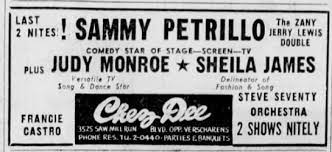
Comedian Sammy Petrillo had made a career out of imitating America’s hottest comic, Jerry Lewis. They looked alike and hey, even sounded the same. Petrillo even worked for Lewis once on The Colgate Comedy Hour and got signed to the same talent agency as Lewis, even as a minor, but was released from his contract when he believed that Lewis was intentionally holding him back.
He would later tell Before the Big Break, “Jerry said a couple of derogatory things to me. He said something to the effect of, “Don’t sign any checks and tell people you’re Jerry Lewis!” He wasn’t being funny. He was being serious.”
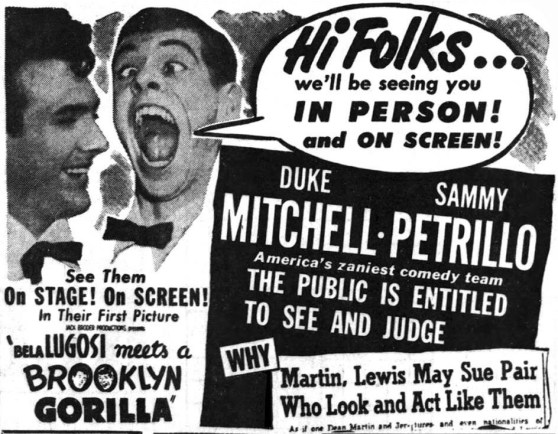
A few years later, Petrillo went on to form a musical comedy team with singer Duke Mitchell. With Mitchell as Dean and Sammy as Jerry, the duo played big stages, like the Paramount Theatre and the Copacabana in New York, as well as the Flamingo Hotel in Las Vegas. You have to imagine the Rat Pack was not pleased to have the two doing this act on their turf.
In fact, Lewis threatened to boycott anyone who booked them. One such instance was on another The Colgate Comedy Hour appearance, hosted by Abbott and Costello (who should have been just as peeved as Lewis, if you think about it, as this movie apes — sorry for the pun — their more successful Abbott and Costello Meet Frankenstein).
Petrillo told Psychotronic Video, “There was one of Jerry’s cronies — one of the guys that worked for him — at the rehearsal. And he looked at us, and he walked out of the room. I turned to Duke and I said, “That guy just went to call Jerry. We’re off the show.” And then Lou Costello walked over to us and he says, “Fellas, I hate to tell you this: NBC will not allow us to put you on the show, but we’re gonna pay you anyway.” He said Jerry Lewis did it. That really happened, and then it happened in nightclubs. We were blackballed here and there.”
The hate was so intense that the man who would make The Day the Clown Cried and his son would remember Sammy until he died, even telling The New York Times on the day of his death, “When Sammy and the other guy played in that gorilla movie, I remember my dad and Dean saying, “We got to sue these guys — this is no good.” Whenever there was any mention of Sammy Petrillo, it was a tense moment.”
As for that gorilla movie…
Maurice Duke, who managed the team, had been pitching a movie starring them to several studios. Jack Broder thought they were hilarious. Cohen thought they stunk. But Realart was ready to go into the business of making Mitchell and Petrillo films.
Re-enter The King of Comedy.
Lewis, who knew Broder through the Friars Club of Beverly Hills, showed up at the Realart offices, starting a screaming match with the producer. So Paramount Pictures producer Hal B. Wallis, who then had Martin and Lewis under contract and also was acquainted with Broder through the Friars Club, stepped in.
He threatened to sue Broder for releasing a film that featured a duo that closely resembled Martin and Lewis. There was also a backdoor deal with he’d pay Broder to destroy the film for a fee, but since they couldn’t agree on a price, Broder put the movie out and the two never spoke again.
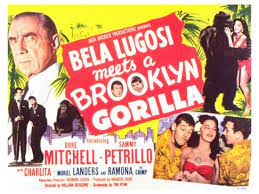
We begin in the jungles of Kola Kola, a place where two long-haired and bearded men dressed in frayed tuxedos are found after months — years? — of living off wild berries and raw fish. Rescued by the tribe of Chief Rakos (Al Kikume in his last role; a Hawaiian actor who often appeared in jungle movies) and his daughter Nona (Charlita, which sounds way more exotic than Clara DeFreitas from Massachusetts).
This being a Martin and Lewis remake, remix and ripoff, Duke and Sammy go by their real names and before you know it, Duke’s making eyes at Nona and singing “Deed I Do” while Sammy is running from the amorous aims of Nona’s sister Saloma (Muriel Landers, whose career is filled with big girl roles; she even played Curly Joe Besser’s sister Tiny in a 1953 Three Stooges short). It turns out that Nona is college-educated, as she’s going to be queen, and that she knows a man who can get them off the island, Dr. Zabor (Lugosi).
As soon as Sammy sees the mad scientist, he makes a judgment call, as he brays, “Ain’t this the fellow that goes around with the hand and the faces, biting people on the neck and wearing capes?”
Speaking of the Stooges, Dr. Zabor’s assistant Chula is played by former boxer Mickey Simpson, who was pro wrestler Rocky Dugan in their short Gents in a Jam, as well as a frequent actor in John Ford films. He would play Sarge, the diner owner in Giant, a year after this movie, which goes back to my earlier thoughts of how movies can have stars on the rise and fall.
Anyways, this movie…
Before you know it, the doctor is turning Duke into a gorilla because he wants the girl for himself and Sammy spending lots of quality time with Ramona, who was the latest Cheetah in the Tarzan movies or so the urban legend goes. Also, Pancho from the early Cisco Kid movies, Martin Garralaga, shows up as Pepe Bordo, the only man on the island with a radio.
Spoiler warning for a near-seventy-year-old movie: this all ends like The Wizard of Oz.
After Sammy dies protecting the gorilla who was once Duke from the rifle of Dr. Zabor, everyone wakes up in the dressing room of The Jungle Hut nightclub in Passaic, New Jersey.
Nona is really a gorilla trainer working with her dad in a fur suit, while Bordo is a waiter, Chula is working backstage, Saloma is a dancer and Dr. Zabor runs the club.
Hey, it cost $12,000.
Petrillo and Mitchell broke up — on a much friendlier basis — around the same time as Martin and Lewis. Sammy worked for Randall’s Network Film Corporation, recorded novelty records, working with Doris Wishman on Keyholes Are for Peeping(Sammy and Chesty Morgan had the same agent) and eventually settled down in — of all places — Pittsburgh, where he had a dual life of running The Nut House comedy club, did a couples act with his girlfriend Suzie Fiore and was an MC at local gentlemen’s clubs.
Duke Mitchell, well…
The King of Palm Springs invented brunches in that town, was the singing voice of Fred Flintstone and made two auteur projects, Massacre Mafia Style and Gone with the Pope that Grindhouse Releasing helped find an audience years after his death.
As for Bela, his career sadly continued its decline. While Boris Karloff would make films — of varying quality, but he could command his own TV show and worked everywhere — Lugosi made films for Ed Wood (I’m not looking down on this, but in the grand scheme of career success, the rest of the world would) and had to take jobs like standing in front of the Paramount Theatre before the midnight premiere of House of Wax, holding a man dressed as an ape on a leash while people who were once his peers like Broderick Crawford, Gracie Allen and Judy Garland walked the red carpet.
Two moments at the end of Bela’s life strike me as poignant.
After making Bride of the Monster for Wood, he went to rehab — something few did in 1955 — and the premiere of the movie paid for his medical bills. When Frank Sinatra heard of his issues, he sent a $100 check to help pay for it or around $1,000 in today’s money. He even visited Lugosi, who had never met him before. Keep in mind that Sinatra was beyond A-list at this point. And when Bela died, he paid for his funeral in full, despite not knowing him.
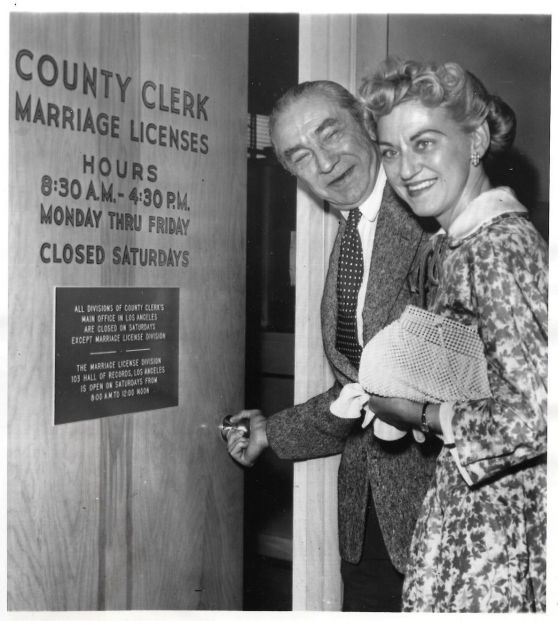
Second, he met his final wife Hope Lininger after rehab. She wrote him letters, signed “with a dash of Hope” and may have been 37 years younger than him, but she was with him for the last year of his life. After his death, she never remarried and left for Hawaii where she worked as a nurse for a leper’s colony.
Finally, the son of Bela, Bela Lugosi Jr. may have believed that Wood was taking advantage of his father’s fame, despite evidence that Wood was there for Bela in his darkest moments. That said, Lugosi’s son became an executive at Comedy III Productions, which helped heirs of celebrities to license and control likenesses.
He told the Mansfield News Journal, “It all started in law school in 1963 when someone brought to my attention that all this movie merchandise was coming onto the market with dad’s name and likeness on the products. I had never authorized Universal to use his name and likeness, so when they refused to stop using it, I filed a lawsuit claiming that the right to the commercial use and likeness survives the death of a celebrity. That ultimately went to the California legislature and the Celebrity Rights Act became law.”
By all means, watch Bela Lugosi Meets a Brooklyn Gorilla and imagine. You are at the nexus of a series of stars, of lives, of history.
Sometimes, a movie connects stars on the rise and stars on the fall and other times, it captures stars that continue to burn no matter their trajectory.
So consider this six-day wonder, this public domain piece of nothing, as both the most important movie some people ever made, a forgotten piece of nothing made for money on hard times or as another fast film to get through and on to the next one.
Or, as Mitch Hedberg would say, “People either love me or hate me, or they think I’m just okay.”
“This is the jungle. The vast wilderness of giant lush foliage of tropical birds and fierce animal life, the killer tiger, the cunning hyena, the deadly python that can crush a giant elk, the proud lion, a fierce lioness, stalking a prey to feed her young. and the buzzards, the scavengers of the jungle soaring lower, ever lower eager to devour the dead or the dying. Kill or be killed, this is the law of the jungle — and here — what have we here? Who are these men? What can they possibly be doing in this cruel tropical wilderness?”
Tim Ryan, who wrote the screenplay along with dialogue by Leo “Ukie” Sherin and Edmond G. Seward, must have been shooting for the moon here and trying to get in a little bit of poetry before the eventual fall. Sherman was a radio comic who wrote for Crosby and Hope, who was now dead center in the ten-year break between the famous duo’s Road to movies (Road to Bali in 1952 and The Road to Hong Kong in 1962; Road to the Fountain of Youthwas planned in 1977 with the two playing older versions and new actors coming in when they found Ponce de Leon’s goal, but Crosby’s death that year canceled this movie) and would have been the right guy to write buddy dialogue. Seward made this his last script after a stint that didn’t go well in Australia (Throughbred, for example, has an ending taken from the film Broadway Bill) and time writing for the Bowery Boys. As for Ryan, he also wrote plenty of Bowery Boys films — and other ones at Monogram and Colombia — while adding up 157 acting credits. If his last name sounds familiar, well, his ex-wife and one-time comedy partner Irene kept it and ended up being an overnight success (actually, she’d been working in vaudeville, movies, radio and TV since she was 11 years old) as Granny on The Beverly Hillbillies.
So, basically, their stars were not on the rise.
Nor was Bela Lugosi’s. Despite the Universal films becoming famous again as they were reissued in theaters and began playing TV, Lugosi wasn’t seeing much personal success, traveling the U.S. — and even England — playing summer stock, spook shows and live appearances. He was nearing the end of his fourth marriage — to 29 years his junior Lillian Arch, who would leave him for the man Bela was sure she was making time with, her boss and film noir actor Brian Donlevy — and addicted to doctor-prescribed morphine and methadone, as well as alcohol.
One of those traveling shows took to the UK, playing Dracula on stage for six months (ironic, as the British ban on horror movies in the 30s is what started his career decline at Universal), a time in which he made a comedy called Mother Riley Meets the Vampire. Despite sadly remarking in an interview that he was condemned to always be the boogie man, he yearned for more comedy.
Producer Jack Broder was listening. His Realart Pictures Inc. had re-released the Universal horror — gaining a ten-year lease on these movies — and theaters across the country enjoyed making great money on these reissues, which often brought in more crowds than newly released movies.
Broder had a relationship now with theater owners and saw an opportunity. Why not make new movies? He hired Herman Cohen as a new vice-president and formed Jack Broder Productions and made movies like, well, Bela Lugosi Meets a Brooklyn Gorilla (the title comes from Broder’s ten-year-old son and the fact that Cohen thought that it was dumb to not put Bela’s name right up in front; its a much better title than White Woman of the Lost Jungle).
But who to star with Bela?
Comedian Sammy Petrillo had made a career out of imitating America’s hottest comic, Jerry Lewis. They looked alike and hey, even sounded the same. Petrillo even worked for Lewis once on The Colgate Comedy Hour and got signed to the same talent agency as Lewis, even as a minor, but was released from his contract when he believed that Lewis was intentionally holding him back.
He would later tell Before the Big Break, “Jerry said a couple of derogatory things to me. He said something to the effect of, “Don’t sign any checks and tell people you’re Jerry Lewis!” He wasn’t being funny. He was being serious.”
A few years later, Petrillo went on to form a musical comedy team with singer Duke Mitchell. With Mitchell as Dean and Sammy as Jerry, the duo played big stages, like the Paramount Theatre and the Copacabana in New York, as well as the Flamingo Hotel in Las Vegas. You have to imagine the Rat Pack was not pleased to have the two doing this act on their turf.
In fact, Lewis threatened to boycott anyone who booked them. One such instance was on another The Colgate Comedy Hour appearance, hosted by Abbott and Costello (who should have been just as peeved as Lewis, if you think about it, as this movie apes — sorry for the pun — their more successful Abbott and Costello Meet Frankenstein).
Petrillo told Psychotronic Video, “There was one of Jerry’s cronies — one of the guys that worked for him — at the rehearsal. And he looked at us, and he walked out of the room. I turned to Duke and I said, “That guy just went to call Jerry. We’re off the show.” And then Lou Costello walked over to us and he says, “Fellas, I hate to tell you this: NBC will not allow us to put you on the show, but we’re gonna pay you anyway.” He said Jerry Lewis did it. That really happened, and then it happened in nightclubs. We were blackballed here and there.”
The hate was so intense that the man who would make The Day the Clown Cried and his son would remember Sammy until he died, even telling The New York Times on the day of his death, “When Sammy and the other guy played in that gorilla movie, I remember my dad and Dean saying, “We got to sue these guys — this is no good.” Whenever there was any mention of Sammy Petrillo, it was a tense moment.”
As for that gorilla movie…
Maurice Duke, who managed the team, had been pitching a movie starring them to several studios. Jack Broder thought they were hilarious. Cohen thought they stunk. But Realart was ready to go into the business of making Mitchell and Petrillo films.
Re-enter The King of Comedy.
Lewis, who knew Broder through the Friars Club of Beverly Hills, showed up at the Realart offices, starting a screaming match with the producer. So Paramount Pictures producer Hal B. Wallis, who then had Martin and Lewis under contract and also was acquainted with Broder through the Friars Club, stepped in.
He threatened to sue Broder for releasing a film that featured a duo that closely resembled Martin and Lewis. There was also a backdoor deal with he’d pay Broder to destroy the film for a fee, but since they couldn’t agree on a price, Broder put the movie out and the two never spoke again.
We begin in the jungles of Kola Kola, a place where two long-haired and bearded men dressed in frayed tuxedos are found after months — years? — of living off wild berries and raw fish. Rescued by the tribe of Chief Rakos (Al Kikume in his last role; a Hawaiian actor who often appeared in jungle movies) and his daughter Nona (Charlita, which sounds way more exotic than Clara DeFreitas from Massachusetts).
This being a Martin and Lewis remake, remix and ripoff, Duke and Sammy go by their real names and before you know it, Duke’s making eyes at Nona and singing “Deed I Do” while Sammy is running from the amorous aims of Nona’s sister Saloma (Muriel Landers, whose career is filled with big girl roles; she even played Curly Joe Besser’s sister Tiny in a 1953 Three Stooges short). It turns out that Nona is college educated, as she’s going to be queen, and that she knows a man who can get them off the island, Dr. Zabor (Lugosi).
As soon as Sammy sees the mad scientist, he makes a judgment call, as he brays, “Ain’t this the fellow that goes around with the hand and the faces, biting people on the neck and wearing capes?”
Speaking of the Stooges, Dr. Zabor’s assistant Chula is played by former boxer Mickey Simpson, who was pro wrestler Rocky Dugan in their short Gents in a Jam, as well as a frequent actor in John Ford films. He would play Sarge, the diner owner in Giant, a year after this movie, which goes back to my earlier thoughts of how movies can have stars on the rise and fall.
Anyways, this movie…
Before you know it, the doctor is turning Duke into a gorilla because he wants the girl for himself and Sammy spending lots of quality time with Ramona, who was the latest Cheetah in the Tarzan movies or so the urban legend goes. Also, Pancho from the early Cisco Kid movies, Martin Garralaga, shows up as Pepe Bordo, the only man on the island with a radio.
Spoiler warning for a near-seventy-year-old movie: this all ends like The Wizard of Oz.
After Sammy dies protecting the gorilla who was once Duke from the rifle of Dr. Zabor, everyone wakes up in the dressing room of The Jungle Hut nightclub in Passaic, New Jersey.
Nona is really a gorilla trainer working with her dad in a fur suit, while Bordo is a waiter, Chula is working backstage, Saloma is a dancer and Dr. Zabor runs the club.
Hey, it cost $12,000.
Petrillo and Mitchell broke up — on a much friendlier basis — around the same time as Martin and Lewis. Sammy worked for Randall’s Network Film Corporation, recorded novelty records, working with Doris Wishman on Keyholes Are for Peeping(Sammy and Chesty Morgan had the same agent) and eventually settled down in — of all places — Pittsburgh, where he had a dual life of running The Nut House comedy club, did a couples act with his girlfriend Suzie Fiore and was an MC at local gentlemen’s clubs.
Duke Mitchell, well…
The King of Palm Springs invented brunches in that town, was the singing voice of Fred Flintstone and made two auteur projects, Massacre Mafia Style and Gone with the Pope that Grindhouse Releasing helped find an audience years after his death.
As for Bela, his career sadly continued its decline. While Boris Karloff would make films — of varying quality, but he could command his own TV show and worked everywhere — Lugosi made films for Ed Wood (I’m not looking down on this, but in the grand scheme of career success, the rest of the world would) and had to take jobs like standing in front of the Paramount Theatre before the midnight premiere of House of Wax, holding a man dressed as an ape on a leash while people who were once his peers like Broderick Crawford, Gracie Allen and Judy Garland walked the red carpet.
Two moments at the end of Bela’s life strike me as poignant.
After making Bride of the Monster for Wood, he went to rehab — something few did in 1955 — and the premiere of the movie paid for his medical bills. When Frank Sinatra heard of his issues, he sent a $100 check to help pay for it or around $1,000 in today’s money. He even visited Lugosi, who had never met him before. Keep in mind that Sinatra was beyond A-list at this point. And when Bela died, he paid for his funeral in full, despite not knowing him.
Second, he met his final wife Hope Lininger after rehab. She wrote him letters, signed “with a dash of Hope” and may have been 37 years younger than him, but she was with him for the last year of his life. After his death, she never remarried and left for Hawaii where she worked as a nurse for a leper’s colony.
Finally, the son of Bela, Bela Lugosi Jr. may have believed that Wood was taking advantage of his father’s fame, despite evidence that Wood was there for Bela in his darkest moments. That said, Lugosi’s son became an executive at Comedy III Productions, which helped heirs of celebrities to license and control likenesses.
He told the Mansfield News Journal, “It all started in law school in 1963 when someone brought to my attention that all this movie merchandise was coming onto the market with dad’s name and likeness on the products. I had never authorized Universal to use his name and likeness, so when they refused to stop using it, I filed a lawsuit claiming that the right to the commercial use and likeness survives the death of a celebrity. That ultimately went to the California legislature and the Celebrity Rights Act became law.”
By all means, watch Bela Lugosi Meets a Brooklyn Gorilla and imagine. You are at the nexus of a series of stars, of lives, of history.
The Frog with the Mask, aka Face of the Frog, was based on the Edgar Wallace book Fellowship of the Frog. All things both krimi and giallo flow from Mr. Wallace, so this film is rather essential, as the success of this picture led to Rialto making a series of 32 Wallace films over the next twenty years.
There’s a gang of frog-tattooed nene’er-do-wellsed by a frog-masked madman who ig hopping mad — sorry — in London. They are coming after Ella Bennett, who is protected by not only Scotland Yard, ut by Richard Gordon, a millionaire playboy with a butler named James who is in no way Bruce Wayne in nature.
This story had already been filmed by Archibald B. Heath as the serial The Mark of the Frog in 1928 and Jack Raymond’s The Frog in 1937. Thanks, A Wasted Life!
Man, there’s a lot of plot jammed into the running time here, and not a lot of it is memorable. You know what it is? A frog man who orders the death of people. More of that, please!
Invasion, U.S.A. was the second film from American Pictures Corporation, who had just made their first film, Captive Women. The company was made up of Albert Zugsmith (Girls Town, the bizarre The Chinese Room), Peter Miller, Aubrey Wisberg (who would write Hercules In New York) and Jack Pollexfen (Indestructible Man) with Joseph Justman as the producer. Their plan was to make six films a year and for this one, they worked alongside the U.S. Civil Defense to make a film that would prepare people for the horrors of nuclear war. It even boasted the alternate title The Complacent Americans and If the Bomb Falls: A Recorded Guide to Survival.
The film takes place in a New York City bar, where Mr. Ohman (yes, that’s Conal Cochran himself, Dan O’Herlihy) is trying to explain to a group of well-to-do Americans, including TV anchorman Vince Potter (Gerald Mohr, The Angry Red Planet and the voice of Reed Richards on the original Marvel cartoons that barely moved), an industrialist, a rancher, a Congressman and a society girl (Peggie Castle, TV’s Lawman and Beginning of the End). None of them are against Communism and just want to enjoy the spoils of living in America.
Within oh, 74 minutes, their lives go to Hell as troops land in Alaska while atomic blasts rock America’s cities. Every single one of them dies horribly, even if the TV announcer and rich girl fall in love, as he’s shot on the air and she leaps to her doom from a balcony. Luckily, everyone had been in a trance and as we see our heroine fall into a glass of brandy, Ohman releases everyone. Now they know what Americans need to do — which is ironically pitch in and work for the needs of the collective instead of individual needs, which sounds a lot like Communism, which makes sense, because now we live in a country where anti-fascism is referred to as fascism and no one really knows what socialism means.
Politics aside, this movie features two actresses that played Lois Lane (Phyllis Coates and Noel Neill), Clarence A. Shoop (beyond being a Two-Star General, Shoop was the technical advisor on a number of films including So Proudly We Hail!, One Minute to Zero and Jet Pilot, as well as being on The Bob Cummings Show, as he was Cummings base commander while the actor was a pilot; he was also a Vice President at Hughes Aircraft and definitely saw an alien at some point, right?), Edward G. Robinson Jr. and voice-over star Know Manning (who told kids all over America the dangers of, well, everything in She Shoulda Said No!).
I don’t think we’ve ever covered a Finnish movie before, much less one with a werereindeer, which I didn’t even think was something. You learn something new every day and movies help you do it.
At the 1953 Cannes Film Festival, this movie won Best Fairy Tale film from a Jean Cocteau-led jury. I also didn’t even know there was a Best Fair Tale award.
This is probably the only movie out there based on pre-Christian Finnish mythology and Sami shamanism, so enjoy it. Mirjami Kuosmanen — director Erik Blomberg’s wife who sadly died young from a brain hemorrhage — plays Pirita, a bride who misses her husband Aslak while he away herding reindeer.
She wants to ignite passion in her life and keep her husband home, so she visits a shaman. In turn, he turns Pirita — who was born of a witch — into a shapeshifting vampiric white reindeer. All she had to do was sacrifice the first thing she saw when she returned home, which ends up being the baby deer that her husband has brought her as a gift.
Now, she is irresistible to all men, men who she lures as the reindeer into the woods and then drains them of their blood.
The White Reindeer is the kind of magical movie that slowly finds its way into your mind and then takes a place inside it.







 B&S About Movies
You must be logged in to post a comment.