April 23: Get Out! — A haunted house movie is today’s pick.
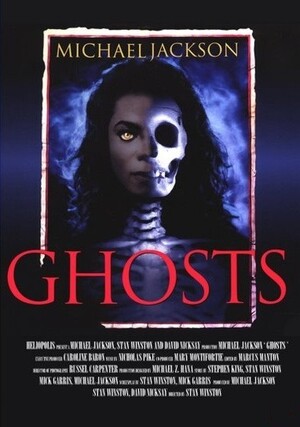
Ghosts began production in 1993 under the title Is It Scary? with the director Mick Garris and was supposed to play before Addams Family Values. For a time, it was the longest music video ever — Pharrell Williams’ “Happy” is longer now — and is still the most expensive at $15 million. That’s because it was all paid for by its star, Michael Jackson.
A lot of that money is because Jackson backed out of the original plan. Garris went to film The Shining miniseries and Stan Winston, who did the makeup and special effects, took over.
Unlike Thriller and Captain EO, two of Jackson’s long and expensive videos that were seen by millions and can still be watched in some places today, Ghosts has disappeared after playing before Thinner.
In a small town, The Maestro (Michael Jackson) loves to scare kids — Mos Def is one of them — and perform magic tricks. The town’s mayor comes to kick him out of town, saying, “He’s a weirdo. There’s no place in this town for weirdoes.” If this feels like how the public was treated Michael Jackson in 1996, it’s no accident.
Also: the mayor — as well as the ghoul version of the mayor and two other characters, Superghoul and a skeleton — is played by Jackson.
The Maestro challenges the mayor to a scaring contest and the first to show fear must leave town. He brings his entire family of ghosts to dance with him, then possesses the mayor. After that, the Maestro says that he will leave town, but falls to dust and then rises as the Superghoul. This makes the mayor so upset that he dives out a window, allowing the Maestro to remain.
I do have to say, a thing lost about Jackson after all his life’s controversies is just how good his music is. This features several I hadn’t heard before–“2 Bad,” “Is It Scary” and “Ghosts” from HIStory and Blood on the Dance Floor: HIStory in the Mix — and they’re really amazing. The dancing is great, too, as are the effects, if somewhat dated.
Of course, this was made after the first time that Jackson escaped child molestation charges and this feels like, well, that trial. Except it gets supernatural.
Written by Jackson, Garris, Winston and Stephen King, this has one jaw dropping moment, when Jackson becomes a dancing skeleton and escapes his mortal form. I’ve always wondered if he wished that he could do that in reality.
Nathan Rabin explained the end of this way better than I can and his words prove why he inspired me to write about movies: “Ghostshas a happy ending: The common folk and especially their adorable children welcome Maestro back into the fold and embrace him for being a showman and an eccentric with a straight line to the spirit world. In the real world, alas, Michael Jackson wasn’t as lucky. He had to die young and mysteriously to rehabilitate his terminally tattered image.”
EDITOR’S NOTE: This originally appeared in Drive-In Asylum #25. Get it now on Etsy.
Renato Polselli isn’t the kind of director mentioned in the same breath as other famous Italian genre directors like Argento or Fulci. Or Martino, Margheriti or Deodato. Let’s face it. He barely gets mentioned at all.
While I don’t expect a critical re-evaluation, it’s exciting to watch Polselli’s work because it allows us to crawl down another cobwebbed corner or two of Italian films that otherwise don’t have that many footprints in the dust.
Polselli began directing films in the early 1950s, starting with Delitto al luna park, a romantic movie with some murder in it. But for readers of this tome, where Polselli becomes important is in 1960 with his effort L’amante del vampiro (The Vampire and the Ballerina). That’s because this movie is one of the first times where horror and eroticism worked in concert within an Italian film. That potent blend would be a major part of so many films that would gain audiences worldwide.
Written by Giuseppe Pellegrini and Ernesto Gastaldi (who admitted that the original script was a bit of a dog), the inspiration for this movie was Hammer’s Dracula, which was a big success in Italian theaters. And again, if you know anything of the Italian film industry, they believe in imitation as the best form of flattery.
Shot in the castle of Artena, a place where Polselli claimed real skeletons were used. It’s ridiculous and I say that in the kindest of ways, as the ballerinas are practicing their new act in a drafty castle when two of them go into the woods with their dates and learn that an undead countess is the next door neighbor.
The suggested eroticism of this film was amped up in Polselli’s quasi-sequel, The Monster of the Opera. A troubled production started in 1961 and was not released until three years later, it was started as Il vampiro dell’opera (The Vampire of the Opera) and once fortunes changed against vampires, the name was slightly altered. Along with Piero Regnoli’s L’ultima preda del vampire (The Playgirls and the Vampire), even more eroticism was added to the bloodsucking. Of course, Gastaldi also wrote that movie and this one too, even if he demurred that they were movies similar to others he wrote, only with vampires.
Yet others ran while Polselli walked, giving Italy a tradition of sexed-up horror. And while the director followed the trends of the 60s – he wrote the giallo Psychout for Murder and the Western Django Kills Softly – his true excesses were to follow.
Delirio Caldo – released in America as Delrium and featuring a Vietnam vet plot that was pretty ahead of its time for 1972 – stars one-time Mr. Universe and the former husband of Jayne Mansfield Mickey Hargitay as Dr. Herbert Lyutak, a man who is a psychological consultant to the police and the serial killer they’ve been chasing. Of course, he is that killer, and he’s clued in his wife Marcia in on his secret, as she provides him with alibis and covers up for him. She kind of has to, as Herbert can only perform in the bedroom when he’s beating her senseless or murdering other women.
You know when an animal tastes blood and can never be domesticated again? That’s how Polselli feels from here on out, as his follow-ups are even more sexually explicit and filled with the supernatural and the occult. Riti, magie nere e segrete orge nel Trecento… (‘Rites, black magic and secret orgies in the fourteenth century…) was released as Black Magic Rites, The Ghastly Orgies of Count Dracula and The Reincarnation of Isabel in other countries and I can’t even imagine what audiences felt when they saw it.
It was banned by Italian censors – yes, there is such a thing – who said that it “consists of a rambling series of sadistic sequences, meant to urge, through extreme cruelty mixed with degenerate eroticism, the lowest sexual instincts.”
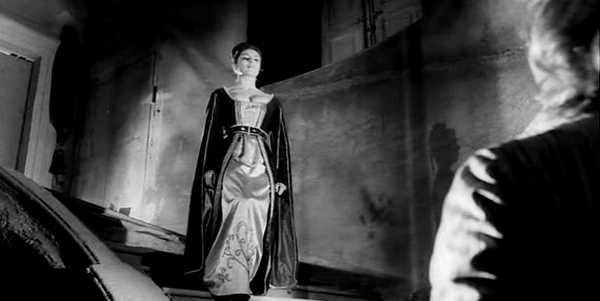
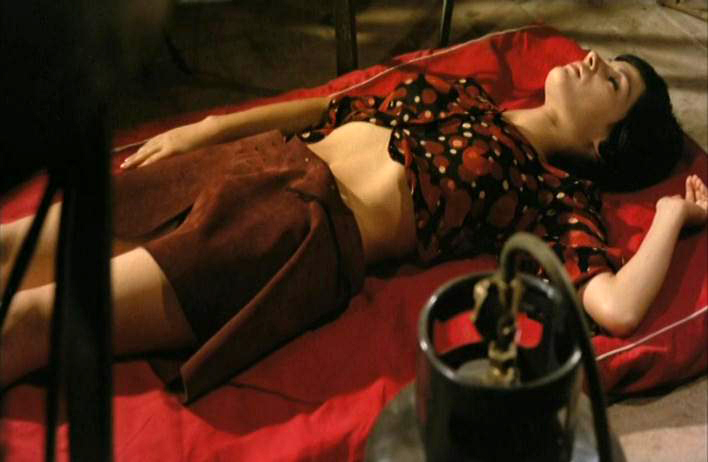
Hundreds of years ago, Isabella (Rita Calderoni) was tortured and burned for being a witch as her lover swore revenge. Today, Jack Nelson (Hargitay) and his stepdaughter Laureen (also Calderoni) are celebrating her engagement in a castle without knowing that the cellar is host to the black magic rites of the title. And if they get seven sets of eyes and the blood of virgins, they can bring back Isabella.
This is the kind of movie that quickly moves to sex scenes or murder or Satanic rituals every time it gets the least bit dull. Polselli would follow it with outright adult fare such as Oscenità and Rivelazioni di uno psichiatra sul mondo perverso del sesso, often using the name Ralph Brown.
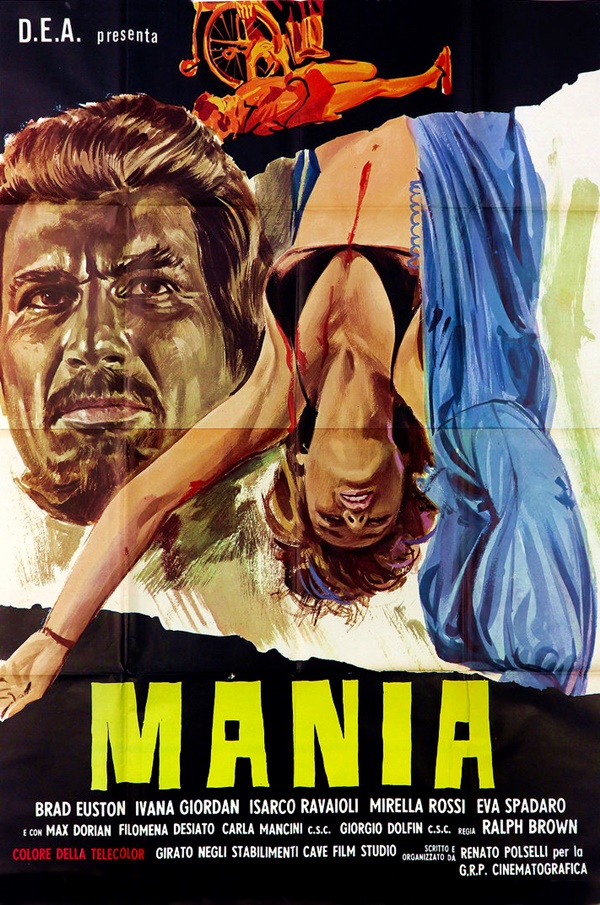
However, it’s Mania that is the strangest of the strange films that this director made. Barely released in 1974, Mania was once a lost giallo until a 35mm print surfaced in 2007 at the Cineteca Nazionale film archive in Rome, which keeps every movie submitted to censors. Some kind soul uploaded it to YouTube and what emerged is pure strange magic.
Beyond playing twin brother mad scientists, Brad Euston paid for the movie to be made with the understanding that he be made the main character. It was also filmed with graphic sex scenes that somehow aren’t in the surviving print but were published when the fumetti – photo comic – of the movie was created in the 70s.
It’s got snake attacks, wheelchair-bound lovemaking, burned-up twin brothers, a lead (Eva Spadaro) who is nearly the villain, multiple maids who yearn to make love to just about everyone and a BDSM machine in the lab. As if that doesn’t whet your Italian low-class appetite, the assistant director was Claudio Fragasso.
Renato Polselli may not be the kind of director who is going to get an extensive box set, but as time goes on, more and more people are finding and appreciating just how strange his films are. They’re also pretty high quality – the initial two vampire movies look great – and if anything, they have so many unexpected moments that you can’t help but be entertained.
When I was a kid, maybe around 1979, WPGH in Pittsburgh had an ad for a new show called SCTV. Now, the name means Second City Television from the Second City theater in Chicago, which always took pride as a second-rate city. Pittsburgh was way lower on the list of important cities, but the commercial pointed out that one of the cast members, Joe Flahery, was from here. And if anything, Yinzers are beyond proud of the people who come out of our city.
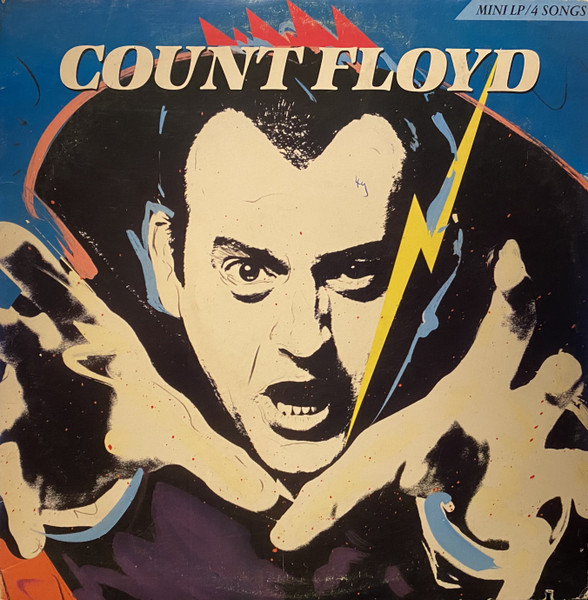
Starting at Second City in 1969. he eventually moved to Canada to start the second school. While there, he was part of the TV show SCTV and played numerous roles, such as TV newsman Floyd Robertson, who was also horror movie presenter Count Floyd. He based this role on “Chilly” Billy Cardille from his hometown, to the point that episodes where Count Floyd showed art movies and had to act like they were scary. This comes directly from Chiller Theater spending a few weeks under the title The Saturday Late Show, showing Italian films like Crazy Desire, No Love for Johnnie, The Reluctant Spy, The 10th Victim, Dingaka, Sins of Casanova, The Success, Casanova 70, Red Culottes, Yesterday, Today, and Tomorrow, The Easy Life, Marriage, Italian-Style; Boccaccio ’70; The Naked Kiss and The Bigamist.So when Count Floyd showed Ingmar Burgman’s Whispers of the Wolf and asking when the werewolf would show up, it was based on movies he had seen growing up. Count Floyd was so complete with his Chiller Theater impression that he was often joined by a sidekick known as The Pittsburgh Midget, played by Flaherty’s brother Paul Flaherty. He’s a nod to Stefan, the Castle Prankster, who was played by Stephen Michael Luncinski on Chiller Theater.
If you read enough of my writing, you’ll notice I say “blow ’em up real good.” That comes directly from Big Jim McBob, another Flaherty character. I also love Guy Caballero, the owner of SCTV, who uses a wheelchair for respect.
For as much as everyone worships the early years of Saturday Night Live, SCTV was always better.
Flaherty played a lot of cameos in his career. He’s probably best known for playing the Western Union worker who gives Marty the note at the end of Back to the Future 2 as well as the stalker who keeps bothering Happy Gilmore. He was also on Maniac Mansion.
But these are just roles. His family has lost a father, one who his daughter said he loved old movies and they got to share that together.
For me, he proved that you could be creative and come from Pittsburgh without losing who you were. So many episodes of Count Floyd had references to West Mifflin and the Golden Triangle, things no one in the rest of the country would know about.
Imagine my joy in learning that other people loved Flaherty and his roles as much as I did and they weren’t just from here.
If you’ve never watched any of his work, please do. It felt like such a secret language when I was young to know SCTV. Now, I want to share it and spread it. So much of what this great man did that made me laugh made me who I am and what I write.
Oh Harry Novak just seeing your name makes me realize that I am about to see something incredibly scum-sodden. You have such a fancy signature and make movies filled with such pulchritude. Let’s all have a moment to think of all Mr. Novak has done for us.
Like this movie, which is exactly what I was looking for when I started this week of drug movies.
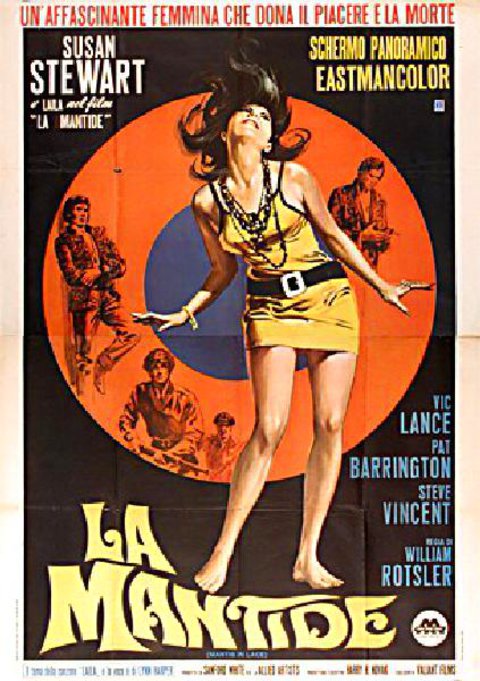
Lila (Susan Stewart, The First Nudie Musical and credits for additional voices on Scooby-Doo, which really could be the best IMDB credits listing ever) is a go-go dancer who gets turned into a literal mankiller thanks to C20H25N3O. All she wants to do is make it with the men she picks up on the Sunset Strip, but once they get back to her pad, she hears her theme song and sees an old man with a huge stack of money and a handful of bananas. That’s when she must kill them with garden tools and then she imagines that she is chopping up fruit while she’s really dismembering their bodies to dump off into cardboard boxes. I kid you not!
Then, we get lots of drug use, topless dancing and strobing and zooming camerawork. I’m in. I’m all the way in. And hey look — it’s Pat Barrington from Orgy of the Dead! Yay!
Speaking of Pat, she dated Melvin Rees at the time that he was arrested for mass murder. She was working as Vivian Storm in mob-owned go go clubs and he was a jazz musician. Pat’s life really could have been made into a movie, as she kept on dancing until the mid 1990’s when she was in her fifties. Rees? Well, he was arrested for at least five murders and numerous other crimes.
As for Mantis In Lace, it’s a film awash in sin and debauchery. They don’t, can’t, won’t and maybe even shouldn’t make them like this anymore.
ABOUT THE AUTHOR: Exploitation-film historian A.C. Nicholas, who has a sketchy background and hails from parts unknown in Western Pennsylvania, was once a drive-in theater projectionist and disk jockey. Currently, in addition to being a writer, editor, podcaster, and voice-over artist, he’s a regular guest co-host on the streaming Drive-In Asylum Double Feature and contributes to the Drive-In Asylum fanzine. His upcoming essay, “Of Punks and Stains and Student Films: A Tribute to Night Flight, the 80s Late-Night Cult Sensation,” will appear in Drive-In Asylum #26.
Valentine’s Day is here, and I’m going to enlighten—or annoy—you with 10 of my favorite romantic films. And because you know me, upbeat and happy-go-lucky, you know that the films are going to be dark and depressing. You won’t find When Harry Met Sally or Love Story on this list.
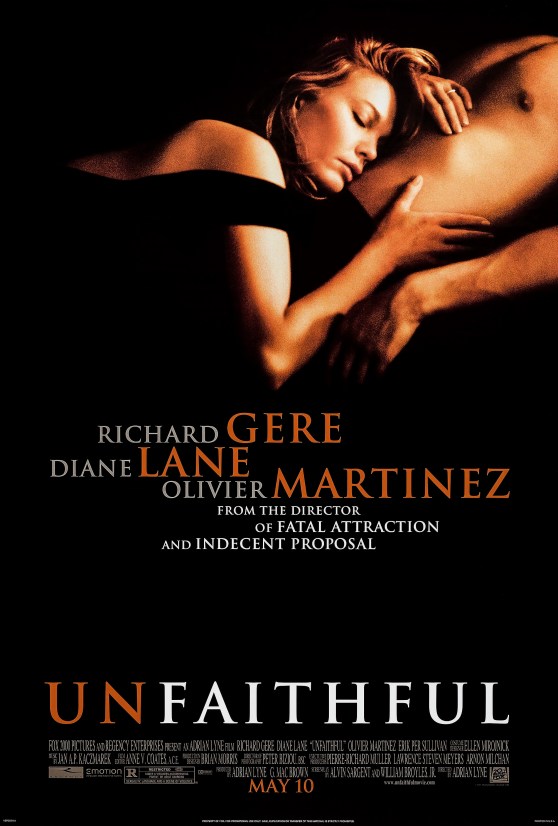
10. Unfaithful, starring Richard Gere and Diane Lane and directed by Adrian Lyne, who also did Fatal Attraction, Indecent Proposal, Flashdance, Jacob’s Ladder, and Nine ½ Weeks. That’s quite an eclectic filmography from an unpredictable director. Unfaithful is a remake of La Femme Infidele directed by Claude Chabrol, often called the French Hitchcock. I usually hate American remakes of great foreign films, but this one’s an exception. Diane Lane, always charming and wonderful, is married to Richard Gere. Yet, one day, she has a meet cute with a handsome stranger and impulsively has an affair. This has disastrous consequences. My wife thought that Lane’s cheating on Gere, who she noted is the perfect husband as he does the dishes, was inconceivable. It’s a fascinating film with Lane’s best performance; she got an Oscar nomination for Best Actress. One more thing about Diane Lane: If you watch her rom-coms—and she’s done a bunch—there are always two Diane Lanes. At the beginning of the film, her hair is up in a frumpy bun, and she’s sad. Later, when she falls in love, her hair is down. The Lane Rule: hair up, sad, no boyfriend; hair down, happily and passionately in love, a rule first noted by, I believe, the late critic Roger Ebert.
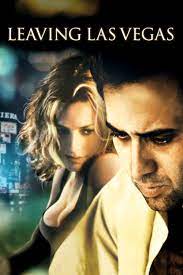
9. Leaving Las Vegas is a seriously depressing love story directed by the woefully underrated Mike Figgis with Nic Cage’s Oscar-winning turn as a depressed man who has come to Las Vegas to literally drink himself to death. He meets up with sex worker Elisabeth Shue, and they have a relationship of sorts. Will it be enough to save him? Don’t count on it.
8. Michael Mann is a world-class director of such lauded fare as The Insider, Ali, and Heat. His first film, Thief, was one of the best debut films of any director ever. James Caan, never better, plays a master thief fresh out of prison, who decides to start a new life, which includes having a family with waitress Tuesday Weld, also never better. But before that happens, he must do one last job for Robert Prosky, playing one of the most realistic, scariest mobsters ever. This job is, of course, going to cause problems for Caan and Weld. If you haven’t seen Thief, be prepared for a beautiful looking and sounding (courtesy the score by German electronic group Tangerine Dream) masterpiece from one of my favorite directors. Added plus: It has some lessons on how to crack safes … if you’re so inclined.
7. The Private Life of Sherlock Holmes. This Billy Wilder film, a big, expensive flop back in 1970, is a dark, yet moving, dramedy about a lost Sherlock Holmes case involving a woman’s missing husband, Queen Victoria, and the Loch Ness Monster. But central to the plot is a melancholy relationship between the misogynistic detective and a beautiful client, all punctuated by maestro Miklos Rozsa’s haunting violin concerto. Christopher Lee even shows up as Holmes’s brother Mycroft. Sad note: The studio, which was not high on the film, cut over an hour before release. This footage was lost and remains a grail quest for film buffs to this day.
6. Breathless, another remake of a French film, starring Richard Gere and directed by still another underrated director, Jim McBride. Gere plays a charming drifter who likes the music of Jerry Lee Lewis and Silver Surfer comic books. One night, he steals a car, shoots a cop, and decides to hook up with an old girlfriend. As the cliché goes, nothing good can come of this.
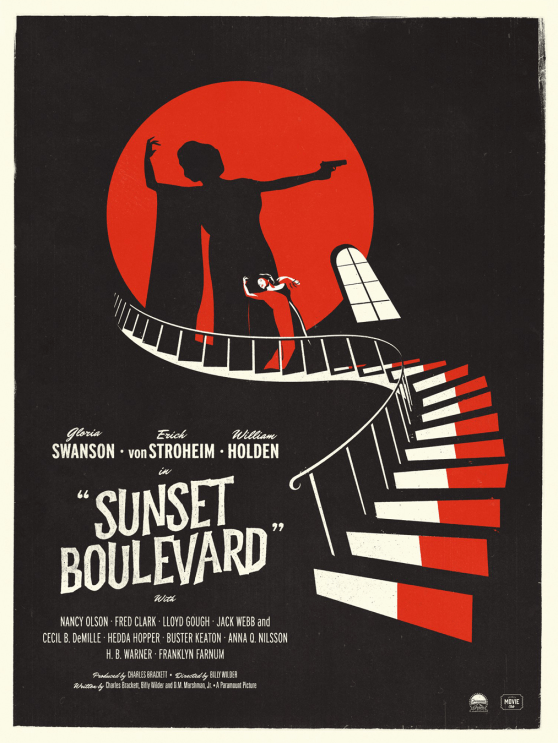
5. Sunset Boulevard. I had to include another film by Bill Wilder, the master of dark comedies (I could’ve also gone with Double Indemnity), and this one is on the National Film Registry of great American films. It’s narrated by William Holden, whom we first see lying face down in faded actress Gloria Swanson’s swimming pool. He tells the story of how he died. (I love movies that open in the middle of something, or as pretentious film scholars say, “in media res,” and then flash back to how we got there.) Phenomenal film.
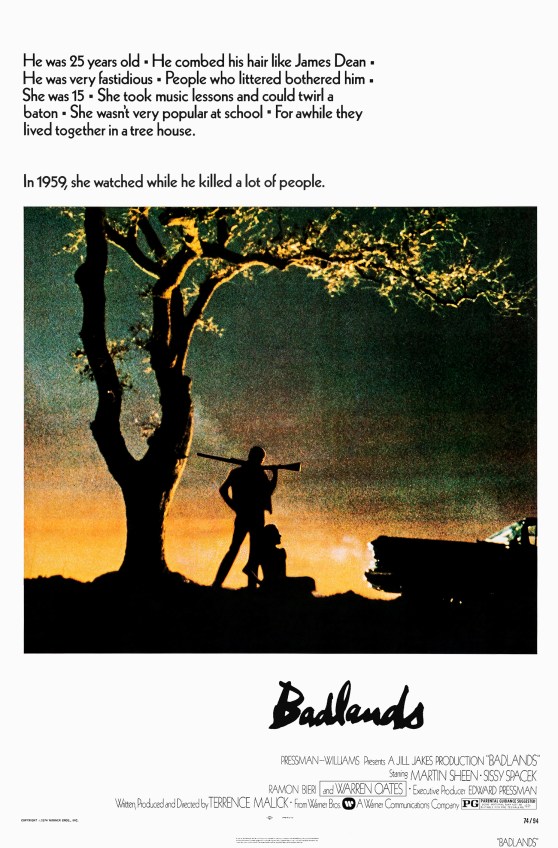
4. Badlands, Martin Sheen’s a killer, Sissy Spacek’s his teenage girlfriend, and they’re cutting a swath of violence across 1970s South Dakota. I was tempted to put Bonnie and Clyde, The Honeymoon Killers, or Natural Born Killers, also about criminals in love, in this spot, but I went with Terence Malick’s gorgeous, relatively unseen, downbeat masterpiece. A friend of mine watched it recently and thought it was too slow. I disagree. It’s a great film.
3. The Voices. Ryan Reynolds plays a nice guy who works in a warehouse and is looking for love from the likes of Anna Kendrick and Gemma Arterton. Complicating his life is that he’s schizophrenic, and he hears voices—his dog and cat talk to him. The dog, of course, is the voice of reason, while the cat tries to get him to do bad things. (Both are voiced by Reynolds.) It’s an off-the-wall black comedy from Iranian director Marjane Satrapi, certainly not for all tastes, but Reynolds once again shows his range in a serio-comic role. And the film’s depiction of mental illness is unique: When Reynolds is on his meds, the world to him (and the movie) is a bright, candy-colored land; when he’s off his meds, everything looks like downtown Youngstown, Ohio. (Trust me. You don’t want to go there.) And stay tuned for one of the best end-credit sequences ever.
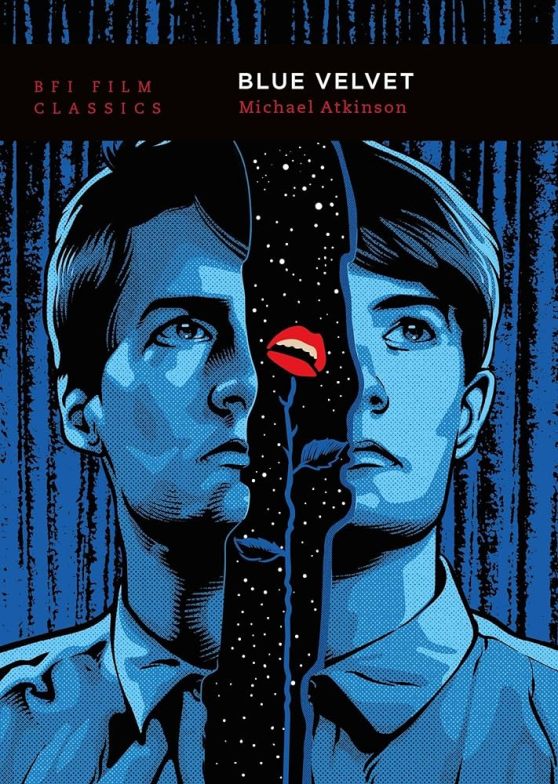
2. Blue Velvet. David Lynch is a polarizing filmmaker. You either love or despise his movies; there’s no in-between. In his masterpiece Blue Velvet, college kid Kyle MacLachlan returns to his North Carolina hometown, falls in love with lounge singer Isabella Rossellini (bad girl) and Laura Dern (good girl), and runs afoul of Dennis Hopper in one of the greatest screen-villain performances ever. If you haven’t seen it, check it out. And if you hate it, don’t complain to me.
And at #1, Body Heat, the first film written and directed by Lawrence Kasdan. Sleazy Florida lawyer William Hurt falls in with a classic femme fatale, Kathleen Turner in a stunning film debut, who eggs him on to kill her husband. It’s a film loaded with great performances (watch for Mickey Rourke as an arsonist), complicated plotting (there’s one point of estates law that just doesn’t make any sense), and some of the most quotable dialogue around. And I can’t forget to mention the perfect noirish score, all windchimes and saxophone, by the great John Barry. The film’s a modern classic.
I hope I’ve turned you on to some new movies. Or at least gotten you to think about revisiting old favorites. A friend of mine once told me he thought movies were “the most mysterious art form.” The films prove that statement: They’re dark and depressing, but you can’t look away. The power of cinema.
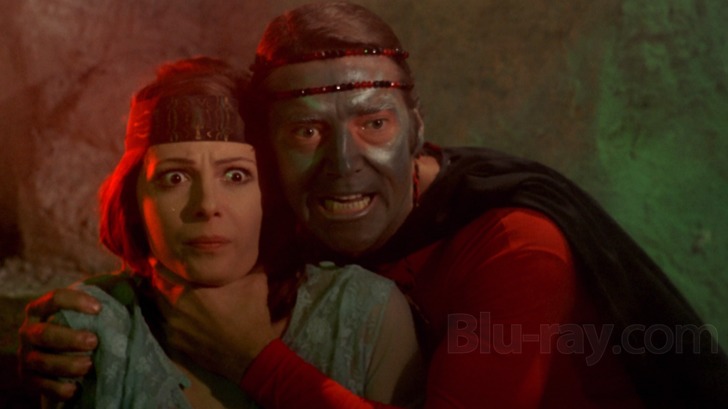
Usually Franco Nero is the hero of a film, but in this, he’s nearly the villain from the beginning. He’s Walter Mancini, an alcoholic reporter on an RV vacation with his wife Eve (Corinne Cléry). Five minutes into the movie, he’s saying that he wishes that the wild game he shot and is barbecuing was his wife with a spit in her ass, drinking so much that he forgets his name and pretty much assaulting Eve while other campers can listen to his loud lovemaking moans.
The next morning, they get on the road and quickly pick up Adam Konitz (David Hess) and let me ask you, why would you ever pick up a hitchhiker that looks like David Hess? Within seconds, he’s asking Eve filthy questions and in the middle of a roadside fistfight with Walter. He pulls a gun on the couple and hijacks their vacation and makes them drive him to Mexico. Walter tries to outsmart him by writing SOS on his matchbook, but Adam gets the drop on both police officers, leaving their bodies bleeding on a desert highway.
On the way to the border, a truck attacks like something out of Duel. It’s Konitz’s partners, looking for the $2 million he stole from them. He ends up killing them, which exposes the fact that they only cared about the money and not sheer depravity, like Konitz, who then ties up Walter and makes him watch him assault Eve, who because this is an Italian movie ends up in bliss by the end of it. Walter and Konitz fight and a nude Eve emerges from their trailer with the killer’s rifle, blowing him away.
This is where any other movie would end, but for some reason, Walter keeps the killer’s body in the trailer and tells Eve they are keeping the money. After stopping for gas, four young motorcycle riders cover the road in oil and cause the Manicini car to crash. Is this where it ends? No, because after they steal $300 from Walter’s wallet, they have no idea how much money is in the backseat. Eve can barely move and can only watch while her husband pulls out Konitz’s body in the front seat and setting everything on fire.
He climbs up a hill and starts hitchhiking himself.
Based on The Violence and the Fury by Peter Kane, Franco Nero wanted to be in this movie because he had wanted to work with director Pasquale Festa Campanile. He was in Germany shooting 21 Hours at Munich with Hess when Companile asked him to be in the movie. Nero suggested that Hess come with him and be in this movie.
A few days before shooting, Nero hurt his hand punching an unruly horse on the set of Keoma. That’s why there’s a scene where he trips on the insurance man’s tent and breaks his arm.
This is set in California, but shooting there was too expensive. Instead, it was filmed in the mountains of the Gran Sasso in central Italy. To complete the film magic, American-like gas stations were built.
It’s also known as Death Drive and The Naked Prey, both of which are great titles. In the U.S., as you can already guess, it was released on video as Hitchhike: Last House on the Left.
Campanile was mostly known for his commedia sexy all’italiana, so I was shocked by how dark and hate-filled this movie is. Walter is an absolute loser, a man whose writing couldn’t pay the bills — ask a man about who he is and he will start with what he does for a living — and now he must work for Eve’s father. Feeling beat down, all he does is drink and abuse his wife. If anything, Eve has the least hope in this, as she keeps trying to believe in her husband even when he almost gets her killed.
What pushes it even further is the Ennio Morricone score, as well as the song “Sunshine,” which is first heard in a moment of fun as everyone drinks together at the camping area. By the end of the movie, each time that you hear it is filled with dread, like it keeps reminding you that things were bad at the start of this movie but they’ve somehow gotten even more bleak.
There are two alternate endings. There’s one in which the car explodes just as Walter and Eve reach for the money. The French ending has Walter and Eve laughing and leaving with the money after Konitz is shot.
I love this movie because it’s everything you expect when you see David Hess and the exact opposite of who Franco Nero usually is on film. It’s devoted to being a bad road trip the entire way with no hope and the only humor being as black as it can be.
THE TWILIGHT SAGA 15th Anniversary SteelBook® Collection 4K Ultra HD is available at Best Buy.
The series has made more that $3.34 billion dollars worldwide on a $401 million dollar budget. When these movies came out, there was nothing bigger. I’m not certain we have anything like these any longer that draw a teen and female audience to theaters. A reboot has been talked about but even with the 15th anniversary here, there’s no news.
There is this set which includes all five movies — Twilight, New Moon, Eclipseand Breaking Dawn Part 1and Part 2 — and wow, its packed with gorgeous SteelBook® packaging and so many extras, including a 6-part The Making of The Twilight Saga documentary.
Want some extras from our site?
Here’s the podcast we did years ago on the first movie:
Did you ever know I went to Forks?
“In the state of Washington, under a near constant cover of clouds and rain, there’s a small town named Forks. Population, 3,120 people. This is where I’m moving.” That’s what Bella Swan said when her mother hooked up with a minor league baseball pitcher and she ended up going across the country to live with her dad. As Bella prepared to move in, she felt only despair and a marked lack of joy. I completely understand how she felt and I was only traveling by car and ferry to see the town that the Twilight books and movies were based in.
Here’s something I learned as I was researching my trip — after I took it, mind you. While Twilight and its sequels are set in the town, not a single scene was filmed there. Nope, most of the movies were filmed in Oregon and some parts of Washington. Not in Forks. Zillow.com even called the Forks Chamber of Commerce to verify this and learned that yes, not one scene was shot in the town.
That’s probably because the location is very remote. And Washington state doesn’t make it easy for people to film there, with no tax breaks or incentives, which is why the filmmakers mostly shot in Oregon, Vancouver and Louisiana.
But Sam, tell us about Forks.
You got it.
Forks is located in Clallam County in the Olympic Peninsula and was incorporated on August 28, 1945. It’s a small town — around 3,500 people — and gets its name because it is quite literally near the forks in the Quillayute, Bogachiel, Calawah, and Sol Duc rivers.
Prior to what the internet told me was the town’s boom in tourism — more of that later — most people in the town are employed by the two jails and from sport fishing.
So you may wonder, how did I find myself on a ferry bound for the home of Edward, Bella and Jacob? Well, I love my wife. And I indulge her. And her aunt had suggested this. And soon, we’d be enjoying “27 minutes of our lives that we’d never get back,” to quote Becca.
First off, the Forks High School looks nothing like the place where Edward saved Bella from that car, nor where they were lab partners. No, instead it’s a small school filled with teens that scowl instead of glow. After all, Twilight’s author Stephenie Meyer never visited Forks when writing any of the books.
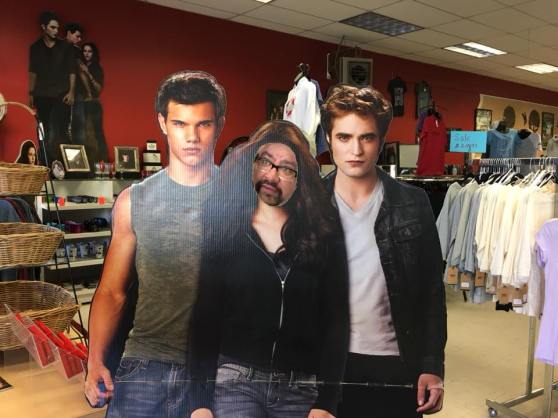
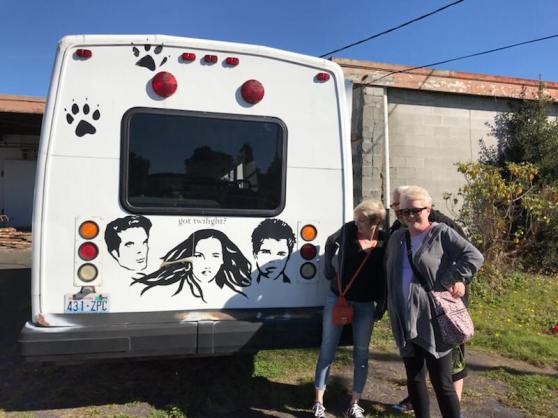
Across the street, we noticed Leppell’s Flowers & Gifts, which was run by a nice-seeming older couple. As they were working on the concrete in front, we had to head around the back and go through an alley and a hidden door to find the store that some call Twilight Central. That’s when we noticed this tour bus!
We didn’t look into the tour and after spending just a bit of time looking at the scrapbook supplies, we bid the store farewell. Perhaps it’s just as well, as this amazing Yelp review did the store no favors.
We drove through the town some more, saw Bella’s truck (which probably wasn’t the one used in the movie), went in two more Twilight themed gift shops and then headed out of town to Thriftway/Forks Outfitters. For being in the midst of some of the greatest coffee in the world, we had the best coffee drinks of our entire trip at their cafe! And get this — a Twilight menu! That’s how you do business!
They had used Twilight movies and an actual rental store within this general store that seems to answer every need of the folks in Forks. Even better, their deli offers some choices for the discriminating Twilight fan, made of course with high quality Kretschmar deli meats and cheeses:
Why doesn’t Jacob get a panini? Where is Bella’s BLT? I have so many questions and once you’re in Forks, you never get any answers.
At least Becca got this lighter, which will keep her smoking for years after she has planned to quit:
On the way out of town and back to the ferry, an overall three-hour-plus trip, we stopped to get gas and caffeine. That’s when I met Forks, WA local favorite Barry, who had on no shirt and a jacket as he careened around the store, screaming at people that he was about to go to the casino (One Eyed Jacks?) and do some drugs. After that, he followed an employee outside who was about to cry and told her he was sorry about her sister, but some people have it coming. Barry seemed like a real pip.
Goodbye, Forks! Thank you for showing us the place that inspired a movie that no one has really cared about since 2012. I kid — most of the people in town seemed genuinely nice and totally not about to kill us as we wandered their theme stores, ala Captain Spaulding from House of 1000 Corpses.
Want to learn more about Forks? Sure you do! Check out their official site!
Don’t forget to buy THE TWILIGHT SAGA 15th Anniversary SteelBook® Collection 4K Ultra HD at Best Buy.
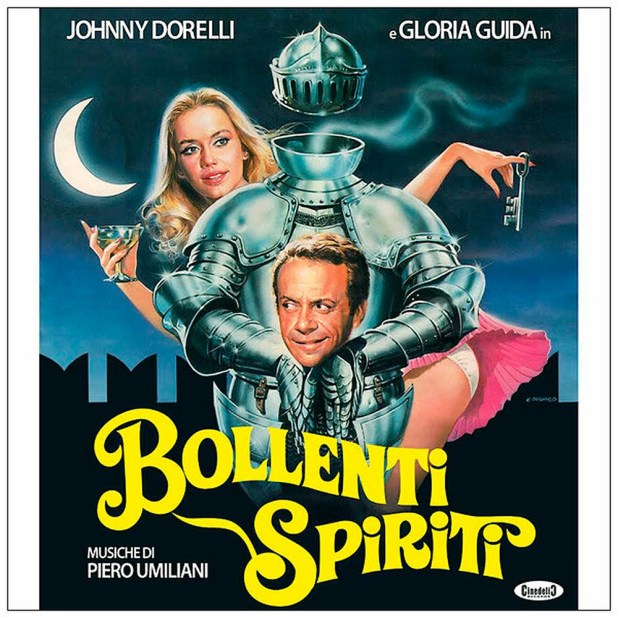
Giovanni (Johnny Dorelli) has inherited a castle from his uncle Ubezio and this will help him escape all his many creditors as a company already wants to buy it for a luxury hotel. The problem? The nurse who took care of his uncle, Marta (Gloria Guida, La casa stregata), has been given a percentage of the property. He works on talking her out of her share so that he can sell, but falls in love. There’s also the problem of the randy ghost of his ancestor Guiscardo (also played by Dorelli) who has had sex and has stayed in the castle for three centuries. And oh yeah — the buyer of the castle? His wife Nicole (Lia Tanzi) is Giovanni’s latest girlfriend.
Directed by Giorgio Capitani and written by Franco Marotta and Laura Toscano, this feels a lot like the other sexy haunted house movies of this time, C’è un fantasma nel mio letto and La casa stregata. There’s also some funny — and sexy — moments with Lory Del Santo (The Great Alligator) as a sex worker hired to relieve the ghost of his virginal burden.
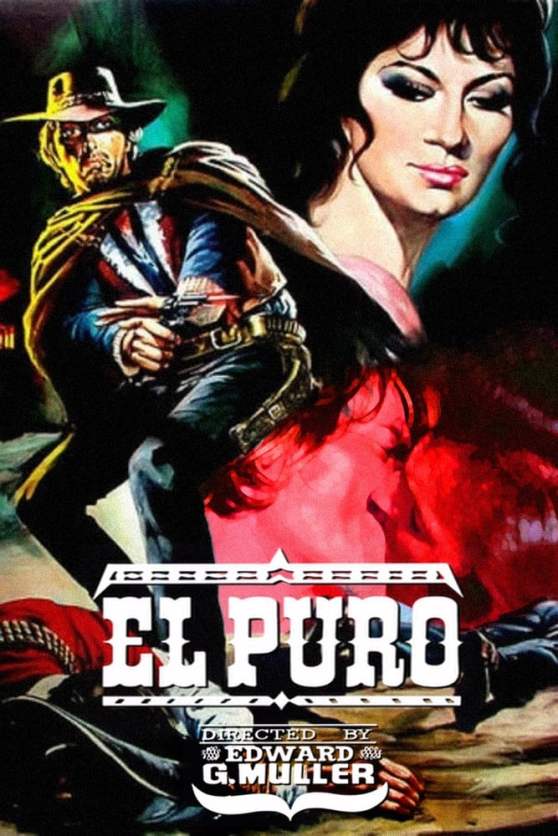
Arrow Video continues its releases of Italian Westerns that started with Vengeance Trails and continued with Blood Money.
Arrow Video’s Savage Guns box set has high definition 2K restorations of all four films from the original 35mm camera negatives, with El Puro newly restored by Arrow Films. Plus, you get brand new introductions to each film by journalist and critic Fabio Melelli, an illustrated collector’s booklet featuring new writing on the films by author and critic Howard Hughes, a fold-out double-sided poster featuring newly commissioned artwork by Gilles Vranckx and limited edition packaging with reversible sleeves featuring original artwork and a slipcover featuring newly commissioned artwork by Gilles Vranckx. Plus, each movie has its own set of extras, including behind the scenes features, interviews, commentaries and even alternate titles.
The movies include:
I Want Him Dead: Clayton has lost his sister Mercedes to criminals but can’t go to the sheriff as he’s already killed that man’s brother in self defense. Now, he has to go after a criminal who wants the Civil War to keep killing people.
Wrath of the Wind: Wealthy landowner Don Antonio hires Marcos and Jacobo to put a stop to the revolutionaries that threaten his profits. He didn’t think Marcos would end up joining them.
El Puro: El Puro was once a dangerous and much feared gunfighter. But today, well, he’s a drunk lying low in a nothing town, concerned that a killer trying to make his name by shooting him is behind every corner. Can he get his iron back?
The Four of the Apocalypse: In Lucio Fulci’s brutal Western, professional gambler Stubby Preston, pregnant sex worker Bunny, the alcoholic Clem and an older man named Bud run into a Mexican gunman named Chaco who sets death and redemption for each of them.
I’m so excited that Arrow has kept releasing these sets and am ready for whatever comes next. It’s so great to have high quality versions of these movies for my collection. I’ve always wanted a better version of Fulci’s movie, so this is essential.
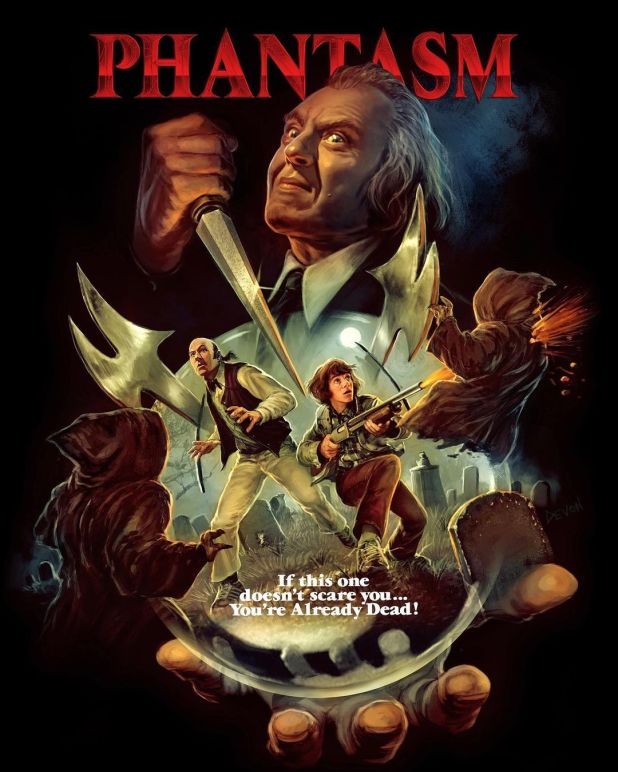
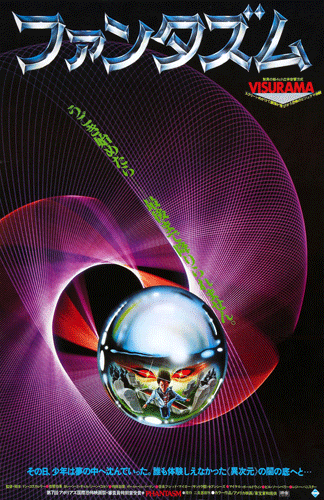
On the latest episode of The Cannon Canon, Geoff didn’t just ask for someone to explain what Phantasm is all about. He specifically gave me an assignment to do this.
This feels like something I’ve been preparing for my entire life.
As I said back when I covered every single Phantasm movie, I probably watched Phantasm II every single day once it came out on VHS. Imagine my surprise when the first movie doesn’t have anything from the second one, instead being one long nightmare without cool preparing for battle scenes and quad shotguns.
Now, I can draw on my knowledge and my untold watches of these films to do some good for the world. It all pays off, all that time in my room when other teenage boys were fumbling around in the back of cars with girls.
I mean, it pays off. I think it does.
Here’s what I think this series about in question and answer format.
What is Phantasm about?
Each of the movies in the series is very much a different film so this is a difficult question to answer.
But for a very basic overview…
After the death of their friend Tommy, Jody and his brother Michael discover that their small town’s mortician is actually an otherworldly villain known as the Tall Man. They attempt to stop his harvesting of dead bodies with the help of their best friend, Reggie.
Sure, that makes sense. But as you probably already know, this is a really confusing series.
What is the first Phantasm really about?
In Cameron Gorman’s Collider article Phantasm Makes No Sense – and That’s Why It’s Great, there’s an interesting theory: It’s a movie about grief. Jody and Michael have lost their parents, so the only way that the teenage Michael can deal with their loss — and the idea that his brother will soon be leaving town — is by inventing his own villain, the Tall Man, whose unexplained nature is less frightening than the idea that death can happen at any time.
By the end, however, the darkness goes even more dim as it turns out that Jody has been dead all along and the events of the movie have all been Micheal trying to use horror to make sense of why he’s lost his entire family and is now alone.
Or maybe not.
Seriously, throughout, I feel like there are so many ways to see these movies that the explanation I offer is just mine. You’re going to see your own film your own way.
Because if it’s not a dream, then explain why the Tall Man reappears at the end.
Mike tells Reggie that he’s worried the Tall Man will come back. The ice-cream-selling guitarist replies, “Hey, you had a dream. Just a nightmare. Mike, that Tall Man of yours did not take Jody away.” And then the Tall Man really is real.
Each movie seemingly ends like an old movie serial. We see the heroes surely die, the bad guy is still alive and that’s it. And then, there’s a sequel. It may take a decade. But there’s always another story. If you go with the dream logic theory, that covers you.
Who is the Tall Man? What’s he all about?
According to the Phantasm wiki, the Tall Man is either:
Jebediah Morningside, who started as a mild-mannered 19th-century mortician. After years of burying dead people, he became fascinated by the connection between our world and the world of the dead. He made a machine that allowed him to travel through time and space. After his first journey, he came back changed forever and became the Tall Man.
The Red Planet, a living planet twenty times bigger than our sun that exists out and above time, space, reality, gravity and narrative lines. He takes on a human form to go to Earth to kidnap people for the purpose of transforming them into monsters.
His weaknesses are cold and tuning forks. The reason for the latter being harmful is because he travels to our world via the Dimensional Fork. It consists of two short chrome poles standing right next to one another that are humming at all times. The sound of another tuning fork disrupts him. That said, when the Tall Man dies, he is instantly replaced by another one. He also has a disease inside him which can kill humans on contact.
So who is the Lady In Lavender?
Tommy, whose death starts this whole thing in motion, was killed by a gorgeous blonde known as the Lady In Lavender. Well, she’s the Tall Man. Or some aspect of him. Yes, the same Angus Scrimm can transform into the much more pleasing form of actress Kathy Lester. She usually seduces men, then stabs them. In the first movie, she’s knocked out by a tuning fork, which is also the weakness of anyone from the Tall Man’s adopted home dimension.
In Phantasm V: Ravager, Reggie goes back in time to the 19th century and meets the Lady In Lavender, who is co-joined to Jebediah Morningside, the dude who will become the Tall Man. He later finds her inside a mausoleum and her face becomes demonic when he doesn’t sleep with her. He then shoots her with a shotgun.
So maybe she’s part of the Tall Man. Or maybe not.
When people are fucking the Lady In Lavender, they’re fucking the Tall Man. Right?
Let’s not kink shame. But yeah. Totally.
What’s Reggie’s deal?
Don Coscarelli wrote that Reggie is “every guy’s guy, every man’s friend, the guy that would throw himself on the flames to the door of hell to save a friend.”
He’s an ice cream seller who will just drop in to write a song.
I’ve always through that Reggie sells more than just ice cream, which is how he can so easily roll with the wildness of these movies. He’s also one of those weed friends that will hang out just to see what happens and also has strange skills that seemingly do nothing to help anyone, like being able to make four-barrelled sawed-off shotguns. Where does one gain those skills? Vo-Tech?
In the first movie, Reggie dies when he finally gets to get laid. That Lady In Lavender again. But then he’s alive and takes Mike on a road trip, because after all this, why not? The same thing happens in the second movie, because Alchemy ends up being another of the women that the Tall Man uses to attack men. Somewhere in here, Reggie got married and had a child, but the Tall Man’s Lurkers blew them up real good. In the third movie, Reggie goes it alone for a long time before reuniting with Mike, just in time to get trapped by one of the Sentinels, the steel balls. The fourth movie has the Tall Man playing a final game with Reggie as they chase each other for the entire movie. And in the fifth film, there are two Reggies. One is dying in a nursing home and the other is in a post-apocalyptic future where the Tall Man has won.
As they say on The Cannon Canon, we’ll get into that.
Tell me about Jody.
Jody and Reggie had a band with Tommy. They learn that the Tall Man has turned their dead friend into a Lurker, one of his smashed-down Jawa-like servants. By the end of the first movie, it comes out that Jody has been dead all along and Reggie promises to be Mike’s brother.
After being dead in the second movie, Jody returns as a damaged silver ball in the third movie. He can speak to Reggie and tells him “Seeing is easy. Understanding takes a little more time.” He promises to return when he can. In the fourth movie, he reveals that he died in the car wreck after being stabbed by his brother. And in the fifth, Jody is said to be dead, but shows up for Reggie’s funeral while he has transformed the Hemicuda into a Battlecuda and rescues Mike and Reggie, happy that they are a threesome again.
And Mike?
Mike survives the end of the first movie and ends up being a second actor for the sequel, James Le Gros, instead of A. Michael Baldwin, who is in the other films. He’s destined to find Liz, a girl who dreams of him, but she dies at the start of the third movie. By the end of that movie, the Tall Man’s miniature maniacs have eaten Liz and Mike has yellow blood like the Tall Man, as well as a sphere inside his head.
According to the Phantasmwiki, Mike discovers he has powers such as telekinesis and the ability to conjure dimensional forks. He attempts to commit suicide but then he learns that in 1979, he and his brother were going to hang the Tall Man and Mike saved him.
When Mike goes back in time in the fourth movie, he inspires Jebediah Morningside to create his machine that turns him into the Tall Man, who early said that his life is the main dimension of the Tall Man and that they are connected forever. He’s able to kill the Tall Man with a bomb but another one soon arrives and removes the sphere, killing Mike.
In the last movie, Mike wheels Reggie around the nursing home yet can remember being in the post-apocalyptic world.
What are the silver balls?
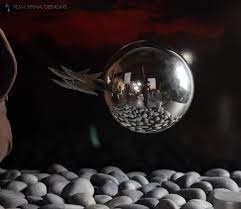
The Sentinels are the weapons that the Tall Man uses to suck out brains. They come from a dream that Don Coscarelli had. There are several varieties:
Silver ball: Made from the brains of dead human beings — which are inside the ball, the bodies are turned into the mindless crushed Lurkers — these are the guardians of the Tall Man and also keys that he uses to open doorways.
Gold ball: The two gold balls in the movies have had the Tall Man and Mike’s brains in them. They have much better defenses and are much smarter.
Black ball: When Jody’s brain is put inside one of the Sentinels, it becomes black, which is a symbol that he is independent.
Red ball: A bomb.
Giant ball: Used in the last movie to blow up cities.
Do any of these movies actually work together?
During the third movie, Don Coscarelli said that he had run out of ideas after finishing the script and had no clue which direction the story would take in case there was a fourth edition. He jokingly added that if a Phantasm IV was ever filmed, it would actually be just to make money out of it.
There are two more movies. Fill in your own blank.
Break down your theories — in short a way as possible as this is already eighteen hundred words — on each movie.
Phantasm: A low budget film that gets magic right the first time. Nothing has to make sense — it’s very Italian in that way — and you can either watch it as a horror movie with a straight-ahead story fo trying to stop an evil undertaker or a movie that tries to make sense of death. What is strange about it is how many scenes just feel thrown in — the bug that comes flying around, the magic trick finger with yellow blood, the Dune fortune teller and her granddaughter who never show up again, the song that everyone chills out and jams on, even the ending — but it’s the rough edges that make it so great.
Phantasm II: Universal wanted a new franchise that had the things they saw that worked. Not the dreamy artiness, but the gory balls and the improvised weapons. That’s what they got. And in 1988, well, this was what I wanted so badly. It’s got so many wild and bloody moments, metal anti-religious moments and the Tall Man saying, “You think that when you die you go to Heaven… you come to us!”
I was beyond obsessed with this movie.
Phantasm III: Lord of the Dead: Sadly, this feels like running in circles compared to the first two movies. Liz getting killed ruins a lot of the second movie, ala Hicks and Newt being dead when Alien 3 kicks in. It’s not a bad movie, but there’s not much here that you need to see again. I do like Rocky, who is the only female character that doesn’t become evil.
Phantasm IV: Oblivion: The third film was not well thought of, so Coscarelli went back to the low budget weird horror of the original. There was also a lot of lost footage that was found, so that all added up to make the fourth movie.
I wish we had gotten the Roger Avery-written Phantasm’s End AKA Phantasm 1999 A.D, which has this awesome summary: “The year is 2012 and there are only three U.S. states left. Between New York and California is the wasteland known as the Plague Zone. Unfortunately, the evil Tall Man controls that area. Since many people are dead, the Tall Man is able to make thousands of dwarf slaves for his planet daily in the Mormon Mausoleum. Besides him, the other residents are “baggers,” human-like creatures that are infected by the Tall Man’s blood, the dwarves, and, of course, the silver spheres, all trying to break out of the barrier that contains them and into the real world. A group of hi-tech troops are sent in to destroy the red dimension where the Tall Man gets his power. Reggie follows so he can find Mike after a series of nightmares he had. Will they be able to finally destroy the Tall Man for good?”
Bruce Campbell would have been in that.
The scenes with Jennifer’s breasts being silver balls and Mike ends up in a deserted future Los Angeles where Jody tells him it’s not safe to be out too long due to a disease come from the Avery script.
This movie feels like it’s trying to find an explanation by confusion. It’s all one unending over and over again reality where the Tall Man causes Mike to spend his life trying to stop him and he ends up creating him.
Phantasm V: Ravager: I think that there was such a demand for a final film, it just had to be made. According to the book Phantasm Exhumed, it was originally a spin-off web series that was titled Reggie’s Tales. This footage was eventually expanded with new footage that featured appearances by main cast members and became the fifth movie.
When I watched this again, it felt like it had too many echoes of Bubba Ho-Tep. It makes me question if we want to see our heroes become old and infirm, as I had to watch it happen to my father and spent years trying to talk to someone who was no longer there.
Anyways, I feel like this is some ancient parable.
Here’s how it works.
Phantasm is a kid trying to make sense of death while over the course of the other movies trying to do everything it can to stop death from claiming him, his family and friends.
By Phantasm V: Ravager, it’s now an old man, looking back on life and accepting the inevitability of death.
Are the movies connected at all?
Other than the fact that the same characters are in all of them, it feels like the main connection is using the same footage. They are all in their own subgenre:
Phantasm: Surreal dream logic art horror
Phantasm II: Action horror
Phantasm III: Lord of theDead: Comedy horror with some Raimi
Phantasm IV: Oblivion: Low budget return to the surreal dream logic horror but made by someone who isn’t in the same place they were 20 years ago.
Phantasm V: Ravager: Fan film with a budget.
Have the Phantasm characters shown up anywhere else?
Angus Scrimm did this Adult Swim ad.
Farewell to the Alamo Drafthouse: In this short video, footage between the Tall Man and Mike was teased years before the last movie. It may have actually been footage from the Steven Romano scripted Phantasm Forever that would have had Mike waking from seemingly being in a coma for years with Dr. Morningside at his side. Rocky was to return and Ashley Laurence from Hellraiserfame would have appeared. But how about this: A. Michael Baldwin’s Mike and James LeGros’ Mike would have faced off.
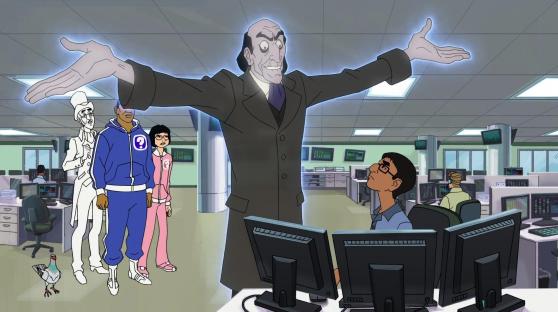
Mike Tyson Mysteries: The episode “Mystery On Wall Street” has one of Mike’s drivers get abducted by Phantasm (Jeff Bergman), who is the Tall Man.
What movies reference or are influenced by Phantasm?
Arrebato has a movie theater advertising this movie.
Troll 2: The dream feel and mirror smashing at the end feel way too close to be not an influence. Also Claudio Fragasso is not above just taking things from movies and I say that with peace and love.
In the Mouth of Madness: The tagline for Sutter Cane’s book The Hobb’s End Horror is “If this book doesn’t scare you to death, you are already dead. ” Phantasm‘s tagline was “If this one doesn’t scare you, you’re already dead!”
Spider-Man 2: Doc Ock’s pincers in one scene are shot to look like one of the Sentinels. Maybe that’s payback for Sam Raimi’s ashes showing up in Phantasm II.
In the Strangest Places: A character is named Phanni and the fortune teller scene is remade.
Star Wars: Episode VII – The Force Awakens: The silver Captain Phasma is named for Phantasm.
Satan’s Slave: This Indonesian movie is a loose remake.
Supernatural: The Winchester brothers driving in a Chevy Impala chasing demons feels a little bit indebted.
Charmed: In the episode “Wrestling With Demons,” Mr. Kellman (Ron Perlman) shows up to use the Sentinels and Buff Bagwell, Booker T and Scott Steiner wrestle in Hell.
What songs sample the Phantasm theme or parts of the movie?
The line “The funeral is about to begin” is in Marduk’s “Hearse,” “Mortician” by Mortician, “7th Angel” and “Funeral Procession” by the Electric Hellfire Club, Splatterhouse’s “Maggot Sermon” and Cold War’s “Scars Left As Evidence.”
“Stomp the shit out of the Tall Man” is in “Guilty of Being Tight” by Municipal Waste

















 B&S About Movies
You must be logged in to post a comment.