SEVERIN BLU RAY RELEASE: Scala!!! shorts disc two (1982, 1986, 1988, 1989, 1990, 2024)

The third disc of Severin’s new Scala!!! Or, the Incredibly Strange Rise and Fall of the World’s Wildest Cinema and How It Influenced a Mixed-up Generation of Weirdos and Misfits blu ray set has several documentaries and some shorts that are worth the entire price of this release. You can buy it from Severin.

The Art of the Calendar (2024): Kier-La Janisse has created this look at the art of film programming and marketing. Starting with the first repertory cinema calendars in California and Chicago in the late 70s and early 80s, this expands to interview several film programmers, including Mike Thomas (founder of Strand Releasing), Kim Jorgensen (founder of Landmark Cinemas), Craig Baldwin, Chicago film historian Adam Carston and Mark Valen (programmer for the Scala).

Thanks to this age of physical media and streaming that we live in, small theaters like the ones featured in this film, are always in danger of going away. More than just a “things were better back then” view, The Art of the Calendar presents a strong reason for you to support the movie houses around you, particularly the non-corporate ones that need you in their audience.

Also: If you love graphic design and the art of selling movies, this is an essential watch.
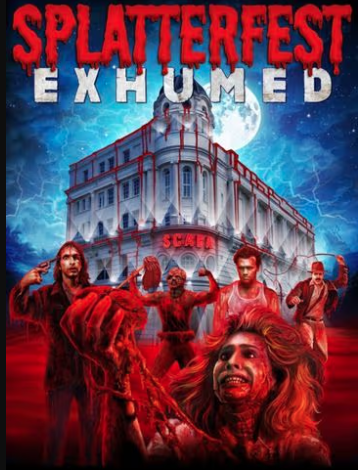
Splatterfest Exhumed (2024): This documentary covers Splatterfest ’90, the notorious all-night horror festival held at London’s legendary Scala Cinema. Directed by Jasper Sharp with David Gregory as supervising producer, this gets into how this well-remembered weekend was put together by a teenaged Justin Stanley and how it was amazing that it even happened at all.

Splatterfest ’90 was the UK premiere of several movies and the showing of several favorites, including Combat Shock, Evil Dead II, Brain Dead, Rabid Grannies, Within the Woods, Henry: Portrait of a Serial KillerDocument of the DeadThe Laughing Dead, The Toxic Avenger 2 and Bride of Re-animator; promo reels for Maniac 2, Horrorshow and Hardware; as well as the opportunity to meet horror icons like John McNaughton, Greg Nicotero, Brian Yuzna, Buddy Giovinazzo, Roy Frumkes and Scott Spiegel.

What emerges is a combination of people extolling the virtues of just how this event brought so many together with the challenges of running just such a massive undertaking. You also get to hear from those who were in the audience, such as Graham Humphries, Sean Hogan and Severin founder David Gregory.

My favorite parts in this concern how in the middle of the night, bootleggers suddenly arrived to sell tapes of banned video nasties and how The Comic was presented as the first film from a “new Hammer,” which stopped when the audience nearly rioted during the movie. It was so bad that the organizers didn’t show Cold Light of Day, another film by director Richard Driscoll.

This is perfect for lovers of horror, as well as movie history. I had a blast with it and am sad that I couldn’t have been in the audience.

Maniac 2: Mr. Robbie (1986): A proof of concept for a sequel to Maniac that never happened, this was directed by Buddy Giovinazzo (Combat Shock) and written by Joe Cirillo and its star Joe Spinell.

Shot in a bar that Spinell frequented and filled with his friends, this was a concept featuring Spinell as Mr. Robbie, a drunken kid show host who is dealing with letter after letter from abused children. The only way that he knows to deal with them is murder. What’s strange is that this is the same plot — and nearly the same name for its protagonist — as An Eye for an Eye/The Psychopath, a movie that finds Mr. Rabbey attacking parents who beat their children.

You only get a few minutes of what may have been, but when I see the craggy face of Joe Spinell, I feel like life could be OK. In some other world, I’ve bought this several times and just got the UHD release of it, having to explain to my wife why I keep buying the same film so many times.

I adore that Giovinazzo did a commentary for this, explaining how it happened and some of the sleazier things that he learned about the cast and where this was filmed.

Horrorshow (1990): Director and writer Paul Hart-Wilden wrote the script for the little-seen — and great — movie Skinner. He also wrote Living Doll, but Dick Randall gave it to George Dugdale and Peter Mackenzie Litten to direct.

It’s got a simple story — a man tries to stay in a room only to learn that it’s still possessed by a demon that has already killed one person — but it has plenty of gore to make it stand out. Its creator is obviously a big horror fan and his commentary on working on this is quite interesting. Hart-Wilden is still working, directing the TV series 31 Days of Halloween.

Cleveland Smith: Bounty Hunter (1982): Directed by Josh Becker, who wrote it with Scott Spiegel, this is a little-watched short that has many of the players of the Evil Dead series, including Bruce Campbell as the hero, Sam Raimi as a Nazi and Robert Tapert as a native.

As you can tell, Cleveland Smith is pretty much Indiana Jones, down to being chased by a bolder, but he also gets caught in quicksand and is nearly killed by a dinosaur. He has a whip, just like Dr. Jones, but he also has a ventriloquist dummy and a special pair of pants known as the Waders of the Lost Park.

This is totally politically incorrect and as dumb as it gets. I mean that in the best of ways.
Mongolitos (1988): Director Stéphane Ambiel made this short that the Scala ad copy claimed “Taking ten minutes to do what John Waters achieved in ten years.” This is great for selling the movie, but it’s nowhere in Waters league. That said, it has something to offend everyone, including shooting up with toilet water, puking up a turd, pushing a transgender woman’s head into the bowl while taking her from behind while a nun teams up on her and then everyone eating feces with crackers. I can only imagine that some people will be horribly upset by this, but it’s made so goofily that you can’t help but laugh at it. Somewhere, staunchly British people are also upset that the French are doing a Monty Python sketch with poo eating.
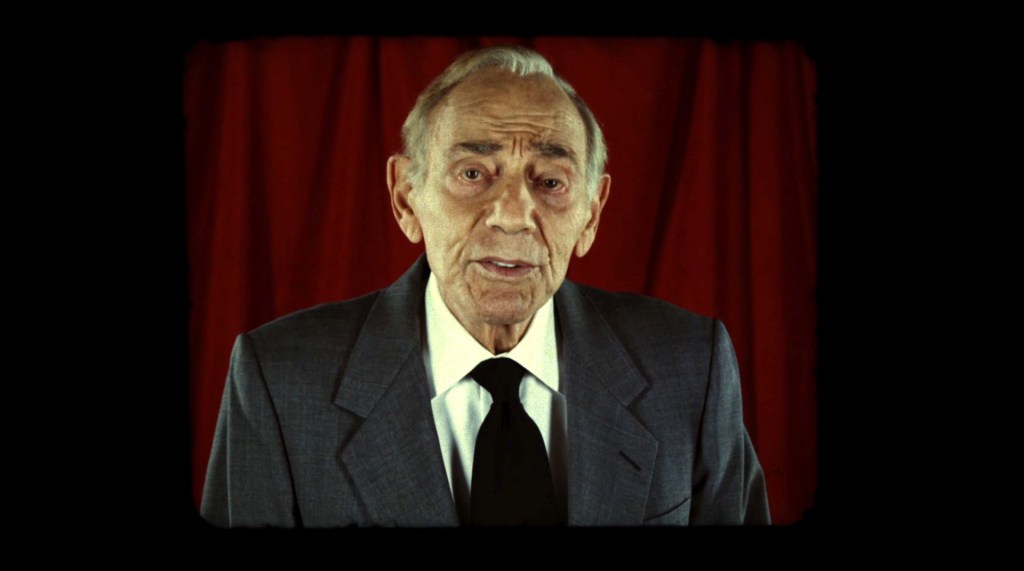
The Legendary H.G. Lewis Speaks! (1989): Herschell Gordon Lewis is at the center of the Venn diagram of my life, someone who was a leader in my two obsessions: movies and marketing. Just hearing his voice makes me feel good about things, like everything is going to work out alright. When you see his older face and his wry smile, you may almost forget that he once used animal guts dumped in Lysol over and over again in the Florida heat to upset almost everyone before anyone even considered what a gore movie was.

This was filmed on October 4, 1989, when Lewis spoke at the Scala before Gruesome Twosome and Something Weird. Before he went on stage, he asked to be paid in cash. At once a gentleman in a suit and a carny lunatic, at the dual poles of juxtaposition, only he could wax so enthusiastically about fried chicken and trying to figure out how to get Colonel Sanders into one of his movies.

SEVERIN BLU RAY RELEASE: Scala!!! shorts disc one (1968. 1971, 1978, 1984, 1986, 1989, 1991)

On the bonus discs of Severin’s new Scala!!! Or, the Incredibly Strange Rise and Fall of the World’s Wildest Cinema and How It Influenced a Mixed-up Generation of Weirdos and Misfits release, you’ll find examples of several shorts that played at the theater. You can buy this from Severin.

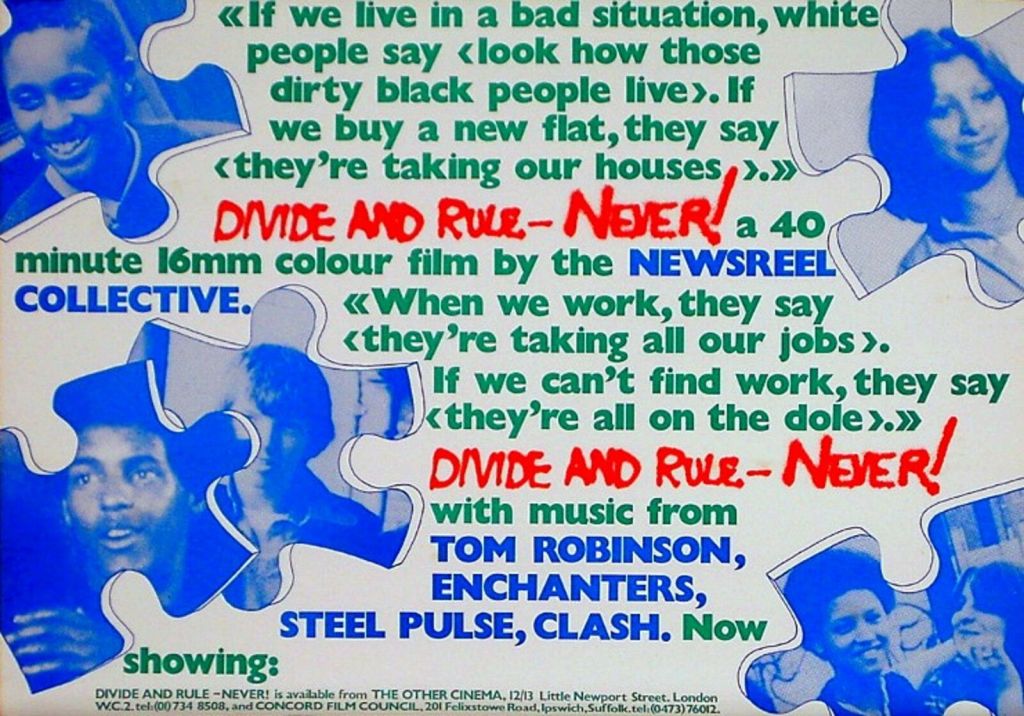
Divide and Rule – Never! (1978): Made for and by young people, this forty-minute or so film looks at race and how it is viewed in school, at work and by the law. There are also some historic sequences of British imperialism and a discussion of how Germany got to the point that it was pre-World War II, plus plenty of punk rock and reggae. This has many sides represented, from Black and Asian immigrants to ex-National Front members.

Divide and Rule — Never! was distributed by The Other Cinema, a non-profit-making, independent film distribution company in London.

Sadly, so much of this movie — made 45 years ago — are just as relevant today in America. This is movie that doesn’t shy away from incendiary material, but that’s what makes it so powerful. In addition to the interviews, it has some interesting animation and a soundtrack with Steel Pulse, TRB, X-Ray Specs and The Clash.

Dead Cat (1989): Directed and written by Davis Lewis, this has Genesis P-Orridge in the cast and a soundtrack by Psychic TV, which has been released as Kondole/Dead Cat.

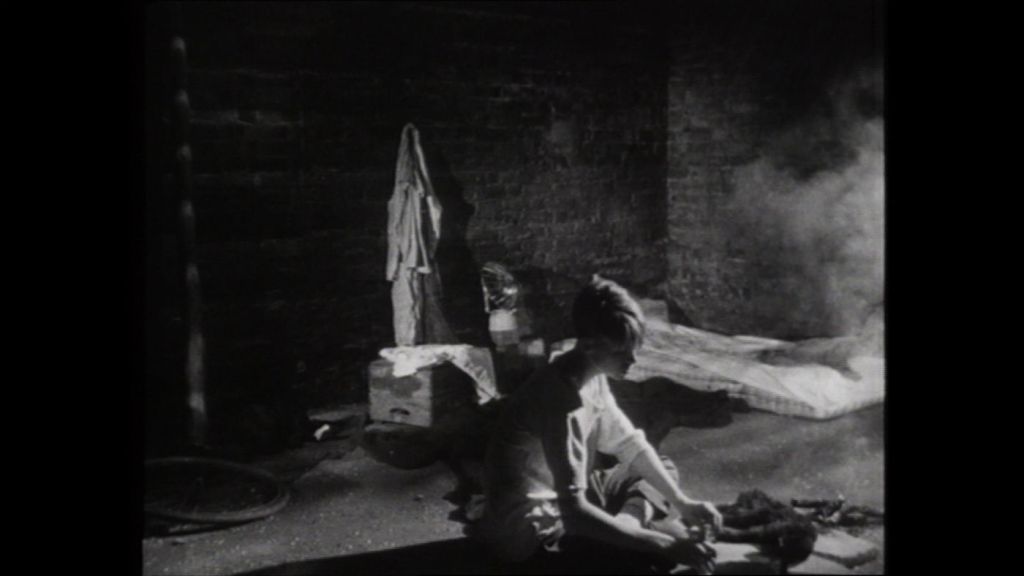
A boy (Nick Patrick) has a cat that dies and his grief deposits him into a psychosexual nightmare, including a medicine man (Derek Jarman) and several unhoused people (P-Orridge, Andrew Tiernan).

This was shown at only a few theaters the year it was release — including Scala Cinema — before fading away and almost being lost before Lewis found it. In the program for this film, Scala said “The torture that occurs at the transition of sexuality.” If you liked videos for bands liek Skinny Puppy and Nine Inch Nails, this feels like the inspiration.

The Mark of Lilith (1986): Directed by Bruna Fionda, Polly Gladwin and Zachary Nataf as a project at The London College of Printing, this is all about Zena (Pamela Lofton), who is researching monstrous women. She meets Lillia (Susan Franklyn) a vampire, at a horror movie and the two start a relationship. 

Liliana, trapped with an abusive male partner by the name of Luke (Jeremy Peters) who is what vampires probably would be, scavengers who feed on the weak, dreams of movies in which she is the victim of just such a vampire. She’s often fed on human beings, but has been careful not to be caught or make a mess, unlike her partner. As for Zena, she’s been studying how female gods were once worshipped but now only appear in horror fiction as monstrous creatures.

So much of this movie is as right on now as when it was made, like the speech that Zena gives when Liliana tracks her down: “Have you noticed that horror can be the most progressive popular genre? It brings up everything that our society represses, how the oppressed are turned into a source of fear and anxiety. The horror genre dramatizes the repressed as “the other” in the figure of the monster and normal life is threatened by the monster, by the return of the repressed consciously perceived as ugly, terrible, obscene.”

Her argument is that we can subvert the very notions of horror, making the monsters into heroes that destroy the rules that hold us down.

However, this being a student film, it’s very overly earnest and instead of working these ideas into the narrative as subtext, they take over the entire movie. If you’re willing to overlook this, it’s a pretty fascinating effort.

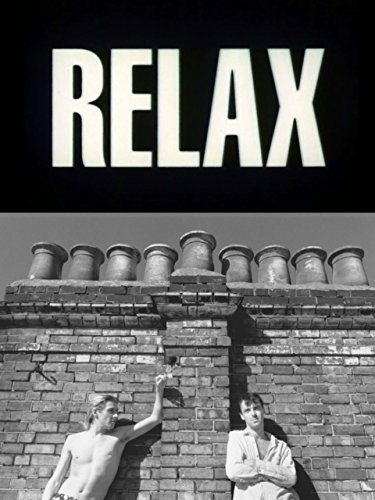
Relax (1991):  Steve (Philip Rosch) lives with his lover Ned (Grant Oatley), but as he starts to engage in a more domestic relationship, he starts to worry about all of the partners he’s had. After all, the AIDS crisis is happening and he’s never been tested. Ned tells him to relax, but there’s no way that he can.

The wait for the test is just five days but it may as well be forever. This also makes a tie between sex and death, as Steve strips for both Ned and his doctor. And in the middle of this endless period of limbo, he dreams of death and fights with Ned, who just smiles and keeps telling him to relax. But how could anyone during the time of AIDS?

I remember my first blood test and the doctor lecturing me after he gave it, telling me that I should have been a virgin until I married and whatever happened, I brought it on myself. The funny thing was, I had been a virgin, I thought I was getting married and I had no knowledge that my fiance was unfaithful to a level you only see in films. That night, my parents came to visit, leaving their small town to come to the big city and my mother asked, “What is that bandage on your arm?” I could have lied, but I told her it was for a blood test, and I dealt with yet someone else upset with me. My problems were miniscule in the face of the recriminations that gay people had to deal with, a time of Silence=Death, a place seemingly forgotten today other than by the ones who fought the war.

Directed and written by Chris Newby, this is a stark reminder of that time.

Boobs a Lot (1968): Directed by Aggy Read, this is quite simple: many shots of female breasts, all set to The Fugs’ song of the same name. Banned in Australia, this has around three thousand sets of mammaries all in three minutes, the male gaze presented over and over and, yes, over again until it goes past just being sophomoric and becomes mesmerizing in the way that breasts are when you’re starting puberty. I’m ascribing artistic meaning to this but really, at the end of the day, it’s just a lot of sweater meat. Fun bags. Cans, dirty pillows, babylons, what have you. My wife is always amazed at how many dumb names I can come up with for anatomy and I blame years of John Waters and reading Hustler as a kid and yeah, I’m not as proud of the latter than the former. That said, there are a lot of headlights in this one.

Kama Sutra Rides Again (1971): Stanley (Bob Godfrey, who also directed and write this) and Ethel are a married couple looking to keep their love life interesting, so they have been trying out new positions. Things start somewhat simple, but by the end, Ethel is being dropped through trap doors and out of an airplane onto her husband. A trapeze love making attempt ends in injury, leading Ethel to chase Stanley while all wrapped up.

Stanley Kubrick personally selected this film to play before A Clockwork Orange in theaters in the UK. I wonder if this played at Scala before the screening that shut down the theater. More than just a dirty cartoon, this was nominated for an Oscar. Despite being about lovemaking, it’s all rather innocent and remains funny years after it was made.

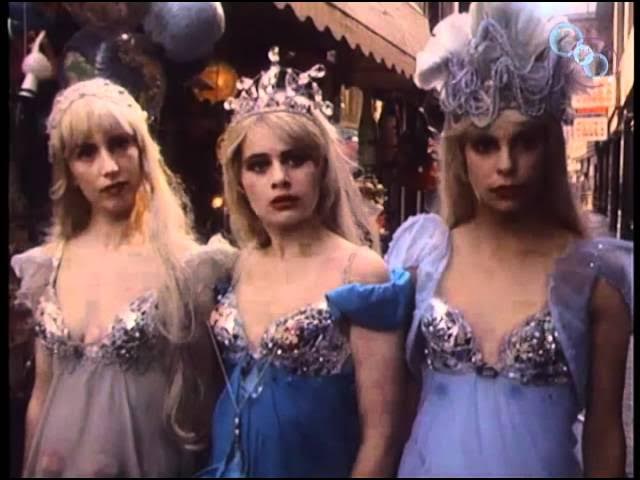
Coping With Cupid (1991): Directed and co-written by former Slits guitarist Viv Albertine, this finds three blonde alien women — played by Yolande Brener, Fiona Dennison and Melissa Milo — who have come to Earth to learn what love is, under the command of Captain Trulove (the voice of Lorelei King). They meet a man named Peter (Sean Pertwee), who hasn’t found anyone, as well as interview people on the street to try and learn exactly how one person can become enamored of another.

Richard Jobson from Skids and Don Letts from Big Audio Dynamite appear, as does feminist sexologist Shere Hite, at least on a TV set. I love that the three aliens are the ideal of male perfection yet they are lonely, trying to figure out what it takes to make the heart beat. It’s kind of like so many other films that I adore where space women try to understand men, a genre that really needs a better title. See Cat-Women of the Moon, Missile to the Moon, Queen of Outer Space, Fire Maidens from Outer SpaceAmazon Women On the Moon, Abbott and Costello Go to Mars, El Planeta De Las Mujeres Invasoras and Uçan Daireler Istanbulda.

On Guard (1984): Sydney: Four women — Diana (Jan Cornall), Amelia (Liddy Clark),  Adrienne (Kerry Dwyer) and Georgia (Mystery Carnage) — juggle their lives, careers and even families to destroy the research of the company Utero, who are creating new ways of reproductive engineering. Or, as the sales material says, “Not only are the protagonists politically active women, but the frank depiction of their sexual and emotional lives and the complexity of their domestic responsibilities add new dimensions to the thriller format. The film also raises as a central issue the ethical debate over biotechnology as a potential threat to women and their rights to self-determination.”

One of the women loses the diary that has all of the information on their mission, which leads to everyone getting tense over what they’re about to do. Directed by Susan Lambert, who wrote it with Sarah Gibson, this allows the women to be heroes and not someone to be saved. I like that the advertising promised that this was “A Girls’ Own Adventure” and a heist film, hiding the fact that it has plenty of big ideas inside it.

Today, in vitro fertilisation (IVF) is an accepted way of having children, yet here, it’s presented as something that will take away one of the primary roles of women. Juxtapose that with IVF being one of the women-centric voting topics of the last U.S. election.

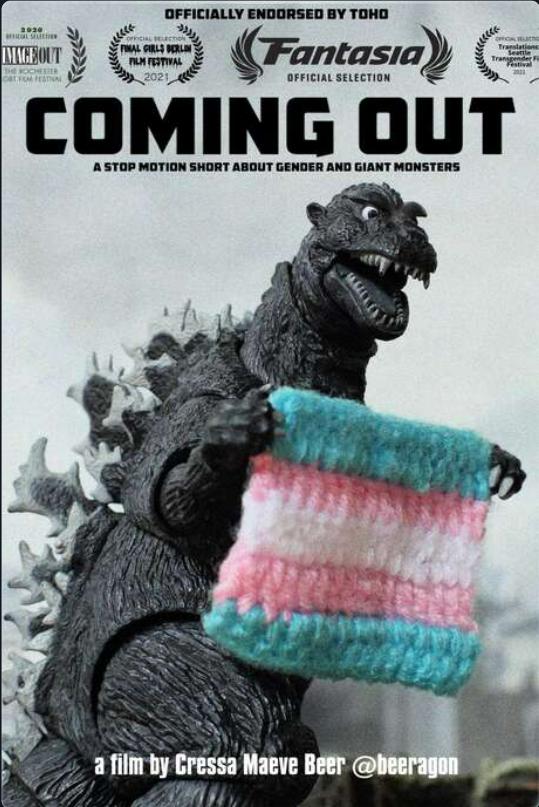
RETURN OF KAIJU DAY: Coming Out (2020)

In America, when Godzilla was dubbed into Godzilla, King of the Monsters!, Godzilla was a man. Yet in its original Japanese form, Godzilla was an it, an indefinable gender. Minilla seems to be a boy, but was adopted. And there was a Little Godzilla born in Godzilla vs. MechaGodzilla II

In Cressa Maeve Beer’s short, Little Godzilla and Godzilla are in the midst of a battle when the King of the Monsters notices that the child isn’t happy. When home, Godzilla notices that the child is sullen and just sits in their bedroom, watching Sailor Moon. The two kaiju have a discussion over tea, leading to the parent doing research and presenting Little Godzilla with a sweater in the colors of the trans flag.

Before you become upset about wokeness and this infiltrating your kaiju world, remember what I said above. Since the beginning, in Japan, Godzilla has never had a binary gender. It’s only been here where we’ve assumed that Godzilla is a man.

Does it even matter? I’m so pleased that Godzilla can affirm the child’s identity and help her to find her true identity so that they can get back to doing what they do best. Destroy Tokyo and dropkick other kaiju.

Even better, Toho posted this on their official Twitter on the last day of Pride Month a few years back. Here’s to Godzilla embracing being an open parent in the same way that it loves to shoot Atomic Breath in other creature’s scaly faces.

You can watch this on YouTube.

RETURN OF KAIJU DAY: Godzilla Fest 5: Battle of the Monsters (2024)

Thanks to Kazuhiro Nakagawa, Godzilla has had a few busy years, fighting Hedorah, Gigan and Jet Jaguar in a series of short films. The last short ended on a cliffhanger, as Jet Jaguar and Godzilla made up just in time to face off against King Ghidorah.

This is everything you ever wanted when it comes to kaiju fights, as it even has the JSDF dropping Gigan claws for Jet Jaguar to use in the fight against the three-headed dragon. When all seems lost and Godzilla is being lifted into the air by Gravity Beam, those claws return, being thrown right into King Ghidorah’s heart.

Made at Toho Studios 9th Street where the Godzilla films are filmed, this celebrates the 70th anniversary of Godzilla. For the first time in these shorts, human actors appear but luckily we don’t get into of their drama. This is about giant monsters and a heroic robot beating the stuffing out of each other.

I had the best day just watching these one after the other. It reminds me of being in my parent’s TV room, a place that had brown vinyl couches and so many blankets, just lying on the floor and watching monster movies all day. It makes me sad a little, as I’ll never have that time again, but happy that I did at one point.

You can watch this on Facebook.

RETURN OF KAIJU DAY: Fest Godzilla 4: Operation Jet Jaguar (2023)

In the first two shorts by Kazuhiro Nakagawa, Godzilla has battled Hedorah and Gigan, destroying most of Tokyo. To save the human race, a robot named Jet Jaguar is sent to stop Godzilla.

I love the fighting style they gave Jet Jaguar here as he uses Superman punches and acrobatic kicks as well as parkour as he jumps and flips over buildings, using his speed to avoid Godzilla’s attacks.

There’s a fantastic scene where Godzilla dodges a punch and we get a point of view shot of Jaguar’s fist entering the building. He looks upset at the destruction that he’s created and loses Godzilla long enough to get hit with Atomic Breath.

Just as Godzilla is about to deliver the fatal blow, he’s blasted by Gravity Beam, which can only come from Ghidorah. The most evil of all kaiju descends from space, destroying the city, wrecking everything as Jet Jaguar helps Godzilla to his feet and in a reprise of their friendship in Godzilla vs. Megalon, released fifty years before this short, they shake hands.

Five year old Sam loved Jet Jaguar and Godzilla teaming up. Fifty two year old Sam feels exactly the same way, even if my body hurts when I jump up and down.

This leaves only one thing: to be continued. I can’t wait to watch Godzilla Fest 5: Battle of the Monsters.

You can watch this on Facebook.

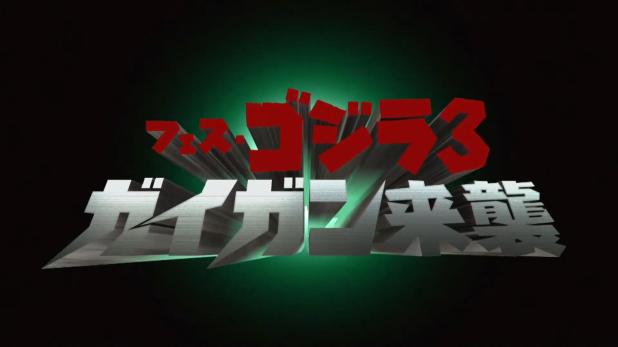
RETURN OF KAIJU DAY: Fest Godzilla 3: Gigan Attacks (2022)

A year after he made Godzilla vs. Hedorah, Kazuhiro Nakagawa with this short, which starts with a news report of Hedorah being defeated by Godzilla, then moves to Gigan attacking.

While the last short felt like it was in the Godzilla: Final Wars continuity, this short has a Showa era-Gigan. While Godzilla is the Godzilla: Final Wars suit, Gigan was crowd funded with those fans names in the credits. The “Gigan Suit Launch Project” project was an official Toho campaign.

Gigan slashes Godzilla’s face in this, just like he did when they first fought in Godzilla vs. Gigan. You can also see the scar in the sequel to this, Fest Godzilla 4: Operation Jet Jaguar, which again has a crowd funded suit for Jet Jaguar and a new origin.

While this is mainly just a battle between the two monsters, it’s a great battle. Godzilla seems down and out before blasting Gigan right in the face with his atomic breath, which made me jump up out of my seat.

I had no idea that all of these official shorts existed, which makes this year’s Kaiju Day so much more interesting!

You can watch this movie here.

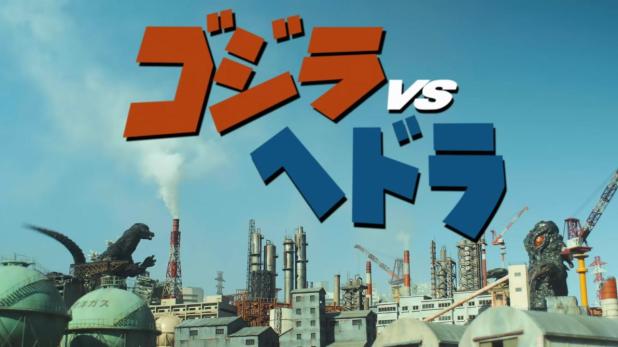
RETURN OF KAIJU DAY: Godzilla vs. Hedorah (2021)

Fifty years after they fought in Godzilla vs. Hedorah, director Kazuhiro Nakagawa brings Godzilla (Naoya Matsumoto) and Hedorah (Hikaru Yoshida) together one more time for a huge fight, using the suits from Godzilla: Final Wars.

This has Godzilla getting his eye injured, just like their first fight, but unlike that one, he makes short work of the kaiju we called the Smog Monster when we were kids. I love that the end of this looks just as psychedelic as the one I watched so often as a child.

In my life, I have learned that anyone who I don’t want to be friends with makes fun of Godzilla vs. Hedorah and talks about how dumb it is. It was one of the first shocks of my young life to learn that people treated that movie like a joke instead of a horrifying indictment of pollution.

Adult me loved that this starts with Hedorah basically smoking a factory like a bong. I always knew that kaiju was high.

There are two sequels to this, Godzilla 3: Gigan Attack and Fest Godzilla 4: Operation Jet Jaguar.

You can watch this on Facebook.

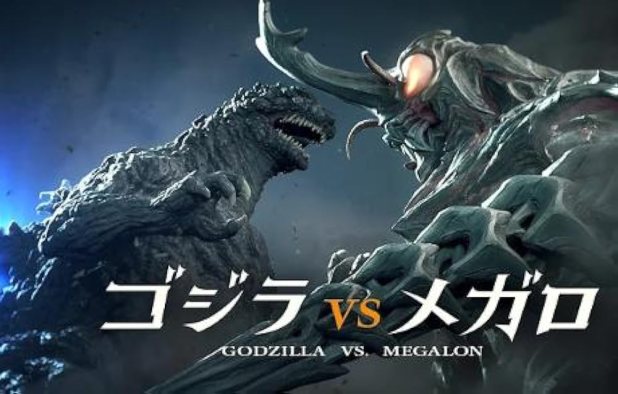
RETURN OF KAIJU DAY: Godzilla vs. Megalon (2023)

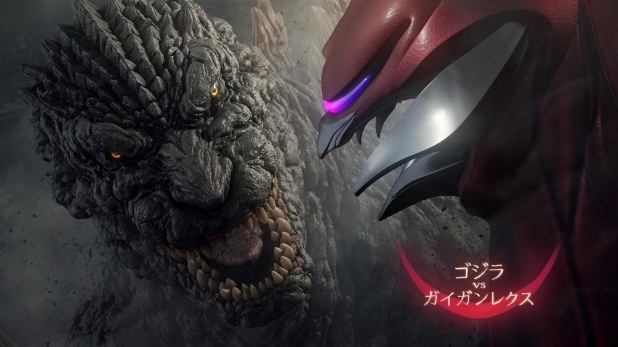
Directed by Takuya Uenishi, who also made the short G vs. G, which led to 2022’s official short Godzilla vs. Gigan Rex, this celebrates the 50th anniversary of Godzilla vs. Megalon, making me feel very old.

“All bound for Mu My Land,” or at least Mu or Seatopia, as one of their priestesses has used the dead body of Gigan Rex to bring Megalon back to life. Godzilla still stalks Tokyo, destroying all of the still alive Gigan that escaped, as well as ones that humans foolishly kept to experiment on. As a streaming tries to break into a government lab, the priestess appears and attacks JSDF soldiers, bringing Megalon up through the ground.

I love that Heisei Godzilla continues in these movies and wow, I’ve never seen a kaiju battle that had this much destruction before. Megalon is so much more frightening than he ever was before, more of an armored and caped cockroach than his skinny first form. Godzilla also shows off some new powers here, like being able to direct atomic energy to his fists and also use it to power him into a dropkick, a move that he famously used back in the first version of this movie.

The only thing that this movie is missing is Jet Jaguar. Once that happens, this will be perfect. They can keep making these as long as they can, because they’re amazing.

You can watch this on YouTube.

RETURN OF KAIJU DAY: Godzilla vs. Gigan Rex (2022)

This short film was directed by Takuya Uenishi and is an official Toho-produced sequel to Uenishi’s fan-made short film G vs. G. That movie was entered into the 2019 Godzilla contest and he was given the opportunity to develop a sequel project with Toho as his winning prize.

In the future, a place nearly twenty-five years since the last appearance of kaiju. he human race is fresh meat for several Gigan until one of the monster’s dead bodies is thrown at them. In the foggy distance, Godzilla appears and fights off three of the Gigan and their buzzsaws before they give their energy to the Gigan Rex and the battle rages.

According to TV Tropes, the Godzilla in this movie is a grown-up Godzilla Jr., with the first shot being similar to his resurrection Godzilla vs. Mechagodzilla II. His lullabye theme plays as well. He uses the Heisei era Nuclear Pulse and also has a Super Mode like Burning Godzilla. This also has narration from Megumi Odaka and has similar words to a speech in Godzilla vs. Destroyah.

Takuya Uenishi also worked on visual effects for Godzilla Minus One and created another short last year, Godzilla vs. Megalon.

I loved this! Toho has been awesome about how their trying to expand the Godzilla brand more creatively with their contests. This is just another example of the great things that come out of that!

You can watch this on YouTube.

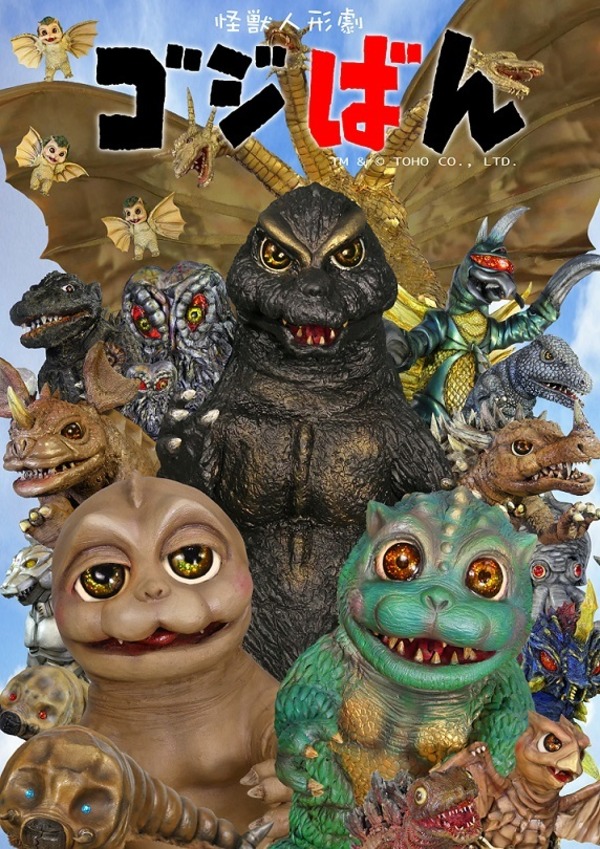
RETURN OF KAIJU DAY: Godziban (2019)

As I have grown older, I have become less concerned about things like continuity and making sense. I’m happy that this show can exist, a Godzilla world where three brothers — Godzilla-kun, Minilla and Little — are training to be great monsters. For example, in the first episode, they try to learn how to control their atomic breath and just end up making fireworks.

This series is adapted from a puppet fan film of the same name that was created by puppeteer Hideyuki Kobayashi for the 2019 Godzilla Contest. There are so many kaiju on Godzi Godzi Island, including Grandpa Hedo and Hedochi the smog monsters, who often close out each episode with a koan or introspective riddle. There’s also Rodan, Baragon, Battra, Jet Jaguar, Gigan, Young Caesar, Destroyah, twin Mothra Moshu-Moshu and Moshuu-Moshuu, Mecha Godzilla and so many more.

There are also live action scenes called “Attention! Godzilla” where women are struggling in their lives before meeting and adopting a Kamatte Gojira, the second stage of Godzilla from Shin Godzilla, who ends up acting a lot like my chihuahua Cubby, snarling and biting everything. Plus, “Go! Jet Jaguar” has the robot getting ready to fight Megalon.

How charming is this show? There’s Grandpa Zilla is the 1954 Godzilla but old. He has a a wizard staff and works for Santa Claus, delivering gifts to all of the good monster children. Godzilla 2000 is Godzilla-kun’s mother Mirei-san, the classic 70s Godzilla appears to be their father Taigo, Uncle Zilla is Shin Godzilla, Anguirus uses speech balloons just like he did in the original movie, Miyarabi is a human version of King Caesar, Rodan’s little brother Radon appears and the Godzilla brothers wearing turtle shells before worrying that they’ll be sued.

You can watch the series on YouTube.