APRIL MOVIE THON 3: Sgt. Bilko (1996)

April 4: Repeats Again? — Write about a movie that is based on a TV series.

The Phil Silvers Show, originally titled You’ll Never Get Rich, is a sitcom which ran on CBS from 1955 to 1959 but is better known as Sgt. Bilko. It started Phil Silvers as Master Sergeant Ernest G. Bilko, who runs a series of scams at Fort Baxter to make money instead of doing his job. Most of the first two seasons were written by creator Nat Hiken and Neil Simon was one of the writers in later seasons. DC Comics also published a Sergeant Bilko comic book which lasted 18 issues and a Sergeant Bilko’s Private Doberman series that lasted 11 issues.

Jonathan Lynn created the TV show Yes, Minister and directed Clue, Nuns on the Run, My Cousin Vinny and The Whole Nine Yards, so he knew comedy. Andy Breckman worked on Late Night With David Letterman and Saturday Night Live, as well as writing the movies Rat Race and Arthur 2: On the Rocks before creating the TV show Monk.

So with talent like that and Steve Martin, Dan Aykroyd and Phil Hartman in the cast, this movie should have been a success. It wasn’t, losing around a million dollars. It also won Worst Resurrection of a TV Show at the 1996 Stinkers Bad Movie Awards.

But you know, for a film that was critically savaged when it came out, I couldn’t help but enjoy it. Sure, Martin is a long way from his best work in this and so much further from his stand up, but you know, if you like Steve Martin, it works. As far as I’m concerned, Aykroyd and Hartman are the two best Saturday Night Live cast members ever, so I’ll watch anything they do. And I love old TV being repurposed.

Master Sergeant Ernest G. Bilko (Martin) is in charge of the motor pool at Fort Baxter, serving under Colonel John Hall (Aykroyd), who is more concerned with developing a hover tank than Bilko and his men’s money plans until Major Colin Thorn (Hartman) threatens everything by inspecting the base and even trying to steal Bilko’s long suffering girlfriend Rita (Glenne Headly, who teamed with Martin before in Dirty Rotten Scoundrels).

You also get new recruit  Pfc. Walter “Wally” T. Holbrook (Daryl Mitchell), Spc. Dino Paparelli (Max Casella), Spc. Tony Morales (Dan Ferro), Spc. Luis Clemente (John Ortiz), Sgt. Raquel Barbella (Pamela Segall, the voice of Bobby Hill), Pfc. Mickey Zimmerman (Mitchell Whitfield) and 1st Lt. Monday (Phil Silvers’ daughter Catherine). Chris Rock briefly is in it as is Travis Tritt as Travis Tritt, which is the perfect role for Travis Tritt.

Somehow, this is the only movie that Aykroyd and Martin appear in together. What’s funny is that Phil Hartman loved to impersonate Paul Ford, the original Colonel John T. Hall on TV, and used the impression during his Saturday Night Live. Everyone thought he was too young looking to play Colonel Hall in the film.

My favorite laugh is the end credit: The filmmakers gratefully acknowledge the total lack of co-operation from the United States Army.

Maybe movies have gotten so much worse since 1996 — they have — but I really had fun with this. I laughed a few times and yes, it’s kind of silly, but that’s what a comedy should be.
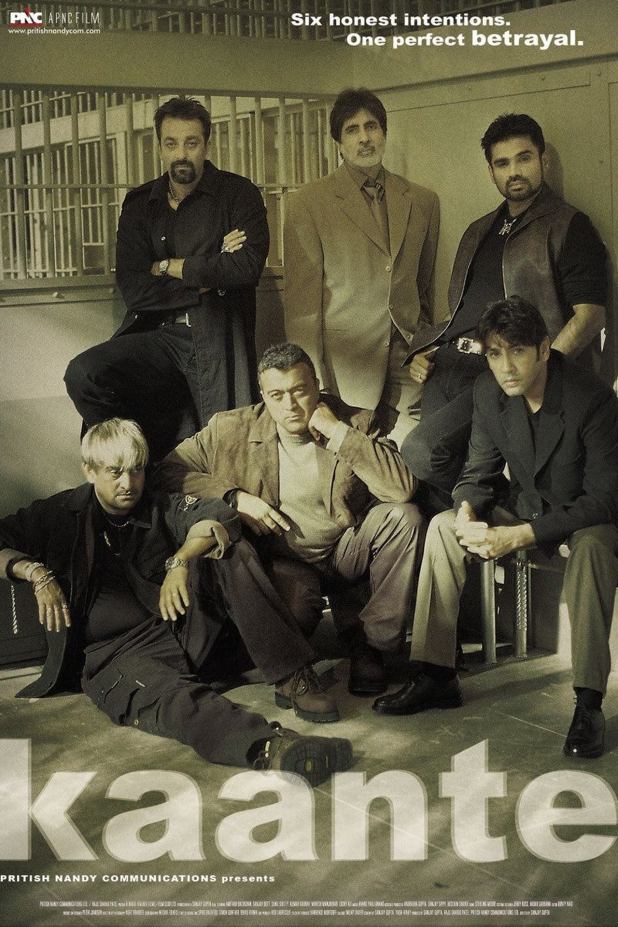
APRIL MOVIE THON 3: Kaante (2002)

April 3: Remake, Remix, Ripoff — A shameless remake, remix or ripoff of a much better known movie. Allow your writing to travel the world (we recommend Italy or Turkey).

The first Bollywood film to be completely shot in Los Angeles, Kaante combines The Usual Suspects with Reservoir Dogs and the inspiration of Tarantino’s movie, City On Fire, and becomes its own movie. Director and co-writer Sanjay Gupta said of the movie, “The whole world thinks Kaante is Reservoir Dogs. No, it isn’t. There are a few similarities in the second half of the film, but the genesis of Kaante was the Tribhovandas Bhimji Zaveri & Sons Jewellers robbery case, which was later made into the film Special 26. Till today, that’s unsolved. My idea was: ‘What if they were six boys from Dagdi Chawl, who conducted the most successful heist in the history of India, go back to Dagdi Chawl, which is suddenly surrounded by cops?”

Six Indian men living in America — all with a criminal record — are arrested by the police and interrogated about stealing laptops. Enraged at being profiled, they work to rob a bank where the LAPD paychecks come from.

They are Jay “Ajju” Trehan (Sanjay Dutt), Yashvardhan “Major” Rampal (Amitabh Bachchan), Marc Issak (Suniel Shetty), Andy (Kumar Gaurav), Bali (Mahesh Manjrekar) and Mak (Lucky Ali). After the bank robbery — during which they have an extended gunfight with a SWAT team — they go back to their secret hideaway. There, Bali goes all Mr. Blonde on a police officer and gets killed by Mak, who ends up being Mr. Orange.

So, yes, imagine Tarantino but add in a near 3 hour running time because, of course, Indian Hindi-language movies need music numbers.

Quentin himself said that this movie was his favorite of all the movies influenced by his work. “I think it was fabulous. Of the many rip-offs, I loved Hong Kong’s Too Many Ways To Be No.1 and this one, Kaante. The best part is, you have Indian guys coming to the U.S. and looting a U.S. bank. How cool is that! I was truly honoured. And these guys are played by the legends of Bollywood. Here I am, watching a film that I’ve directed and then it goes into each character’s background. And I’m like, “Whoa.” For, I always write backgrounds and stuff, and it always gets chopped off during the edit. And so I was amazed on seeing this. I felt, this isn’t Reservoir Dogs. But then it goes into the warehouse scene, and I am like, “Wow, it’s back to Reservoir Dogs.” Isn’t it amazing!”

Tarantino later screened Kaante at his New Beverly Cinema with Reservoir Dogs and City on Fire.

It is amazing as it shows so much more than its inspiration. There’s a lot that explains why the characters are getting involved in the robbery, such as Marc wanting to save his dancer girlfriend from a club owner, Major is trying to save the life of his terminally ill wife and Andy is trying to get custody of his son.

It also has so much influence from other American movies, as Gupta tried watching Reservoir Dogs but found it boring as he loved the movies of  Bruce Willis, Arnold Schwarzenegger and Sylvester Stallone. He didn’t want too much talking and instead, you get explosive battles. The arrest and interrogation scenes are very close to The Usual Suspects and the tip of the cap to that movie is that the main officer is named Detective MacQuarrie, a reference to screenwriter Christopher McQuarrie.

How realistic is the idea of this movie? Suniel Shetty, after going back to his hotel after working out, was taken by the police as they suspected he was a terrorist as this movie was filmed right after 9/11.

You can watch this on YouTube.

APRIL MOVIE THON 3: This Is America (1977)

April 2: Mondo Madness — Write about a mondo movie.

There was no internet in 1977 and the world was much larger, so the idea of what was in America could be seen as mysterious as countries like Africa that mondo filmmakers had already explored.

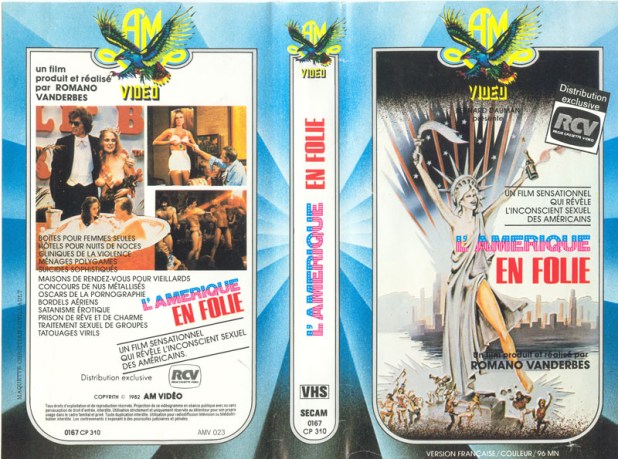
Directed and written by Romano Vanderbes (who also made This Is America Part 2The Sex O’Clock NewsAmerica Exposed and the compilation Sex Maniac’s Guide to the U.S.A.), this is also known as Jabberwalk and starts with “America the Beautiful” being played by The Dictators.

The America in this movie is the one that the right warns you about. It’s a place where demolition derbies, pro wrestling — there’s Ivan Putski! — and mud wrestling are our three biggest sports. Polygamy, nude beaches are packed, love boutiques are shopped by teenage girls, quick divorce and fast marriage is the order of the day, plus there are rentable BDSM dungeons, group sex encounter groups, dildo factories and legal brothels are everywhere. Even when people decide to actually get married, they go to the Poconos and have to undertake mandatory gun shooting classes to prepare them for the cities and suburbs of the United States where violence is a celebrated fact of life. Even church is just done inside your car now so you can keep moving to whatever is next, which is usually sex or death or being hooked up to electrodes that shock you when you eat too many french fries. Sorry. Freedom fries.

Also known as Crazy Ridiculous American People, this has everything from Don Imus hosting the 1975 Miss All Bare American pageant to a worship ceremony at the Church of Satan (incorrectly saying that people get so excited that they start hurting one another during rituals), a dildo salesman, the Eros Awards for pornography — look for Fanne Fox, Bree Anthony, female rock band Isis, Ron Jeremy, C.J. Laing, Marc Stevens, Helen Madigan, Darby Lloyd Rains and naked people painted silver — as well as Arnold casually walking out of a Gold’s Gym, the AccuJack masturbation machine, a man getting his penis tattooed, hot dogs being made, a clown church, suicide’s being fished out of the water around the Golden Gate Bridge (by the way, when my wife and I were first dating, she made me watch The Bridge doc about this while drunk and I was worried why I was allowing her in my house and now we’ve been married for nine years), cryogenics, drive-in funerals, brothels for senior men where older women are paid five and even ten dollars to sleep with them, a bank robbery, the many deaths in an Indianapolis 500 race, co-ed prisons, Mormon men with twelve wives and so much more.

At one point, before that internet I discussed at the open and the one you’re reading this on now, these movies were shocking. Then again, Vanderbes is Dutch and should know all about Amsterdam and that America is pretty puritanical, but maybe in 1977 we were all about sex before Reagan and the Religious Right and AIDS.

It’s all voiced over by Norman Rose, who narrated Harold and the Purple CrayonTennessee TuxedoMessage from Space, Pinocchio in Outer SpaceWar Between the Planets and Destroy All Monsters. He’s also Mr. Smith, the perverted dirty caller who gets Alice so excited in The Telephone Book.

What really gets me is that no matter how much sex is in this movie, there’s also the specter of Americanized violence leading everything. Our country was won by the gun and as movies like this and The Killing of America remind me, this kind of bloodshed that we gives hopes and prayers for every time and say that we can’t stop it and then it happens every single day. But it was like that in 1977 too as this movie continually reminds us. Worse, if it can get that way, kids today are upset about anything sexual while also fascinated, but not enough to make anything artistic or awesome. What I;m saying is that the 1970s of this movie are so far away that they only exist in this amber-grasp of VHS scuzz.

You can watch this on YouTube.

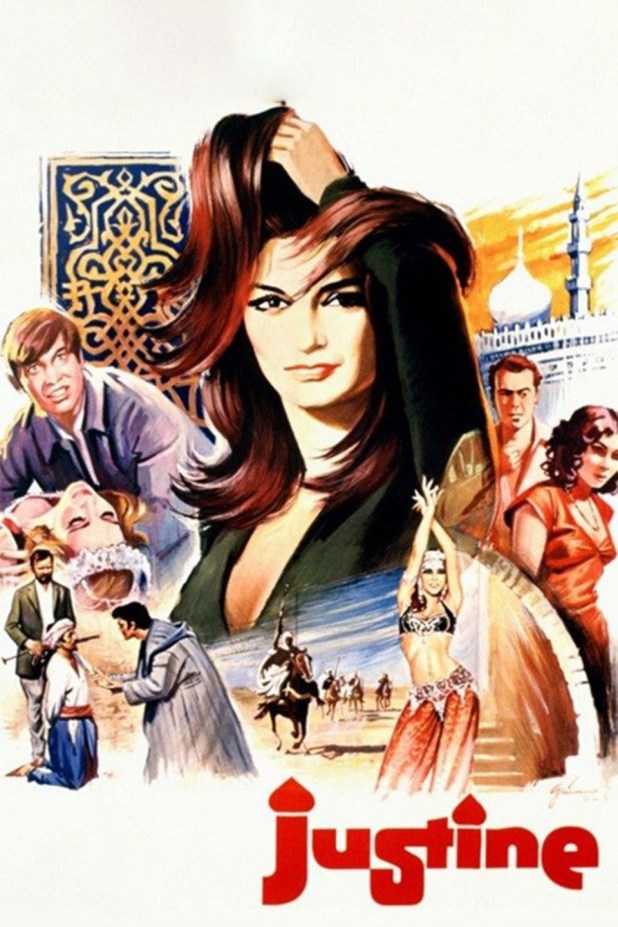
APRIL MOVIE THON 3: Justine (1969)

April 1: Drop A Bomb — Please share your favorite critical and financial flop with us!

No, not Jess Franco’s Justine which came out the same year.

This is a bigger movie.

Maybe not better.

Directed by George Cukor and Joseph Strick and written by Lawrence B. Marcus from the novel by Lawrence Durrell, Justine takes what is seemingly an impenetrable source and turns out, well, something.

Why two directors? The pre-production was done by Strick, who intended to shoot the movie in Morocco. He did some location filming there, but battled Fox execs and star Anouk Aimée. When he did not hire along with the studio’s wishes — and fell asleep on the set while working — Cukor was brought in. Instead of shooting on location, the rest was shot in Hollywood.

It ended up losing $6,602,000, which in today’s money is $55,824,857.00.

Let’s go back a bit. The book that this was based on is part of The Alexandria Quartet, a tetralogy of novels by British writer Lawrence Durrell. The first three books are a Rashomon-like telling of three perspectives on a single set of events and characters in Egypt, before and during the Second World War. The fourth book is set six years later. Justine is the best-known of these books. The author saw the four novels as an exploration of relativity and the notions of continuum and subject–object relation all within the theme of modern love.

Seems like a blockbuster, right?

In the book, the narrator — unnamed but revealed as a man named Darley in later novels — tells of his time in Alexandria and his tragic romance with Justine, a mysterious Jewish woman who was once poor and now married to the rich Egyptian Nessim. Darley is quite similar in background and life to the actual writer of this book.

I love the way that Justine herself is described: “alluring, seductive, mournful and prone to dark, cryptic pronouncements.” Feels like my dating history. There’s also another book within the book written by another lover of Justine, as well as her diary, all of which tell of her many lovers and teh dark hurricane that she brings into the lives of men.

There are also bits about the study of the Kabbalah and secret political games.

As for Durrell, he was born in India to British colonial parents and spent much of his life traveling the world. He worked as a senior press officer to the British embassies in Athens and Cairo, press attaché in Alexandria and Belgrade and director of the British Institutes in Kalamata, Greece and Córdoba, Argentina. He was also director of Public Relations for the Dodecanese Islands and Cyprus. Yet he resisted only being listed as British and didn’t even have citizenship, needing to apply for a visa every time he came to the country, which was embarrassing to diplomats. Also, he may have had a relationship with his daughter Sappho Jane, who was named for the Greek poet whose name is associated with lesbianism.

It’s hard to sum up an artist’s complex life in one paragraph but there you go.

Anyways, this movie feels cursed. Even people who left it worked on bombs. For example, Joseph L. Mankiewicz was working on the screenplay when he was approached to take over Cleopatra. Speaking of that movie, it’s failure led to original producer Walter Wanger being fired and original star — and the person often blamed for Cleopatra — Elizabeth Taylor being replaced.

The actress who was picked to play Justine, Anouk Aimée, was so upset at being separated from her lover Albert Finney that she wanted to leave. The actor had to visit her and tell her to complete the movie. In the book Conversations with My Elders, Cukor was asked who the worst actor he had ever worked with. He answered Aimée, saying “That picture could have been much more than it was allowed to be.” He said that the problem was “Attitude. Intractible. Like Marilyn Monroe, but without the results. Let me tell you, that girl knew she’d probably never work in Hollywood again, or she’d never have defied me like that.”

I love this review from Roger Ebert: “What Cukor has salvaged from this morass is rather remarkable. “Justine” is a movie that doesn’t work and is usually confusing, but all the same it’s a movie with a texture, an atmosphere, that’s almost hypnotic. People who go to movies to enjoy the story will be enraged, and people who go to Justine with any familiarity with Lawrence Durrell’s Alexandria Quartet will be appalled. But people who go to movies to watch the way scenes work, and to relish the rhythm of an actor’s performance, will like Justine more than they expected to.”

There’s a great cast at least. Nessim is played by John Vernon, Darley by Michael York, Narouz is Robert Forster, Pursewarden is Dirk Bogarde, plus there are roles from Jack Albertson, Michael Constantine, Michael Dunn, Barry Morse and Severn Darden. They’re great actors seeking a script to work with and sometimes it works, but there’s so much to get through and the first hour seemingly is formless. I don’t know if this film came out today if anyone would even feel like wading through it; attention spans have changed greatly in its lifetime.

In the 60s, 20th Century Fox seemed like they were unable to get anything going. Cleopatra was such a failure that they had to release all of their contract actors just to save money and sold their studios to Alcoa. They were saved by the box office of The Longest Day, The Sound of MusicFantastic Voyage and Planet of the Apes but would make other flops from 1969 to 1971, including Hello, Dolly! and Myra Breckinridge.

You can watch this on YouTube.

APRIL MOVIE THON 3 IS COMING SOON

All April long, there will be thirty themes as writing prompts. If you’d like to be part of April Movie Thon 3, you can just send us an article for that day to bandsaboutmovies@gmail.com or post it on your site and share it out with the hashtag #BSAprilMovieThon

This year, I plan on doing one long review for each day and really exploring each movie. I’m excited to have some other writers join in.

Here are the themes.

April 1: Drop A Bomb — Please share your favorite critical and financial flop with us!

April 2: Mondo Madness — Write about a mondo movie.

April 3: Remake, Remix, Ripoff — A shameless remake, remix or ripoff of a much better known movie. Allow your writing to travel the world (we recommend Italy or Turkey).

April 4: Repeats Again? — Write about a movie that is based on a TV series.

April 5: Moriarty! — Happy birthday Michael Moriarty. Watch one of his movies.

April 6: Until You Call on the Dark — Pick a movie from the approved movies list of the Church of Satan. Here’s the list.

April 7: Jackie Day — Celebrate Jackie Chan’s birthday!

April 8: Eclipse — Protect your eyes, stay inside and watch a movie about an eclipse.

April 9: You’re With the Band — A movie that has a band cameo. Here’s an article to inspire you.

April 10: In 3D! — Write about a movie in 3D.

April 11: Get Slimed! — A movie that has slime in it.

April 12: 412 Day — A movie about Pittsburgh (if you’re not from here that’s our area code). Or maybe one made here. Heck, just write about Striking Distance if you want. Here’s a list.

April 13: Yes No Goodbye — A movie about Ouija. Here’s a list.

April 14: Don’t Go Back to Amityville — An Amityville movie official or otherwise. Here’s a list.

April 15: Slasher — A slasher without any sequels.

April 16: Get Me Another — A sequel.

April 17: Did You Get It? — A bug movie.

April 18: In Like a Lion — A weather gone wild movie.

April 19: Animals Attack! — Animals gone wild and killing people.

April 20: So Dark, So Funny — A dark comedy.

April 21: Fashion Day — A movie all about fashion that you will critique.

April 22: Earth Day Ends Here — Instead of celebrating a holiday created by a murderer, share an end of the world disaster movie with us. But seriously, treat the planet right!

April 23: Get Out! — A haunted house movie is today’s pick.

April 24: Think of the Children — Pick a movie that was controversial for how potentially damaging that it would be to the children who are our future.

April 25: Bava Forever: Bava died on this day 44 years ago. Let’s watch his movies.

April 26: Heavy Metal Movies: Pick a movie from Mike McPadden’s great book. RIP. List here.

April 27: SNL: A movie based on an SNL character.

April 28: Video Nasty: A video nasty! List here.

April 29: Regional Horror — A regional horror movie. Here’s a list if you need an idea.

April 30: Teen Movie Hell — Mike McPadden’s other book. List here.

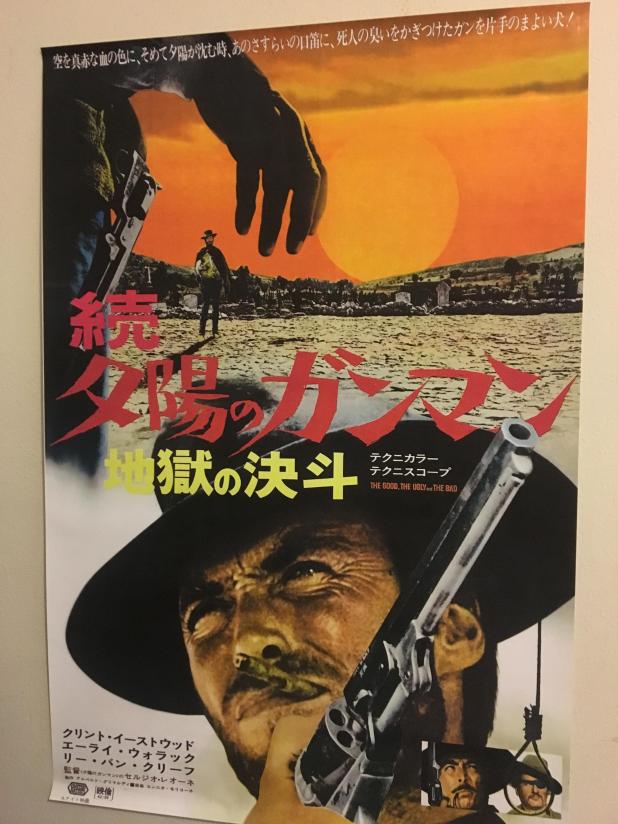
APRIL MOVIE THON 2: The Good, The Bad and The Ugly (1966)

April 30: How the (Not) West Was Won — A Western not made in America.

My Uncle Bill’s name was Frank, not Bill, but at some time in his teenage years he decided that he wanted to be Bill, after Buffalo Bill, and everyone allowed him to be. So even into his senior years, no one knew his real name. I tell you this to establish his cowboy movie bonafides. He and my father would often quiz each other into the night around a campfire about famous stars and they seemed to agree that Lash LaRue was the best, but then again, Lee Van Cleef was the best bad guy.

We Italians know something of Westerns.

After the success of For a Few Dollars More, United Artists approached the film’s screenwriter, Luciano Vincenzoni, to sign a contract for the rights to this film and the next one. Producer Alberto Grimaldi, director Sergio Leone and he had no plans, but with their blessing, Vincenzoni came up with the idea of three rogues — the Man With No Name (Clint Eastwood), Tuco Benedicto Pacífico Juan María Ramírez (Eli Wallach) and Angel Eyes (Lee Van Cleef) — seeking hidden gold sometime after the Civil War. They got a bigger budget, Eastwood got $250,000, a Ferrari and a percentage, then the camera rolled.

This would be the last role that Eastwood would do for Leone, who he saw as too much of a perfectionist. Harmonica in Once Upon a Time In the West would go to the man who was originally going to play Angel Eyes, Charles Bronson.

The film begins with Angel Eyes killing men on his way to finding Confederate gold while The Man With No Name and Tuco keep pulling a scam where The Man collects the bounty on Tuco’s head, saves him and then they do it again in a different town. After dealing with Tuco’s constant complaining, he finally strands him in the desert and the “Rat,” as Eastwood’s character describes him, gets his revenge by marching him across the same hot and desolate no man’s land.

The twists and turns of this movie find a man named Bill Carson (Antonio Casale)  burying gold in one grave in a cemetery. Tuco knows the name of the burial ground while The Man knows the grave. $200,000 worth of gold is hidden away, which is a lot of money even today, so you can imagine why everyone is willing to do anything for it.

American audiences were tired of Italian cowboys by this point and who can say why they were so dumb? Roger Ebert realized this and said that he “described a four-star movie, but only gave it three stars, perhaps because it was a Spaghetti Western and so could not be art.”

As bad as Van Cleef seems on screen, he did have some rules about being a good person in his real life. He was supposed to slap around Maria (Rada Rassimov) in one scene and said, “I can’t hit a woman.” Rassimov told him, “Don’t worry. I’m an actress. Even if you slap me for real, it’s no problem”, but that’s a double slapping her. Van Cleef said, “There are very few principles I have in life. One of them is I don’t kick dogs, and the other one is I don’t slap women in movies.”

Even the name of this movie is ironic, used past film and having a meaning in actual life. The Mexican standoff found its way into many movies, particularly the work of Quentin Tarantino, who said that the final scene is his favorite of all time: “During the three-way bullring showdown at the end, the music builds to the giant orchestra crescendo, and when it gets to the first big explosion of the theme there’s a wide shot of the bullring. After you’ve seen all the little shots of the guys getting into position, you suddenly see the whole wideness of the bullring and all the graves around them. It’s my favorite shot in the movie, but I’ll even say it’s my favorite cut in the history of movies.”

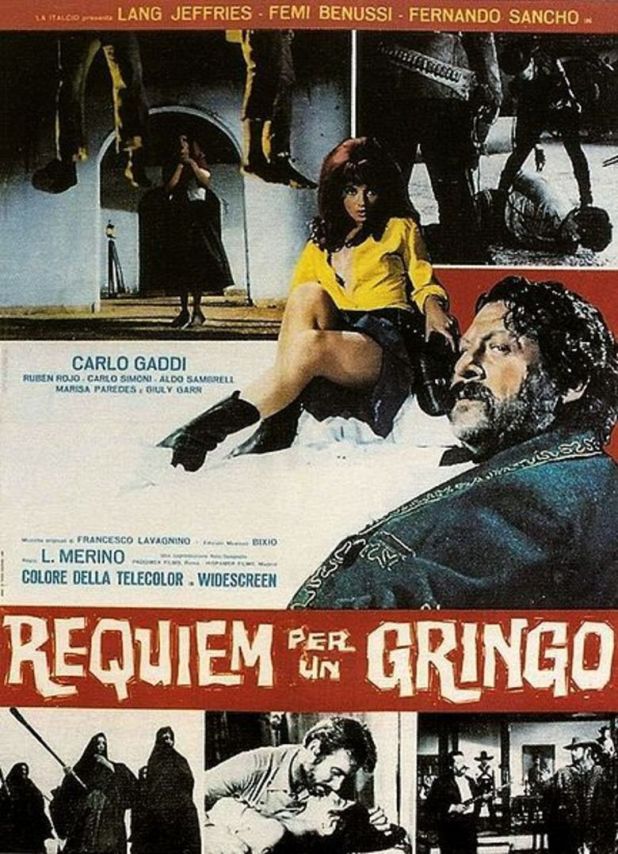
APRIL MOVIE THON 2: Requiem for a Gringo (1968)

April 30: How the (Not) West Was Won — A Western not made in America.

In the United Nations that is exploitation cinema, I love the connections that are built. It may seem unexpected, but the line between Japanese samurai cinema and the Italian Western are incredibly direct. Yojimbo is A Fistful of DollarsRequiem for a Gringo has elements of Harakiri.

Directed by Eugenio Martin (Horror Express) and José Luis Merino, this film is also known as Requiem for Django because, well, in 1968 every movie it seemed was about Django. The Django in this film is also known as Ross Logan and he’s hunting down a gang — while dressed in a leopard skin! — using astronomy to plan his attack during an eclipse. He also knows how to play the gang’s personalities and desires against one another, which is a step beyond the traditional Italian Western hero who may go in guns blazing.

He can also precict storms, which is a strong skill to have in the West.

He puts Porfirio Carranza (Fernando Sancho) and his men — Tom Leader (Rubén Rojo), Ted Corby (Carlo Gaddi) and Charley Fair (Aldo Sambrell) — at odds with one another. Meanwhile, the stories of two women — Alma (Femi Benussi, So Sweet, So Dead), who is supposedly the property of Carranza but is already sleeping with Leader but she knows she’s trapped in a gang of maniacs, and Nina (Marisa Paredes), a young woman constantly pursued by Corby and trying to stay pure for just one more day — take more of a center stage than in other Eurowesterns.

I love how this genre bends and flexs to accept new ideas, even if we live within the constant Western cycles of murder and revenge.

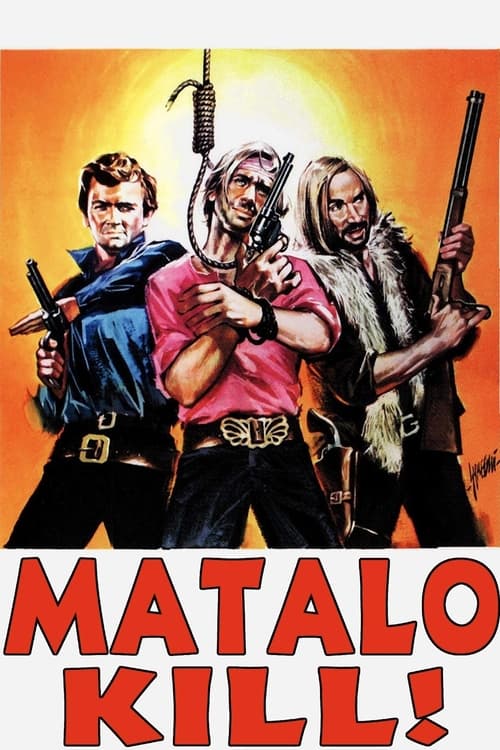
APRIL MOVIE THON 2: Matalo! (1970)

April 30: How the (Not) West Was Won — A Western not made in America.

It would take other film industries decades to equal the sheer volume that the Italian exploitation machine could accomplish. In the four years since Django and five since A Fistful of Dollars and West and Soda, a traditionally animated movie whos escreation predates Leone’s film, hundreds of cowboys thundered out of the European West and several genres emerged, from comedies and zapata westerns to films centered on the tragic hero, horror westerns and this film, which is uncatagorizable but could maybe be an acid horror art deconstruction.

Cesare Canevari only directed nine movies, but wow if he didn’t hit nearly every genre: an early Western (Per un dollaro a Tucson si muore), giallo (A Hyena In the Safe), an early Italian Emmanuelle (A Man for Emmanuelle), Eurospy (Un tango dalla Russia), Ajita Wilson’s first movie (The Nude Princess), late era giallo with plenty of sleaze (Killing of the Flesh) and Naziploitation (the go all the way madness that is  The Gestapo’s Last Orgy).

It starts with a desperado named Bart (Corrado Pani) walking through the town as cocky as possible, despite the fact that he’s headed to the gallows. He even puts his own neck in the noose, knowing that some Mexican bandits are about to save his neck. His walk back out of town is even more audacious, as he’s just stood on the precipice of death and watched the chaos that he has ordered come true. He somehow tops that by killing off the men who saved him before meeting up with his friends Ted (Antonio Salines) and Phil (Luis Dávila) in a ghost town where the movie decides to slow down as they explore an abandoned hotel as electric guitars scream and wind blows through every frame of this film.

They’re joined by Mary (Claudia Gravy, Yellow Hair and the Fortress of Gold, Tuareg: The Desert Warrior), a snarling force of female nature that finds herself strong enough to be on the side of stagecoach robbing evil. That robbery seems to cost Bart his life and the film switches gears as the gang hides out in the ghost town, abusing an old woman until Ray (Lou Castel) and a younger widow (Mirella Pamphili) arrive and they too are abused by the gang. Luckily, Ray has a horse who seems smarter than him and he’s quite good with a boomerang, which this movie uses for wild POV shots as he whips them at the gunmen.

What’s wild is that a year earlier, Dio non paga il sabato (Kill the Wickeds) was directed by Tanio Boccia and it’s nearly the same movie but shot as if it were a normal film, not the sometimes wandering, other times hyperfocused Matalo!

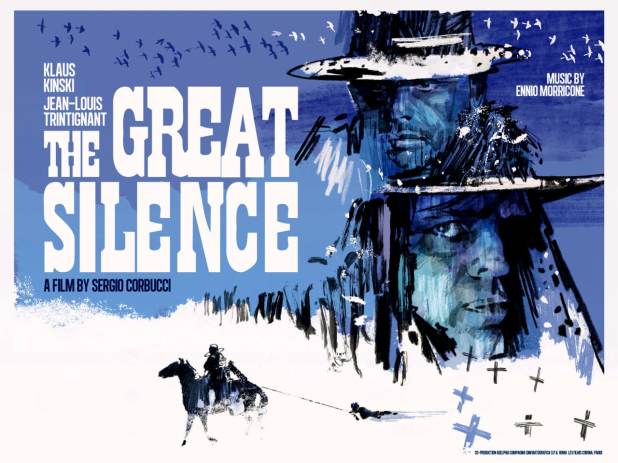
APRIL MOVIE THON 2: The Great Silence (1968)

April 30: How the (Not) West Was Won — A Western not made in America.

When you’re looking for a happy movie to start the day with, let me not recommend The Great Silence, a film that Sergio Corbucci created after the deaths of Che Guevara and Malcolm X.

But let me definitely recommend it any other time.

Between Minnesota ClayDjangoThe Mercenary and Navajo Joe, Corbucci contributed more to Italian Westerns than nearly anyone short of Leone. But he was getting tired.

Corbucci said, “Every time I make a Western, I say “This is the last”. I get tired and nervous; I hate the horses and the desert. I go back to town wanting to make a film about a man who drives a car, uses a phone and watches TV. But once I’m there, I start thinking how nothing is finer in the cinema than a horseman, with the setting sun and a red sky. That makes me want to carry on. And I think up another Western with my actors. ”

So one more cowboy movie. But this time, in the snow.

Italiam Westerns had made their way, well, west thanks to casting American actors, which worked thanks to dubbing. Marcello Mastroianni had the idea of playing a mute gunfighter and told Corbucci that he had always wanted to appear in a Western. Just the fact that he didn’t know English may have held him back. So when Corbucci first met Jean-Louis Trintignant — Franco Nero turnd it down to be in Django — he discovered he didn’t speak English. So instead of dubbing, he could play the hero in this movie, Silence.

For the villain, who is a worse human being than Klaus Kinski? Corbucci took this further by asking him to base his role on Gorca, the vampire played by Boris Karloff in Mario Bava’s Black Sabbath. Bava’s movie would influence this film in many ways. Kinski was Kinski on set, having an affair while his wife and child were there; also he told Frank Wolff — who played Sheriff Gideon Burnett — “I don’t want to work with a filthy Jew like you; I’m German and hate Jews.”  Wolff responded by strangling Kinski.

The Great Silence also has a cast of noted Italian actors, including Luigi Pistilli (Your Vice Is a Locked Room and Only I Have the Key), Bruno Corazzari (Live Like a Cop, Die Like a Man), Raf Baldassarre (the tour guide in Eyeball) and Mario Brega (a butcher who went into acting; he’s Corporal Wallace in The Good, the Bad and the Ugly). They’re joined by Vonetta McGee, who dropped out of pre-law at San Francisco State College and moved to Rome. This was her first movie and she was invited back to America by Sidney Poitier, where she became a blaxploitation star. She’s also in Repo Man, probably because not only is she a great actress, but because Alex Cox is a big Italian western fan.

The movie that emerged is set up like a traditional Western — Loco (Kinski) and his men are bounty hunters who have hunted a group of people unfairly condemned as criminals; they use the law of the bounty to cover the fact that as capitalists they love money and as maniacs they love to kill. Silence should be the strong and silent man who rides into town, cleans things up and rides back out. But he’s different because he uses a gun — a Mauser C96 semi-automatic pistol — that gives him an unfair advantage over his enemies, men who he stops by shooting off their thumbs, keeping them from doing any more violence.

Yet even his heroism, even his love for a good woman — Pauline (McGee) — can’t save him. But in 1968, just the fact that a white man and a black woman had a love scene was subversive (as subversive as the hero being ultimately ineffectual). Corbucci said, “People don’t go to the cinema to see love scenes. Buñuel was right when he said the most embarrassing thing, for a filmmaker, is to point a camera at a couple kissing. Nothing is more banal than a kiss. Generally you can’t have love scenes in stories which are action-based – though in The Great Silence I shot quite a beautiful love scene between a black woman and a mute. There was something very beautiful and very morbid about it. This was the only love scene I ever included in a film of this genre…”

Yet Alex Cox said that the real moral of this movie is that “sometimes, even though you know you’ll fail, you still do the right thing,” which might make Silence, even though he fails, the most noble of all Italian Western heroes.

That said, Corbucci also delivered two other endings:

In one, Silence is shot by Loco’s henchman in both of his hands before he can draw his gun. Instead of killing his enemy, Loco tells his men to leave. The fate of everyone is left up in the air.

Yet there’s also a happy ending. Seeing as how this would be released over the holidays, Corbucci had a different ending where Loco draws before Silence initiates their duel. Yet the sheriff has survived, helping Silence to kill the other bounty hunters, showing that he has created a metal sleeve to protect his hand, just like Clint Eastwood did in A Fistful of Dollars. Silence agrees to be a deputy and everyone leaves happy.

But that doesn’t work, does it?

The Grand Silence didn’t play the UK until 1990 and the U.S. until 2001. When it was screened for 20th Century Fox boss Darryl F. Zanuck, he was so offended by the ending that he nearly swallowed his cigar and refused to release it in the U.S. In Italy, a viewer was so upset by the closing that he shot the screen with a gun.

So maybe wait to watch this until later in the day and not immediately upon waking up like I did.

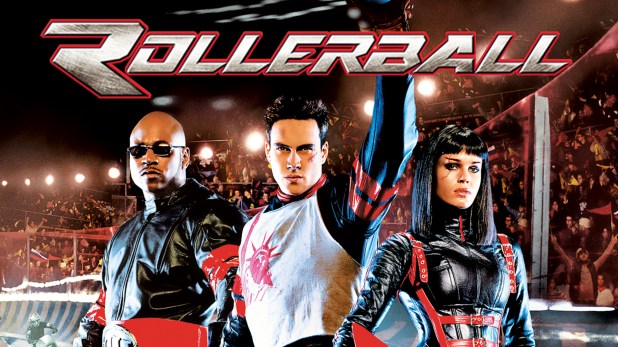
APRIL MOVIE THON 2: Rollerball (2002)

April 29: Drop A Bomb — Please share your favorite critical and financial flop with us!

I’m usually nice about movies, even when they fail on every level, but why the fuck does this movie exist and who is it for?

I should just stop this article after that sentence.

Somehow, John McTiernan is the same person who made Die Hard and Predator. How did we get here?

Like the 1975 movie, it’s based on William Harrison’s short story “Roller Ball Murder,” but unlike that movie, it’s set in the present, avoids a lot of the political issues of the world and oh yeah — when the James Caan-starring original movie was made, people knew and understood a different roller derby, placing it into the same strange world as pro wrestling and not how we see it today, which is a female-centric sport that has no predetermined elements.

Jonathan Cross (Chris Klein, maybe a step down from Caan, end of tweet) and Marcus Ridley (LL Cool J) are the only good players on Kazakhstan’s Zhambel Horsemen. Sure, everyone gets destroyed but them, but team owner Alexi Petrovich (Jean Reno; if I wrote he deserves better, I would have to say it for everyone in this movie, so just add “he or she deserves better” every time you read most of the names in this) keeps them supplied with money, booze, cars and women like their teammate Aurora (Rebecca Romijn in a black wig; you’d be amazed with black bangs can do to a heart rate). The secret is that Alexi and his henchman Sanjay (Naveen Andrews) have been making the game more dangerous to make it more popular.

You know who knows about worked or semi-worked sports churning up and spitting out bodies? Former ECW mastermind Paul Herman and MMA fighter Oleg Taktarov who show up in this. So does Shane McMahon, which meant this show was promoted all over WWE TV.

How did we get here? The first draft of the script was considered by many to be superior to the original film, yet McTiernan didn’t like it because it focused too much on social commentary. He wanted action and action he created, even if initial test screeners showed the movie to be confusing and even restrained when it should be going for it with a hard R if there was no story.

Thirty minutes were cut out of the first cut, the entire ending was re-shot and changed, massive reshoots and re-edits happened and some of the cuts were made because MGM said the movie was “too Asian,” which for many reasons — mostly all the movie in the Chinese movie market — would never happen today. Oh yeah — the score by Brian Transeau was “too Arabic” and was replaced with a new score by Éric Serra. And then an entire sequence looked too dark, so they reshot it, then made it look like it was all green night vision and you still couldn’t see it.

It made $25.9 million on a budget of $70 million but hey — Slipknot is in it!