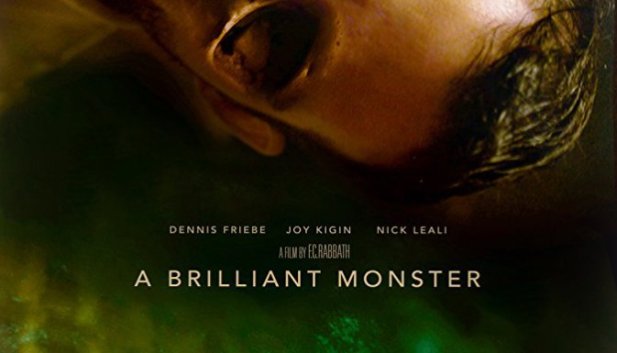
A Brilliant Monster (2018)

In my non-movie watching life, I write advertising copy for a living. A lot of that involves the constant search for inspiration as I battle against deadlines. So the central conceit of this movie, which concerns how Mitch Stockridge, a self-help author, gets his story ideas spoke to me. But how’s the final product?

Mitch (Dennis Friebe) has taken his life from being bullied in his teens to a successful career as a self-help author. But it’s not enough. He’ll never please his father. And he’ll never quiet the fans, journalists and even close friends who keep asking him where he gets his ideas. That’s because the truth is stranger than fiction: his ideas come from a monster that lives in his bathroom that he feeds people to. In exchange, he gets a crumpled piece of paper with scrawled ideas that he takes for his own.

After trying to write an actual novel instead of just another self-help guide, Mitch deas with the depression that comes with shooting for the stars and falling short. That’s when he decides to start feeding everyone and everything he can to the creative beast. And all of the people disappearing around him leads to the police investigating him, with Abby the lead detective going for interested to a vendetta to pure hatred. That’s because of more than just this case — one of Mitch’s self-help books inspired her husband so much that he left her and their family behind to chase his dreams.

So is this a real monster? Or is Mitch just crazy? And is Abby just as crazy for starting to believe in it, too?

Now, Mitch wants to prove the critics and his father wrong once and for all. And that means drastic measures and deaths that are way more important than just some girls he’s met in bars and on CraigsList. No, it’s time for his best friend John to meet the teeth of the bathroom monster if he really wants to be a celebrated writer.

There’s definitely a bit of Little Shop of Horrors and Basket Case at work here. I really liked how you never really see the monster, just its teeth and the sounds it makes as it tears apart its meals. There are a lot of questions raised by this film, such as Mitch’s journey from abused child to the caretaker for his father, the pains and sacrifices that it takes to create and the relationships that it costs along the way. I really felt that last part a lot.

This is definitely a low budget film, so go into it knowing that. It looks decent, though, with some solid editing and the leads are way better actors than you’d expect. There aren’t a lot of characters to like, however, as almost everyone is uniformly a bad person. There isn’t anyone to root for or learn from in this. But it is an intriguing meditation on the creative process, even if it feels like there could be more to the overall story.

The film’s IMDB site says that this film will be released on December 1. To learn more, visit the official site.

Disclaimer: I was sent this movie by its PR team, but as you know, that has no bearing on my review.

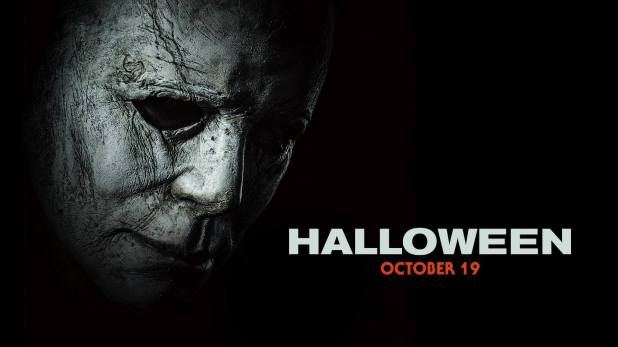
Halloween (2018)

SPOILER WARNING: We don’t often review movies that are still in the theater, so usually don’t bother with worrying about giving away major plot points. Seeing as how this one is in the theaters right now, you may want to see it. We’d rather not be to blame for giving away plot points, twists and turns or influencing your decision to see it. Movie watching is an incredibly personal experience and we respect everyone’s opinion, even when it’s wrong and we laugh at you in the privacy of our own home about your lack of aesthetics and taste.

Nearly every review of the new Halloween starts out by stating the problematic nature of the franchise. In my perfect world, Halloween 2 would have been the end, with Halloween 3: Season of the Witch starting off a yearly anthology of pre-Samhain related mayhem. But my wife has so much love for this series that she endorses everything save Halloween Resurrection and the second Rob Zombie film. And even then, she’ll still watch those. We can’t hide the fact that we are fans — our shelves speak to it, with multiple versions of the first film and every cut of 6.

That’s why the possibility of a new Halloween film with a major budget, nine years after the last abortive attempt to make one of these films, raised such hope. David Gordon Green, the director of Pineapple Express, along with frequent collaborator Danny McBride would create the film along with the participation of the original creator, John Carpenter and the acting skills of Jamie Lee Curtis. For the last year, we’ve been inundated with the assurances that these creators are people who get what makes Halloween work. This would finally be the sequel that fans had been craving since, oh, 1981.

The first chink in the hype armor, for me at least, was the knowledge that this film would invalidate Halloween 2, being seen as the only sequel that counted. The convoluted history that we mentioned earlier may keep some from understanding the series, but I’ll be honest. There’s no reason why this movie had to erase the second installment. It could have still happened and it wouldn’t impact this film at all.

There’s really no nice way to say this, so let me jump in feet first. Beyond being a movie that fundamentally doesn’t comprehend what made the original Halloween such a great film, the 2018 version of Halloween is a movie with no understanding of what makes a great horror movie, either.

That isn’t to say there isn’t a great set-up. Forty years after the 1978 Haddonfield murders (referred to as “The Babysitter Murders,” a nod to the film’s original title), a Serial-like podcast team makes its way to the area to investigate the story and try to see both sides. The first mistake the journalists make is to show Michael Myers’ mask his iconic mask. This scene is pretty chilling, as the entire yard of Smith’s Grove Sanitarium rises up in chaos, dogs barking, insane men screaming, Myers just silent and not turning his back. Let’s not let the logic of how two podcasters got such a crucial piece of evidence out of police custody or how any hospital in its right mind would allow this interview to happen this way get in the path of the movie.

The podcasters then make their way to the fortress home of Laurie Strode, who has spent the last forty years preparing for Michael’s return. If this seems like 1998’s Halloween H20: 20 Years Later twenty more years later, we should be so lucky. After a quick interview in which the British duo shows that they just don’t get it, Laurie kicks them out.

That night, Dr. Ranbir Sartain and a maximum security crew transport Myers and other prisoners from Smith’s Grove to a maximum security prison. Of course, the bus crashes. Of course, Michael escapes. And of course, the footage echoes the escape from Halloween 4 while simultaneously telling us that that movie no longer exists. There’s a moment here, where Michael kills a young boy, where I felt like this was this film announcing that it wasn’t going to play by the traditional slasher rules. If young kids were fair game, everyone was. Sadly, this was one of the last surprises that the film would have in store.

Michael then finds and kills the podcast team, which has no real emotional heft because we have no reason at all to care whether they live or die. Sure, they tempted fate and must be destroyed in order for him to get his mask back. It’s a brutal scene, putting over the power that Michael has, but if we follow logic, The Shape should by 61 years old. Co-writer McBride stated that “I think we’re just trying to take it back to what was so good about the original. It was just very simple and just achieved that level of horror that wasn’t turning Michael Myers into some being that couldn’t be killed. I want to be scared by something that I really think could happen.” I haven’t seen many 61-year-old men that can throw people around like this. The refusal to embrace the supernatural evil of Myers is one of this film’s first failings.

Back to Laurie Strode. She’s had two failed marriages and had her daughter Karen (Judy Greer) taken away from her at the age of twelve. Today, they have a tenuous relationship, with Karen’s daughter Allyson working the hardest to understand her grandmother. Learning that Myers is loose, Laurie breaks into her daughter’s home and warns her and her husband Ray that they need to be ready. This is another narrative misstep. Are we supposed to believe that Laurie’s PTSD and constant battle readiness has cost her way too much? Or is she the only person who is right in this whole film? The way it plays out, as she’s pretty much the only protagonist who actually does something, proves that she’s correct all along.

That’s one of the critical flaws in this movie. Outside of Laurie, there isn’t a single character that we get to know or care about. Her daughter is someone who has given up connecting with her. That’s her one note. Her granddaughter is in a crappy relationship and wants to get to know her grandmother a little better. And that’s it. Every single other person we meet — save for Dr. Sartain and we’ll get to him later — is just fodder. Contrast this with the original, where we get to know Laurie, Lynda (P.J. Soles shows up so quickly here you don’t even catch her, by the way) and Annie really intimately before the first hint of bloodshed. I defy you to tell me one character’s motivation or reason for being beyond words on a page here. For a movie that aspires to be above and beyond the slashers of the 1980’s, even the worst of those had a character you wanted to root for other than the final girl.

Meanwhile, Michael has started to kill people all over again. Allyson’s friend Vicky is babysitting instead of attending the school dance and she gets slaughtered. The scene where Myers is hiding in the closest was so much better effect in the trailer. Here, the way it’s framed, it loses any narrative punch. That’s when we get to the next flaw in this film: it has no idea how to be suspenseful. There is no moment where you get that heart pumping feeling where the killer is stalking his prey, where you feel compelled to yell out words of help to the hapless victim onscreen. We saw this movie in a totally sold out environment of people ready to shout, scream and shriek. You could have heard a pin drop during this movie.

The only character that seemed to get a reaction was Julian, the young boy who Vicky is babysitting. Now, I’ll be honest. The kid was hilarious. And I’m not one of those people who can’t deal with a little comedy in my horror. But I’m also of the belief that once the horror truly begins, humor becomes a release valve that isn’t always necessary. In fact, Julian is so funny that he breaks the movie here, although he gets off a great line as he exits the film, telling one character that he shouldn’t even go into the house because he’ll definitely get killed.

At this point, Laurie has become Dr. Loomis, patrolling the streets on her own, gun in hand. This is something that the cops have seemingly no issue with. Maybe it’s because Sheriff Frank Hawkins was the cop who stopped Loomis from killing The Shape when he was in police custody. That’s probably better than the original script for this that had Loomis being killed before the police could stop Myers’ original rampage.

For all the time the movie spends in setting up the leader of the police, Sheriff Barker, he never appears again once the carnage really starts. No, instead of the police doing what makes logical sense — putting everyone in protective custody in a location far from Haddonfield — they allow everyone to go to Laurie’s fortified house while they search for Allyson. Keep in mind that Laurie has been wantonly shooting handguns off all over town, so she seems like the most level-headed solution, right?

Allyson is on the run, having found the body of her boyfriend’s geeky best friend impaled on a fence. She doesn’t have to run all that far or all that long. There’s literally no pretense of suspense, as Sheriff Hawkins quickly finds her and they set off for Laurie’s house, while Dr. Sartain makes a miracle recovery after being shot in the heart earlier. Seriously, the guy is near death in one scene and somehow shows up with just a sling and band-aid twenty-five minutes later. Seeing Myers on the way, Hawkins hits him Ben Tramer style with his squad car, due process and Miranda rights be damned. As they inspect the body, the “new Dr. Loomis” reveals himself to be evil, killing the cop and locking Allyson in the squad car along with the stunned Myers. That’s the only other surprise in the film, as the now mad doctor dons The Shape’s iconic mask.

“I realized right then that if this guy was the bad guy for the rest of the movie and that was it for Michael, I was going to just have to walk out of the theater.” That’s a quote directly from my wife, probably the biggest Halloween superfan I’ve ever met.

Luckily for everyone but the characters in the film, Myers survives and makes his way to Laurie’s home, stopping to stomp out Sartain’s brains all over the backyard and kill off Allyson’s dad, who outside of being cool to her boyfriend about doing drugs and bad at baiting mousetraps has no discernable character traits or reasons to exist.

As Laurie puts her daughter into the saferoom she feared as a child, she battles Michael throughout her house in a war that fanservice echoes the initial film. Instead of Michael falling off the balcony and disappearing, this time it’s Laurie’s turn. That said, there’s no real dread or worry for any of the main character’s safety — even Karen ends up having no issues shooting Myers and helping her mother trap him in the basement, which was the goal all along. They blow the house up and drive away in a truck that made me wistful for the end of The Texas Chainsaw Massacre, the second movie this year after The Strangers: Prey at Night to totally rip off the ending of a much better movie.

Director David Gordon Green said that the first cut of the film was two hours and fifteen minutes long, with the fat of the film and entire scenes cut for pacing and length. That amazes me, as this  1 hour and 46-minute film felt like it lasted for 3 hours. There are whole characters introduced, made to feel like they’ll have something to do and then discarded. You could honestly get rid of Laurie’s granddaughter, friends, the high school dance, her walk home and still have the same basic story. The only reason she’s in there is so that we have young babysitters for Myers’ to kill. We learn nothing about her other than she’s strong-willed, smart and has horrible taste in men. There’s no reason to root for her or hope that she survives. And even worse, her mother is presented as such a shrill that you almost want to see her pay for the way she has shut Laurie out of her life.

What makes the first two Halloween films work is the atmosphere — from the first frame, you realize that something inhuman is coming after Laurie Strode. The second film just amps up the pace and makes The Shape into an inhuman force that cannot be stopped. In this film, he’s just there. At no point do you feel tension from him or worry for the people he has come to kill. Things just happen. It’s sloppy, slap-dash and for all the insults lobbed at the other sequels in this franchise, much closer to parts 5 and 6 than I’m sure the filmmakers would like to admit.

This may be the first Halloween modern filmgoers see. And as such, there is no moment in it that points to what makes Michael Myers special. I can name several from the original, such as the moment where he watches Bob after he kills him or slowly rises up after we’re sure Laurie has killed him. And the end, where his body is just suddenly gone, is the stuff of nightmares. Early in the new version, Vicky’s boyfriend Dave echoes the voice of millennials, saying that Myers’ five murders aren’t such a big deal anymore in the grand scheme of things. I feel for anyone whose initial exposure to this franchise is with this film, one where Myers fails to do one remarkable thing or elicit one moment of fright.

I’ve seen plenty of reviews that state that this is the best sequel in the franchise and a return to greatness. I think that those reviews were written before anyone even saw the film, preordained so that the feel-good story of the return of a much-maligned franchise could come true. I tried to remove myself from the hype, to attempt to be surprised and enjoy Halloween 2018 on its own merits, but it really has little to none.

The sound of Michael’s breathing over the end credits signifies more than the fact that The Shape has survived. No, it means that in two years, we’ll be lining up all over again, hoping that this time perhaps someone can get what seems to be such a simple idea right.
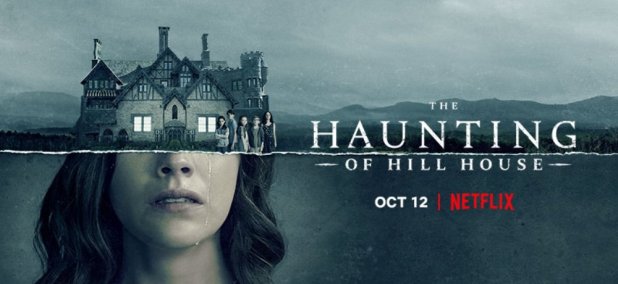
The Haunting of Hill House (2018)

I think I’ve figured out the difference between today’s “elevated horror” and the more traditional horror that we so often write about on these pages. The slasher killers of my childhood didn’t have complicated backstories or motivations, at least at first. The Shape killed because he was a killer. Leatherface and his family killed and ate because that was just their life. Sure, Jason was a mentally challenged child who drowned in a lake and somehow lived on the bottom of it for some time before coming back three movies in and wearing a hockey mask, but his mom, for all her faults, loved him.

The terrors of today’s horror? It all comes down to bad parenting. The Graham family of Hereditary was doing more than dealing with the King of Hell, they were dealing with years of family madness and secrets. Jay Height wasn’t just dealing with a sexually transmitted demon in It Follows, she was dealing with parental neglect. And in The Babadook, the real beast was just the crushing boredom of that film. It was that Amelia Vanek is a mother that blames her child for her husband’s death. She is, you guessed it, a bad mother.

There are times when you want subtext and reasons behind things. And other times, you just want to be scared. After all, when you’re looking for significance where there should be none, Freud would like to remind you that “Sometimes, a cigar is just a cigar.”

It’s no secret that I’m not a fan of “elevated horror” or trying to find the meaning behind everything — ironic as I spend a good chunk of my days debating movies right here. It’s more that I hate when people have agendas and force them into every movie. Sometimes, I just want that cigar. to be a cigar. Sometimes, I just want to watch a scary movie.

So it was without no small trepidation that I entered into the ten-hour commitment that came with watching Netflix’s new The Haunting of Hill House, an adaption of Shirley Jackson’s 1957 book (which was already made as 1963 and 1999’s The Haunting).

In the summer of 1992, Hugh and Olivia Crain plan on flipping an old mansion, just as they have with several other homes. Along with their five children, Steven, Shirley, Theodora, Luke and Eleanor, they go face to face with the paranormal, barely escaping with their lives (well, I lied, not all of them make it out as Olivia dies). Nnearlyalry a quarter of a second later, another death in the family brings the Crains back to Hill House to confront a lifetime of an absent parent, a lost mother and the ways that they’ve tried to handle so much grief and pain.

The story starts with Steven Crain (Michiel Huisman, Game of Thrones), the author of the book The Haunting of Hill House, which details his experiences in the house, as well as those of his brothers and sisters. The fact that he’s written this book — and made the money from it — has been a point of contention between he and his family ever since. That may be because of all the Crain family, he was the only one who didn’t see anything. His books and a lot of his life have been lies. At the end of the first episode, he finds his sister Nell hiding in his house. That’s when he meets a ghost for the first time — his sister has committed suicide inside Hill House hours before.

Each episode introduces us to another member of the family, from control freak Shirley (Elizabeth Reaser, Ouija: Origin of Evil and Annabelle: Creation as an adult; Lulu Wilson from  as a child) to child psychologist and psychic sensitive Theodora (who is married to director/creator Mike Flanagan, working with him on his other films like the aforementioned Ouija: Origin of Evil and Gerald’s Game) and Nell’s twin Luke, who struggles with addiction. Their lives and stories intersect and build upon one another, showing how the house and what happened on one night have ruined their lives in one way or another.

I’ve always had a theory that ghosts aren’t real. What we see in these apparitions aren’t things that go bump in the night, but moments where reality has been recorded over and over, like an old VHS tape, with the more horrible moments of life eating through the layers of reality, replaying over and over again. Hill House works that way, with the ghosts the children saw in the past simply being their future. I really want to discuss the moment that Nell realizes who the ghost she has seen her entire life is, but doing so would completely ruin this show if you haven’t seen it yet.

I was surprised by just how emotional this show made me. Credit for that is due to Timothy Hutton, who I’ve always known is an incredible actor, but he really proves it all over again as the father of this brood (the same role in 1992 in played by Henry Thomas from E.T. The Extra-Terrestrial). Carla Gugino is wonderful, as usual, as the mother who may never go away. I loved the long cuts that the actors got to use, which really added to the emotion of this. For example, the first fifteen minutes of episode six are all one straight take with no edits or cuts (there are only give cuts in the entire episode!). And bonus points for having Russ Tamblyn in here, as he was Luke in the original The Haunting!

I love that people are reporting sleep disorders and anxiety attacks after watching this show. Have we really grown so weak as a species that shows like this can trigger — that word! — us in such a way? I enjoyed this show, but I don’t enjoy reading clickbait articles like this that basically collect the tweets of people who should never, ever watch Cannibal Ferox. Just let a cigar be a cigar. Just enjoy scary shows for what they are.

But don’t just take it from me. No less of a voice in horror than Stephen King had this to say: “THE HAUNTING OF HILL HOUSE, revised and remodeled by Mike Flanagan. I don’t usually care for this kind of revisionism, but this is great. Close to a work of genius, really. I think Shirley Jackson would approve, but who knows for sure.” You watch it for yourself on Netflix.

2018 Scarecrow Psychotronic Challenge Day 16: Tales from the Hood 2 (2018)

Day 16 of the Scarecrow Psychotronic Challenge is 16. Petey Wheatstraw presents. Watch a movie featuring African-Americans in the starring roles. Bonus if it’s written and/or directed by an African-American. We’re happy to answer all of those challenges with a brand new movie — Rusty Cundieff and Darin Scott’s sequel to their 1995 film Tales from the Hood.

This was a difficult movie for me to write about, to be perfectly honest, for several reasons. First, I love the original. Often, it’s hard for me to warm up a band’s new album because I am so into what came before and I need to push past that. I had this DVD sitting on my to watch pile for some time until I could be ready to watch it. And I’ll be frank: it is not nearly as good as the original. But in the twenty plus years since the original came out, a lot of good — and bad — has happened in the American experience.

Which leads me to the second part that makes this movie hard for me to share my opinion on: I’m a white male that was born in a small town with a handful of black people in it. This is very much a horror movie made for a post-black lives matter and #metoo world. And yes, I can have an opinion on the actual film, but when there are moments that may feel heavy handed and obvious to me, they may also feel incredibly poignant and earnest to others.

Keep this in mind when I bring up points in this article. Because I really liked parts of this film. I know why they did what they did. I think my major issues with it were the lower budget, which can’t really be helped, and that there’s an inconsistent morality through the stories. Yet I found a lot of things to like in it. I’ve used the Frank Capra quote “There are no rules in filmmaking. Only sins. And the cardinal sin is dullness.” before. And this movie is anything but boring.

The movie starts with Robo Hell, where we meet Dumas Beach, a rich white prison owner who is creating an army of artificial intelligence Robo Patriots that can learn from firsthand experience, as well as secondhand stories so that they can become predictive.

He hires Mr. Simms (Keith David here, instead of Clarence Williams III who has retired from acting), a storyteller who will use his collection of tall tales, legends and parables to better teach these robots and prepare them to police America’s neighborhoods and borders.

Dumas asks him to tell the robots about the people who will fill his prisons, so the first story is all about black lives mattering. In Good Golly, two friends, one white and one black, visit the Museum of Negrosity, which features a history of racist propaganda, books and dolls. The white girl wants a golliwog doll named Golly Gee for her collection, but the owner refuses. Nothing there is for sale, it’s there to teach a lesson. That night, the kids come back and try to steal it, but everyone is killed by Golly Gee and the other golliwogs, other than the one girl. She is impregnated with Golly Gee’s horrible children, who burst forth from her stomach, killing her. Also, one of Miss Cobbs’ dolls shows up from the original, but he really serves no storytelling purpose other than fan service.

Here’s where my issues begin: every character in this scene other than the museum owner is a stereotype. Yet this is a chapter about stereotypes and how racist characters are the first marketing characters, a subject I found fascinating as I come from an advertising background. When the owner says to Golly, “How dare they call you a stereotype? You’re just the creation they designed you to be!” it resonates.

That’s where I have to figure out how to discuss this film. Parables are simple stories that need stereotypes and easily understood iconography to impart a moral message. They share some employment of those storytelling tools with exploitation films, which use stereotypes to create sensationalized narratives that make money, morals be damned. My issue here is trying to figure out when Tales from the Hood 2 wants to be a morality play and when it wants to titillate and entertain.

The next part, The Medium, feels like it’s on the side of the latter. A pimp named Cliff Bettis has given up the life, giving five million dollars to a foundation and building two magnets schools in the hood he once used for his own ends. Three criminals try to extort and torture him to find the money, but after Bettis accuses one of them of being a willing bitch in prison, it goes too far and he’s killed.

That’s when we meet TV psychic John Lloyd (obviously John Edward, the TV cold reader) who uses trickery and eavesdropping to make money from an audience that thinks he can speak to the dead. The three men think that they can get the money from the other side by kidnapping Bettis’ girlfriend and using Lloyd’s psychic powers.

However, the seance goes wrong and Lloyd discovers that he really has the power as Bettis possesses him. That’s when Bettis begins using mental powers and murders the three men before taking over Lloyd’s life, using his pimp mindset and real psychic powers to become even more successful.

Here’s my issue with this segment over every single other one in this film. As you’ll discover, this movie wants people to understand the sacrifices of the generations before them and make better choices. If Bettis really has made a foundation and is helping improve his neighborhood, he quickly abandons that plan and simply murders everyone in his path before becoming an even bigger swindler. Nobody learns anything. No lives get bettered. It’s just revenge for revenge sake and seems to feel morally hollow versus other moments that will follow.

Date Night is a much simpler affair, where internet predators end up facing vampires after a game of Cards Against Humanity that goes on way too long. It’s one thing to have fun and play it at a party. It’s another thing to spend endless time on it in a film when it doesn’t really move the plot forward. This story is by the numbers and doesn’t raise the questions that the other stories do.

The Sacrifice is the longest and most troubling part of the film. It concerns a councilman, Henry Bradley, whose white wife has had several difficult pregnancies. She fears that her visions of a boy about to be lynched will make all the difference, as she thinks that boy doesn’t think her child deserves to be born.

It turns out that Bradley is a Republican who is helping William Cotton run for governor. To ensure that less black people will vote, he’s working on shutting down voting sites in their neighborhoods. Bradley’s mother is aghast and as time goes on the baby begins to slowly disappear.

The black child is, of course, Emmett Till, and the theme of this episode is that the black people of today must honor the sacrifices of those who have gone before. At one point, the world makes a startling narrative shift, where we see what the world would be like if Till, Carol Denise McNair (who was killed in the 16th Street Baptist Church bombing), James Chaney, Andrew Goodman, Michael Schwerner, Medgar Evers, Dr. Martin Luther King Jr. and Mamie Till had not made their sacrifice.

Now, instead of running on a platform to return Mississippi to its old values, Cotton leads a paramilitary KKK to Bradley’s house. The doctor and Bradley’s white wife have turned against him. And the only way out is for him to die the same way as all of these martyrs if he wants the world to be better and his child to live.

This is where the morality/exploitation question really hit me. It’s an audacious gambit here and really a grandstand that demands to know why black people, knowing the past, would vote for people that want to “make America great again.” You can say that you’re taking the race out of things, but if we’ve learned anything from Golly Gee, it’s that racism is so ingrained in our American DNA, you can never take race out of anything else ever again.

Like I said earlier, I can have an opinion on the quality of the film but not on the content of this scene. I can say that it feels exploitative to me, but the truth is, this segment may empower someone. Or it may make them think. It certainly did that for me. So often we forget everything that everyone has worked so hard to change. I try not to get political on this site, but my constant real life worry is that the last two years have erased so much progress. And often, I use horror movies as an escape. But exploitation can often be morality and vice versa and perhaps they can both serve the same purpose. This movie doesn’t have a square up reel ala IIsa, She Wolf of the SS, so I think it really wants to be more sermon than sensationalism.

Finally, the framing device, Robo Hell, ends with the Robo Patriot showing how it can identify ex-cons and illegal immigrants. But now, it’s predictive abilities, powered by Mr. Simms’ stories, allow it to see the most immediate clear and present dangers to American civilization. And that threat is obviously Dumas Beach and his people, who are so complicit in his crimes that they must die as well. We get Old Testament justice mixed with low comedy wordplay (Dumas Beach is really Dumbass Bitch) and Mr. Simms reveals that he is Satan as he takes the evil white rich old man to Hell.

The fact that the devil has a higher moral standing than someone who seems to be a red hat wearing Republican is not lost. It’s just another of the interesting stances that this movie takes.

Executive produced by Spike Lee and written and directed by the same team who produced the original, Rusty Cundieff and Darin Scott, this one really is much more of a mixed bag than the first film. I wanted to love this and ended up left with more questions than answers. That isn’t to say I hated the film. I can see why other critics would attack this film. It’s not subtle at all. It has noticeable flaws, like the cheesy robot in the wrap around. And the vampire story could be removed and make this a much better movie. Yet Keith David is great. And I actually thought a lot more about the issues raises here than I have in any other movie I’ve watched this year. That’s what a good moral story should do, right? I just wish this had a better point of view of whether it wanted to educate or entertain when it struggles to straddle the line and do both.

You can watch this on Netflix.

Skyscraper (2018)

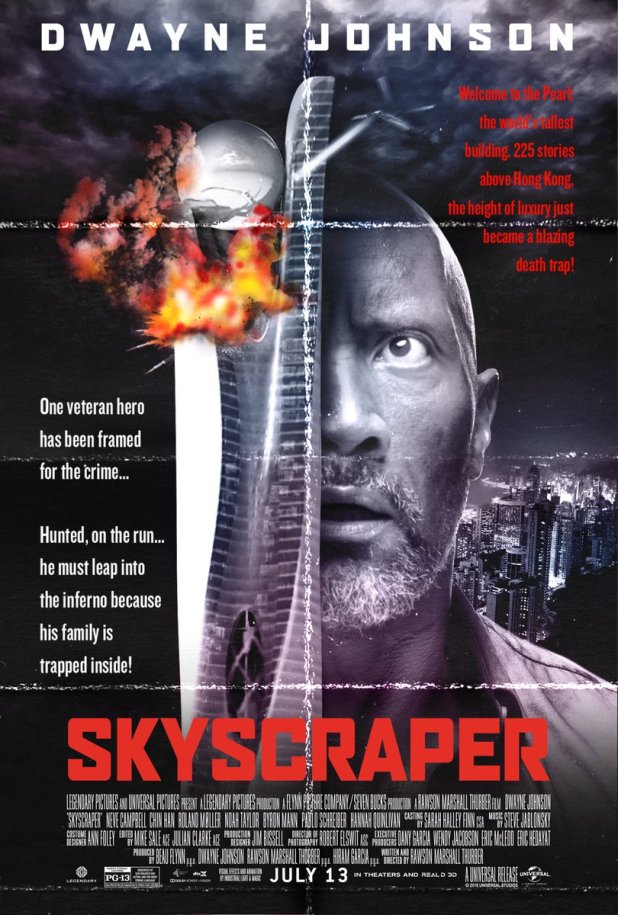
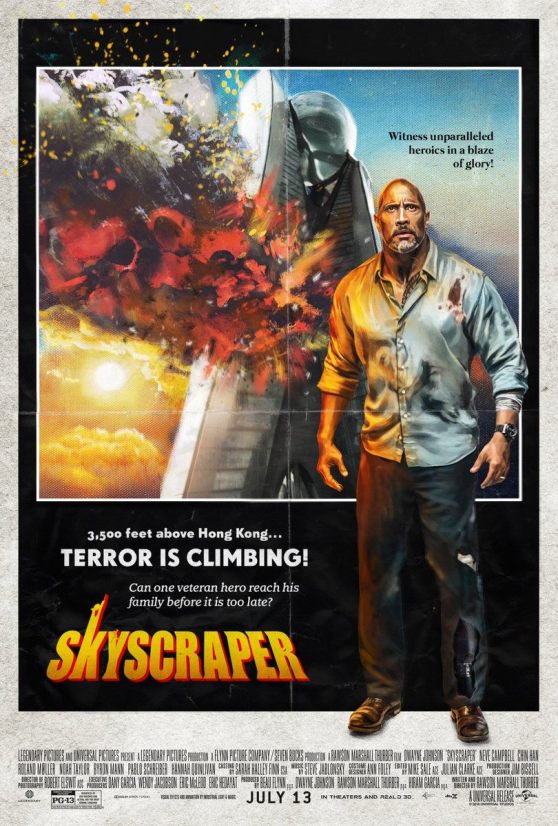
How close is this movie to The Towering Inferno and Die Hard? Just take a look at one of two posters that its star, Dwayne “The Rock” Johnson, commissioned to celebrate those films when this was released. Look — this is a summer blockbuster. If you’re going to worry about how much it steals or how stupid it is, you picked the wrong movie.

Wealthy Chinese financier and entrepreneur Zhao Long Ji is building the tallest skyscraper in the world in Hong Kong called The Pearl. To solve some of the building’s security issues, he hires former U.S. Marine and retired FBI Hostage Rescue Team leader Will Sawyer (Johnson). Even though he’s built a new life for himself, Sawyer is struggling with the past, including a mission where a suicide bomber took his left leg.

Once he gets the job of inspecting the Pearl, Sawyer, his wife Sarah (Neve Campbell, Scream) and twins Georgia and Henry move in. It seems like the building’s fire and security systems are secure, but he doesn’t trust the building’s offsite security center. Zhao gives Sawyer a tablet that gives him full access to the security system, but our protagonist is set up by his former partner, ex-FBI agent Ben Gillespie.

Now, a cadre of terrorists and criminals led by Kores Botha has taken over The Pearl, with Sawyer’s family trapped inside. Soon, the building is on fire, loved ones are trapped and the film becomes extended stunt sequences where The Rock jumps from a crane into a burning building hundreds of feet above the Earth. Your enjoyment of this film will depend on how many times you want to see The Rock cheat death.

We watched this with Becca’s parents, who were a divided lot. Her mother enjoyed this film more than any living being has ever loved a movie before, jumping and yelling with every single stunt, literally on the edge of her seat. But her father was upset the minute the movie started, sure that it was going to be unrealistic. Well, he was right. He’s also someone unafraid to loudly drum his opinion into your ear for the entire running time of a film, so he threatened to rage quit watching it. It’s not often that you get to watch a movie with two people who have such opposite opinions, yet are sitting so close.

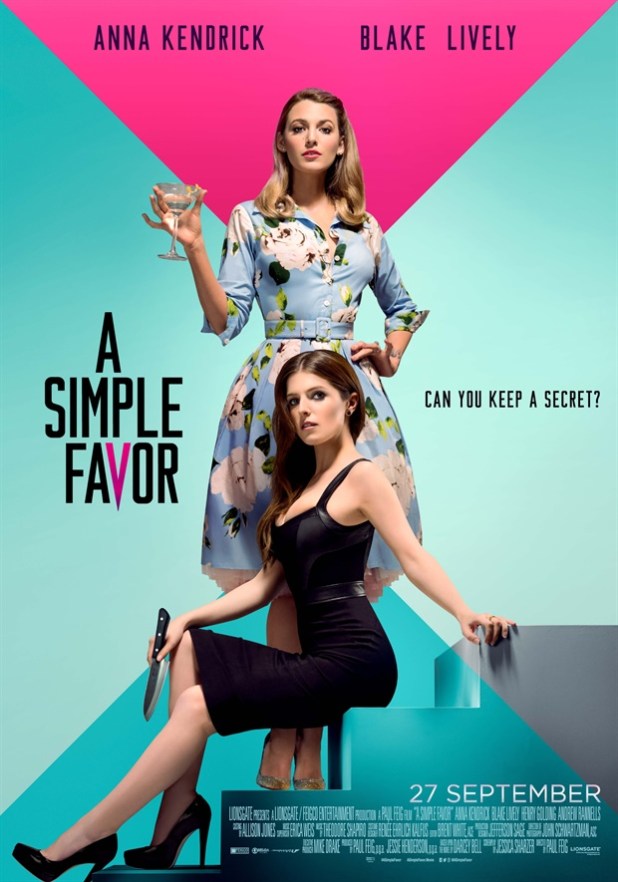
A Simple Favor (2018)

We really do go see new movies sometimes. But as late, our luck has been horrible. The Nun was painful, after all. But we’d seen the trailer for this film a few months back and it looked like Becca’s favorite kind of movie (and Sam’s least) — Gone Girl-style suburban true crime murder mystery. The actual movie, however, deviates wildly from the promise of the trailer.

I saw this movie under protest. After all, I wanted to see Hell Fest. Or The Predator. I could have even hate watched Venom. Because I have been the unfortunate recipient of Gone GIrl — not to mention movies like it such as The Girl on the Train and other works by its author like Sharp Objects and the upcoming Widows — viewings in the triple digits. The funny thing is, I ended up liking it way more than Becca.

Stephanie Smothers (Anna Kendrick from Twilight and Pitch Perfect) is a craft vlogger and single mom who constantly outdoes every other parent through sheer energy. But under her mania lies some pretty dark secrets and little to no real friends, not to mention a man. Emily (Blake Lively) is also a working mom, but is more known as a PR director for a major fashion company. These women couldn’t be more different — Stephanie prefers to hide in the background and apologize while Emily isn’t afraid to stand out and offend everybody.

The friendship between their children brings them together and the playdates their kids have to build the foundation for their fast friendship. They are soon trading confessions: Emily is frustrated with her husband’s lack of success. And Stephanie slept with her half-brother and may have had a child with him, which led to the death of both him and her husband.

Emily then asks for that simple favor: can Stephanie babysit Nicky while Sean is in London and she has to tend to a work emergency? That favor extends for days as Emily goes missing. And once her body is found in a Michigan lake, all hell breaks loose.

That’s when this movie descends into the twists and turns of a whodunit (but not a giallo, as much as I was wanting some black gloved killings and Ivan Rassimov to show up), with Stephanie caught in the midst of Emily’s psychotic ways, Sean’s devotion to her and her suddenly growing popularity amongst the local moms and her internet audience.

The film goes way over the deep end, bringing in the giallo staples of the unknown twin (actually triplet) and a family history of violence and insanity. Jean Smart shows up for all of a minute as Emily’s mother here. 

A Simple Favor is the first movie that Paul Feig has directed since his divisive Ghostbusters reboot. I enjoyed the style in the film and the soundtrack, particularly the usage of Brigitte Bardot and Serge Gainsbourg’s Bonnie and Clyde (actually, the film has multiple Bardot songs).

This is a movie unsure of what movie it really wants to be. Is it a mystery? Is it a comedy? Is it both? It never truly becomes anything, wildly shifting in tone to the point of absurdity — and not in a good way. That said, Lively and Kendrick are quite good in this, much better than anyone else in the film.

I always ask Becca if she has anything she wants to add to our review. She said that she’d give this movie a D or an F, because she wanted it to be closer to the thriller the trailer promised. And she wonders if Anna Kendrick only plays the parts of ditzy nice girls who apologize too much and get into shenanigans all the time, to which I answered, “Yes, I think that’s pretty much who she is in real life.”

Also: I call bullshit on a major plot point. Emily pays cash to rent her car from  Budget Rent-A-Car, which doesn’t allow vehicle rentals without a credit or debit card, much less a valid driver’s license. They would have had a full record of Emily renting the car. It would have been much simpler if she had someone else rent her the car and then paid that person. I realize that I’m being anal retentive about plot holes while I let gigantic ones in Argento movies pass by like bullets through the doorhole in Opera. But come on, people!

Of note, this was based on a novel by Darcey Bell, which has wildly different plot points, such as Emily only being a twin and being less complicit in the death of her sibling, as well as a completely different ending.

Postscript: As we left the theater, we noticed that there were only three other people there. One was an older gentleman in a full three piece suit who sat in front of us. Behind us was a younger couple that Becca asked about their feeling on the film. No one really liked it all that much and the older fellow called me sir while we talked and remarked how much better he likes Agatha Christie than modern mystery. We walked out of the theater late and alone on a Sunday night only for us to realize that the older gentleman was driving his son to a date. His son had to be in his late 20’s/early 30’s and the older man waited in the car for his son to embrace his date and kiss her goodnight. When we said goodbye, he said, “Have a nice week.” It was perhaps the sweetest and strangest thing that has happened to us in some time.

Upgrade (2018)

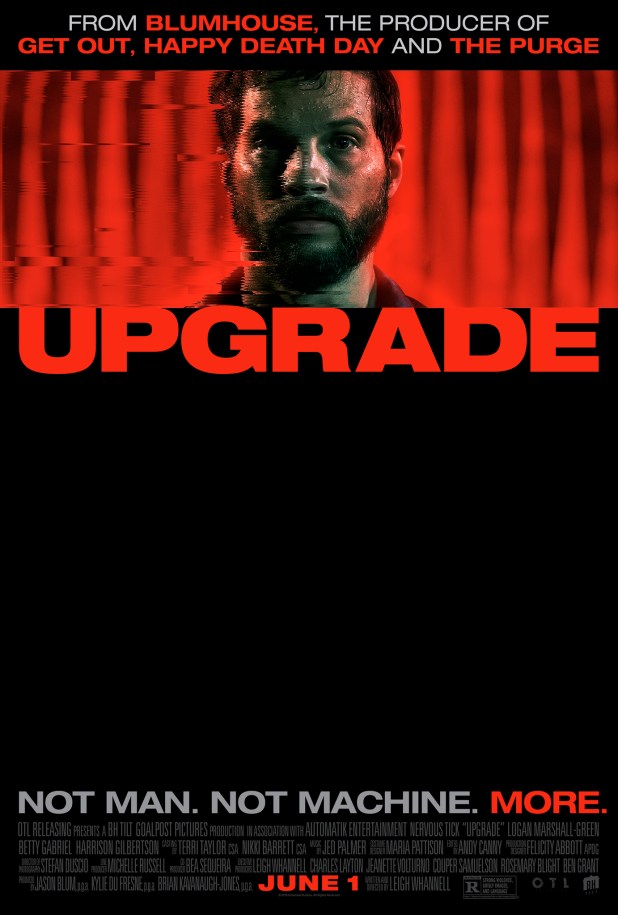
Grey Trace is a man out of time. He’d rather stay in his garage and work on old school combustion engines while the rest of the world wants electric cars that drive themselves. As more and more people are augmenting their human bodies with computers — like the work his wife Asha does for Cobolt — he keeps himself 100% human. But his life is about to change.

Grey has just finished a car for Eron Keen, a mysterious tech inventor who has removed himself from humanity to create life-changing things for his company, Vessel. The guy has his own cloud — not the internet, a cloud — in his home. While there, he shows the Traces his STEM chip that serves as a second brain.

Grey obviously hates the idea, saying that when he sees that chip, he sees more jobs going away. As he and his wife discuss it on the way home, their self-driving car leads them to the slums where Grey grew up. Their car crashes and a gang murders Asha and severs our hero’s spinal cord, forcing him to watch his wife die.

Between the death of his wife, his near-total loss of mobility, being forced to be cared for by his mother and the police’s (including Blumhouse regular Betty Gabriel) inability to catch the killers, Grey decides to kill himself. That’s when Eron offers to install STEM into his body with one catch — he can’t tell anyone.

The chip is a miracle, allowing Grey to move again. Soon, he’s exceeding the limits he had even when he was unharmed. And then, STEM starts talking to him and explaining how he can get revenge.

Upgrade is a movie that continually exceeded my expectations and challenged my assumptions. It starts like a modern version of Death Wish mixed with RoboCop before becoming a sly critique on the invasion of technology into our lives and the military industrial complex. What seems like a balletic modern fight scene is nuanced by the fact that our hero is no longer in control of his body, trying to hide his eyes from the violent vengeance that he is unleashing.

Grey eventually comes face to face with the men who ruined his life, but even they aren’t what they seem. I loved the way this film mixes Cronenberg body horror with military tech — I’ve never seen a bad guy who can sneeze nanite missiles into your bloodstream before. And the way they arms conceal guns that are loaded along their bloodlines is a stroke of genius.

Once our hero starts using his new brain to try and learn why his wife was killed and he was crippled, everyone is against him, including the police and Eron. It all races to a brutal and surprising conclusion where our hero and his new brain both get what they want.

No more spoilers. I’m overjoyed that I came into this movie cold and was continually surprised and delighted by the most minute details of the script.

Filmed in Australia and featuring a cast of Down Under actors, the home of writer/director Leigh Whannell, who you may know better as Specs from the Insidious movies. He’s also written the Saw and Insidious films, as well as directing Insidious: Chapter 3. Of all the Blumhouse releases I’ve seen, this one feels intensely personal. It had me on the edge of my seat, waiting for each new fight, each new reveal, each new surprise.

Assassination Nation (2018)

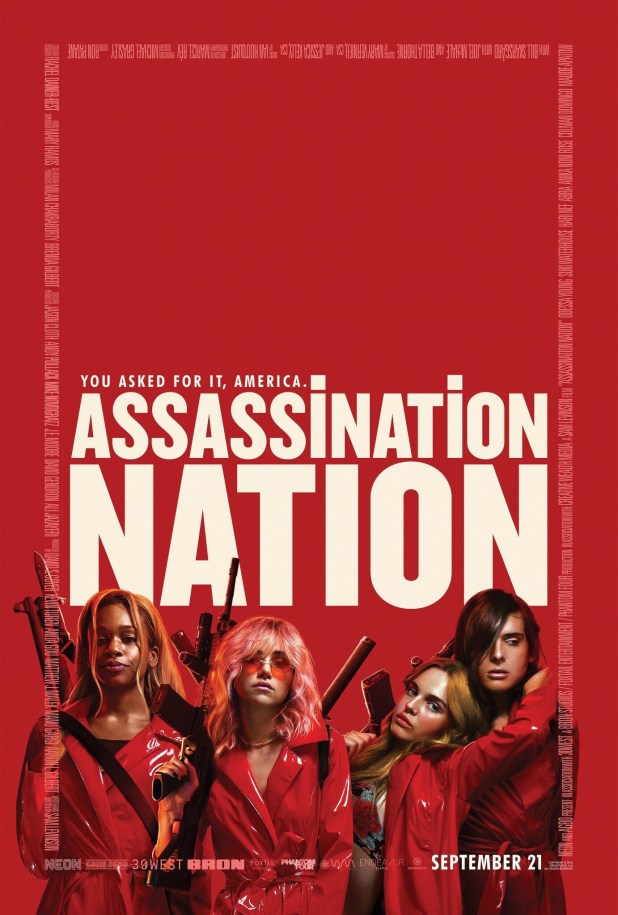
Assassination Nation has no idea what kind of movie that it wants to be. It’s the kind of film that wants to desperately wants and needs to be important, to provoke you with sex and violence and provocative themes while at the same time giving you a list of potential trigger warnings before the story begins. And yet even that warning is shot in a winking way, like the square up before Ilsa, She Wolf of the SS. I doubt that’s the comparison the filmmakers want, because this is also a film yearning to be important, to be discussed, yet it seems to have disappeared into theaters.

The fact that the movie takes place in Salem, Massasschutesetts is the first of many sledgehammer subtle points that the script makes. There, our four heroines — Lily, Bex, Em and Sarah — are normal teenage girls dealing with high school and growing up and hormones and all the horror that goes with it.

For some, it’s harder than others. Lily has stopped being a babysitter for the Mathers family after the father’s (Joel McHale) attentions got to her. That hasn’t stopped her from continuing to text him and referring to him as Daddy, despite her relationship with Mark (Bill Skarsgard, It). Beks is transgender and has a crush on Diamond, who wants to keep their hookup a secret. Em and Sarah really never get a chance to define who they are, to be perfectly honest.

A wannabe hacker named Marty is asked to spread a file with images and videos of anti-gay Mayor Bartlett having sex with men and dressing in women’s clothes. This causes the mayor to go into a downward spiral and kill himself at a press conference. As the police try to investigate, everyone in town becomes hacked, like Principal Turrell, who is one of the few positive adults in the film. His phone has photos of his child nude, which makes everyone think he’s a pedophile, yet he refuses to stop being an educator. His story kind of stops there, despite all the investment the movie has put into it so far.

From there on out, the town’s secrets are revealed. Cheerleader Reagan (Bella Thorne) leaked her best friend’s (Maude Apatow, daughter of Judd) nude photos and must pay. Lily’s secret sexting older man is revealed and his family leaves him. Lily’s photos and videos that she would send the older man are revealed, which leads to Mark and his friends holding her down and taking photos of her body marks to prove it’s her in a harrowing scene. Her life goes to hell as her parents kick her out, men chase her with knives and the entire town soon believes that she’s behind the hacks thanks to Marty revealing that tons of internet traffic was coming from her house (it’s worth noting that Becca instantly figured out the film’s big reveal here).

Here’s where the film either gets suspenseful or narratively falls apart, depending on your point of view. Everyone in the town starts wearing masks to hide their identity and sins from one another, which is an interesting plot point if the masks they wore didn’t look exactly like The Purge. Again, this is a movie that yearns to be taken seriously with a woke angel on one shoulder while the devil on the other keeps pulling it toward exploitation. Because it never really goes all in on either side, it becomes somewhat of a muddled mess.

That isn’t to say the final scenes aren’t packed with suspense, including a stedicam sequence outside and inside the house as masked assailants invade the home and take the girls hostage that recalls Dean Cundy’s landmark work in Halloween. And the standoff between Lily and Nick, her “daddy,” is filled with eye-popping close-ups and intense violence, with the gore actually grossing out people in our theater versus titillating them.

That’s when the film descends into empowerment fantasy territory, with the girls donning red trenchcoats ala Female Prisoner #701: Scorpion. Most people would probably get past the scene of the girls watching this movie in bed quickly, but it felt like the brakes being slammed for me. You know, this is pure Quentin Tarantino territory — this is obviously some alternate reality where the most popular girls in school all get together to cosplay watch an incredibly deep cut Japanese rape revenge film. That said, you can totally buy the official jacket they wore from the film now.

The girls unleash their vengeance on the town before Lily finds the time to make a viral video that unites all of the young women together as they come face to face in a final confrontation with the masked men of Salem.

If the film stopped here and gave no answers as to why this all happened or what happened next, but instead just kept the narrative that bad things happen for no reason, I may have liked it more. I liked that the fate of the main characters could be left up to the viewer, but the closing scene establishes the true ending.

I think Sam Levinson is a hell of a director. This film looks gorgeous and attempts some really technical sequences, like the home invasion, as well as split screens that would make DePalma jealous. The colors, the textures, the rapid pops as footage zooms in — all gorgeous. But the story is lacking. Lily’s final speech wants so badly to be a rallying cry, but so much of it comes off as an apology that’s an actual lack of apology. Everybody has bad secrets in their closet in Salem, but it’s the young women who have never had a chance to do things the right way — well, at least our four protagonists and their sisters that rally between them, at least — who are the ones in the right. Lily is able to admit that she’s done things that are wrong, but seems to write them off in this speech.

Assassination Nation wants to be Heathers for the SJW generation, vehemently denounced by the establishment and endlessly debated on talk shows and in classrooms, but it seems like no one really cared. Instead, it comes off as “What if Harmony Korine directed The Purge?”

It’s a movie that at the same time wants to empower women and give them a voice while putting masculine weapons into their hands and allowing them to shoot and stab their way to emancipation, skirting the issue that we live in a world where mass shootings happen nearly every single day, but the right good guy or girl with a gun is the narrative difference. If that true, how is your side any more correct than the other side? Instead of picking a side, instead of choosing between parable and pablum, this film makes no such choice.

The credit sequence — in which an African-American marching band drumline steps through the carnage of the town to their version of Miley Cyrus’s “We Don’t Stop” sums up this film perfectly. It looks gorgeous, it seems transgressive and it feels like it has something to say but is ultimately sound and fury signifying nothing.

Slice (2018)

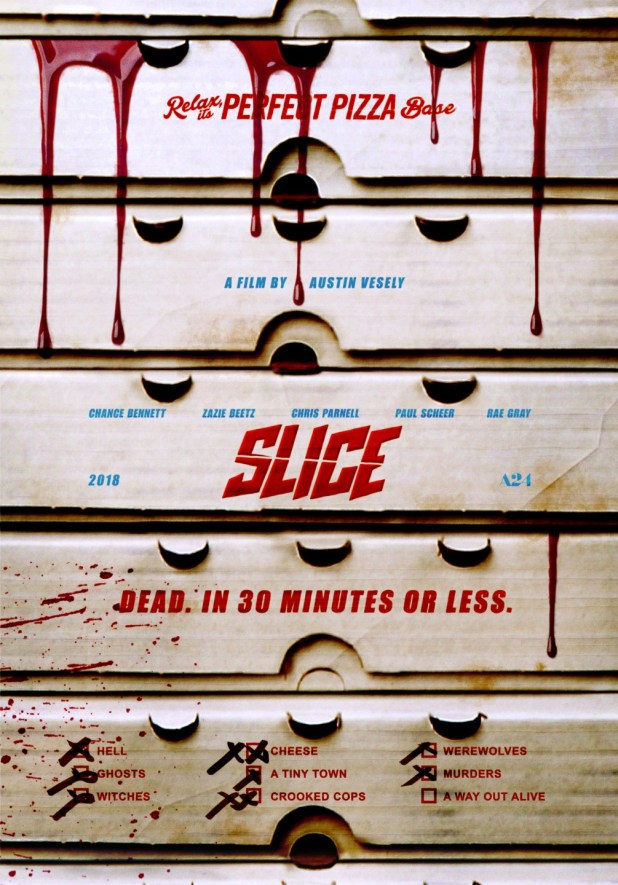
Slice is a total mess — think a slice of pizza that you piled up high with every single kind of topping you ever wanted and wondered why it was such a doughy mess. But you know what? Sometimes, those kinds of experiments in stoner cooking pay off. And after watching this movie, I felt the same way.

Let me see if I can summarize this rambling bit of wacko into one coherent sentence: In the town of Kingfisher, the truce between the living and the dead is endangered by the murders of several delivery people from Perfect Pizza. There are also witches and werewolves. And a lot of the movie’s story is told through music videos. Oh yeah — Perfect Pizza is also the gateway to Hell.

That’s no accident — the star of the film is Chance the Rapper, who plays Dax, the aforementioned werewolf. And the direction comes from Austin Vesely, who directed several of Chance’s videos. 

Jack (Paul Scheer of How Did This Get Made?) has opened Perfect Pizza over the ashes of the Yummy Yummy Chinese Food restaurant, which was destroyed, and also above the previous ashes of an insane asylum which became a haunted burial ground that is currently inhabited by around 40,000 ghosts. Sean (director Vesely) is killed at the beginning of the film, bringing his girlfriend Astrid (Zazie Beetz, Deadpool 2) back to the shop she thought she left behind.

Is Dax the werewolf the killer? How does Big Cheese and his gang fit in? Is that a zombie working in the pizza shop? How awesome is it to see Hannibal Buress and Chris Parnell in a horror movie? Is this a film audacious enough to have a reporter write her story aloud to help bring all the threads together moments before the film quite literally goes to hell?

This movie is like a 1970’s Fourth World Kirby comic, in that it has 82 million ideas that it tries to fit into 82 minutes. The town of Kingfisher is fascinating — who becomes a ghost? Who becomes a zombie? Why do the witches hare everyone? Why is the occult drawn to take out? This would have worked so much better as a Netflix series, but I’m really just saying that because I wish we had more time to explore the setting and characters, like how Dax doesn’t want to be a hero or villain, but must finally make a choice.

So many of the reviews I’ve read have really taken this movie to task for being unfocused and all over the place. That’s probably why I liked it so much! I’d rather have a movie packed with big ideas and pure craziness than something that bores me.

You can find Slice on Amazon Prime.

e-Demon (2018)

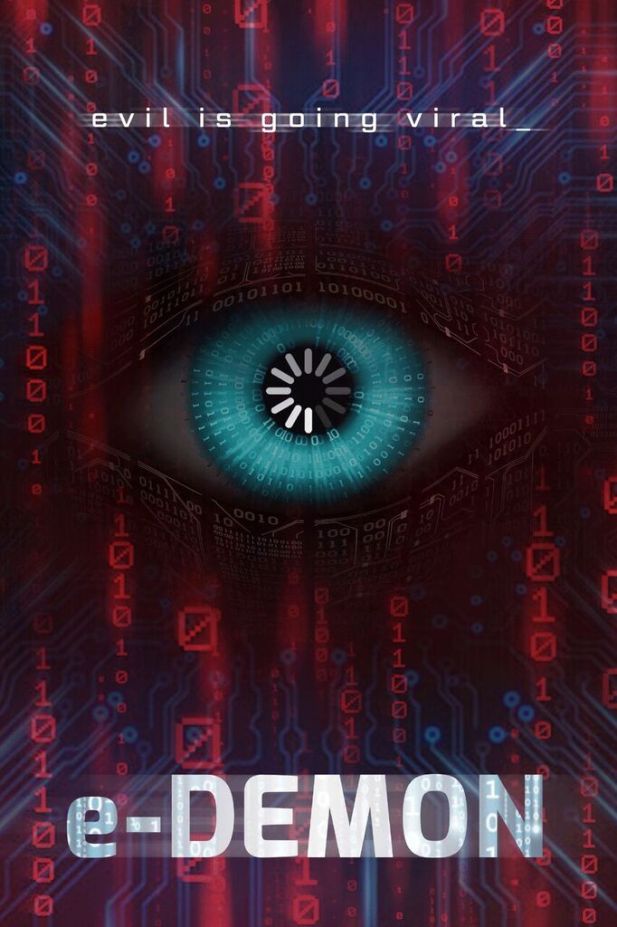
As college friends try to hold onto the good old days by staying in touch via the internet, their evening of stories, pranks, drinking and making fun of one another is interrupted by a demon that has been trapped for centuries in Salem, Massachusetts. Seeing as how that demon is on a mission to bring the devil to our reality and how it can also possess multiple people at once, this will be a night that tests their friendship and changes the world forever.

Kendra, AJ, Mar and Dwayne spent time together at THE Ohio State but adulthood is making them grow apart. The only way for them to reconnect is through an all-night video chat. e-Demon captures that night — as well as multiple text messages, Wikipedia pages, message board posts and so much more — ala the films Searching and Unfriended.

The weirdness starts when Gamma introduces his grandmother, who warns of a horrible danger in the trunk that’s in the attic of their family home. The gang has been pranking each other all night with bloody stunts that look real, so when the demon comes to life, it just seems like one more goof. But nope — it’s real and ready to destroy them all.

If you’re looking for a straight-ahead narrative, this isn’t it. Instead, the film is near hyperactive, jumping from screen to screen. But it’s an interesting narrative technique. I wouldn’t want to see every movie in this way, but it works here. The cast are all relative newcomers, but they handle themselves well, basically all acting toward the camera for long uninterrupted takes, reacting to things on their laptops instead of other living people. Actually, the cast being unrecognizable faces really helps tell the story, which slowly grows in intensity.

At first, I was kind of put off by this gimmick, but by the end of the film, particularly with the way it treats the ending, I was hooked.

This is writer/director/producer Jeremy Wechter’s first full-length project. I’ll definitely be seeking out whatever he works on next.

e-Demon is playing in New York at Cinema Village starting tomorrow — complete with Q&A with the director at all showings this weekend. It’s also available on demand and you can get the DVD on Amazon. Learn more at the official site, the e-Demon Resistance Network.

Disclaimer: I was sent this movie by its PR team, but as you know, that has no bearing on my review.