After the death of his twin brother, Dante (Luis Machín) starts to become fearful of death, unable to deal with the thought of it, which comes up quite often, seeing as how his wife Beatriz (Julieta Cardinali) also dies. That’s when he starts having hallucinations and starts to experience multiple versions of himself. As Dante is a tailor, there are a lot of mannequins as well, which allows this to be painted with the yellow tones of a giallo brush, helped by the masked and gloved killer who keeps murdering everyone around our protagonist.
Director and writer Daniel de la Vega has nearly too many ideas here with multiple duplicates and even time travel and scenes we’ve seen before repeated later and then shown how they impact the film. Sometimes when you shoot for the moon, you explode on the launchpad.
The good parts: the visuals look great, the Claudio Simonetti score helps and the 3D technique is more about depth than throwing things at you. It’s also nice to see a good budget for a horror film from Argentina.
The bad: Near the end — massive spoiler — Dante must choose between sawing off his own hand to escape or dying. He chooses to hack himself to bits except, you know, he’s in a wood chair. I’m all for giallo asking a lot and making you make narrative leaps, but sometimes, a bridge can be too far. Also: Dante has necrophobia, a fear of being around dead bodies. Isn’t nearly everyone?
Directed and written by Stewart Thorndike, this is about Leah (Gaby Hoffman) and her girlfriend June (Ingrid Jungermann) have fallen in love with a New York City apartment building and that love — just like whatever once existed between them — seems to fade after the sudden death of their young daughter Lyle (Eleanor Hopkins). Soon, Leah is nearly left to deal with her rush of paranoid feelings, particularly her belief that the landlady Karen (Rebecca Street) is behind multiple child sacrifices. Karen also pretends to be pregnant, even if she’s much too old for it.
Coming after Rosemary’s Baby but before the Q-Anon and Pizzagate stories of Democrats drinking the blood of babies — even if that came from a long tradition of antisemitic stories — and five years before the occult-rich The Scary of Sixty First, And hey — there’s Michael Che!
This movie is 65 minutes long, a length that all movies should aim for. That doesn’t mean that this isn’t a slow burn that gets agonizing and shows you that Gaby Hoffman is a long way from Uncle Buck.
I have had times in my life where my belief that everyone is out to get me has been proven correct and this movie reminded me of the sheer rush of sweat and terror when people are unmasked.
Is it easier to accept that a Satanic cult is all around you than the fact that your child has died as the result of a whim of fate? Your answer to this question will tell you how much you understand the crutch that conspiracy has become.
October 28: A Horror Film That Features Helpful Ghosts
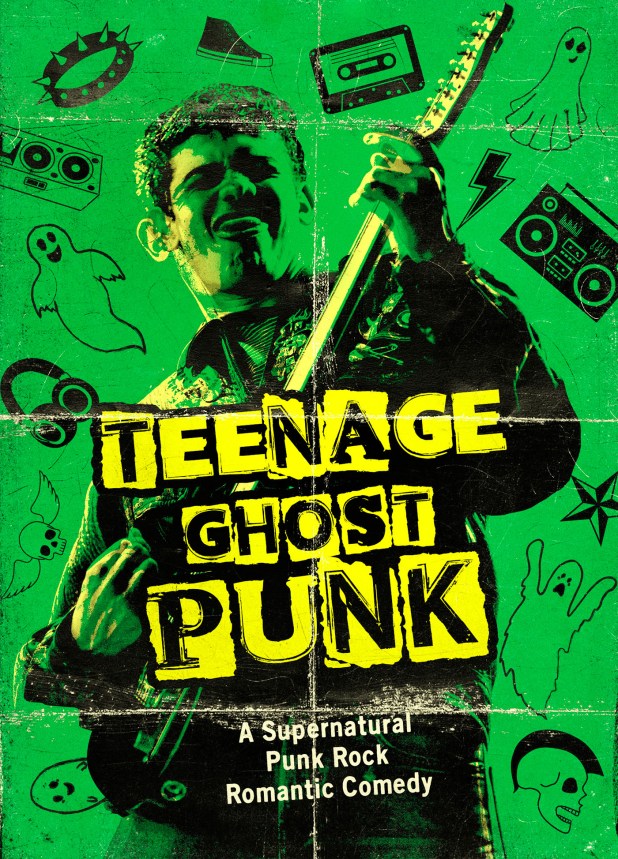
Directed and written by Mike Cramer, who also plays Detective Pete McGarry in the movie, Teenage Ghost Punk is about what happens when Carol (Adria Dawn) divorces her husband and takes her kids Amanda (Grace Madigan) and Adam (Noah Kitsos) from the life they’ve known to a new house and school.
As if fitting in at school wasn’t hard enough, the family starts finding evidence that their new home is haunted. They hire Medium Madame Lidnar (Lynda Shadrake) and a team of paranormal experts, all of whom find nothing. It’s Amanda that finally meets the punk rock band — the Raging Specters — led by Brian (Jack Cramer).
Getting over the guy she left back at home, who is now dating her best friend, means that Amanda is perhaps ready for new love. Who knew it would be with a dead punk rocker? Should her mother and teachers be worried about her? Or is this a healthy relationship?
You can say that this isn’t really punk rock and that it’s all kind of silly, but it’s a teen movie about ghosts and love. You know, maybe that means it can just be fun. This is fun. I won’t be cynical. I mean, a guitarist could be hit with lightning on the roof and haunt a house waiting for the right lady to come into his life. Or whatever a ghost has.
Actually, this really gets in an interesting idea that Brian dated Amanda’s mom when he was alive and now, he can only see her on Halloween as a party is thrown in the house. I know this is a low budget family friendly movie, but I ended up enjoying it way more than I thought that I would.
The effects for The Evil Dead were created by Tom Sullivan. He’d been friends since college with Sam Raimi, Bruce Campbell and Rob Tapert. This movie tells the story, including Super 8mm film footage, Hi8, VHS and vintage audio tapes and photographs. Beyond all this behind the scenes footage, you also get location visits and interviews with Campbell, Ted Raimi, Josh Becker, Danny Hicks, Hal Delrich, Ellen Sandweiss, Betsy Baker, Theresa Tilly and more.
Beyond his work on that movie, Sullivan also worked on the Call of Cthulu games and shows off plenty of his incredible art. The tours — what is left of the original cabin, the cellar, the home where everyone lived and the theater where it premiered — are also really great.
If you’re someone who does a deep dive into the people who make the movies look so wild, this is totally for you. You’ll learn just how much work went into such an important movie.
The Synapse blu ray release of this movie also has Other Men’s Careers, which is about Josh Becker, a vintage Tom Savini interview, two of Ryan Meade’s short movies Bong Fly and Cosmos Lovos, extended interviews and new slipcover art by Joel Robinson. You can get it from MVD.
Made in 2014, How to Save Us prefigures the last few years of our reality by being about Brian Everett (director, writer and star Jason Trost) and his younger brother Sam (Coy Jandreau) during the middle of a mysterious quarantine. When Sam goes missing in Tasmania, Brian has to travel there to save his brother.
In the world of this movie, Tasmania is filled with the spirits of its many dead souls, so Brian must cover himself in the ashes of the dead to move amongst them. After his sister Molly (Tallay Wickham) asks him to search for their missing sibling, she givcs him Sam’s notebook, which has the title of this movie scrawled on the cover.
There are some big ideas here, with the entities being heard on the radio, Brian dealing with the loss of both of his parents and the fact that electricity can stop the dead, which means that a Nintendo Power Glove can become a weapon. Despite the addition of that nostalgic game gear, this movie has a darker edge than Trost’s The FPseries.
When I got the chance to speak with Jason Trost, we discussed the end of the world that we’ve been living through. When discussing the actual pandemic, he said “You sit there and watch it outside and it’s like the laziest zombie apocalypse ever. (laughs) None of these movies really prepare you for it, because it was very tame in comparison to what we’ve watched. I think we’ve all been built up towards something and what we got wasn’t Mad Max.”
I really enjoyed the dark world that this movie shares and how it’s characters only speak through voiceover. It’s a way different film for Jason Trost and I enjoyed its challenges to the viewer.
April 9: Easter Sunday – You don’t have to believe to watch and share a religious movie.
In the spring of 2010, there was a lock-in at the First Baptist Church. Two days later, Justin would confess to his parents that he had experienced evil and had it all on video. Yes, the boys brought a pornographic magazine to the lock-in and after upsetting everyone with it, a demon arose from its pages and made their lives literal hell.
Yet this is not the only Christian found footage horror movie in which porn unleashes a demon. Harmless is about a box of old dirty magazines that unleash a poltergeist that attacks a father and son.
You know who directed that movie?
Rich Praytor.
You know who directed The Lock-In?
Rich Praytor.
What are the odds that someone would make two movies about wank material unleashing demons?
Anyways, Pastor Chris tries to burn the magazine and it shows up again unsinged, which did not happen when my college girlfriend discovered the stack of magazines under my bed and forced me to burn them in front of her and then I singed my hands trying to pull the January 1993 Hustler out of the inferno, but I mean, come on, it had Madison on the cover.
There’s some incredibly bad improv in this movie, mostly from the mother of one of the kids and it makes for a tone that is wildly uneven but come on. You expected that. What you may not expect is the scene where a sound guy shows up in a reflection and he’s not even holding a boom mic but the smallest microphone ever. It actually made me sad for the sound guy.
I didn’t get the barn door speech and had to look it up. It comes up a few times and maybe I was born a Catholic so I’m not supposed to get it. Pastor Chris even says, “Didn’t your parents teach you about the barn door?” Is it Matthew 13:30 that explains that Jesus will gather one group into his barn and the other will be burned in God’s harvest of judgment. This is your chance to teach me.
Why is the demon a child?
Why does this have a twist ending?
Why haven’t I been able to stop thinking about this?
Because this is a movie that has the dialogue “There is a correlation between pornography and demon activity.”
I went to a lock-in once and all I remember is going to Eat ‘n Park afterward, which if you live in Pittsburgh, is a lot like dealing with demons.
April 9: Easter Sunday – You don’t have to believe to watch and share a religious movie.
I saw Jerusalem Countdown but in no way was I prepared for Harold Cronk’s God’s NotDead, a movie that I’ve been considering over and over, deciding what to write about it.
Written by Cary Solomon and Chuck Konzelman, who were inspired by Rice Broocks’ book God’s Not Dead: Evidence for God in an Age of Uncertainty, this feels like the kind of echo chamber afforded by cable news and self-owned social media networks. I always wonder how white upper middle class Americans constantly can feel like they’re under assault and people are trying to destroy their way of life when they continually win.
Josh Wheaton (Shane Harper) went to college to be a lawyer, but the school he chose was the third choice of his girlfriend Kara (Cassidy Gifford, yes, the daughter of Frank and Kathie Lee). That said, she’s planned their whole life together. What she was not ready for was the class of atheist philosophy Professor Jeffrey Radisson (Kevin Sorbo), who makes all of his students sign a paper claiming that God is dead. Josh disagrees and begins a movie-length battle with his teacher who acts as no instructor ever before, going all in to hate the Lord and his believer Josh. Their final debate ends when Josh asks Radisson why he hates God so much, to which the man replies, “He killed my mom,” and instead of reacting with empathy, Josh says, “How can you hate someone you don’t believe in?” and then Martin (Paul Kwo) stands up and says, “God’s not dead,” the class joins in and the professor runs from the room after being dumped by his girlfriend Mina (Cory Oliver) and gets hit by a car and dies, but not before Reverend Dave (David A. R. White) helps him pray and then an entire Newsboys concert is led by Willie Robertson from Duck Dynasty into haughtily laughing that Josh got one over on his teacher, which is intercut with him dying in the street.
Whew.
Also, in the middle of all this, is Mina’s brother Mark (Dean Cain) who hates their dementia-having mother who reveals that Satan made him successful, a Muslim woman named Ayisha (Hadeel Sittu) being thrown out of her house for converting her religion, Mark dumping left wing blogger cancer news getting Amy (Trisha LaFache) as she goes after the. aforementioned Duck Dynasty and man, this whole movie feels like 21 Grams except the stories never really wrap up. But I can imagine that people — well, persecution complex having folks — loved this, because it tells it like it is, as nobody has shades to them, there are no multitudes in anyone, just shrill God-hating liberals out to decimate the American way of life, which, when I checked, guaranteed religious freedom even if it was written by unrepentant slave masters.
EDITOR’S NOTE: Cinematic Void will be playing this American giallo on Wednesday, Jan. 25, at the Central Cinema in Knoxville, TN. For more information, visit Cinematic Void.
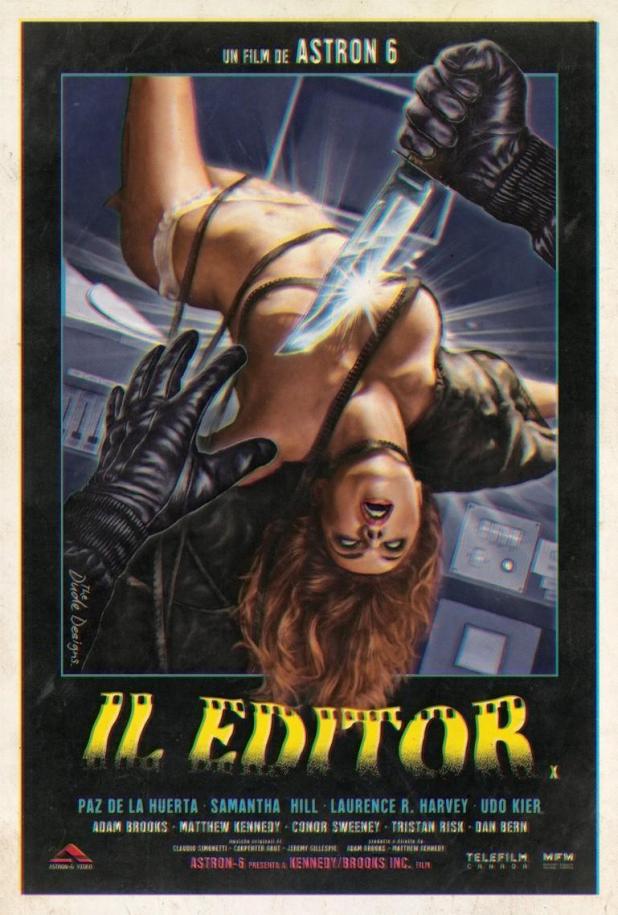
Astron-6 is — well, was as the recent release of the collected Divorced Dad is supposedly their last project together — a Canadian film production and directing company founded in 2007 by Adam Brooks and Jeremy Gillespie which later expanded to add Matt Kennedy, Conor Sweeney and Steven Kostanski. They’re known for producing low-budget horror/comedy films that evoke the 1980s. The fact that their name sounds a lot like Vestron is no accident.
After their initial films — Manborg and Father’s Day — the team moved on to create this tribute/parody of the giallo genre. Gillespie and Kostanski also directed the incredible 2016 horror film The Void, which moves away from the humor of Astron-6.
Film editor Rey Ciso (Adam Brooks) was once a brilliant editor — the best in the world — but that time is far away. Now, he struggles to complete Francesco Mancini’s latest film Tarantola with his assistant Bella. He needs her, as an accident while lost in the madness of editing cost him all of the fingers on his right hand, which are now made of wood.
The loss of those fingers all goes back to Ray getting his start working for Bella’s father, art house director Umberto Fantori, whose debut film The Mirror and the Guillotine won him the success he craved and introduced him to his wife Josephine Jardin (Paz de la Huerta, Nurse 3D, Enter the Void). Eventually, Josephine went mad on Mancini’s next film, which was made to be the longest movie ever. Now, Ray is getting footage of murders sent to him. And to complicate matters, while his wife treats him with disdain, Bella tells him that she loves him.
An unknown killer stalks the studio, killing lead actor Claudio Valvetti and his girlfriend Veronica in a scene that echoes the curtain ripping and blood spraying of Argento’s Tenebre. Margarit Porfiry — another actress on the film — stumbles upon Veronica’s body — hung exactly like the first murder in Argento’s Suspiria — and is struck blind on the spot, making her look exactly like Emily from The Beyond, which the film extends by giving her a dog named Rolfie instead of Dickie.
While her husband Inspector Peter Porfiry (Matthew Kennedy) interviews suspects, co-star Cal Konitz (Conor Sweeney) has his hopes of taking over the movie ruined when a stand-in is found for the lead. Porify’s boss Chief O’Connor wants the case dropped because Margarit is his daughter, but the cop is convinced that the editor is behind the killings, as each murder takes away the fingers of the victim.
Rey has a vision of a dark man with bright blue eyes — Ivan Rassimov, we miss you so — coming after him. Meanwhile, the inspector goes to the insane asylum where Rey lived for some time, meeting Dr. Casini (Udo Kier!), who tells him all about Plato’s Allegory of the Cave. The detective returns home just in time to make love to his wife in a near shot-for-shot remake of the glass smashing love in Sergio Martino’s The Strange Vice of Mrs. Wardh. The killer then makes his or her way into their home and when the cop tries to break into the room with an axe to save her — kind of, sort of like the cemetery scene in City of the Living Dead by way of The Shining — the killer throws her in the way. In order to not be seen as a murderer, Porfiry cuts off his wife’s fingers and feeds them to her dog.
His boss — and remember, the father of his dead wife — screams at Porfiry back at the station while the killer calls to taunt the cop in a scene much like The New York Ripper. That won’t be the last callback to that Fulci film, either.
Rey has gone over the edge, believing himself to be the killer as his wife treats him horribly. He dreams that he is trapped in a world of smoke and gigantic film cans that seems much like the world inside the painting in The Beyond. He gets a psychic flash that Bella is to be murdered but arrives too late to save her.
Giancarlo tries to finish the movie himself, but an army of spiders — again, The Beyond— attacks and he is killed as well. Rey is brought back onto the film and Father Clarke (Laurence Harvey, Frankenstein Created Bikers) explains to him that editors are the vital connection to the other world that Rey glimpsed in his vision. We’ve now gotten to the part of the giallo where reality stops and the Lovecraftian vision takes over.
Everything goes even crazier, if that’s possible, with Cal menacing Rey with a chainsaw before attacking his wife in front of him, ending with his wife laughing it off as she’d been having an affair with the actor. There’s also an ancient bell tower, more tarantulas, a film canister filled with fingers, occult rituals, Josephine declaring herself to be death itself ala the end of Inferno, a fake-out ending that pulls off The Wizard of Oz while again recalling Fulci — both The Psychic, The Beyond— and a post-credits happy ending where Rey and Bella end up together.
This is one strange film. If you’re not hyper aware of giallo, you may be lost by all the references. And if you are, you may be unable to totally take in the narrative as so much of the film feels like spot the reference. That said, I found myself liking The Editor and excited to see where it would go next. The final sequence as the detective and the editor battle the real killer is actually pretty thrilling. And wow, the music is awesome, with Claudio Simonetti composing the main theme.
Even better, the credits keep the story going with Rey Cistro listed as the film’s editor. I also adore the posters for the films within the film, which were created by Graham Humphreys.
This is another review that was inspired by Good Bad Flicks.
James DeMonaco was born in Brooklyn but spent eight years in Paris. When he came back to America, he “put a microscope” on his life after realizing the difference in the relationship our country has with guns. He stated, “I’m terrified for my country. So I think that cynicism seeps into the film. America itself becomes the canvas, instead of the haunted house, the canvas is America. We don’t need ghosts or vampires anymore when we’re just killing each other, you know?”
Then, a drunk driver nearly killed him and his wife and she said — she’s a doctor, mind you — “I wish we could all have one free murder a year.”
That’s how we got The Purge.
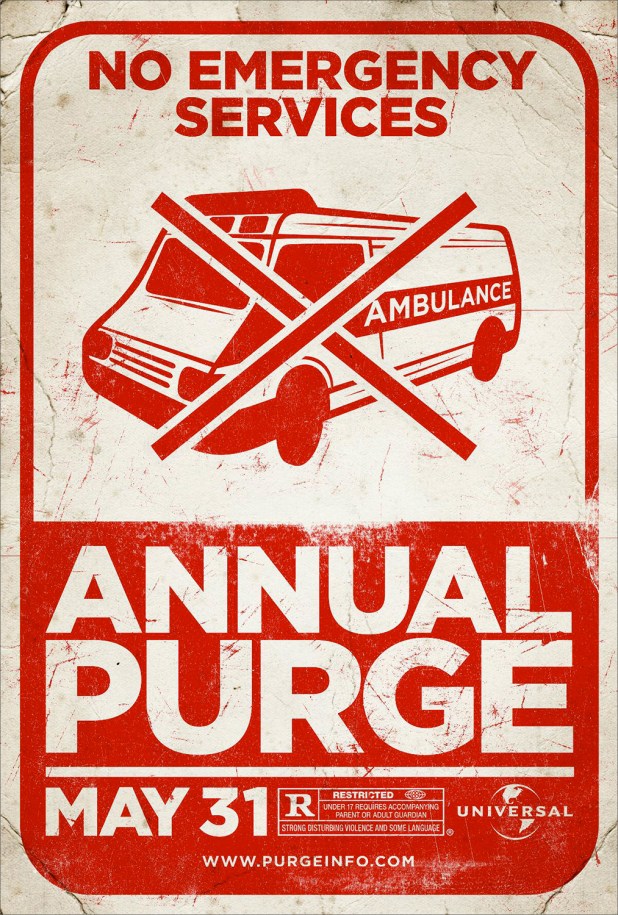
In 2014, the New Founding Fathers of America are voted into office, promising to fix the economic collapse. One of the ways that they do that is by passing a law sanctioning the Purge, an annual event where all crime is legal and emergency services are temporarily suspended.
Somehow, it works, because the news claims that the U.S. is crime-free and unemployment rates have dropped to 1%. However, that only works if you’re upper middle class and white, just one of the many ways that these movies — while a bit too on the nose — really reflect reality almost way too much.
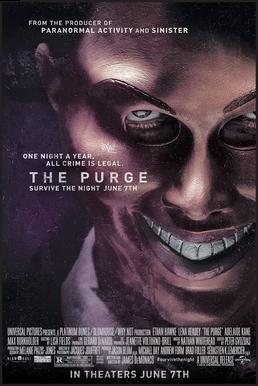
The Purge (2013): Just like Sinister, the first movie in this series stars Ethan Hawke and really is there to lay the groundwork before the much more interesting sequel. Not that either movie is bad, but they create the world that the other film (or films) get to explore.
Hawke is architect James Sandin and his family — wife Mary (Lean Headey), son Charlie (Max Burkholder) and daughter Zoey (Adelaide Kane) — are aware that the Purge is coming but he’s invented a security system to protect them all. Well, it works until a stranger shows up injured and Zoey’s boyfriend Henry (Tony Oller) decides to bring a gun and confront James about their relationship.
What follows is a night of horror as the assembled neighbors, led by Grace Ferrin (Arija Bareikis), want the homeless man that asked for James’ help and to gain revenge against them as the Sandin’s wealth has come from all of them, as everyone needs the security system that he has invented to survive this night.
That mysterious man, known as the Stranger (Edwin Hodge), will become more important as the series continues. The budget for this was low and the idea of multiple Purges wouldn’t be possible, but DeMonaco said, “We only had 19 days to shoot and $2.7 million to work with.” And if he ever got the chance to do another, it would be like Escape from New York.
Good news. He got the chance.
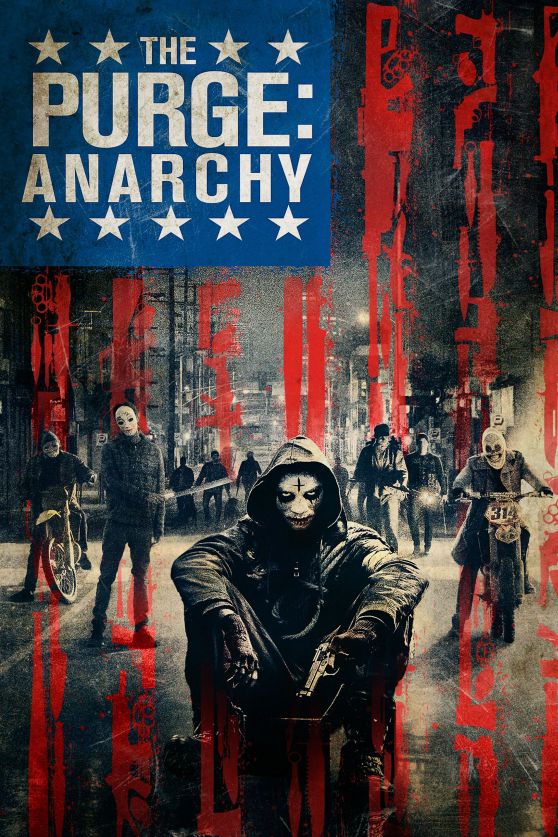
The Purge: Anarchy (2014): Frank Grillo is the kind of actor that I love, someone who would be starring in Cannon movies if this was the 80s and instead is the lead in this movie as Leo Barnes, an LAPD Police Sergeant who wants to use Purge Night to avenge his son’s death, with the killer going free as the boy died on Purge Night.
Before the sixth Purge can begin, a resistance group led by Carmelo Johns (Michael K. Williams) and Dante Bishop (Edwin Hodge), the Stranger from the first movie, hijack the American media to denounce the government and the fact that the Purge has reduced poor and non-white people to target practice.
The other storyline in this concerns waitress Eva Sanchez (Carmen Ejogo), her daughter Cali (Zoë Soul) and her terminally ill father Rico (John Beasley) who has sold himself to a rich family as someone to be hunted so that Eva and Cali can live in confront after his death.
There’s also Shane (Zach Gilford) and Liz (Kiele Sanchez), a couple ready to leave one another, who also are trapped in the inner city on the worst night of the year.
Complicating matters is that the Purge has not worked out how its creators thought: people wait to enact revenge based on personal grudges, killing friends and family instead of random poor people. The government has sent out death squads to up the body count and destroy the lower class.
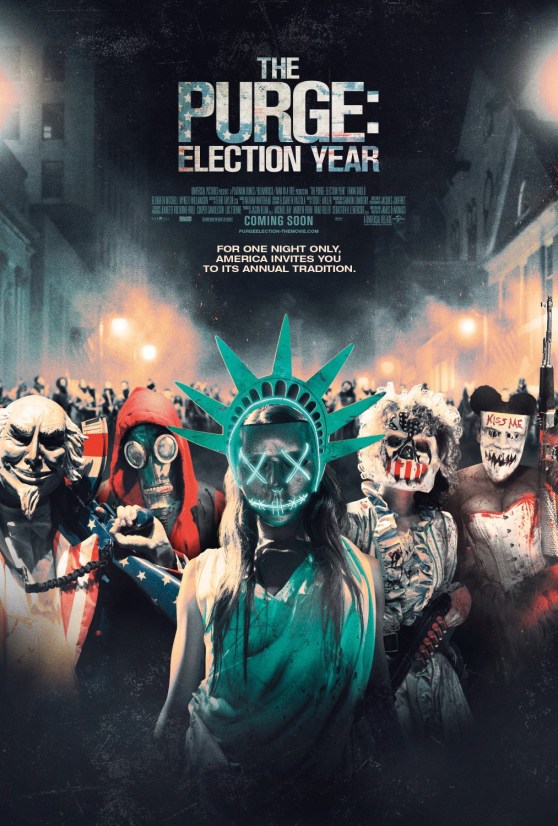
The Purge: Election Year (2016): It’s kind of crazy how The Purge finally found its real footing three movies in, moving Leo Barnes (Frank Grillo) into a Secret Service hero protecting Senator Charlene Roan (Elizabeth Mitchell), a U.S. Senator running for President on an anti-Purge platform. She has a true belief in this, as her family was killed during the first Purge.
The New Founding Fathers of America use the Purge to try and kill Roan legally, as this year government officials have no immunity. This film also goes all in on just how close the NFFA is to right-wing religious zealots, even praying for death in church and having a sacrifice on an altar. Minister Edwidge Owens (Kyle Secor) is the other Presidential front runner and he’s been targeted by the underground led by Dante Bishop (Edwin Hodge).
Of all The Purge movies, this feels the most like something John Carpenter would make, as it feels like a non-stop chase and the good guys up against the wall for the entire running time. It expands the world of the film without forgetting the normal people caught up in the Purge, those truly battling for their lives and not just arguing about money and politics.
This is also the most violent in the series with 116 deaths, nearly one every single minute. It also shows that the rest of the world has begun to be part of the event with death tourism increasing along with the government sponsored death squads.
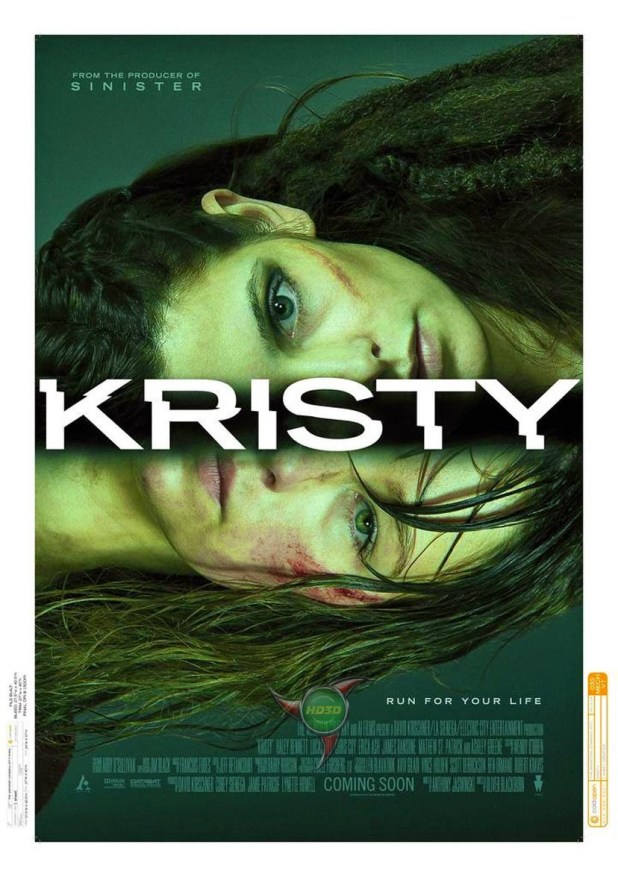
Justine (Haley Bennett) is going to college on a scholarship and can’t afford to fly home for the Thanksgiving break. Instead, she’s all alone, as even her boyfriend Aaron (Lucas Till) and roommate Nicole (Erica Ash) have both gone home. Of course, she’ll be safe, because the security team — Wayne (Matthew St. Patrick), Dave (Al Vicente) and Scott (James Ransone) are there. That night, she meets the pierced and hooded Violet (Ashley Greene, leaving behind Twilight to be a really intense villain) in a convenience store, a strange woman who keeps calling her Kristy. It’s unsettling, but things grow worse once that same face shows up on her laptop, along with snuff footage of her leading a group of masked killers as they obliterate young women. Now, she is their target, a woman who they see as a pure, beautiful and privileged follower of God.
Directed by Oliver Blackburn and written by Anthony Jaswinski, this was originally called Satanic and Random. The title doesn’t matter. What does is that this is that rarest of film: a slasher that actually is good after the 1980s. Unlike so many modern slashers that don’t have the stalking moments that are packed with tension, this film has Justine on the run for the entire running time. Like The Strangers with anti-religious zealots trying to destroy young women — and succeeding across our nation — this works way better than it should, blasting out under ninety minutes of taut suspense along with a heroine who by the end of the film has gone from final girl to capable killing machine who is totally fine with leading aluminum foil-masked maniacs to their doom while still shedding tears for what they’ve made her do.
It also really feels like this wasn’t a throwaway film for the filmmakers who just wanted to make something that was elevated from horror. They also find some ways to make it weird, with strange camera angles, odd speeds of the film, off-sound design and just plain smart moments where we hear instead of see things happen. Yet it’s not ashamed to be a big dumb slasher and give you moments to just yell at the screen. Wow. I’m an evangelist for this one. Watch it!





 B&S About Movies
You must be logged in to post a comment.