Chattanooga Film Festival 2024 Red Eye #4: The Beer Drinker’s Guide to Fitness and Filmmaking (1987)

There’s no way I would have ever seen this movie if it wasn’t for the Chattanooga Film Festival.

“My father says if people don’t come and see this movie, we’ll starve,” says Tate Sullivan, introducing his father’s The Beer Drinker’s Guide to Fitness and Filmmaking.

Fred G. Sullivan only made one other movie and that’s a shame. He made Cold River in 1982, which was a historical movie. This is more like a home movie, but you may not know when it’s real and when it’s f for fake. Fred directed, wrote, produced, edited and stars in this, along with his four kids, his wife Polly, his business partners, his neighbors and nearly everyone who ever knew him.

Fred wants to be a filmmaker and a star. He wants it so bad that he’ll let you watch his proctology exam. As for Polly, she grew up rich and fell for him and now they’re off in the country where he muses about movies and daydreams all day. And yet, you can understand how she felt that way.

Not all of us have our home movies released on VHS. Imagine how amazing it would be if that were true and then your VHS was rediscovered by some movie nerds, logged on Letterboxd and discussed on Discord. It would be weird and yet if Fred were still alive — he died playing basketball — I think he’d be elated.

You can watch this and so many of the films at CFF by buying a pass on their website. I’ll be posting reviews and articles over the next few days, as well as updating my Letterboxd list of watches.

You can watch this on Vimeo. It was posted by one of Fred’s sons.

Chattanooga Film Festival 2024 Red Eye #3: Nightflyers (1987)

Before he became known for Game of Thrones, George R. R. Martin wrote a 23,000-word novella titled “Nightflyers,” which was published by Analog Science Fiction and Fact. A few years later, encouraged by his editor James Frenkel, Martin turned it into a longer story which was published in a split book with Vernor Vinge’s True Names as part of their Dell’s Binary Star series.

You don’t need to know this, but this is in the same “Thousand Worlds” universe as other Martin stories such as Sandkings, A Song for Lya, The Way of the Cross and Dragon, With Morning Comes Mistfall, the short stories in Tuf Voyaging and Dying of the Light.

Director Robert Collector (Red Heat, the Linda Blair and Sylvia Kristel one) left shooting before the movie was finished and used the name T. C. Blake. Writer and producer Robert Jaffe (he wrote Demon SeedMotel Hell and the deranged Scarab) took the short version as his inspiration.

First off, kind of like Fulci with Conquest and his fog, this entire movie is supposed to look this misty. It was a deliberate choice by the producers, director and cinematographer who wanted the movie to look like a dream. Seeing as how it’s never been released in any high definition media, the VHS look of this makes it appear even more phantasmagorical.

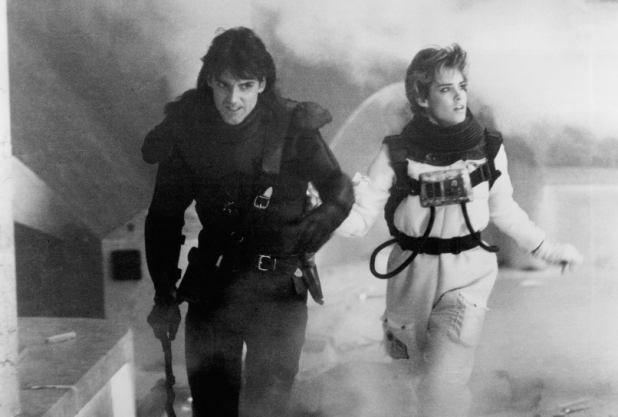
The Volkryn are ancient space gods kind of like Kirby’s the Celestials, as they go blindly through the galaxy creating stars in their wake. An unseen pilot named Royd Eris (Michael Praed, Prince Michael of Moldavia on Dynasty) has brought together a crew of scientists with Miranda Dorlac (Catherine Mary Stewart, who seriously rivals Jessica Harper for being in multiple cult movies that lunatics like me obsess over; as for her, she’s in movies I go wild over like The Last StarfighterNight of the Comet and The Apple) as our heroine. There’s also Michael D’Brannin (John Standing), Audrey Zale (Lisa Blount, forever from Prince of Darkness), Keelor (Glenn Withrow), Eliza (Annabel Brooks, who replaced Bianca Jagger), Glenn Withrow (Michael Des Barres, yes, the guy from the band Detective who was on the remade WKRP In Cincinnati) and Darryl (James Avery, the voice of the Shredder and Uncle Phil).

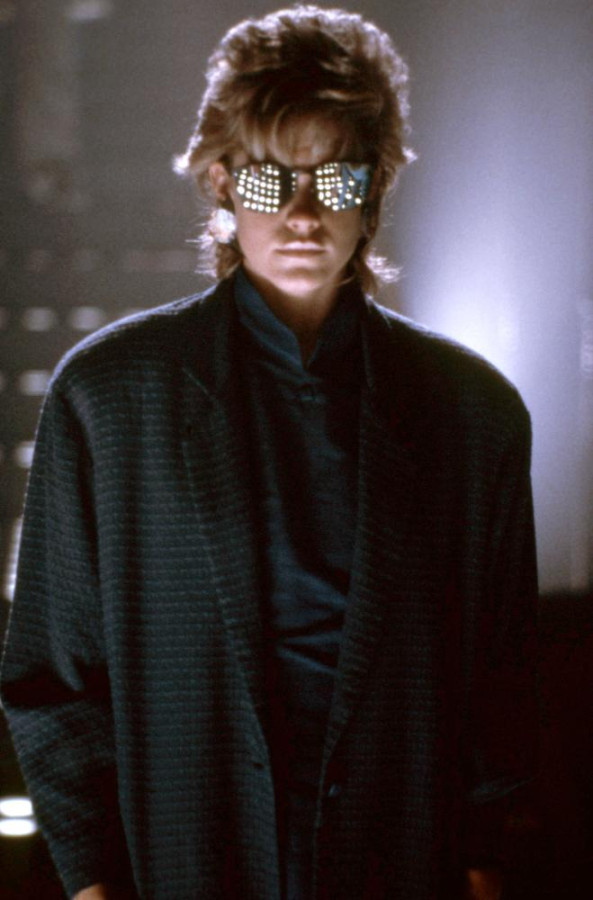
Royd and Miranda are into one another, which has some issues, as he’s a clone of his mother Adara, who is also the computer that runs the ship and decides that this woman — in a power suit with mirrored shades — is going to take her son away from her, so she goes all HAL and kills everyone. This would fit in well with a lot of Alien clones, even if it’s not all the way on Alien. Maybe a late Galaxy of Terror? An early Event Horizon? It’s flawed, sure, but so is Lifeforce and both of these movies would go together well.

I mean, take a look at Stewart in that outfit. Murder computer mom is so correct.

This was also a SyFy series in 2018. It lasted for ten episodes.

You can watch this and so many of the films at CFF by buying a pass on their website. I’ll be posting reviews and articles over the next few days, as well as updating my Letterboxd list of watches.

You can also watch this on YouTube.

Junesploitation: Gil Incubi de Dario Argento (1987)

June 11: Junesploitation’s topic of the day — as suggested by F This Movie— is Italian Horror! We’re excited to tackle a different genre every day, so check back and see what’s next.

Gli incubi di Dario Argento (Dario Argento’s Nightmares) was a TV series created and directed by Dario Argento that was part of the RAI TV show Giallo by Enzo Tortora. He’s probably most famous for the show Portabello that had viewers call in to buy or sell things, present ideas or try and look for love. And if they could get the parrot who was the show’s namesake to say his name, they would win a prize. He was also arrested in 1983 and jailed for 7 months as it was thought he was a member of an organized crime family, the Nuova Camorra Organizzata. It was a case of mistaken identity and he got out of ten years in jail thanks to the Radical Party. They offered him a candidacy to the European Parliament, which he won in a landslide. He was cleared of all charges the year this show ran and brought this show — on which he discussed unsolved murder cases — and Portabella to RAI.

The main draw of these episodes are nine new mini-movies made by Argento. They’re three-minute shorts shot on 35mm that show off some wild effects but one of them, Nostalgia Punk, so upset viewers that it has rarely been shown since. The stories are:

La finestra sul cortile (The Window on the Court): This is Argento’s tribute to Alfred Hitchcock and Rear Window. After watching the film, a man named Massimo watches his neighbors fight. He runs down with a knife to stop them, but falls on his own weapon and is blamed by the police for killing the woman. If you recognize the music, it’s part of the Simon Boswell score from Phenomena.

Riti notturni (Night Rituals): This is also missing from some online versions of the film, but has a maid conspire with a voodoo coven to murder and devour the couple that she works for.

Il Verme (The Worm): A woman who goes by the name of Bettina is reading Dylan Dog (the comic book that Cemetery Man comes from) when she overhears a story about parasites that go from cats to humans. As she explores her nearly nude body in a mirror, she notices a worm has grown out of her eye, which she stabs out.

Amare e morire (Loving and Dying): Set to Michael Jackson’s “Bad,” this story has Gloria assaulted and left for dead. As she recovers, she believes that the man who raped her is one of three neighbors. She sleeps with each in an attempt to learn who it is and get her bloody revenge.

Nostalgia punk: The most controversial segment, this has a woman’s water become poisoned. She begins to vomit multicolored liquids and then parts of her body before she finally tears her own body to pieces and her organs rain out of her destroyed carcass. It got so many complaints that Argento was told to settle down in future segments.

La Strega (The witch): Using Morricone’s score from The Bird With the Crystal Plumage, this has Cinzia’s party guests playing a game called “The Witch” that ends with children screaming and holding a bloody head.

Addormentarsi (Falling asleep): A man is possessed by a demon just before he falls asleep and then devours his dog. This uses “Anarchy in the UK” by the Sex Pistols.

Sammy: Sammy is a young girl who is frightened when Santa enters her room. Then Santa removes his face and reveals a monster. It’s simple but it really works.

L’incubo di chi voleva interpretare l’incubo di Dario Argento (The Nightmare of the One Who Wished to Explain Dario Argento’s Nightmare): A young man comes to REI to be part of this series and when he stays at a hotel, he soon learns he’s in a room with foreigners who steal everything he has and then threaten to kill him. It turns out that it’s all a set-up by Argento.

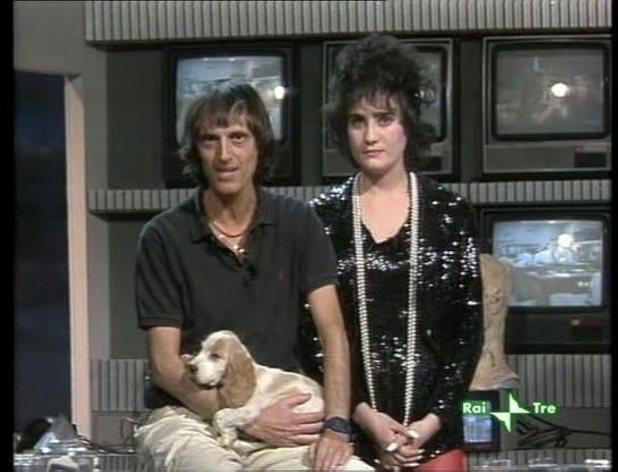
At the beginning of every episode, Argento appears, often with Coralina Cataldi-Tassoni (Demons 2, Il Bosco 1Opera) all gothed out and acting as his starry-eyed assistant.

Argento also created another segment for GialloTurno di notte (Night Shift), which was about what happens to cab drivers at night. Episodes were also directed by Lamberto Bava and Luigi Cozzi. He also shared how he filmed several big moments in his most famous movies, such as the Loma camera sequence in Tenebrae; the bird attack in Opera, the transformation scenes in Demons 2 and how he directed Goblin to create the score for Suspiria. These scenes are worth watching and also appear in the Luigi Cozzi-directed Dario Argento: Master of Horror.

While this is by no means necessary watching for those with a passing interest in Italian horror, for devotees of the form and Argento, it is required viewing. It’s the chance to basically get nine new stories even if they are very short.

You can watch this on YouTube.

References:

Hypnotic Crescendos. Gil Incubi del Dario Argento.

Timesweep (1987)

Director Dan Diefenderfer only directed this one film, but he also was an electrician on Turbulence. He co-wrote the script with Larry Nordsieck and John Thonen, who wrote for Fangoria and Cinefantastique and also wrote B-Movie Horrors: A Photo-Filled Journey Into the Horror and Sci-Fi Films of Director Don Dohler.

A historical society is exploring the Dunbar film studios which have long been abandoned. As a TV news crew and some students start looking around, they’re suddenly pulled into different times and aren’t aline, as there’s a cop from the 60s and a caveman, both of whom are quite unstable.

Somehow, in the middle of all this craziness, someone finds a print of London After Midnight.

Shot on 16mm in Diefenderfer’s own studio, this really throws everything into one movie and hopes that you like some of it. Acid fog, Roman centurions, ghosts, giant roaches, a UFO, zombies…and lots of walking. Lots and lots of walking down hallways.

There’s also a ton of gore and characters that you shouldn’t get too attached to. This movie hates its characters and they get murdered in various creative ways. There’s also a series of posters on the walls — Mondo Teeno (Teenage Rebellion), TarantulaThe MummyBilly the Kid vs. Dracula — and characters are named Vincent Hill, Roger Agar, H.G. Lewis, Sam Harcough, Florrie Ackerman and Mike Romero.

I think the more you love movies, the more you might like this. I wasn’t bored because just when you think you know what this movie is about, it becomes a completely different movie.

The credits promise Timesweep 2 – The Quesdrov Factor and sadly, we never got that movie.

You can watch this on the amazing Crud Buddies channel on YouTube.

APRIL MOVIE THON 3: The Drifting Classroom (1987)

April 17: Did You Get It? — A bug movie.

The Drifting Classroom is based on a horror manga series written and illustrated by Kazuo Umezu, who also had his work turned into the movies The Snake Girl and the Silver-Haired Witch and Tamami: The Baby’s Curse and the TV series Umezu Kazuo: Kyôfu gekijô. The series was originally serialized in Weekly Shōnen Sunday from 1972 to 1974 and is about a school building that has been mysteriously transported through time to a post-apocalyptic future.

Directed by Nobuhiko Ôbayashi (who not only directed House, he was also the man who made the Charles Bronson Mandom commericial) with a cast of untrained actors who were actual students at the Kobe International School, this film takes the sprawling story of the manga and tries to turn it into a condensed film. It avoids one of the major points of the original story as the adults almost all go mad and literally go to war with the young children who have to fight back.

I also have no idea why they shot this in English with Japanese subtitles instead of just making it in the native language. It isn’t like there was a huge crowd in the U.S. dying to see an adaption of a manga made two decades before outside of some hardcores. Maybe they thought that Troy Donahue was still a big deal?

As if it were bad enough that Sho and the other students have traveled through a time slip, this end of the world situation also has monstrous cockroaches that go wild and attack the school, killing many of the children. Yes, a movie that holds back nothing while also having song and dance numbers every few moments. As you can imagine, I’m fascinated by this film.

There’s also a friendly little alien that feels badly that the children have no water to wash their faces, so he urinates in their faces. Where else are you going to see that? Or a child ride a tricycle into the next reality? I’m not saying this is great, but it’s weird and sometimes that’s better than great.

You can download this from the Internet Archive.

88 FILMS BLU RAY RELEASE: Long Arm of the Law Part II (1987)

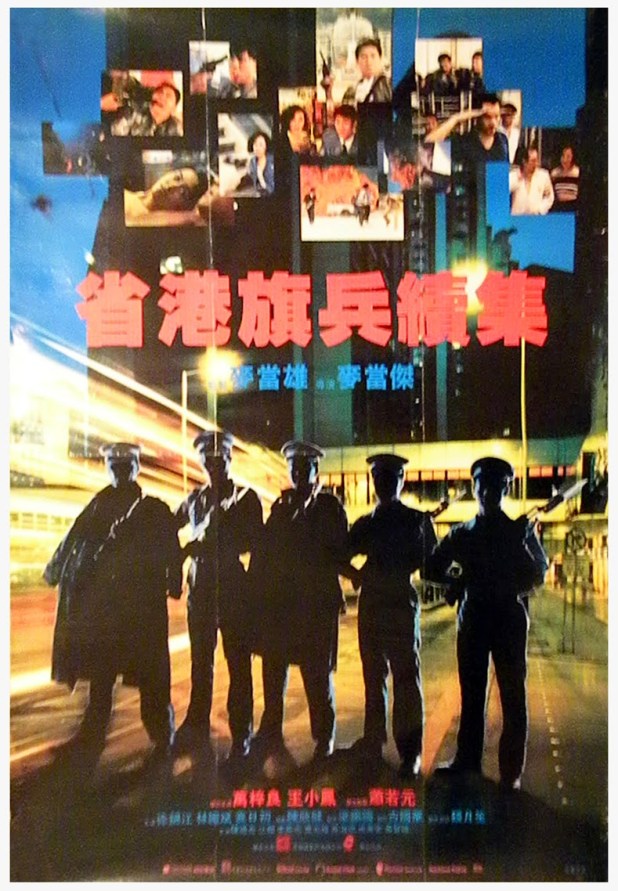
The Hong Kong Police Department is trying to stop the Big Circle Gang, so they hire three former cops from mainland China — Li Heung-Tung (Elvis Tsui), Hok Kwan (Yat-Chor Yuen) and King San (Ben Lam) — to join the gang and get evidence in exchange for Hong Kong citizenship.

Hok Kwan falls in love with one of the family members of the gang, Diana (Siu-Fong Wong), while King San brags to his lover that he’s undercover, which puts everyone in the crosshairs of the triads. By then, the cops have no needs of them and they’re on their own.

Not a sequel outside of the name, I still enjoyed this. It has some good action but none of the emotions of the original. It was directed by Michael Mak Tong Kit, whose brother Johnny made the first part.

88 Films has released this film and Long Arm of the Law in a box set. It comes with new artwork by Sean Longmore, stunning new 2K restorations of both films, commentary on both films by Frank Djeng and interviews with Phillip Can and Michael Mak. You can get it from MVD.

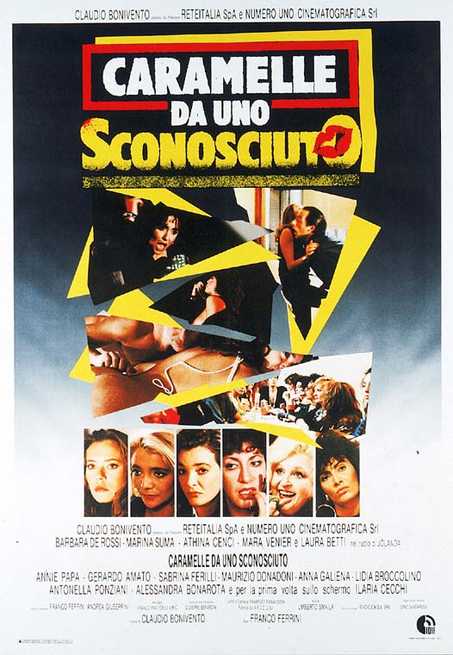
Caramelle da uno sconosciuto (1987)

Sweets from a Stranger has the elements of a giallo — a masked and black-gloved killer is slicing sex workers with a razor and then killing them with a bolt gun — but it’s just about how the women decide to stop taking it and empower themselves, which may not have been what audiences were looking for.

It was directed and written by Franco Ferrini (PhenomenaNothing UnderneathDark Glasses), who worked on the script with Andrea Giuseppini and got the idea while writing Red Rings of Fear. It’s the only movie that he ever directed.

Stella (Mara Venier) and Nadine (Athina Cenci) are a high end call girl and an older experienced prostitute who learn of the death of Bruna, a mutual friend. They organize their fellow sex workers Lena (Barbara De Rossi, Vampire In Venice) and Angela (Marina Suma) with the goal of finding out who the killer is and stopping him while the police are fumbling in the dark.

Ferrini has spent a lot of time working with Argento — as has editor Franco Fraticelli — so the film looks good. The first kill is totally Bava with a woman being killed while surrounded by sculptures of angels. In fact, it’s nearly one of the scenes from Blood and Black Lace. Thanks for noticing, Giallo Files. Steal from the best, right?

Yet it’s also a serious movie that doesn’t exploit the woman and shows the reasons why someone would sell their body, as well as the abuse and trauma that often comes with this profession. It’s an intriguing way to use the giallo form to tell a story about real life. Of course, the first two girls are simply to get you in, using the exploitative nature of the giallo trappings to whet your appetite for more mayhem and then making you consider the actual people who are often only presents as victims.

You can watch this on YouTube.

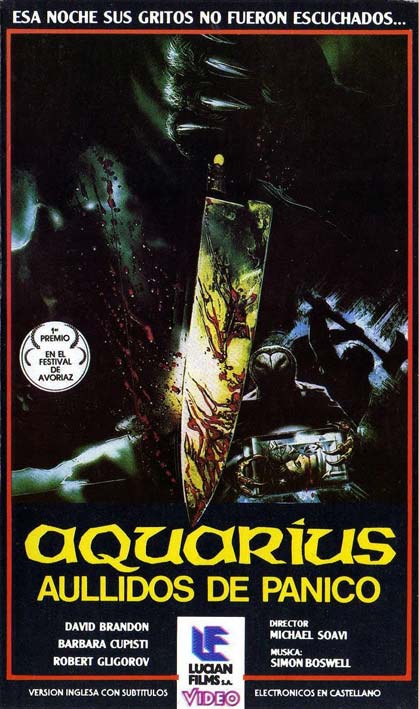
Cinematic Void January Giallo 2024: Stagefright (1987)

EDITOR’S NOTE: Cinematic Void will be playing this film on January 26 — with Cemetery Man — at 8 PM PT at The Frida Cinema in Santa Ana, CA (tickets here) and January 27 at 11:59 PM ET at the Coolidge Corner Theatre in Brookline, MA (tickets here). For more information, visit Cinematic Void.

There was a moment two minutes into this movie, when a slasher-like scene turned into a Cats-like play, that my mind was blown. And there was a moment halfway through when a body was torn in two that I jumped off my couch, screaming, “Soavi, I love you!”

There’s no other way to say it — this movie is completely crazy. Is it because of Michael Soavi’s (The SectCemetary Man) direction? Or the script from George Eastman (better known Nikos Karamanlis from Antropophagus and, well, kinda sorta Nikos in Absurd, a movie so brutal that it inspired a murderous black metal band)? Why ask questions? Why not just sit back and enjoy the mayhem?

The entire movie takes place in a theater, where actors and a crew are creating a musical about the Night Owl, a mass murderer. Alicia (Barbara Cupisti, The ChurchCemetary Man) sprains her ankle, so she and Betty sneak out to a mental hospital to get some help. While there, they see Irving Wallace, a former actor who went on a murder spree, which has continued in the insane asylum. He uses a syringe to kill an attendant and hides in Betty’s car.

Because Alicia left, the director fires her while Betty is killed with a pickaxe outside. Alicia finds the body and calls the police (one of them is Soavi, who spends an extended scene asking if he looks like James Dean), who lock them inside the theater and guard the premises. Because, you know, that’s the way the police handle these things.

The director is inspired — the play will now be about Irving Wallace and everyone must stay the night to rehearse, even the rehired Alicia. While rehearsing the first scene, Wallace dons the killer’s owl costume and strangles, then stabs one of the other actors in front of everyone.

Then, Wallace cuts the phone and starts killing one person at a time. It’s at this point that this movie goes off the rails and does some rails. A power drill going through someone? Yep. Hacking someone up with an axe? Yep. A woman cut in half that sprays blood all over an entire room full of people? It’s got that, too. A dude getting chainsawed until the saw runs out of gas and then getting decapitated? Oh yes.

Wallace takes all of the bodies and blares the theme from Sergei M. Eisenstein’s Battleship Potemkin while feathers fall. Alicia finds the key to escape and a gun while Wallace pets a black cat, his face covered by the owl mask.

Alicia has no idea how a gun works and can’t take the safety off. Wallace chases her, even stabbing him in the eye ala Halloween. The higher in the theater Alicia climbs, Wallace keeps following, in a POV shot that makes it feel like he’s climbing toward us. She cuts the cord he is climbing and he falls to his death. But this is a slasher — albeit one through the eyes of Soavi — and the killer comes back until he is set on fire.

The next day, Alicia goes back to the theater to find her watch. Willy, the janitor, tells her that they took eight bodies out, which makes her realize that Wallace is still alive. He shows up, unmasked, and tries to kill her all over again. After hearing Willy tell her how she didn’t even have to think to kill him and that the gun would do it all once the safety is off, she unloads a bullet “right in-between the eyes.”

Alicia wanders out of frame, toward a bright white doorway that we first saw just before Wallace attacked her. And in this scene, we can really see why Soavi stands ahead of the pack when it comes to horror. That doorway offers escape, not just from Wallace, but from the film itself, as her fictional character, her final girl, is removed from our minds. The killer lives long after the victims and survivors, so the camera pans down to reveal Wallace, blood pouring from behind his eyes, and he begins to laugh. Soavi said that he intended this to be a wink to the conventions of the slasher, where the killer never really dies.

This film was produced by Joe D’Amato, who had a scene from this movie play within his 9 1/2 Weeks rip-off Eleven DaysEleven Nights. Also known as Aquarius and Deliria, it features an amazing soundtrack by Simon Boswell. And Soavi — in his first time as a director — shines with intricate camera work (it’s very Argento), complete with a wordless final twenty minutes of Alicia fighting against Wallace.

The end of this film approaches near surrealism within the horror narrative. This gets the highest review I can give. It’s a slasher that transcends the genre to become real art.

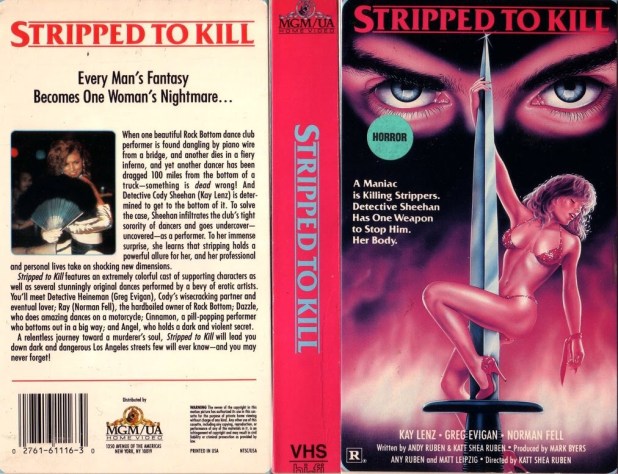
Cinematic Void January Giallo 2024: Stripped to Kill (1987)

EDITOR’S NOTE: Cinematic Void will be playing this movie on January 8 at 7:00 PM PT at 10th Avenue Arts Center in San Diego, CA. Opera will also be playing. You can get tickets here. For more information, visit Cinematic Void.

Katt Shea was in My Tutor, Preppies, Hollywood Hot Tubs and Barbarian Queen before working with Andy Ruben to make The Patriot for Roger Corman. She’d go on to direct several films and even earn a four-day retrospective at the Museum of Modern Art, where Poison Ivy debuted. You can check out her movies Dance of the Damned, Stripped to Kill II: Live Girls, Streets, Last Exit to Earth, The Rage: Carrie 2, Nancy Drew and the Hidden Staircase and Rescued by Ruby.

While working undercover, Cody (Kay Lenz) and her partner Sergeant Heineman (Greg Evigan) are too late to save Angel (Michelle Foreman), a dancer who has been thrown off a bridge and set on fire. Of course, this means that Cody must become Sunny, dancing at the Rock Bottom for its owner Ray (Norman Fell).

As she gains the trust of the dancers, they’re all being killed one by one. Cody keeps dancing at the club, defying the orders of her superiors, sure she can catch the killer. Is it Pocket, the one handed creep? Is it Angel’s lover Roxanne (Pia Kamakahi)? And how does Roxanne’s brother Eric fit in?

In a New York Times article, Shea explained how she was inspired by a trip to a strip club: “I didn’t want to go because I felt it was humiliating to women. But I finally got myself there. I sat down and began watching these acts and they’re performing as if they really cared.”

So — spoiler: Roxanne is dead. Eric is Roxanne, taking over her life as he was sure Angel would take his sister away. You can imagine that this is incredibly problematic, as they say, but it’s also a Roger Corman movie. In fact, Corman was convinced that only a woman could be a convincing woman on stage. Shea surprised him and showed him up by fooling him. She would later explain: “He [Corman] turned every shade. He was purple by the end.”

Also, as this is a Corman movie, all the songs that are danced to in this film were added in post-production. They had been filmed with popular songs, but those songs had to be replaced in post, because clearing licensing would be too expensive.

Shea worked with real exotic dancers, teaching them to act. Debra Lamb was one of them and she has been in plenty of movies since this, including Deathrow GameshowAll Strippers Must Die! and Point Break, often displaying her fire-eating skills. Shea works as an acting teacher to this day, with students including Christina Applegate, Alison Lohman, Sophia Lillis and Drew Barrymore.

She also claims that this was the first movie to show pole dancing.

It would not be the last.

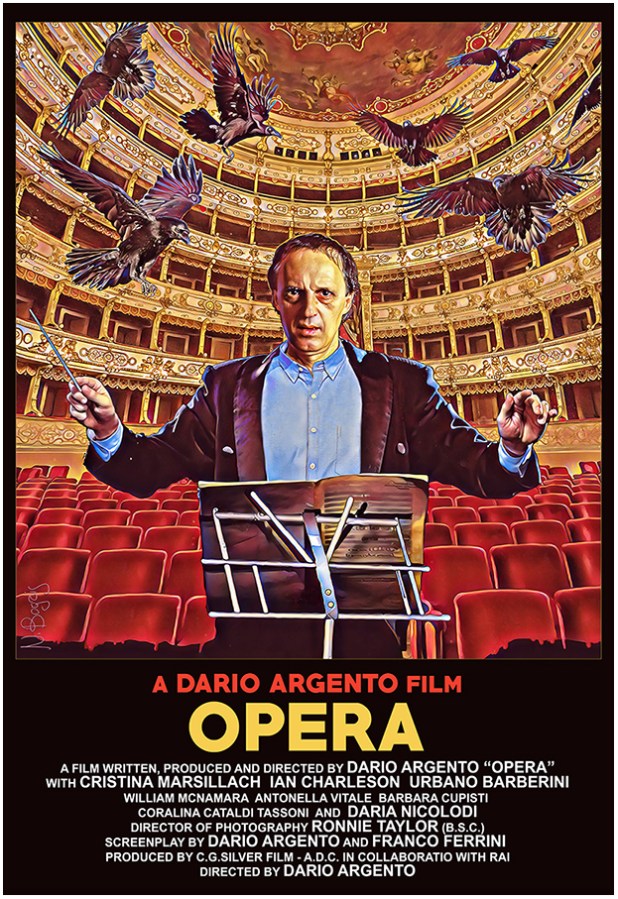
Cinematic Void January Giallo 2024: Opera (1987)

EDITOR’S NOTE: Cinematic Void will be playing this movie on January 5 at 10:00 PM ET at Cinema Salem in Salem, MA. You can get tickets here. For more information, visit Cinematic Void.

Mara Cecova is a diva and the star of a whole new way of performing Verdi’s Macbeth. But when she’s hit by a car as she argues with the director in the middle of the street, her role goes to her understudy, Betty. Ironically, in his book Profondo Argento, director Dario Argento claimed that the person playing the role of Betty, Cristina Marsillach, was the most difficult actress he would ever work with.

Despite her initial worries, Betty becomes an instant success on her opening night. At the same time, a black-gloved killer sneaks into one of the boxes to watch before murdering a stagehand with a coathanger. Grab your barf bags and motion sickness pills, everyone, Argento is behind the camera!

Of all the powerful shocks in Opera, perhaps the one that means the most to the viewer is that we share Betty’s torture — she’s repeatedly gagged, tied up and forced to watch the killer at work again and again as he tapes needles under her eyes. If she blinks too long or shuts her eyes, they’ll be shredded. It’s like Fulci’s wettest dream ever. In the same way, we are nearly complicit with the crimes we are forced to watch, particularly because they get more and more artfully composed.

Throw in the fact that Betty believes that the hooded killer is the same person who murdered her mother, she follows the giallo path for a protagonist and confides in someone else rather than the police. Her reason? The killer may know who she is.

Inspector Alan Santini (Urbano Barberini, Demons) is on the case, because there are so many clues, like the fact that the producer’s pet ravens were found dead after the show. As for Betty, she runs from the police and calls her agent Mira (Daria Nicolodi, Argento’s former wife and the writer of Suspiria and star of Shock) for advice.

Betty’s costume gets cut to ribbons, so she asks the wardrobe girl for help. While she works on the dress, they find a gold bracelet that they can almost read. But here comes the killer and his needles again, forcing her to watch him kill one more time. The wardrobe girl accidentally swallows the bracelet, so of course, we watch as the murderer slices her throat open to get it back.

Betty runs back to her apartment where Santini is waiting. He promises to send a detective named Soavi to watch over her (yep, The Church director Michele Soavi), but she doesn’t trust the man and leaves her apartment. That’s when her agent answers the next knock on the door by looking through the peephole. What follows is the most grand kill in the entire film — which is saying something — as we follow the bullet POV-style out of the gun and directly through her eyeball. Again, Fulci is somewhere wringing his hands.

Nicolodi had just ended a long relationship with Argento and did not want to be in this film. However, the shocking and complicated murder of her character changed her mind, even if she had to deal with an explosive device being put on the back of her head to achieve the final shot.

Betty escapes the killer again and runs to the opera house, convinced there is a connection between the murderer and her long dead and totally abusive mother. The next night, as she performs, the producer unleashes what is left of his ravens in the hopes that they’ll find the killer. Oh, they do alright — tearing his eyeball out of his head — FULCI ARE YOU THERE, IT’S ME DARIO — and rewarding you, the viewer, with POV shots that threaten you with vertigo. I’m getting dizzy even typing this.

I don’t want to give away the killer or even the second ending where the killer isn’t really dead. I just want to talk about the sheer Argento-ness of the final scene, where Betty wanders in a field and releases a lizard, giving him his freedom. Argento claims that this ending was inspired by Thomas Harris’s Red Dragon. Of interest, the director does NOT like the Michael Mann movie Manhunter. Me? Well, I love that movie. But I’d love to see Argento’s take. There’s was also a thought to another ending where Betty would fall in love with the killer.

Your enjoyment of this film really comes down to how much you like shocking amounts of bloodshed and Argento’s arty side. He based the film on his own failed staging of Macbeth, basing the role of the nervous producer on himself. And the idea of pins under the eyes? It comes from a joke about how Argento hated when people looked away during the death scenes in his films.

Believe it or not, Orion Pictures planned on releasing an R-rated version of this in the US called Terror at the Opera with eleven minutes of mayhem removed, as well as the Swiss Alps epilogue. Argento refused and Orion was losing money at a fast clip, so the movie only saw a limited video release. 

Opera is something else — filled with style and brutality. I loved it, but remember my warning as to how much you can handle.