La Gabbia (1985)

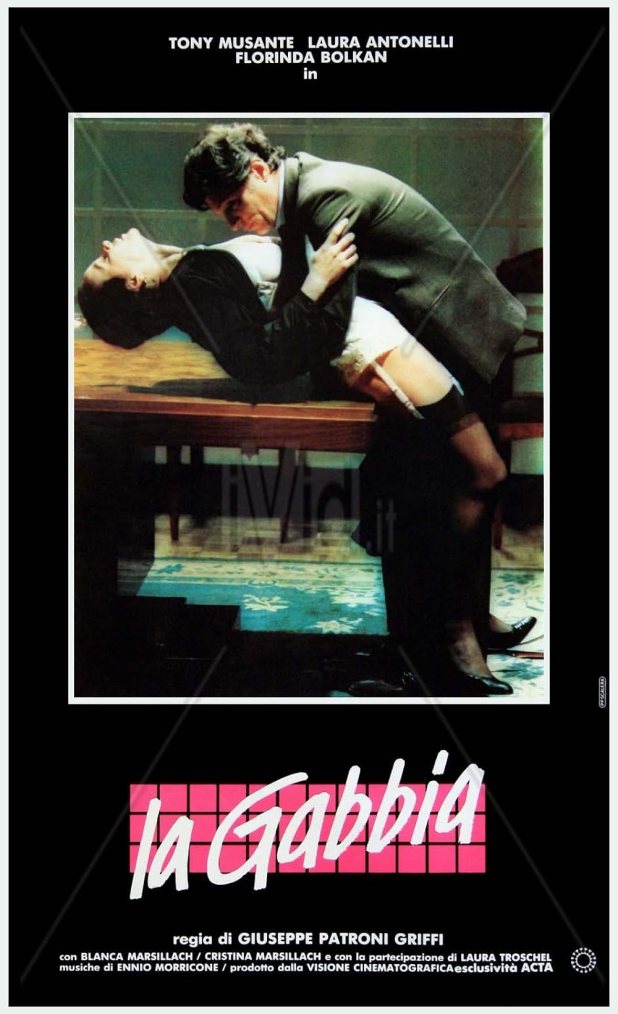
La Gabbia (The Trap) is based on a story called L’Occhio, which was written by filmmaker Francesco Barilli (The Perfume of the Lady In BlackHotel Fear), who was trying to direct the movie himself. He couldn’t get producers to pay for the film unless Shelley Winters was in the lead. He sold the idea to Giuseppe Patroni Griffi, who also made Identikit.

The screenplay was written by Concha Hombria, Roberto Leoni and Alberto Silvestri, along with Lucio Fulci, who didn’t direct as he was coming back from hepatitis.

Barilli is quoted in Troy Howarth’s Splintered Visions: Lucio Fulci and his Films as saying, “Lets’ talk frankly here, that movie sucks…” Fulci used profanity when asked about Griffi, who he felt stole his chance to direct this movie. He ended up directing The Devil’s Honey, which is pretty much what this movie could have been.

That said, this does have an Ennio Morricone score, so that helps.

Michael Parker (Tony Musante) is an American in Italy who is dating Hélène (Florinda Bolkan). 15 years ago, he dated Marie (Laura Antonelli), who has finally found him again. Amazingly, she’s his girlfriend’s landlady. What are the chances? He thinks they can just have a quick affair, but she won’t let him go. In fact, she puts him in a cage. And to make things even weirder, her daughter Jacqueline (Blanca Marsillach) soon falls in love with him.

When Hélène returns, she can no longer find him. She’s used to him wandering from woman to woman, but he always comes back. As for Marie, Michael once taught her the ways of love and then left. She never found a man who satisfied her in the same way and now, she refuses to even let him go to the bathroom outside of her sight. Also: Jacqueline could be his daughter.

Made in the brief time before giallo would become the erotic thriller, this has Michael being held so close to his girlfriend, finally paying for his years of seducing women and leaving them alone. Of course, I would rather have seen what Fulci had done with this movie. Or Barilli, come to think of it.

You can watch this on YouTube.

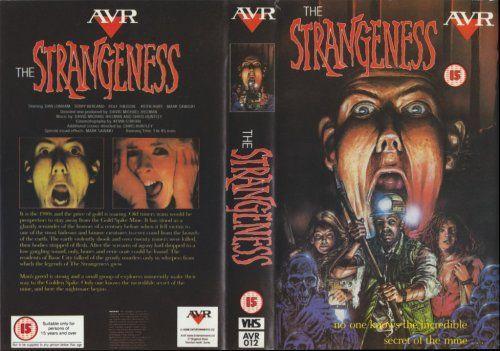
The Strangeness (1985)

It doesn’t matter if a mine has gold in it. If it closed because a supernatural force killed everyone that went into it, perhaps you don’t need to reopen it. Well, there wouldn’t be a movie if this didn’t happen and The Strangeness, shot on 16mm with real stop-motion animation, is the result.

You can say that this movie drags — and it does — but it also has a monster that eats people and dissolves them with acidic spit and then pukes them up. It leaves behind messy corpses that are crawling with maggots, so you know, don’t eat during this.

Director Melanie Anne Phillips — who used the name David Michael Hillman — wrote this with Chris Huntley, who plays one of the trapped people in the mine and also did the special effects.

The beginning of the movie was shot without permission at a real mine called The Red Rover. About a month after, real-life miners hired to see if the mine was worth reopening entered and went further in than the film crew had. They all died. Not from being devoured and thrown up by a monster that looks like a woman’s secret garden filled with tentacles and slime, mind you, but from poison gas exposure. The rest of the movie was shot in Phillips’ grandparents’ garage using tin foil painted black for the walls of the mine.

You can watch this on YouTube.

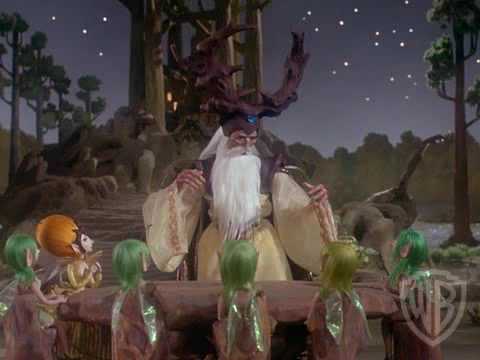
The Life and Adventures of Santa Claus (1985)

The last Animagic movie by Rankin/Bass Production, this is based on The Life and Adventures of Santa Claus by L. Frank Baum and is not tied to any of the continuity of the other Rankin/Bass specials such as Rudolph the Red-Nosed ReindeerFrosty the SnowmanSanta Claus Is Comin’ to TownFrosty’s Winter WonderlandRudolph’s Shiny New Year and Rudolph and Frosty’s Christmas in July.

I can only imagine how this movie — made in the middle of the Satanic Panic — went over. It starts with the Great Ak telling the Immortals the story of Santa Claus so that they will keep him alive forever. Yes, Claus was once an abandoned baby given to the lioness Shiegra before he was stolen by a wood nymph named Necile.

In the world of humans, Claus tries to spread joy but has to battle the dark Awgwas who make children do bad things. Eventually, the Angwas attack Santa so many times that the Immortals get involved and destroy them, even telling Santa that they have perished. This is a show for kids. To bring that point home, this ends with Santa on his deathbed, asking his friends to decorate a tree to remember him, just as the Immortals decide to allow him to join them.

Baum introduced the Forest of Burzee in his short story”The Runaway Shadows or A Trick of Jack Frost” before using in The Life & Adventures of Santa Claus, “A Kidnapped Santa Claus,” “Nelebel’s Fairyland” and Queen Zixi of Ix. Burzee is in the same universe as Oz. Some examples include Queen Zurline of the Wood Nymphs and Queens Lulea and Lurline of the Fairies probably all being the same person and in The Magic Cloak of Oz, embassies between these universes are created and Santa becomes the ambassador to Oz.

It may also freak you out when you realize that most of the cast of this comes from Thundercats, so yes, Santa has the same voice as Mumm-Ra — Earl Hammond — possibly the most Satanic of all 80s cartoon characters.

Common Sense Media said, “Of possible concern for the youngest viewers are the several mentions that Santa’s going to be visited by the spirit of death, some mildly scary monsters and a sad scene in which Santa talks about his mortality fading and that he wants decorating Christmas trees to be a kind of memorial to him. Fantasy violence includes a battle with magical powers to defeat the monsters once and for all. The ending is happy and safe, but be prepared to offer reassurance and answer questions about death and immortality.”

Who is going to do that for me?

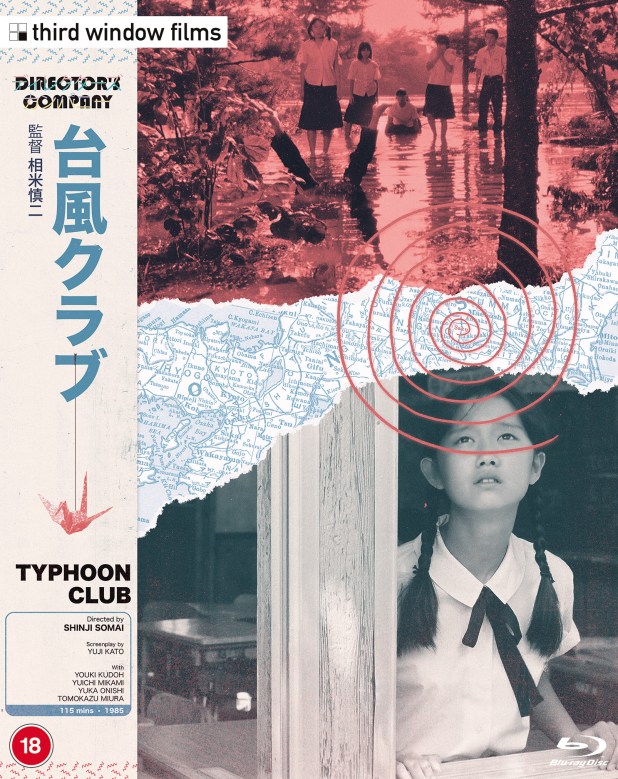
Typhoon Club (1985)

ABOUT THE AUTHOR: Joseph Perry writes for the film websites Gruesome MagazineThe Scariest ThingsHorror Fuel and Diabolique Magazine; for the film magazines Phantom of the Movies’ VideoScope and Drive-In Asylum; and for the pop culture websites When It Was Cool and Uphill Both Ways. He is also one of the hosts of When It Was Cool’s exclusive Uphill Both Ways podcast and can occasionally be heard as a cohost on Gruesome Magazine’s Decades of Horror: The Classic Era podcast.

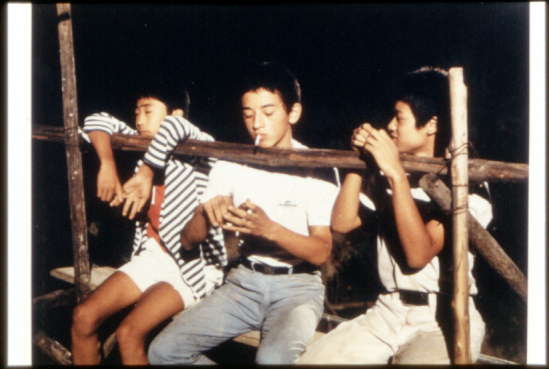
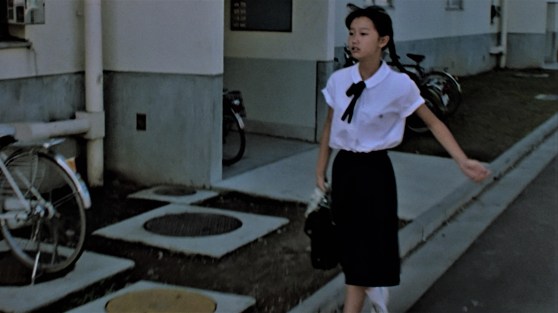
The titular storm in director Shinji Sômai’s Typhoon Club (Taifû kurabu; Japan, 1985) is both a literal one, as the story takes place before, during, and after a typhoon event in Japan, and a figurative one as a group of rural junior high school students deal with the realities of teen life and the frustrations of a lack of adult role models. Yuji Kato’s screenplay treats its teenage characters with a realistic eye, and the ensemble cast of young performers nail every nuance that is asked of them.

Starting with the near-drowning of a boy by the girls he was spying on at the school pool — closed at night, but when did that ever stop teenagers who wanted to swim by the moonlight? — and featuring a maddening sequence of a boy stalking and terrorizing a girl classmate — whose back he has scarred with acid during science class in an earlier scene — inside their school that is more unnerving than many horror movie scenes, there are many reflections on death and danger. Typhoon Club isn’t solely focused on the gloomy, though, as the students try their best to live life their way, including a lesbian couple and their energetic friend, and a boy who hopes to escape his smaller town and attend high school in Tokyo. There’s a dance sequence that feels more authentic than practically any one that you can name from a major Hollywood feature about teenagers.

Beautifully shot, framed, helmed, written, and performed, Typhoon Club deserves its reputation as a classic slice of Japanese cinema. If you haven’t seen it before, this new 4K restoration is a perfect way to watch it.

Typhoon Club, from Third Window Films, is now available in a new 4K restoration, region-free blu ray.

Bonus Features

  • New 4K digital remaster from the original negatives
  • Feature audio commentary by Tom Mes
  • Selected audio commentary by Josh Slater-Williams
  • Assistant Director Koji Enokido Talk Event
  • Introduction by Ryusuke Hamaguchi at the Berlin Film Festival
  • Trailer 
  • Slipcase with artwork from Gokaiju
  • ‘Director’s Company’ edition featuring insert by Jasper Sharp – limited to 2000 copies

Fracchia contro Dracula (1985)

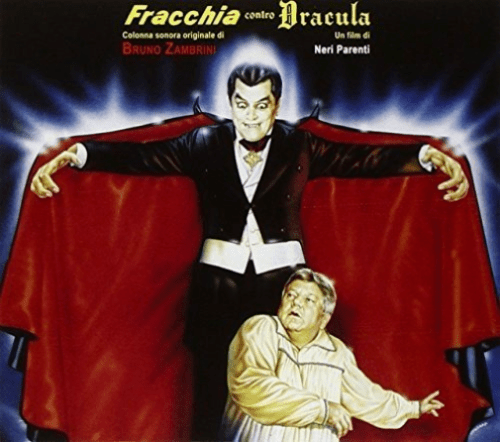
Giandomenico Fracchia (one of the many characters of comedic actor Paolo Villaggio) is given a challenge that he must succeed at or lose his job: sell a castle in Transylvania to nearsighted Arturo Filini (Gigi Reder), who doesn’t realize that he is buying Castle Dracula.

The duo get involved in the family drama of Count Vlad (Edmund Purdom!) and his sister Countess Oniria (Ania Pieroni, Mater Lachrymarum!), who is about to be married in an arranged ceremony to Frankenstein’s Monster (Romano Puppo, Lee Van Cleef’s stuntman and one of the pallbearers at his funeral). There’s also a beautiful vampire slayer named Luna (Isabella Ferrari) waiting to take out all of the undead.

Director Neri Parenti is known for his comedy films with Villaggio, as well as cinepanettoni, or comedy movies intended to be watched over the holidays. He also made The Face with Two Left Feet, a parody of Saturday Night Fever.

There’s a scene where Fracchia takes his girlfriend to the movies. They’re watching Return of the Living Dead. It scares the character so much that he nearly decimates the theater. By the end of the movie, this has all been a dream and our hero is back in the same theater except that Dracula is sitting behind him.

This looks way better than you’d expect but that’s because the cinematographer was Luciano Tovoli, who shot SuspiriaThe PassengerTenebraeThe Sunday Woman and many of Barbet Schroeder’s films. I won’t mention that he also lensed Dracula 3D.

You can watch this on YouTube.

THAN-KAIJU-GIVING: War of the God Monsters (1985)

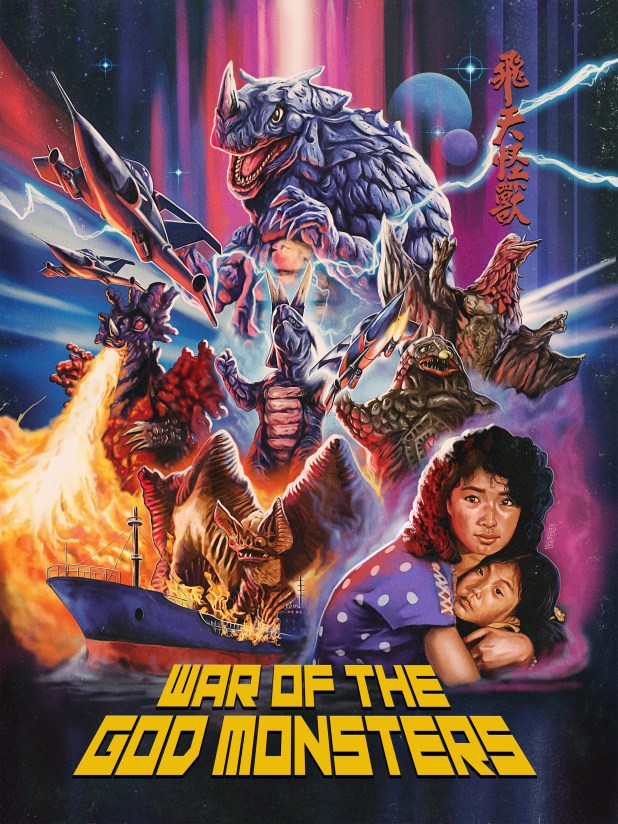
Also known as Bicheongoesu (The Undead Beast) and The Flying Monster, this has Dr. Kim (Kim Ki-Ju) and Kang Ok-hee (Nam Hye-Gyeong) trying to prove that dinosaurs still exist and then, when they attack, trying to stop them.

Directed by Kim Jeong-Yong and written by Lee Mun-ung, this film keeps the budget low by taking many of its monsters from Tsuburaya Productions TV series. Pestar comes from Ultraman, Seagorath, Seamons, Bemstar and Terochilu are from Return of Ultraman, Verokron and Fireman are from Ultraman Ace and there are also kaiju from the Taiwanese film The Founding of Ming Dynasty.

It’s kind of strange because it barely works because this movie doesn’t seem to all work together but you get that when you mix new footage with 1970s Japanese TV effects. That said, I had plenty of fun watching it. I mean, even the worst giant monster movie is still pretty great.

You can watch this on Tubi.

MILL CREEK SCI-FI CLASSICS: The Galaxy Invader (1985)

In the 1960’s, Don Dohler created an underground comic book called WILD that had contributors like Jay Lynch, Art Spiegelman, Skip Williamson and even R. Crumb. He went on to create the zine Cinemagic, which was written to help filmmakers learn how to make movies, that ran for 11 issues until Starlogbought it. He also published several books on moviemaking and directed the films The Alien FactorNightbeast, Blood Massacre and Fiend. After a decade plus of a self-imposed break, he returned to moviemaking along with actor/police officer Don Ripple. Together, they made Alien Rampage, Harvesters, Stakes, Vampire Sisters, Crawler and Dead Hunt.

The Galaxy Invader was made before that break. Get ready.

In Baltimore, Don Dohler’s hometown, a meteor crashes down to Earth. A young couple goes to see what happened and that’s when they meet the Galaxy Invader, a green rubber-suited monster that’s a mix between Bigfoot and the Creature from the Black Lagoon. Of course, they get killed.

Locals soon gather to hunt the creature and try to make money from it. Most of the movie is about the Montague family, including father Joe, who is often drunk, abusive and carrying around guns. George Stover shows up, showing that there’s at least one connection between Dohler and Baltimore’s favorite son, or at least weirdest, John Waters.

If you’re looking for rednecks running through the woods hunting one another and a giant green alien, well, good news. This movie was made for you. You may remember some of the beginning, too. That’s because the effects were used without permission for the movie Pod People.

ARROW 4K BLU RAY RELEASE: Witness (1985)

Directed by Peter Weir and written by Earl W. Wallace and William Kelley, Witness tells the tale of an Amish community outside Lancaster, Pennsylvania and one of their youngest members, Samuel (Lukas Haas), who has witnessed a murder in a Philadelphia train station. Detective Sergeant John Book (Harrison Ford) and his partner Sergeant Elton Carter (Brent Jennings) are on the case and soon discover that the murderers were corrupt police officers, Book is nearly killed by them and has to hide out with the Amish while protecting Sam and his mother Rachel (Kelly McGillis) from the criminals.

Ford spent time with the Philadelphia Police Department and McGillis lived with an Amish widow and her seven children, learning how to milk cows and practicing their Pennsylvania German dialect. Filmed in Intercourse, Lancaster, Strasburg and Parkesburg, this had local Amish work as carpenters and electricians while refusing to be in the movie. The Amish extras that appear are really Mennonites.

Leading up to and following its release, Witness was met with controversy from the Amish. They felt that it exploited them and the graphic violence in the movie went against their religion. The National Committee For Amish Religious Freedom asked for a boycott and the state of Pennsylvania agreed to not promote Amish communities for movie sets. Yet the film has a scene that calls this out, as Rachel talks about people just walking onto their farms and staring at them, treating them as someone to gawk at.

The winner of Oscars for Best Original Screenplay and Best Film Editing, Witness was a big movie when it came out. In his top one hundred movies, Akira Kurosawa had this at 89.

I’ve always thought that it was an interesting film for Ford to be in and also one that shows the alien nature of the Amish and never judges them. Instead, it shows that these parallel worlds can exist — and should — outside of the modern way of life.

The Arrow Video 4K blu ray of this movie has a new audio commentary by film historian Jarret Gahan, a visual essay on the film’s performances by film journalist Staci Layne Wilson, a 1985 interview with Ford, a five-part documentary on the making of Witness, an interview with Weir, a deleted scene that was used in the TV version, a trailer and an image gallery. It’s all inside a limited edition package with art by Tommy Pocket. There’s also a booklet with writing from Dennis Capicik, Martyn Conterio, John Harrison and Amanda Reyes. As if that wasn’t enough, there’s also a poster snd six postcards. You can get it from MVD.

KINO CULT BLU RAY RELEASE: The Dark Power (1985)

Kino Cult is a new label that embraces a trademark brand of “unapologetically weird” with such diverse genres as European erotica, grindhouse classics, and cinematic rediscoveries that defy categorization. One of their first three releases is The Dark Power, a video rental favorite from North Carolina indie Phil Smoot.

This release has a 4K Restoration from 16mm materials, a featurette with Smoot and the cast — who also have a commentary track — as well as an interview with editor Sherwood Jones and archival interviews and features.

You can get The Dark Power from Kino Lorber.

My father, grandfather and uncle used to play this game when we had cookouts, late into the night, where they would list the initials of a famous actor and they’d all have to guess. Tom Mix, Rex Allen, Tex Ritter…the list would go on and on. Then there would be “LL” — who of course ended up being Lash LaRue.

Lash started his career as the Cheyenne Kid, the sidekick of singing cowboy Eddie Dean, whose whip wasn’t just for show. Lash was an expert in using one, able to disarm villains and perform other tricks (he was also the trainer for Harrison Ford as he prepared to play Indiana Jones).  After appearing in all three of Eddie Dean’s singing western films, Lash starred in eleven “Marshal Lash LaRue” strange western films for PRC, a Poverty Row (the name given for the lower than B-level studios that churned out films in the 1940’s) studio and Eagle-Lion. Unlike many cowboys, Lash spoke with a street patois, not unlike the actor he resembled, Humphrey Bogart (so much so that character actress Sarah Padden (Murder by Invitation) asked if they were related. When Lash said no, she looked him dead in the eye and asked,   “Did your mother ever meet Humphrey Bogart?”).

But unlike those big-time Hollywood stars, Lash would actually come to your town, showing off his whip skills and convincing young cowboys and cowgirls that there was at least one movie star hero who could actually do all of the things he did on screen.

Unbeknowst to Lash, his role as a villain in 1972’s Hard on the Trail was actually in an adult film. While he had a non-sex role and had no idea that the film was X-rated, he spent the next ten years repenting as a missionary.

That brings us to 1985’s The Dark Power, a regional horror movie made by director Phil Smoot, who also directed Alien Outlaw, which also starred LaRue.

A North Carolina regional horror film, this one starts with a near full minute of a yard sign. Yep. It reads:

SAMMY & EARL
“THE FIX-IT BROTHERS”
IF WE CAN’T FIX-IT… THROW IT AWAY!
CALL 99 FIX-IT

What follows is a chubby child messing around with a bow and arrow, juxtaposed with wild dogs chasing after him, POV-style. Once the four dogs catch up to him, he runs for about ten feet before falling down and crying. Luckily, he’s saved by Ranger Girard (Lash, of course) and his skills with the bullwhip, which never come near the dogs thanks to some, well, poor editing and sound dubbing.

Meanwhile, one of the Ranger’s friends, a Native American mystic, expires Citizen Kane-style after saying the word, “Toltec.” Turns out that the Toltecs were Aztec occult priests who liked to live inside the Earth and build great evil power. The bad news? They’re coming back, thanks to their eagle symbols that no one understands but the ranger. Luckily, a local news girl and her inept cameraman — everything he shoots turns green — are here to tell the tale.

The Native American mystic’s house is sold to some college kids, who take turns eating snacks, working out in leotards, being racist to one another,  drinking beer and taking baths and showers. It’s as if they demanded that some kind of inhuman force rise and kill them all, one by one. Good news — they’re gonna get what they asked for.

While all that’s going on, the reporter keeps flirting with Lash, who has gone from looking like Bogie to looking like a grandfatherly man with Q-Tip-esque hair. Imagine a more well-groomed Santa Claus, in a Scoutmaster outfit, with a whip. I guess I can see how some ladies — and bear lovers — could be into this. I mean, just check out this sexy dialogue:

Mary: Of course, some girls might be a little crazier about whips than others.

Ranger Girard: You know about my whip?

The Toltecs rise from their graves, accompanied by a soundtrack that is recorded on what can only be described as an xylophone and kazoo symphony. Also — they speak like the characters from a cartoon and slap one another often. Let the art below illustrate both their look and the cultural sensitivity of this movie:

The townspeople all suck. Let’s be honest. They’re all fat, mean and given to fits of pure stupidity. They even let their fat children steal their vehicles. Thank God Lash is there to defend them, beating on zombie Aztec priests with the power of his whip skills, slur yelling dialogue like, “All right, you demonic bastard, let’s take this outside!” and “Feel my whip, you son of a bitch!”

Man — at one point Lash was one of the biggest stars in the country. Yet here he is, in one of his last films, gamely swinging his whip at the undead.

KINO CULT BLU RAY RELEASE: Alien Outlaw (1985)

Kino Cult is a new label that embraces a trademark brand of “unapologetically weird” with such diverse genres as European erotica, grindhouse classics, and cinematic rediscoveries that defy categorization. One of their first three releases is Alien Outlaw, a video rental favorite from North Carolina indie Phil Smoot.

This release has a 4K Restoration from 35mm materials, a featurette with Smoot and the cast — who also have a commentary track — as well as an interview with editor Sherwood Jones and archival interviews and features.

I love the packaging of the Kino Cult movies and am excited that the label is committed to physical media releases of some strange stuff. You can get Alien Outlaw from Kino Lorber.

If you didn’t get enough of Lash LaRue in The Dark Power, have I got good news for you! The master of the whip — no, not El Latigo or Indiana Jones — returns to battle aliens this time, in a movie directed by Phil Smoot, whose name I will drunkenly yell at people for years because it amuses me.

Smoot also directed — surprise, surprise — The Dark Power, as well as serving as a camera operator on Carnival Magic, a movie that has wiped out whatever brain cells I had left from art school.

Jesse Jamison (Kari Anderson) is a gun-shooting lady about to put on a show in a small Southern town — it was shot in Allegheny County and Sparta, North Carolina — and then some aliens just so happen to show up. Luckily, she has the help of locals like Alex (LaRue) and Sunset (Sunset Carson, a former rodeo star who became a B-level cowboy star for Republic in the 1940s).

Much like Without Warning, this movie somehow rips off Predator years before that movie was made.  Life’s weird like that sometimes. It’s amazing that LaRue would return to be in these low budget movies. At one point he was of the biggest actors in cowboy movies and even toured showing of his films, showing that he could actually do all of the whip stunts for real.

Sadly, he ended up playing a villain in a pornographic western, Hard on the Trail. I say sad not because I look down on adult movies, but because no one told LaRue it was a movie with sex. He was so upset that he became a missionary for ten years and didn’t come back to act until 1984’s Chain Gang. That said, LaRue was no angel. He was married ten times and was also in Ron Ormond’s Please Don’t Touch Me.