CANNON MONTH: Exterminator 2 (1984)

Mark Buntzman produced Suicide Cult and the first Exterminator before taking on the directing and writing duties for this film, which was completed by William Sachs, who in addition to making The Force BeyondThe Incredible Melting ManVan Nuys Blvd. and Galaxina has been a major fixer of movies, starting with Joe.

The credit may say “Additional Scenes Directed by William Sachs,” but the truth is that once Cannon saw a rough cut of footage shot by Buntzman, who was already behind schedule and over budget, they asked Sachs to rescue the film, which didn’t even have enough footage to complete the usual short Cannon running time.

The problem? Start Robert Ginty wasn’t available. And Cannon wouldn’t pay for any more NYC location shoots, so it had to be done in LA.

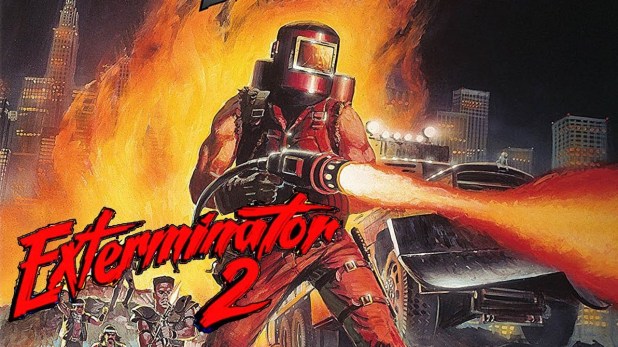
Sachs’ genius was in finding the scene of Ginty putting on a welding helmet and using that scene to reinvent the character as a somewhat masked vigilante, allowing him to shoot new footage without the actor. That said, Cannon did pay for the garbage truck to be driven from New York to the new set, as Los Angeles garbage trucks just aren’t the same.

As for the movie itself, it’s all about the escalating war between John Eastland (Ginty) and X (Van Peebles), one of whom wants to save the city from crime — and romance a dancer (Deborah Geffner) — and the other wanting to make money by controlling its crime. So while Eastlan drives a truck and doles out vigilante justice, X and his gang dress like something out of a post-apocalyptic movie, which maybe this is what with scenes of women being beaten with baseball bats and criminals being roasted with flamethrowers.

So if Eastland kills X’s brother, X will murder not only his lover, but also his best friend Be Gee (Frankie Faison), which all leads to a battle in an industrial parking that was literally shooting right next to The Terminator.

You can learn more about Exterminator 2 in Austin Trunick’s The Cannon Film Guide Volume 1: 1980-1984.
You can listen to The Cannon Canon podcast about this movie here.

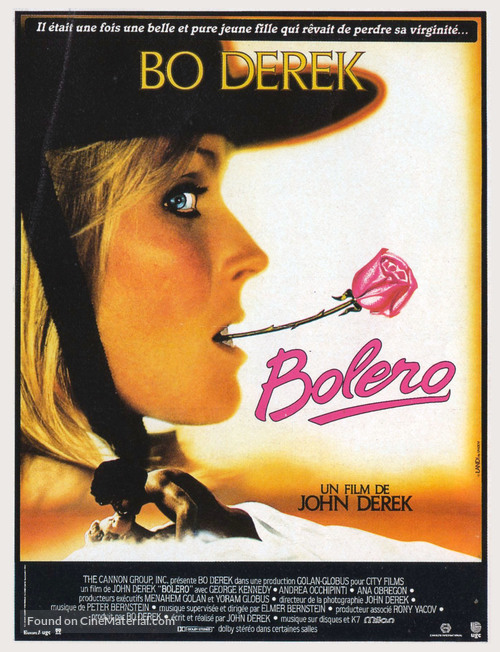
CANNON MONTH: Bolero (1984)

Bolero is an important film in the history of Cannon Films.

Menahem Golan worked with John and Bo Derek to make the movie, which was to be distributed by MGM as part of their ongoing deal with his studio. But when Bo screened the film for MGM CEO Frank Yablans, the studio head hated the movie — and its erotic content that would get an X — so much that he invoked a breach of contract clause to terminate their distribution deal.

But you know, the millions they spent on this movie had to have made since in 1984, when Bo Derek ruled the world. Or the libido of men.

In her teens, Bo Derek quit school, became a beach bum and found her way into the arms and bed of three decades older John Derek, who was married to Linda Evans, who he’d left Ursula Andress for, who he’d left Pati Behrs for. Derek had a thing for young women, as well as using their beauty to further his career, if I can be perfectly frank. After all, the first movie he made with her, Fantasies, was filmed when she was still a minor and is about a young girl in love with her brother and trying to avoid the carnal interest of her grandfather. This may sound like something out of Jess Franco, except that Bo Derek ended up being one of the biggest mainstream celebrities in the world by 1984, thanks to 1979’s 10, a movie in which a cornrowed Bo ran right into every man’s fantasies (and she’s married to Sam J. Jones in that movie). Of course, people tend to forget that once Dudley Moore’s character ends up sleeping with her, he realizes that she’s not the perfect being that he imagined.

Oh yeah — that sex scene is set to Ravel’s “Bolero,” which is the kind of thing John Derek had to think was sheer genius when he named this movie.

This lesson would be lost on everyone that threw money at Bo Derek related projects that came after that film (also, she gets her leg eaten in Orca, so I do have some affection for her). The Dereks made Tarzan, the Ape Man, which has future Ator and Sword of the Valiant actor Miles O’Keefe as the titular character, who barely features in his own movie. Instead, it’s all about Jane (Derek), who is frequently nude, often threatened, occasionally body painted and a chimp sucking from Bo’s teat. You can imagine how thrilled the Edgar Rice Burroughs estate was. Strangely enough, writer Gary Goddard claimed that he was writing a Marvel Comics adaption starring Bo, which would have been Dazzler, a character who has not yet entered the MCU.

Supposedly a remake of the 1934 Carole Lombard and George Raft film that would be written, directed, filmed, shot and edited by John and produced and starring Bo, this seemed like a can’t miss movie for Cannon, as even though the Tarzan film was a bomb with critics, it did great box office.

Sometime in the 20s, Ayre “Mac” MacGillvary — a virginal 23-year-old American, although Bo seems twenty years older than being 28 years old — has just graduated from an exclusive British college, a feat that she celebrates by running naked across the campus and into the protective blanket of her family chauffeur Cotton (George Kennedy, a man always willing to dependably show up no matter how bad a movie is; he’s the American Donald Pleasence).

Now, her goal is to find the perfect man to take her virginity, so she takes Cotton and her best friend Catalina (Ana Obregón, who is also in Cannon’s Treasure of the Four Crowns) around the world to find ultimate pleasure, which should be sexy but ends up feeling like anything but. Perhaps it was because this movie had been so hyped up, but even when I was a just into puberty charged up bundle of sexual frustration hidden behind a fat kid body and frog-like glasses, even this nerd couldn’t see the appeal of Bo writhing cross legged and screaming “Ecstasy!”

This is not the first movie with a sex symbol of the 80s playing with the plot of Rudolph Valentino’s The Sheik — see Brooke Shields in Sahara — that would cost Cannon money. But it’s also one that has Bo fall for a bull fighter named Angel (Andrea Occhipinti from The New York Ripper) and then nursing her lover back to balling health after a bull busts his balls. Also, she takes a 14-year-old gypsy named Paloma (Olivia d’Abo) under her wing and yes, the movie sexualizes the girl and yes, d’Abo was 13 going on 14 when he made this.

Again, this is not a movie made by a Z grade sleaze director.

This was a major studio movie.

As dumb and unerotic as the honey licking scene is, the true joy of this movie is the insane press war that ensued between the Dereks and Cannon. There were battles before shooting even began, as obviously Golan realized that he was making a movie with two absolute maniacs, people who fired Fabio Testi because they believed he had herpes and Cannon had to pay his full salary and cast him in another movie, The Ambassador. The Dereks also fired half the cast and crew, at which point Cannon stopped sending money, at which point the Dereks started funding the movie with their own American Express cards, then a leaked memo from Cannon claimed that Bolero was a “total embarrassment.”

Even today, when you read articles on the web or in past newspaper and magazine articles, there’s a lot of confusion over who wanted what. Some claim Brooke went to MGM and begged for them to cut out the sex that Cannon demanded. Others say that Cannon knew they wouldn’t be able to advertise the film with an X rating and begged Derek to compromise on his final cut and give them something they could sell.

But when MGM dropped Cannon, they made a thousand prints and got ready to make their own money. Of course, Derek then posed for Playboy, giving the public what they wanted to see before Cannon could put it on screens, all photos shot during the movie for publicity purposes that John ended up selling on his own to the magazine, so both sides went to court. Bo even accused Cannon of stealing publicity photos for the movie out of her bag and using them in the film’s press kit, which seems to be the reason for the photos in the first place.

That said, the movie still made money. It was a big deal on cable and for years was one of the video rentals that had the “MUST BE 18 TO RENT” handwritten sticker at my local video store. I kind of love that this movie has the Don’t Look Now urban legend that the final sex scene is real when obviously it looks faker than the hot tub sex in Showgirls. To paraphrase Senator Lloyd Bentsen to Dan Quayle, “John Derek, I have watched 125 movies by Jess Franco. I have watched him film his wife Lina Romay with many women and men. Jess Franco and Lina Romay seem like friends of mine. John Derek, you’re no Jess Franco.” In short, he doesn’t seem like the kind of guy willing to cuck himself while the cameras roll on.

Bo also claimed that Golan and Globus were so disappointed with the film that they threatened to take away the Derek’s family ranch, which sounds like something Cobra Commander — and not the Go-Go Boys — would do.

With MGM out of the picture, Cannon was free to make all the money from Missing In Action. As for the Dereks, they’d go on to make Ghosts Can’t Do It. I think in this war, Golan and Globus were the winners.

You can learn more about Bolero — a movie that Austin Trunick said was “one of the few that was a chore to get through” — in The Cannon Film Guide Volume 1: 1980-1984.

You can listen to The Cannon Canon podcast about this movie– it’s one of their best ones — here.

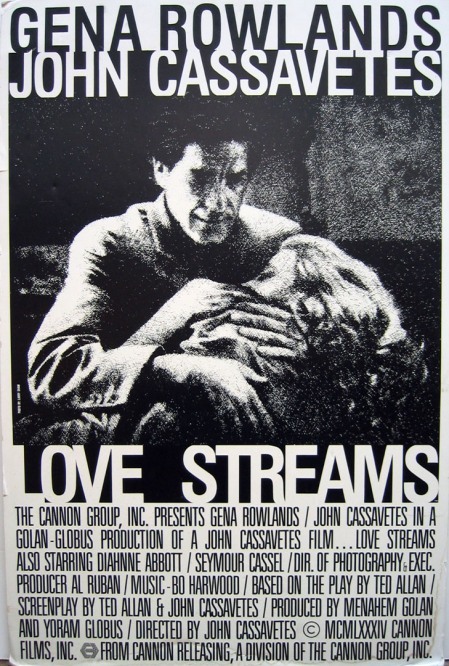
CANNON MONTH: Love Streams (1984)

In 2015, the BBC named Love Streams the 63rd greatest American movie ever made.

What is it doing on our site?

What is it doing coming from Cannon?

Well, according to Austin Trunick’s The Cannon Film Guide Volume 1: 1980-1984, there was some mutual admiration between Cassavetes and Cannon. Menahem Golan may have made his money with and breakdancing, but he aspired to greater cinematic heights. Meanwhile, Cassavetes was an artist who didn’t want anyone to interfere with his vision, which often had nothing to do with box office.

Somehow, the two came together and agreed to make this movie.

Cannon would get the art cred they wanted.

Cassavetes would get to make a movie his way with a $2 million dollar budget, more than he’d enjoyed for several movies.

Unlike so many of Cannon’s two weeks and done movies, Cassavetes got 13 weeks to film Love Streams and it’s mostly in one location, the home he shared with wife Gena Rowlands. He also stars in it as writer Robert Harmon, who constantly adds new women to his harem and is often writing them checks.

Gena is is his sister Sarah who can also never find permanent love. If anything, she loves so much that she’s pushed away her husband (Seymour Cassel) and begins to collect animals who will at least love her unconditionally.

Robert also has a son Albie, who he teaches to drink and allows to hang out with the showgirls that he lives with. That can’t and won’t last, as the boy goes back to his mother and our protagonist gets beaten by the boy’s stepfather.

Even the brother and sister relationship can’t last long, as Sarah’s hallucinations begin to take over her mind and she runs into a rainstorm, leaving Robert to laugh like a maniac on the couch before realizing that a naked man is sitting next to him, a man who turns out to be his dog. And that’s the ending!

Cassavetes was told that he was going to die from cancer before he made this. He lived for five more years, but he also made the movie like a man knowing he was going to die and not caring what anyone else wanted. Continuity be damned, Cannon’s short running time be damned, this was his movie.

It never played theaters in the U.S. and the MGM VHS release cut about twenty minutes. Luckily, we live in a world where the Criterion Collection can release things uncut and we can see what the director truly wanted to show the world.

Learn more about this movie in Austin Trunick’s The Cannon Film Guide Volume 1: 1980-1984.
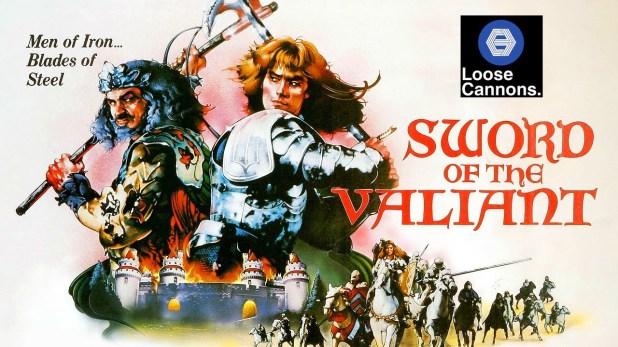
CANNON MONTH: Sword of the Valiant: The Legend of Sir Gawain and the Green Knight (1984)

Loosely based on the poem Sir Gawain and the Green Knight, this was the second time that director Stephen Weeks filmed the tale, as he made Gawain and the Green Knight in 1973. Shot in Wales, Ireland and France with period costumes taken from Europe’s finest theaters such as the Royal National Theatre, the Bristol Old Vic, Berman’s and Nathan’s, Aristide Boyer and the Spanish Cornejo.

And it’s absolutely deranged.

King Arthur’s (Trevor Howard) Camelot is nowhere near the magical place legend has led us to believe. As the times of war and quests have ended, the knights have lost their spirit of adventure and bravery, so when the Green Knight (Sean Connery!) bursts in to challenge them, no one rises to the challenge.

Seriously, not since Zardoz has Connery worn such finery. He looks like a human tree, his face spray tanned to the darkest of skin tones, glitter in his beard, antlers and berries forming his crown and a hole in the middle of his chest so we get a good gander at his very manly chest hair.

The Green Knight has a wager: he will allow any knight to chop his head off. They only get one blow and if they fail, he gets to do the same in return. While King Arthur grows angry that none of his knights will take on this challenge, who can blame them? A strange gigantic green forest creature has broken into Camelot, no one has stopped him and he’s offering a deal too good to be true? You can understand that this seems like a trap.

Gawain (Miles O’Keefe, Ator himself!) is the lone person to volunteer and he’s immediately knighted before he chops off the Green Knight’s head. The end. Roll credits.

Except that the head stays alive. And keeps talking. And puts itself back on its body. And reveals that in one year, he will return to chop off Gawain’s head, unless he can solve this riddle:

Where life is emptiness, gladness.

Where life is darkness, fire.

Where life is golden, sorrow.

Where life is lost, wisdom.

At this point, the movie becomes an episodic series of adventures that wildly vary in tone from adventure to absurd comedy, often within the same scene. From a duel with a Black Knight that later accuses him of murder to lunching with Morgan Le Fay and falling for Princess Linet (Cyrielle Clair) and interacting with characters played by Peter Cushing, John Rhys-Davies and Ronald Lacey, who played Oswald in both of Weeks’ takes on this story.

What’s striking is just how bad of a knight Gawain is. He screws up nearly everything he tries, trusts the wrong people and nearly gets the people he cares about killed. And by the end of movie, he hasn’t solved the riddle and basically wins the day thanks to dumb luck and Linet.

Often, these stories have some kind of moral, but the only one I can come up with is always hire Sean Connery, because he makes this movie so much better with his two scenes. O’Keefe was the second choice for the role, as the director wanted Mark Hamill, so I can barely contain myself thinking of just how much hammy overacting this film is missing out on.

Connery was making Never Say Never Again at the same time as this, so he could barely be bothered to be in the movie. Which is awesome and that Bond remake could very definitely also be a Cannon movie, as it fits so many of the hallmarks of the studio.

What I’m wondering is, “Why did Ridley Scott make The Green Knight when Cannon already did it?” I kind of love how over the top and ridiculous this movie is. It’s great when Connery is on screen and may falter after, but it definitely makes some choices with its costumes and production values.

Austin Trunick’s The Cannon Film Guide Volume 1: 1980-1984 was an invauable resource for this article.

You can listen to The Cannon Canon episode about this sword and sorcery movie here.

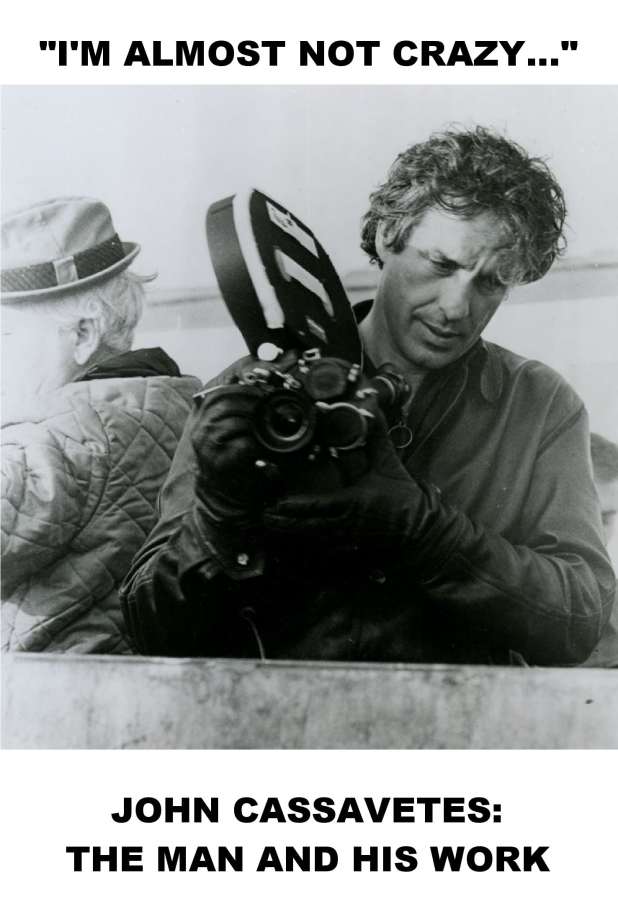
CANNON MONTH: I’m Almost Not Crazy: John Cassavetes, the Man and His Work (1984)

As part of his deal with Cannon to make Love Streams, John Cassavetes had director Michael Ventura installed behind the scenes of that movie, the last that he would direct and write.

There are behind the scenes documentaries and then there is this movie, which has Cassavetes leading around a miniature horse while wearing a floppy hat and yelling at people to be quiet out of respect for his wife. Man, Gena Rowlands is amazing, Seymour Cassel was great and just seeing Cassavetes alive and creating is what makes life good. If the world was right, he’d still be alive and making movies his way and not many people would see them, but who cares?

I adore that Cannon could give him a home while also making ninja movies.

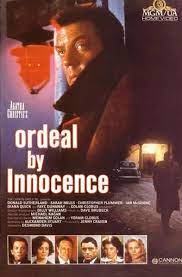
CANNON MONTH: Ordeal by Innocence (1984)

Cannon made three Agatha Christie movies — Ten Little Indians and Appointment with Death are the other ones — this movie was said to be no fun at all, as Donald Sutherland refused to be filmed from low angles and was given to barging off the set, while Faye Dunaway insisted on being lit from the front to hide blemishes. Meanwhile, Pino Donaggio was replaced on the soundtrack by Dave Brubeck, which makes this even harder to like.

Paleontologist Dr. Arthur Calgary (Sutherland) is visiting the Argyle family to return the address book of executed murderer Jack Argyle, who murdered the mother of the family just two years ago. Yet the doctor believes that Jack was innocent, which means that murder is once again afoot, as it were.

This was the last movie directed by Desmond Davis, who is probably best known for Clash of the Titans, plus some uncredited directing by Alan Birkinshaw, who also made Killer’s Moon and the Cannon Ten Little Indians.

There’s a good cast — Christopher Plummer, Sarah Miles and Ian McShane are here — but the results are a movie that just seems to slowly, ever so slowly play out. Maybe I’m spoiled by giallo, hmm?

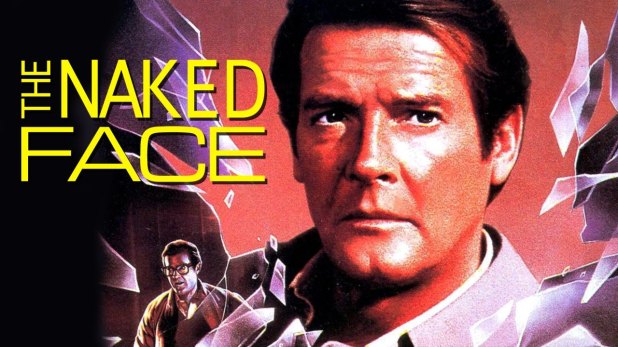
CANNON MONTH: The Naked Face (1984)

A Sidney Sheldon novel written fourteen years before this was filmed, this also gave Roger Moore the opportunity to get ahead of typecasting, seeing as how 1985’s A View to a Kill would be his last time as James Bond.

Instead of a suave British spy or thief, he played a Chicago psychoanalyst named Dr. Judd Stevens. One of his patients is murdered — while wearing the doctor’s overcoat no less — which brings Lieutenant McGreavy (Rod Steiger) and Detective Angeli (Elliott Gould) on the case. There’s already some bad blood, as McGreavy blames Stevens and his past testimony for a cop killer being institutionalized rather than being sent to prison.

But after Stevens’ secretary is killed and McGreavy gets so intense he gets thrown off the force, well, we have a movie.

Written and directed by Bryan Forbes (The Stepford Wives), this film places Moore into the middle of a murder mystery which is very outside his usual unrumpled all things handled way of acting. He even tries to get help from an old detective, Morgens (Art Carney), who saves him from a car bomb.

In fact, the movie ends with a series of goons nearly beating him to death. He’s saved because the mob boss’s wife that he’s been helping with therapy — Ann Blake (Anne Archer) — called the police herself. And notihng she ever told Stevens had anything to do with the family business. All that death — and more coming soon — for nothing.

This movie was made because Cannon saw that they’d get some cachet by working with Moore — and his Bond fame was still box office — so he was able to get this movie made and hire two of his friends, Forbes and actor David Hedison. Despite the fact that it was running on schedule and under budget, Cannon slashed several weeks from filming and took away a hefty chunk of the budget, which may have gone toward paying back some recent losses at the box office. Golan and Globus also were enraged that Forbes gave Moore a week off to visit his family after the death of his mother.

You can learn more about this movie — and how funny the twist ending is — by reading Austin Trunick’s The Cannon Film Guide Volume 1: 1980-1984.
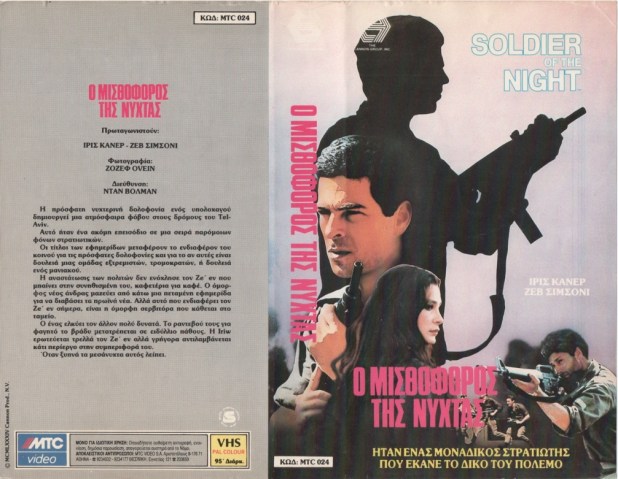
CANNON MONTH: Hayal Halayla (1984)

Soldier of the Night AKA Night Soldier is surprisingly a slasher, a movie in which a man dreams of being a soldier after he is drafted but a problem with his spleen keeps him from service, a fact he keeps from his new lover. As their relationship blooms, she keeps hearing about a serial killer targeting Israeli soldiers. After meeting his father, she’s told that her boyfriend is no soldier, but then what commando missions does he take on every single night?

Dan Wolman also directed NanaBaby Love and Up Your Anchor for Cannon. I’ve read this is the first Israeli horror film and while it plays slowly, the close of the movie is pretty harrowing, with a series of brutal attacks and the final fate of its antagonist being quite rough.

The idea of a pre-PTSD soldier having a mental breakdown is intriguing and there’s a good movie somewhere in here. That’s often the Cannon way. There’s an idea that demands an incredibly nuanced film to explore it and what ends up on the screen is often the opposite and that’s what’s fascinating.

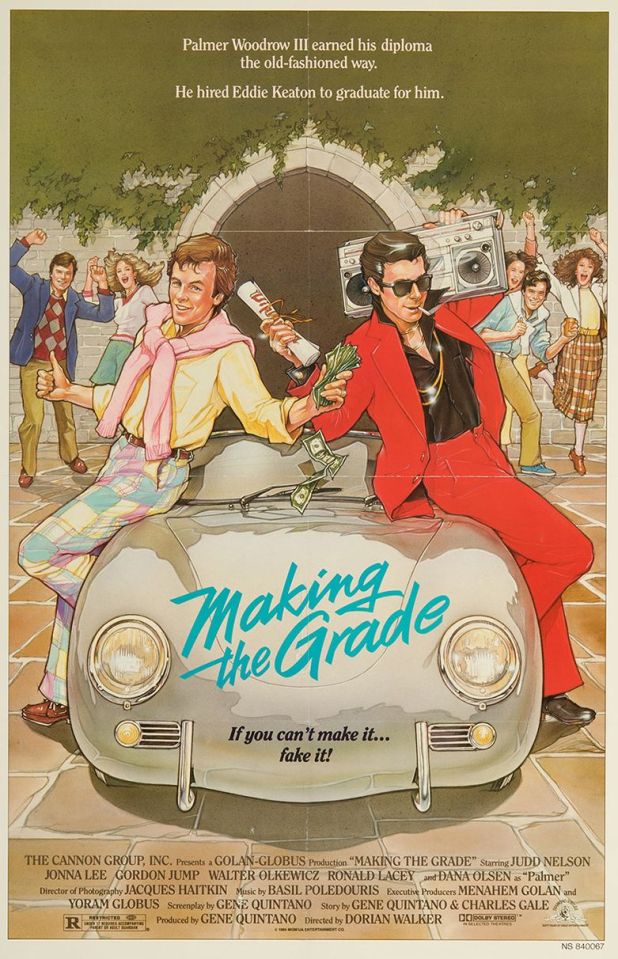
CANNON MONTH: Making the Grade (1984)

Originally called The Last American Preppie and the first appearance of Andrew Clay’s Dice character, Making the Grade has Eddie Keaton (Judd Nelson) and Palmer Woodrow (Dana Olsen) making a deal. The con artist will work with the rich kid to keep him in class at the Hoover Academy, which will keep him in money. In return, Keaton gets paid ten grand — which he owes to Dice — and gets to drive away in a brand new Porsche.

Hijinks ensue.

Directed by Dorian Walker (Teen Witch) from a story by Charles Gale (Ernest Scared Stupid) and a screenplay by Gene Quintano (the writer of Comin’ at Ya!Treasure of the Four CrownsKing Solomon’s Mines and Allan Quatermain and the Lost City of Gold, three Police Academy movies, Operation Dumbo DropLoaded Weapon 1 and Pittsburgh’s second best action movie Sudden Death), this plays like any number of 80s bad kid does good comedies. Of course, it’s all for the love of a good woman, Tracy (Joanna Lee).

But hey look — there’s Ronald Lacey, perhaps better known as Toht, the German soldier who had a coin burned into his hand before his entire face melted right off in Raiders of the Lost Ark, as well as Gordon Jump and Dan Schneider, who would go from Better Off Dead to creating much of Nickelodeon’s programming before he got canceled.

There was supposed to be a sequel called The Tourista, but it never happened. I think I may be the only person who would have watched that.

For more info about this movie and an interview with Joanna Lee, purchase Austin Trunick’s perfect The Cannon Film Guide Volume 1: 1980-1984.
CANNON MONTH: Breakin’ (1984)

Whether you know this movie as Breakin’Breakdance the Movie or Break Street ’84, this film was inspired by a documentary named Breakin’ ‘n’ Enterin’, which told the true story of the talent at the Los Angeles hip hop club Radio-Tron, which included Ice-T and Michael “Boogaloo Shrimp” Chambers, both of whom appear here.

Menahem Golan’s daughter saw breakdancers perform in Venice Beach and was so excited that her enthusiasm inspired him to rush this movie into theaters, hoping to beat Beat Street. This would not be the last time that Golan was in a mad rush to get a dance-themed movie on screens before anyone else.

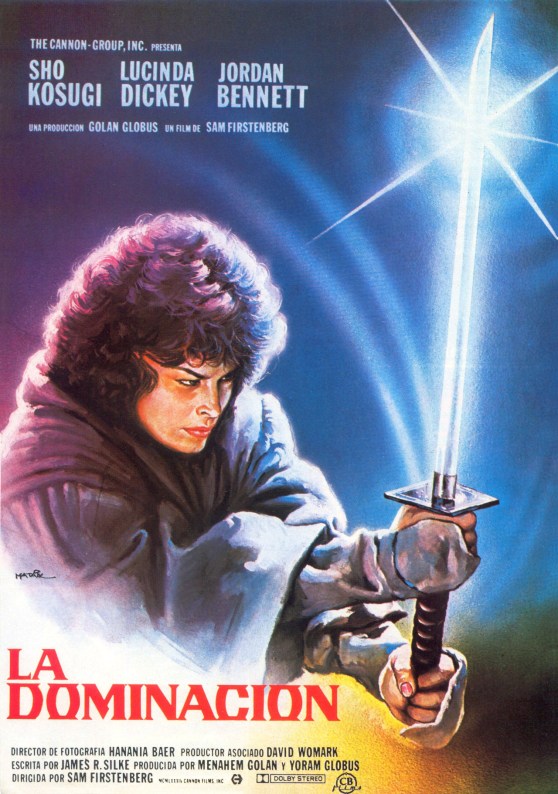
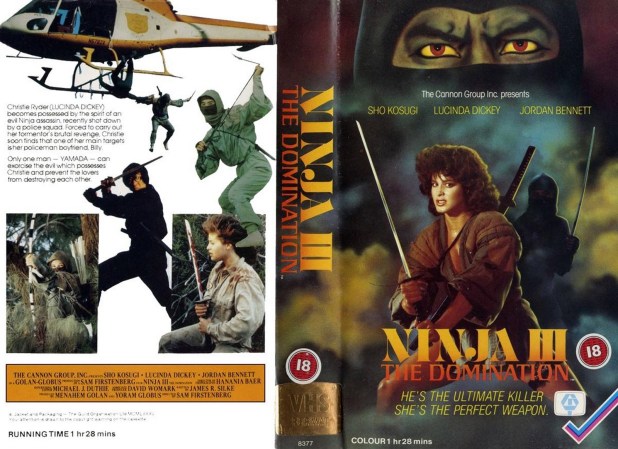
Kelly “Special K” Bennett (Lucinda Dickey, a Cannon all-star who is also in this film’s sequel and the magical Ninja 3: The Domination) is training to be a dancer under the direction of Franco (Ben Lokey). To help keep her inspired, her friend Adam (Phineas Newborn III) introduces her to Orlando “Ozone” Barco (Adolfo “Shabba Doo” Quiñones) and Tony “Turbo” Ainley (Chambers), two breakdancers who are self-trained and have their own unique style unlike anything she’s seen in dance school.

Kelly is met with disdain by everyone when she attempts to bring their energy into the world of dance. And then Franco gets way too intimate with her, so she quits training and becomes a breakdancer, upsetting the rich side of her life but fulfilling her spirit as she and the newly formed T.K.O. Crew defeat other dance teams like Electro Rock and her manager James Wilcox (Christopher McDonald, who I will always just call Shooter McGavin) starts seeing dollar signs.

Can Kelly unite art and the street? Of course, the story is very basic. But it’s the sheer joy of seeing this dance on screen, the amazing soundtrack — which has everyone from Rufus and Chaka Khan, Kraftwerk, Art of Noise, Hot Streak and Ollie & Jerry — and the time capsule 80s nature of this movie that make it a winner. Somehow, Cannon would top it with the sequel, somehow, someway.

Critics were all over this movie’s lack of a story, but who cares? We’re here for the music and the dancing choereographed by West Side Story dancer Jamie Rogers. It’s also one of the rare times when Cannon was making the trend instead of trying to be part of one.

Israeli director Joel Silberg went from this movie to a spiritual third film in the series, Rappin’, as well as Lambada, which was choreographed by Shabba-Doo. That movie — and its competition The Forbidden Dance — is a story we’ll get to soon.

Breakin’ is the final Cannon film production released by MGM/UA — to find out why, check out Bolero — which made Cannon become its own distribution company again. I wonder if MGM/UA had second thoughts, because Cannon turned this $1.2 million dollar movie into $38.7 million dollars at the box office. Breakin’ opened at number one and even outgrossed Sixteen Candles, which played on two hundred more screens in their first week.

Also, you probaby already know that this is Jean Claude Van Damme’s first movie appearance. He’s on the beach dancing next to Michel Qissi, who would be his rival Tong Po in Kickboxer. We should all aspire to the same joy that Van Damme has in this scene.

For more info on both Breakin’ movies, get Austin Trunick’s The Cannon Film Guide Volume 1: 1980-1984.
You can listen to The Cannon Canon episode about Missing In Action 2: The Beginning here.

And if you love this movie as much as me, you may want to get Super 7‘s ReAction three pack of Special K, Ozone and Turbo.