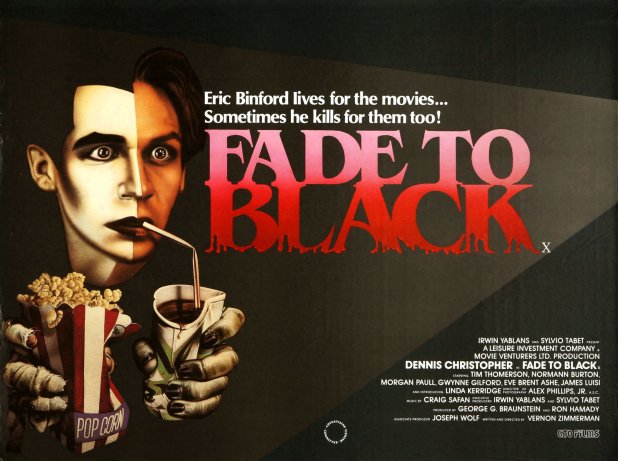
Fade to Black (1980)

A movie about a socially awkward, totally obsessed film fan whose love of old films borders on the obsessive, with nights filled with movie after movie after movie? This one hits a little too close to home.

Eric Binford (Dennis Christopher, Breaking Away) works in a Los Angeles film distributor warehouse by day and watches movies by night. He’s the guy I was referring to earlier — someone so into movies he gets bullied by his family and co-workers. And when he meets Marilyn O’Connor, who looks like Marilyn Monroe, he finally finds someone whose looks are similar to the movie ideal that life does not always achieve. Or maybe he’s just so crazy that when he sees her, he goes into a fantasy fugue state and only sees what his brain will allow him to see.

Somehow, Eric is able to ask her out, but she stands him up by accident. This makes him go completely out of his mind, transforming himself into various film icons to destroy his enemies.

First, he re-enacts Kiss of Death by pushing his Aunt Stella (who is really his mother) down the steps, showing up to her funeral as Tommy Udo, the role Richard Widmark played in the film. No one gets it. No one has seen the movies that Eric loves. There is no one to discuss them with. They can’t even put her grave next to Marilyn Monroe’s grave in Westwood Village Memorial Park Cemetery.

Eric then becomes Count Dracula, attending a midnight showing of Night of the Living Dead. Eric then goes to Marilyn’s house in a scene that’s taken from Psycho. She screams, he drops his pen into the water and the ink becomes the blood. “I only wanted your autograph,” he yells as he runs.

Eric then goes back to find a hooker who had been rude to him. He chases her, she falls and dies, then he drinks her blood. Obviously, Eric has not seen MartinActually, the way this scene is intercut with scenes from old black and white horror films, I am certain that the makers of this film have seen Romero’s vampire film.

Now that Eric has gone this far, why not dress up as Hopalong Cassidy and kill off Richie (Mickey Rourke in an early role), a co-worker who bullies him.

Oh yeah — Tim Thomerson is a criminal psychologist who is working with a policewoman (they’re having sex, because 1980 and all) to find what he believes is a serial killer. The big problem is that his captain wants all the glory for himself.

Eric talks to his aunt as if she were still alive, then after watching Halloween (producer Irwin Yablans also produced that film), he pleasures himself to a photo of Marilyn Monroe.

Eric’s dream has been to own his own movie theater and to make his own movie. He tells a sleazeball named Gary Bially his idea, Alabama and the Forty Thieves and you get the feeling not much good can come of it.

Eric’s boss fires him and won’t allow him back into work to get his posters. As his everyday self, even when trying to talk like a movie character, Eric is impotent. But when he’s dressed as The Mummy, he can frighten his boss into a heart attack.

After seeing Gary Bially on a talk show, talking up the movie Eric created as his own, Eric shows up to the producer’s birthday party. Dressed as James Cagney’s character from White Heat, he fires a submachine gun at everyone in the room before killing the man who stole from him.

The cops are on to Eric, but he’s hired Marilyn for a photo shoot and is all set to re-enact The Prince and the Showgirl when Thomerson’s character arrives. Eric runs to Mann’s Chinese Theater and makes it to the roof before dying just like Cagney in White Heat, yelling, “Made it, ma! Top of the world!”

Writer and director Vernon Zimmerman also created Unholy Rollers, but this movie is way beyond that. It shows how only seeing the world as the movies can be a danger to yourself and everyone else. Eric goes from shy and withdraw to dark and mean by the end of the movie, as he slowly becomes a new character. I wonder what he would have thought about the movie that they made his life into?

You can catch this on Amazon Prime. You should do so right now.

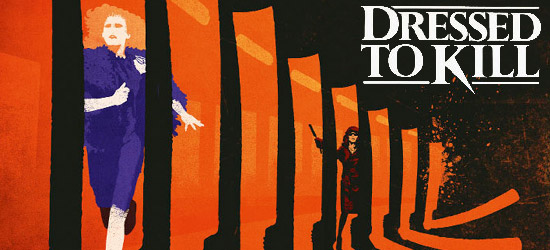
AMERICAN GIALLO: Dressed to Kill (1980)

Let’s get this out of the way: Brian De Palma, much like Giallo, was heavily influenced by Hitchcock. In fact, when an interviewer asked Hitchcock if he saw the film as an homage, he replied, “You mean fromage.” That said — Hitchcock died three months before the film was released, so that story could be apocryphal (it’s been said that the famous director made this comment to either a reporter or John Landis).

What is true is the interview that De Palma did after Dressed to Kill (Rolling Stone, October 16, 1980).  The director claimed, “My style is very different from Hitchcock’s. I am dealing with surrealistic, erotic imagery. Hitchcock never got into that too much. Psycho is basically about a heist. A girl steals money for her boyfriend so they can get married. Dressed to Kill is about a woman’s secret erotic life. If anything, Dressed to Kill has more of a Buñuel feeling.”

However, I’d argue that this film has more in common with Giallo than anything the “Master of Suspense” directly created. That’s because—to agree with DePalma above—this film does not exist in our reality. Much like Argento’s The Bird with the Crystal Plumage, it exists in its dream reality, where the way we perceive time can shift and change based on the storyteller’s whims.

Yet what of DePalma being dismissive of Argento in interviews, claiming that while he saw the director as having talent, he’d only seen one of his films? Or should we believe his ex-muse/wife Nancy Allen, who claims that when she told DePalma that she was auditioning for Argento’s Inferno, he said, “Oh, he’s goooood.”

Contrast that with this very simple fact (and spoilers ahead, for those of you who worry about that sort of thing, but face facts, this movie is 37 years old): DePalma rips off one of Hitchcock’s best tricks from Psycho: he kills his main character off early in the film, forcing us to suddenly choose who we see as the new lead, placing the killer several steps ahead of not just our protagonists, but the audience itself.

And yet there are so many other giallo staples within this film: fashion is at the forefront, with a fetishistic devotion to gloves, dresses, spiked high heels, and lingerie being displayed and removed and lying in piles all over an apartment or doctor’s office. This is the kind of film that makes you stop and notice an outfit, such as what Kate Miller (Angie Dickinson, Big Bad Mama, TV’s Police Woman) wears to the Metropolitan Museum of Art or the blue coat that Liz Blake (Nancy Allen, CarrieStrange Invaders) wears to meet Dr. Robert Elliot (Michael Caine, how could we pick any movie other than Jaws 4: The Revenge).

Then there are the music cues from Pino Donaggio, who also scored Don’t Look Now, Fulci’s The Black Cat, and Argento’s Do You Like Hitchcock? The film not only looks the part, but it has intense sound, too.

We also have characters trying to prove their innocence, investigating ahead of the police. Or the son of the murder victim who wants to discover why his mother really died. Or her doctor, who has an insane patient named Bobbi who has stolen his straight razor and demands that she give him more time than the rest of her patients. All of them could be the killer. Giallo gives us no assurances that just because we see someone as the protagonist, there’s no reason they couldn’t also be the antagonist.

Let’s toss in a little moral ambiguity here, too. Kate is a woman who is bored with her life. She’s raised a son and seen her marriage lose any hope of sexual frisson. Liz is a prostitute — no slut shaming here, she’s a strong businesswoman more than anything  — but she’s also a practiced liar, as a scene shows her deftly manipulating several people via phone to get the money she needs to buy stock based off an insider tip she receives from a client. Dr. Elliot is obviously attracted to Kate but claims that his marriage prevents him from having sex with her. Yet it seems like he has secrets beyond informing the police of the threats of his obviously unbalanced patient, Bobbi. And then there’s Peter, Kate’s son, who has no issues using his surveillance equipment to spy on the police or Liz. If this character seems the most sympathetic, remember that he is the closest to the heart of DePalma, whose mother once asked him to follow and record his father to prove that he was cheating on her.

Finally, we have the color palette of Bava’s takes on giallo mixed with extreme zooms, split screens and attention to the eyes of our characters. The blood cannot be redder.

The film opens with Kate in the shower. While the producers asked Dickinson to claim that it’s her body, it’s really Victoria Johnson (Grizzly) as a body double. Her husband comes into the shower to make love to her, but she finds it robotic and not the passion she feels she deserves. Directly after, she tells Dr. Elliot that she’s frustrated and attempts to seduce him, but he rejects her.

More depressed than before the appointment started, she heads to the Metropolitan Museum of Art. Despite being surrounded by inspiration, such as the statue of Diana by Saint-Guadens, West Interior by Alex Katz and Reclining Nude by Tom Palmore (a tip of the hat to the amazing I Talk You Bored blog for an insightful take on the film and the research as to what each work of art is), she absentmindedly writes entries in her schedule. Planning the holiday meal gets her through the mindlessness of her life, flowing penmanship reminding her to “pick up turkey” instead of slowing down and appreciating not just the artwork around her but the people. There’s a young couple in lust if not love. There’s a young family. And then, a man with dark glasses catches her eye before brazenly sitting down next to her.

We are used to male characters chasing after female characters who aren’t defined by anything other than being sex objects. Instead, we have Kate pursuing the man, making the first, second, and even third moves until we realize that she was just following the man’s breadcrumbs.

Of note here is that color plays an essential role in the scene, as do expected manners. Kate is a wife and mother. She is who society expects to have virtue, and she is clad in all white, but her intentions are anything but pure. She finally has what she wants—the thrilling sex life that she may have only read about in trashy paperbacks.

This scene is a master class in pacing and movement. Imagine, if you will, the words on the page: Kate follows a mystery man through the museum. And yet, those are just eight words. We get nearly nine minutes of wordless pursuit, yet it never grows dull.

Finally, Kate follows the man out of the museum, but she loses him until she looks up and sees her glove dangled from a taxi. But blink, and you miss death in the background as Bobbi blurs past the camera.

When we catch up with Kate, it’s hours for her but seconds for us because this movie is a dream universe. She wakes up in bed with a stranger. There’s a gorgeous camera move here as DePalma moves the camera backward, an inverse of how a lesser director would have treated this scene. Instead of showing the two lovers tumbling through the apartment and removing clothes at every turn, we see Kate reassembling herself to move from her fantasy world to reality and toward her real world, which will soon become a nightmare. The camera slides slowly backward as she gets dressed, remembering via split-screen and sly smile how she doesn’t even remember where her panties have gone. She’s still wearing white, but under it all, she’s bare, her garments lost in a strange man’s house. A man whose name she doesn’t even know.

So now, as she emerges from realizing her sexual fantasies, she feels that she must make sense of it. She wants to write a note to say goodbye but doesn’t want to overthink it. Maybe she doesn’t even want it to happen again. And then she learns more about the man. It starts with his name and then becomes more than she ever wished to find out: his health report shows that he has multiple STDs.

Kate leaves the apartment and makes her way to the elevator, where she tries to avoid anyone’s eyes. In the background, we see an ominous red light, ala Bava. Bobbi—death and punishment for sin—is coming.

The death scene — I hold fast to my claim that The New York Ripper is close to this film but made by a director who doesn’t have the sense to cut away from violence — DePalma stages his version of the shower scene. But more than Psycho, we’ve come to identify with Kate. She’s a woman fast approaching middle age who wants a thrill, and yet, she’s punished by disease and death. She didn’t deserve this, and her eyes pleaded not to the killer as much as they did to the camera. And to us.

Here’s where we have to wonder aloud about DePalma’s long-discussed misogyny. This film was protested by women’s groups, who stated in this leaflet that “FROM THE INSIDIOUS COMBINATION OF VIOLENCE AND SEXUALITY IN ITS PROMOTIONAL MATERIAL TO SCENE AFTER SCENE OF WOMEN RAPED, KILLED, OR NEARLY KILLED, DRESSED TO KILL IS A MASTER WORK OF MISOGYNY.” Is DePalma guilty of the slasher film trope of “you fuck, and you die?” Maybe. Perhaps if she had remembered her marriage, at best, she wouldn’t be here. At worst, she wouldn’t have forgotten her ring in the stranger’s apartment and would have survived.

The way I see it, the death of Kate allows us to make the transition from past protagonist to new heroine, as the doors open post-murder to reveal a grisly scene to Liz and her john. The older man runs while Liz reaches out to Kate, their eyes meeting and fingers nearly touching. Kate’s white purity has been decimated by the razor slashes of Bobbi, the killer. As their transference is almost complete, Liz notices Bobbi in the mirror. Remember that we’re in a dream state? Time completely stops here, so we get an extreme zoom of both the mirror and Liz’s face. She escapes just in time, grasping the murder weapon and standing in the hallway, blood on her hands as a woman screams in the background, figuring her for the killer.

At this point, the film switches its protagonist. Unlike the films of David Lynch, like Mulholland Drive, this transference is not a changed version of the main character, but her exact opposite. Kate wore white, was older, and had a marriage and child, yet she slowly came to feel like an object to the men in her life. Liz wore black, was young and single, but was wise to the games of sex and power. She isn’t manipulated, turning the tables on men by using their needs for personal gain. Kate may have seen sexual fantasy as her greatest need, but for Liz, it’s just a means to an end.

Kate and Liz are as different as can be. For example, Kate goes to the museum to find inspiration. Liz only sees art as commerce, and she spends plenty of time explaining to Peter how much money she could make by acquiring a painting.

Dr. Elliott discovers a message from Bobbi on his answering machine (these machines and the narrative devices they enable must seem quaint and perhaps even anachronistic to today’s moviegoers). Once, Bobbi was his patient, but he refused to sign the paperwork for their (as the pronoun hasn’t been defined, so I’ll use they/their) sex change. In fact, Dr. Elliot has gone so far as to convince Bobbi’s new doctor that they are a danger to herself and others.

The police, however, have arrested Liz, and Detective Marino (Dennis Franz, TV’s Hill Street Blues and NYPD Blue) doesn’t believe a word she has to say. There’s a great moment here where Liz goes from wide-eyed ingenue to knowing cynic in the face of Marino’s misogynistic tone. Meanwhile, Kate’s son Peter (Keith Gordon, Jaws 2Christine) uses his listening devices in the station to learn more about his mother’s death than the police are willing to let on.

He begins tracking Liz, obsessively noting the times that she comes and goes from her apartment. He’s doing the same to Elliot’s office. But he’s not the only one tracking people. Bobbi has been stalking Liz, including a sequence where our heroine goes from being chased by a gang of black men to talking with an unbelieving police officer to Peter saving her from Bobbi with a spray of mace.

Because Peter has seen Bobbi also emerging from Dr. Elliott’s office, so he joins forces with Liz to discover who she is. That means that Liz uses her chief weapon — sex — to distract the doctor long enough to discover Bobbi’s real name and information. We learn that Liz’s mental sex game is as strong as her physical attributes here — she says that she must be good to be paid as well as she is. She knows precisely the fantasy Dr. Elliott wants to hear. But perhaps she also knows the fantasy that the mainly male slasher/giallo viewer wants: the woman submitting to the killer holding the knife.

Peter watches outside in the rain when a tall blonde pulls him away. Has he been taken by Bobbi? No — Liz returns to have sex with Dr. Elliott; he has been replaced by the killer. Bobbi lifts the razor as Liz helplessly crosses her arms in front of her face for protection. But at the last minute, the blonde who grabbed Peter outside is revealed to be a police officer, as she shoots Bobbi through the glass. That shattered pane also breaks Bobbi’s illusion and mask, revealing that Dr. Elliott is the man under the makeup and clothes.

The killer is arrested and goes into an insane asylum; Dr. Levy explains that while the Bobbi side of his personality wanted to be free, the Dr. Elliott side would not allow them to become a true woman. Therefore, whenever a woman broke through and aroused the male side of the persona, the female side would emerge and kill the offending female.

Inside the mental asylum, a buxom nurse attends to the male patients. The room is bathed in blue light, a cool lighting scheme that echoes Mario Bava’s films. The movie has moved from a dream version of reality to a pure dream sequence. It intrigues me that Carrie and Dressed to Kill both start with a shower scene and end with a dream threat to the surviving secondary heroine.

Within the asylum, Dr. Elliott overcomes the nurse and slowly, methodically, folds her clothing over her nude form. As he begins to either dress in her clothes — or worse, molest her dead body — the camera slowly moves upward as we realize that there is a gallery of other patients all watching and screaming. This scene reminds me of the gallery of residents watching a doctor perform surgery, yet inverted (have you caught this theme yet?) and perverted.

Bobbi emerges once again, and because she is dead, she cannot be stopped. Liz is bare and helpless in the shower, and nothing can protect her from being slashed and sliced and murdered — except that none of this is real. She awakens, screaming in bed, and Peter rushes in to protect her. And for the first time in the film (again, thanks to I Talk You Bored for noticing), she is wearing white.

Many find this a hard movie to stomach due to its misogyny. I’ll see you that and tell you it’s a misanthropic film that presents all of humanity, male and female, negatively. The men in this film are actually treated the way women usually are in films, as either silent sex objects (Warren Lockman), sexless enemies (Kate’s husband), shrill harpies that need to be defeated (Detective Marino) or sexless best friends who provide the hero with the tools they need to save the day (Peter). Seriously, in another film, one would think Peter would have a sexual interest in Liz, but despite her double entendres and come-ons, he remains more concerned with schedules and numbers and evidence.

Bobbi, the combination of male and female, comes across as a puritan punisher of females who benefit from sex, either emotionally or monetarily. Or perhaps they are just destroying the sex objects that they know that the male side of their brain will never allow them to become. Interestingly, Bobbi’s voice doesn’t come from Michael Caine but from De Palma regular William Finley (The Phantom of Phantom of the Paradise).

What else makes this a giallo? The police seem either unwilling to help at best or ineffectual at worst until they tie things up neatly at the end. And the conclusion, when the hand emerges not from the doorway — but the medicine cabinet — to slash Liz echoes the more fantastic films in the genre, such as SuspiriaAll the Colors of the Dark and Stagefright, where reality just ceases to exist. At the end of all three films, the heroine has confronted the fantastic and may never be the same.

In the first, Suzy narrowly escapes from hell on earth and emerges laughing in the rain. Is she happy that she survived? Has she achieved a break from reality? Is she breaking the fourth wall and laughing at how insane the film has become, pleased that the torture is finally over?

In the final scene of All the Colors of the Dark, the fantasy world is all a ruse, yet our heroine, Jane, is now trapped in the dream world. She can tell what will happen before it does; she knows that her husband has both slept with and killed her sister, but he has saved her from a fate worse than death. Yet all she can do is shout, “I’m scared of not being myself anymore. Help me!”

In Stagefright, the final girl walks out of the scene and out of reality as she defeats the killer. She has transcended being an actress to removing herself from fiction.

In all these films, the characters are not unchanged by their experiences with the dream world. In Dressed to Kill, the final dream sequence renders Liz truly frightened for the first time in the film. It’s the only time we see her as vulnerable — even when faced with an entire gang of criminals on the subway, she retains her edge. As Peter reaches out to comfort her — the only sexless male in the film and not just a sublimated one like Dr. Elliott — she recoils from his touch before giving in to his protective embrace.

In the same way, the film changes us. It has thrilled us, made us think, or even made us angry. True cinema—true art, really—makes us confront what we find most uncomfortable. Sure, we can deride and decry many of this film’s choices, but the fact that I’ve devoted days of writing and over three thousand words to it speaks to its potency. Thanks for reading if you’ve made it this far.
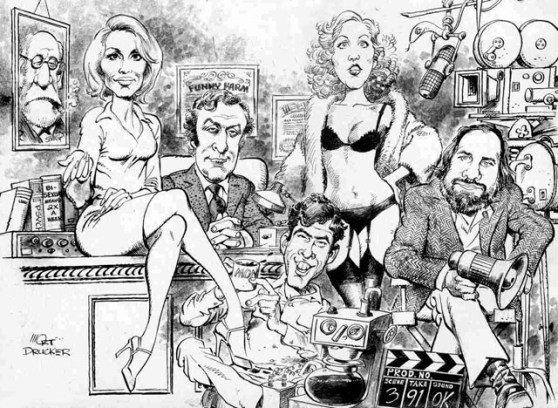
PS—I’ve often discussed—in person and on podcasts—that I experienced so many R-rated movies for the first time via Mad Magazine. I’m delighted I could find the Mort Drucker illustration for his skewering of Dressed to Kill.
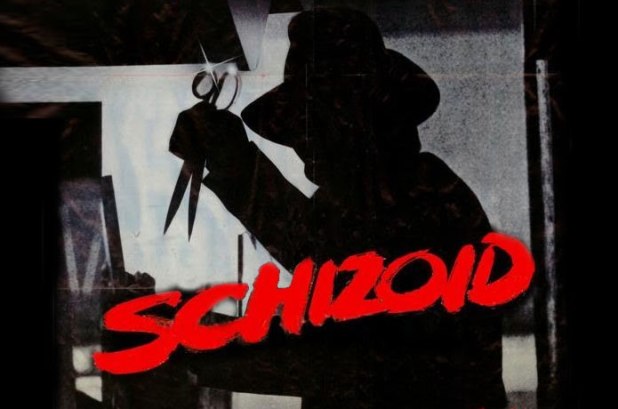
AMERICAN GIALLO: Schizoid (1980)

Julie (Marianna Hill, Messiah of EvilThe Baby) writes the lonely hearts column for a newspaper, but she’s suddenly getting more than letters from the lovelorn. An anonymous person is sending her letters threatening to murder people. And at the very same time, members of her group therapy session are getting stabbed and killed, one by one. Is there a connection?

Schizoid has all the markings of a giallo — the main character is in the middle of a murder investigation and has no idea who is behind it, while many of the killings are from the murderer’s POV. And let’s not forget the black leather gloves!

It’s missing the insane devotion to fashion and interior design, but we can’t hold that against it, as at least Dr. Pieter (Klaus Kinski, a legit real life maniac who always plays maniacs on screen) has an interesting home.

Right from the beginning, when the ladies of Dr. Pieter’s encounter group luxuriate in a hot tub, we get the idea that someone is watching. When one of them leaves, she is run off the road, chased into a farmhouse and repeatedly stabbed with a pair of scissors. Several days later, a couple that’s trying to have sex is surprised by the body.

Are the letters connected? Why do they mention a gun when the murders are done with a knife? Who is the killer? Is it Gilbert (Christopher Lloyd, The Adventures of Buckaroo Banzai: Across the Eighth Dimension), the weirdest person in her therapy group? Is it her ex-husband, Doug (Craig Wasson, Body Double) who argues with her every day because they work in the same place? Or how about Dr. Pieter, because he’s Klaus Kinski? Beyond that, he’s having sex with every single one of his patients, including a stripper named Pat (Flo Gerrish, Don’t Answer the Phone) who he takes against a hot water heater! And hey — his relationship with Alison, (Donna Wilkes, Jaws 2Angel) his daughter, feels super incestual. Maybe that’s who the killer is!

This film also follows the giallo tradition by having police officers that are so ineffectual that they depend on the heroine to do her own investigation with no protection and only a special phone line to help her.

Alison and Dr. Pieter argue repeatedly, especially after he grows closer to Julie, bringing her home to dinner. She begins to dress in her mother’s clothes or as a little girl and even steals her father’s gun.

The police put in the phone line, but every single call seems to be cranky readers who are angry about Julie’s column. Then, Alison calls her from a payphone, gun in hand. Julie gets Alison to come visit her at her house, where her husband (she doesn’t call him ex-husband) is doing some repair work. Alison throws out a whole bunch of the letters and brandishes her gun, but it’s unloaded. Then, the phone rings.

It’s Dr Pieter, who demands to know where this number reaches Julie. He comes to visit, but someone takes a shot at him. We don’t see who, but he assumes that it is Alison. The lights go out and we have no idea who is in the room with him. The phone rings again, but it’s not Alison or Julie on the line. They’re both tied up and a man is on the other line — but who!

Should I reveal it here? I won’t. But I will say that this movie is truly a giallo because it’s the person that is the least likely suspect and the police come running at the last moment. And by that, I mean just in times for the credits.

Director David Paulsen also brought Savage Weekend to the screen, but is more well known for his primetime soap opera work on shows like Knots LandingDallas and Dynasty.

Want to see this one for yourself? Shout! Factory has a great budget double disk of this paired with X-Ray.

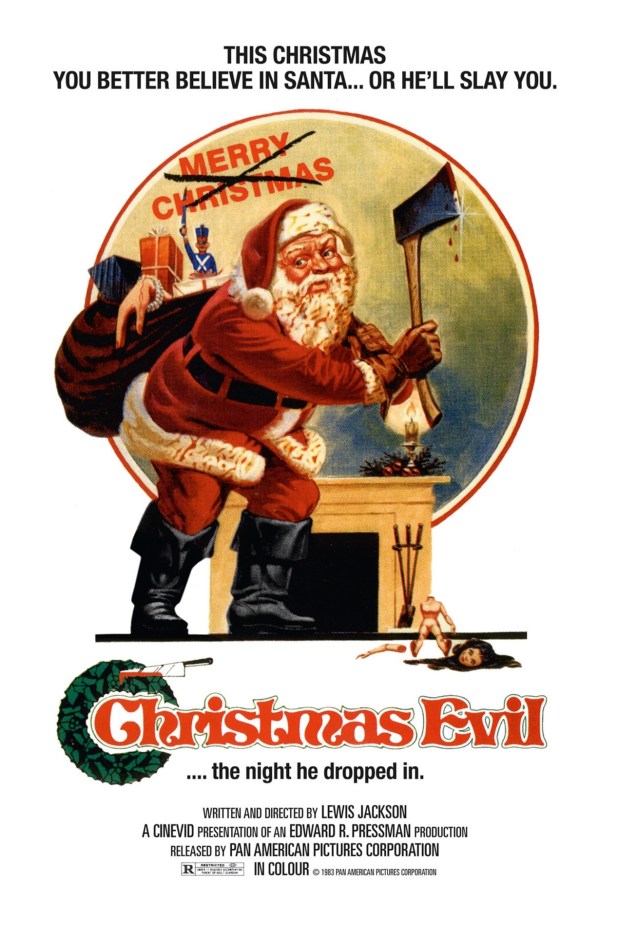
CHRISTMAS CINEMA: Christmas Evil (1980)

I learned about this movie from John Waters and if there’s one thing I know, it’s that John Waters has never let me down. He said of the film, “I wish I had kids. I’d make them watch it every year and if they didn’t like it, they’d be punished.”

Christmas Eve 1947: Harry Stadling (played later in the film Brandon Maggart, who is the father of Fiona Apple) watches his father — dressed as Santa — get sexy with his mother. He gets so upset that he smashes a snowglobe and uses it to slice up his hand.

Fast forward to 1980: Harry wants to be Santa. He sleeps in costume, his home is constantly decorated for the holidays, he works in the Jolly Dreams toy factory and keeps a book of who is naughty and who is nice. Of note, the toy factory was owned by the family of producer Edward R. Pressman and was known for making the board games Triominoes and Mastermind.

Harry notices an employee that called in sick is at the bar, even after he had to fill in for the man on the assembly line. He gets so mad that he smashes one of his dollhouse figures and cancels Thanksgiving. There’s a bright spot, though, as his boss announces that if they increase production, they can give toys to the kids at a hospital.

Harry realizes that everyone sees him as a loser, so he has a nervous breakdown and becomes Santa. He starts making toys in his basement and steals toys from the factory to give to the hospital. But he also does some insane things — like leave dirt on a bad kid’s door. And oh yeah — he murders a bunch of young adults who make fun of his costume, an act which his co-workers witness.

Harry goes full nutzoid, destroying his nephews’ gifts and replacing them with toys he’s made and killing a co-worker and leaving more toys behind.He attends the company Christmas party and dances to an increasingly faster an more frenetic version of “Here Comes Santa Claus” before threatening to put people in his bad book.

Then, Harry activates the assembly line and makes more toys before getting his van stuck in the mud. He escapes a mob who recognizes him as a killer before making it to his brother’s house. A battle ensues between the two, but Harry escapes and he’s forced to drive his van off the bridge by the mob. But in his mind, the van flies off like Santa’ sled to the words of “The Night Before Christmas.”

Obviously, this is not the movie to share with the kids. But if you’re an adult who has had it up to here with the holidays, by all means, this is the tonic you’re seeking. You can find it on Shudder, so bah humbug to all!

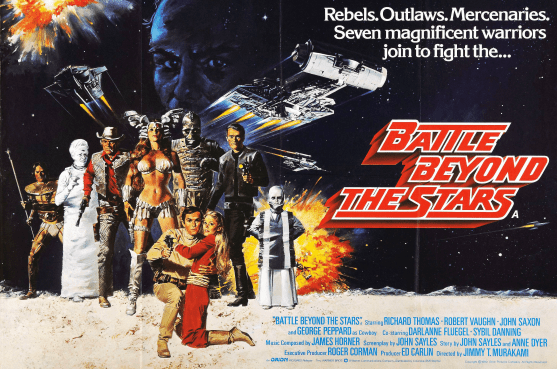
ATTACK OF THE CLONES: Battle Beyond the Stars (1980)

There is no way I can be objective about this movie. It is everything that movies should be in one film. It’s a revision of The Magnificent Seven, which in itself is just a cover version of The Seven Samurai. It has John Saxon as a face painted baddy whose body is falling apart. George Peppard plays a drunk Han Solo. And Sybil Danning plays a valkyrie in form-fitting body armor. In short, it is everything that an eight-year-old boy wants to see at the drive-in.

Sador (Saxon) and his mutant army are attacking the peaceful planet of Akir, a place that only has one warrior left — Zed (Jeff Corey, True GritButch Cassidy and the Sundance Kid), a blind warrior who can’t fight any longer. Unless Akir surrenders in one week, Sador will use his Stellar Converter to turn the planet into a star, killing everyone.

Zed has an idea — hire mercenaries, men and women who live to fight. He’s too old to use his old ship, Nell, but he sends Shad. And oh yeah — they have no money. All they can offer is food and shelter.

Shad goes to the Hephaestus space station for weapons, but only finds Doctor Hephaestus (Sam Jaffe, The Dunwich Horror) and his daughter Nanelia. The doctor has gone insane and lives on life support. His dream is for Shad and his daughter to populate his space station, but they escape in separate ships.

Shad meets Space Cowboy (Peppard), whose late shipment of guns comes too late, as Sador destroys his client’s planet. He agrees to take the weapons to Akir and teach the people how to fight.

There’s also Nestor, five clones who share a group mind. Actually, their whole race shares one mind, which makes life pretty boring. Therefore, they have volunteered to explore the galaxy and send back experiences to their homeworld. And then there’s Gelt (Robert Vaughn, The Man from U.N.C.L.E.), an assassin so wealthy and well-known that he can’t live a normal life any longer. He agrees to join up if he can live peacefully among the Akir people. The most meta thing ever is that Vaughn is basically playing the same exact role as he did when he was Lee in The Magnificent Seven. Finally, Saint Exmin (Sybil Danning, Howling 2Malibu Express) demands to join the group for the glory of battle. Trivia: Danning would also appear in another remake of The Magnificent Seven, 1983’s Seven Magnificent Gladiators.

Nanelia is captured by a reptilian named Cayman (Morgan Woodward, Cool Hand Luke), who she recruits when she explains that they are battling Sador, the man who destroyed his home planet.

The seven return to Akir, where the natives treat them with distrust. Then, Sador attacks but his ground invasion is repelled and Gelt takes out plenty of his ships before being mortally wounded.

Sador sends all of his troops to destroy Akir, but the seven repel him at the cost of their lives. Only Shad and Nanelia survive, but he promises her that they will never be forgotten.

Battle Beyond the Stars was the most expensive film Roger Corman ever produced. The script by John Sayles is excellent, packed with pathos and inside jokes. And James Cameron created many of the effects in the film (he met producing partner and wife for a time Gale Anne Herd while working on the movie), effects that would be recycled in a number of future Corman productions.

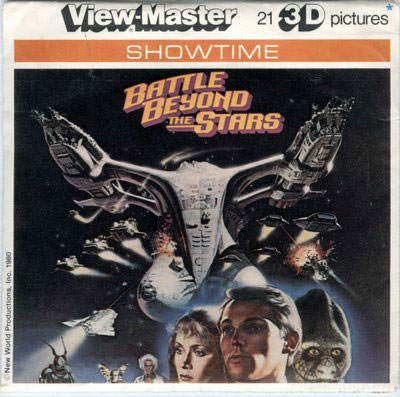
Unlike Star Wars, there were no toys or sequels to follow. Only a View-Master set.

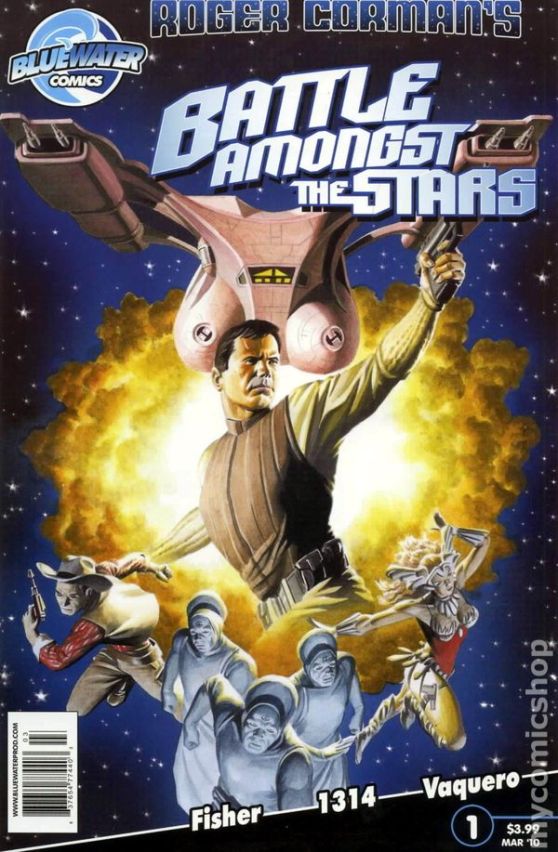
There was also a 2010 four-issue comic book series from Bluewater Graphics that showed how Zed had fought Sador before, along with an appearance by Cayman.

This is a big space opera that moves really quickly. It’s packed with crazy characters, awesome looking ships and huge battles. I was so upset at the ending when I was a kid that my mother had to rewrite it for me and I drew it based on our conversation. I couldn’t understand that Space Cowboy could make a brave sacrifice. He has to have survived!

Needless to say, this is one of my favorite movies of all time. Your mileage may vary, but just don’t tell me if you hate it. I’ll get sad.

UPDATE: You can now watch this for free with an Amazon Prime membership.

UPDATE 2: You can now get this movie from Shout! Factory complete with a Sybil Danning Saint-Exmin figure!

BONUS! You can also listen to the podcast that we did all about this movie right here!

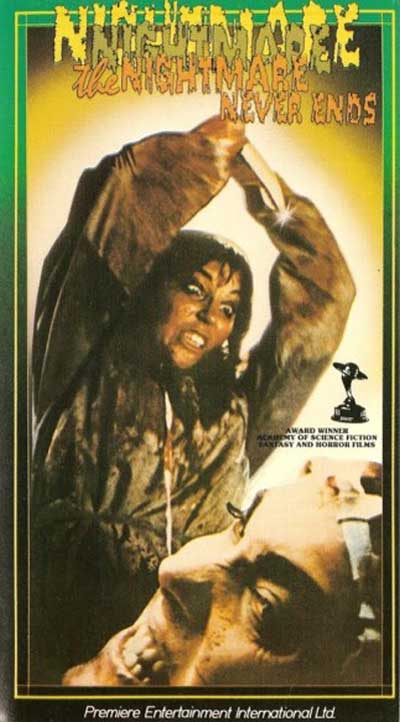
The Nightmare Never Ends (1980)

Have you ever seen Night Train to Terror and wondered — what would one of that film’s portmanteau sequences be like if they were expanded to an entire movie? Good news! Well, maybe. Your wishes have come true.

The final story of Night Train, “The Case of Claire Hansen”, was really a film called The Nightmare Never Ends (alternatively known as Cataclysm and Satan’s Supper). It boasts three directors. Amazingly, it was written by Philip Yordan, who not only won the Academy Award for Broken Lance in 1954, but also provided a front for blacklisted Hollywood writers (he was Bernard Gordon’s front for The Day of the Triffids)!

This is my favorite of all kinds of movies — a film I discover at 5 AM when the rest of the world is asleep and wonder if it can really be true and if I am not still asleep. To say that this is a batshit insane film is to do a disservice to the phrase batshit insane. I feel ill-prepared to share its wonder with you, but I’m sure going to try.

There are two stories going on here:

Nobel Prize-winning author James Hansen (Richard Moll of TV’s Night Court and House) and his devoutly Catholic wife Claire (who is a surgeon, which totally comes into play later) decide to go to Vegas to both celebrate James’ new book and to get away from Claire’s nightmares. Wondering what James won the Nobel Prize for? He wrote a book that proved that God is dead. Now, he’s planning a TV special to tell the whole story to the whole world (he’s preaching the bad news!). Well, alright. And that Claire — seems that she’s been dreaming about volcanoes. They decide to go see a magician, who puts Claire into a trance in seconds.

That’s when we learn the real secret of what has been bothering Claire — Nazis! She dreams of a handsome young officer who kills a room of other officers and an all-female string orchestra. After the show, Claire invites him to dinner after he tells her that a demon is after her. He never makes it — he is killed and a 666 tattoo is left on his scalp.

Remember when I said there was a second story?

Mr. Weiss is super old and out of it, but totally recognizes a Nazi when he sees one. Pretty and rich Olivier is being interviewed during the intermission of the New York Ballet and he looks exactly like the Nazi officer who killed Weiss’ parents at Auschwitz (and he’s also the Nazi from Claire’s dream). Weiss is a Nazi hunter, believe it or not, and he calls in his neighbor Lieutenant Stern (Cameron Mitchell, who has been in more movies than there have been movies, but let’s call out Blood and Black Lace as one of the best of his films). They go to the ballet and follow Olivier to his extravagant mansion, all the while Stern tries to convince the old man that this cannot be the man who tormented his childhood. Weiss grabs his Luger and goes to kill Olivier, but an unseen demon kills him and leaves a 666 on his body.

Oh yeah, there’s also a priest named Papini who is a homeless man that tries to protect James and Claire, even telling her how to kill Olivier.

There are also numerous characters who show up and just die, like Stern’s partner and Claire’s nephew. Even better, there are numerous disco scenes, which feature some wonderfully horrid songs and Olivier seducing Claire’s nephew’s fiancee (so many degrees of separation) until he takes off his shoe to reveal a furry hoof!

As to not skip any exploitation genre — we’ve already had Nazis, tough cops, disco and the occult — Claire goes to visit a black spiritualist who unexpectedly goes off on a ramp, pushing the film toward blaxploitation!  “I am a black man–a (N WORD) in your country. You are a rich woman, I’m sure you have many powerful friends…but they couldn’t help you! You had to seek the help of a (N WORD)!” It’s so insane and doesn’t fit into the movie at all.

Neither does the scene where Papini is killed by Ishtar, Olivier’s assistant (who is only in this one scene). It’s the chance to add some skin to the film and even more blasphemy.

Seriously — this film has blasphemy in spades. If you’re in a metal band that needs samples about religion and the devil, you should totally give this a watch. You’re going to find tons of samples.

Every single actor in this film either reads their lines in monotone or screams them as loudly as possible — sometimes within the same sentence. The lone exceptions are Richard Moll, who is the best actor in here and Mitchell, who is the gruffest cop of all time.

Nearly everyone in this movie (and the related Night Train to Terror) was somehow also involved with another movie that destroyed my brain cells, Cry Wilderness — which was featured on the latest season of Mystery Science Theater. A Bigfoot meets E.T. epic of pure maniacal weirdness, it was also written by Yordan and was directed by Jay Schlossberg-Cohen, who created the wraparound story for Night Train to Terror. Seems that Visto International Inc., a small theatrical motion picture production and distribution company, produced these films in the early 80s magical era of cheaply made independent films. Plus, both films (or all three, if we can cross-over between Night TrainNightmare and Wildernessfeature the acting skills, if you will, of Tony Giorgio, Maurice Grandmaison and Faith Clift.

Let me see if I can summarize the ending of this — after Oliver kills everyone else, Claire hits him with her car. She throws the body in the trunk and takes him to surgery, where she and her nephew’s girlfriend give him open heart surgery, complete with blood spraying and puking. Oh yeah, there’s also stabbing and slapping and screaming. And the bad guy wins!

Holy fuck — this is certainly a slice of cinematic goofball awesome that I won’t soon forget. Make no mistake — it’s a horrible film. But at the same time, it’s also a great one!

Will you like it? Just take a listen to the disco song and if you enjoy that, well then prepare yourself for The Nightmare Never Ends!