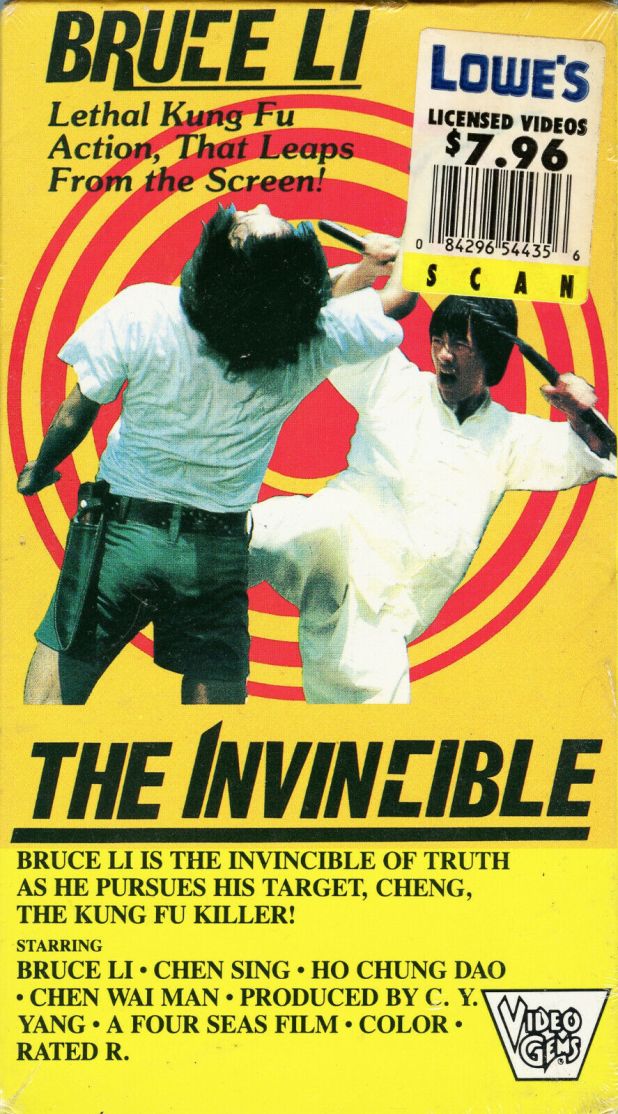
I love the description for Nan yang tang ren jie on IMDB: “Fantastic fighting sequences mark this kung fu action film.”
No shit.
That said, despite its title, this has nothing to do with Bruce Lee at all.
Bruce Li is in it, sure, but he’s the sidekick!
Oh man, I love that this was released under a misleading name that caused me to watch it nearly half a century later.
Cheng (Michael Chan Wai Man) is kicked out of a martial arts school and sent back home to Malaysia where he claims he will change his ways. By change his ways, he means to become a crime lord and cuck every man he meets. The fighting teachers send their best fighers — including Bruce Li — to teach him how to behave and somehow, that involves fighting men dressed as apes and Native Americans. I have no idea what it means but who cares? Sometimes nothing has to make sense any more.
I do know that this has a karate man hit a gorilla so hard that its eyeball pops right out. That’s enough, in my world, to give this all the Oscars and cancel future awards shows.
All of them.
Cheng has taken a liking to Wai Sin and when he isn’t running a casino and yes, also sleeping with all of his men’s wives, he’s kidnapped her. That’s another reason for the Shaolin Temple fighters to visit, with one being her cousin and I guess cousins doesn’t mean anything to martial arts masters, unless incest is the 37th chamber of the Wu Tang.
I love — again — that this is a Bruce Lee ripoff with Bruce Lee but the credits don’t even hide the true fact that his name is really Ho Chung-Dao. This also has the title Bruce Li the Invincible Chinatown Connection but come on, Bruce Lee the Invincible is shorter, sweeter and a better lie.
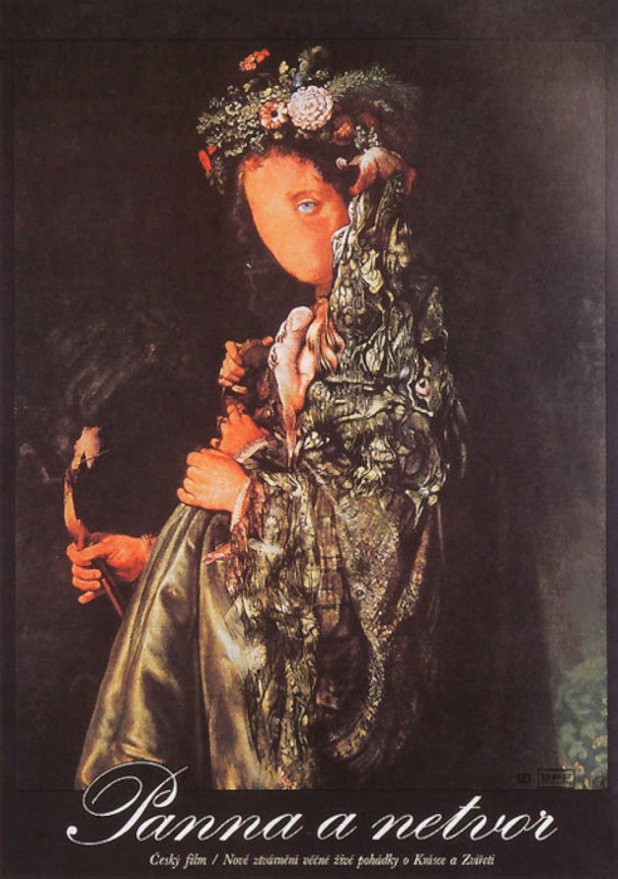
Known in its native Czech language as Panna a netvor (The Virgin and the Monster), this was directed by Juraj Herz, who also made The Cremator, Morgiana, The Ninth Heart and Ferat Vampire.
Julie (Zdena Studenková) is the youngest of three daughters born to a widower (Václav Voska). Riding by horseback and looking for a flower for her, he falls asleep and awakens in front of the horrific castle of Netvor (Vlastimil Harapes), a half-man, half-falcon creature that condemns him to death for picking one of his flowers unless one of his daughter’s sacrifices herself to live forever with him. He should be worried. After all, his horse has already died, forcing him to walk and he’s also found the body of a dead woman. So when he asks his daughters to save him, the already married and wealthy Gábinka (Jana Brejchová) and Málinka (Zuzana Kocúriková) refuse, but Julie saves her father just as her beauty will soon rescue the beast.
Yes, just like a Disney film, this is based on La Belle et la Bête by Jeanne-Marie Leprince de Beaumont. Unlike that animated tale, this has no dancing table service. Instead, it’s a gothic and frightening movie, a film that Herz didn’t want to make as he saw the Jean Cocteau film as unapproachable in its perfection. Yet he does the same here, turning nearly every frame into a painting and having an otherworldly beast that is at once terrifying and sexual, with human eyes calling out from behind a bird’s face.
Beauty and the Beast is part of the new Severin box set, All the Haunts Be Ours Volume 2. It has extras including commentary with film historian Michael Brooke, archival interviews with director Juraj Herz and actors Vlastimil Harapes And Zdena Studenková and a short film, František Hrubín.
Noel Black made his name with a short entitled Skaterdater and he made Pretty Poison, which is an incredible movie but died at the box office. Then, his career fell apart. He said, “The gold-plated nail in my career coffin was pounded when, after the box-office failure of Pretty Poison, I accepted a dreadful project, Cover Me Babe, that never should have been made. I reckoned that it was better to stay active than to wait for a project I believed in. That was a mistake. It was followed by another mistake, Jennifer on My Mind, one of the dozens of unsuccessful drug pictures at the time.”
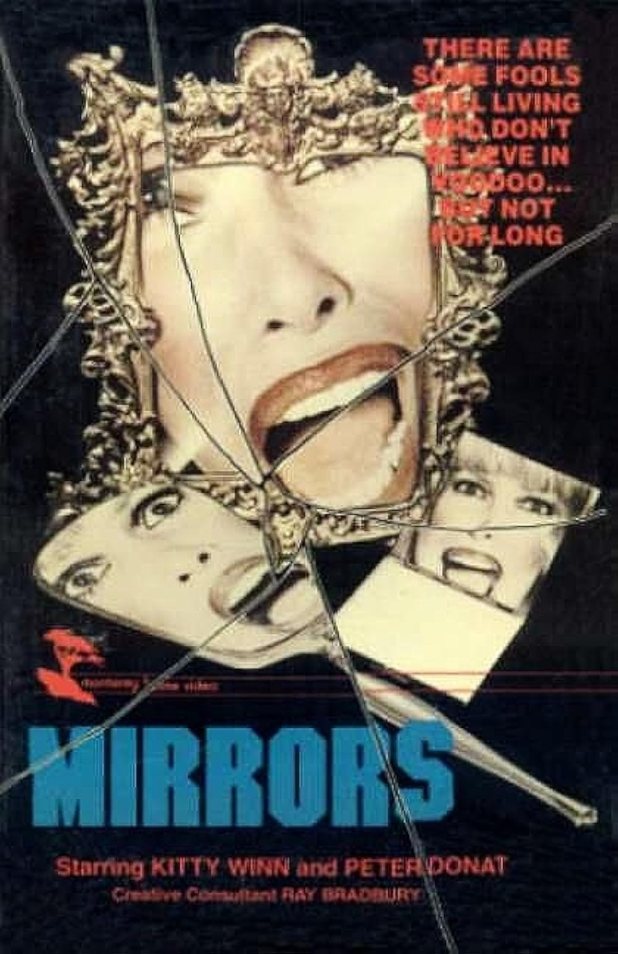
After working in TV, he came back to the big screen — or tried to — with this film, which was originally called Marianne. It took six years to come out on video under the title Mirrors.
He also directed Mischief and Private School, two teen sex comedies that are way better than that genre may lead one to believe.
Marianne Whitman (Kitty Wynn, Sharon Spencer from The Exorcist) and her husband Gary (William Paul Burns) are on their honeymoon in New Orleans where she’s soon the concern of a voodoo group who want to put another soul into her. To get what they want, they’ll murder dogs and even her husband in a dust-delivered asthma attack which is really the wildest way someone dies in a 70s occult movie outside of The Omen‘s gore Rube Goldberg destructions of humanity.
Dr. Godard (Peter Donat) tries to help, but Marianne is trapped in a slow burn 70s possession film with an ambiguous ending. Visually, this is a great film. As for the story, well, it’s a mess. It does have a great party scene — every 70s occult movie should — with Willie Tee And The Wild Magnolias funking it out.
I love this in spite of its problems.
You can watch this on YouTube.
Here’s a drink.
Voodoo
1 oz. curacao
1 oz. 99 Bananas
1 oz. Midori
1.5 oz. Malibu
3 oz. orange juice
Mix all ingredients in a shaker with ice.
Pour over crushed ice and stay out of New Orleans.
Each October, the Unsung Horrors podcast does a month of themed movies. This year they will once again be setting up a fundraiser to benefit Best Friends, which is working to save the lives of cats and dogs all across America, giving pets second chances and happy homes.
Today’s theme: Series episode
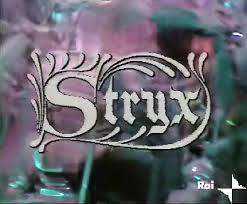
For six Sunday evenings in 1978, Radiotelevisione Italiana (Rai) TV in Italy aired a series which was a marked break from a channel that until now had only shown conservative Christian Democrat programming. By establishing a secular channel, Rai 2, the network was hoping to encourage experimentation and “a marked exploration of new languages of communication.” These were the national channels of Italy and somehow, Stryx made it on the air, if only for a very short — and thematically perfectly numbered — length of time.
Named for a combination of the legendary vampire owl of legend and the Italian term for witch, strega, this was created by Enzo Trapani, Alberto Testa and Carla Vistarini. In interviews, Trapani said that he was inspired by a meal of salami and figs, saying “Begone milquetoast rhythms and family-friendly songstresses with round cheeks and heart-shaped mouths,” as he sought to change TV.
Or, as he also claimed, he got a phone call from the devil.
With the words, “Ladies and Gentlemen, the Devil,” an entire salon of demons, goblins, singers, dancers, human sacrifice victims and people willing to get naked and weird emerged into the psychedelic and smoke-filled cave in which this show is set. By the end of the first episode, the switchboards had lit up. Even if Italians are used to nudity and some level of violence, they weren’t ready for the dependable Rai to send outright Satanic imagery into their homes.
I can’t even begin to imagine what people thought — Italy is a country that has Vatican City, the heart of the Roman Catholic empire, directly inside it and a population that is 75% Catholic — when “Lucifer, Emperor” and “Beelzebub, Prince” were introduced and walked out on screen, presiding over the inquisition, women dressed as cats, live animals including a lion, cats, hawks, dogs and a chimpanzee as well as more women, some half-naked, many fully nude and quite a few being tortured and even mock burned alive.
That said, Stryx still has the trappings of the variety show. There are continuing characters, such as a witch named Ludmilla (Ombretta Colli, a singer, future senator and actress in the Fulci film Getting Away with It the Italian Way and Antonio Margheriti’s War Between The Planets), who keeps trying to transform a toad named Franz into a prince and always having him become into boring accountants played by Walter Valdi; a mime played by Hal Yamanouchi (Endgame, Warriors of the Year 2072) and Gianni Cajafa, playing a magician named Furcas who teaches the audience how to read their fortunes and banish the malocchio or evil eye.
Do you love strobing? How do you feel about dry ice and fog? How about liberal use of chromakey? This has all of that and so much more. Money was spent — lots of lira — to make it feel like this show exists inside its own world. I mean, let’s be honest, this is the Hell of the dreams of metal kids who smoke skunk weed in the high school parking lot and say, “Man, it’s going to be a party.”
Well, it was a party.
The first episode aired on October 15, 1978. Just take a look at the music guests:
Gal Costa “Sea Rain:” Gal Costa was a Brazilian pop superstar who had a fifty-year career in which she released more than five hundred songs. She’s the only singer from Brazil to be in the Carnegie Hall Hall of Fame.
Angelo Branduardi “Dance in F sharp minor:” Known as The Minstrel, Branduardi created a new musical genre that combines medieval and Renaissance music with Celtic, Germanic, British and French folk music. He plays the devil’s instrument — the violin — as Death itself dances with villagers.
Amanda Lear “Enigma (Give a Bit of Mmm To Me!):” Amanda Lear is a source of fascination to me. At once the muse of Bowie and Dali, now a disco queen who famously played with the question of whether she was even a she. This song features the lyrics “Are you devil or angel? Are you question or answer?” Lear also appears in the movie Crazy Nights for Joe D’Amato and is on the cover of Roxy Music’s For Your Pleasure. In the 2024 reality where people are still regularly losing their minds over sexual gender, Lear was breaking ground nearly fifty years ago and looking incredible every step of the way. This short article can’t contain her majesty.
Patty Pravo “Handsome:” This sentence alone should explain to you why she was on this program: “Her peculiar low and sensual timbre, her provocations and excesses have made her an icon of transgression.” Along with Mina, Ornella Vanoni , Iva Zanicchi and Milva, Pravo is considered one of the five major protagonists of Italian song. She’s also the first mainstream artists in the country to embrace funk and new wave with her 1976 album Biafra. At this stage of her career, she embraced the androgynous look of Bowie. Future performances would see her carried by goblins as a human sacrifice and another where she was given shock treatment while performing.
Grace Jones “Hunger:” Do I even have to write of how incredible Grace Jones is? How vital? Or how perfect Jones was for this show, a feral force of nature stalking the stage and somehow being the most supernatural thing in a world teaming with demons and devils?
Rockets “On the Road Again:” A French Space Rock band, Rockets used to land on stages filled with smoke and lasers, emerging with metallic faces and spacesuits, looking like Destro meets KISS. They were super dangerous, too, as they used to shoot a “fireworks bazooka” into the audience, more than once hitting audience members and setting their clothing ablaze.
The other episodes — not many of which survive — also feature Mia Martini, Asha Puthli, Area and Anna Oxa.
As the calls continued from angry viewers, the show only averaged nine million viewers, not enough to continue airing. Trapani followed up with another controversial show, C’era Due Volte (Twice Upon a Time), during which adult film star and future senator Ilona “Cicciolina” Staller retold fairy tales in ribald ways. It was delayed by a year and remained too controversial to live.
Sadly, in 1989, frustrated by the idea of aging and unable to get his visions on TV, Trapani would shoot himself in the mouth, languishing in the hospital for over a week.
There’s is supposedly a seventh episode, which never aired. I dream of seeing it.
EDITOR’S NOTE: Blue Sunshine was on Chiller Theater on Saturday, February 12, 1983 at 2:00 a.m.
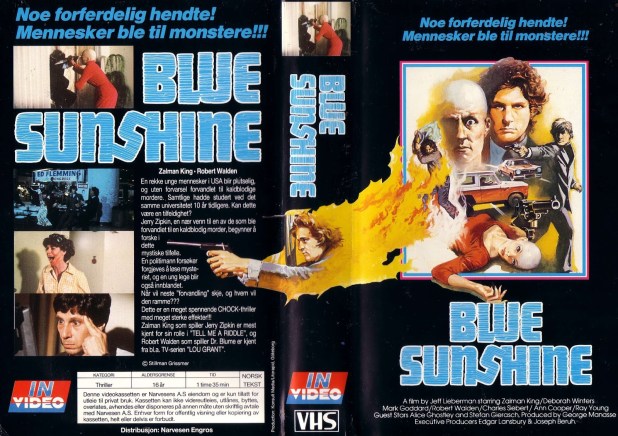
You know why I’ve never done acid? This movie right here. After all, it has an “inspired by true events” square up in the end credits.
After a series of seemingly unconnected murders in Los Angeles, only one link keeps coming up — every single person took the same strain of LSD called Blue Sunshine.
Yep — the sins of the past decade are ready to come back and destroy the “Me” decade.
Zalman King — yes, the same man who got your mom all tingly after you went to bed with Showtime’s Red Shoe Diaries — plays Jerry Zipkin, a man accused of the murders who — in true giallo-style — must clear his name. That’s because he was at a party where the murders may have started, complete with a screaming Brion James and Billy Crystal’s brother singing Frank Sinatra songs before he starts throwing women into the fireplace.
If turns out that if you took Blue Sunshine, chances are that you’re about to lose all your hair, go crazy and start killing everyone in your path. Of course, no one knew this ten years ago when they were all dosing on it back in college. Chromosomal damage can be a real b, you know?
How can you not love a movie whose title is spoken by a parrot? One that has a climactic disco shootout? Or is so 1970’s that it ends up speaking for pretty much the entire decade?
Between the self-medicating Dr. David Blume, the hard-drinking and hair losing John O’Malley and Ed Flemming (Mark Goddard, Major Don West from Lost In Space) are all caught up in the grip of the bad trip. The effects pretty much sum up Flemming’s political campaign: “In the 1960s, Ed Flemming and his generation shook up the system. Now he’s working within it.” He has become the system. It’s as if the children in Manson’s famous quote — “These children that come at you with knives–they are your children. You taught them. I didn’t teach them. I just tried to help them stand up.” — are even more dangerous when fully grown.
Goddard isn’t the only TV star that shows up, as Alice Ghostly (Esmerelda from Bewitched) makes an appearance.
Writer and director Jeff Lieberman would lend his strange style to other films like Squirm, Remote Control, Just Before Dawn and the odd true crime TV show Love You to Death that starred John Waters as a Grim Reaper attending weddings of partners that would soon kill one another.
The director claims that two major TV networks expressed interest in purchasing the film as a “movie of the week.” The opportunity to get double the budget was appealing, but after seeing the edits that the movie would need to be able to play on network TV, Lieberman decided to produce this for theaters.
EDITOR’S NOTE: Over the next several days, I’ll be covering movies either directed by Menahem Golan or produced by Golan and Globus before they bought Cannon.
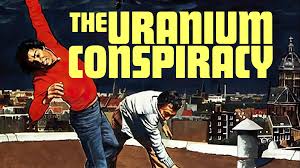
You know how I always say that these Eurospy movies are like the UN? How about this one, which is an Israeli/German/Italian movie co-directed by Gianfranco Baldanello (Danger!! Death Ray) and one of my favorite insane people, Menahem Golan — the man who would soon enough direct the magnum opus The Apple.
That’s most of the excitement of the film, which promises a Bond-like experience from its poster and description and does not deliver, except for an incredible boat chase in Amsterdam. You can tell Golan was excited about the action scenes and not so much anything else. But hey! The soundtrack by Coriolano Gori (The Legend of Wolf Woman) and Dov Seltzer (Night Terrors) is pretty good. Cannon Bros will also rejoice to see the face of Yehuda Efroni. If you know, as they say, you know.
EDITOR’S NOTE: As the journey through Cannon continues, this week we’re exploring the films of 21st Century Film Corporation, which would be the company that Menahem Golan would take over after Cannon. Formed by Tom Ward and Art Schweitzer in 1971 (or 1976, there are some disputed expert opinions), 21st Century had a great logo and released some wild stuff.
When you see Dick Randall’s name on a movie, you are going to get sleaze.
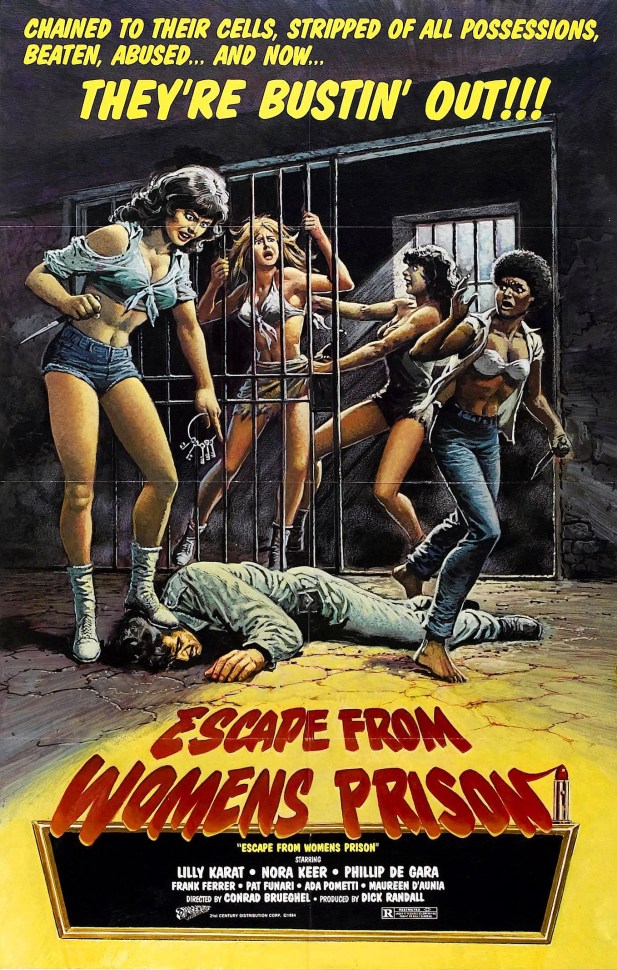
Directed by Conrad Brueghel, who is really Italian actor Giovanni Brusadori, who wrote the script with Bruno Fontana and George Eastman — speaking of sleazy — this starts with some young tennis players on their way to a meet when they come across four escaped female convicts — Marina (Lilli Carati, L’alcova), Betty (Artemia Terenziani), Diana (Marina Daunia) and Erica (Ada Pometti) — who have already shot their own bus driver, Pierre. As Marco (Francesco Ferracini), the bus driver for the tennis team, lets them on the bus, they soon discover that these are the escaped killers and a terrorist!
One of the girls, Terry (Ines Pellegrini, Giorni damore sul fil de una Lama), knows a place they can hide out, the home of a judge (Filippo De Gara). It’s a gigantic place and soon, the girls are assaulting each of the men — and women — as well as forcing the judge to wet himself. Anna (Zora Kerova, The New York Ripper) seems to be the only tennis player that doesn’t freak out — like Claudine (Dirce Funari) — or join the enemy, as Terry does. Terry even pistol whips her and nearly shoots her, but can’t bring herself to kill someone.
This movie goes through some wild changes, like the judge becoming one of the bad guys as he assaults Monica, the other three girls trying to shoot their way out instead of going to jail, case after case of J&B, tennis girls getting drunk while being abused and facing death by cop outside and no one really getting out of this alive because the cops somehow are even worse than everyone, even the Communist terrorist who finally gets to explain her point of view and mellows out, instead of being the final boss.
This isn’t really a women in prison movie, but a warden does get shot in the head, so it gets the end of the WIP story correct.
The end credits say, “In spite of the evident close correspondence with day reality, the facts, events and characters are completely fictitious. The director thanks co-workers, technicians, crew, actors and all those who cooperated with enthusiasm and dedicated themselves in the best tradition of cooperatives, making the production of this film possible.” That’s because this was based on a true story.
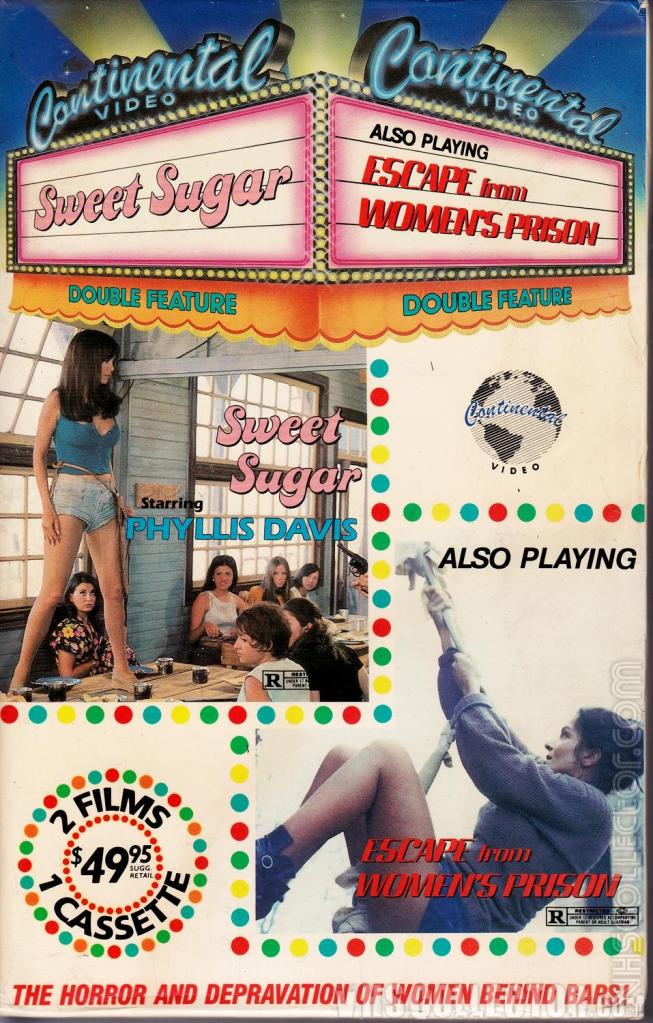
21st Century licensed this to Continental Video, where it lost ten minutes so it could be on a double feature tape with Sweet Sugar.
You can get this from Severin, who promise a “new 4k scan of a dupe negative seized from notorious NYC distributor 21st Century Film Corp.”
EDITOR’S NOTE: As the journey through Cannon continues, this week we’re exploring the films of 21st Century Film Corporation, which would be the company that Menahem Golan would take over after Cannon. Formed by Tom Ward and Art Schweitzer in 1971 (or 1976, there are some disputed expert opinions), 21st Century had a great logo and released some wild stuff.
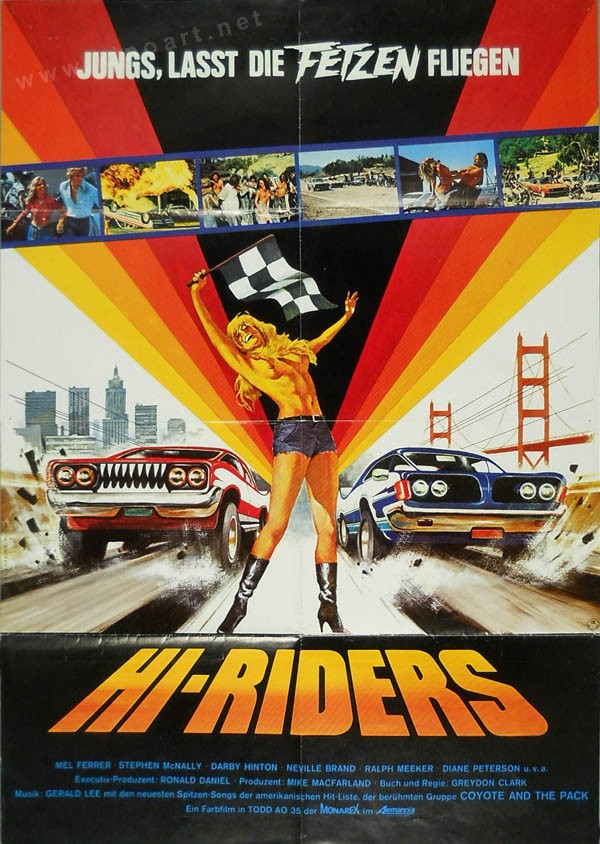
45 years ago, Greydon Clark decided that he was going to direct and write a movie that would bring together a cast that would make me lose my mind. Well, he did it. Mel Ferrer as the conflicted sheriff. Darby Hinton as race car driver Mark. Mel Ferrer and Ralph Meeker play small town cops. Neville Brand plays a bartender. Stephen McNally is the angry dad whose kid gets killed in a race and uses the cops to crack skills. Stuntwoman Diane Peterson plays Mark’s engine obsessed girlfriend Lynn. And it’s all shot by Dean Cundy, so it looks way better than it should.
Adult Darby Hinton without a mustache is a weird thing. He looks like John Schneider.
The Hi-Riders like to race, they like to drink and they like to smash stuff up. But yeah, when a race between Billy (Brad Reardon) and McNally’s son goes bad, they’re in for trouble. Leader T.J. (William Beaudine, Jr.) and Mark have to fight their way out, if they can, after the rest of the gang are murdered.
If you’re watching movies just for the cars, Mark has an amazing 1968 Pontiac Firebird, while T.J. has a 1968 Dodge Charger R/T. It also has a twisty ending, which I am all for, as it ends with a crazy stunt after all the double crosses.
Sadly, when you see “Vic Rivers – We Loved Him” in the credits, you should know that Rivers was one of the stuntmen who died doing a stunt in this film.
This was originally released by Dimension Pictures and bought by 21st Century.
EDITOR’S NOTE: As the journey through Cannon continues, this week we’re exploring the films of 21st Century Film Corporation, which would be the company that Menahem Golan would take over after Cannon. Formed by Tom Ward and Art Schweitzer in 1971 (or 1976, there are some disputed expert opinions), 21st Century had a great logo and released some wild stuff.
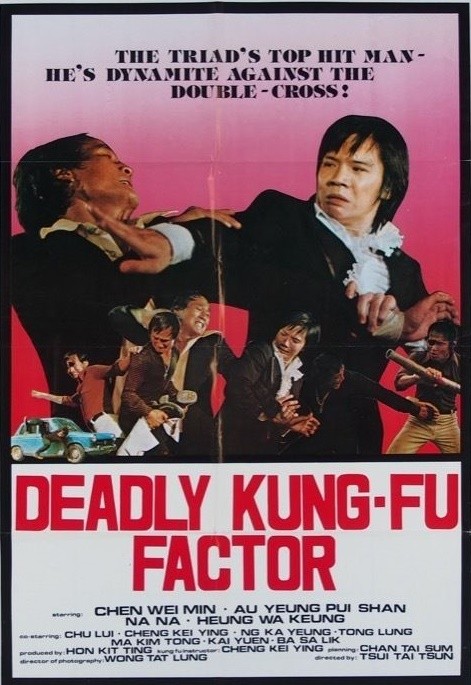
Originally Jiao Huo and also known as The Deadly Kung Fu Factor, this was made in 1975 but wasn’t released until 1978.
Gangs in Japan and Hong Kong have come together for a $5 million dollar heroin deal. Kung Chun San Lang (Chen Hui Min ) lands in Hong Kong and is almost immediately arrested before jumping onto a motorcycle belonging to Li Hsiang Yun (Susanna Au Yeung). He soon takes her gambling where he’s caught cheating and nearly fights Tu Shao Hsiang (Charles Heung Wah Keung) before realizing that they’re working together for this big drug connection. Fans hoping for these two gangster movie stars to be battling one another will have to be content with this scene, as they join forces after.
The two leads were also pretty much real-life gangsters playing the part for this movie (and many others).
This is a film filled with fights — you can tell from the alternate name — as well as plenty of nudity and sex (mostly from NaNa, who was a new softcore star at the time), car chases and so many nightclub scenes filled with stolen progressive rock songs and a band that starts playing a Mexican song when Kung fights an entire room full of police officers. And wow — that last fight!
Any movie that starts with a criminal using a turnabout to make the cops chasing him dizzy is going to be one that you’re probably going to want to hunt down.
EDITOR’S NOTE: As the journey through Cannon continues, this week we’re exploring the films of 21st Century Film Corporation, which would be the company that Menahem Golan would take over after Cannon. Formed by Tom Ward and Art Schweitzer in 1971 (or 1976, there are some disputed expert opinions), 21st Century had a great logo and released some wild stuff.
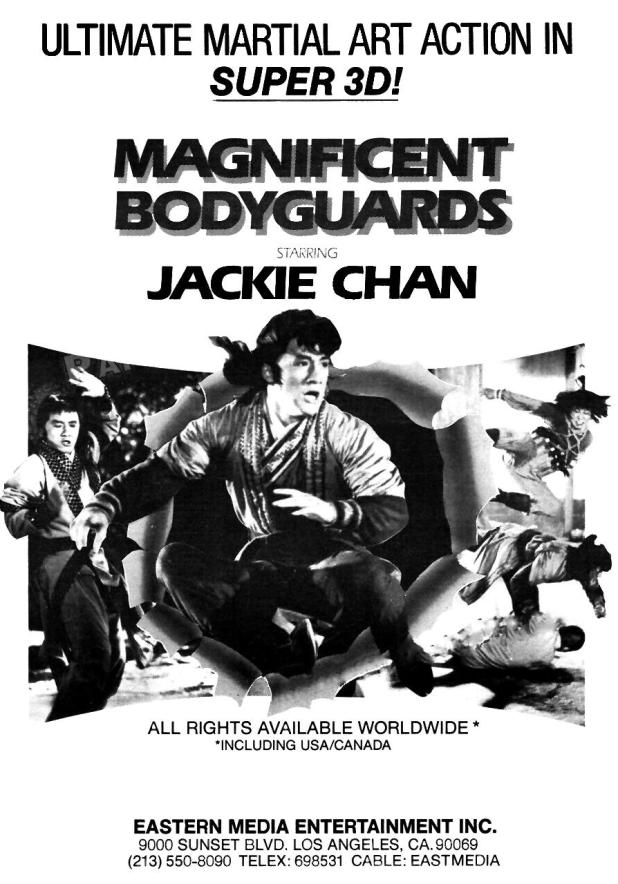
You won’t have to wonder if this was shot in 3D, as nearly everything is like Dr. Tongue thrown kicks and weapons at you.
Lady Nan (Ping Wang) has a sick brother and needs to get him home, so she hires Ting Chung (Jackie Chan), Chang Wu-Yi (James Tien) and Chang (Leung Siu-Lung) to help her get through the Stormy Mountains. Ting is an amazing fighter, Chang can’t hear and Leung Sio-Lung’s character rips off faces. Seems like a good team to get you past the bandits. Oh — they also have twin sisters who are great with swords. Now it’s not just a party, but a party.
Jackie had been making movies with Lo Wei and was frustrated by the fact that none of them were all that good. After this movie, He would get to make Drunken Master and Snake In The Eagle’s Shadow for Seasonal Films. Things got so much better for him after that.
Your ears will be as amazed as your eyes, as this lifts so much of the soundtrack to Star Wars. Yes, I was astounded. You will be as well.
There’s also a bad guy who uses bells as a weapon.




 B&S About Movies
You must be logged in to post a comment.