CBS LATE MOVIE MONTH: Whoever Slew Auntie Roo? (1972)

EDITOR’S NOTE: Whoever Slew Auntie Roo? aired on the CBS Late Movie on October 31, 1973 and March 8 and June 1, 1976.

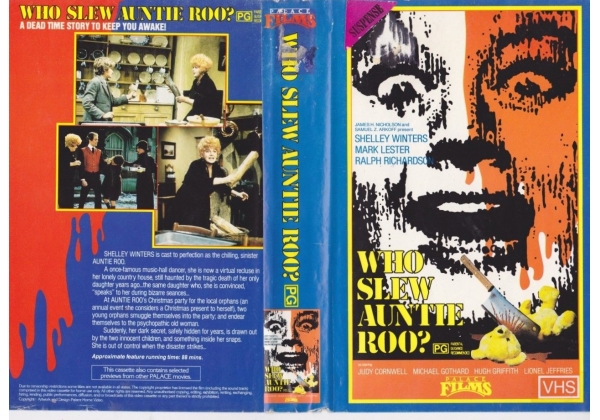
Following the success of What’s the Matter with Helen?, Curtis Harrington directed this intriguing psycho-biddy film. In it, Mrs. Rosie Forrest (Shelley Winters), the Aunty Roo of the title, is known by the children of a local orphanage as a kindly old lady who throws a huge Christmas party every single year for them. However, the truth is far more sinister. She’s obsessed with her dead daughter Katharine, whose mummified body lies in state in her attic so Aunty Roo can sing lullabies to her every night.


Mark Lester and Chloe Franks from The House That Dripped Blood play Christopher and Katy Coombs, two orphans who find themselves in Roo’s clutches. She believes that Katy might be her daughter, and the story takes a turn that’s reminiscent of the classic Hansel and Gretel tale, adding an intriguing layer to the narrative.

Ralph Richardson plays Mr. Benton, a fake psychic who tries to help Aunty Roo connect to the spirit of her long-departed daughter.

The early 70s are filled with what I call enjoyable junk. This would be one of those films with Winters practically devouring the scenery. It makes an outstanding double bill with the aforementioned What’s the Matter with Helen?, which is the superior of the two films. While Whoever Slew Auntie Roo? shares some thematic and stylistic similarities, it stands out for its more compelling narrative and character development.

CBS LATE MOVIE MONTH: The Woman Hunter (1972)

EDITOR’S NOTE: The Woman Hunter debuted as a CBS Movie of the Week on September 19, 1972. It played the CBS Late Movie on October 7, 1974.

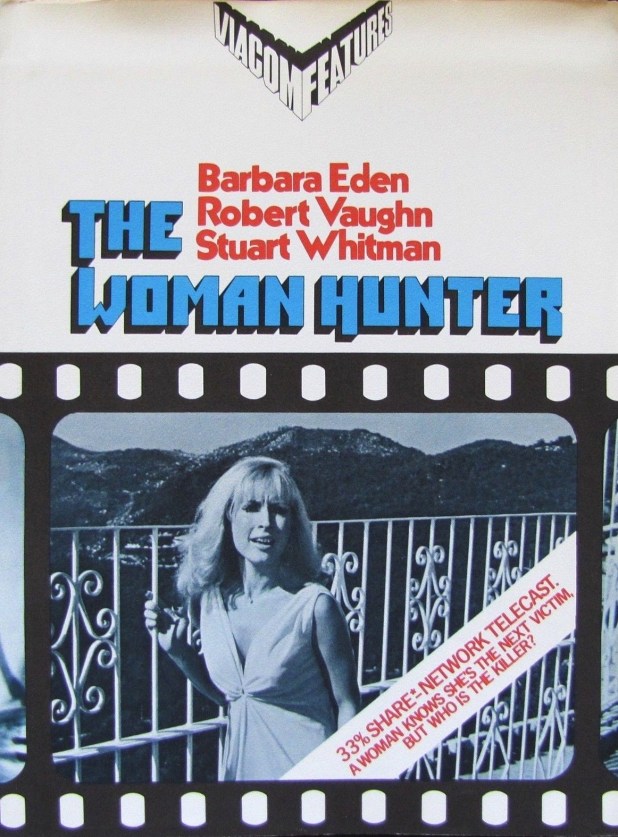
The Woman Hunter has an all-star cast, with Barbara Eden in the lead, alongside Stuart Whitman, Larry Storch and Robert Vaughn. Like I said — it’s what I say is an all-star cast.

Most Giallo heroines are characterized by their wealth and potential mental issues. However, in The Woman Hunter, when Dina Hunter (Eden) survives a car accident and plans a trip to Mexico with her husband (Vaughn), who would have thought that the artist she hired to paint her portrait (Whitman) could be a jewel thief and a murderer?

Enrique Lucero, who plays the Commissioner, would go on to try and hunt down Mary, Mary, and Bloody Mary and also appears in The Wild Bunch, Guyana, Cult of the Damned and The Evil That Men Do.

This was written by Brian Clemens (Captain KronosAnd Soon the Darkness) and Tony Williamson (Adam Adamant Lives!The Avengers). It is Clemens’ first U.S. work and Williamson’s only script made over here. It’s directed by Bernard L. Kowalski, who stepped in for John Peyser (The Centerfold Girls). I assume that everyone enjoyed shooting this on location in Acapulco. Larry Storch even brought his wife Norma along.

You can watch this on YouTube.

CBS LATE MOVIE MONTH: She Waits (1972)

EDITOR’S NOTE: She Waits debuted as a CBS TV movie on January 28, 1972. It played the CBS Late Movie on September 12, 1972 and January 14, 1974.

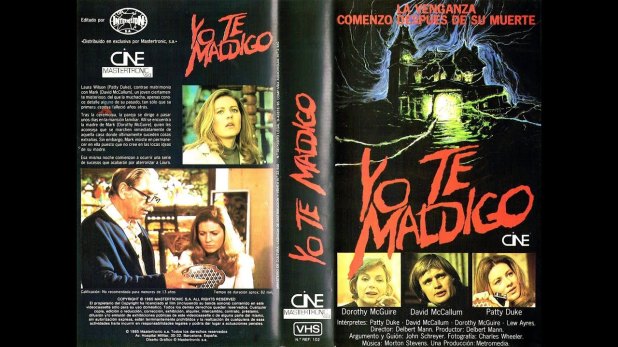
Laura Wilson (Patty Duke, Valley of the DollsThe Swarm) and Mark (David McCallum, Illya Kuryakin on The Man from U.N.C.L.E. and better known to today’s TV audience as Dr. Donald Mallard on N.C.I.S.) haven’t been married long. On their first trip to meet his mother (Dorothy McGuire, The Greatest Story Ever Told), she learns that maybe this marriage wasn’t the best of ideas. Mom has been ready to go nutzoid ever since Mark’s first wife, Elaine, died, and she’s convinced that her ghost is inside her home.

Everywhere Laura goes, she starts hearing Elaine’s favorite song and even her voice. Is she trying to possess her? Or is she just being ridiculous, as the family doctor suggests? The movie never fully embraces the supernatural. It’s more about Mark shutting himself off and not dealing with the past.

The family maid thinks that Mark’s mother is getting worse and worse, with Laura in danger of the very same insanity. And what’s the deal with Mark’s friend David (James T. Callahan, the dad from Charles in Charge)? And can you talk a ghost out of possessing someone just by talking to them?

Director Delbert Mann (Marty) weaves a competent story, penned by Art Wallace, the main writer for TV’s Dark Shadows. It’s a tale that fits snugly into the 1970s, a time when possession, Satan, and the ghosts of murdered wives lurked around every corner. The film’s slow pace is a deliberate nod to the conventions of TV movie horror, inviting you to revel in the nostalgia of a bygone era.

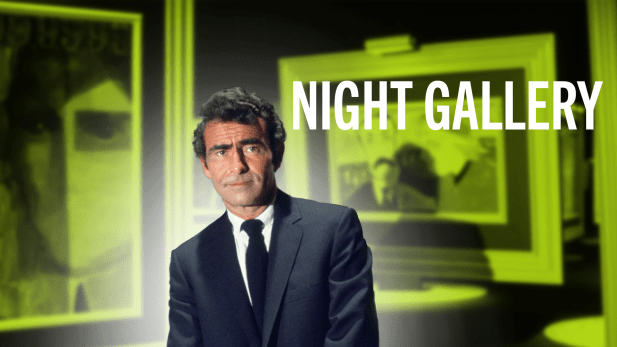
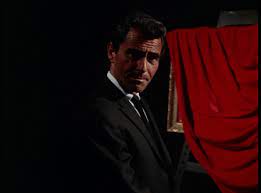
Night Gallery Season 3 Episode 4: Rare Objects

Originally called “Collector’s Items” — a title that spoils the surprise — this episode of Night Gallery feels like it almost belongs on The Twilight Zone.

Directed by Jeannot Szwarc and written by Rod Serling, “Rare Objects” is the story of August Kolodney (Mickey Rooney), an organized crime figure who is barely surviving all of the attempts on his life. A doctor (Regis Cordic) removes the slug that someone put in him and tells him that his blood pressure is so off the charts that even his body could betray him at any minute.

Is there a way out? Well, the doctor knows a guy, but the price is steep.

Dr. Glendon (Raymond Massey) has the criminal to his home, shows him his many collections and invites him to stay, as Kolodney himself is a very rare item. He’ll have a long life free of worry, but he just has to give over anything and everything. But by the time he tries to leave, it’s too late. The drugs in his drink have kicked in and soon he may just live forever, surrounded by Princess Anastasia, Amelia Earhart and Adolph Hitler. Now, he’s a bird in a cage for just one person, no longer a person but instead an object.

Szwarc’s direction is solid and this is tension-filled the whole time. Ah — it’s so good when Night Gallery is great.

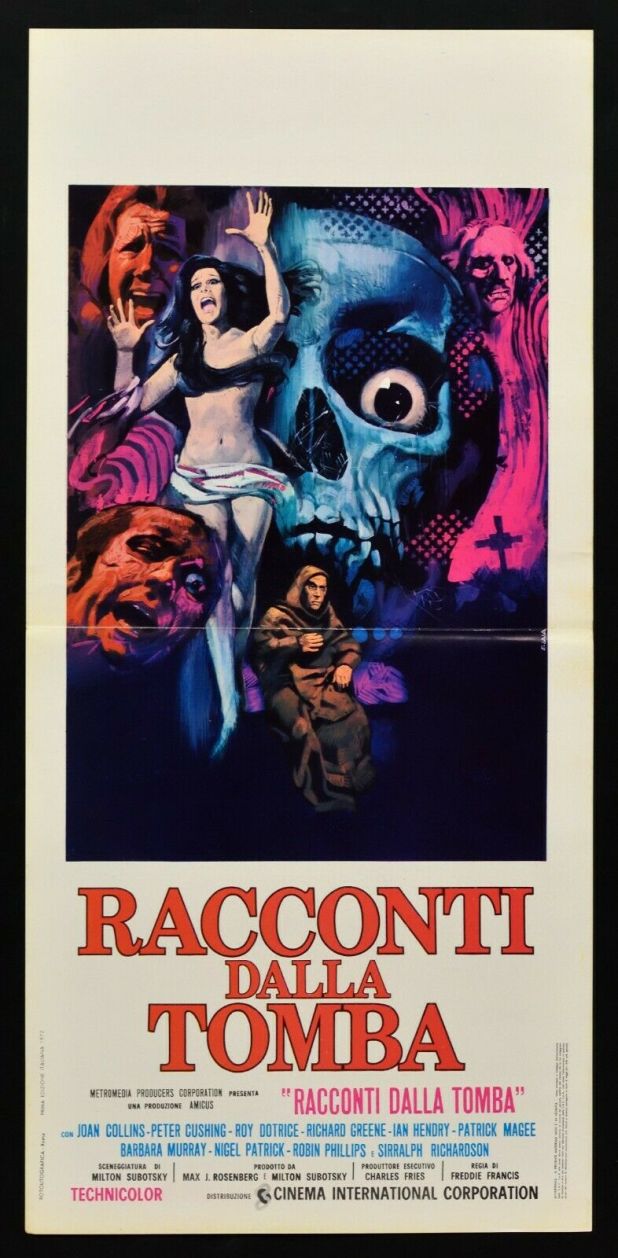
Chattanooga Film Festival Red Eye #3: Tales from the Crypt (1972)

There’s nothing better than a portmanteau and there was no studio better at making them than Amicus. This is a monument to that studio, their main director Freddie Francis and British horror royalty Peter Cushing all in one film. And with one of the stories centered on Christmas, it’s perfect to watch right now.

Five people are part of a tour of old catacombs, yet get separated from everyone else. They find themselves in the company of the Crypt Keeper (Ralph Richardson, Whoever Slew Auntie Roo?), who looks nothing like the character from the E.C. Comics or the later HBO series. He begins to tell each of them how they came to be in his chambers.

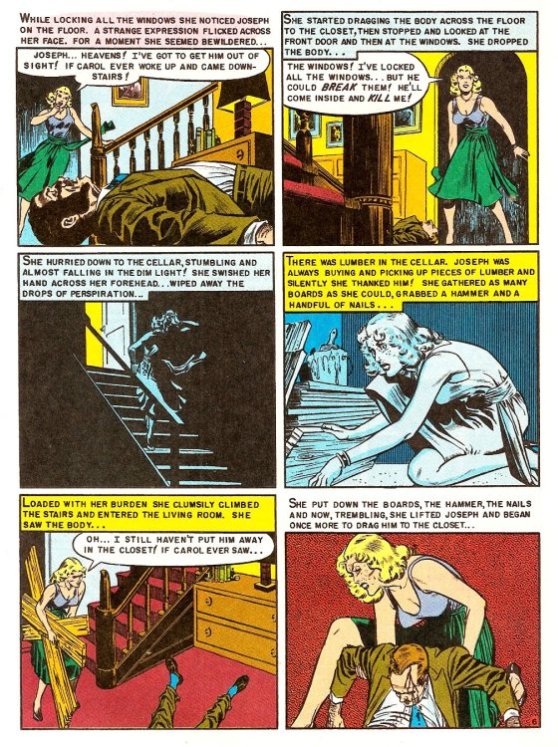
…And All Through the House (based on Vault of Horror #35)

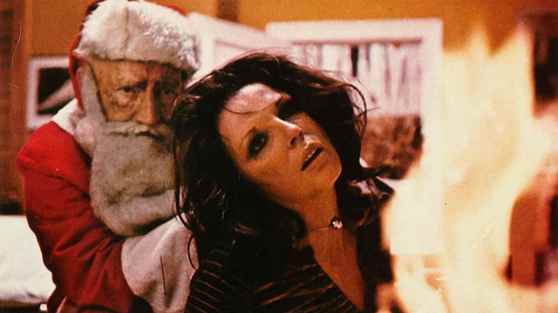
Joanne Clayton (Joan Collins, Empire of the AntsI Don’t Want to Be Born) has murdered her husband on Christmas Eve. Yet even as she hides the body — scrubbing impossibly crimson blood from her immaculate white fur carpet — a killer dressed as Santa Claus is stalking her. If she calls the police, they’ll discover her crime. If she doesn’t, she’s dead.

Her daughter (Chloe Franks, who is wonderful in another Amicus anthology, The House That Dripped Blood, which we covered on one of our first podcasts) thinks that the killer is Santa and lets him in. Not the best of ideas, as he’s soon chasing Joanna all over the house.

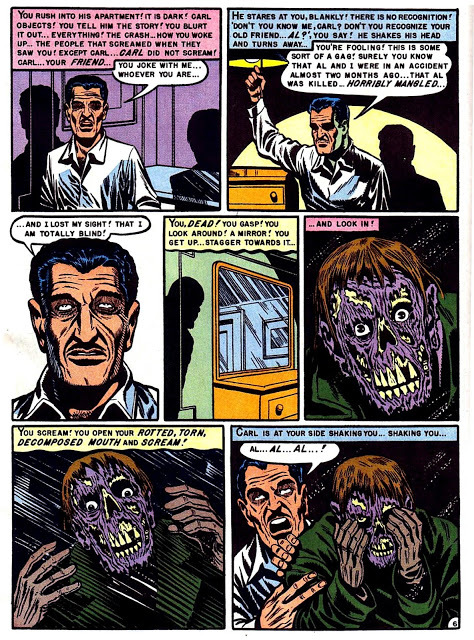
Reflection of Death (based on Tales from the Crypt #23)

Carl Maitland (Ian Hendry, Theater of Blood) has left his family to be with his lover, Susan. That said, as they drive away, they are in an accident and no one will stop to help him after he awakens. His wife is already with another man. Susan is blind and claims he died two years ago. And by the time he figures out the truth, it’s too late.

Poetic Justice (The Haunt of Fear #12)

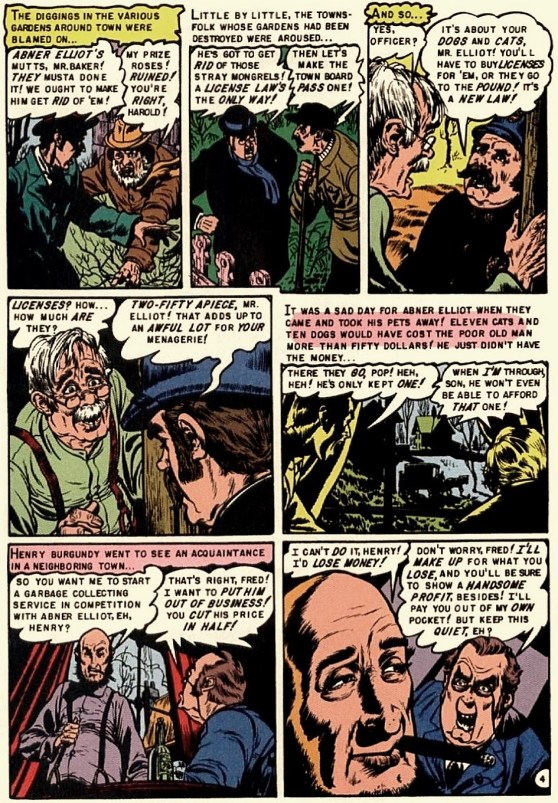
Edward and James Elliott hate their neighbor Arthur Grimsdyke (Peter Cushing is absolutely perfect in this role and if you don’t know who he is, I recommend that you shut down your computer and weep), who has plenty of dogs and loves to entertain the neighborhood’s children. They take his dogs from him, they get him fired from his job and finally convince the parents that he’s a child molester. A widower who speaks to his wife even after death, Grimsdyke can take no more after James sends his mean-spirited Valentines, signing the name of every neighbor. But one year later, Grimsdyke rises from the dead and sends Edward a very personal Valentine’s Day card with the help of his son’s still beating heart.

This part is perfect. From the scorn of the rich toward the poor to Cushing’s emotional pain (he was reeling from the death of his beloved wife Violet Helene Beck and had even tried to give himself a heart attack by repeatedly running stairs in his home, hoping to find a way back to her) and his rise from the earth, this is everything horror movies should be.

Wish You Were Here (The Haunt of Fear #22)

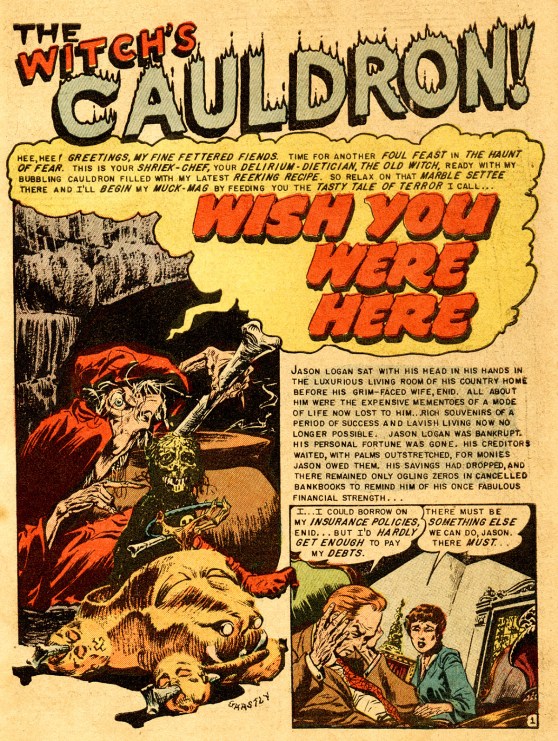
A retelling of The Monkey’s Paw, this story finds businessman Ralph Jason (near bankruptcy when his wife Enid finds a Chinese figure that will give three wishes. The first, for money, comes true when she gets Ralph’s insurance money after he dies in a car crash. Her second is to bring him back exactly as he was before the accident, but she learns that he had a heart attack upon seeing a skeletal motorcycle rider. Finally, she wishes for him to come back alive and to live forever, but as he’s already been embalmed, he awakens to horrifying pain. Even after she chops him up, he remains alive.

Blind Alleys (Tales from the Crypt #46)

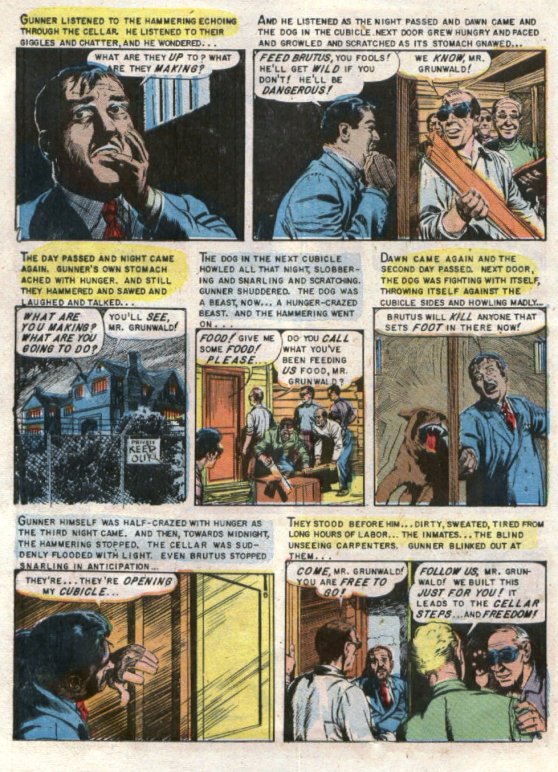
Major William Rogers is the new director of the home for the blind, but he immediately cuts the budget. The men must now deal with the constant cold and a lack of food while he lives the high life with his German shepherd. The blind men rise up and turn the tables, putting Rogers in a maze where he is blinded, bloodied and finally murdered by his own dog.
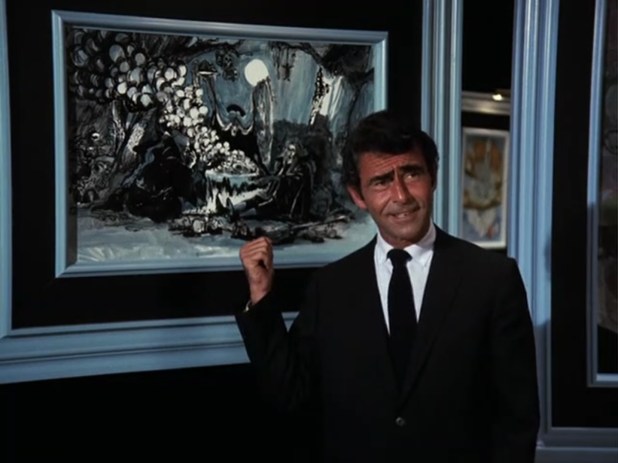
The Crypt Keeper then reveals that this isn’t what may happen. It has already happened and he is there to send them all to Hell. He looks directly at the viewer, breaking the fourth wall and asks, “And now… who is next? Perhaps you?” This ending would be recycled for several Amicus films but gets me every single time.

The band CANT — that I sang for — recorded a song entitled “Tales from the Crypt” that was released on our 2015 demo. Its opening lyrics, “Like a stain you can’t erase, you left without a trace. Ruining lives, burning inside, left in the cold, going blind” echo the evil of each character in the stories, while the chorus, “Strangled, crushed, torn, burning, blind — you are gonna die” reveals the ending to each story.

Like I said — I really love this movie. The track was originally called “The Strange Bruises You Find on Joan Collins’ Throat,” but it seemed too long and it felt better to tip my hat toward the movie.

The Chattanooga Film Festival is happening now through June 29. To get your in-person or virtual badge to see any of these movies, click here. For more information, visit chattfilmfest.org and follow us on Facebook, Twitter and Instagram.

Night Gallery Season 3 Episode 3: Fright Night

Jeff Corey mostly worked as an actor but also directed several TV series, including nine episodes of Night Gallery. Here, he’s working from a script by Robert Malcolm Young (Starflight: The Plane That Couldn’t Land ) based on a story by Kurt van Elting.

Tom Oglivy (Stuart Whitman) and his wife Leona (Barbara Anderson) have moved into the home of Tom’s dead cousin Zachariah Ogilvy (Alan Napier). But something is wrong with the home, something so off that even the maid, Miss Patience(Ellen Corby), won’t stay after dark.

There’s also a warning. No one is to move the trunk.

Leona dreams that a man is in her bed. Crickets stop and start with no warning. And Tom’s latest novel has a Satanic prayer typed into the middle of it. Yes, this house is strange and Halloween is getting closer, the night that the dead can return. Return for their trunk!

The Oglivy house in this episode was the Bates house from Psycho. That’s about the best thing one can say about this entry, which lives up to what Universal wanted from the show. It seems scary but has no lasting terror. It’s fun horror and not deep darkness.

“I hated “Fright Night,”” said Corey to Scott Skelton and Jim Benson for their book Rod Serling’s Night Gallery: An After Hours Tour. “…I didn’t understand the goddamn story. It was a terrible script. You see, the others I did were Rod’s and really made sense.”

Ah well. This season had been two for two before this. Hopefully next week will improve the average.

THE FILMS OF BRIAN DE PALMA: Get to Know Your Rabbit (1972)

People always want to know how much money I make writing this site if I put this much work into it. Yes, there are times when I put forty or more hours a week in and get nothing in return. Well, everything else in my life is for commerce. Sometimes, you need art. I make something more important than money.

This movie made me consider that. Corporate executive Donald Beeman (Tommy Smothers) is sick of work. So sick of it that he quits his day job and becomes a traveling tap dancing magician as he studies under Mr. Delasandro (real life magician Orson Welles).

Meanwhile, his old boss Mr. Turnbull (John Astin) wants him to come on back to the nine-to-five life and he convinces Donald to help other businessmen with Tap Dancing Magicians, a course — and corporation — that will teach them what he has learned. It’s a success, a wild success, but Donald is back to being a rat in a maze.

Directed by Brian De Palma and written by Jordan Crittenden, this was a Warner Bros. movie made after Easy Rider in the days when studios were looking to the film brats and young people to save their bottom line. The studio — and Smothers — felt uneasy about De Palma’s experience. Smothers so disliked this movie that he disappeared for several days and refused to return for retakes. Making matters worse was that executive producer Peter Nelson recut it and added a new sequence to the film, which the studio had no idea how to promote and one that they dropped as fast as they could.

While the movie ends with Smothers alive and well after his final escape trick, it was originally supposed to end right after the trick, implying that Smothers may have committed suicide. Even wilder, De Palma wanted to end it with him killing his rabbit live on TV to ruin his career and pull off a bigger escape.

I’ve always struggled with De Palma’s comedies, so when he moved into obsession and strange behavior with Sisters, all was right with the world.

THE FILMS OF BRIAN DE PALMA: Sisters (1972)

EDITOR’S NOTE: This was first on the site on .

Brian De Palma was inspired to make Sisters after reading an article in Life magazine about how Soviet conjoined twins Masha and Dasha Krivoshlyapova were separated. A photo at the end of the article — along with a mention that the girls were developing psychological problems — struck him, as one twin looked happy and the other appeared to be deranged. And, as always, Hitchcock loomed large, as the script that DePalma wrote with Louisa Rose was directly inspired by his films Rope — the tracking shot that follows the murder of Phillip — and Psycho, as the main character shifts during the movie. He even got Bernard Hermann to come out of retirement and record the music for the movie.

In fact, DePalma had cut his movie to another Hermann score. When he showed it to the composer, he answered back, “Young man, I cannot watch your film while I’m listening to Marnie.”

The film has since influenced countless others. I can see echoes of the documentary within this film on the film within Get Out that details another sinister operation.

An operation is behind much of the horror in this film, as Danielle Breton and Dominique Blanchion (Margot Kidder, as always perfect) were separated and perhaps one of the two did not survive. Then there’s Emil Breton (William Finley, the literal Phantom of the Paradise), who is either Danielle’s ex-husband or the doctor who helped take the twins apart or both. And an investigation into the murder that starts the film and the hypnotic suggestions that perhaps there was no real murder at all.

DePalma has a career that some would say is filmed with misogynistic films, but here, this is the rare slasher with female killers and male victims. Of course, you can also read into this that women’s liberation — somewhat literally — has caused all of these issues.

This is the film where DePalma found his way. Of course, he found it by following in the footsteps of someone else, but if anyone could be the next Hitchcock, he made the best attempt.

The first time I saw this, I was knocked out by the first kill and how it comes out of nowhere and how much De Palma tells us of the plot just through dialogue.

THE FILMS OF WILLIAM GIRDLER: Three on a Meathook (1972)

EDITOR’S NOTE: This was originally on the site on .

While the slasher genre really starts in 1978 (or 1979, when Halloween really took off), there are movies before that are nascent starting points. This was William Girdler’s second film after Asylum of Satan, made with money from his trust fund. It’s based on Ed Gein, as are PsychoDerangedThe Texas Chainsaw Massacre and many, many, many more.

Filmed in and around Louisville, Kentucky, the home of the director (whose also wrote and performed much of this film’s score), this is the tale of Billy Townsend (James Carroll Pickett), who seems like such a nice boy. He helps four girls who have gone to the lake for vacation when their car breaks down. But Billy has secrets and a father (Charles Kissinger, who also appears in Girdler’s films AbbyGrizzlyThe ManitouAsylum of Satan and Sheba, Baby) who loves his son so much that he’ll help him get out of any trouble.

This has one of the best titles ever, as well as a great tagline — “WARNING: Not For The Bloody Mary For Lunch Bunch!” — and, as stated before, the notion of being an early slasher. It’s worth checking out to see where the form got its start. When I was a kid, this film’s cover freaked me out, as did the implications of its title. The actual film itself seems laid back and very 70’s, including an anti-Vietnam speech delivered directly to the camera.

You have to love a movie that is willing to totally forget any forward progress by having its antagonist decide to head downtown, watch some bands, see The Graduate and ponder life instead of continually killing people. You never see Michael Myers decide to take a break and grab a beer, you know?

THE FILMS OF WILLIAM GIRDLER: Asylum of Satan (1972)

EDITOR’S NOTE: You can read another take on this movie here.

William Girdler was born on October 22, 1947 in Jefferson County, KY and this was his first of nine movies in six years, ending only when he died while scouting locations in the Philippines for his next film.

After he finished with the Air Force, Girlder formed Studio One with best friend and brother-in-law J. Patrick Kelly. Initially focused on TV commercials, Studio One eventually took on movies with this film. It later became Mid-America Pictures when Girdler’s films began making money.

According to the official William Girdler site, his “make ’em fast and cheap” directorial style was the result of a premonition that he’d die by the age of 30. Well, he made it to thirty, at least. Some say that Girdler was so obsessed with his own death that he said that he was in a race against time.

Filmed in Louisville in late 1971 for around $50,000, this is the story of concert pianist Lucina Martin (Carla Borelli) who has been abducted by Dr. Jason Specter (Charles Kissinger) and taken to his Pleasant Hill Hospital for treatment. It’s a sanitarium that she swears that she doesn’t belong in and who would want to be in a place where the doctor kills people to add to his Satanic majesty and immortality? And is Specter also the evil sorceress Martine? Because Kissinger is definitely playing both parts. He was also a horror host in Louisville known as the Fearmonger on WDRB.

It all leads up to a virgin sacrifice with our lovely piano player as the victim and Martine saying things like the fact that she “calls upon the gates of the dark realm to crash asunder” and invokes “blazing angles of the shining trapezoid.” What’s that? Oh, you know, the Order of the Trapezoid which later became the governing body of the Church of Satan.

More of that in a bit.

This being the early 70s, the ending is ambiguous, the rubber bugs and snakes countless and a Satan that looks like someone wearing a costume from a party store. You know, it might sound like I’m laughing at this movie, but I’m not. Asylum of Satan pleases me to an incredible degree, a movie made by someone who knew he was born to make movies and yet trying all he could to learn right there on the screen.

Girlder told the Louisville Times, “Other people learned how to make movies in film schools. I learned by doing it. Nobody saw Billy Friedkin’s or Steven Spielberg’s mistakes, but all my mistakes were right up there on the screen for everybody to see.”

The film was made with the assistance of local investors but the movie didn’t make enough to return their investment. Shortly before his too soon death, Girdler signed over the rights to this movie and Three On a Meathook to those original investors so that they could make back their money.

The Girdler site also has an amazing interview with Don Wrege, who clapped the clapboard for this movie. I loved every word, especially when he explains how the Church of Satan got involved being technical consultants.

“A bunch of high school girls (some daughters of investors) were dressed in virginal white, given candles and positioned in a circle around Borelli who was roped to the alter. A guy in a rubber suit. (Girdler said the suit/mask was from Rosemary’s Baby but wasn’t shown in the film, thus it was affordable and available and, of course, cool.)

There was a lot of motion involved. I think the guy in the rubber suit was on an apple box with wheels. The Asmans were on the largest crane we used the whole time, if I remember correctly. Multiple takes were done, all the time Kissinger (I think) was reciting the invocations that had been written by the satanic guy who was standing in the wings watching all of this take place. The incantation, if that’s the right word, was repeated any number of times with as much sincerity as Charlie Kissinger could muster, as multiple takes were filmed.

During one take, and at some very convenient point in the “prayer,” like “…if you’re present, show yourself…” or something like that, one of the white-draped high school daughters of an investor passed out and hit the floor. Everyone was horrified. The two people from the Black Church without hesitation ran to the girl’s limp body and began saying all sorts of weird shit, speaking in some unidentifiable tongue. The girl’s mother, who was there, TOTALLY freaked out, running to her daughter’s side screaming “You leave her alone…get away!” to the two Satanists.

The daughter came to in a few moments, and was excused for the day. Everything was really tense for a couple of hours after that. I think some folks started to wonder what the hell we were messing with. I made a mental note to try to keep track of that girl who fainted, but I haven’t had the nerve. I really don’t want to know.”

Well, that advisor was Michael Aquino, the actual writer of a lot of the rituals in the Satanic Bible and he told the Girdler site that he didn’t remember anyone passing out. Aquino later broke away from the Church of Satan and formed the Temple of Set.

After receiving his PhD in political science from the University of California, Santa Barbara, Aquino worked as an adjunct professor at Golden Gate University until 1986. The whole time, he was serving as an Active Guard Reserve officer of the United States Army stationed at the Presidio of San Francisco.

As the 80s went on, Aquino became intrigued by the connections between Nazis and the occult. At one point, he performed a solitary rite at Walhalla beneath the Wewelsburg castle which was an infamous ceremonial space used by the Schutzstaffel’s Ahnenerbe group.

He then formed the Order of the Trapezoid, which was a chivalric order influenced by a mix of Satanism, Pagan heathery and even the application of runes within magic. Aquino was often challenged in the Satanic Panic of many crimes, as well as in conspiracy circles for numerous acts of evil as he started his career in PsyOps. He even welcomed LaVey’s daughter Zeena and her husband Nikolas Schreck into the group before the inevitable break.

But I digress, as I always say.

Girdler would do so much more — again, in such a short time — but the basics of his career are here. The 70s were prime time for Satanic movies and he took advantage of it just as he would of all manner of subjects that he thought would make box office.

He was even kind of William Castle in a way here, as the press book mentions ordering “Sign of Satan Soul Protectors” to protect theatergoers from the “Evil Stare of the Devil.” That’s also Girdler’s Porsche in this and his sister Lynne Kelly in the pool with the snakes, because Sherry Steiner refused.

Here’s a drink for this movie.

Snake in the Swimming Pool

  • 2 oz. Southern Comfort
  • 4 oz. cranberry juice
  • 1 oz. lime juice
  1. Build over ice, starting with the SoCo, then followed by the cranberry and lemon.